Performance Studies is an interdisciplinary field that uses performance as both form and method to approach knowledge making. It foregrounds embodiment, affect, and liminality, and the ontological over the epistemological. It examines performance in an expanded sense, beyond the proscenium of the theater, into the streets and everyday life – in language, in rituals, in protests, and in public events.
The field was formalized in the 1980s, with departments established at both New York University and Northwestern University, emerging out of theater, dance, anthropology, rhetoric, and media and communication. Shannon Jackson wrote a genealogy of the field in Professing Performance. Also see Diana Taylor’s Performance for a helpful introduction.
This tension between the ephemerality of live performance and its remains is what draws me to performance studies. Rebecca Schneider’s and Diana Taylor’s scholarship both set up and move beyond this binary between the repertoire and the archive.
Schneider has been a consistent inspiration, navigating the flesh in bone and the bone in flesh, or what she names inter(in)animation, the relation between subject, thing, and object. See Schneider’s Performing Remains and Slough Media.
I consider the Foucauldian understanding of “subjugated knowledges” to approach discrete and disparate bodies of knowledge that may have been suppressed or ignored in favor of dominant strands of History and Knowledge.
A section of my praxis engages with visualizing and embodying knowledge in physical space. This ranges from a museum’s reading room withdrawn from public access, or the history of an artist residency and the many ghosts that continue to linger. An important consideration is not merely to expose what has been hidden, but navigate the layers of opacity (Édouard Glissant) to understand how to navigate absences “without a desire for recovery” (Anjali Arondekar).
My reenactment of Josef Ng’s Brother Cane (1994), a performance that resulted in a ten-year restriction on the licensing and funding of performance art and forum theater in Singapore, is perhaps what my praxis will be remembered for. My interest in reenactments, however, shifts beyond nostalgia or a fetish for the past.
Through a class titled Come Again? Reenactments as Embodied Research, I explore with my students how reenactments can be a way of embodying the past, an approach to understanding “history” and the fallibility of memory.
Turning an object in and over time has been a recurring exercise in my performance lectures. I write about this in Queer Objects: An Archive for the Future, and I ask participants to do the same with their own objects in Catamite (2019). This might read as new materialist or object-oriented, but I am equally invested in historical materialism: the “human” and histories embedded within the objects we hold.
The same attention extends to how I read Singapore. Marx remains a gap in collective consciousness, a specter the city’s values are defined against yet rarely examined. Performance and aesthetics need a Marxist humanist lens: one that names the contradictions beneath the thriving surface, and the value-form that renders incommensurable things, and people, commensurable.
Etiolation, in botanical terms, describes what happens when a plant is deprived of light. It continues to grow, but its form is stunted and distended, drained of vitality while retaining the outward appearance of life. I borrow the word from J. L. Austin, who used “etiolations of language” to describe performative utterances that are hollow or void, comparing them to theatricality.
The term became a central idea in my dissertation research when I considered the horticultural and environmental management of Singapore, where botanical metaphors are consistently employed in political rhetoric to describe the condition of living and being in Singapore – from the bonsai to the banyan.
More-than-human sensitivity names an attention I bring to my praxis, an interest in what persists in the entanglement between the human, the inhuman, and the non-human. In my dissertation research, this is specific to the body and its environment in Singapore, where national identity is tied to ecological and biopolitical management.
My praxis treats these more-than-human registers as a material substrate that produces and conditions life, ranging from the infrastructural to the ecological. A more-than-human sensitivity allows us to notice their support, while also imagining the capacious potential of solidarities and critical alliances.
Research areas
- Political resistance and counter-conduct under constraints
- Queer Asian diasporic sexuality and embodiment
- More-than-human performativity and ecological aesthetics
- Queer archival and material methodologies
- Relational and socially-engaged praxis
Book project
Etiolated Conduct: More-than-human Performativity with/in Singapore
If society is a tree, and its fringes are the leaves at the tree’s outermost reaches, then trimming the fringe, where the youngest, tenderest leaves grow nearest to the light, can only stunt the growth of the center. […] what appears at first to be a fringe issue will slowly strike you as being at the root of the very kind of people that we are.
Tan Tarn How, “Far-Reaching Stricture on the Arts.” The Sunday Times (Singapore), 13 Nov. 1994.
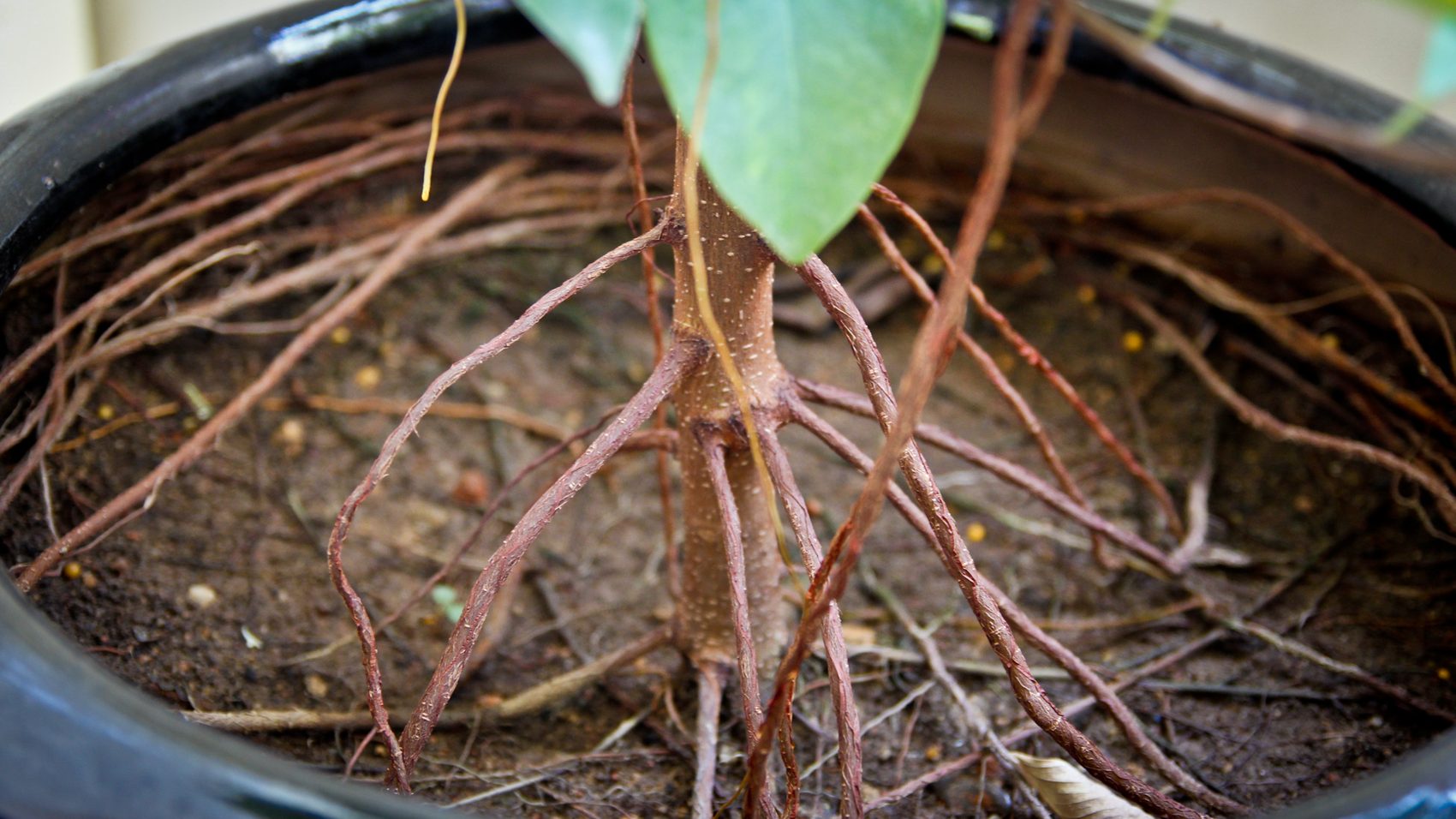
A Malayan banyan sapling, cut from the parent tree at The Substation, an independent arts center in Singapore, and confined to a public housing flat, persists in an attenuated state. I take its etiolated condition as both metaphor and metonym for artistic and cultural production in Singapore.
Etiolated Conduct names this persistence as resistance under constraint. The term bridges J. L. Austin’s description of “etiolated” performatives, utterances rendered hollow or void, with the horticultural practice of etiolation, where plants deprived of light are deliberately distended, suspended in calibrated conditions of making-live and not quite letting-die. I read Austin alongside Michel Foucault’s late work on counter-conduct, drawing both through a critique of liberal personhood (Saba Mahmood, Chen Kuan-Hsing, Pheng Cheah).
My objects of study center on artistic praxis from the 1990s onward, a period of rapid liberalization in the decades following independence in 1965. Across them I examine unpragmatic and opaque forms of resistance. The arc of my dissertation begins in the pragmatic and transparent, moves through camouflaged choreographies, and bends toward etiolated conduct.

“More-than-human performativity” engages the more-than-human conversation in performance studies (Rebecca Schneider, Karen River Barad etc.) and bridges it with the performativity latent within more-than-human scholarship (Anna Tsing, Donna Haraway etc.). This pairing allows us to engage with a more-than-human performativity and a performativity of the more-than-human. I begin by extending speech-act theory toward the ecological and infrastructural forces conditioning political life, moving from figure to ground, and conclude with withdrawal and worlding beyond human live-ness.
I build on writers who have engaged the more-than-human with/in Singapore, among them Comaroff and Ong, Marcus Yee, Matthew Schneider-Mayerson, Joanne Leow, Charmaine Chua, Natasha Myers, and Eng-Beng Lim. Rather than examine the horticultural spectacles one often associates with the city-state, I turn to embodied practices of suspension in a state/State of calibrated livability. My friend Chor See compares this to the penumbral method of 滋阴.
I argue that under etiolated conditions, art’s indirection performs a politicization of aesthetics rather than an aestheticization of politics, gathering force through durational deprivation rather than spectacular confrontation, generating lateral intimacies with pioneer vegetation, carceral architecture, and drainage infrastructure, a sensuous underside that escapes accounting.
If Singapore’s post-natural environment is a glimpse of governance to come, a study of resistance under etiolated conditions carries anticipatory significance for a world where liberal frameworks of visibility, rights, and recognition are already eroding.
Works cited
- Austin, J. L. How to Do Things with Words. Clarendon, 1975.
- Barad, Karen River. “Posthumanist Performativity: Toward an Understanding of How Matter Comes to Matter.” Signs: Journal of Women in Culture and Society, vol. 28, no. 3, 2003, pp. 801–31.
- Chen, Kuan-Hsing. Asia as Method: Toward Deimperialization. Duke UP, 2010.
- Cheah, Pheng. Inhuman Conditions: On Cosmopolitanism and Human Rights. Harvard UP, 2006.
- Chua, Charmaine. “Sunny Island Set in the Sea: Singapore’s Land Reclamation as Colonial Project.” Infrastructures of Citizenship: Digital Life in the Global City, McGill-Queen’s UP, 2020.
- Comaroff, Joshua, and Ong Ker-Shing. “Paramilitary Gardening: Landscape and Authoritarianism.” Robert Zhao Renhui: Seeing Forest (Vol. 1 of 2), Singapore Art Museum and K. Verlag, 2024, pp. 160–175.
- Foucault, Michel. Security, Territory, Population: Lectures at the Collège de France, 1977–78. Palgrave Macmillan, 2007.
- Haraway, Donna J. Staying with the Trouble: Making Kin in the Chthulucene. Duke UP, 2016.
- Leow, Joanne. Counter-Cartographies: Reading Singapore Otherwise. Liverpool UP, 2024.
- Lim, Eng-Beng. “Future Island.” Third Text, vol. 28, no. 4–5, 2014, pp. 443–53.
- Mahmood, Saba. Politics of Piety: The Islamic Revival and the Feminist Subject. Princeton UP, 2005.
- Myers, Natasha. “From Edenic Apocalypse to Gardens against Eden: Plants and People in and after the Anthropocene.” Infrastructure, Environment, and Life in the Anthropocene, Duke UP, 2019, pp. 115–148.
- Schneider, Rebecca. “New Materialisms and Performance Studies.” TDR: The Drama Review, vol. 59, no. 4, 2015, pp. 7–17.
- Schneider-Mayerson, Matthew. “Some Islands Will Rise: Singapore in the Anthropocene.” Resilience: A Journal of the Environmental Humanities, vol. 4, no. 2–3, 2017, pp. 166–84.
- Tsing, Anna Lowenhaupt. “More-than-Human Sociality: A Call for Critical Description.” Anthropology and Nature, edited by Kirsten Hastrup, Routledge, 2013, pp. 27–42.
- Yee, Marcus. “Wild Worlds, Patchy Planet.” Robert Zhao Renhui: Seeing Forest (Vol. 1 of 2), Singapore Art Museum and K. Verlag, 2024, pp. 235–261.
Chapters
OneBeyond Pragmatic ResistanceThe “Violent Gifts” of Repeal
Beyond Pragmatic ResistanceThe “Violent Gifts” of Repeal
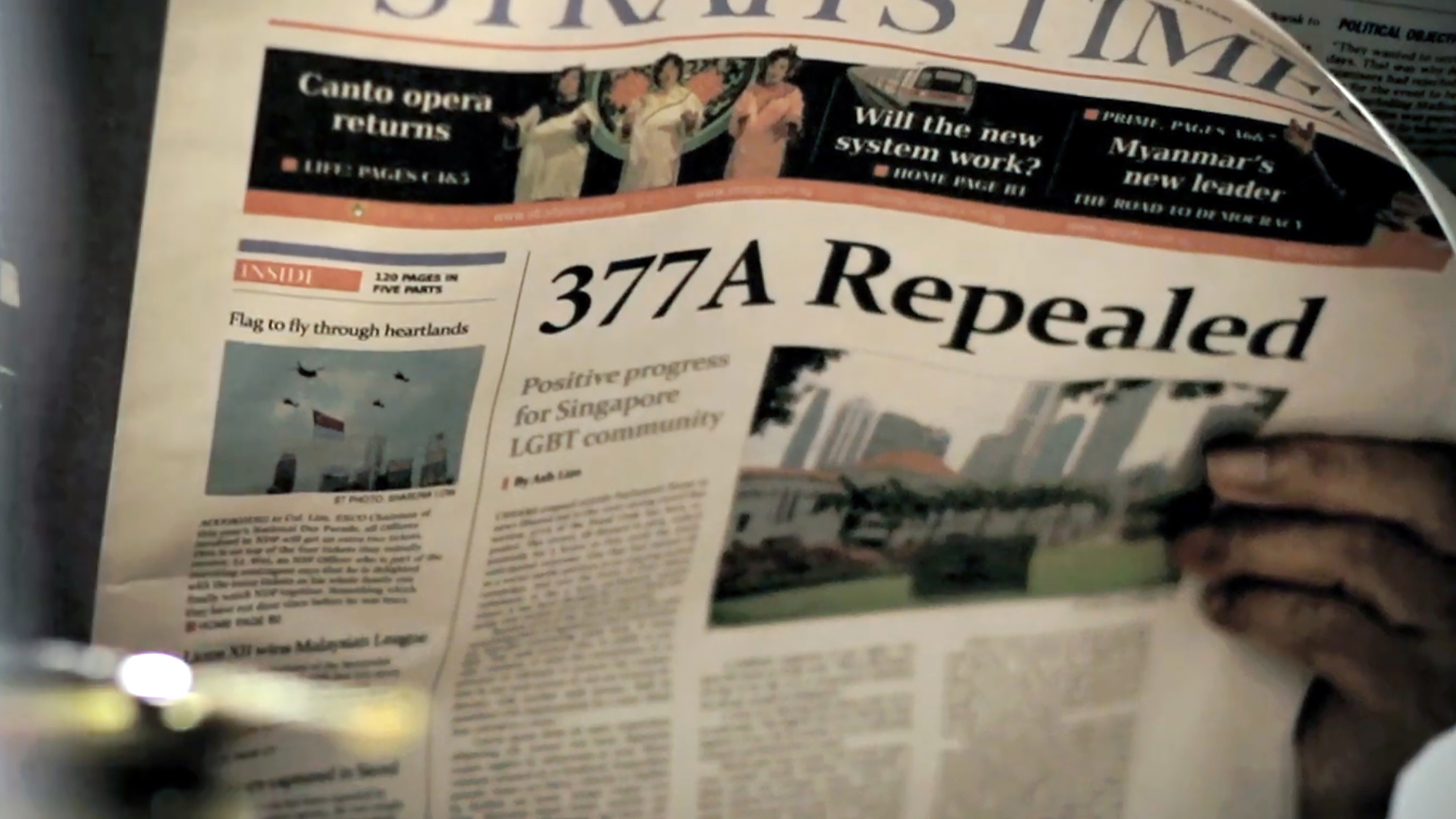
This chapter grew out of a graduate seminar with Pheng Cheah on biopolitics, drawing on his critique of human rights as “violent gifts” that stabilize power while “producing the identities of their claimants.” I review scholarship on illiberal pragmatism (Audrey Yue) and pragmatic resistance (Lynette Chua), alongside recent queer scholarship by Natalie Oswin and Pavan Mano calling for more capacious theorizations of resistance and the implications of rights-based recognition.
The chapter examines two visible forms of queer resistance: SOGIE rights campaigning at the UN Universal Periodic Review, and Pink Dot. Midway through writing, the government repealed Section 377A. The latter half turns to the parliamentary debates, reading parliamentarians’ speeches as what Chua Beng Huat calls “small measures of political theater.” I trace several parliamentarians’ repetition of “the order of things,” citing Lee Kuan Yew’s 1962 speech while also unconsciously evoking Foucault. I argue that after Lee’s passing, the ruling party has shifted from an authoritarian rule of law (Jothie Rajah) toward a biopolitical rule of order, sustaining a heteronormative arrangement that determines whose lives are sustained or pruned.
I close by returning to Pink Dot’s 2012 campaign video Someday, directed by Boo Junfeng, which imagines a future where 377A is repealed. I read its vignettes as a portrait of conditional living under a heteronormative order, yearning for an acceptance that can never arrive. I ask how we might imagine queer presence beyond the normative terms arranged for us.
On 27 March 2021, I presented an early version of this chapter on Academia.sg as part of their Junior Scholar Seminar. The conversation was moderated by Natalie Oswin. You can access the hour-long Zoom recording here.
Works cited
- Cheah, Pheng. Inhuman Conditions: On Cosmopolitanism and Human Rights. Harvard UP, 2006.
- Chua, Beng Huat. Liberalism Disavowed: Communitarianism and State Capitalism in Singapore. Cornell UP, 2017.
- Chua, Lynette J. Mobilizing Gay Singapore: Rights and Resistance in an Authoritarian State. Temple UP, 2014.
- Lee, Kuan Yew. “Singapore Prime Minister’s Speech to the University of Singapore Law Society Annual Dinner at Rosee d’Or.” University of Singapore Law Society Annual Dinner, Rosee d’Or, Singapore, 18 Jan. 1962, 8:30 p.m. National Archives of Singapore.
- Mano, Pavan. Straight Nation: Heteronormativity and Other Exigencies of Postcolonial Nationalism. Manchester UP, 2025.
- Oswin, Natalie. Global City Futures: Desire and Development in Singapore. U of Georgia P, 2019.
- Pink Dot SG. “Pink Dot 2012: Someday.” YouTube, 29 May 2012.
- Rajah, Jothie. Authoritarian Rule of Law: Legislation, Discourse and Legitimacy in Singapore. Cambridge UP, 2012.
- Singapore Parliamentary Debates, Official Report. 14th Parl., vol. 95, no. 76 and 77, 28 and 29 Nov. 2022. Parliament of Singapore, sprs.parl.gov.sg.
- Yue, Audrey. “Creative Queer Singapore: The Illiberal Pragmatics of Cultural Production.” Gay & Lesbian Issues and Psychology Review, vol. 3, no. 3, 2007.
TwoCamouflage ChoreographiesThe Public Secrets of Jason Wee’s Practice
Camouflage ChoreographiesThe Public Secrets of Jason Wee’s Practice

This chapter reads several of Jason Wee’s works spanning a decade for the choreography he performs with the act of gay cruising. Building on the framework of resistance from Chapter 1, I argue that “camouflaged choreographies” are what artists in Singapore perform as they tread the boundary between transparency and opacity, from “doing something” to “being instrumentalized,” responding to etiolated conditions cultivated by the State, its agents, and the circulation of capital.
I read Lord Mountbatten Thinks of Pink (2010) as the dusty pink naval camouflage Mountbatten devised during WWII, and as an act of camouflage itself, a “public secret” hiding in plain sight. I then turn to Jason’s recent work, which began as an Exactly Foundation residency titled Commonplace (2018), shapeshifting into Uncommon Choreographies (2020–present).
Wee states: “We are public secrets, we stand in public spaces and without beginning to, without deliberately covering or passing or hiding, are already hidden and passed over and overlooked.” Inspired by his statement, I argue that the State’s selective blindness toward its constituents, the refusal to see what is in front of them, is what makes queerness in Singapore strangely queerer.
I close by considering how Sianne Ngai’s concept of “visceral abstraction” helps us understand Jason’s practice as social knowledge that need not be decoded to achieve material effects. I turn to Jason’s other practice, the “luxury we cannot afford,” reading an excerpt from “Walk Walk Only: A Choreography” in his 2026 collection Dance Time. I ask: What does it mean to expose what is intended to be hidden to the scrutiny of overexposure?
Works cited
- Ngai, Sianne. Theory of the Gimmick: Aesthetic Judgment and Capitalist Form. Harvard UP, 2020.
- Wee, Jason. Commonplace: Gone Cruising. Exactly Foundation, 2019.
- ———. Lord Mountbatten Thinks of Pink. 2010.
- ———. Uncommon Choreographies. 2020–21.
- ———. “Walk Walk Only: A Choreography.” Dance Time. Dakota Books, 2026.
ThreeReclaiming ReclamationEcological Intimacy at Tanjong Rhu
Reclaiming ReclamationEcological Intimacy at Tanjong Rhu
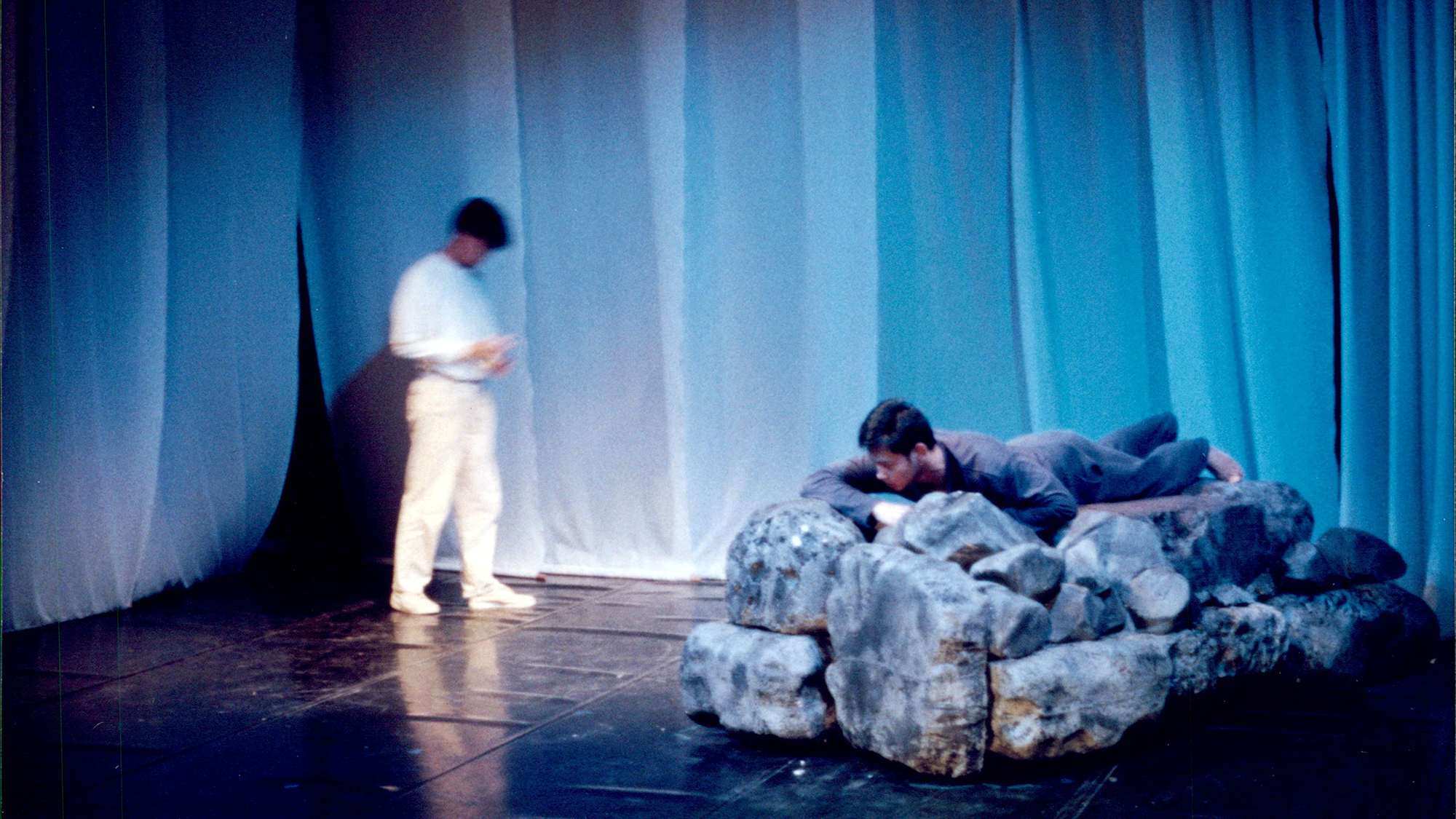
This chapter attends to the materiality of reclaimed shorelines of cruising. While working on a documentary about the site, I collected memories from men who visited before and after the police entrapment exercises of the 1990s. One thing became clear across them: a strange ecological intimacy recurred. Vivid descriptions of lallang, of casuarinas, of water bottles left on rocky revetments. One account, from a man recalling himself at sixteen, describes sinking into the ground in his school uniform and thinking he would die there.
We sink into reclaimed land alongside two artworks. The first: Otto Fong’s Cetacea, staged in 1993 by TheatreWorks, and restaged in Mandarin as 鲸 in 1994 by Drama Box, presents an interspecies intimacy between a beached whale and a boy at Tanjong Rhu, a surrogate for kinship and love at once brotherly and erotic. The second: Boo Junfeng’s short film Tanjong Rhu (2009) foregrounds the ecology of reclaimed land so vividly that an audience member described the film returning him bodily to the site.
I draw on recent value-form and ecological Marxist feminist scholarship reconfiguring historical materialism to think about the imbrication of land, capital, property, subsumption, and social reproduction. I read cruising, like aesthetic production, as activity with “no value”: the sensuous reproductive activity that capital requires and banishes (Roswitha Scholz’s value-dissociation, Rosemary Hennessy’s outlawed needs, Amy De’Ath, Alyssa Battistoni). This is the critical hinge of the dissertation, shaped by conversations with my committee member Colleen Lye.
I close by returning to Tanjong Rhu in 2026: settling land, migrant worker shelters, sand piles, the Founders’ Memorial. I return there to “value” itself, and to how the term has been laundered of critical content and returned as civic vocabulary in the 1991 Shared Values white paper.
Works cited
- Battistoni, Alyssa. Free Gifts: Capitalism and the Politics of Nature. Princeton UP, 2025.
- Boo Junfeng, director. Tanjong Rhu. 2009.
- Cetacea. By Otto Fong, directed by Lim Yu Beng, TheatreWorks, 15–18 July 1993, Drama Centre, Fort Canning Hill, Singapore. Theater program.
- Cetacea / 鲸. By Otto Fong, directed by Liu Khiat Khee and Tan Pei Hwee, Drama Box, 13–15 May 1994, Substation Guinness Theatre, Singapore. Theater program.
- De’Ath, Amy S. Behind Our Backs: Feminized Poetry and Capitalist Abstraction. Stanford UP, 2026.
- ———. “Gender and Social Reproduction.” The SAGE Handbook of Frankfurt School Critical Theory, edited by Beverley Best, Werner Bonefeld, and Chris O’Kane, SAGE, 2018.
- Hennessy, Rosemary. Profit and Pleasure: Sexual Identities in Late Capitalism. Routledge, 2000.
- Scholz, Roswitha. “Patriarchy and Commodity Society: Gender without the Body.” Marxism and the Critique of Value, MCM’ Publishing, 2014.
- Singapore Parliament. White Paper on Shared Values. Command Paper 1 of 1991, Singapore National Printers, 1991.
FourSolitary-SolidarityMore-than-human Parrhesia and Transgenerational Conduct
Solitary-SolidarityMore-than-human Parrhesia and Transgenerational Conduct
In October 2018, Seelan Palay was serving fourteen days in prison, having chosen jail over a fine for conducting a public procession without a permit. His protest commemorated Dr. Chia Thye Poh, whose freedom the State restricted for thirty-two years under the Internal Security Act. Refusing a blood test on intake, Palay was placed in solitary confinement and assigned the number 5153. On the sixth day, he peeled the orange from his meal and consumed it sac by sac, wondering where he stopped and the orange began.
This chapter begins with this etiolated conduct. I read this gesture against testimonials from political detainees held under the Internal Security Act, including Teo Soh Lung, Poh Soo Kai, Said Zahari, Chia Thye Poh, KC Chew, and Chng Suan Tze. They all describe a recalibration of attention toward the creatures sharing their carceral architecture: toads, ants, lizards, crickets, birds. Theater director and cultural medallion recipient Kuo Pao Kun, detained in 1976, said in an interview that when solitude became extreme enough that the appearance of an ant could evoke joy, his perception of life shifted entirely. I try to understand how this more-than-human sensitivity affected his and Palay’s artistic practice after their release from detention.
The chapter develops parrhesia, the courage to speak truth to power, from Foucault’s 1983 Berkeley lectures, which I encountered as audio recordings at the Bancroft Library, listening past the felicitous utterances to the gaps, silences, and unanswered questions. I read this alongside Gayatri Spivak: what happens when the subaltern cannot speak truth to power? Through this reading, I argue that void performatives, stripped of institutional force, accumulate a transgenerational force precisely through their apparent hollowness, generating a distended form of solitary-solidarity.
This chapter is under review for Performance Research journal in the special issue On Carceral Shifts, edited by Juan Manuel Aldape Muñoz, Michelle Castañeda and Anna Jayne Kimmel.
Works cited
- Chee Soon Juan. To Be Free: Stories from Asia’s Struggle against Oppression. Monash Asia Institute, 1999.
- Chng Suan Tze, et al., editors. 1987: Singapore’s Marxist Conspiracy 30 Years On. Function 8, 2017.
- Devan, Janadas. “Living the Art of Life: The Purging Effect Was Deep and Total.” The Straits Times, 19 May 2000, pp. 4–5.
- Foucault, Michel. Discourse and Truth and Parrhēsia. Edited by Henri-Paul Fruchaud and Daniele Lorenzini, U of Chicago P, 2019.
- Poh Soo Kai, et al., editors. The 1963 Operation Coldstore in Singapore: Commemorating 50 Years. Strategic Information and Research Development Centre and Pusat Sejarah Rakyat, 2013.
- Poh Soo Kai. Living in a Time of Deception. Edited by Hong Lysa and Wong Souk Yee, Function 8 and Pusat Sejarah Rakyat, 2016.
- Said Zahari. Dark Clouds at Dawn: A Political Memoir. Insan, 2001.
- ———. The Long Nightmare: My 17 Years as a Political Prisoner. Utusan, 2007.
- Teo Soh Lung. Beyond the Blue Gate: Recollections of a Political Prisoner. Strategic Information and Research Development Centre, 2010.
- Varagur, Krithika. “Art and Dissent in Singapore: An Interview with Seelan Palay.” Los Angeles Review of Books, 4 Jan. 2019.
FiveContainment and ContingencySensing Infrastructure in Charles Lim’s All Lines Flow Out
Containment and ContingencySensing Infrastructure in Charles Lim’s All Lines Flow Out
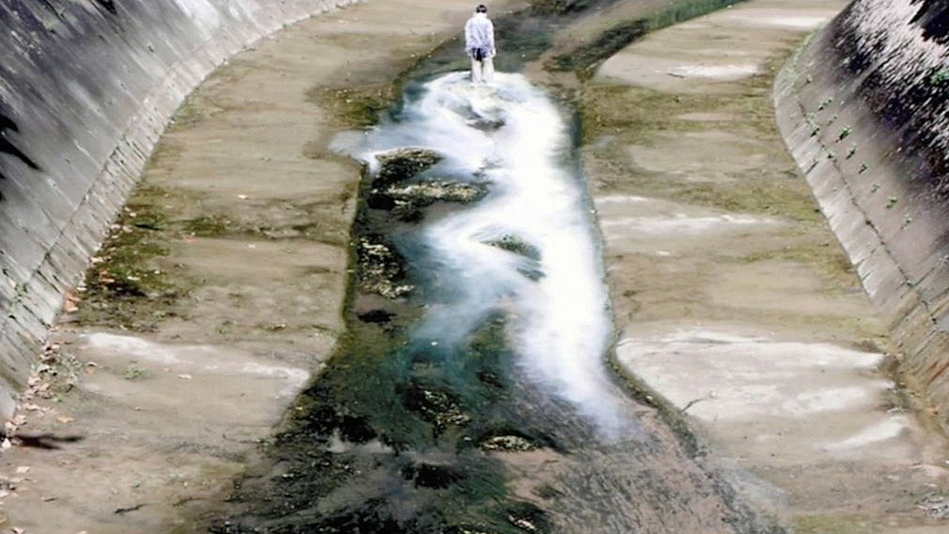
The escape, and a fugitive on the run. On 27 February 2008, Mas Selamat Kastari climbed through a bathroom window at Whitley Road Detention Centre, scaled the perimeter fence, and vanished. He had been held for two years under the Internal Security Act and is the only detainee on record to have escaped. The most persistent urban myth traces his route via the longkangs, the drainage network channeling rainwater from the central catchment to the reclaimed shorelines. Mas Selamat was eventually arrested in Johor, Malaysia, and repatriated to Singapore after a year-long manhunt.
In 2011, Charles Lim premiered All Lines Flow Out at the Singapore Biennale, sited in a disused airport terminal. This is a 21-minute video on loop displayed alongside two bulbous drainage socks suspended from the ceiling, packed with dried leaves and debris. The film featured the drainage infrastructure of the island, drifting in a languid pace from the interior to the sea. I read the film as dwelling in the poetics of infrastructure (Brian Larkin) that made escape imaginable.
This chapter reads four moments closely. A human figure that first appears as debris bobbing on the water. A white substance leaking from a figure in the canal, staining the waterway opaque. An interlude at the Cashin House, a colonial-era residence built on concrete pilings near Lim Chu Kang. And the recursion of Zai Tang’s sound design and the film’s editing, which loops without beginning or resolution. Through these I approach an etiolated conduct that does not extend from human agential capacity: withdrawal, contingency, leaks, and what Fred Moten calls a re/con/figuring of the milieu. This is etiolated conduct at its most unpragmatic and opaque limit, a withdrawal of presencing, what Pheng Cheah via Derrida describes as temporalization as worlding.
Works cited
- Cheah, Pheng. What Is a World?: On Postcolonial Literature as World Literature. Duke UP, 2016.
- Derrida, Jacques. The Politics of Friendship. Translated by George Collins, Verso, 1997.
- Larkin, Brian. “Promising Forms: The Political Aesthetics of Infrastructure.” The Promise of Infrastructure, edited by Nikhil Anand, Akhil Gupta, and Hannah Appel, Duke UP, 2018, pp. 175–202.
- Lim, Charles Yi Yong. All Lines Flow Out. 2011, mixed-media video installation, Singapore Biennale, Old Kallang Airport, Singapore.
- Moten, Fred. In the Break: The Aesthetics of the Black Radical Tradition. U of Minnesota P, 2003.
EpilogueTemporary MeasuresConduct in a Broken Circuit
Temporary MeasuresConduct in a Broken Circuit
The epilogue begins with a poem. In 1968, Lee Kuan Yew declared that poetry was a luxury Singapore could not afford. Three years later my mother published one. My father clipped it from the newspaper. They both put down their pens and became teachers for the rest of their lives, and it remains her only published poem. I found it in a book of clippings while clearing the house during the circuit breaker, the government’s term for the pandemic lockdown, and was struck by a voice that spoke of standing up to oppression and that I did not recognize as hers.
The poem, 该如何?, works through a botanical metaphor of trees and grass under etiolated conditions. Around the same time, then Prime Minister Lee Hsien Loong noted that restrictions on movement in the migrant worker dormitories would mean less frequent grass cutting. I trace the figure of the grasscutter against the architect-gardener that politicians adopt at tree-planting ceremonies, asking who performs the labor of maintaining a tree once it is planted, and what that labor costs.
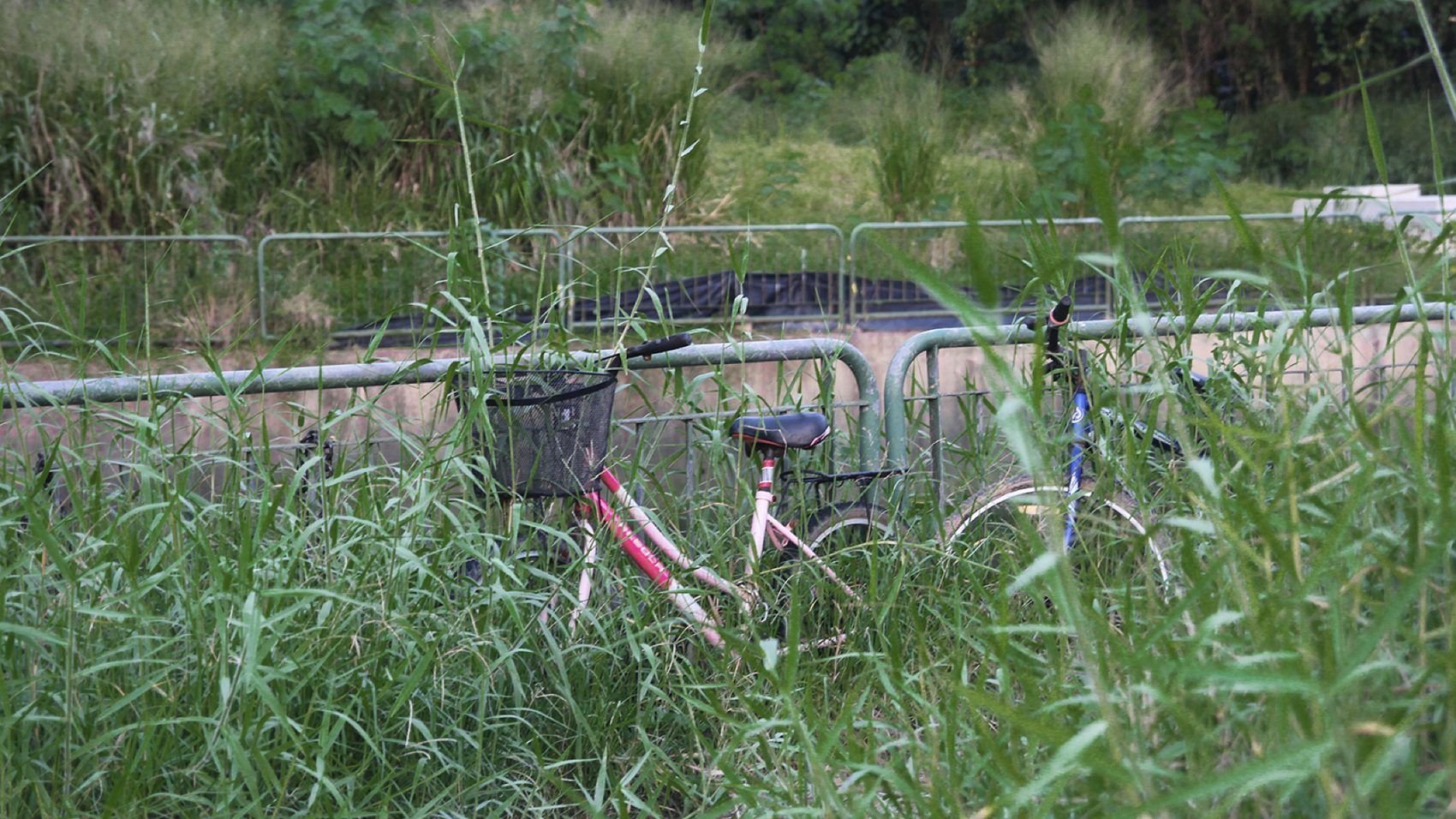
On the first day of Phase Two, as restrictions eased, I conducted a one-on-one performance procession along the old Malayan railway from the Old Ford Factory to the perimeter of Kranji Dormitory. At the fence I found rows of bicycles chained to the canal railing and overgrown with vegetation. The men who rode them had been confined to their dormitories for almost two months. A circuit broken for some and not for others.
The epilogue returns to my own praxis to clarify what is at stake in the scholarship, and it closes where it began, with my mother’s question: 该如何?
Works cited
- Hicks, Robin. “In Pictures: Nature Is Thriving in Locked-Down Singapore. Is It Time to Rethink the City in a Garden?” Eco-Business, 20 May 2020.
- Koh, Tai Ann. “The Singapore Experience: Cultural Development in the Global Village.” Southeast Asian Affairs, 1980, pp. 292–308.
- Lee Hsien Loong. “PM Lee Hsien Loong on the COVID-19 Situation in Singapore on 21 April 2020.” Prime Minister’s Office Singapore, 21 Apr. 2020.
Langenbach and Cane
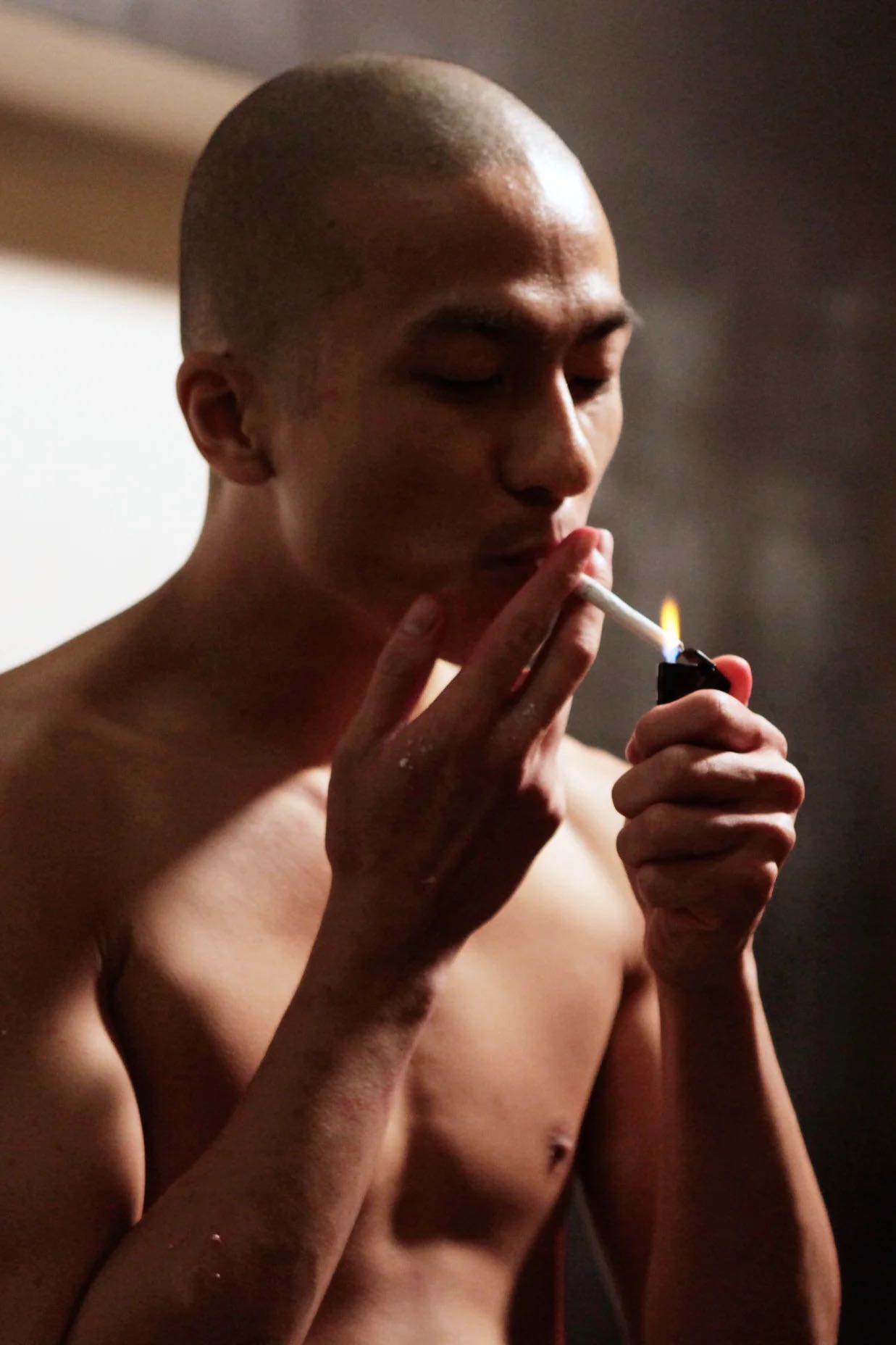
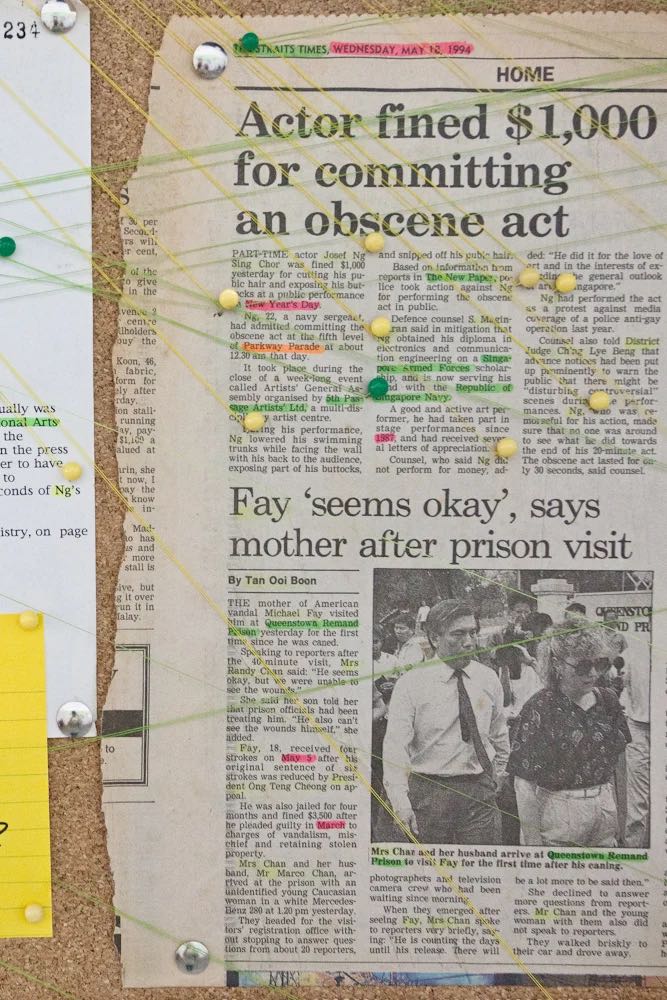
From 2012 to 2016 I worked with the artist archive of Ray Langenbach, an educator and performance artist based in Singapore through the 1990s. He documented many performances of that decade, including Josef Ng’s Brother Cane and the Artists’ General Assembly, the event it was staged within.

Queer Relations
This section gathers three projects that engage with queer archives: a residency in Melbourne, Australia, where I visited the Australian Queer Archives; a temporary archive of queer objects assembled in Singapore, prompted by that visit; and an object relation lecture and workshop that navigates the history of Section 377A in Singapore.
Bodies of Knowledge
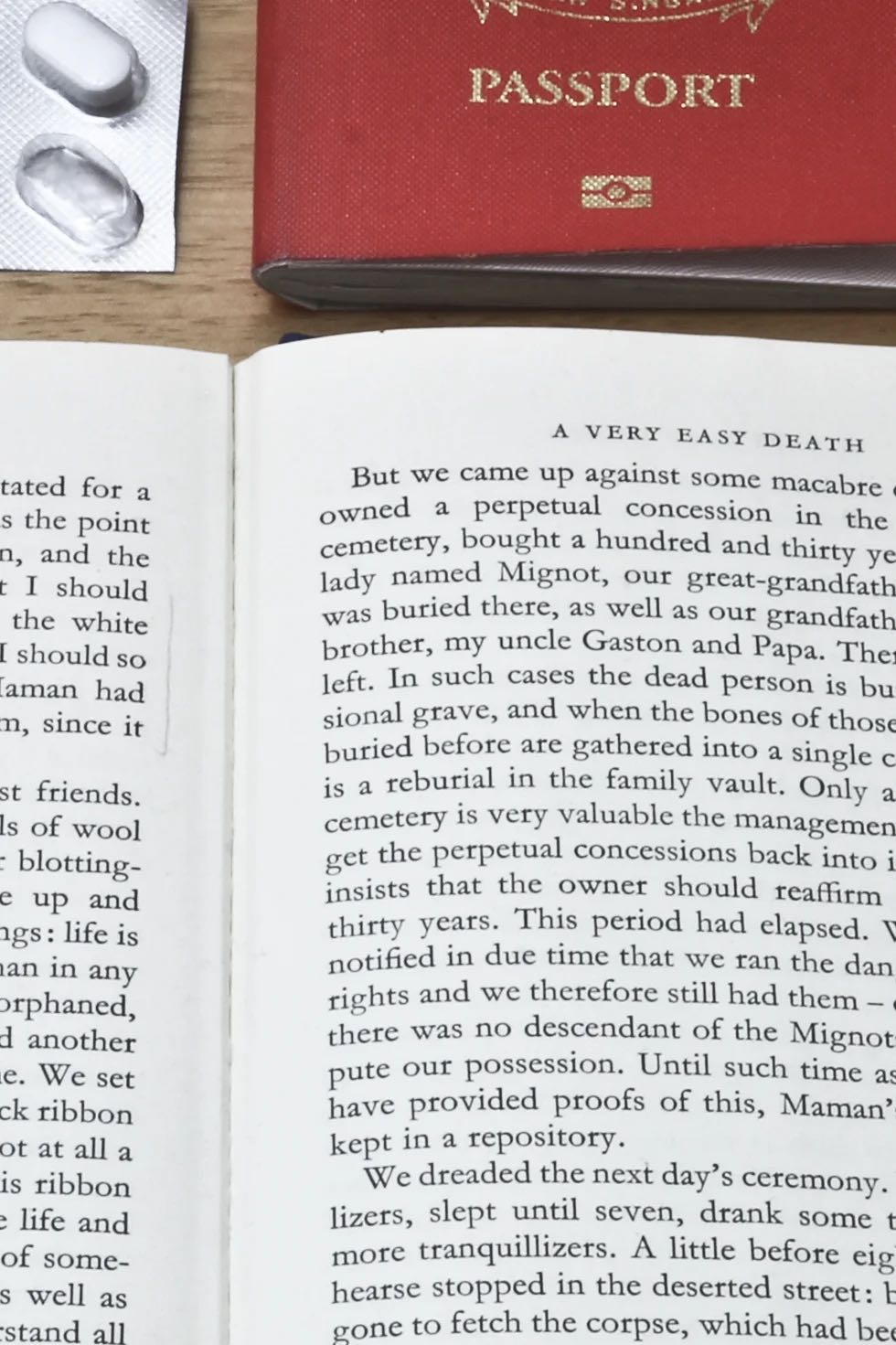
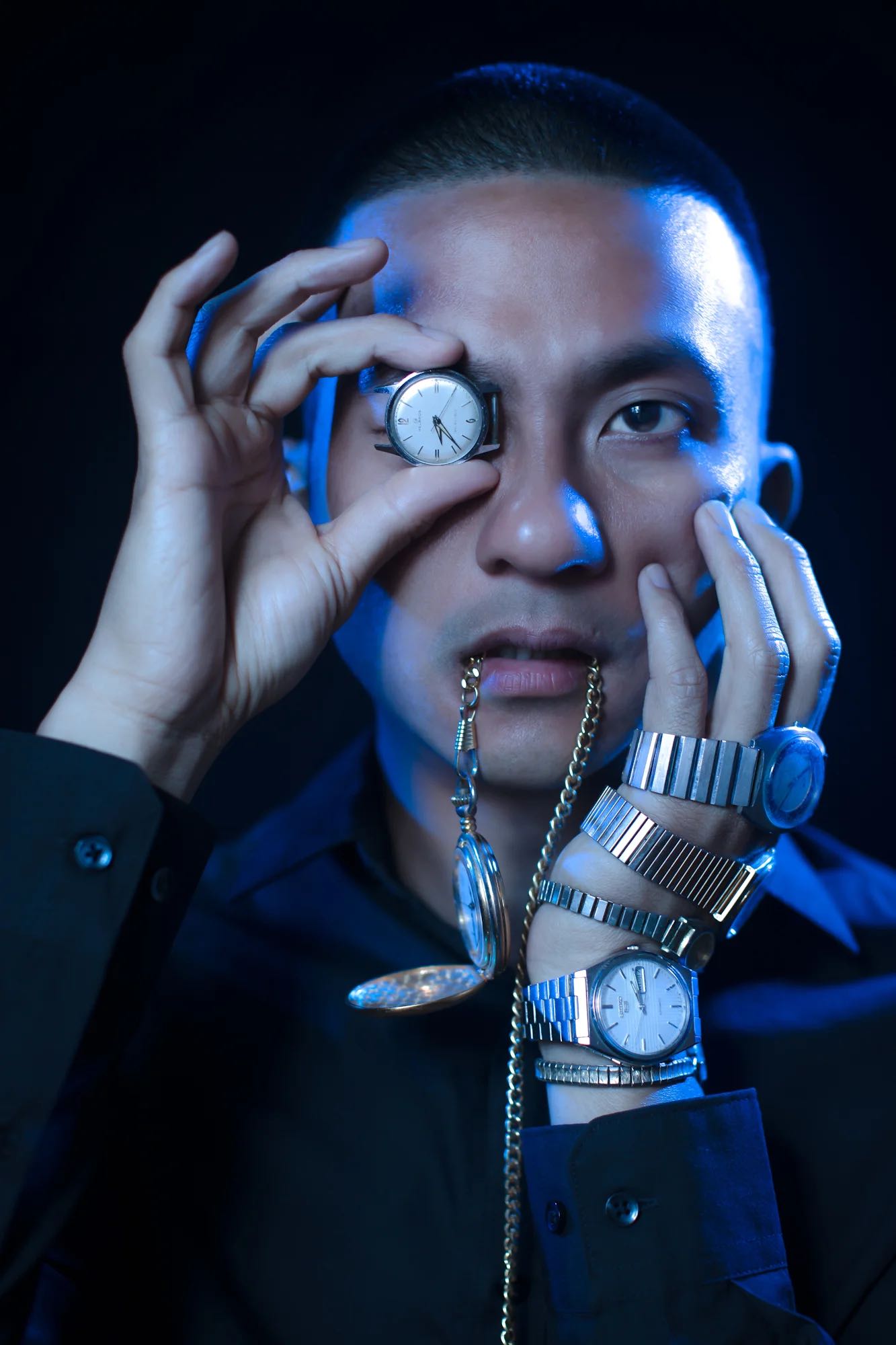
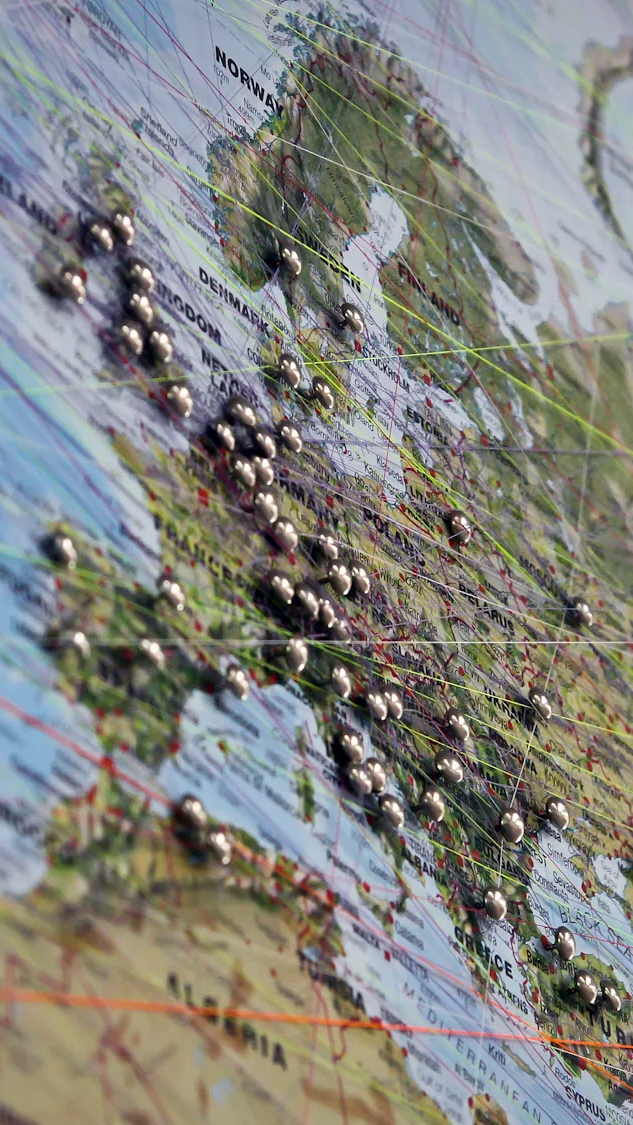
These projects engage with corpuses of knowledge: an artist residency in France, an art museum’s collection of reading materials, and my embodied passion for Lindy Hop, held alongside the memory of Paddy Chew, the first person in Singapore to publicly come out as living with HIV, who staged a monologue about his life in 1999.
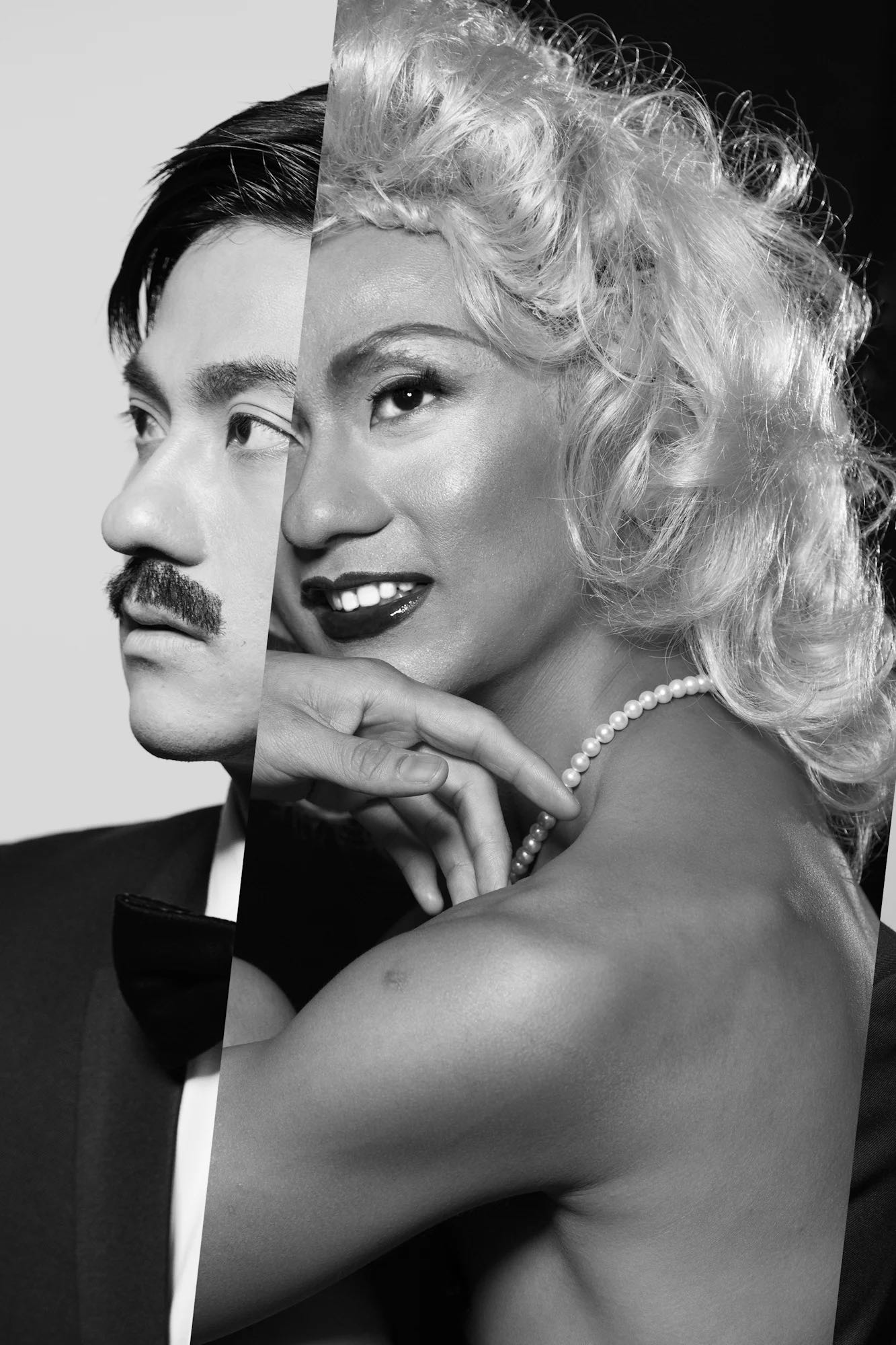
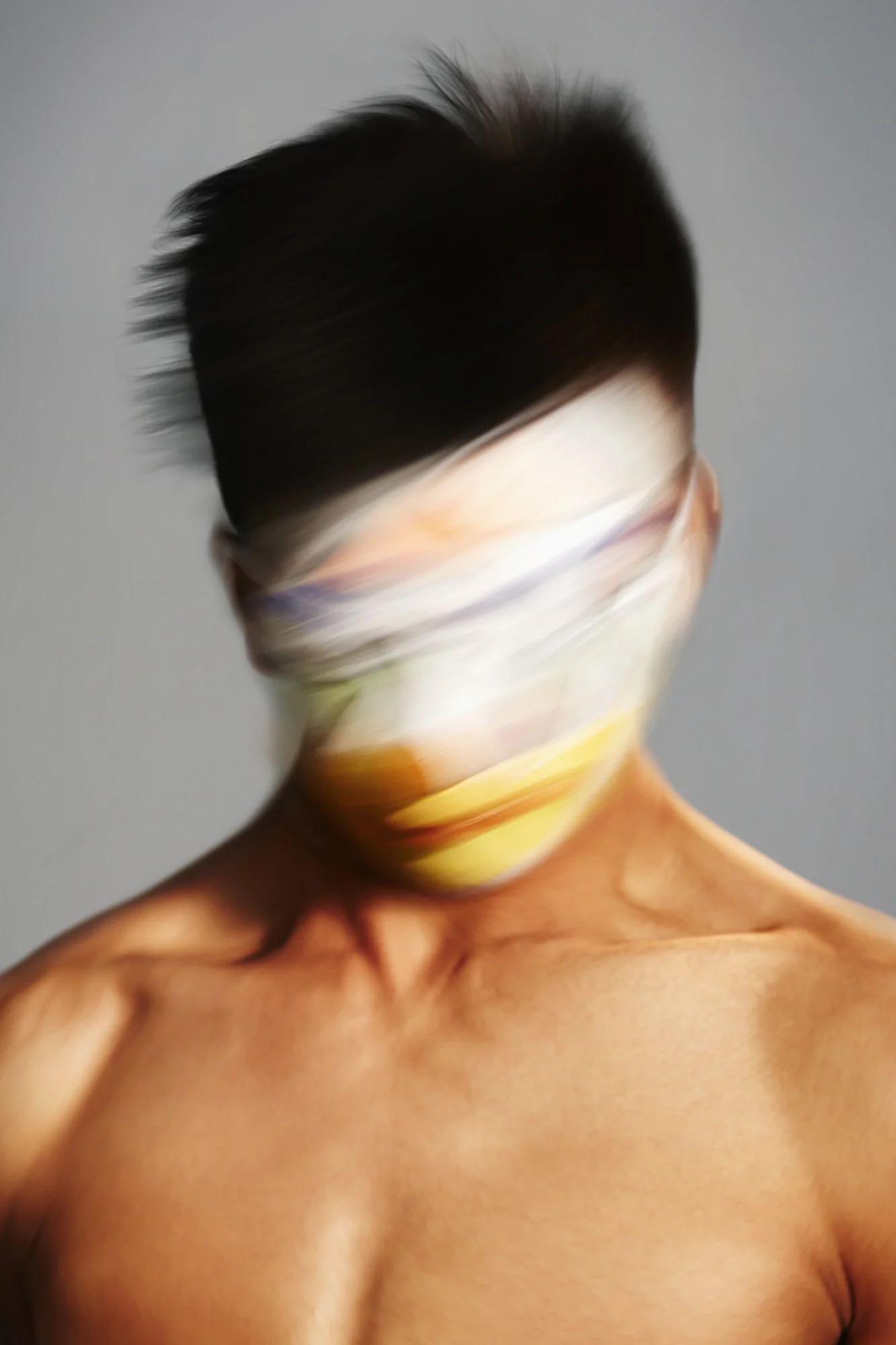
Object to Desire
This section holds my earliest and my most recent works. Embodiment of Desire tracks seeds planted during my shift from a moving-image practice to performance in Chicago, and my navigation of objectification and desirability as a gay Asian man in the United States. That inquiry continues in current work on racialized objectification and the practice of rope bondage.
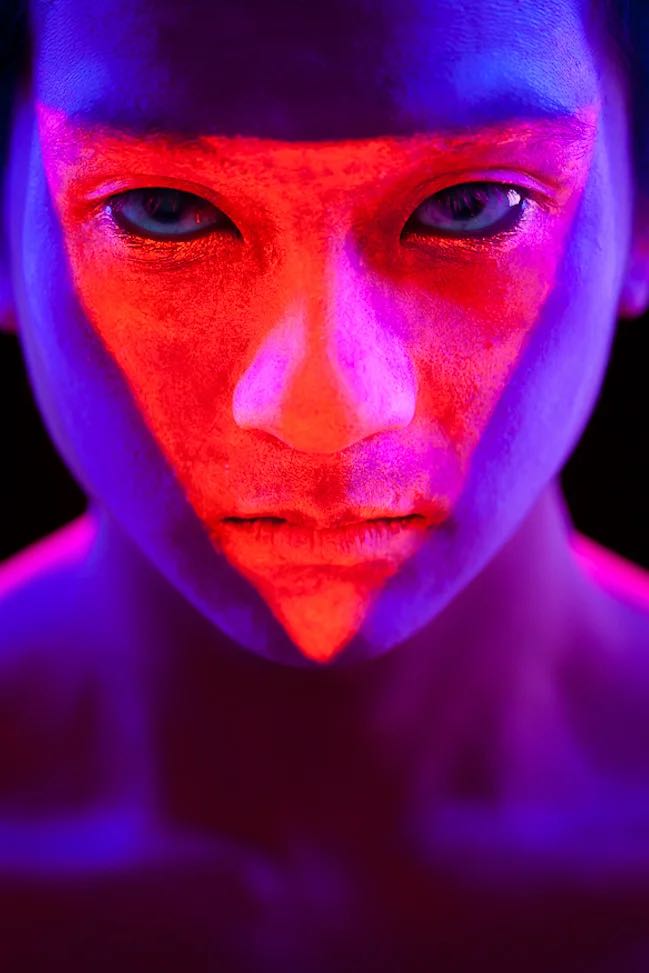
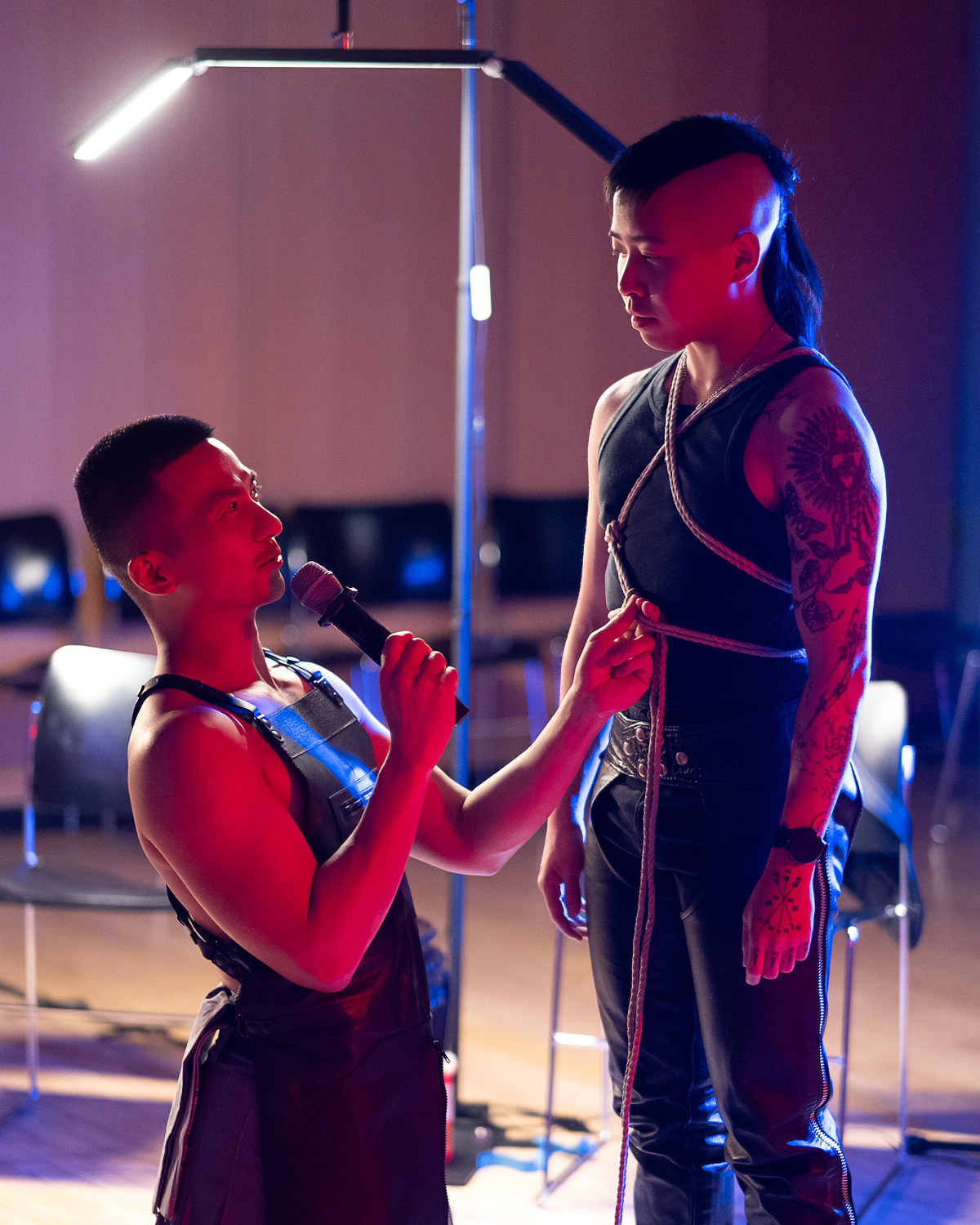
Lecture, This Way (2015)
- Installation
- 8 to 13 October 2015
- Victorian College of the Arts College Flat
- This Asialink Arts Residency Project was a collaboration between Asialink, the Victorian College of the Arts and The Art Incubator and was supported by Creative Victoria
If orientations point us to the future, to what we are moving toward, then they also keep open the possibility of changing directions, of finding other paths, perhaps those that do not clear a common ground, where we can find hope in what goes astray.
Sara Ahmed, Queer Phenomenology: Orientations, Objects, Others
Looking back is what keeps open the possibility of going astray. We look back, we go behind; we conjure what is missing from the face. This backward glance also means an openness to the future, as the imperfect translation of what is behind us.
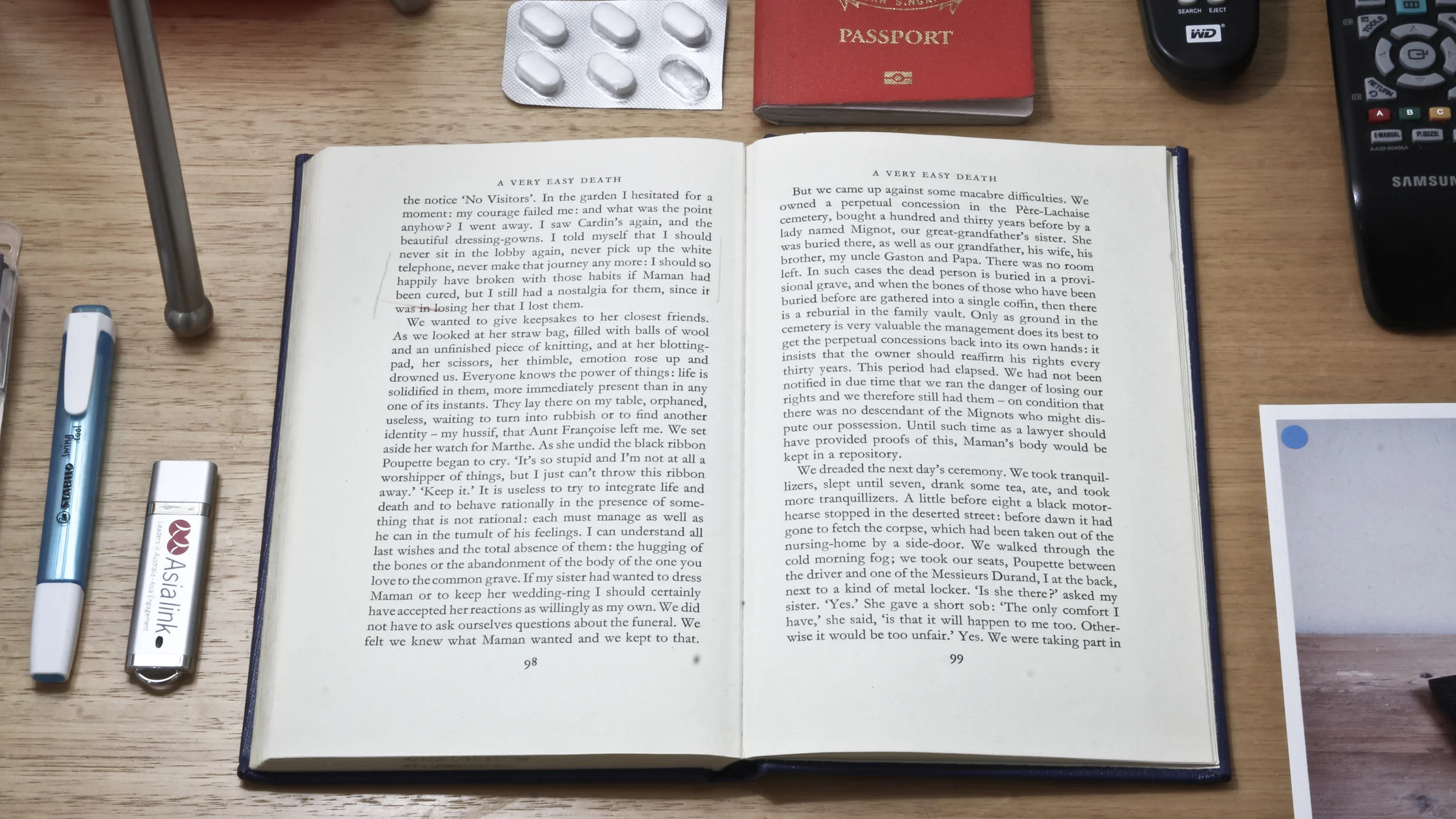
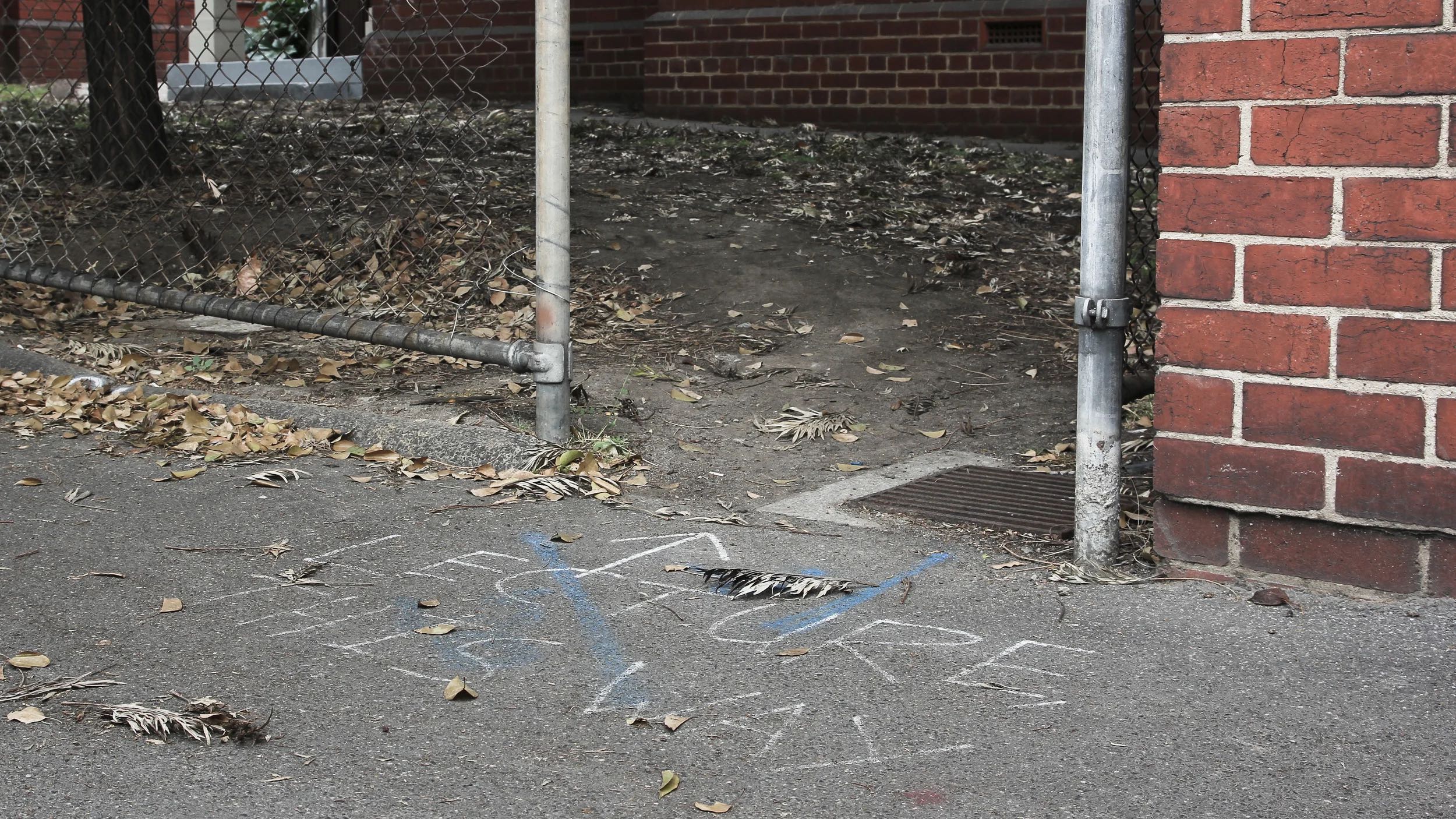
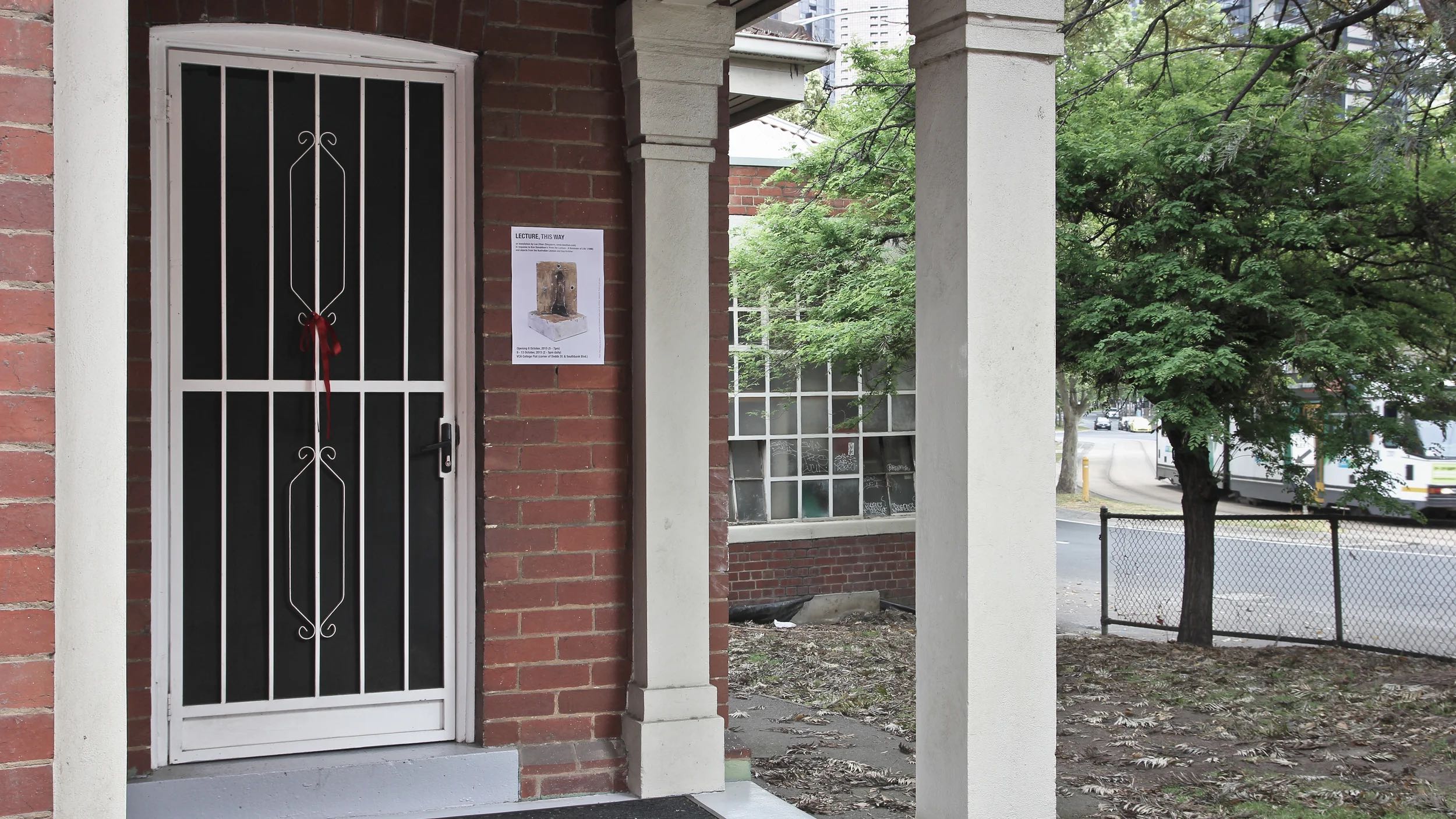
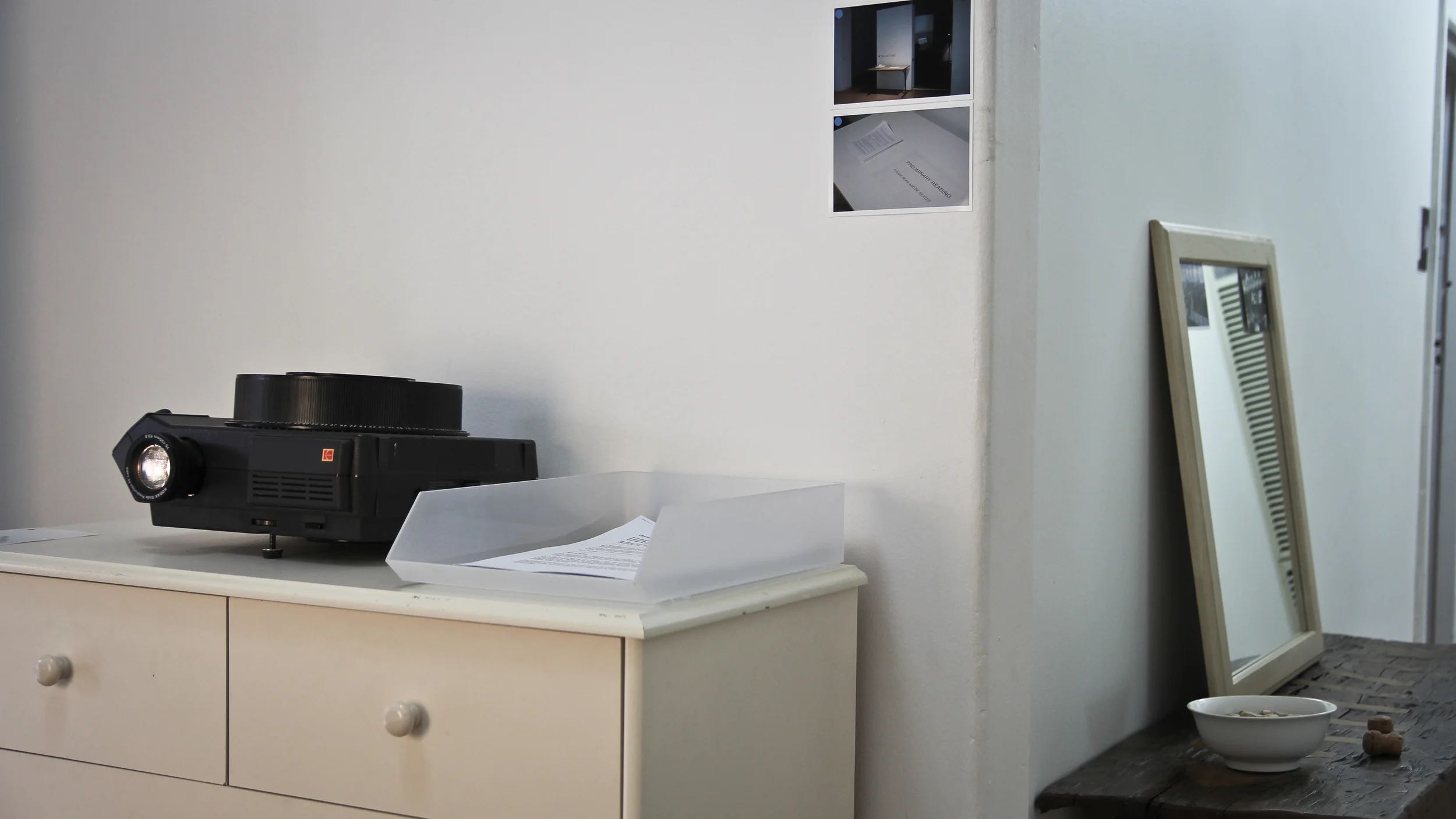
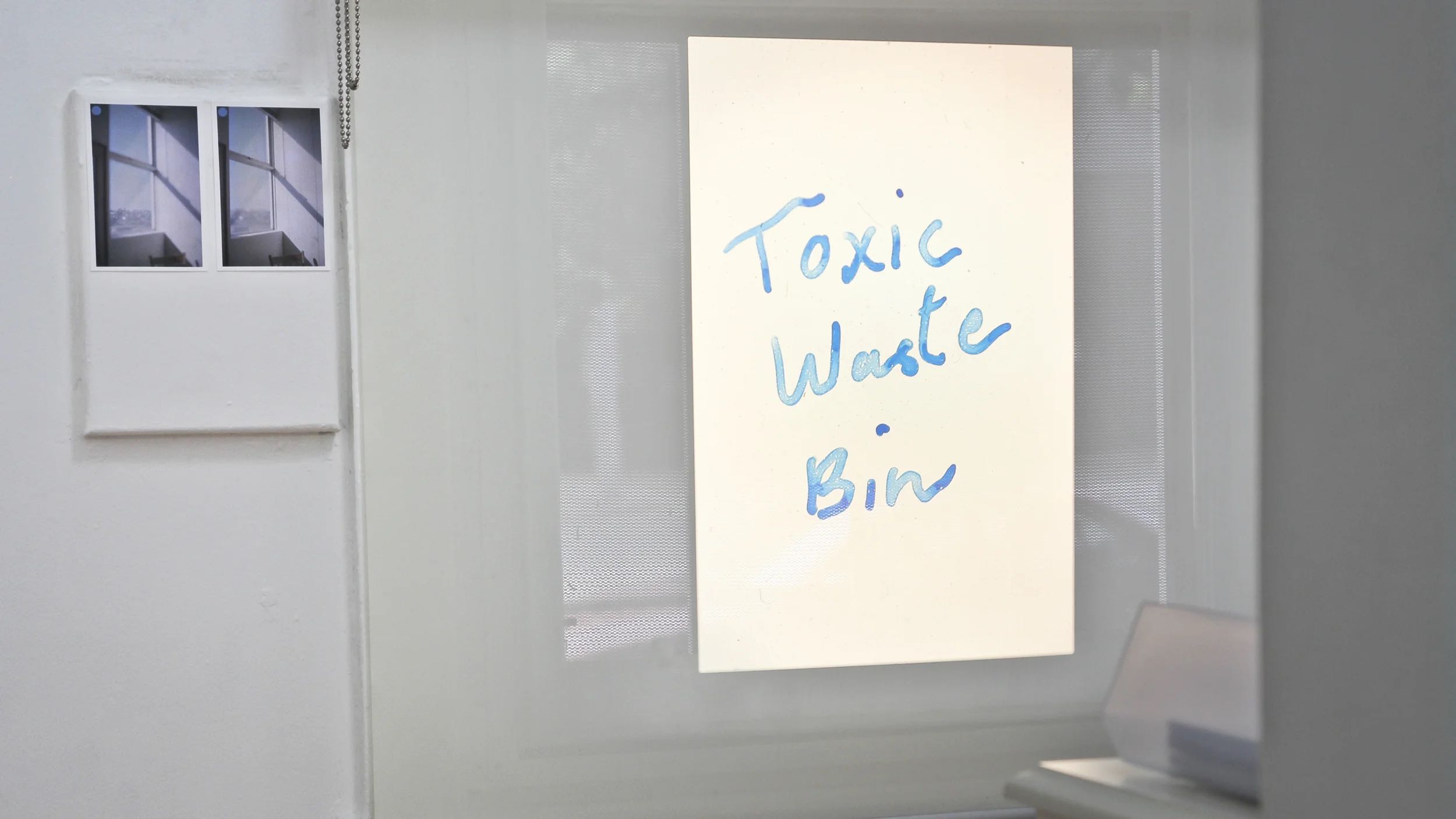
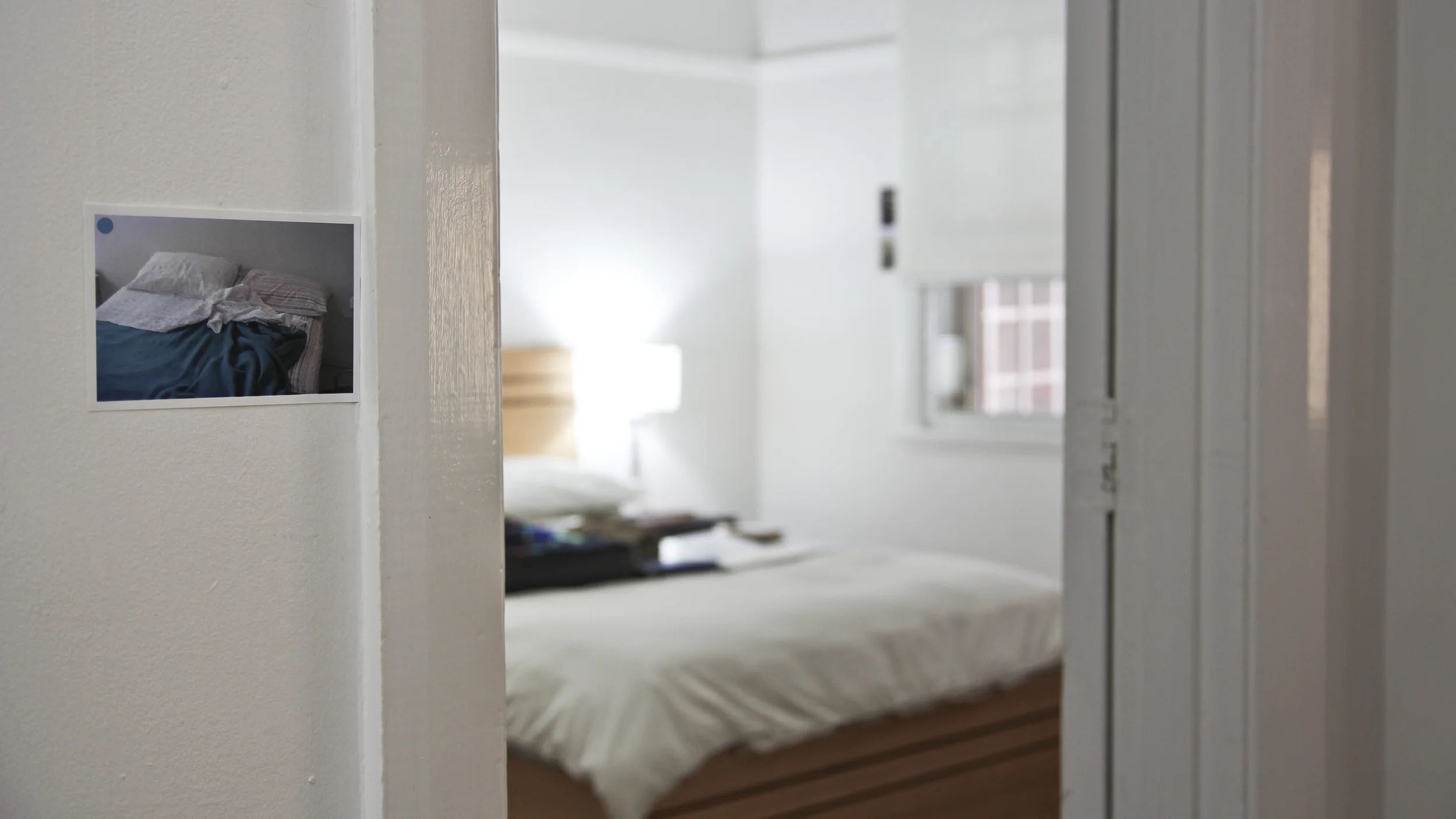
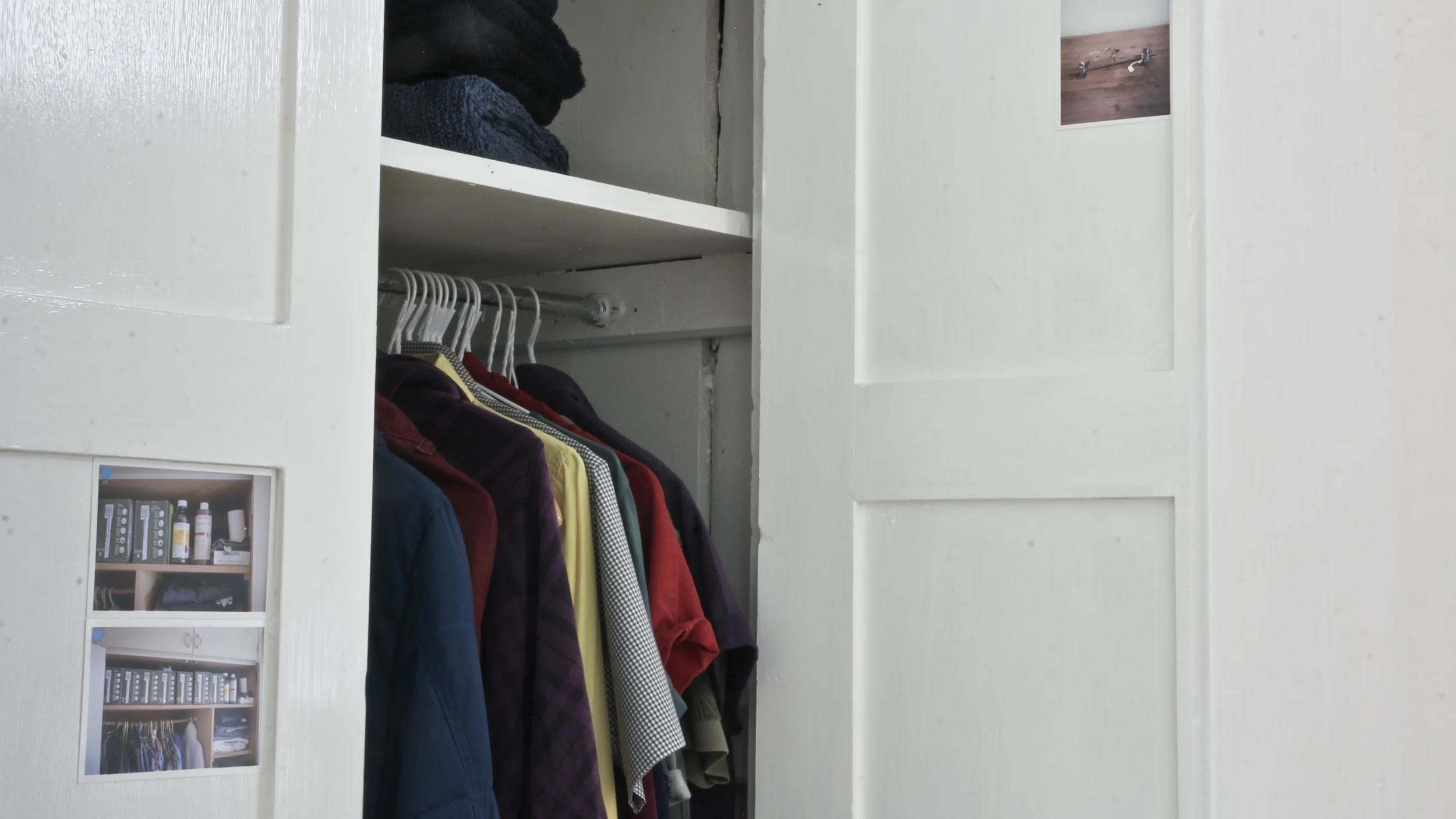
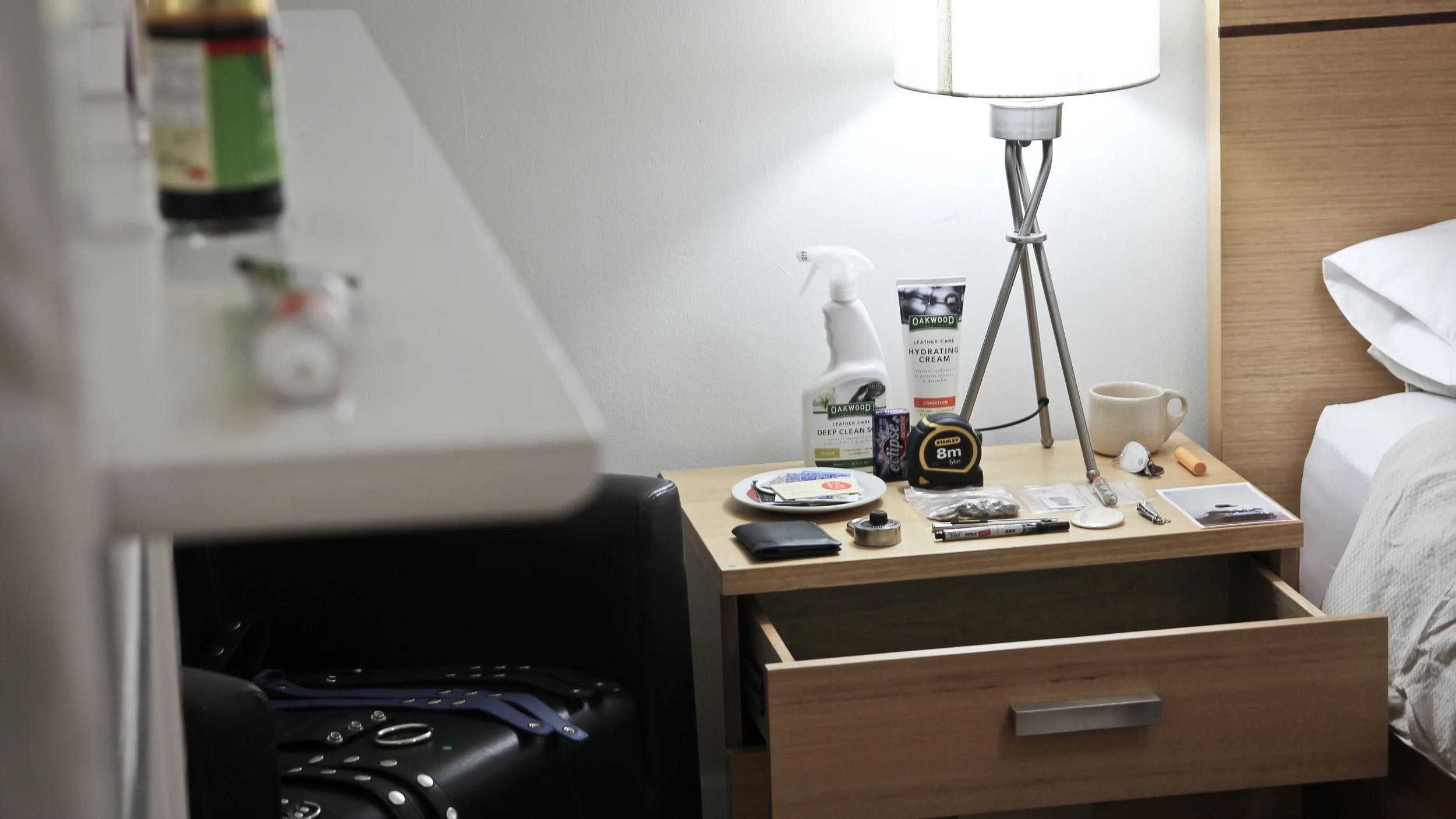
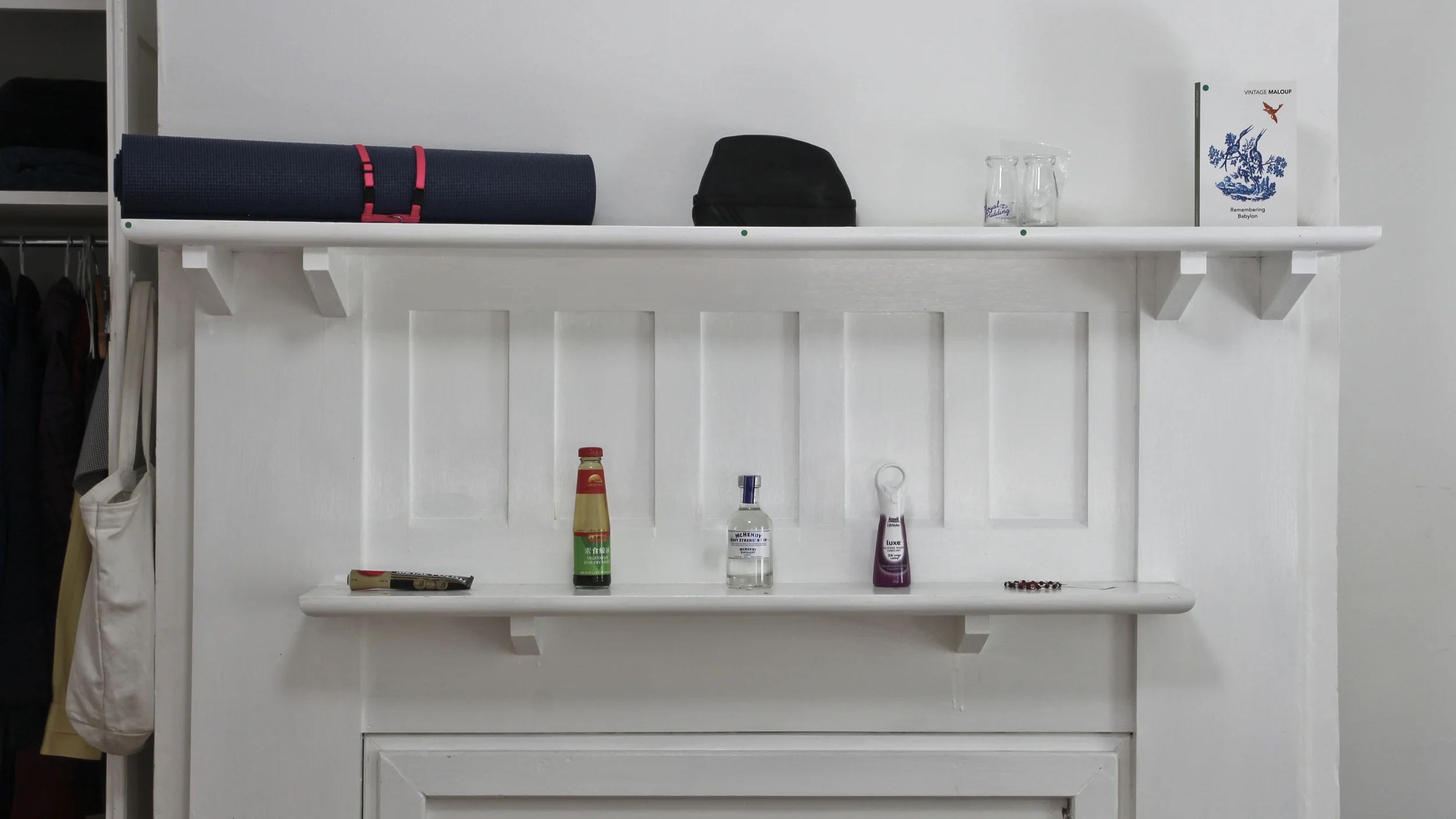
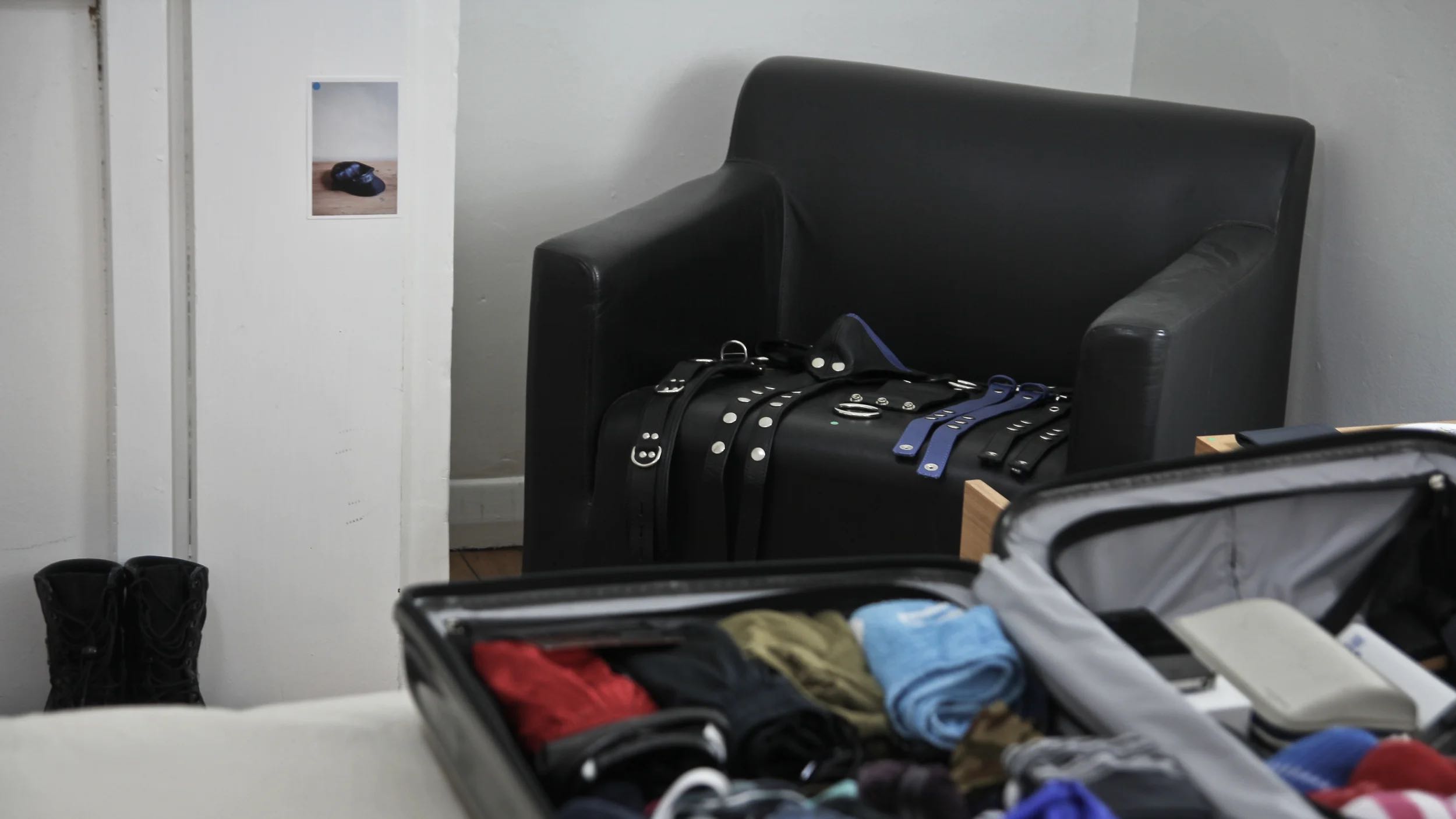
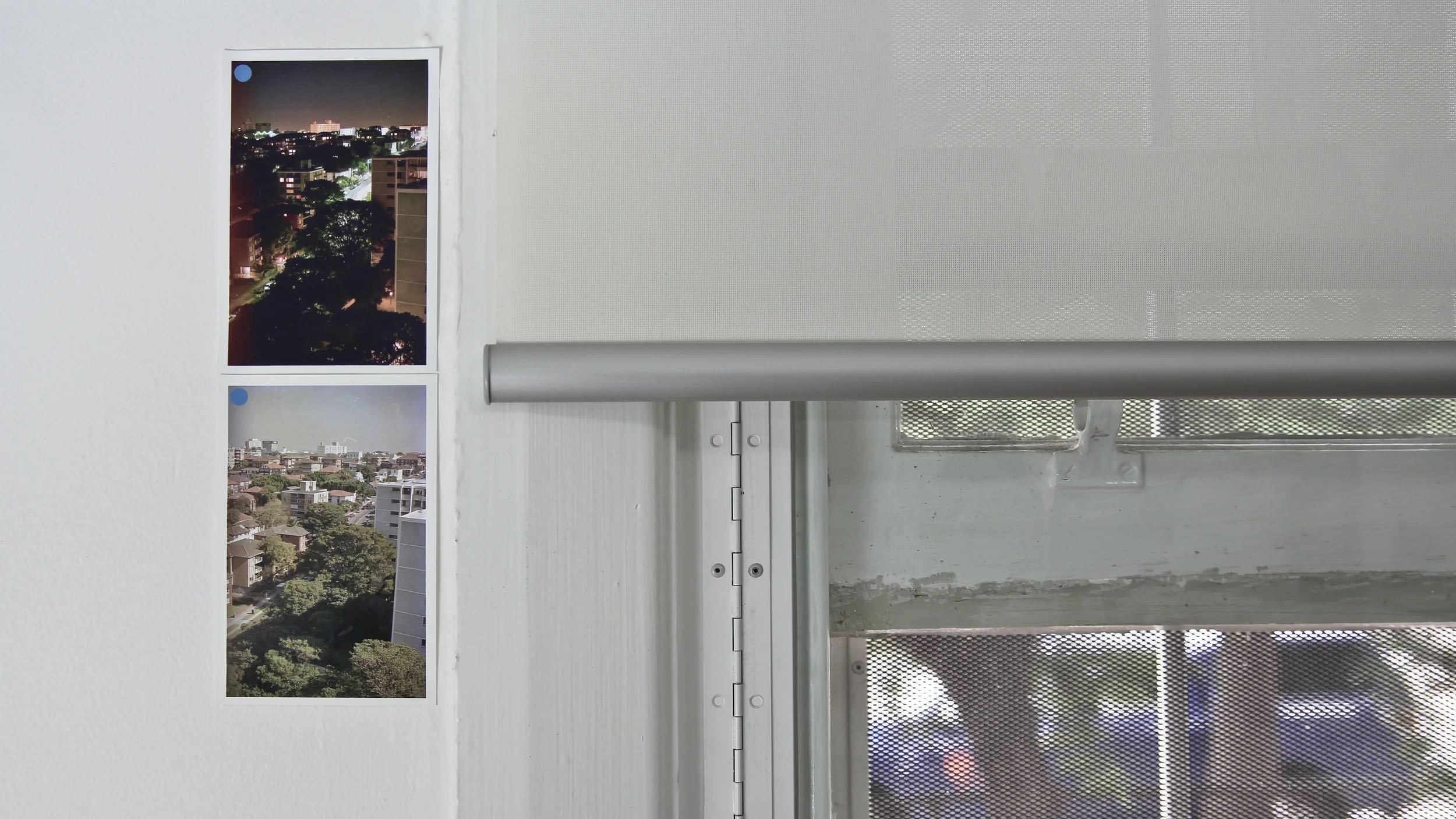
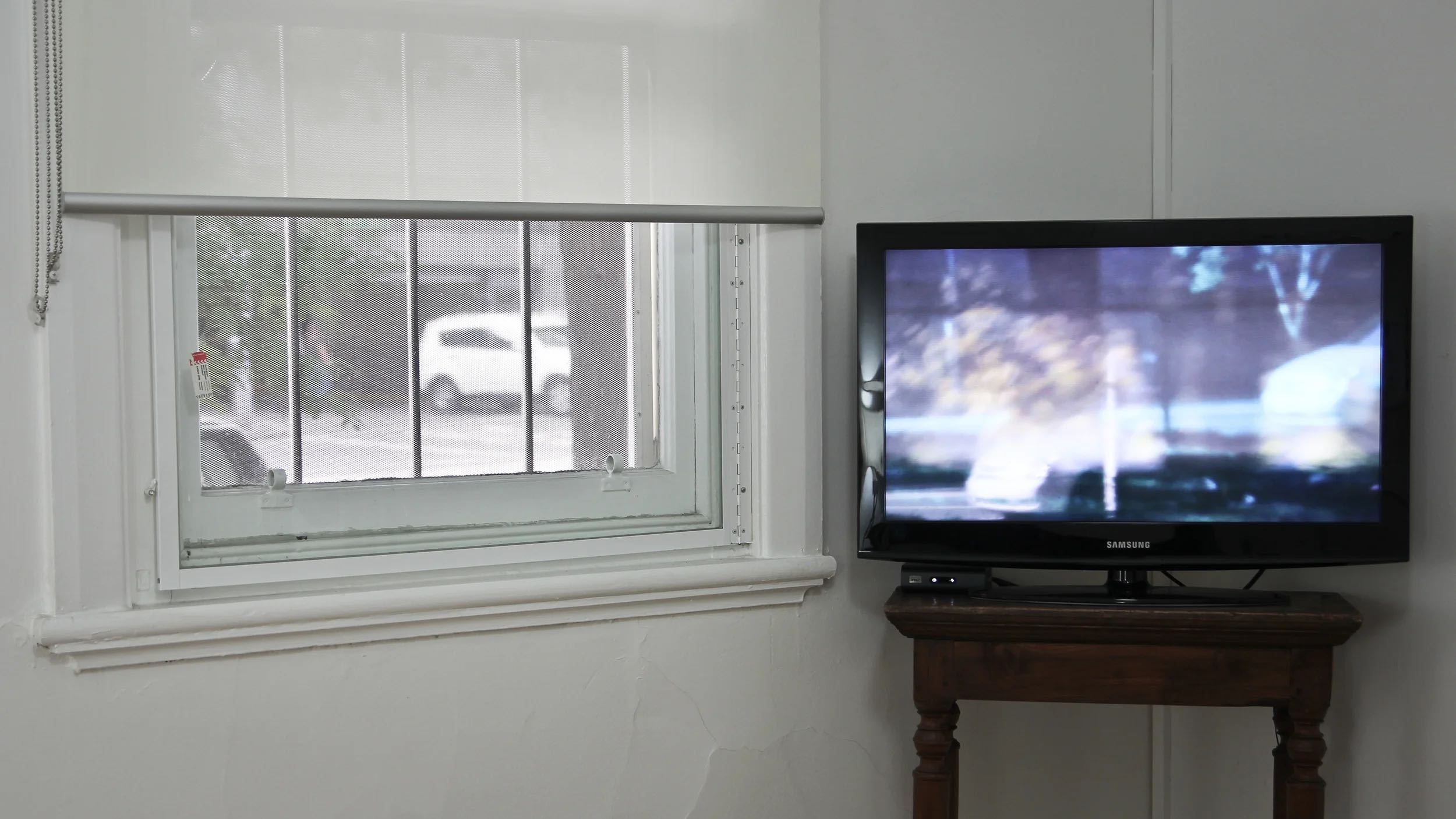
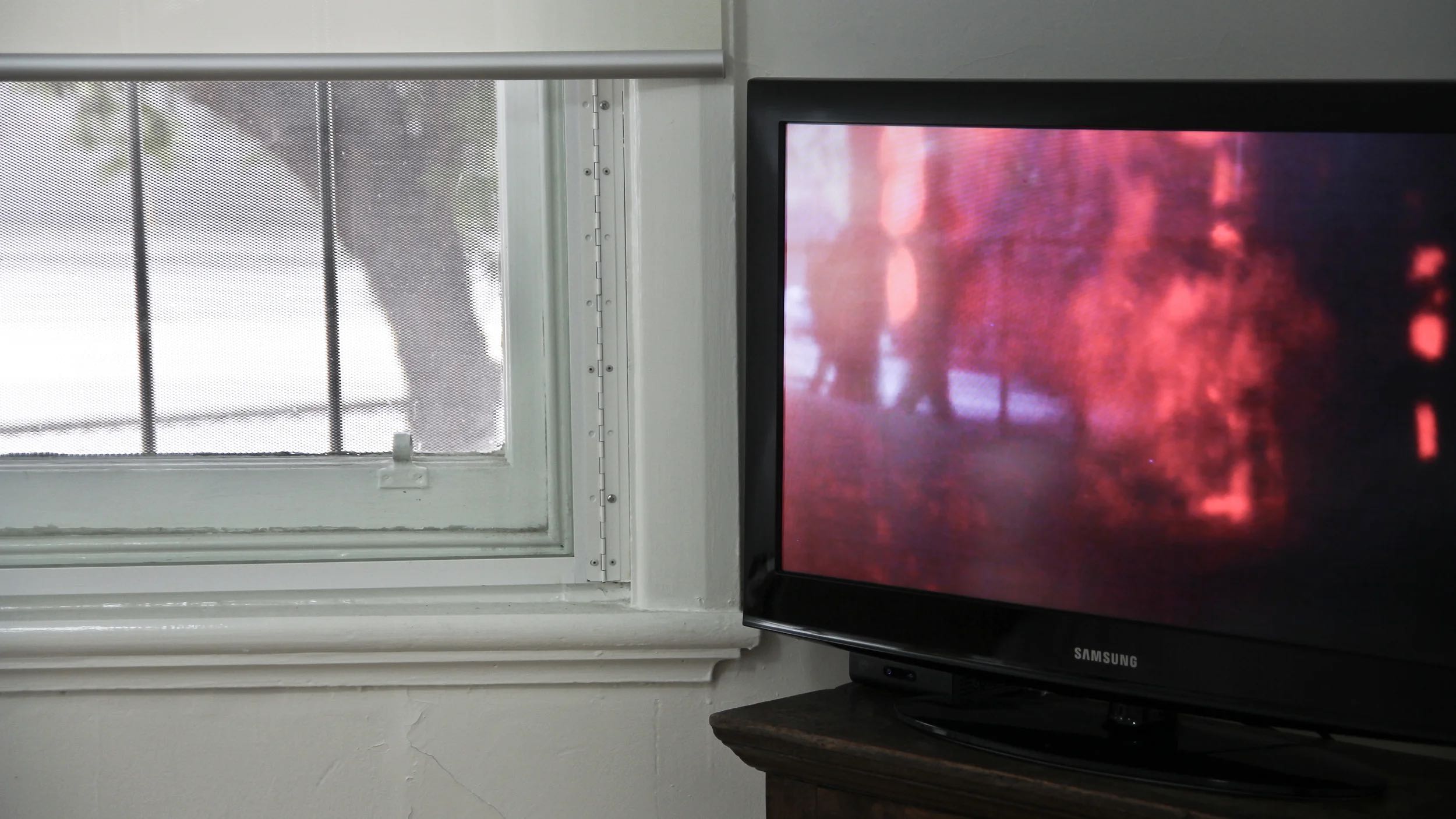
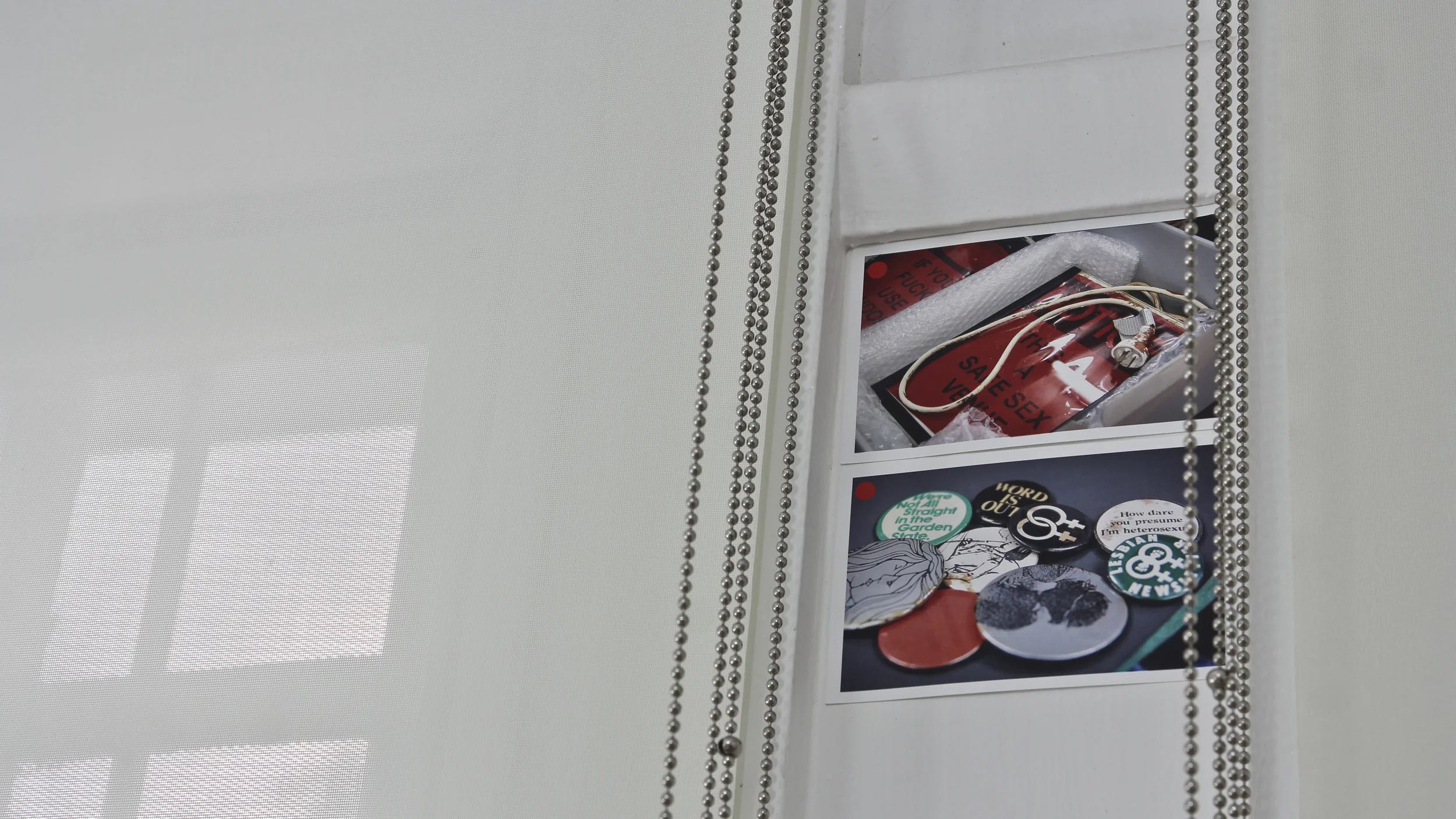
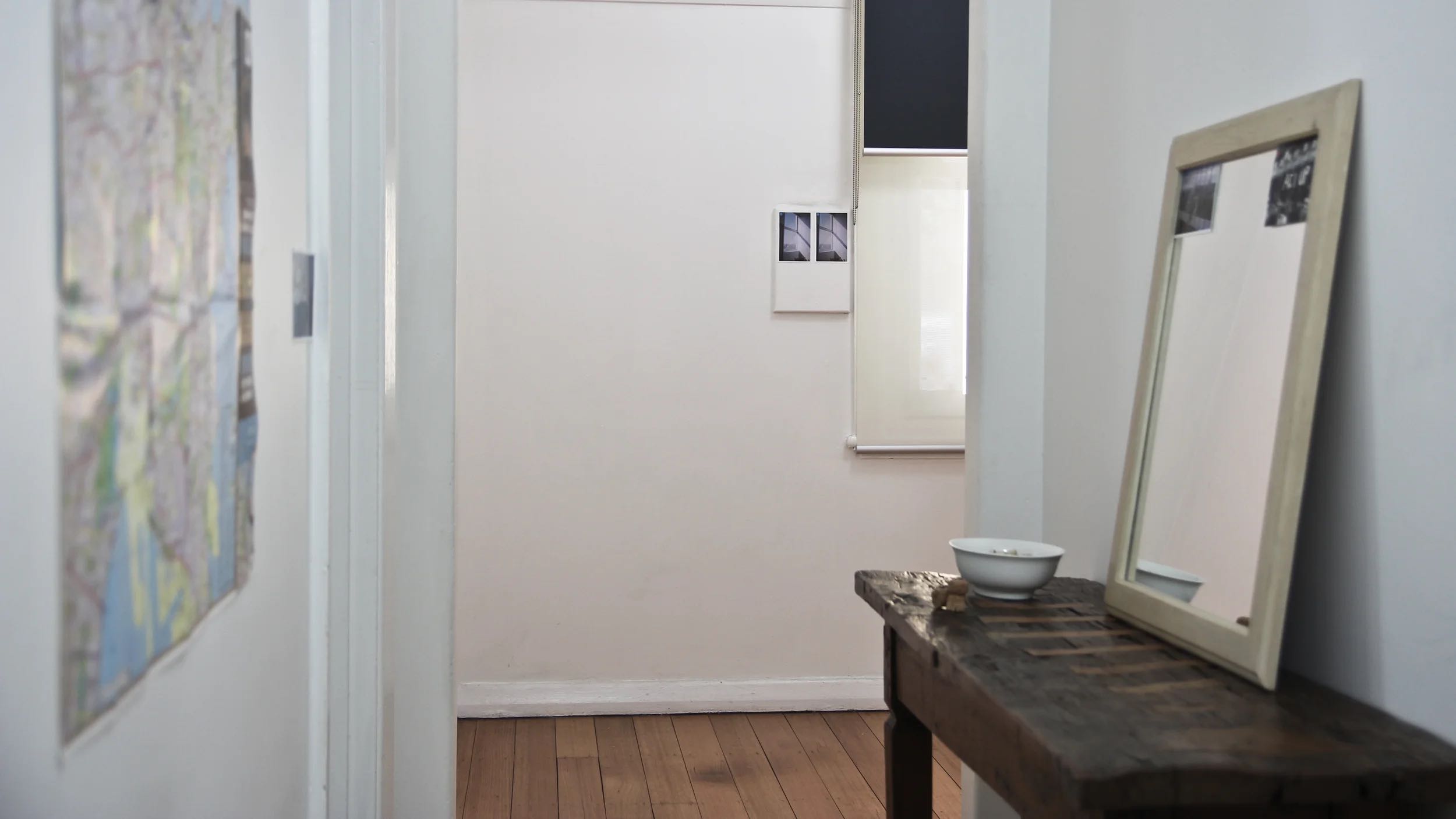
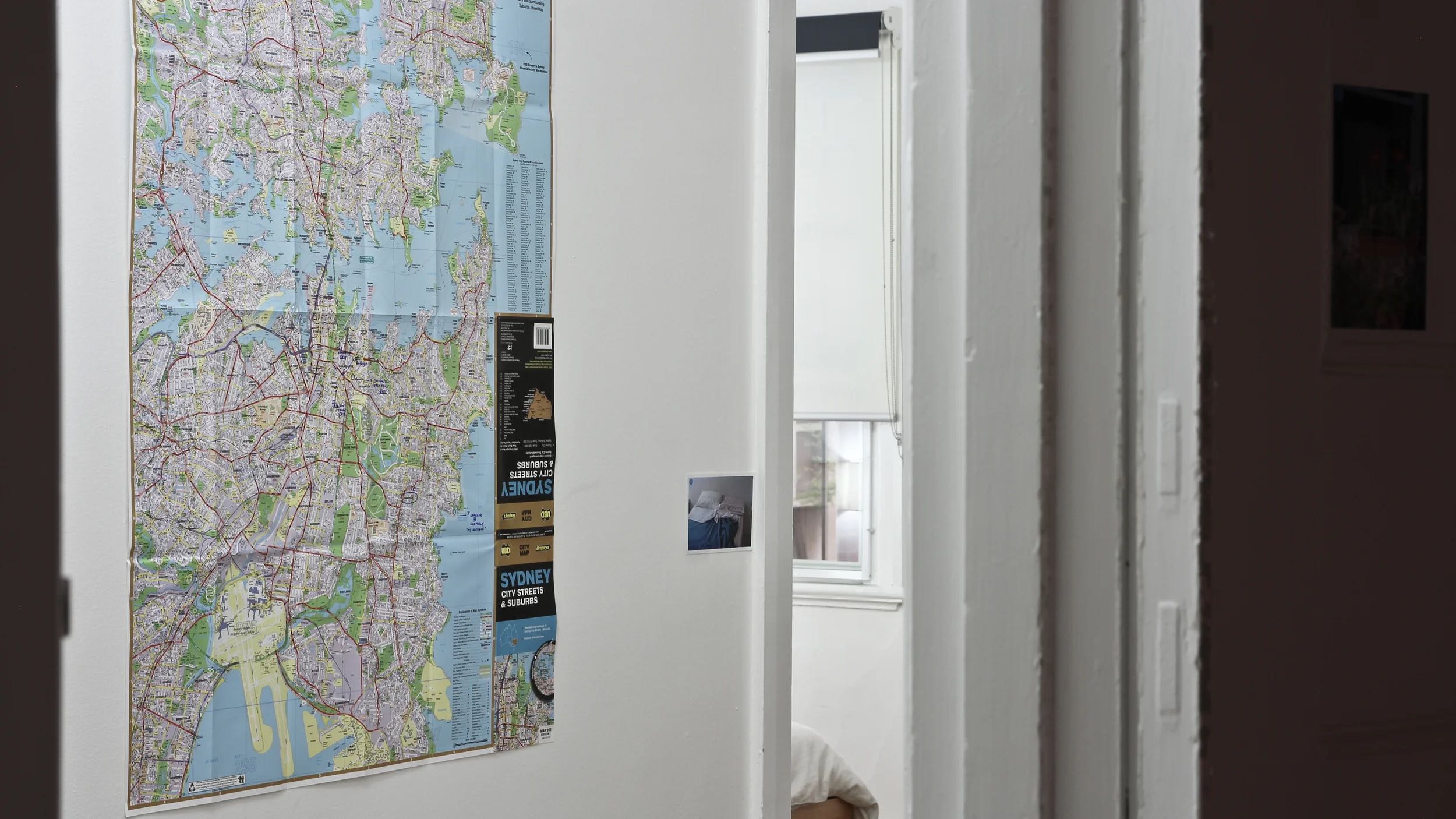
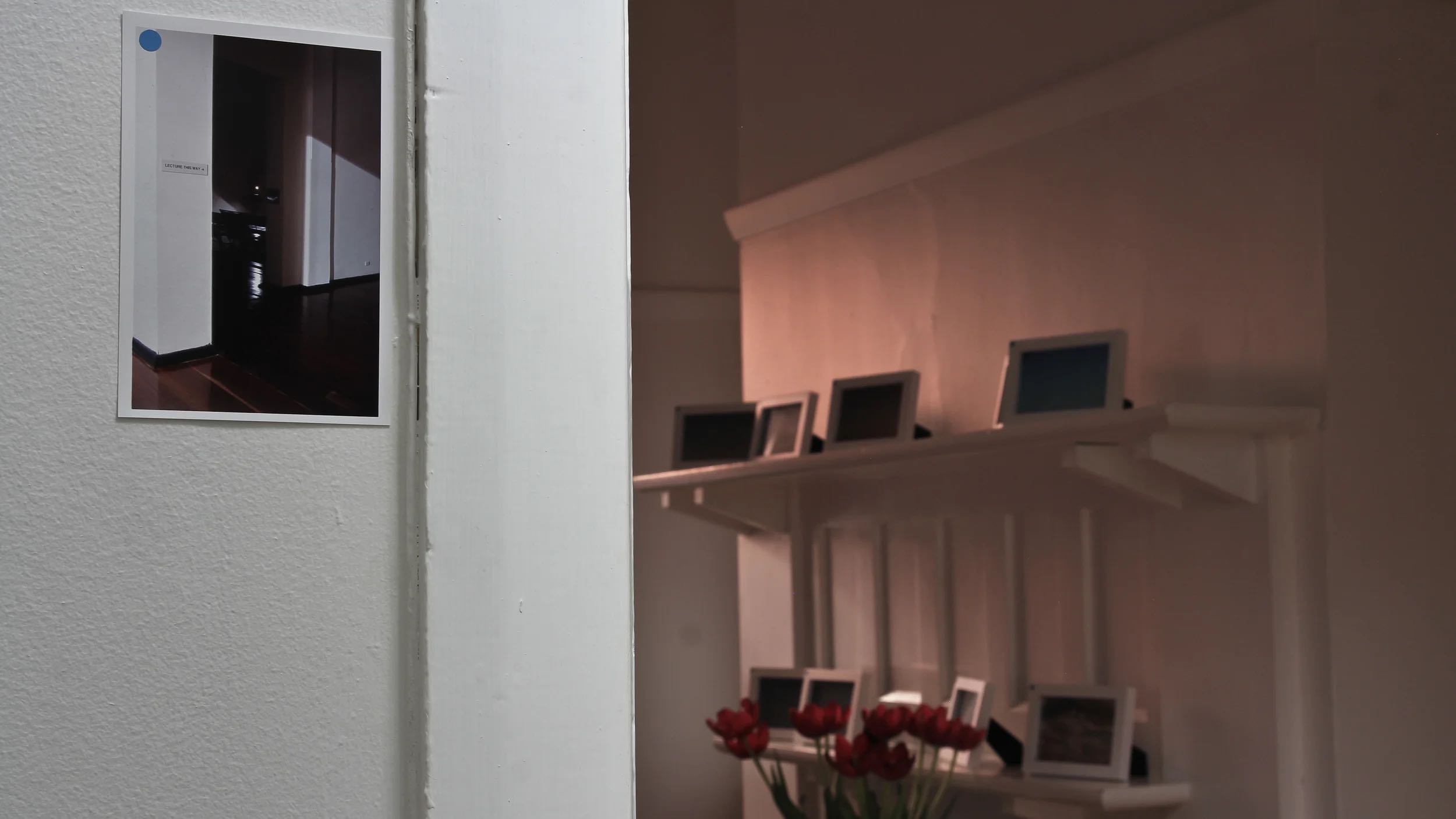
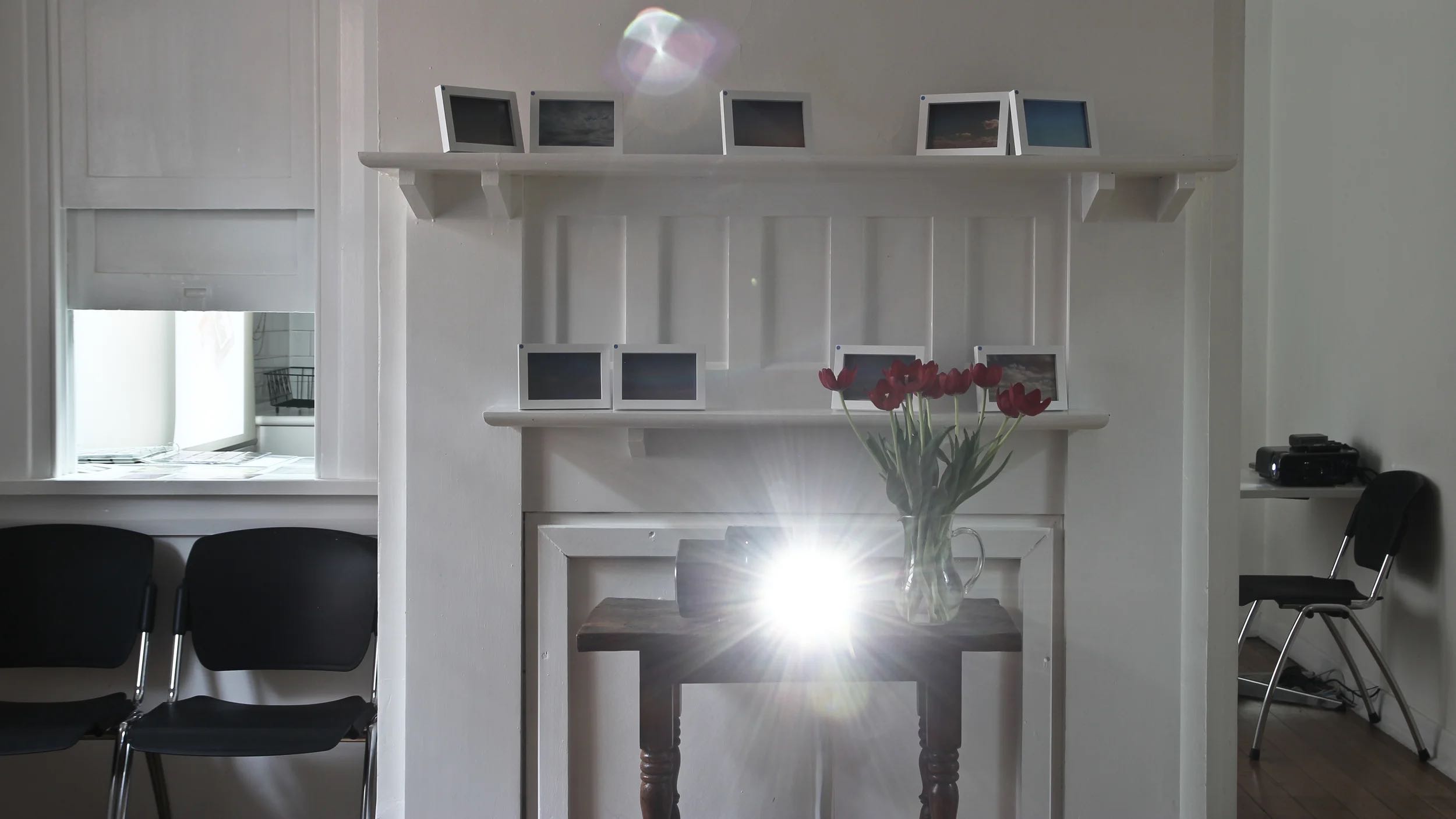
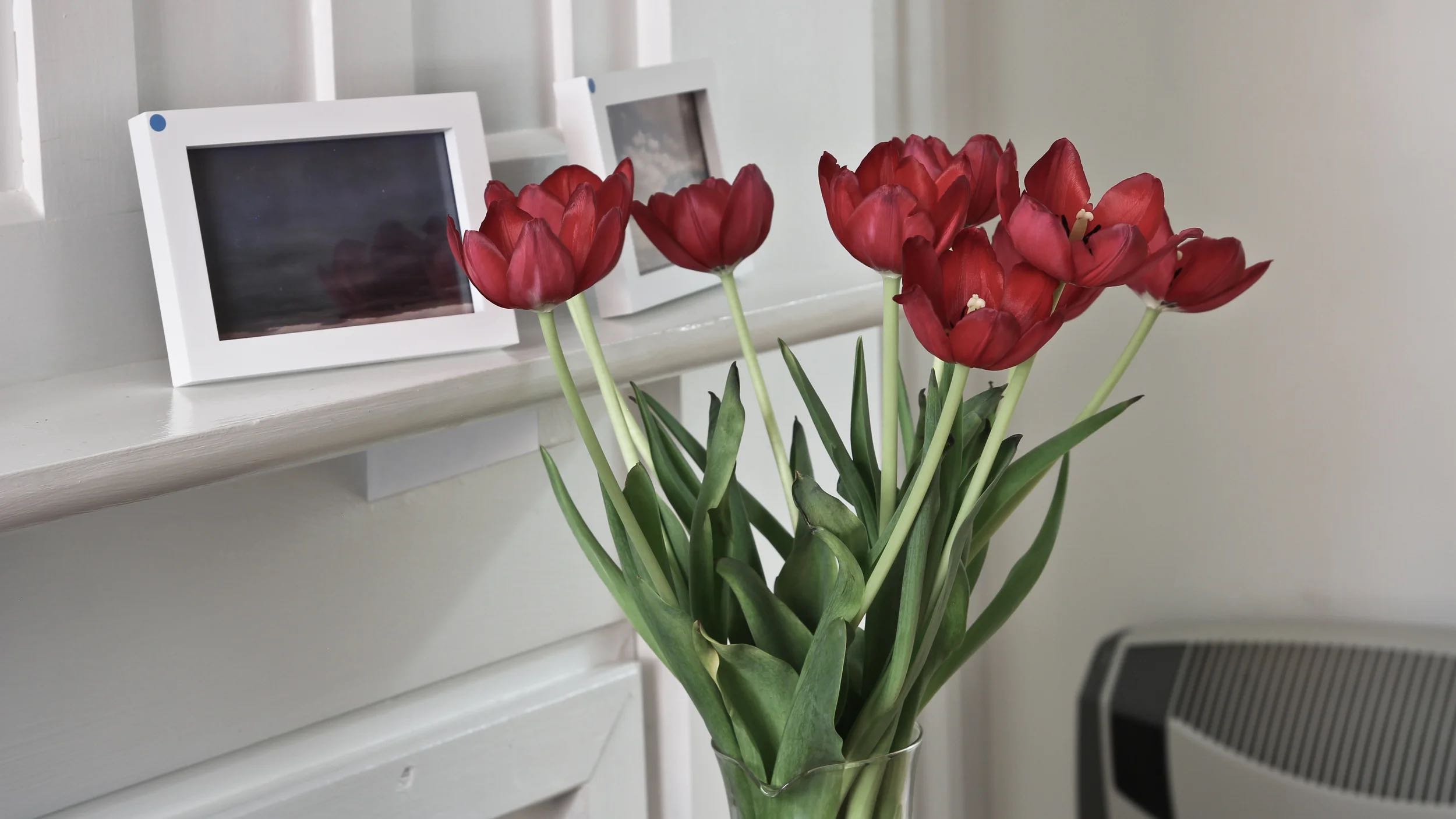
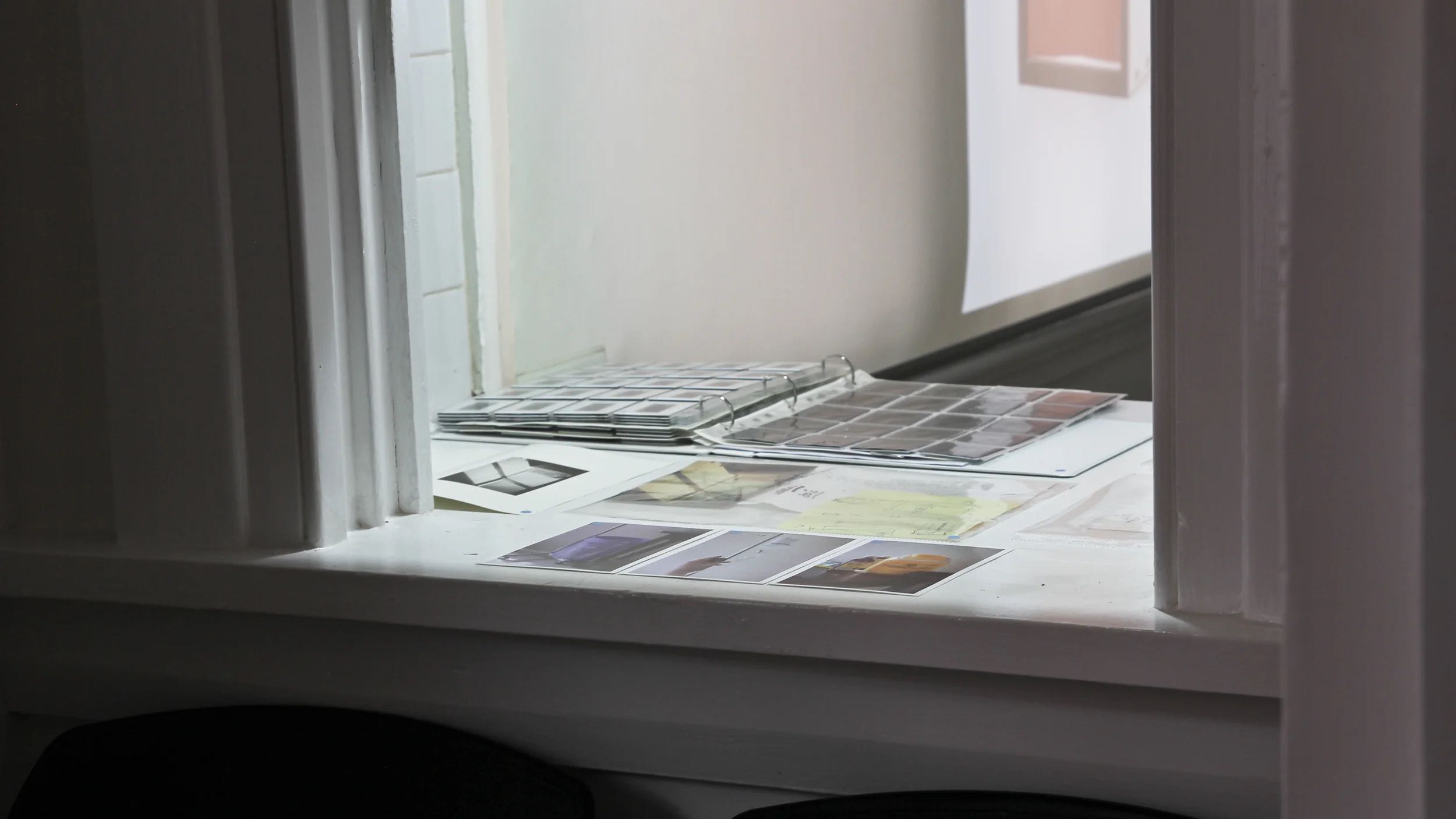
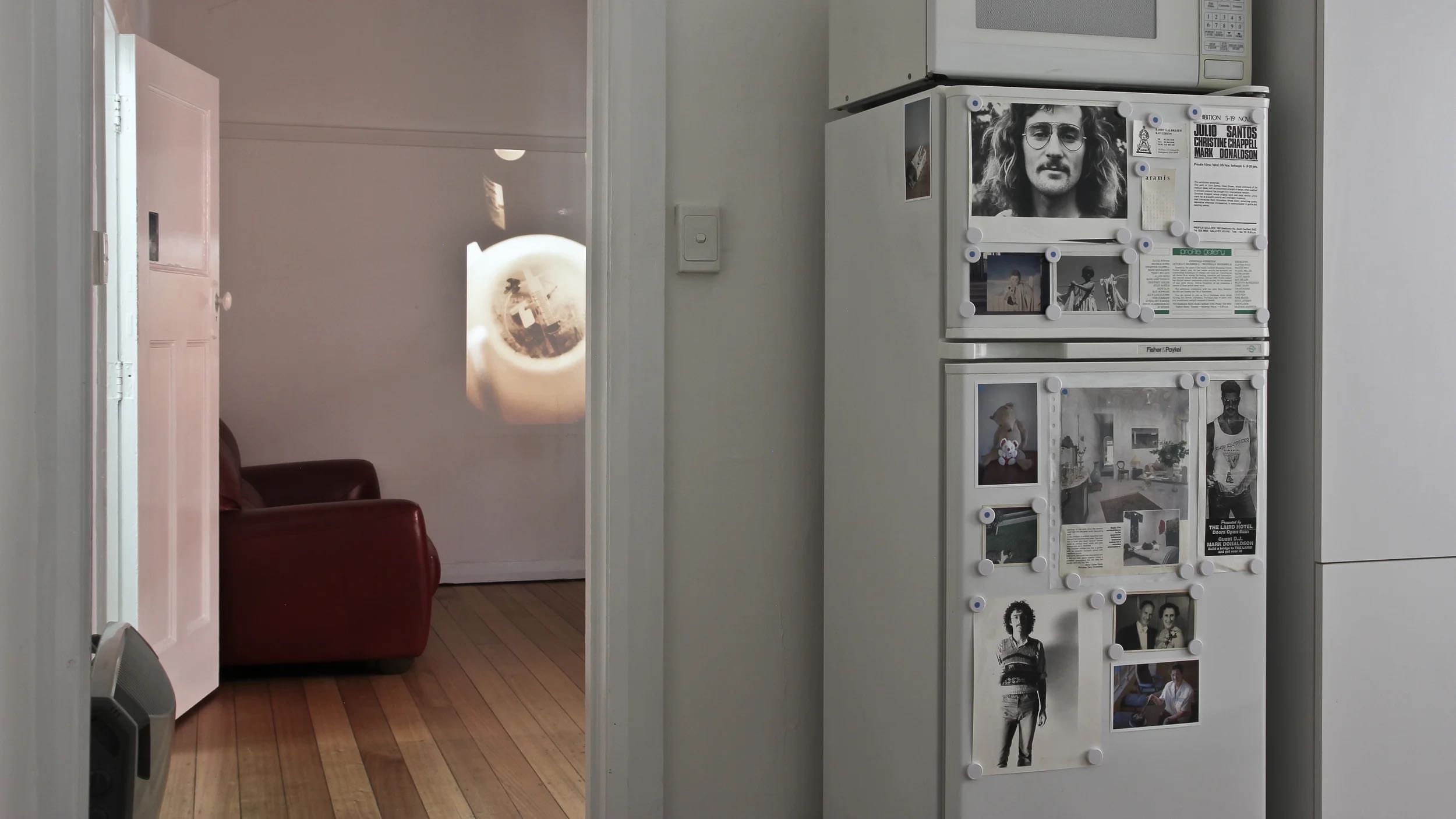
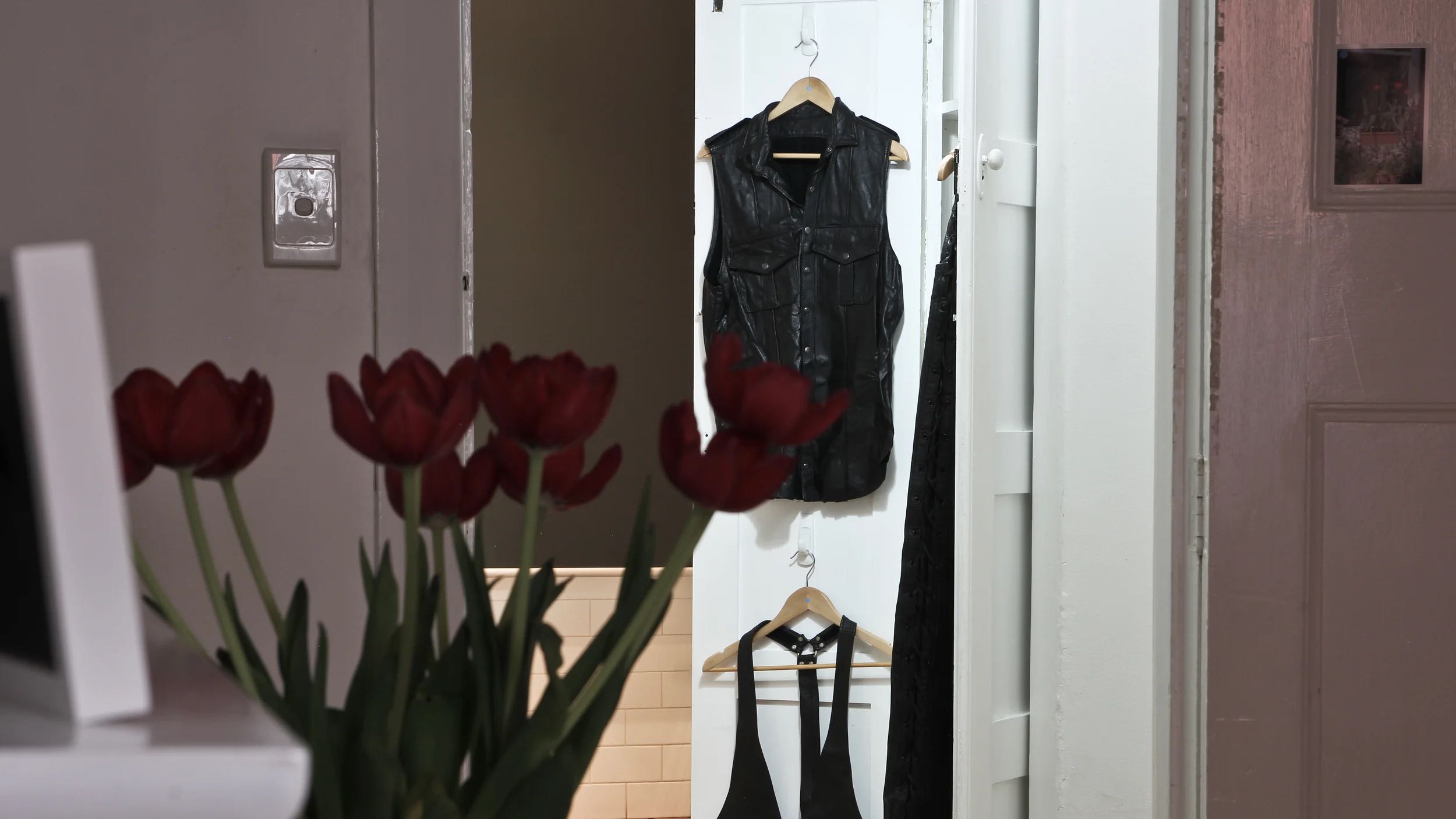
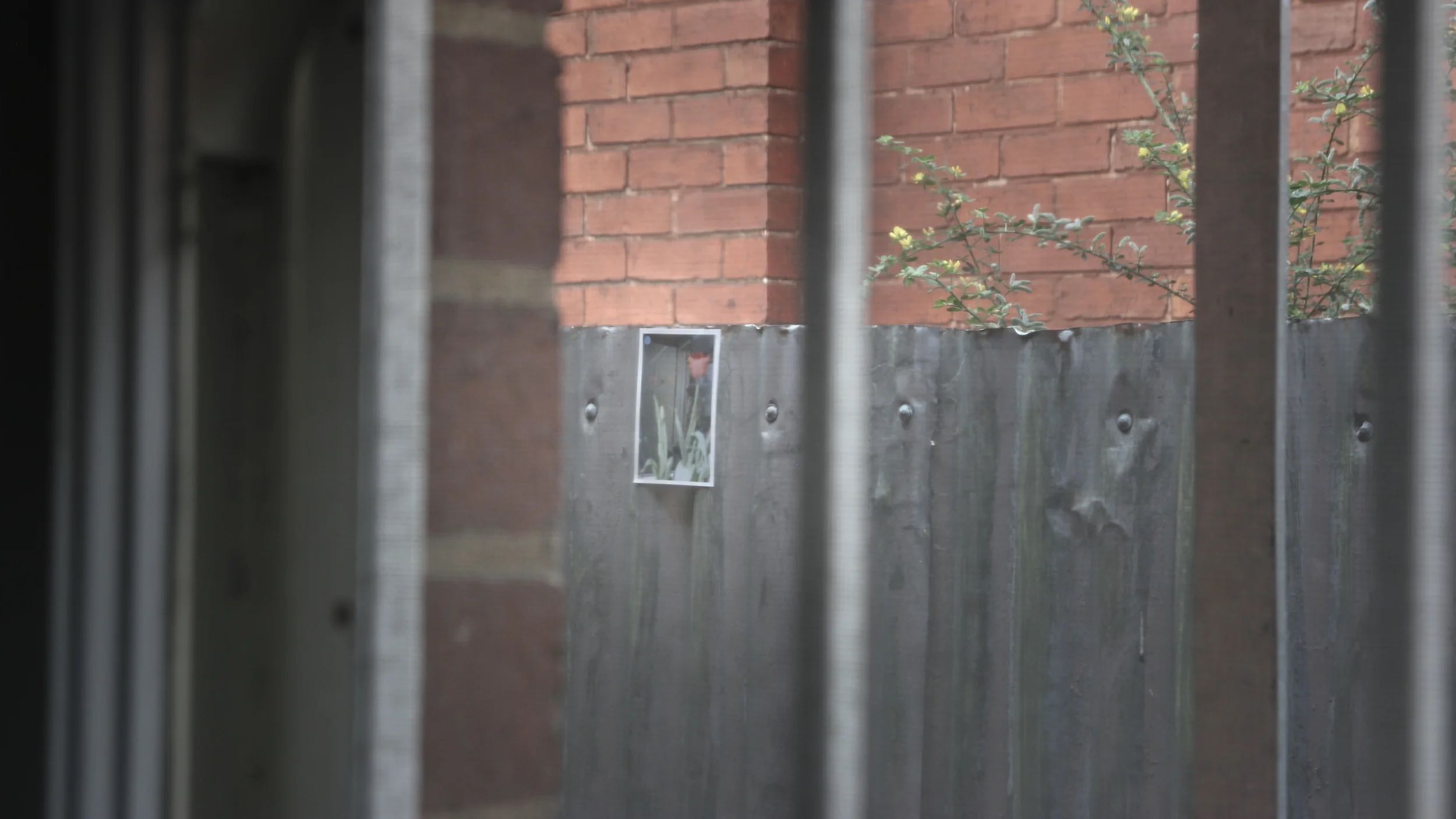
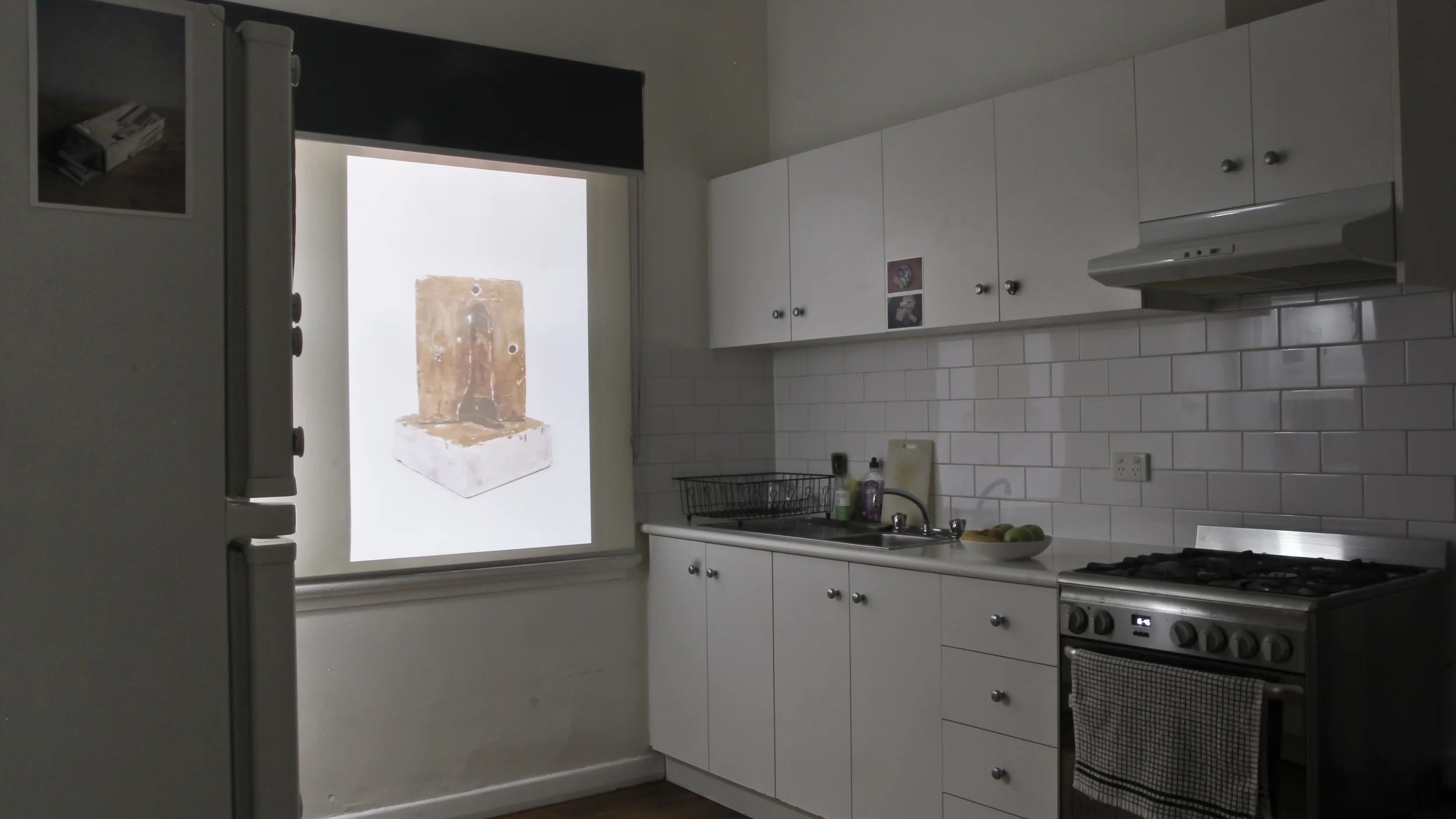
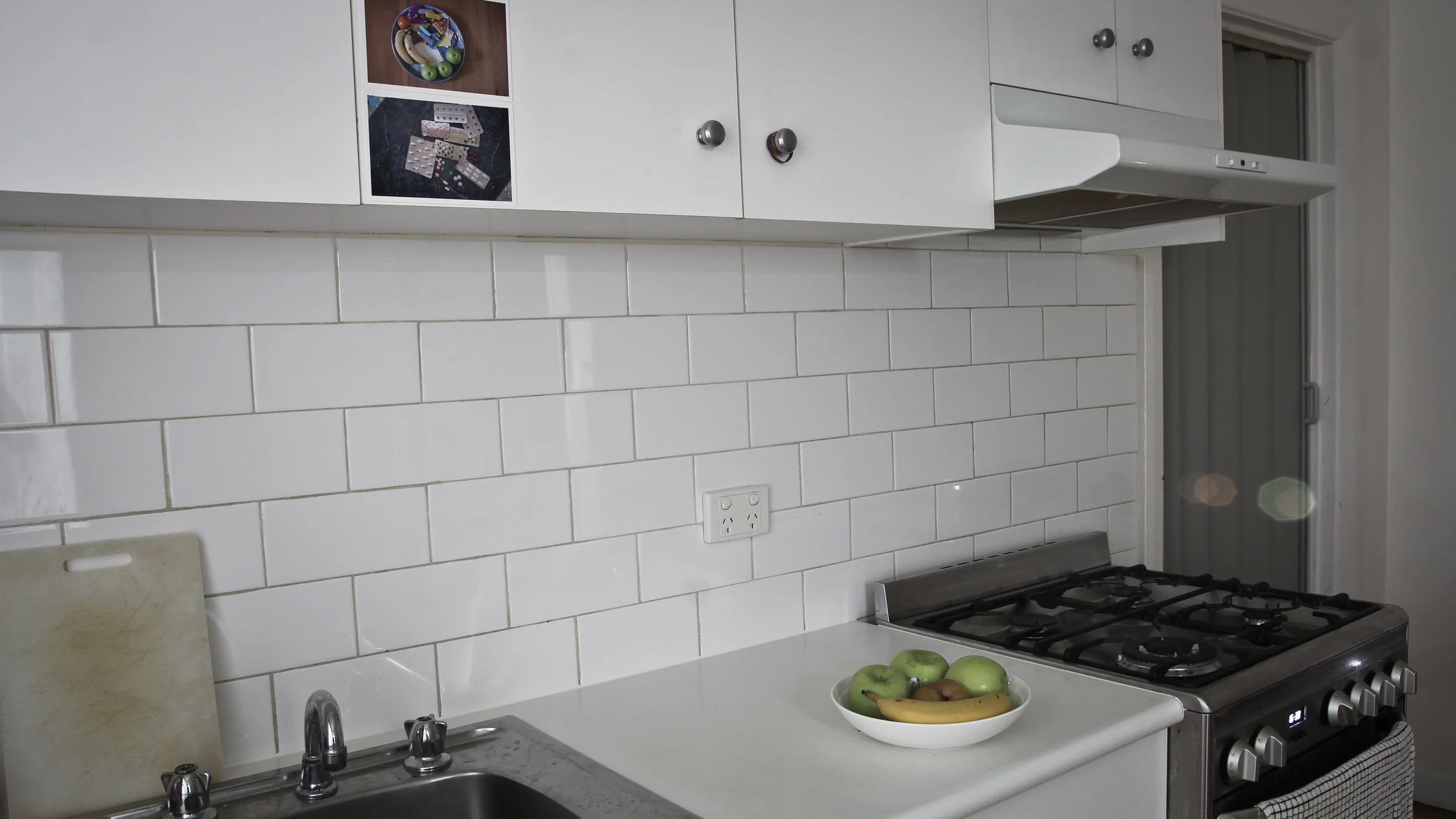
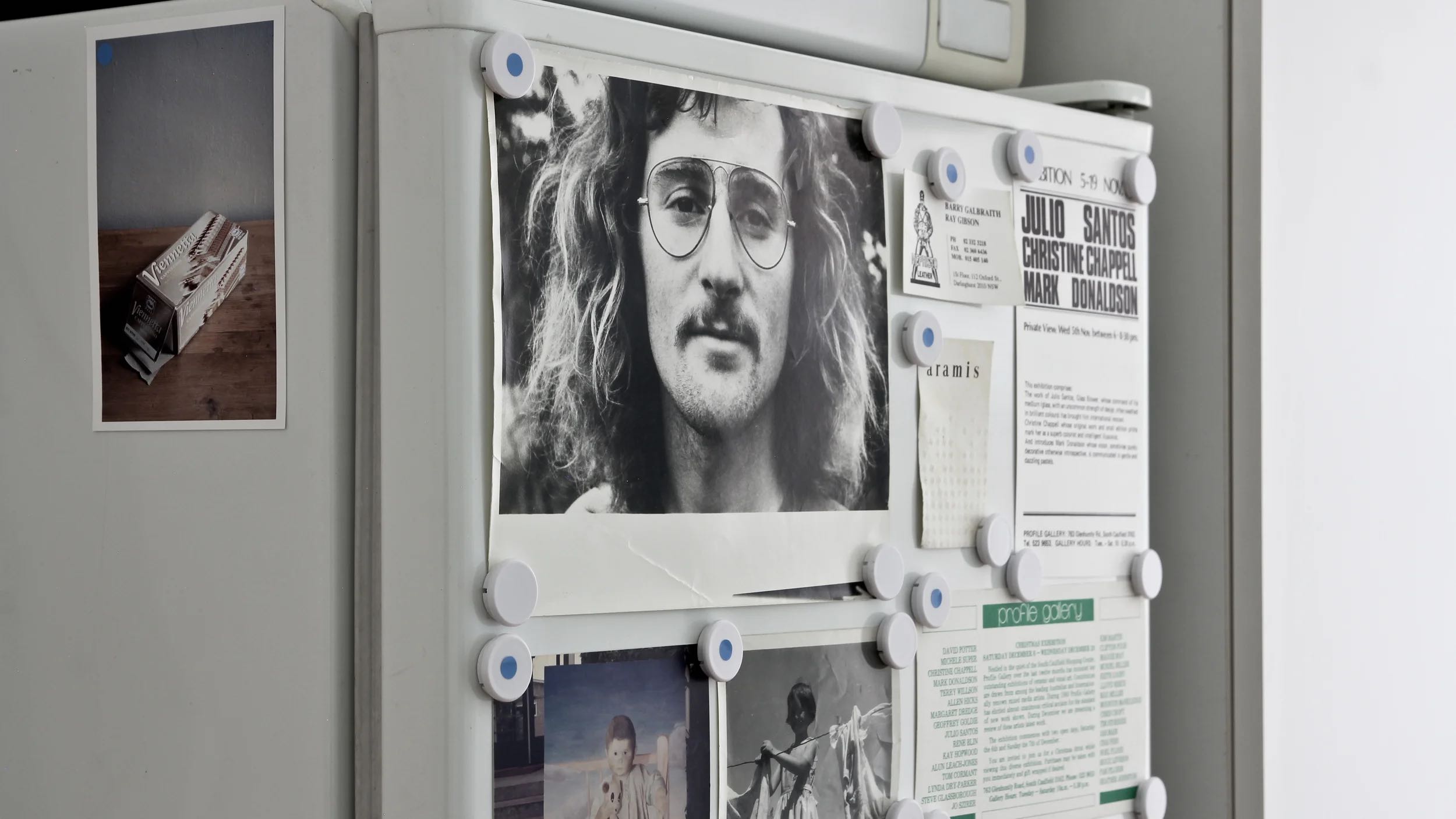
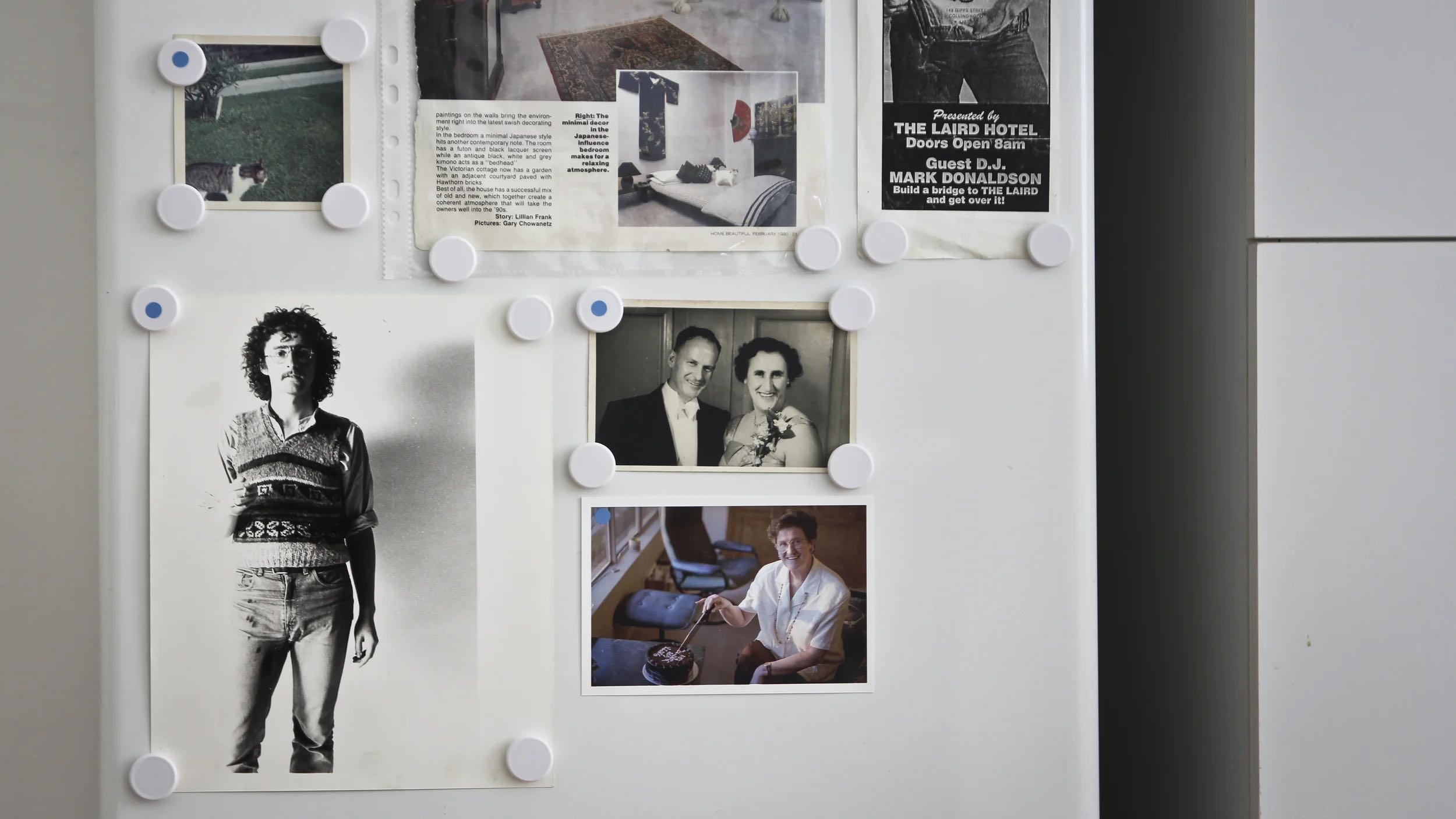
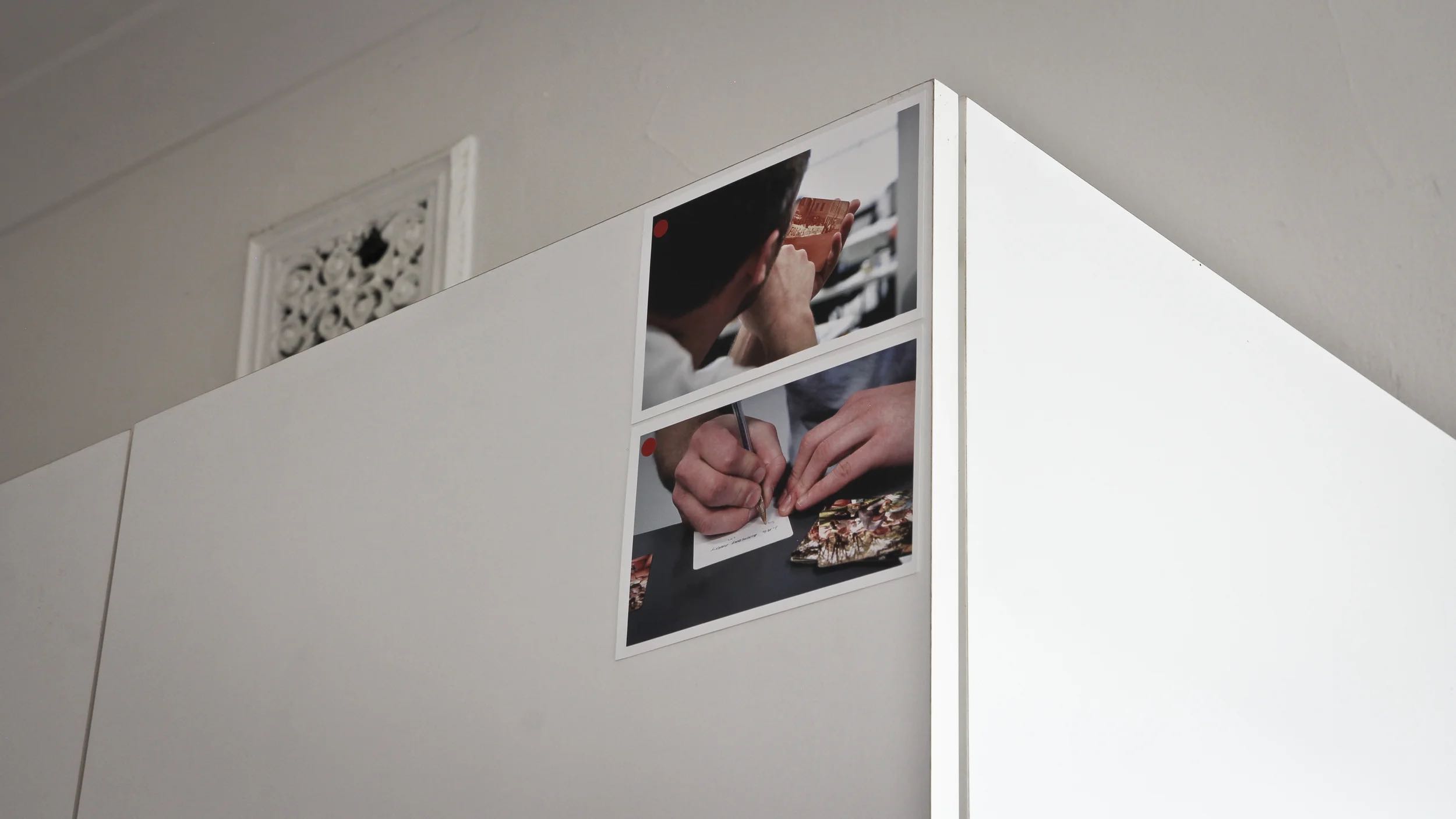
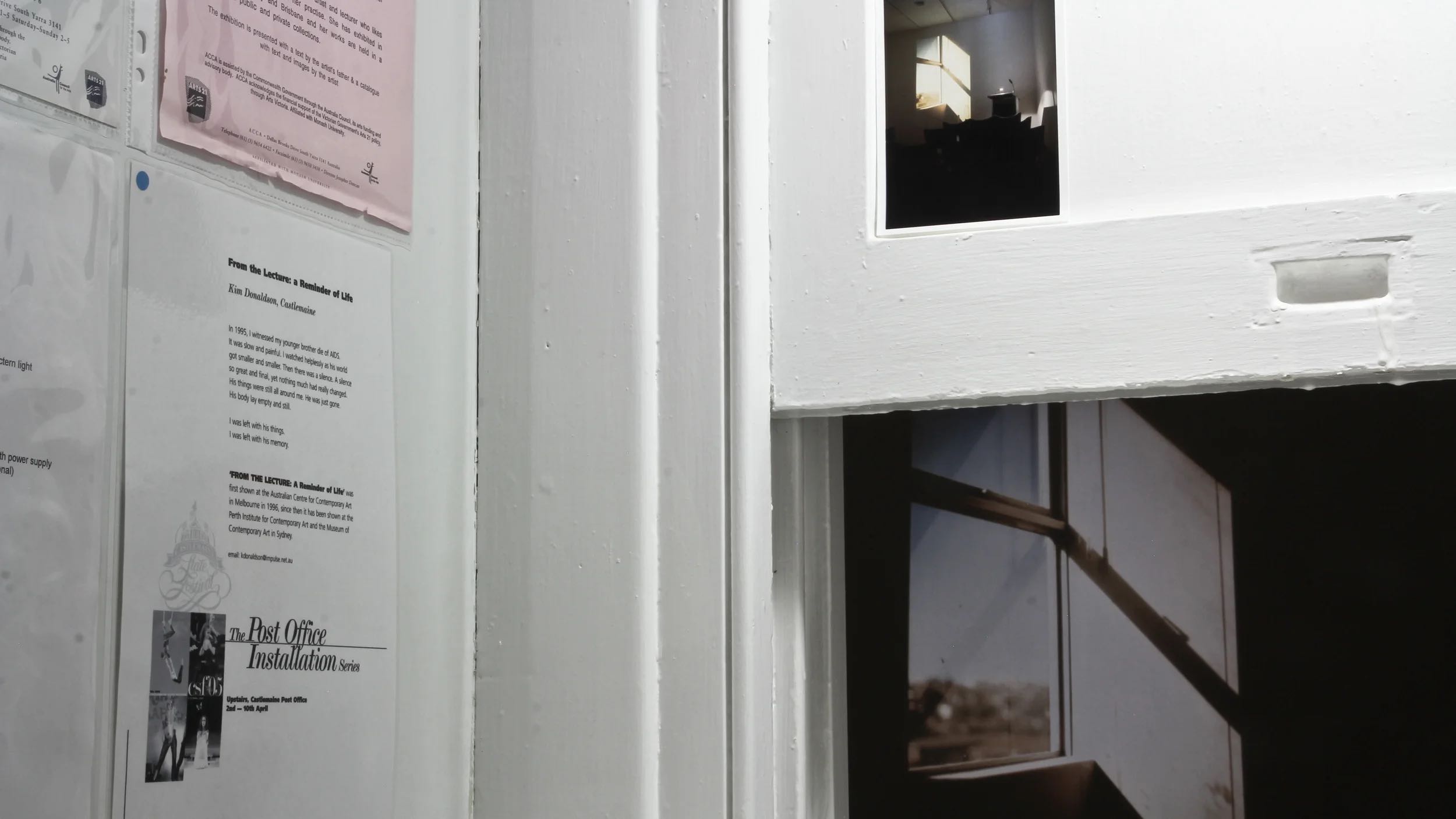
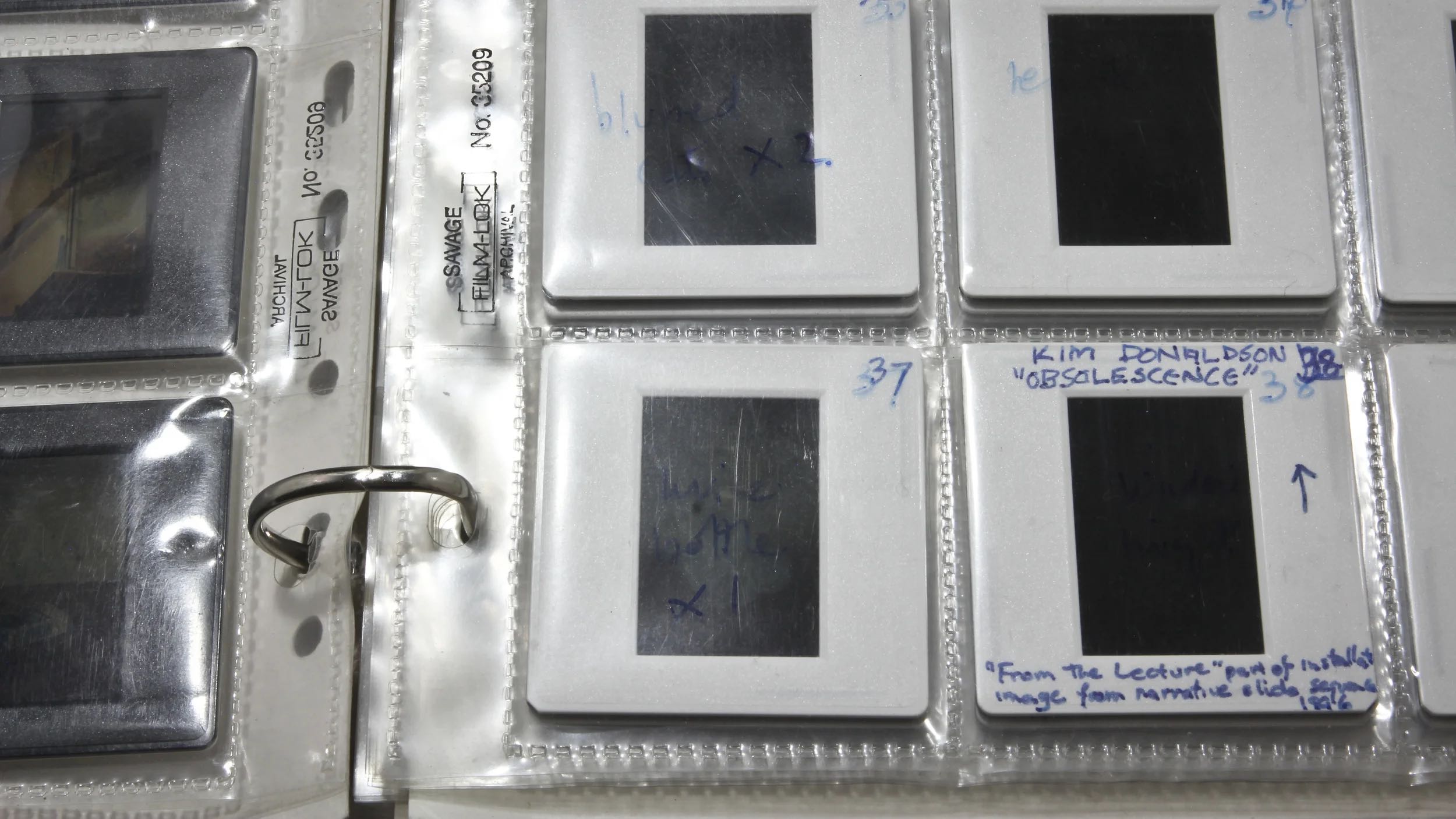
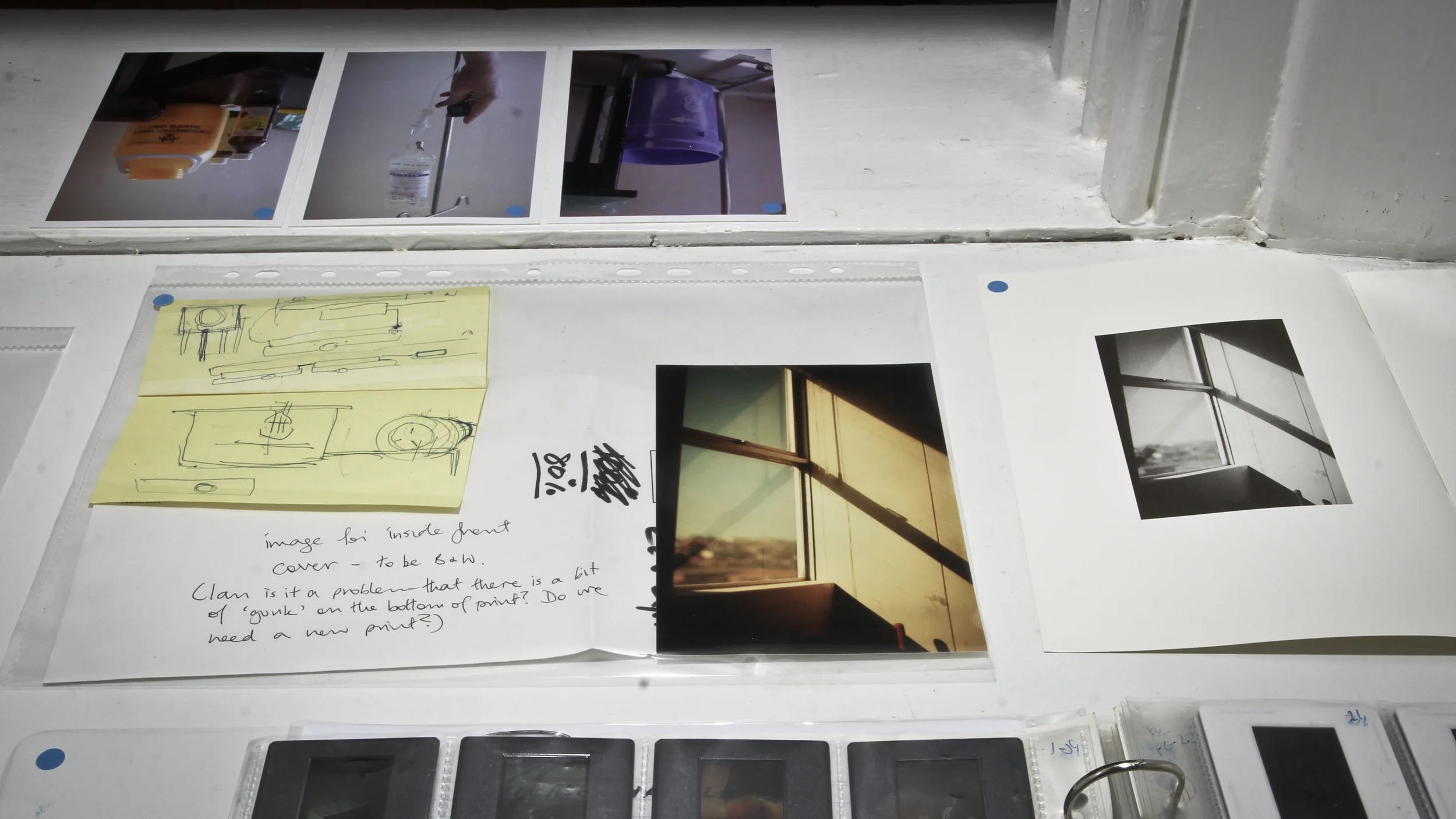
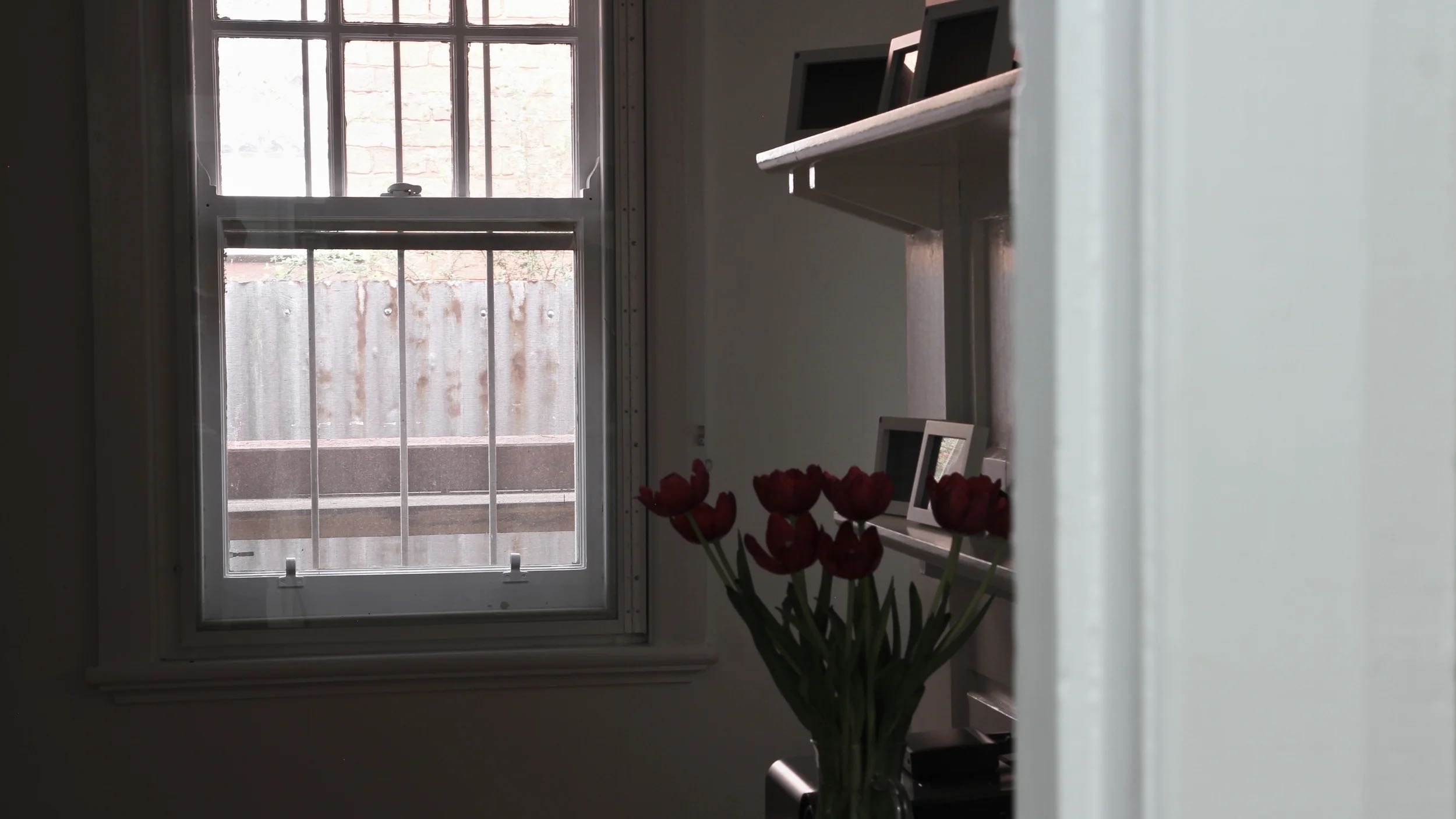
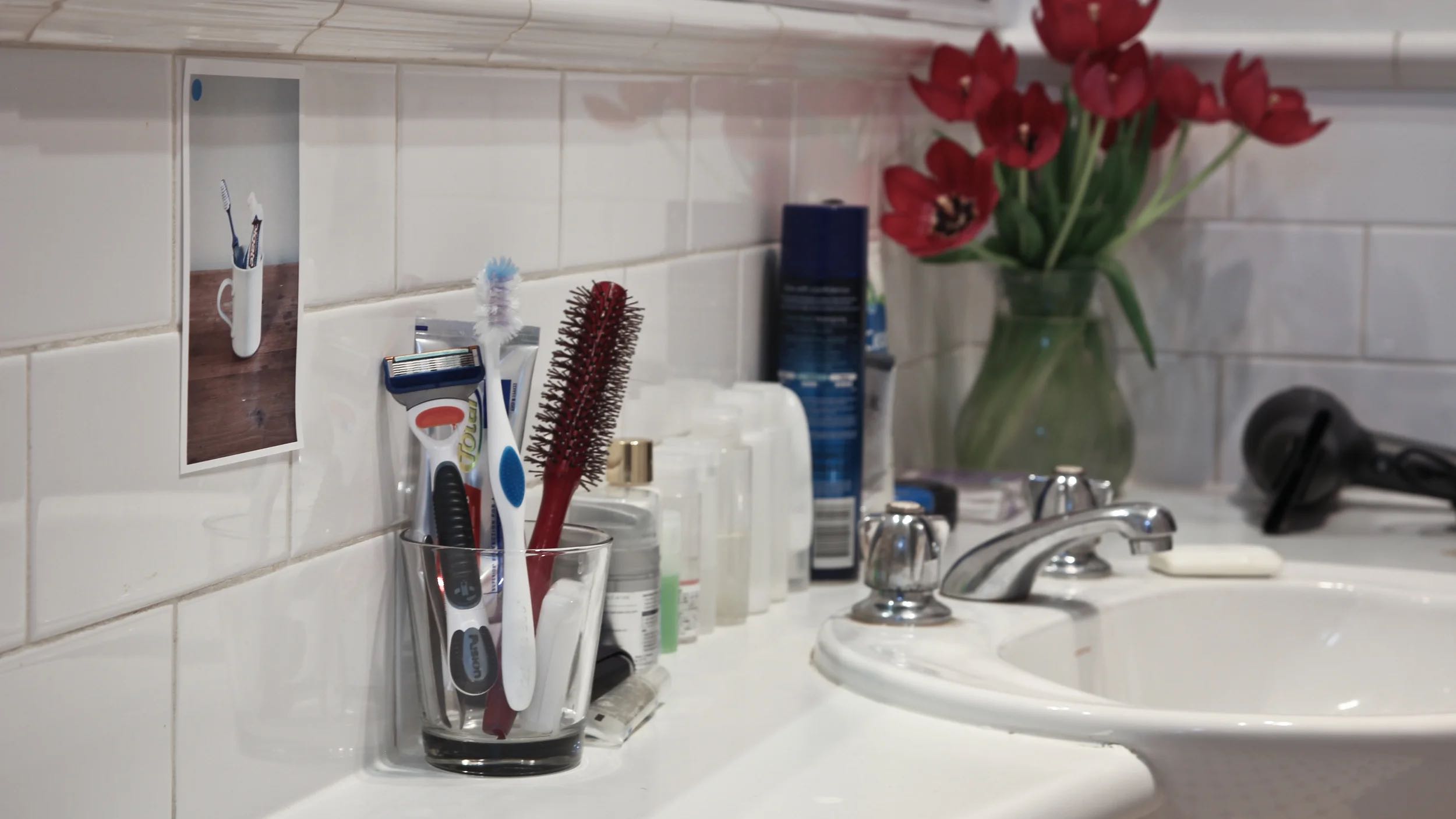
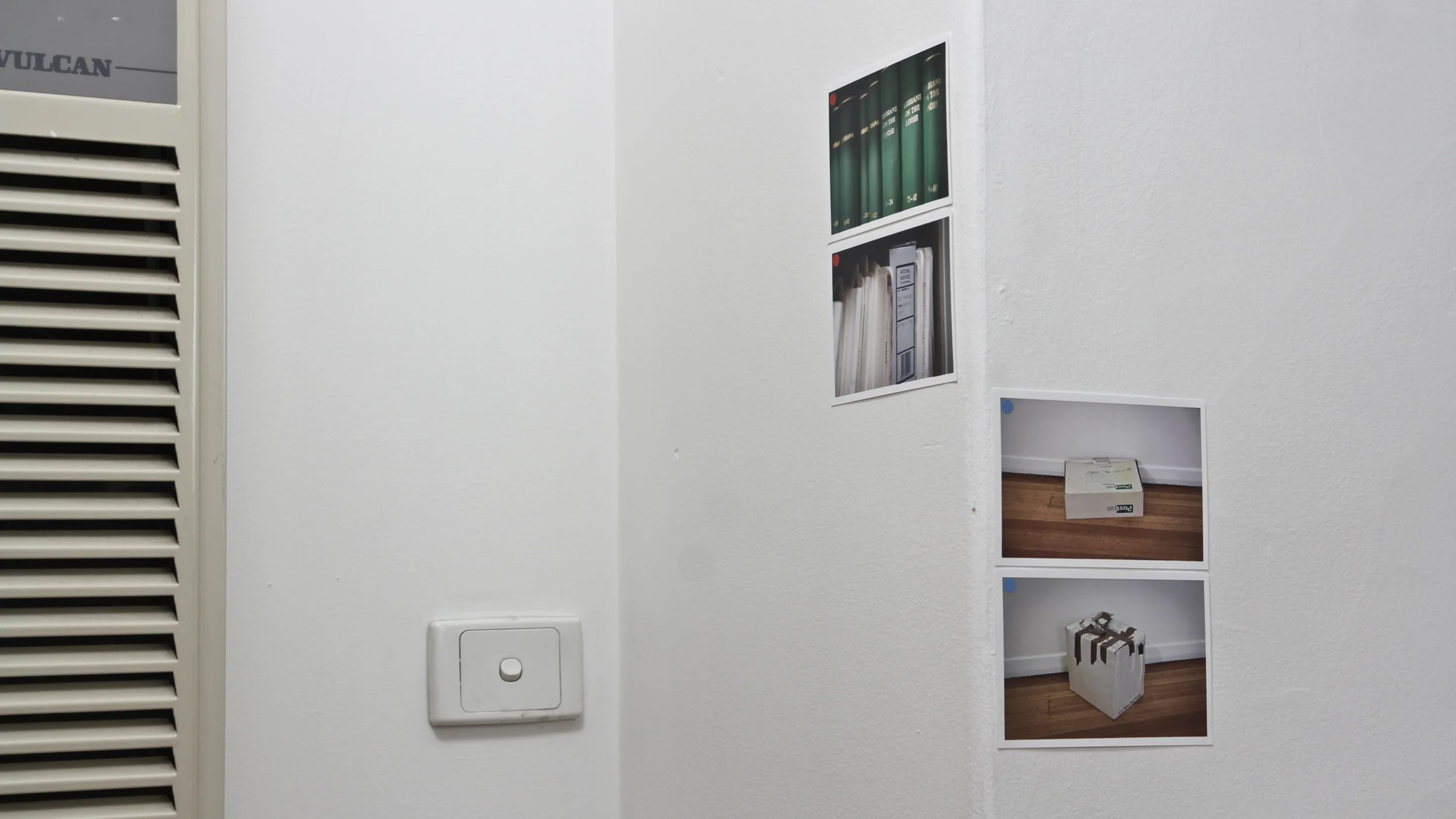
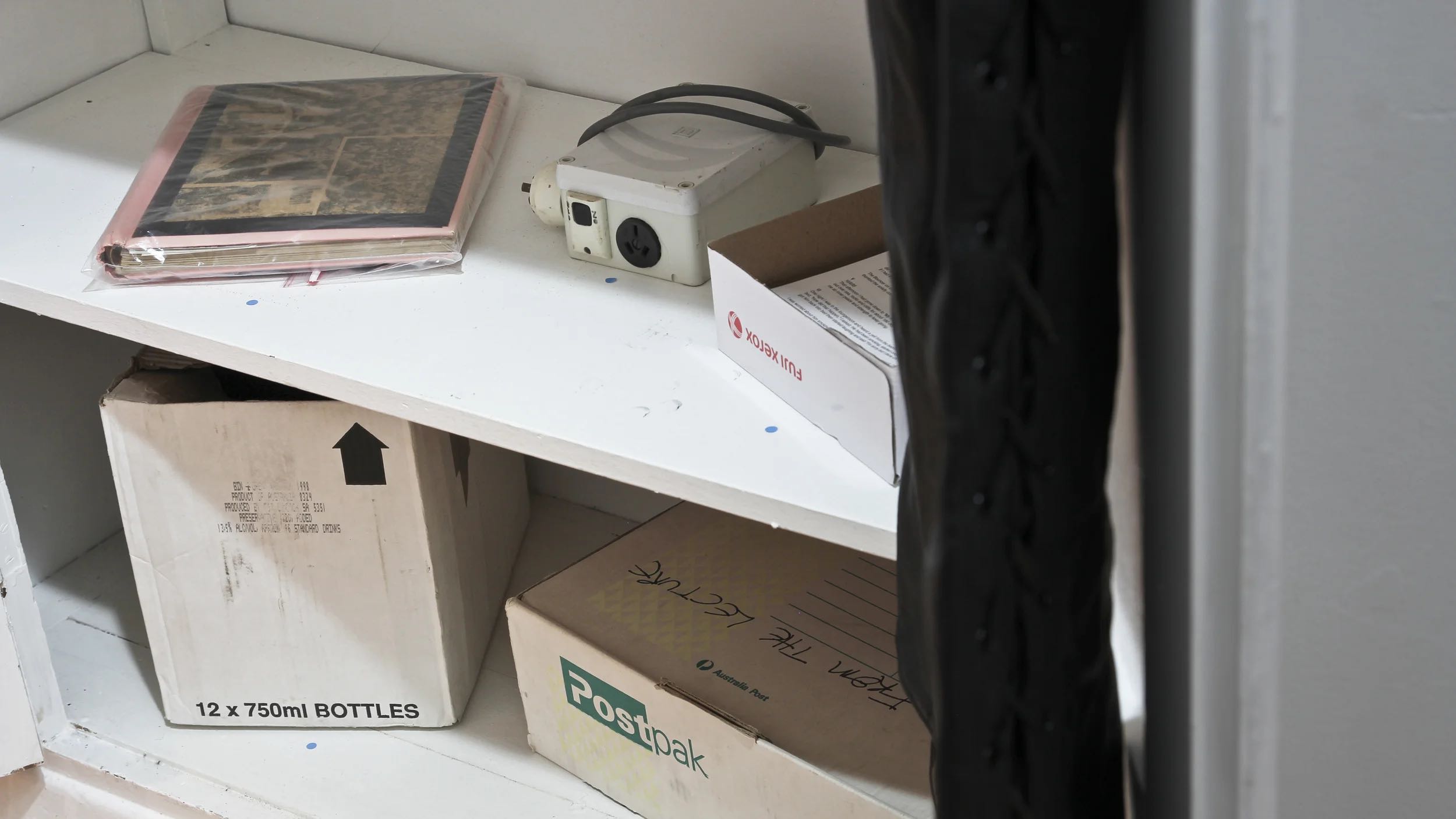
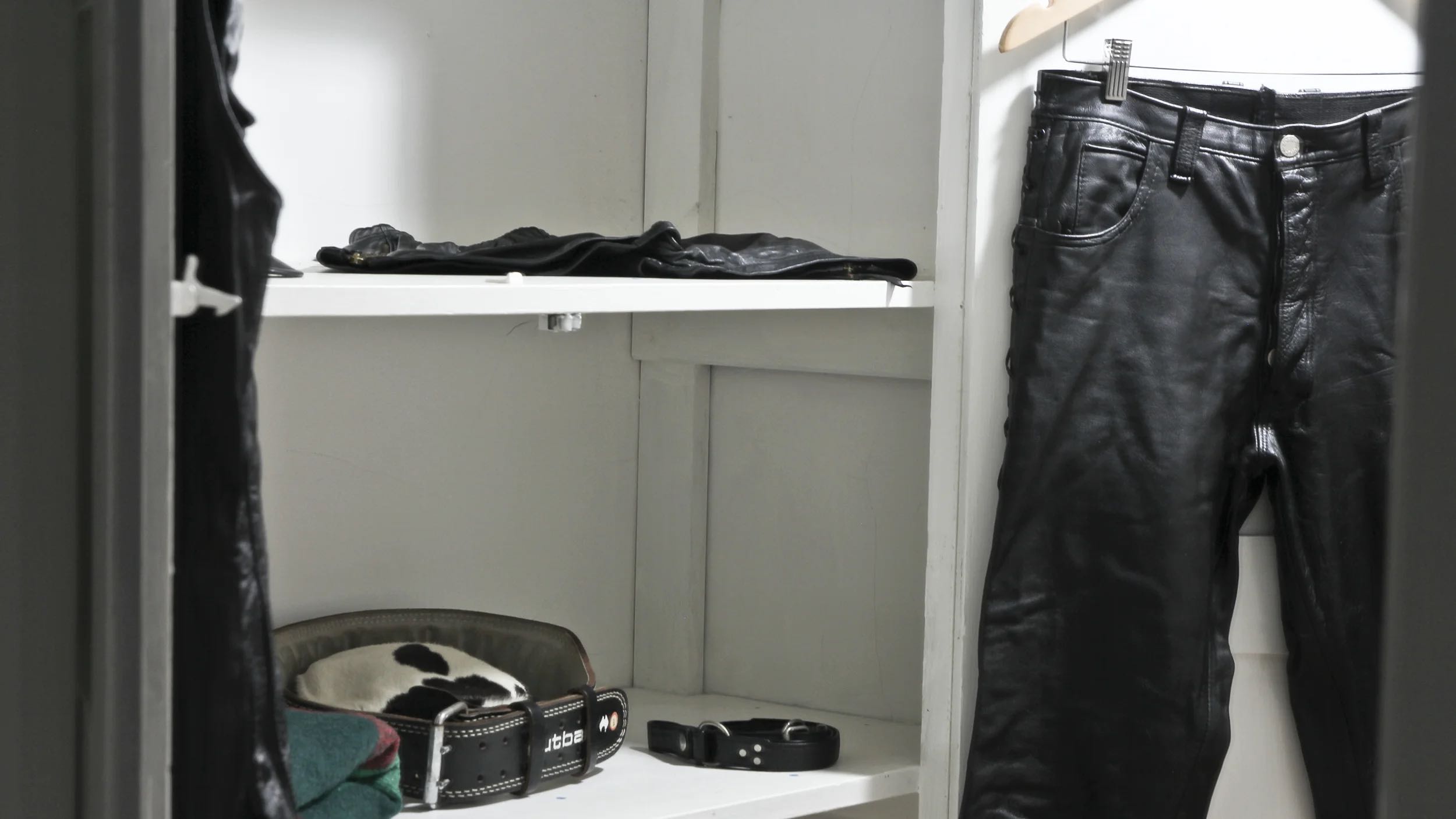
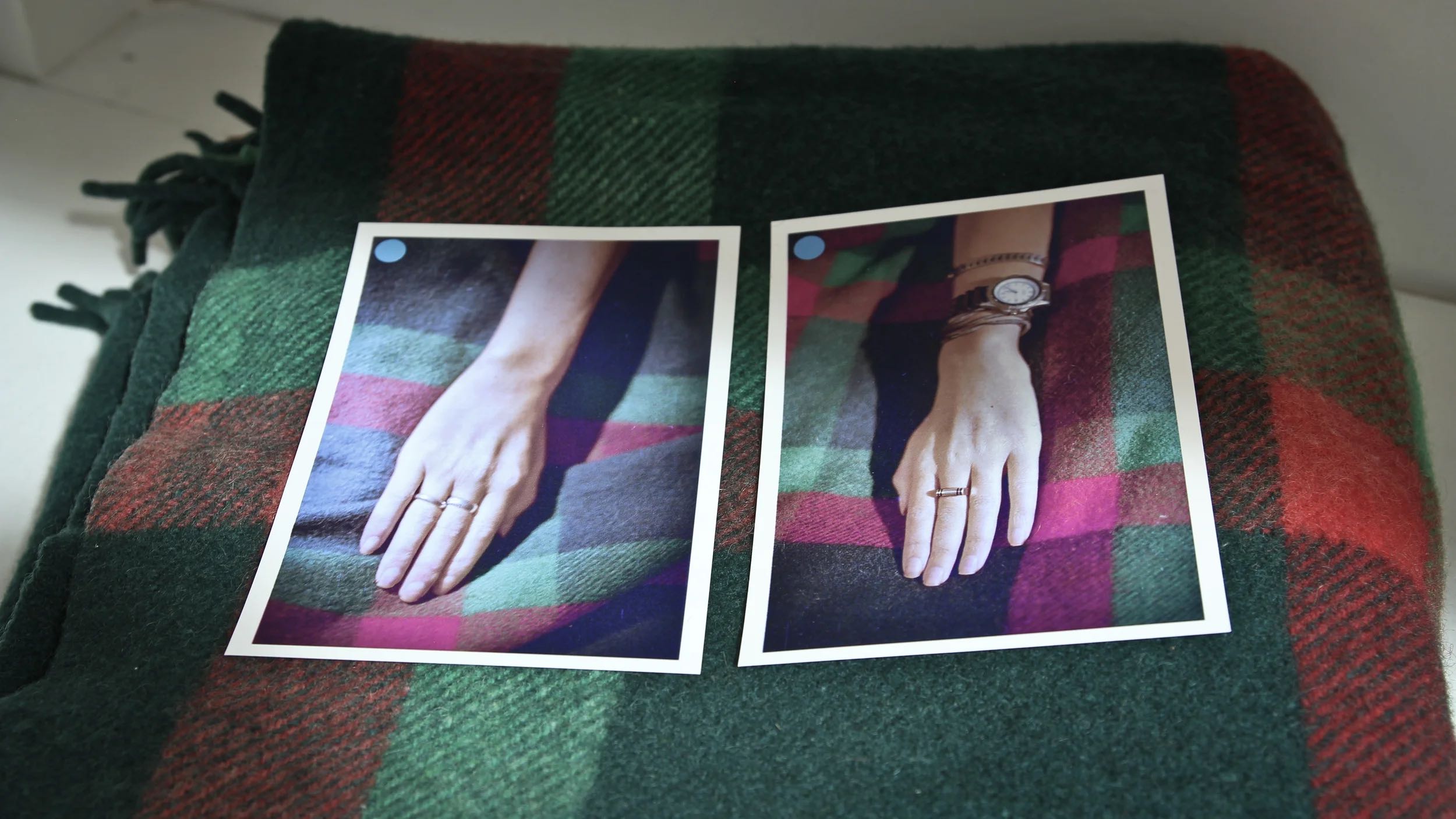
Documentation from the installation of Lecture, This Way (2015). Photos by me.
An installation responding to Kim Donaldson’s From the Lecture, A Reminder of Life (1996). Kim’s installation documents her father’s experience of caring for her brother who passed away from HIV/AIDS related complications in August 1995.
Twenty years on, I archive and re-present Kim’s installation alongside documentation compiled from my research visits to the Australian Lesbian and Gay Archives, now renamed as the Australian Queer Archives (AQuA), over my two-month residency.
Lecture, This Way was sited within the residency flat on the VCA campus and opens up my private residency space for public view, highlighting the subject/object relationship and the role of the caregiver for the patient, the artist for the artwork, and caretaker for the archive.
Video that was part of the installation, featuring interviews with Nick Henderson from AQuA and Kim Donaldson.
Download my Preliminary Reading materialsPraxisQueer Objects: An Archive for the Future (2016)
- Installation
- 13 February to 13 April 2016
- Earl Lu Gallery, Institute of Contemporary Arts, Singapore
- Part of Fault-lines: Disparate and Desperate Intimacies
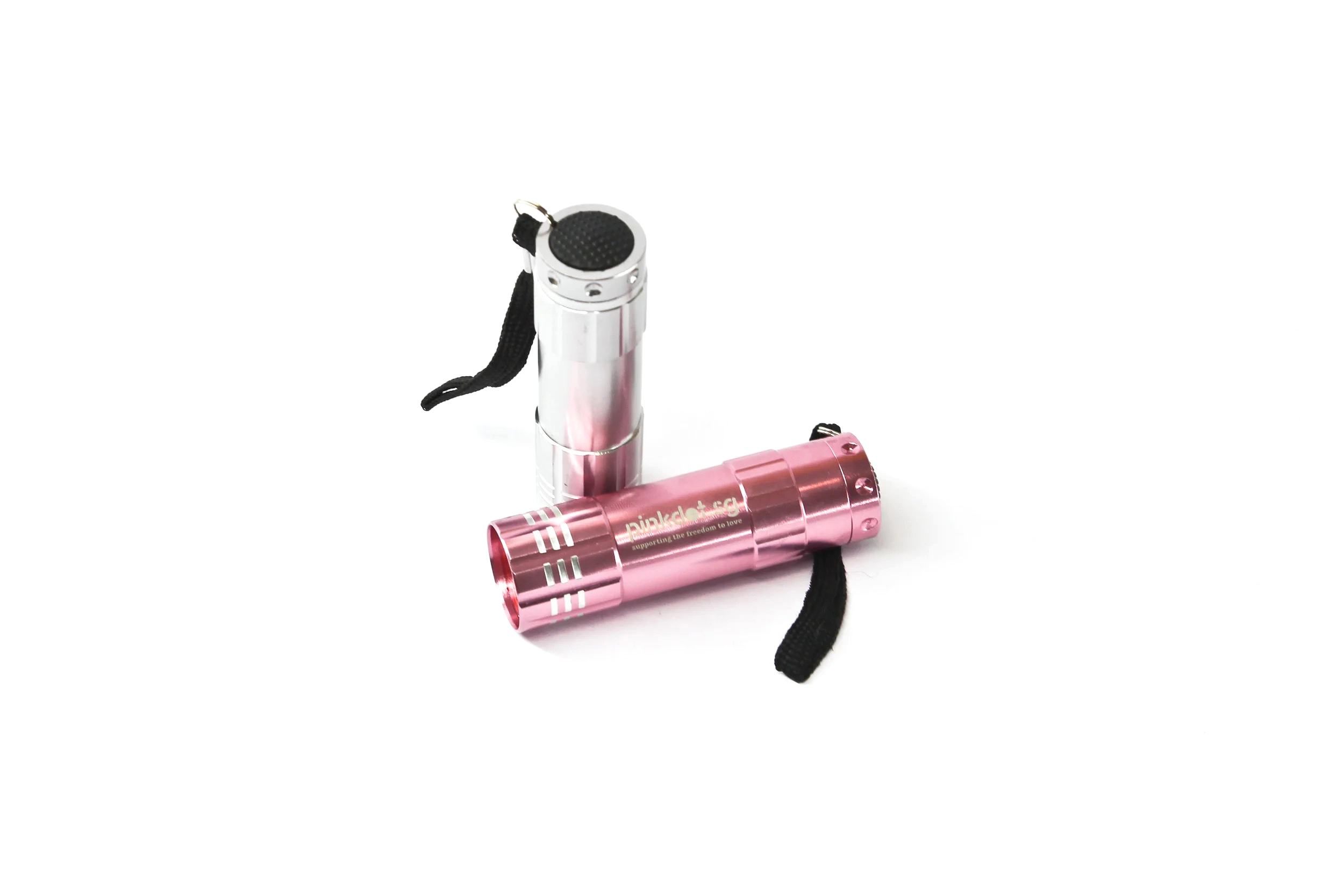
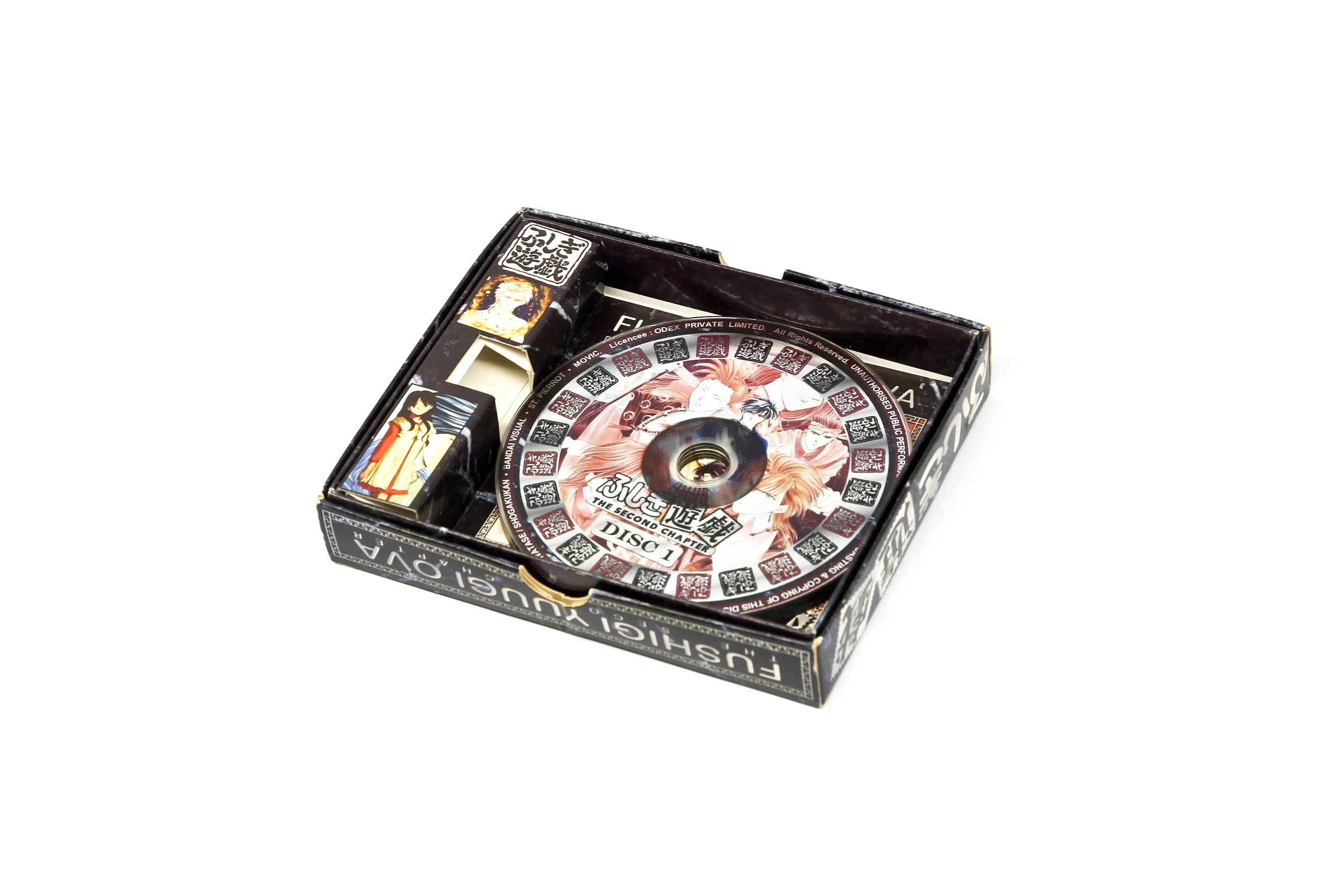
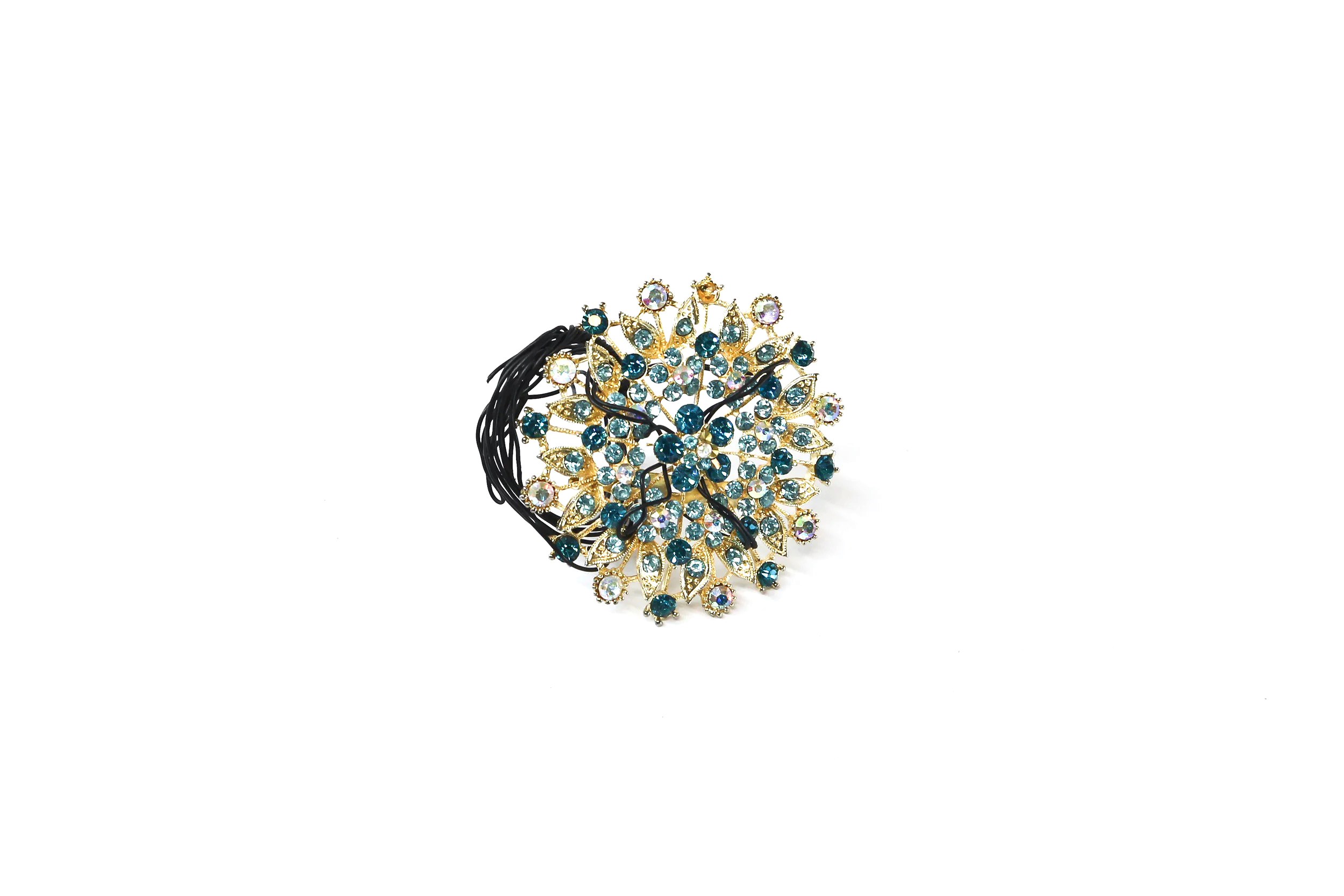
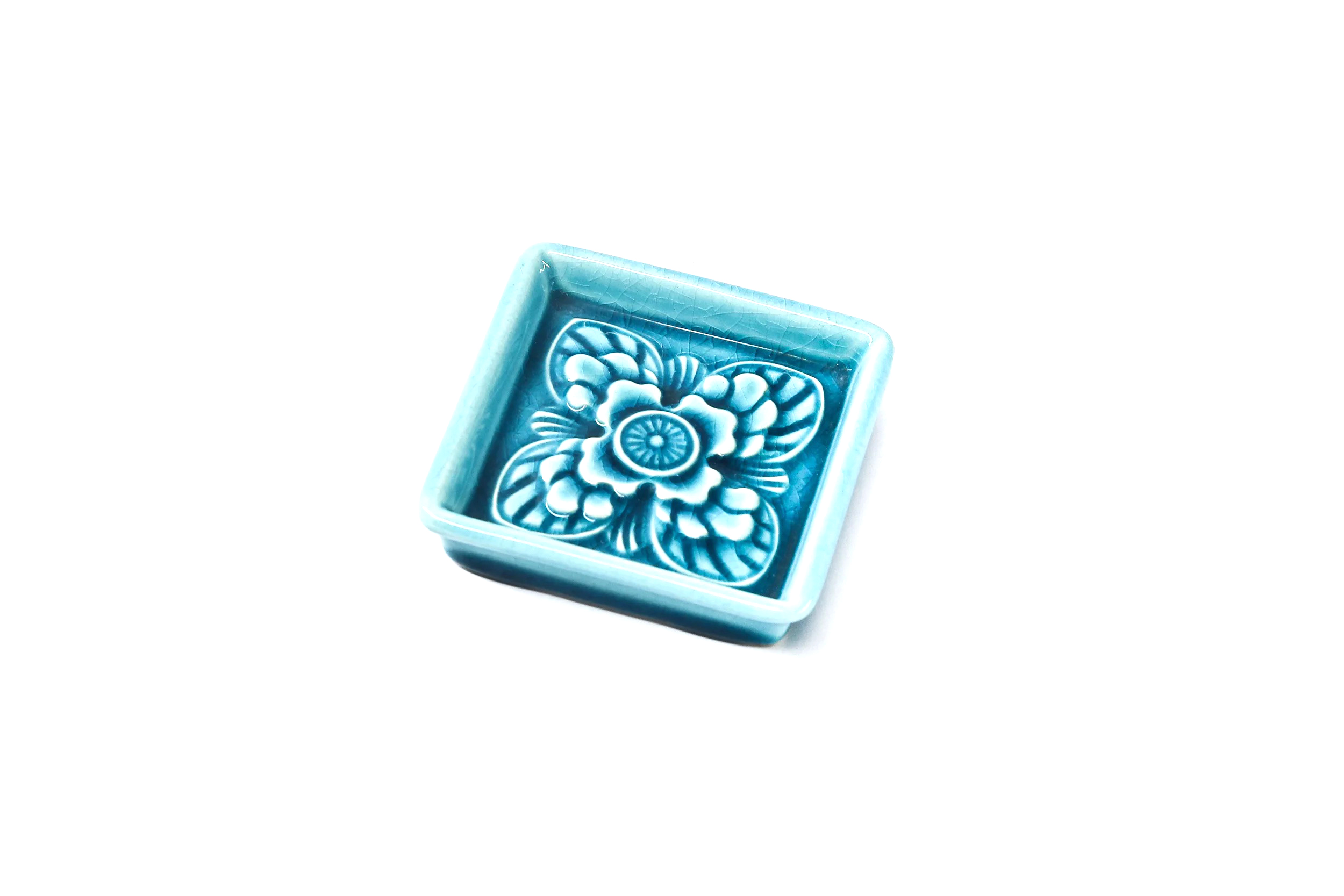
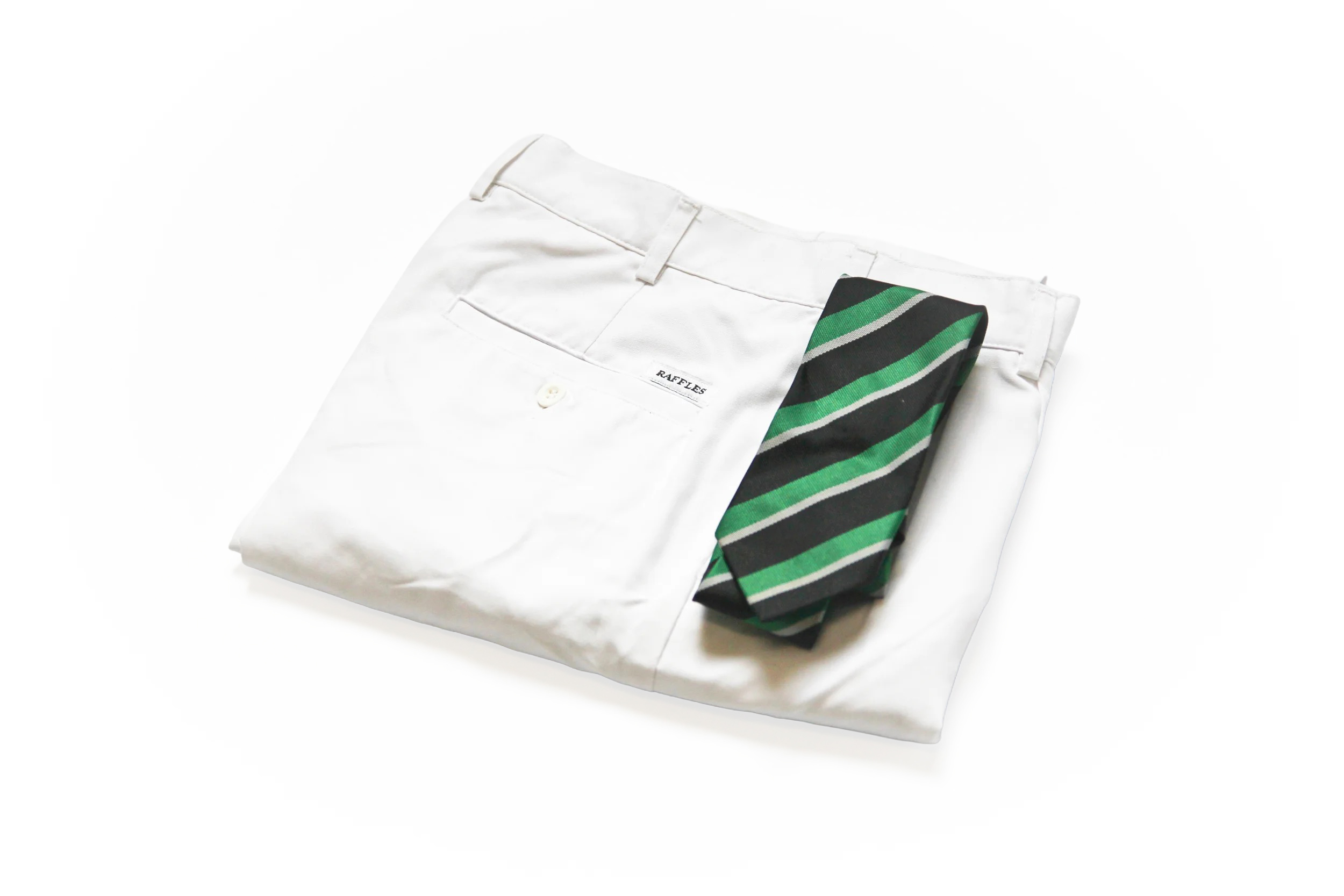
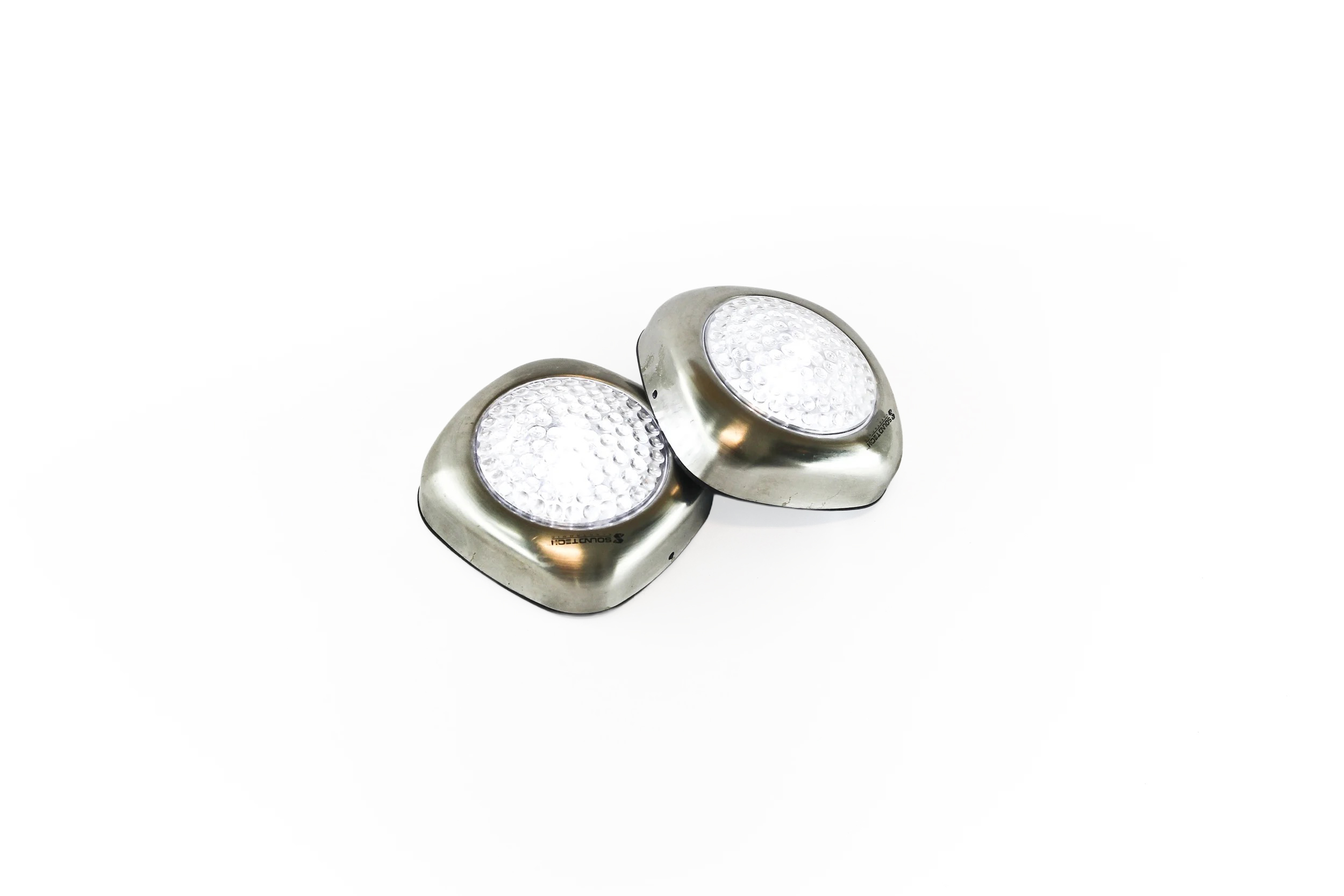
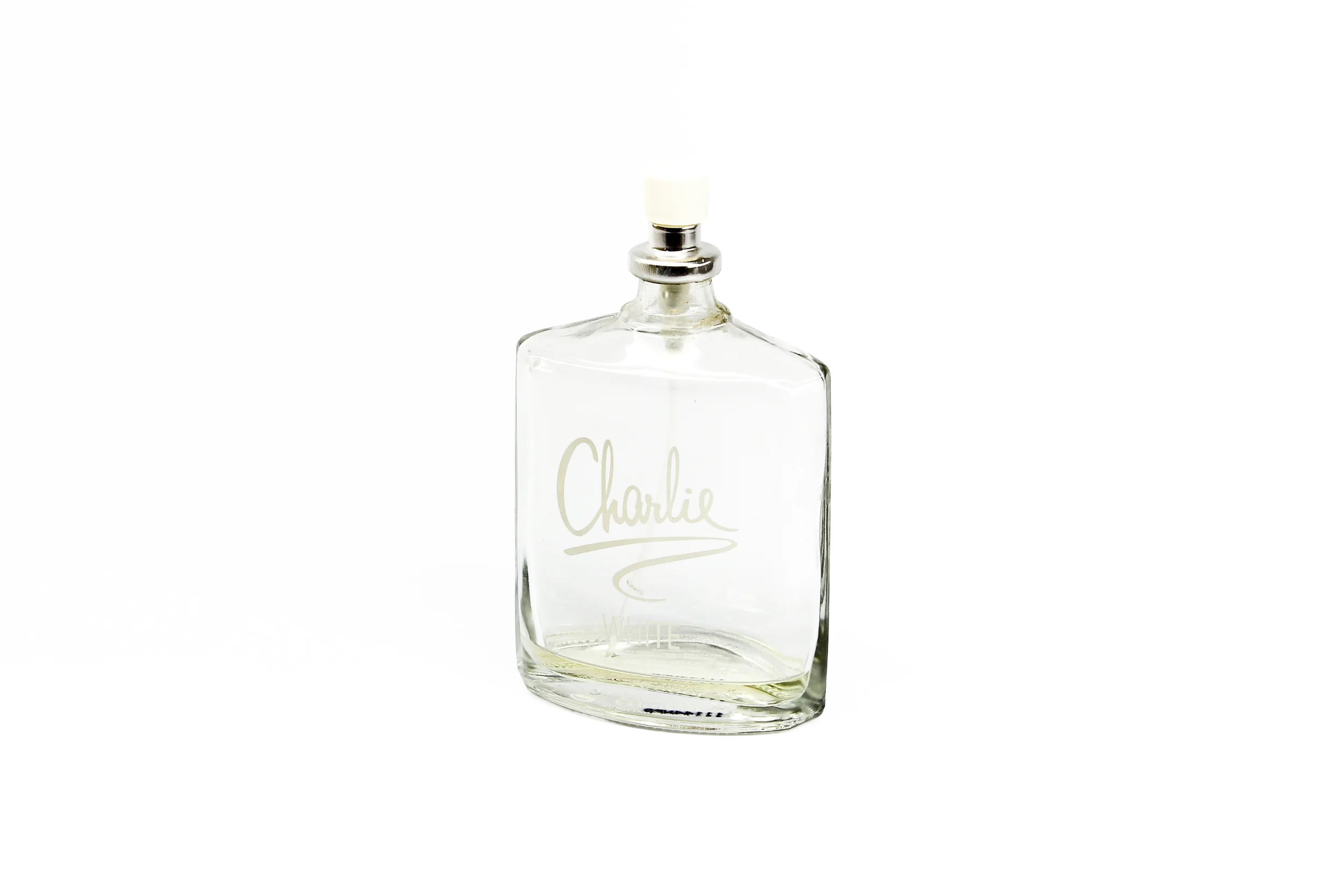
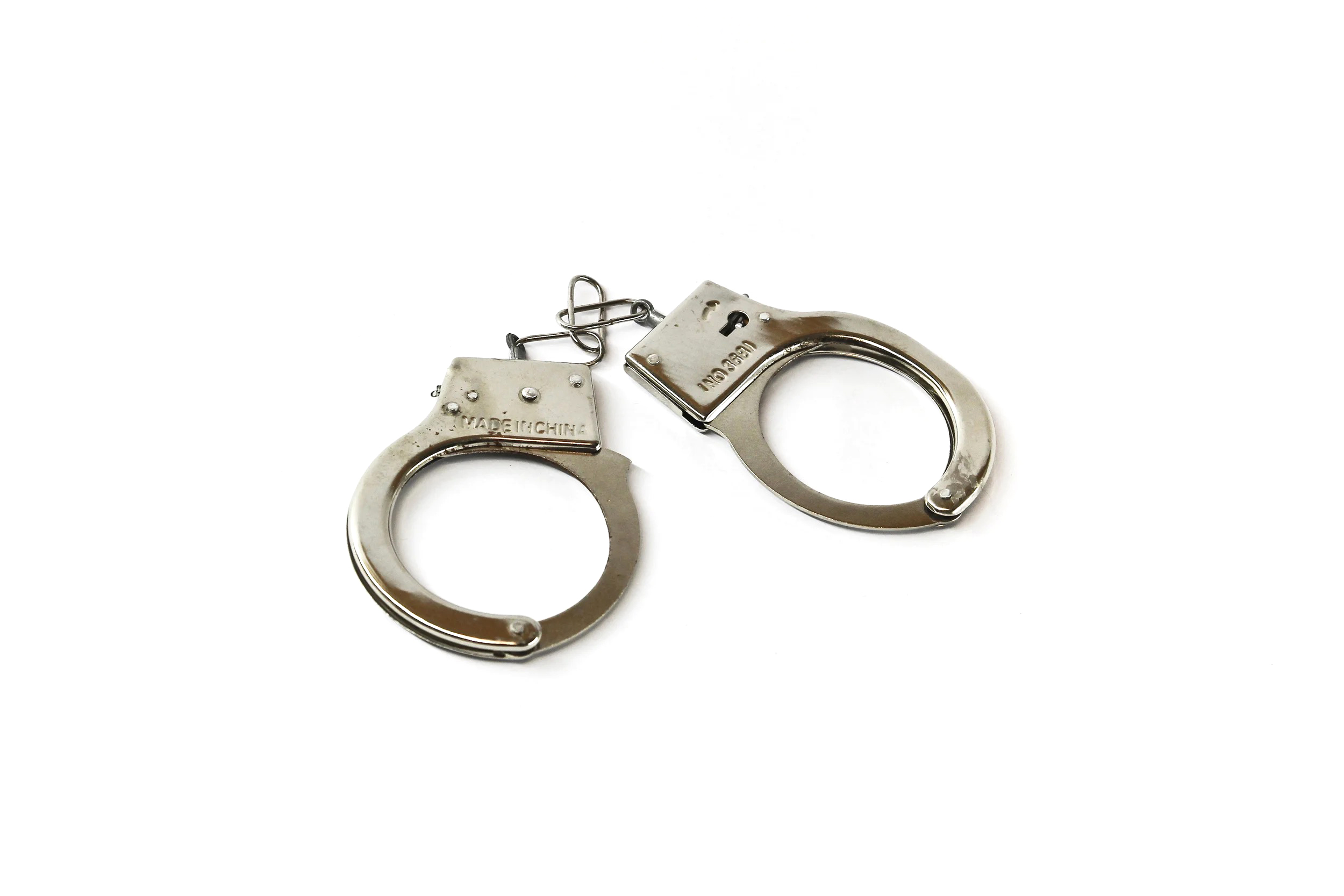
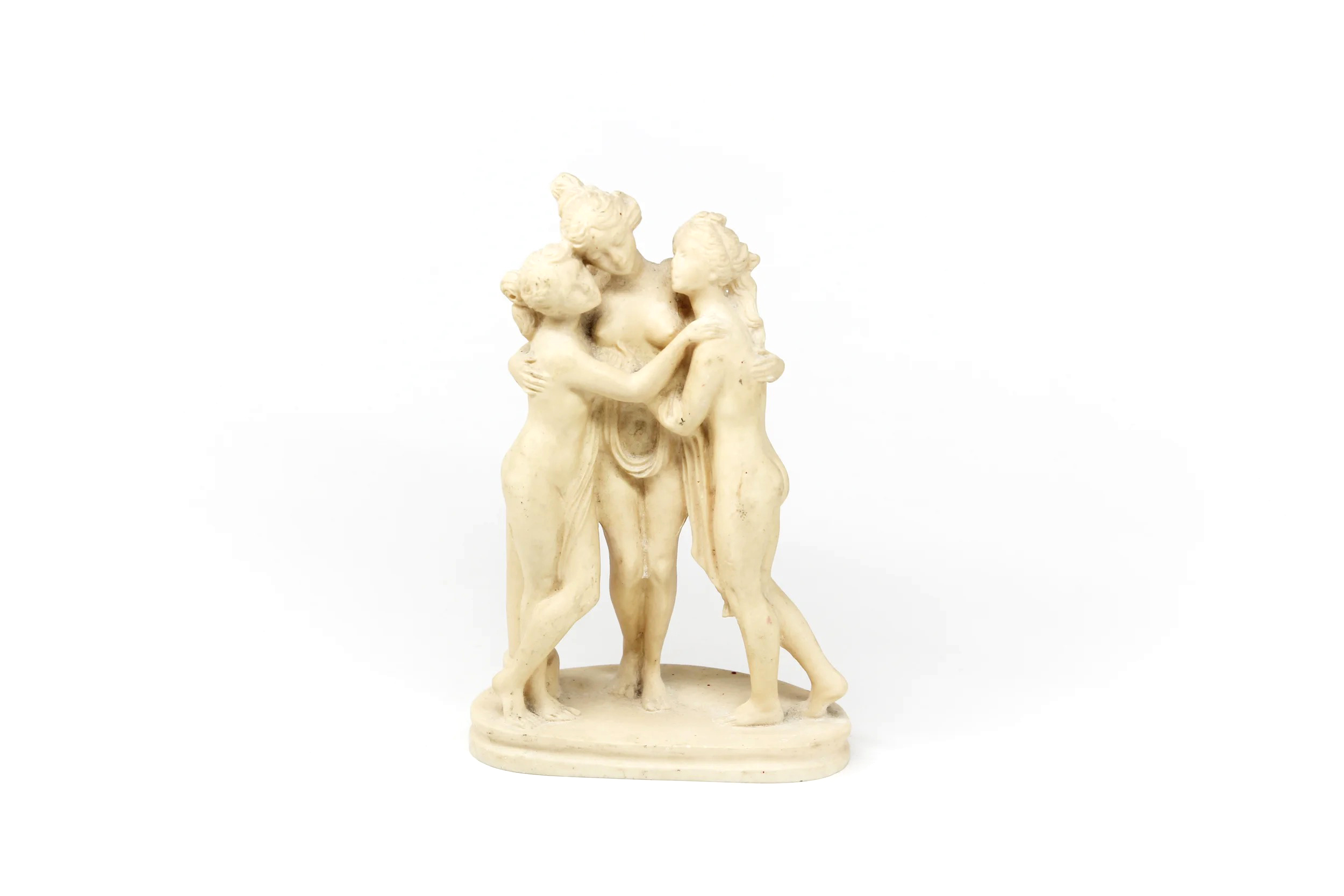
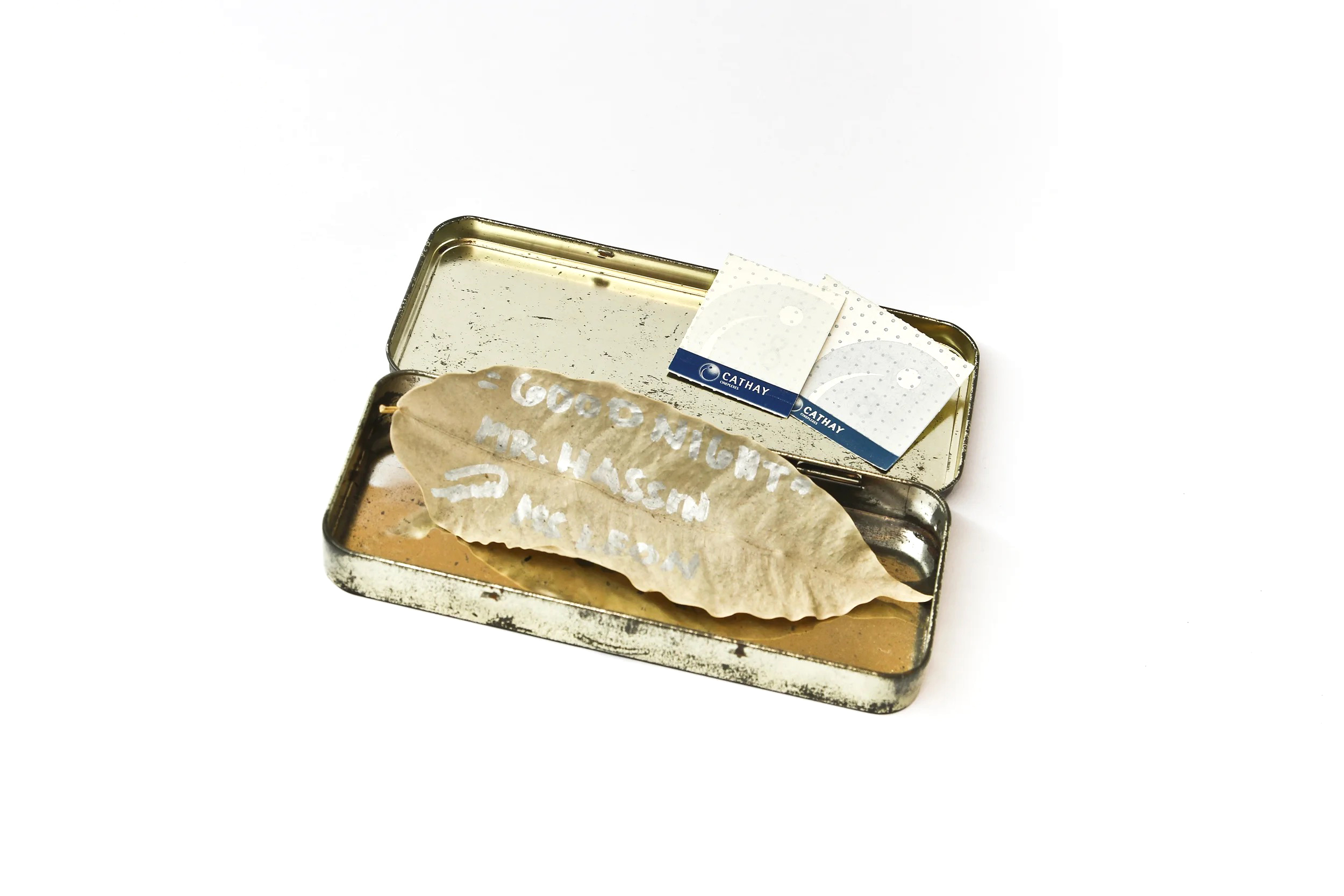
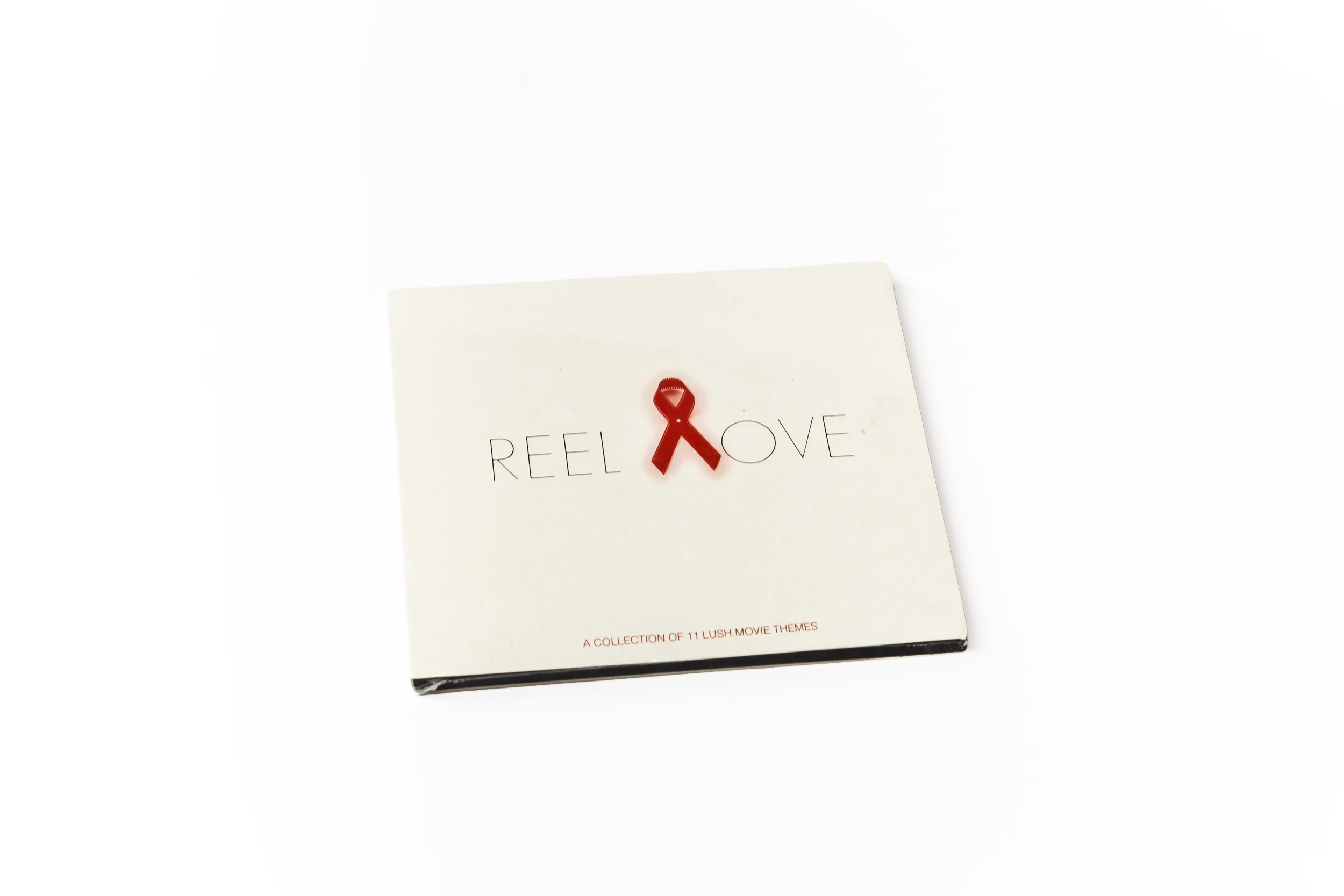
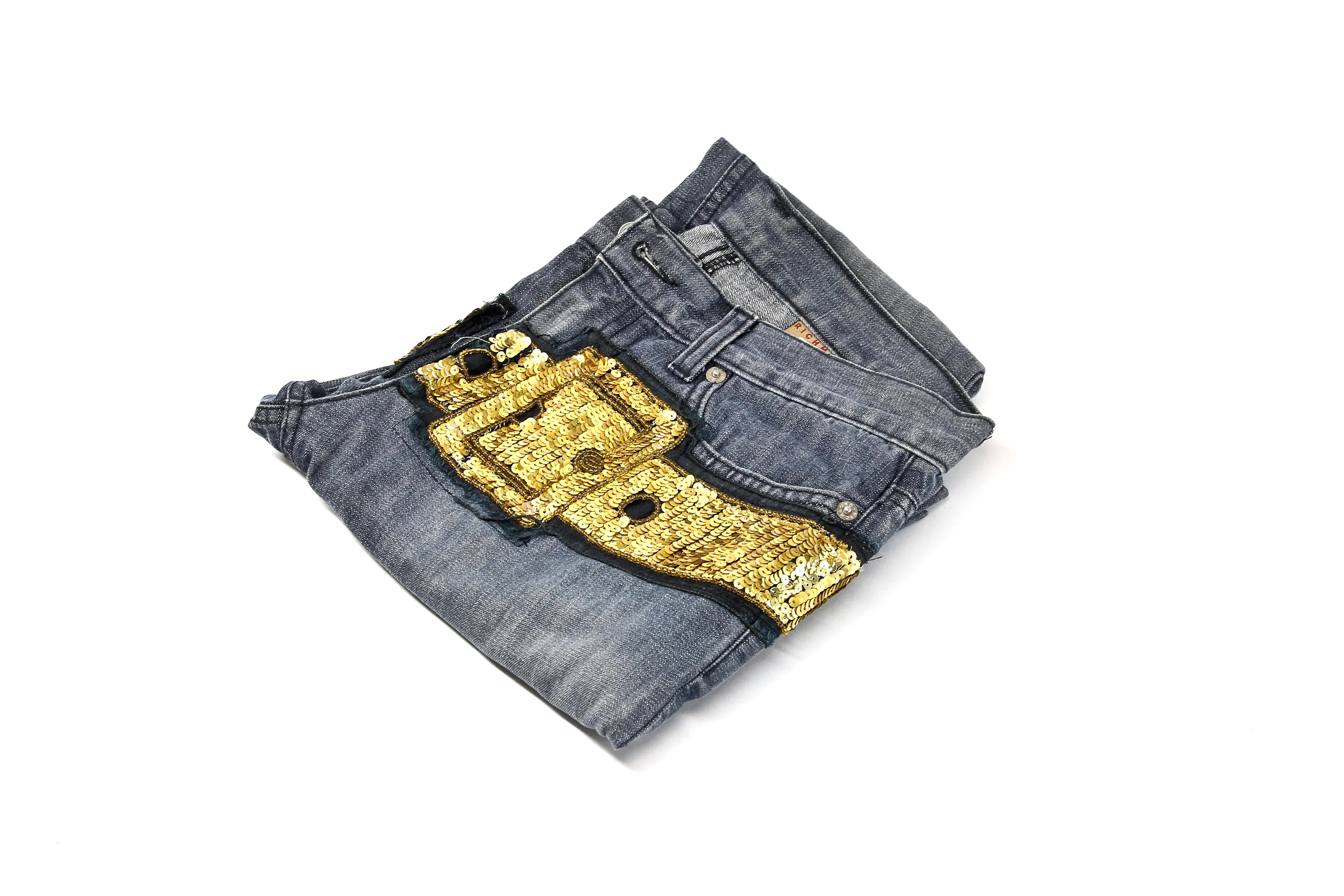
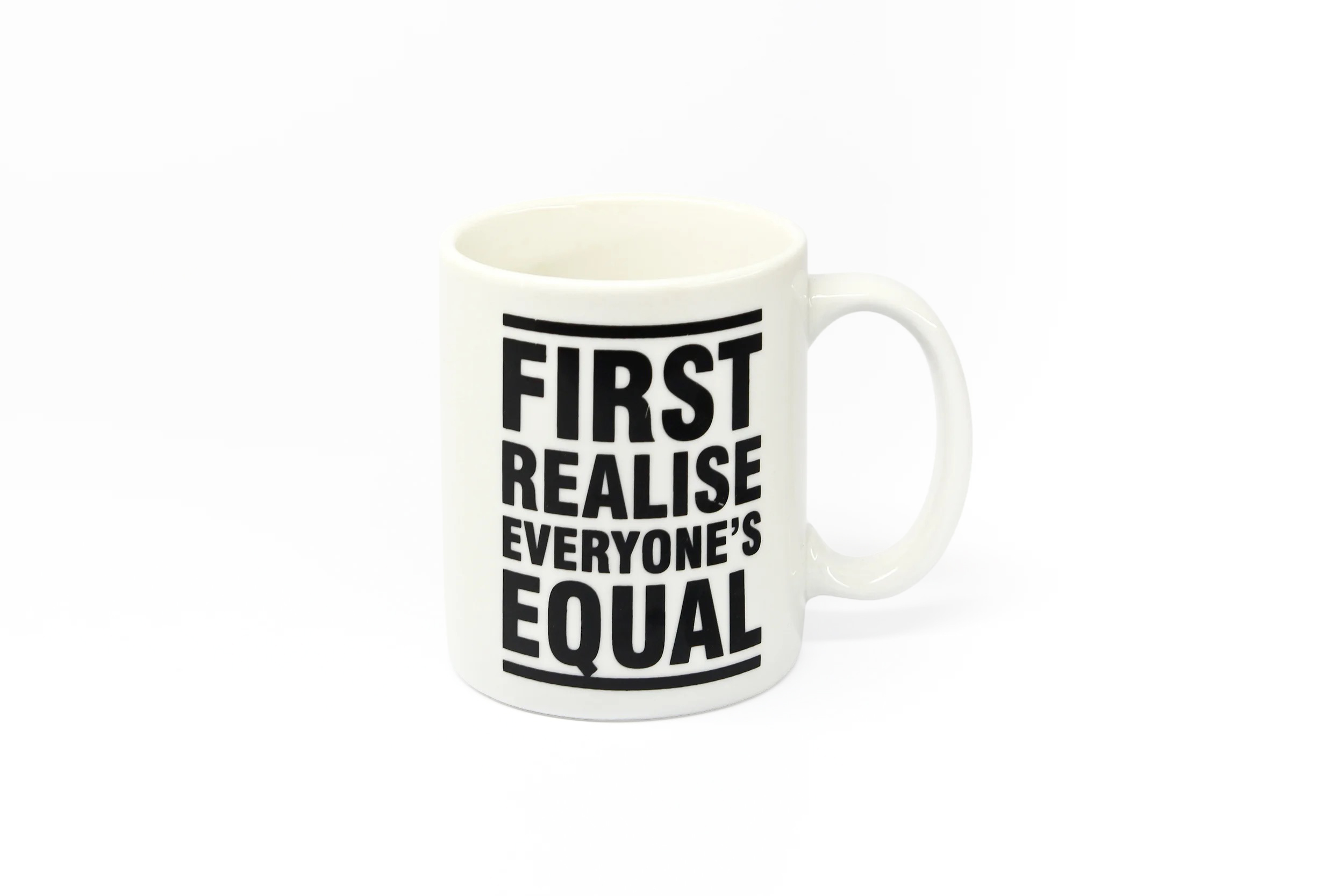
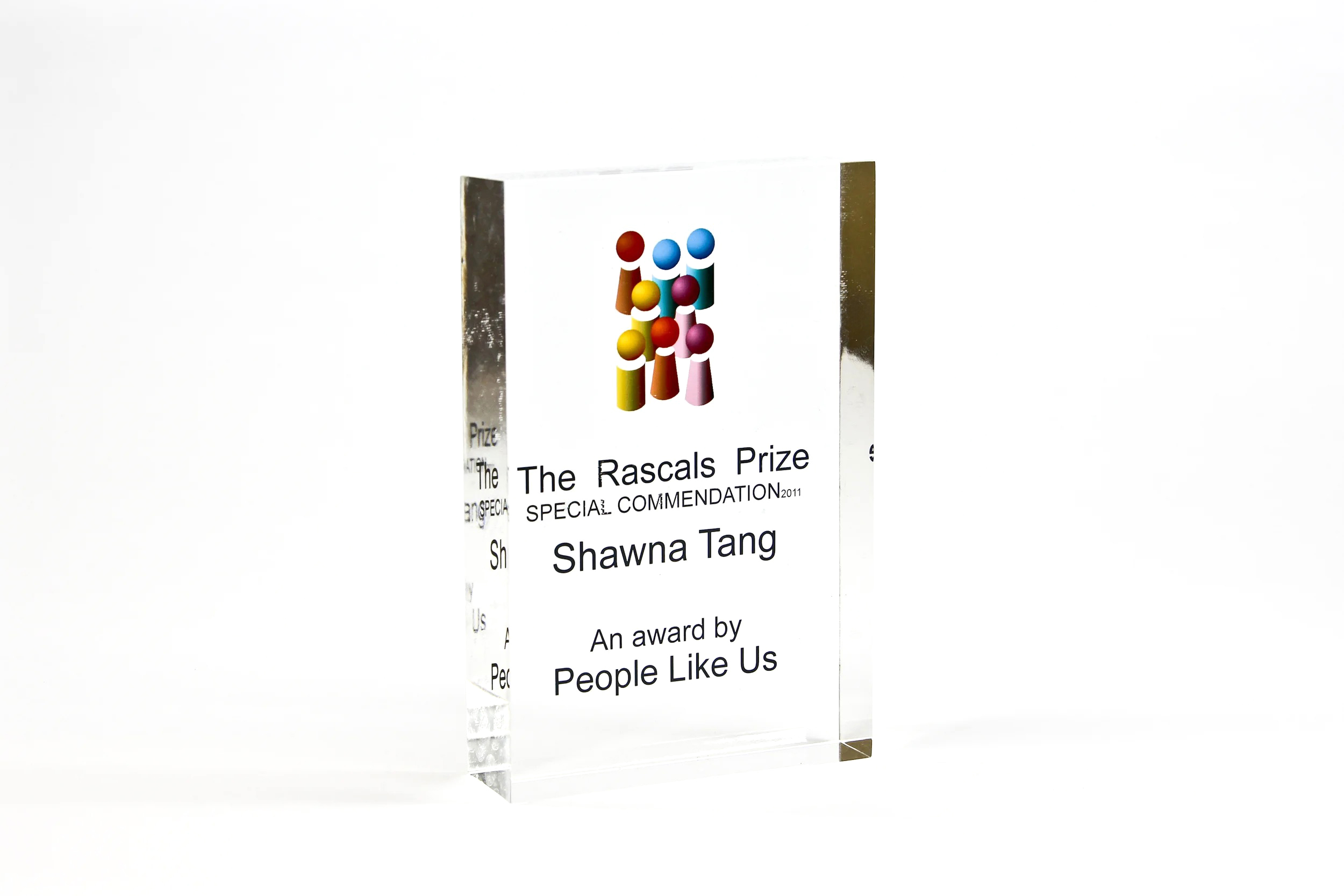
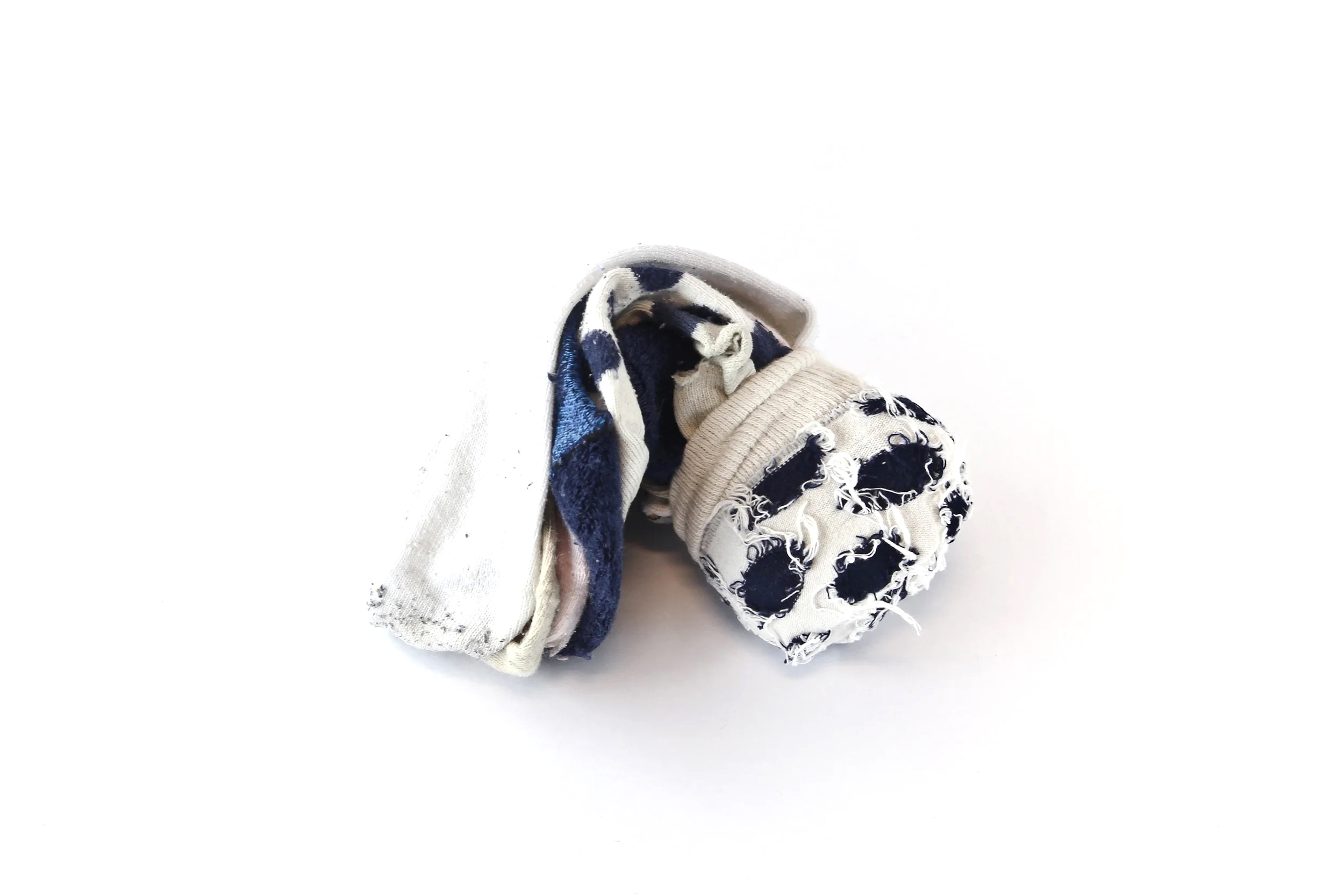
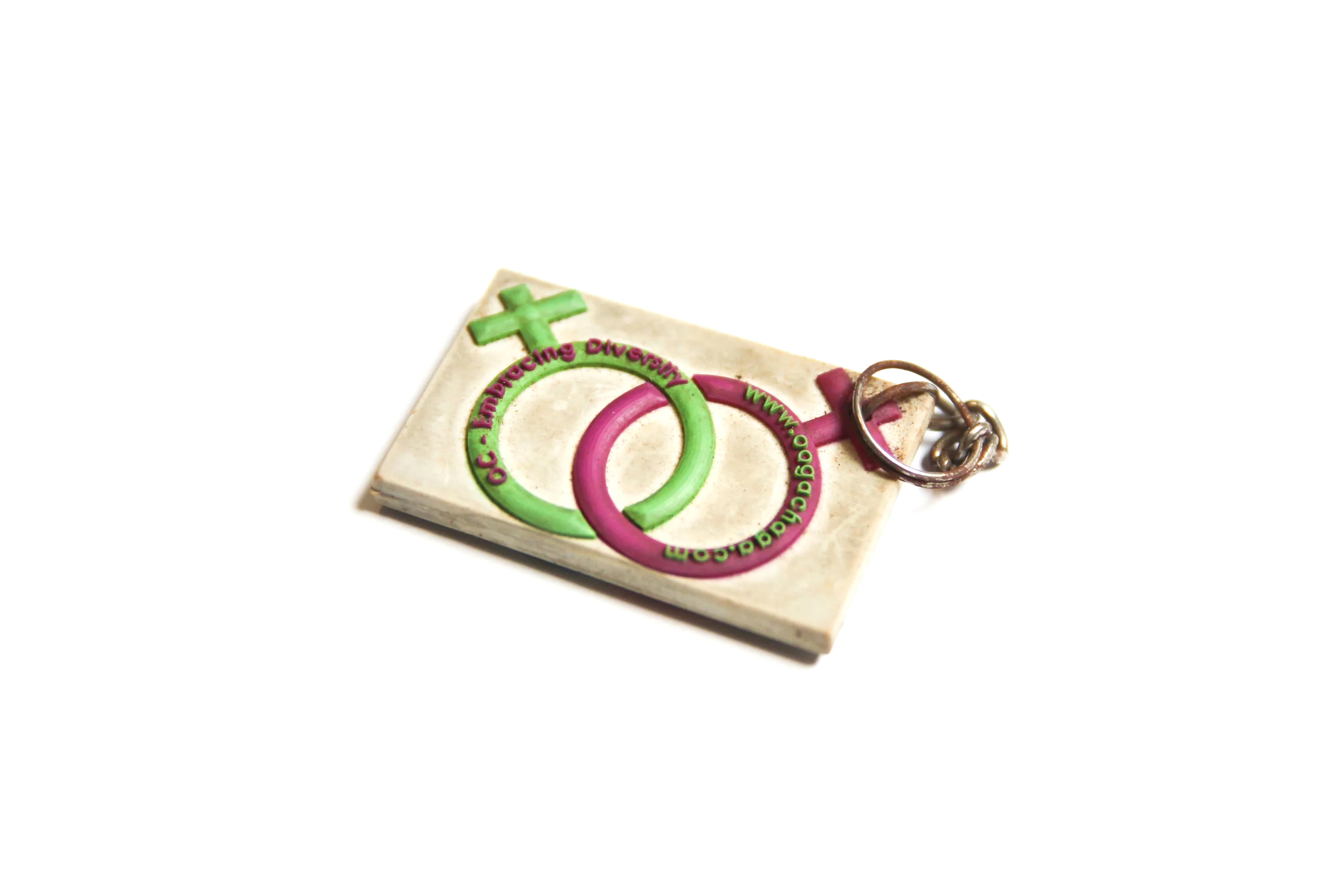
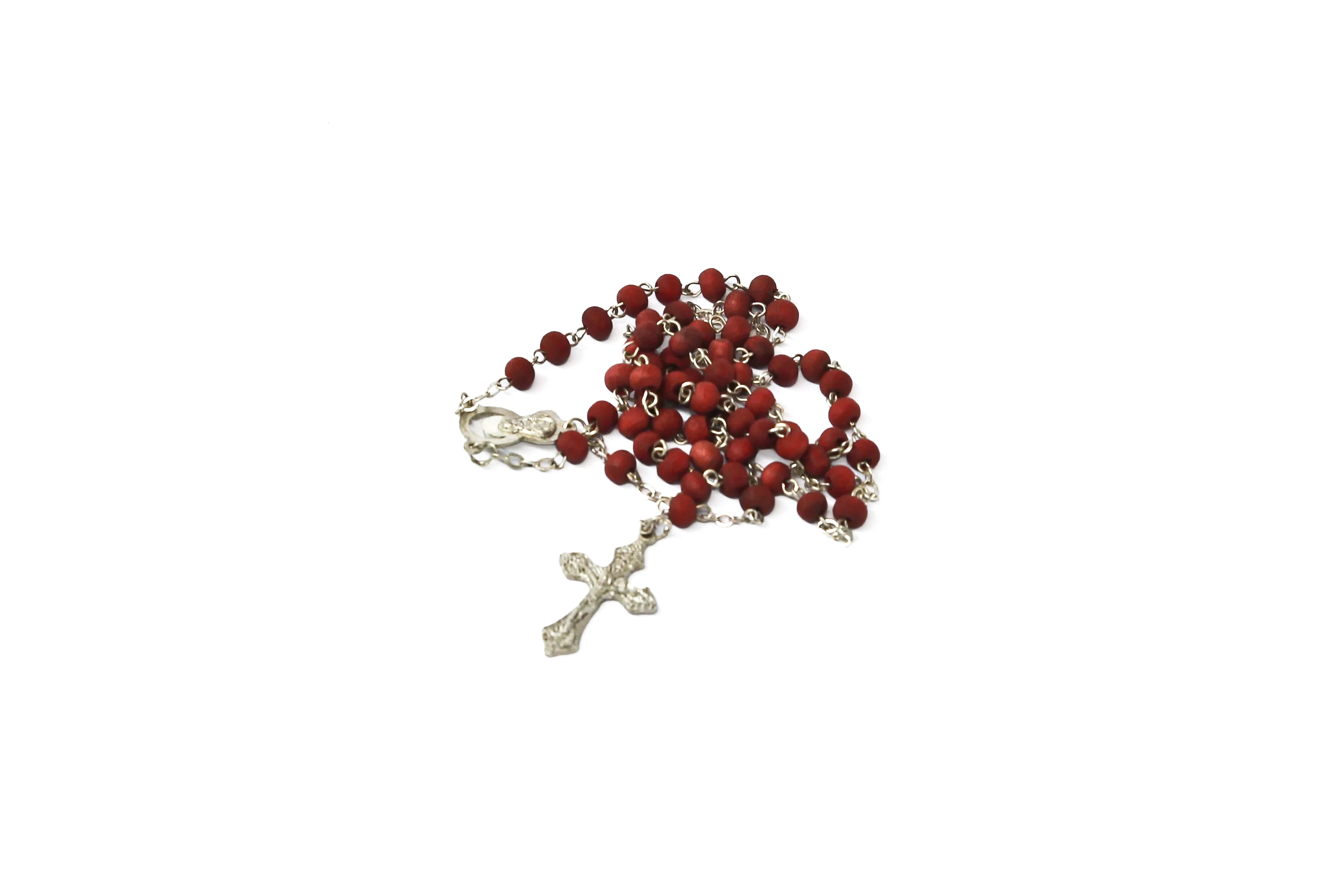
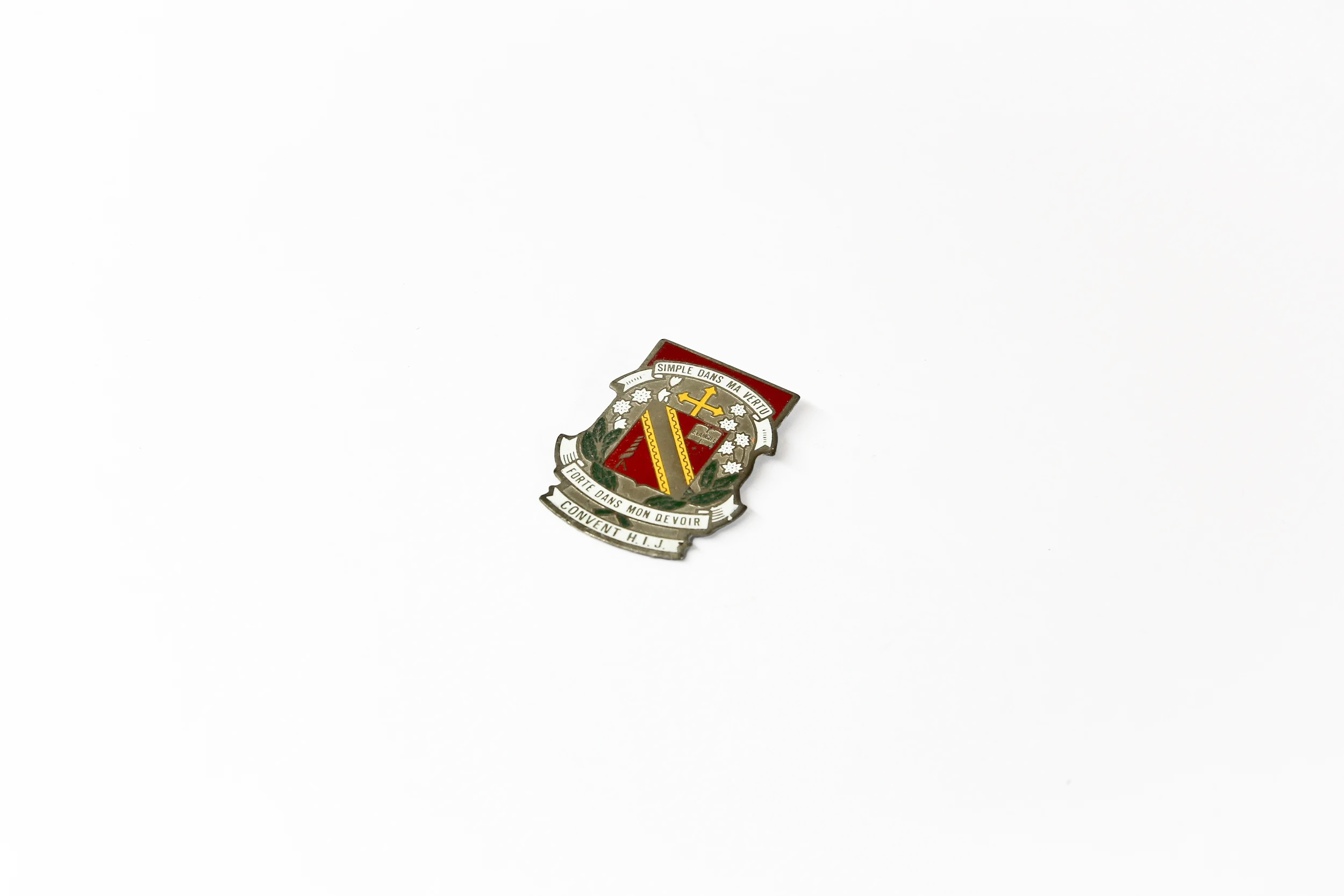
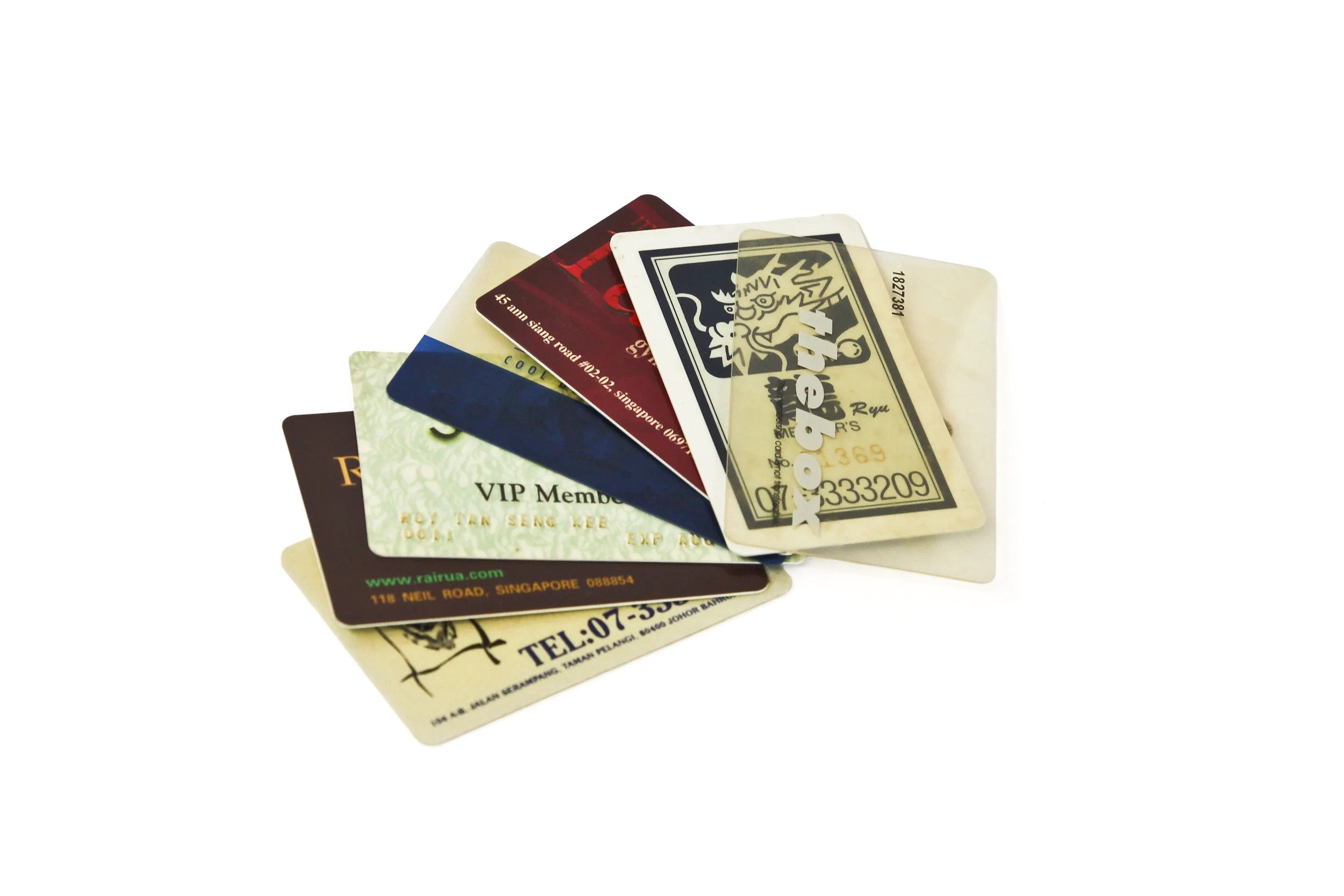
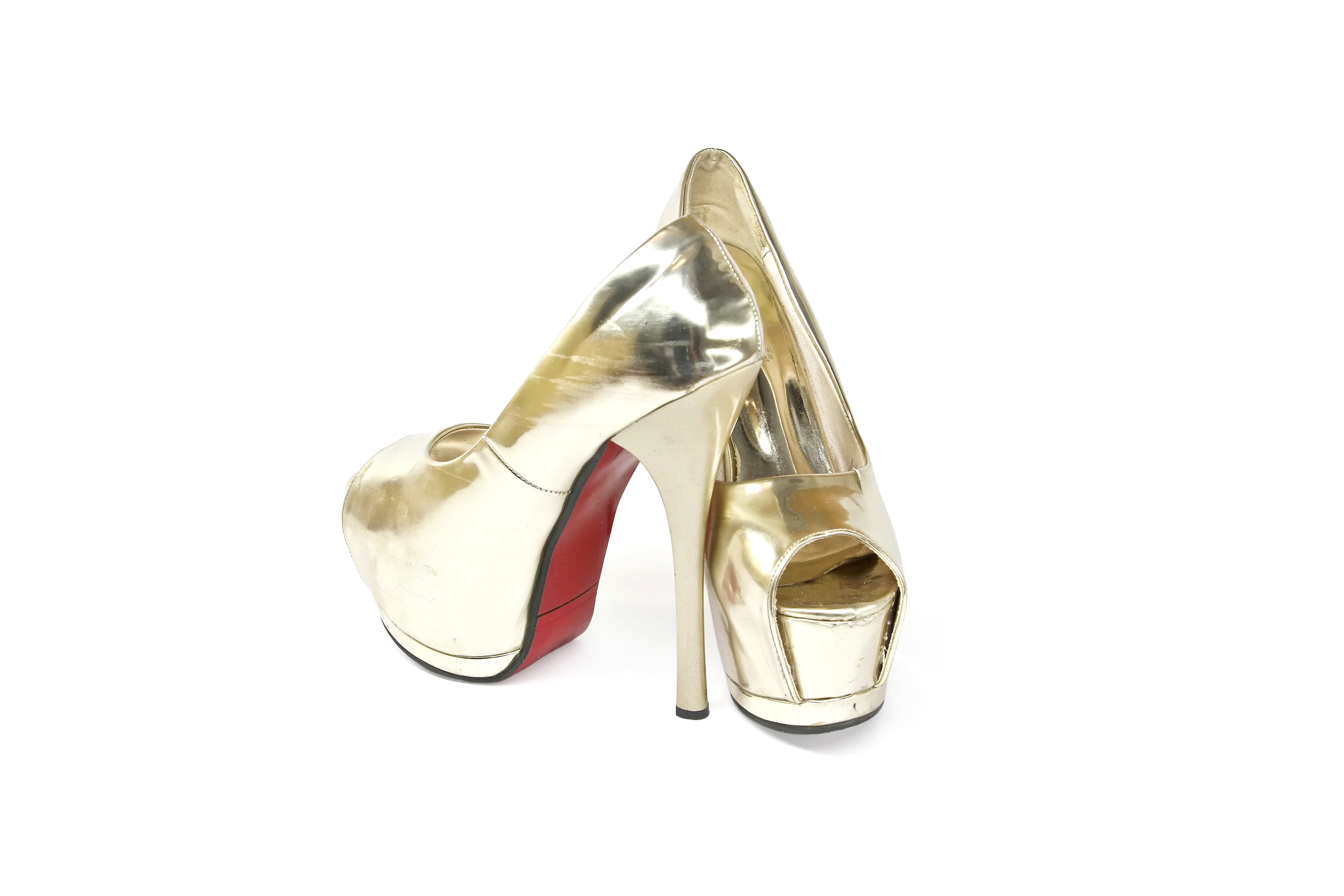
The year is 2065, the nation is celebrating SG100. Section 377A of the penal code has been repealed. The first transgender member of parliament was elected to represent the Aljunied constituency in the last General Elections. The Ministry of Human Rights (MHR) and the Community Archive (CA) are organising an exhibition of objects from a time capsule buried twenty-five years ago. This is a selection of eighty-one objects from that time capsule.
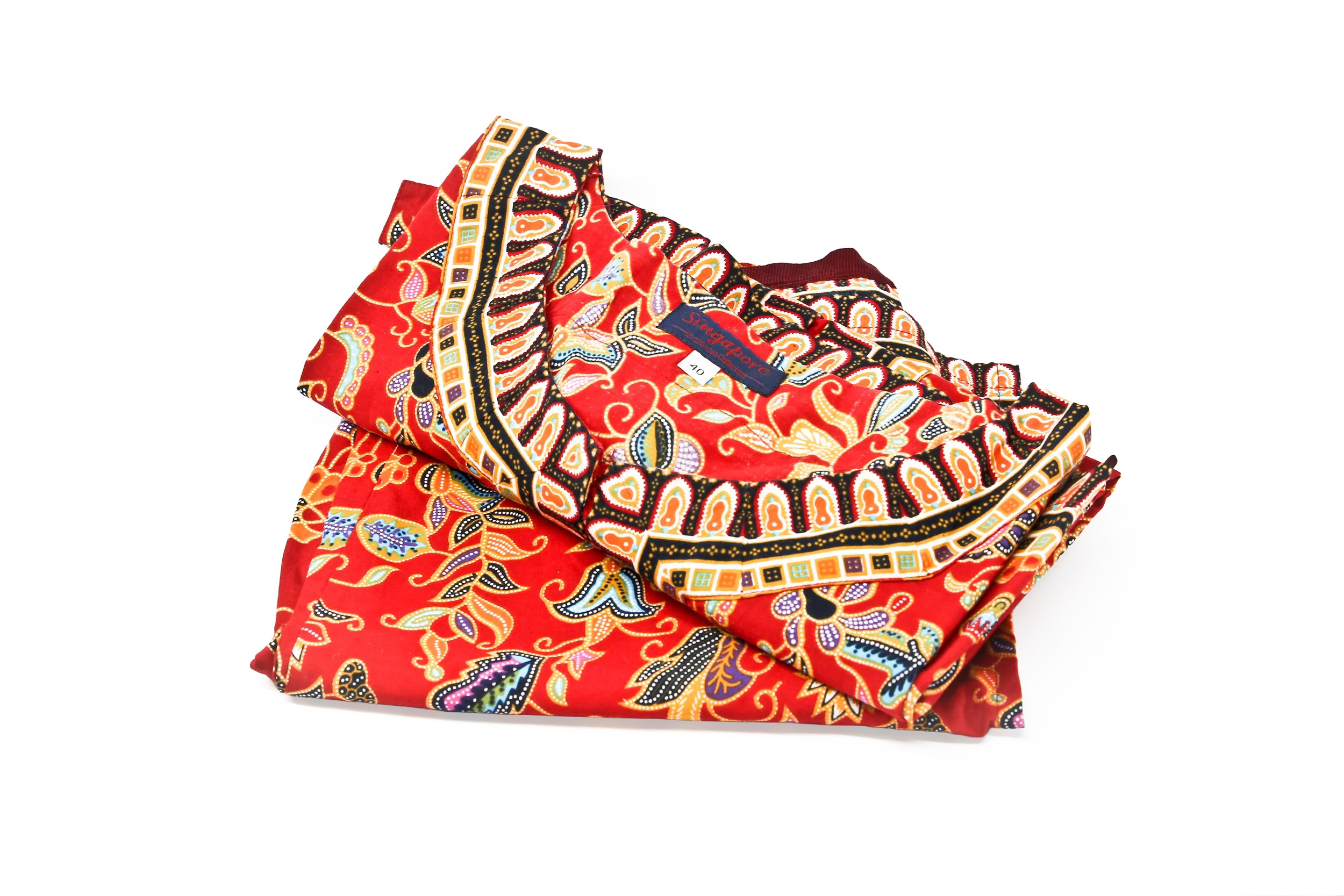
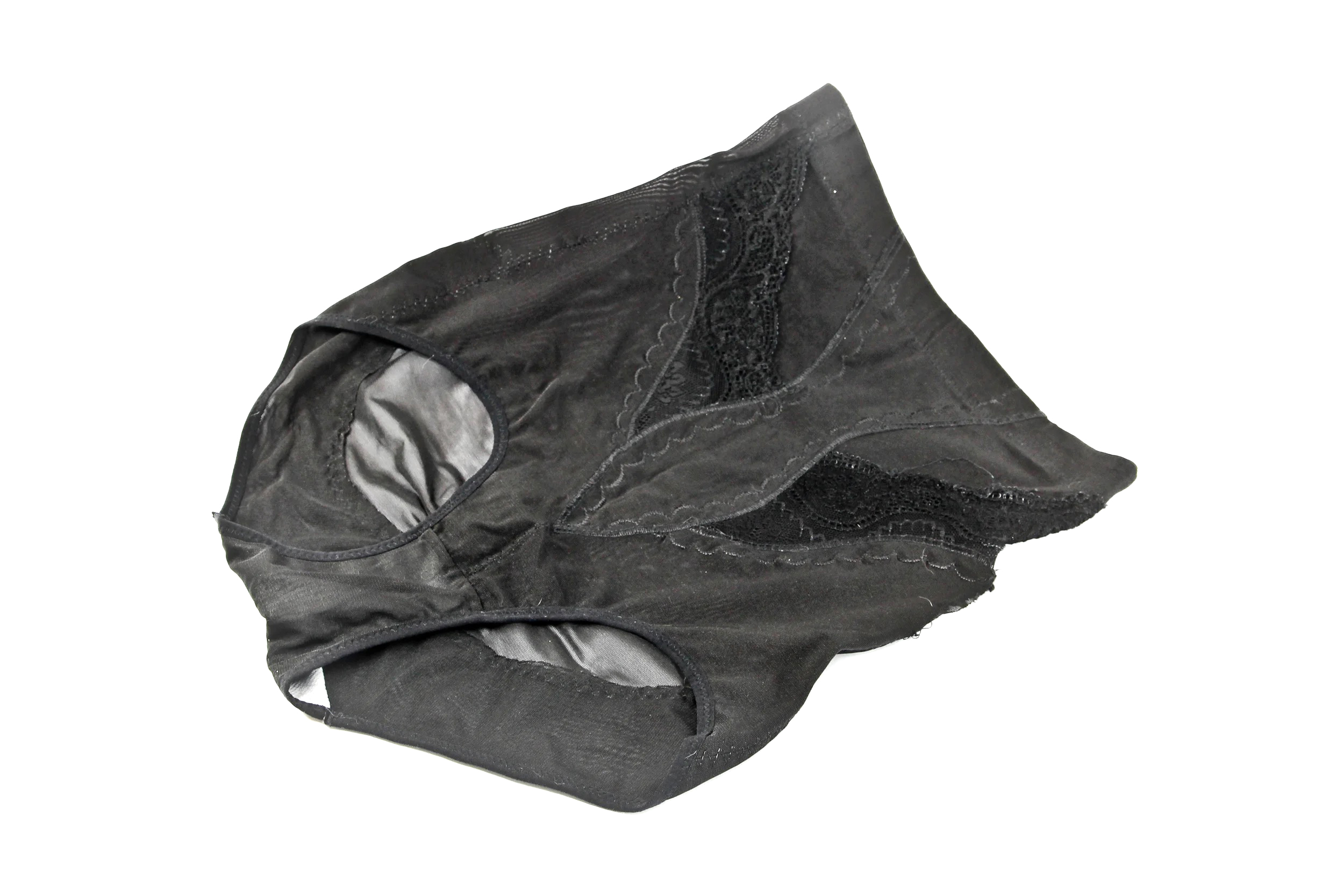
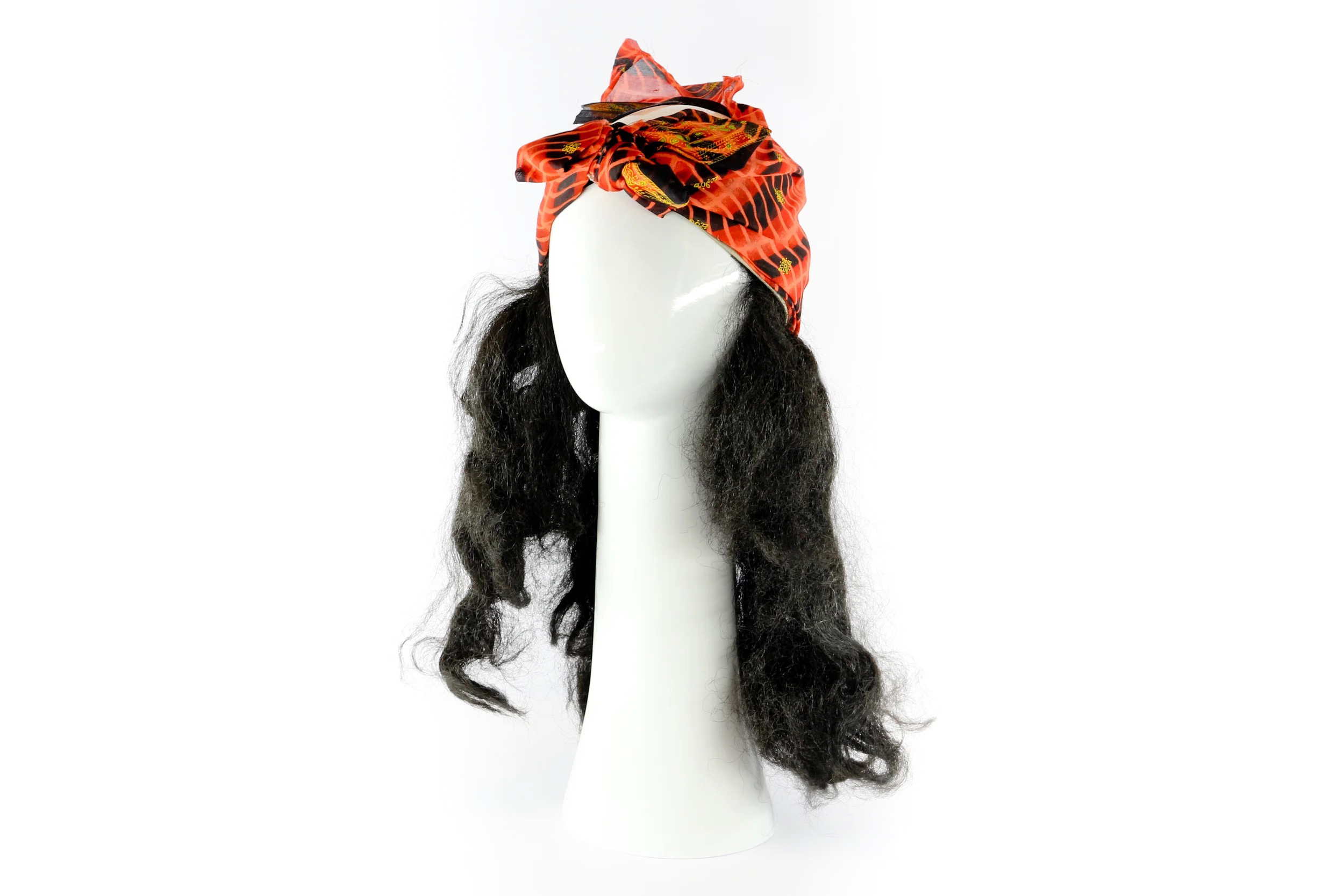
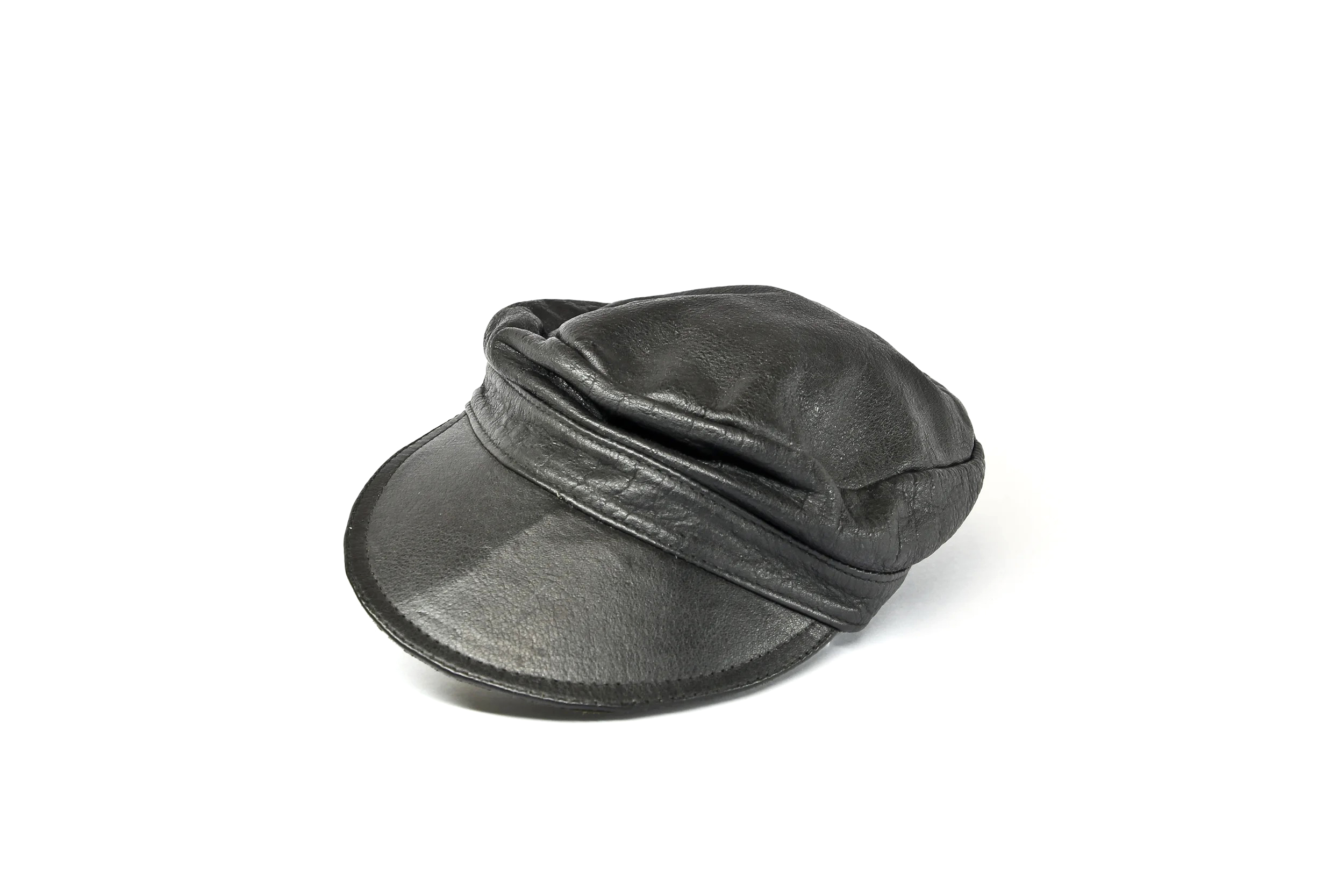
Queer Objects: An Archive for the Future was a response to Lecture, This Way (2015), a project that included the documentation of objects from the Australian Queer Archives. After returning to Singapore, I embarked on a project to assemble objects that would be representative of a hypothetical Singaporean queer archive.
In the months preceding the exhibition opening, I reached out to various members from the queer community. These included artists, theater companies, queer-friendly faith groups, civil society organizations and personal friends. During the collection process, I encouraged the inclusion of objects that each contributor would associate with their journey of queer identification. I eventually shortlisted a selection that showcased a spectrum of queer experiences. This was meant to be not only a hypothetical but also a temporary archive. The objects were on loan and returned to their owners after the conclusion of the exhibition.
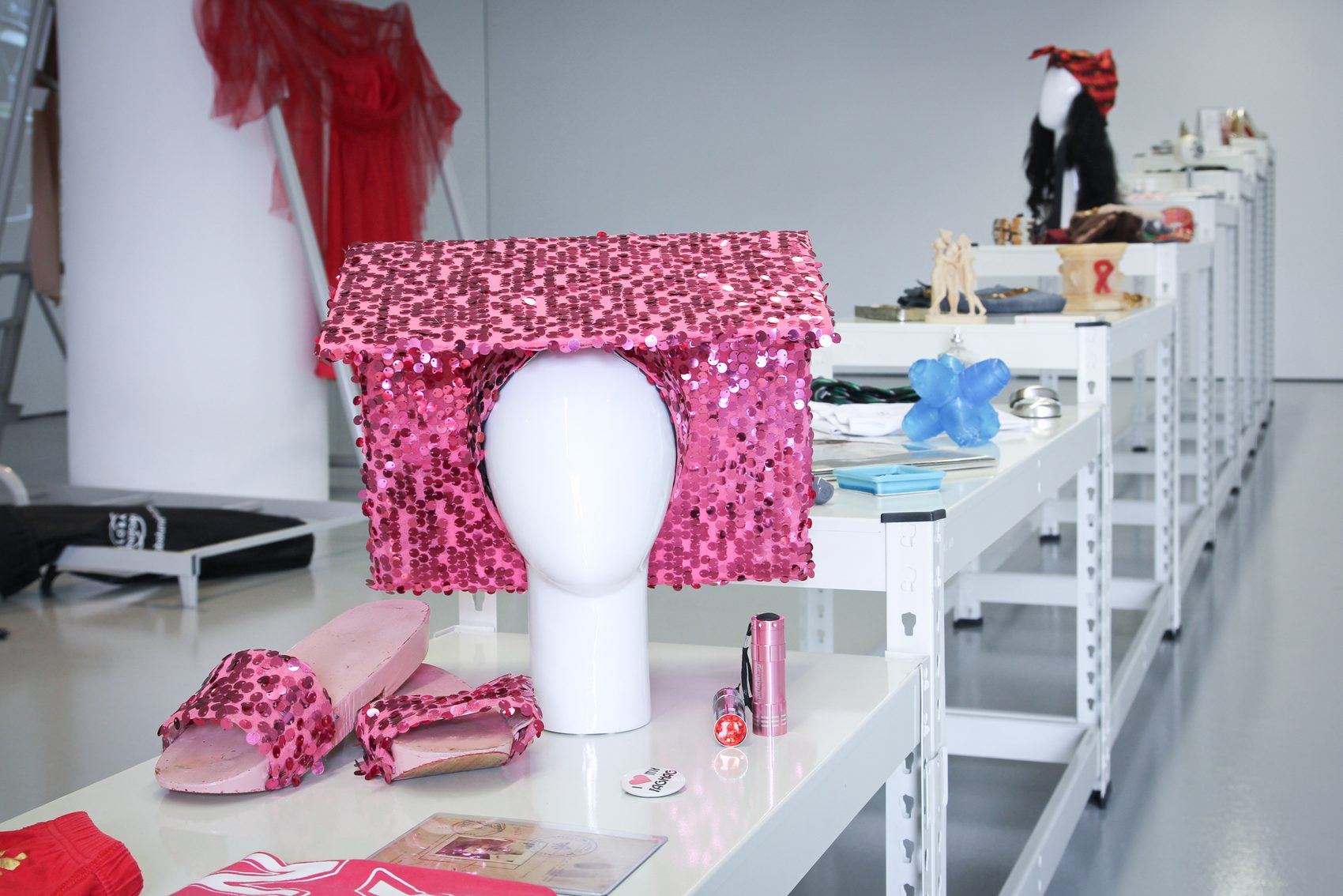
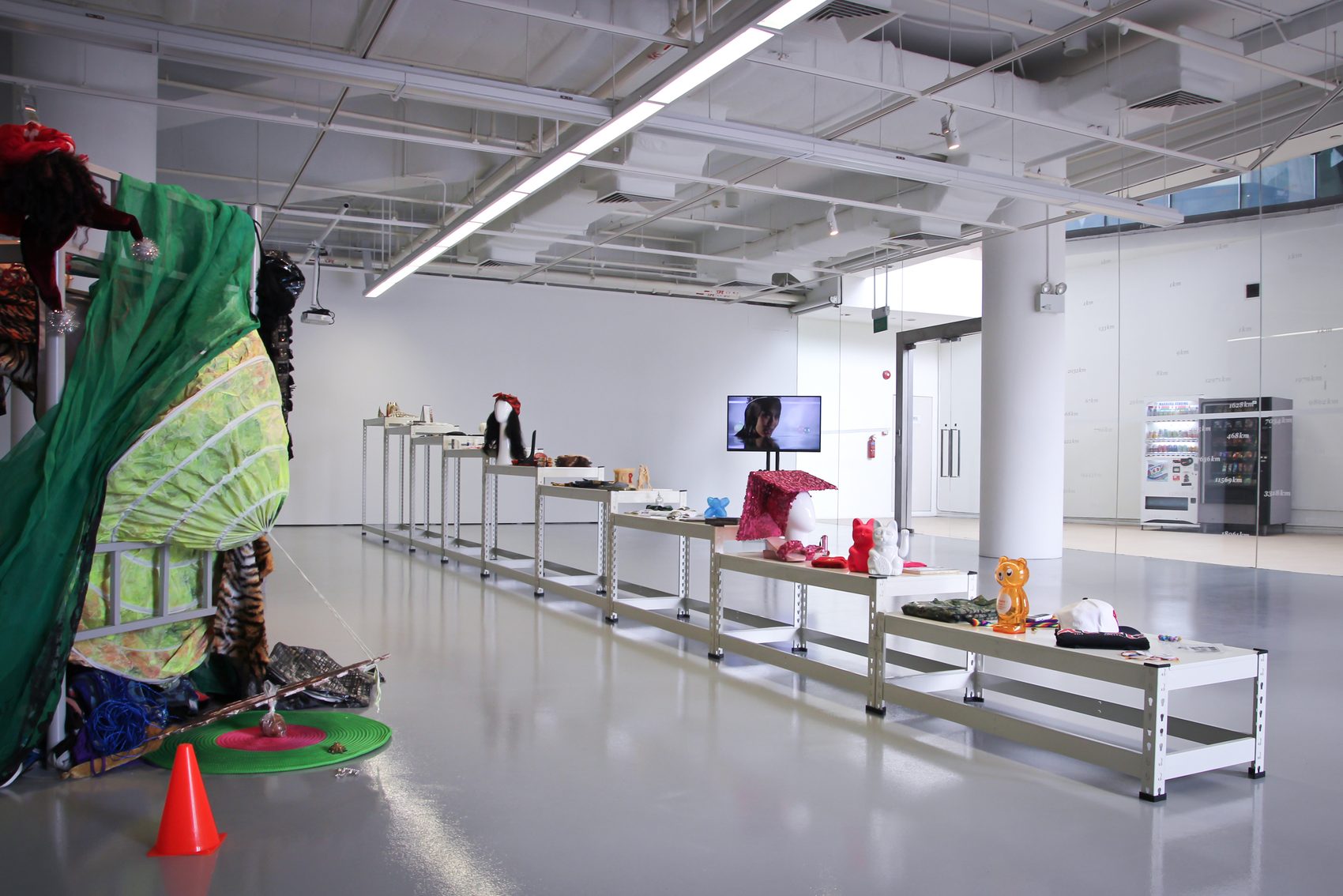
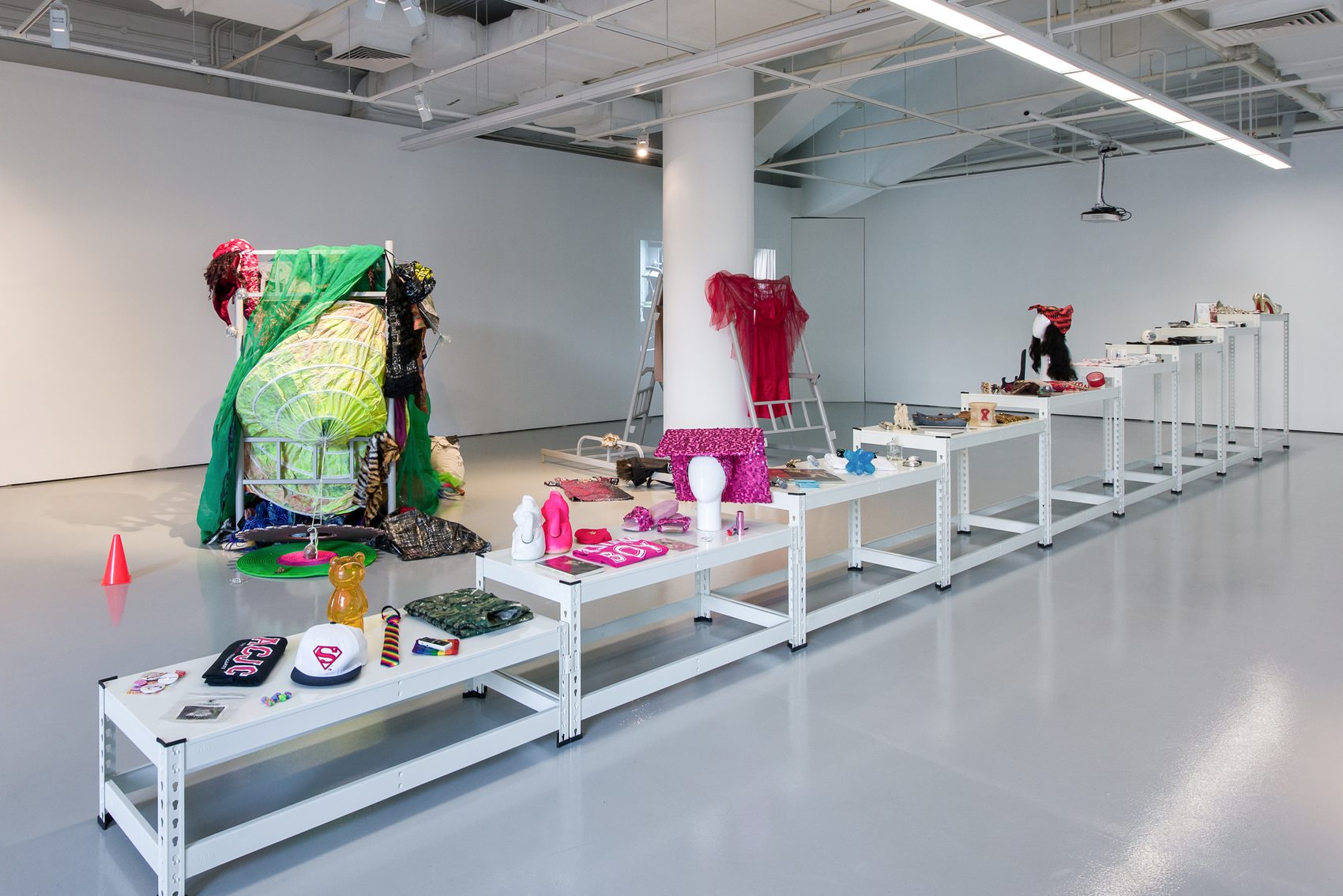
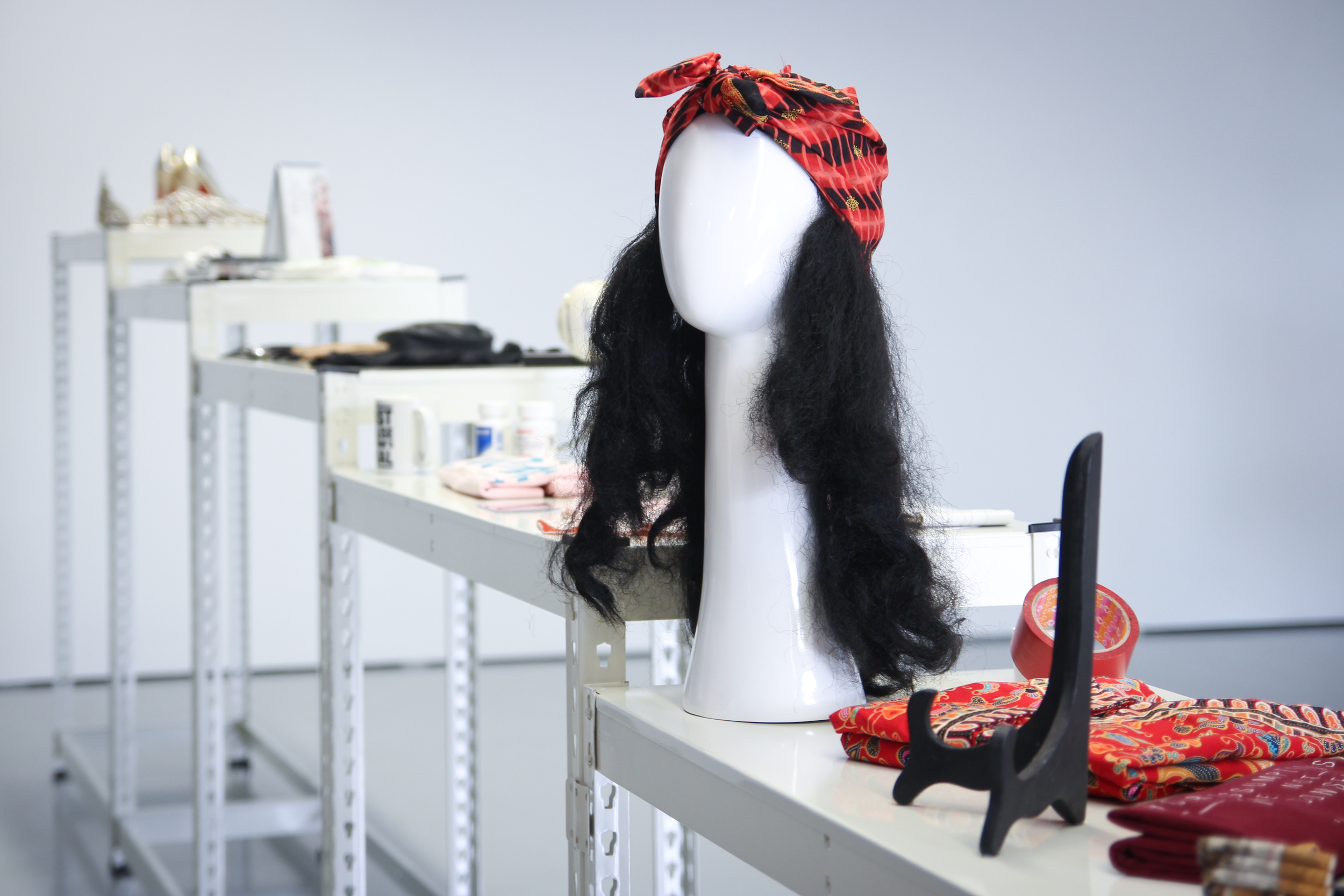
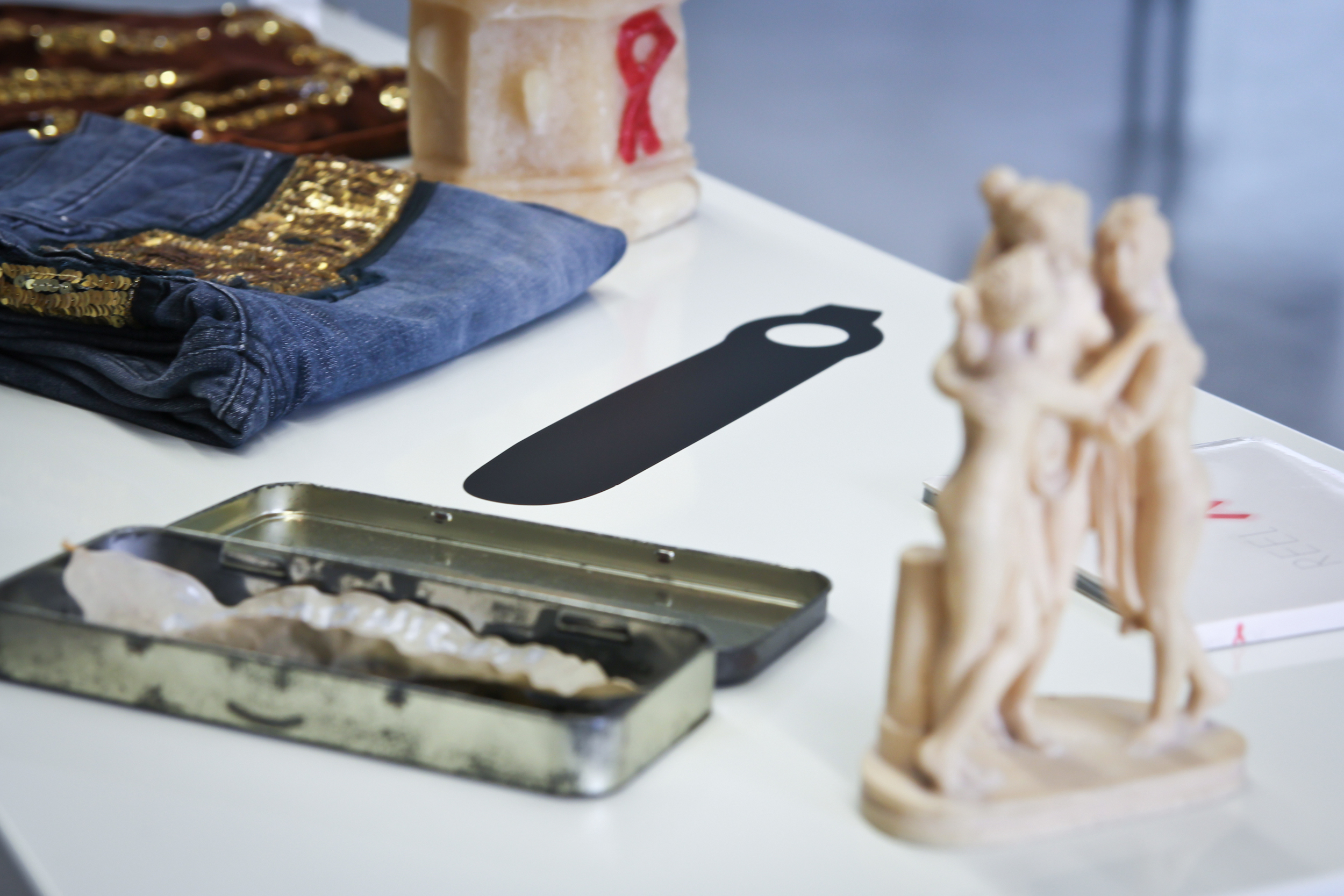
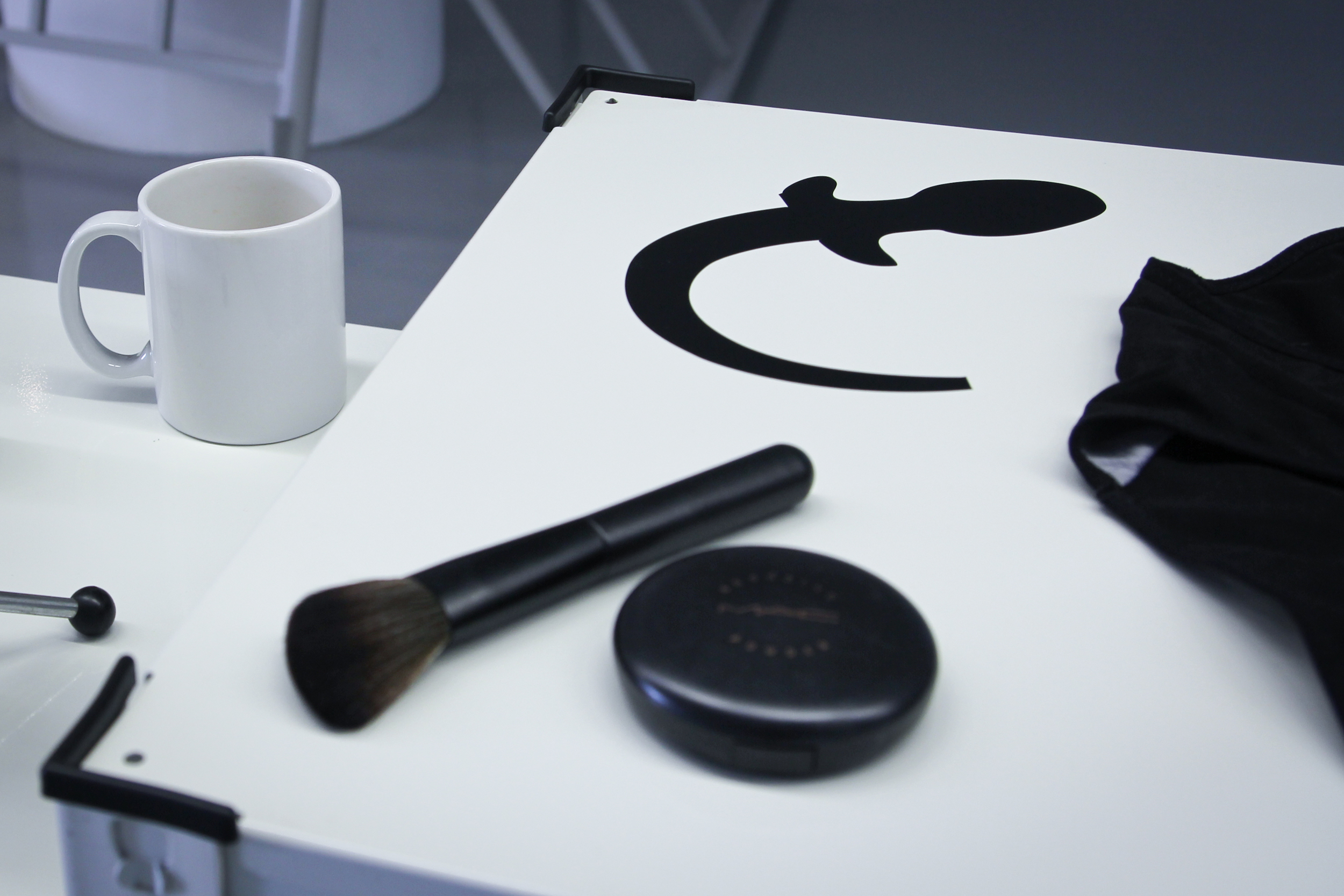
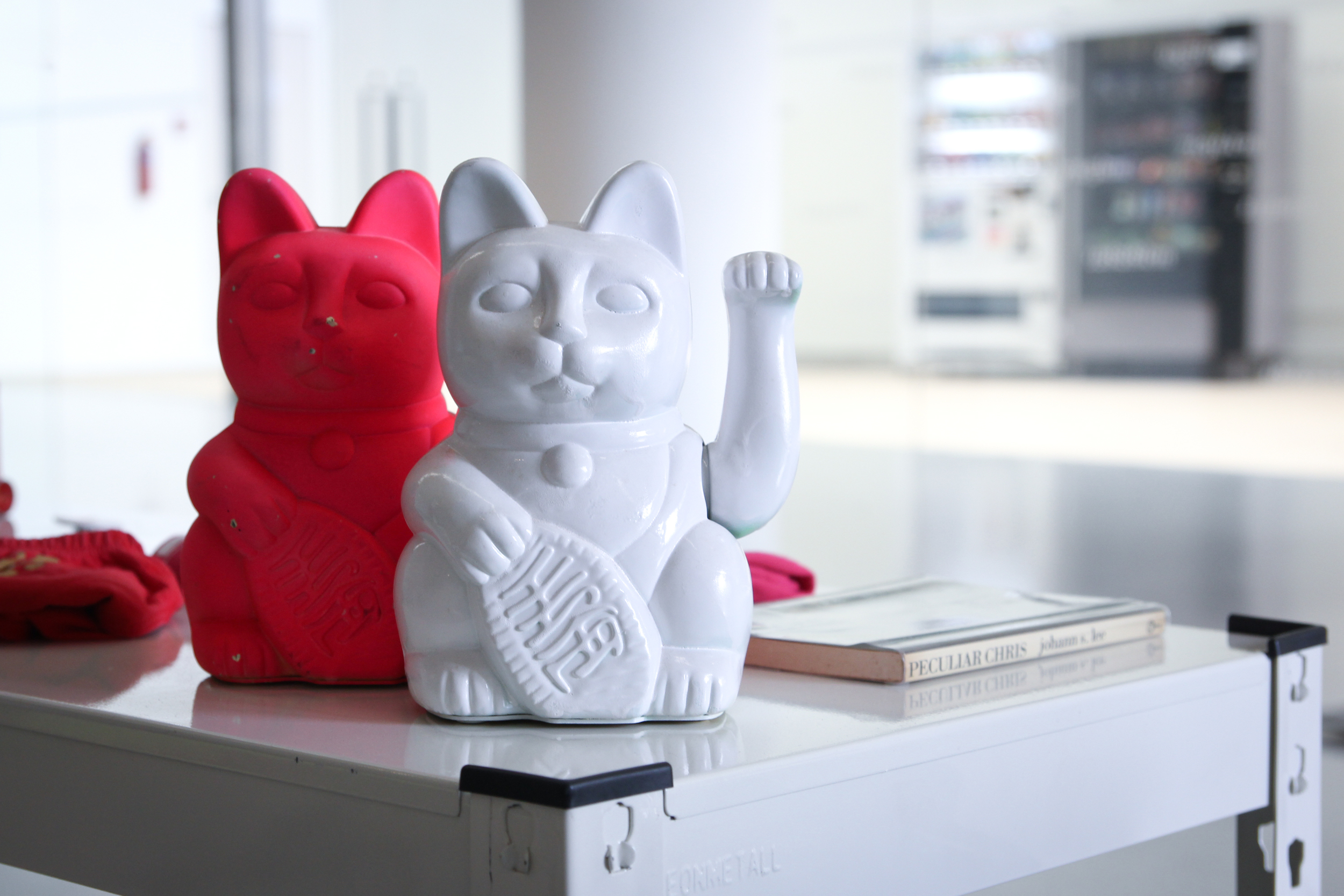
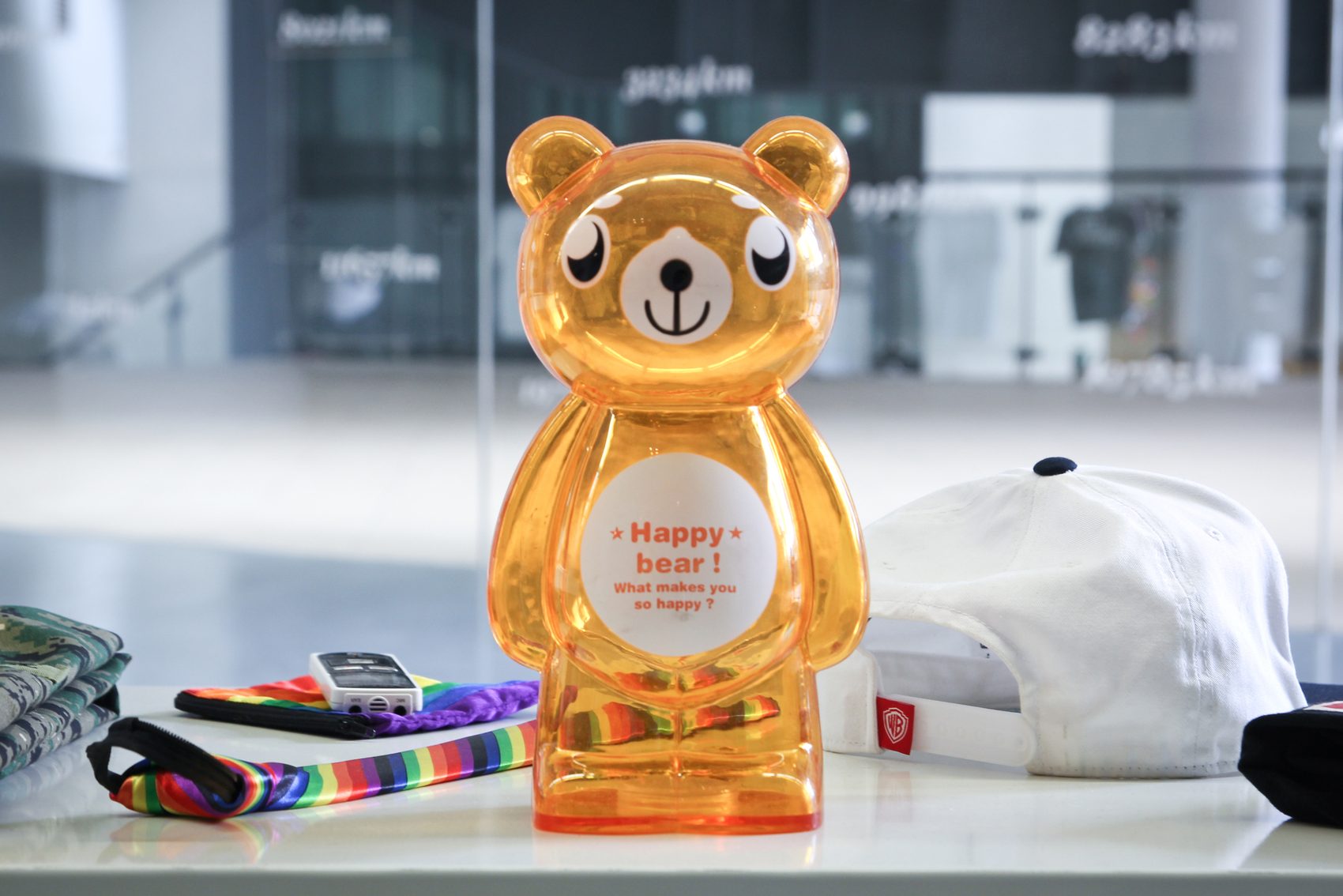
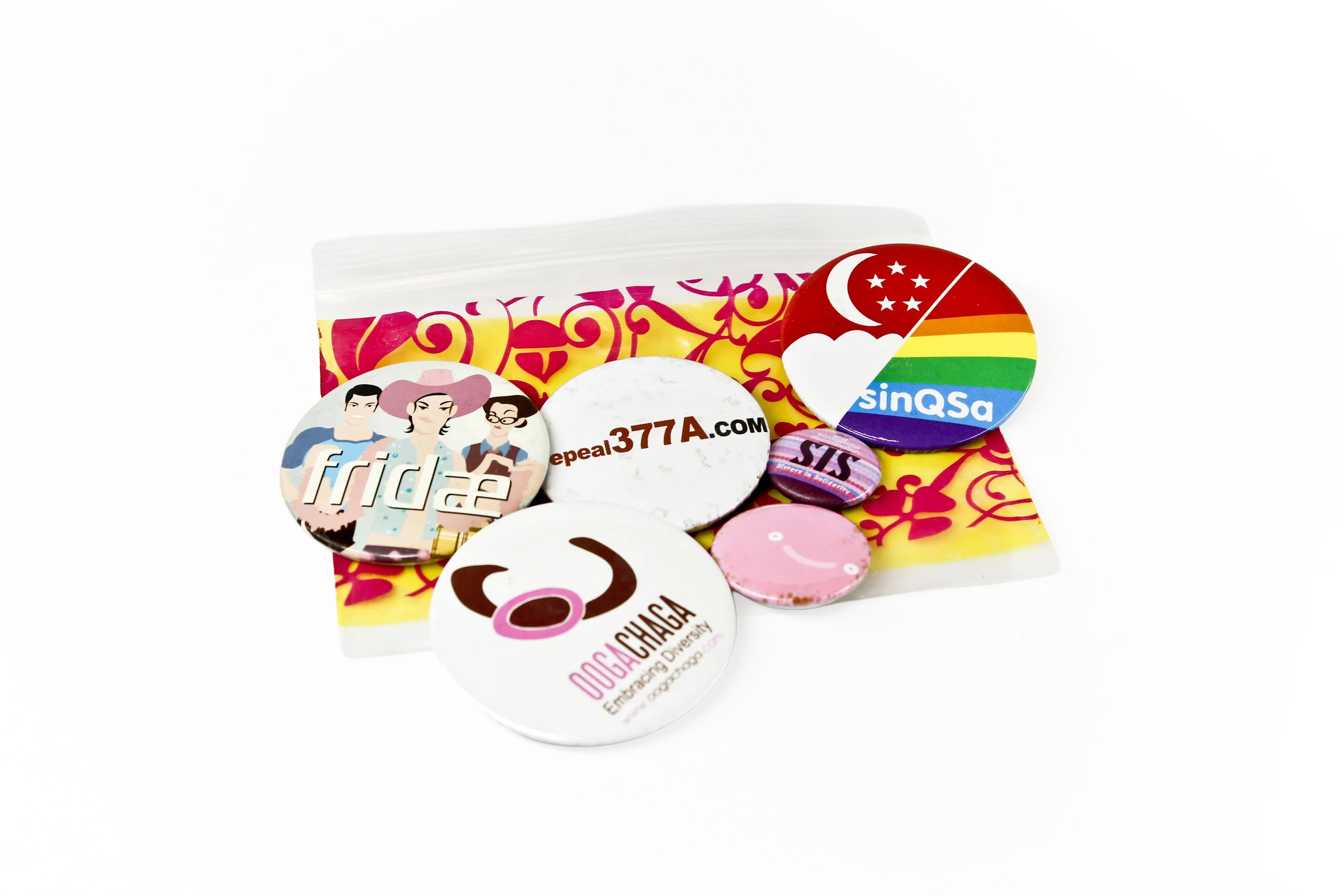
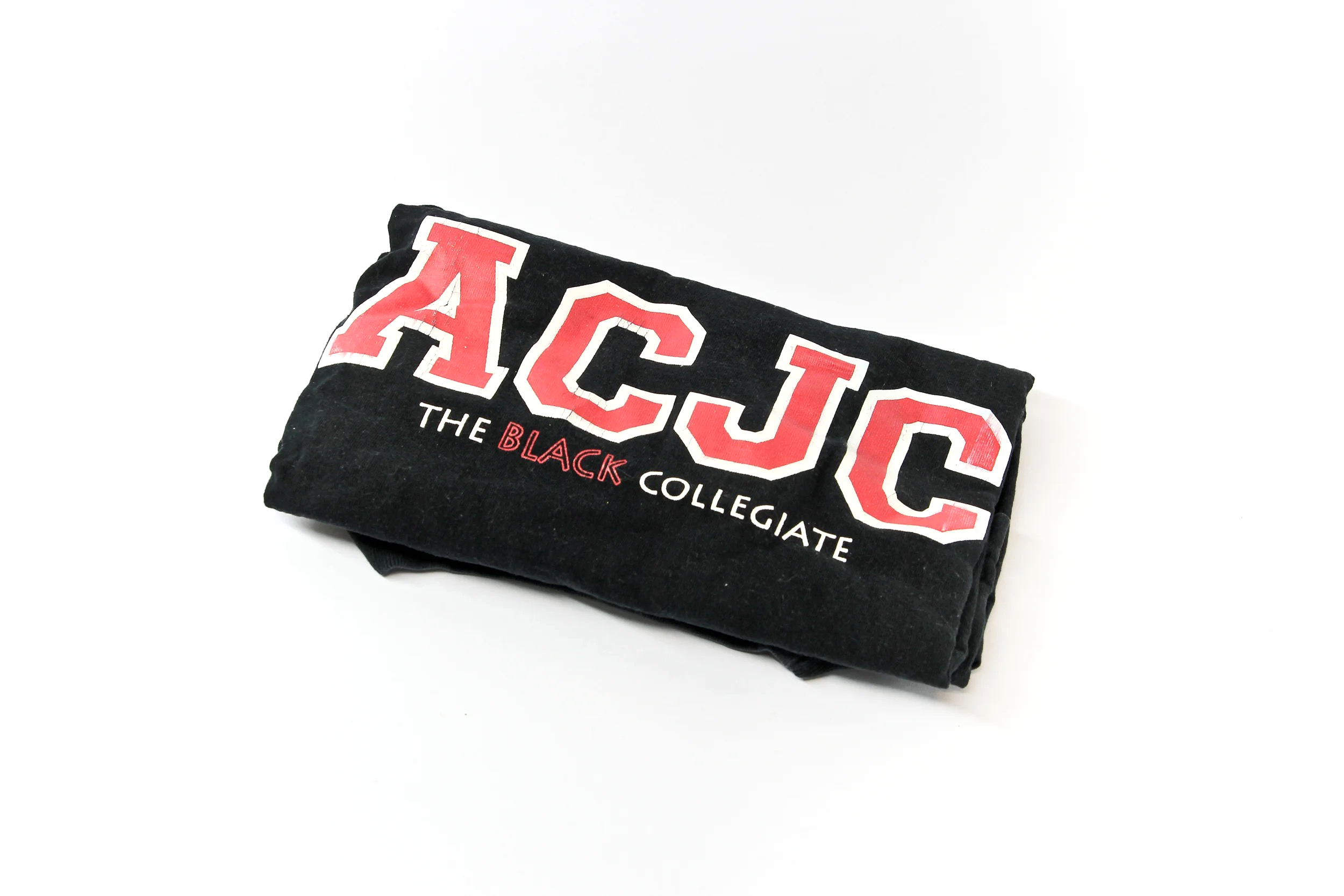
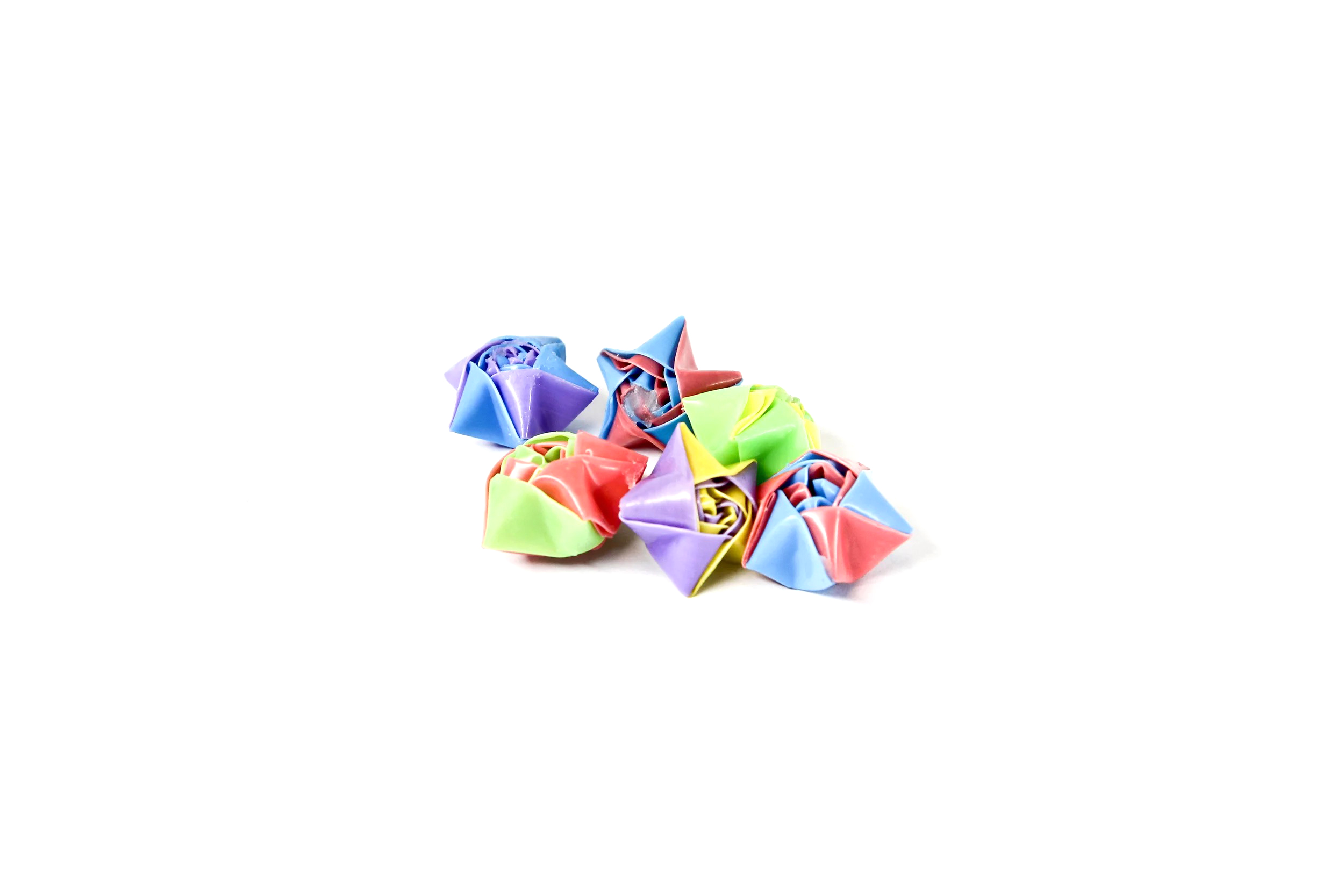
Installation documentation, Queer Objects: An Archive for the Future (2016). Photos by Truphotos.com.
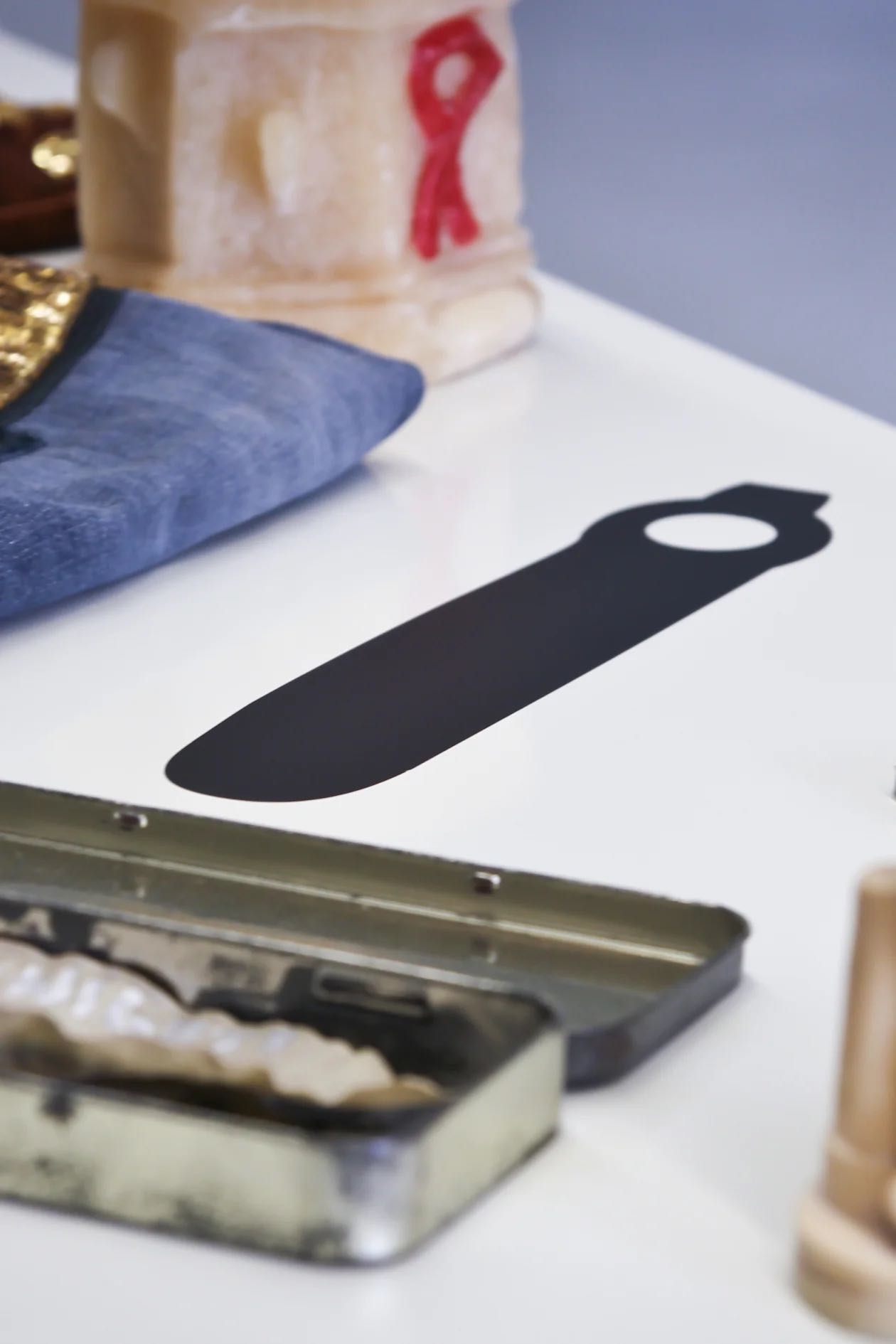
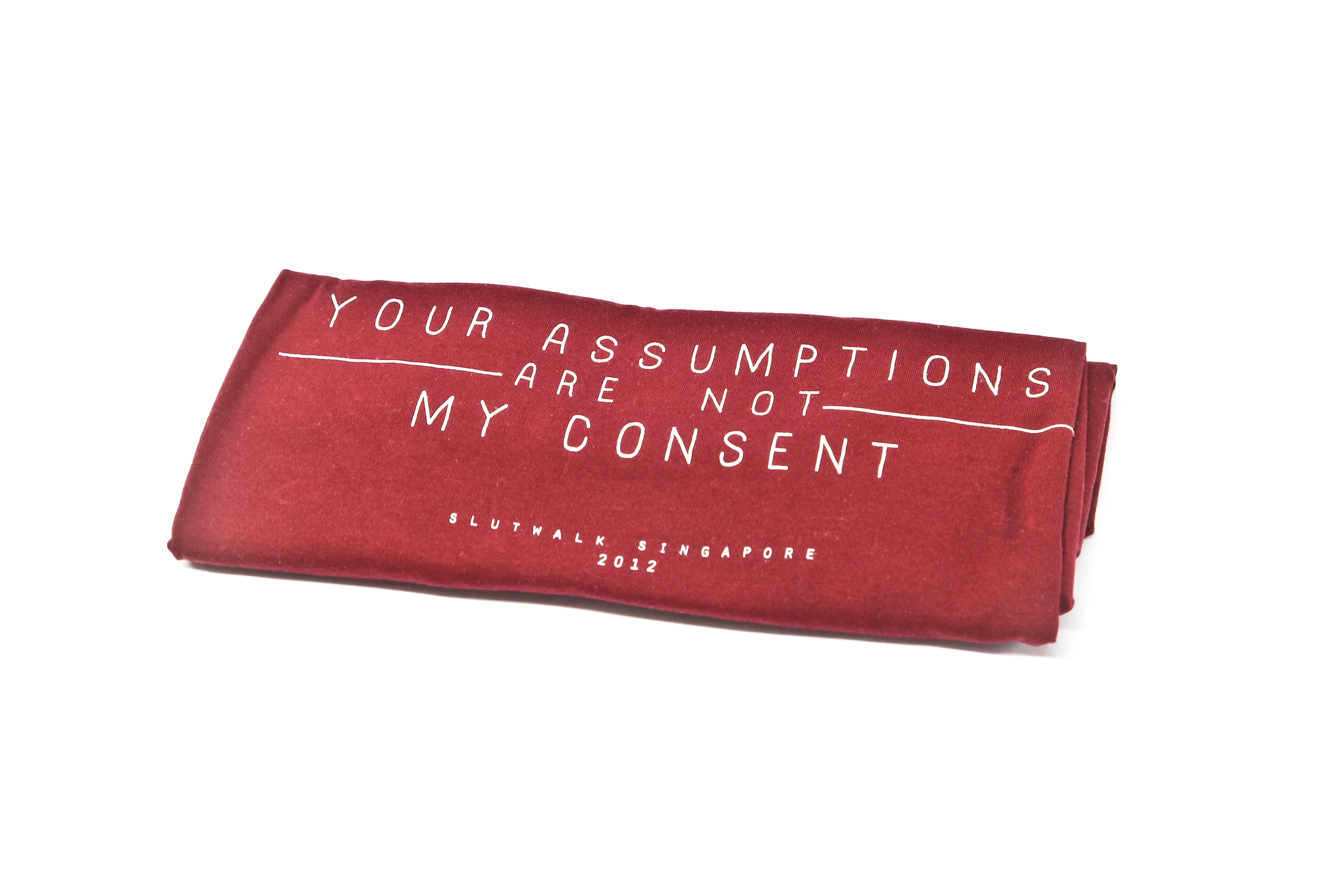
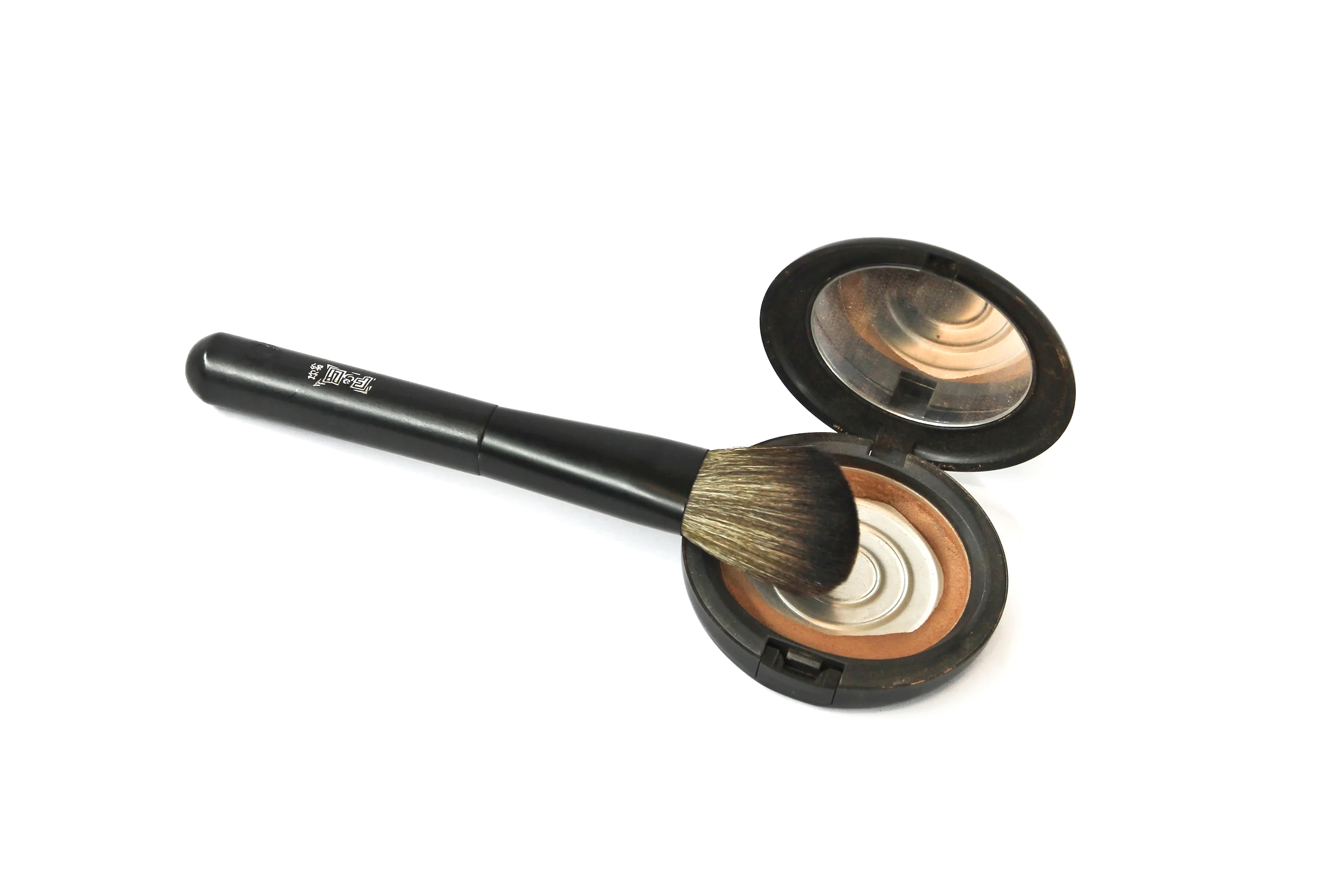
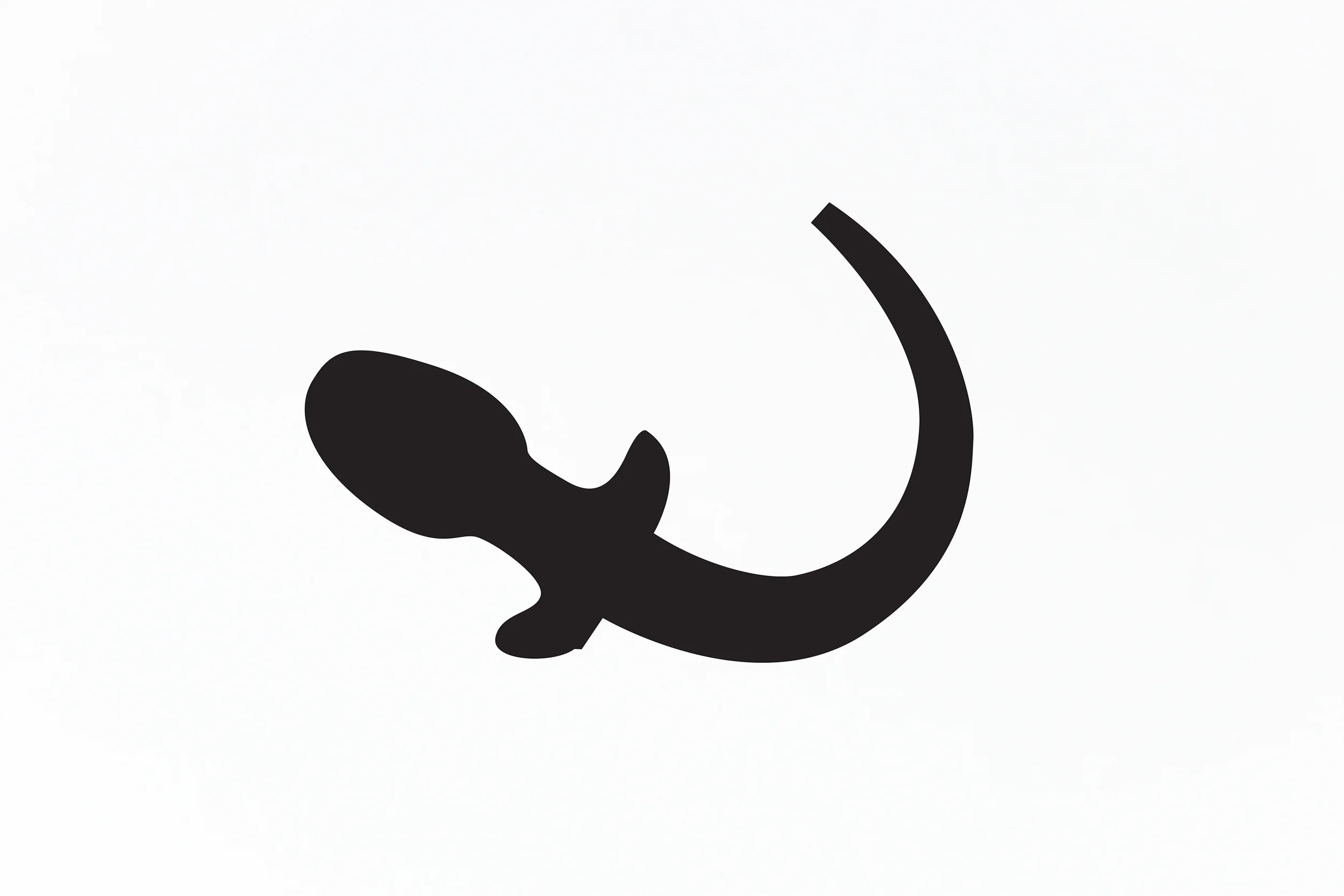
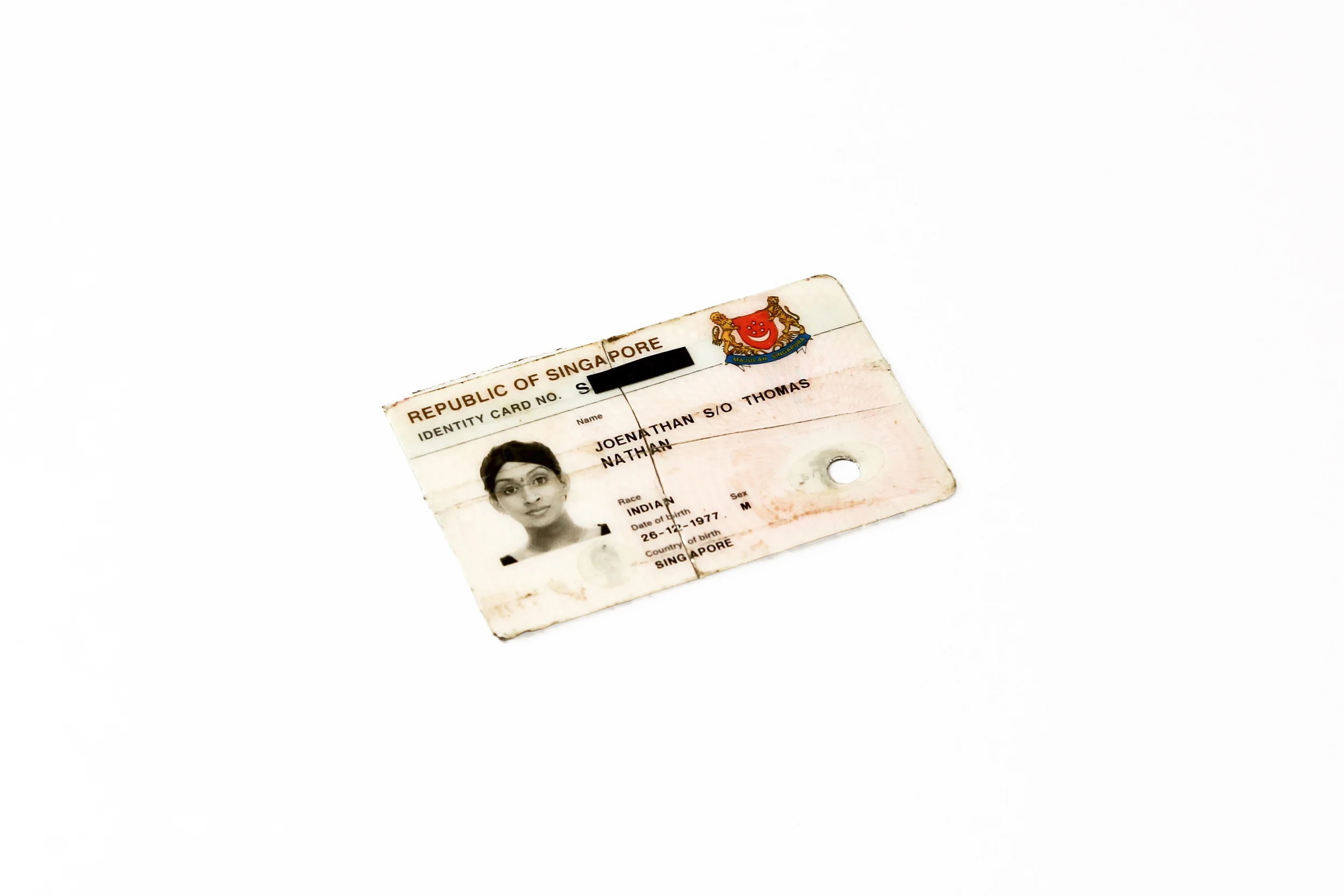
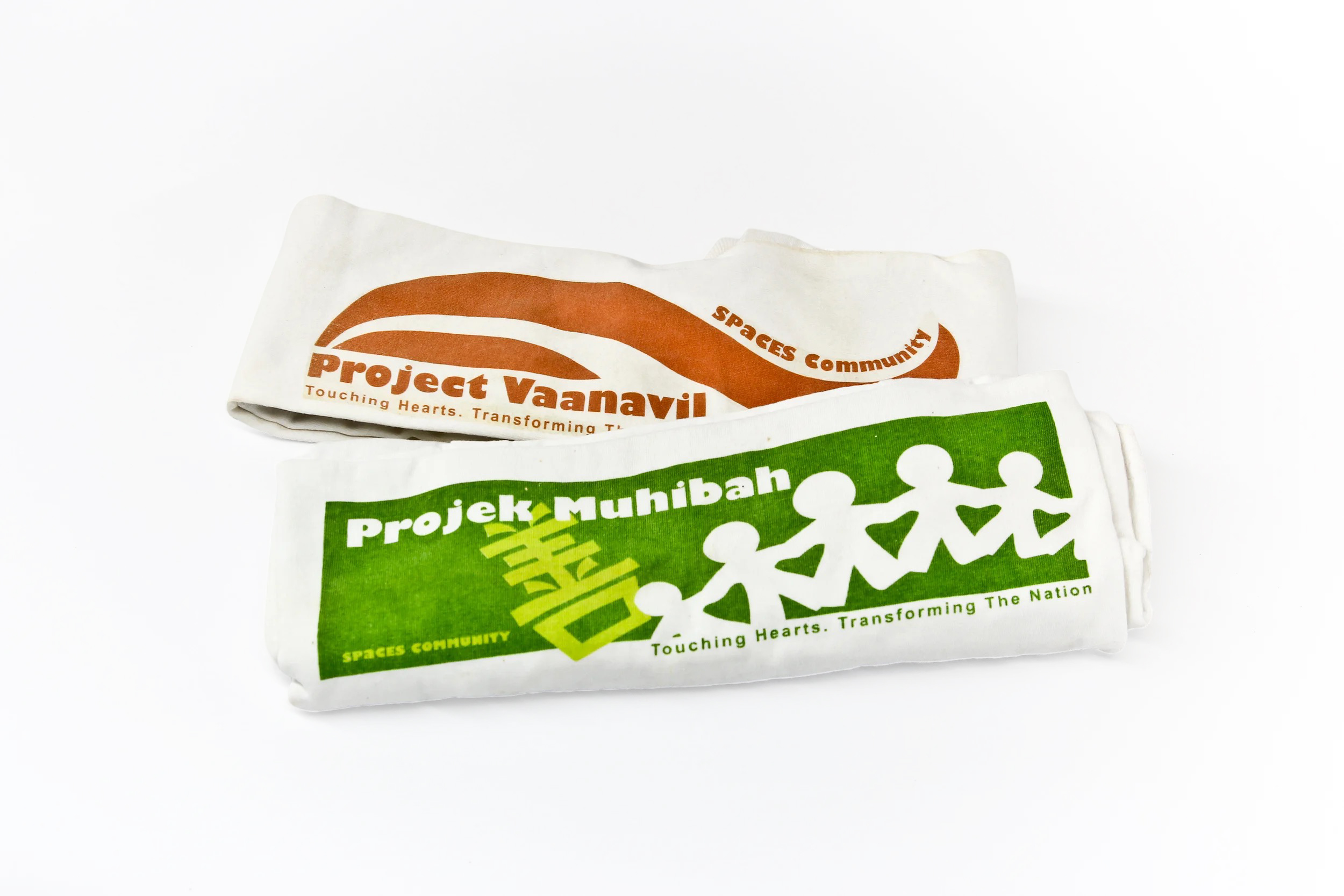
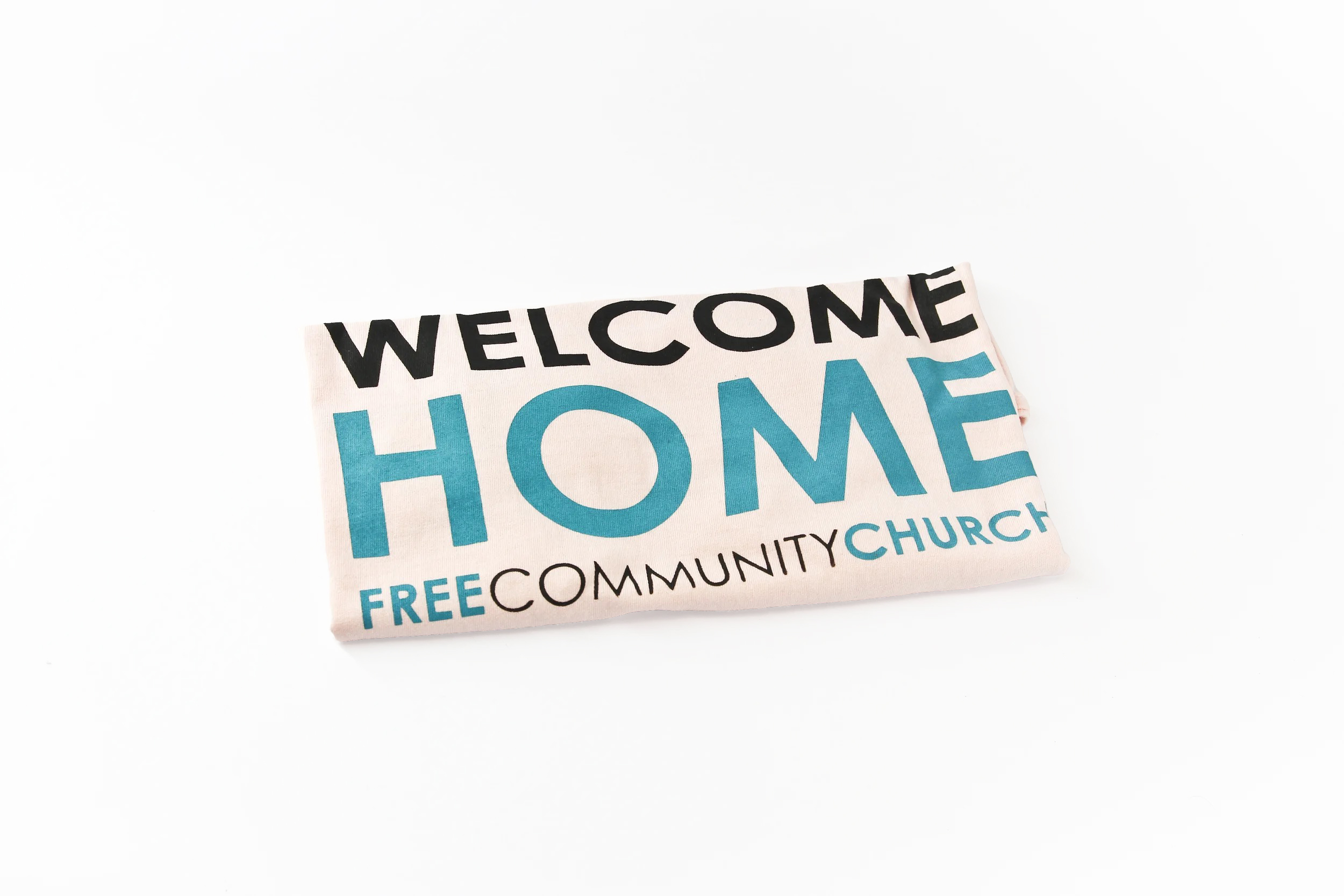
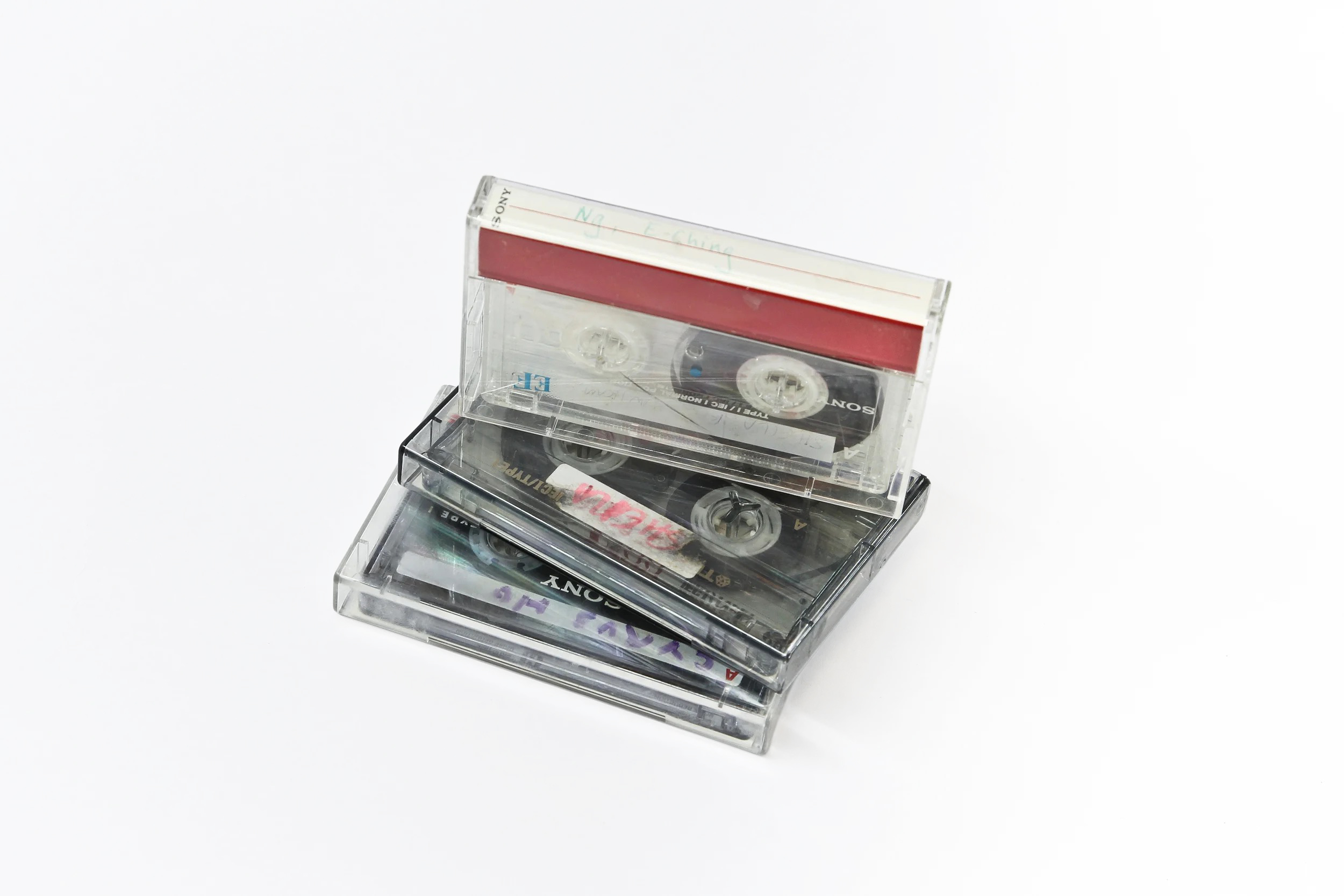
Through this exercise, I assembled a collection of 81 objects that vary from items of personal significance to memorabilia from events and organizations. I displayed them on a nine-sectioned archival shelving unit without specific context or attribution. On the day of the exhibition opening, the presenting institute requested for the removal of two of these objects from public display, citing concerns over Section 292 1(a) of the Penal Code.
Whoever sells, lets to hire, distributes, transmits by electronic means, publicly exhibits or in any manner puts into circulation, or for purposes of sale, hire, distribution, transmission, public exhibition or circulation, makes, produces, or has in his possession any obscene book, pamphlet, paper, drawing, painting, representation or figure, or any other obscene object whatsoever;
After negotiation, the two objects were replaced with black vinyl stickers that represented their outline. The exhibition proposal for Queer Objects: An Archive for the Future included an exercise that involved the rotation of new contributions into the display over the duration of the exhibition. After the withdrawal incident, an agreement was reached with the institution to discontinue this exercise.
In 2019 I contributed an article to Queer Asia edited by J. Daniel Luther and Jennifer Ung Loh that reflects on the censorship incident, and considered other objects that were made transparent in this act of hyper-visibility.
With support from
Action for AIDS Singapore, Alfian Sa’at, Boo Junfeng, Leon Cheo, Kenneth Chia, Olivia Chiong, Chiu Chien-Seen, Bryan Choong, June Chua, Shawn Chua Ming Ren, Becca D’Bus, Tania De Rozario, Nicholas Deroose, Eztelle, Free Community Church, Guo Jie Si, Ivan Heng, Russell Heng, Darren Ho, Sun Koh, Lan Gen Bah, Eileena Lee, Lee Mun Wai, Jereh Leong, Joena Shivani, Leow Yangfa, Casey Lim, Atiq Lukman, Alex Neo, Ng Yi-Sheng, Irene Oh, Oogachaga Counselling and Support, Pelangi Pride Centre, Phitthaya Phaefuang, Pink Dot SG, Alan Seah, Jerry Siah, Miak Siew, Avin Tan, Jolene Tan, Kathleen Elizabeth Tan, Luke Tan, Roy Tan, The Necessary Stage, The T Project, TheatreWorks Singapore, Tracy, W!ld Rice, Jason Wee, Jason Wong, Lydia Wong, Ming Wong, Bjorn Yeo, Sammi Zhen, Darius Zheng, among others.
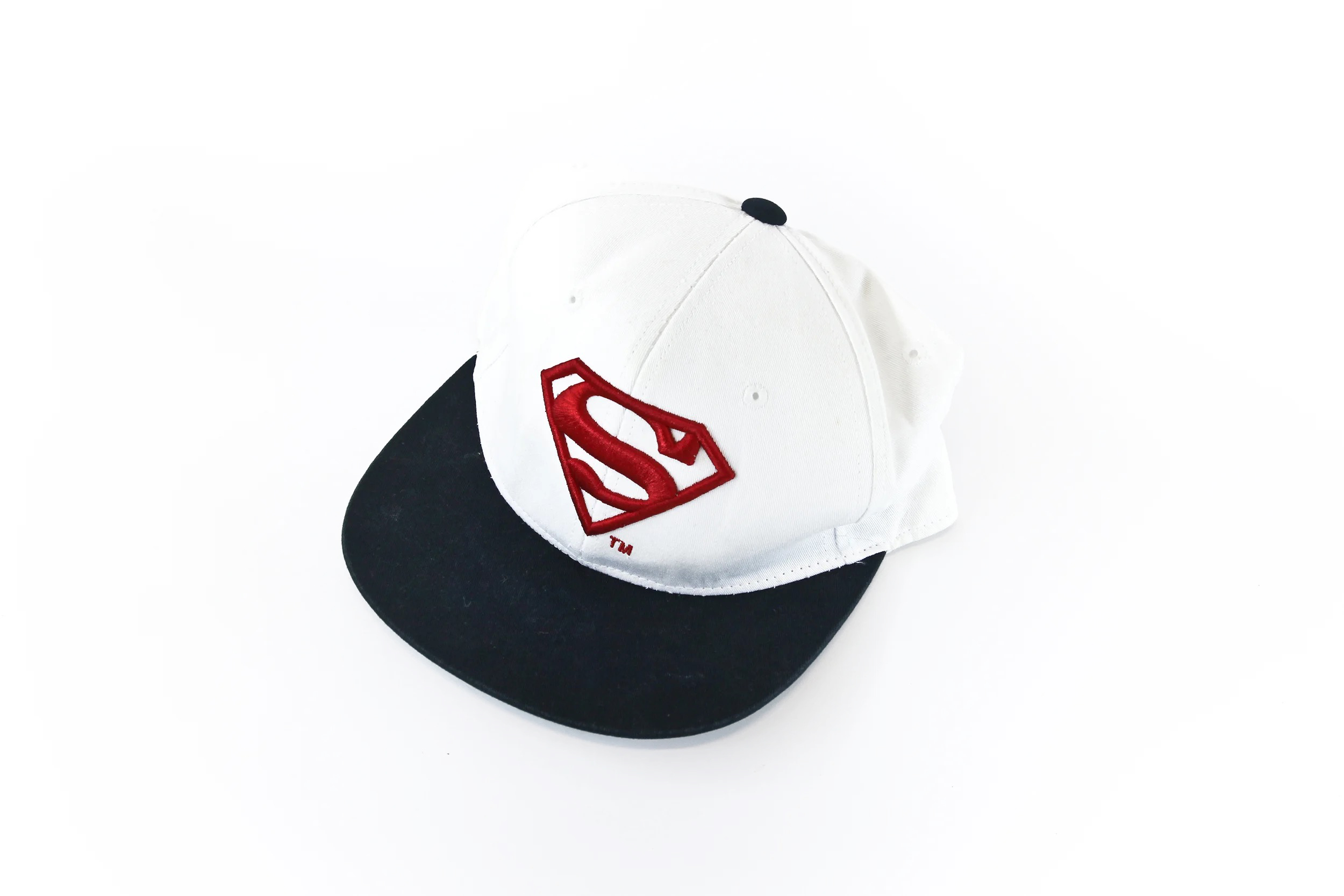
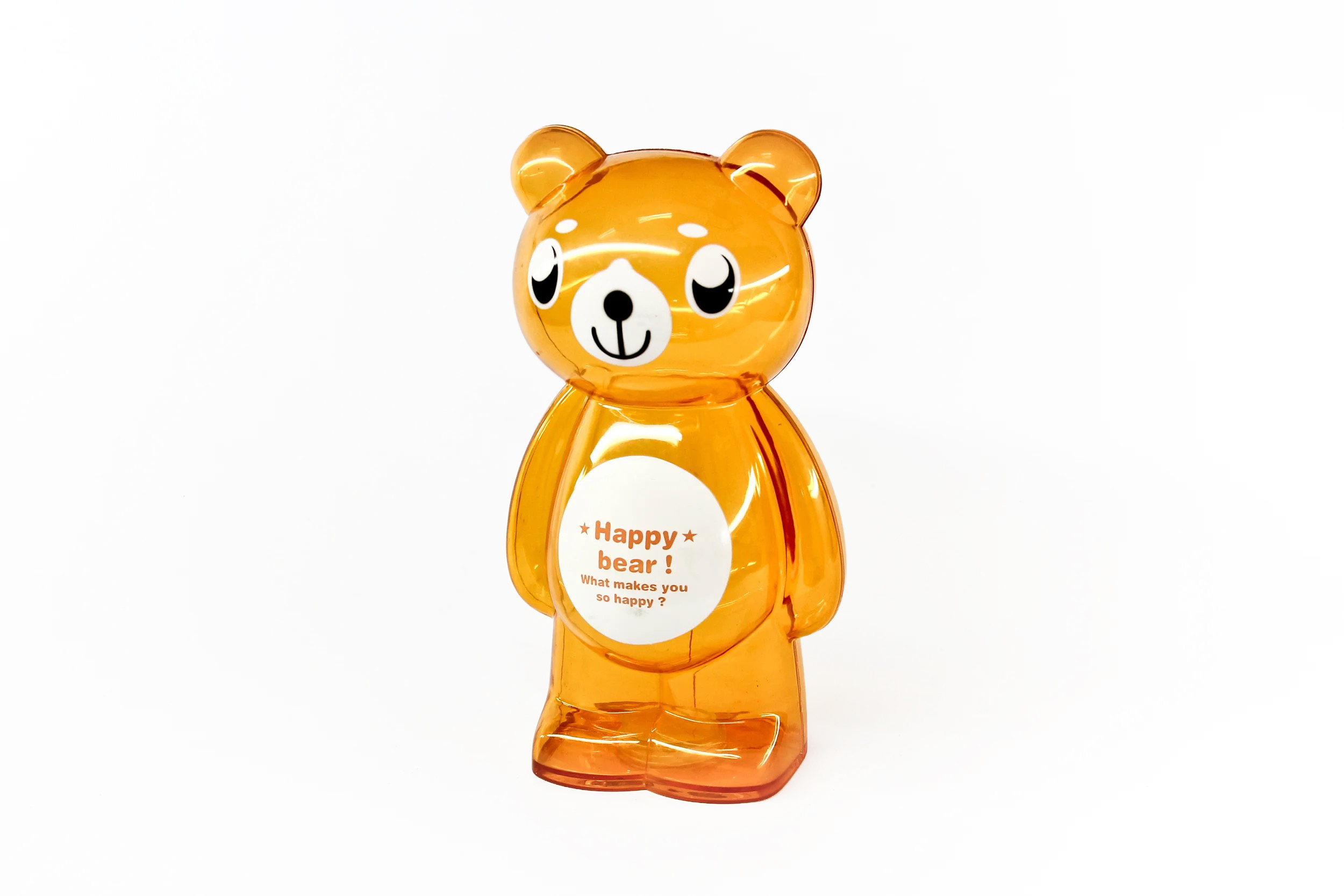

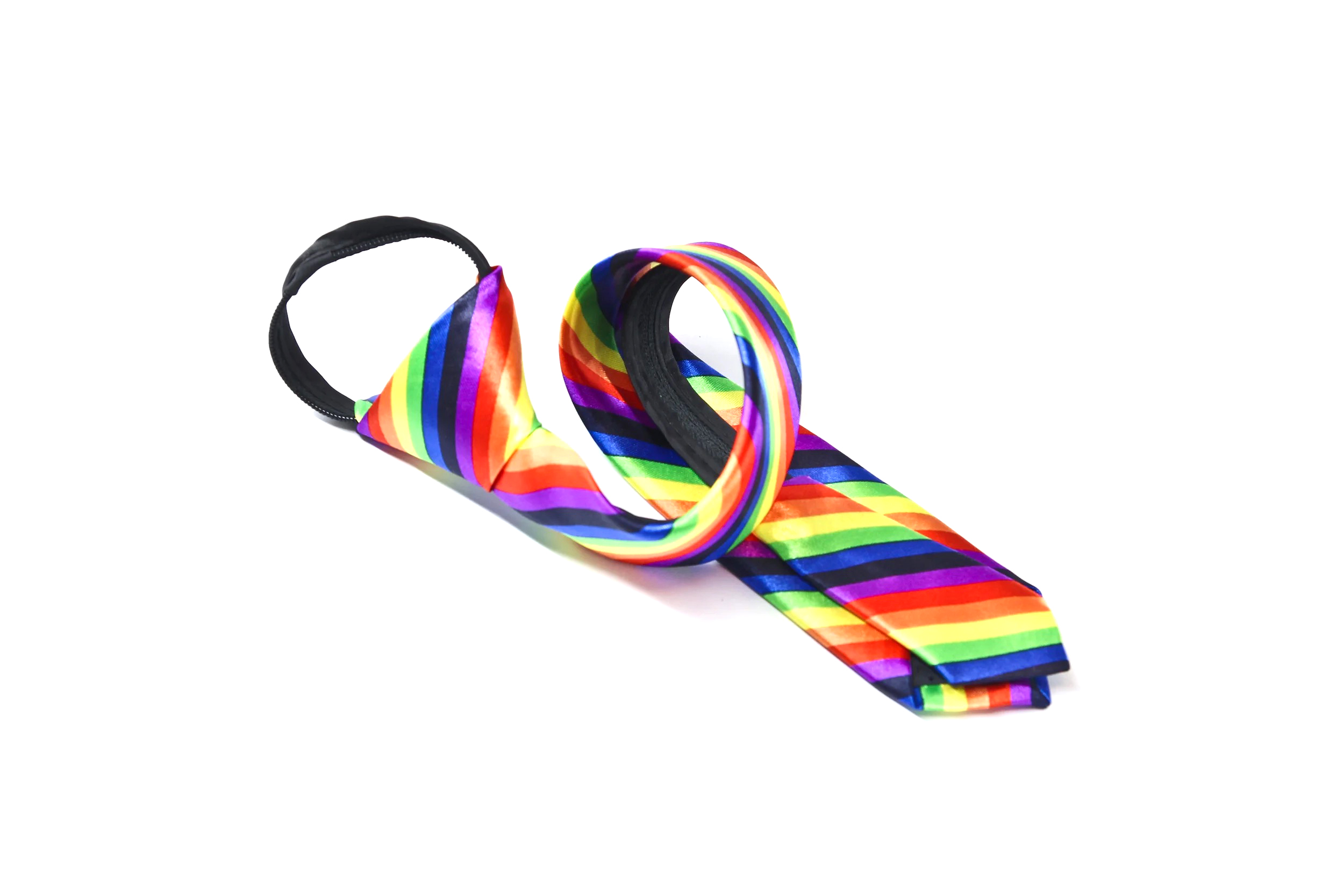

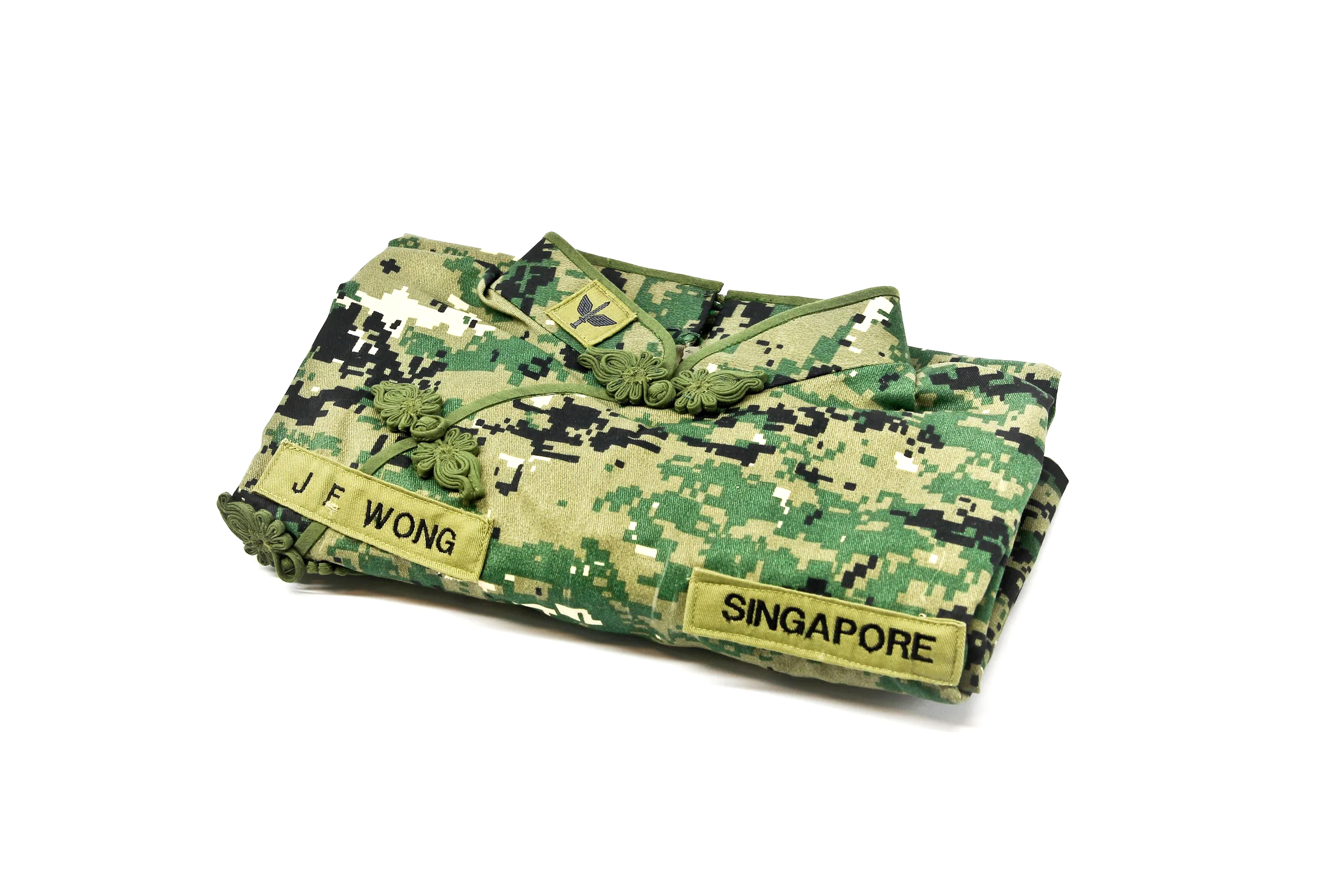
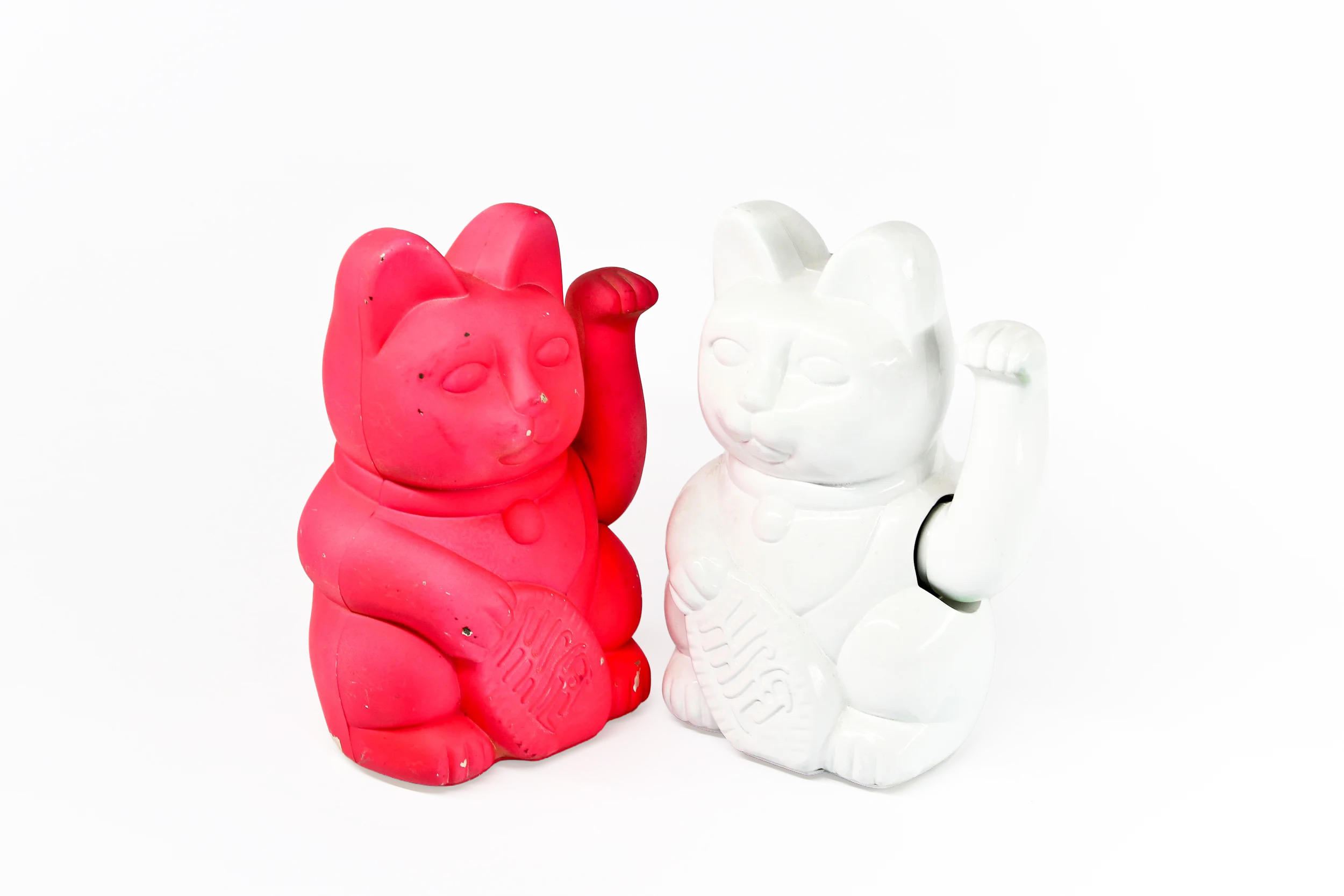
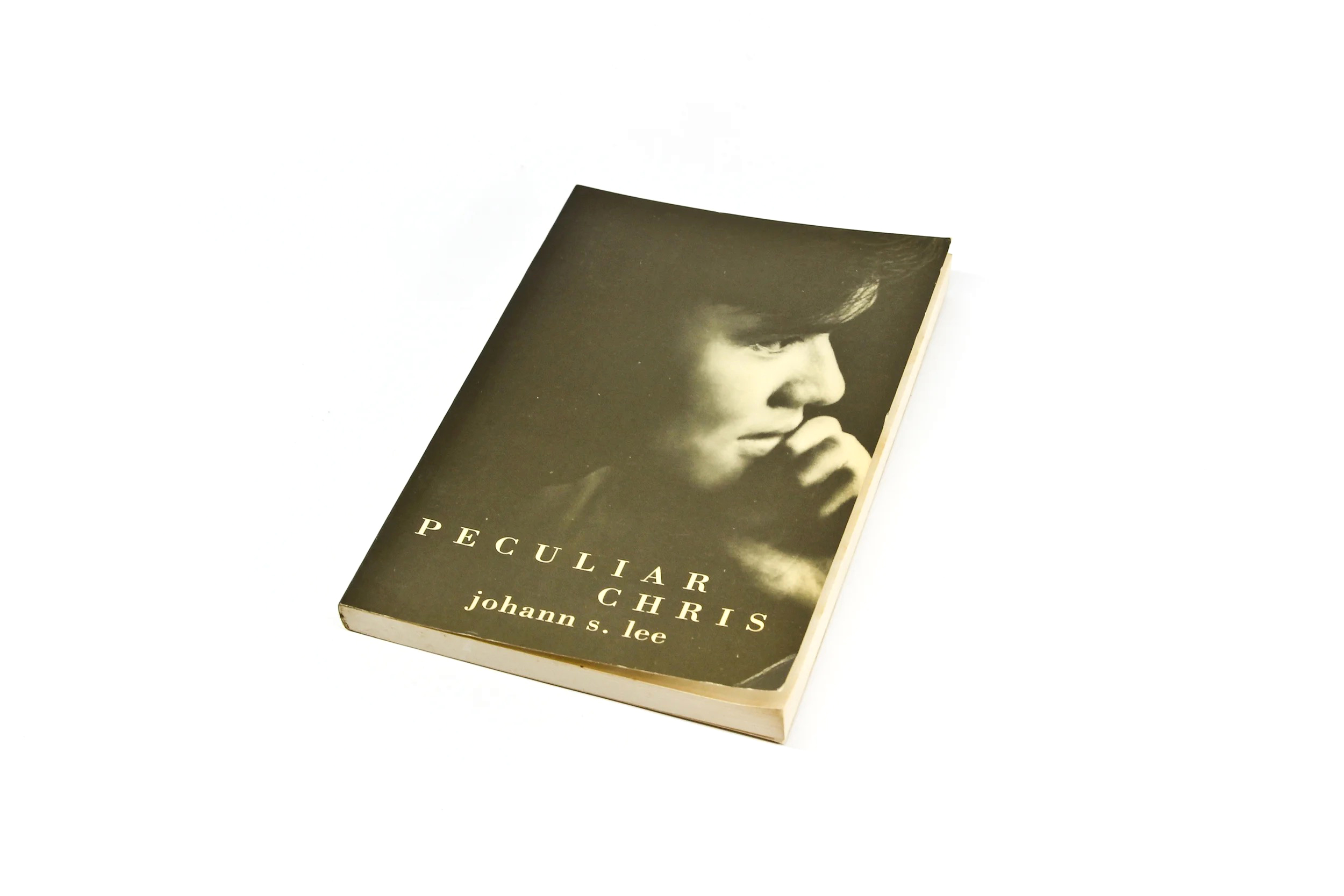
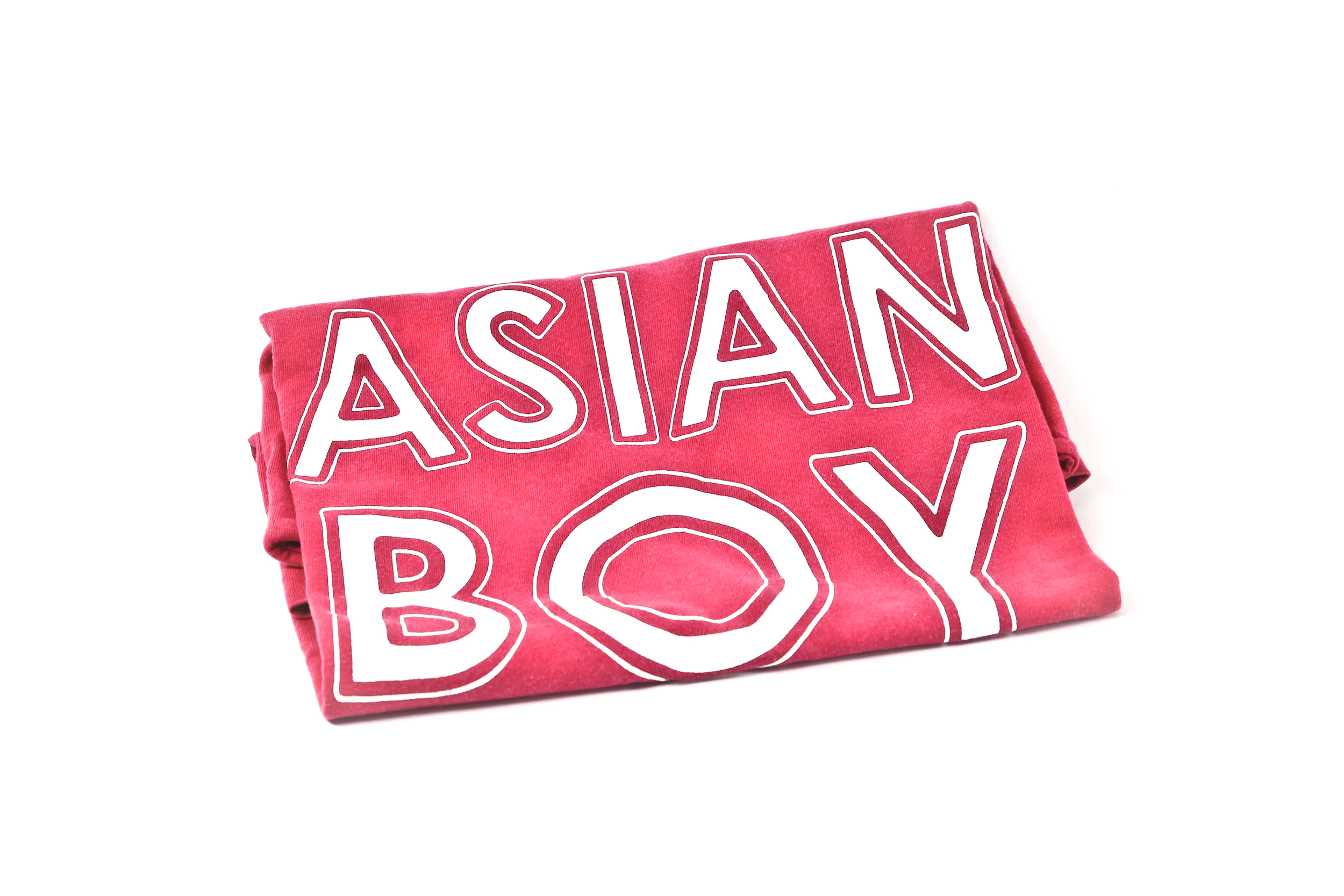
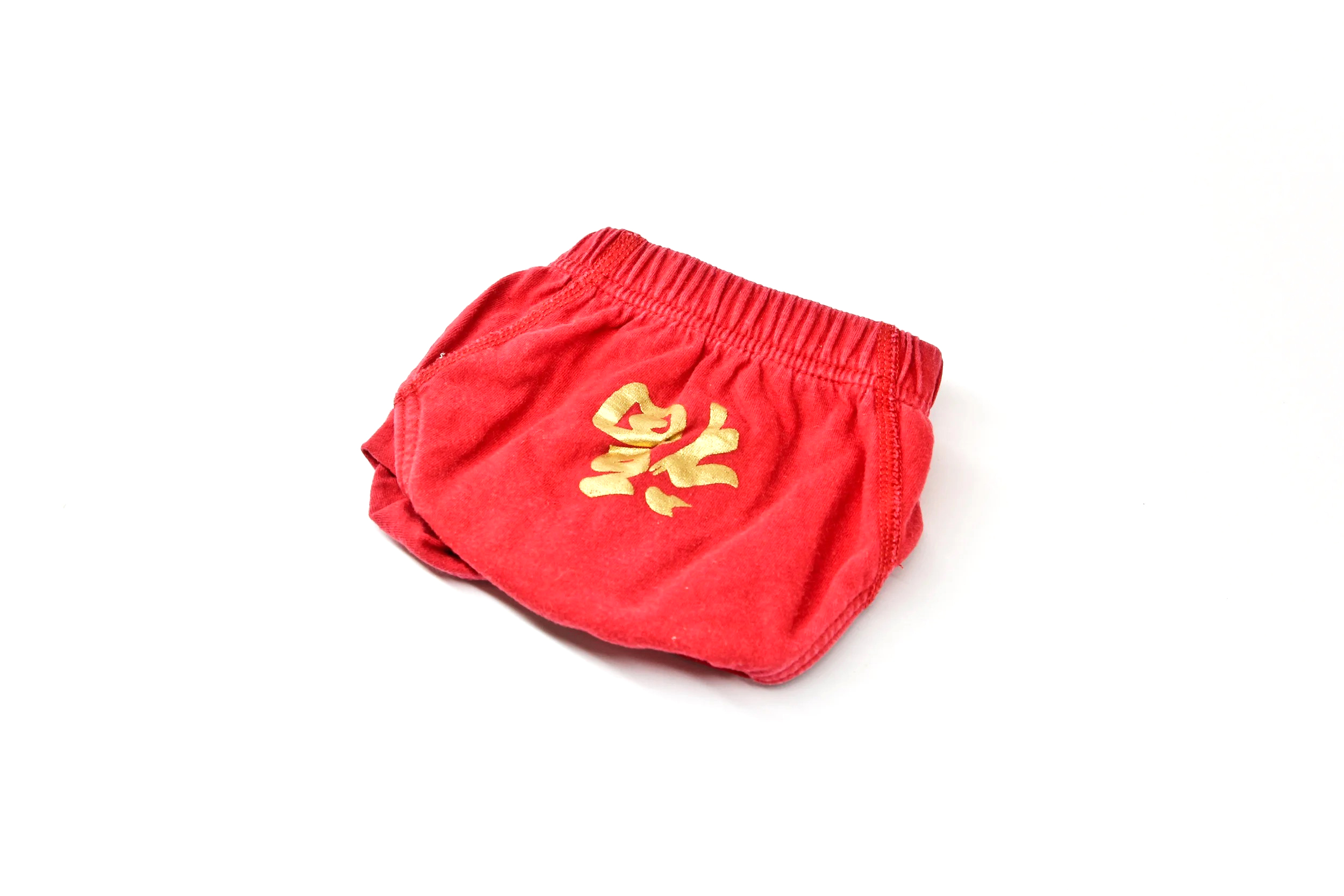
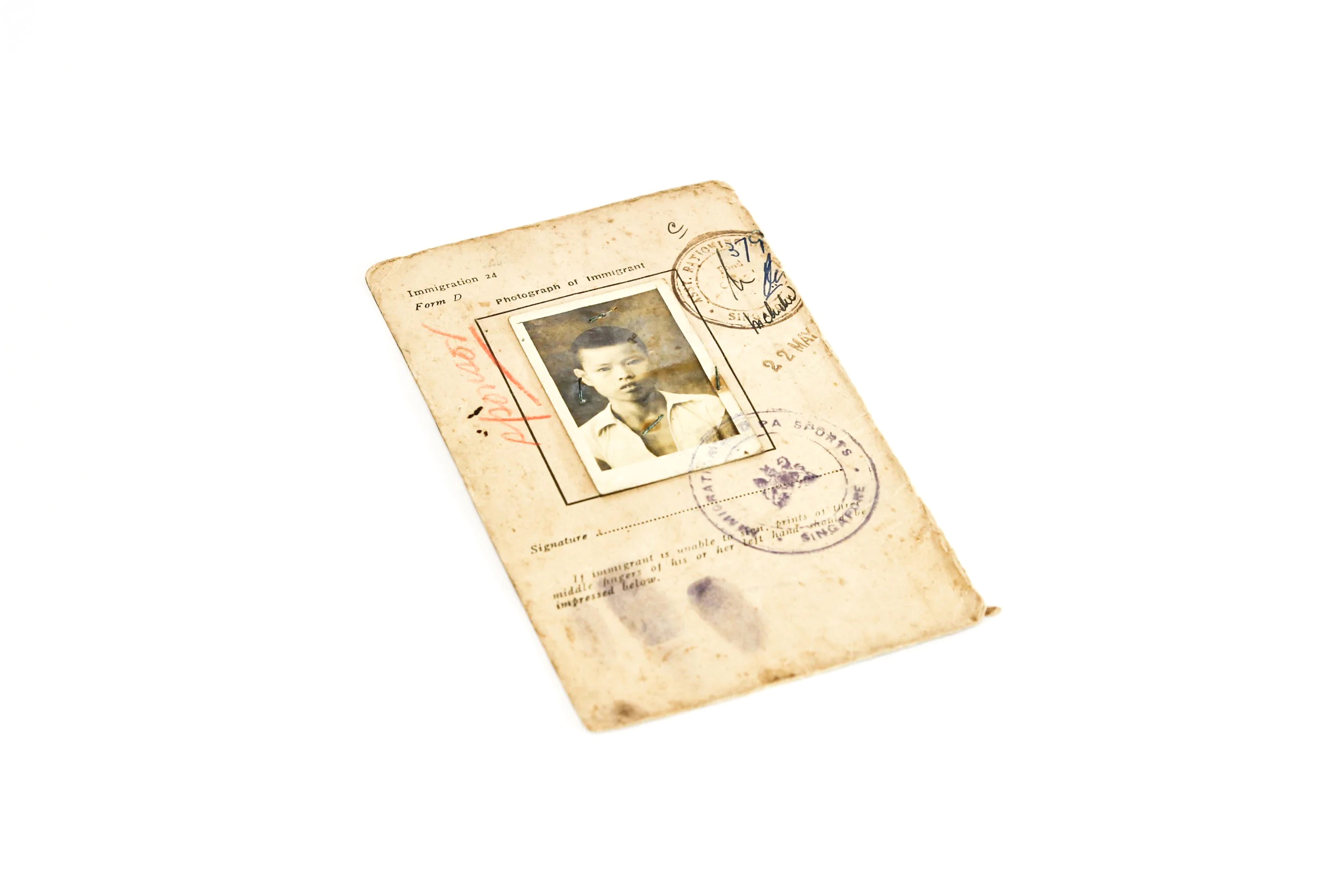
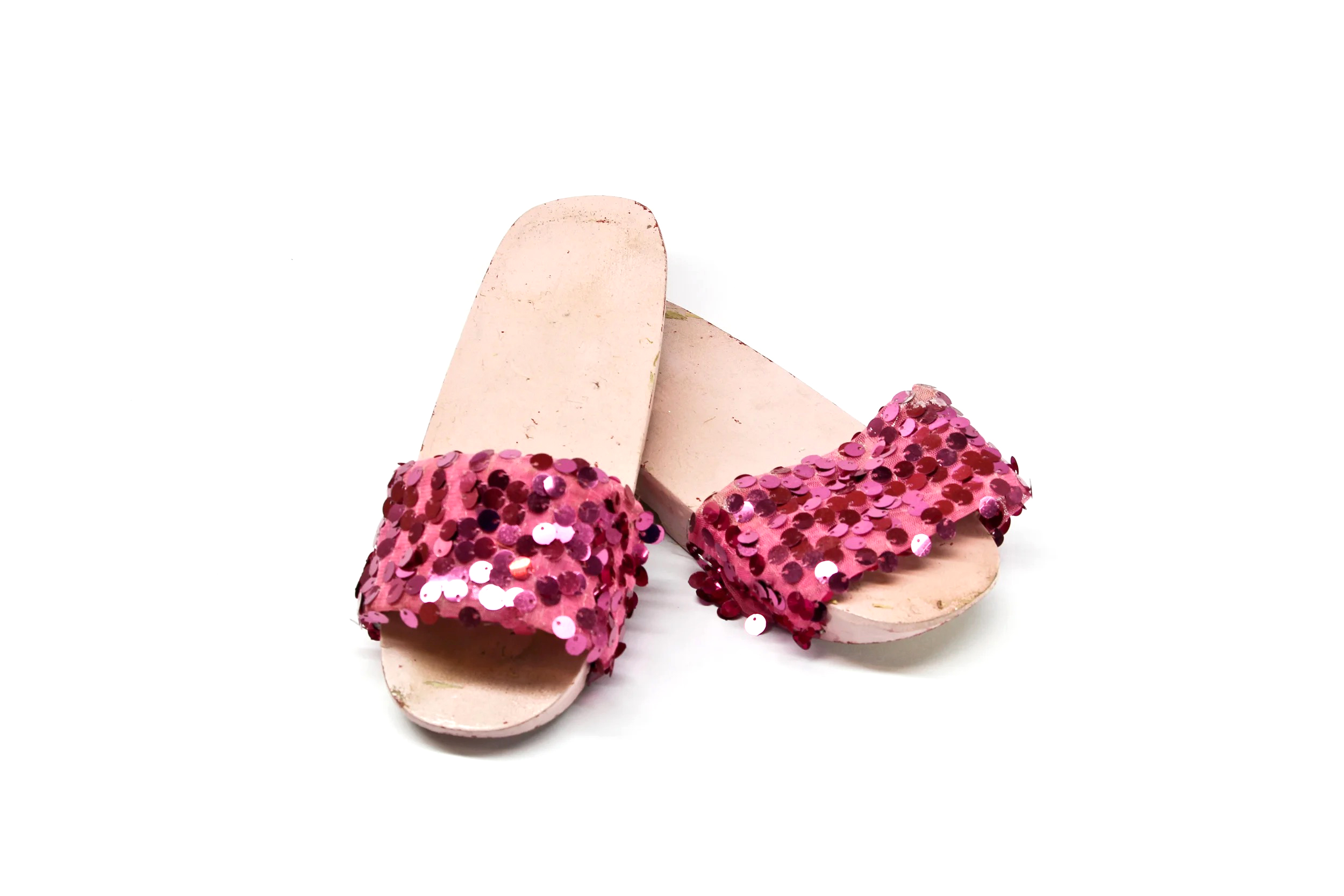
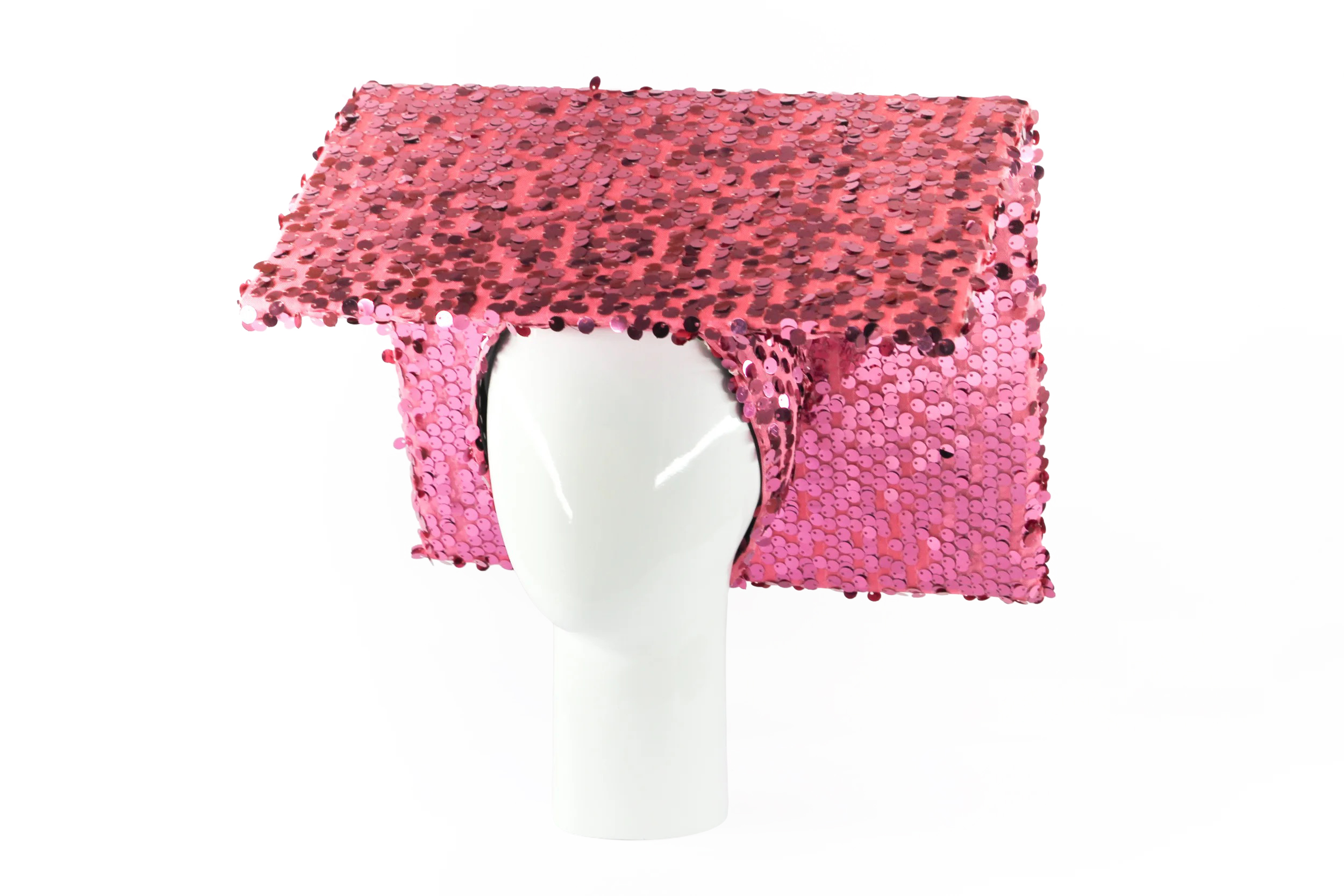
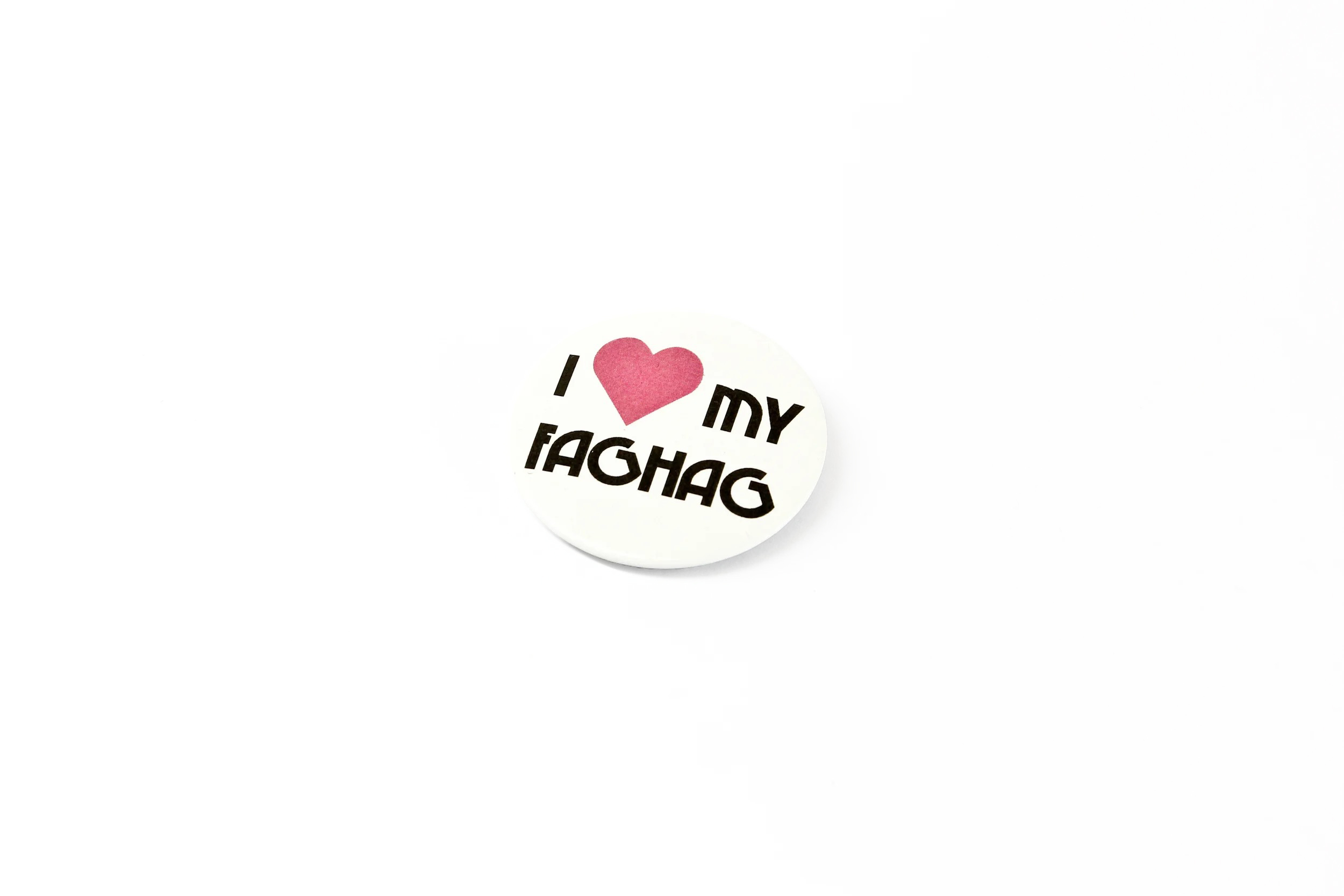

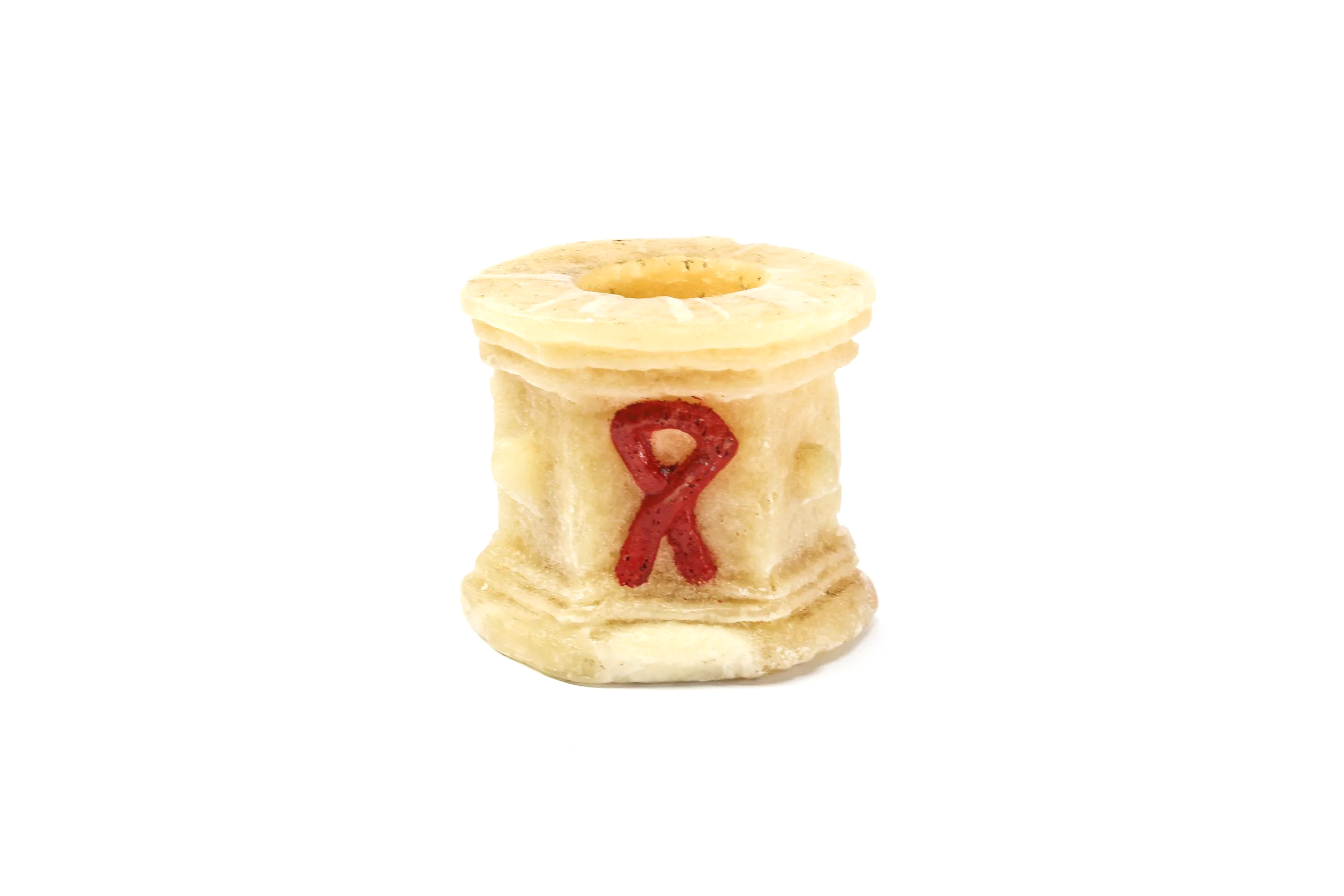
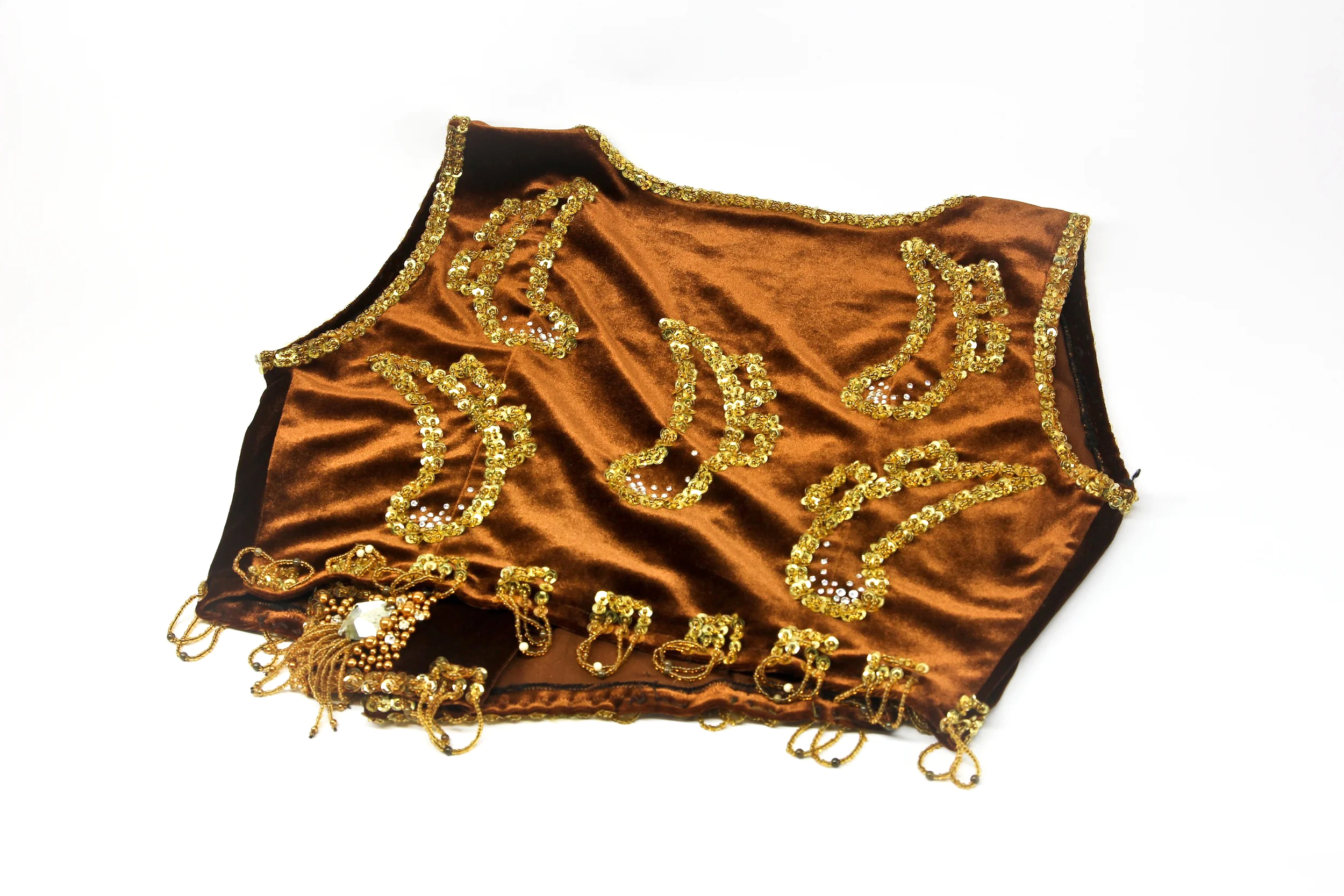
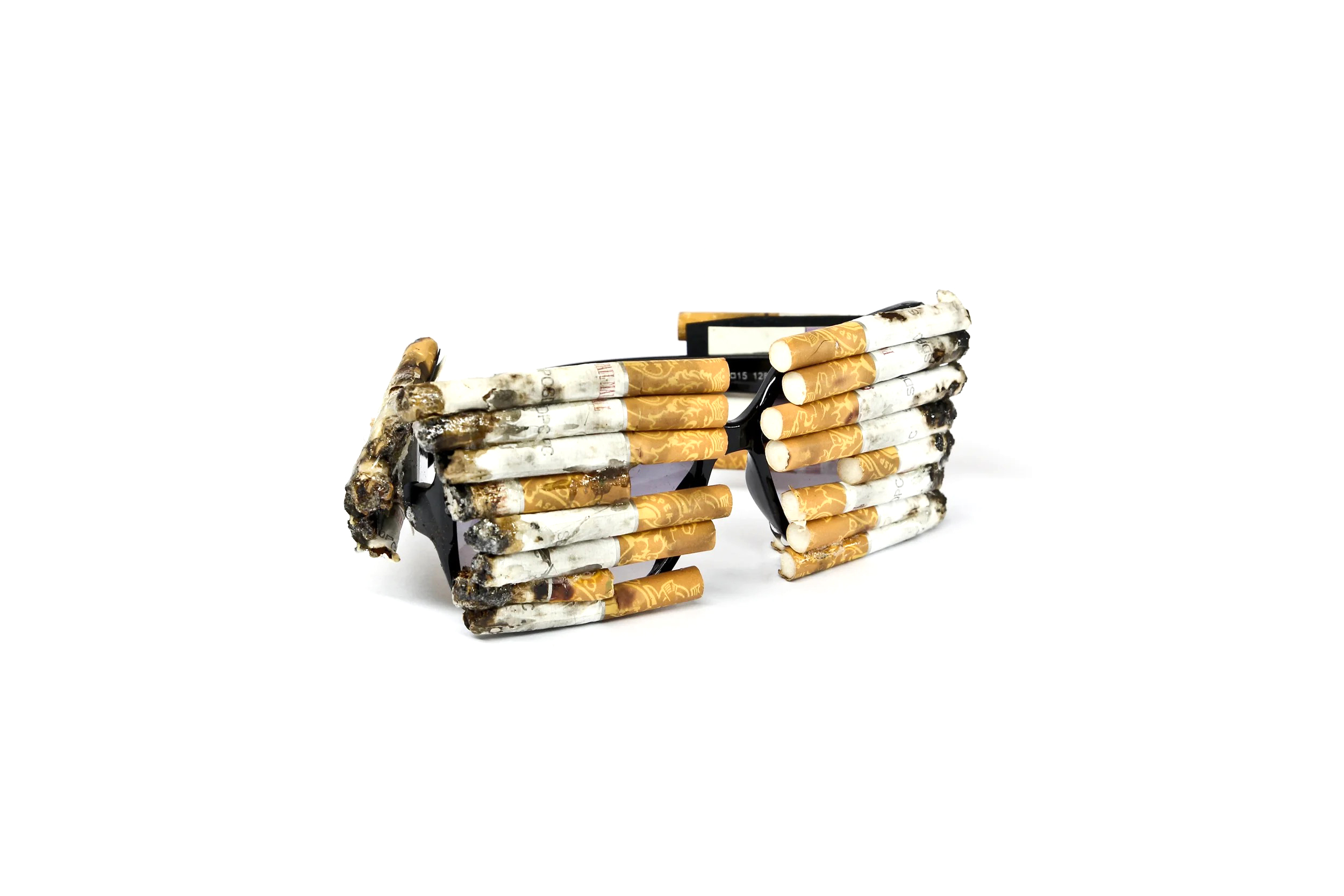
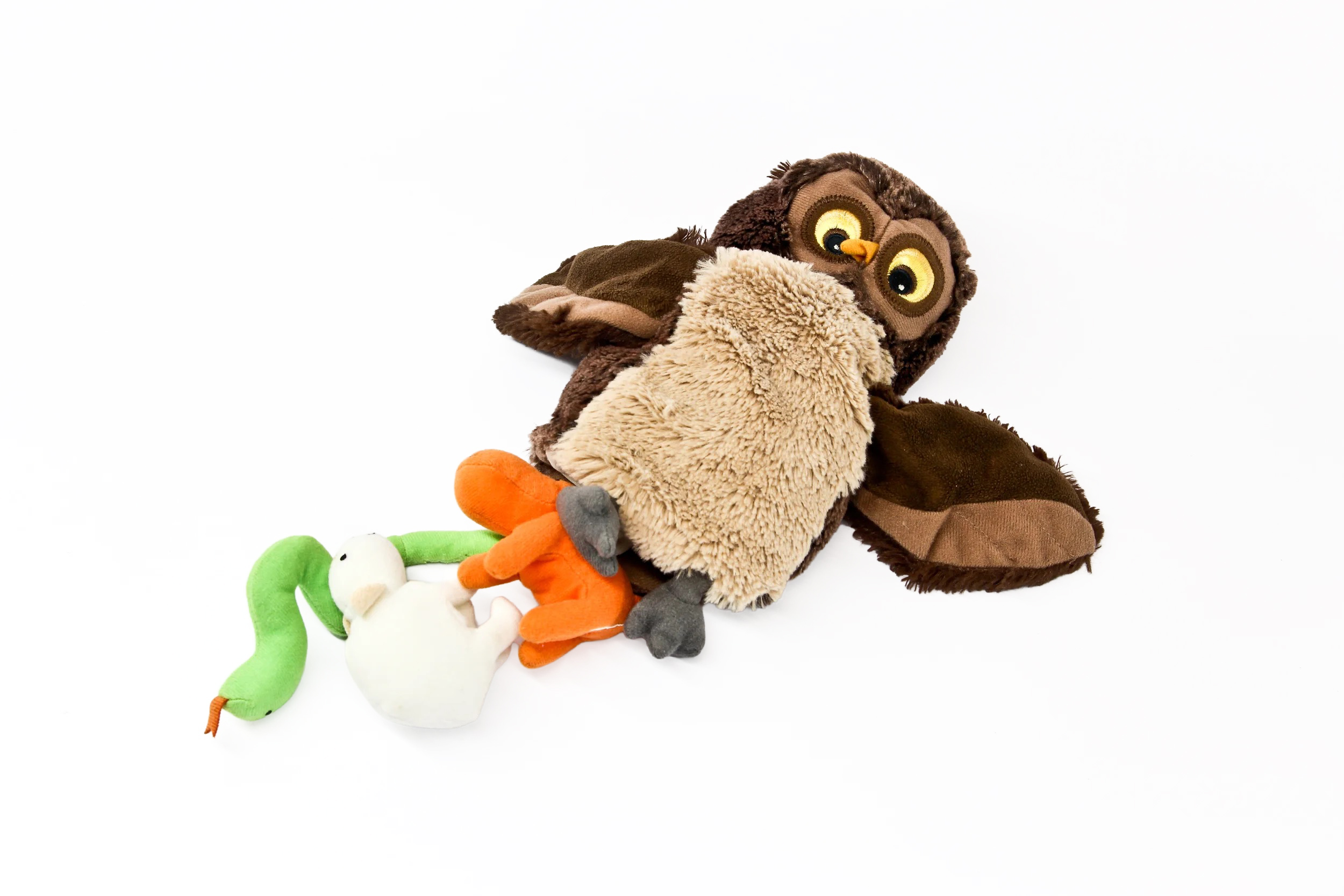
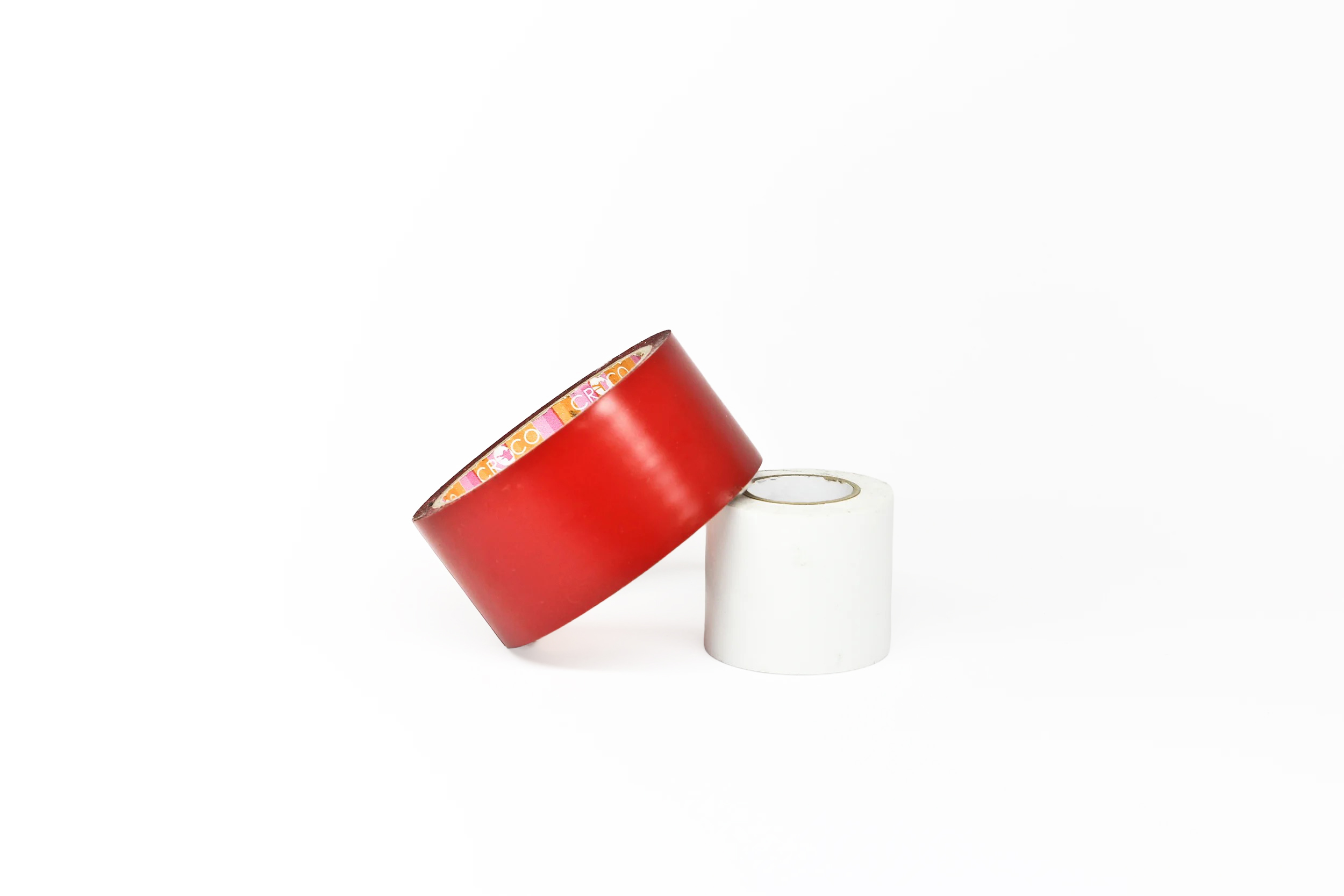
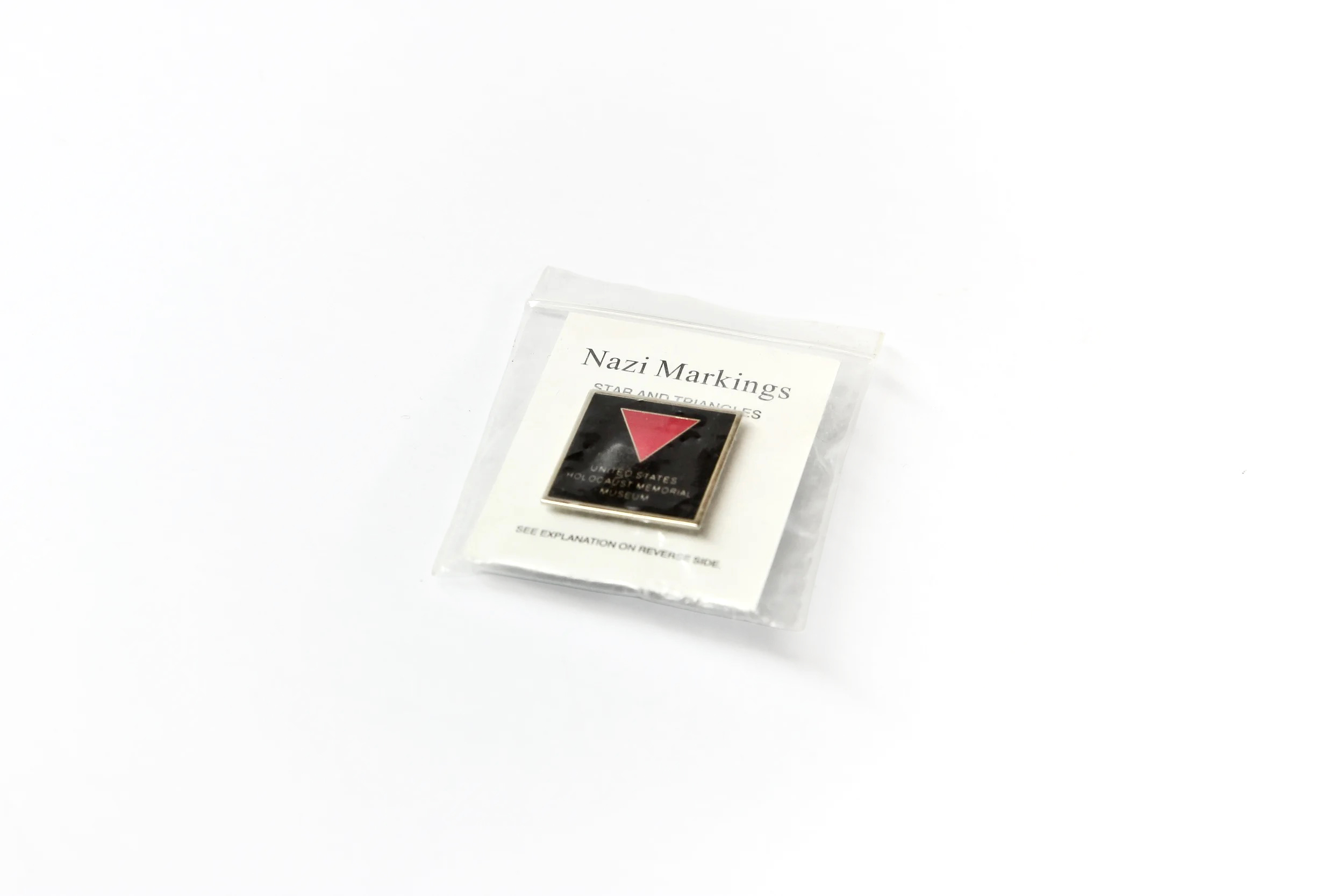
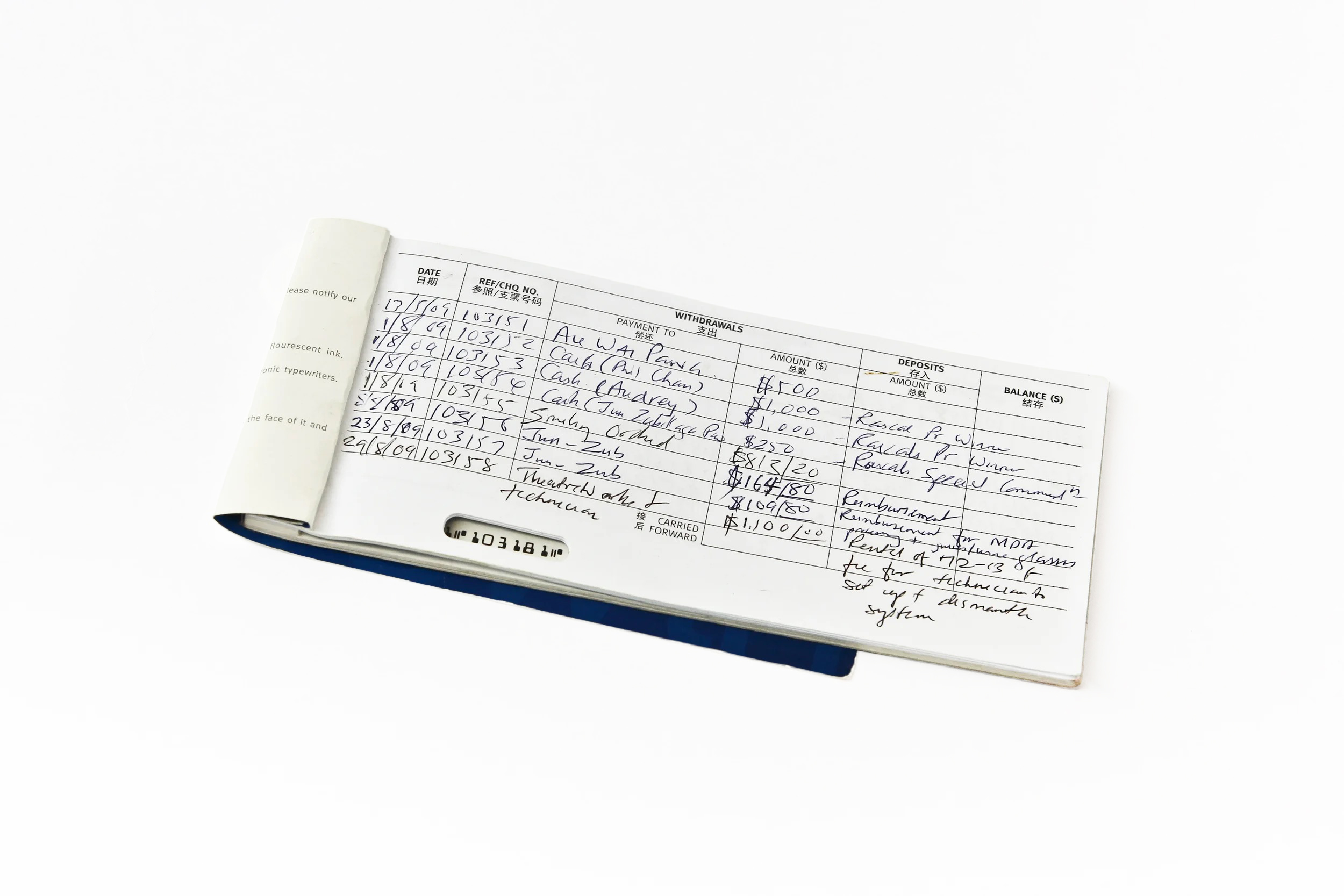
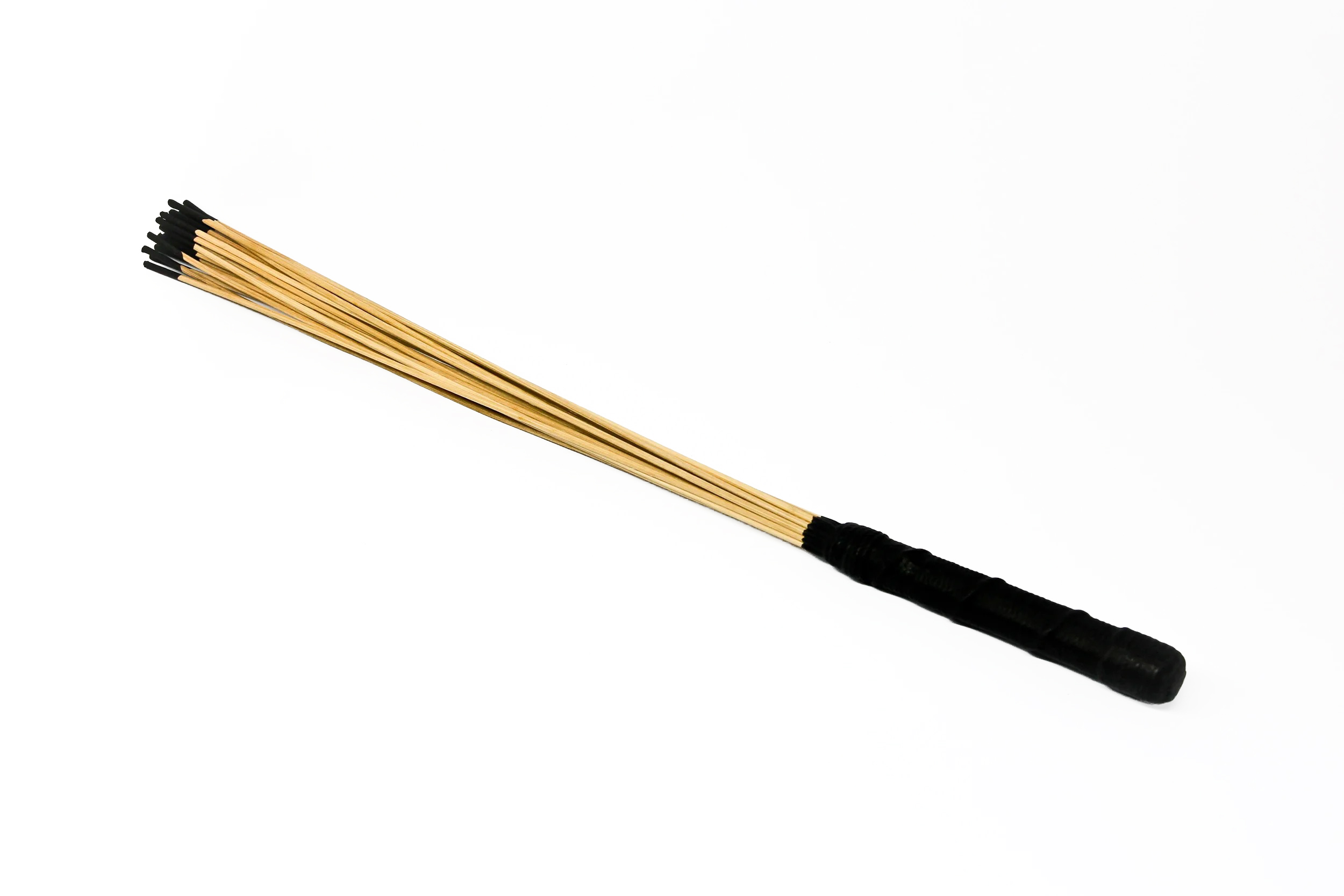
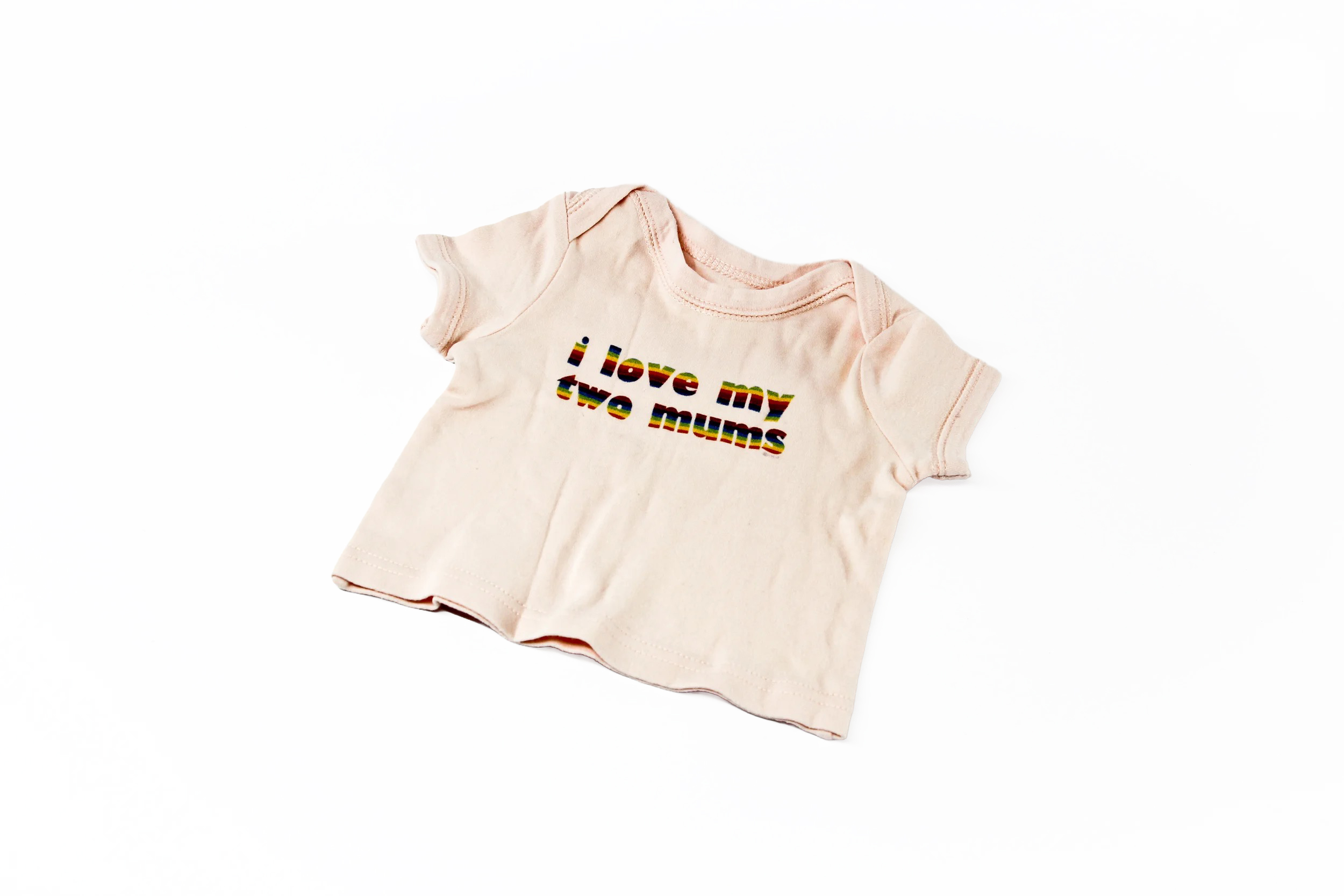
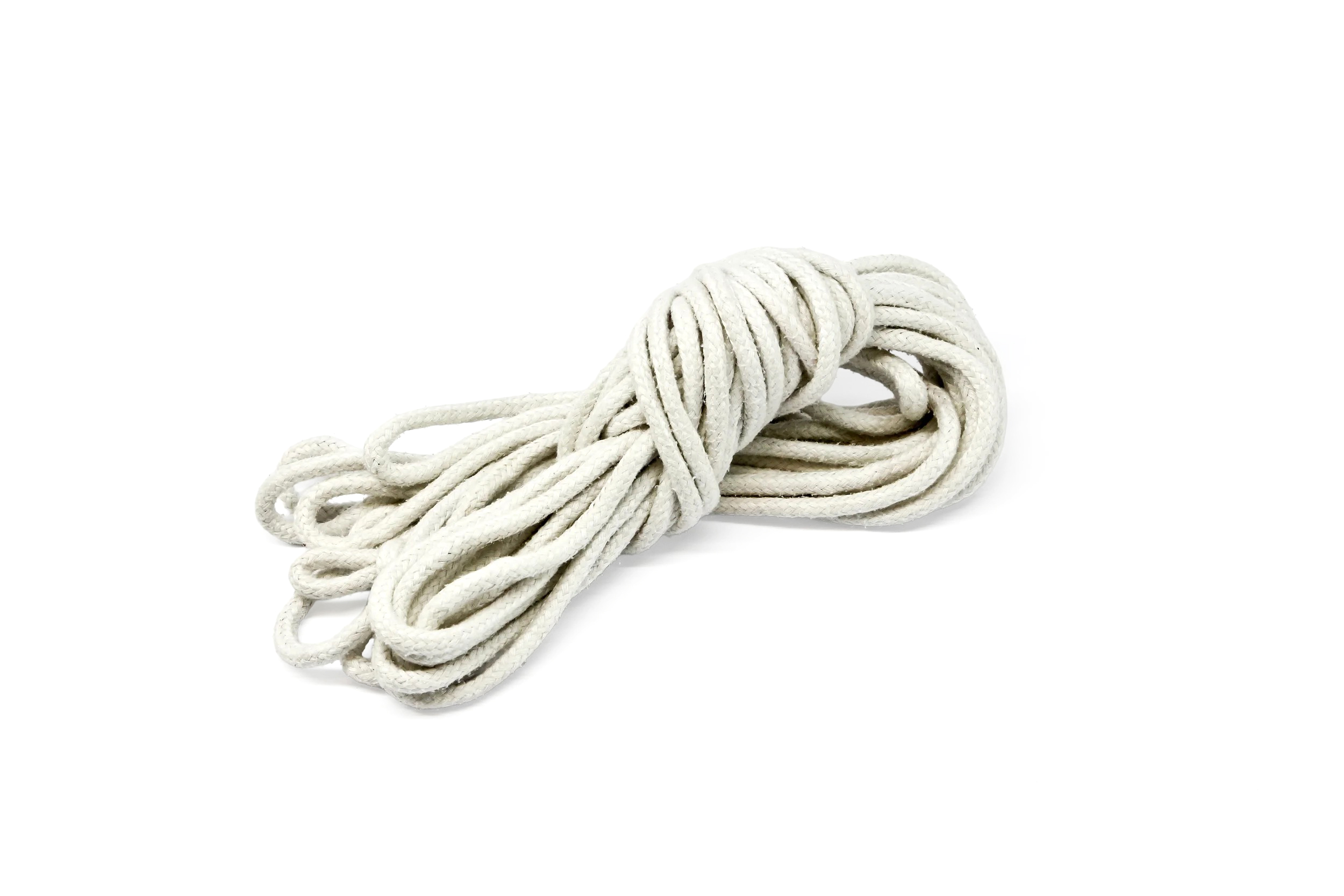
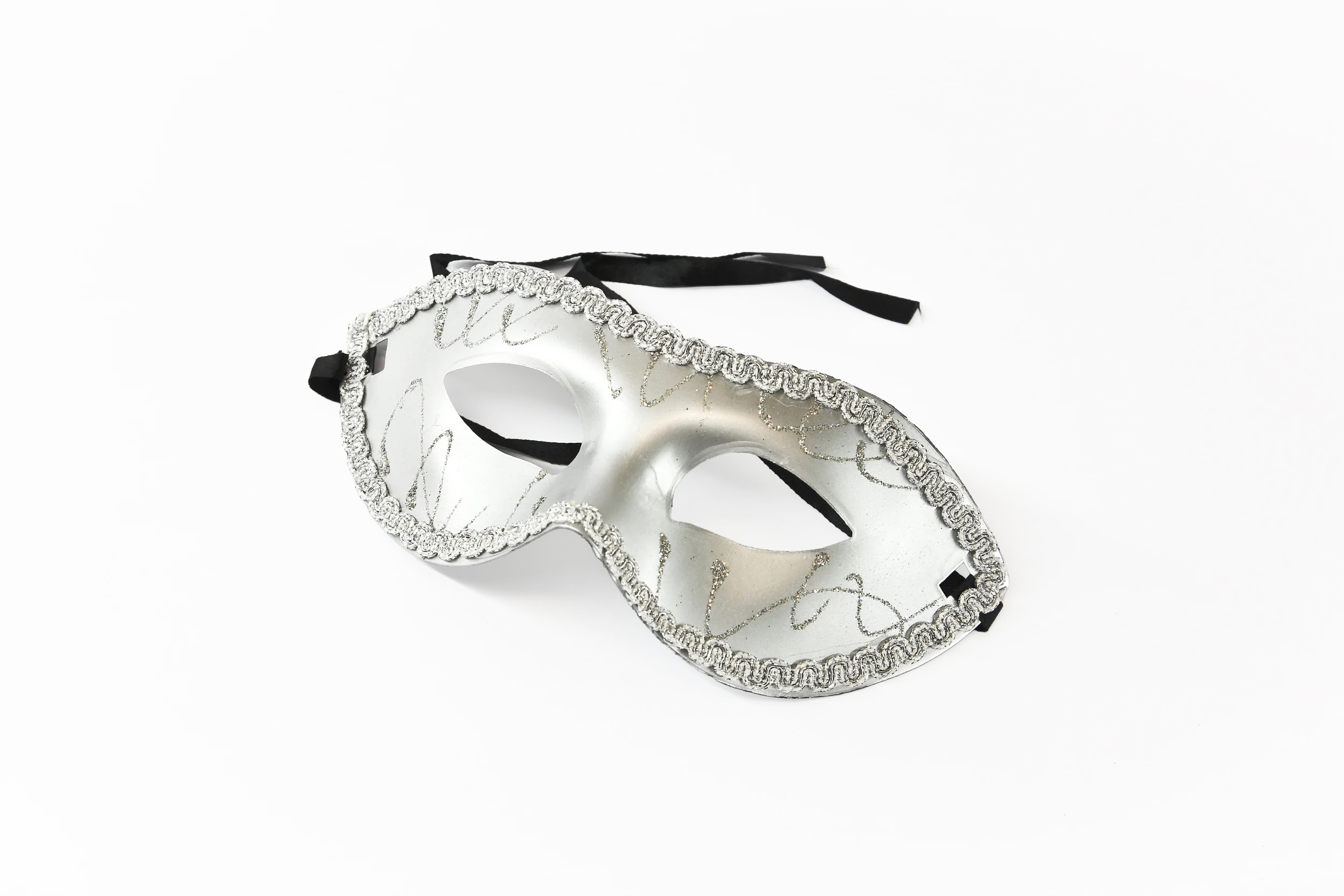


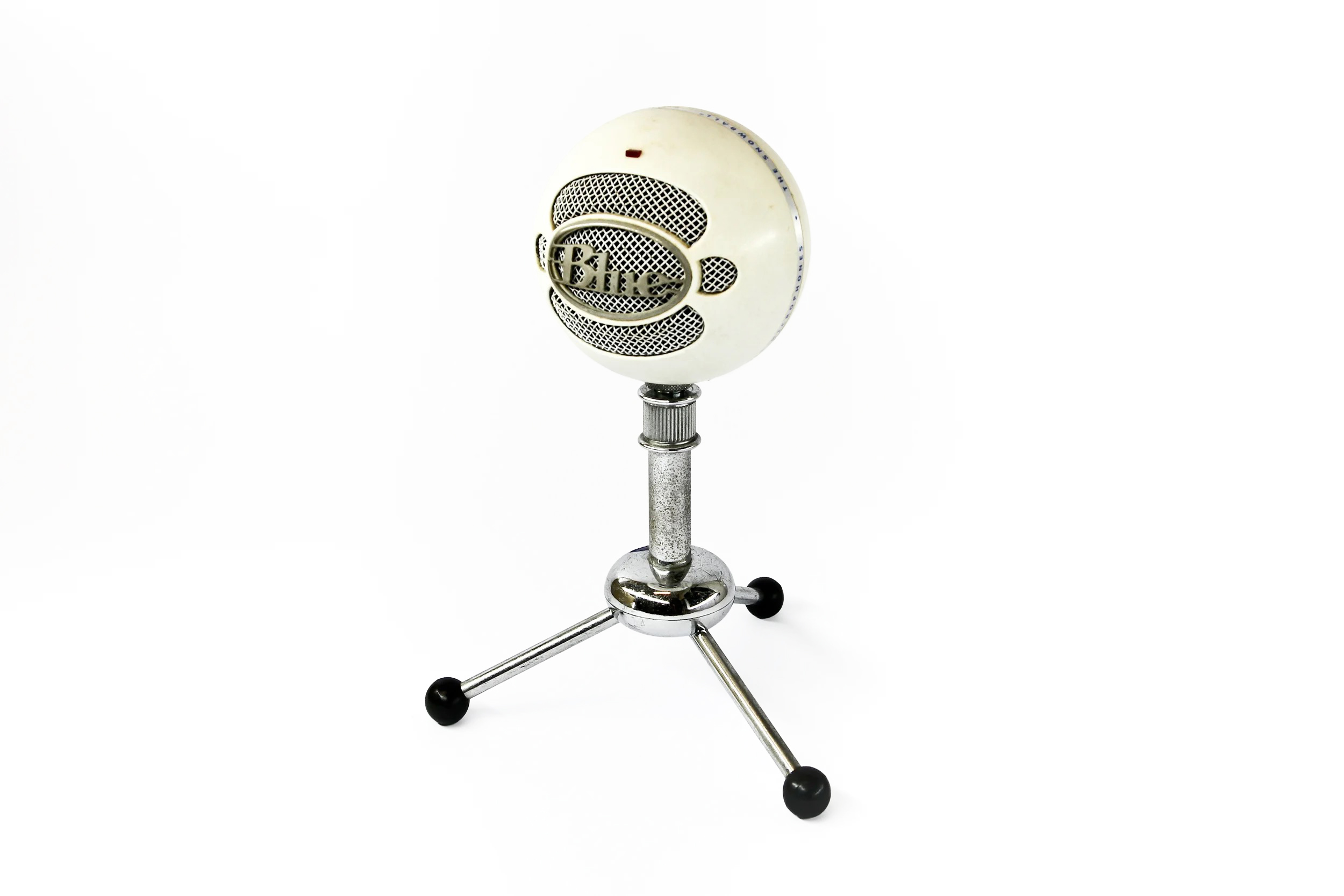
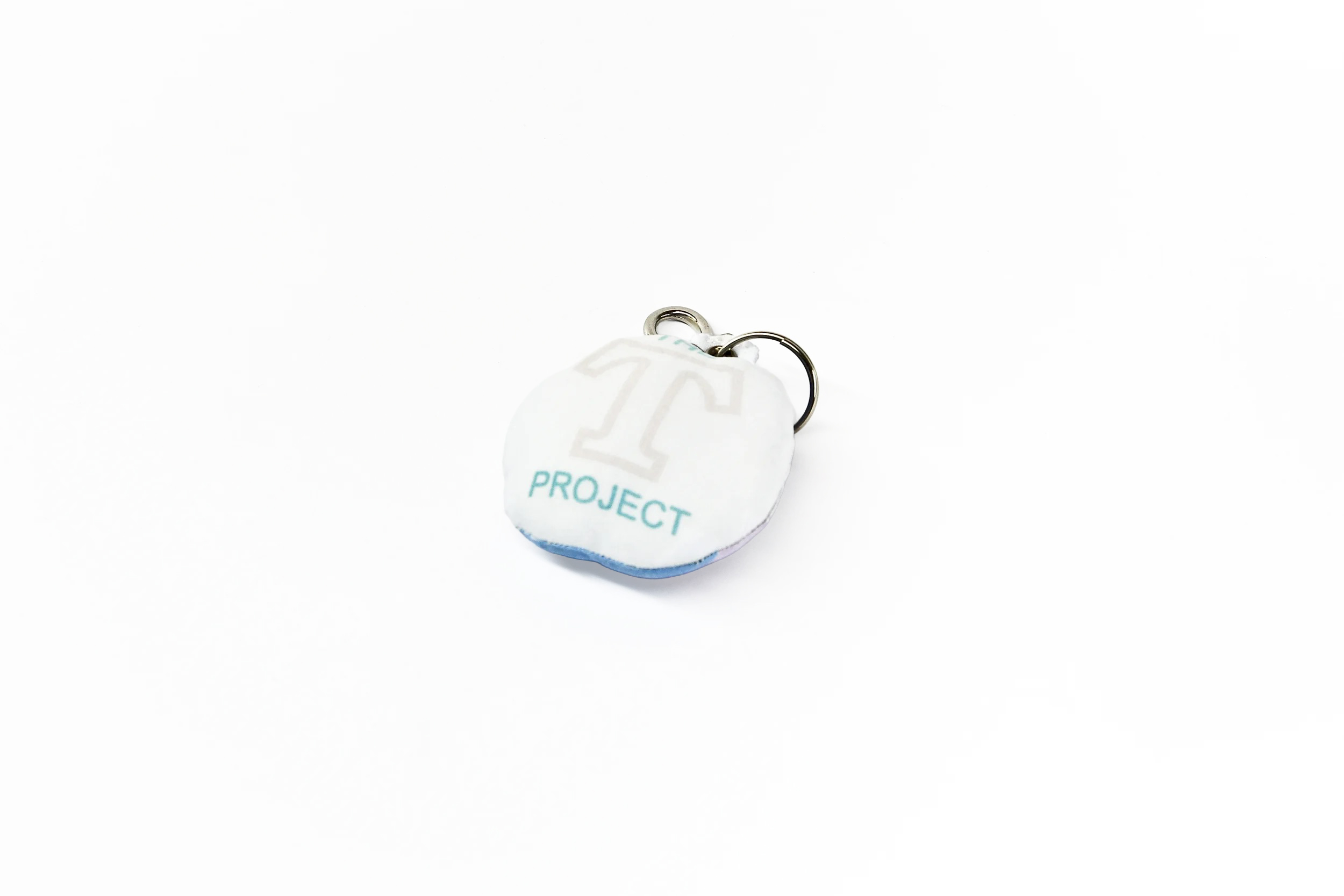
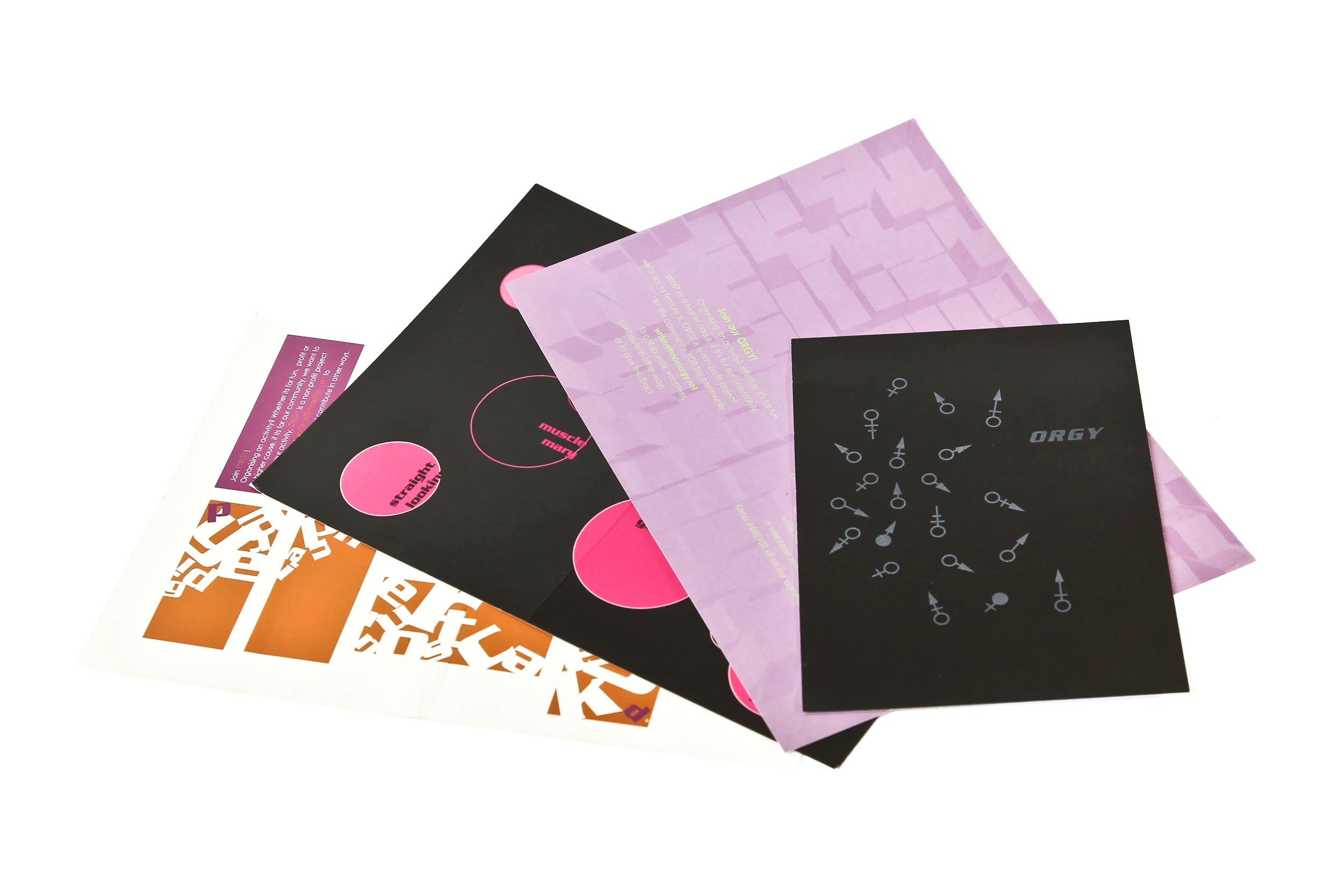
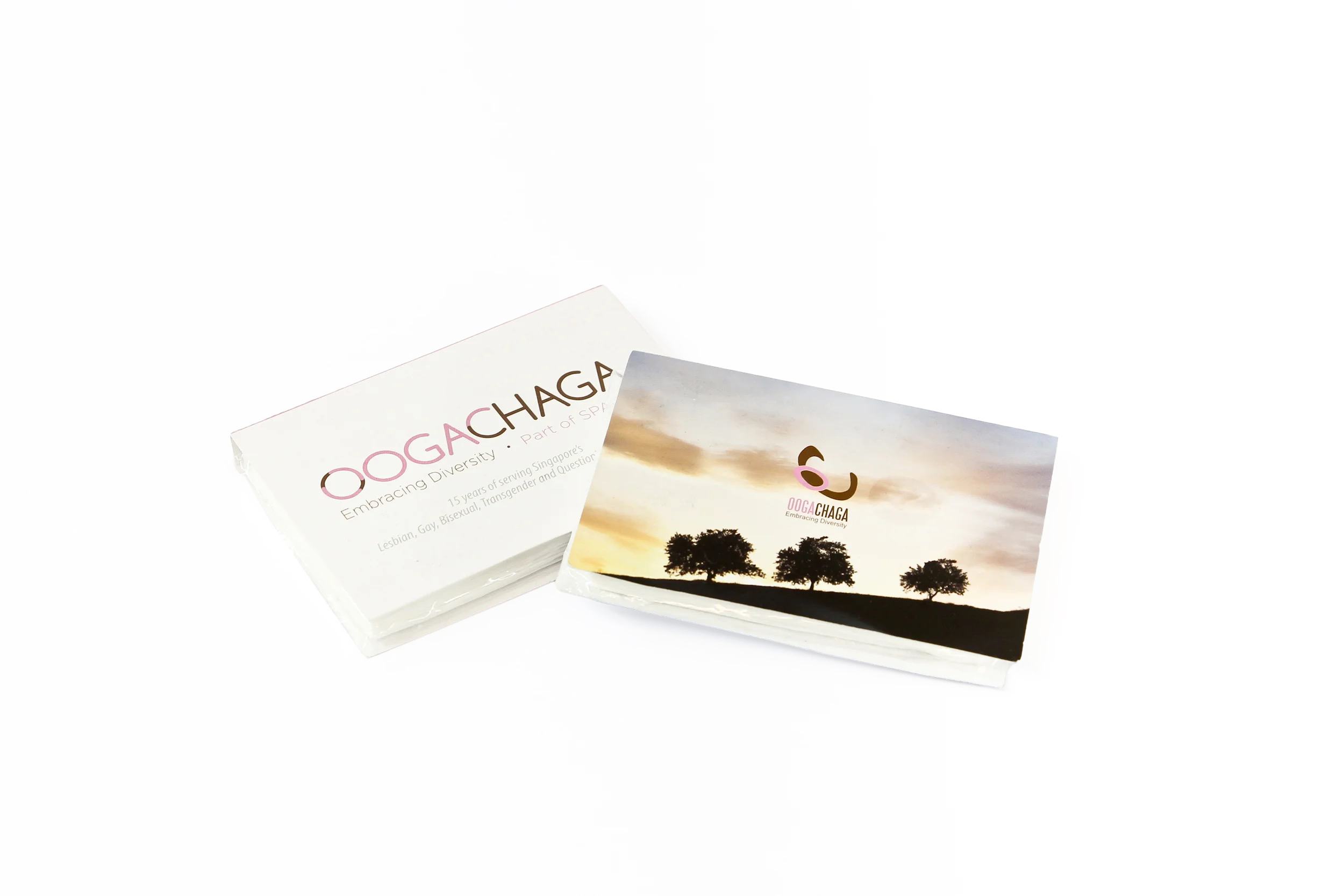
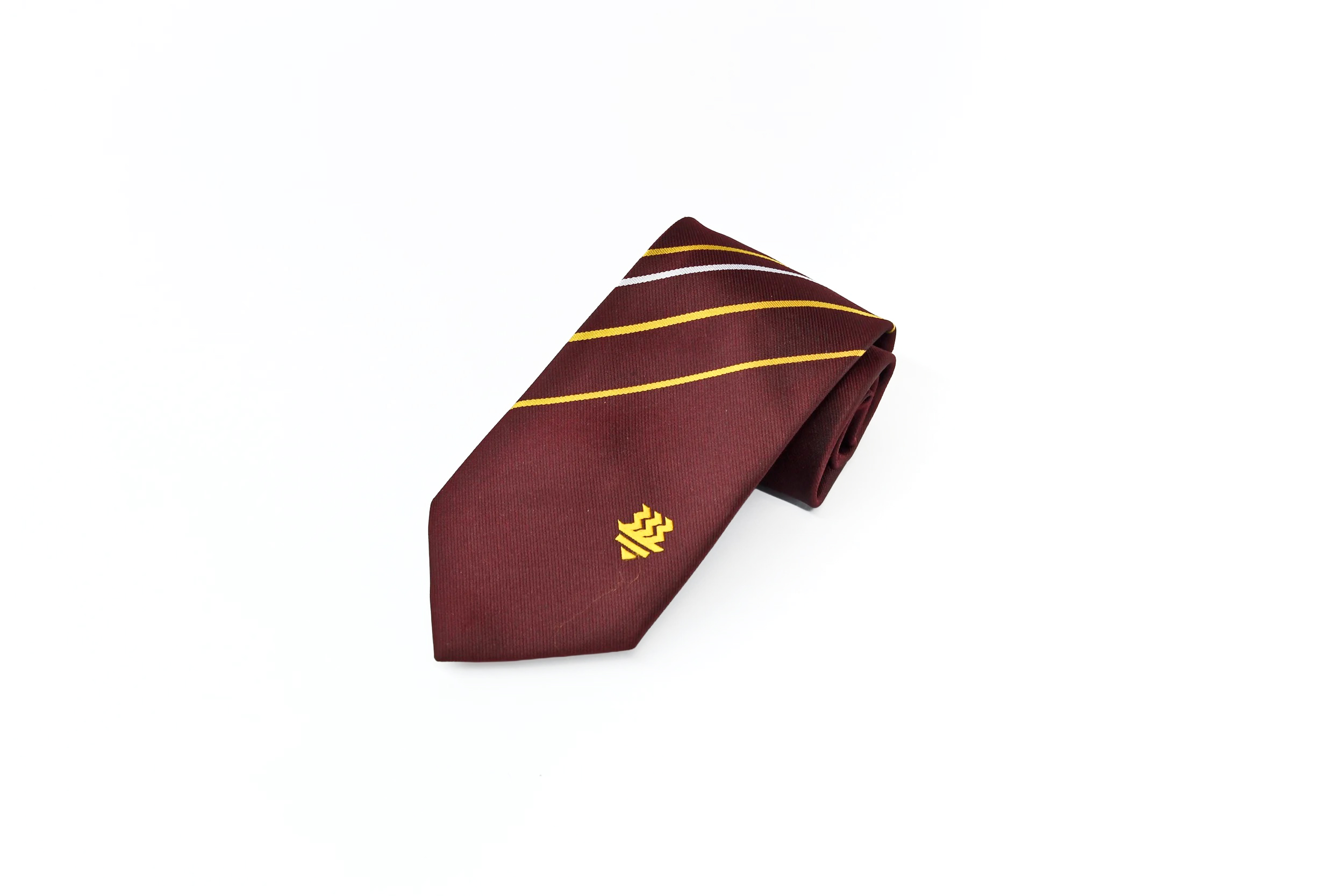
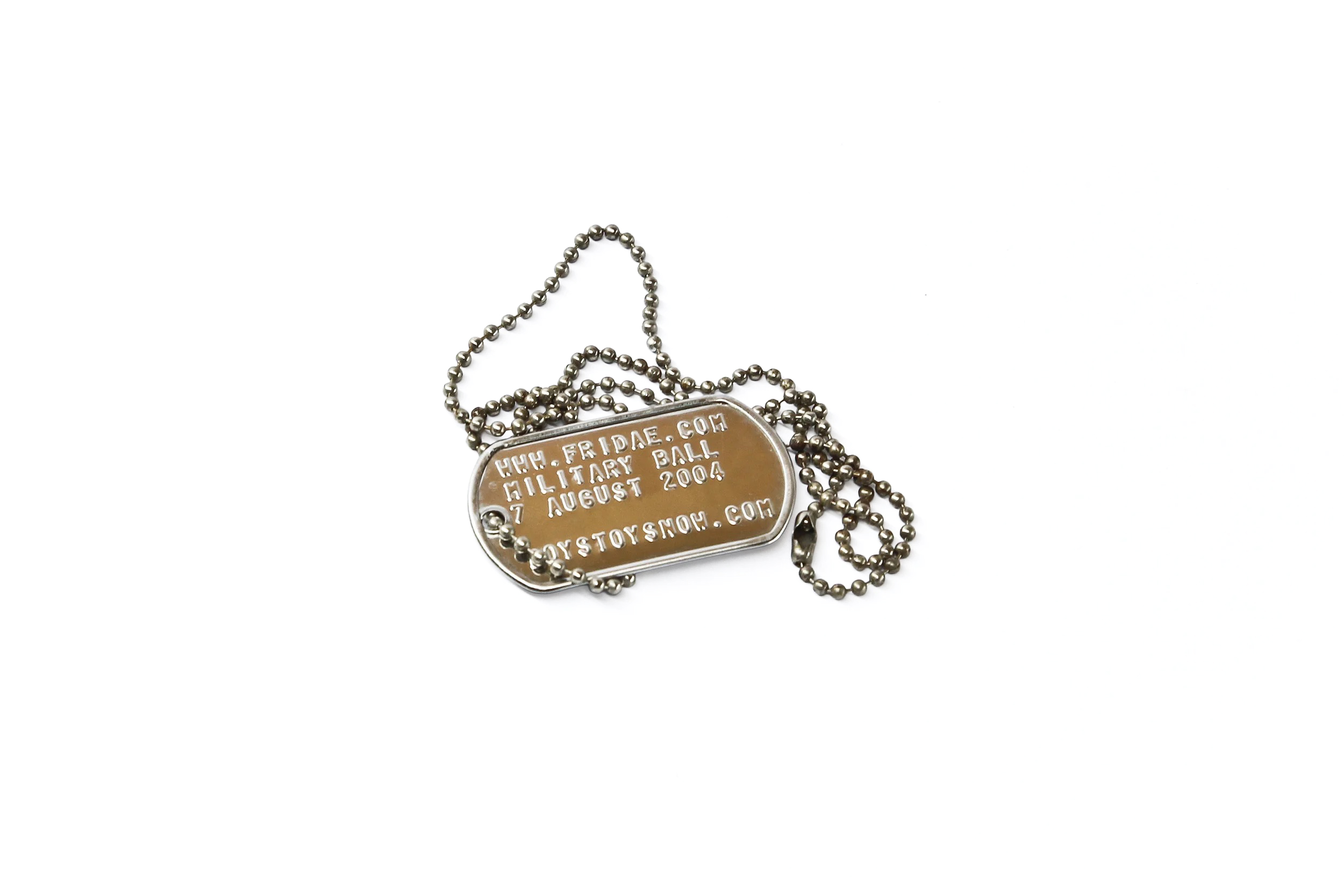

50/50 (2015)
- Performance lecture and dance workshop
- 4, 11, 19 December 2015, 8pm and 9pm
- TheatreWorks, 72-13, Singapore
- Premiered as part of T:>Works Singapore’s Main Season 2015
- 15, 16, 17 September 2016, 7pm to 10:30pm
- Judith Wright Centre Performance Space, Brisbane, Australia
- Presented at Brisbane Festival’s Singapore Series by CultureLink Singapore
- Performed by me
- Production Managed by Natalie Lim
50/50 (Singapore) was a series of three dance classes held over three separate weekends, inspired by the experiences my collaborators and I had with the Lindy Hop, a social dance with African-American roots that is traditionally done to 1940s big band jazz music.
Audience members purchased a ticket that allowed them to participate in all three classes. Each class was designed in collaboration with a co-teacher with a different topic of interest, and focused on a specific aspect of the Lindy Hop.
Class I: Shiny Stockings
4 December 2015Performed and conceptualized in collaboration with Joanna Dong.
The first class unpacked the assigned roles of “lead” and “follow” in Lindy Hop. Joanna and I had a conversation through and about the dance, sharing their experience on and off the dance floor in relation to their designated respective roles of “lead” and “follow.” They taught the footwork for the eight-count “Lindy Turn,” a fundamental step in the social dance.
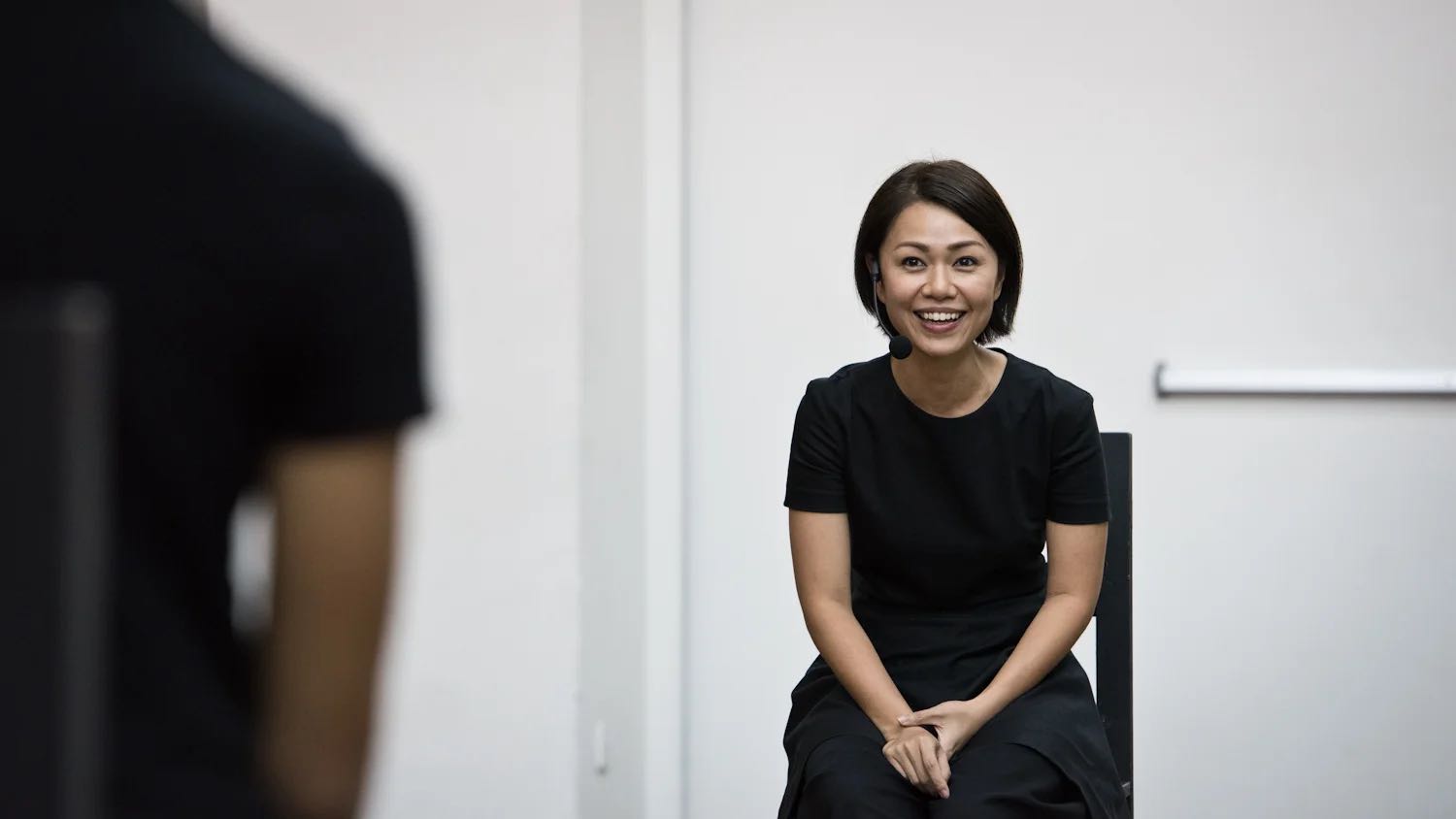
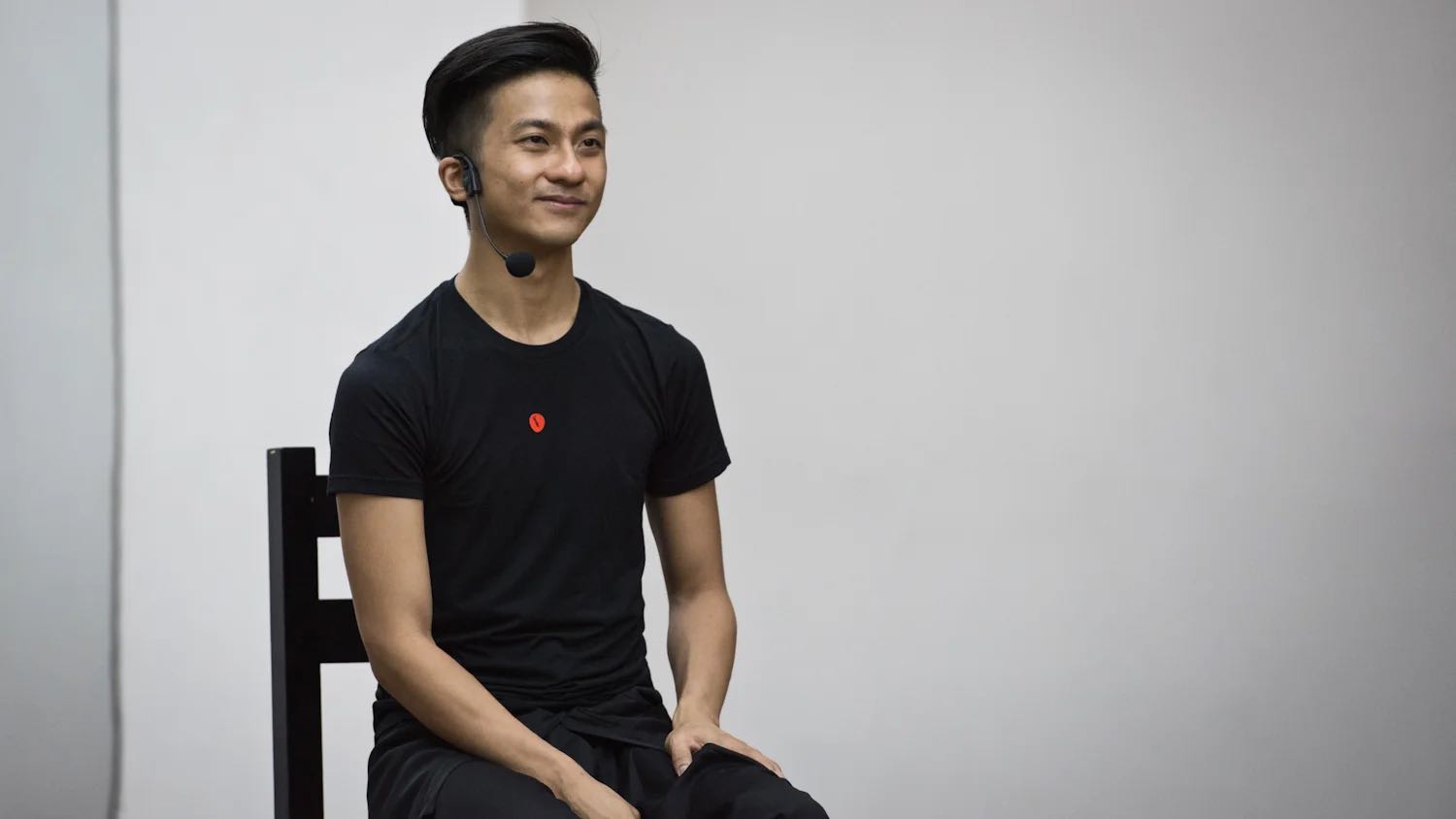
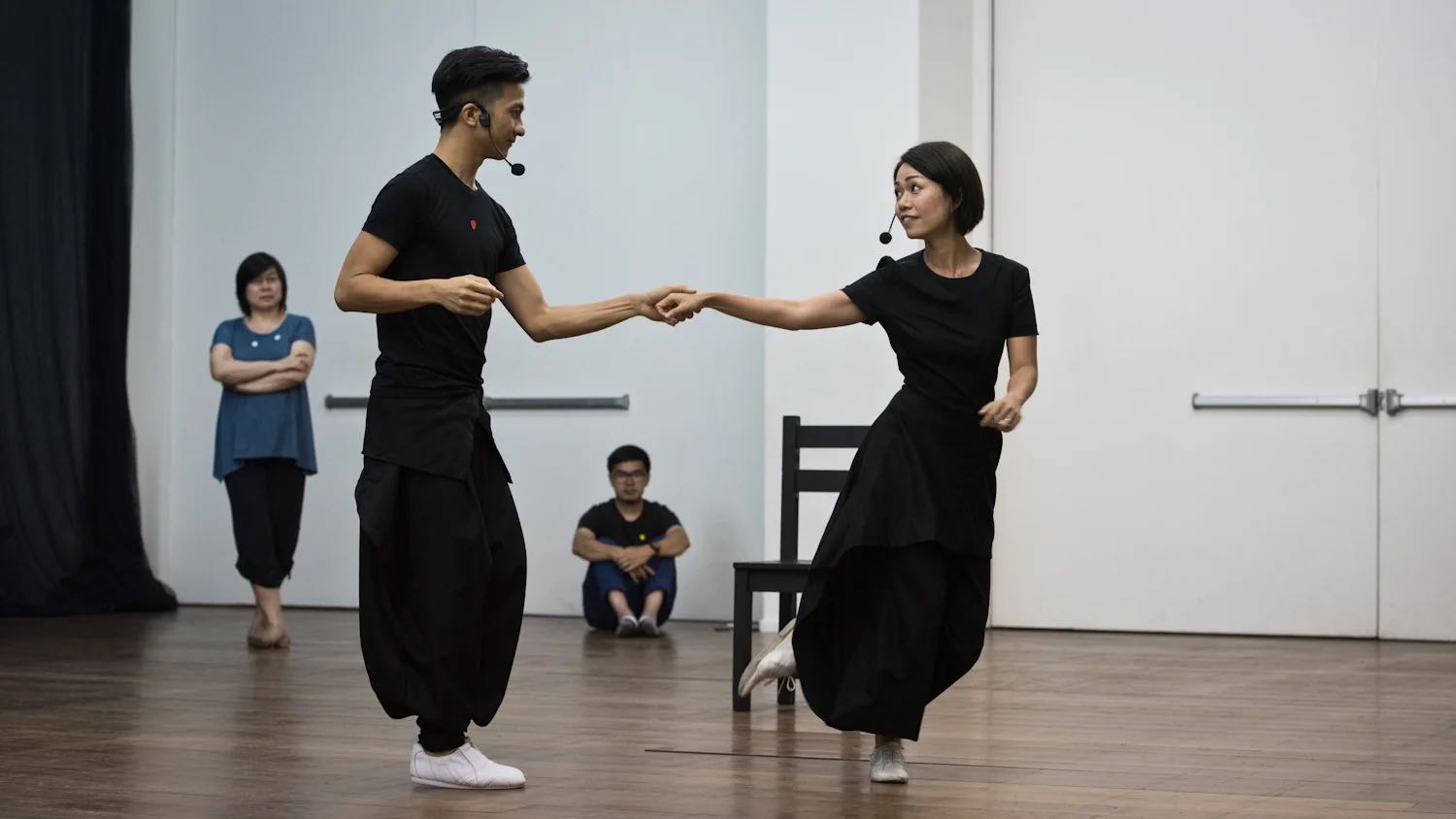
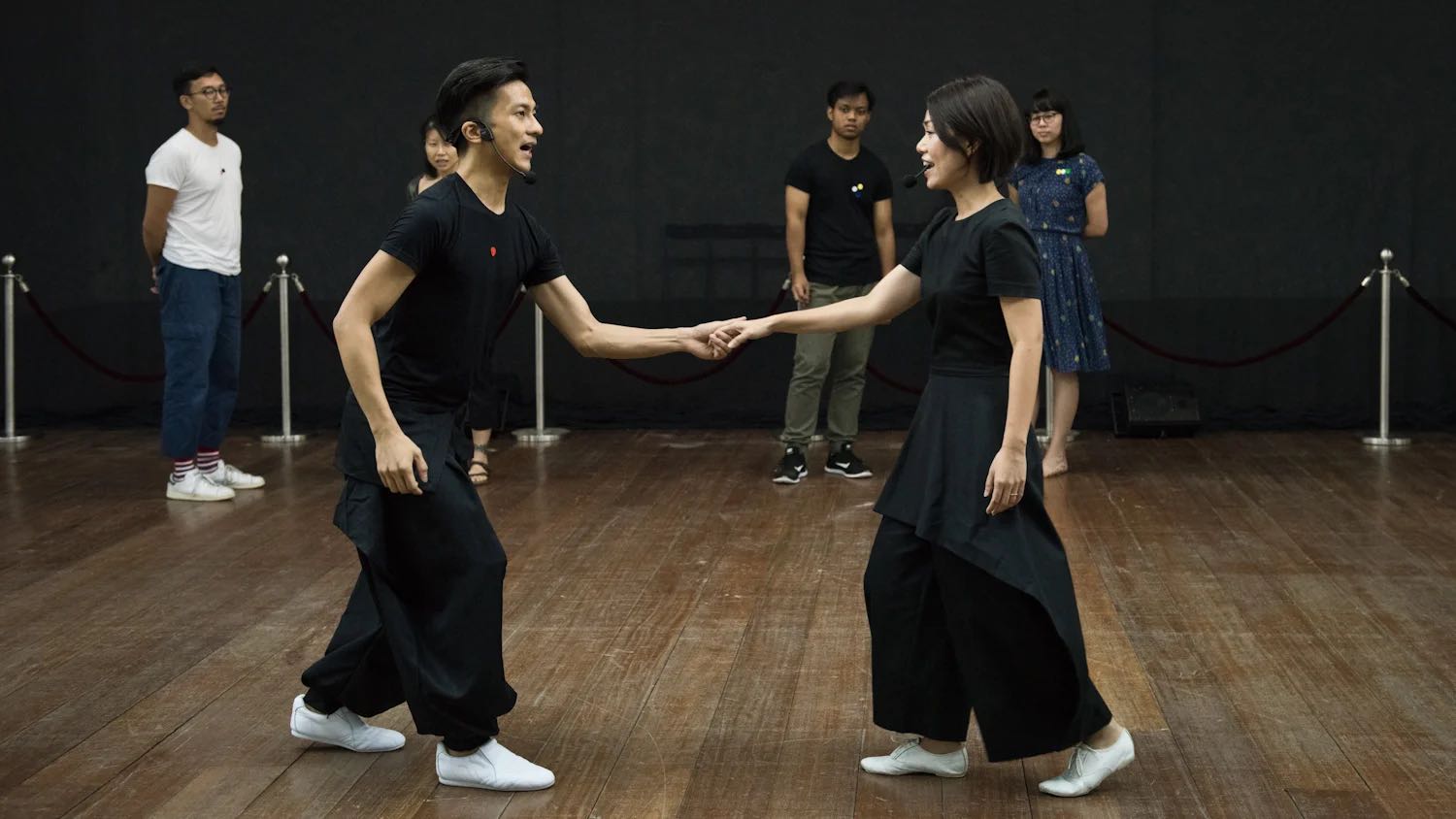
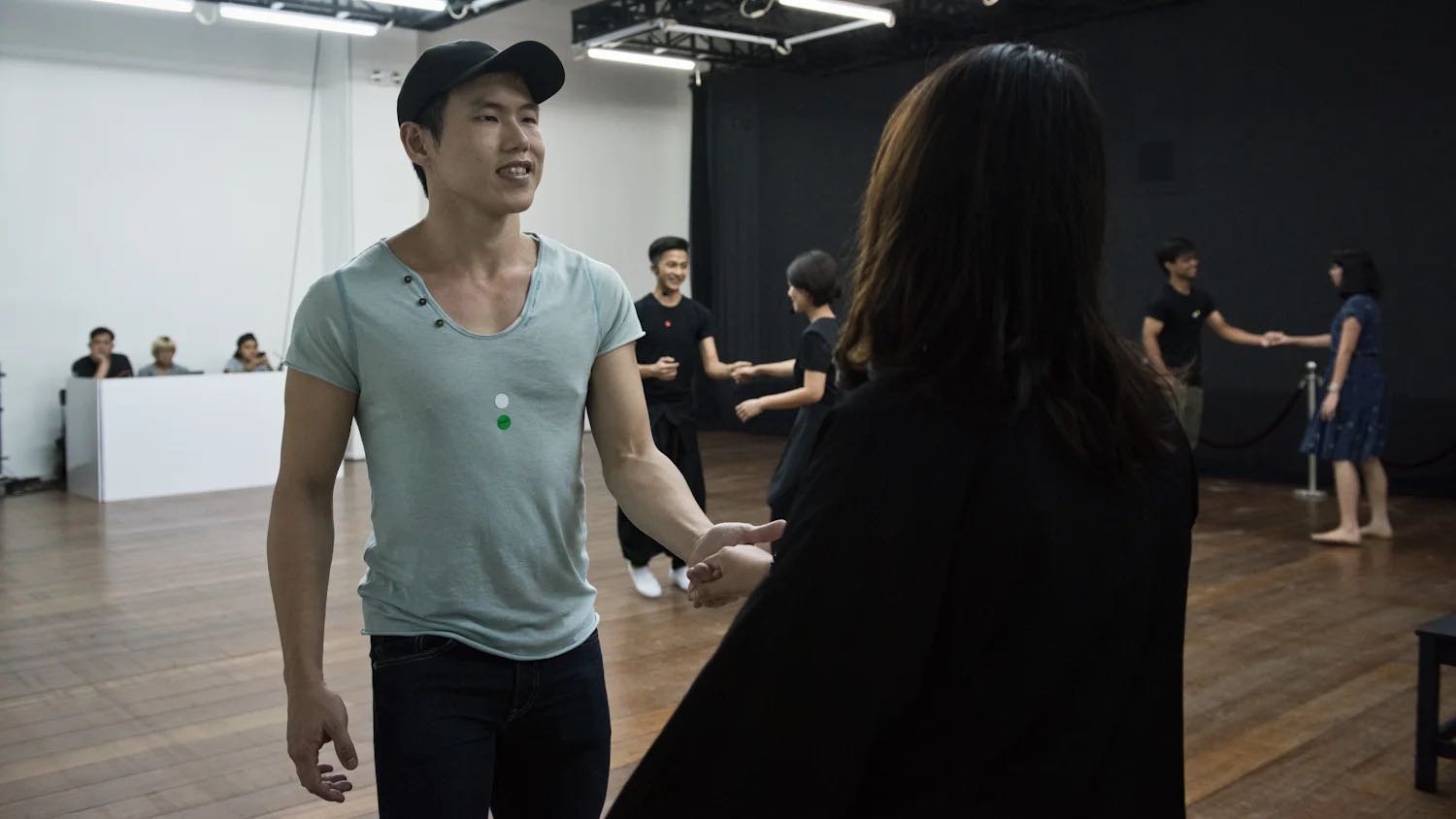
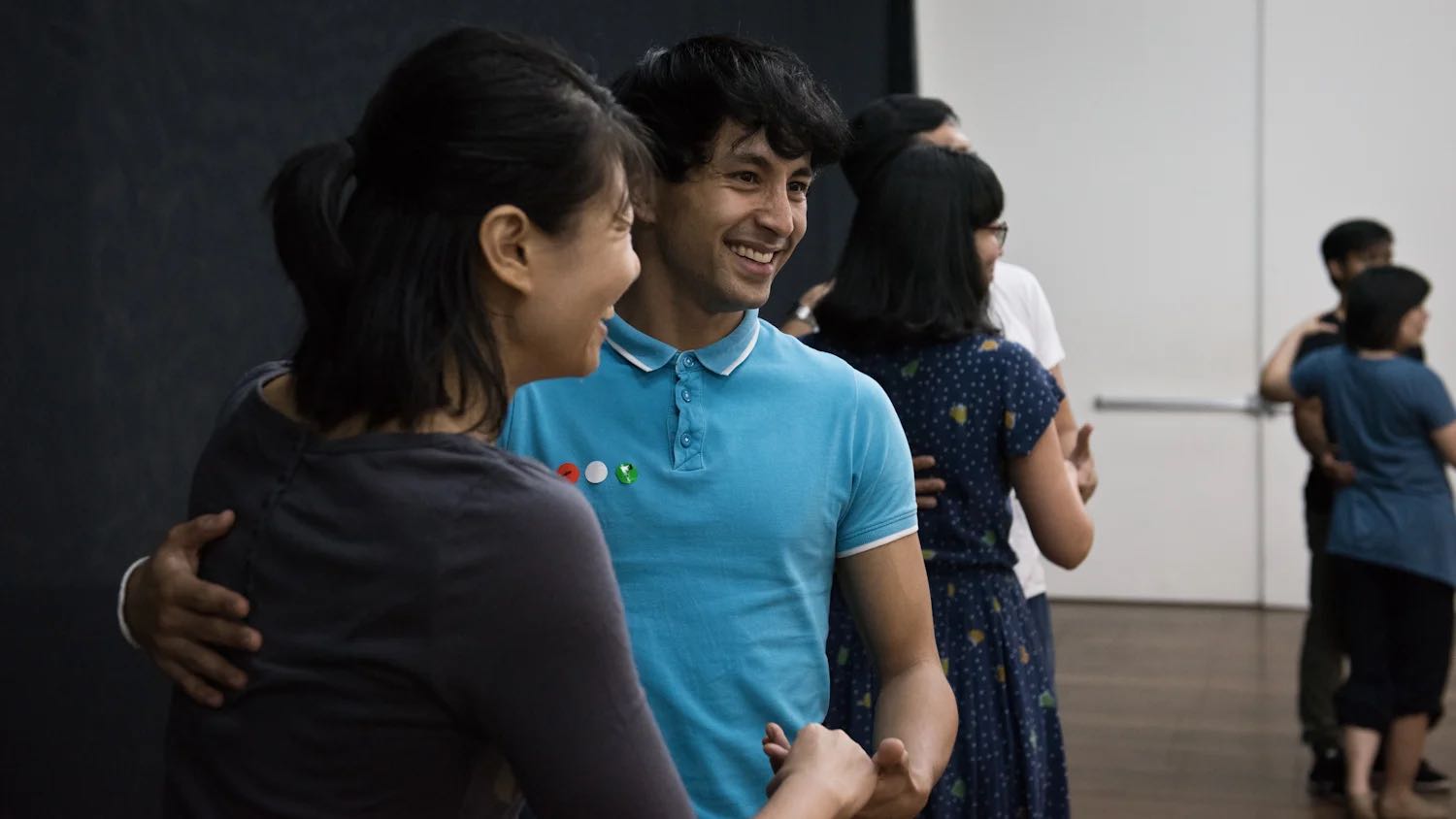
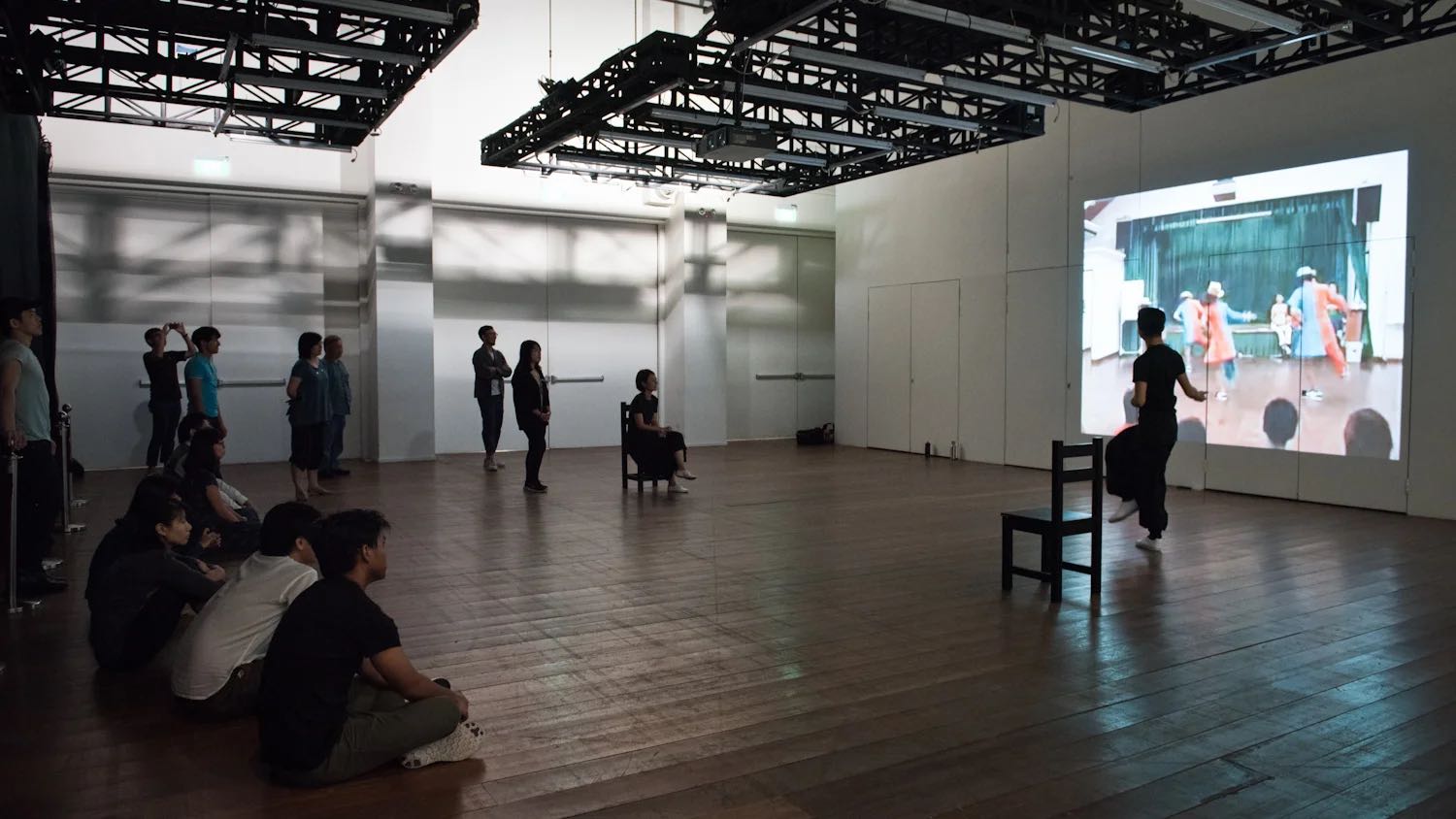
Class I documentation. Photos by Law Kian Yan and Lim Li-Hsien.
Class II: Dipsy Doodle
11 December 2015Performed and conceptualized in collaboration with Sinclair Ang.
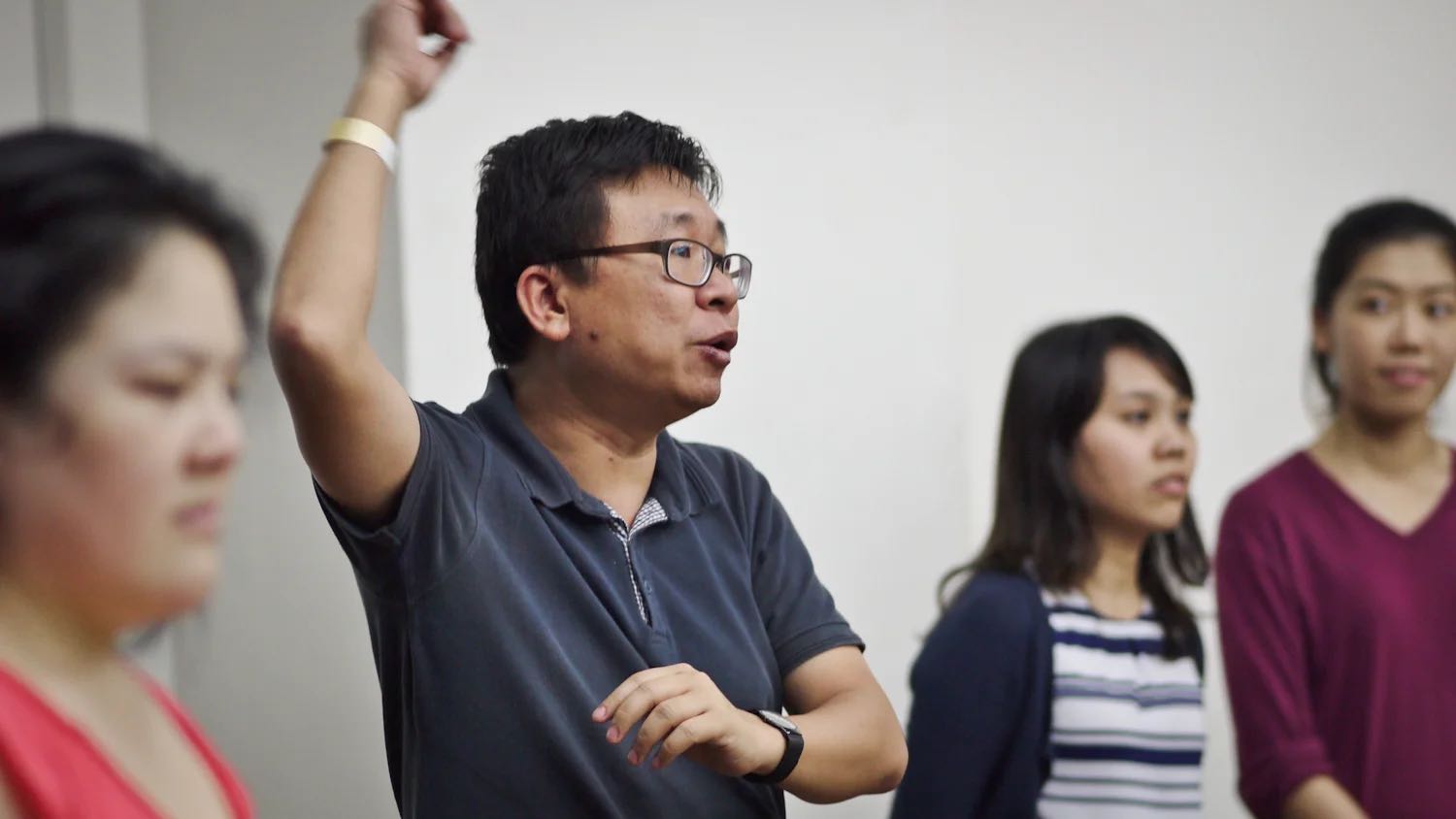
The second class centered on “ethnicity” and covered a brief history of the Lindy Hop. The social dance originated in Harlem, New York, among the African-American community. It was revived in the late 1980s by various communities located in the United States, the U.K. and Sweden. Sinclair and I taught basic individual jazz steps and discussed what it means to be ethnic Asians performing this dance of African-American origins.
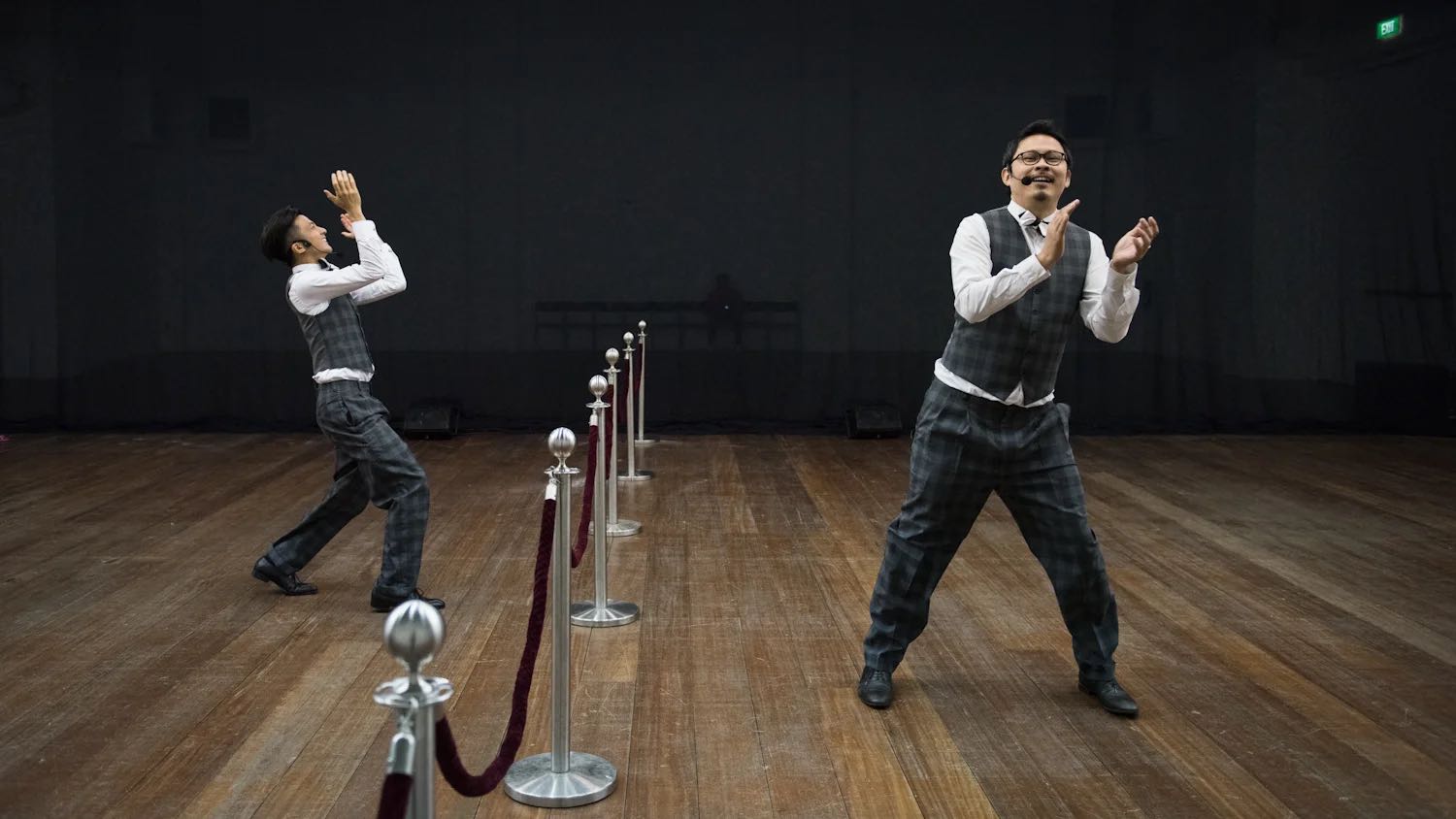
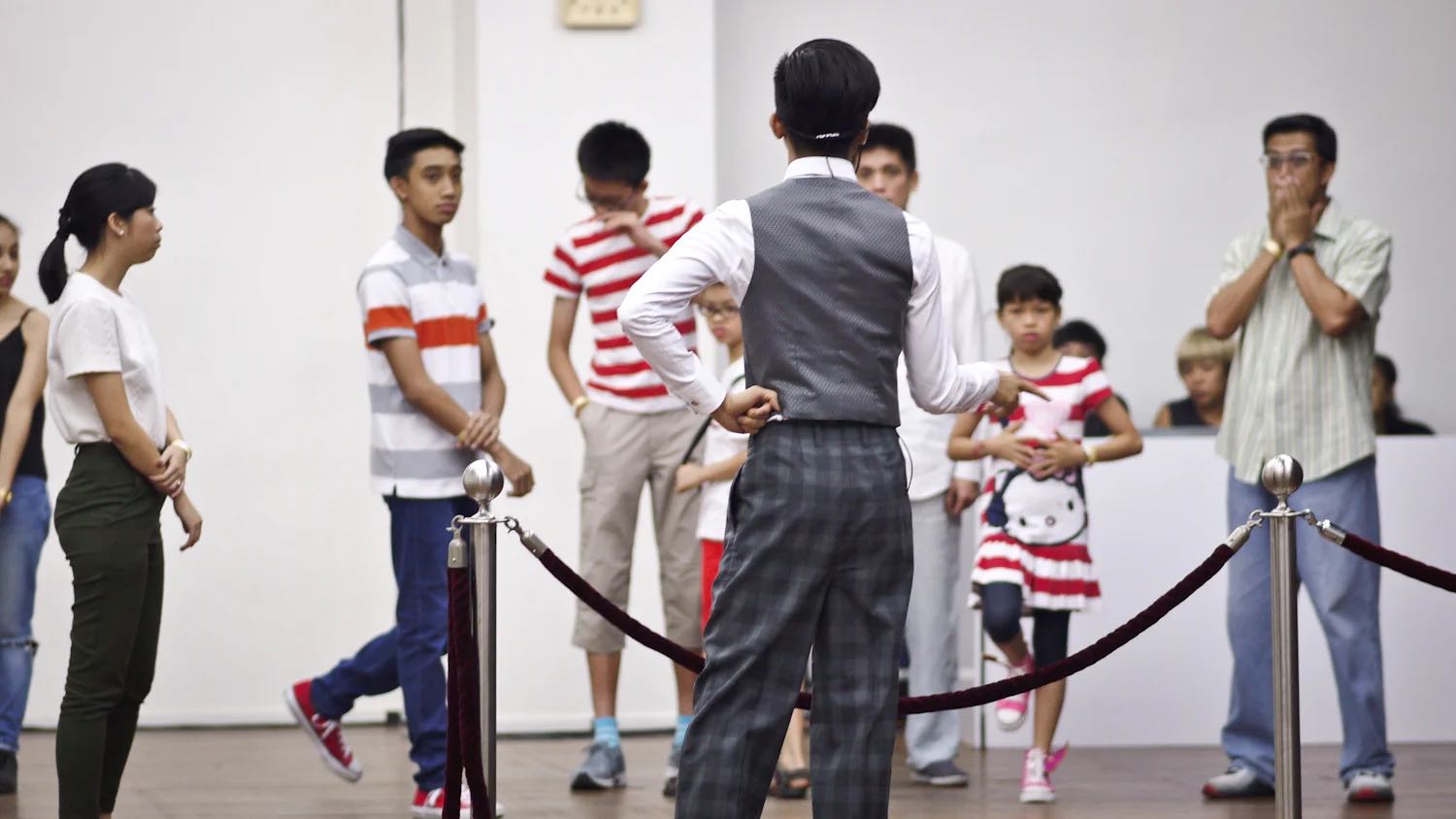
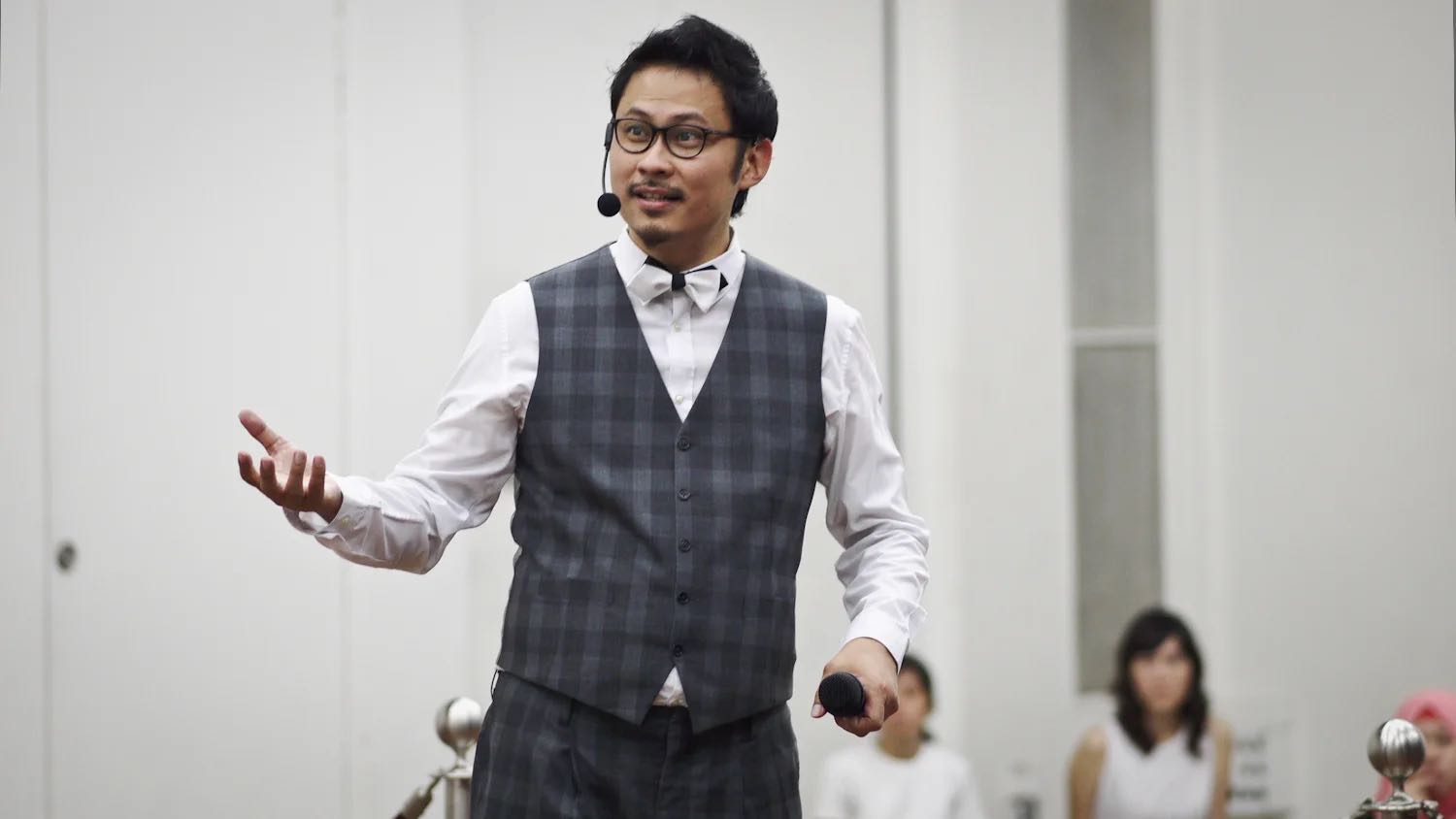
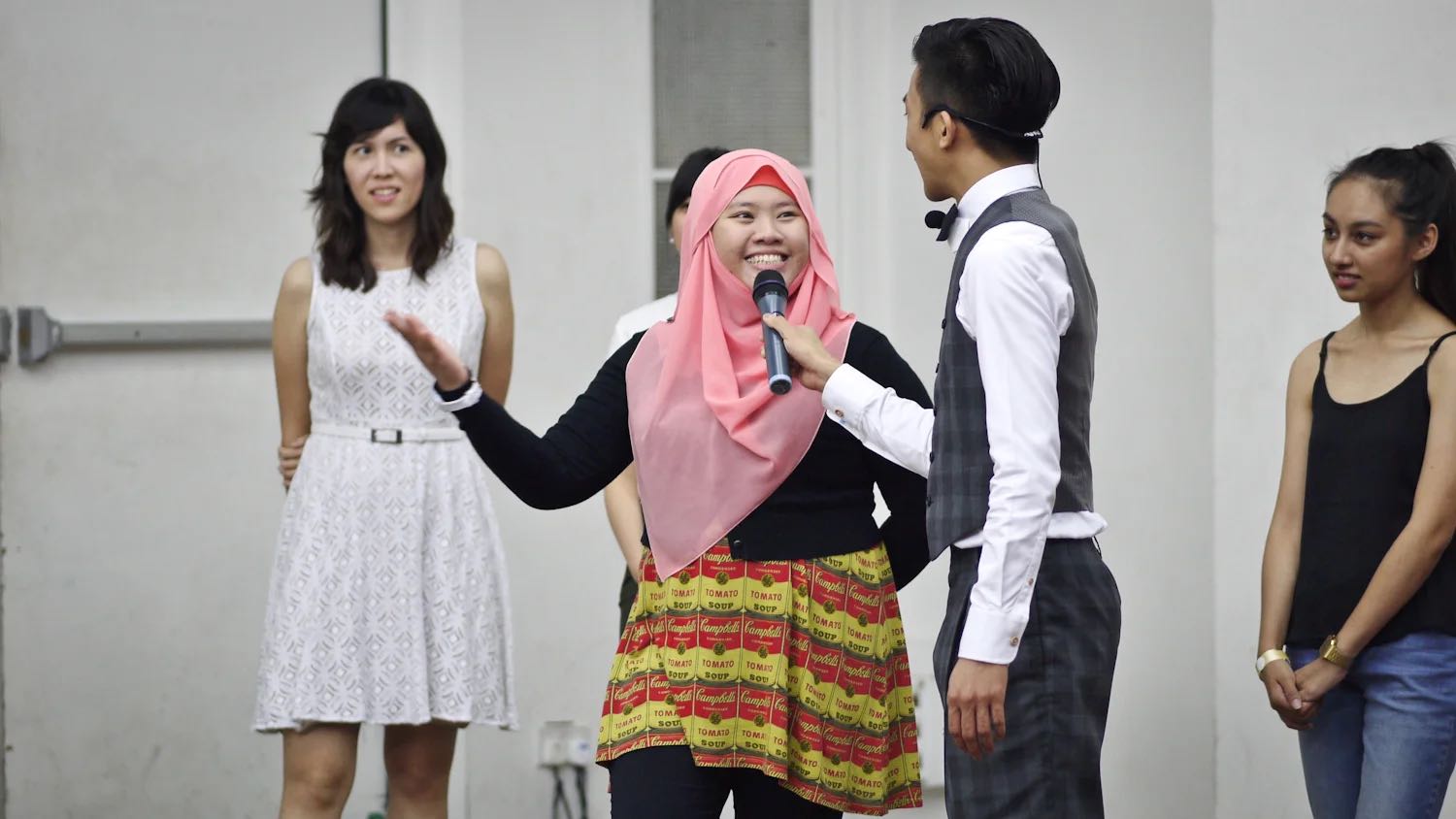
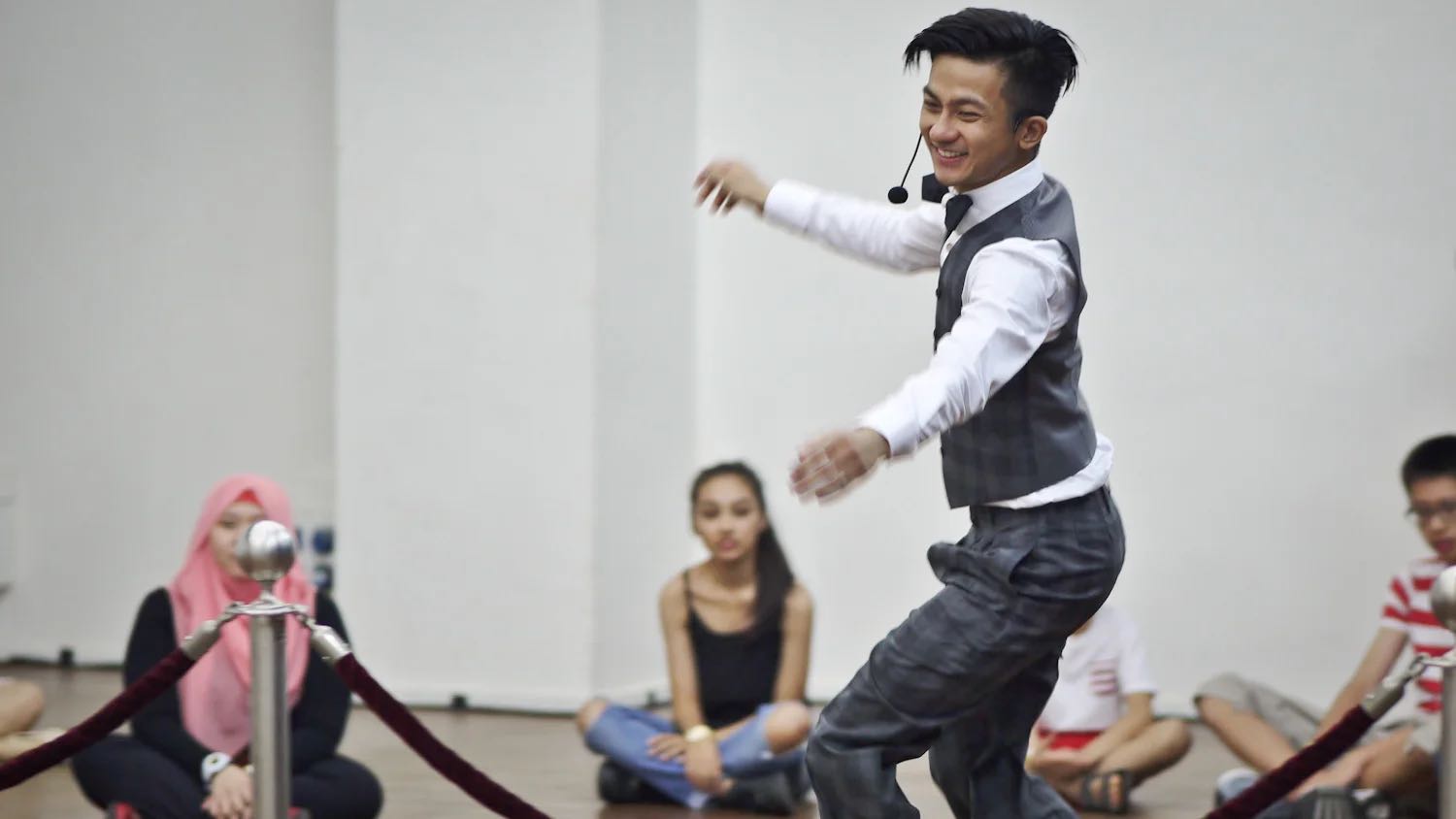
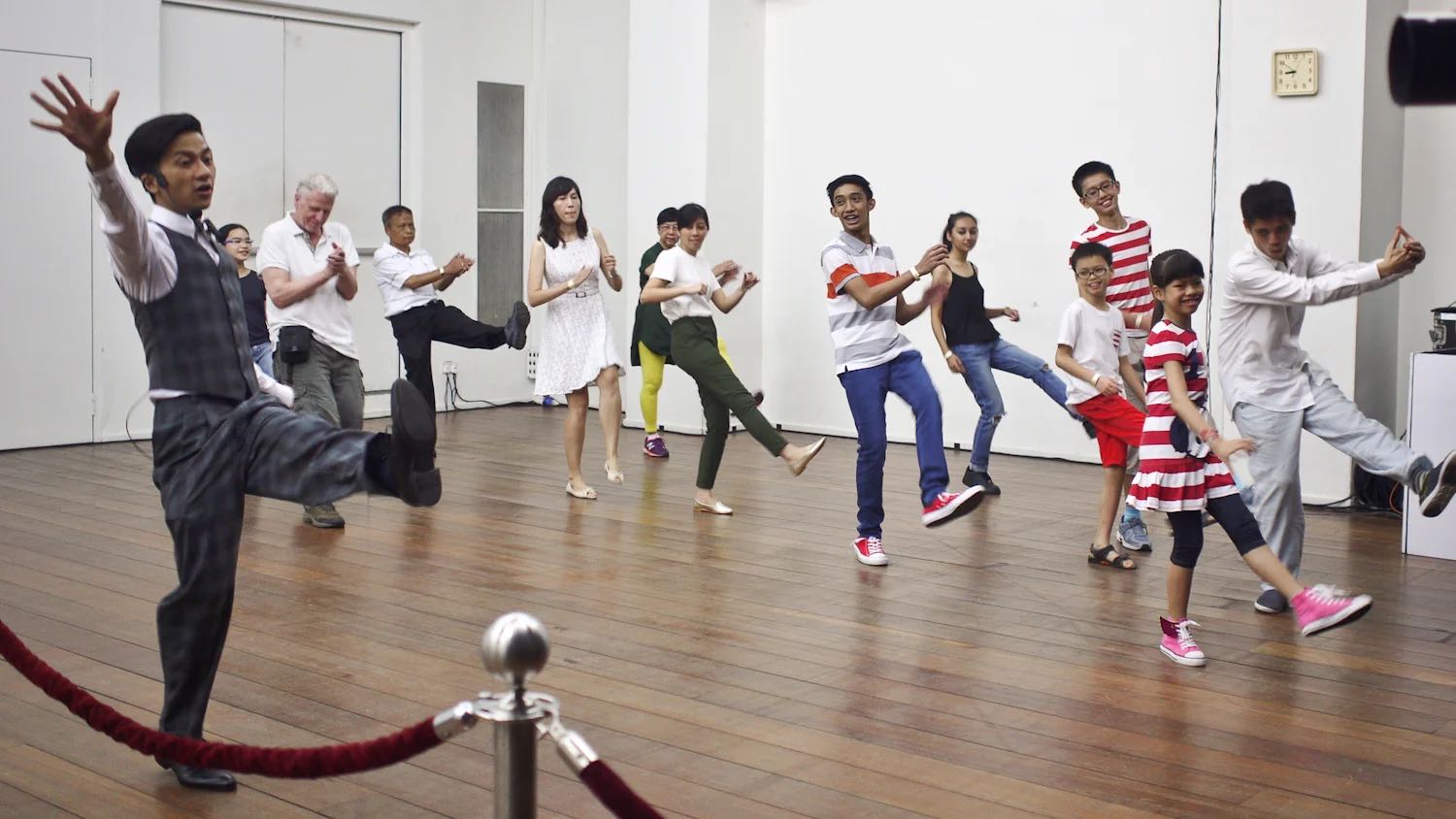
Class II documentation. Photos by Law Kian Yan and Lim Li-Hsien.
Class III: Love Me or Leave Me
19 December 2015Performed and conceptualized in collaboration with Jereh Leong.
The third and final class touched on sexuality. Both Jereh and I shared our experiences as openly gay men who were attracted to this heteronormative social dance. Jereh shared autobiographical aspects of his journey as a contemporary dance artist and reenacted sequences from his past performances. Toward the end of the class, Jereh and I conducted an exercise where they attempted to teach the basic six-count partnered footwork of the Lindy Hop without verbal instruction and through physical contact.
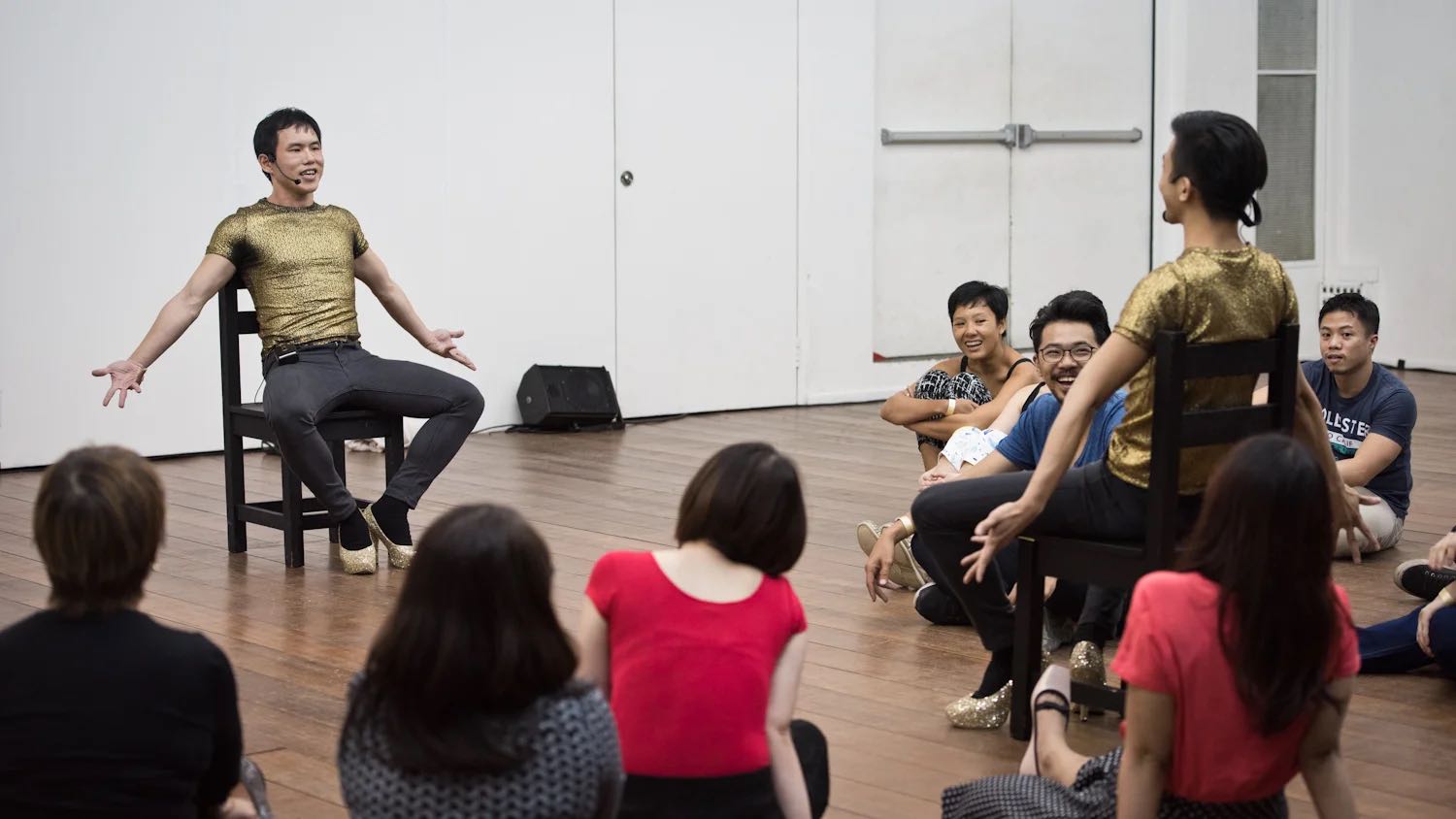
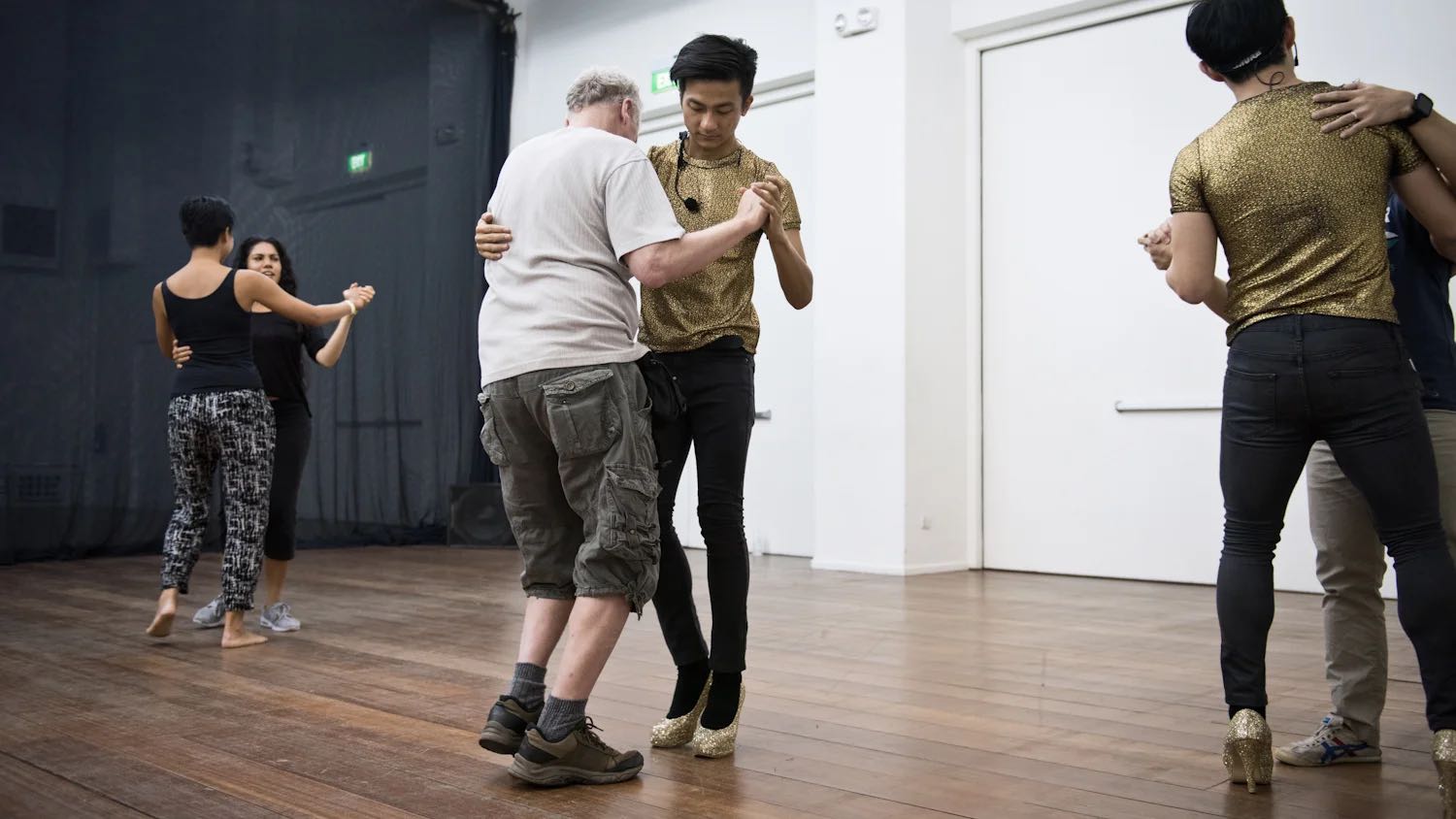
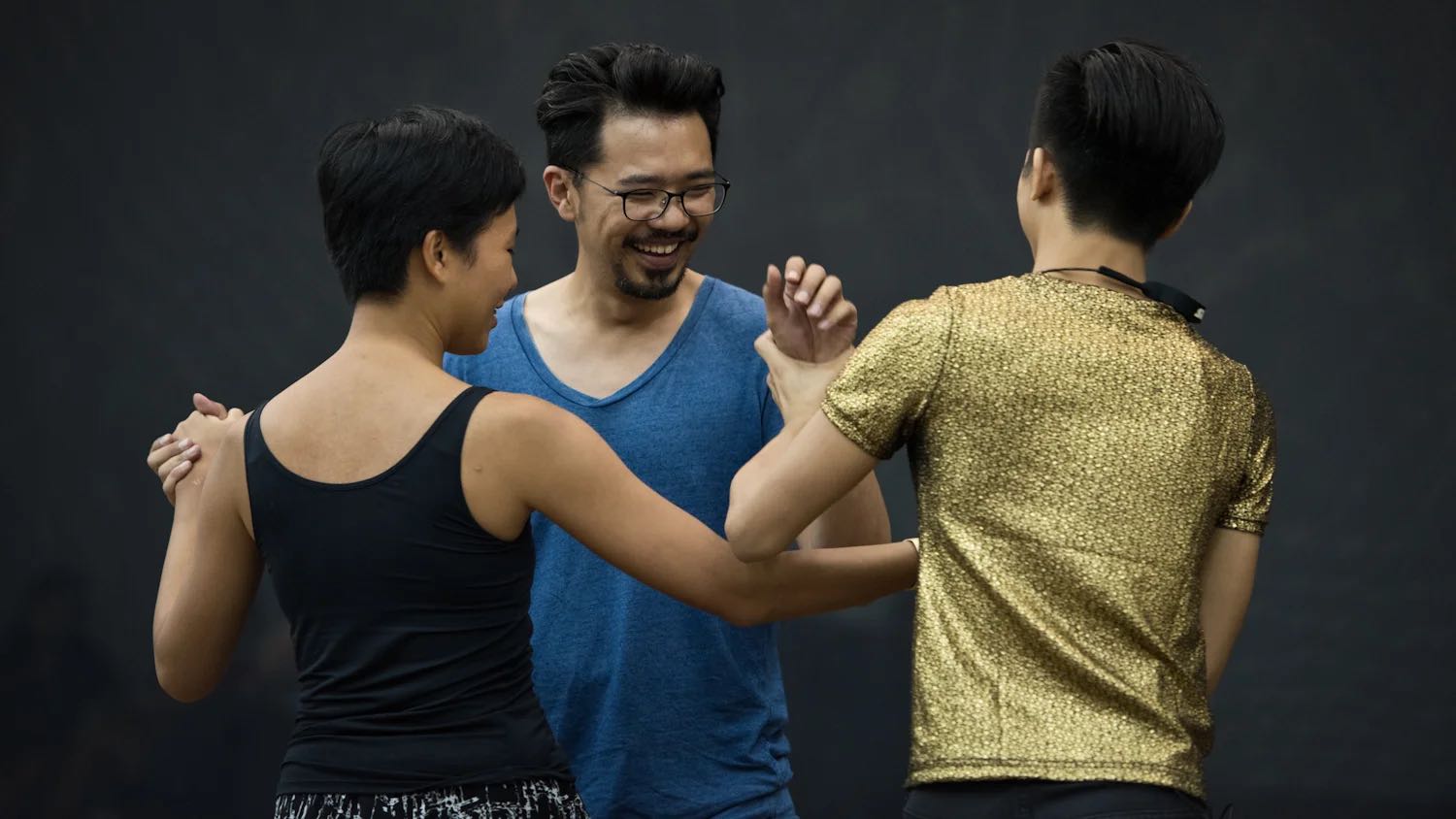
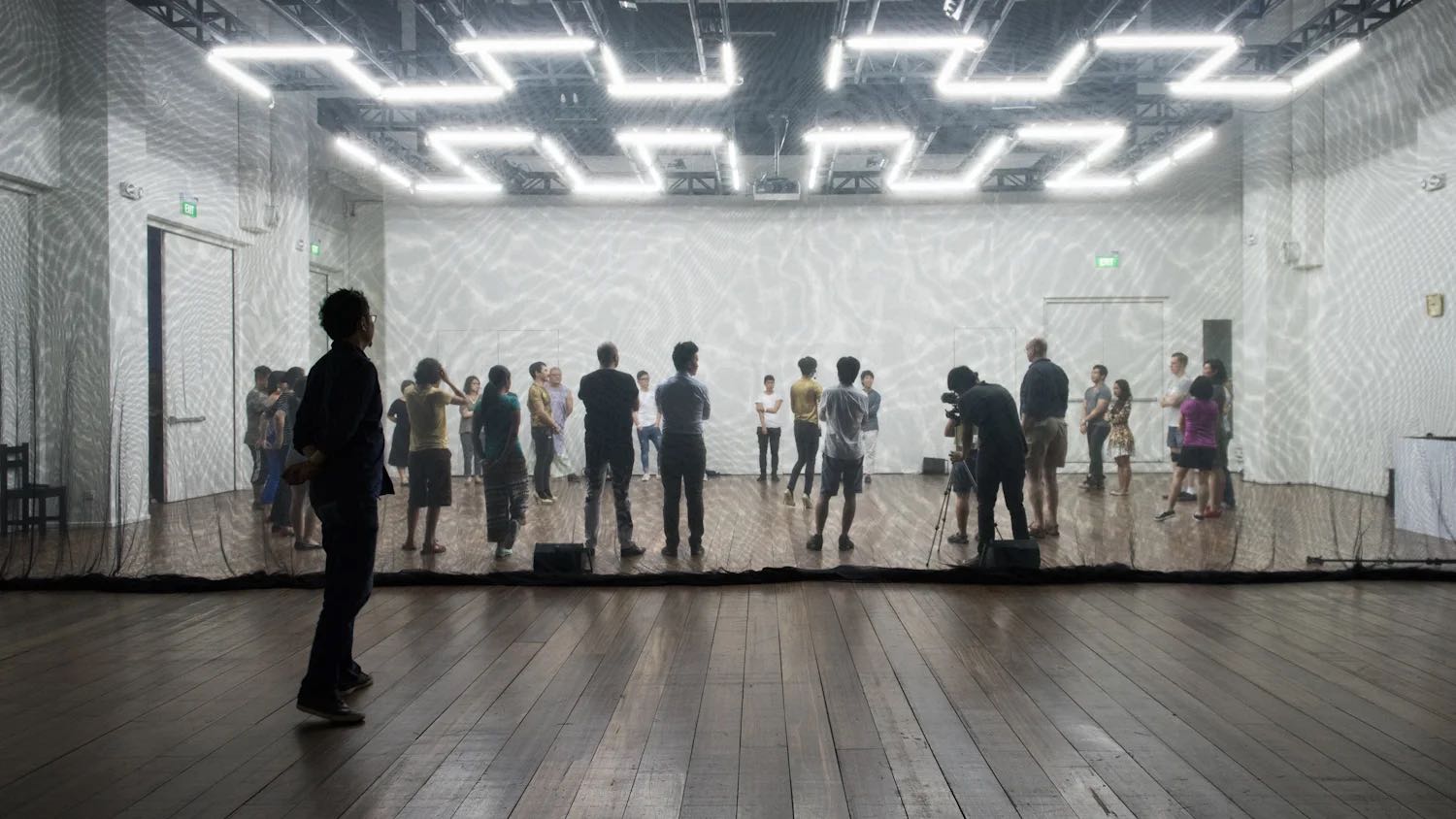
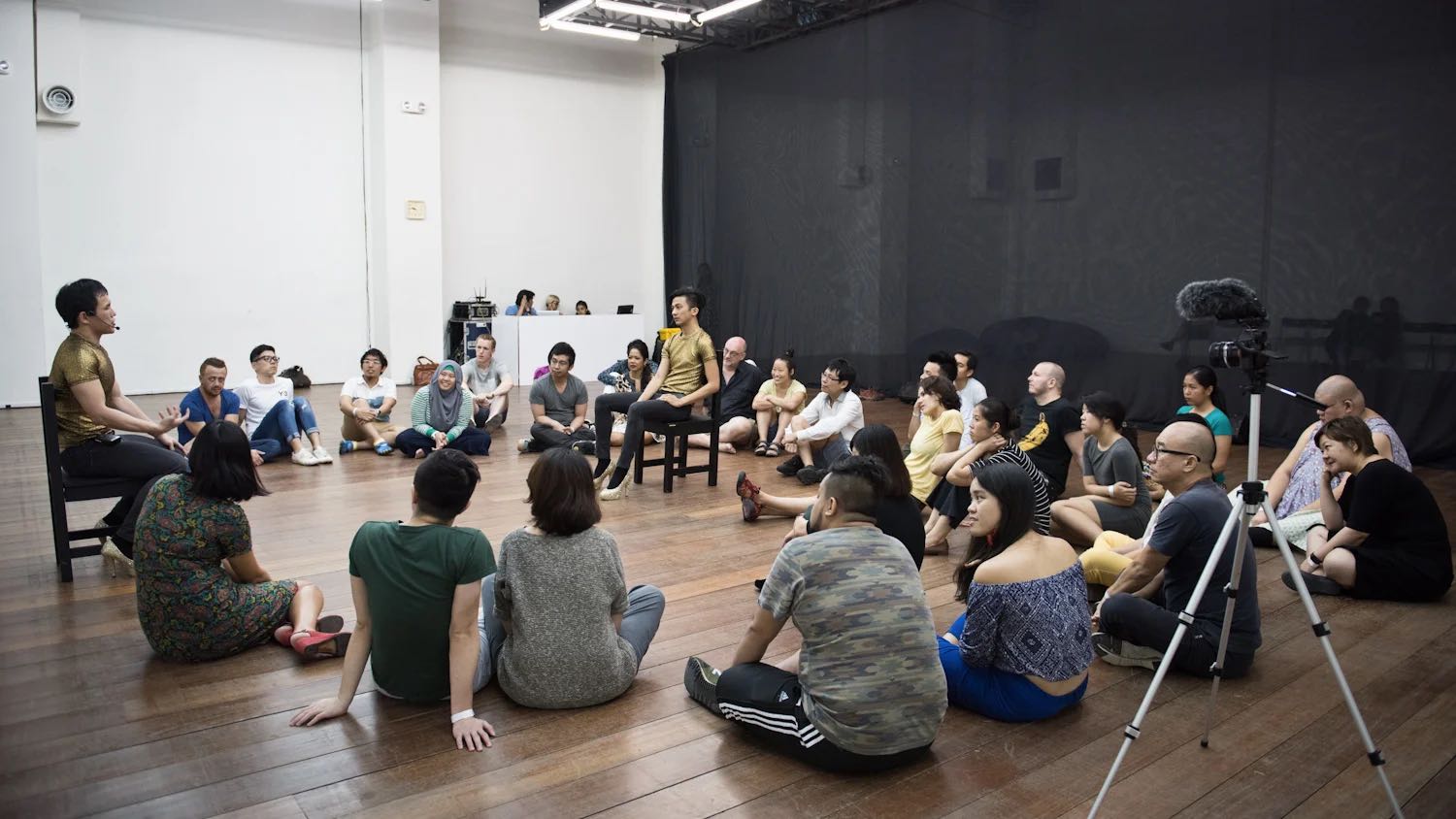
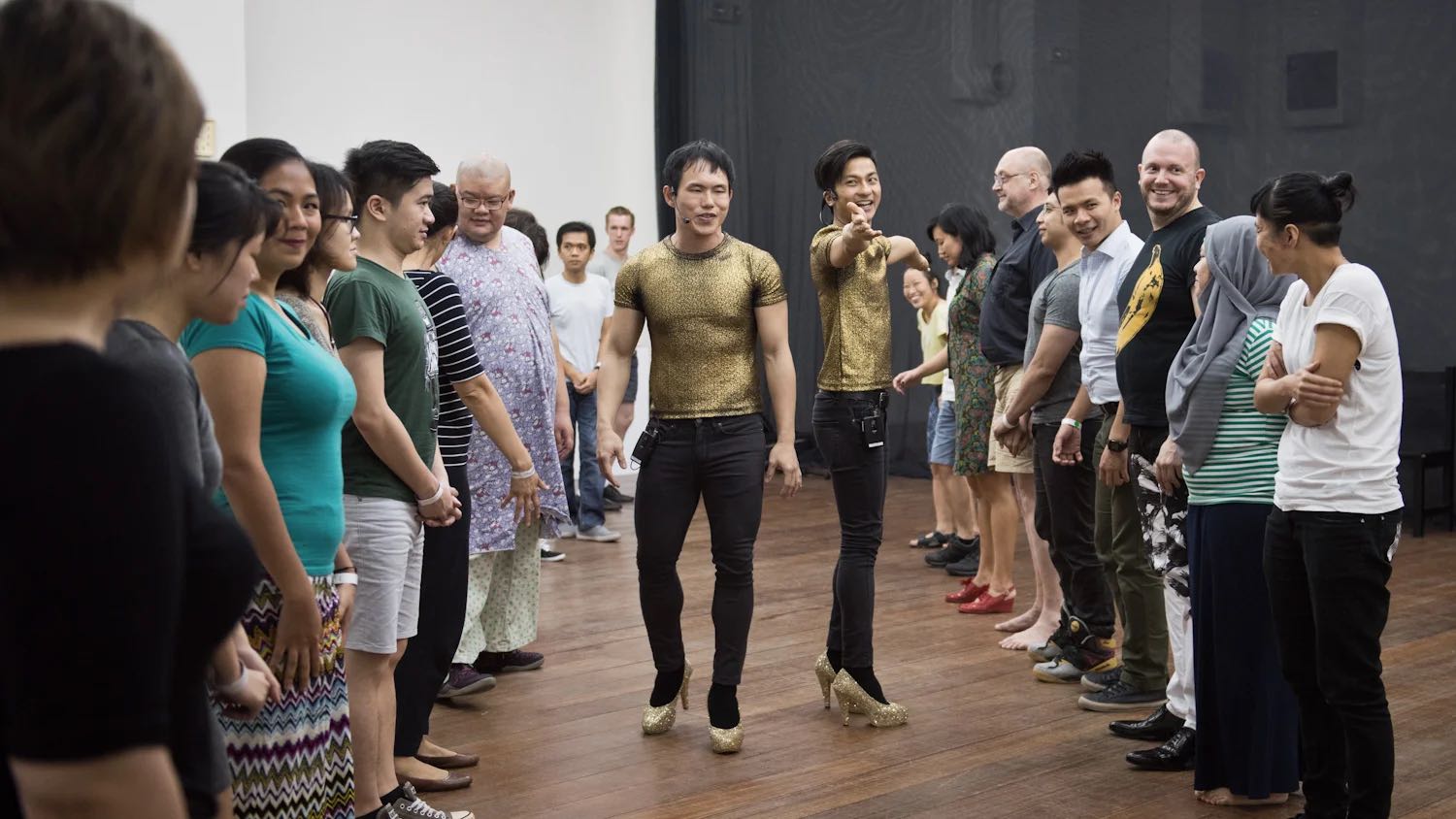
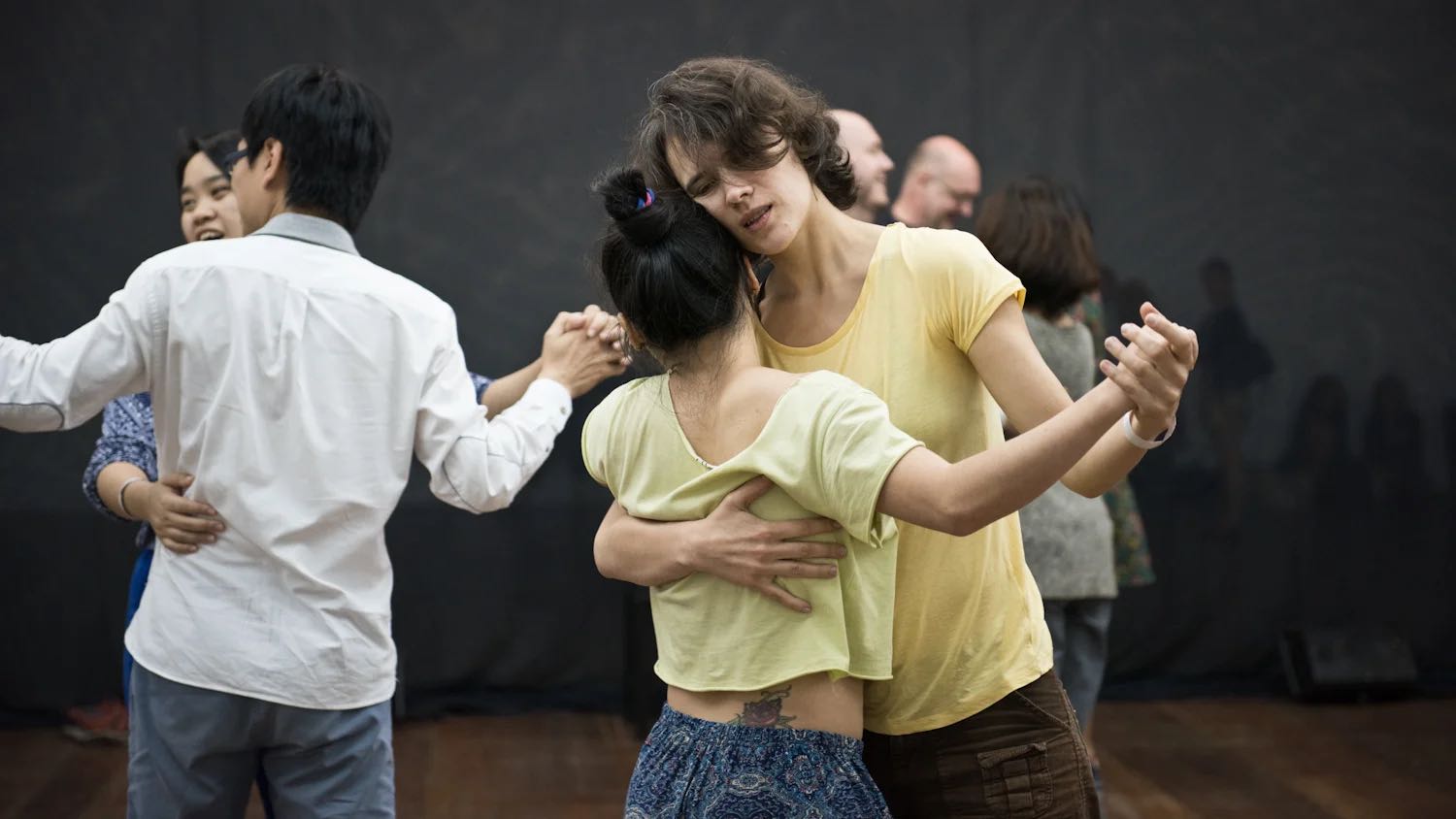
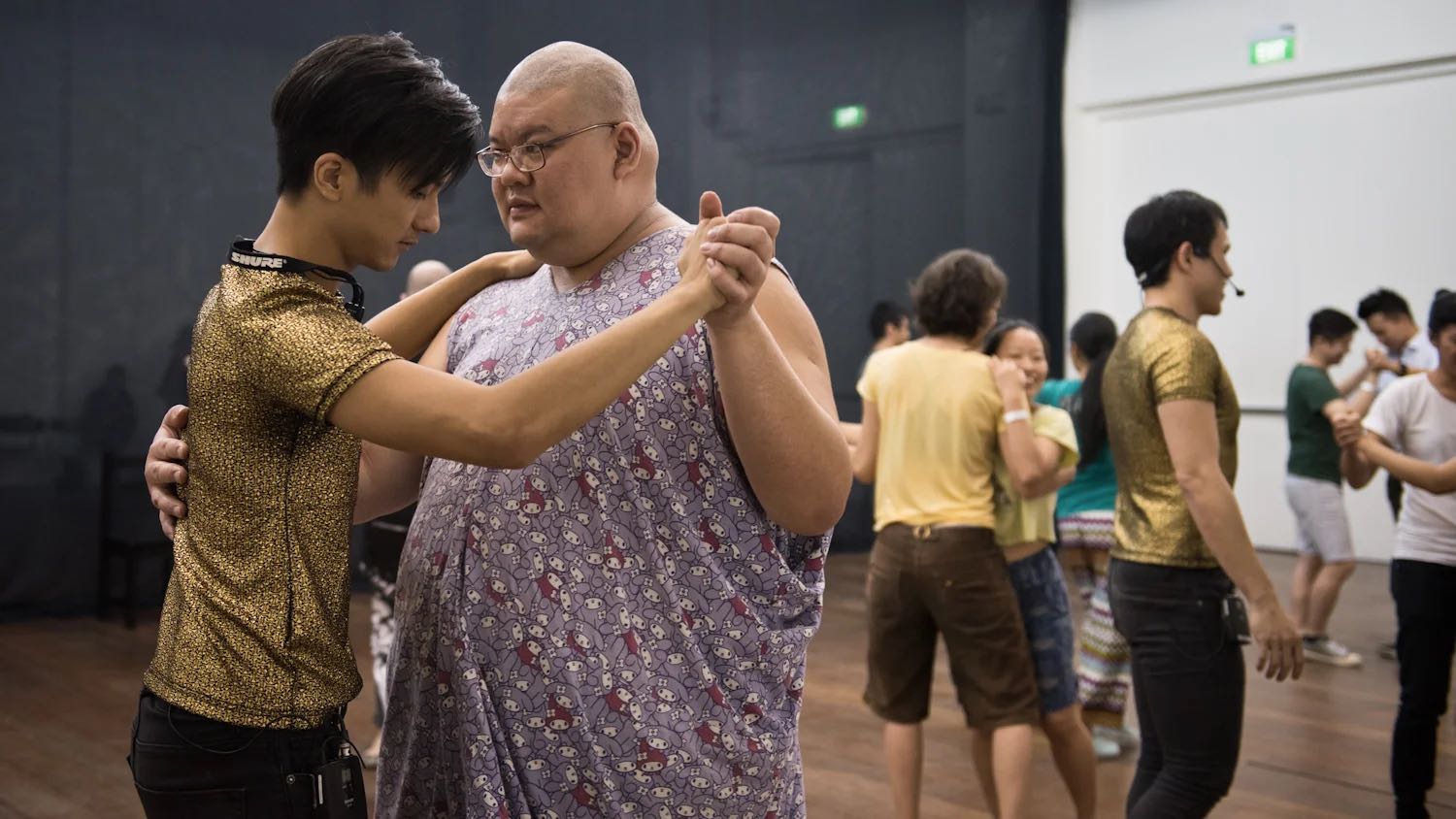
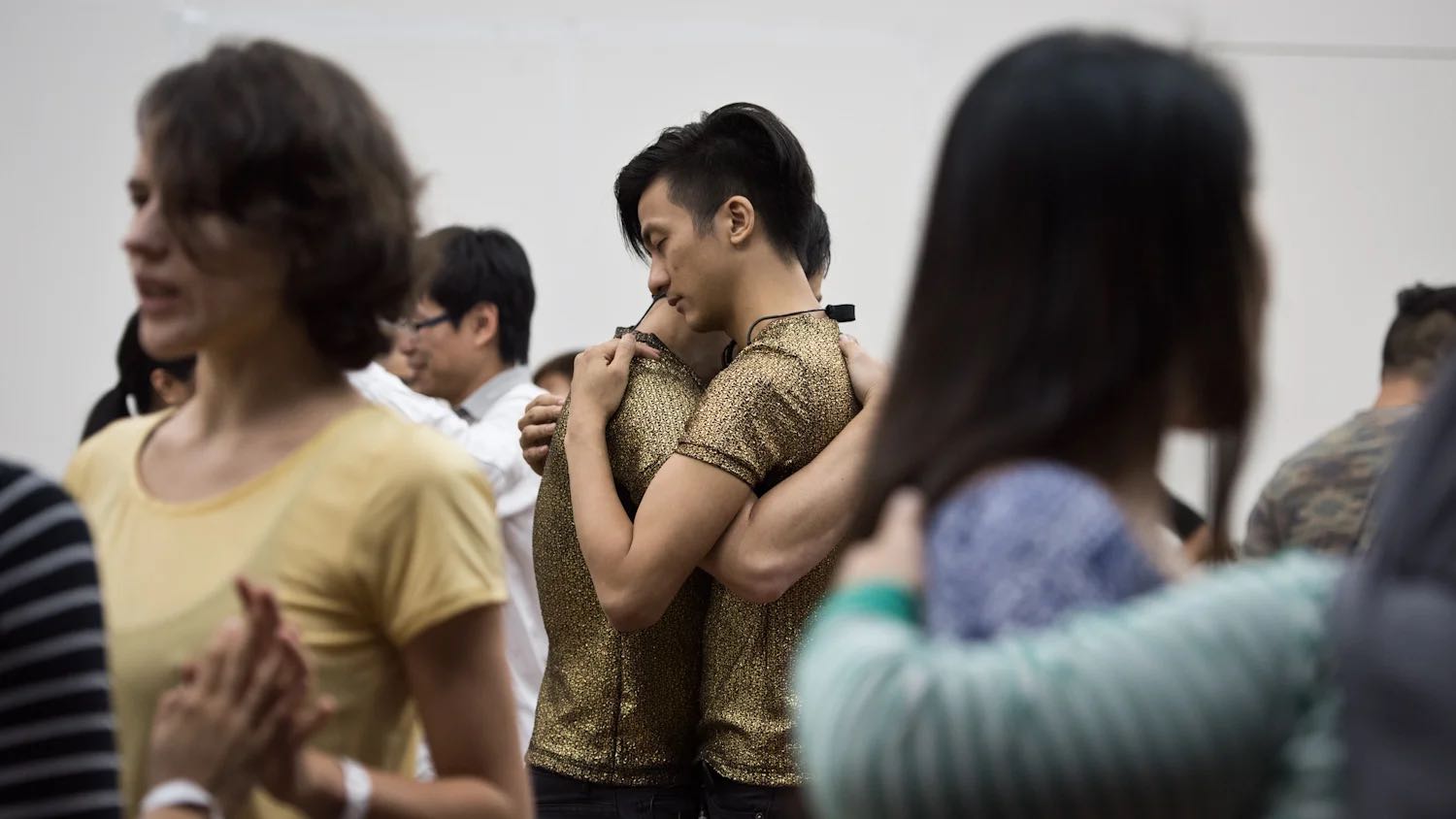
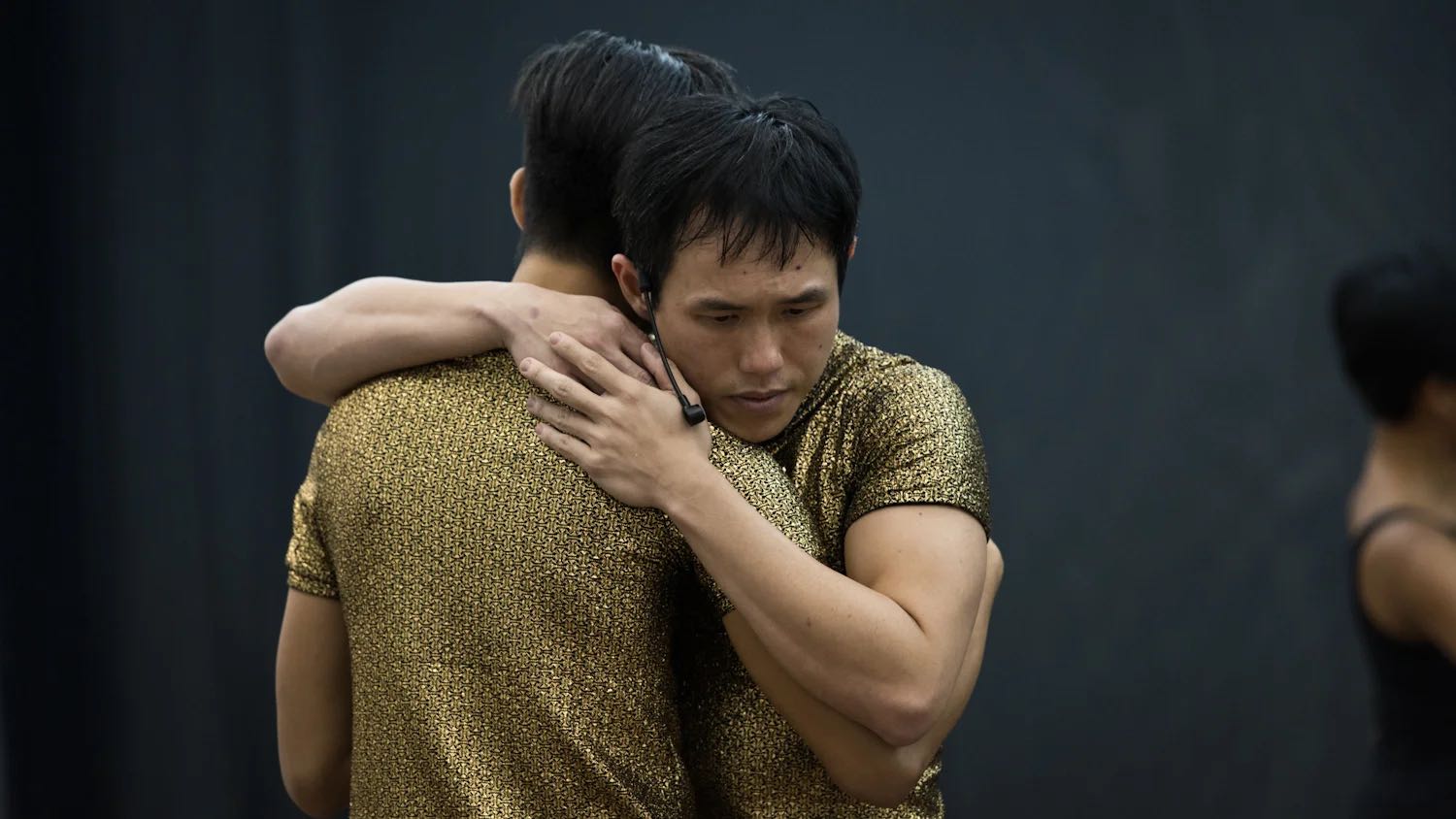
Class III documentation. Photos by Law Kian Yan and Lim Li-Hsien.
My artist statement on 50/50
I have been doing Lindy Hop for more than a third of my life, and I have known many in the Lindy community for an equal amount of time. Despite the many conversations through social dancing, I rarely meet up with the community beyond the dance floor. 50/50 was an opportunity for me to get to know Joanna, Sinclair and Jereh a little better. It was also a platform for us to share our passion for this dance with a larger audience.
Lindy Hop used to be a huge part of my life. I was part of a Lindy Hop performance company, and we would travel for dance camps and competitions. Whenever I visited a foreign country I would seek out and attend social dance evenings for an immediate connection to the local swing dance scene. Recently, my passion for Lindy Hop has taken a backseat to my artistic practice. Even though it is a lesser part of my life for now, I will realize at times how my experience with this social dance has influenced the way I approach movement and dance.
A number of people have questioned me about the performance format, which took the form of a series of dance classes. Lindy Hop is about a conversation between two people, a call and a response. A class format allowed us to move and physicalize this knowledge, information that we often are more comfortable passively receiving. I understand it is a demanding commitment on the part of the audience, but I wanted to replicate the experience of how I fell in love with this dance, through a series of dance classes very much like this. It was not love at first sight, and Lindy Hop does have a very steep learning curve. It is important for me to create an environment where one can sit with the imparted knowledge over an extended period of time.
Another aspect I hope to investigate with these series of classes is how we approach and disseminate information about movement and dance. A consistent question I have posed to all three collaborators while we were designing these classes is to find an alternative way to teach this dance. We wanted to work with the quality of movement instead of the quantity of information imparted.
This journey has been a challenging experience of self-discovery. All three collaborators serve as a mirror to reflect upon my own thoughts about Lindy Hop. I hope this series of classes will not only trigger your interest in the dance, but would similarly serve as a mirror for you to challenge your own preconceived notions of what, why and how we move.
Cane (2012)
- Performance lecture and reenactment
- 19 February 2012, 8pm
- The Substation Theatre, Singapore
- Presented as a Fringe Highlight for M1-Singapore Fringe Festival 2012
- Performed and conceptualized by me
- Performance documentation by Lim Teck Siang and Samantha Tio
- Production and Lighting Design by Kimberly Kwa
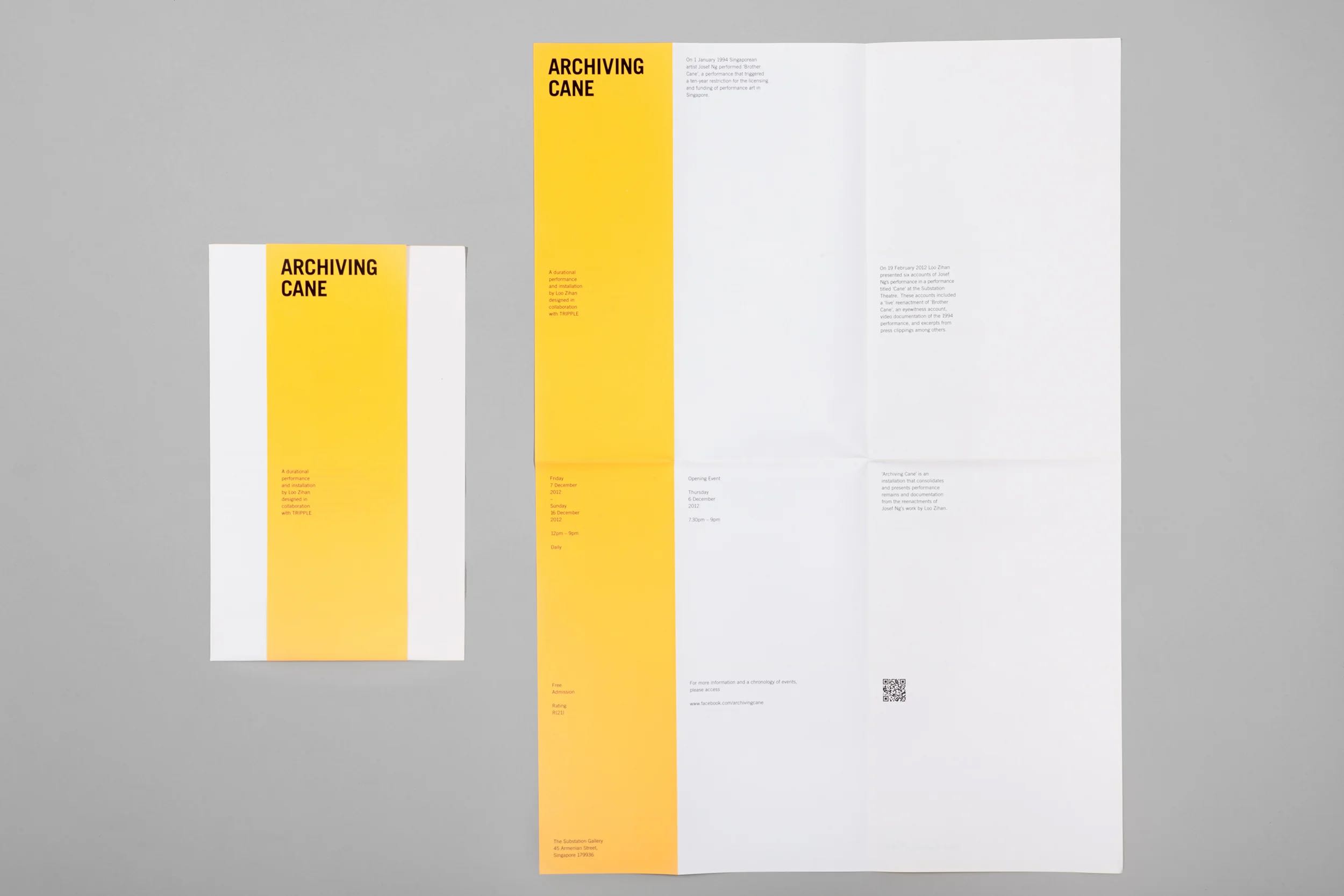
In the early hours of 1 January 1994, Singaporean artist Josef Ng’s performance of Brother Cane resulted in a public debate over obscenity in performance art and led to a ten-year restriction of the licensing and funding of performance art in Singapore from 1994 to 2004. Josef Ng was charged in a court of law for committing an obscene act and pleaded guilty. He was fined S$1,000.
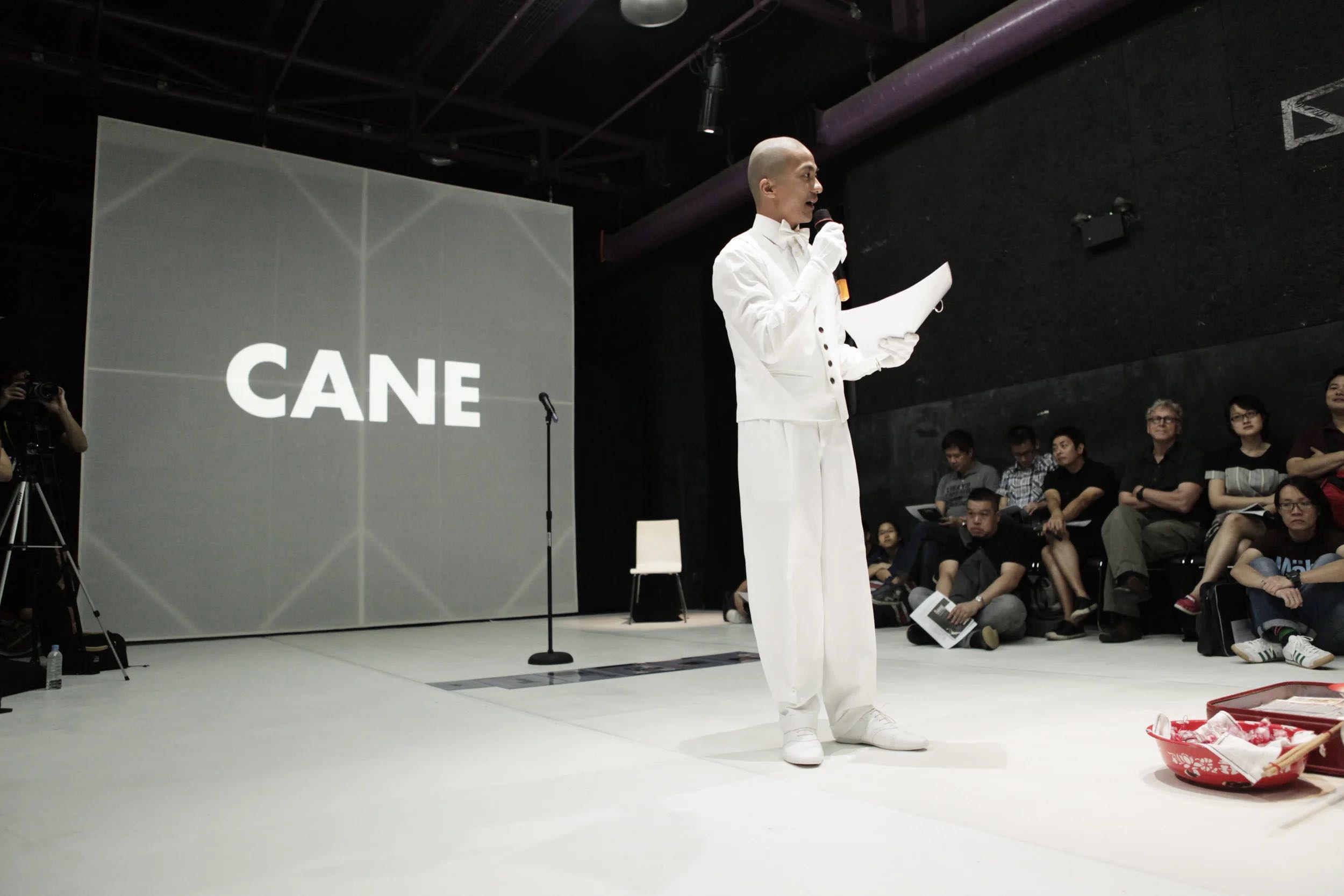
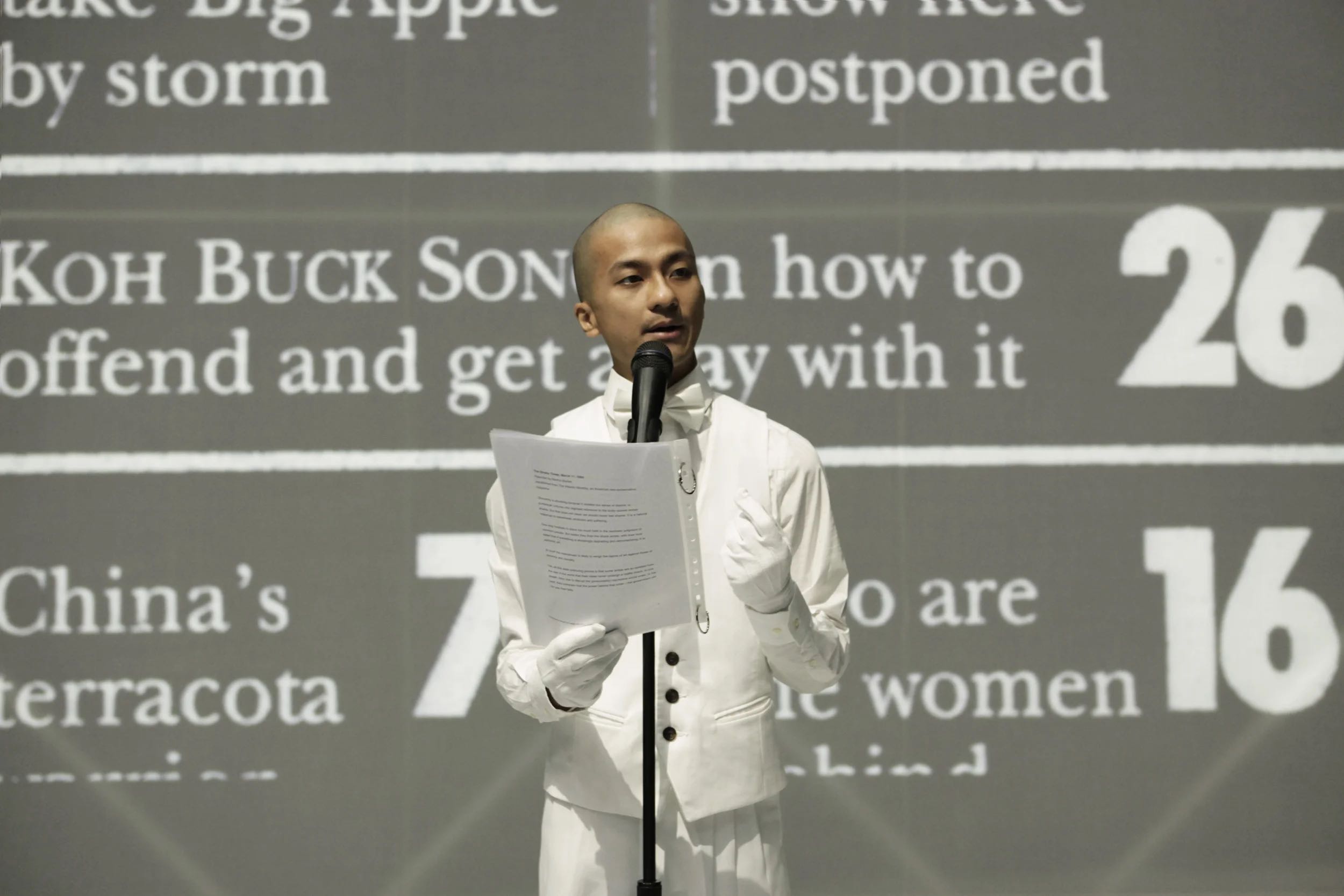
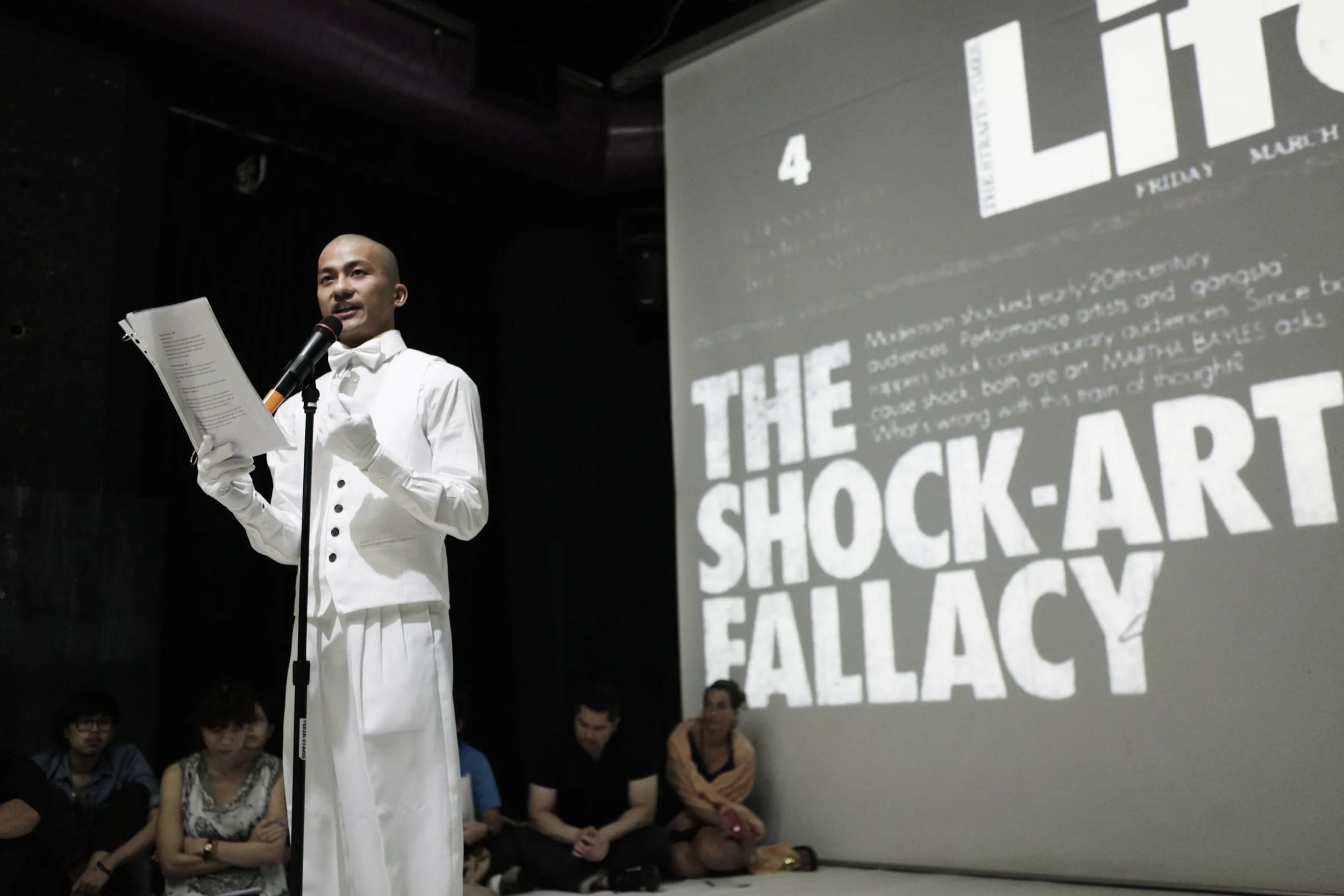
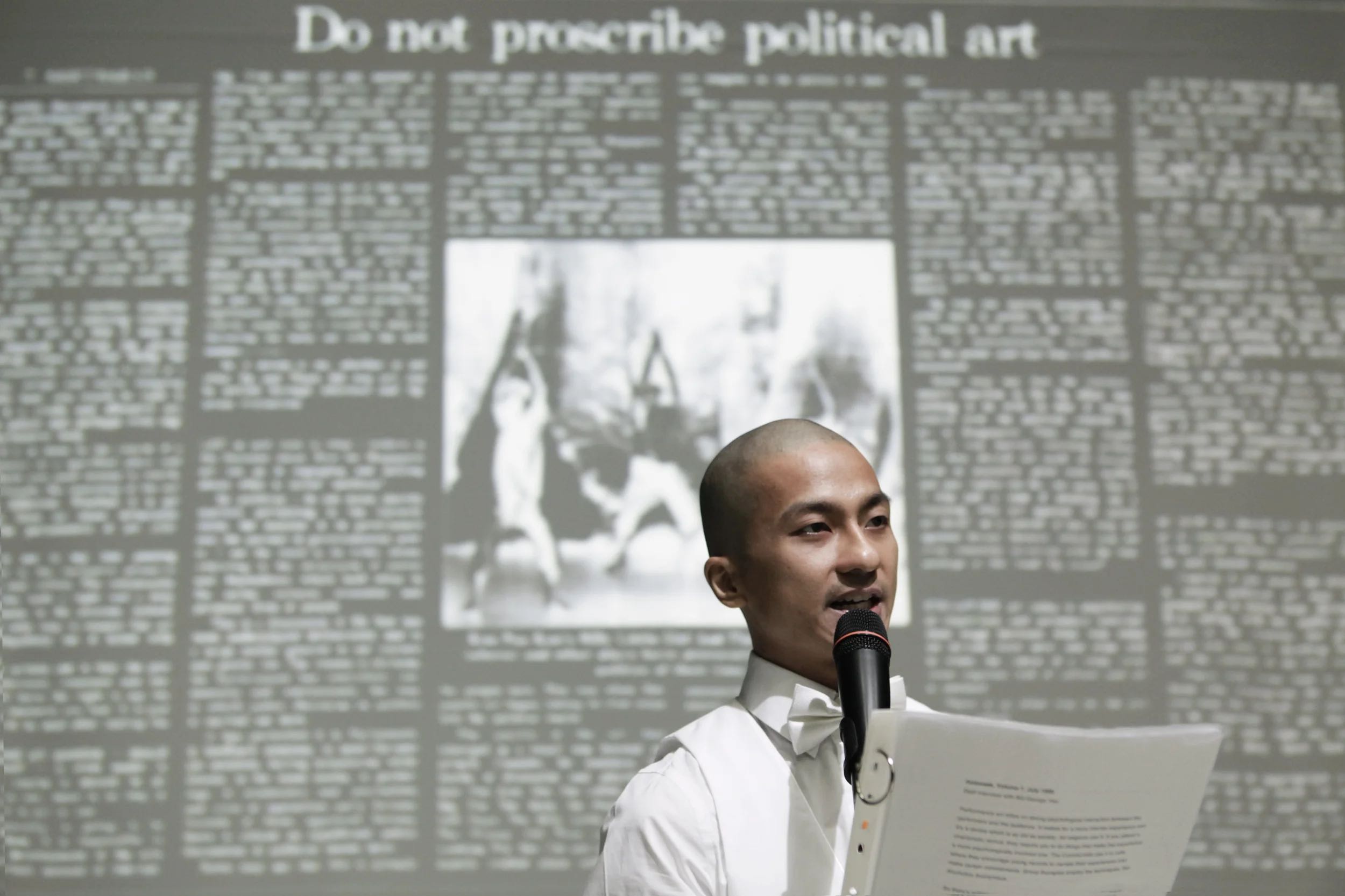
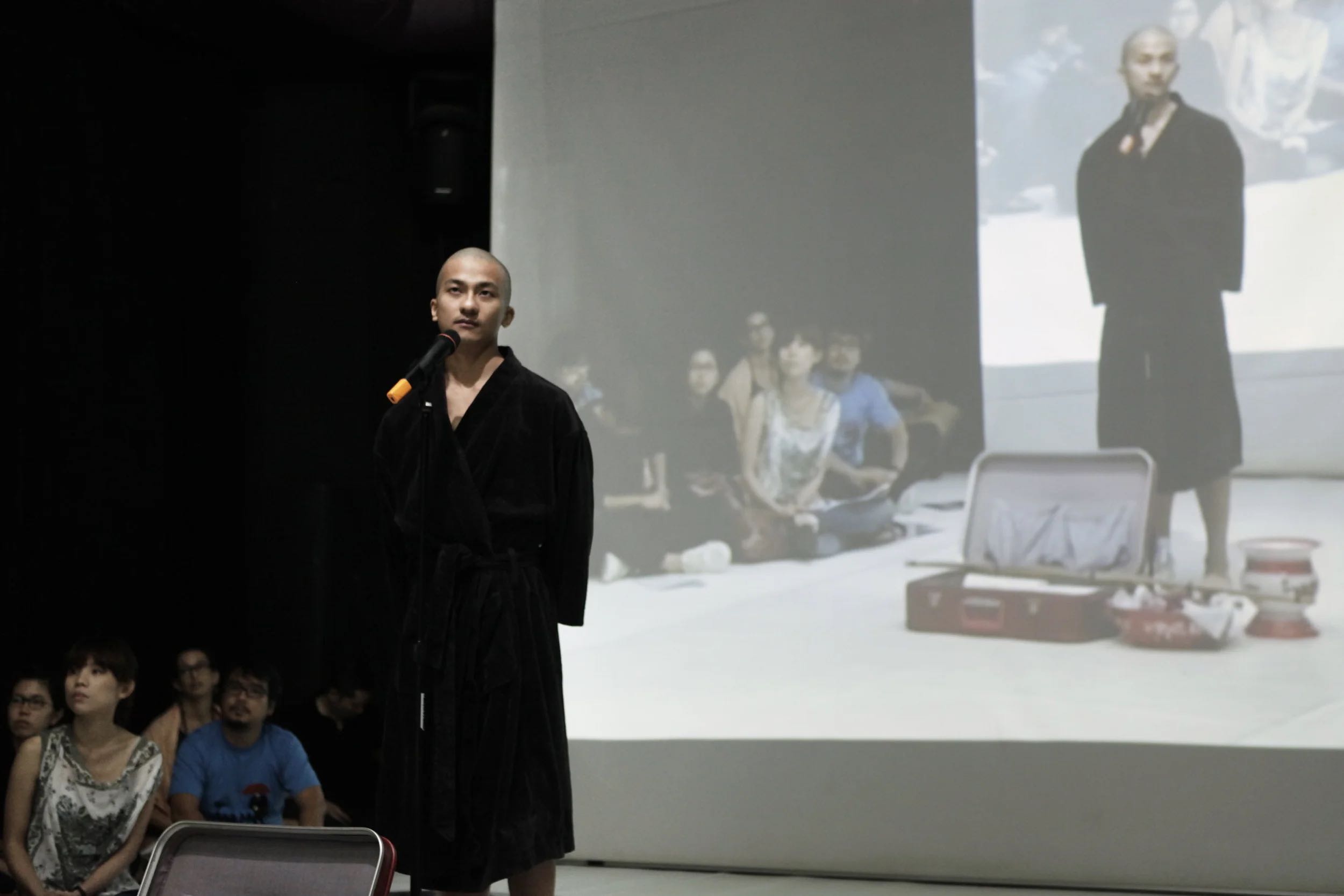
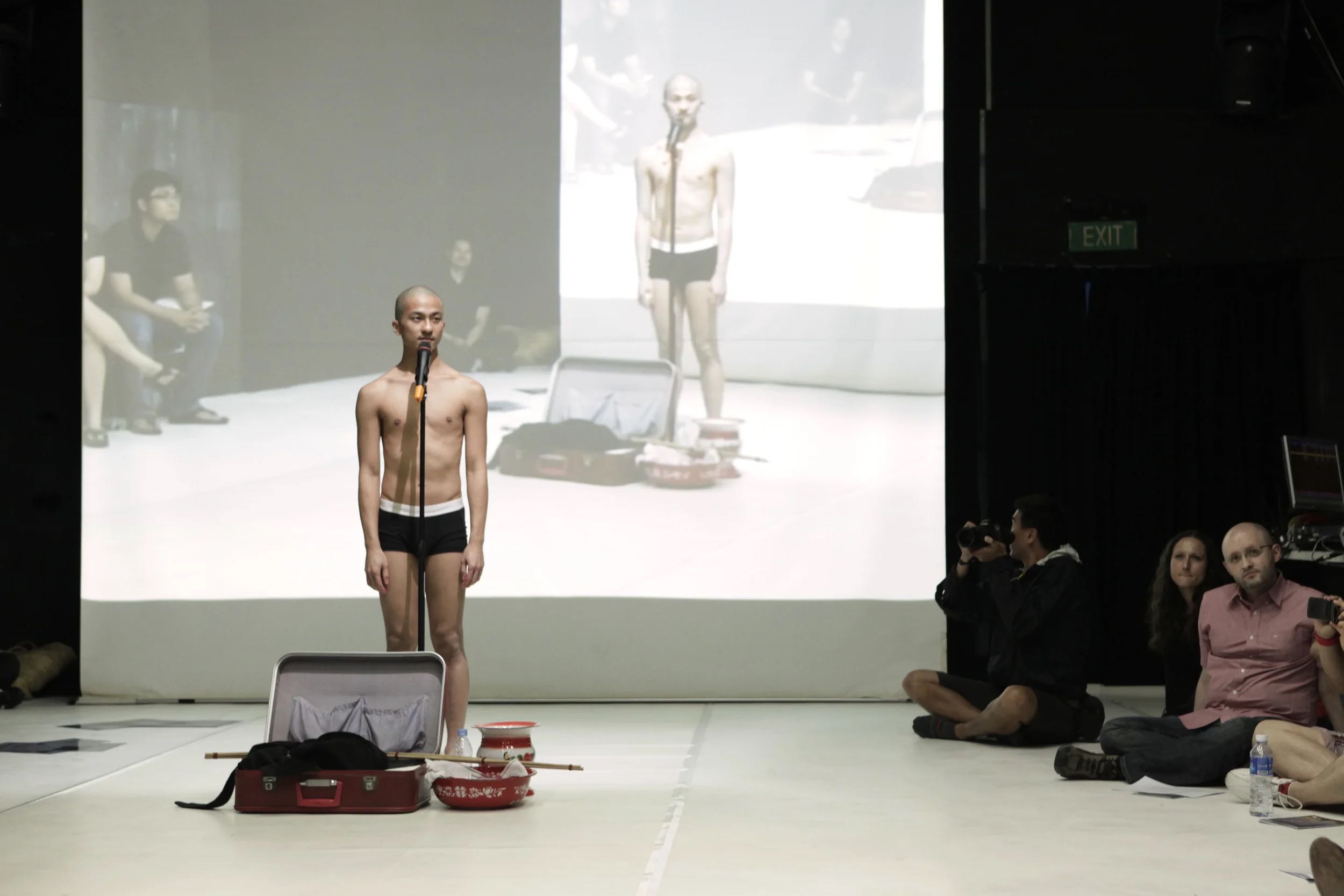
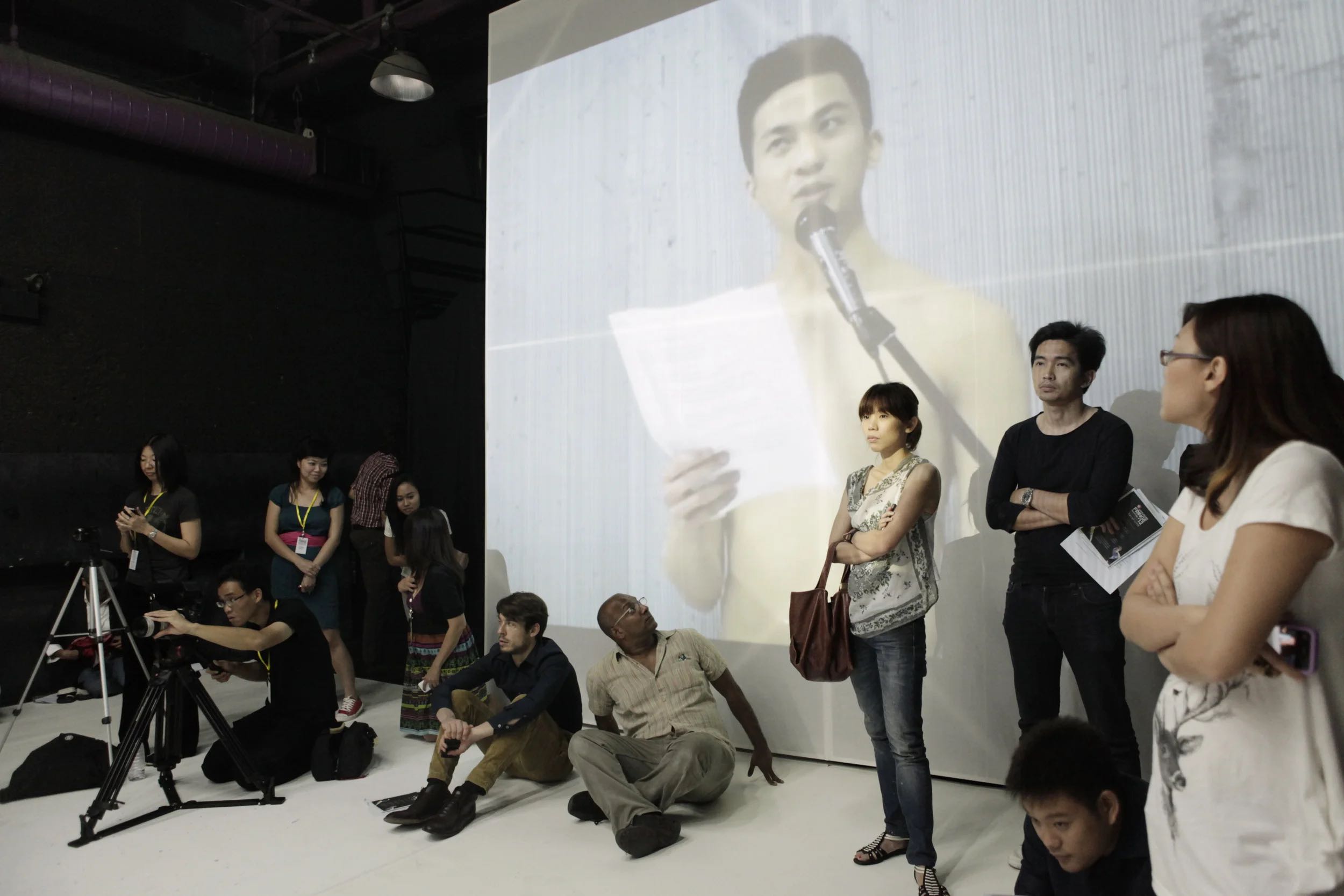
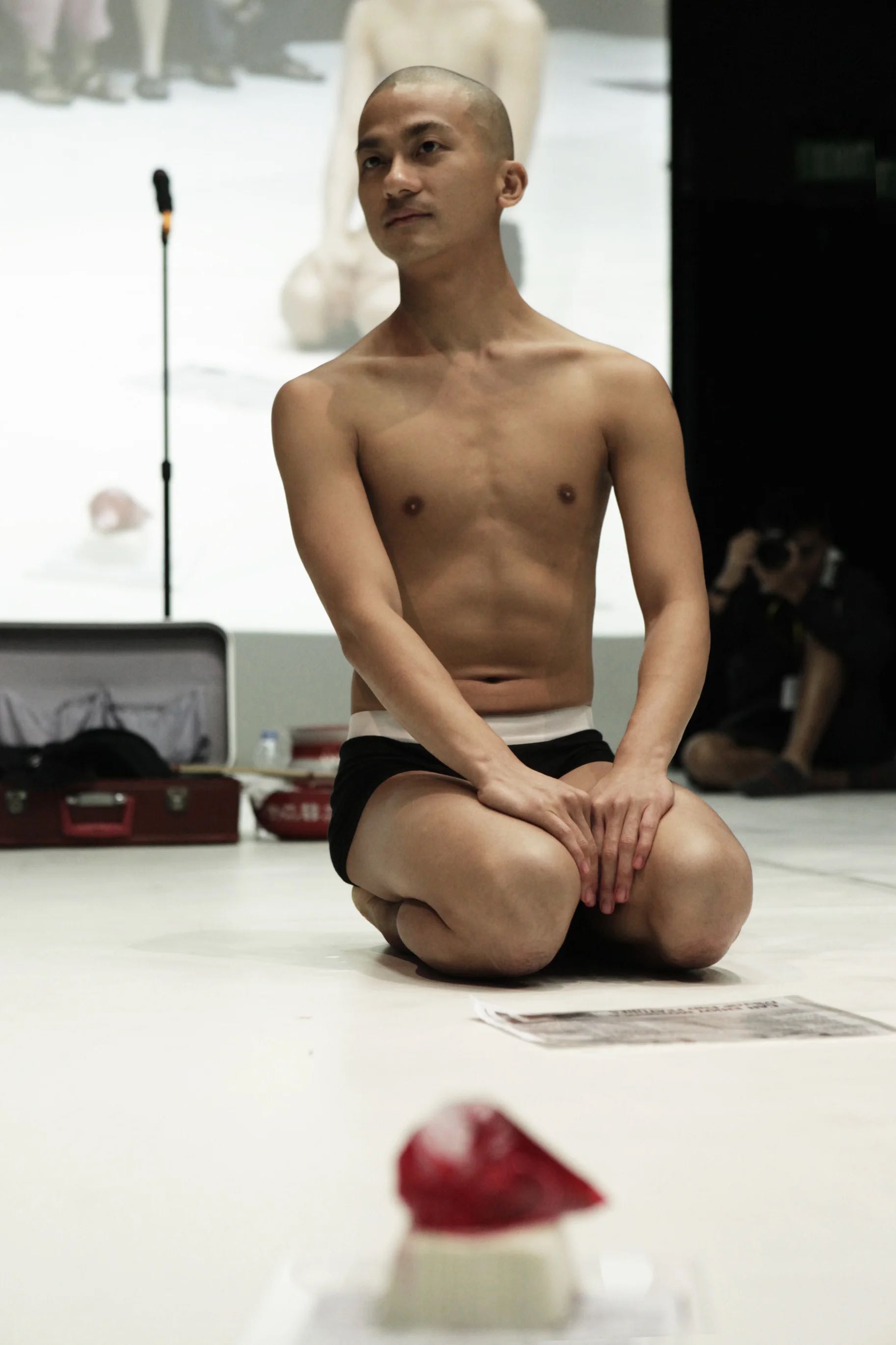
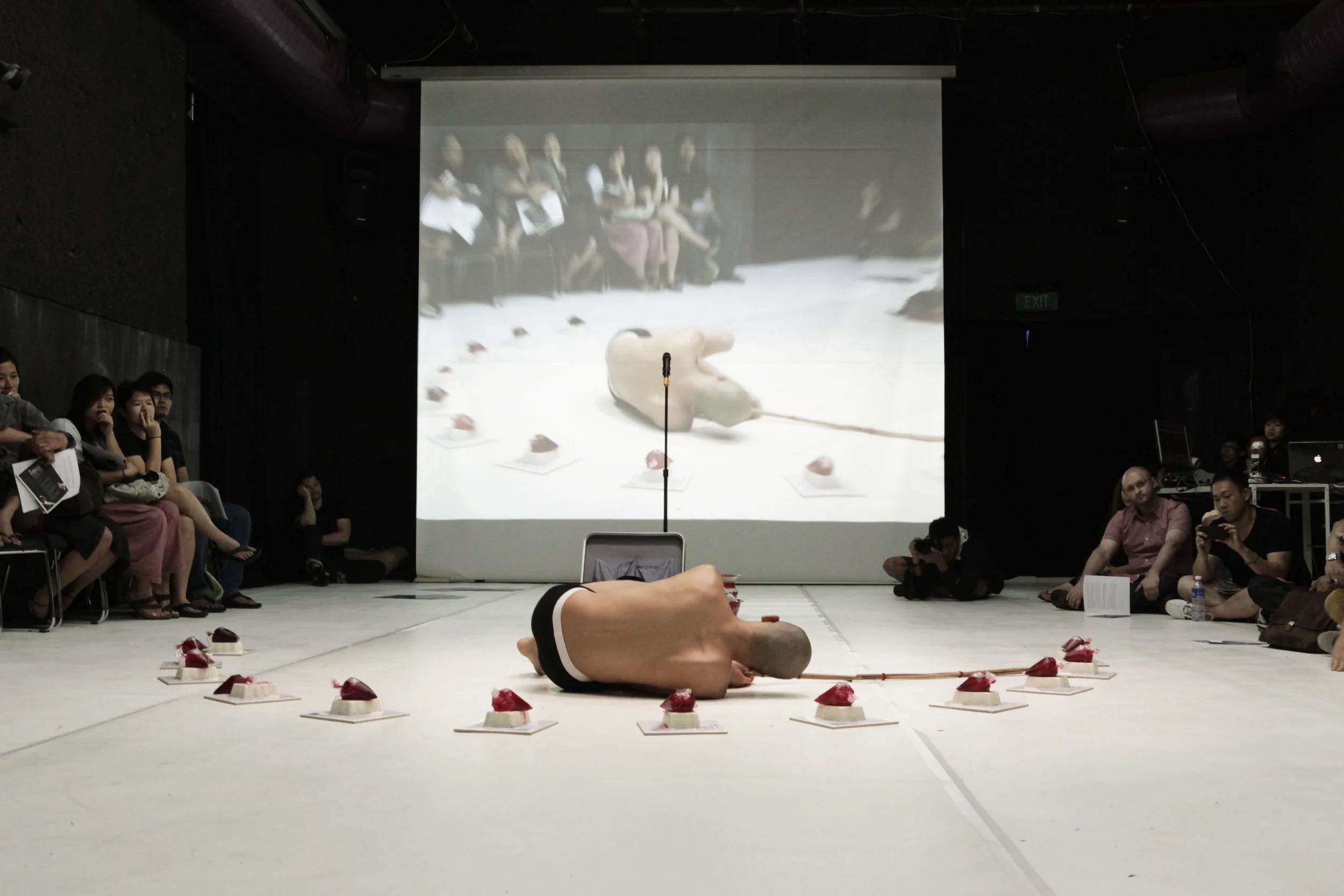
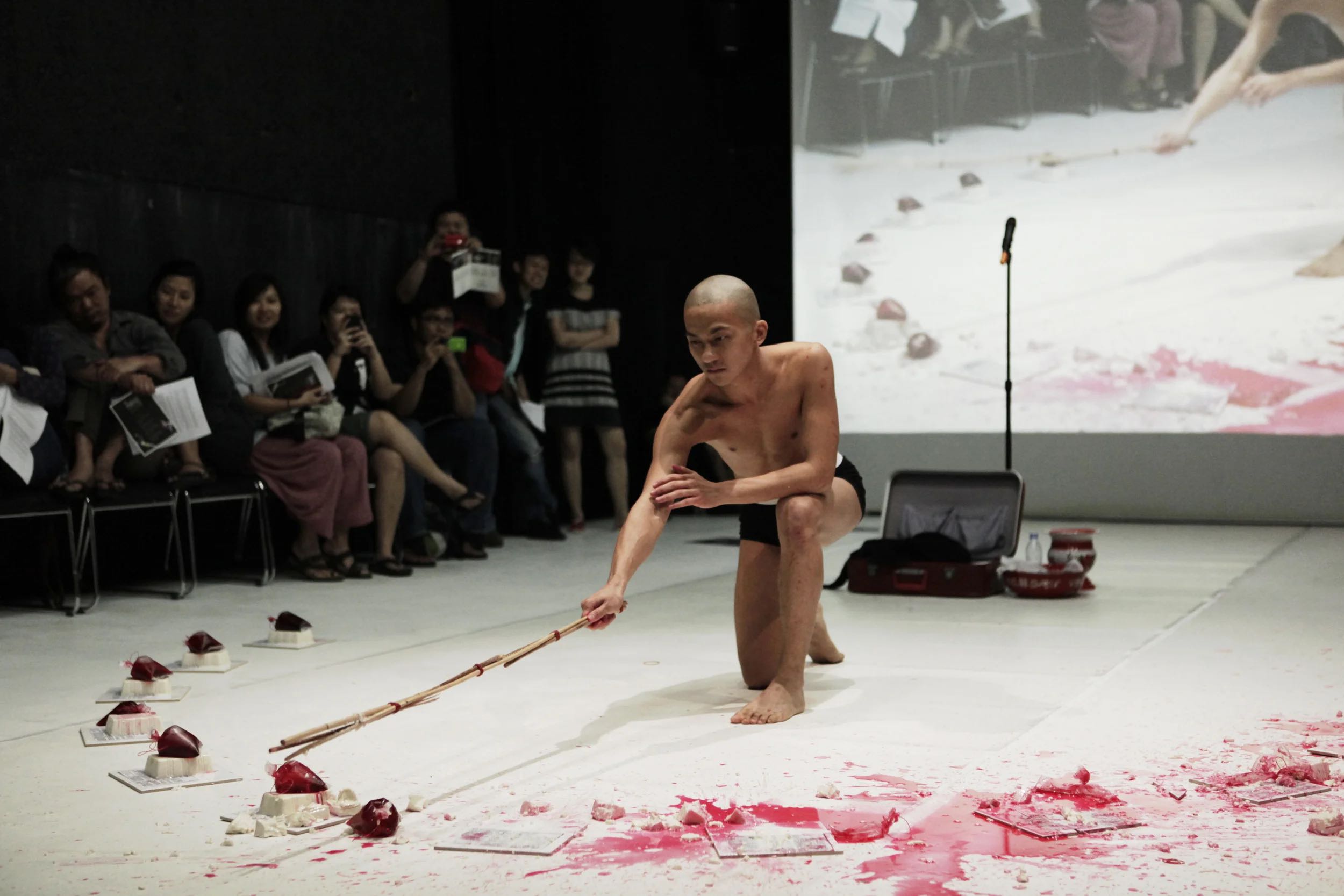
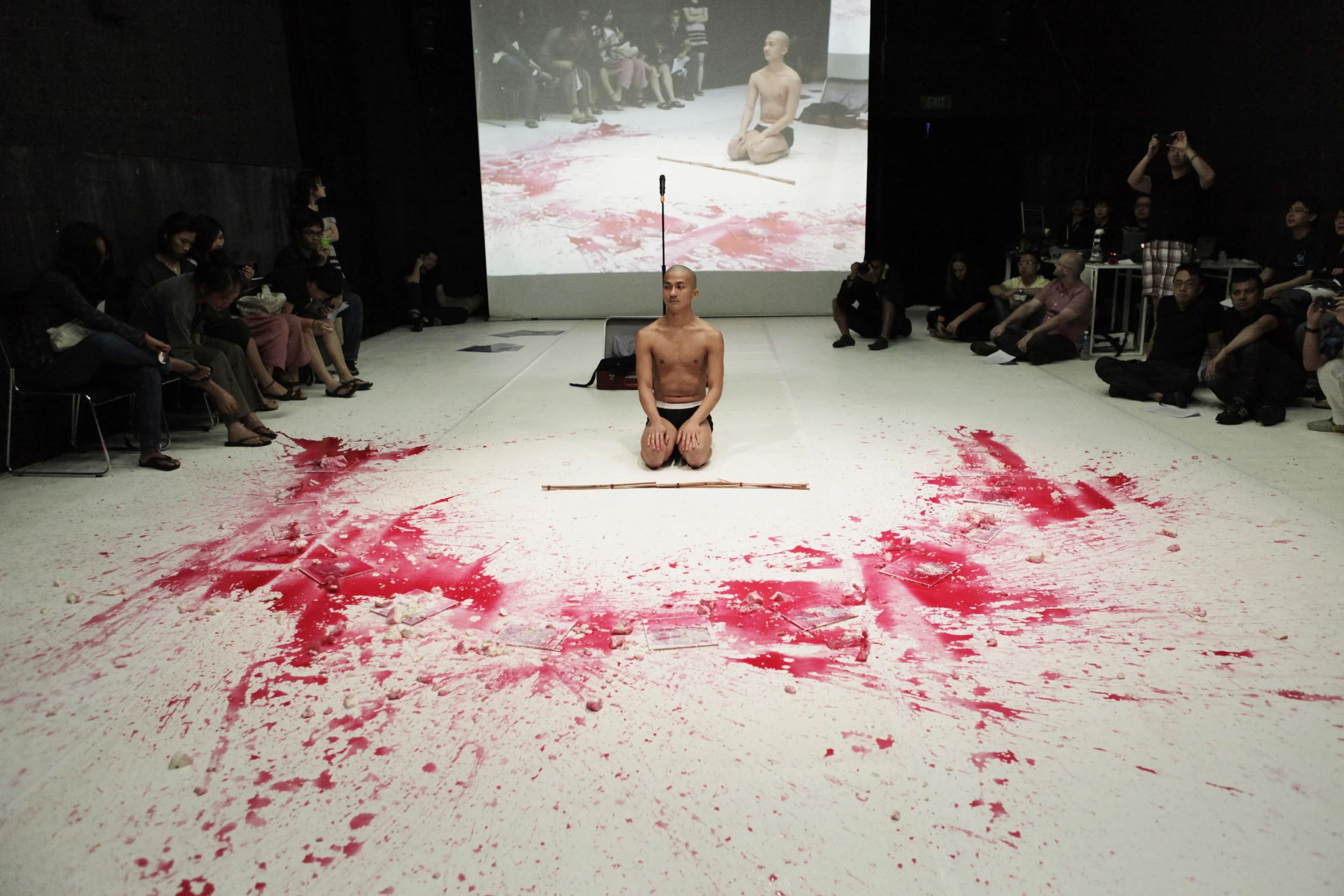
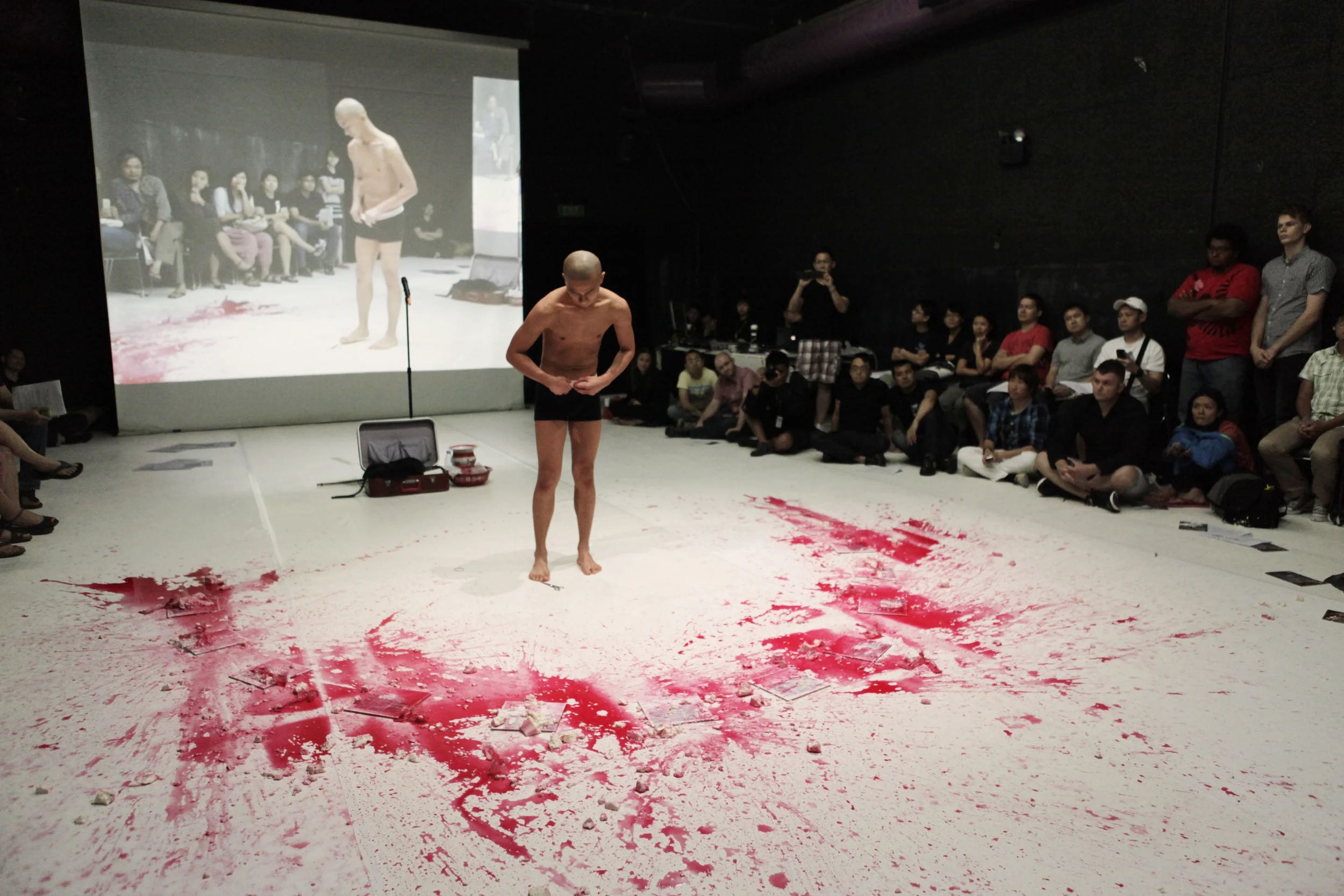
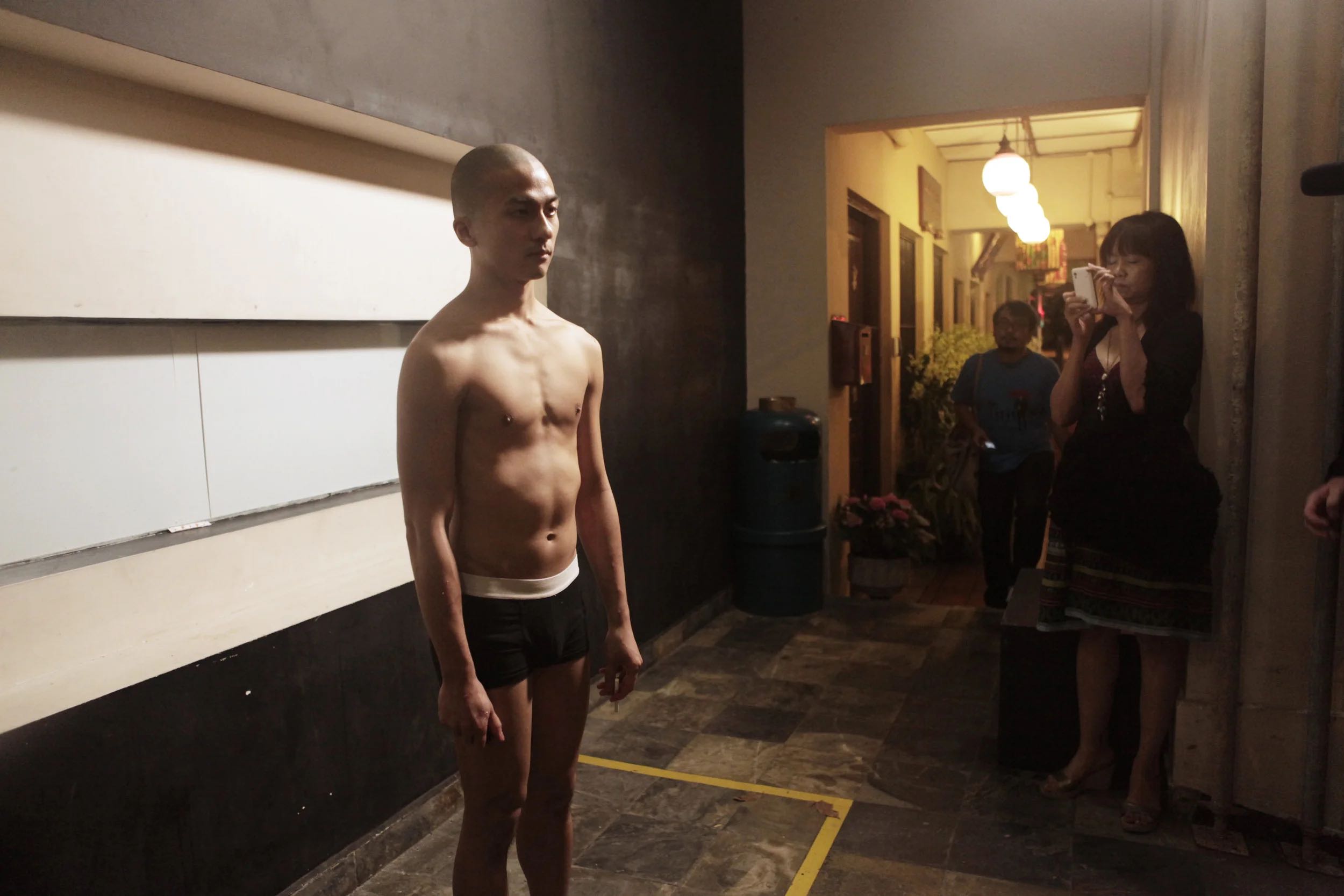
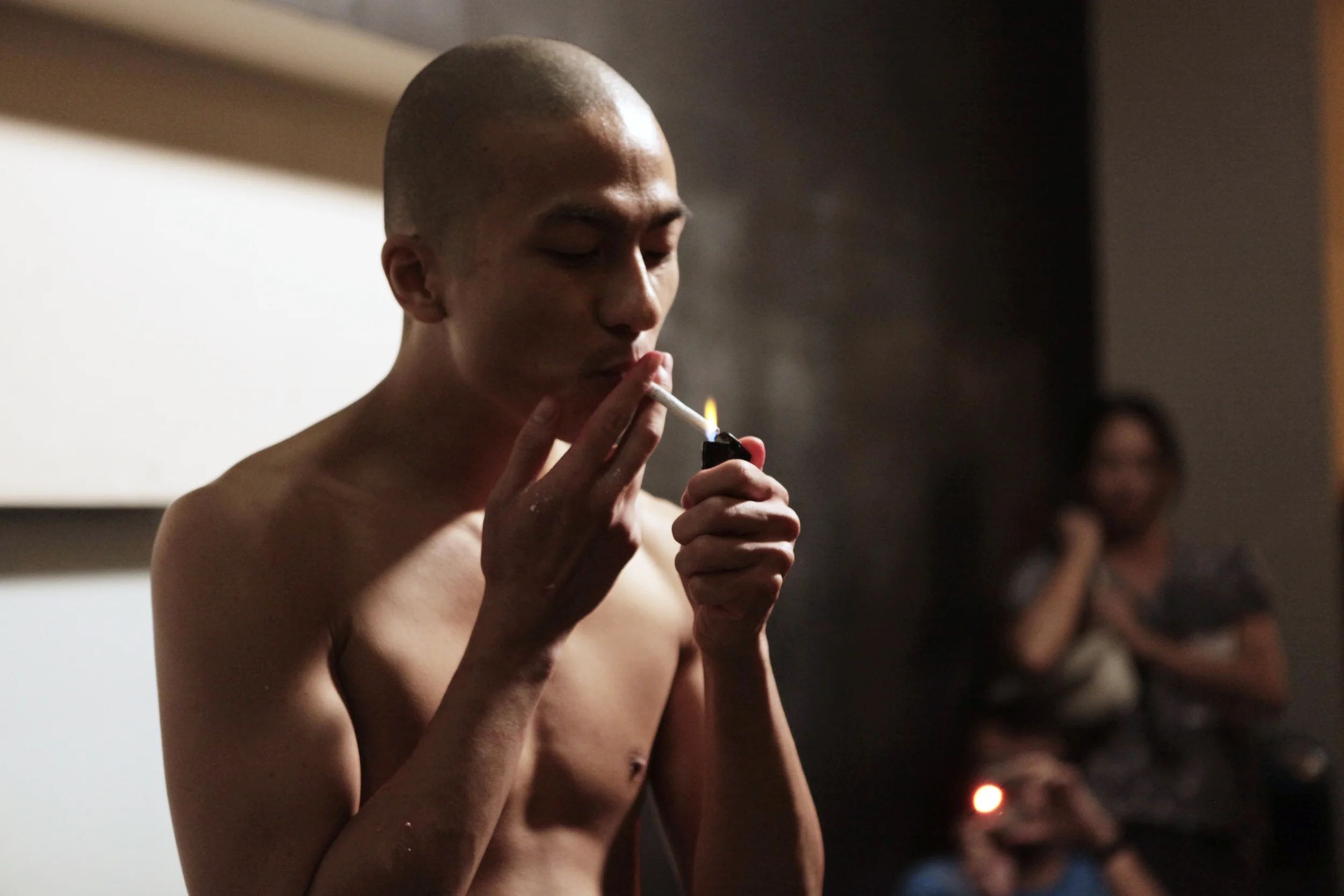
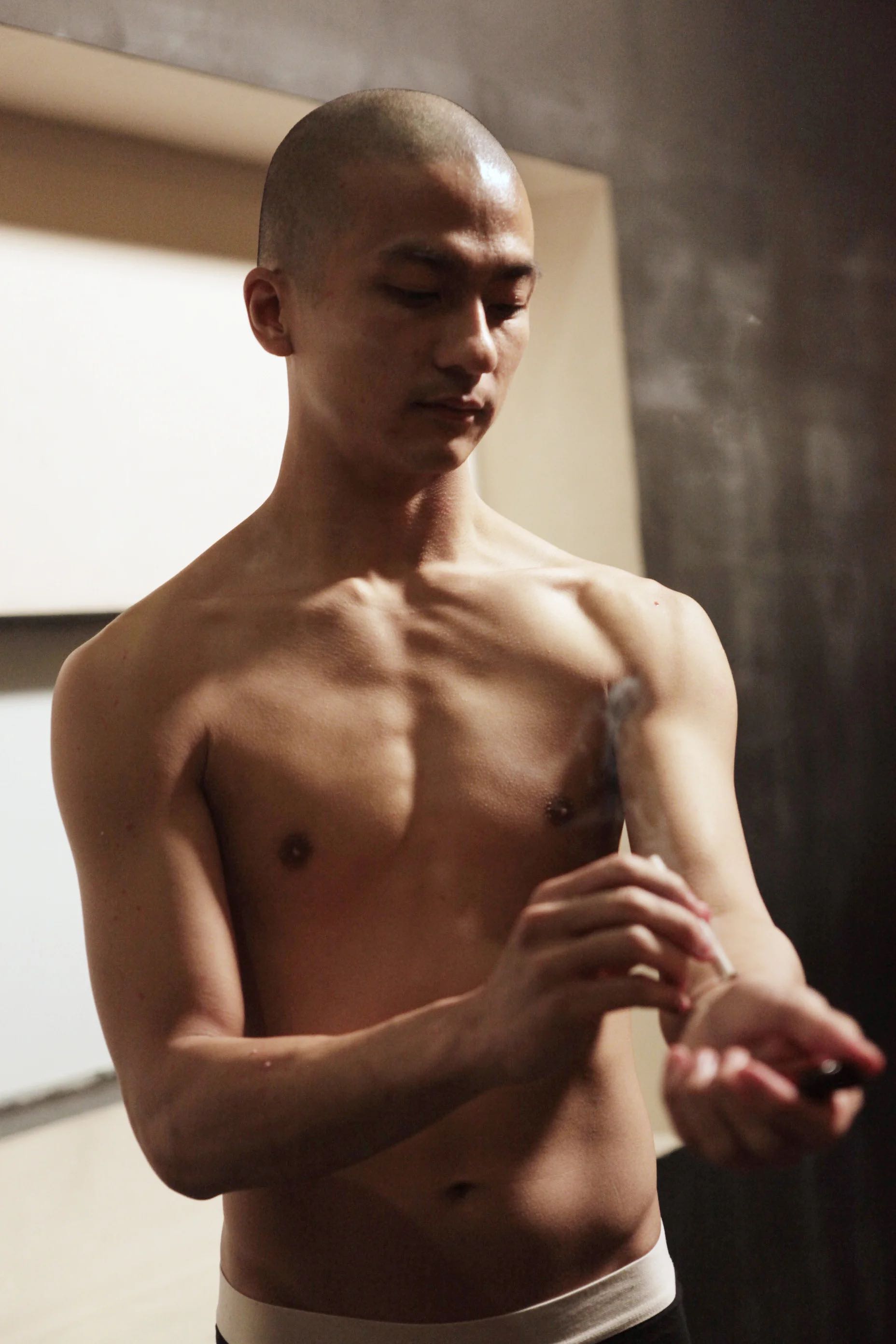
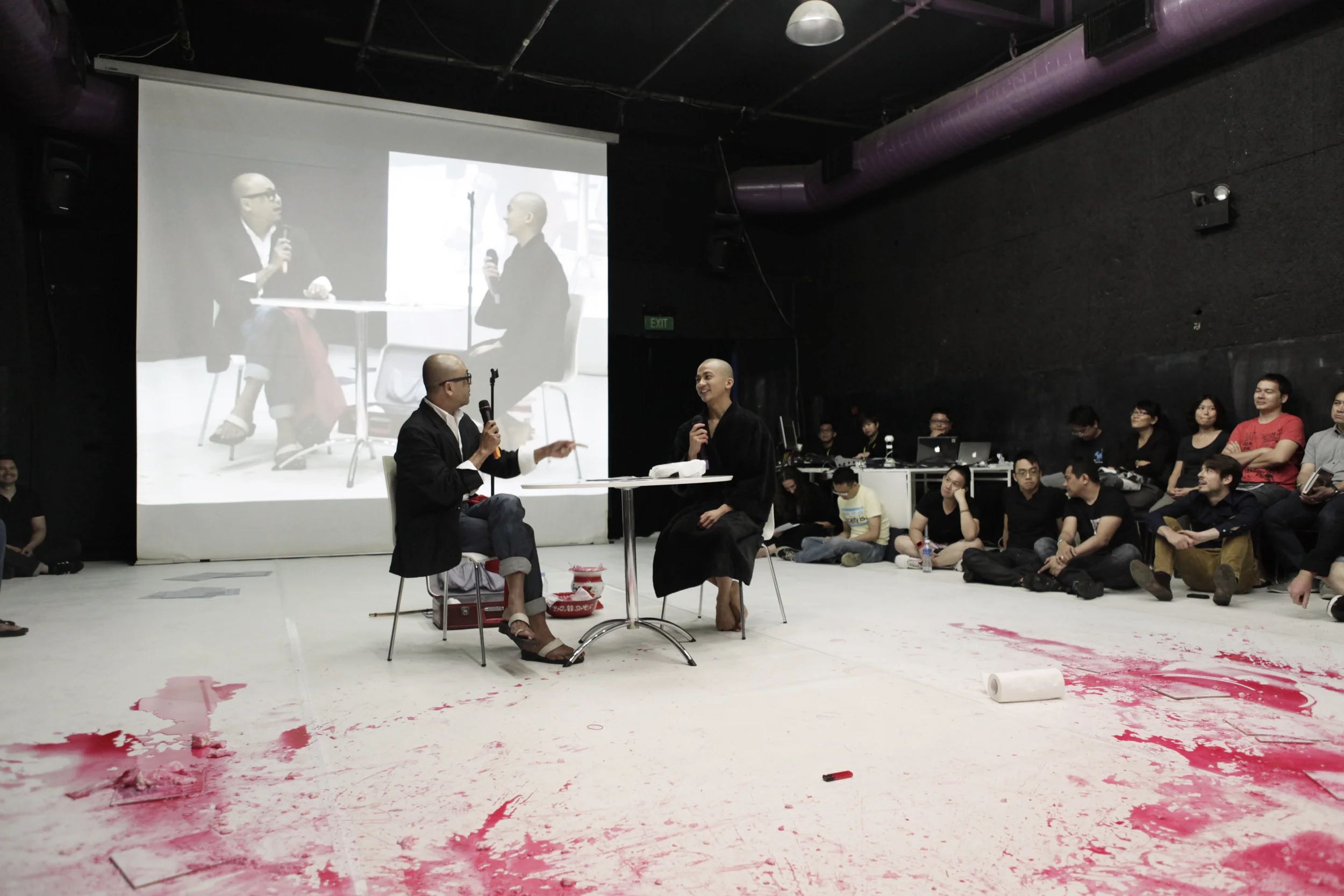
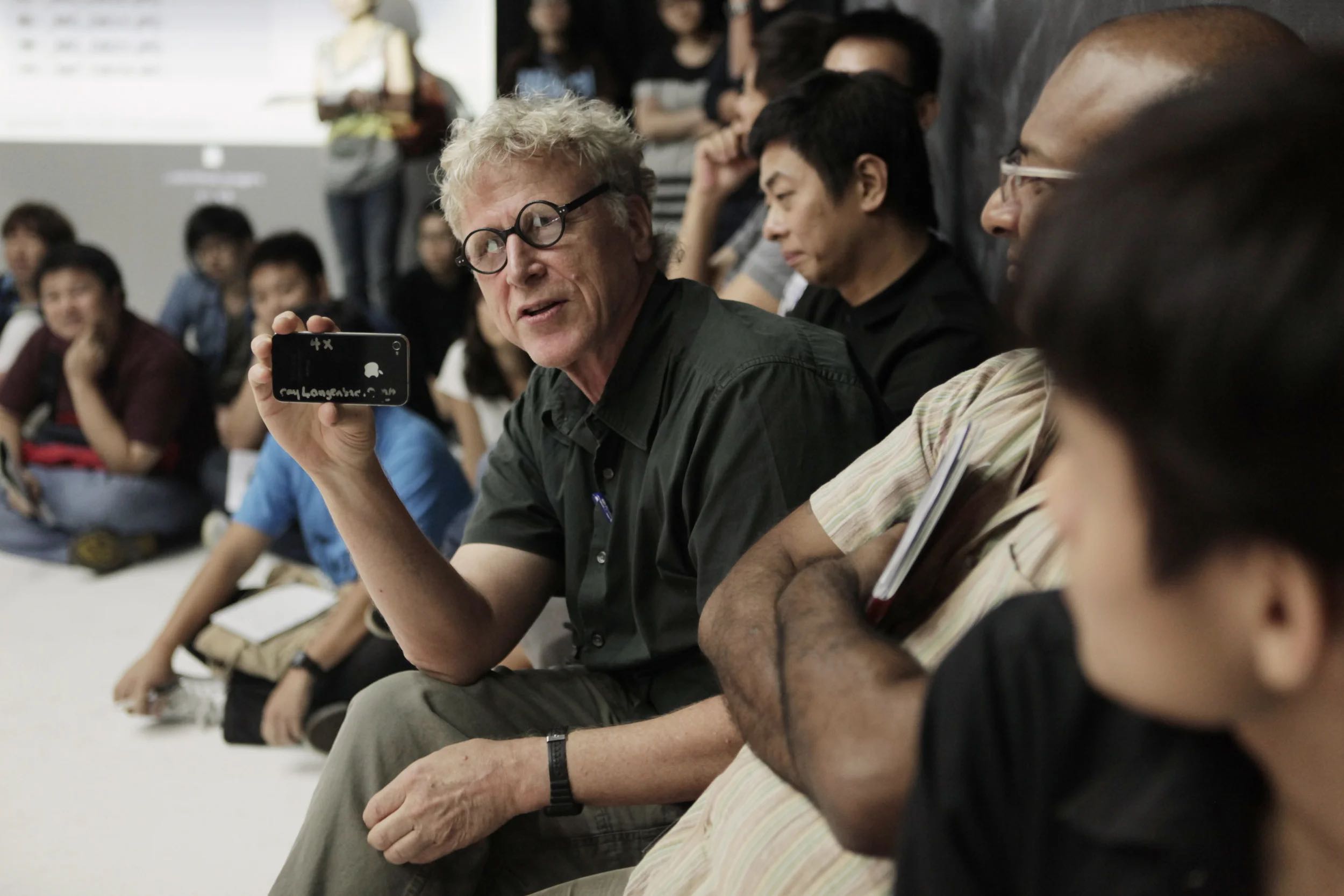
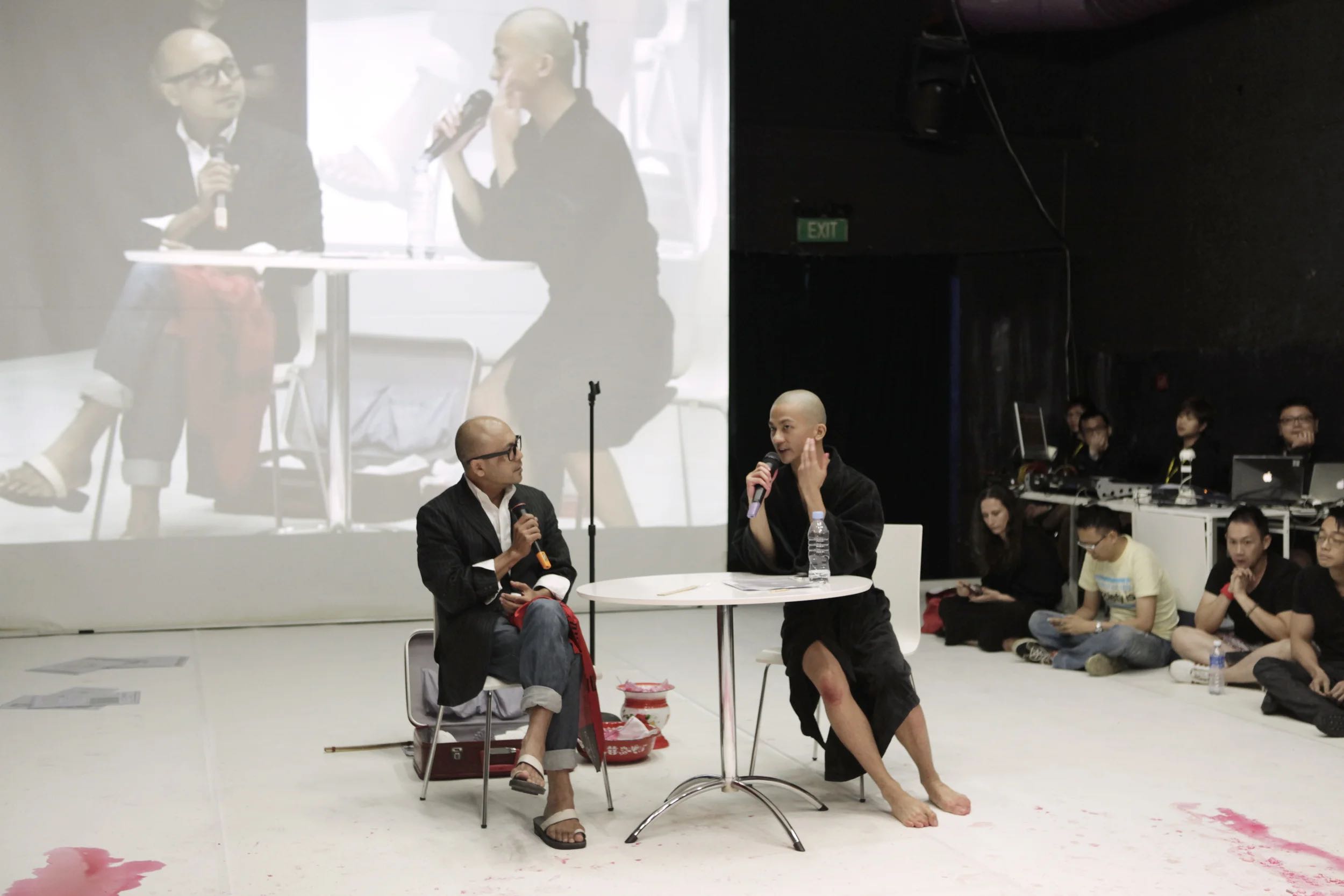
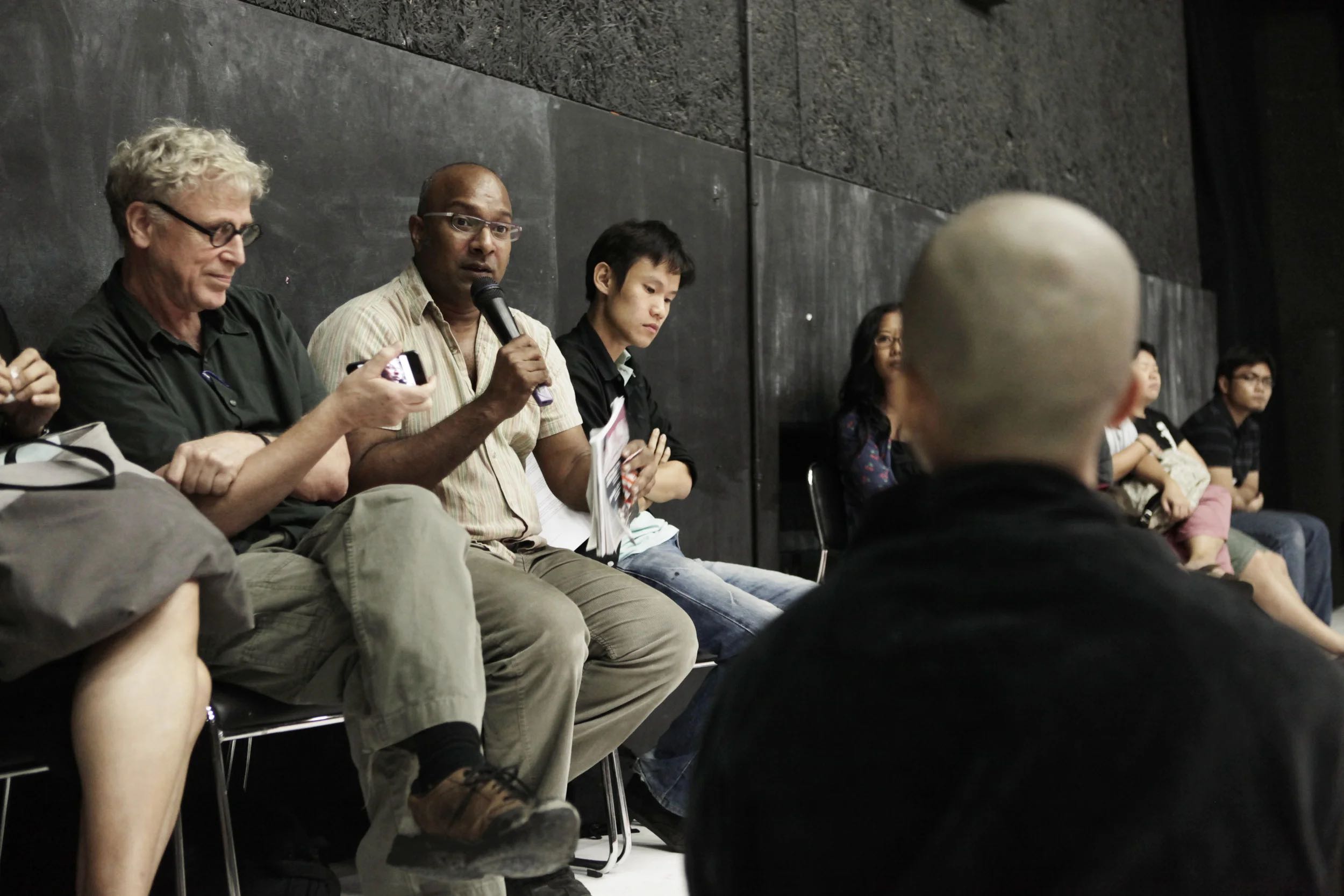
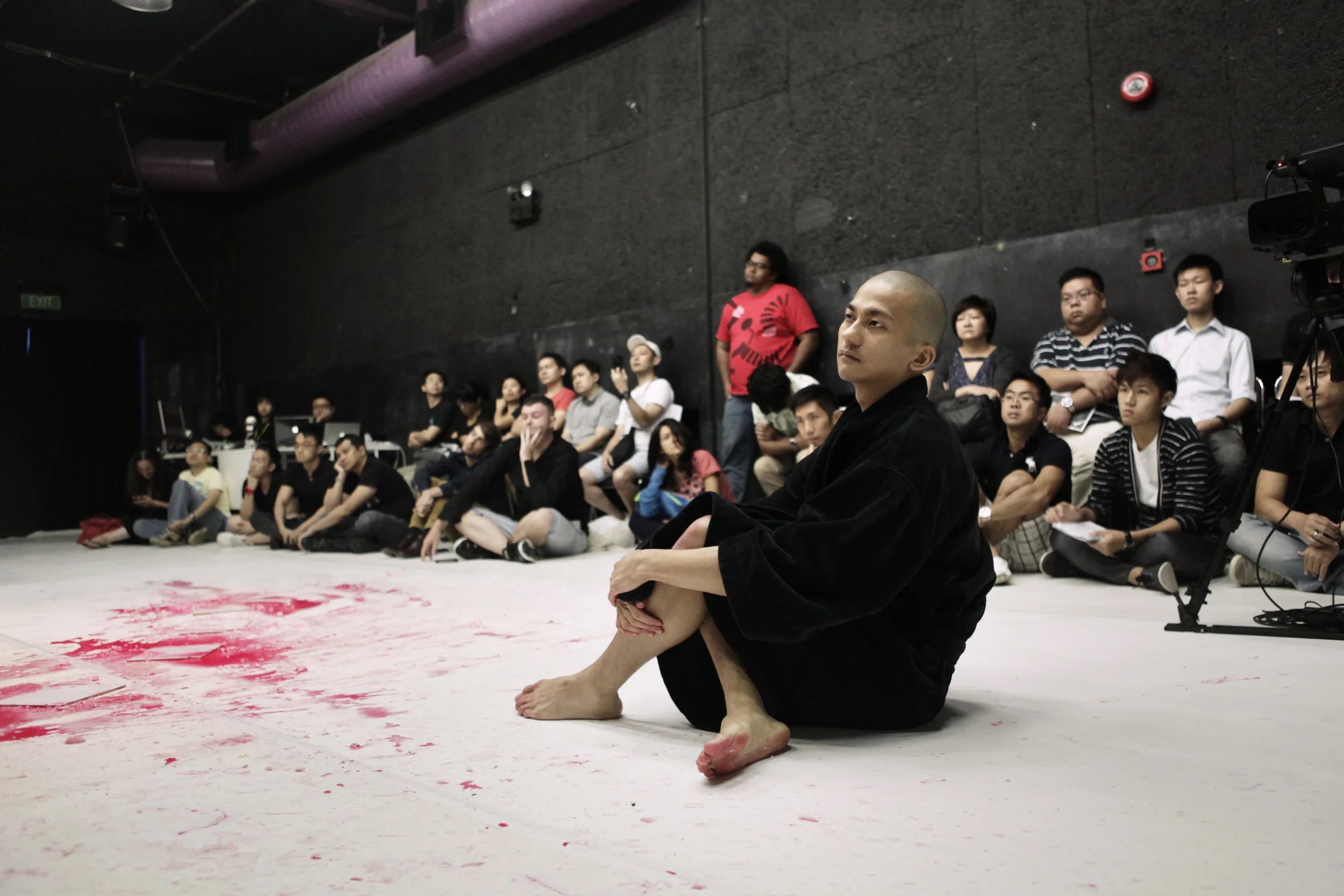
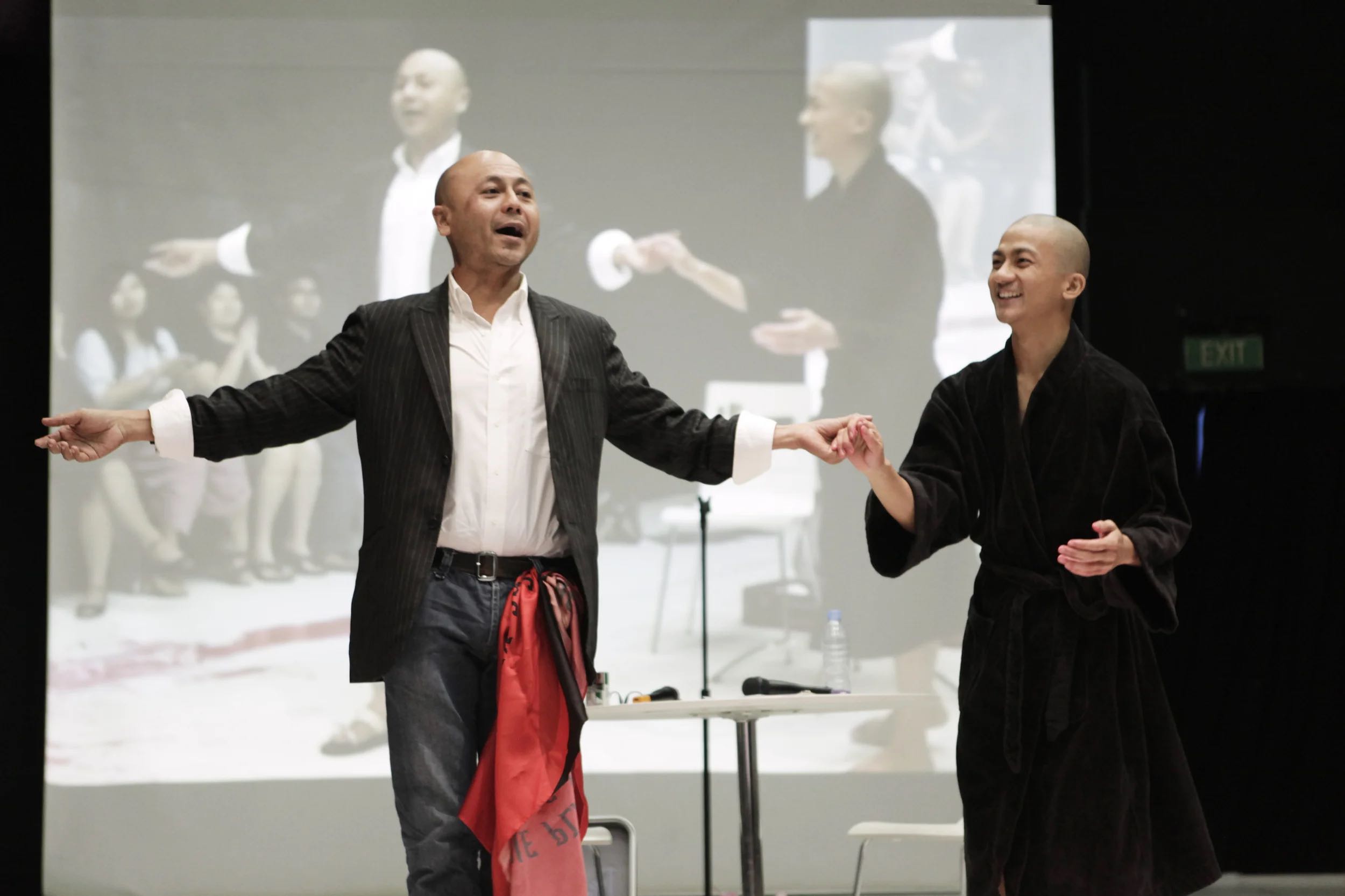
Documentation from Cane. Photos by Samantha Tio.
Cane consisted of six testimonials of Josef Ng’s performance which sought to reconstruct and fragment the memory of the event. These six accounts are namely:
The media’s account
I read excerpts from twelve newspaper articles covering the performance and its aftermath.
The eyewitness account
I invited Ray Langenbach to read his eyewitness account of the performance which was used in Josef Ng’s trial as an affidavit.
The reenacted account
A screening of video documentation of a reenactment in Chicago based on Ray Langenbach’s eyewitness account.
The reenacted, reenacted
A ‘live’ reenactment of the performance in cadence with the screening of the reenactment video documentation.
The video document
A screening of documentation of Josef Ng’s Brother Cane (1994) documented by Ray Langenbach.
The post-performance dialogue
“Brother Cane” was invited to moderate the discussion. Thai performance artist Michael Shaowanasai appeared under the invitation of Josef Ng as “Brother Cane.”
Performance documentation of Cane, this video contains mature content.
Archiving Cane (2012)
- Installation
- 7 to 16 December 2012
- The Substation Gallery, Singapore
- Exhibition managed by Subi Le
- Exhibition and Catalog Design by TRIPPLE
- Archiving Cane folio of text co-edited with Louis Ho
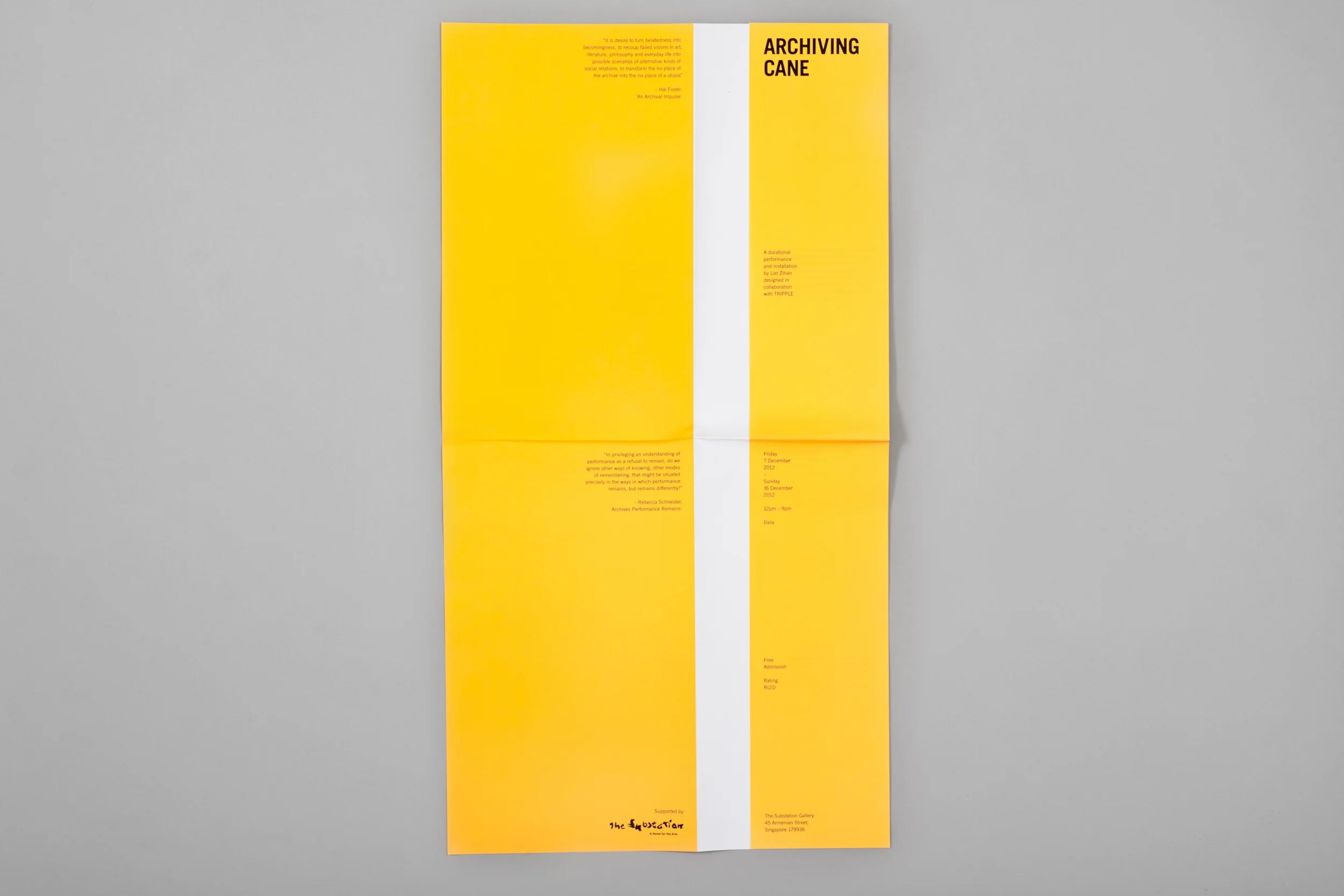
In privileging an understanding of performance as a refusal to remain, do we ignore other ways of knowing, other modes of remembering, that might be situated precisely in the ways in which performance remains, but remains differently?
Rebecca Schneider, Performing Remains
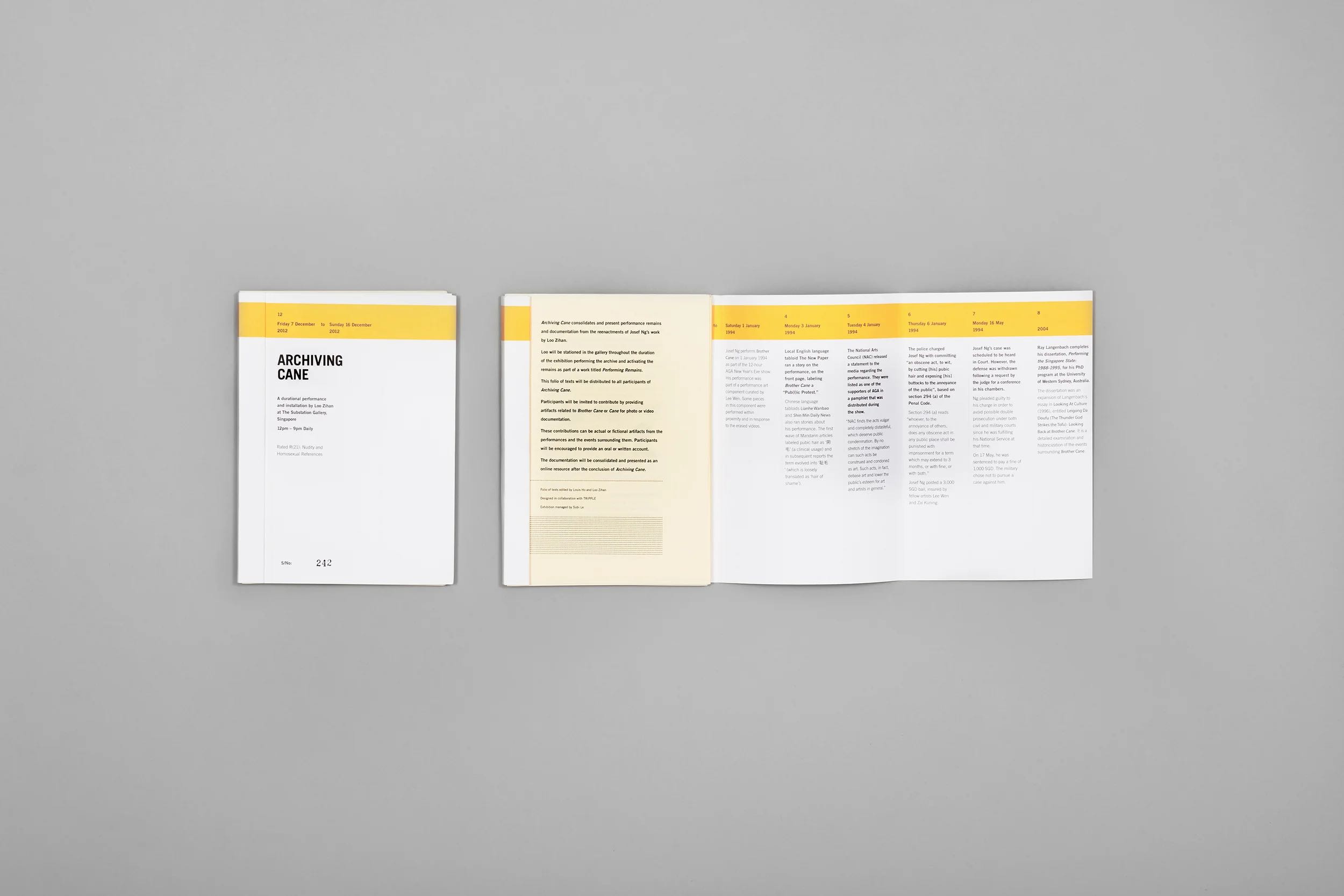
Archiving Cane is an installation and durational performance that consolidates and presents performance remains and documentation from my reenactments of Josef Ng’s work.
The exhibition space includes twelve selected performance remains from various interpretations and reenactments of Josef Ng’s performances. I was present throughout the duration of the exhibition to provide context on the significance and function of each object displayed. Visitors were encouraged to interact with these performance remains.
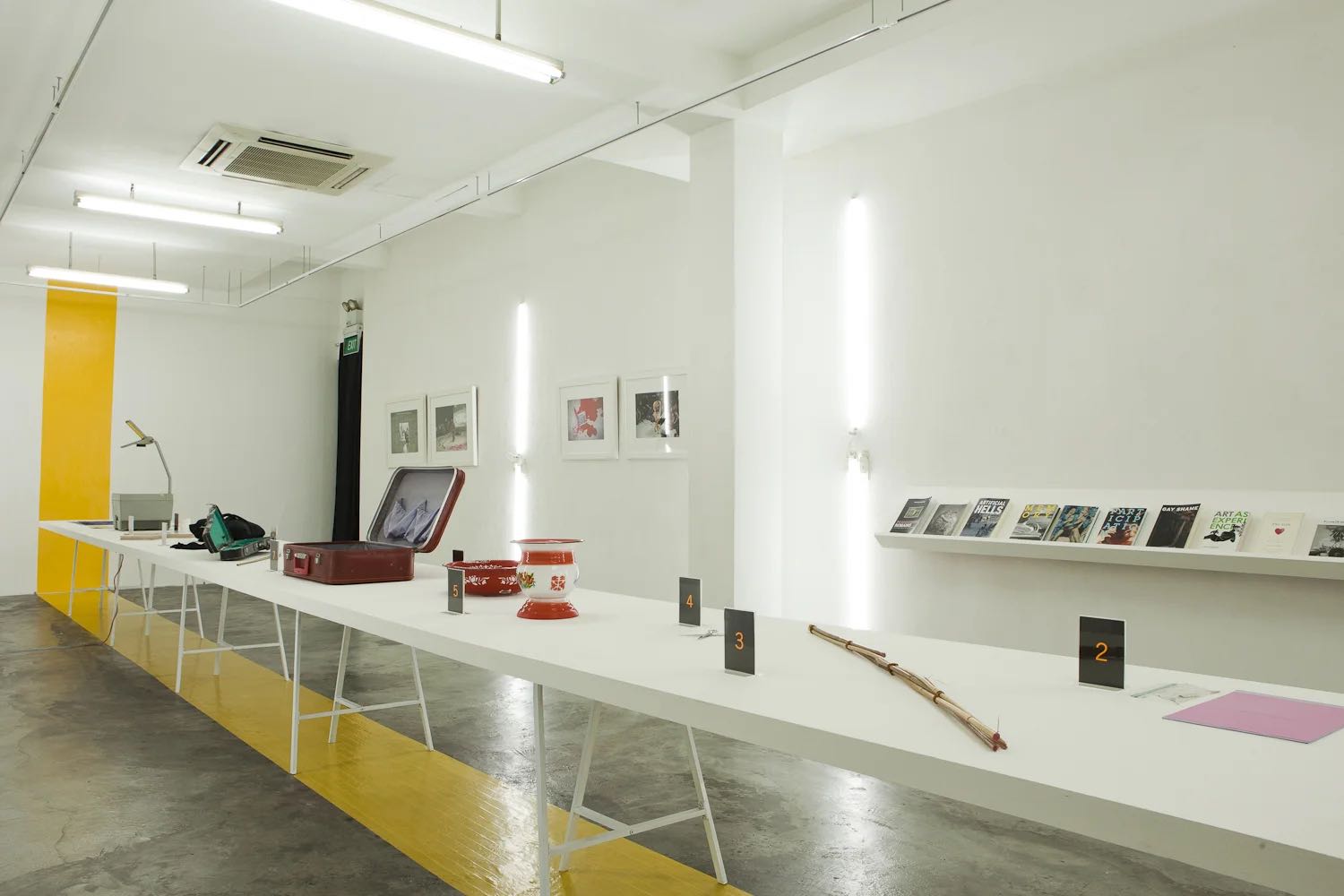
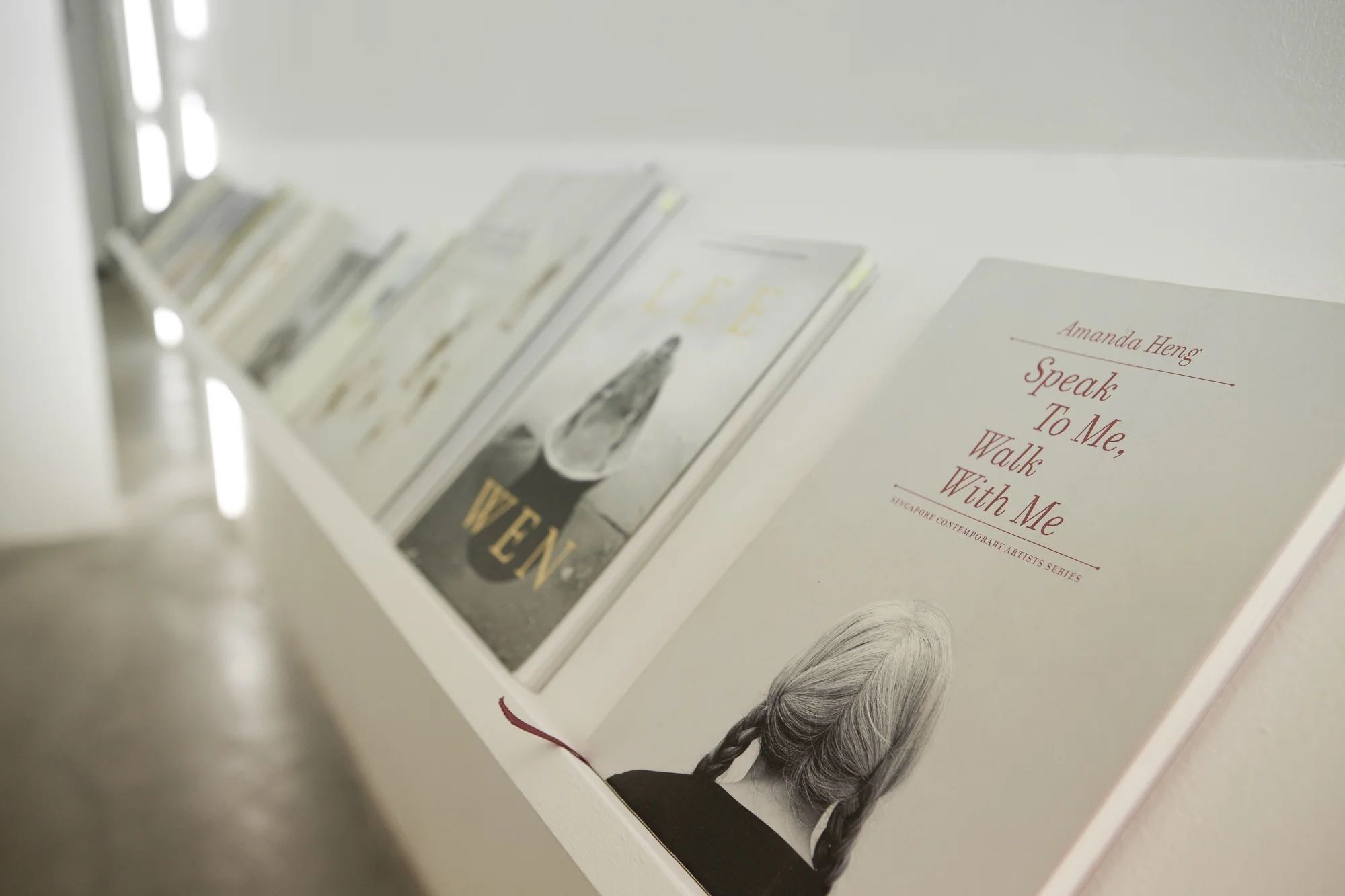
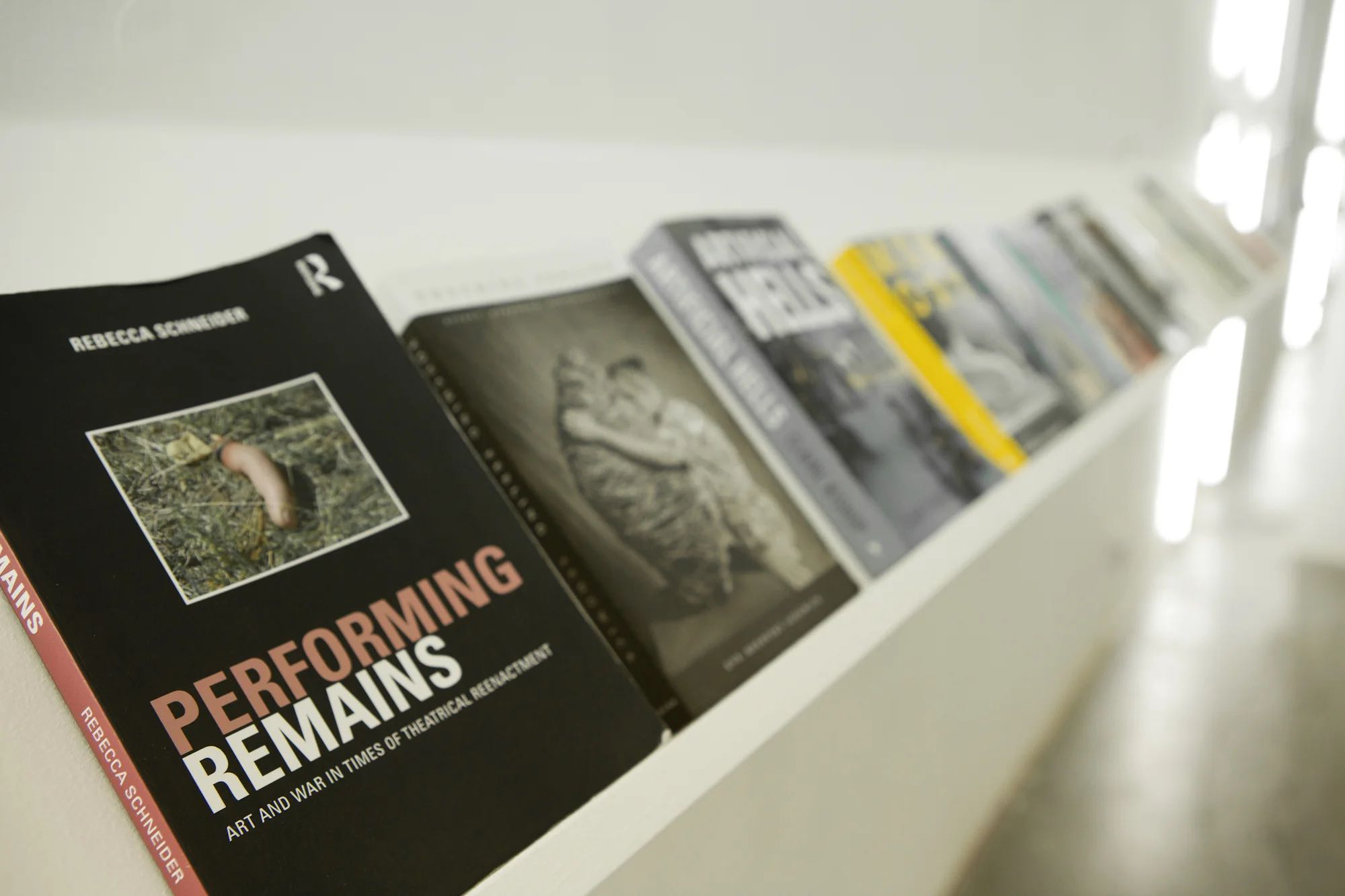
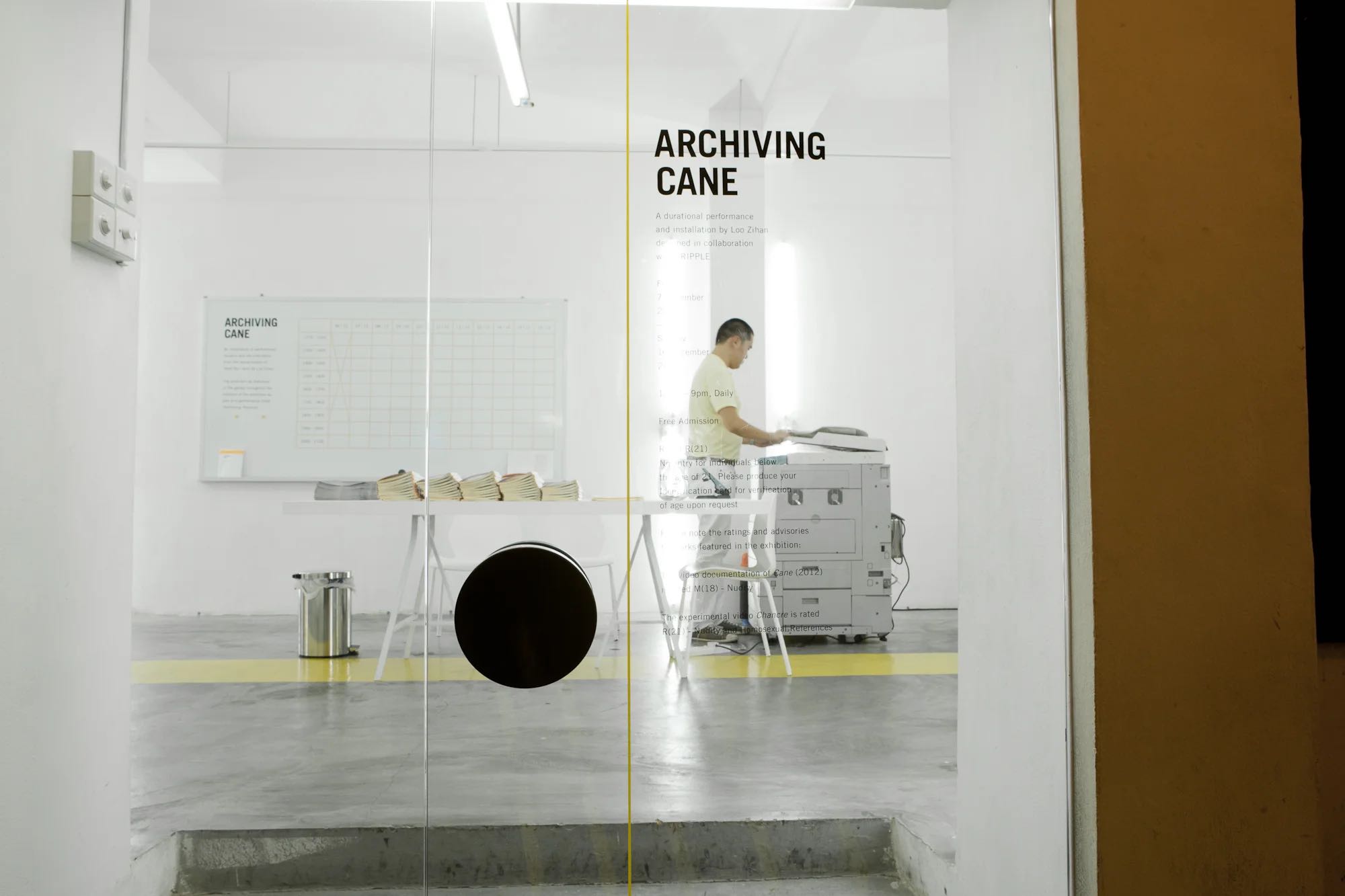
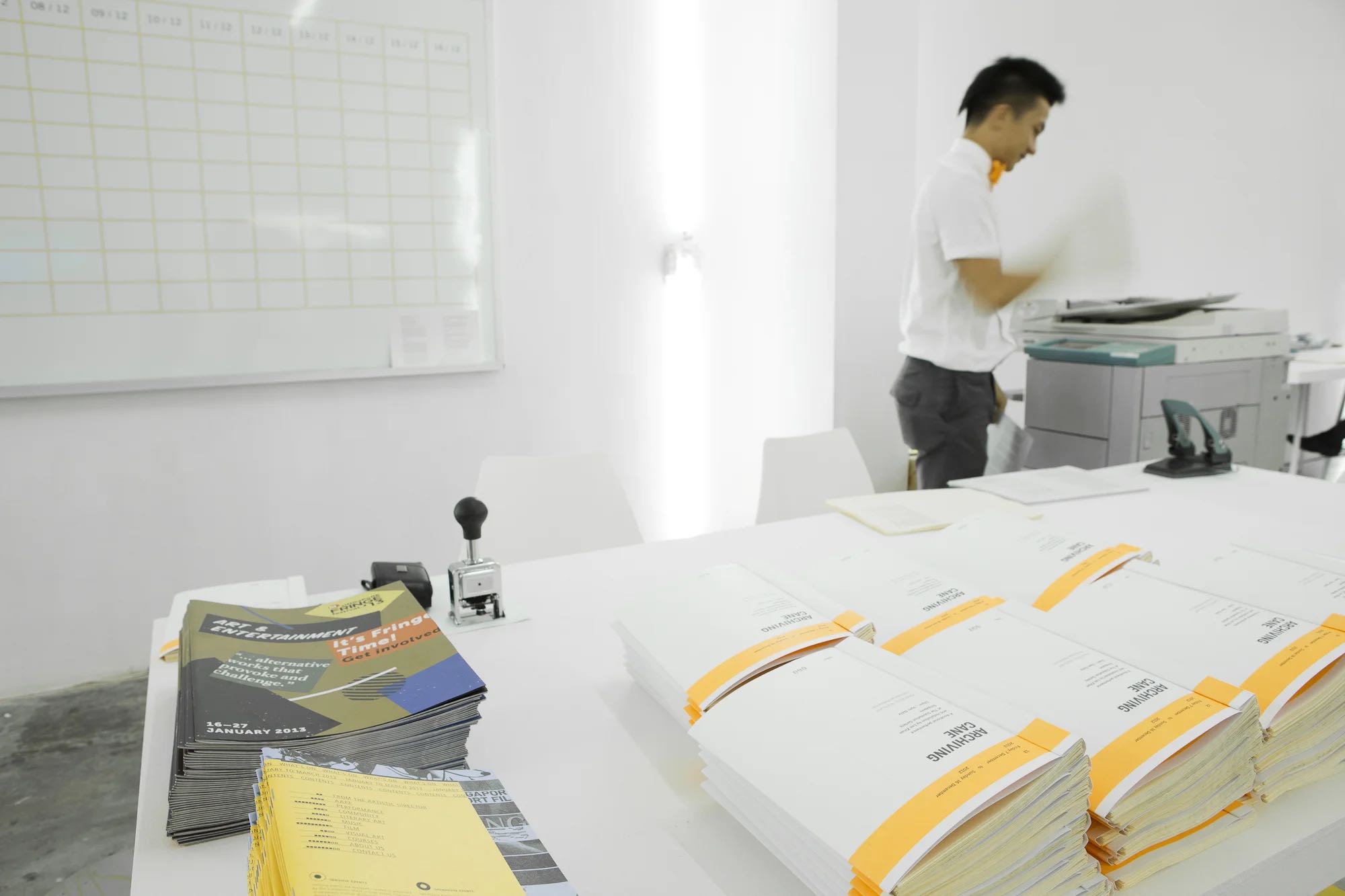
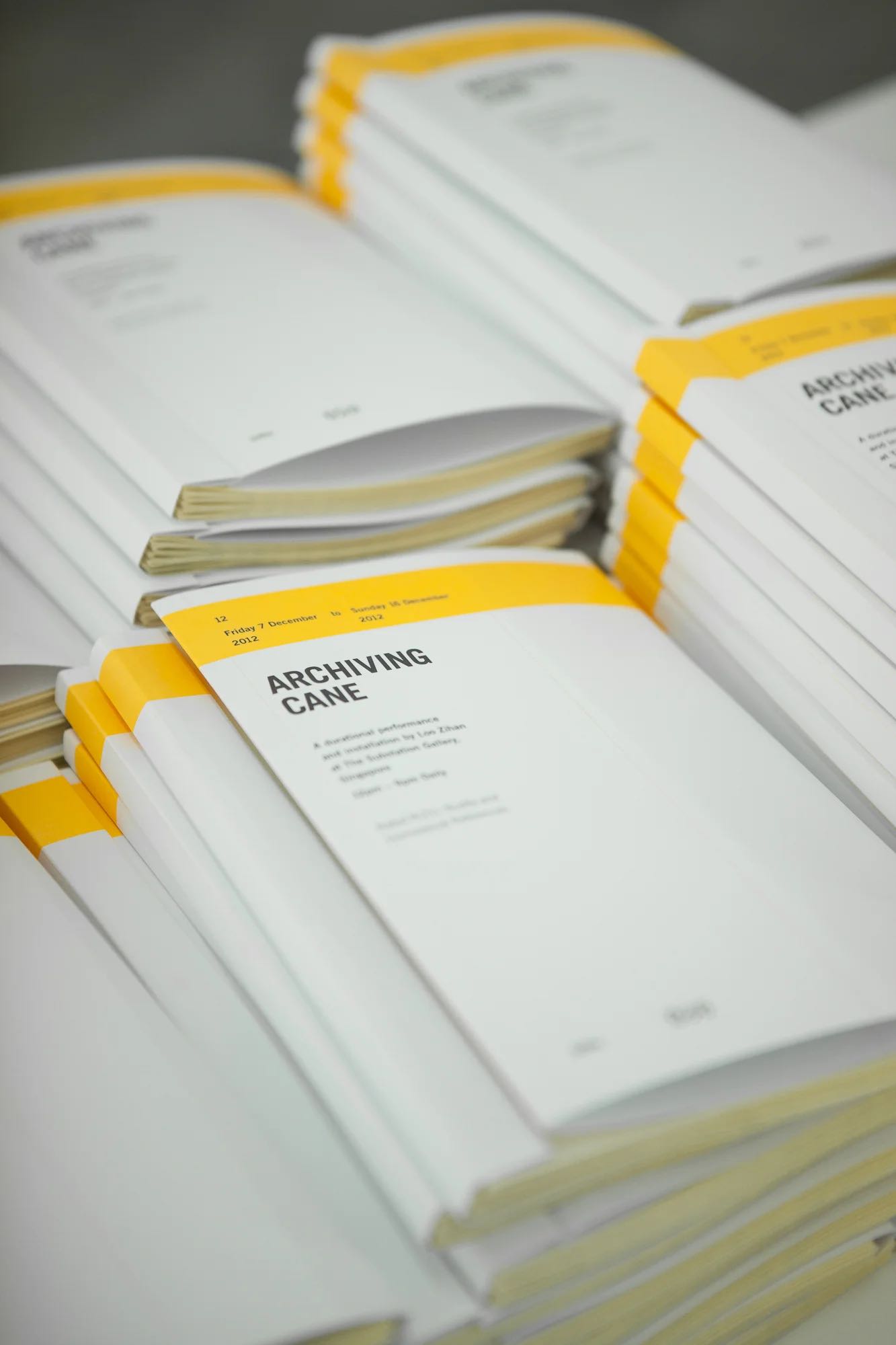
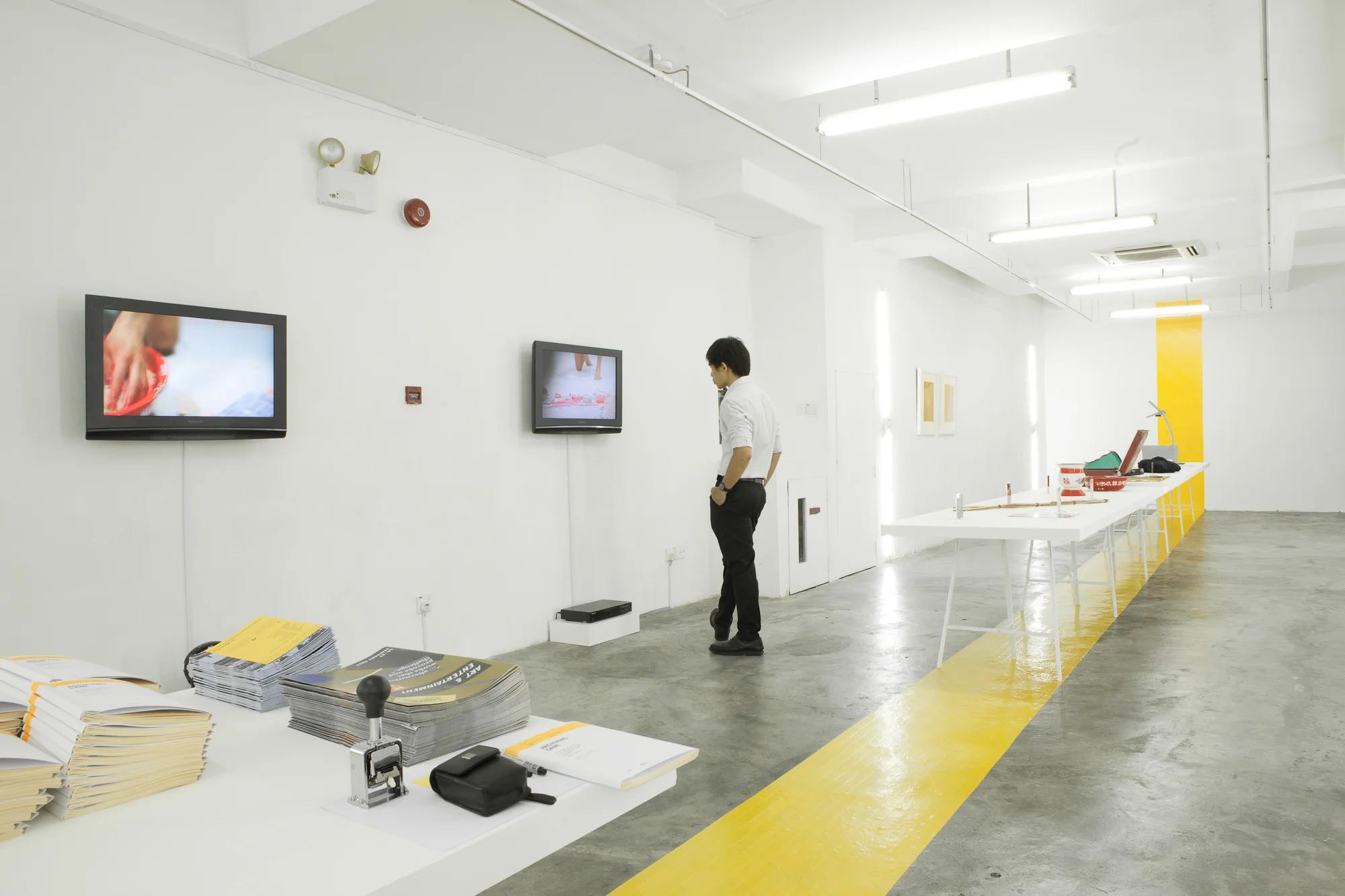
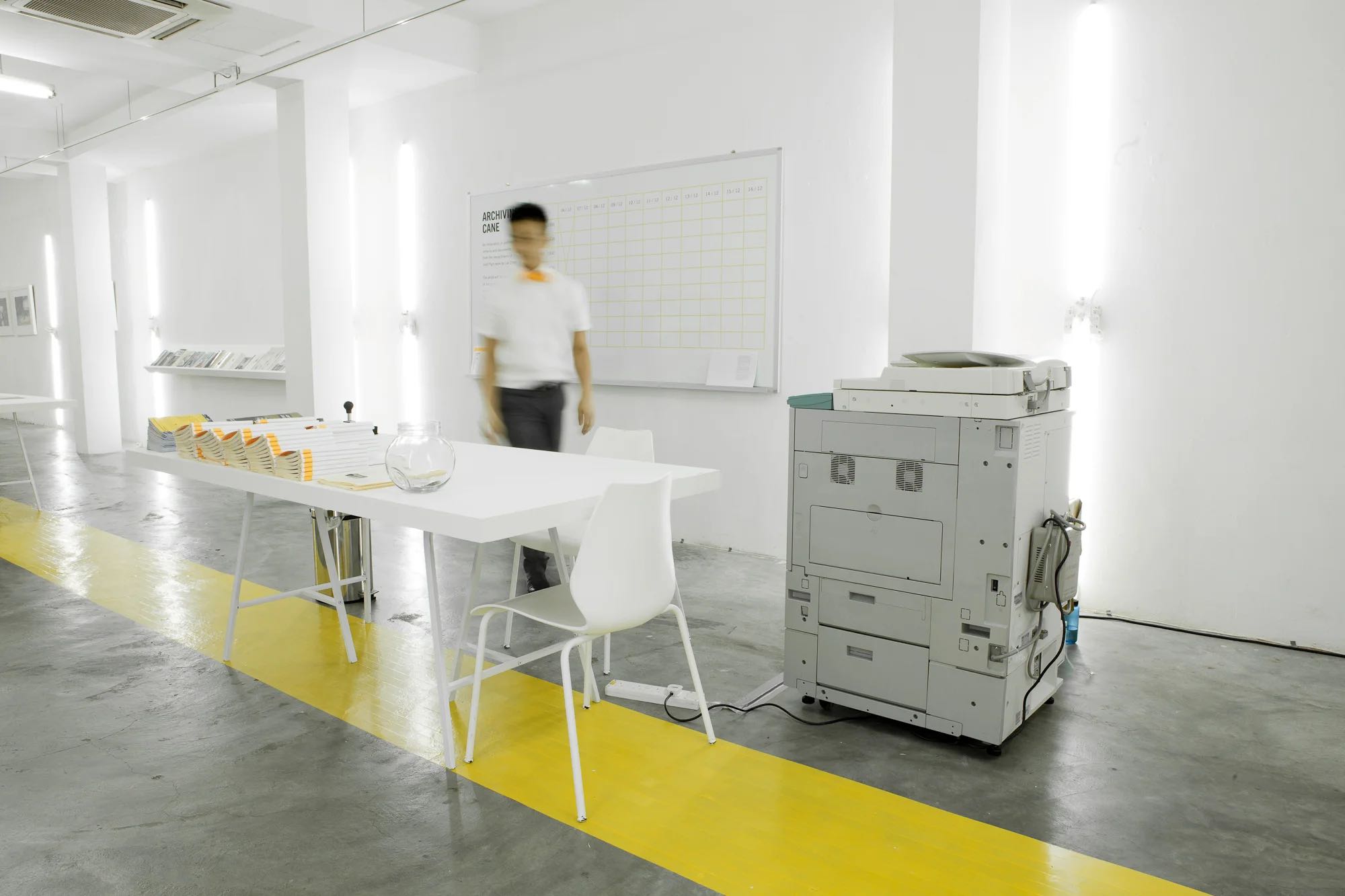
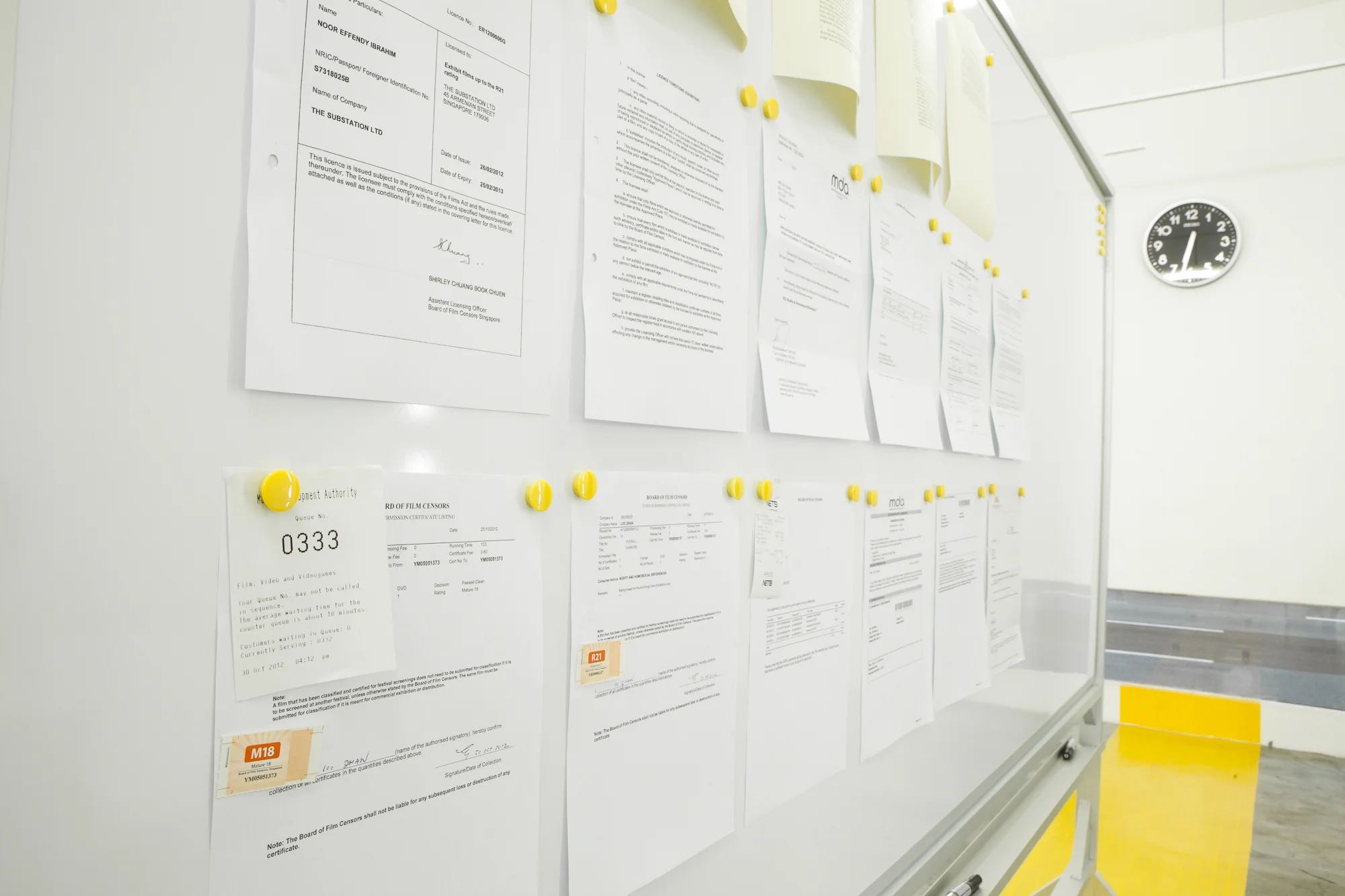
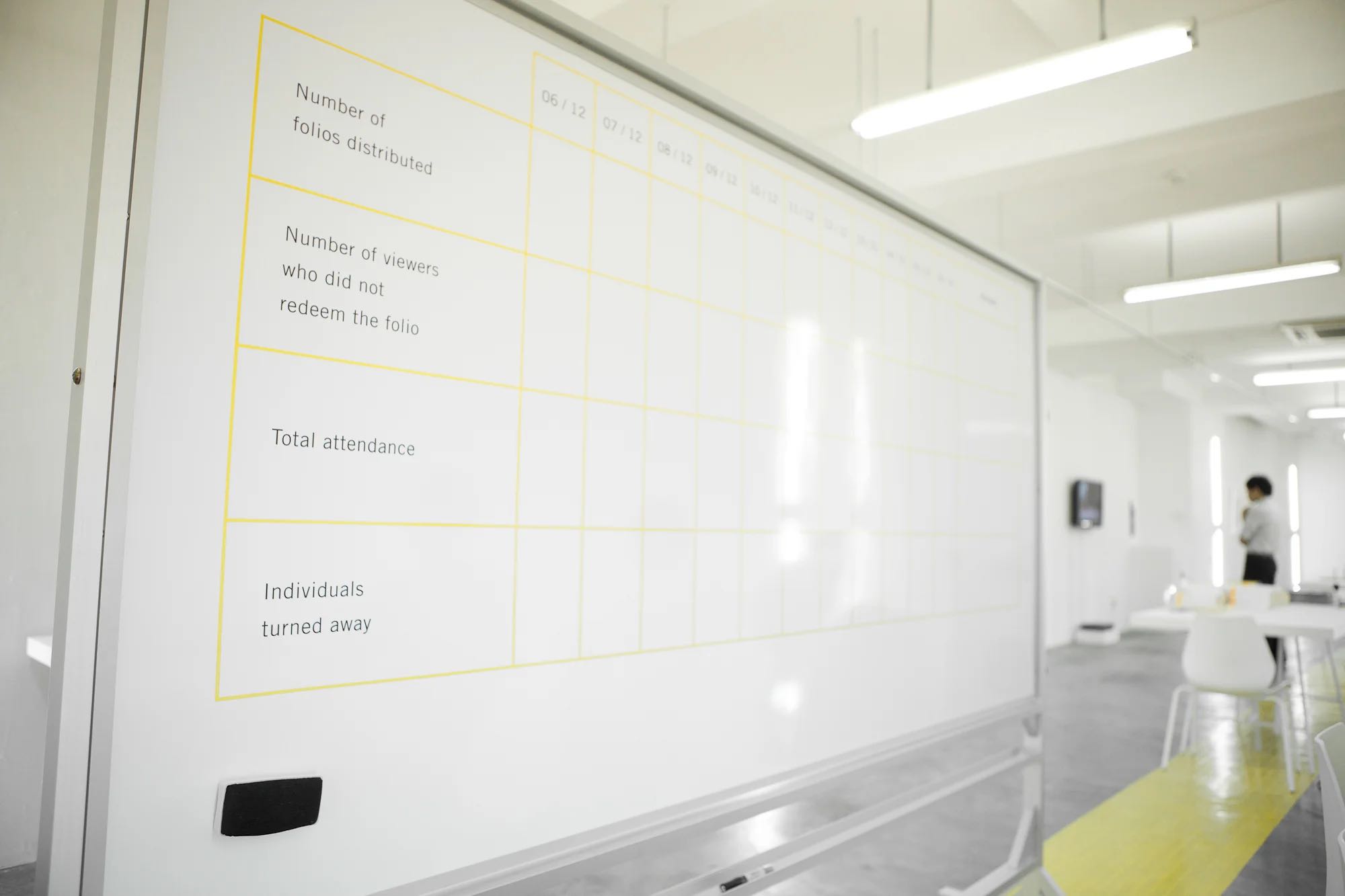
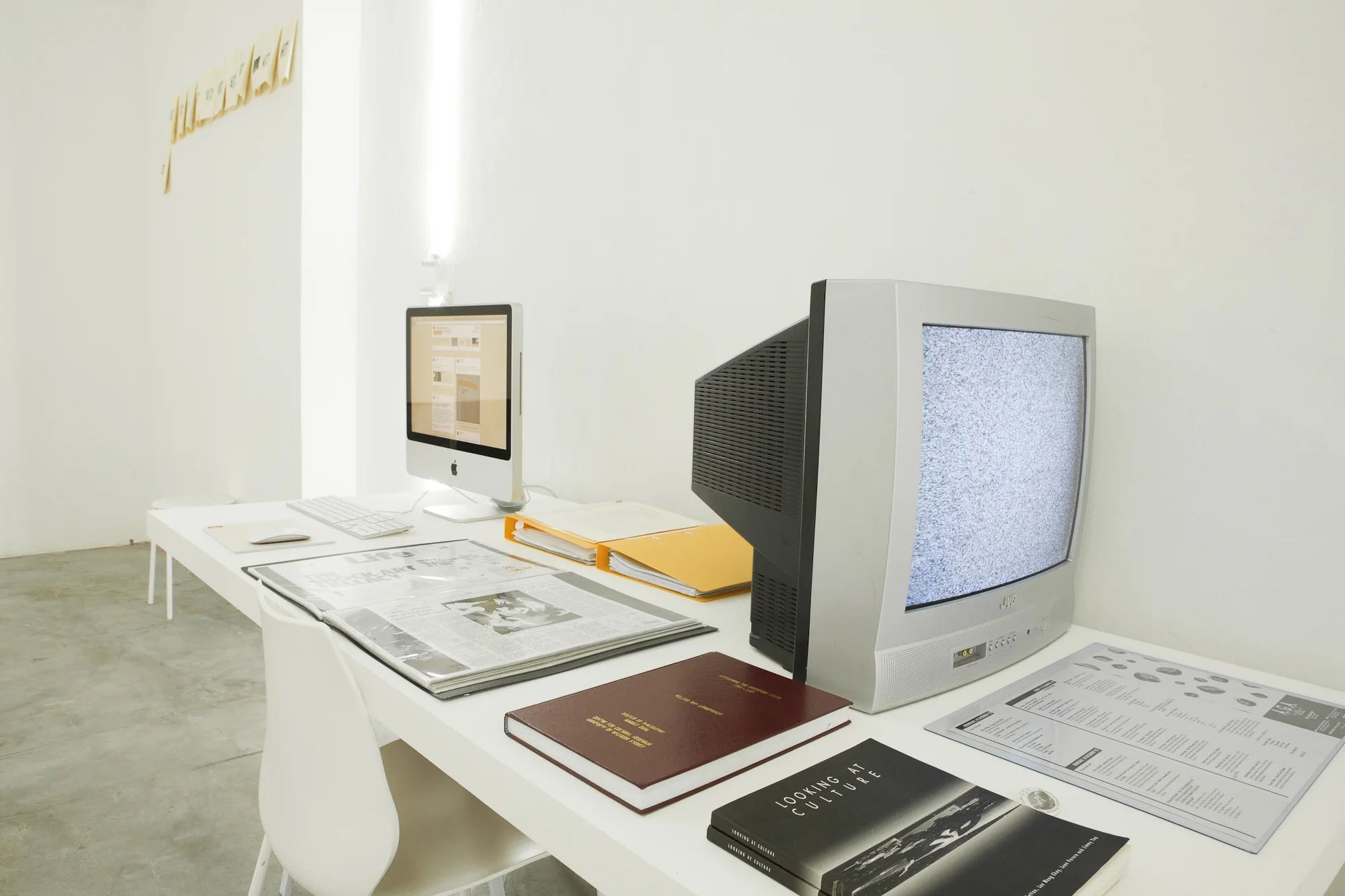
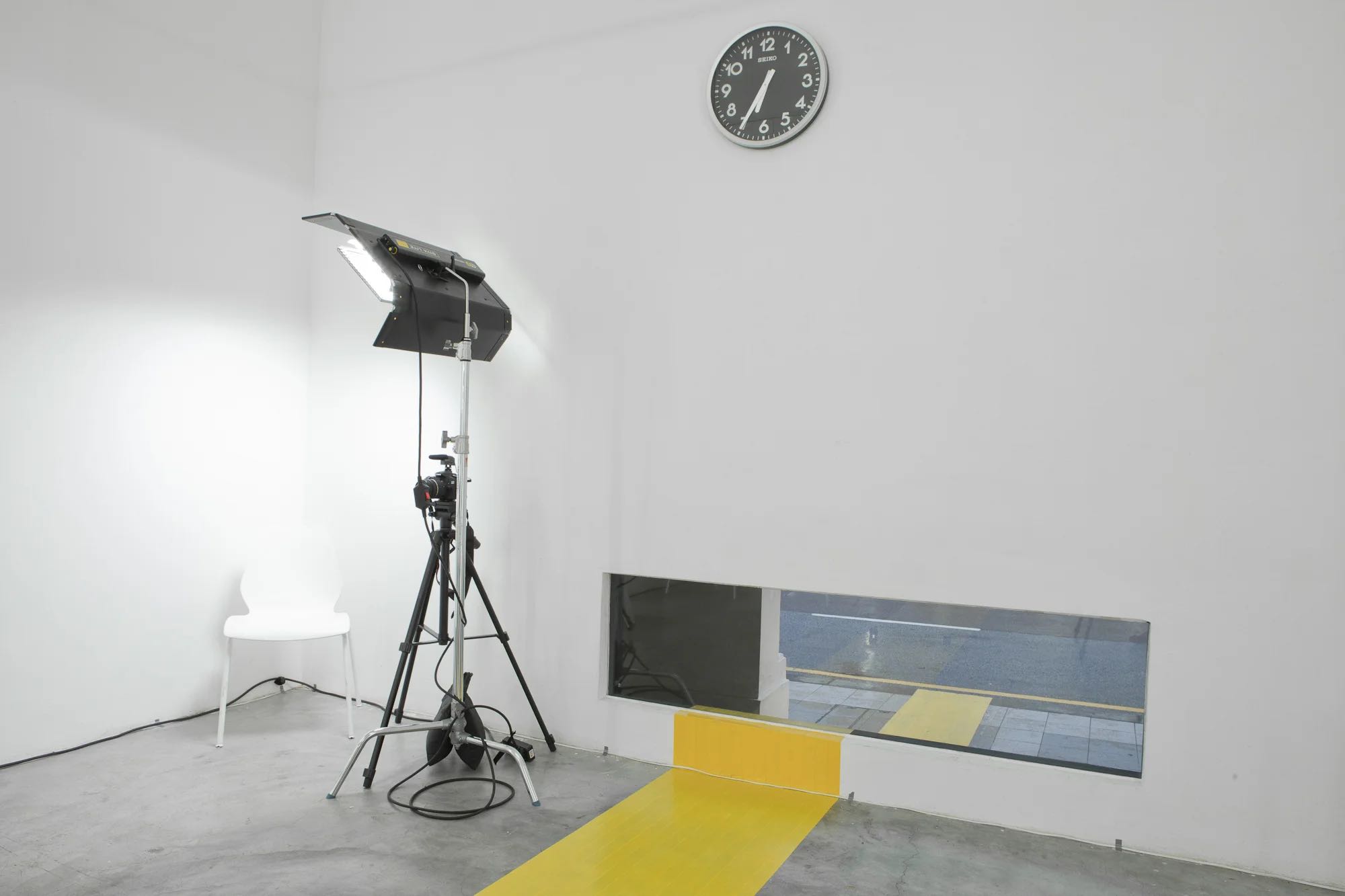
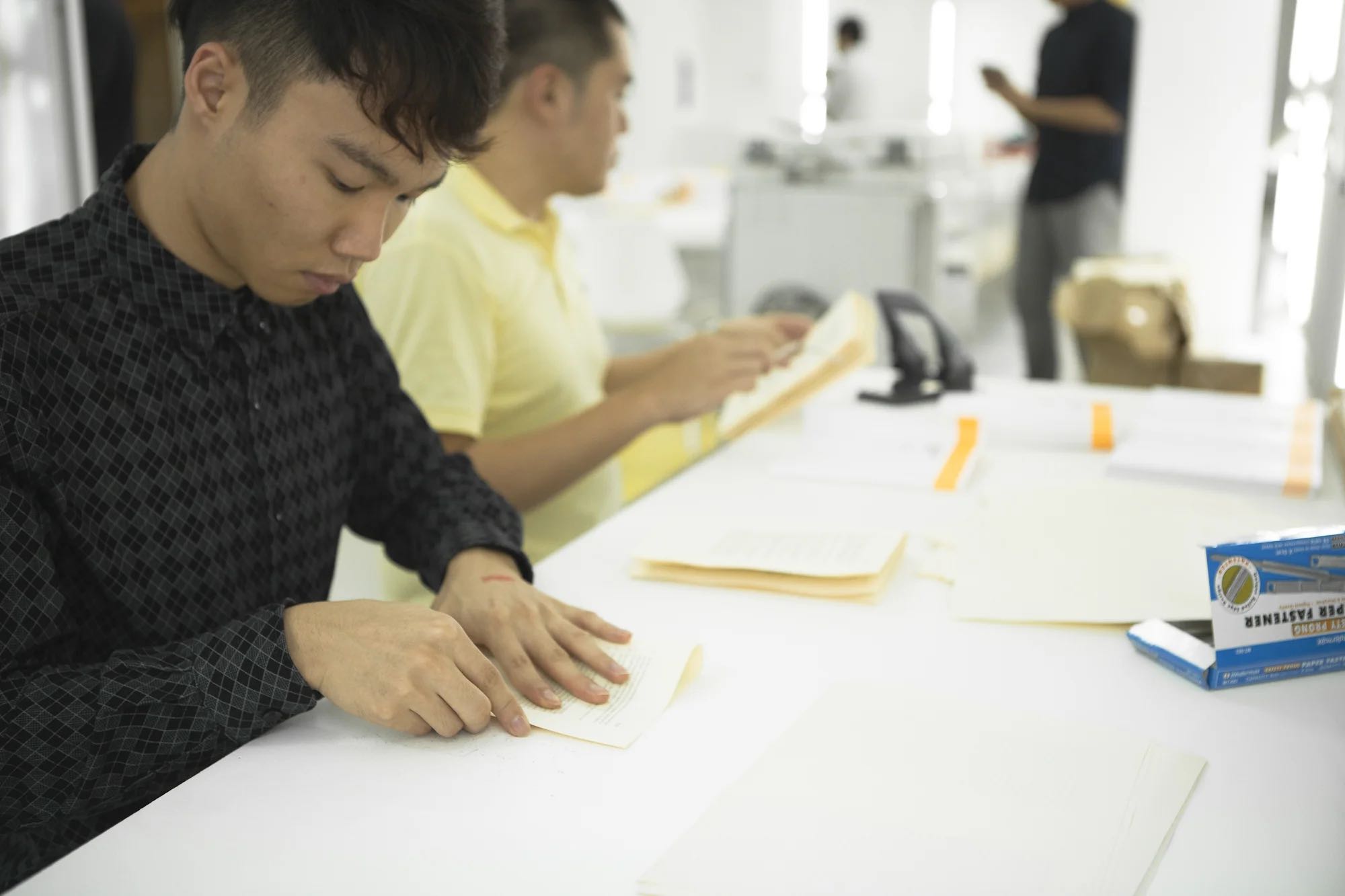
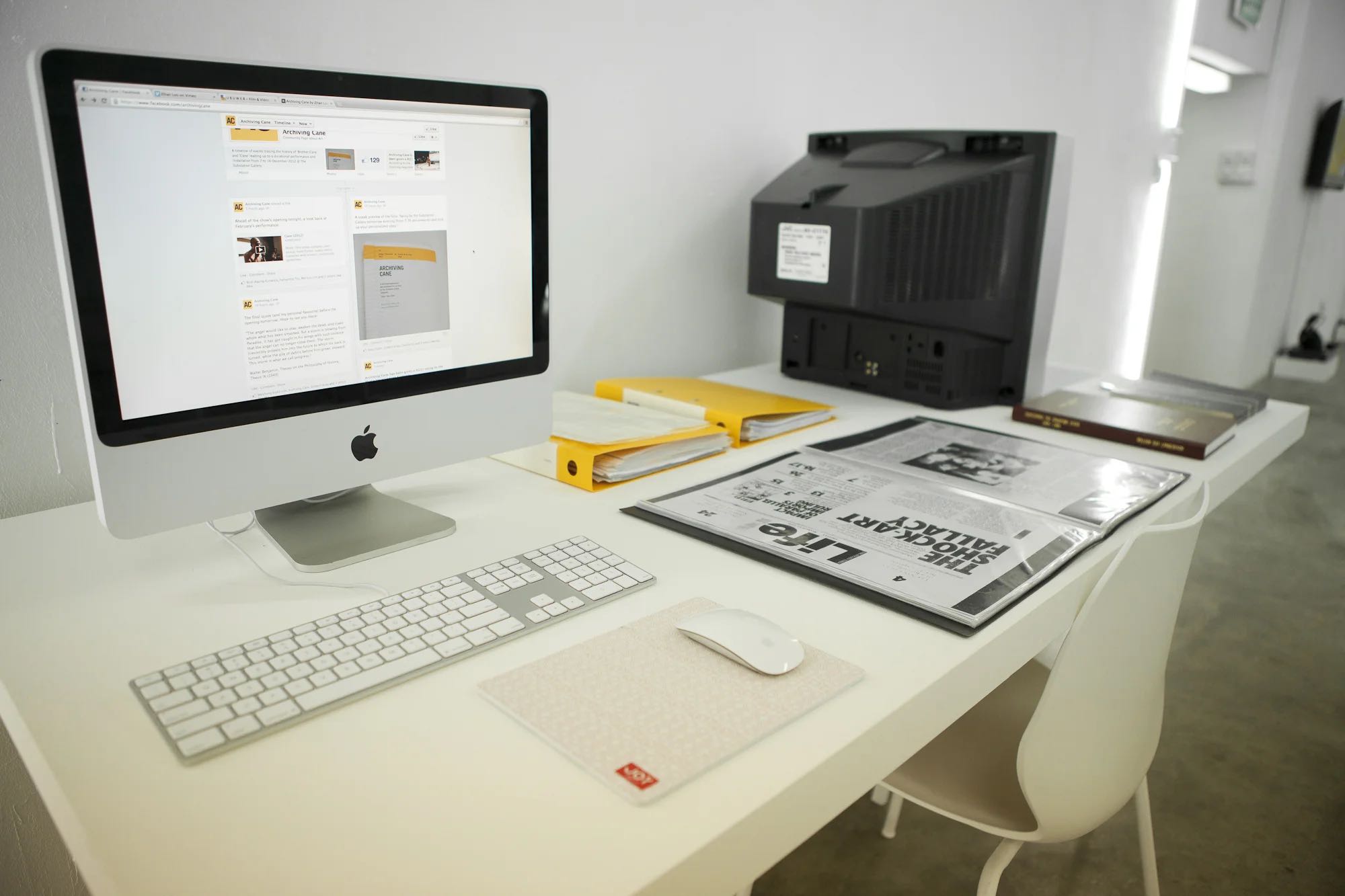
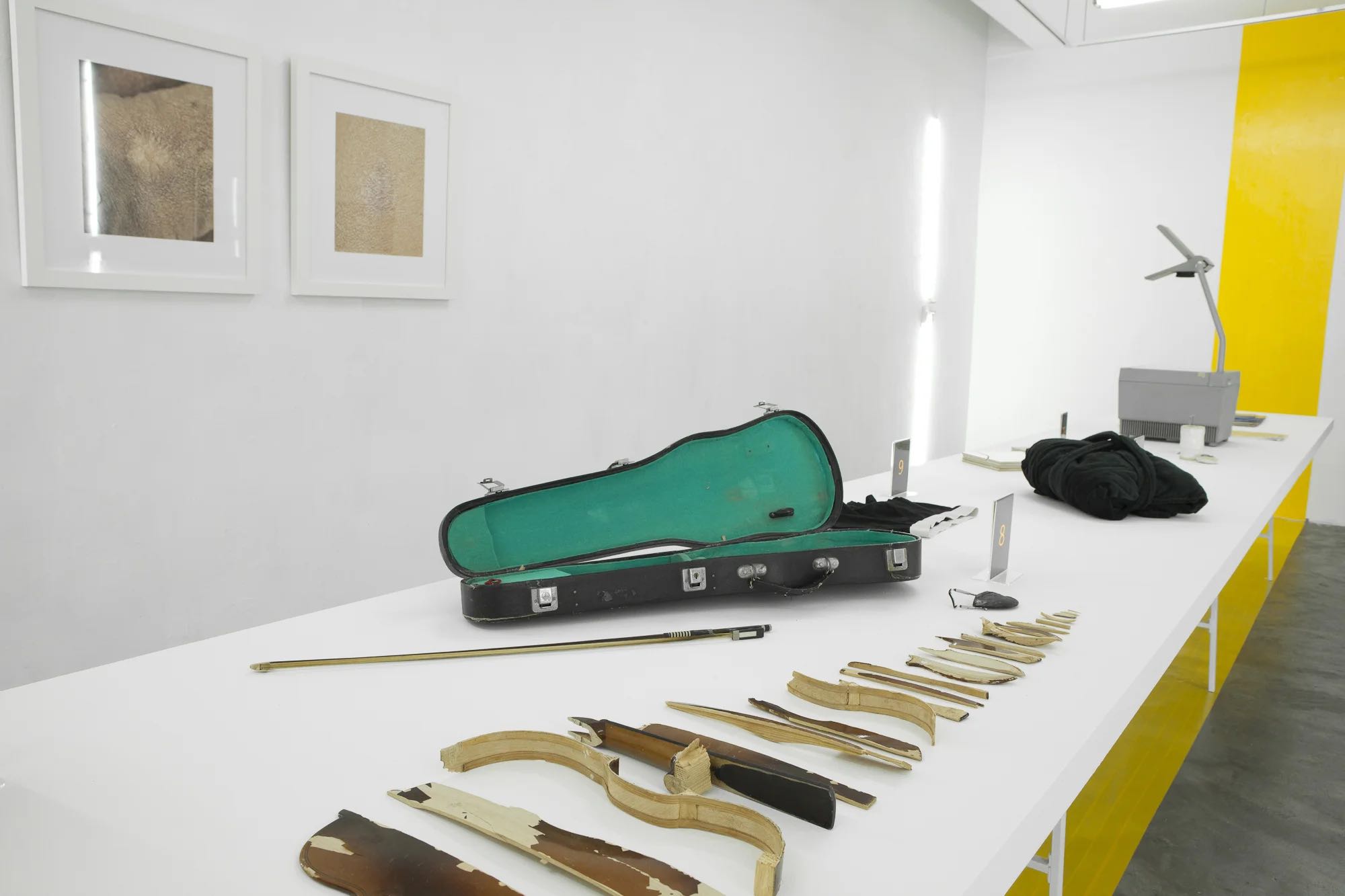
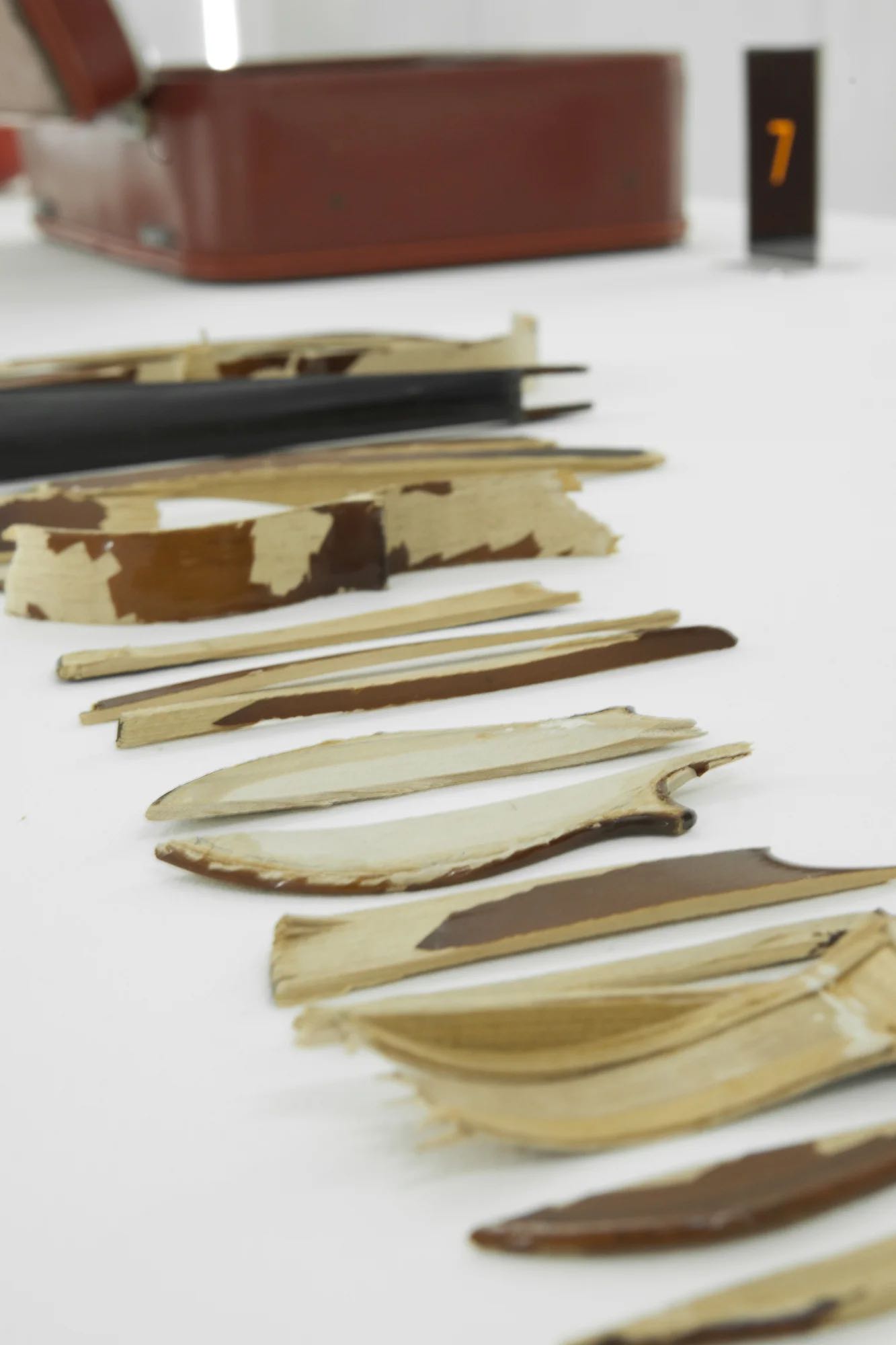
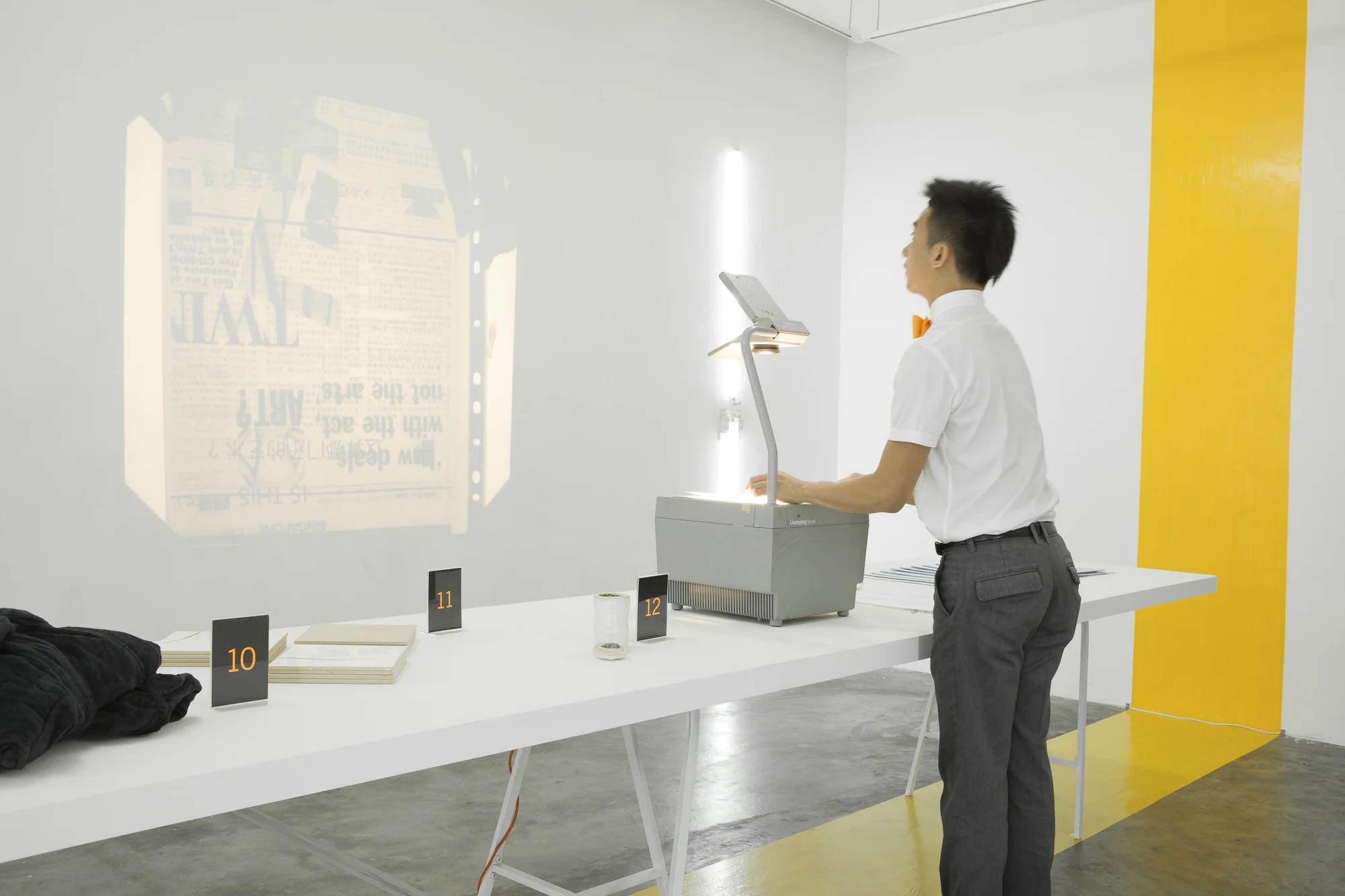
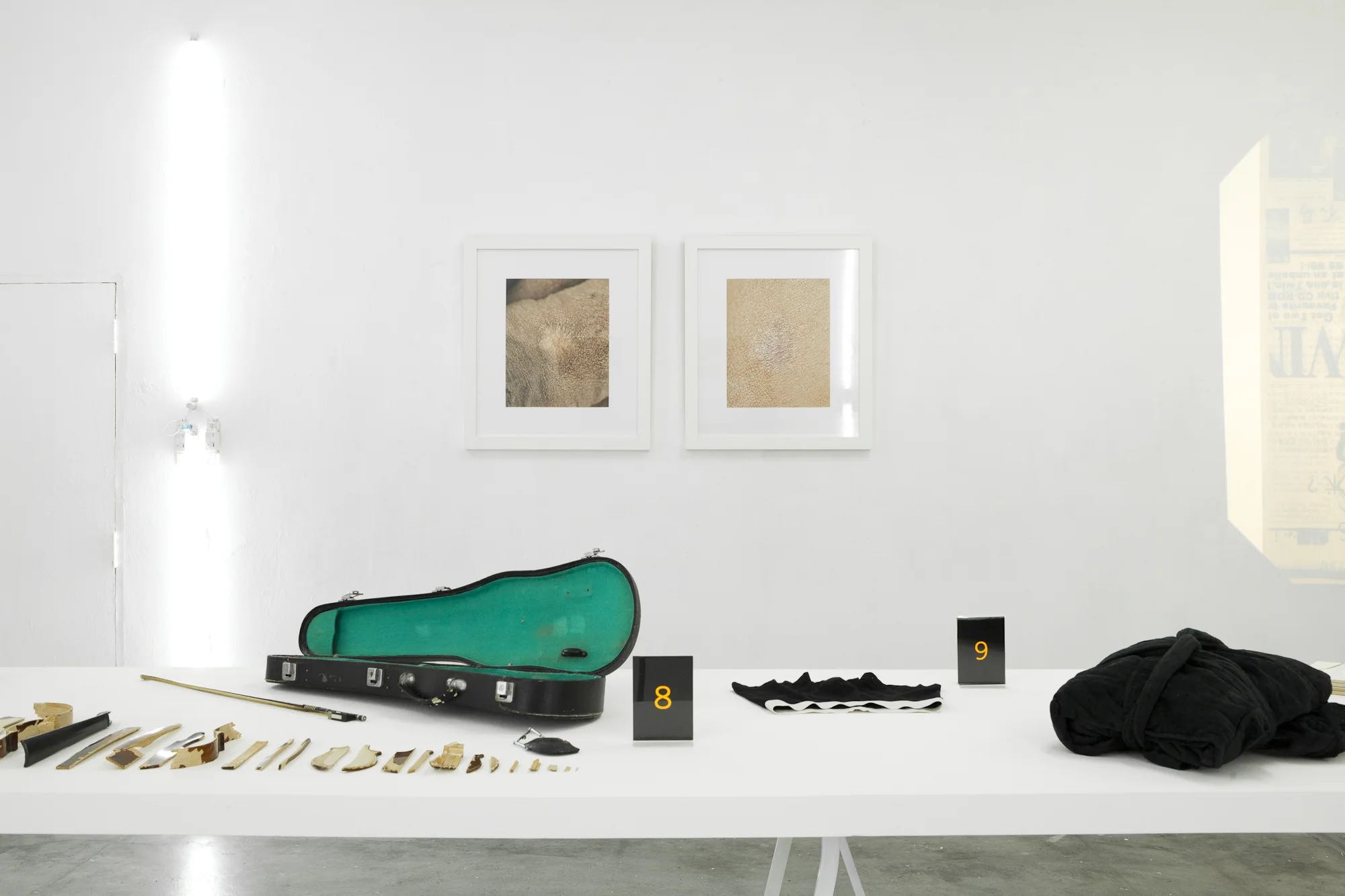
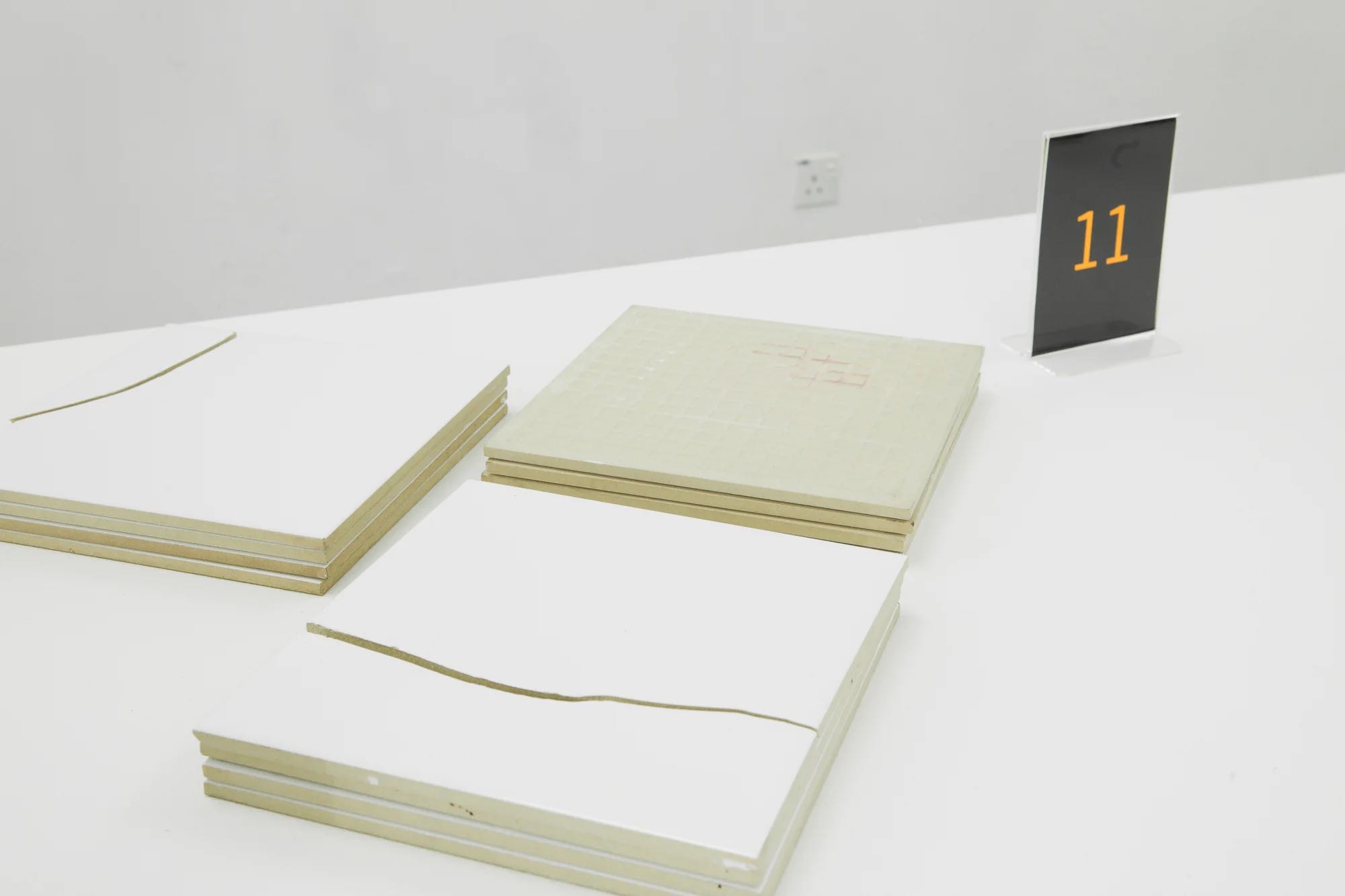
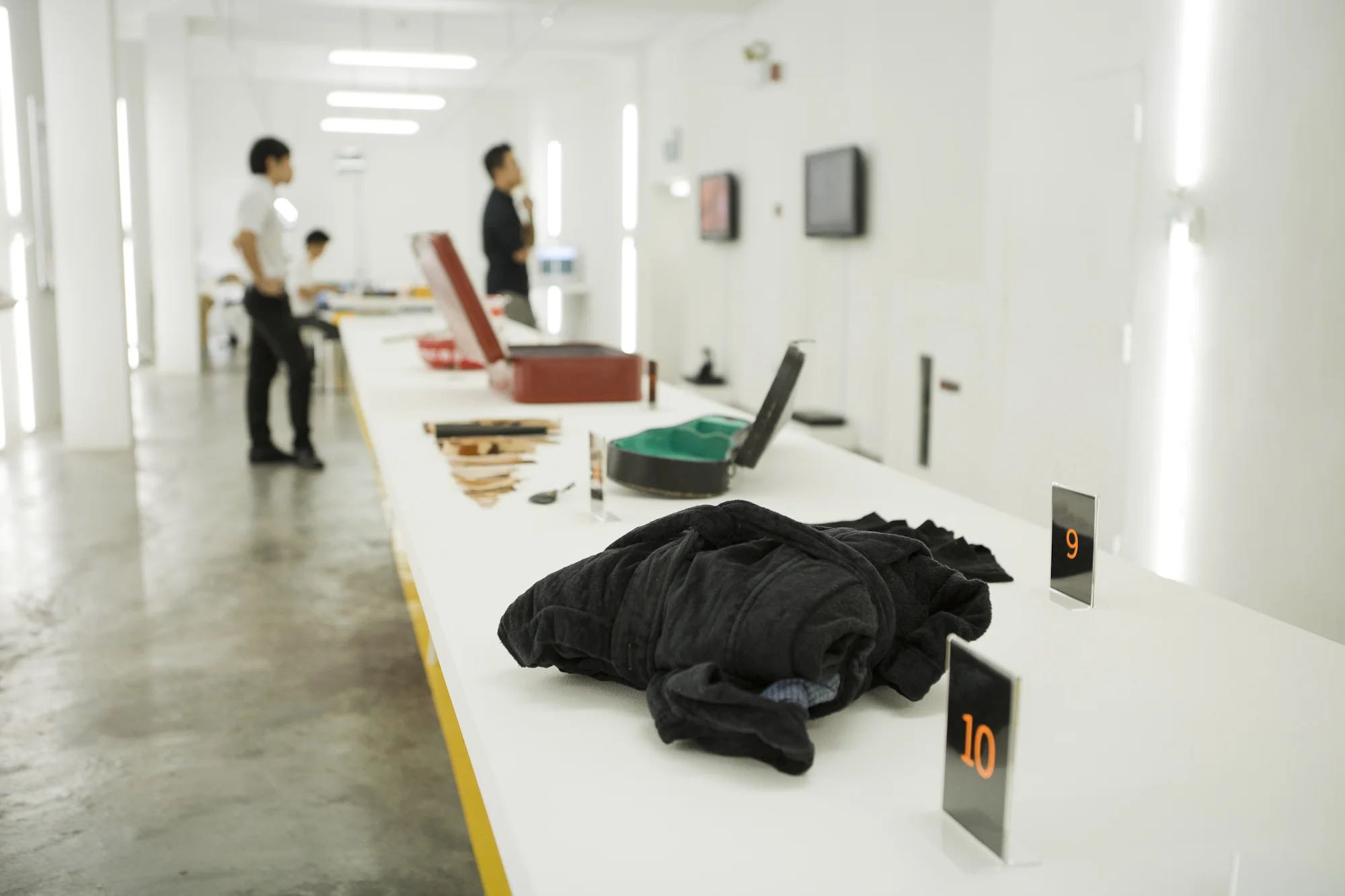
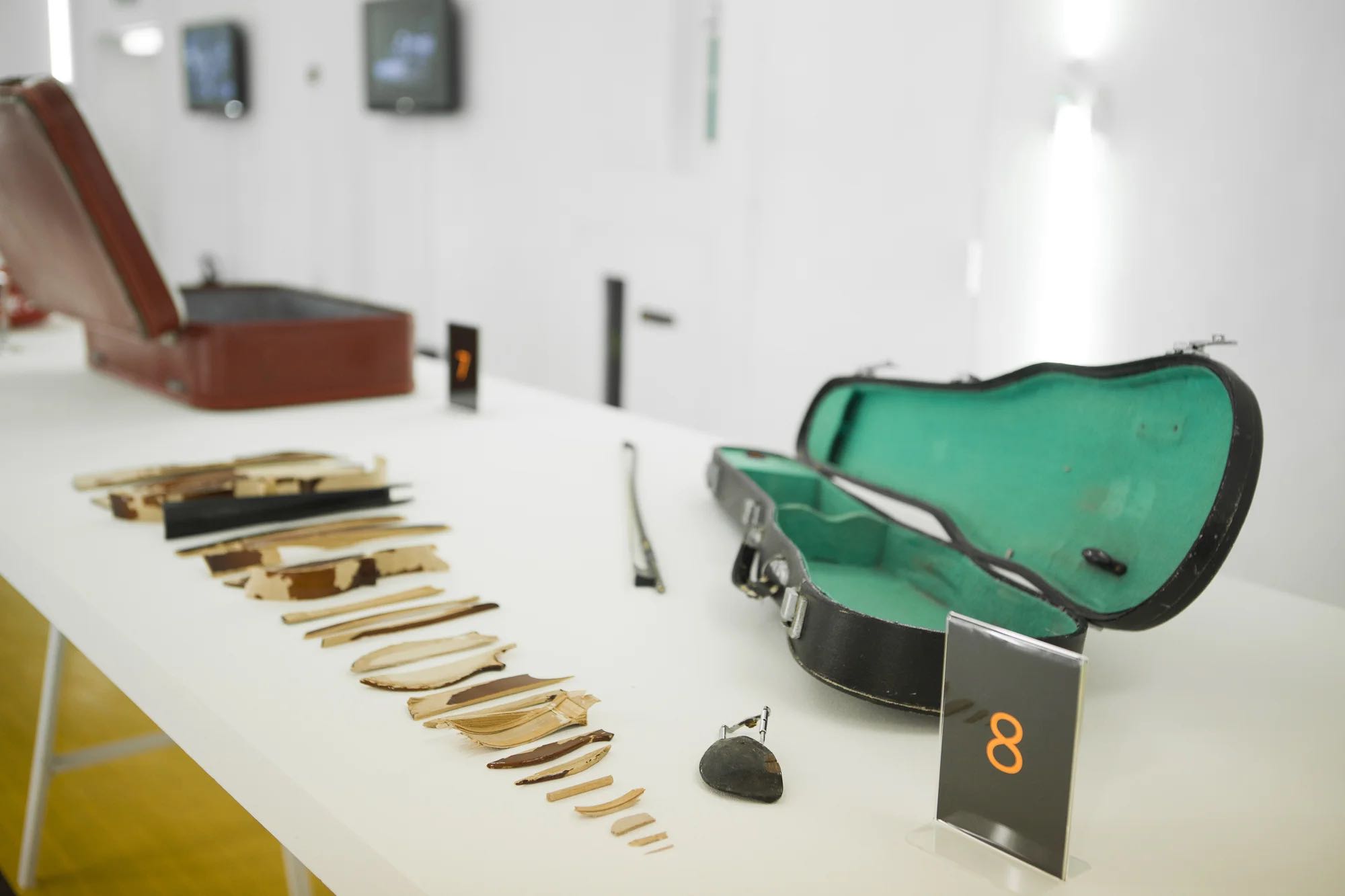
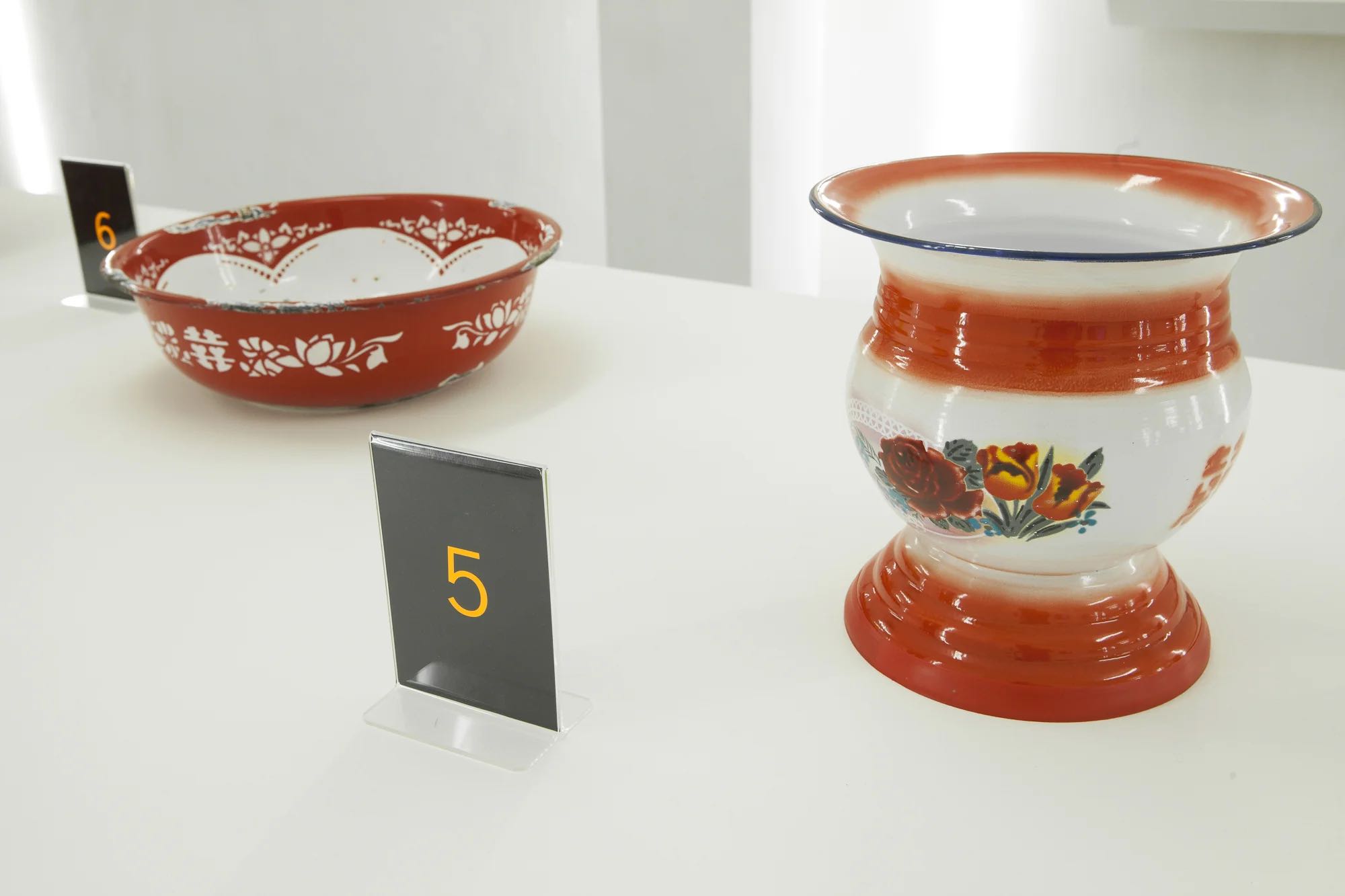
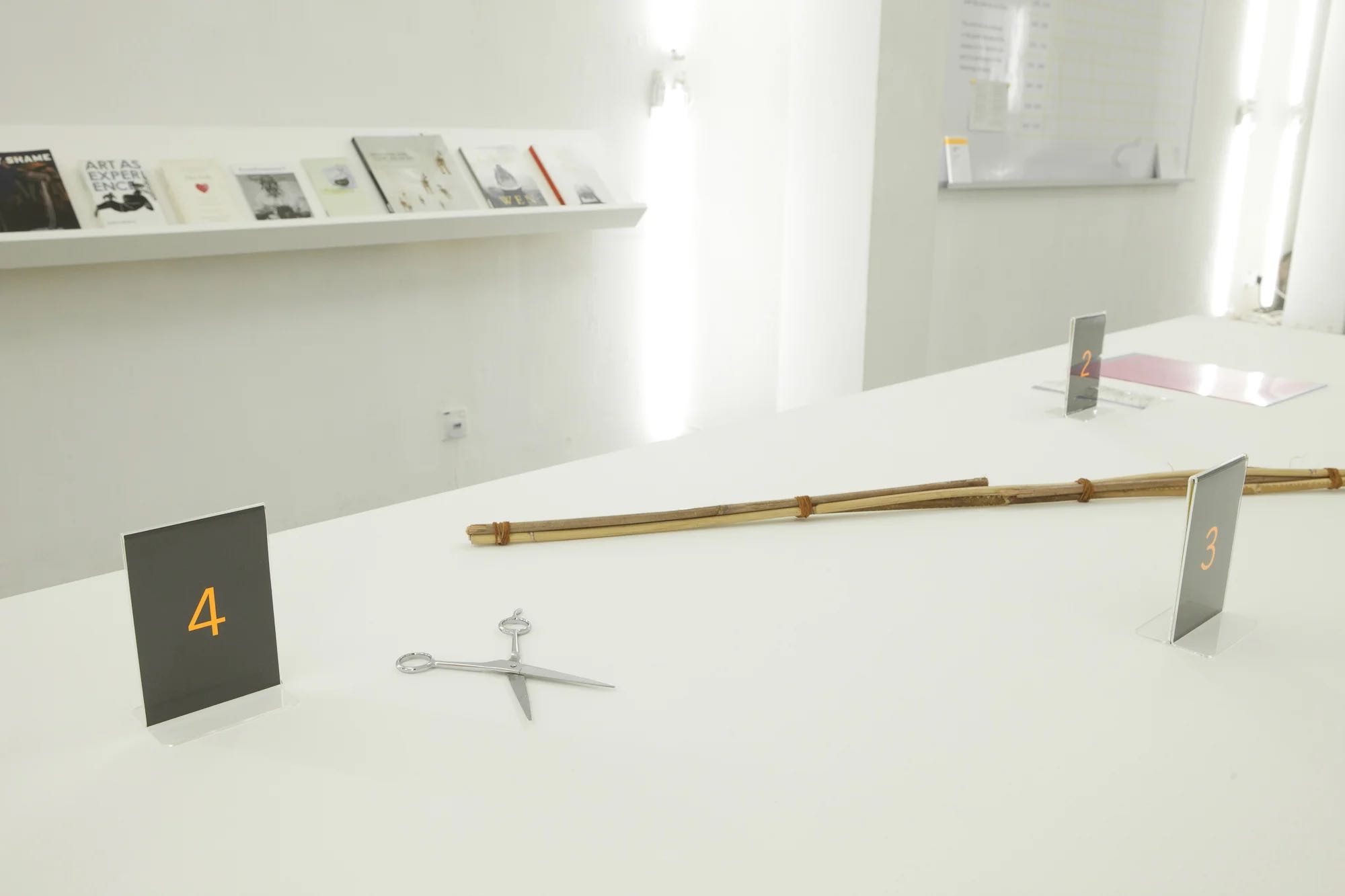
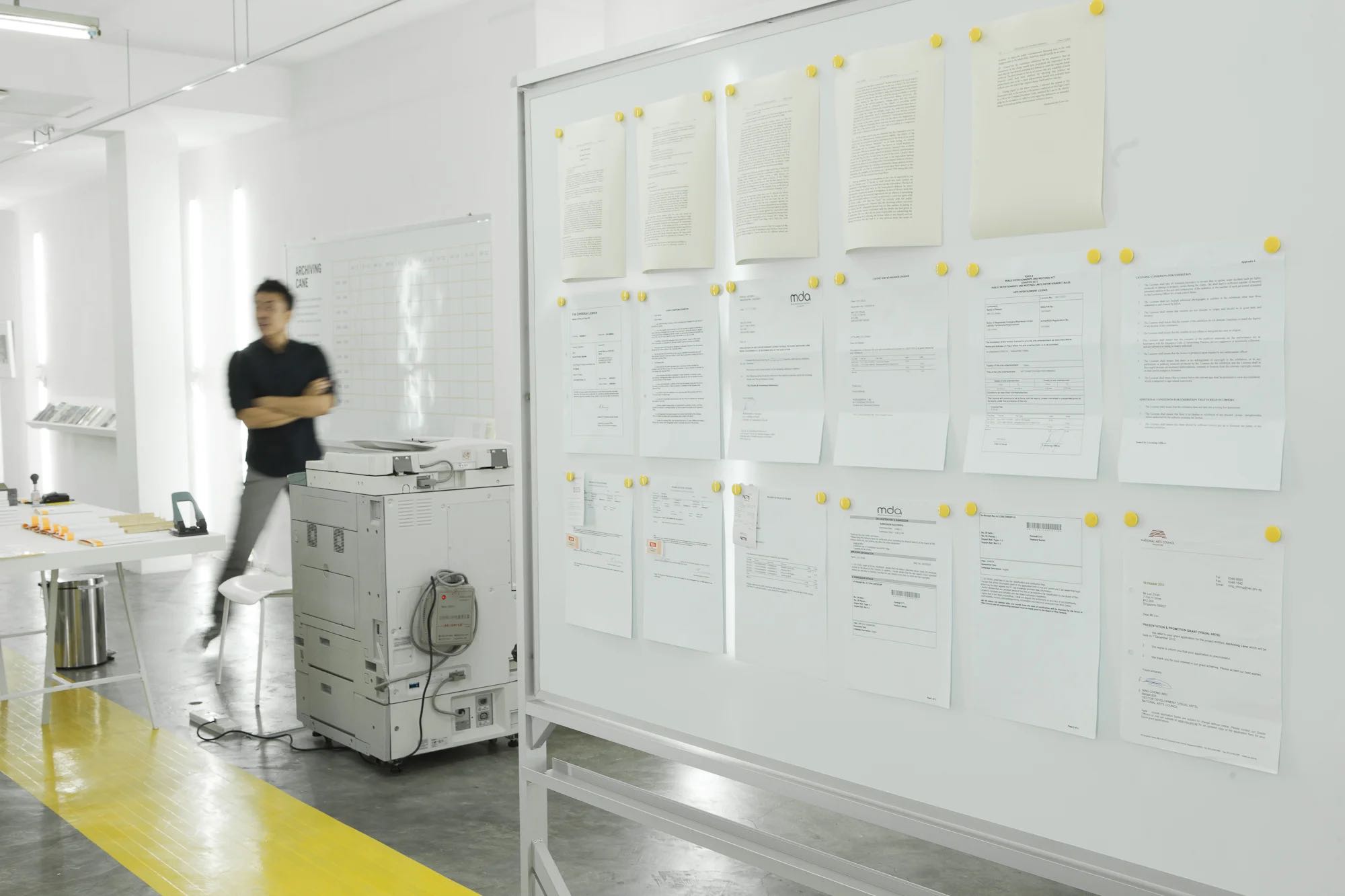
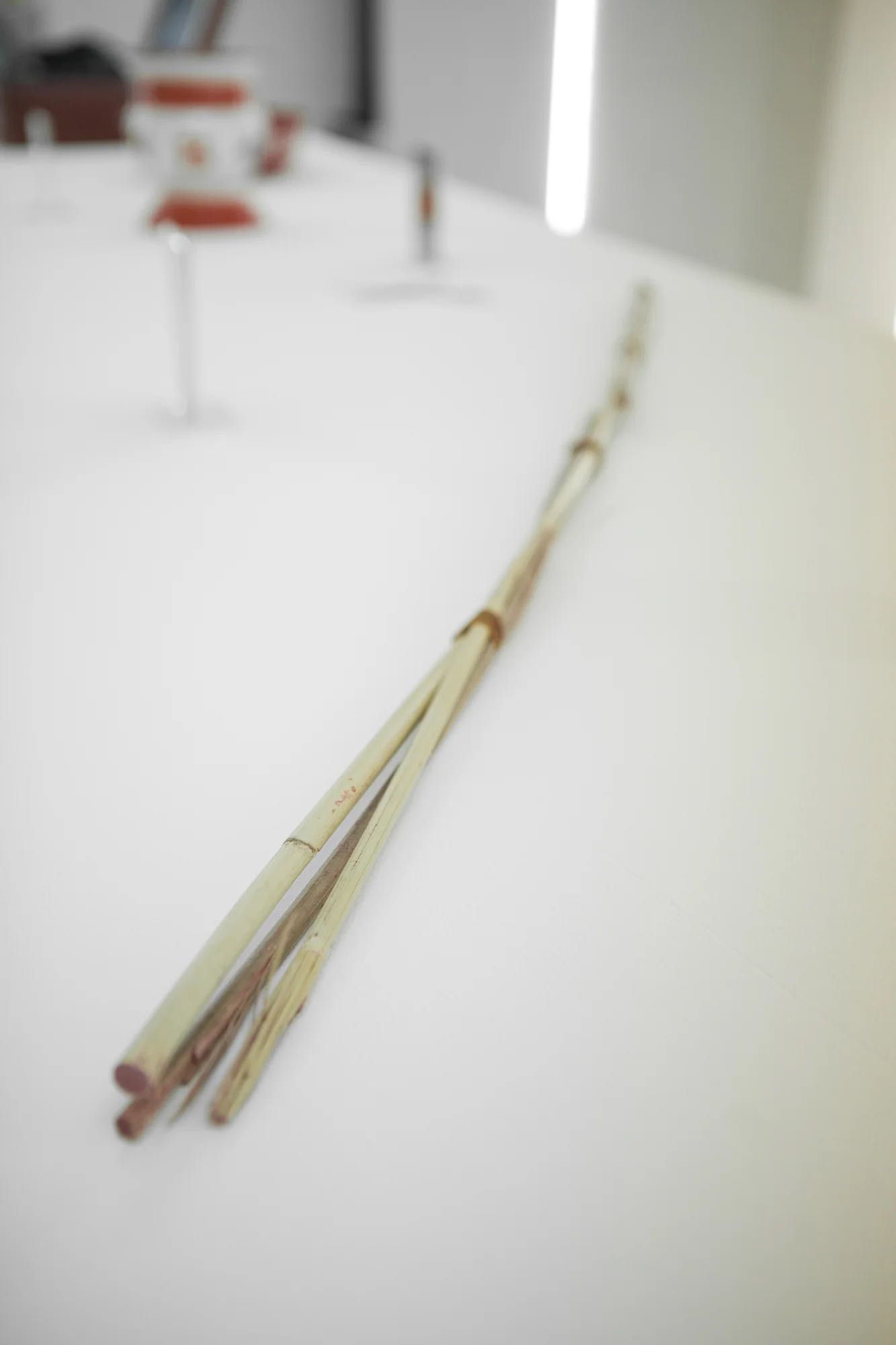
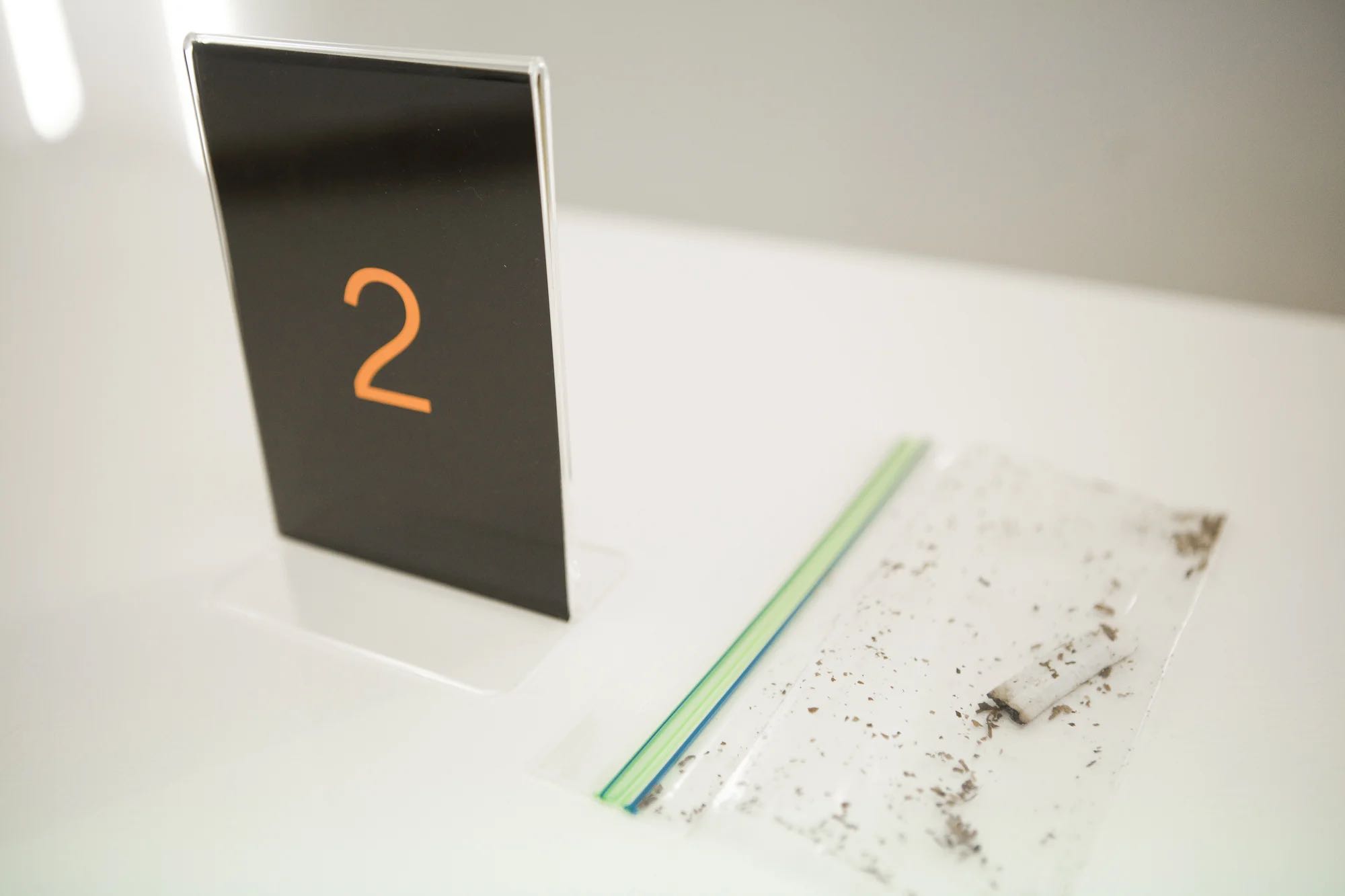
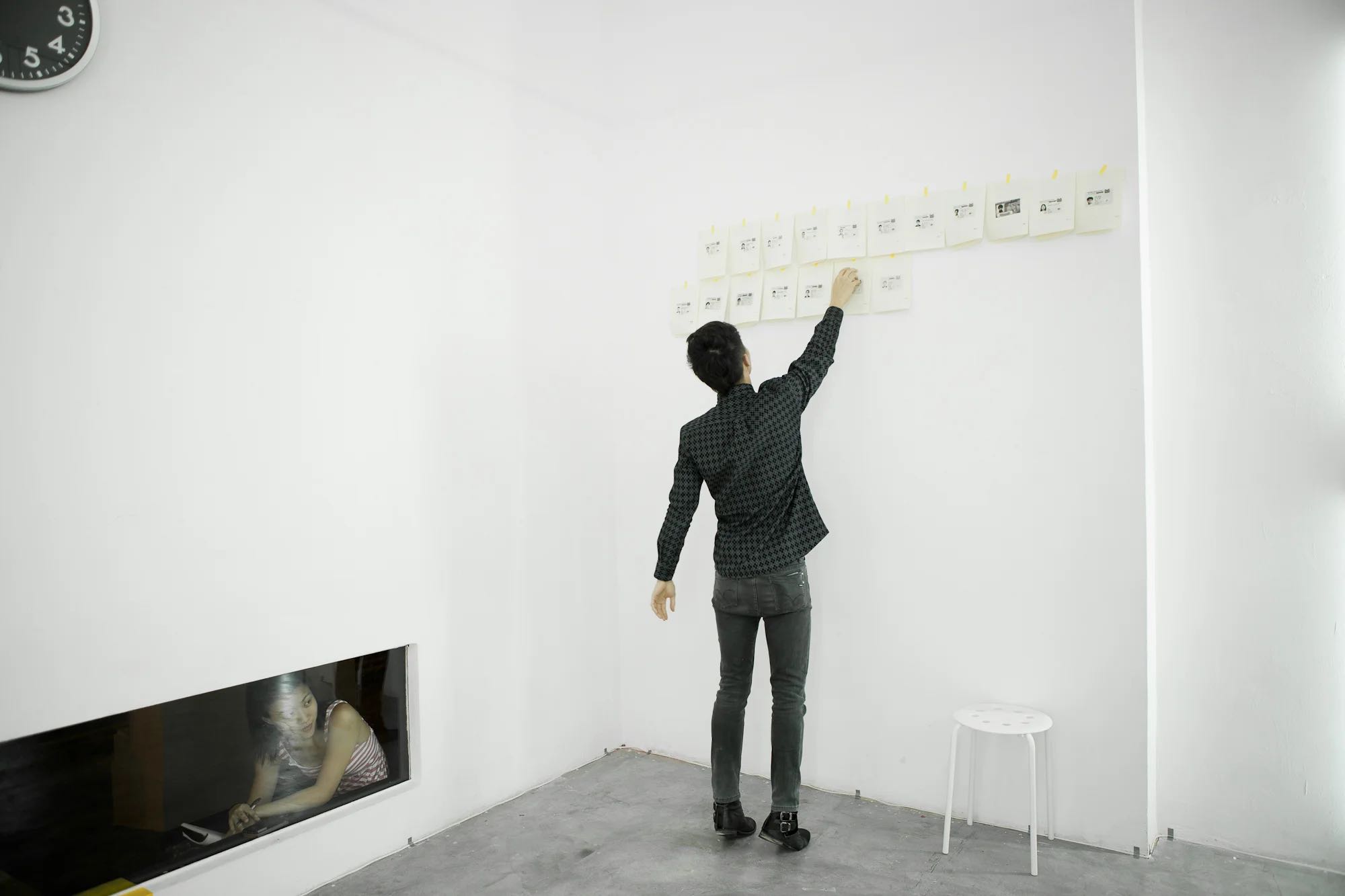
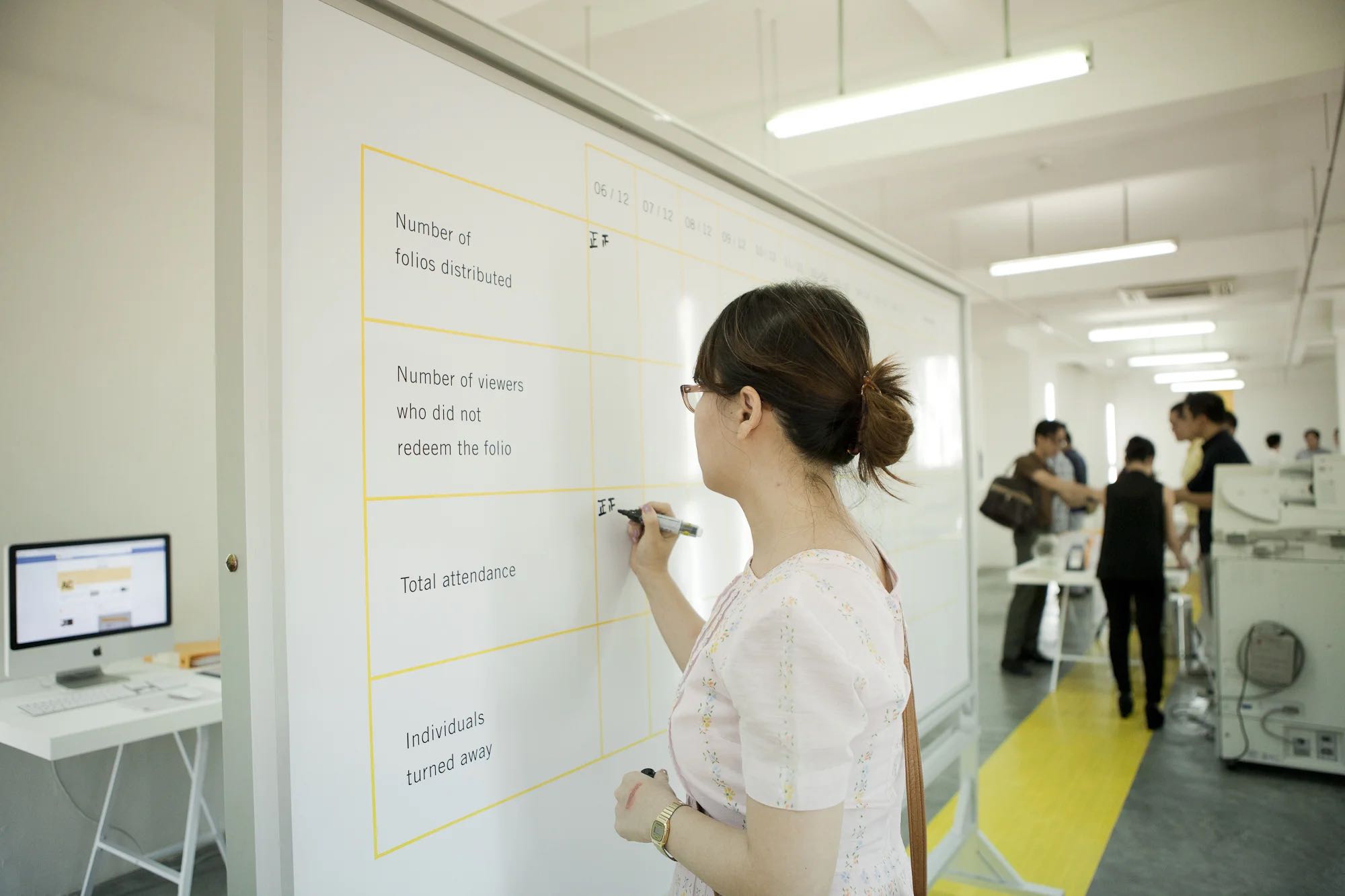
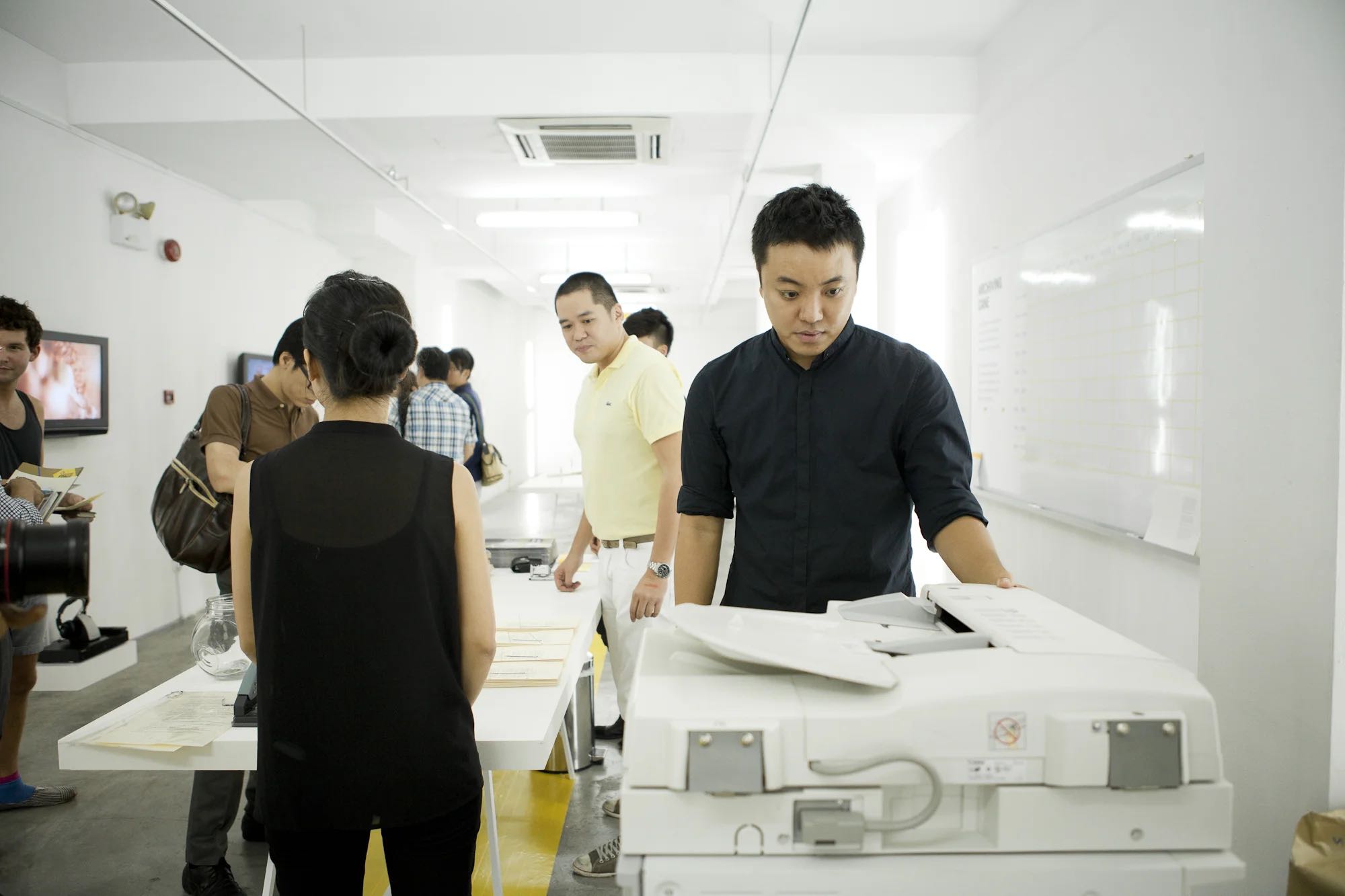
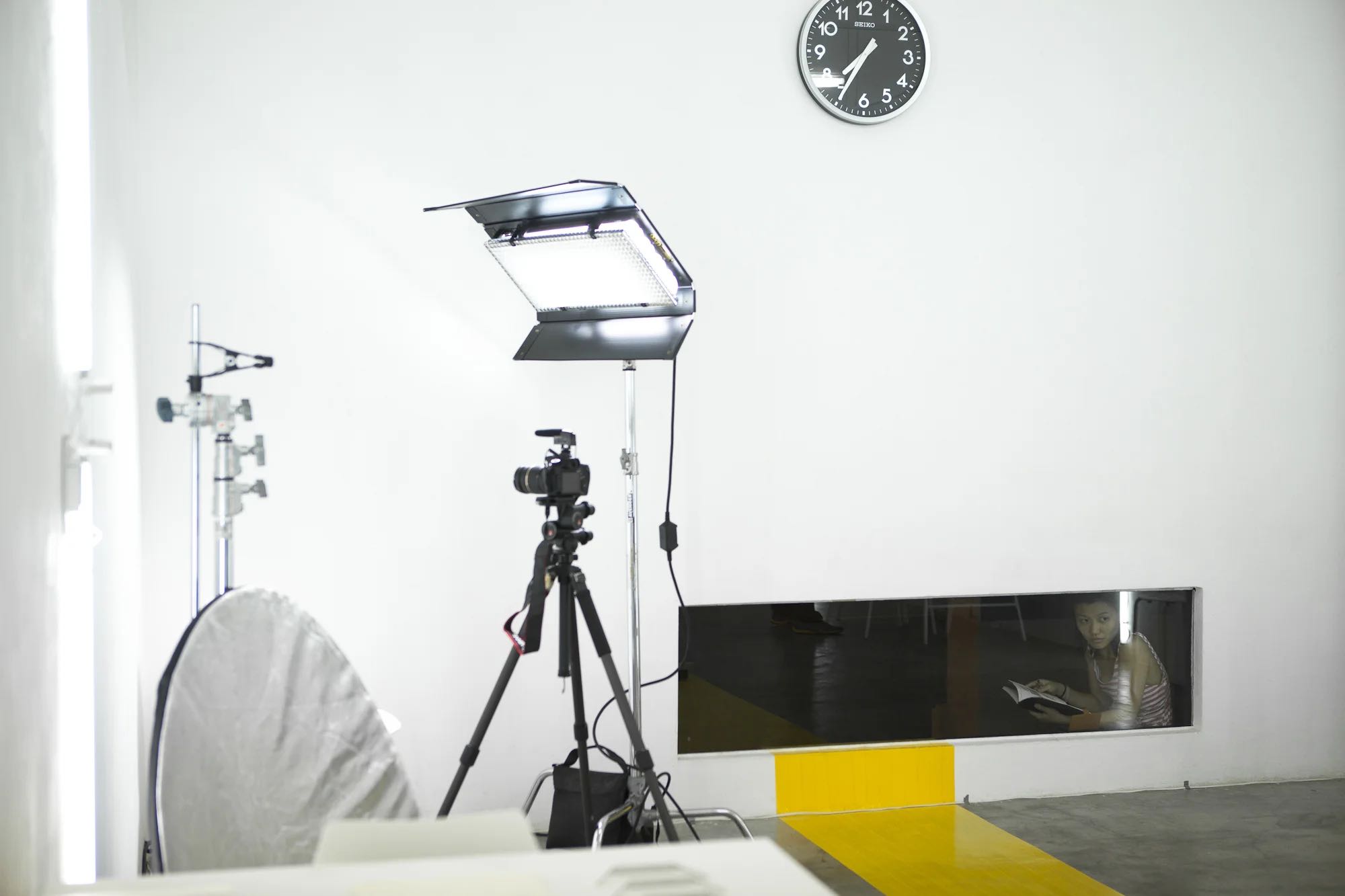
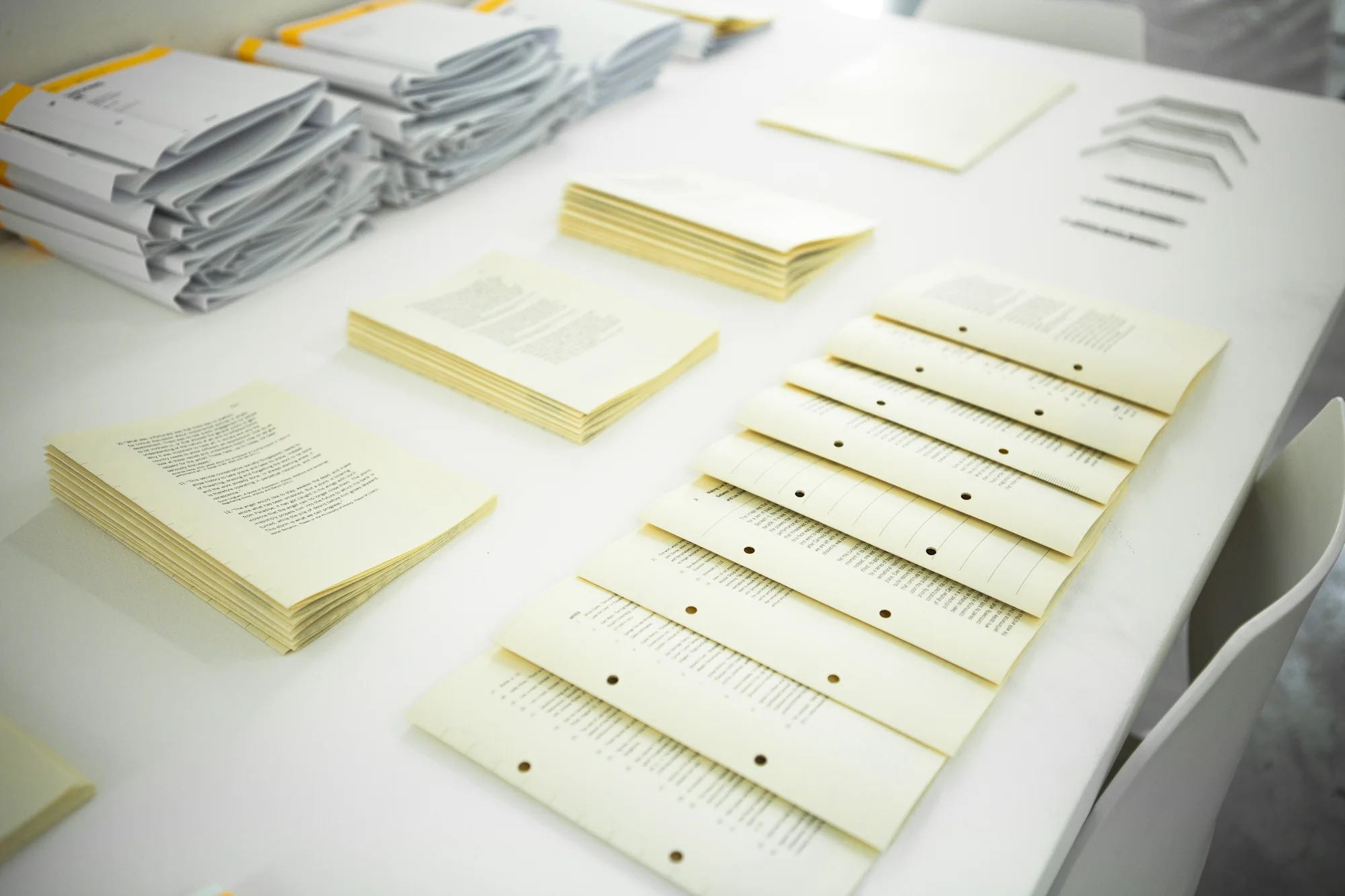
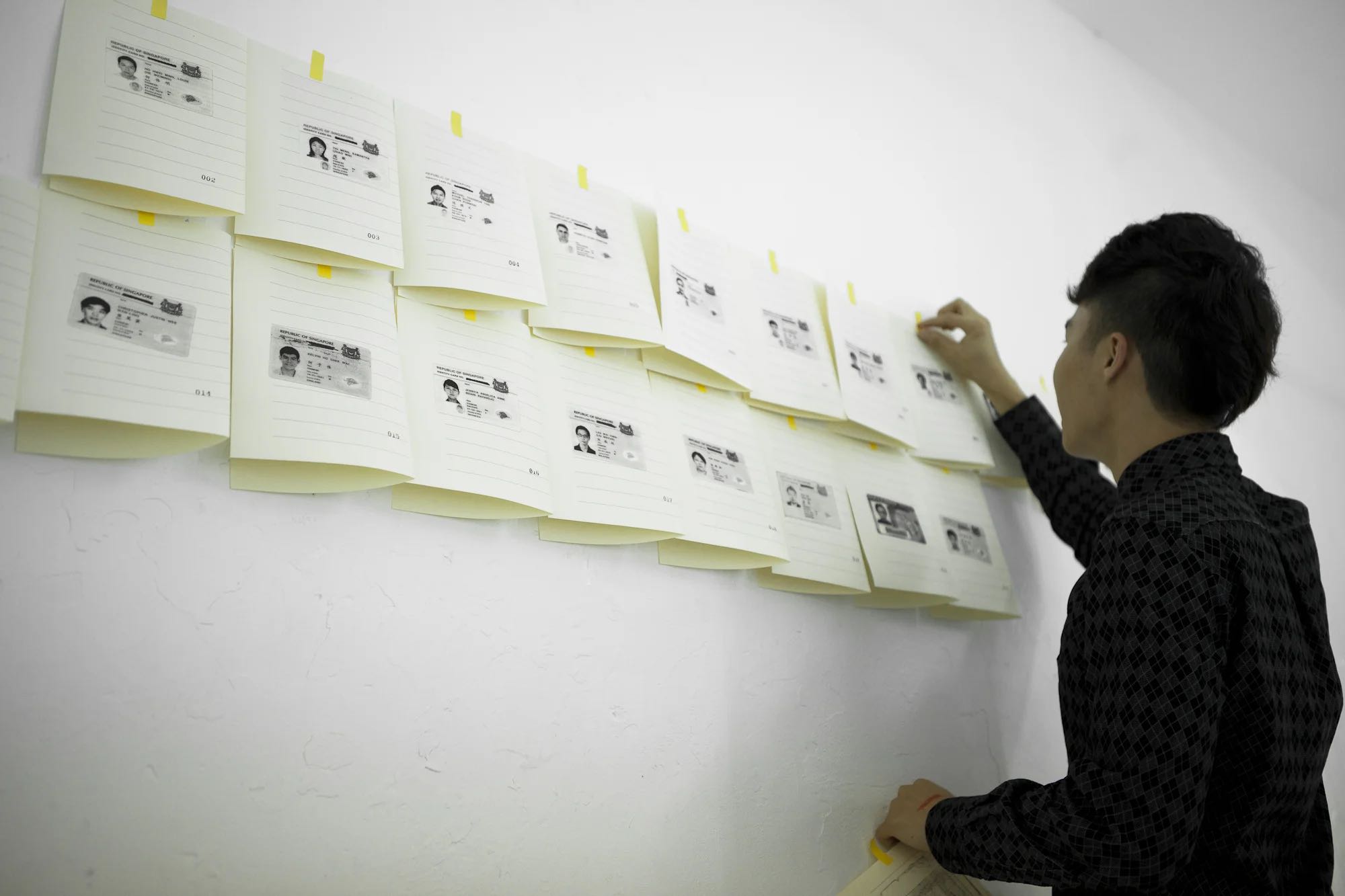
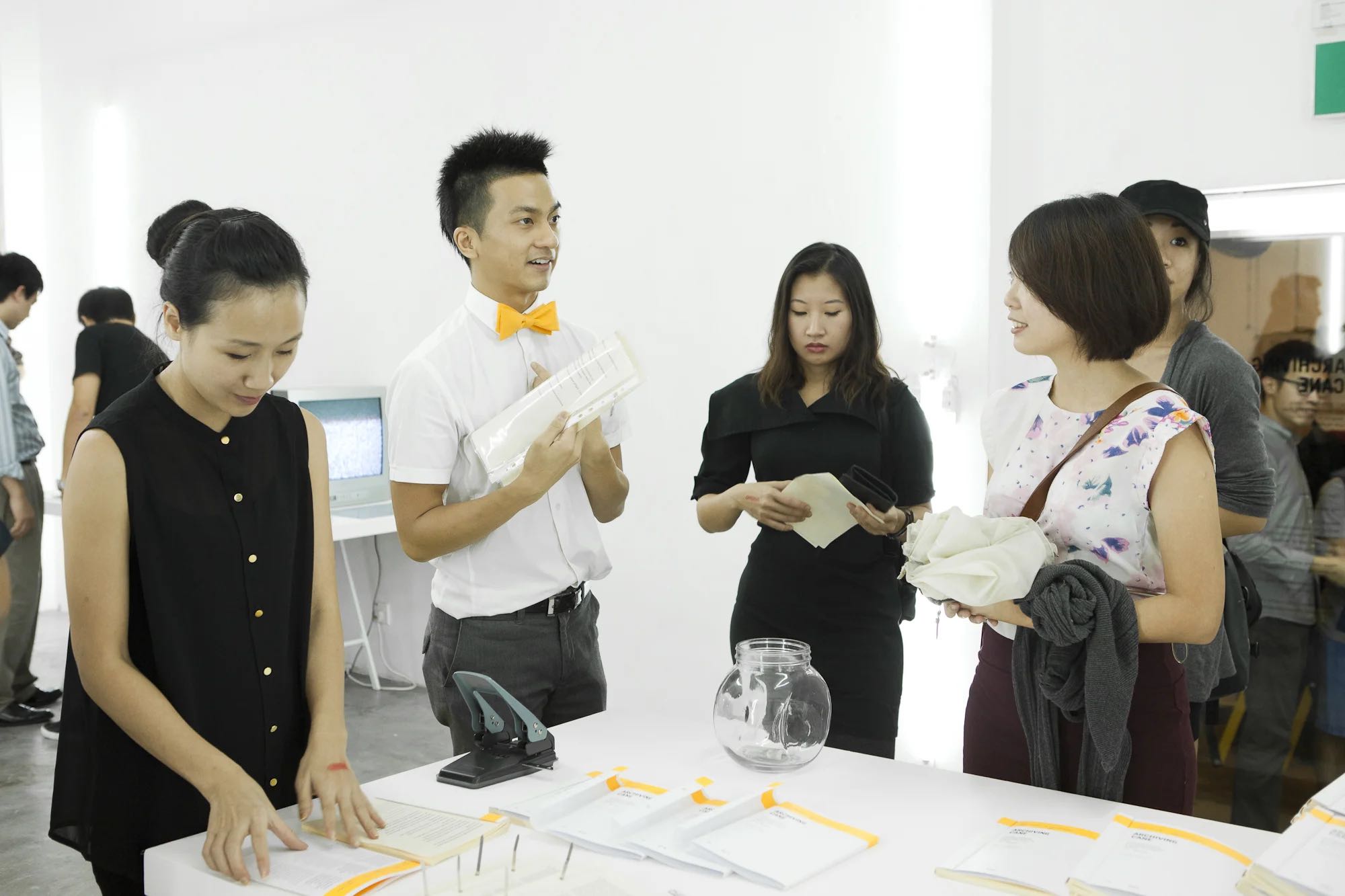
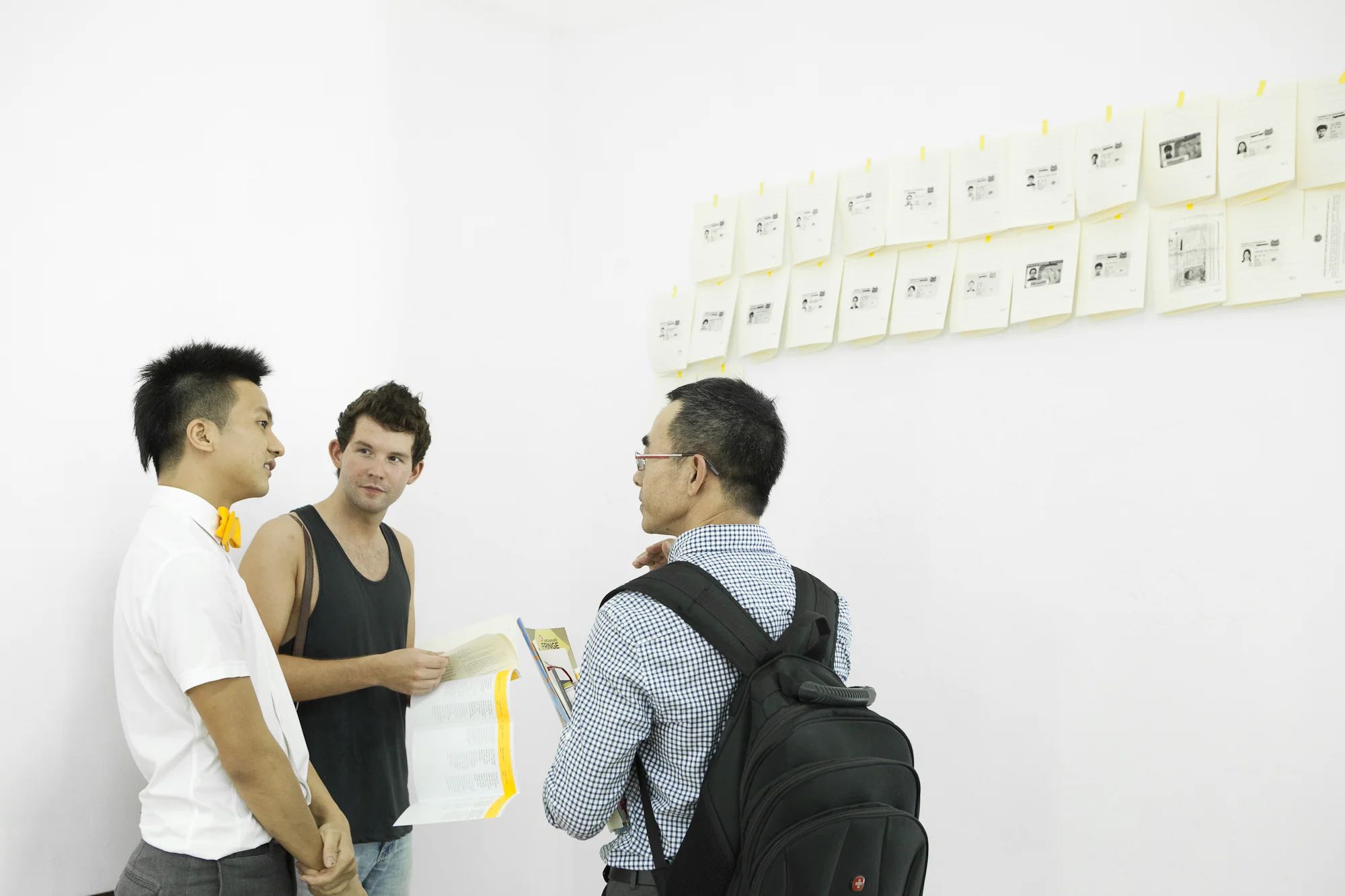
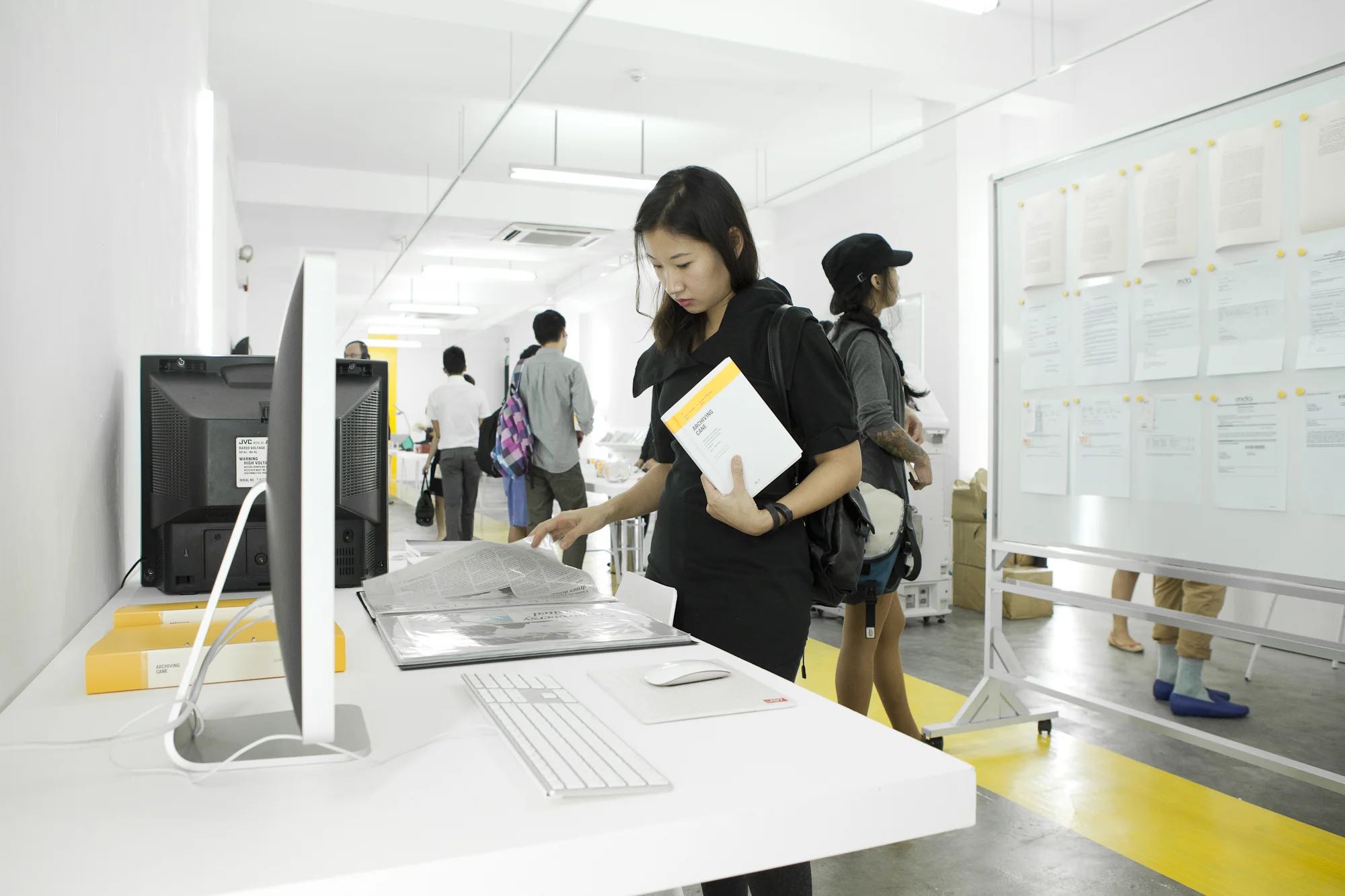
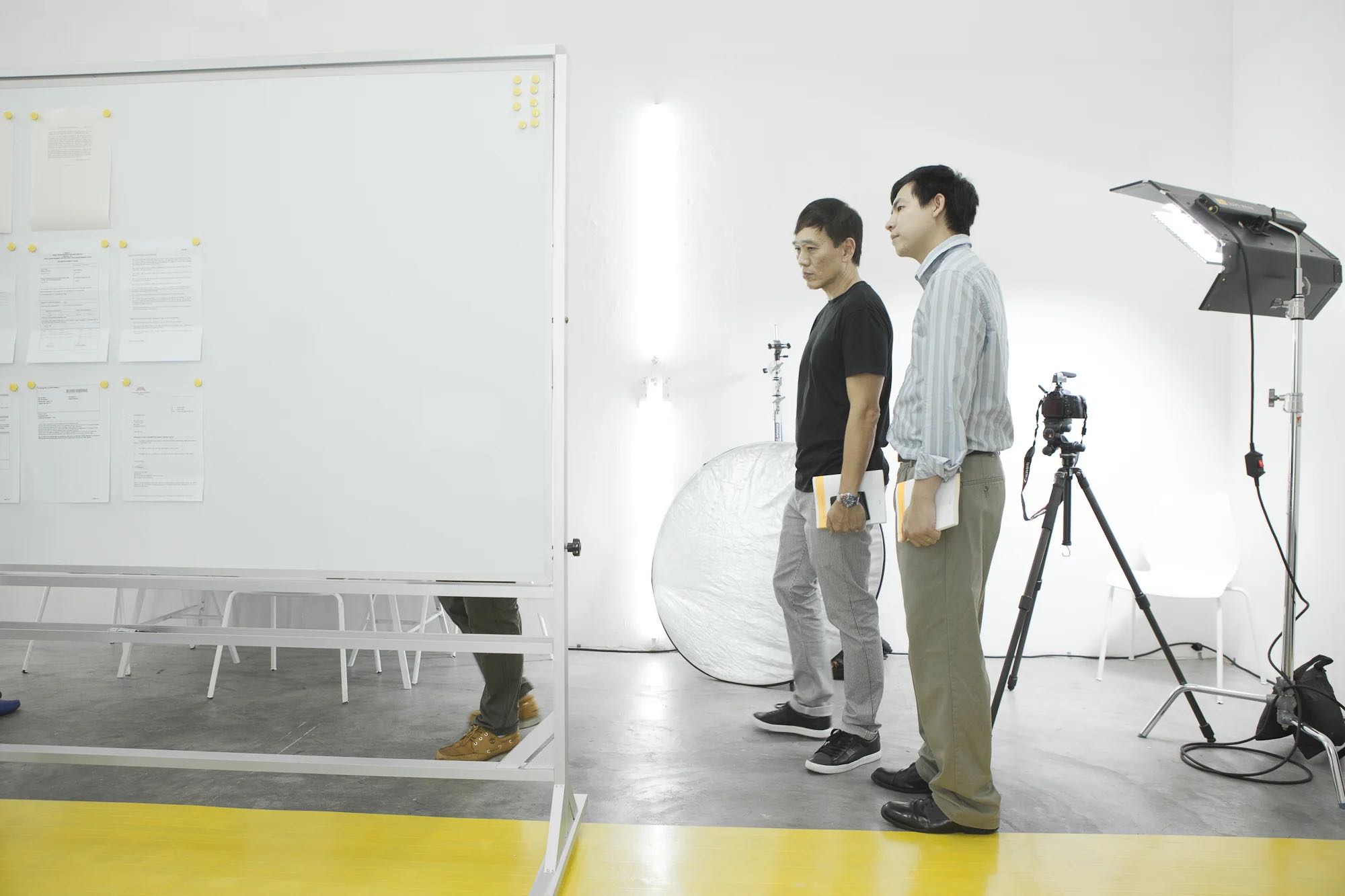
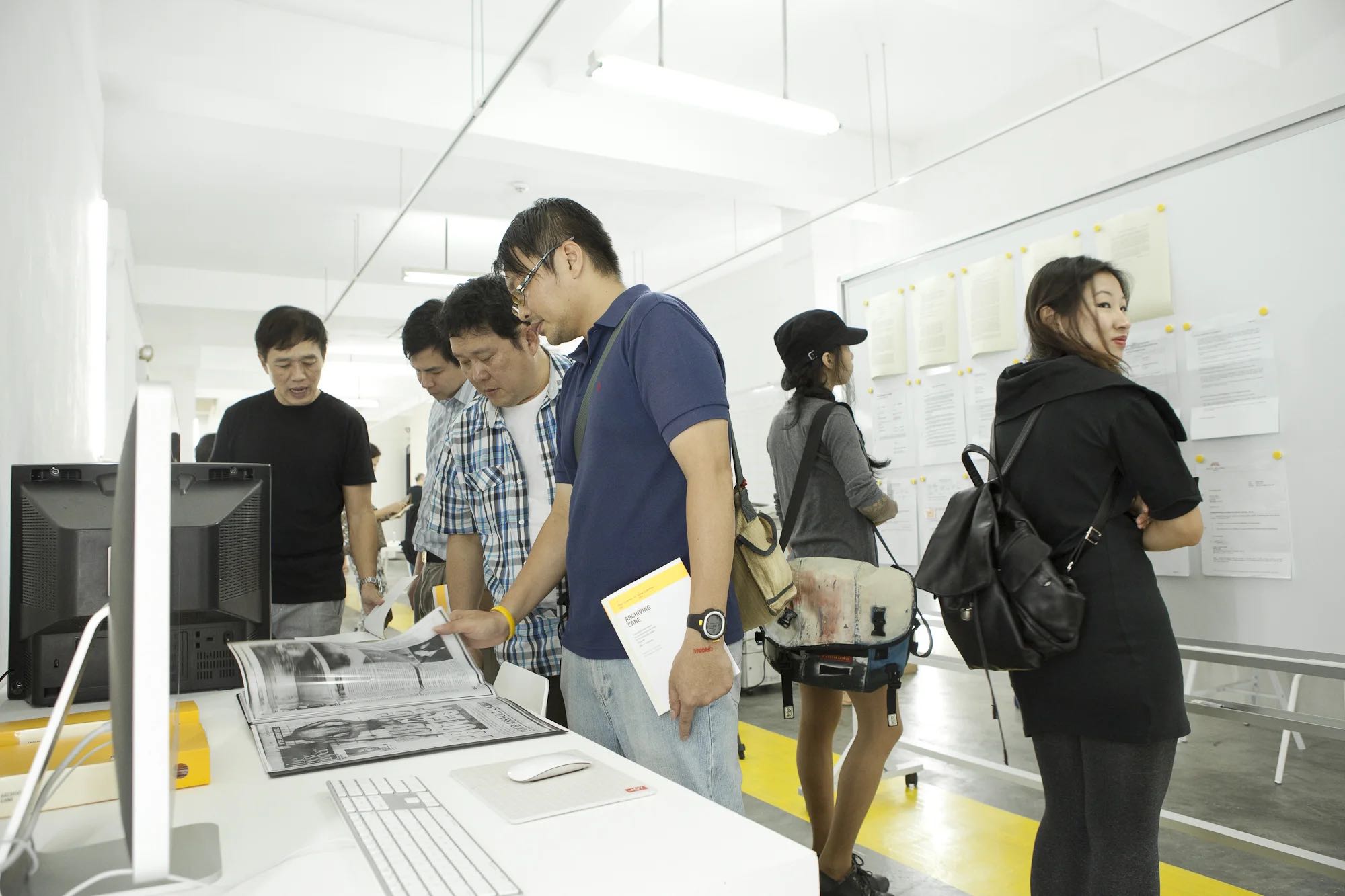
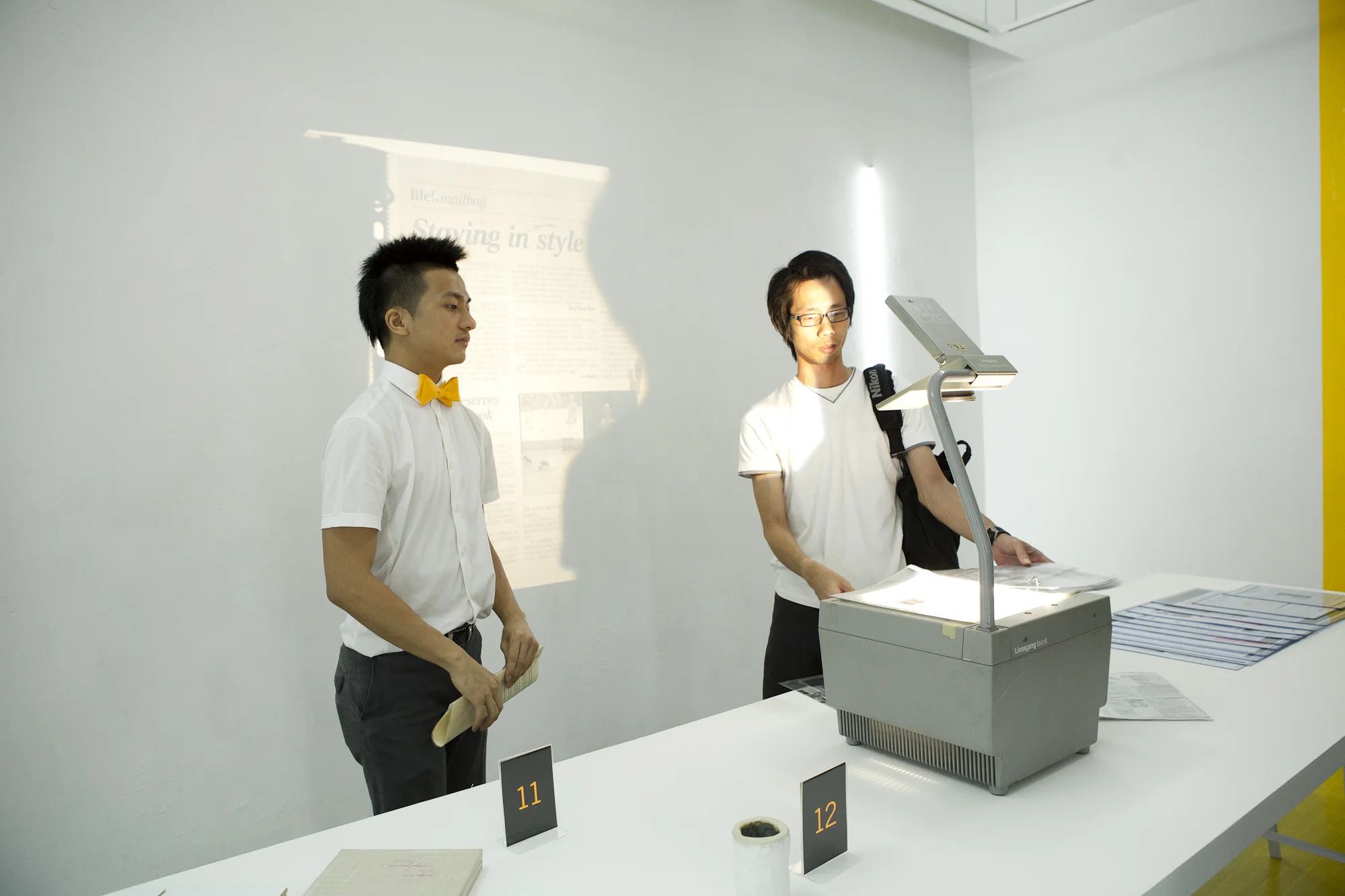
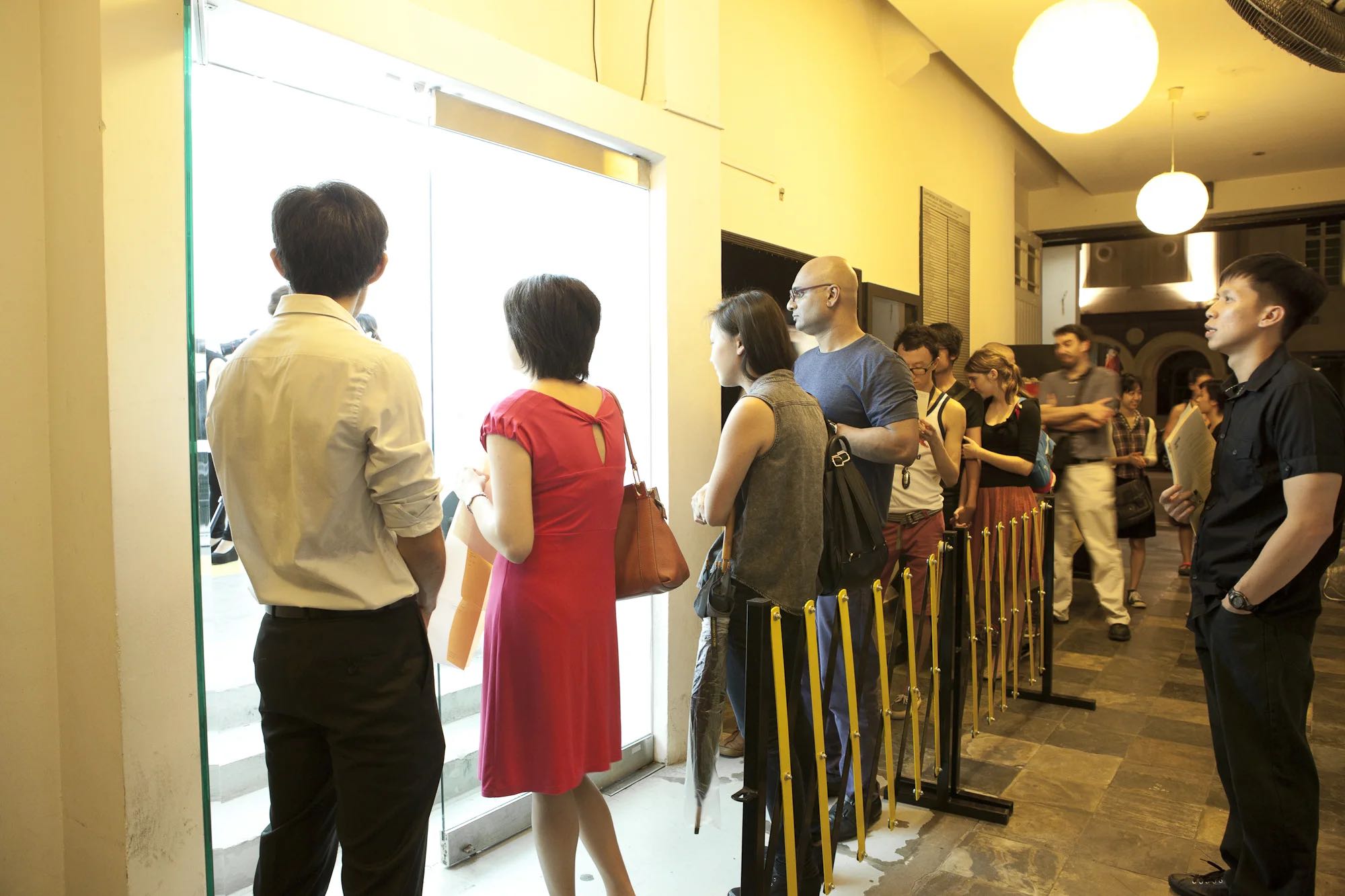
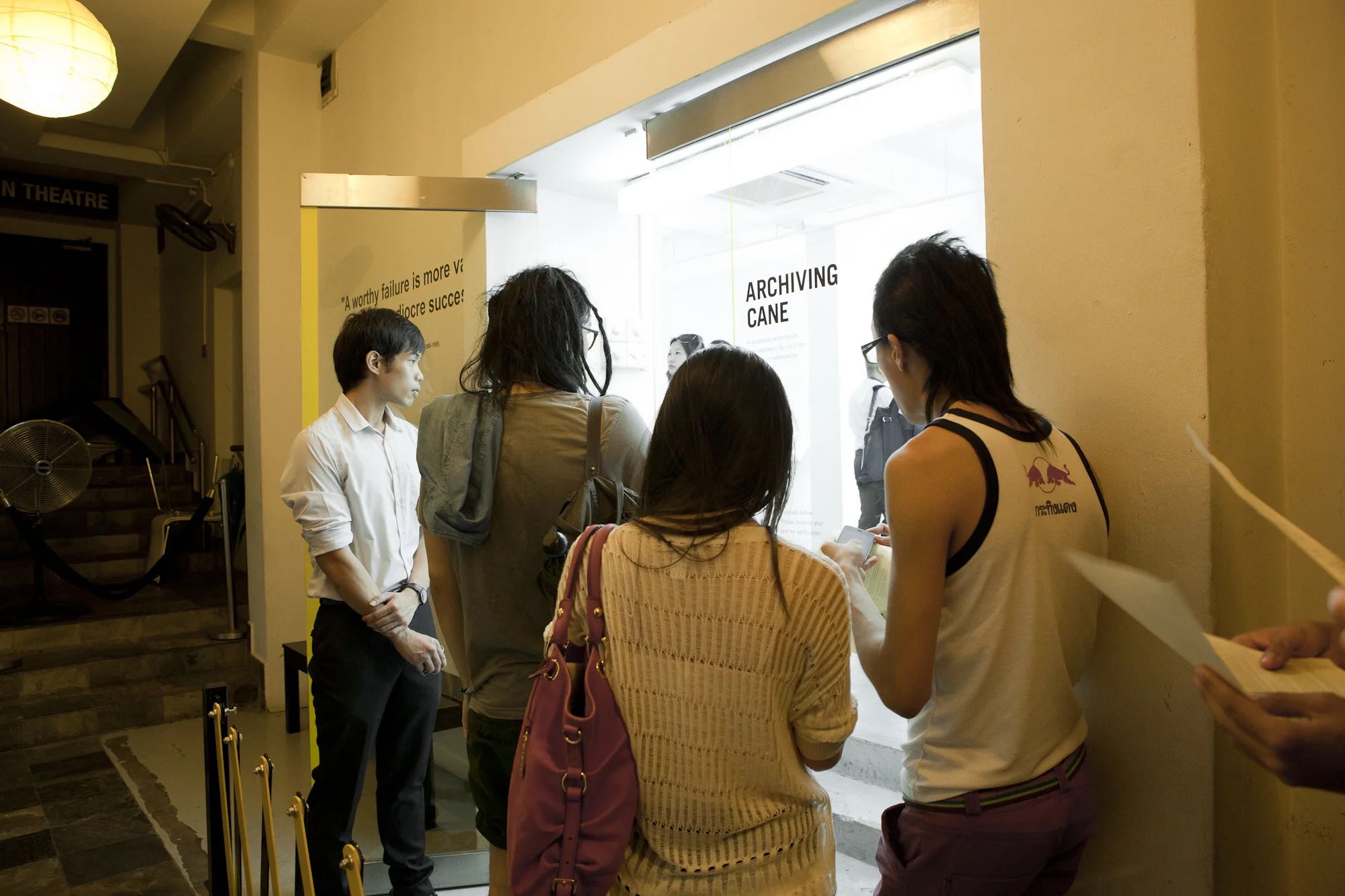
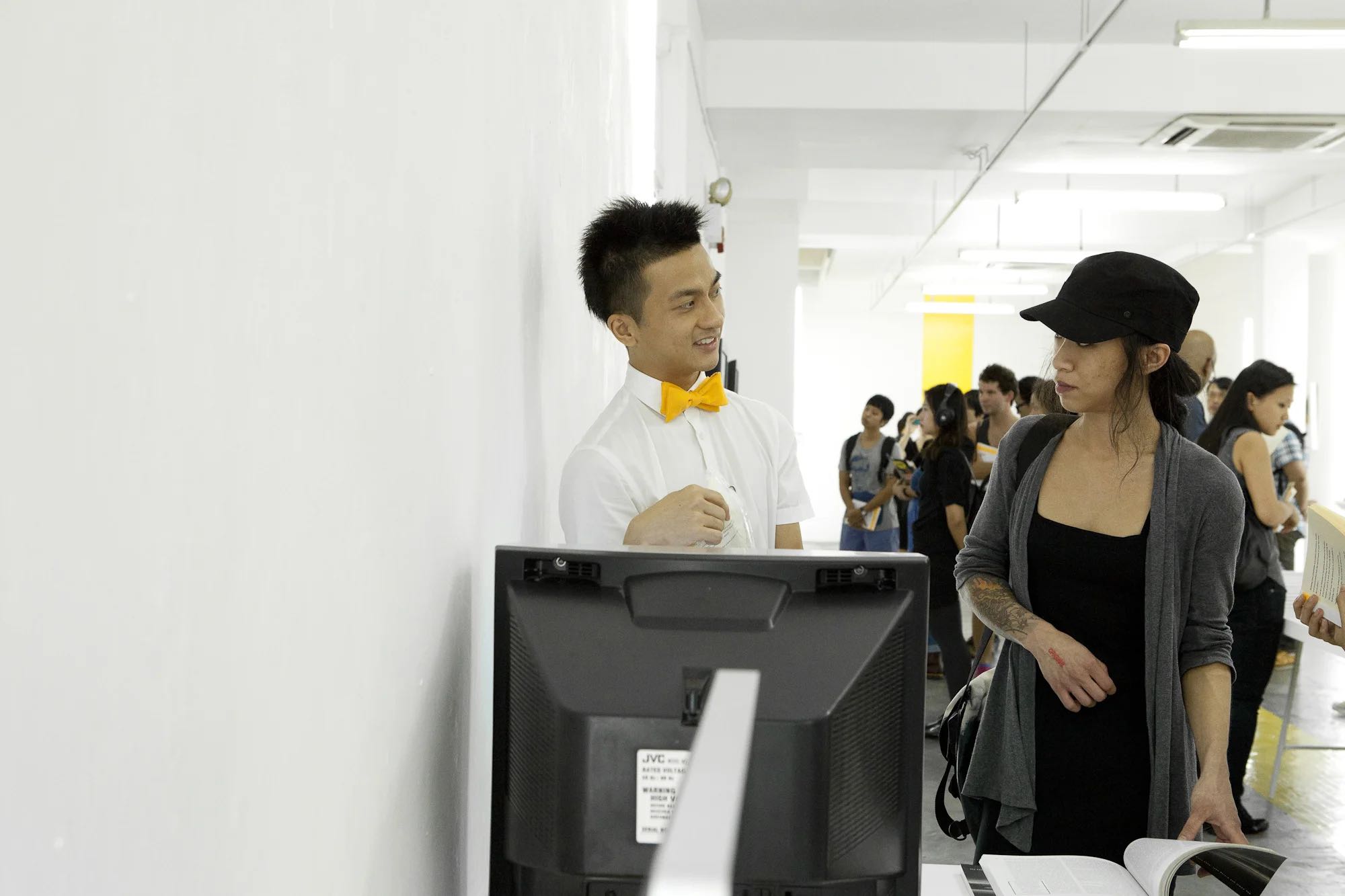
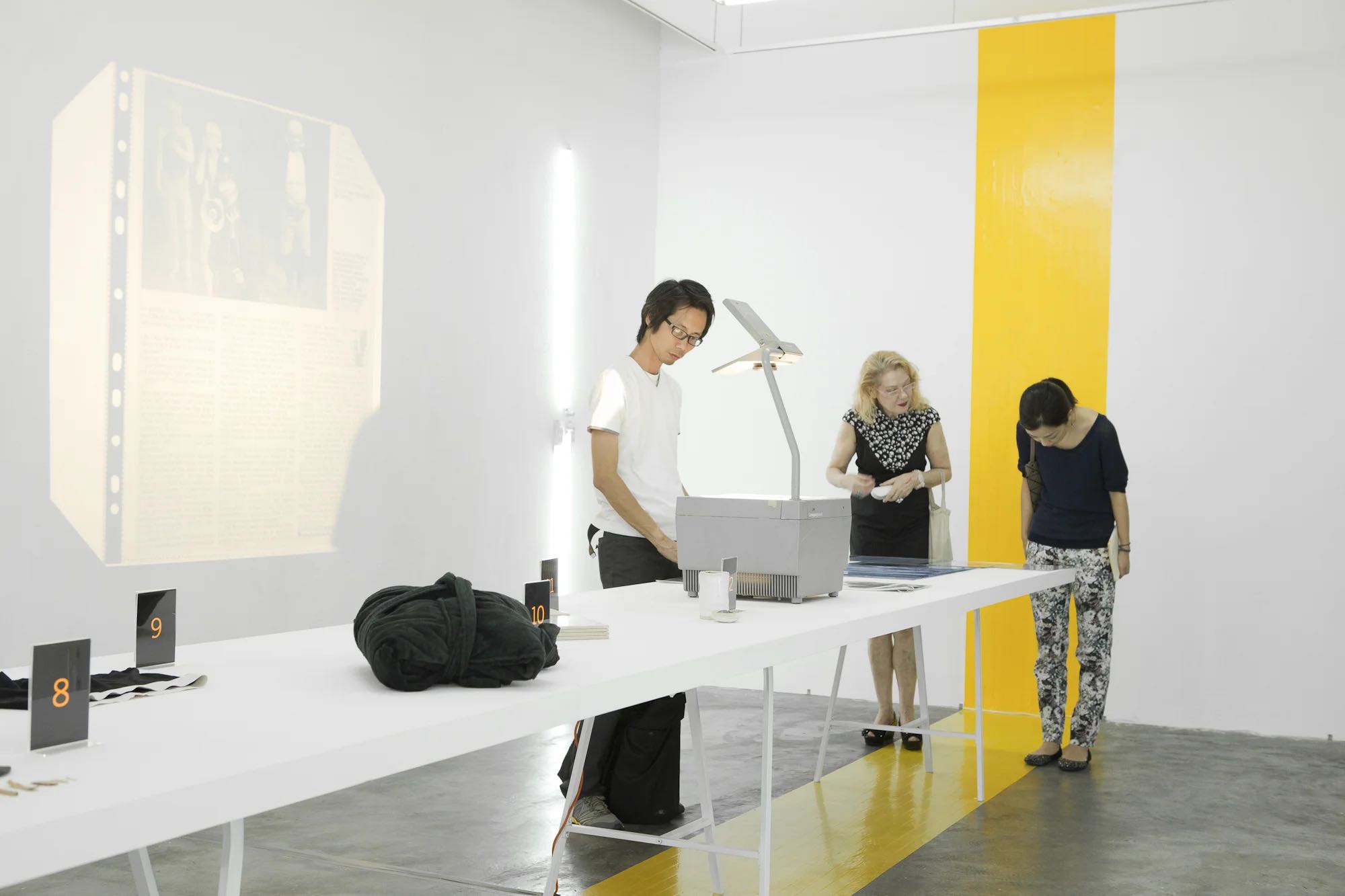
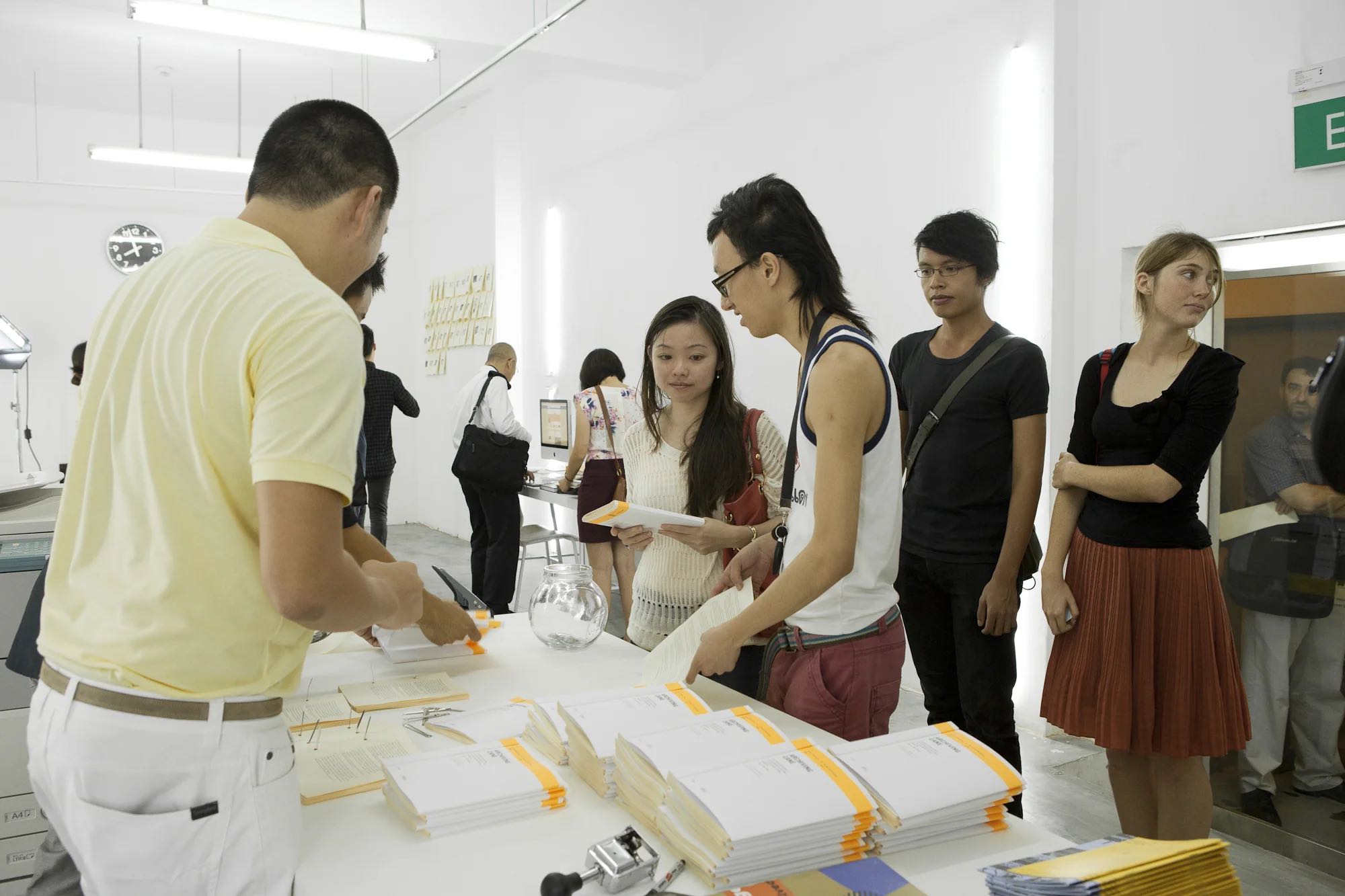
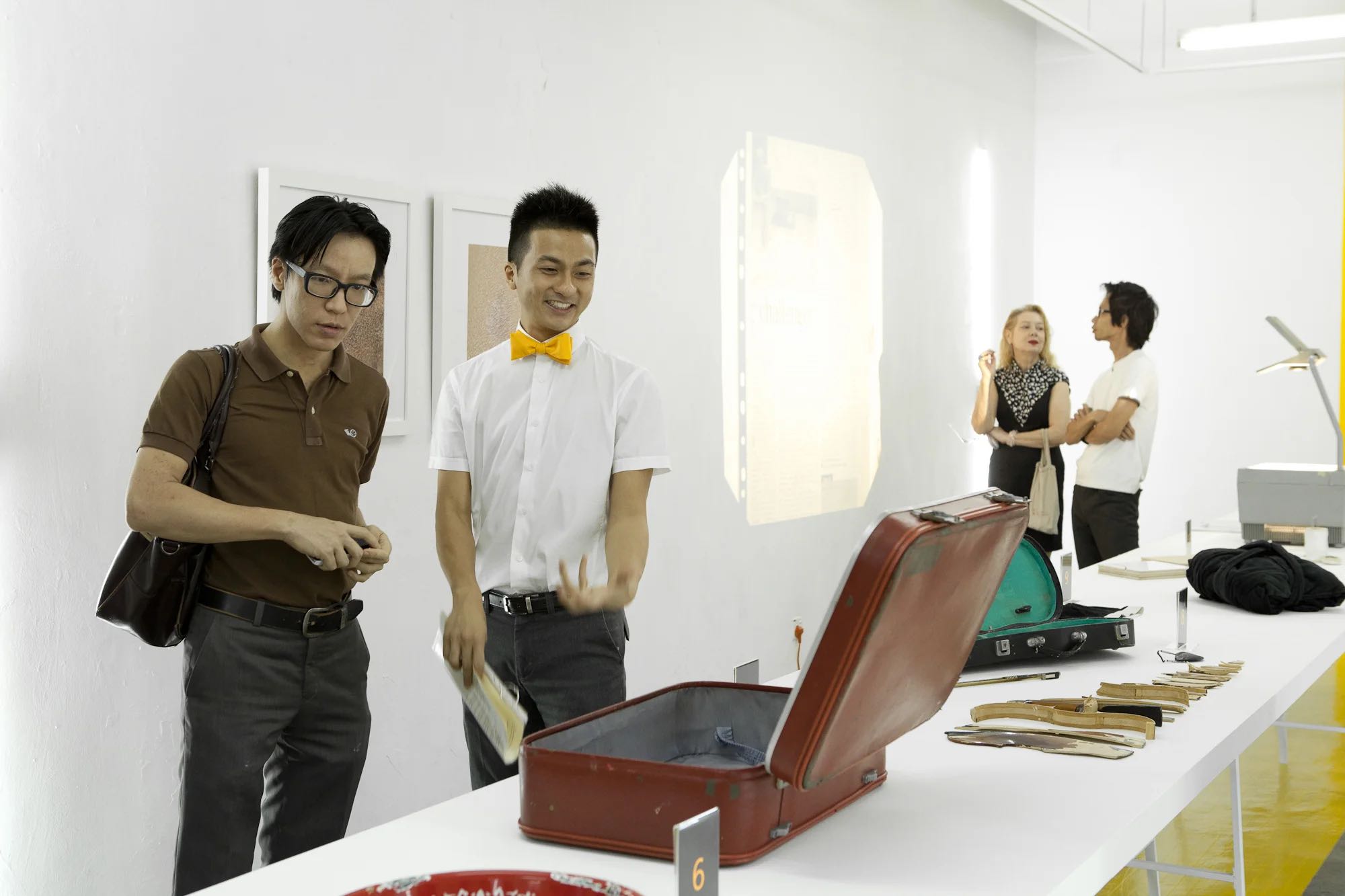
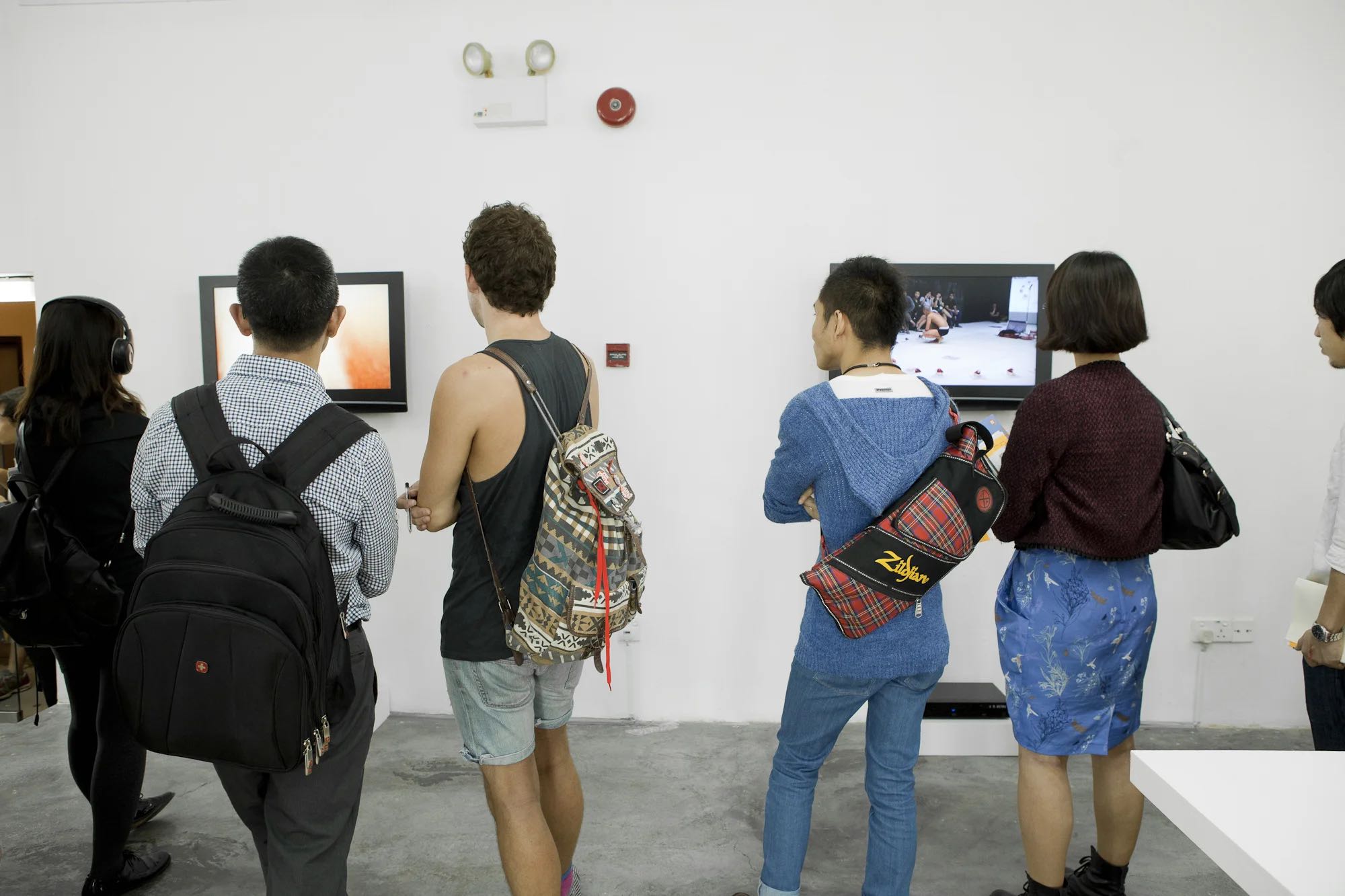
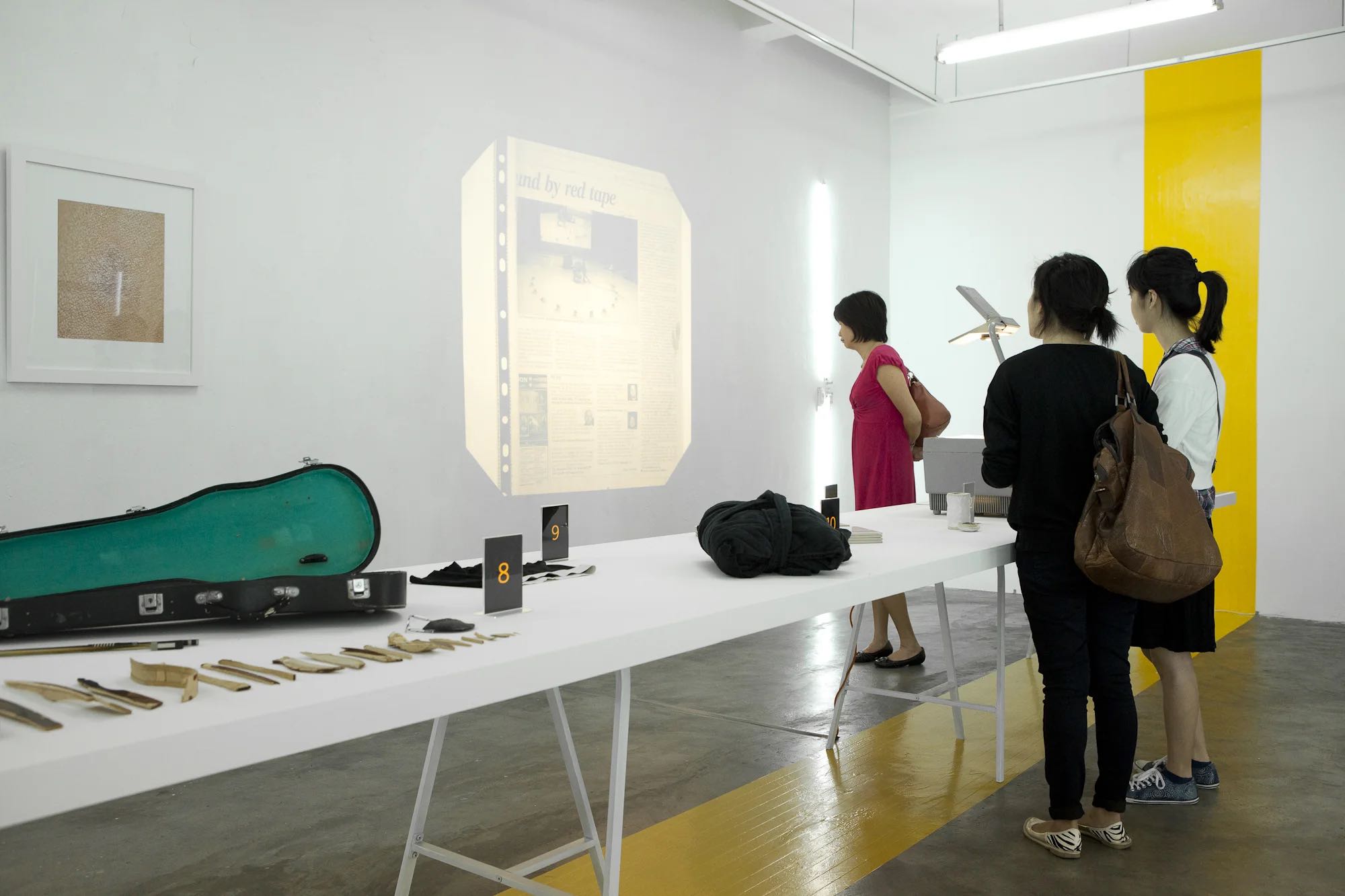
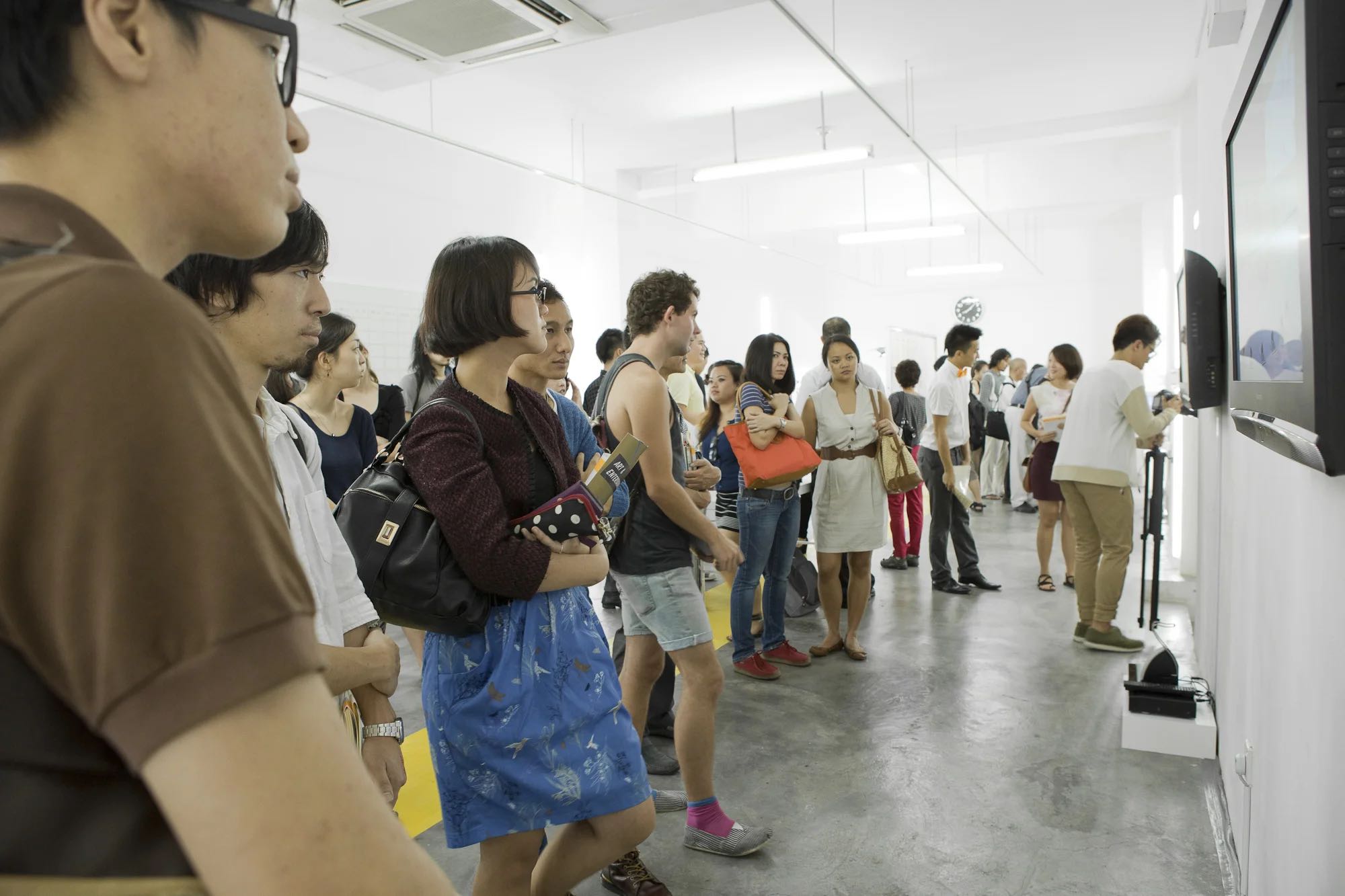
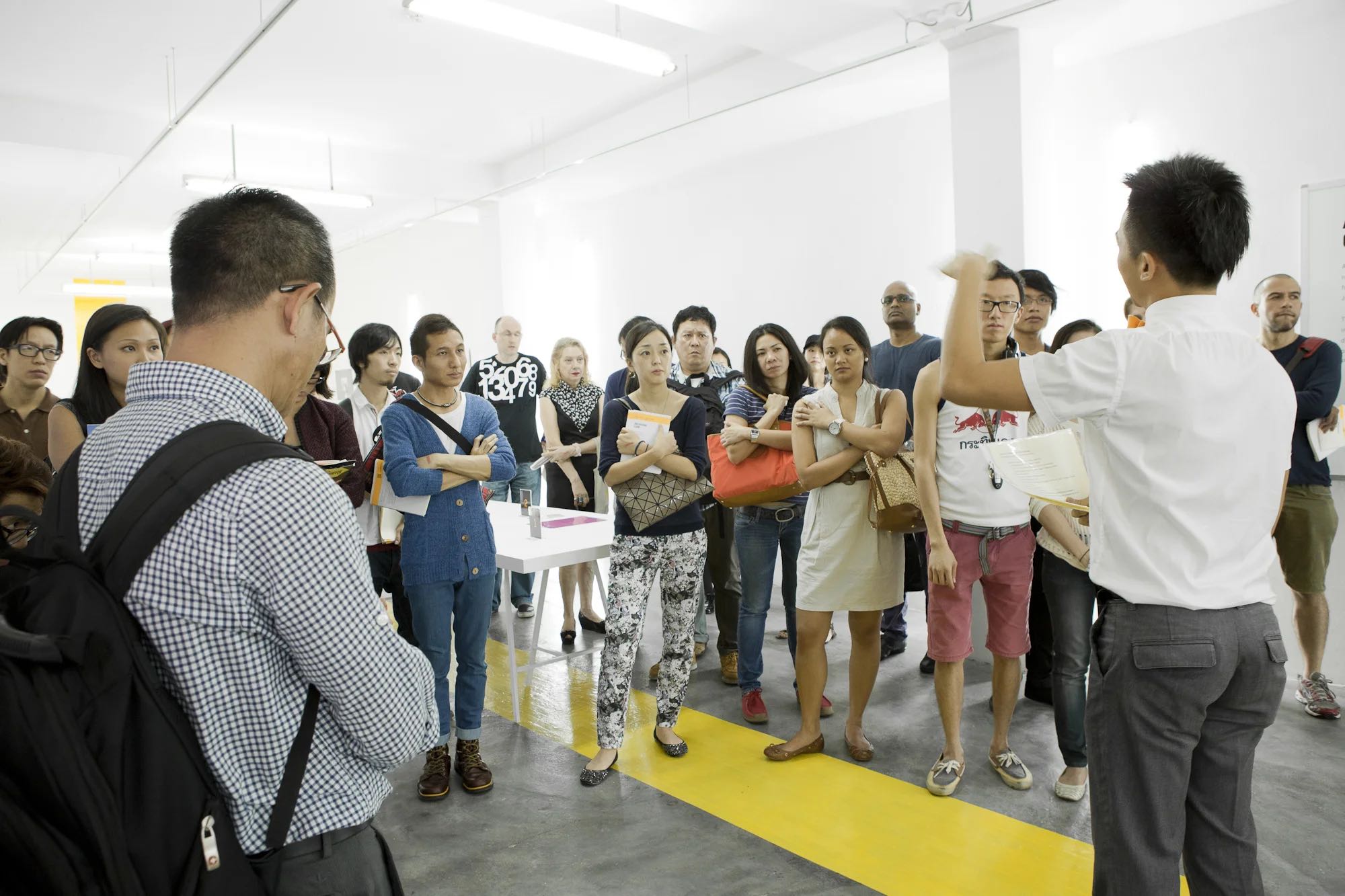
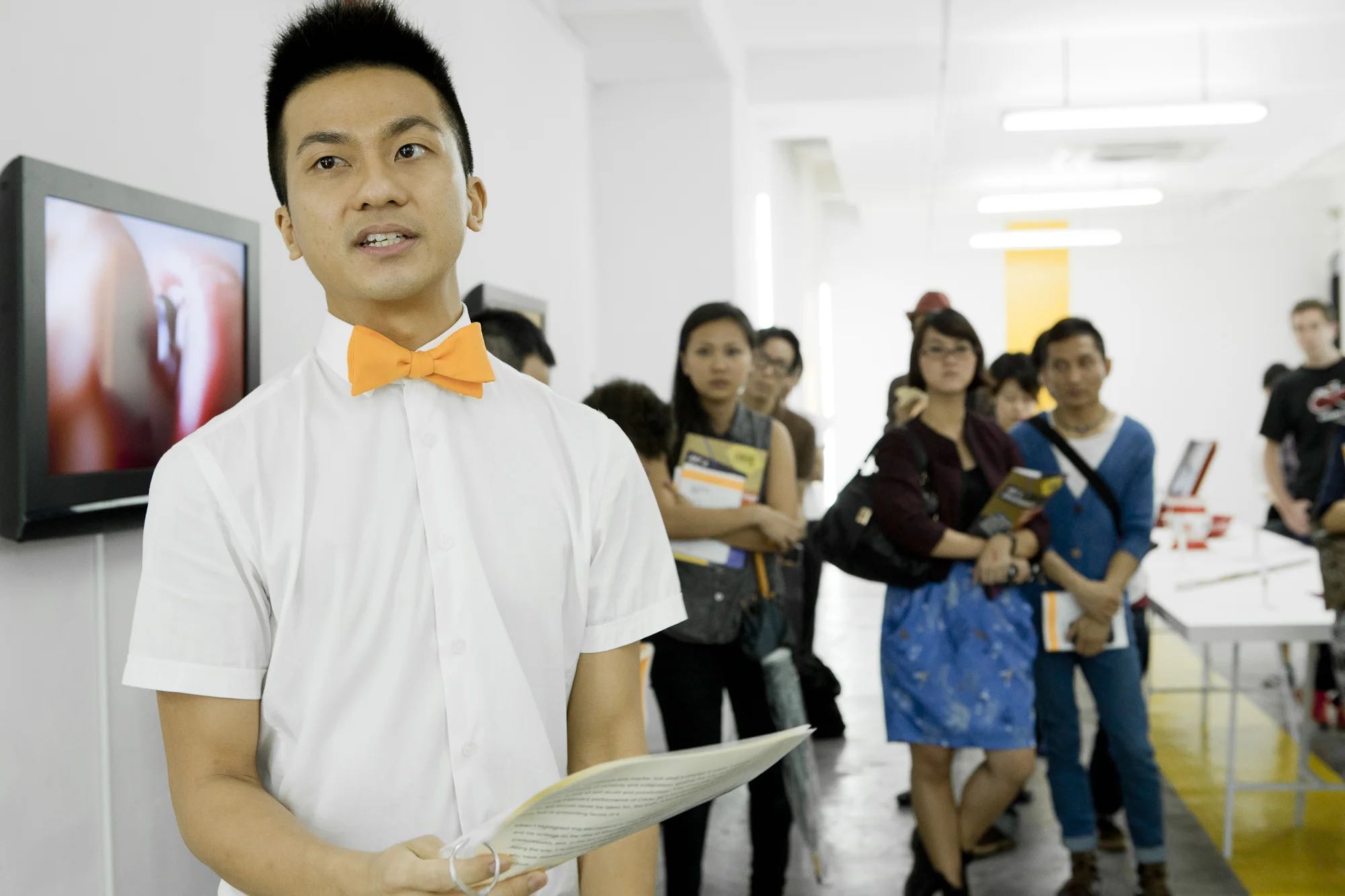
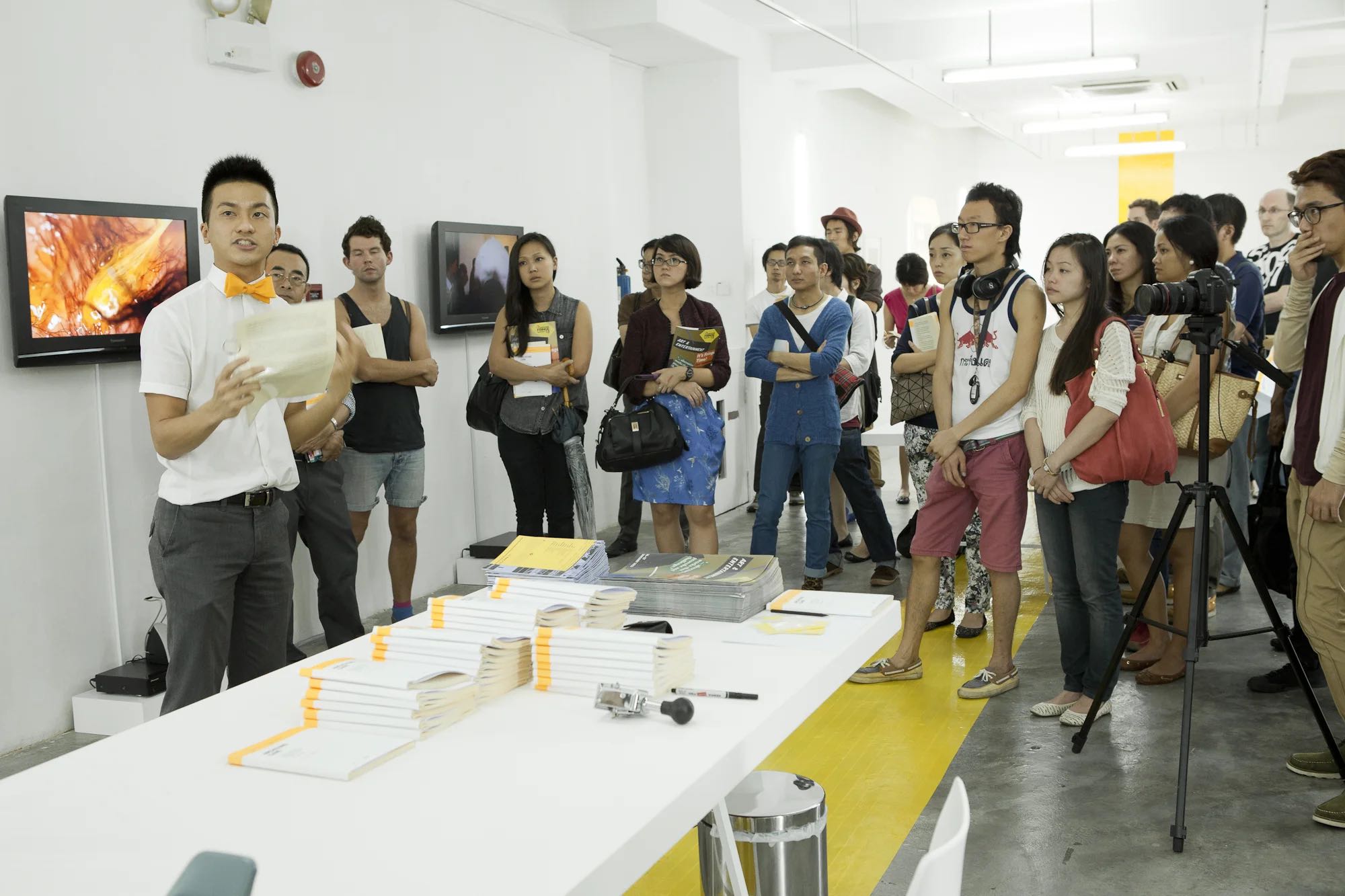
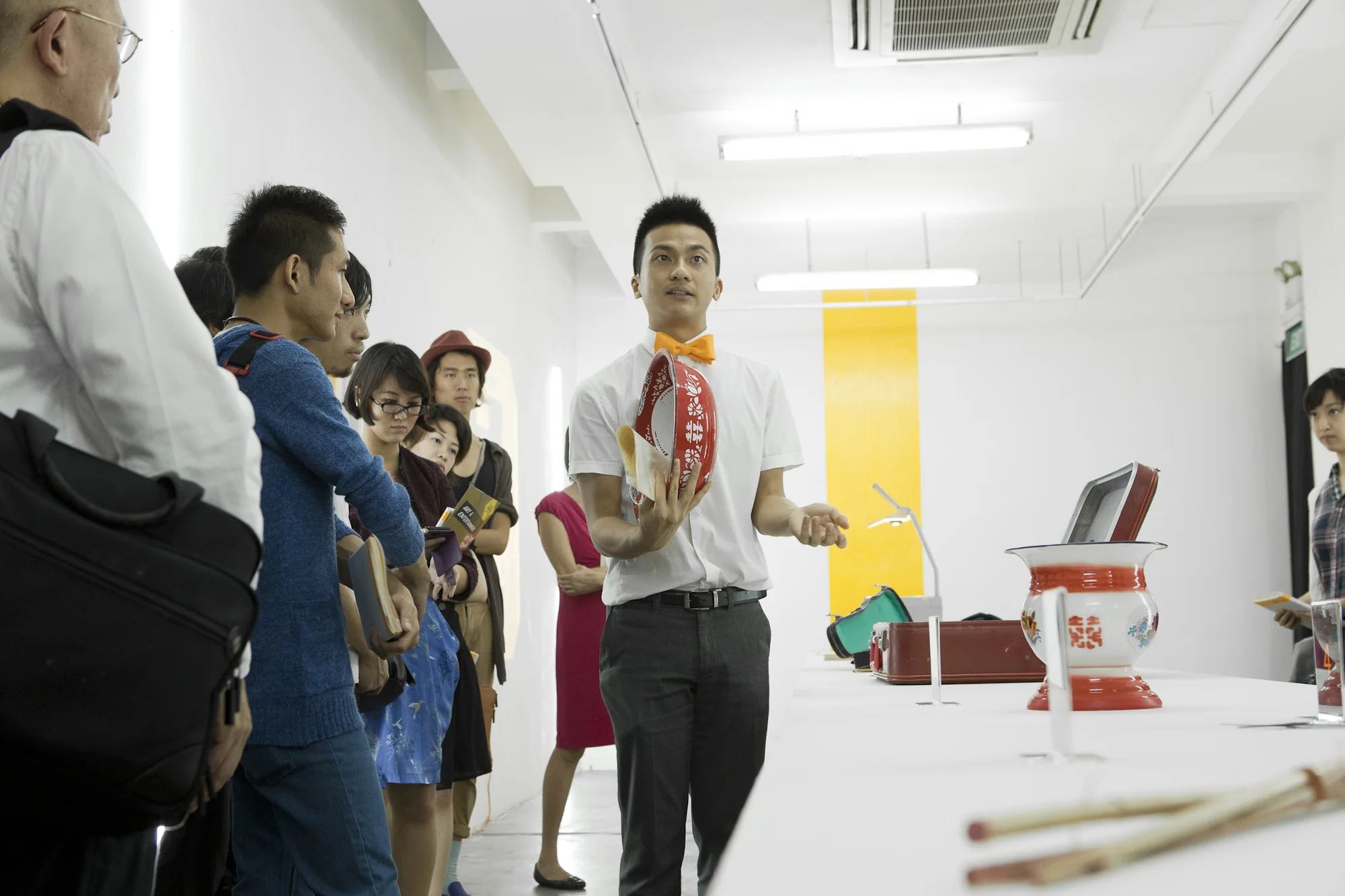
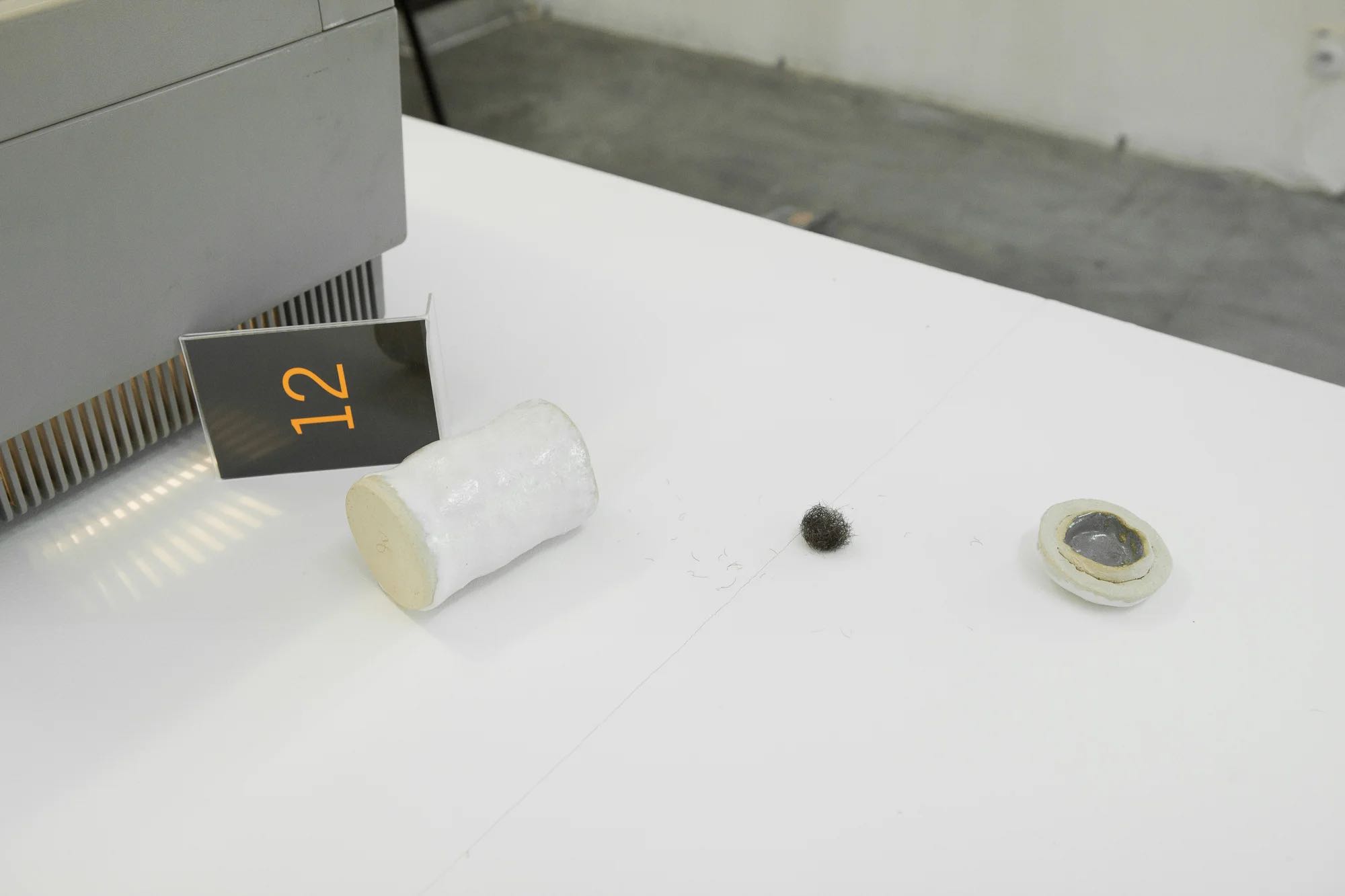
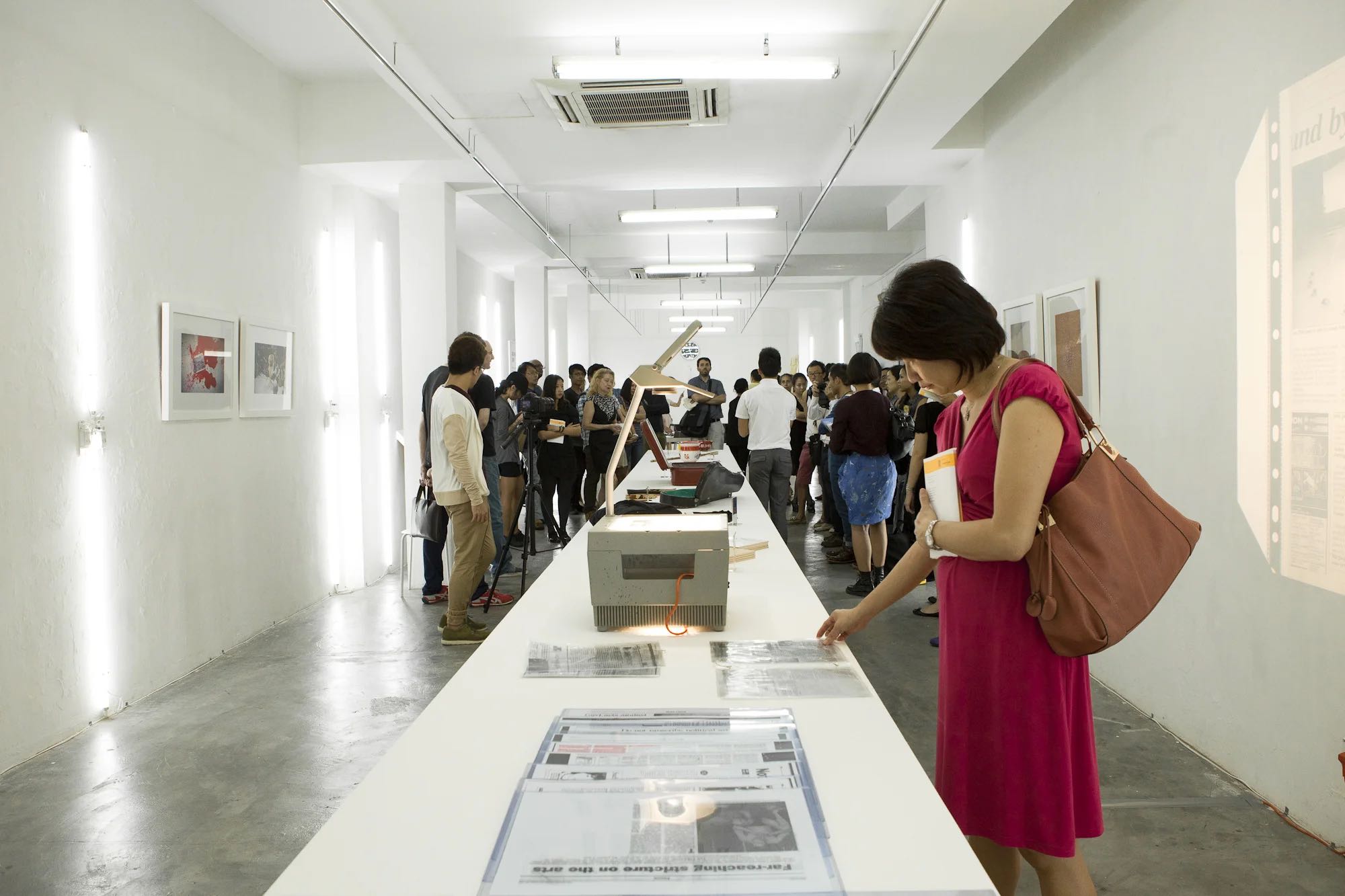
Installation documentation from Archiving Cane. Photos by Samantha Tio.
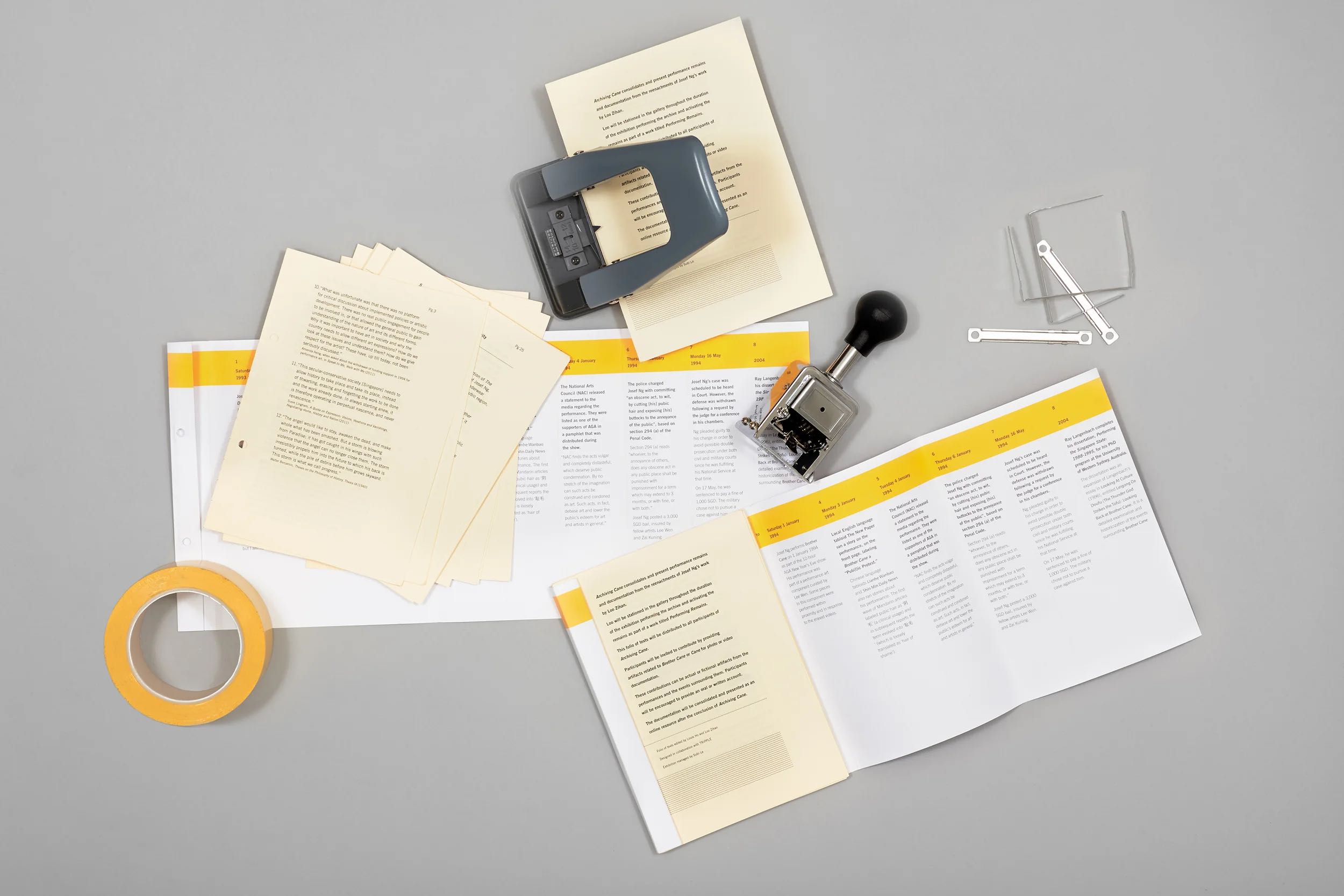
The exhibition also included a resource library, where documents from my research of peripheral events around Cane were displayed. These included programs, newspaper articles, academic theses, critical writing and license application forms among others. Access was also made available to a Facebook page which details in chronology digital documents and online articles referring to my reenactment and Josef Ng’s performance.
Archiving Cane was given a Restricted (21) rating by the Media Development Authority of Singapore and it was a requirement by the licensing authority to inspect and verify that all visitors were above the age of 21. I decided to choreograph this gesture of inspection into an integral part of the exhibition experience.
All visitors were given an edition folio of critical texts assembled on site and the folio of each edition was personalized with a photocopy of the visitor’s identification card. A copy of each visitor’s identification (with sensitive personal information redacted) was included as part of the display in the gallery space with their consent. Over the duration of the exhibition, this display grew to serve as a record of attendees, transforming this licensing requirement into part of the artwork.
Catamite (2019)
- Lecture performance
- 25 January 2019, 7pm and 9pm
- 26 January 2019, 1pm, 3pm, 7pm and 9pm
- 27 January 2019, 1pm and 3pm
- Black Box, Centre 42
- Commissioned by M1-Singapore Fringe Festival
- Conceptualized and performed by me
- With devising and translation support from Irfan Kasban
- Developed in residence at Centre 42
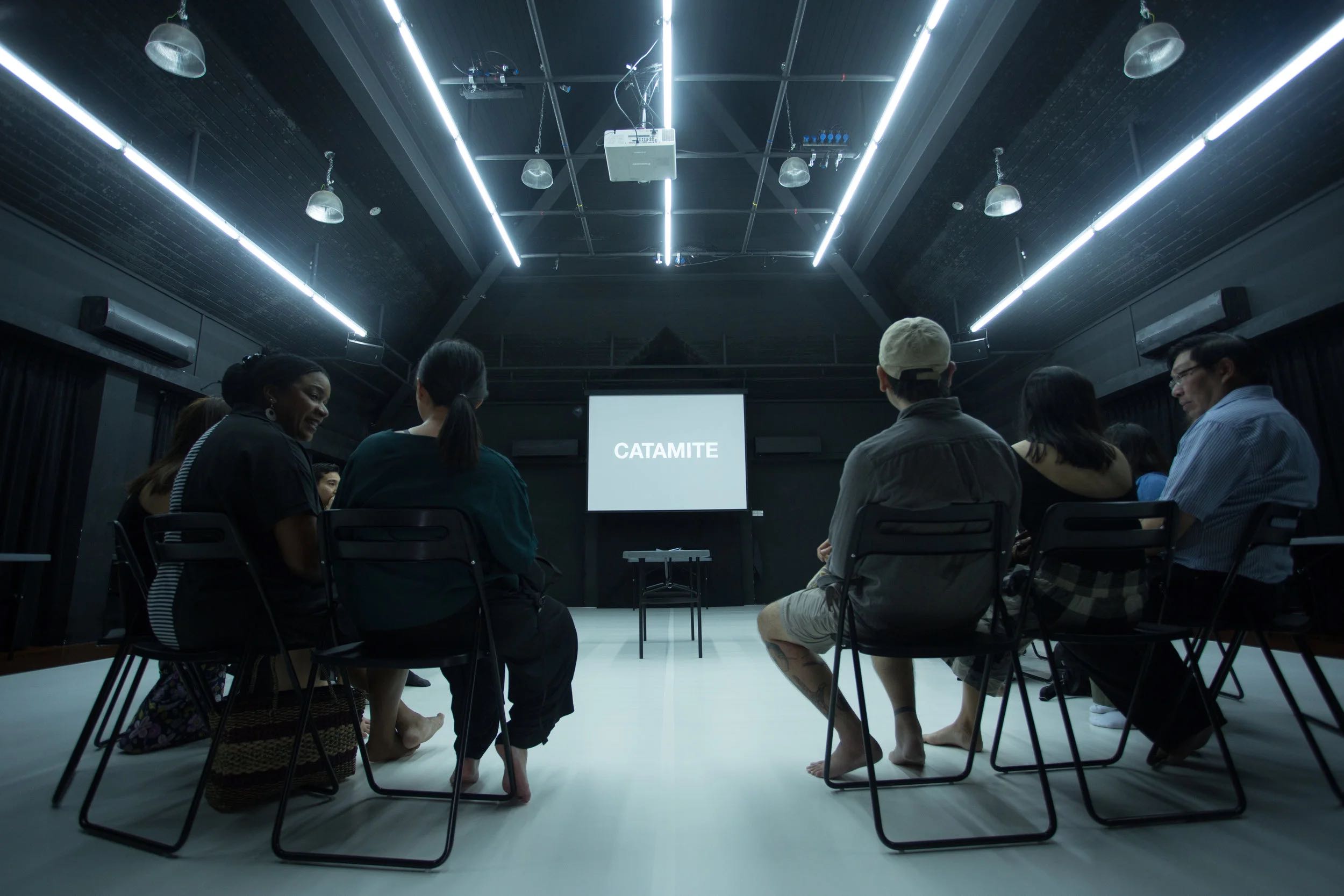
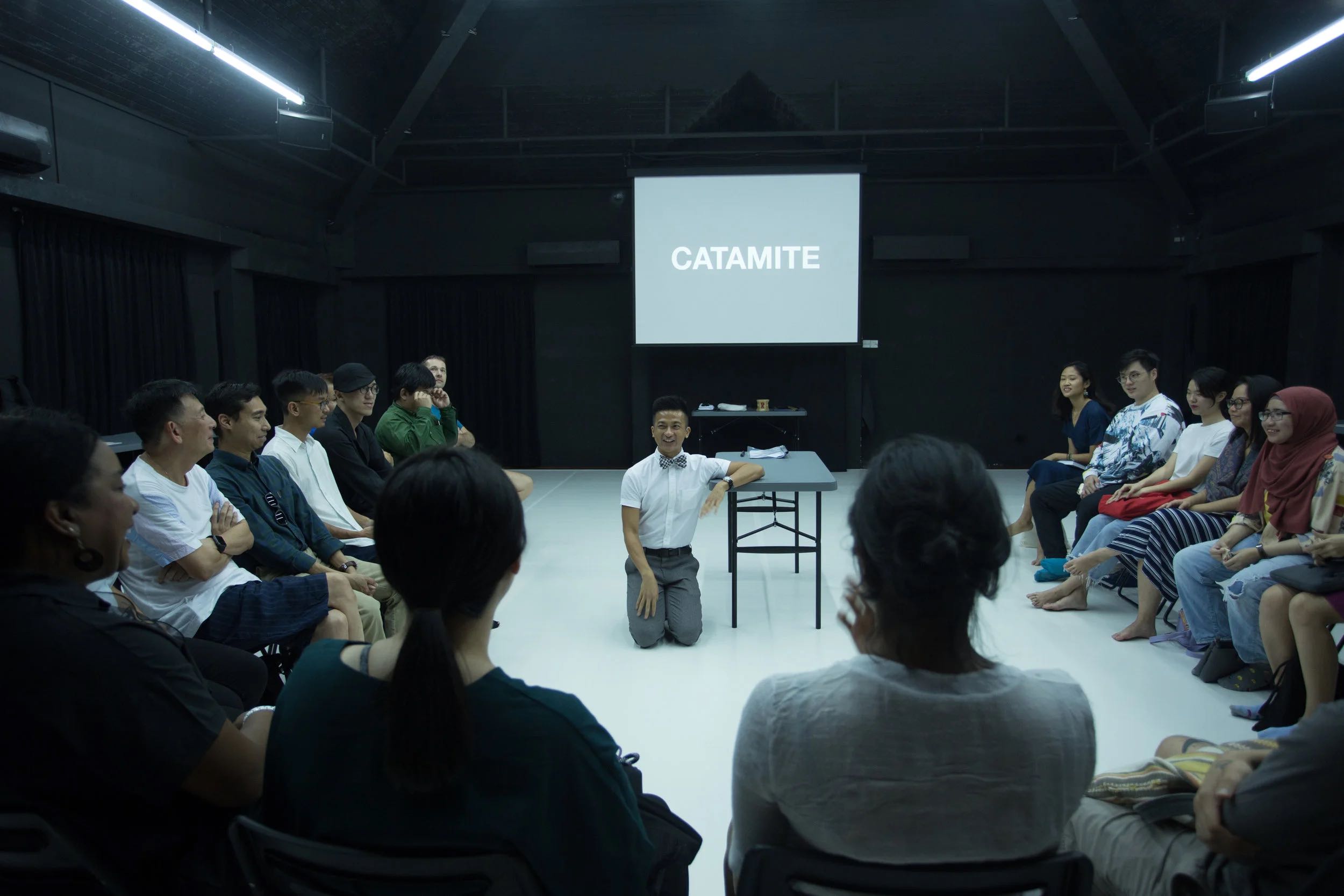
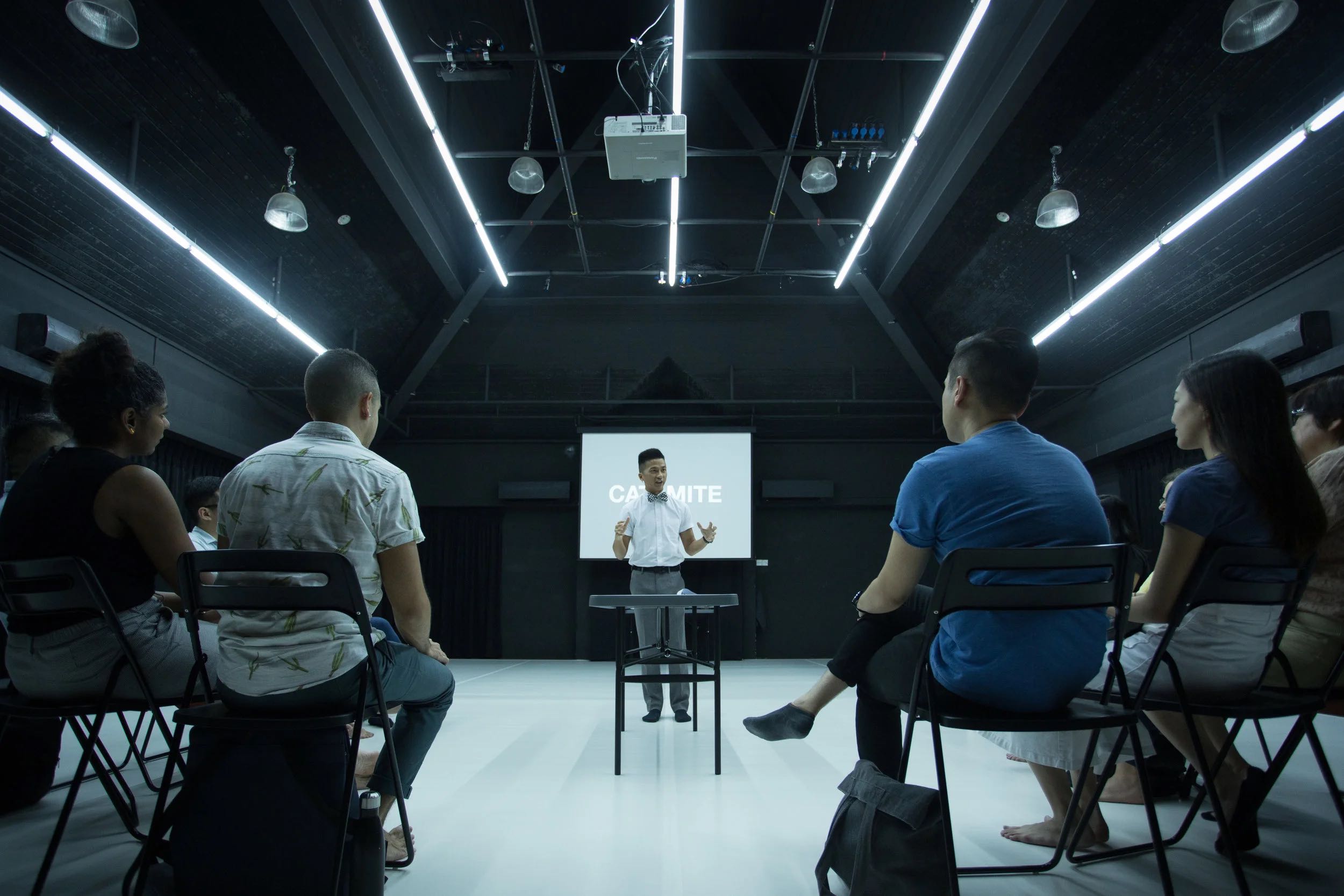
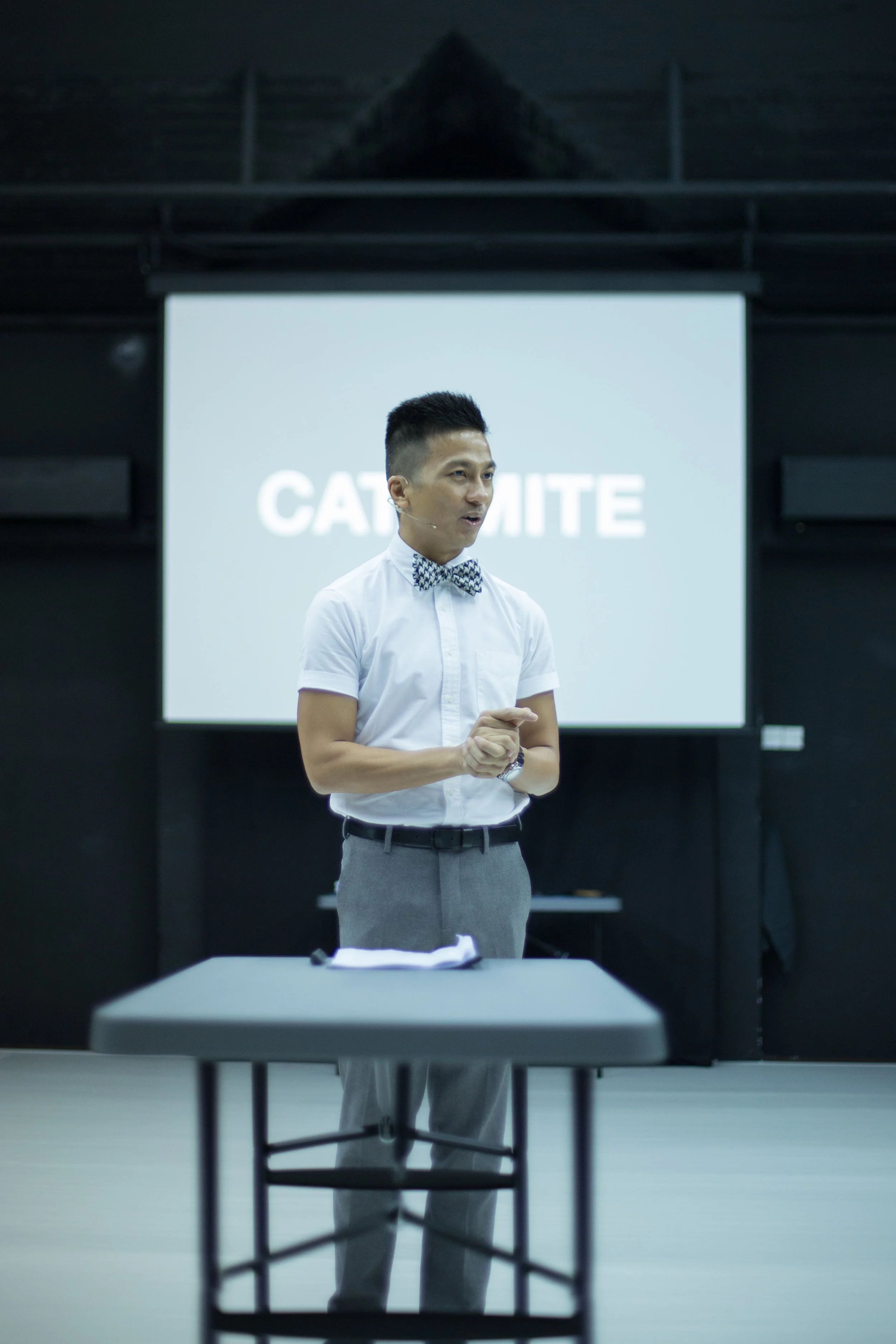
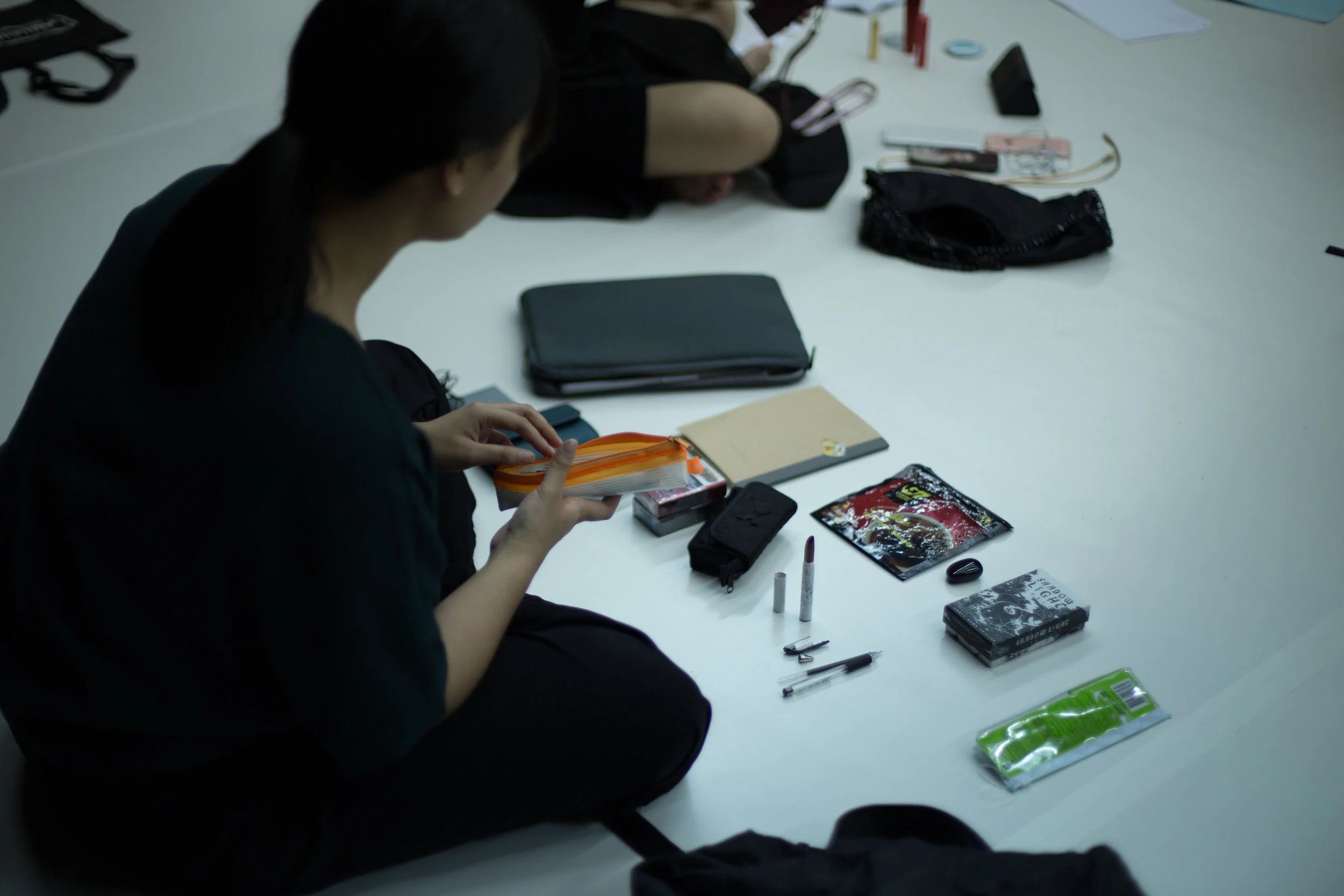
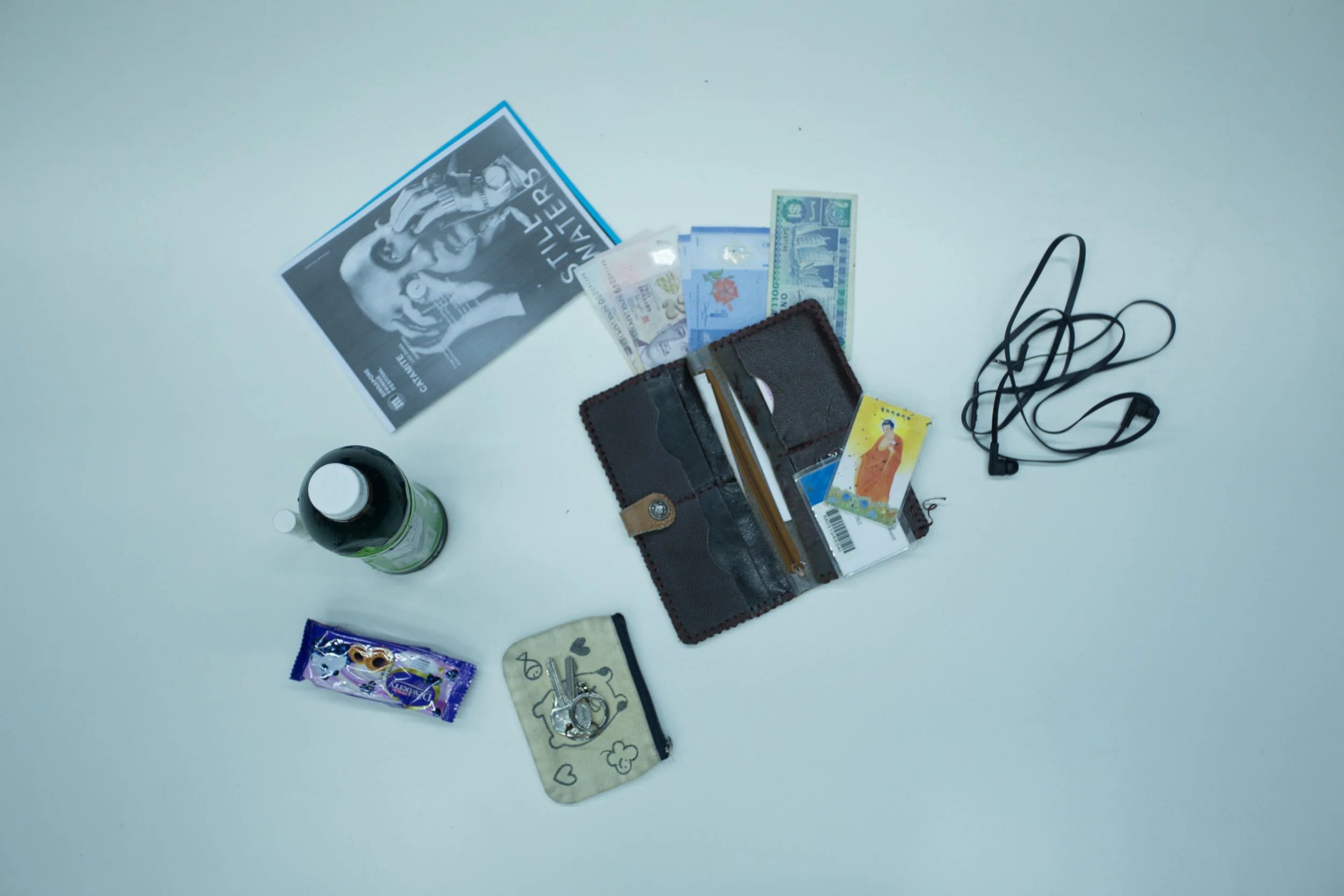
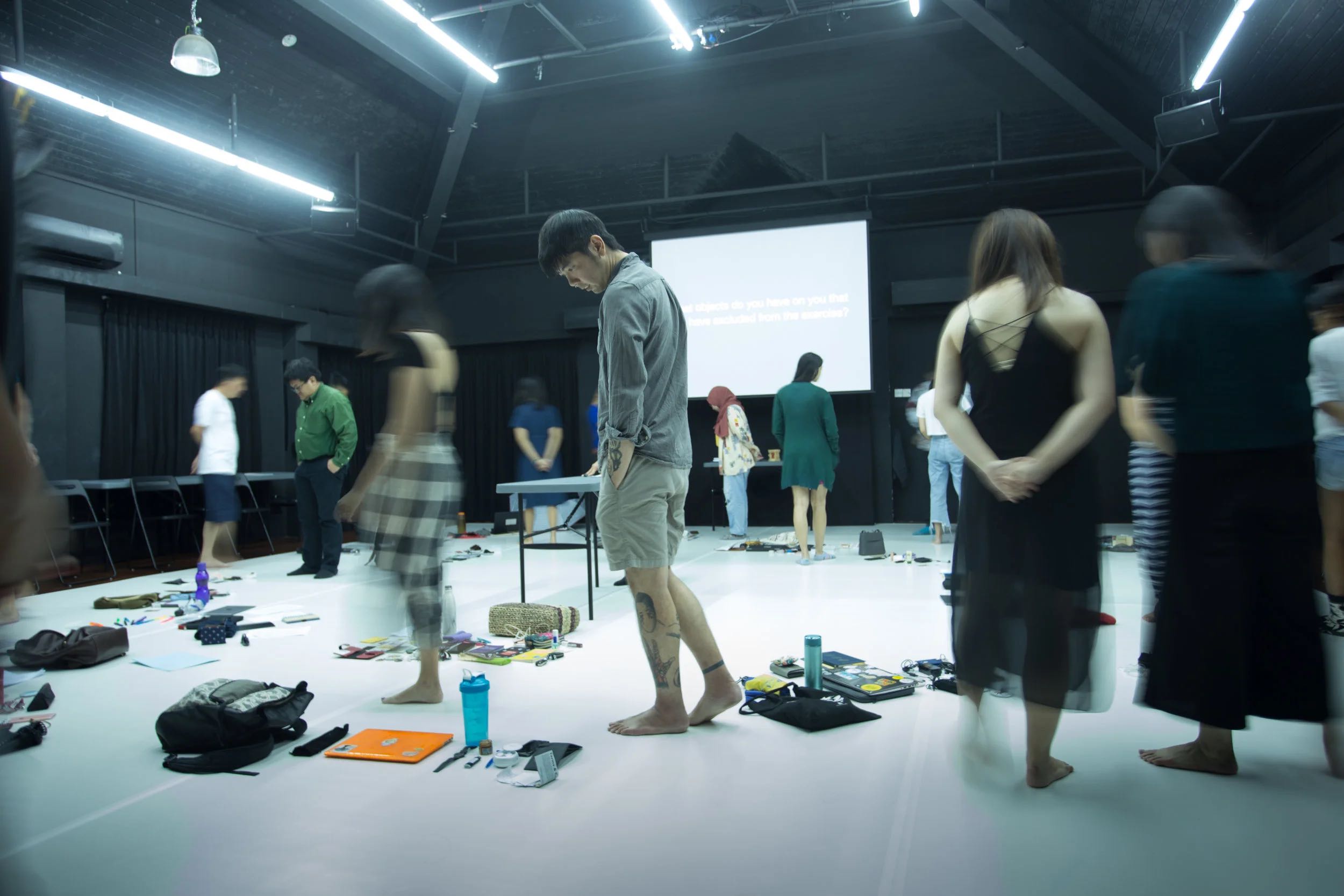
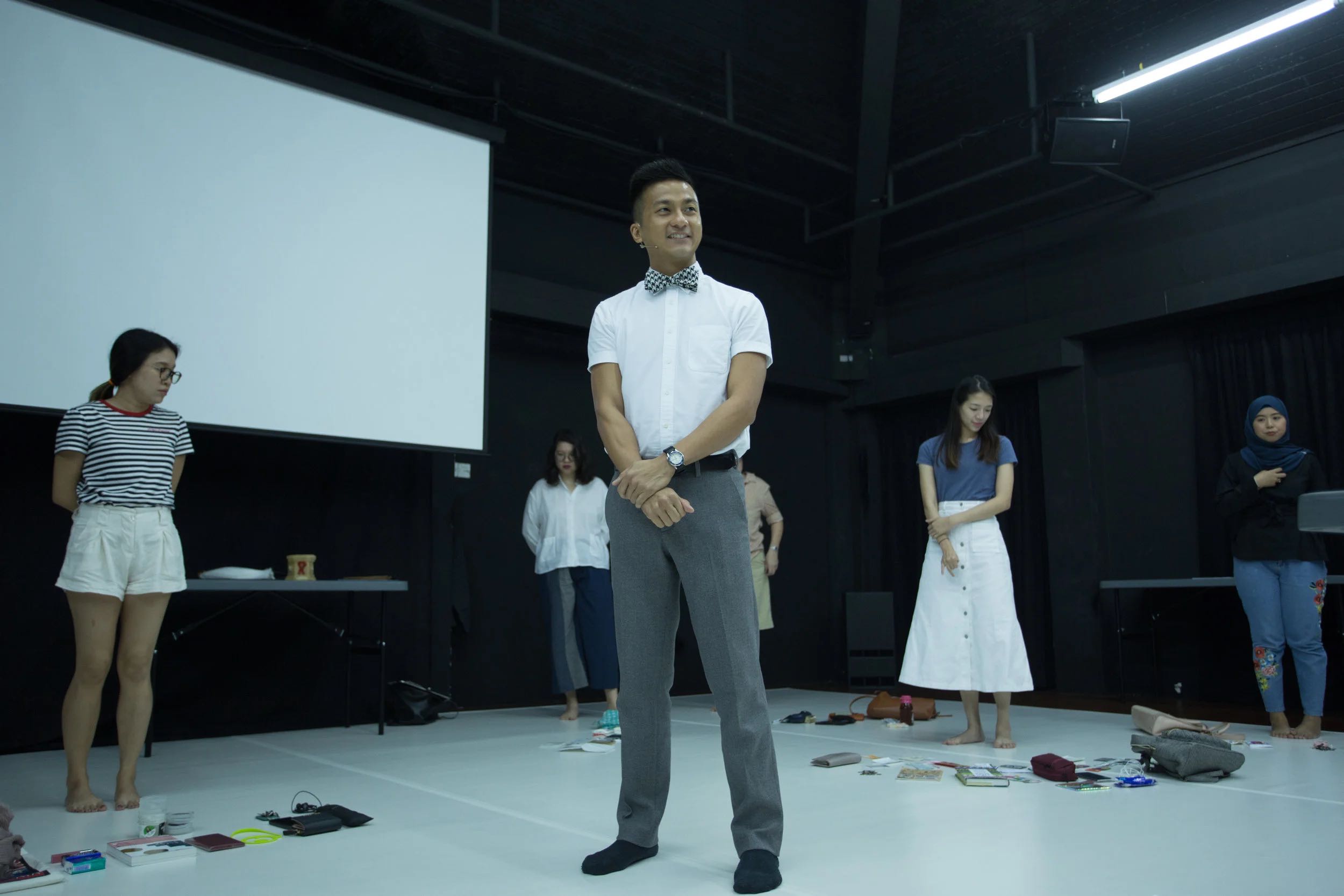
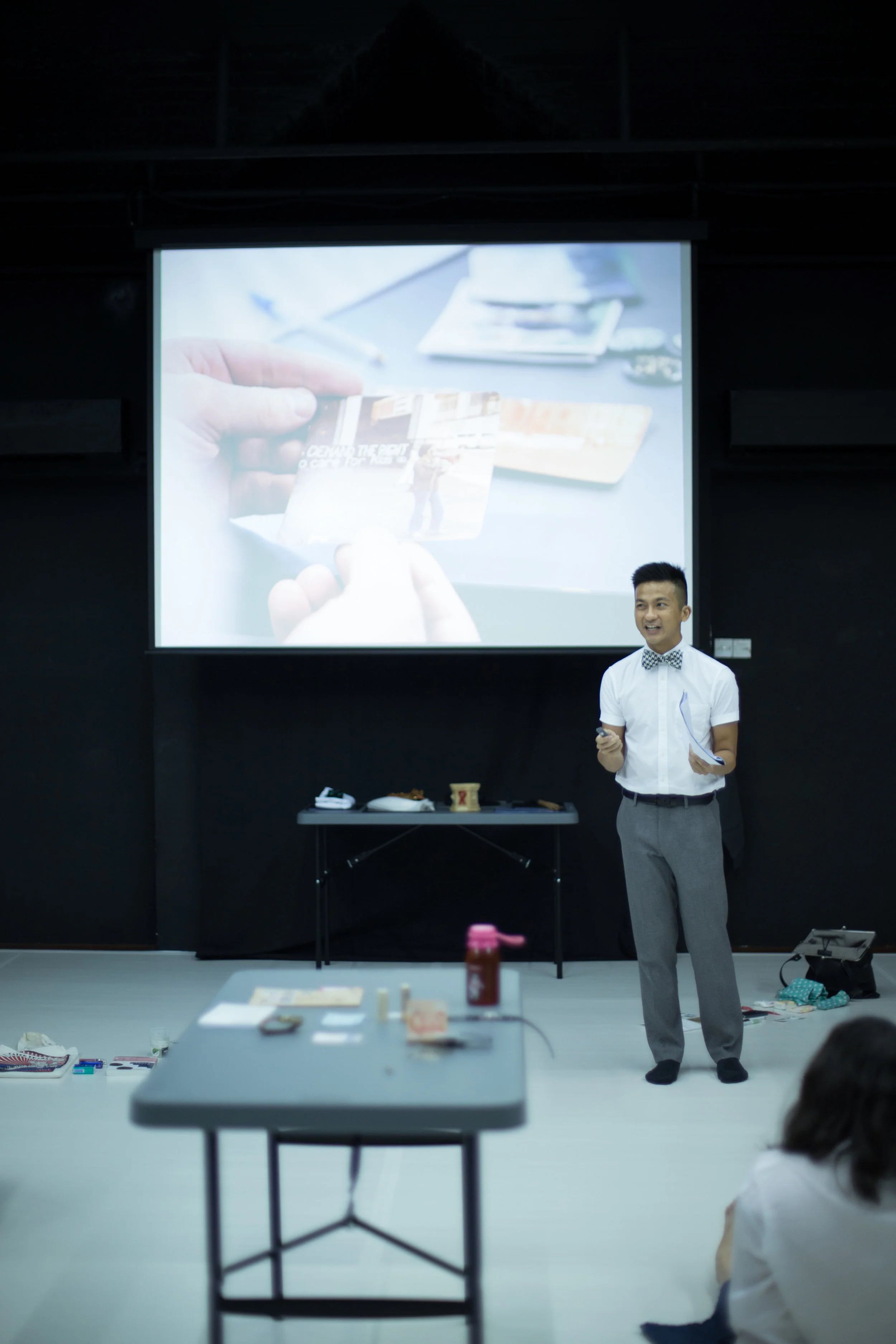
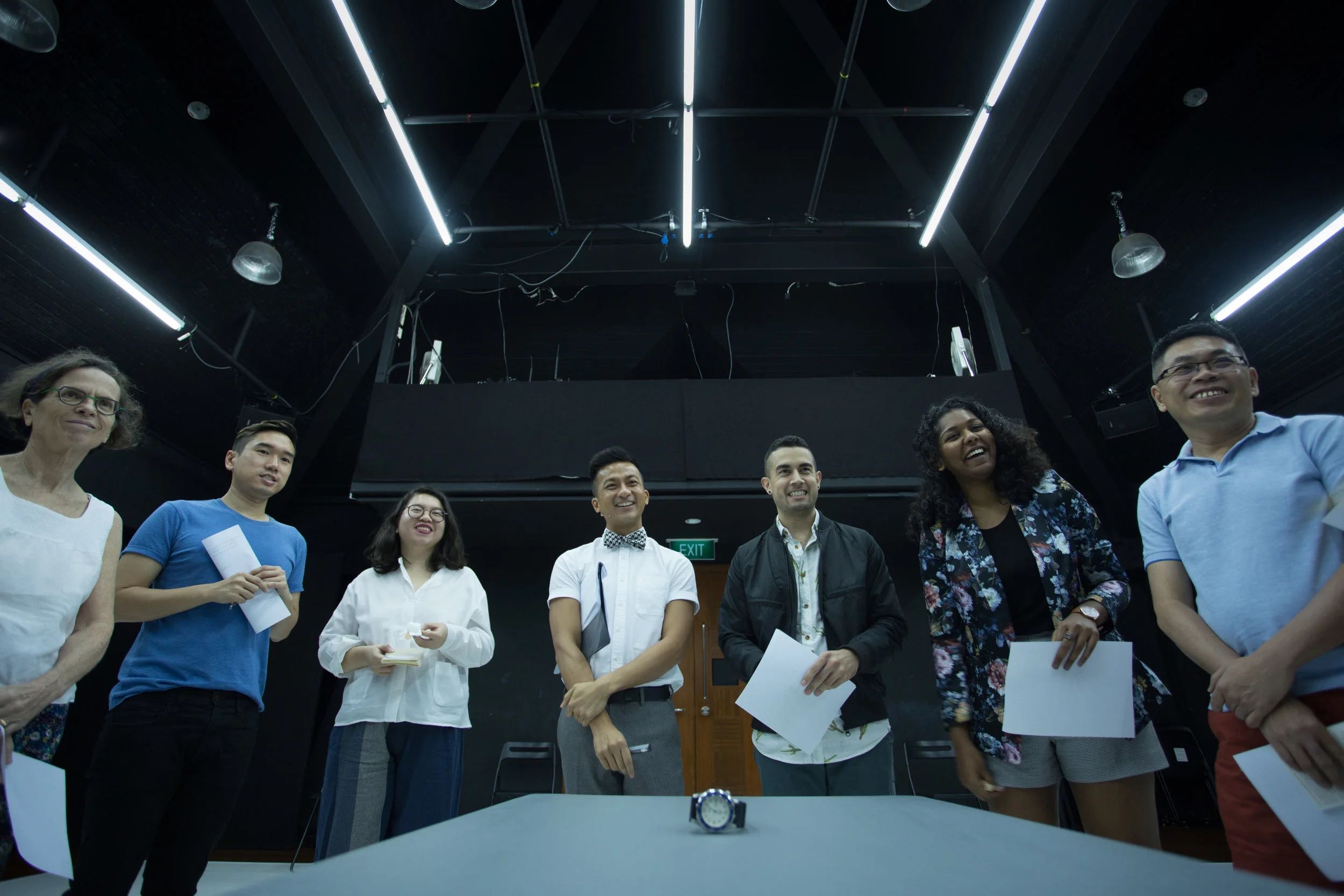
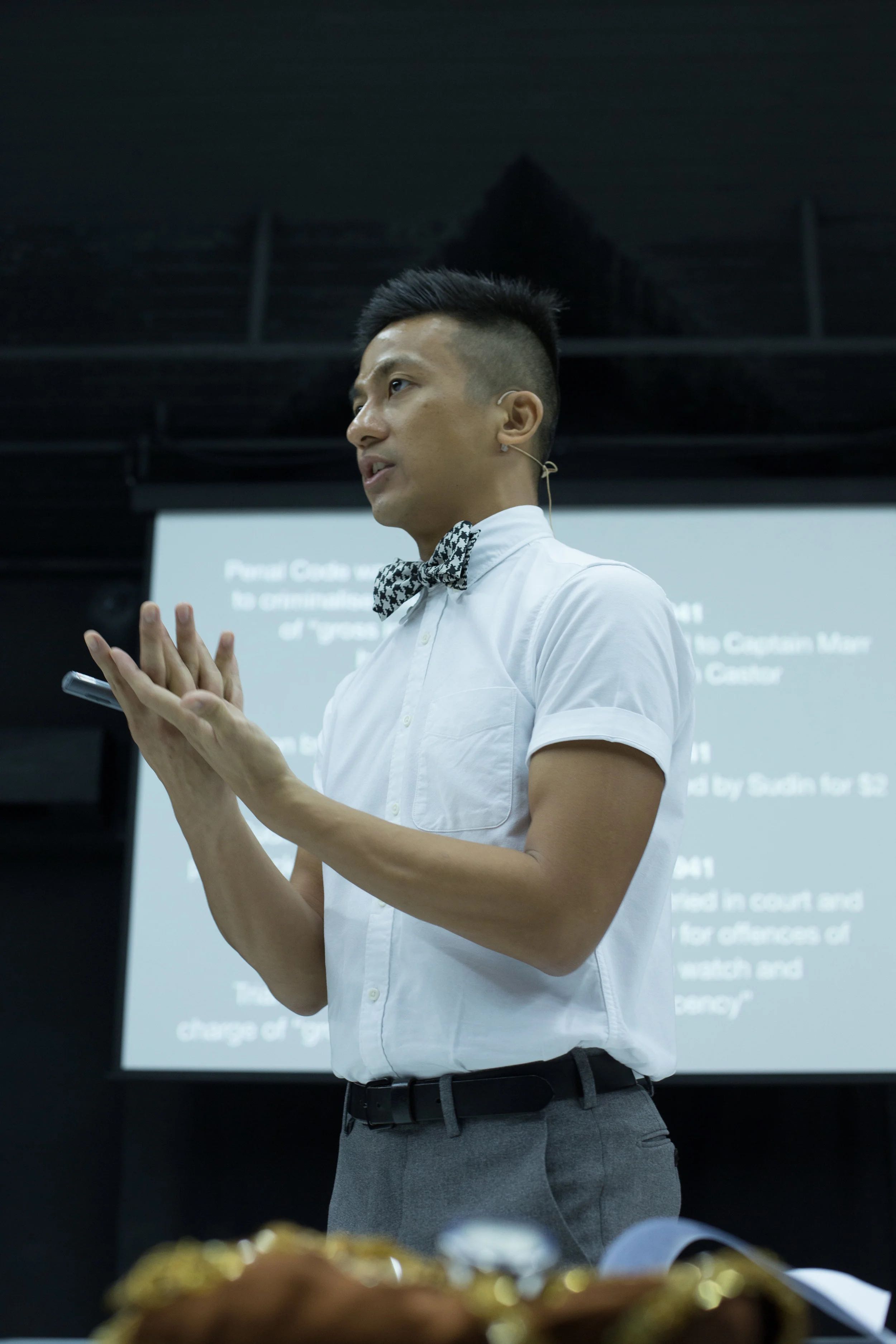
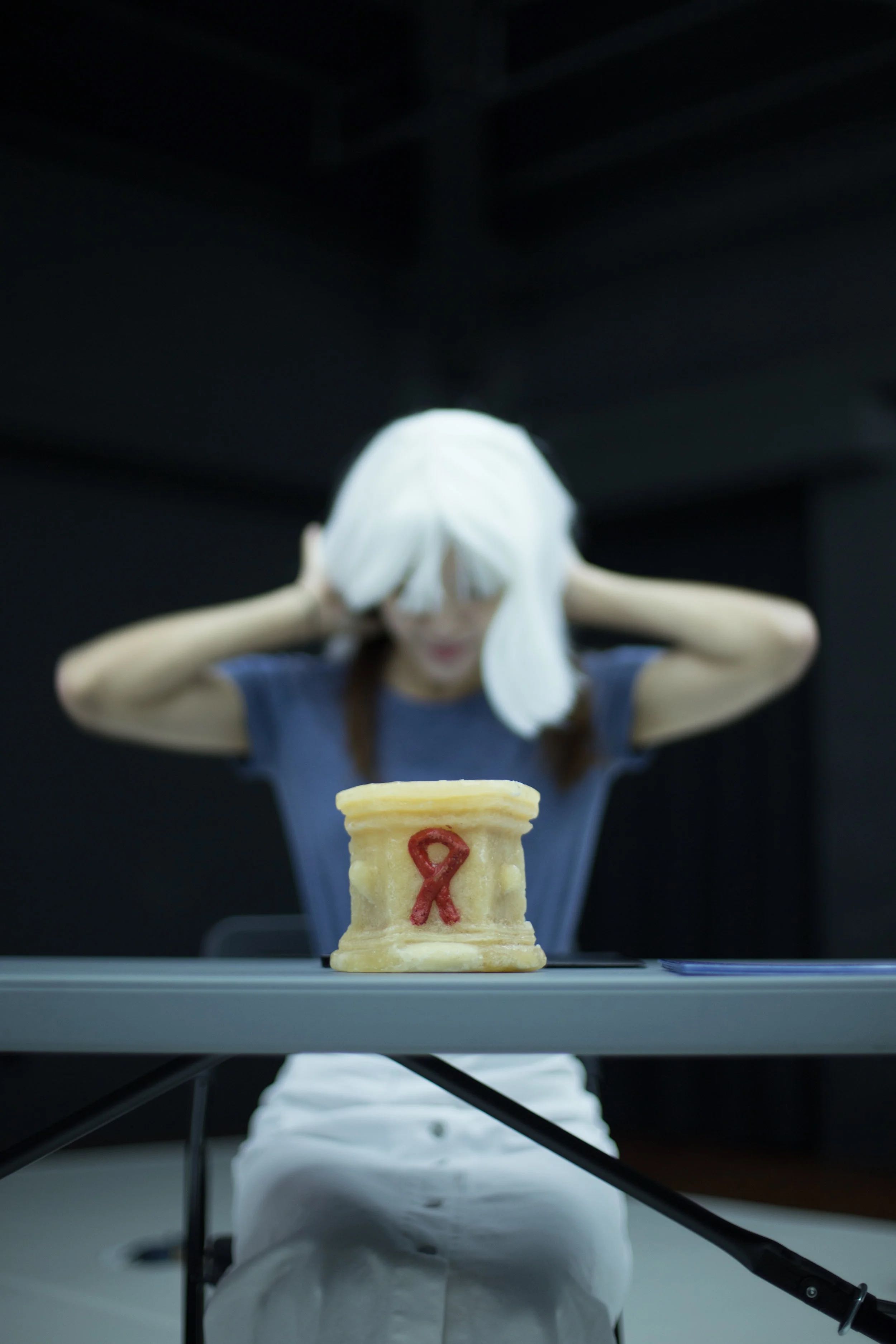
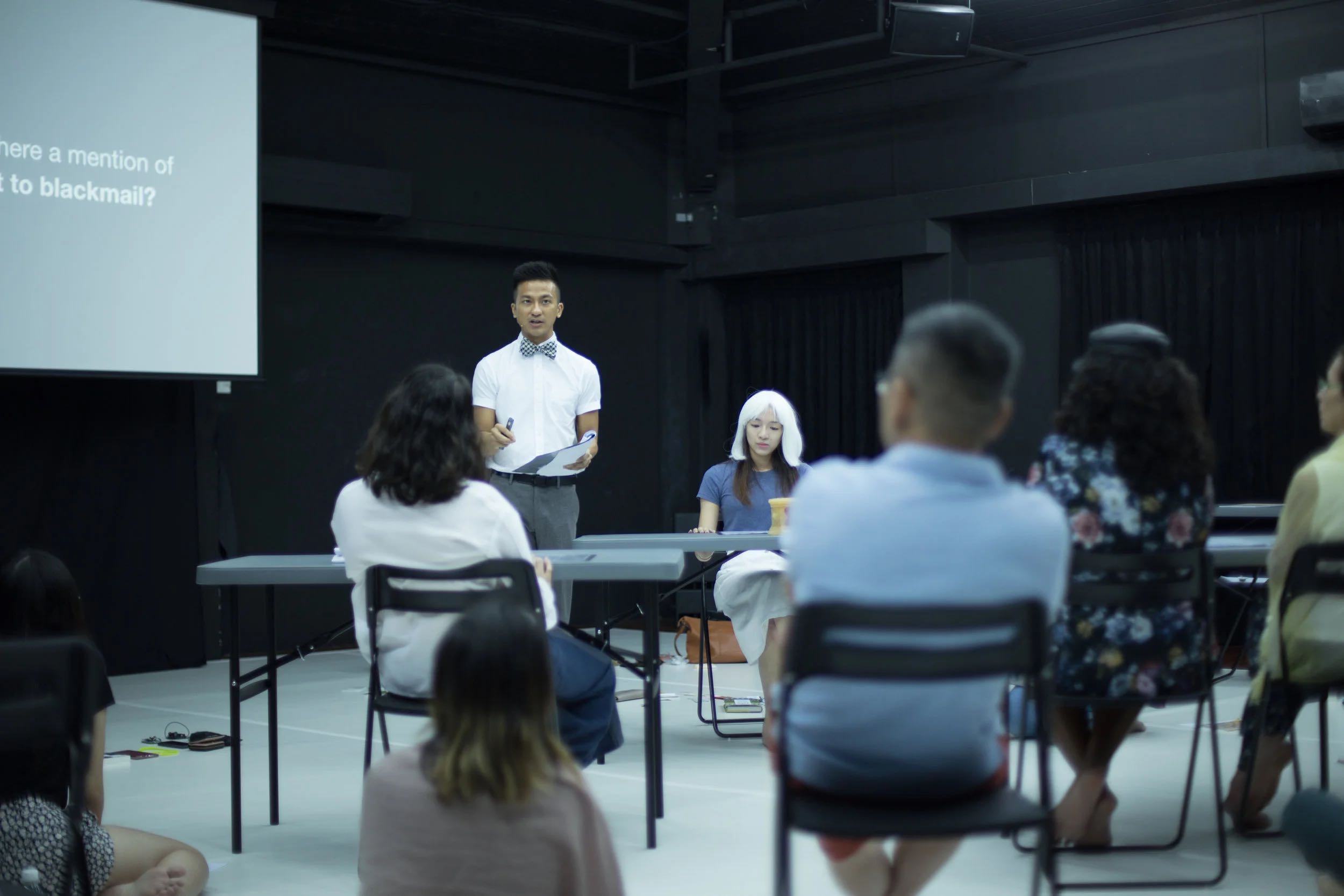
Documentation from Catamite. Photos by Samantha Tio.
Memory capacitors are so limited these days.
Our reality is what we remember it to be.
What relationship do we share with our possessions? How can we orient ourselves to these things differently?
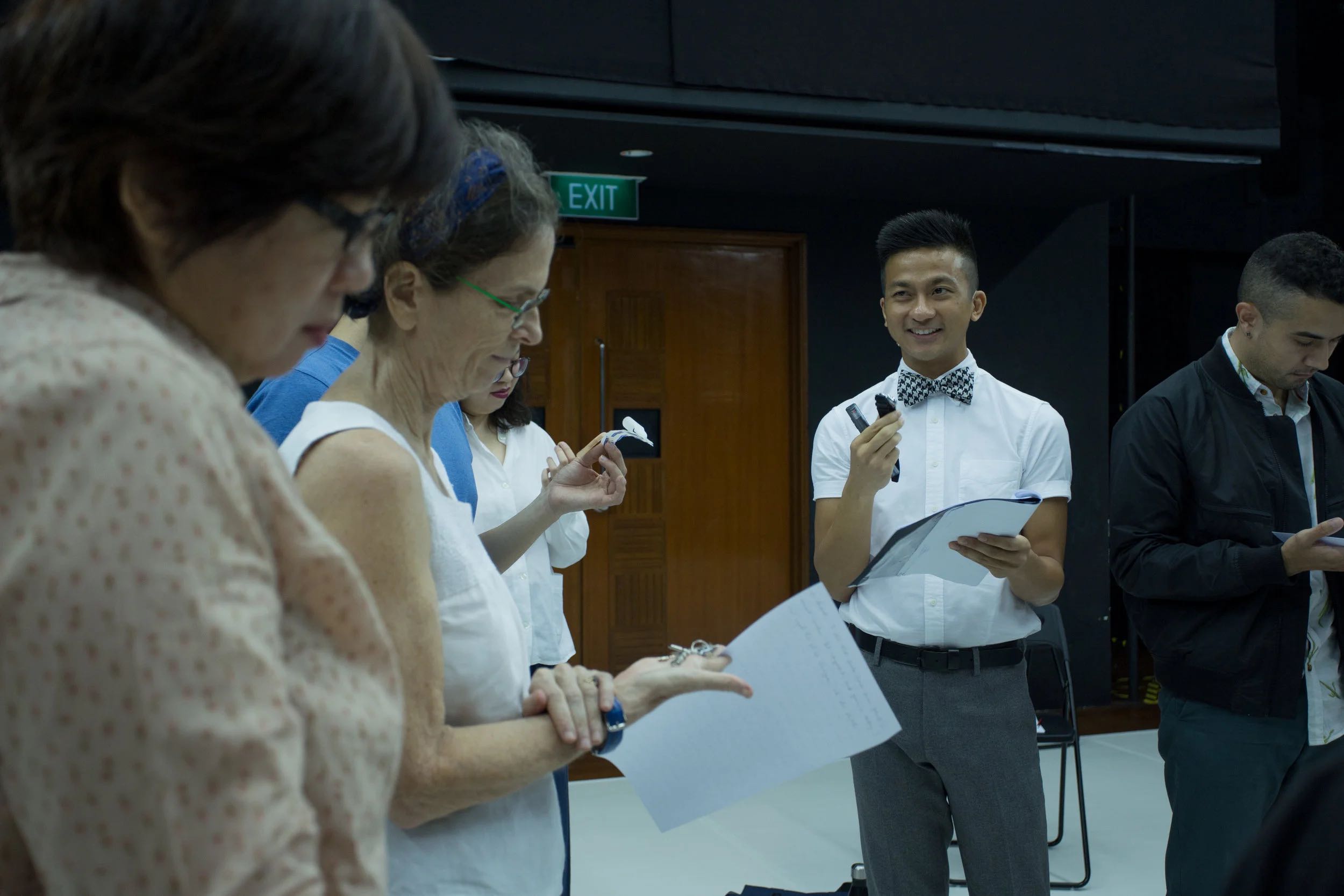
This intimate interactive experience for 20 participants each session begins in the form of an artist lecture and dialogue where I share my experiences of staging my installation Queer Objects: An Archive for the Future (2016), an assemblage of objects for a hypothetical queer archive in Singapore.
Following this, the audience-participants join me in a series of participatory activities and conversation, to examine the fictional and factual, virtual and actual potential of objects, in a bid to meditate on the contingency of identity and being.
Accounts of Catamite
By getting audiences to create a temporary archive of their own objects, Loo creates a new kind of “queer archive.” Archives are considered permanent records, but this one is defined by its short-lived nature.
Akshita Nanda
观演后步出黑箱剧场,读着一名观众对于我的物品在未来语境中的猜想,困惑我的是在这艺术空间之外,消费主义将物品的囊括,是否使其承载的意义被消费殆尽?在全球文化日趋多元化的大背景下,在意识到差异性后强调彼此的尊重是否更重要?
(As I walked out of the black box theatre at the end of the show, I read one of the audience’s conjecture on my selected object. What bemused me was the following question: outside of this artistic space, did the domination of consumerism over objects cause them to lose the meaning they carry? With the trending globalization and diversification of our culture, was it not more critical to place more importance on the respect we should have for one another as our differences manifests?)
Lau, Si Xian
The trial opened for the audience an awareness of a far more specific sub-cultural typology of colonial violence than is conventionally discussed. This micro-history of the legal apparatus in Singapore not only served to reveal the presence of gay people and gay acts by both Singaporeans and British, but also their suppression under British rule that continues today under the very same laws, and the manner that the state then and now uses these laws to maintain gender hegemony. The colonial past was revealed as Singapore’s contemporary, now in 2019.
Ray Langenbach
Kita Main (2025)
- Screen recording, 7 minutes
- In conversation with Irfan Kasban
Curator and artist Jason Wee invited me to contribute a video work for an informal exhibition at Proud Spaces, Singapore. I assembled some documentation and footage from the development process of Catamite with actor and director Irfan Kasban, specifically around the impossibility of translation and understanding historical figures through the colonial archives. The form of this video is inspired by Kim Ye’s video work.
Artists’ General Assembly: The Langenbach Archive (2013)
- Exhibition
- 24 October to 31 December 2013
- Sculpture Square, Singapore
- Part of Ghost: The Body at the Turn of the Century group exhibition curated by Alan Oei
- A parallel event of the Singapore Biennale 2013
- Supported by The Substation’s Associate Artist Research Programme
- Assisted by Thong Kay Wee
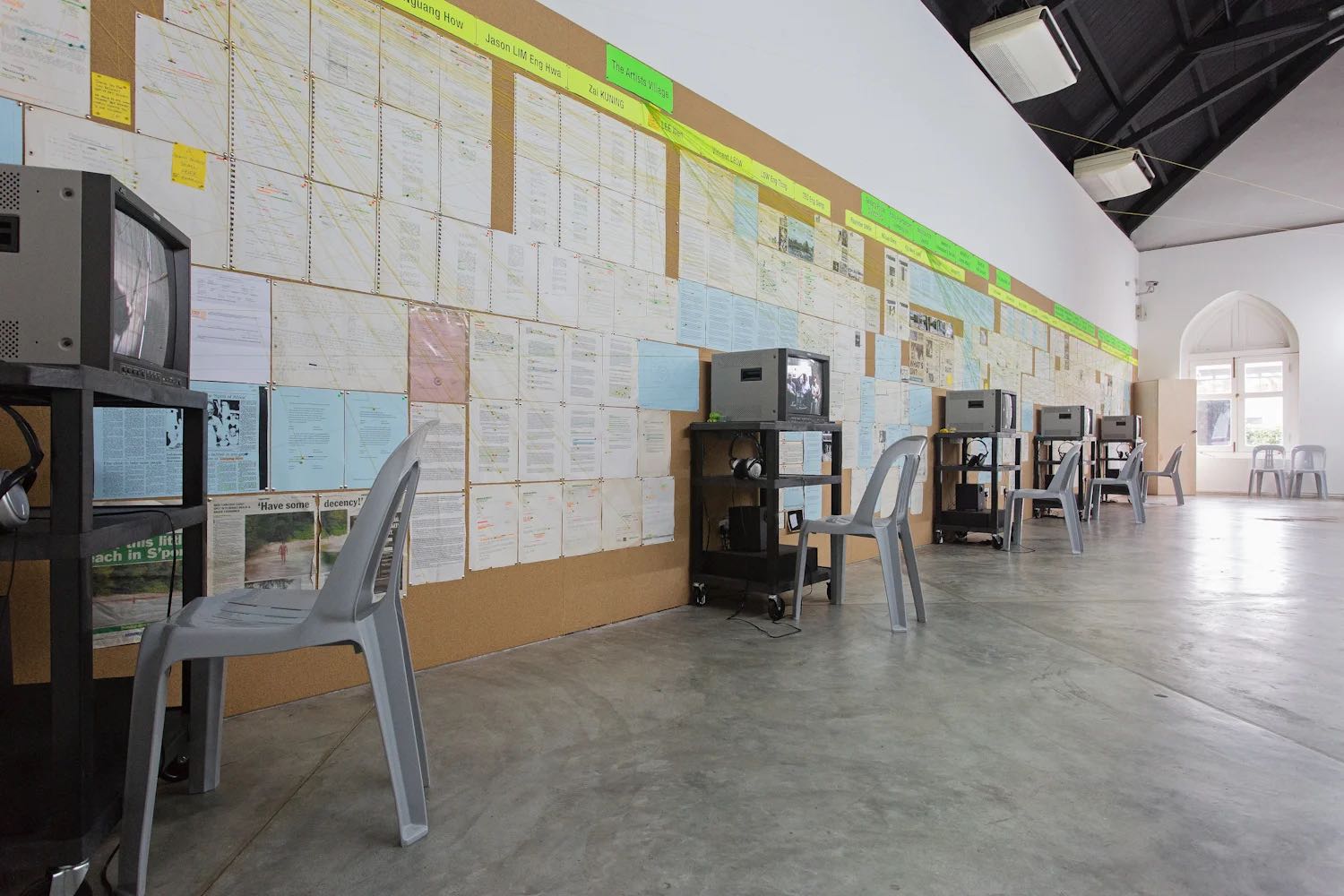
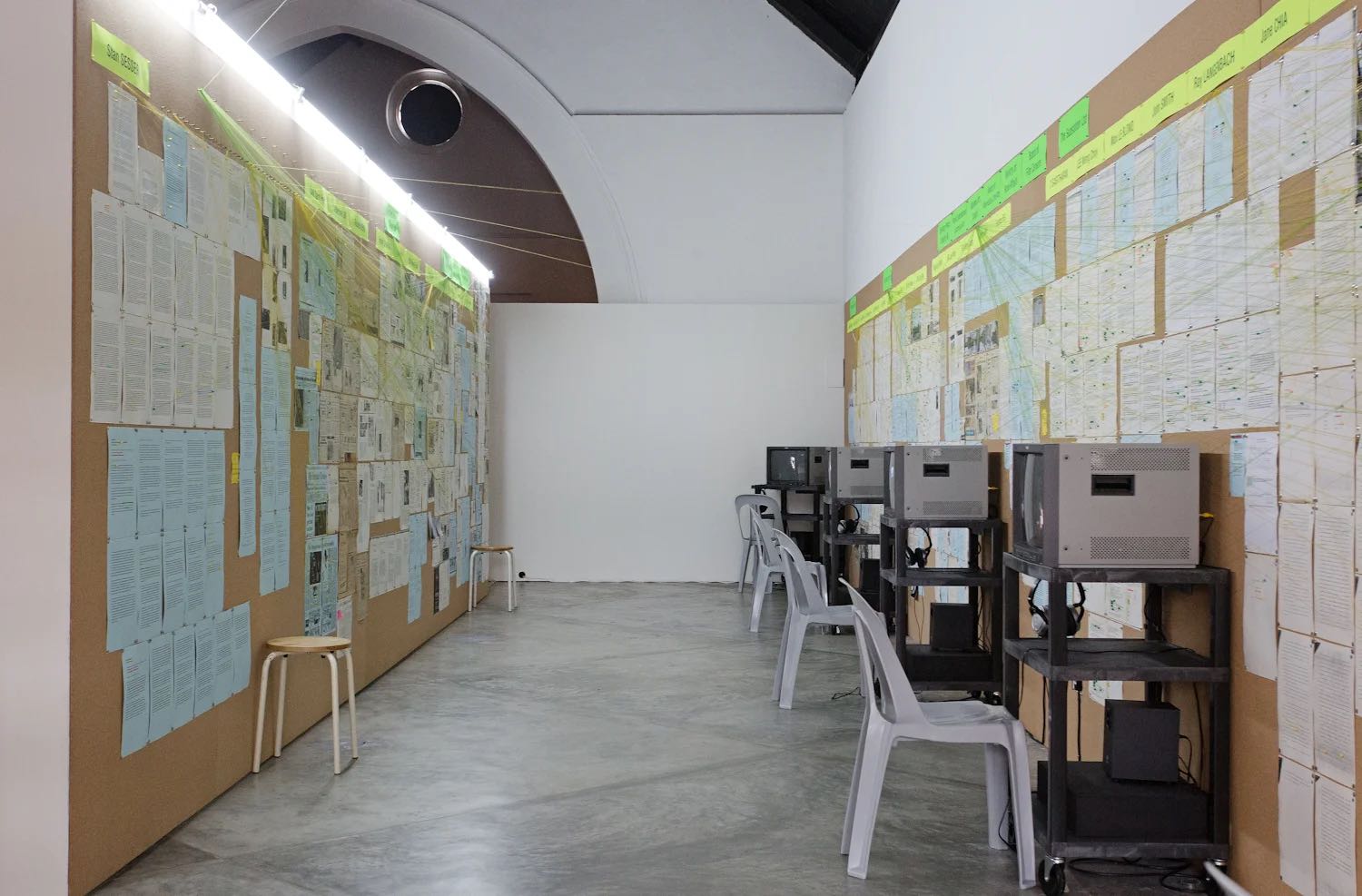
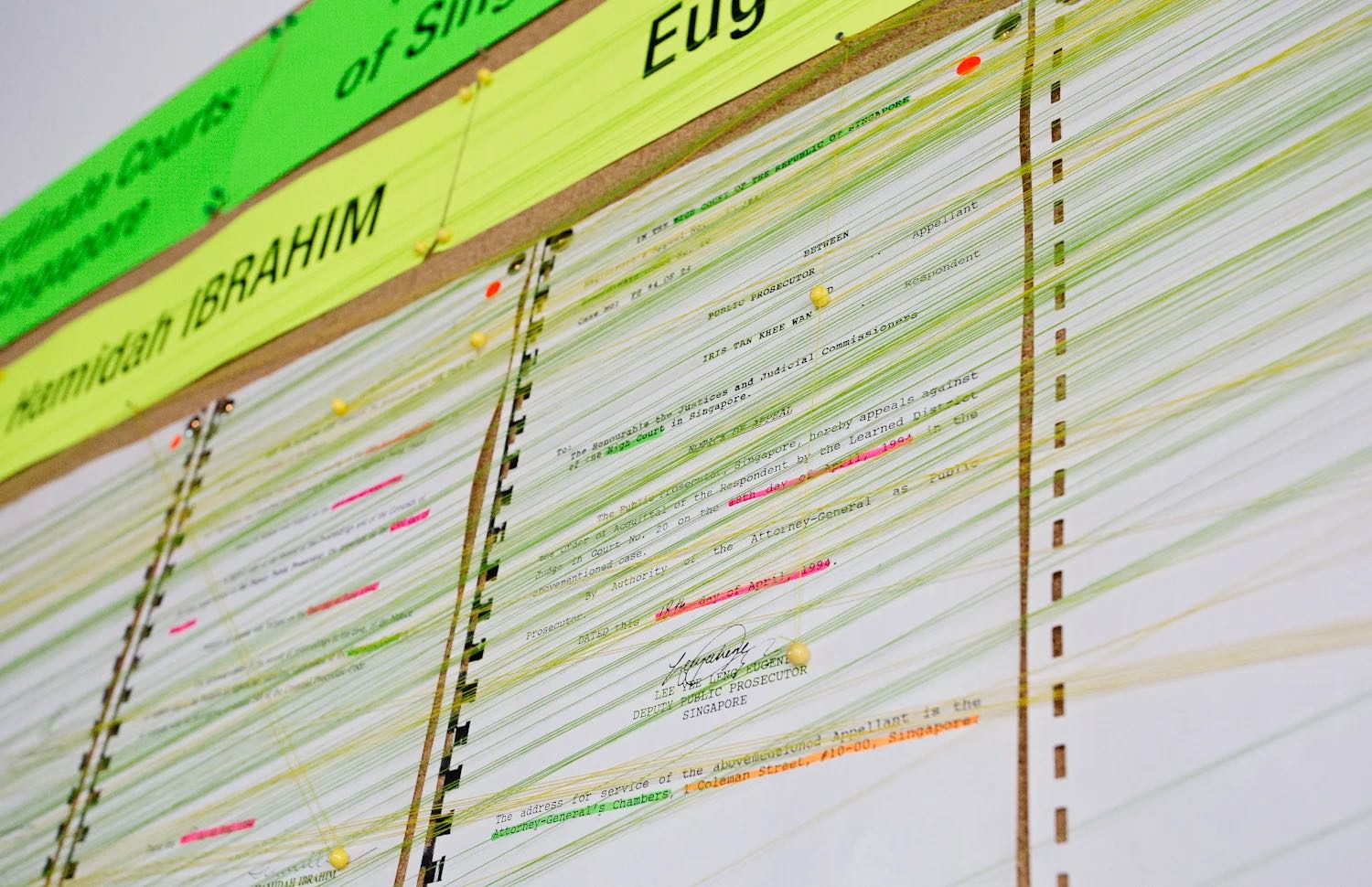
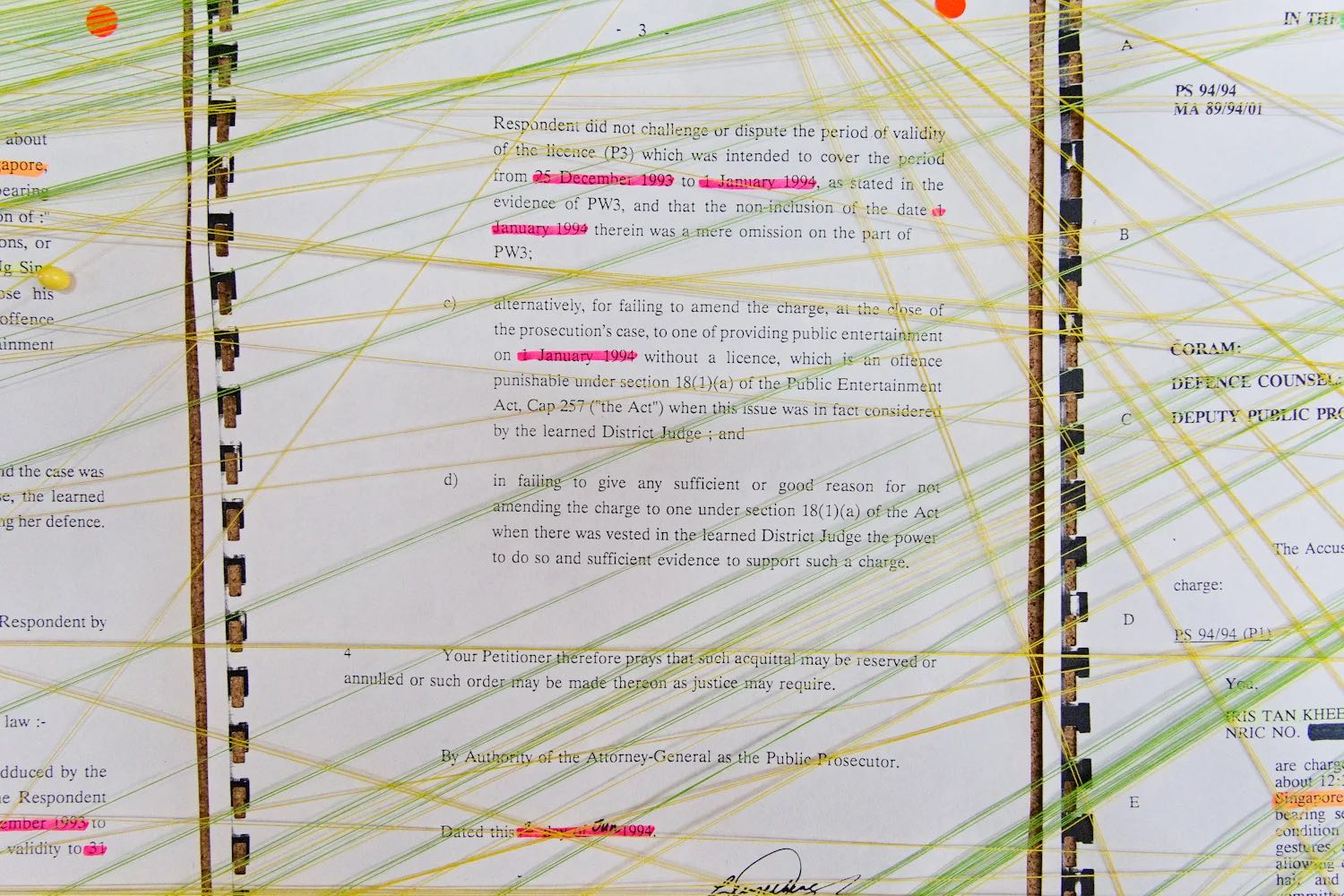
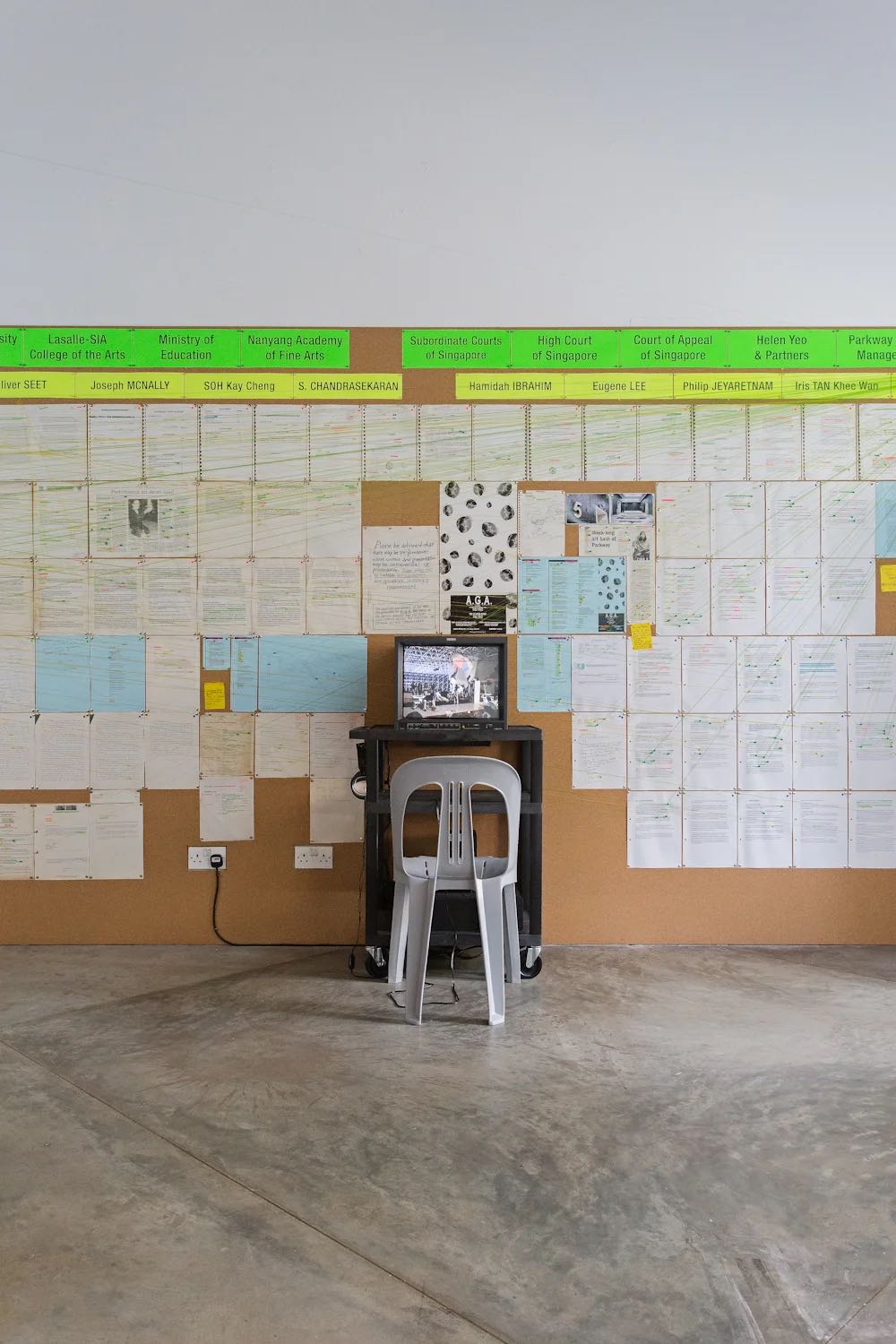
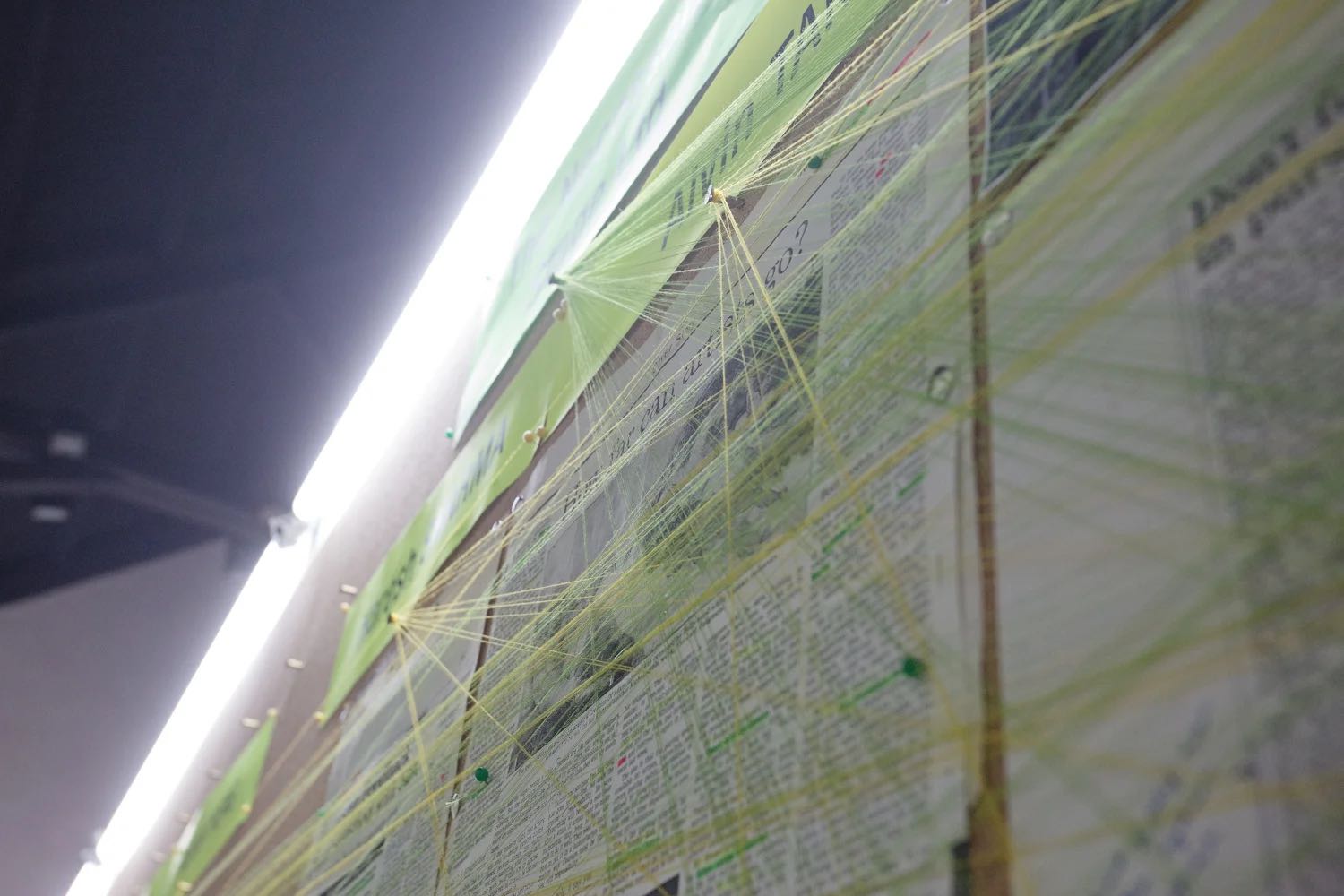
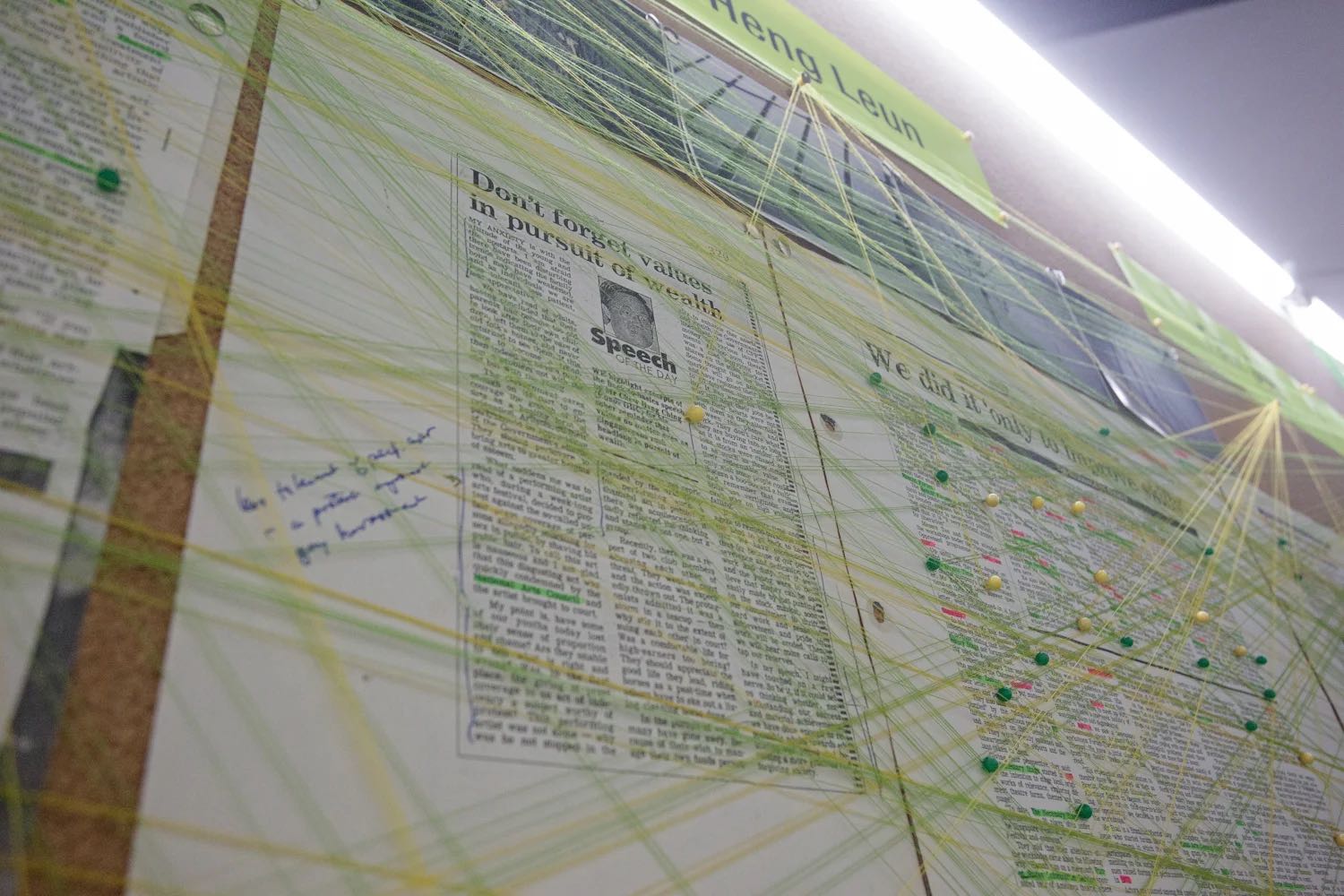
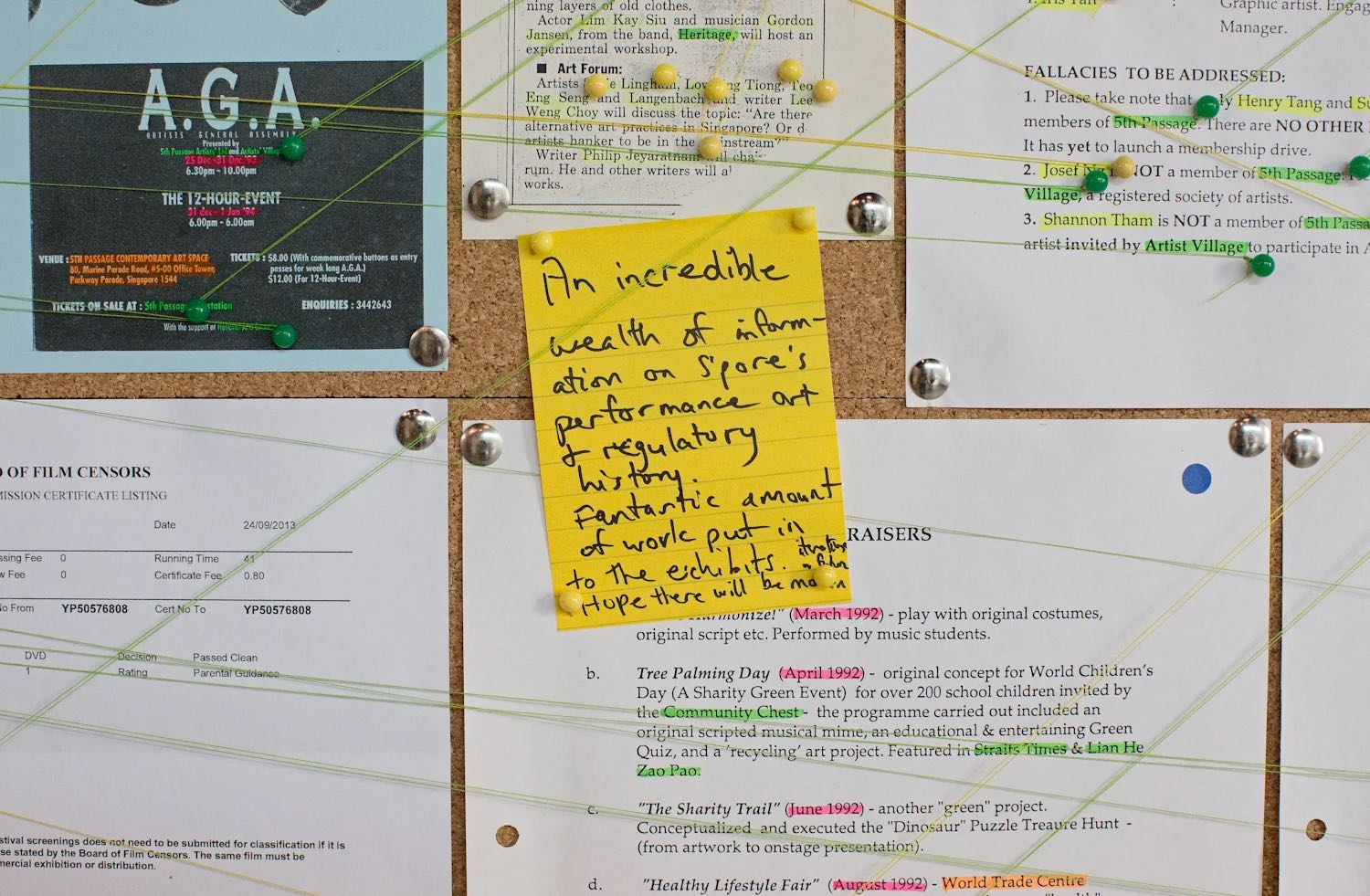
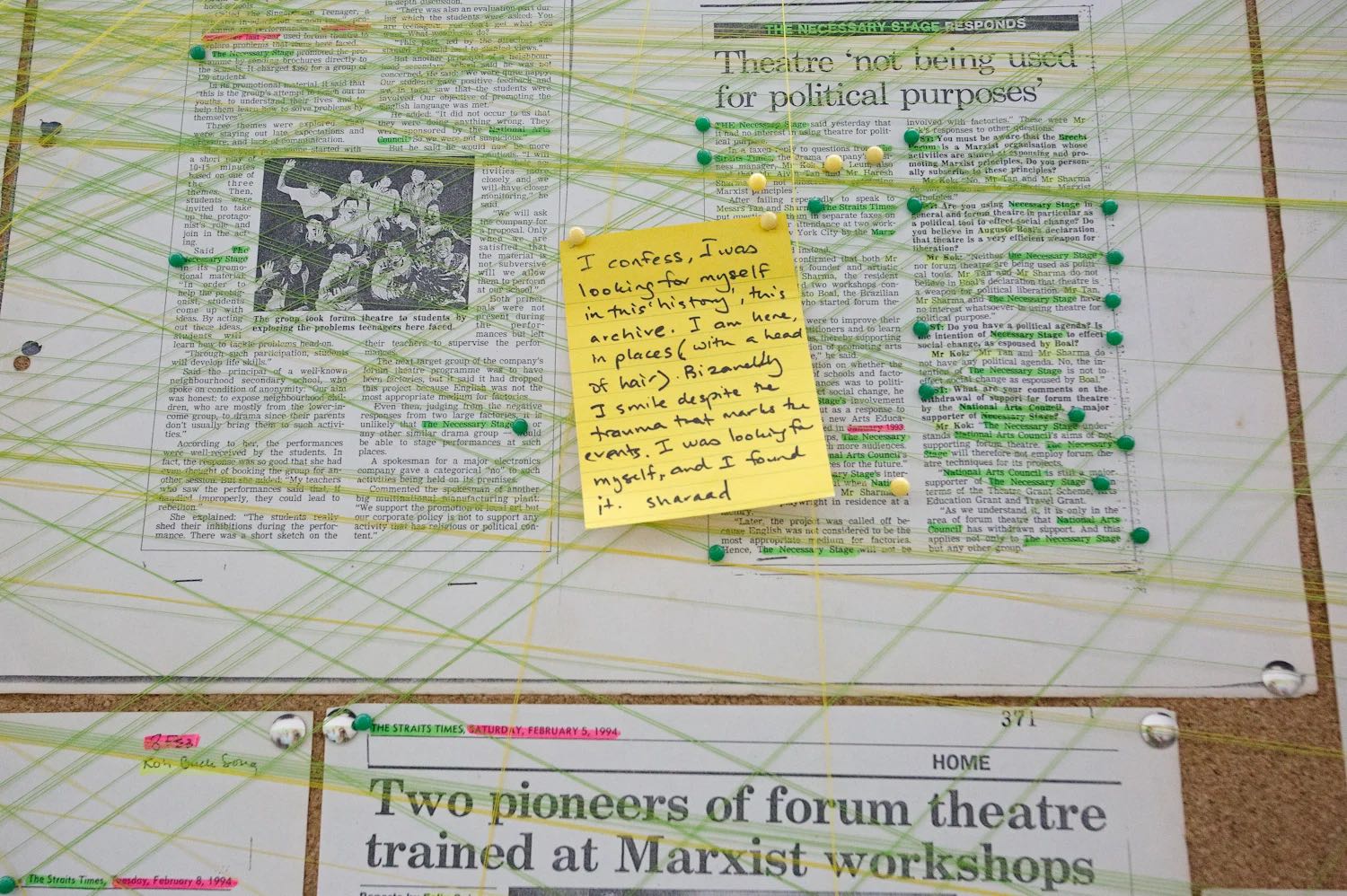
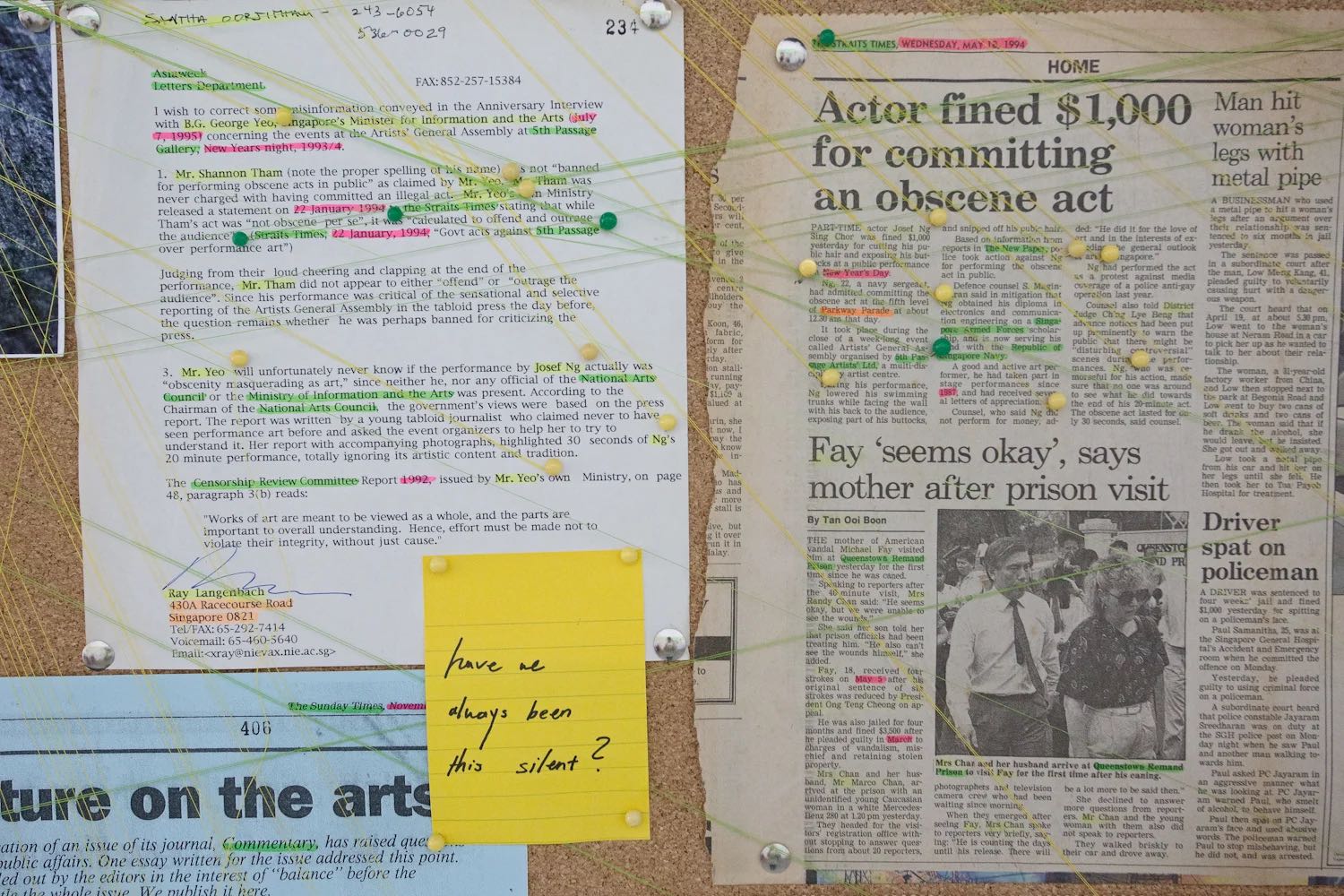
Documentation of the AGA: The Langenbach Archive installation.
This exhibition is an extension of my research into Josef Ng’s Brother Cane, with a focus on the week-long interdisciplinary art event that hosted Brother Cane. The Artists’ General Assembly took place from 26 December 1993 (Sunday) to 1 January 1994 (Saturday) at 5th Passage Contemporary Art Space in Parkway Parade Shopping Centre, Marine Parade, Singapore.
Artists’ General Assembly: The Langenbach Archive contains a selection of approximately 150 documents from performance artist and academic Ray Langenbach’s visual and text based archive of the arts scene in Southeast Asia from the late 1980s to the present. The exhibition also includes approximately eight hours of video documentation on five television monitors from the original event captured by Ray Langenbach.
Langenbach moved to Singapore from Malaysia in 1993 and taught at the National Institute of Education until 1996. He completed his PhD thesis in 2004 titled Performing the Singapore State: 1988–1995, which details the controversy surrounding Artists’ General Assembly.
The installation/archive evolved over the duration of the exhibition as I altered and re-threaded connections between documents. Viewers were invited to participate by leaving corrections, comments or opinions about the archive on post-it notes and adding them to the installation with critical consideration. These notes were collected, documented and archived after the deinstallation of the exhibition.
Artists’ General Assembly: Education & Emancipation (2014)
- Exhibition
- 7 to 16 March 2014
- The Substation Gallery, Singapore
- Part of Names, Texts & Trouble, a joint exhibition with Tania De Rozario
- Supported by The Substation’s Associate Artist Research Programme
- Exhibition design by Kaleb Loh
On 24 January 1994, National Institute of Education lecturer Ray Langenbach received an anonymous letter in his mailbox that called for the removal of Performance Art from the Visual Art syllabus, and a boycott of classes featuring this “forbidden art.”
We are a group of BA and Dip.Ed students who do not wish to attend Ray Langenbach classes.
BA and Dip.Ed students (National Institute of Education, Singapore), 24 January 1994
If we are taught by him next year we will not go to his classes.
His teaching is too political and is about sensitive issues.
He teaches performance art which is now forbidden in Singapore
and we are quite right not to go.
How can it that a forbidden art is being taught on campus. It should be banned.
We will now write to the press and the director.
This letter followed the National Arts Council’s (NAC) statement on the restriction of the licensing and funding of performance art in Singapore on 22 January 1994. NAC’s statement was in turn triggered by media reports of two performances at the Artists’ General Assembly, one of which was Josef Ng’s Brother Cane.
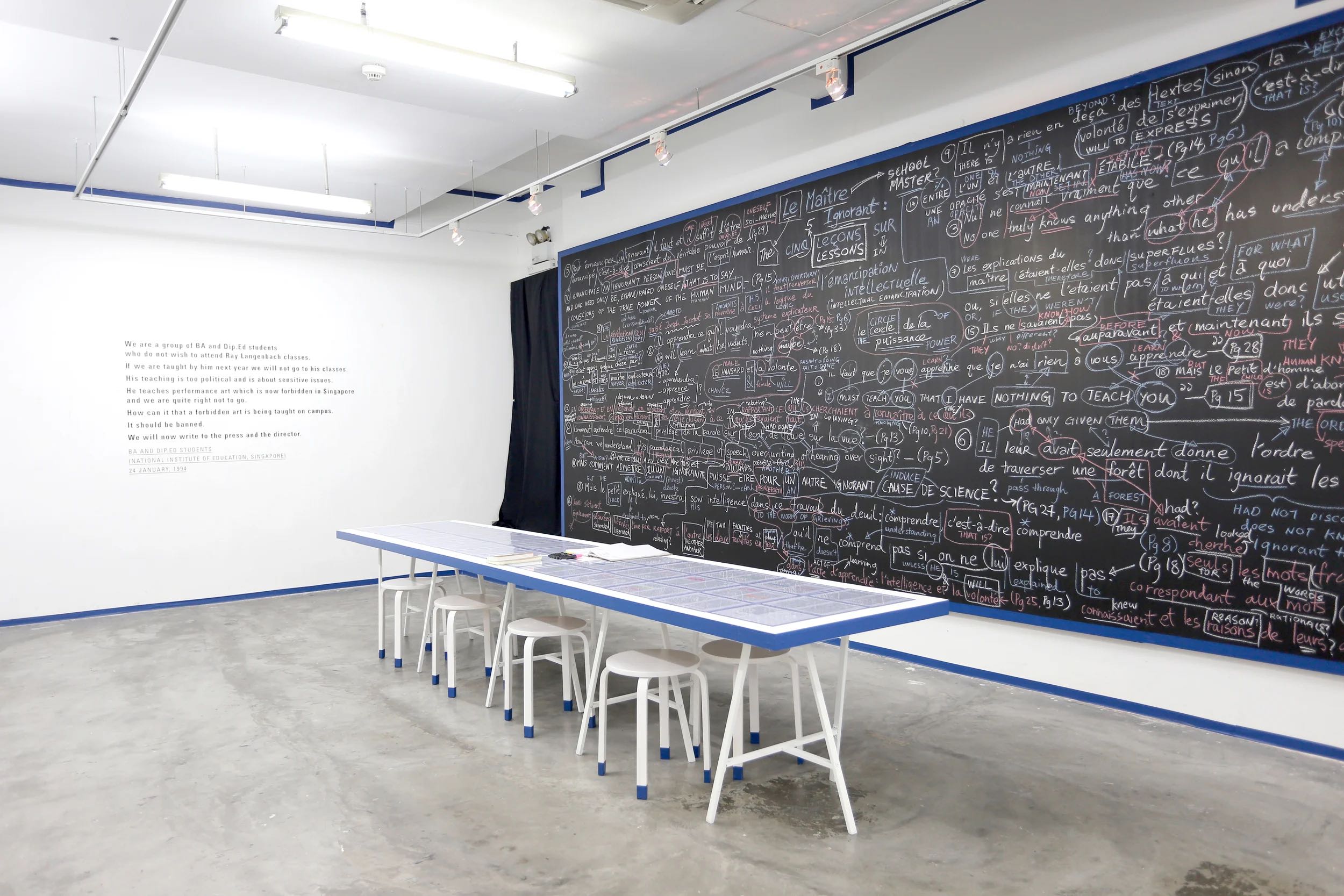
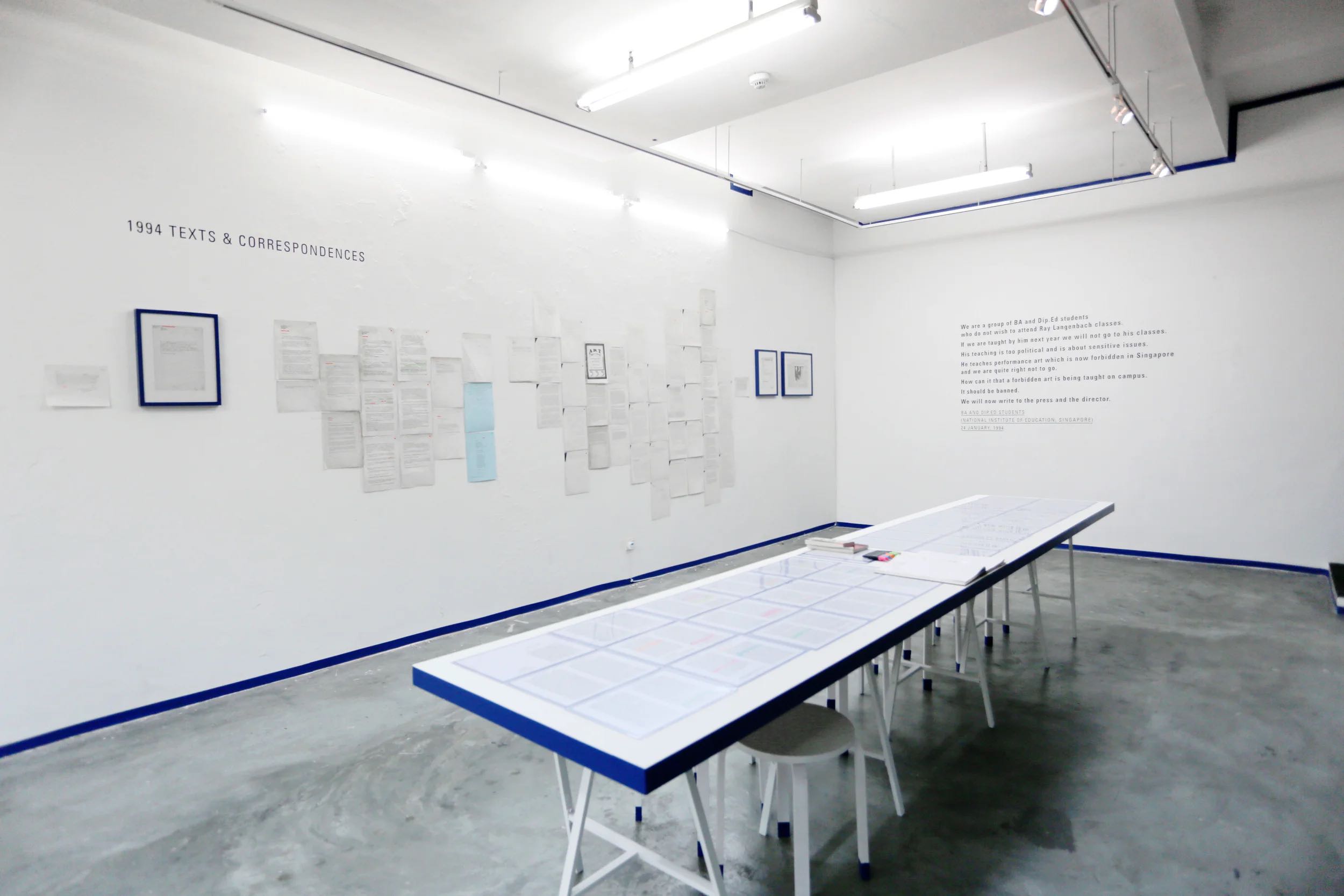
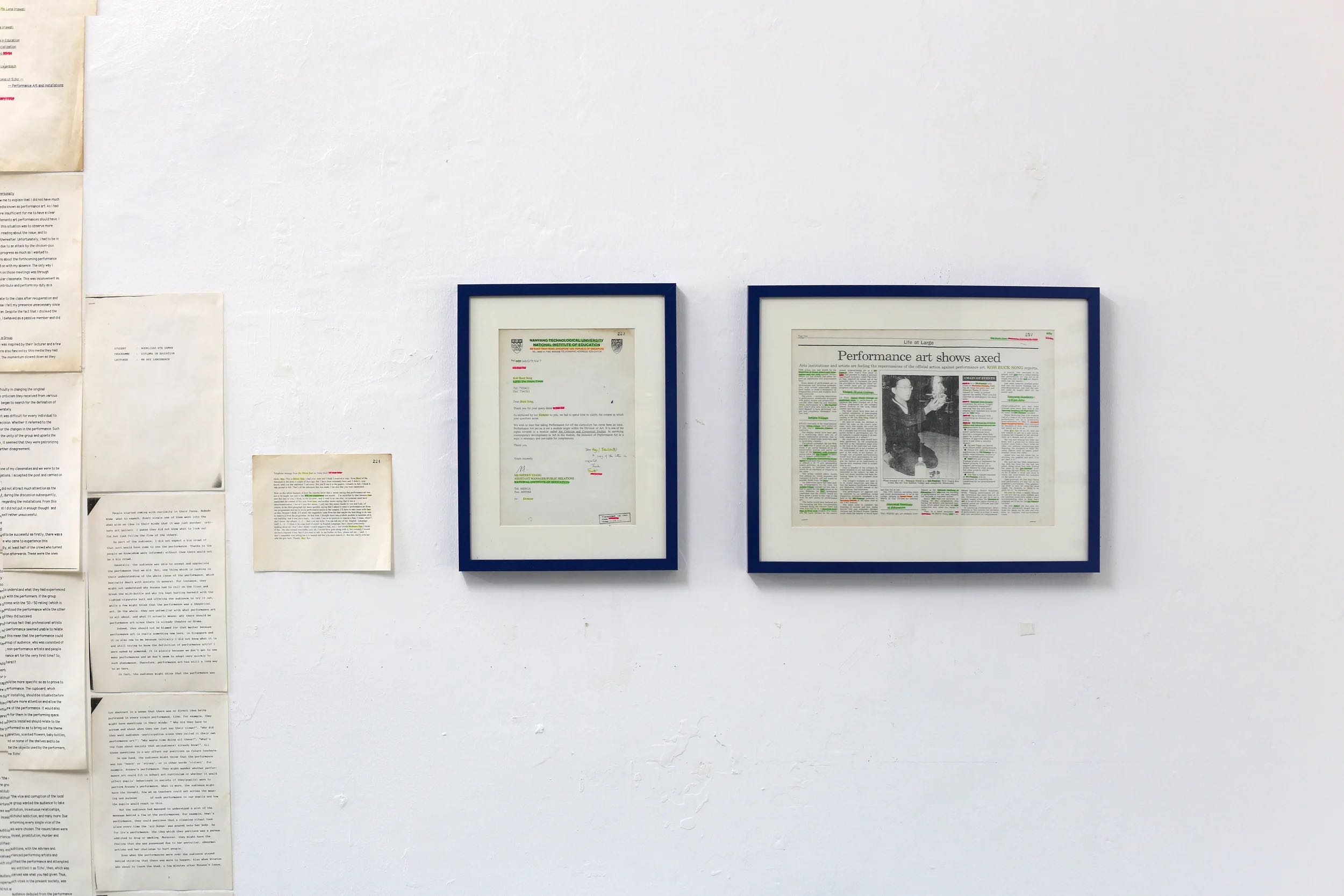
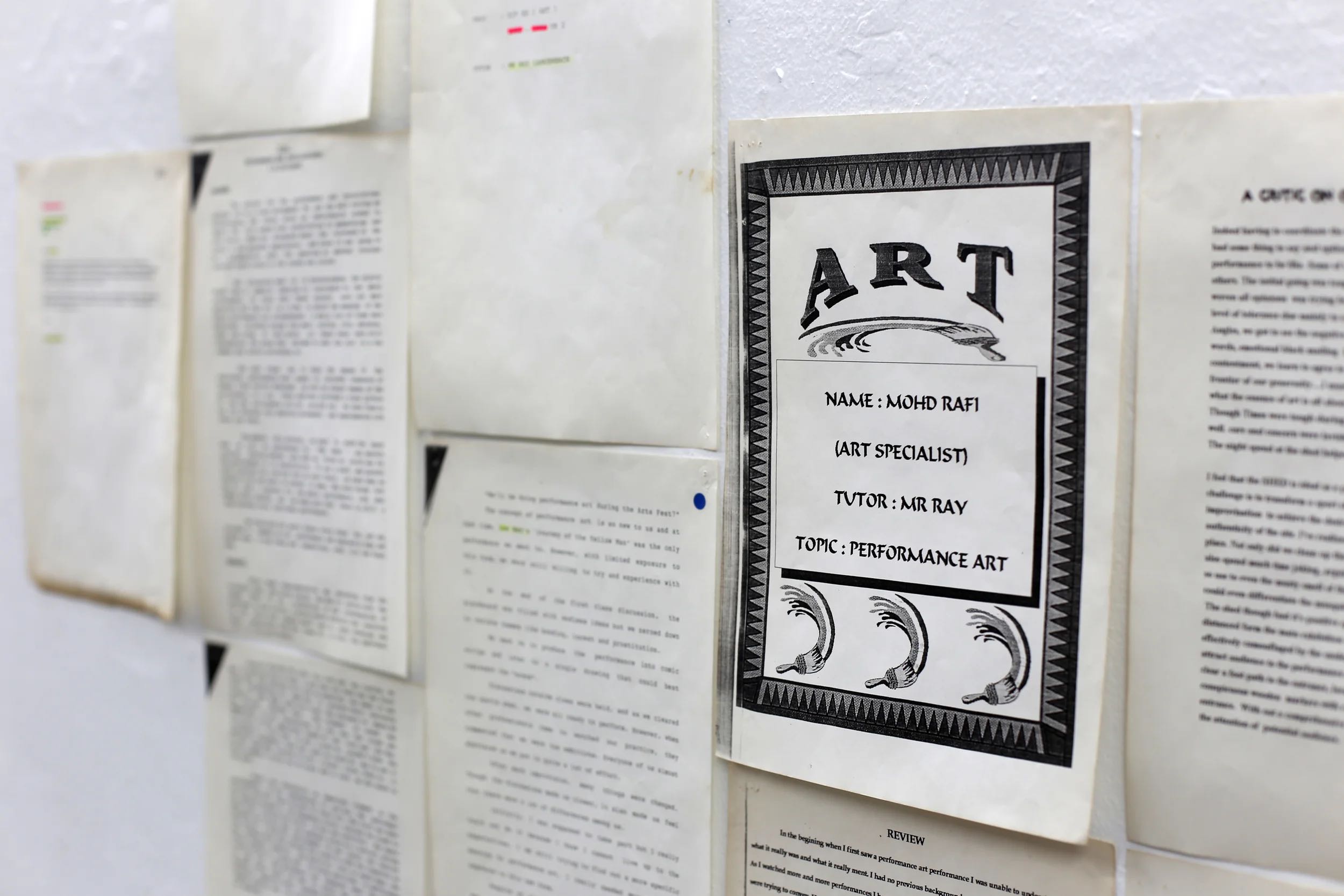
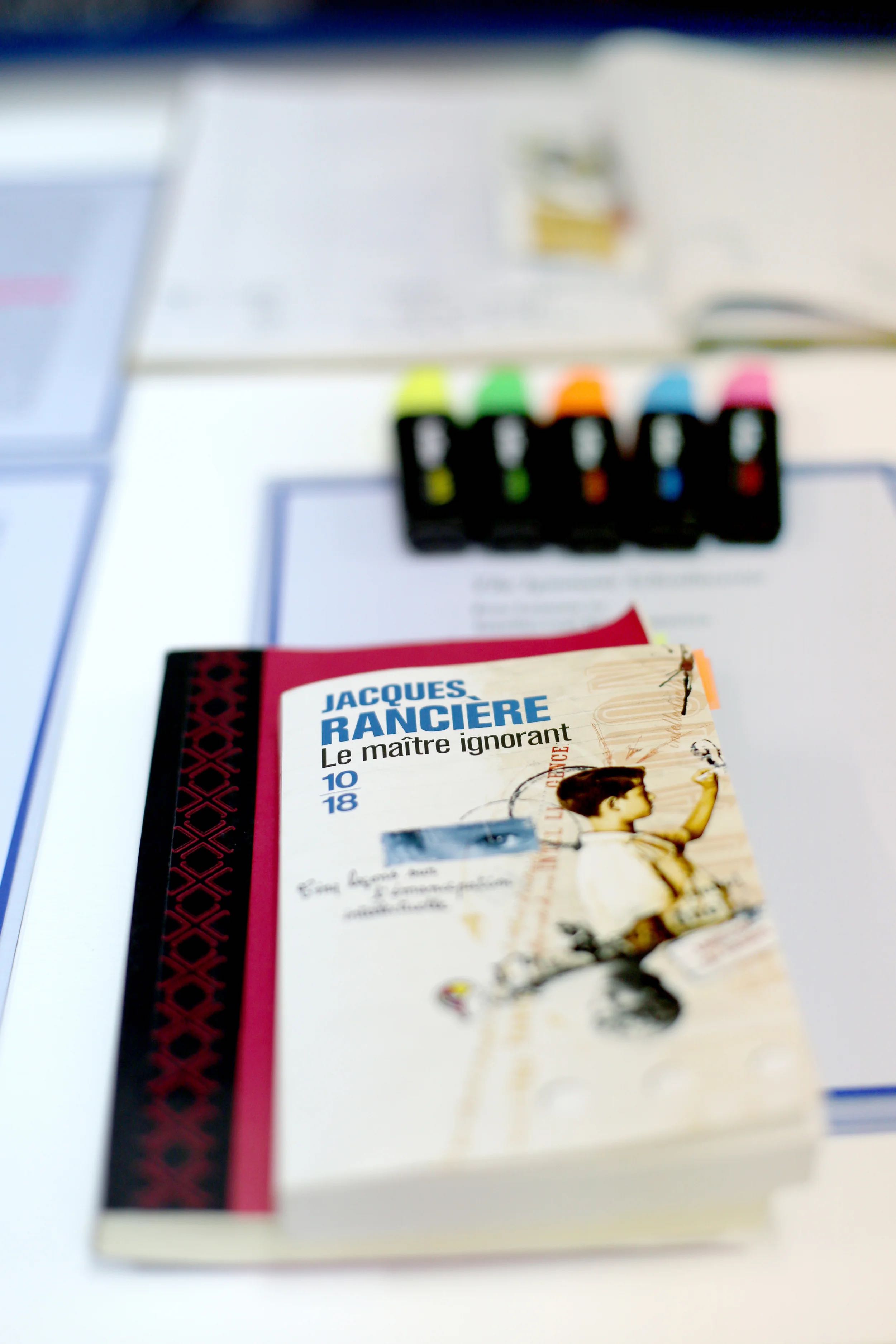
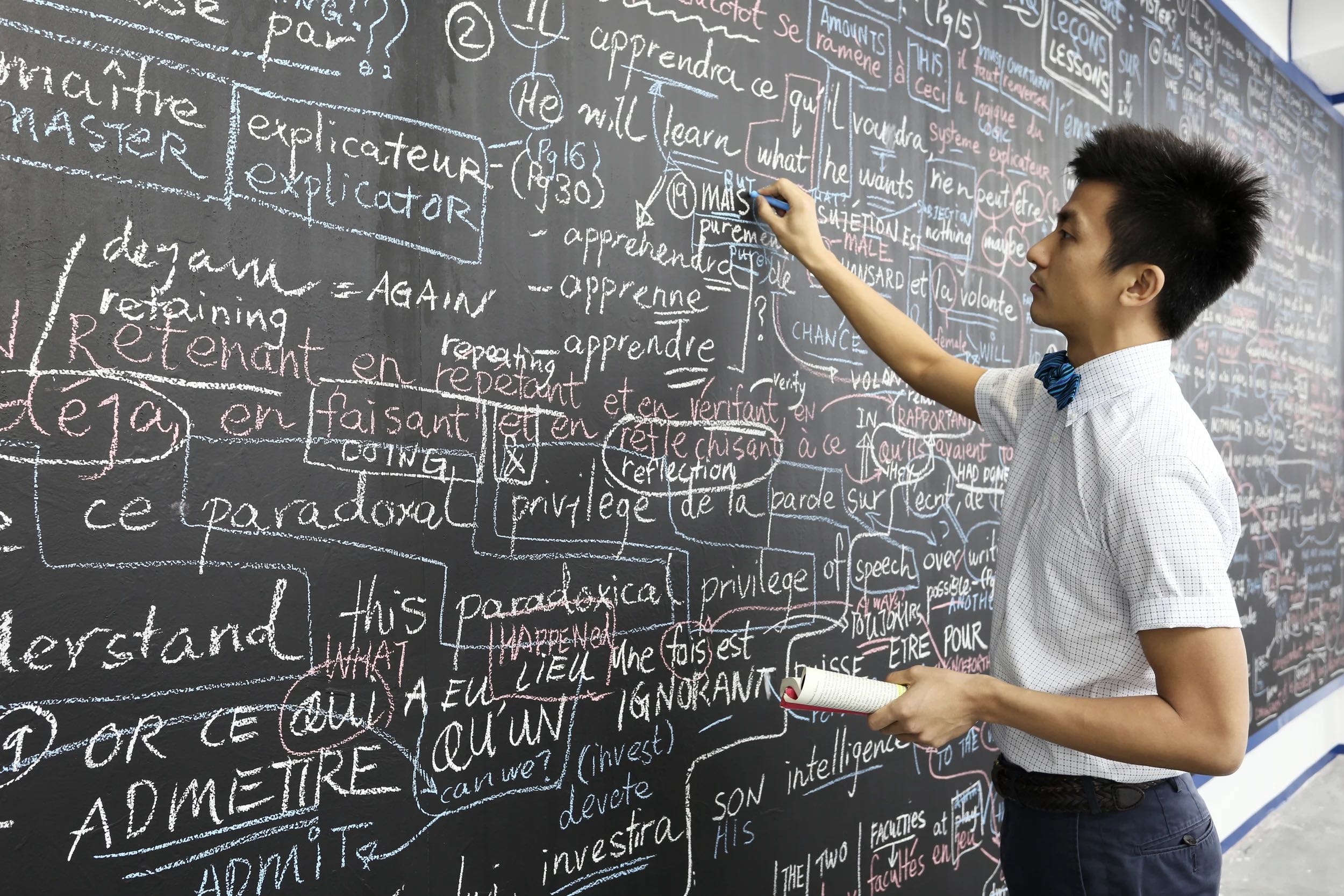
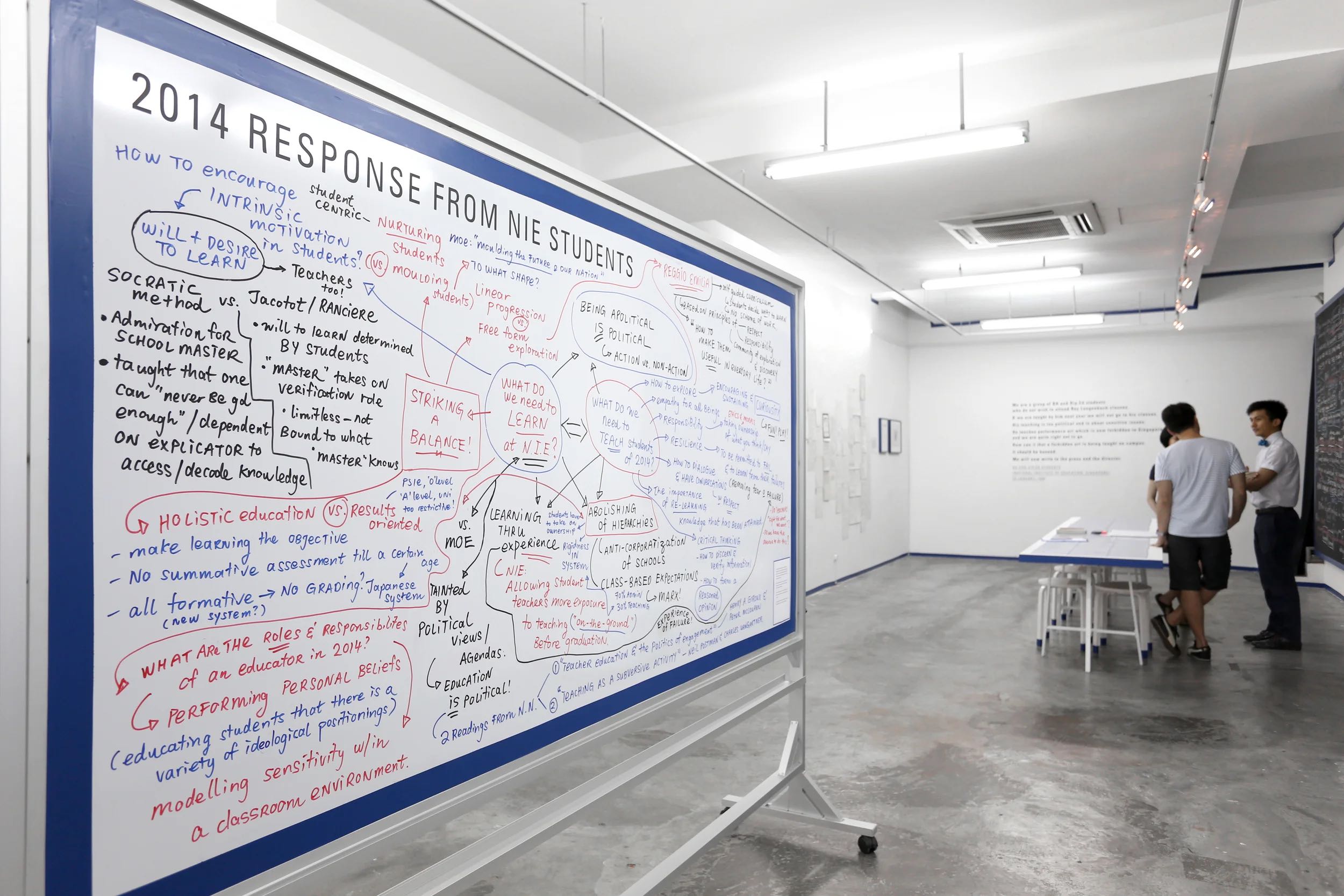
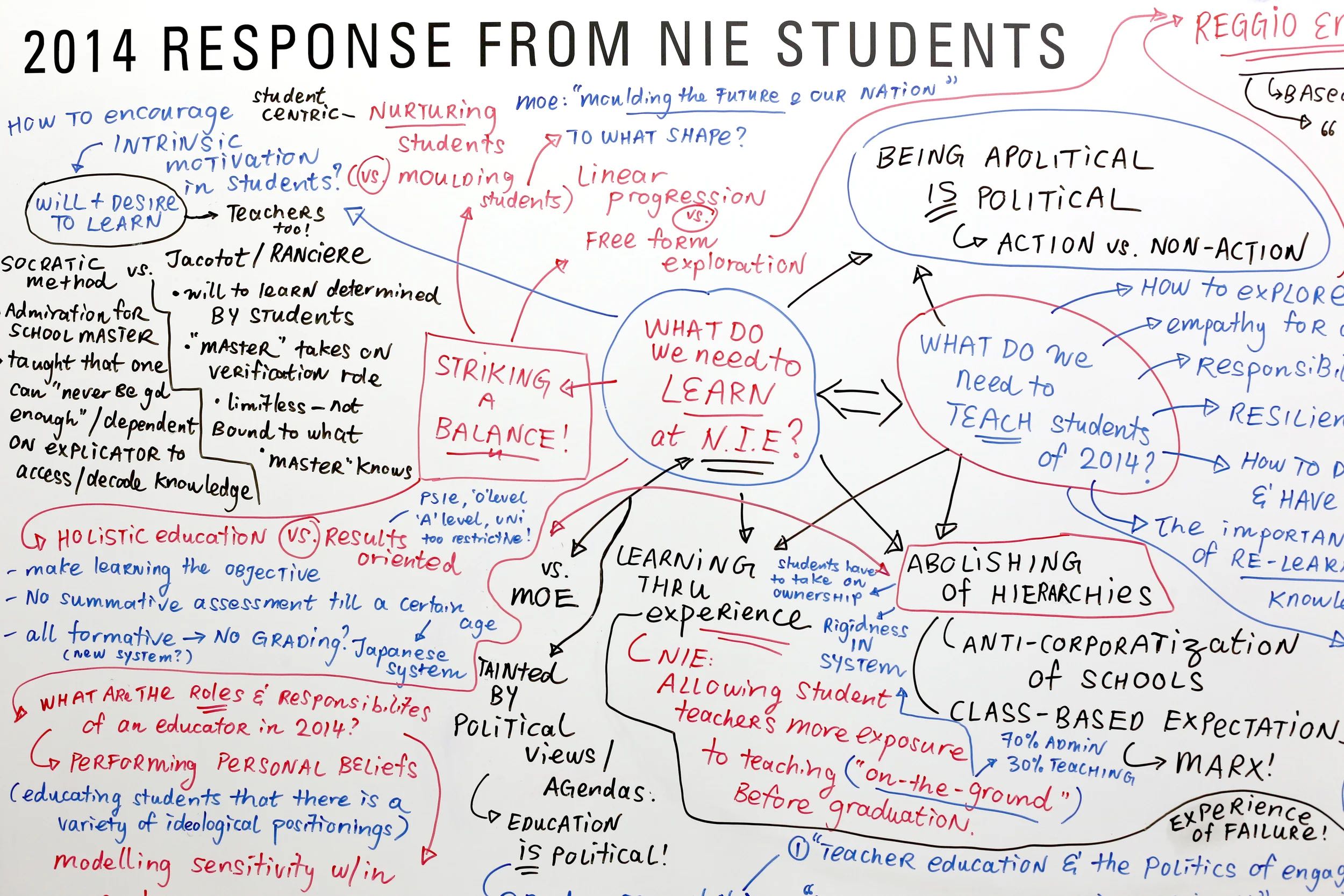
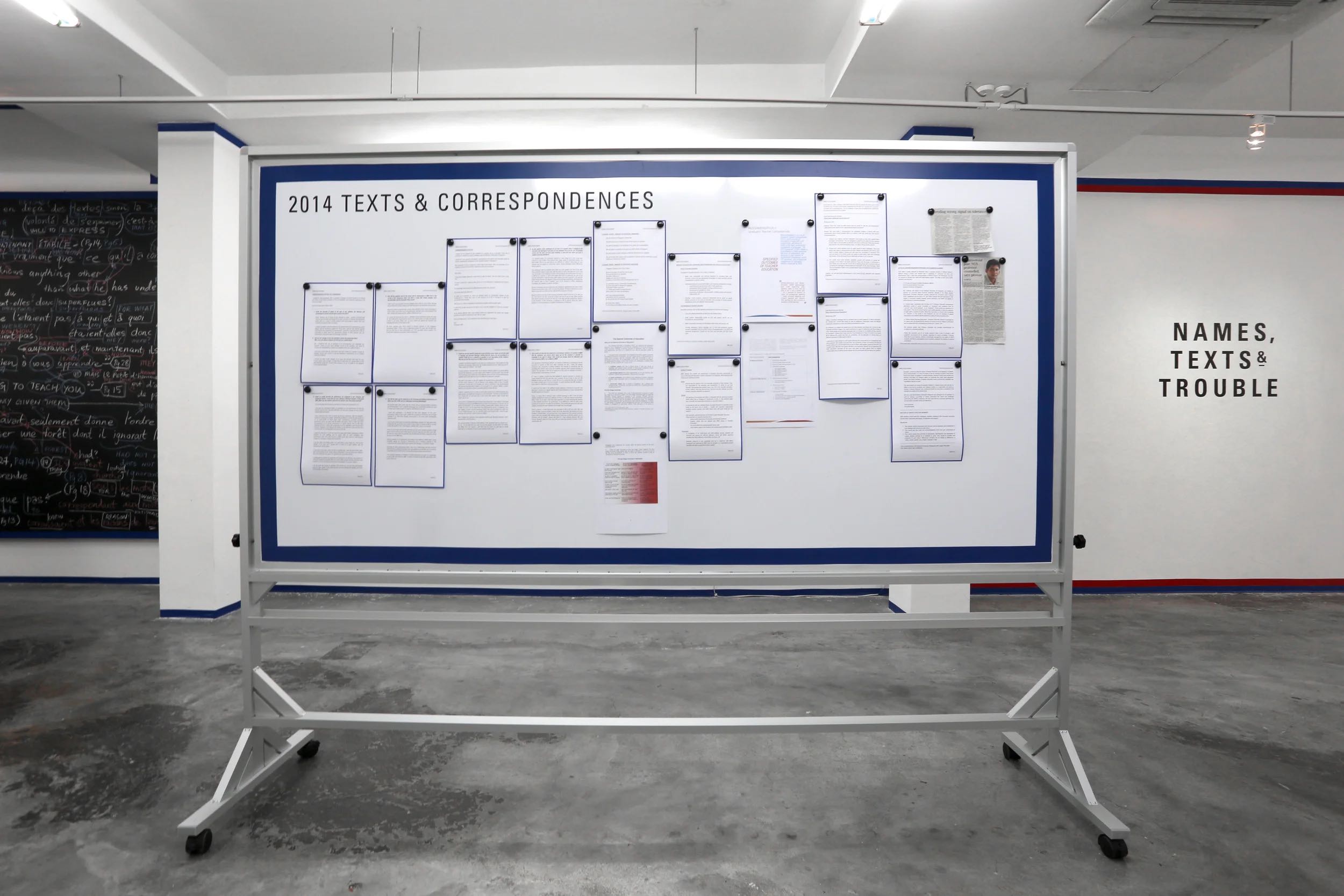
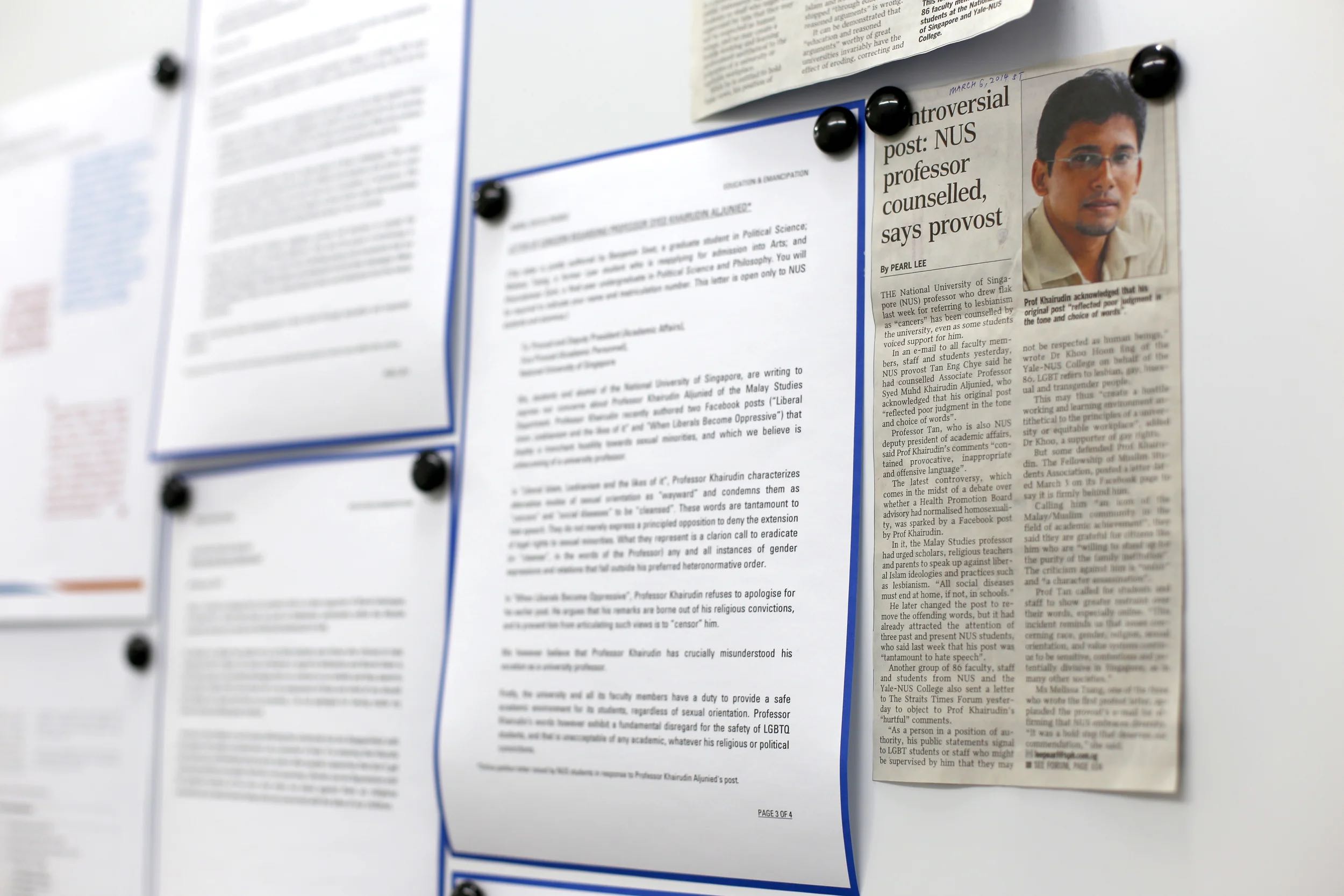
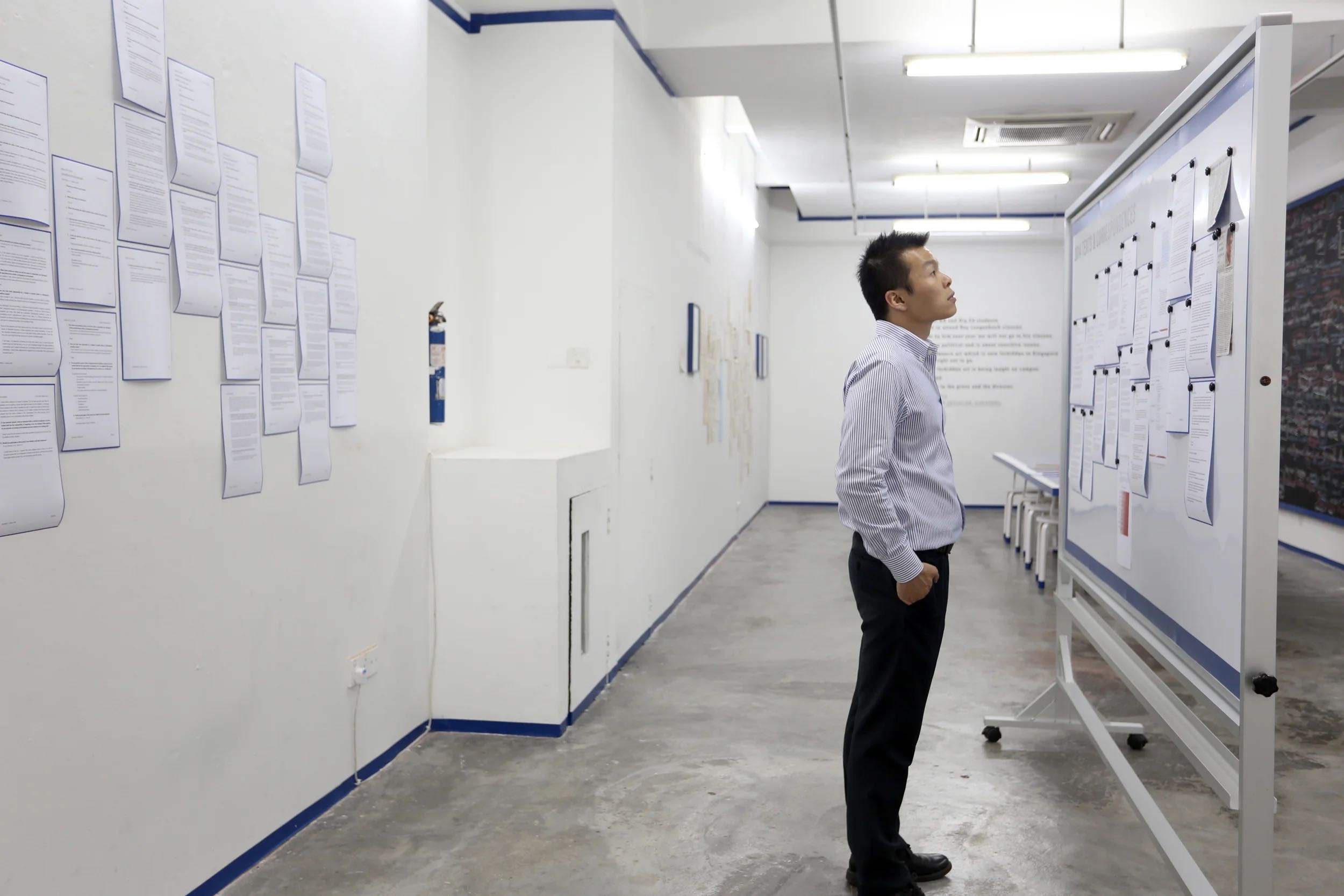
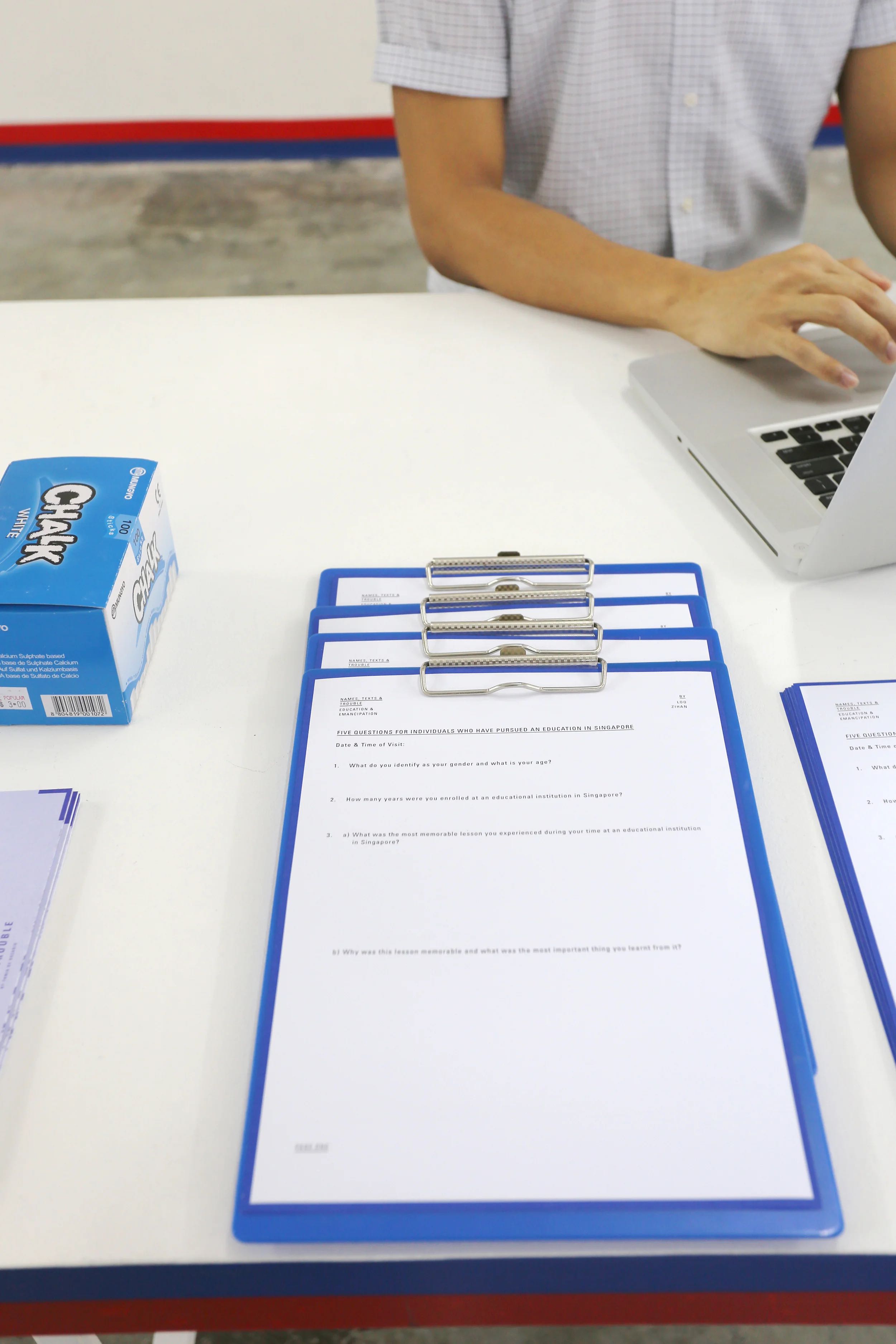
Documentation from AGA: Education and Emancipation (2014) installation.
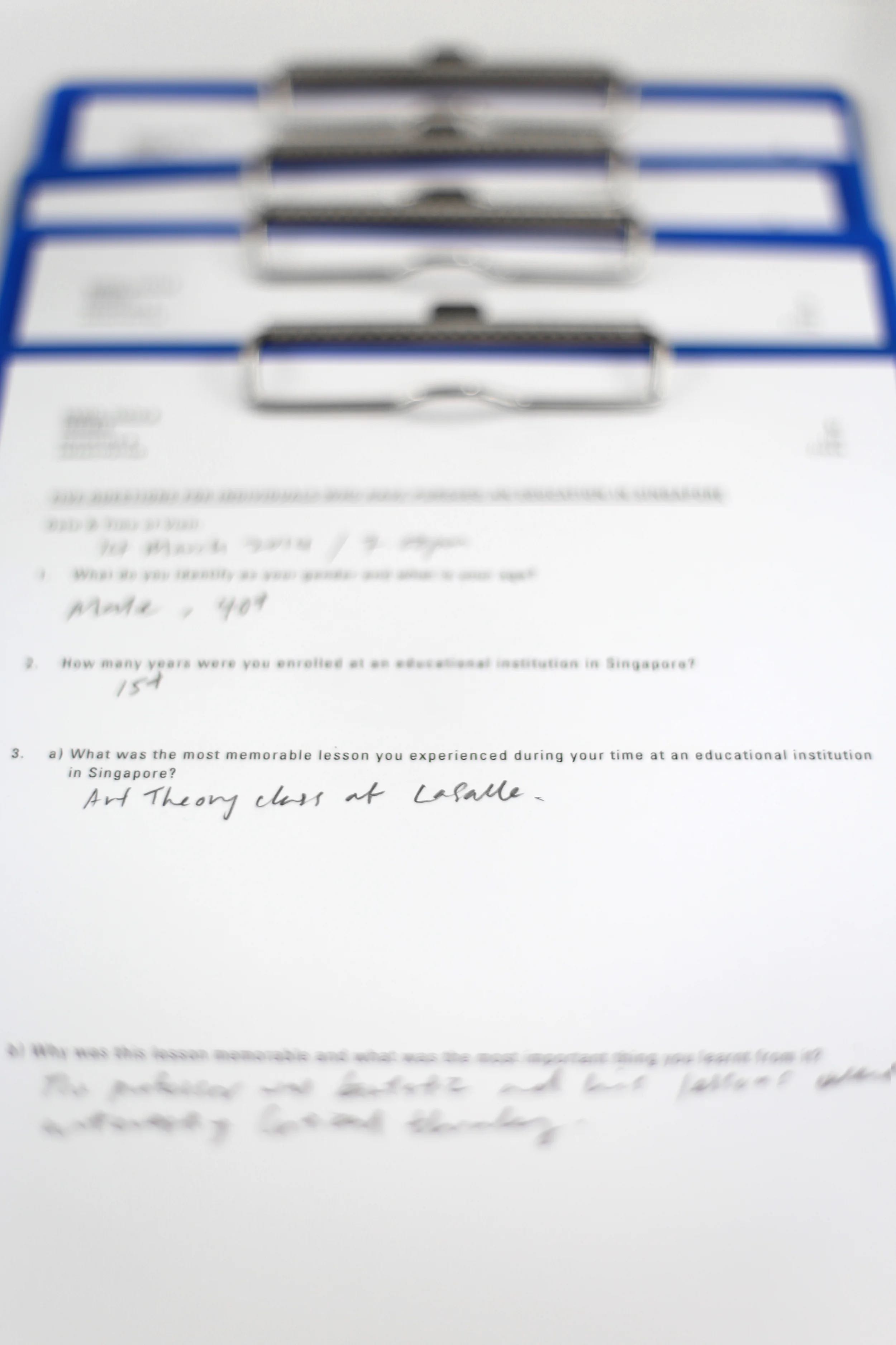
Education & Emancipation is the second phase of a two-year research project that delves into the periphery events surrounding the Artists’ General Assembly. The focus for this phase is on the gesture of proscribing politically-charged art in 1994 and an attempt to measure its impact on arts education since then.
The three main questions the exhibition proposes are as follows:
Do educators have the responsibility to trigger ideological emancipation in their charges, and how do they gauge the ethical and moral repercussions of the position they choose to perform?
How do the roles of an artist and educator intertwine, and how can one role potentially influence the creative revisioning of the other?
Can the transference of emancipation be offered up as a gift by the educator or does it necessitate a violent gesture of possession enacted according to the volition of his charges?
Using Jacques Rancière’s 1981 text The Ignorant Schoolmaster: Five Lessons in Intellectual Emancipation as a critical foundation, the exhibition includes a durational performance in which I manifest an unconventional teaching method proposed by Joseph Jacotot in 1818.
Rancière not only proposes that one can teach something that one does not know, but most importantly that only through not knowing what one is to teach can true intellectual emancipation occur in both the educator and his charges.
I interpreted the teaching methodology by attempting to learn French throughout the exhibition via the comparative analysis of both the English and French text of The Ignorant Schoolmaster. The blackboard served as a record of my progress.
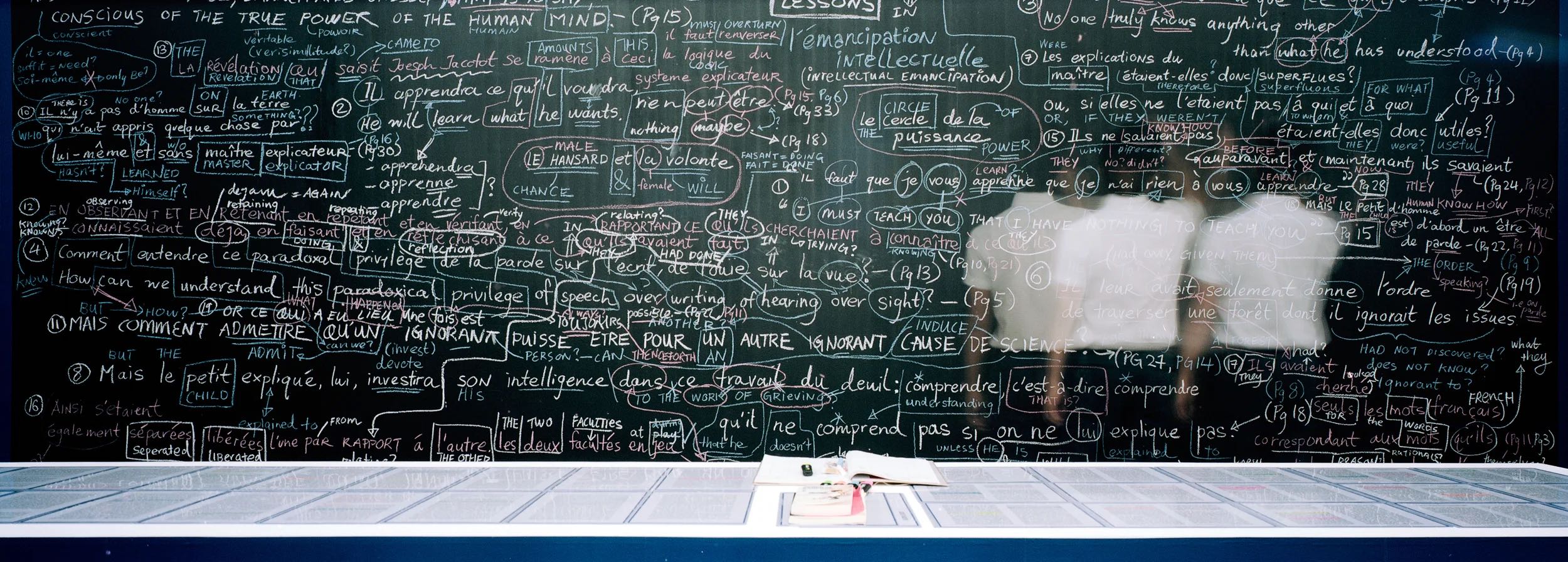
During the exhibition run, I invited a group of current National Institute of Education, Singapore students who were training to become art teachers to the exhibition space for a dialogue session and discussion.
A whiteboard in the exhibition recorded the trainee teachers’ response to the exhibition. Other documents displayed in this text-based exhibition included surveys conducted with arts educators on their pedagogical ethos and the teaching of art with a social, political and cultural reference, an anonymous interview with a present Ministry of Education art educator on her opinion of the state of art education, an interview with Ray Langenbach on his memory of the incident, along with the Teacher’s Creed and Teacher’s Pledge by the Ministry of Education, Singapore.
I am LGB (2016)
- Performance
- 18, 19, 20 August 2016, 7pm to 11pm
- 72-13, T:>Works Singapore
- Commissioned by Singapore International Festival of Arts
- Supported by the Artist-in-Residence program at the NTU Centre for Contemporary Art
and the Artist-in-Residence program at The Substation, Singapore - Created by LGB Society of MindLoo Zihan with Ray Langenbach, Shawn Chua Ming Ren, Lee Mun Wai, Bani Haykal, Kelvin Chew, Chan Silei, TRIPPLE
- Festival directed by Ong Keng Sen
- Produced by Grace Low
- Lighting Design by Alberta Wileo
- Stage Managed by Chee Mei Rong assisted by Ang Liyi Marilyn, Timothy Koh
- Facilitated by Anca Rujoiu, Dan Koh, Elvis Wang, Kiran Kumar, Lim Jue Hao Isaac,
Megan Miao, Mia Tiara Nurhidayah, Paul Wong, Sneha Indrajit, Tan Shao Han
Synopsis for I am LGB
Who am I? Am I my name? My Body? My Sex? My History? What State do I represent? Should I believe in the State? Perhaps I am propaganda for a State that does not yet exist. Or perhaps I am here to expropriate what can never be mine. Perhaps I should return to my home. Where is that? Where my father’s ashes were released, swallowed by the fish he fed every day? I ate that fish.
You are a performance artist. It is the 24th of January 1994. You teach contemporary art at a public university. One day, you receive an anonymous letter from your students. The letter calls for a boycott of your classes.
You are LGB.* LGB is Lan Gen Bah. You were born in 1948. You are a Marxist. A scientist. An ideologue. A member of the government. A citizen of the State. You are Song Liling. You are Cheng Dieyi. You are Ray Langenbach. You are Loo Zihan. You are Lee Mun Wai. You are Shawn Chua Ming Ren. You are Bani Haykal. You are State power. An individual. An ISA (Ideological State Apparatus). A KPI (Key Performance Indicator). You are LGB, without the T. You are a meme. Propaganda. You are not yours alone; you are an idea demanding its own acceptance.
*LGB refers to Lan Gen Bah, Ray Langenbach’s 1990s performance persona. Staged before current debates on trans-exclusion, it critiques the institutionalization of sexuality and the psychological and social effects of competitive education.
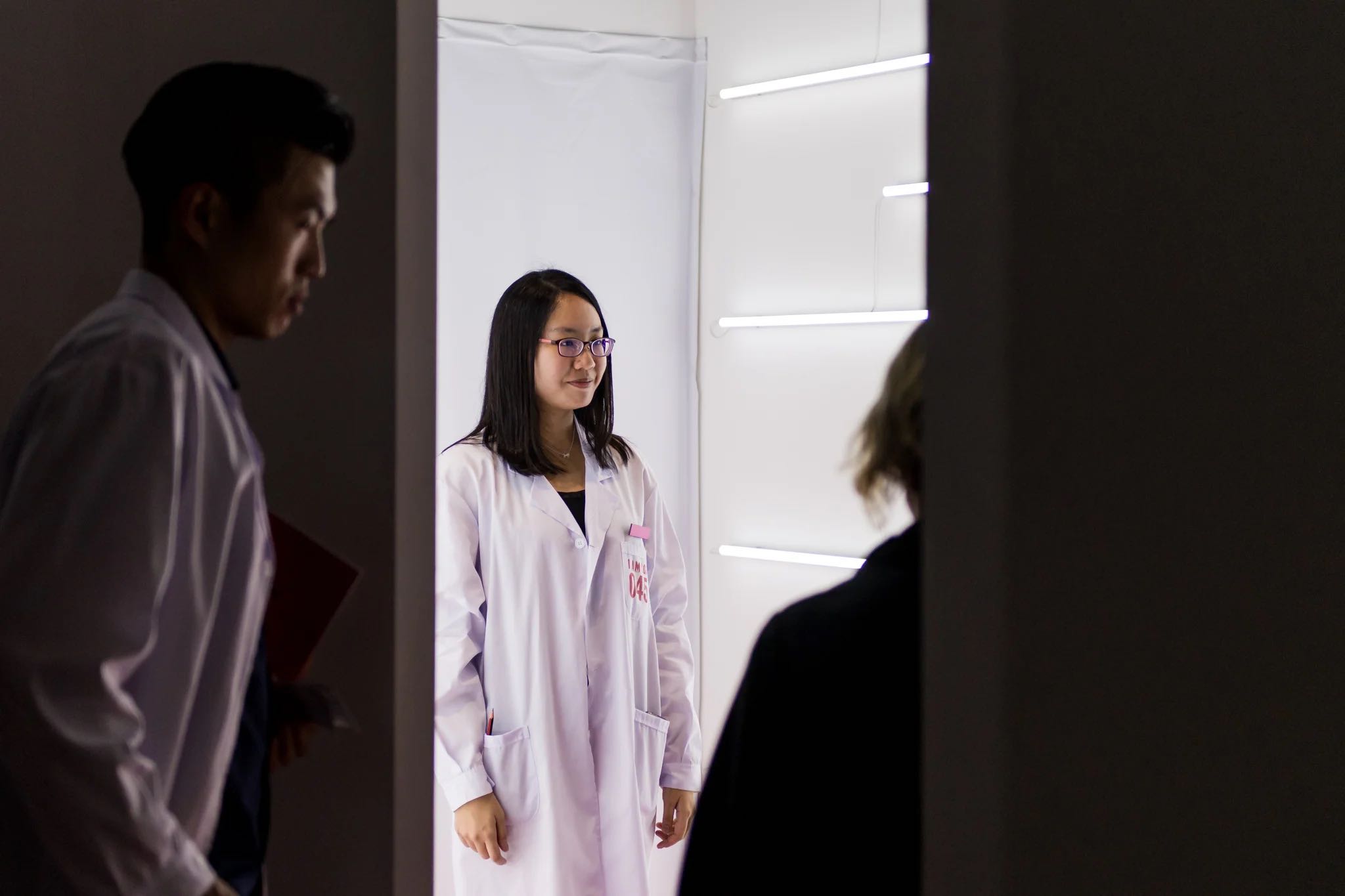
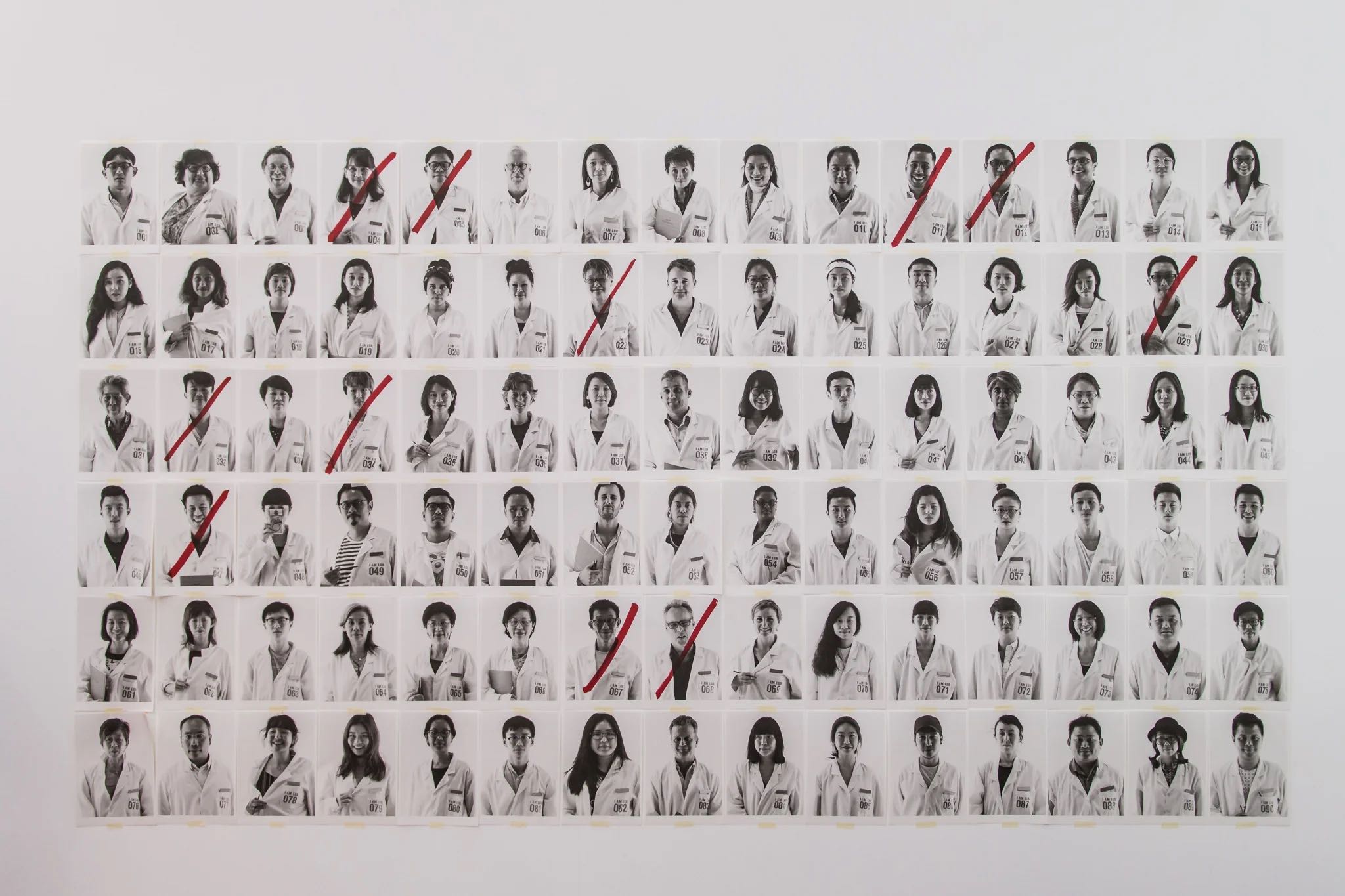
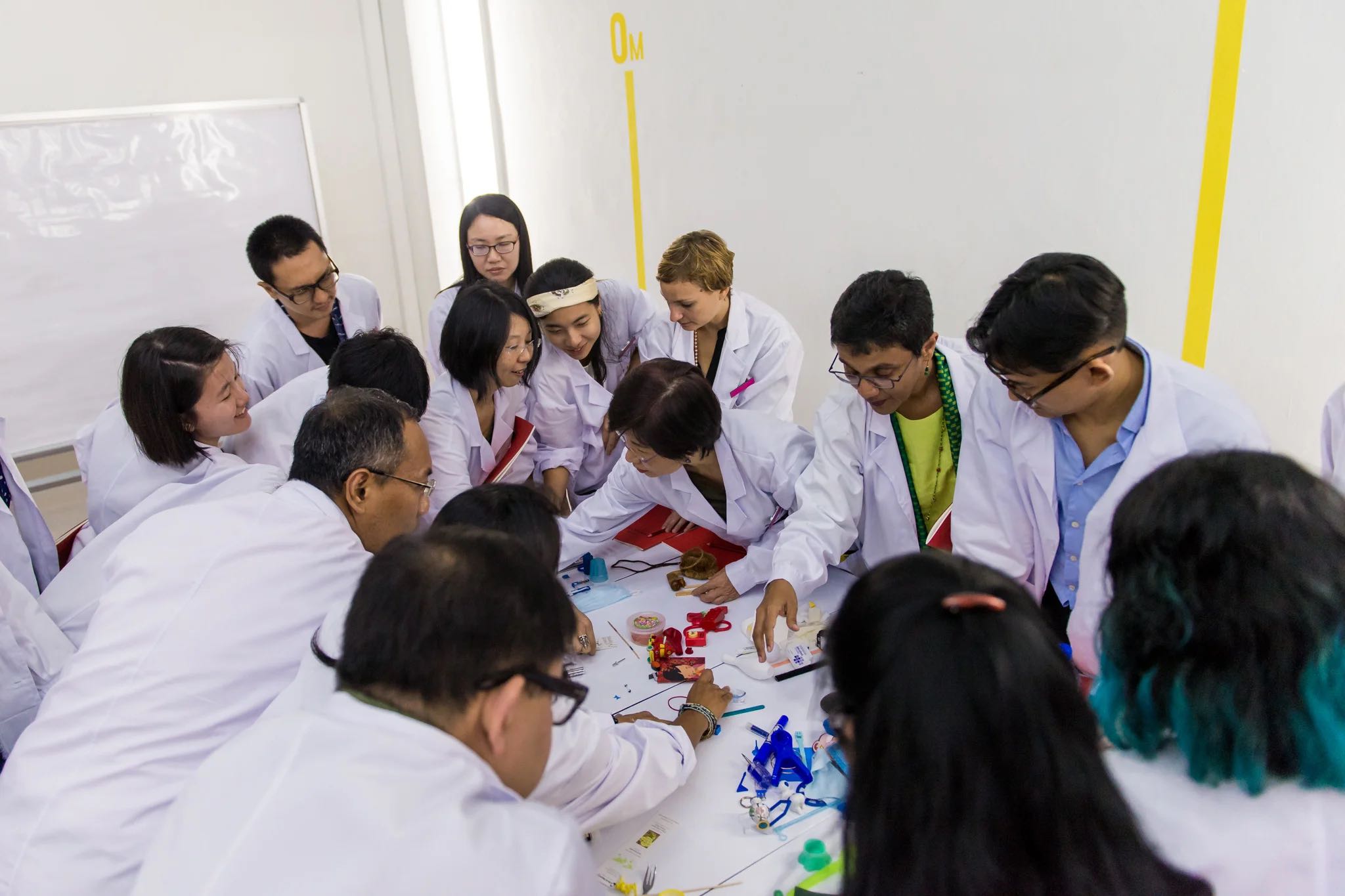
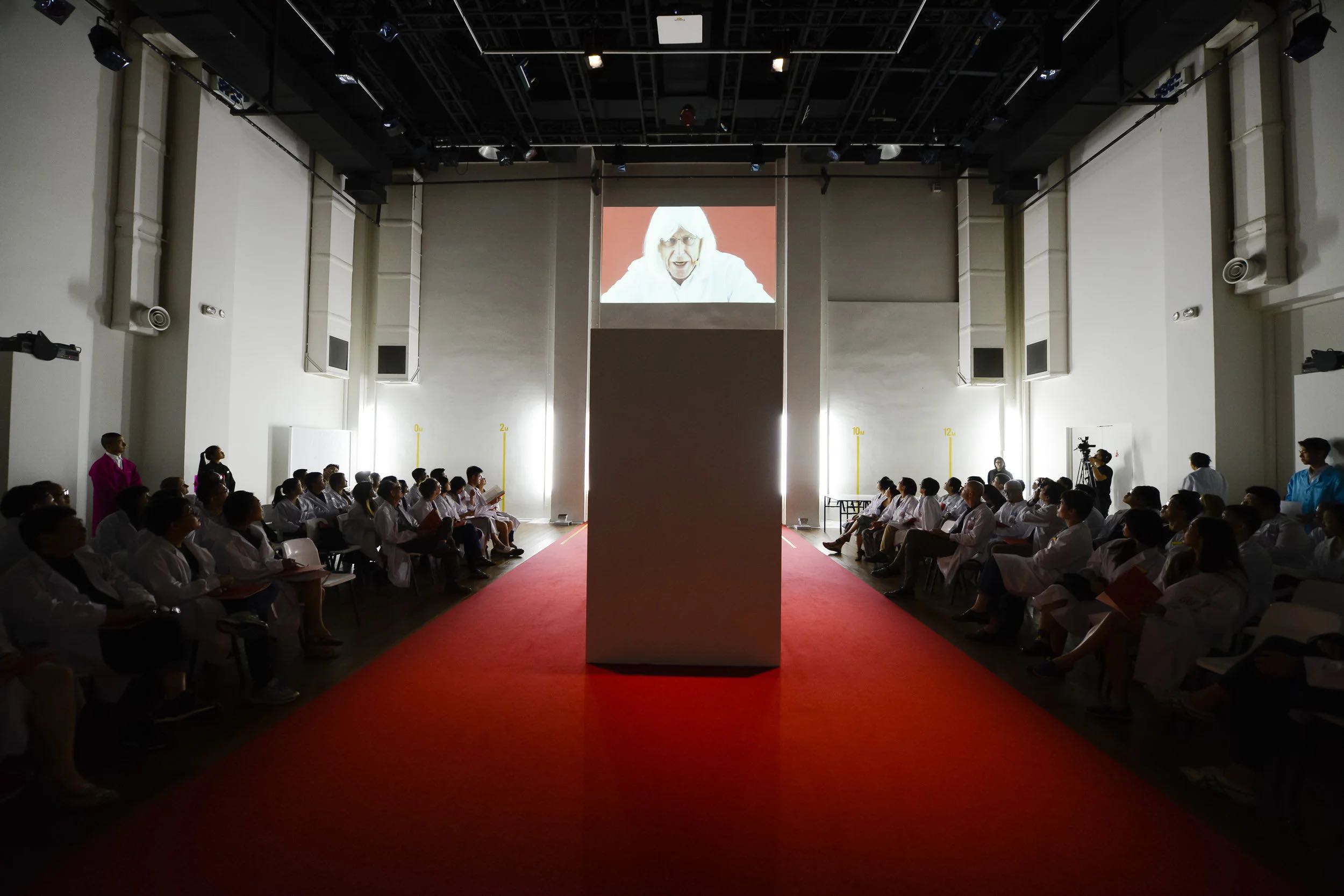
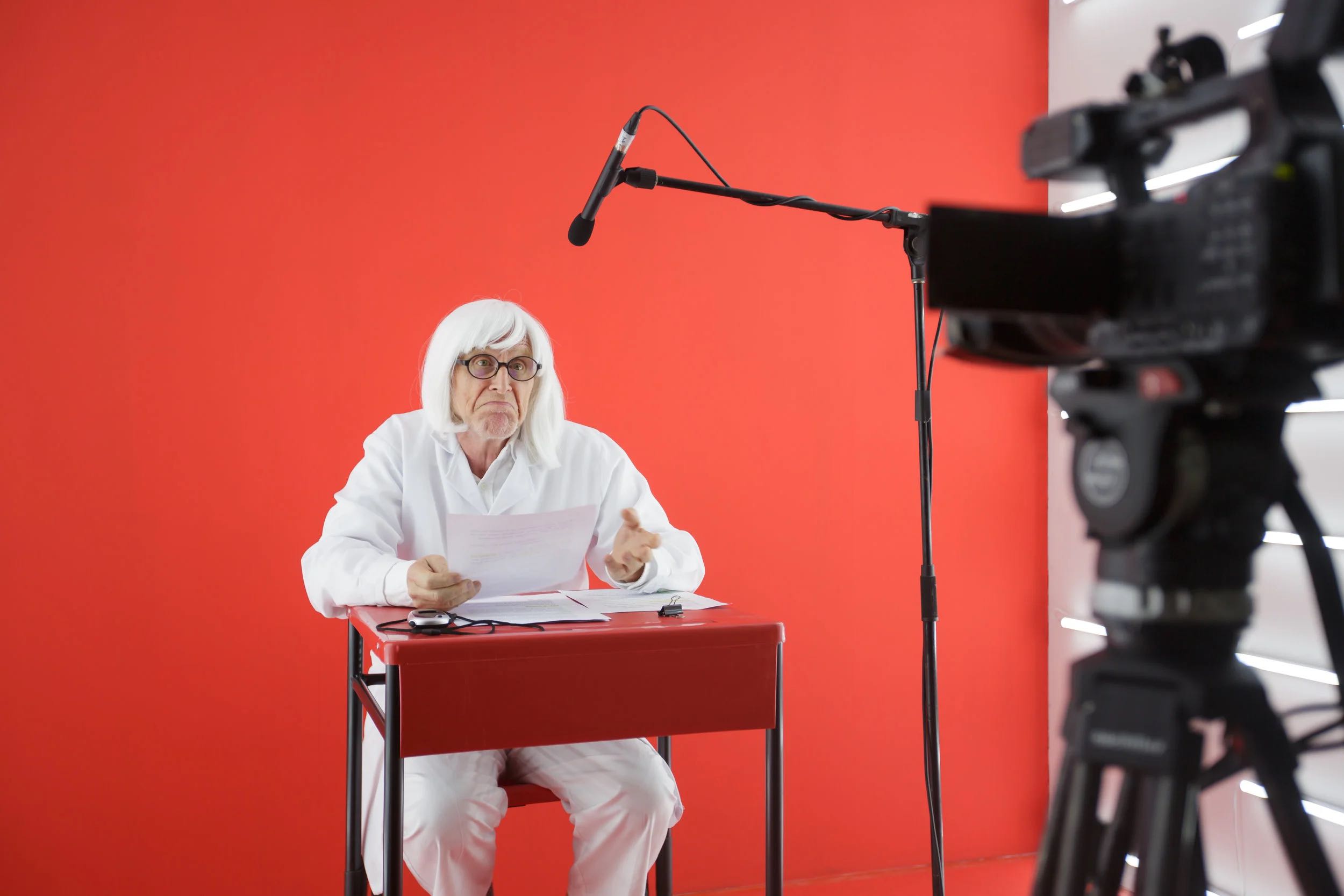
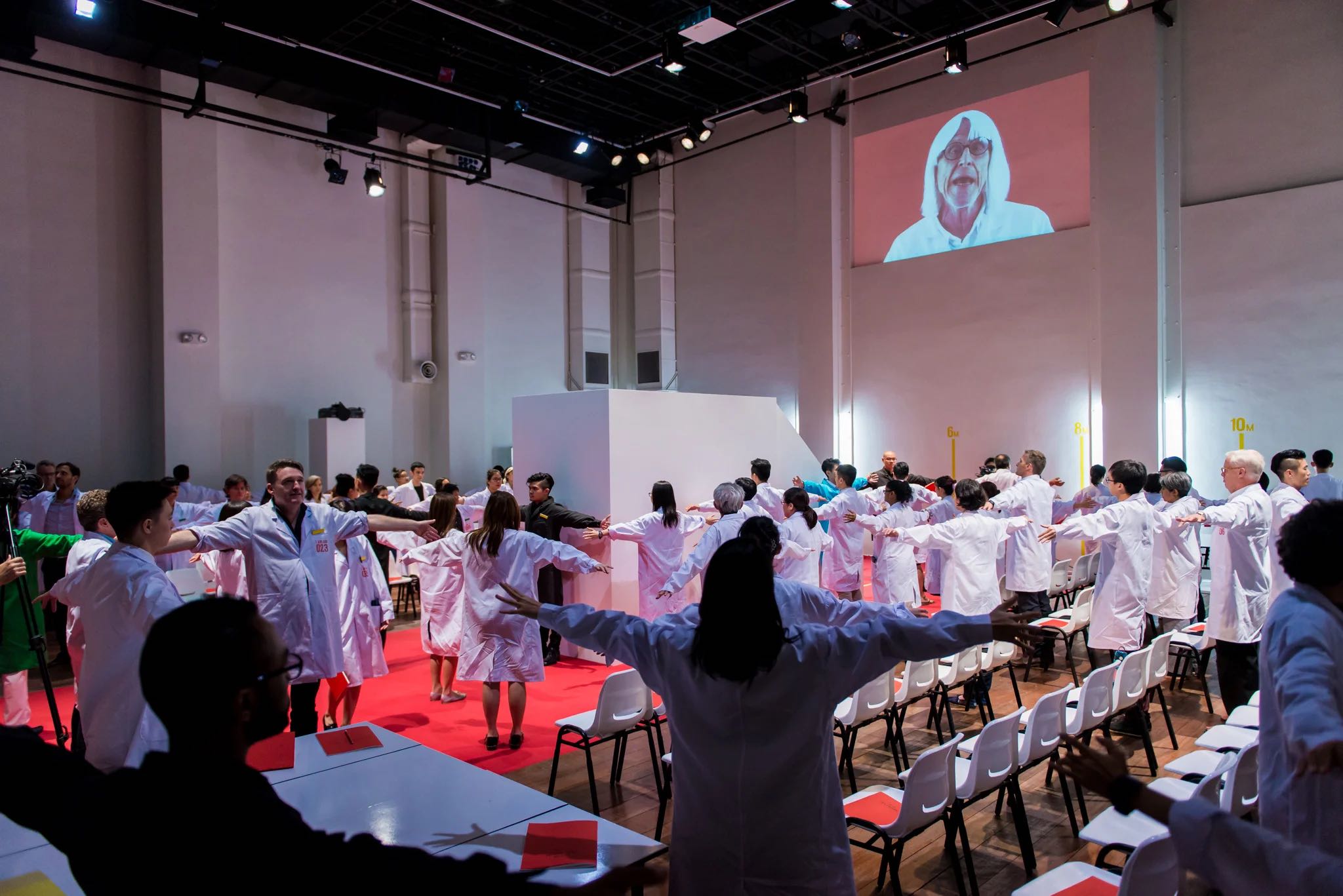
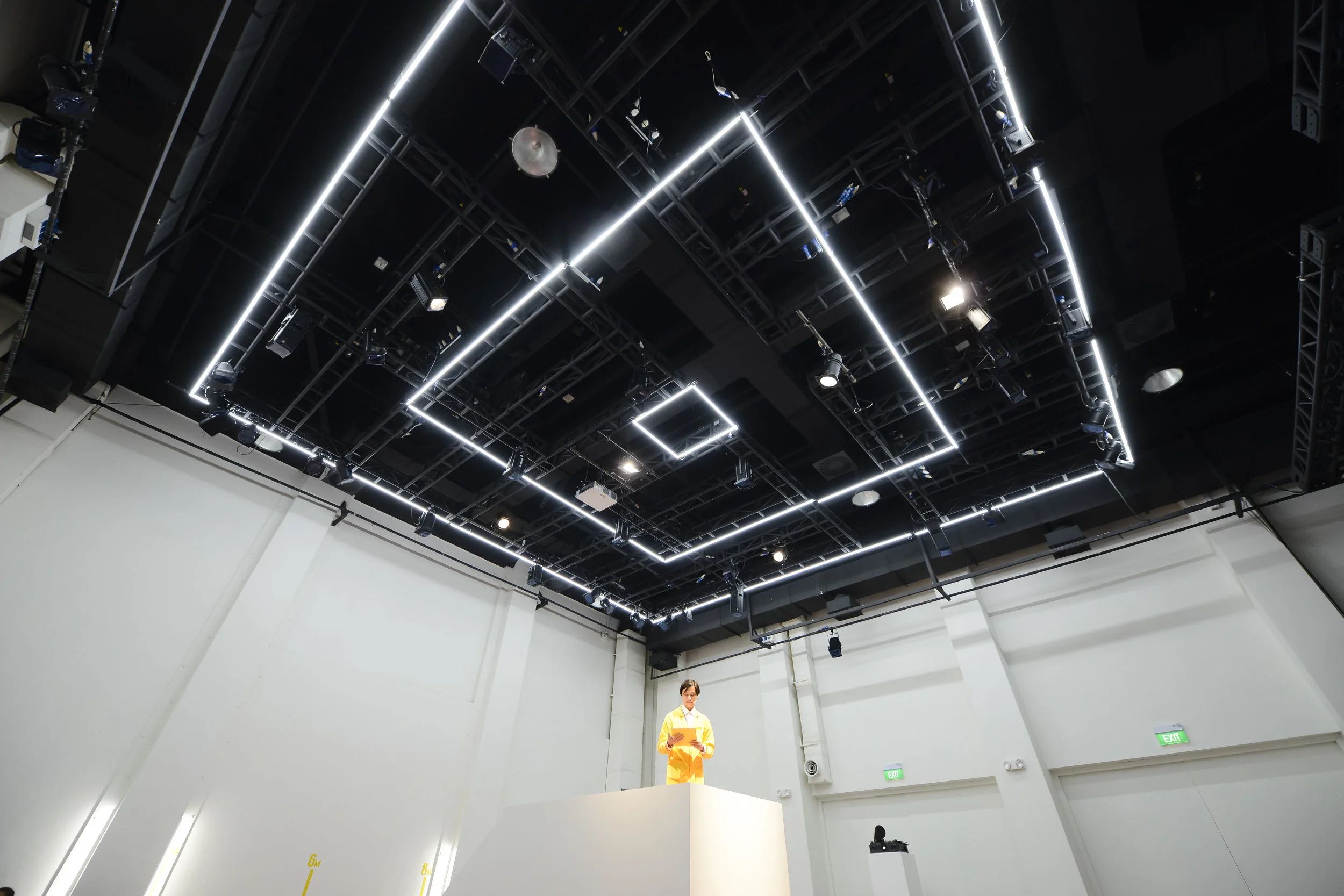

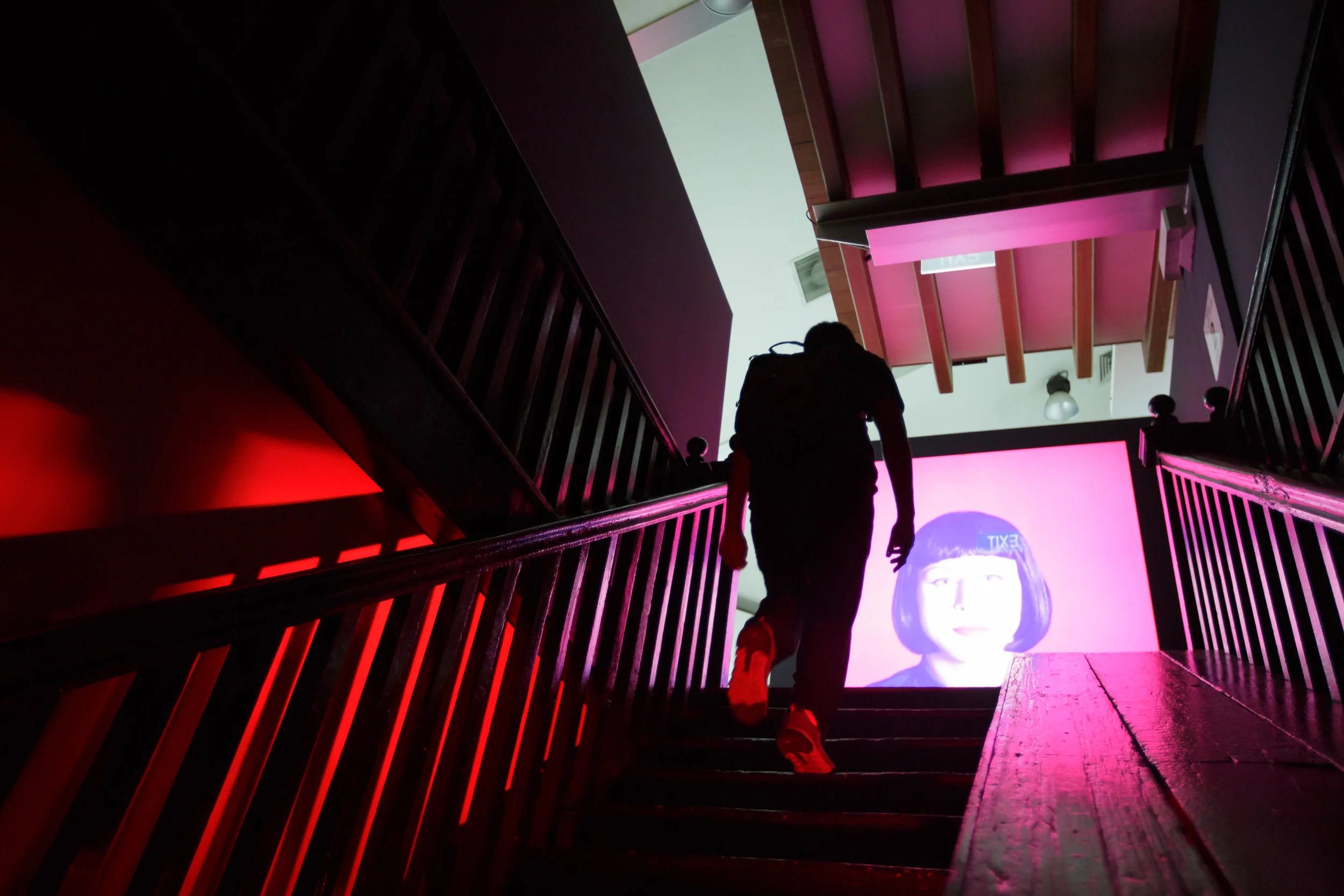
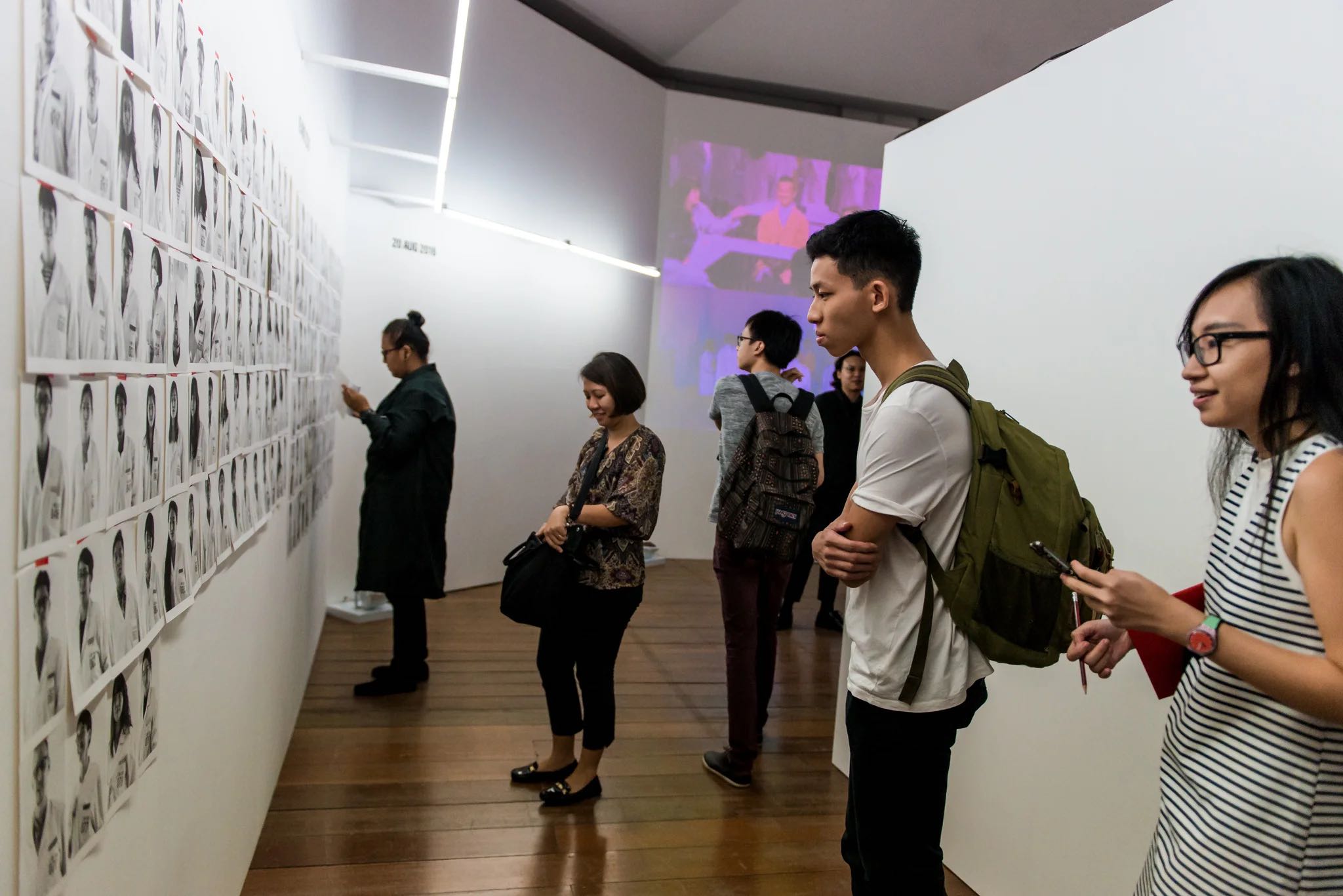
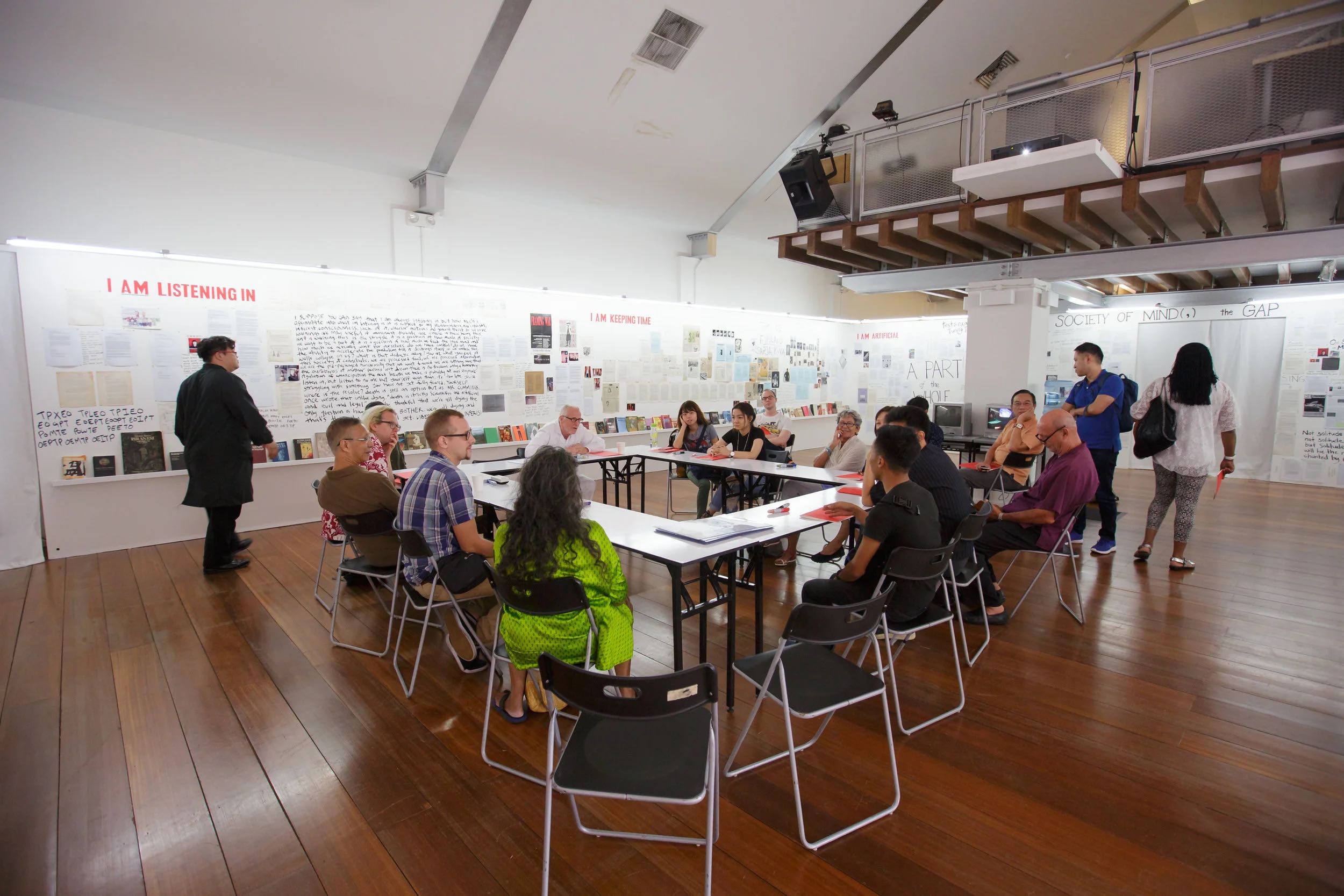
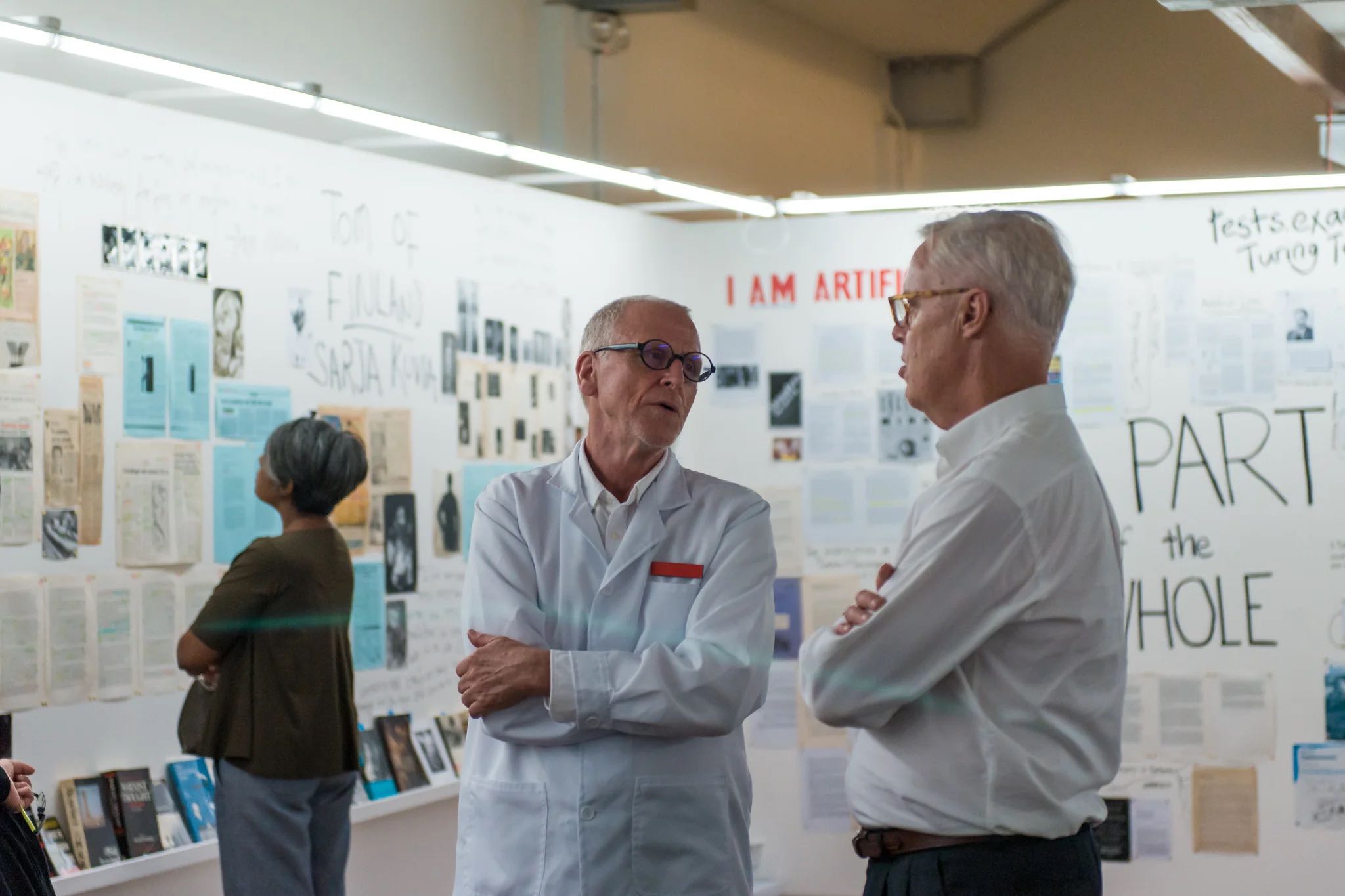
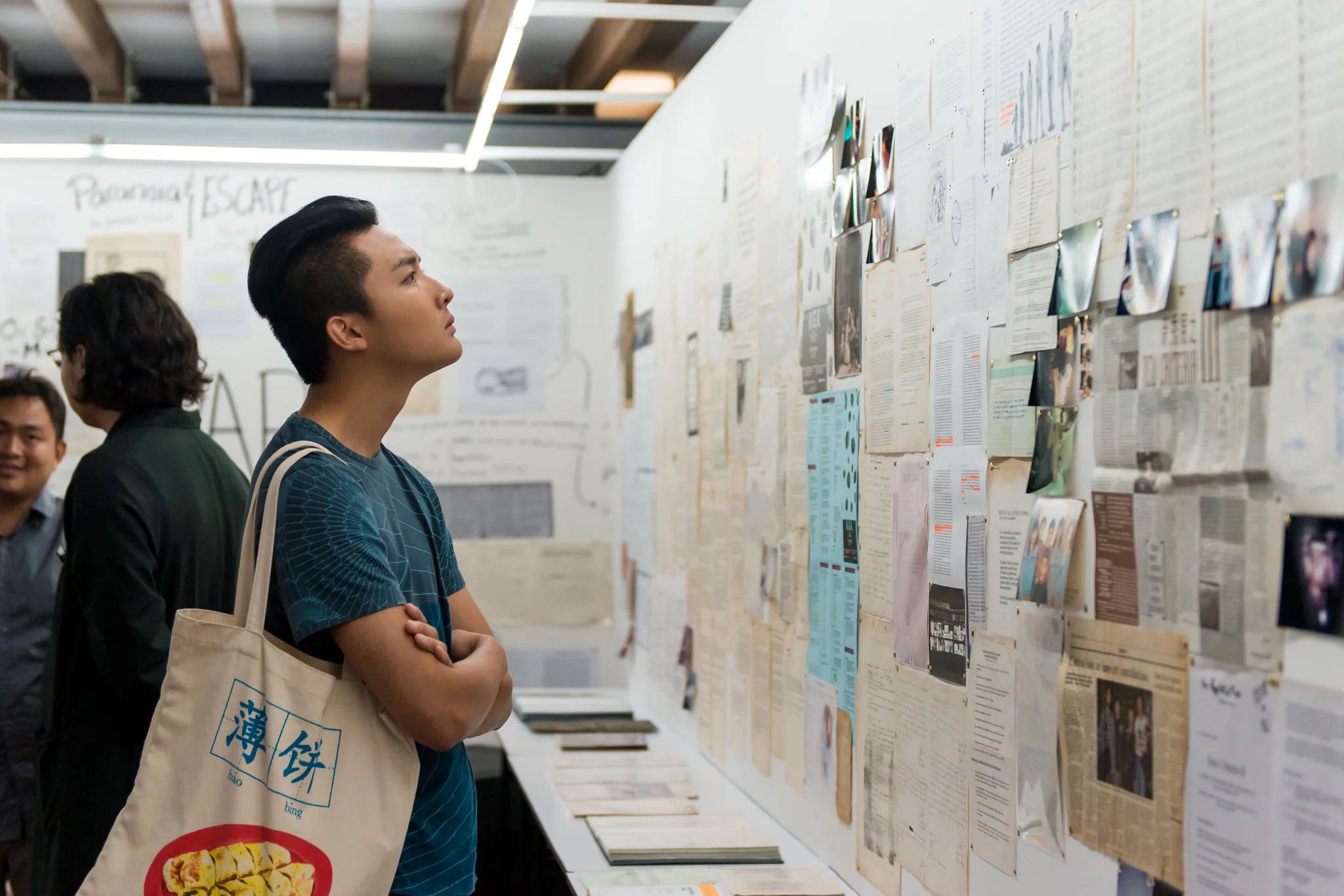
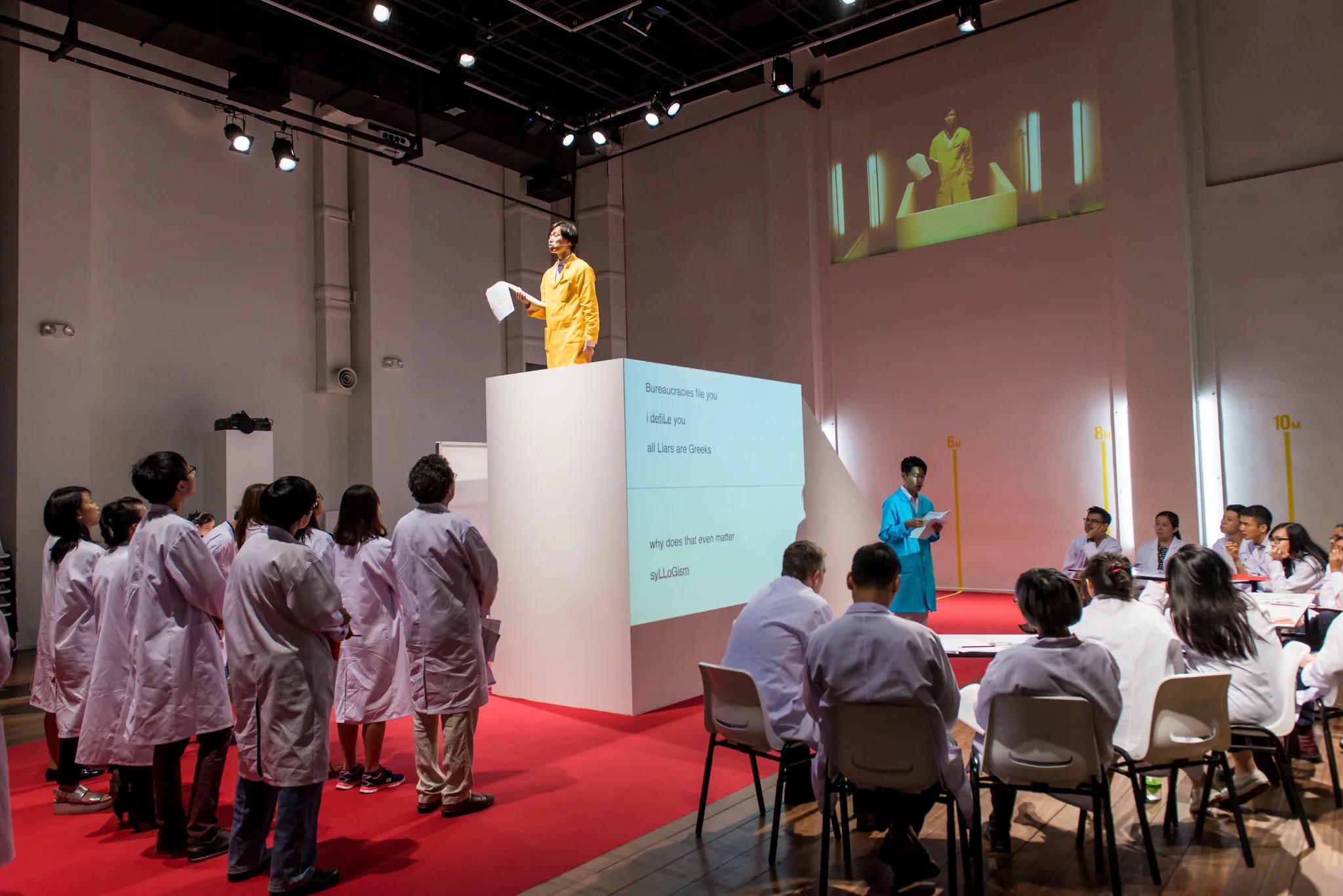
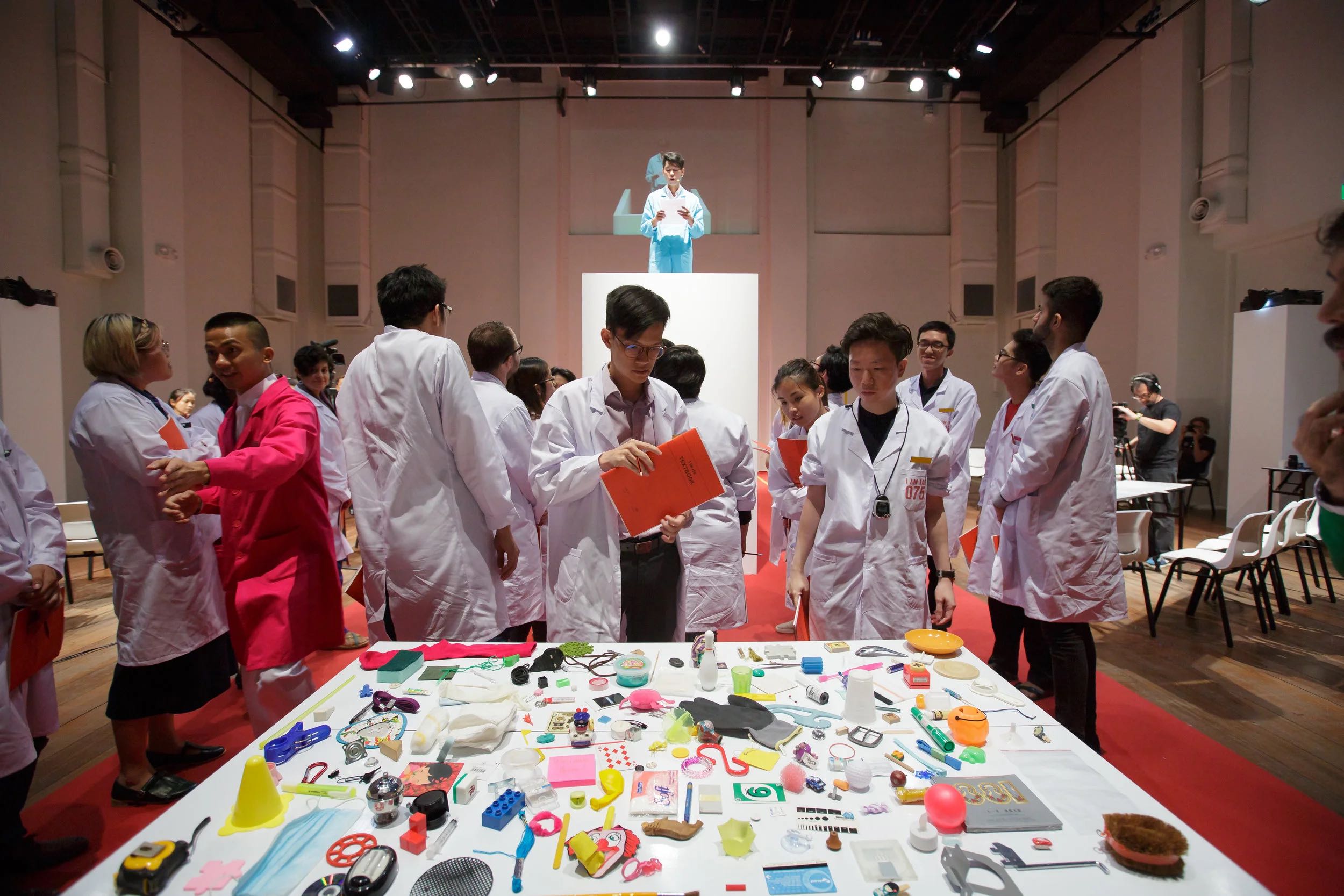
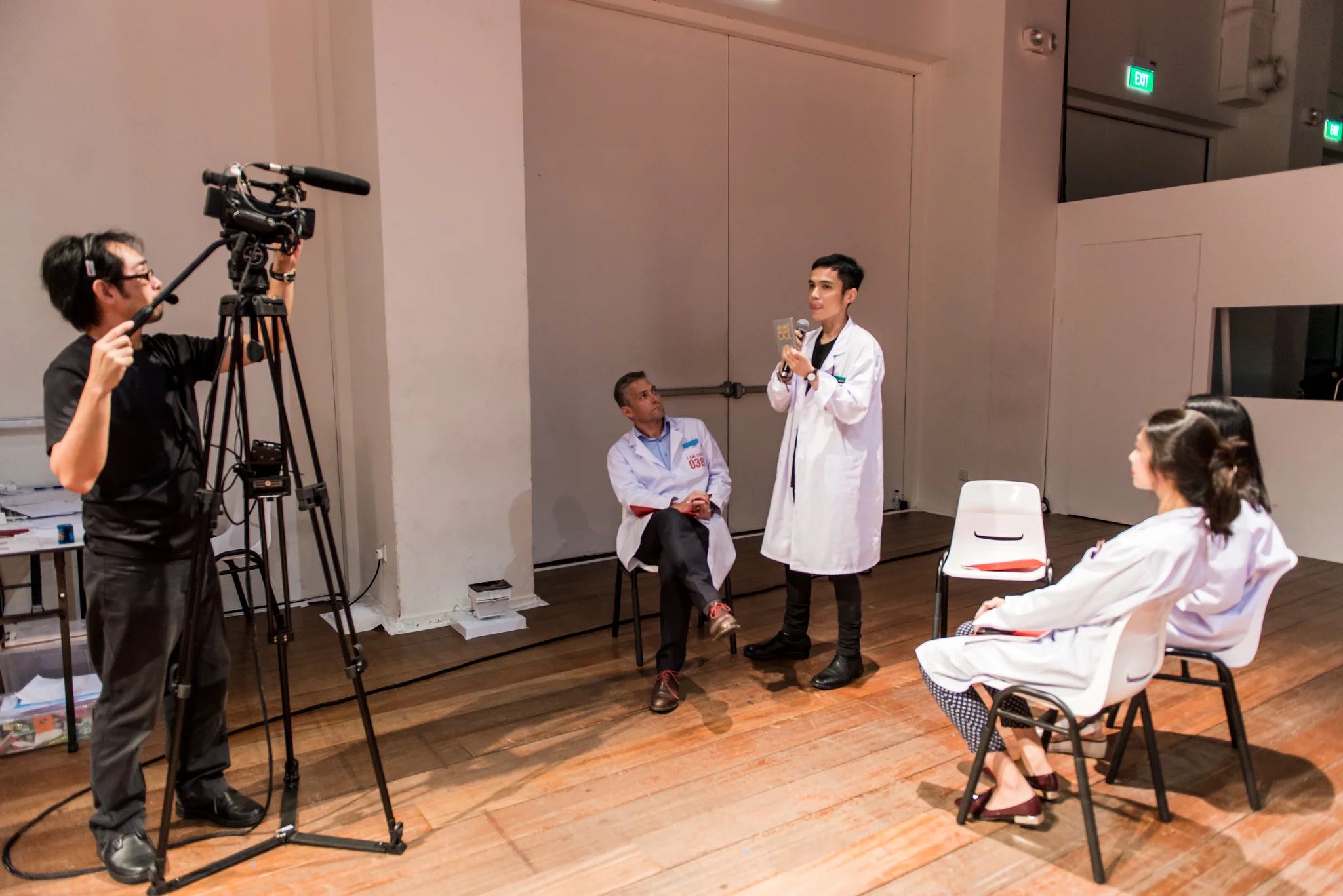
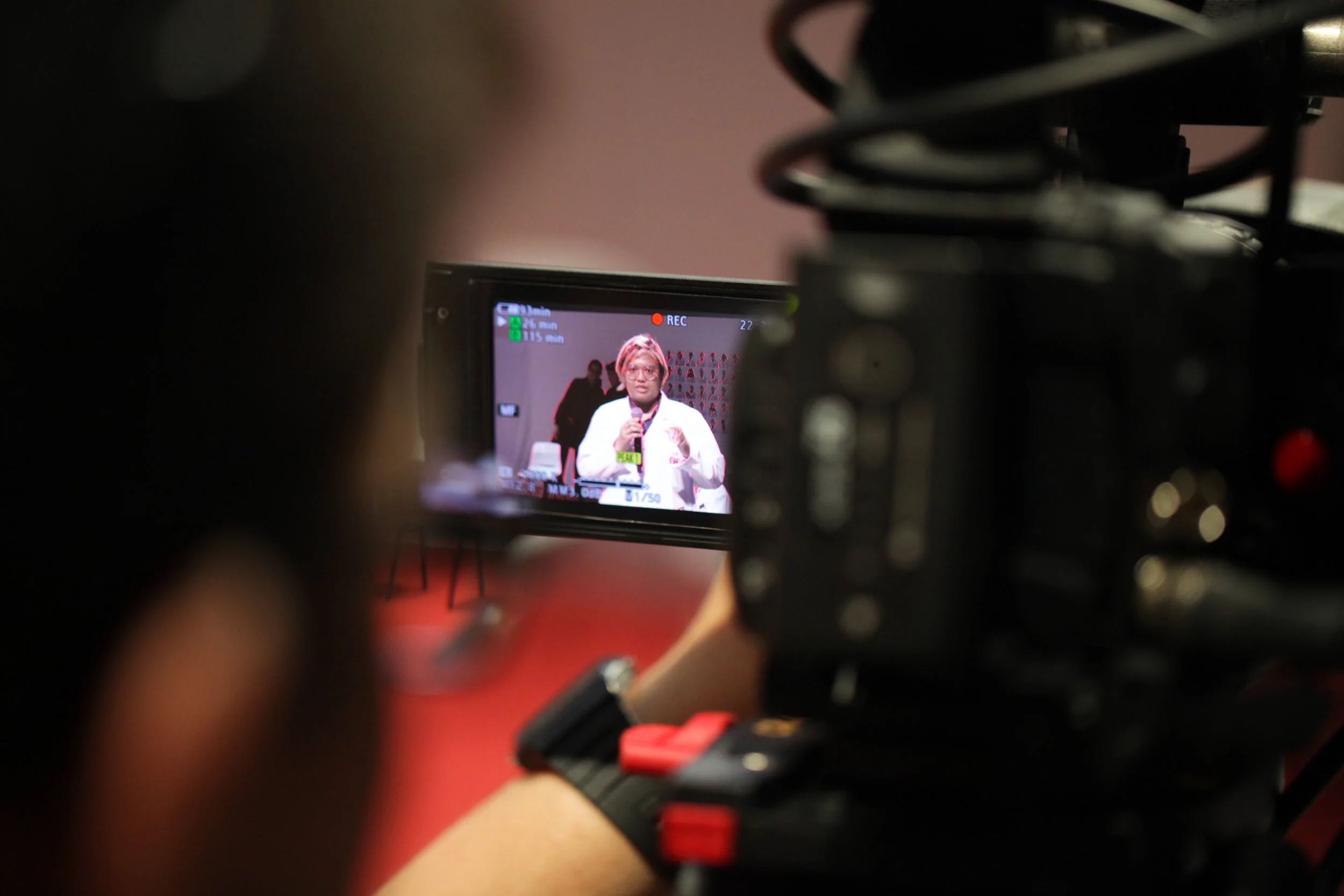
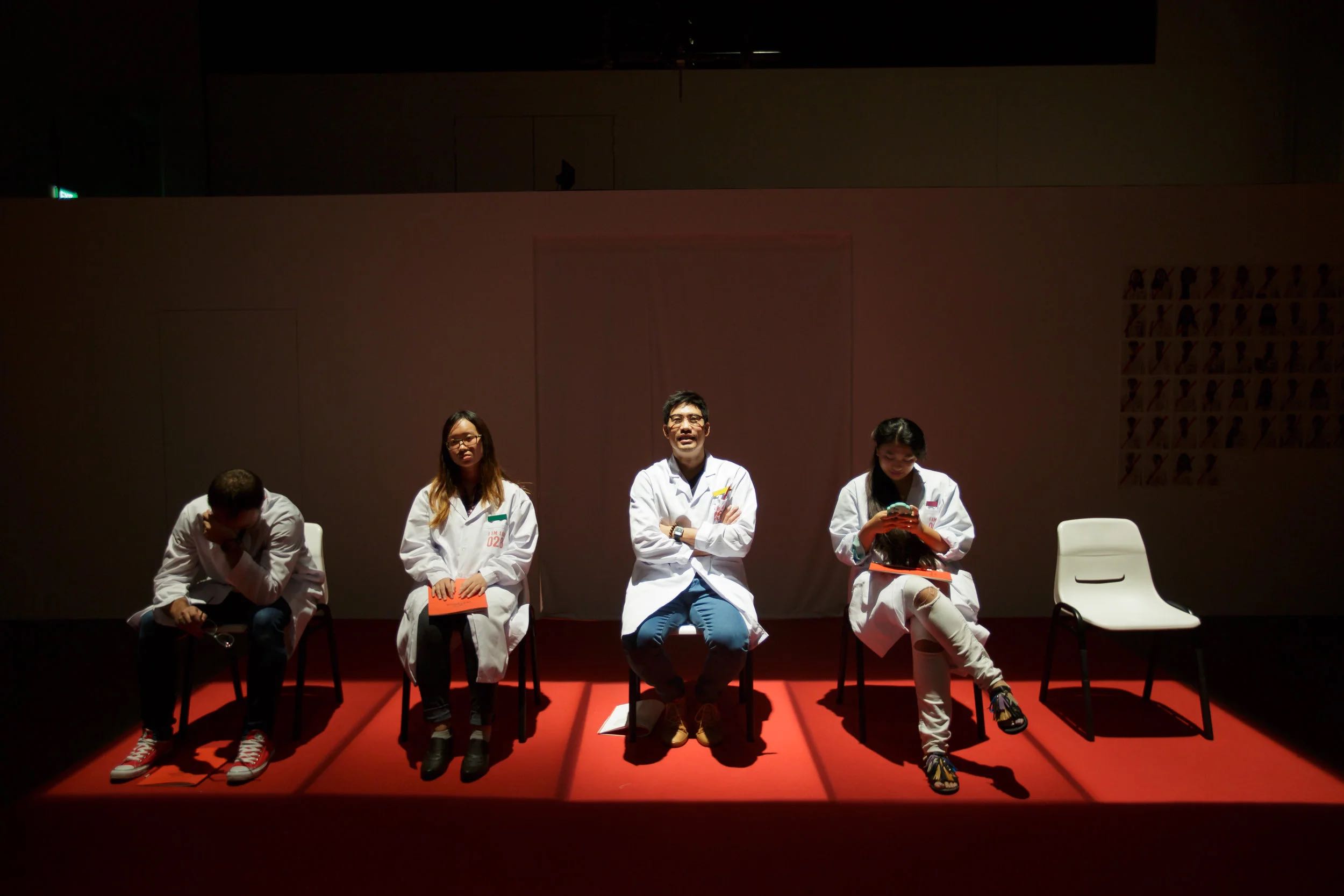
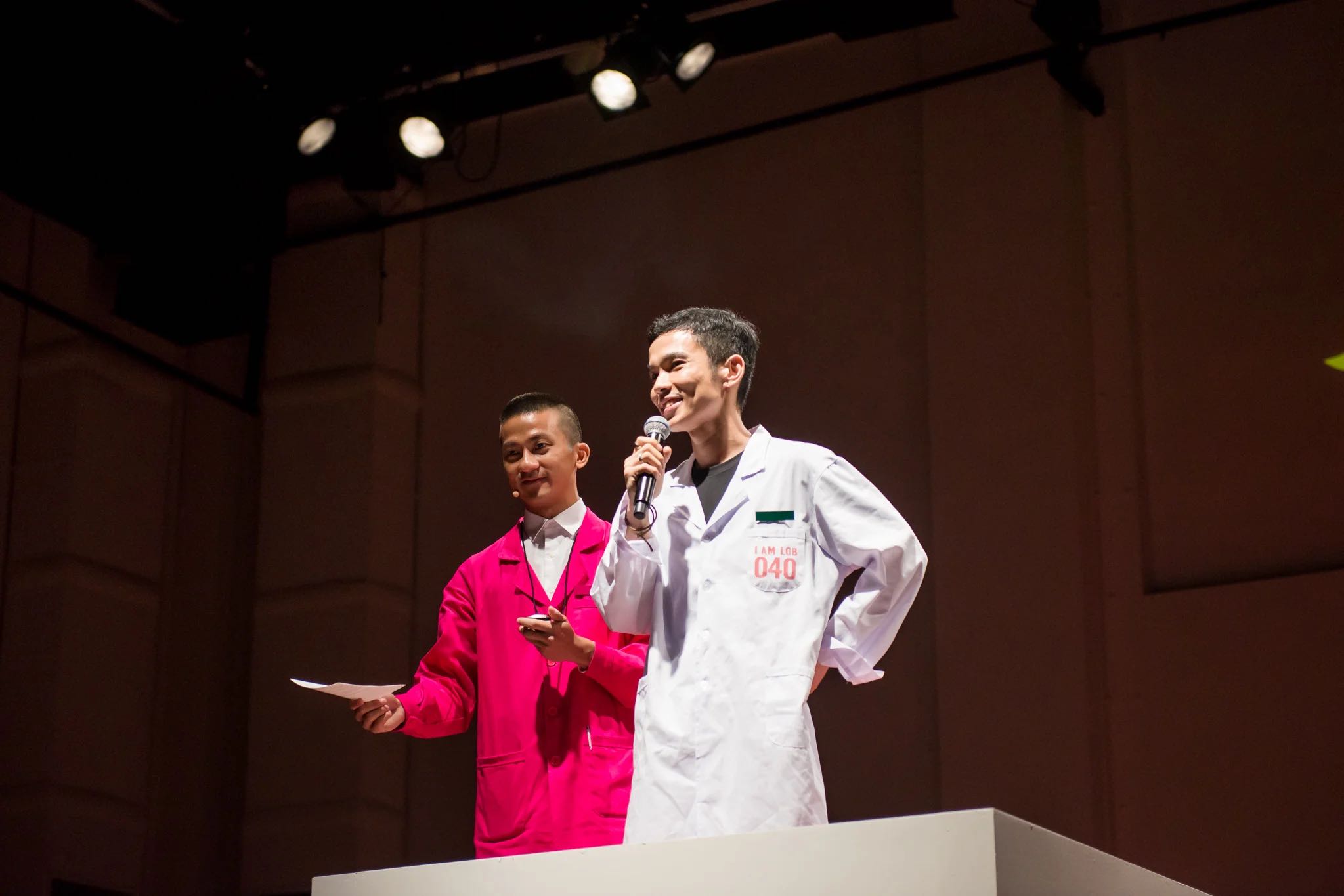
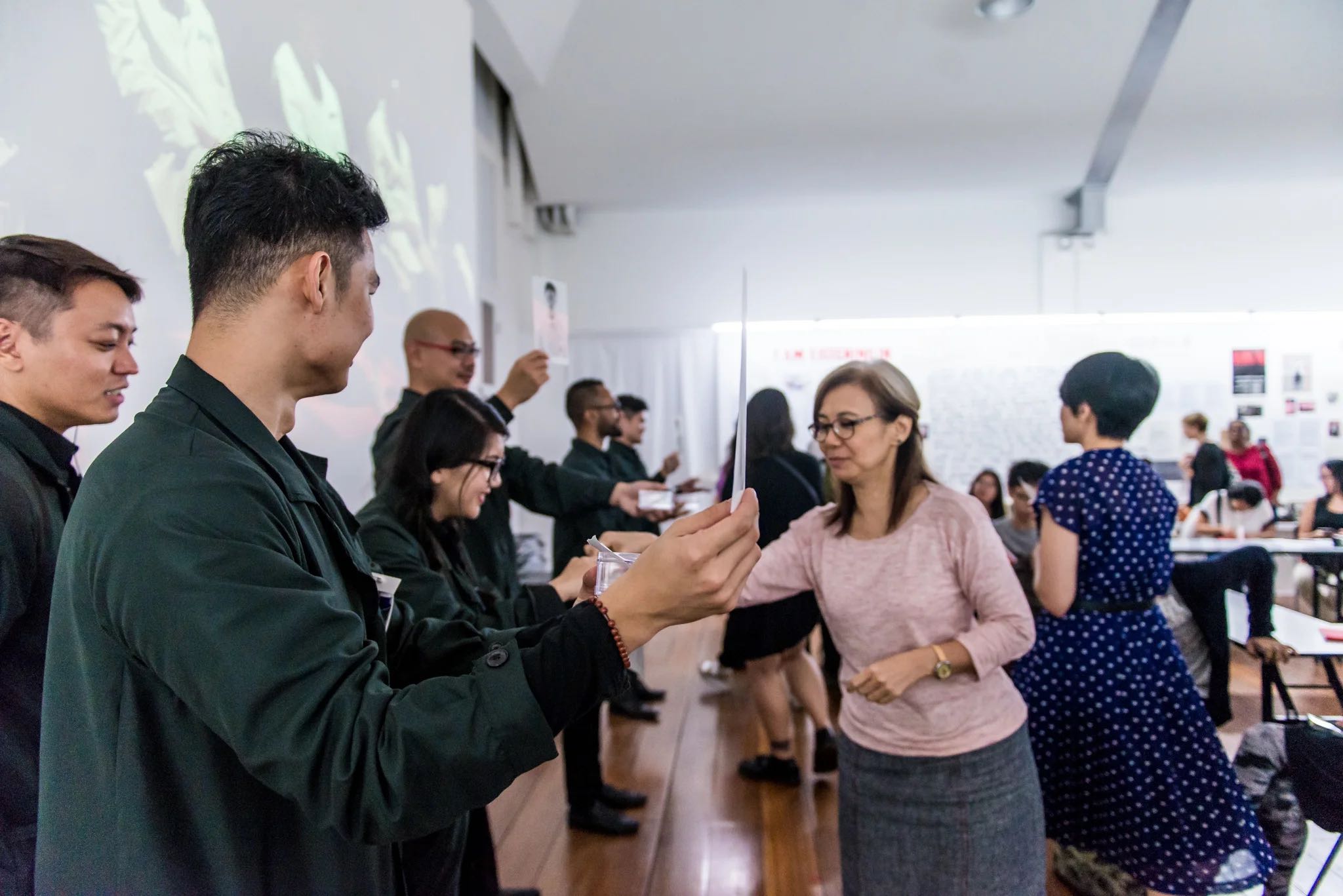
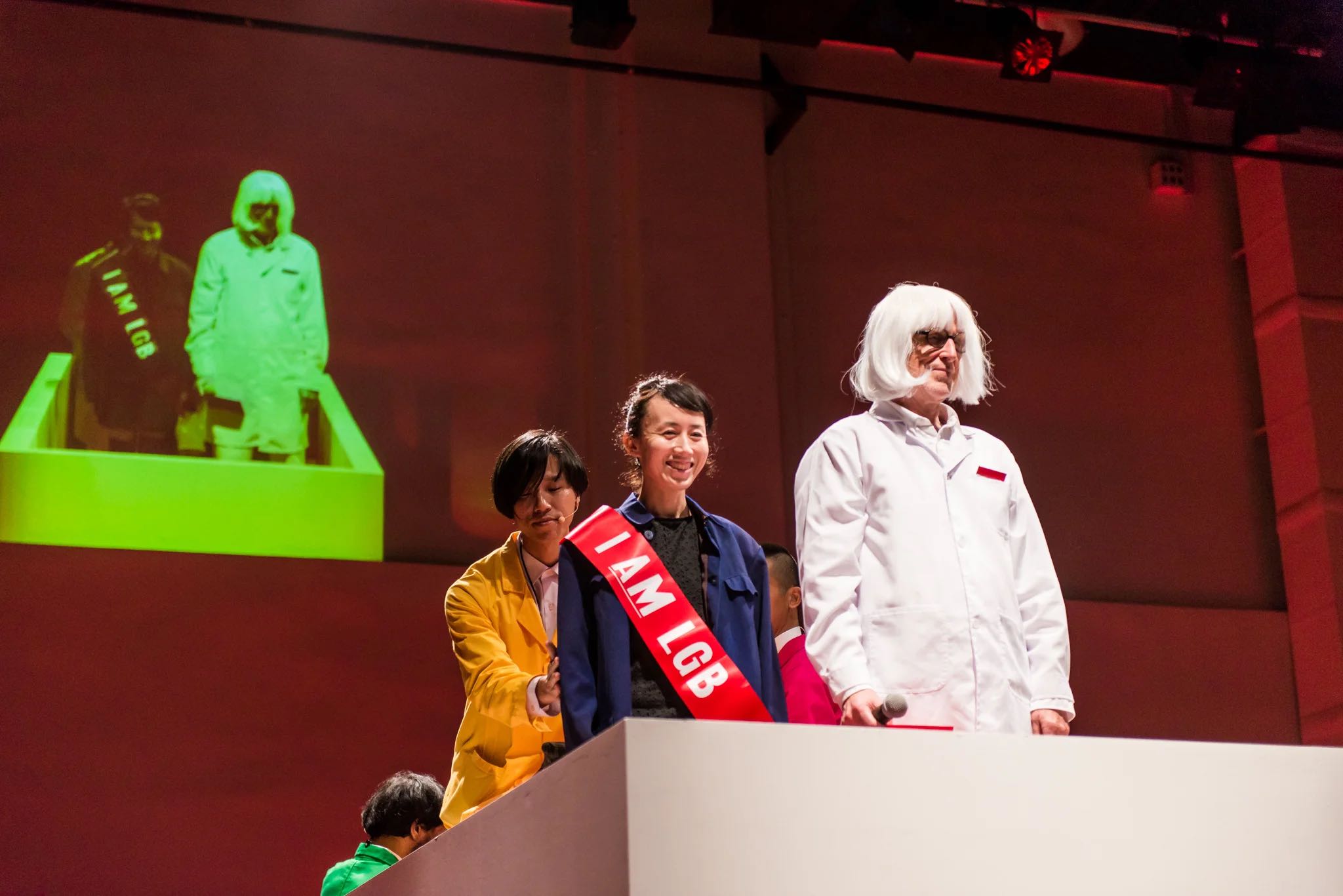
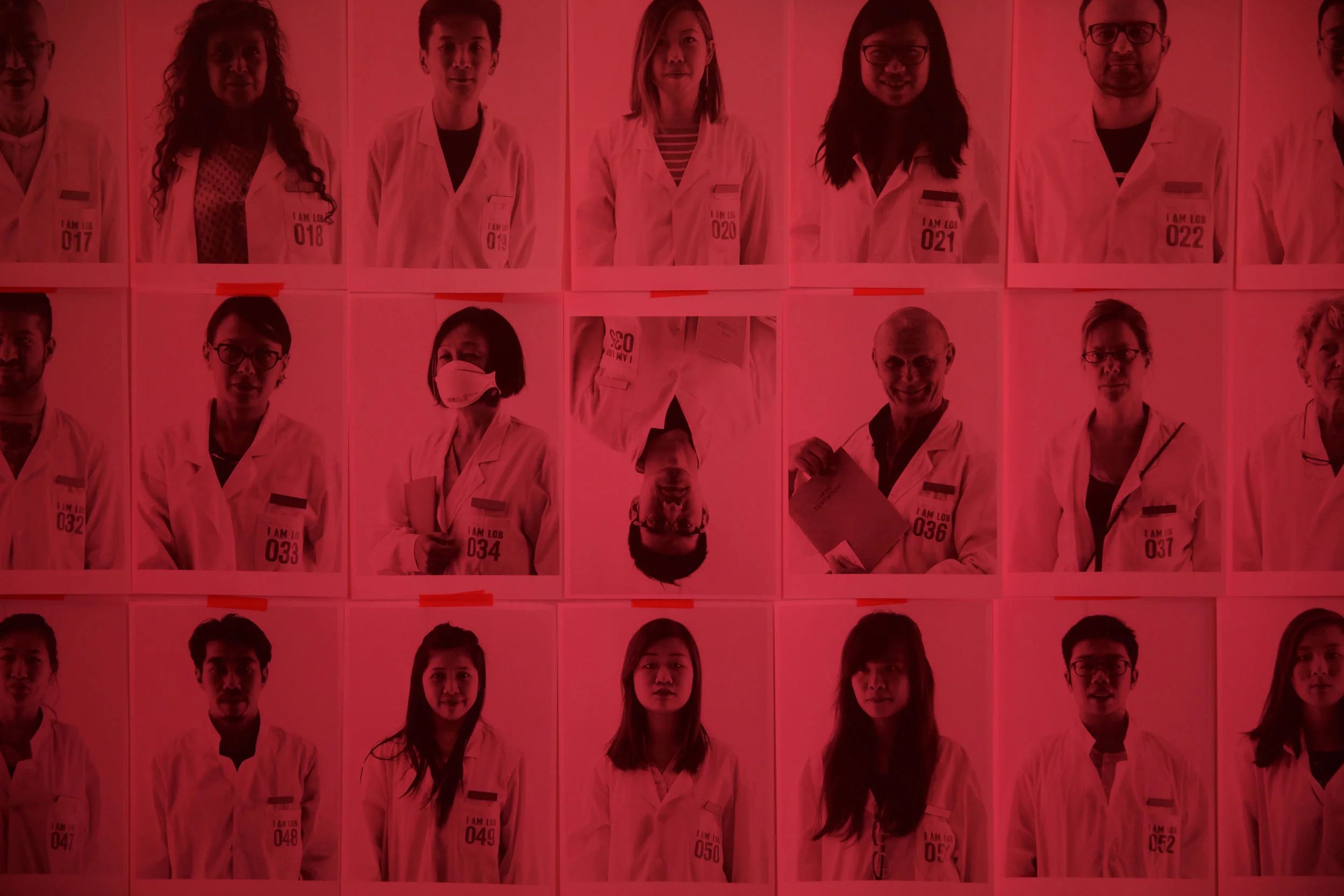
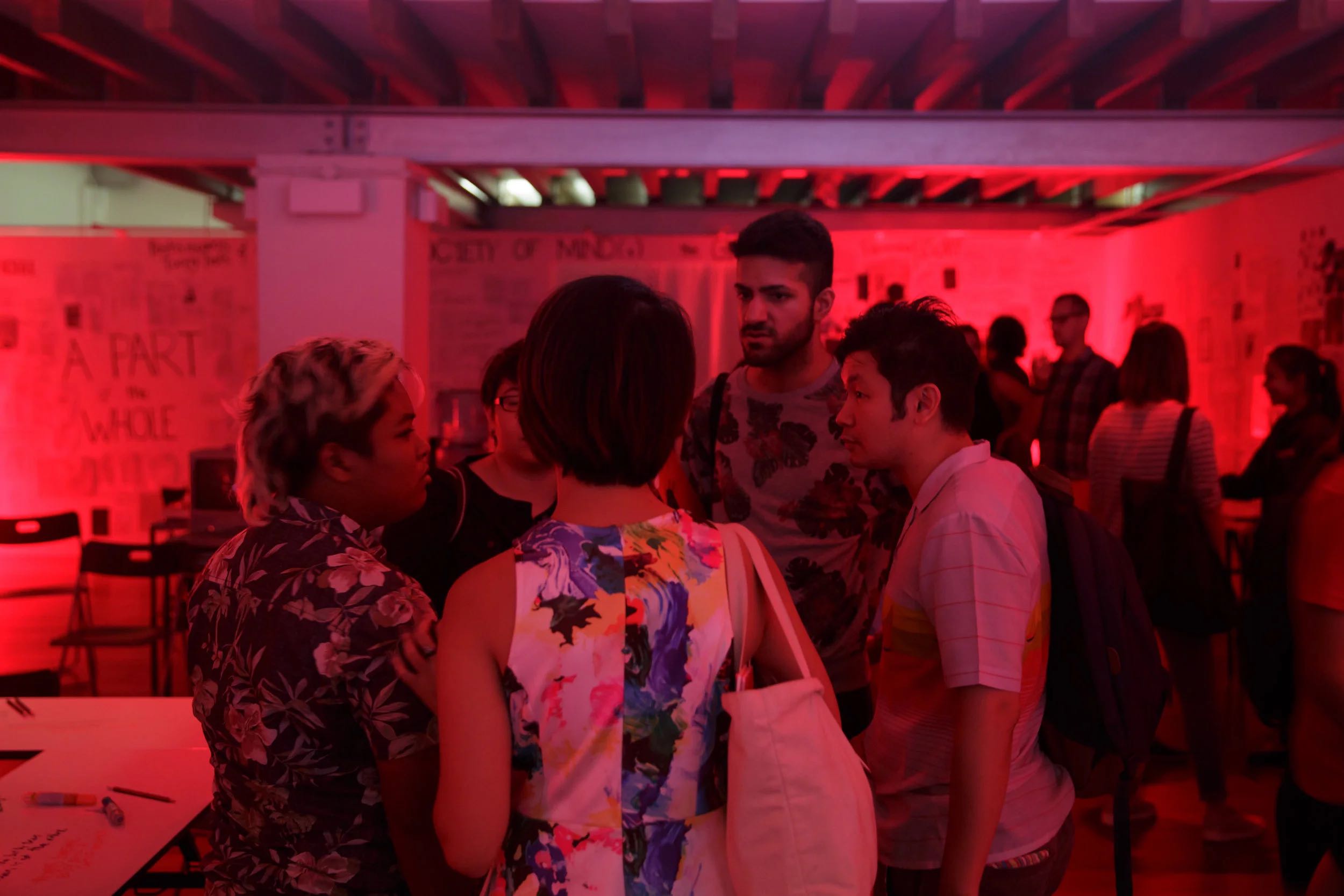
Photo documentation from I am LGB. Photo documentation by Debbie Y. and Wan Zhong Hao.
Accounts of I am LGB
I am LGB’s tagline is “between solitude and solidarity,” and it’s a skin-flaying experiment where the audience is pitted against itself. Just as the boundary between Lan Gen Bah and Langenbach’s identity begins to blur, so do our own identities as audience members – it grows increasingly difficult to distinguish between our agency as an audience and being co-opted into this experiment.
Corrie Tan
The evening parallels the school system in Singapore and the rest of Asia, where uniformity, obedience and good grades are emphasised. Such qualities get one through different levels but what is the point of it all? And is escaping the room truly a real escape if that means missing out on an eventual payoff from the system? I am LGB encourages participants to determine their own answers. It is a stand-out example of what performance art can accomplish if allowed scope.
Akshita Nanda, The Straits Times
What I am LGB really is, is a giddying tentacular monster of relational-performance art in its own right. It trawls through a tremendous heap of themes, of which identity-as-drag, the ethics of political activism and socialisation apropos of cognitive intelligence are only a sample. It cannot be suppressed in writing and criticism.
Marcus Yee
I am LGB works on several complex levels. But one of its most striking effects is making you witness how automatically selfish and competitive people become when they are ranked against each other according to test scores, physical abilities, verbal wit, and so on… It makes you wonder if these expressions of competitiveness are born out of pure human instinct or a distinct Singaporean predilection fostered by the system.
Helmi Yusof, The Business Times
Perhaps it was even, in a sense, moving. In spite of its cerebrality, it brought audience members together unexpectedly with friends and strangers, staring into one another’s eyes and grading one another’s test sheets, sharing our thoughts and sorrows, voting for our top (wo)man to be the next LGB… The LGB Society of Mind may be fictional, but it does create a community of sorts. A gathering of friends, all awake in the iron room.
Ng Yi-Sheng
Performance documentation of my performance lecture I am Paying Attention as part of I am LGB.
Facebook page archive of I am LGBDocumentation from my presentation of I am LGB at Asia Society (New York) as part of Asia Contemporary Art Week’s Field Meeting Take 4: Thinking Practice on 12 November 2016.
PraxisWith/Out (2017)
- Performance
- 23 to 26 March 2017, 8pm
- Esplanade Theatre Studio
- Commissioned by The Studios, Esplanade Theatres on the Bay
- Conceptualized and directed by me
- Performed in collaboration with Janice Koh
- Production Design by Chan Silei
- Based on Completely With/Out Character (1999)
- Devised by Paddy Chew, in collaboration with Alvin Tan and Haresh Sharma
In 1999, The Necessary Stage presented Completely With/Out Character, a docu-theater monologue devised by Paddy Chew, in collaboration with playwright Haresh Sharma and director Alvin Tan. The monologue was a candid account of Paddy’s experiences as the first individual to come out as a person living with HIV in Singapore.
Scene 11 from Completely With/Out Character (1999) featuring Paddy Chew.
With/Out is an interpretation of Paddy’s monologue, which I conceptualized. It was first presented in 2015. The 2017 version presents a reimagining of this monologue, and examines its relationship to the written and video documents. I worked with a social media team to create an online archive of news articles and interviews with and regarding Paddy on a Facebook page that accompanied the production.
The process of creating With/Out (2017), a conversation between me and Janice Koh.
Accounts of With/Out (2017)
In this living museum of queer life and death, Zihan succeeded in connecting us with a bittersweet story that still lives on. In the story telling there was bravery, boldness, kindness, mercy, acceptance and self-acceptance. For every strain of sadness captured and released that night, the aesthetic space established in the studio was also a balm for our sorrow and disappointment. This was no pity party. It was a ritual to help us consider our mortality, our morality, our history and our humanity. At a time when we need to listen to each other more than ever, this work invites us to do just that. Listen.
Sean Tobin
While the tactics of With/Out could be applied to reviving almost any bygone artwork, I’d argue that it’s especially relevant for the work of queer artists. Across the world, it is queer work that has been routinely dropped from the record, hidden from the eyes of children and conservatives, or else infantilised beyond the point of recognition. This makes it deeply difficult to establish a queer collective memory, given that such heritage is rarely passed down from biological parent to child. It’s therefore a small but significant triumph that this work was staged as part of the Esplanade’s own programming lineup, advertised to and attended by an audience of diverse ages and sexual orientations. With/Out takes the memory of Paddy Chew and Singapore’s AIDS crisis out of the gay ghetto, reminding us all of the importance of courage and art-making in the face of death.
Ng Yi-Sheng
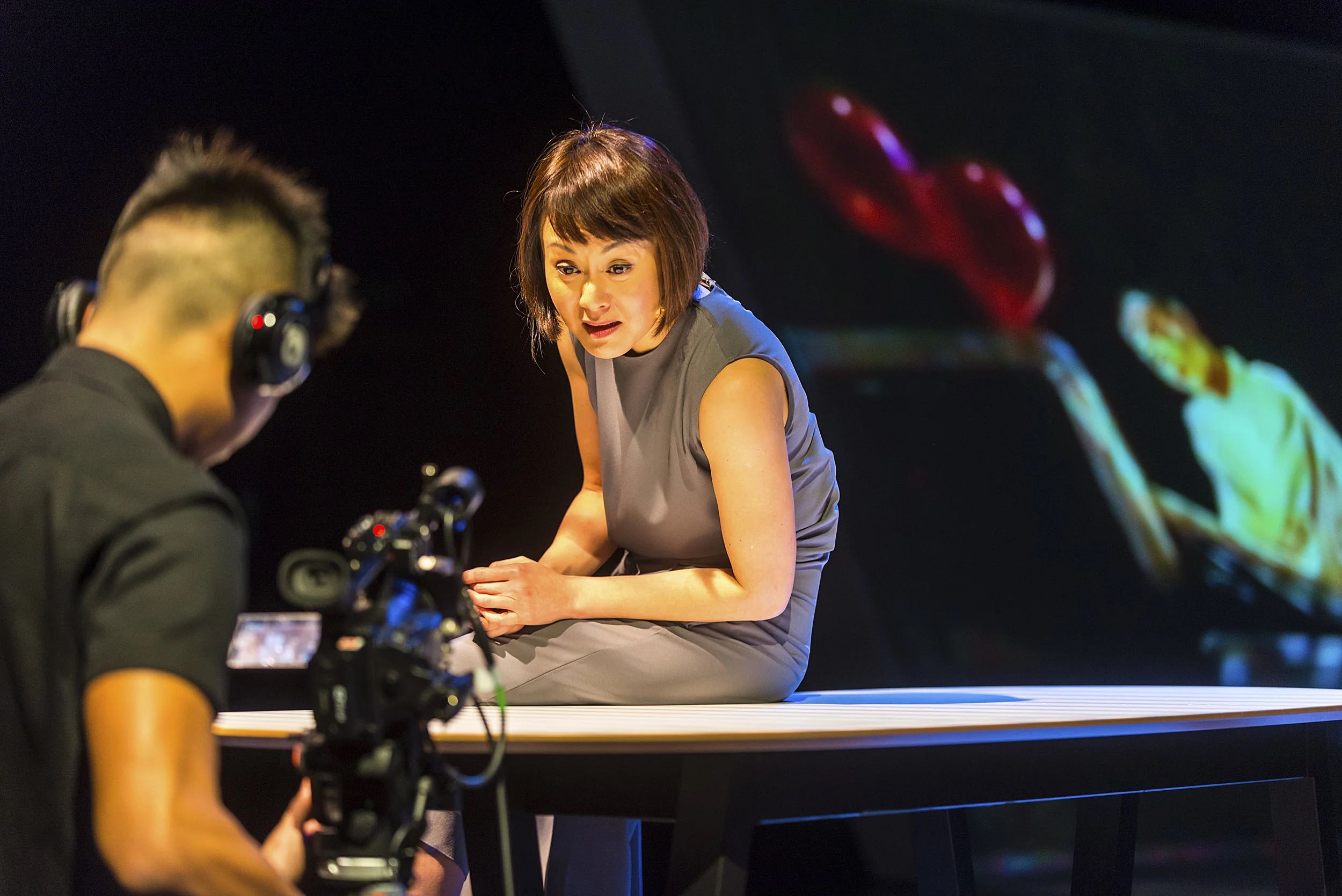
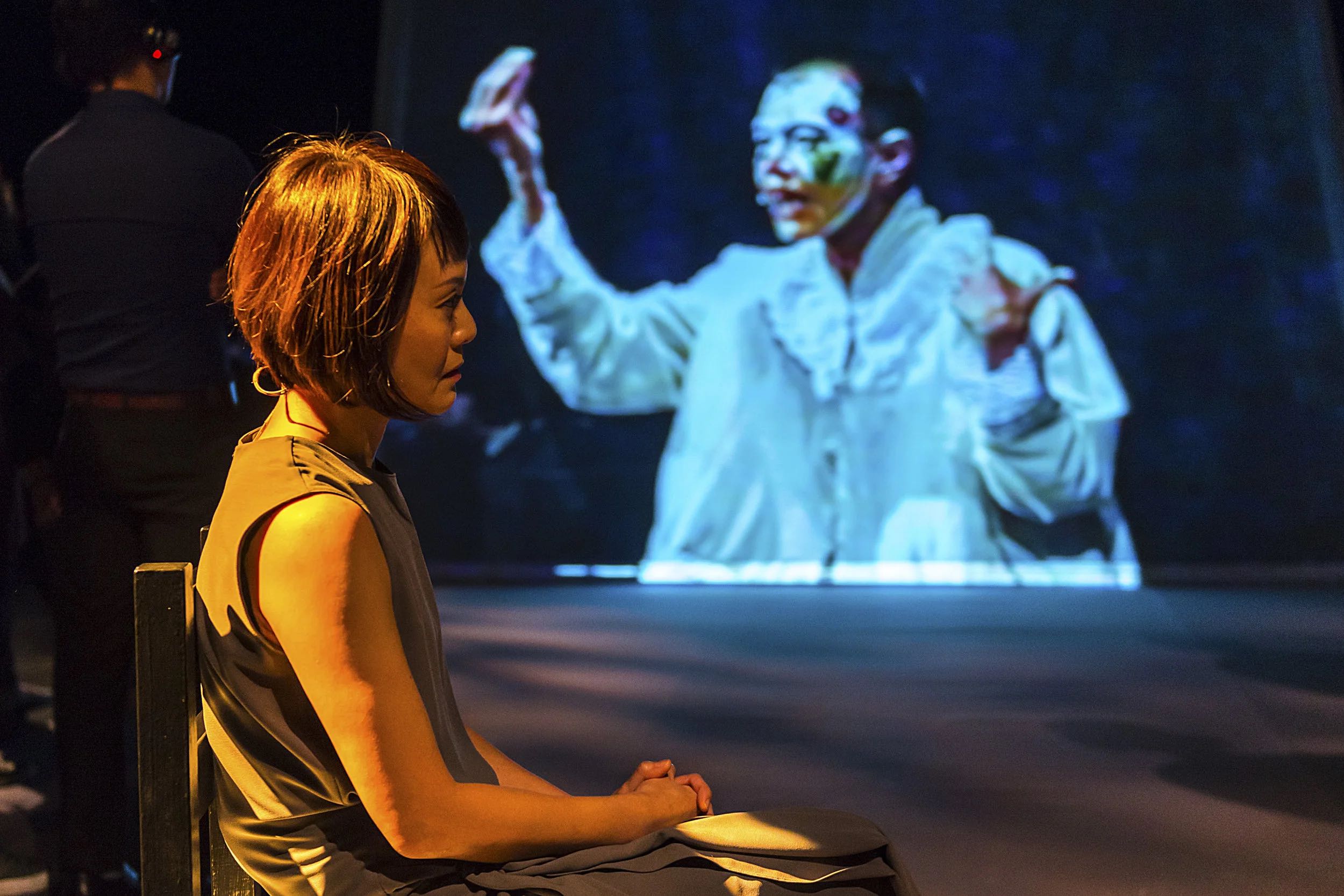
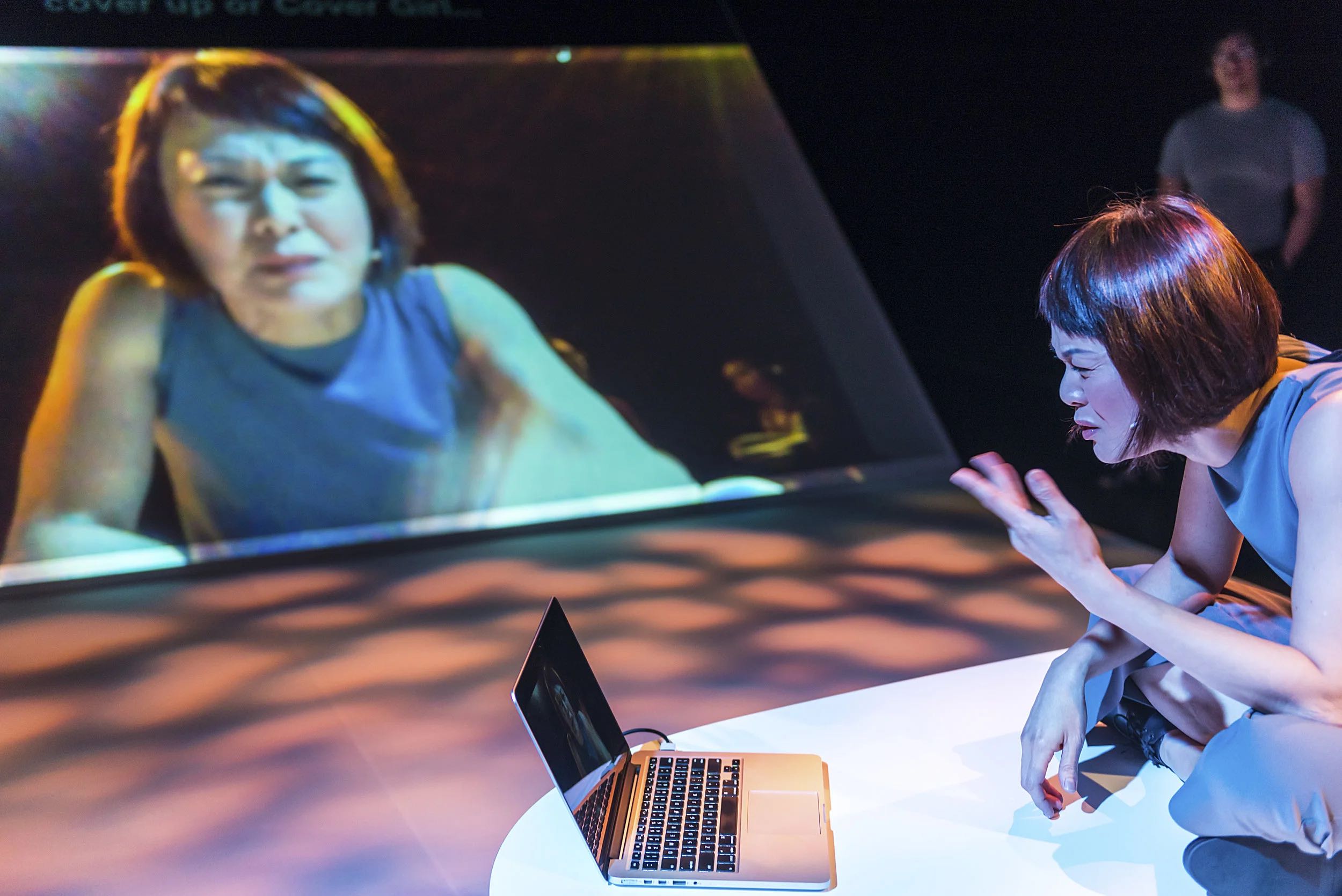
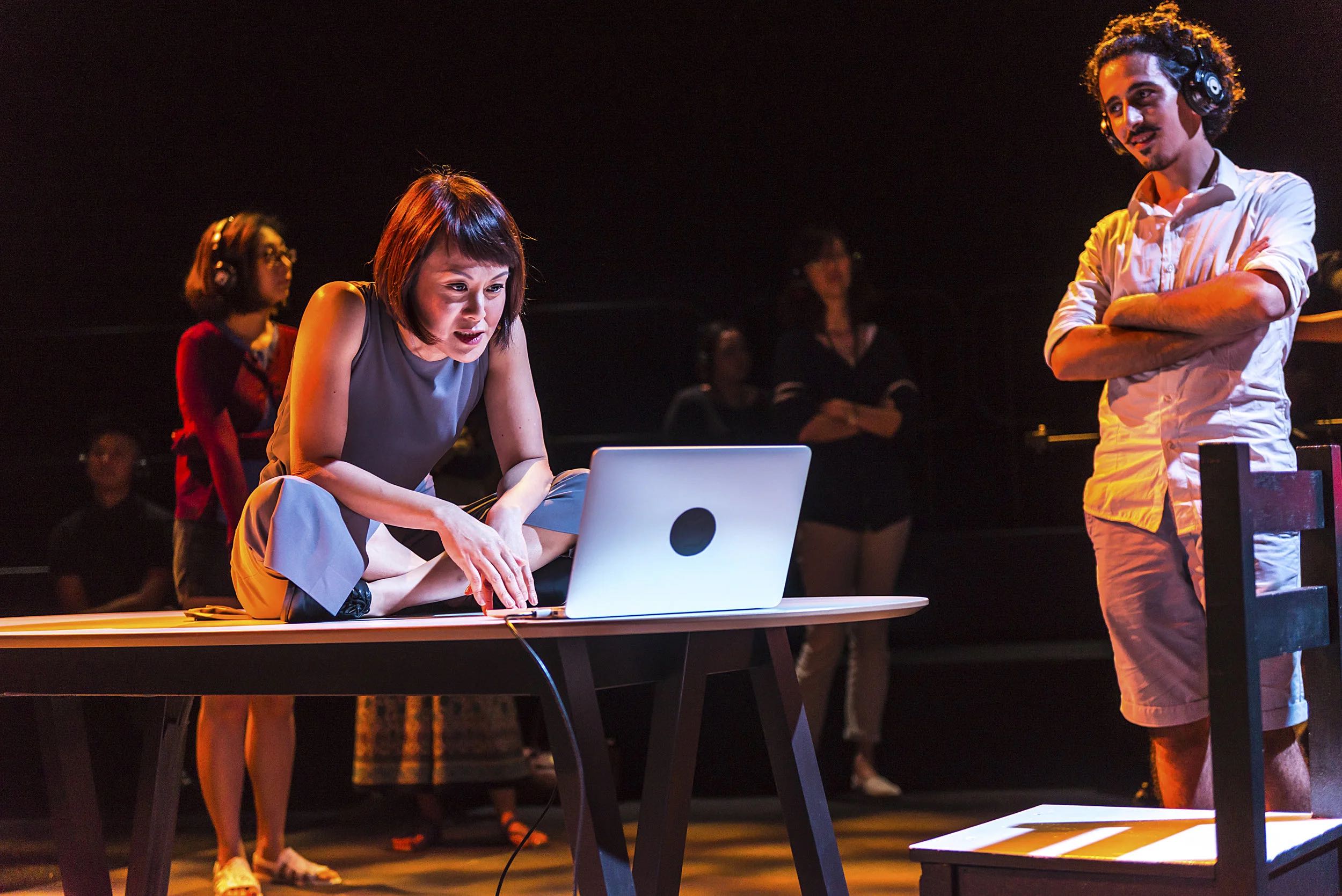
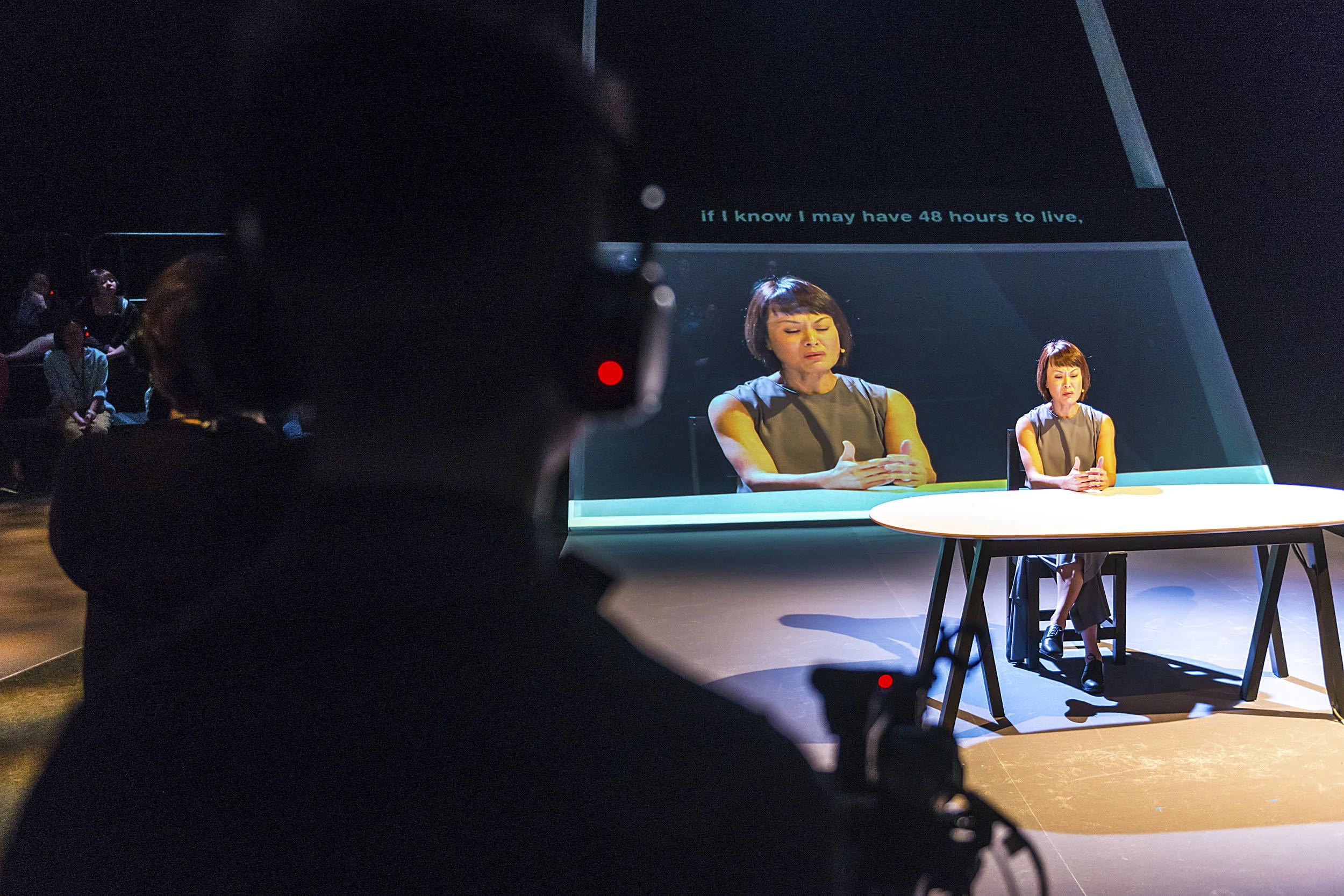
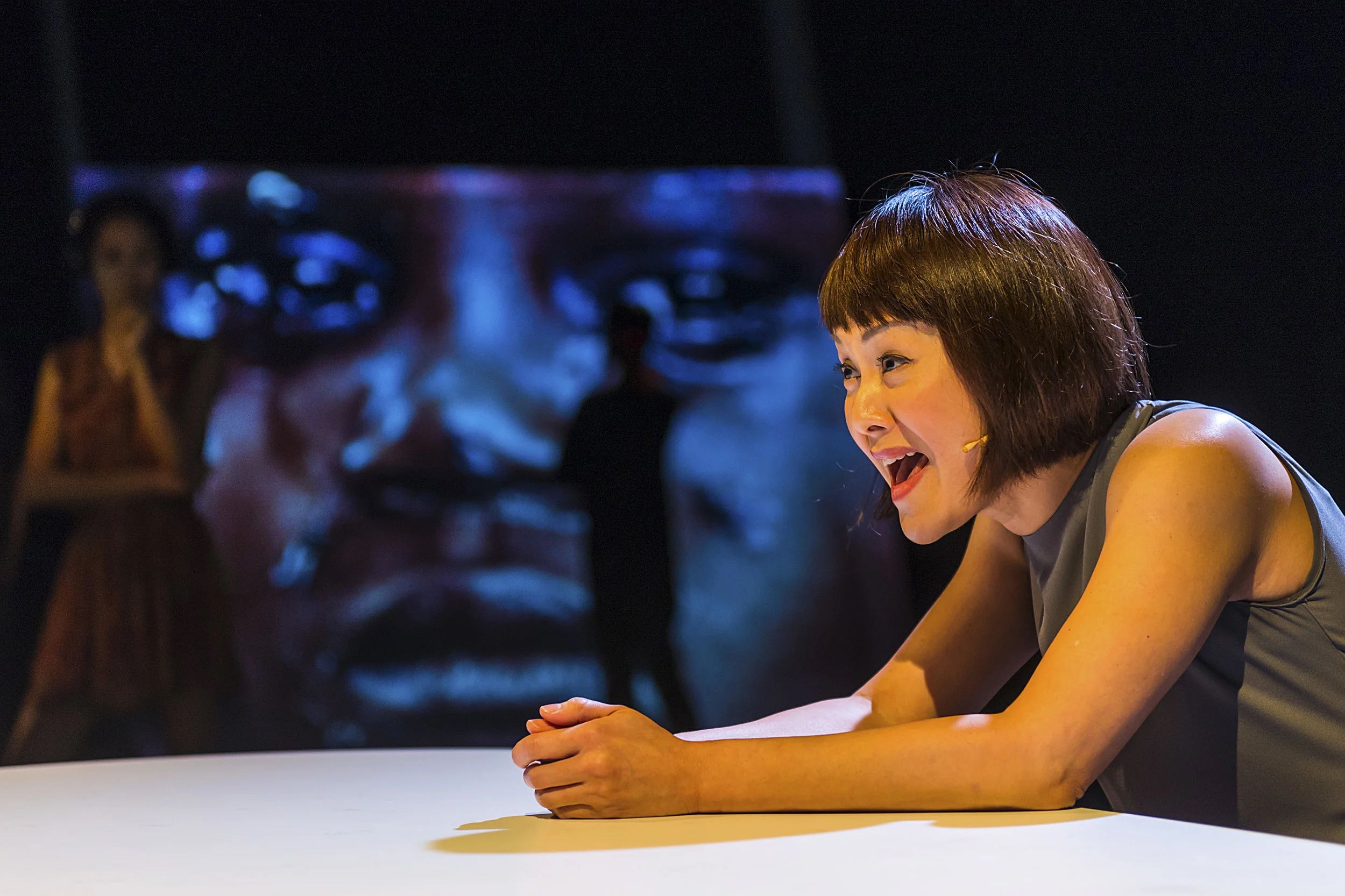
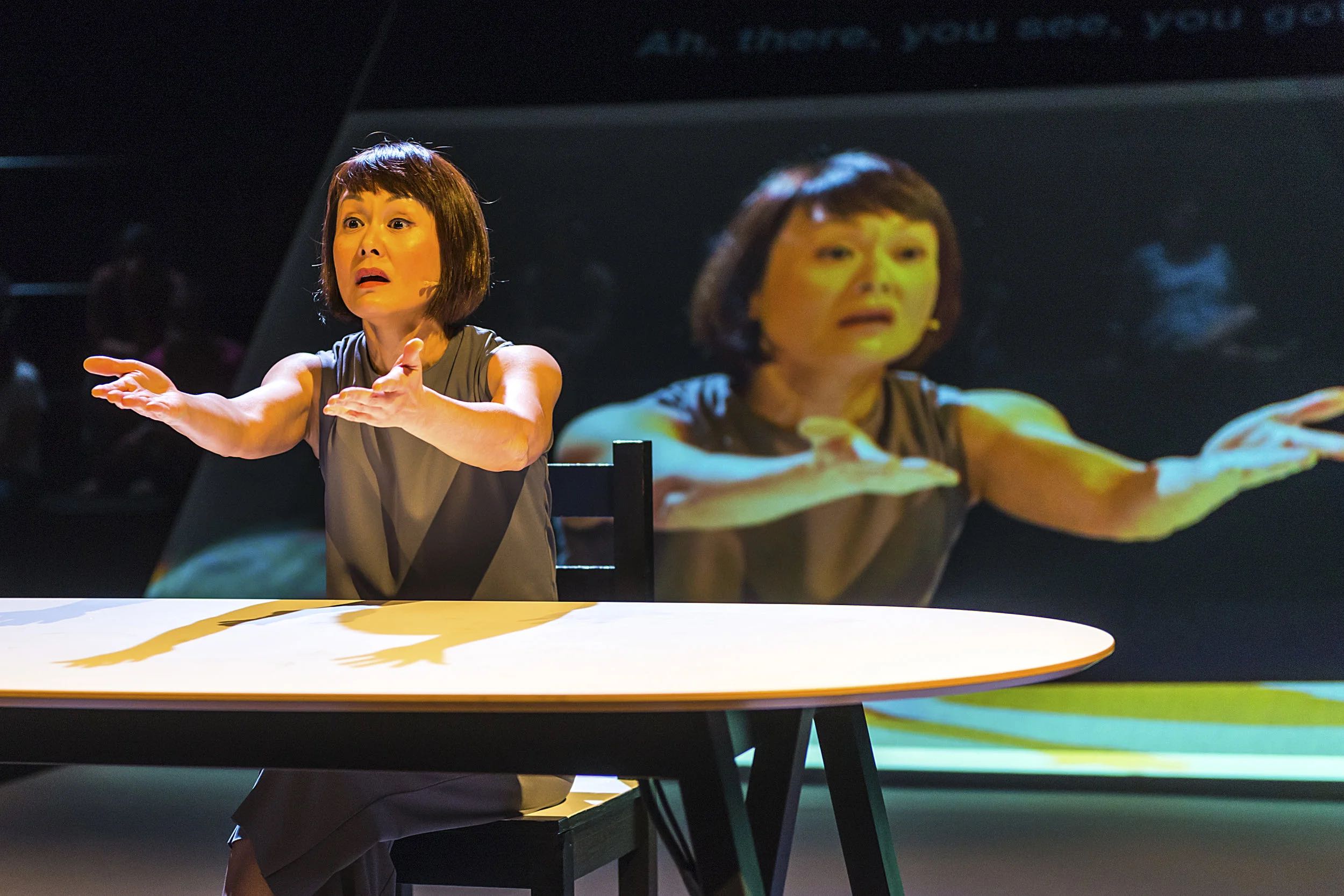
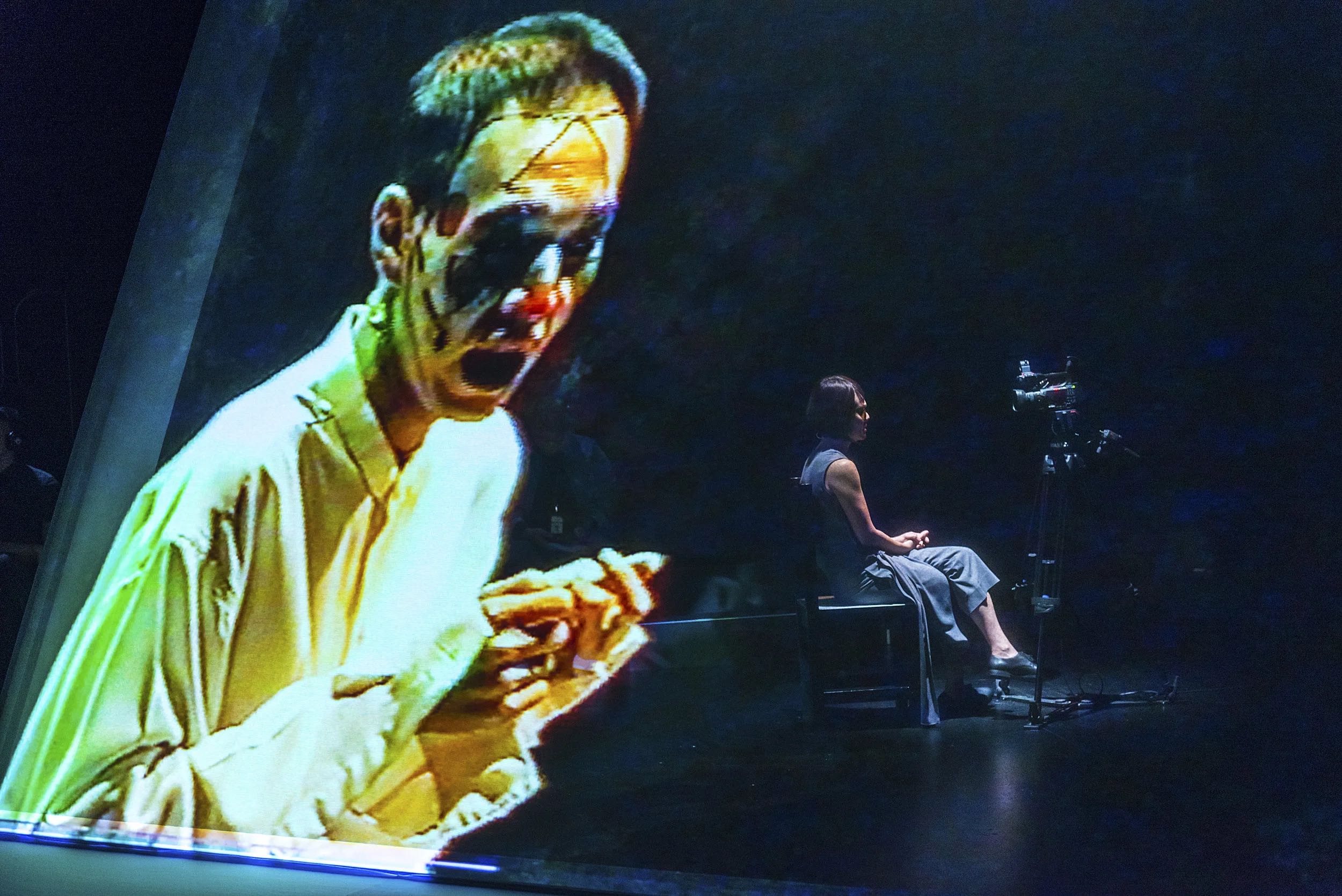
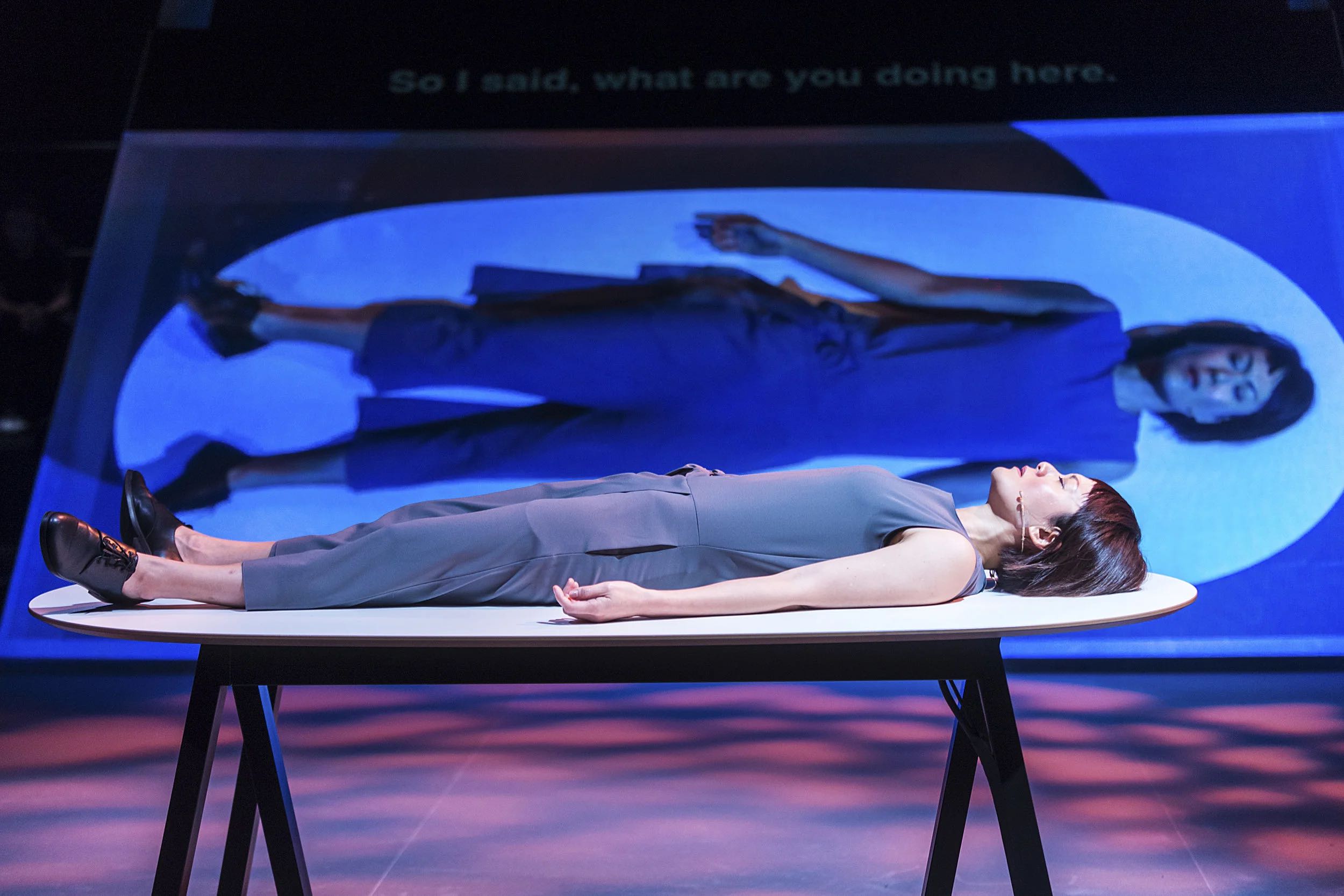
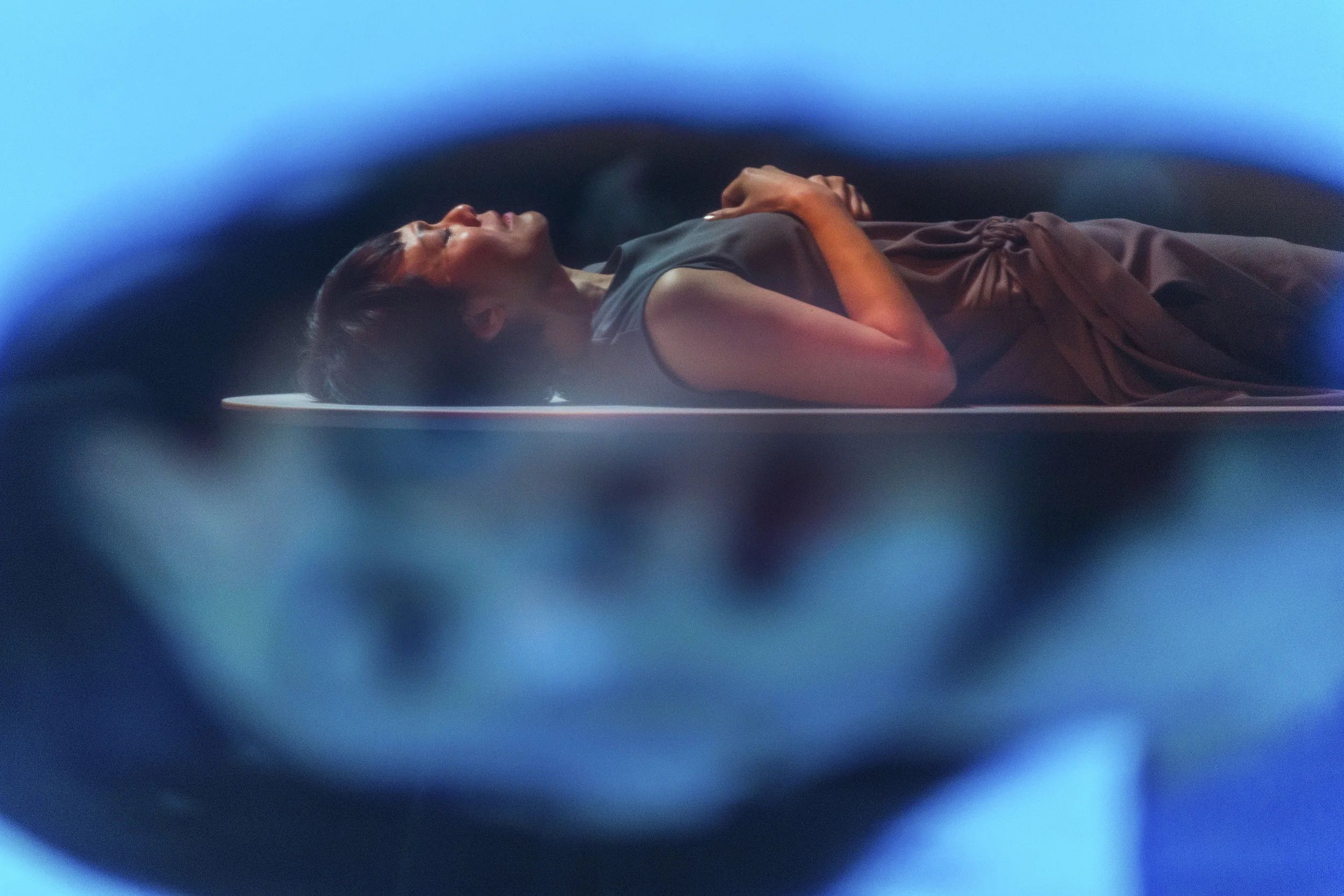
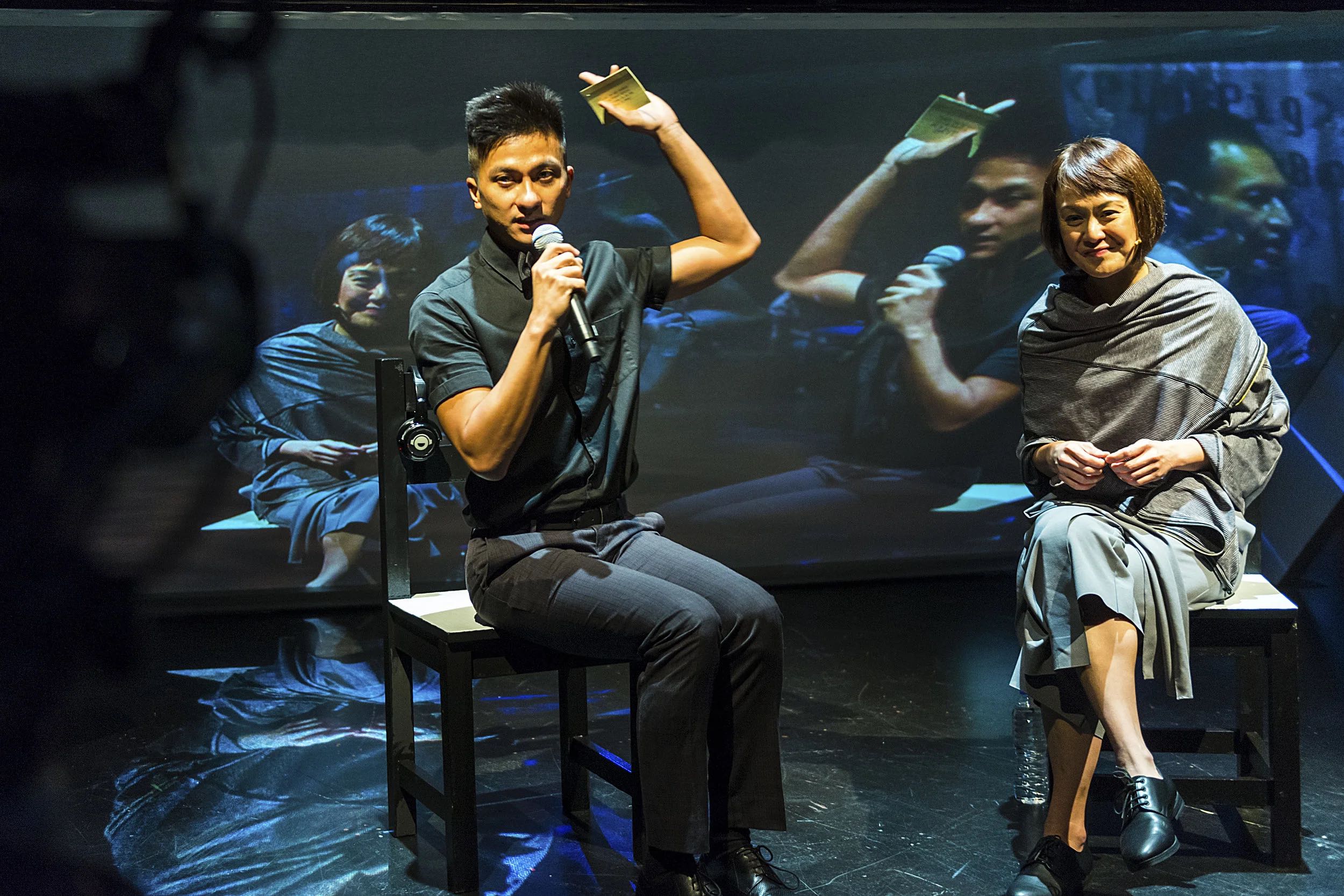
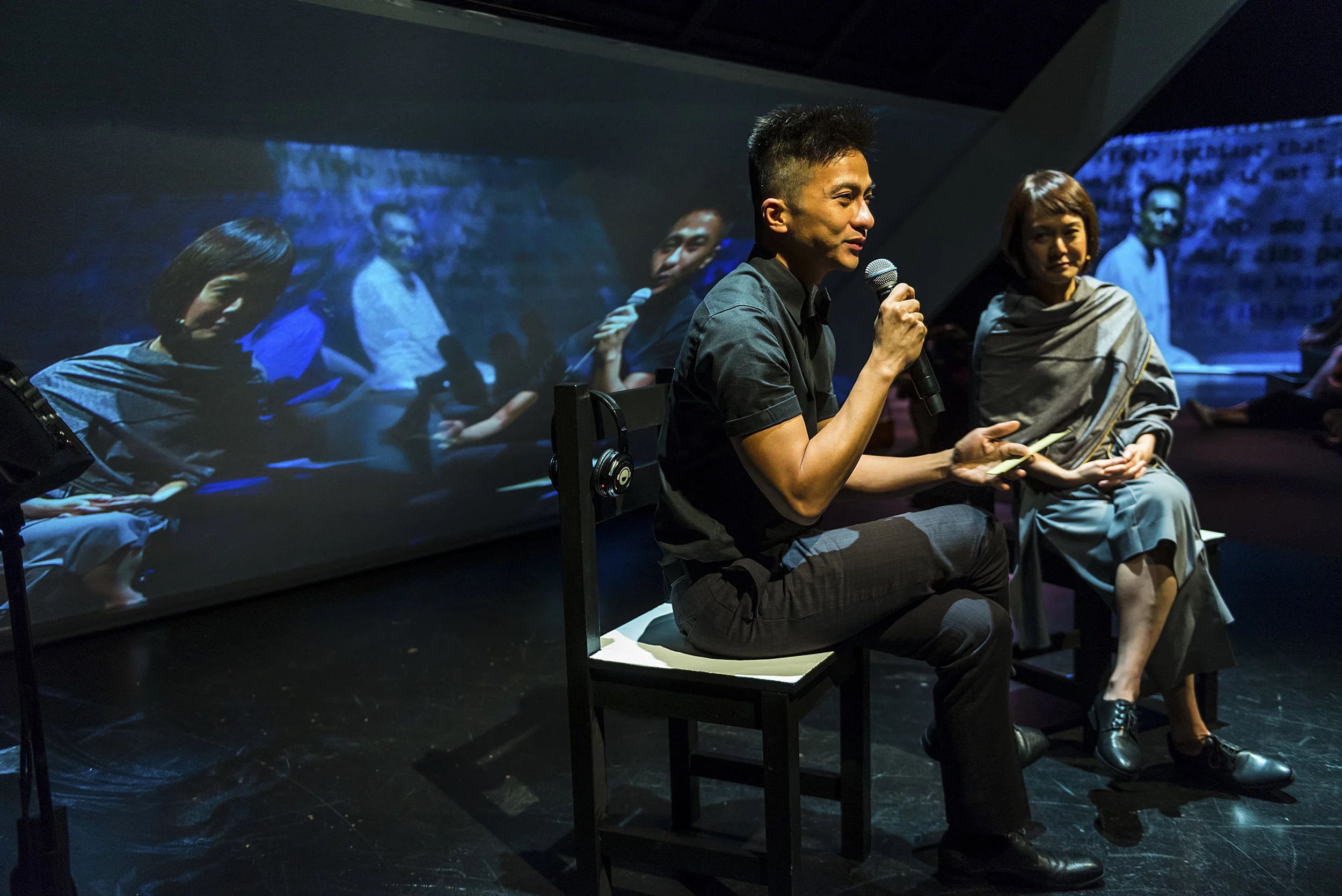
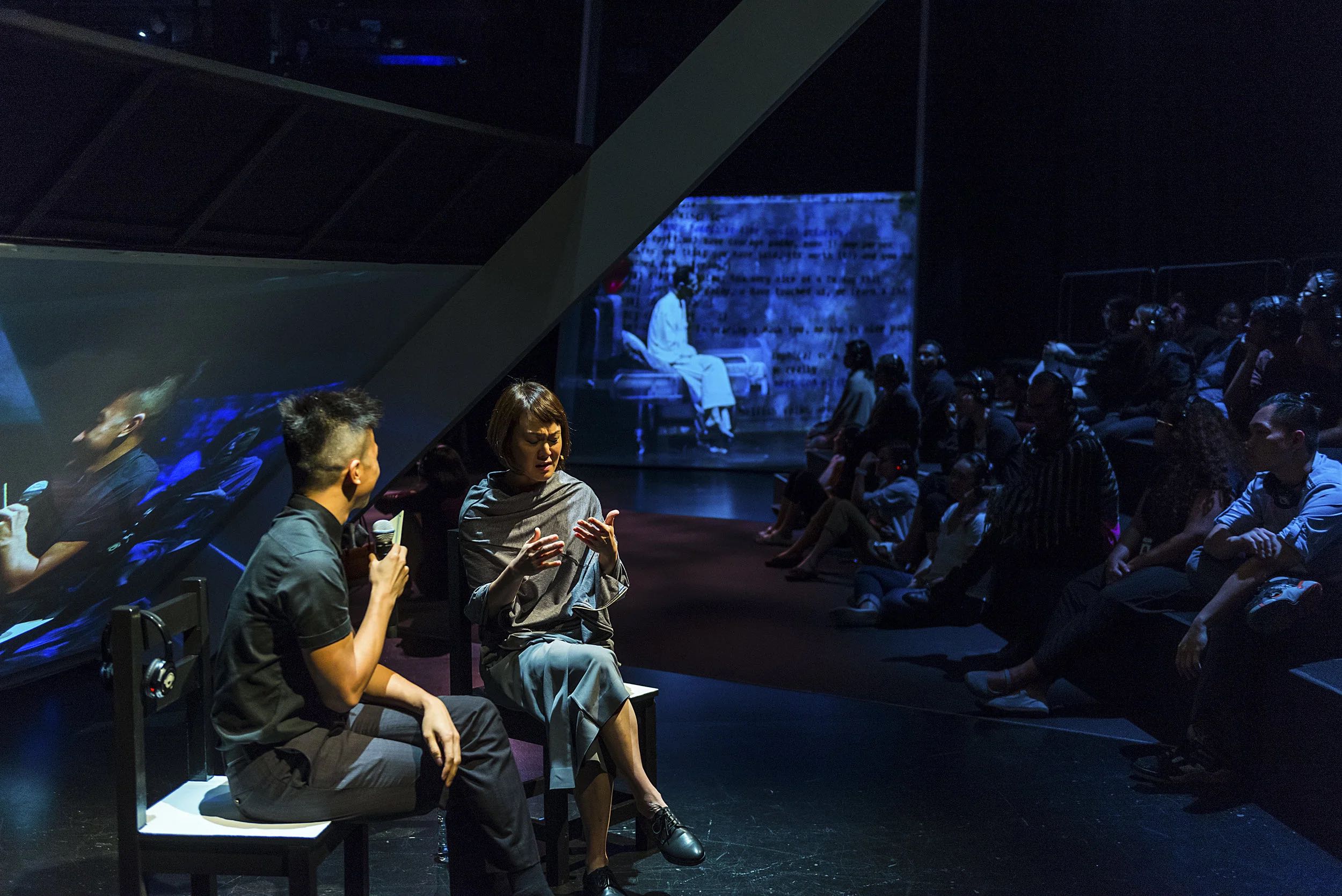
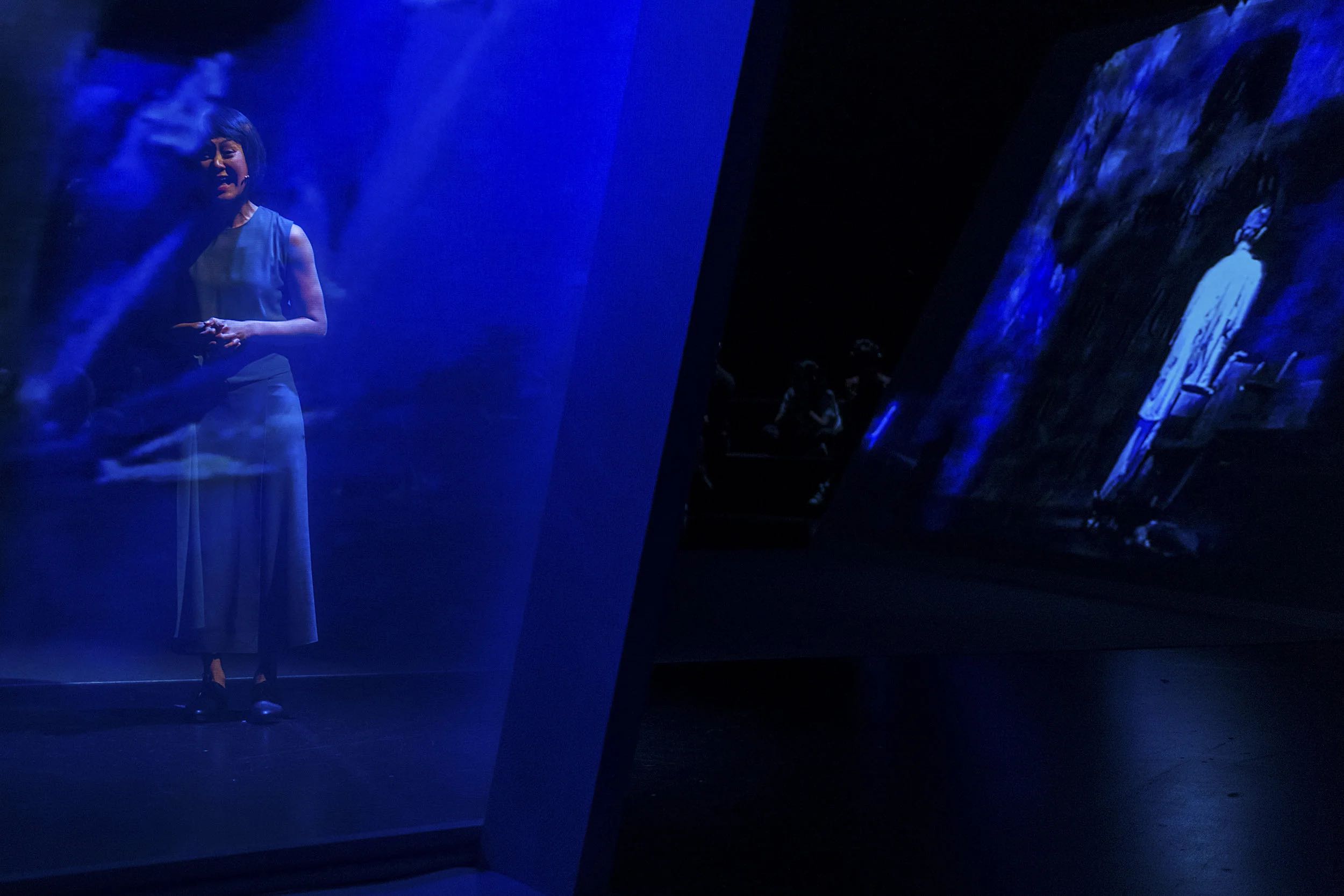
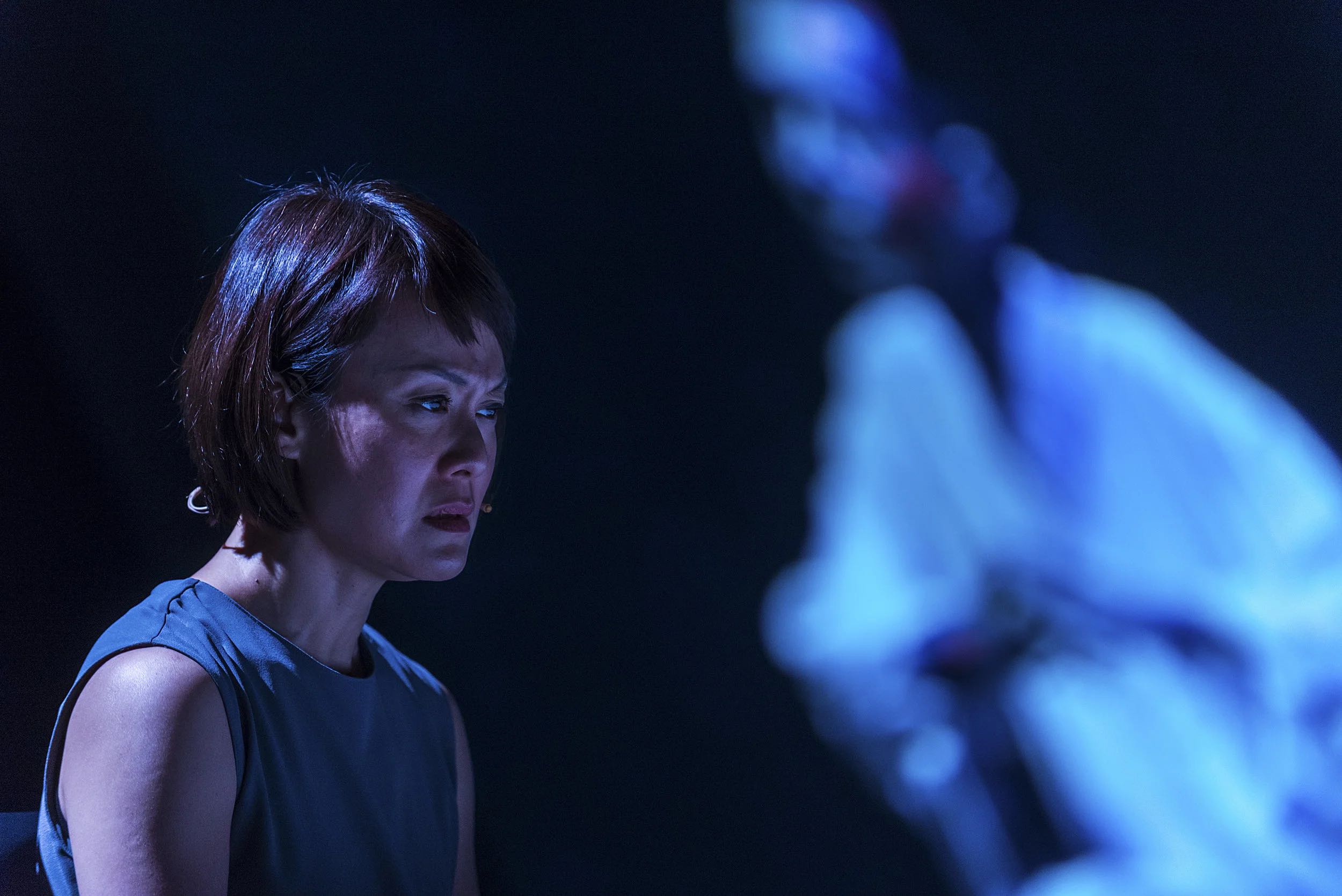
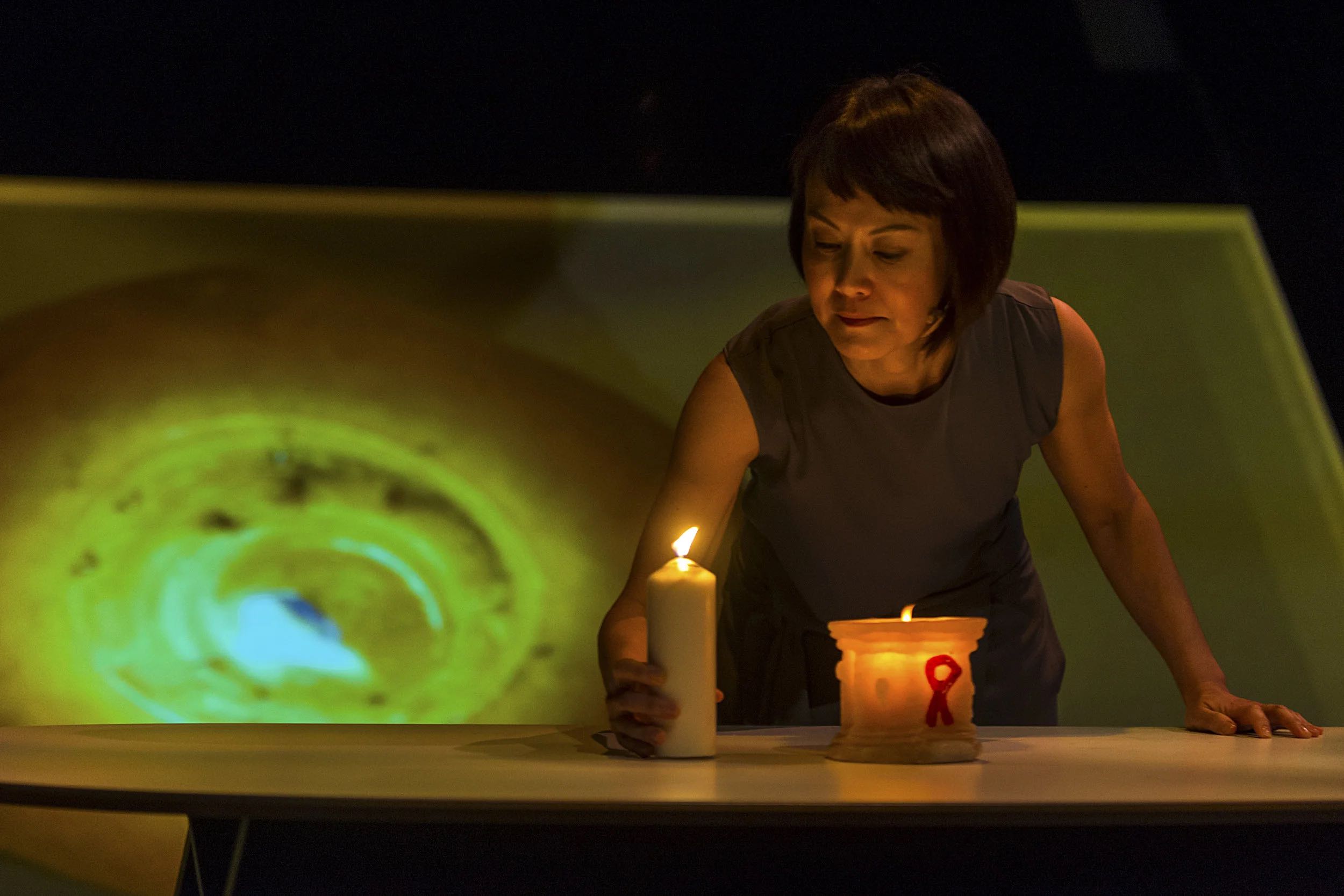
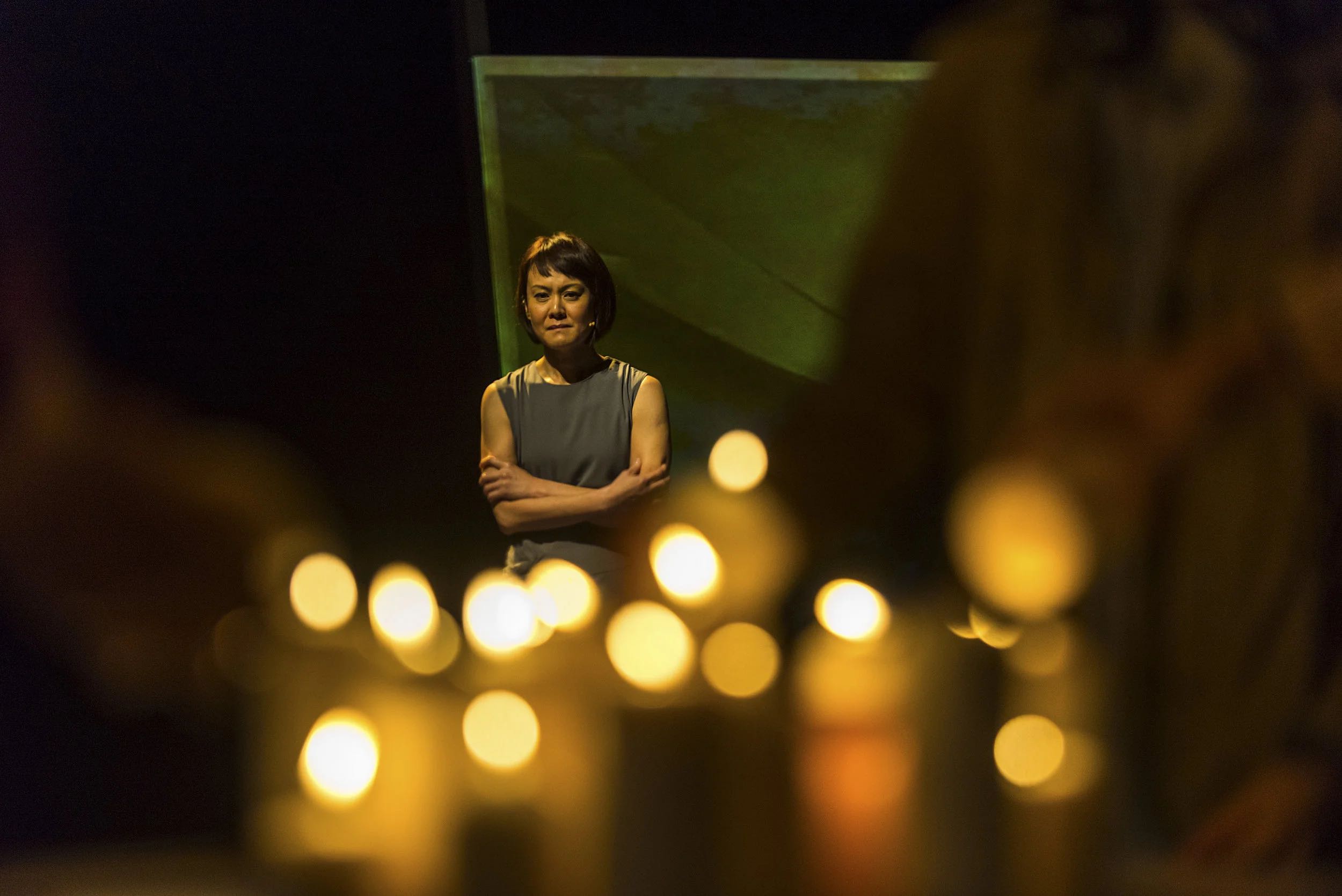
Photo documentation from With/Out (2017). Photos by Tuckys Photography.
With/Out (2015)
- Performance
- 14 to 18 January 2015, 8pm
- Black Box / Rehearsal Room, Centre 42, Singapore
- Presented as a Fringe Highlight of the M1-Singapore Fringe Festival
- Developed in residence at Centre 42
- Conceptualized by me
- Performed in collaboration with Haresh Sharma, Roger Winder, Sean Tobin, Caroline Fernandez, and Laurindo Garcia
- Production Managed and Set Designed by Chan Silei
- Video and Technical Support by Kelvin Chew
- Photo documentation by Samantha Tio, Roger Winder, and Yusri Sapari
How can one re-stage a play like that – the candle prop will still burn, the video projection of rain will still evoke images of cleansing and renewal, but Chew might not be around anymore.
Alfian Sa’at, The Straits Times, on Completely With/Out Character
In May 1999, The Necessary Stage worked with Paddy Chew to stage a monologue titled Completely With/Out Character at the Drama Centre on Fort Canning Hill. The docu-theater piece records his experience as the first person in Singapore to come out publicly with his HIV-positive status. Paddy passed on in August 1999 a few months after the production’s conclusion.
In 2015, AIDS is no longer perceived as a terminal disease; HIV-positive individuals can lead a relatively normal and healthy life with the aid of advances in medication. In part, this is due to the roads paved by individuals and researchers who came before us, individuals like Paddy, who defied convention and conservatism to tell his story at a time when there was still much ignorance and prejudice surrounding AIDS.
With/Out is an interpretation of Paddy’s monologue. Through the use of multi-media, video documentation and other archival material, I reconstructed the production as an extension of my research into performance reenactments, the mediation of a “live” presence via the use of technology, and the revisioning of queer histories in Singapore.
The performance space was divided into two areas – a black box that is sited above a white cube. In the black box the audience encounters a three-screen synced video projection of various archival documents that span the length of the 1999 production documentation.
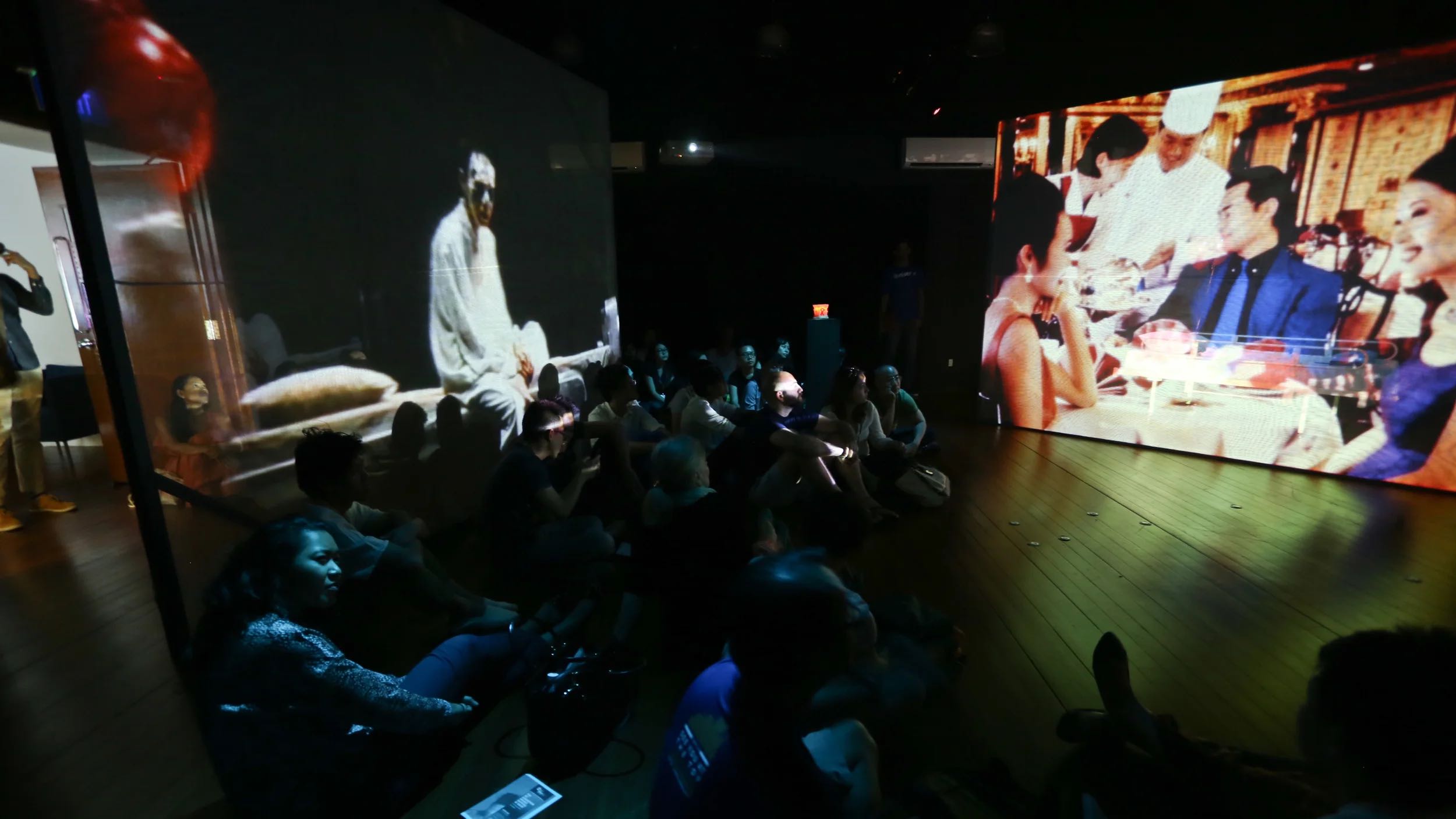
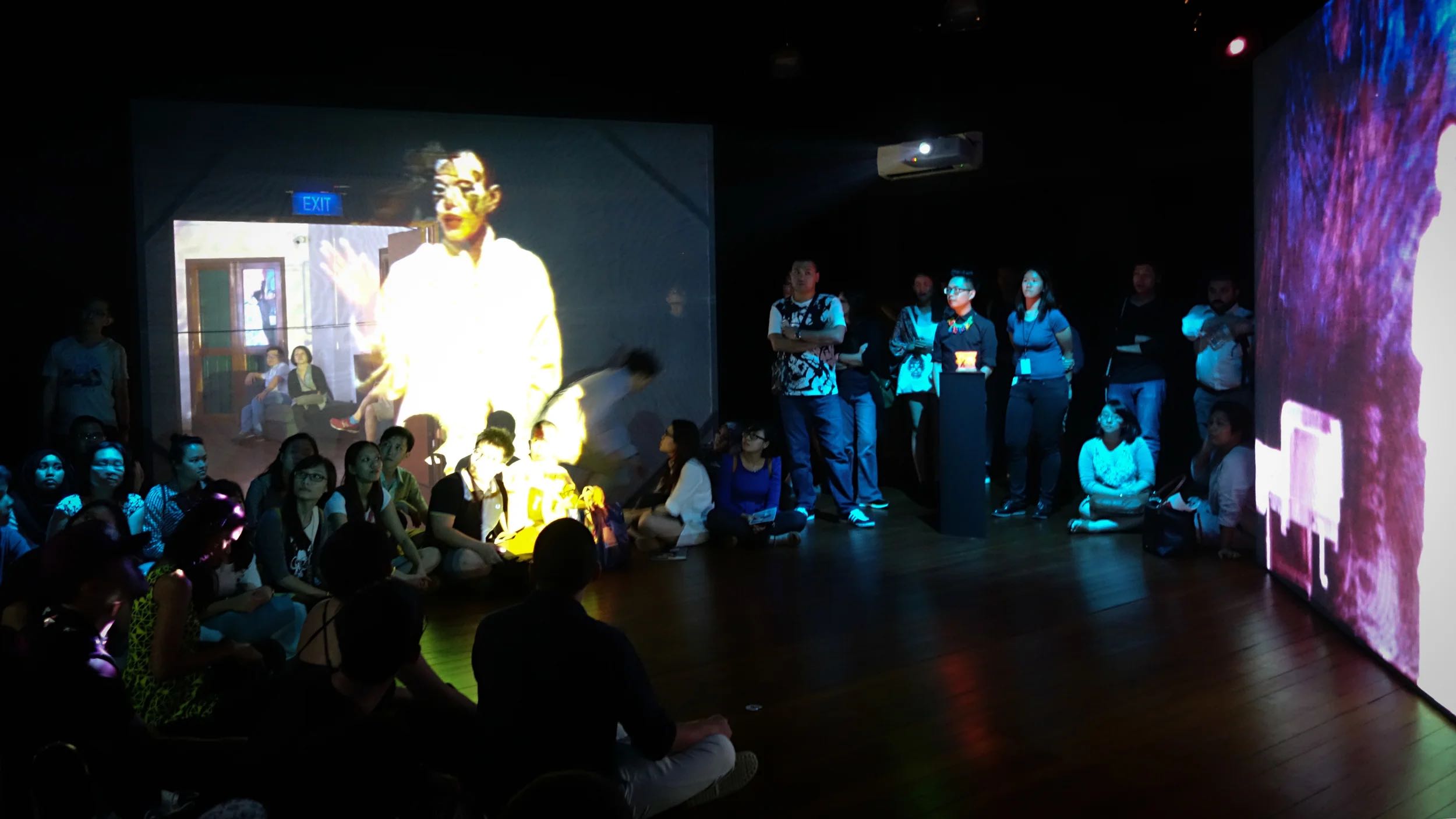
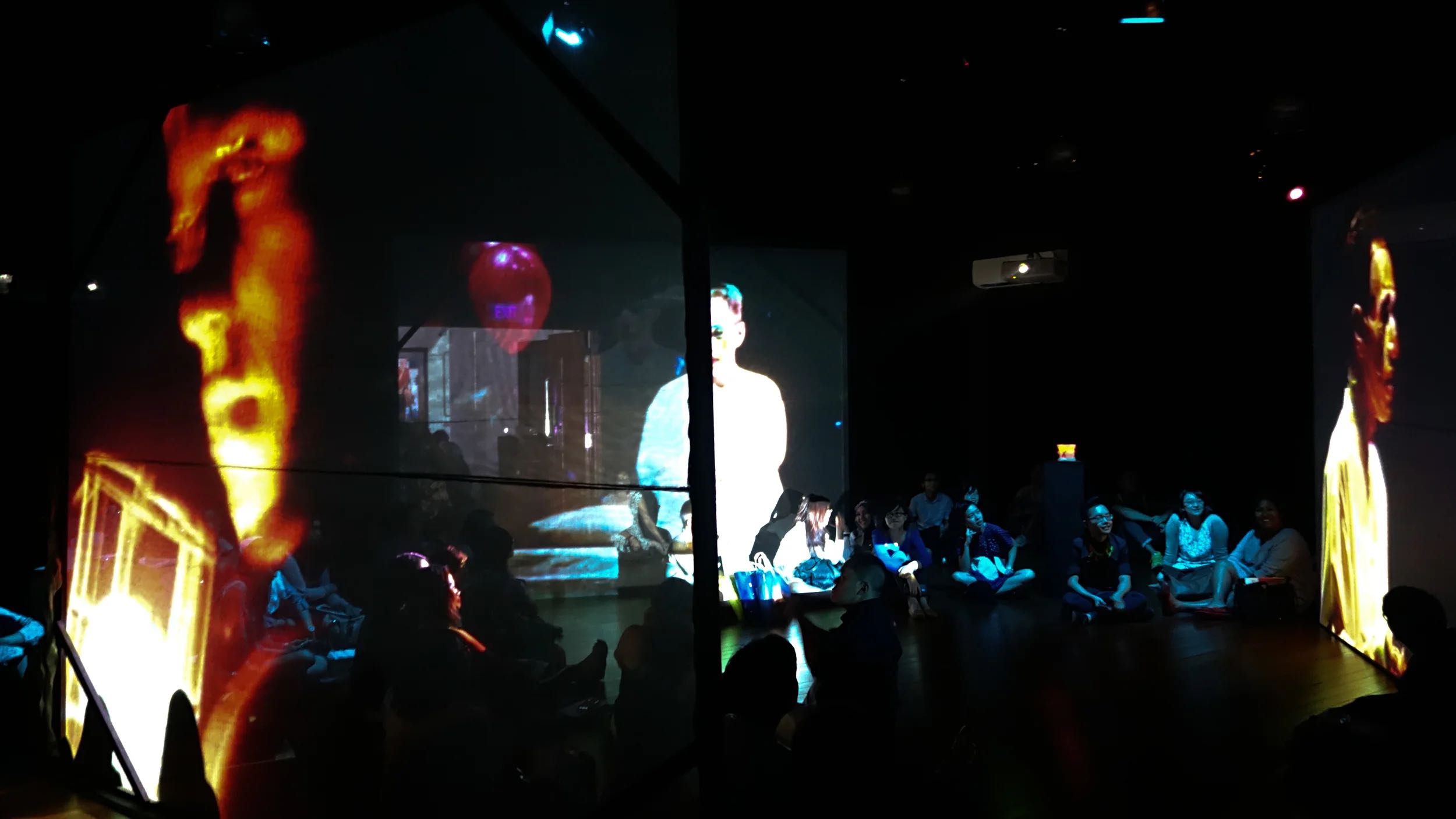
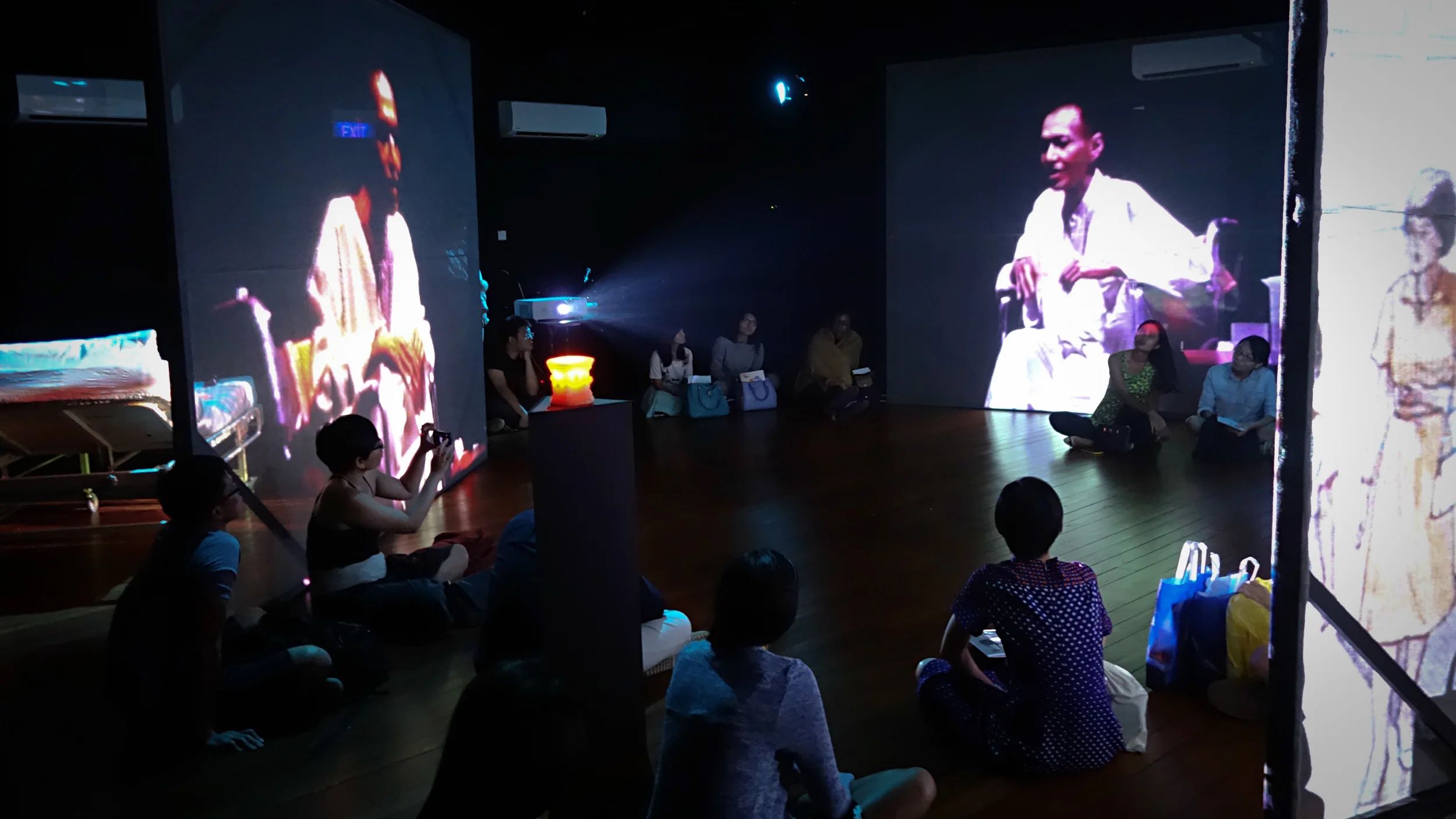
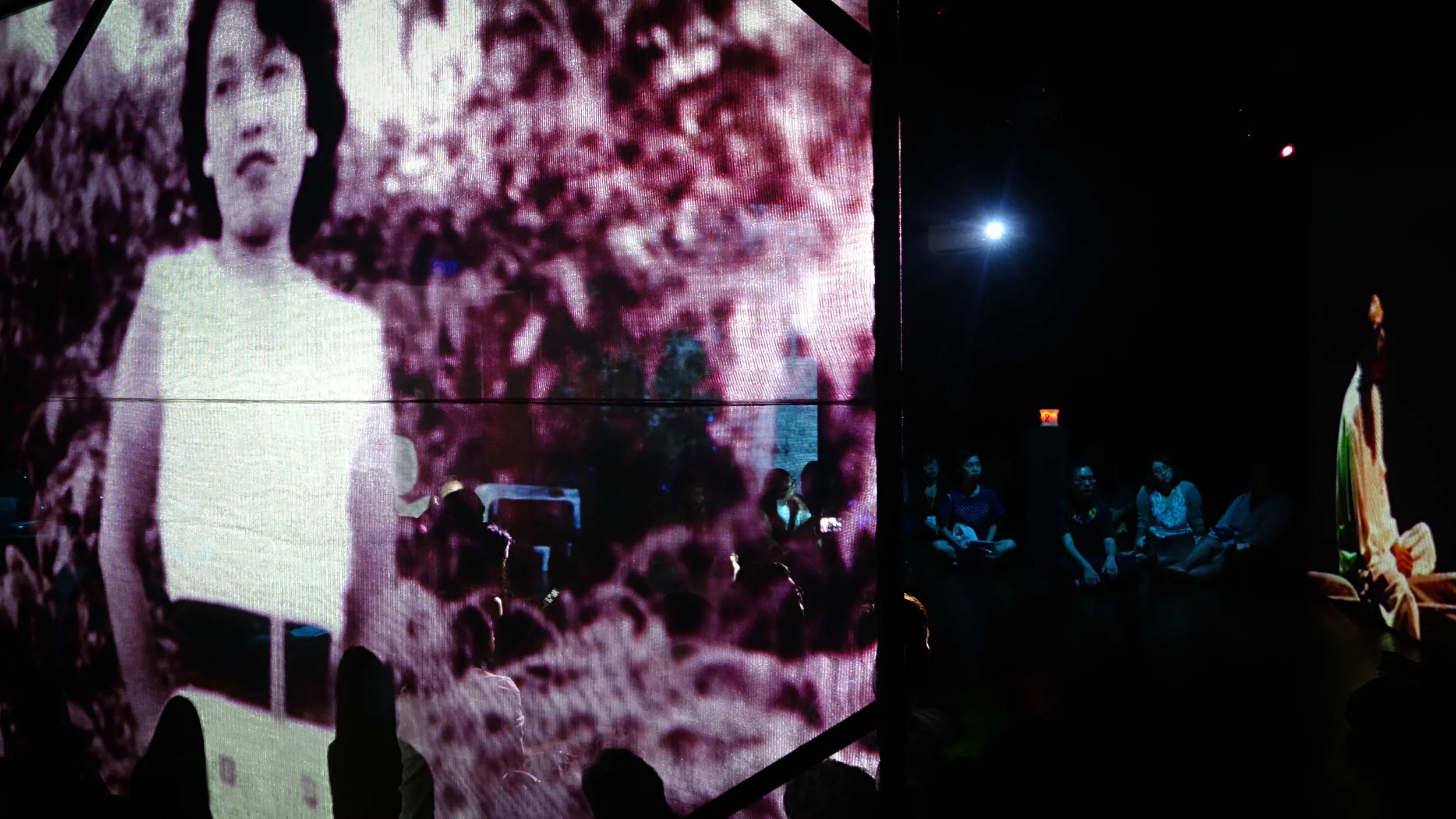
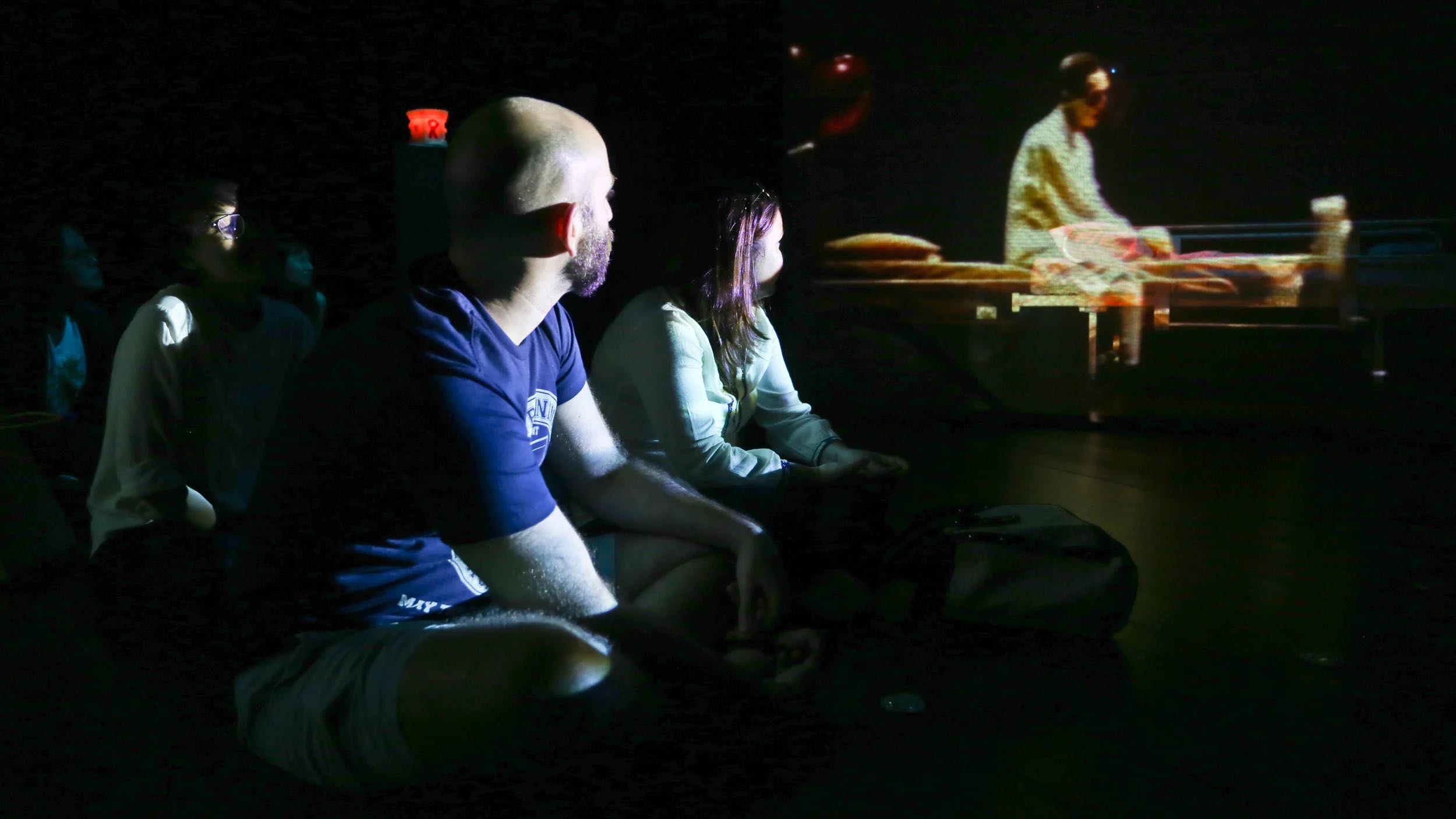
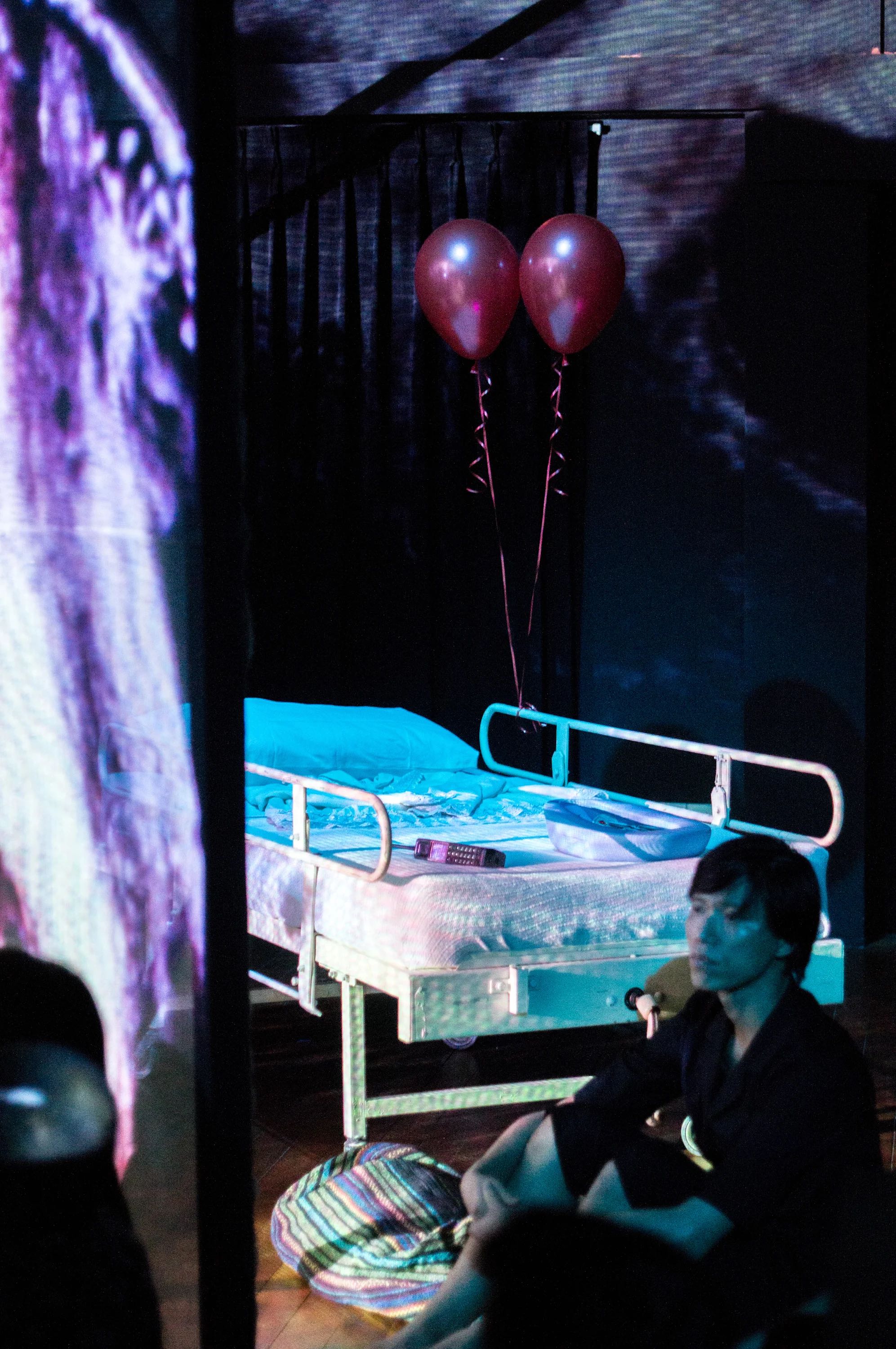
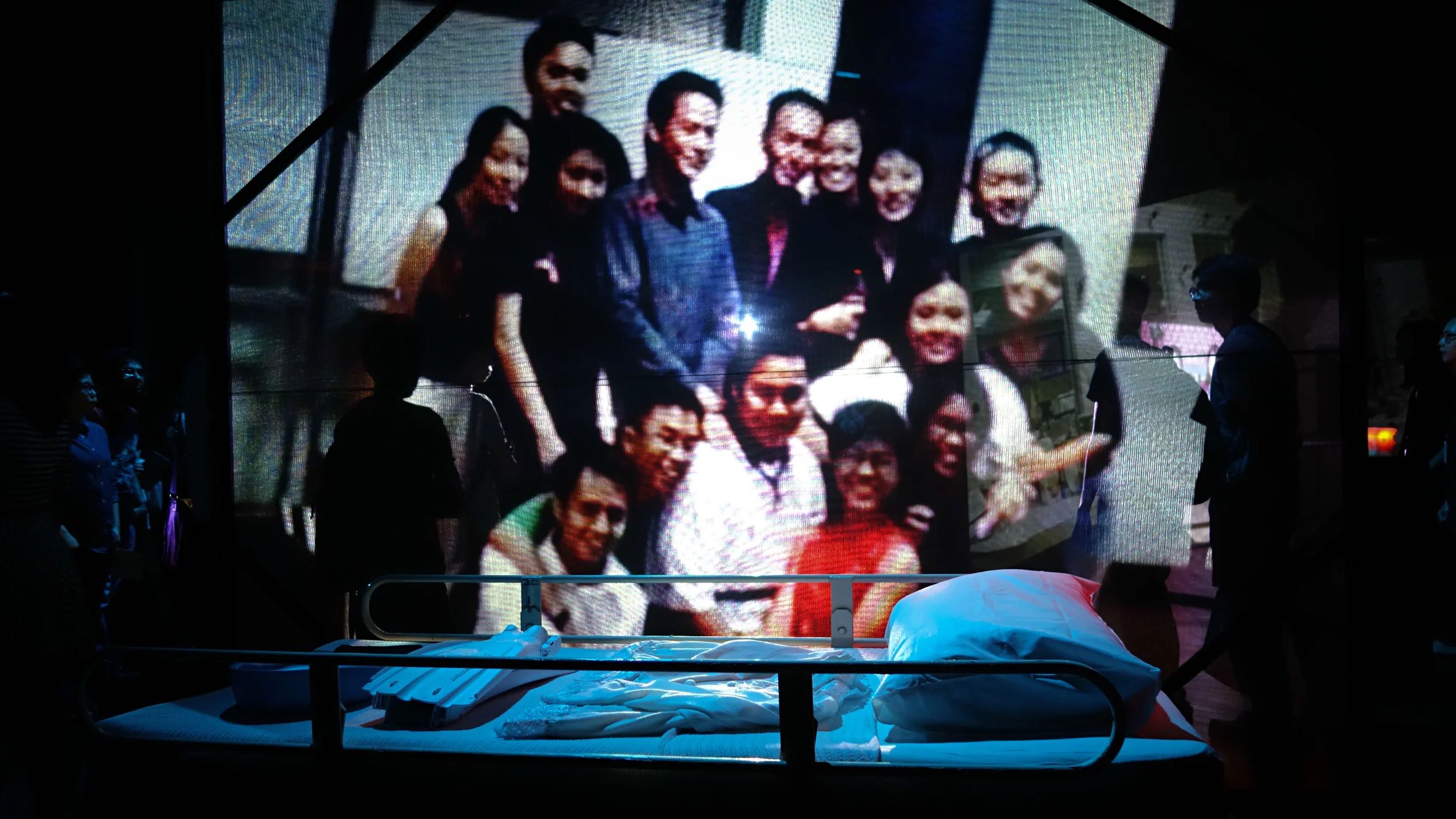
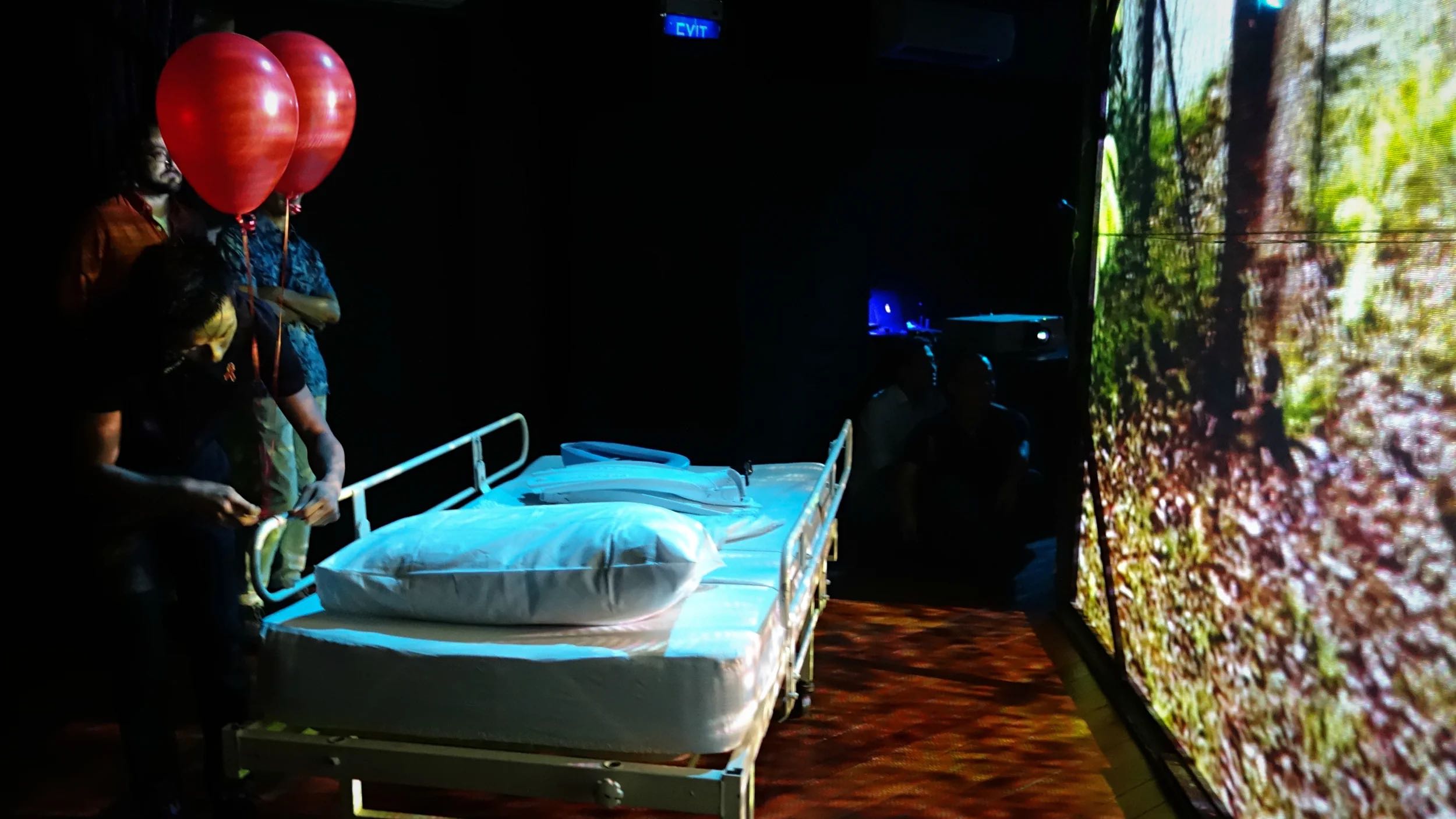
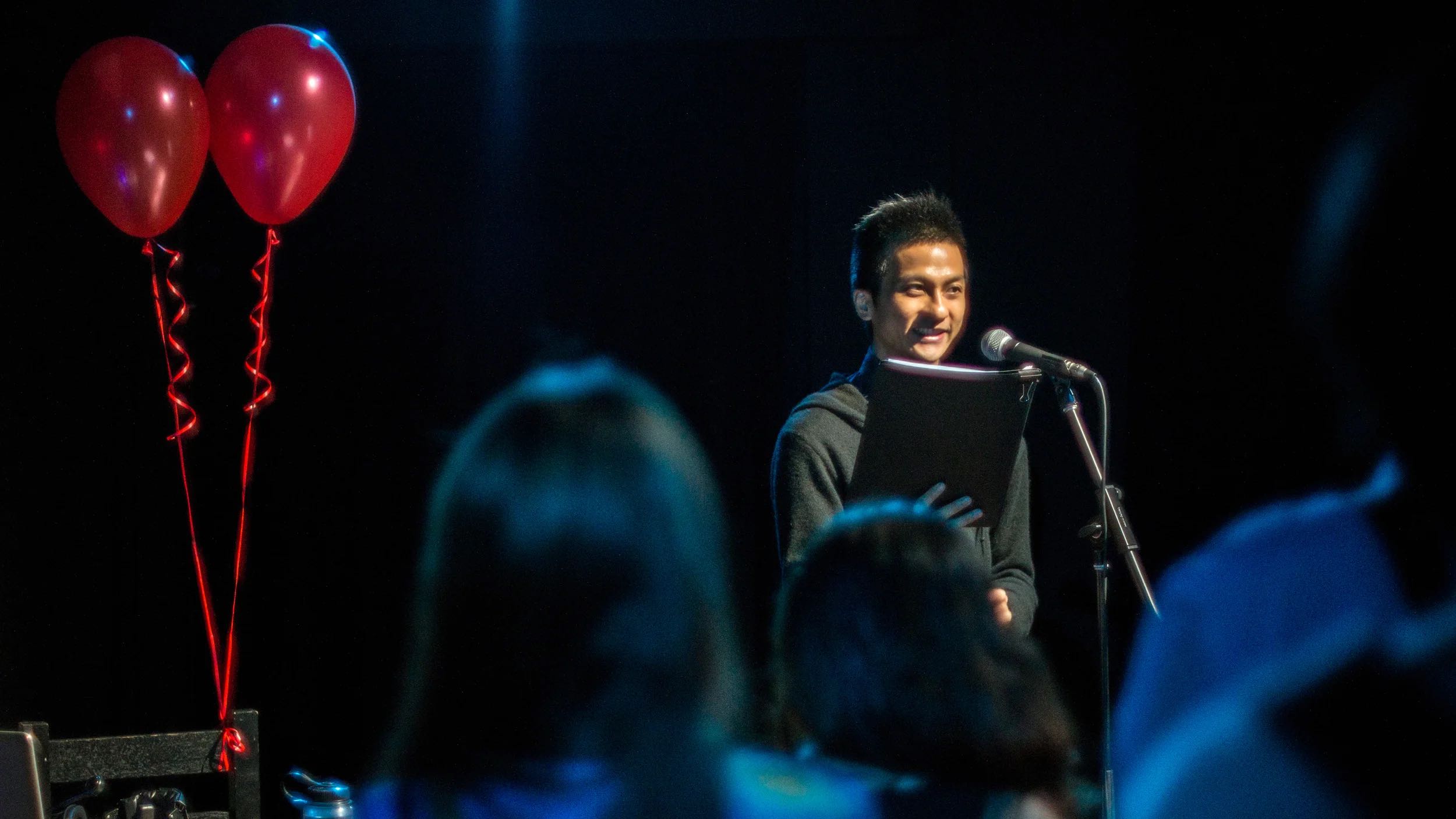
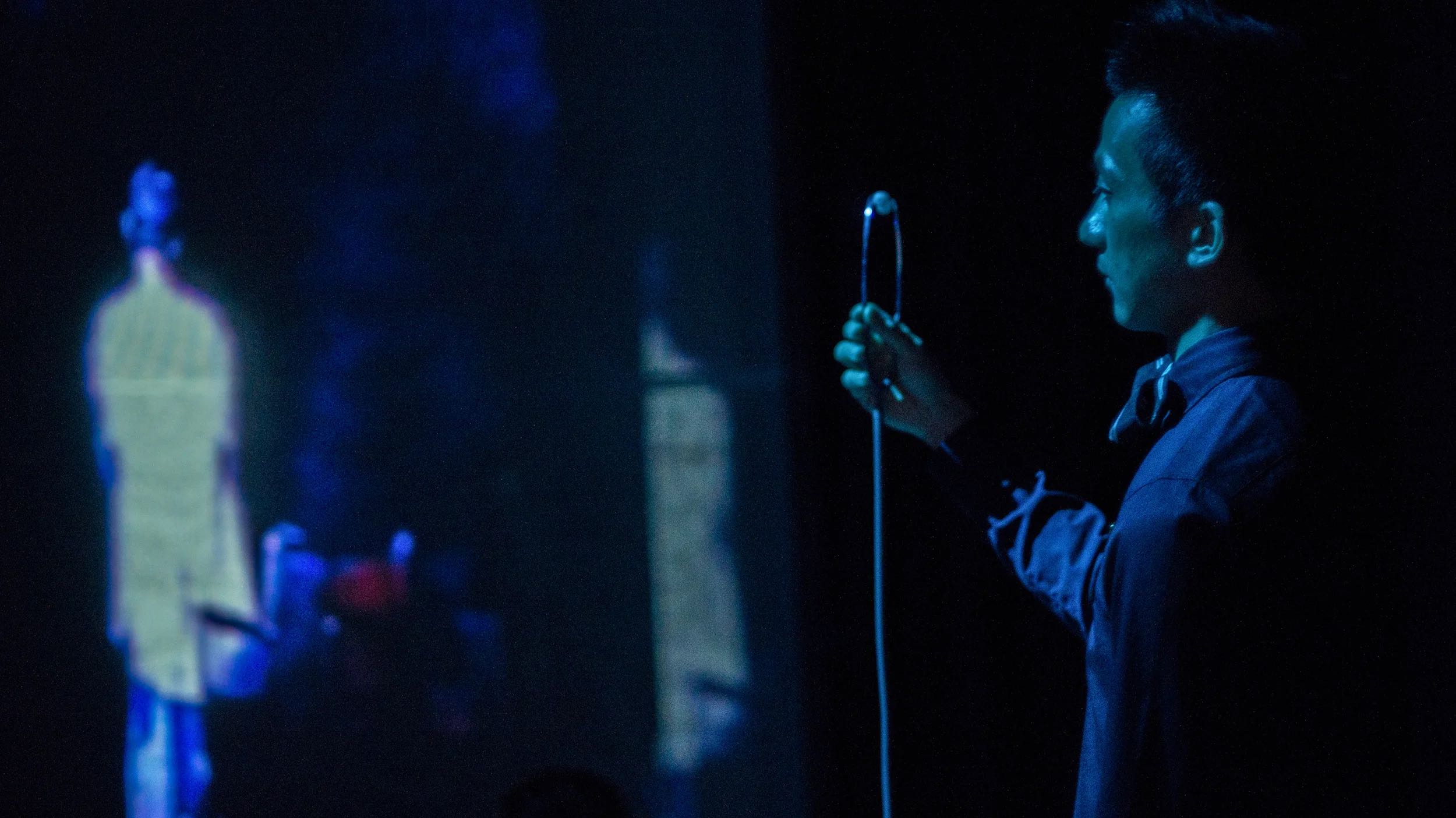
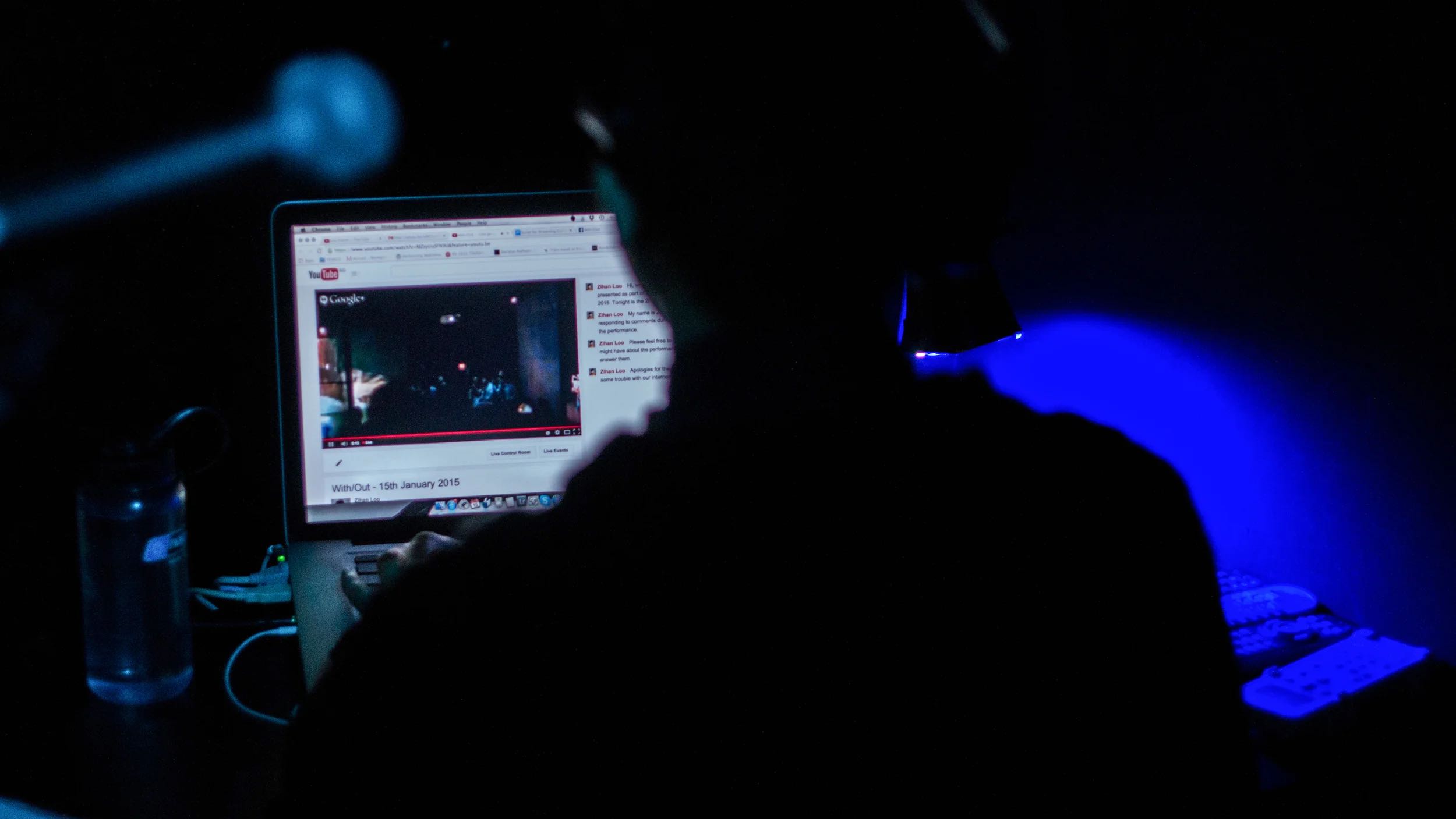
Documentation from the black box, With/Out (2015).
Chew, the first person in Singapore to come out as HIV-positive, flickers back to life in a production that is a reading, a screening, an installation and a documentary all at once… that allows audience members to revisit an iconic production with the sobering measure of distance and a thorough context.
Corrie Tan, The Straits Times, on With/Out (2015)
In the white cube, a reader performs a transcript of the text in cadence with the production video documentation. Each evening features a different reader and the performance is streamed “live” online for a virtual audience, an archive of the webcast is available here.
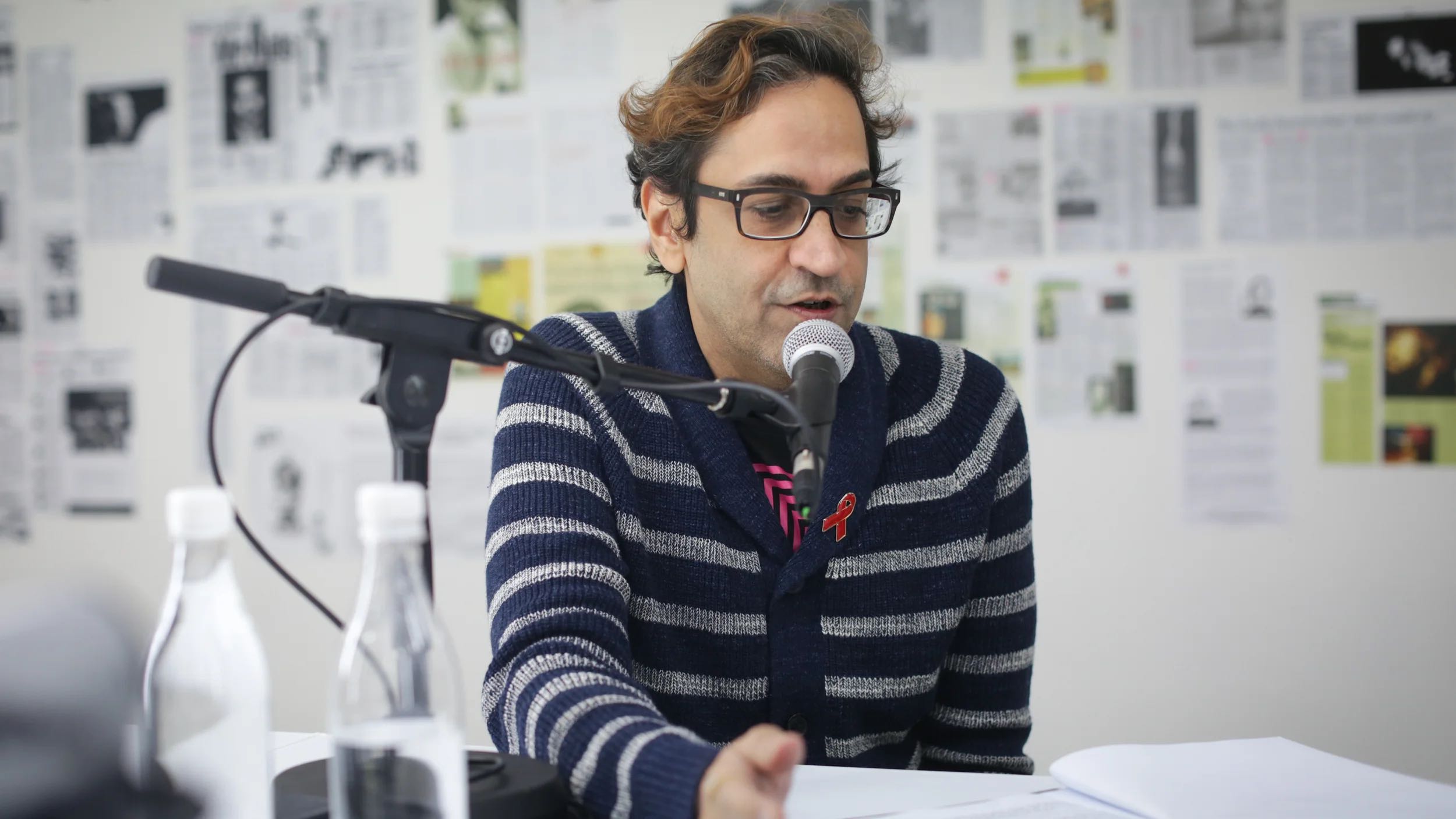
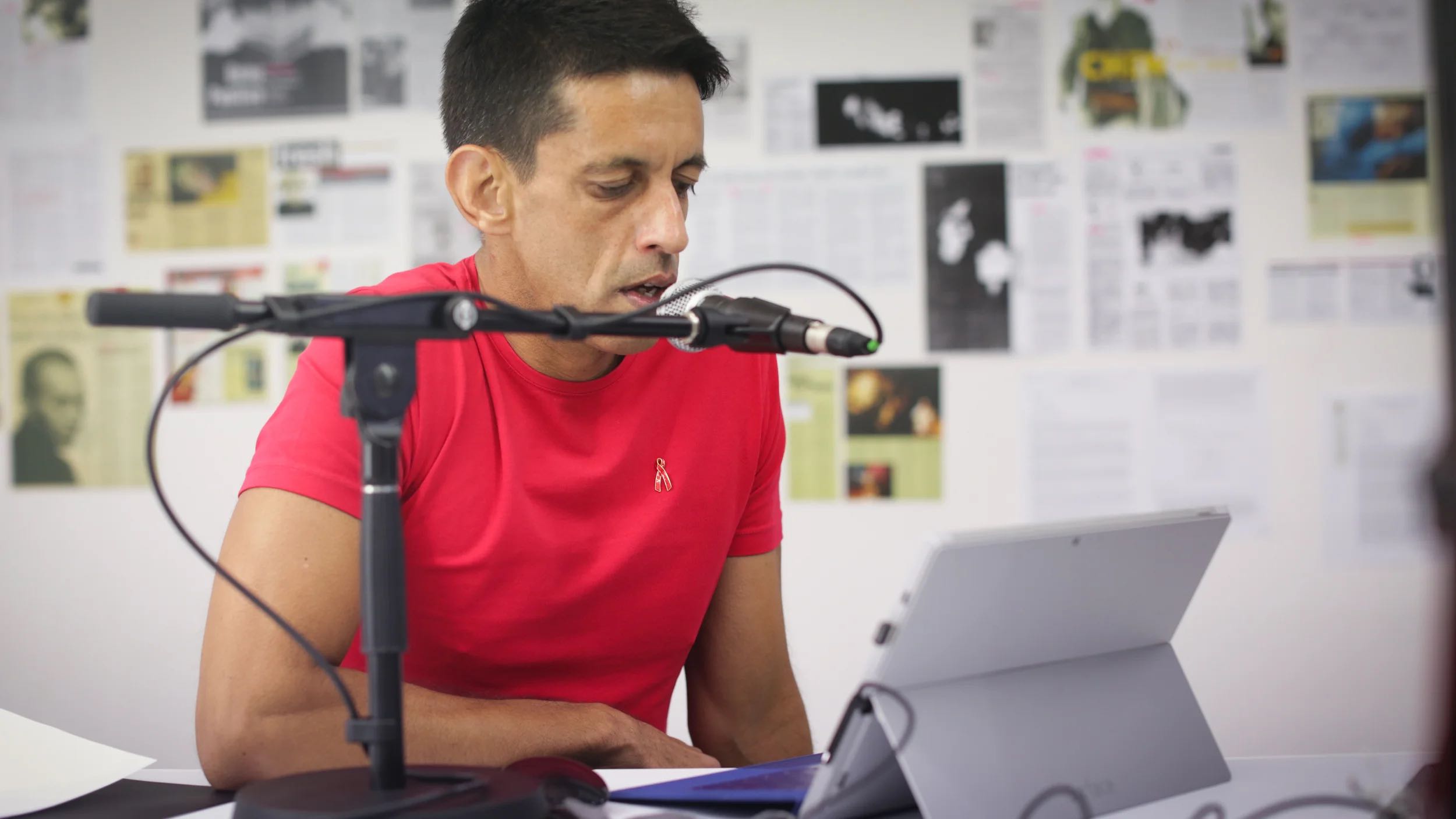
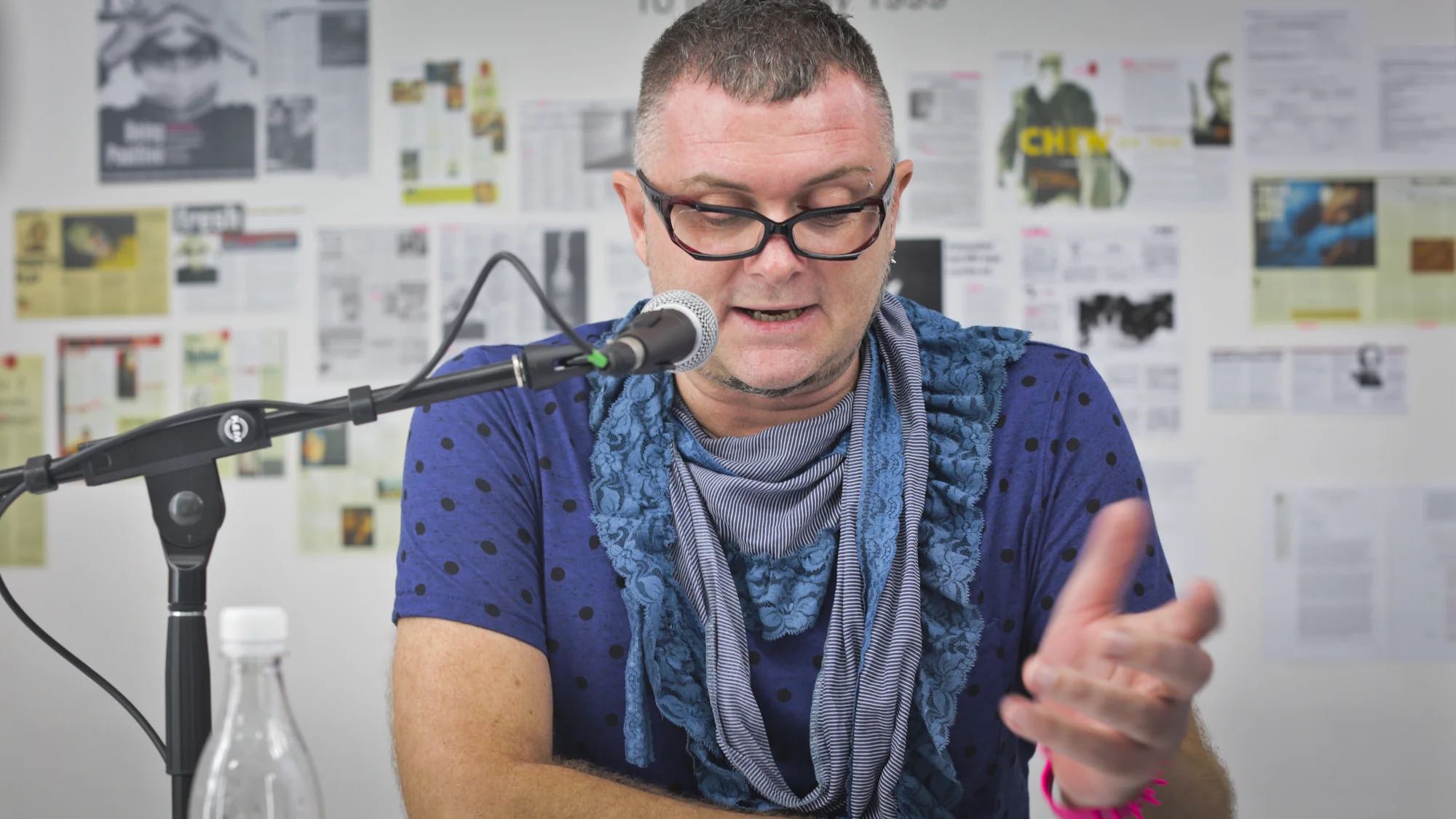
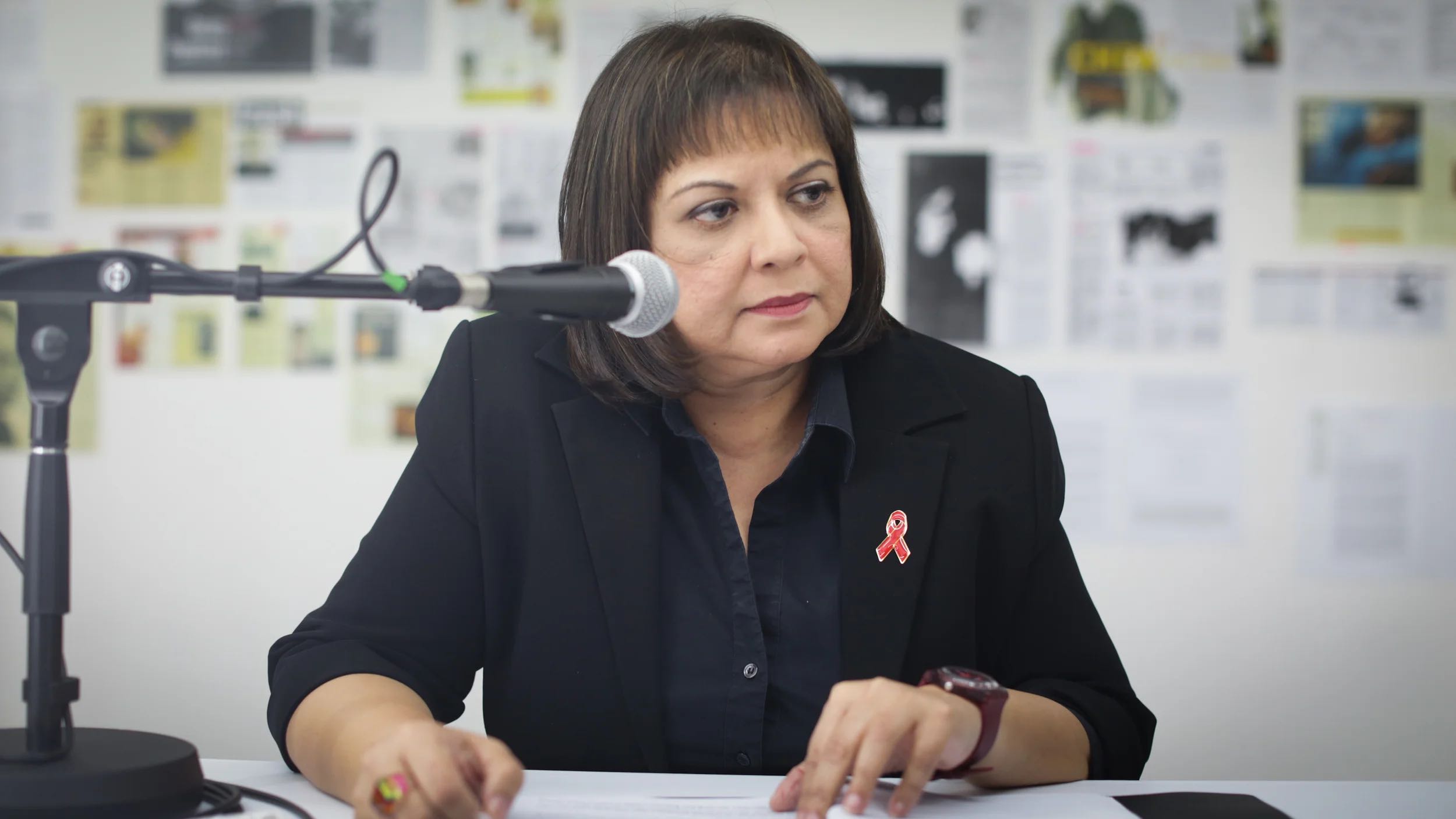
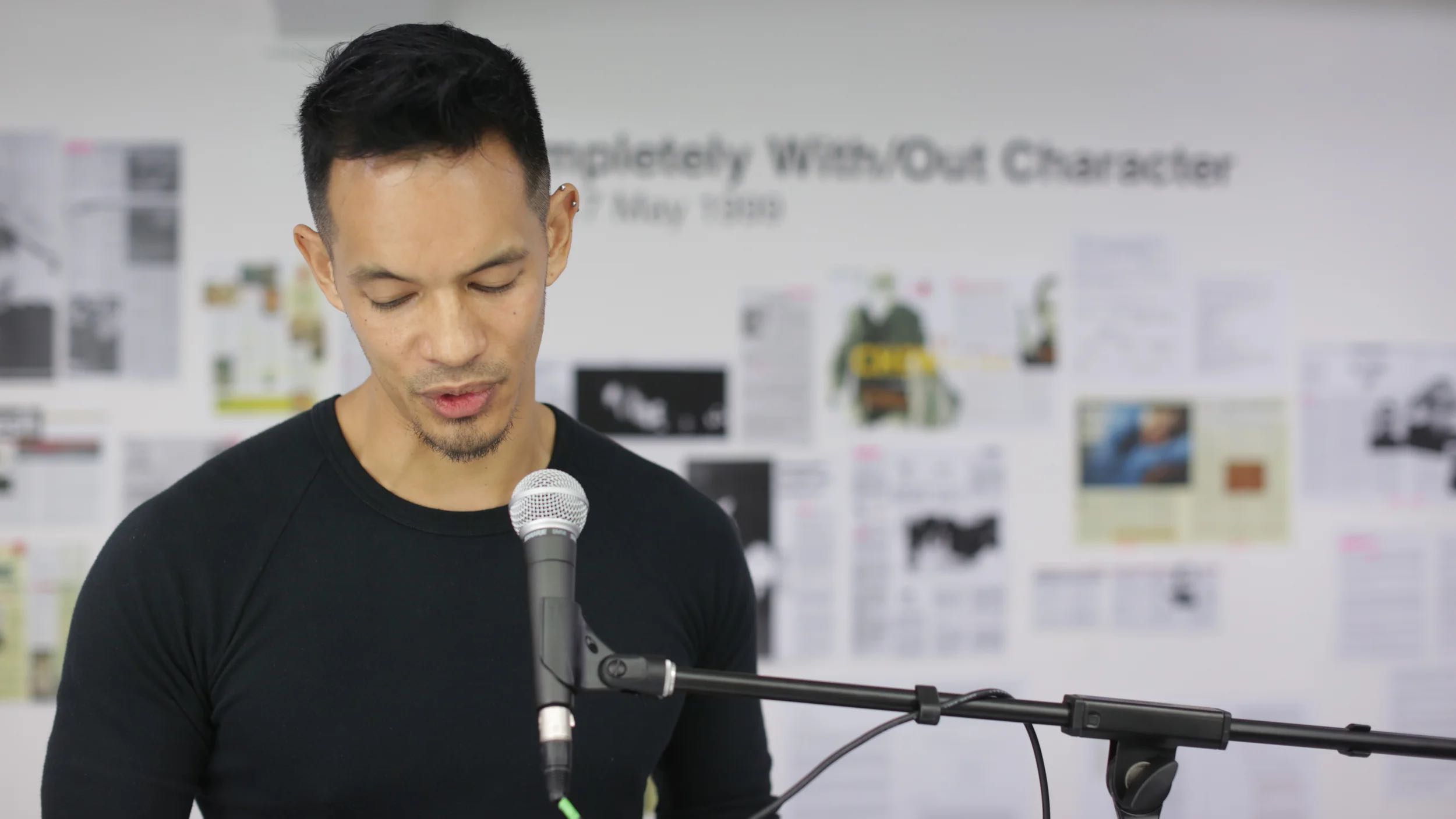
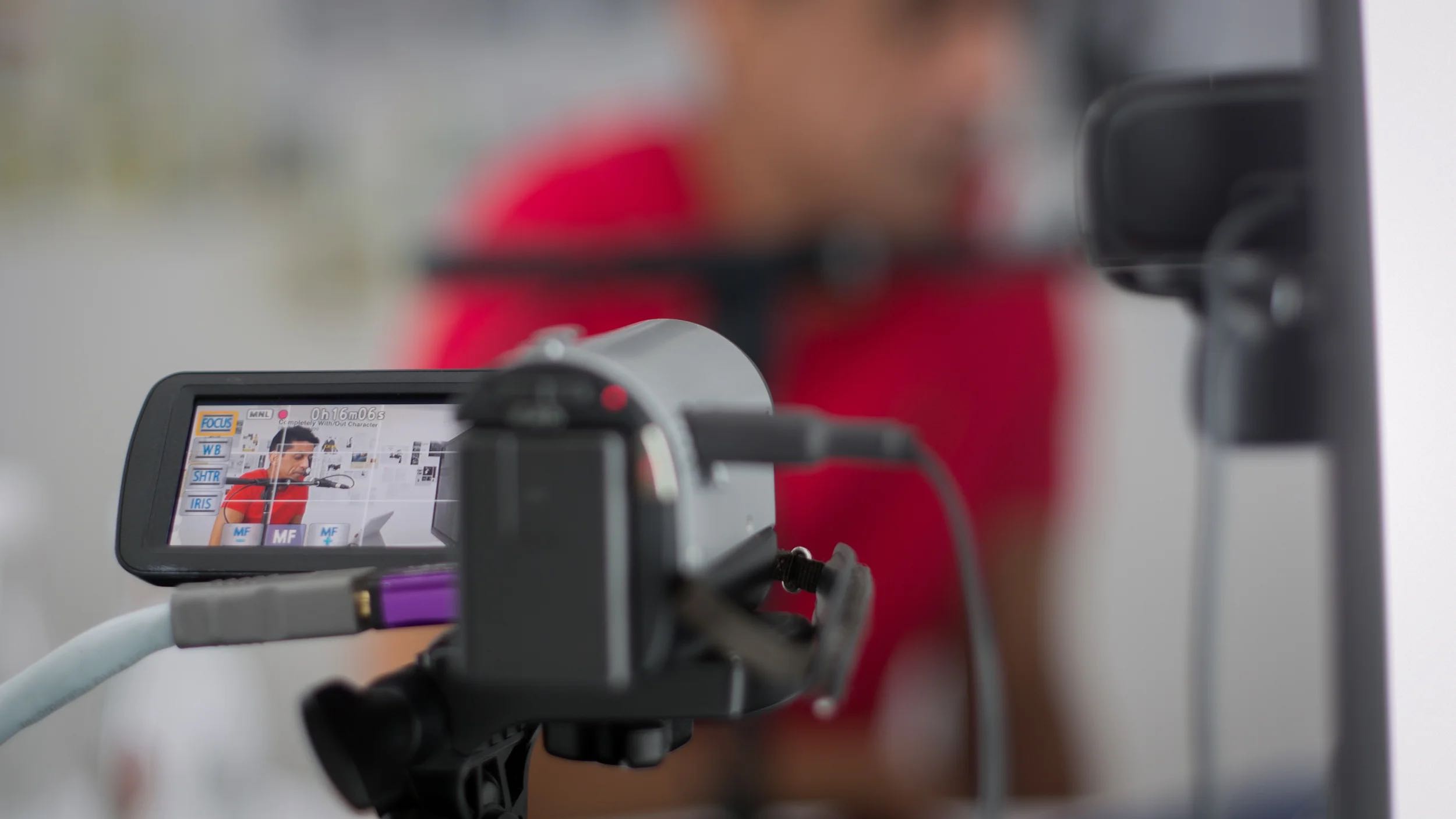
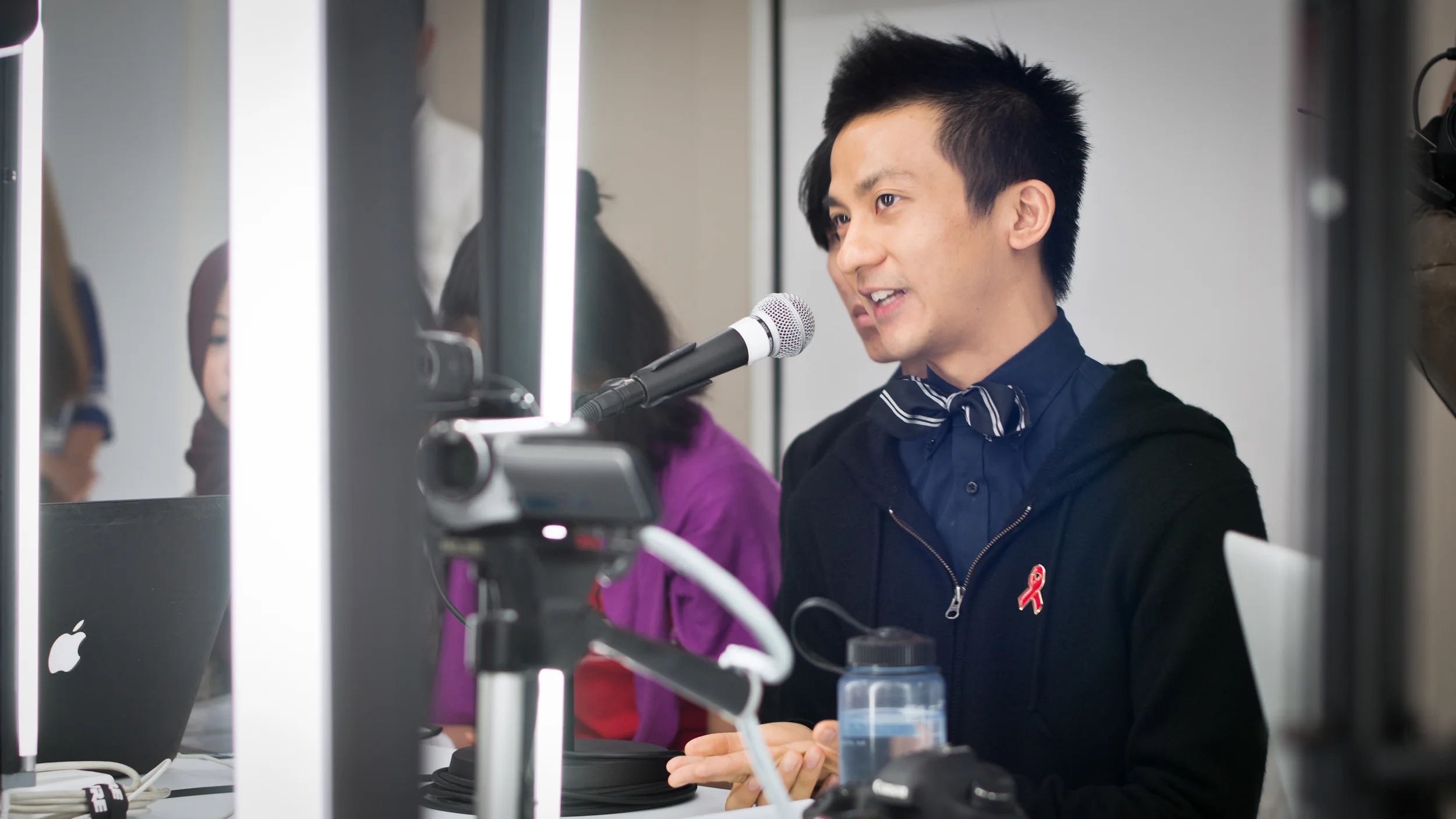
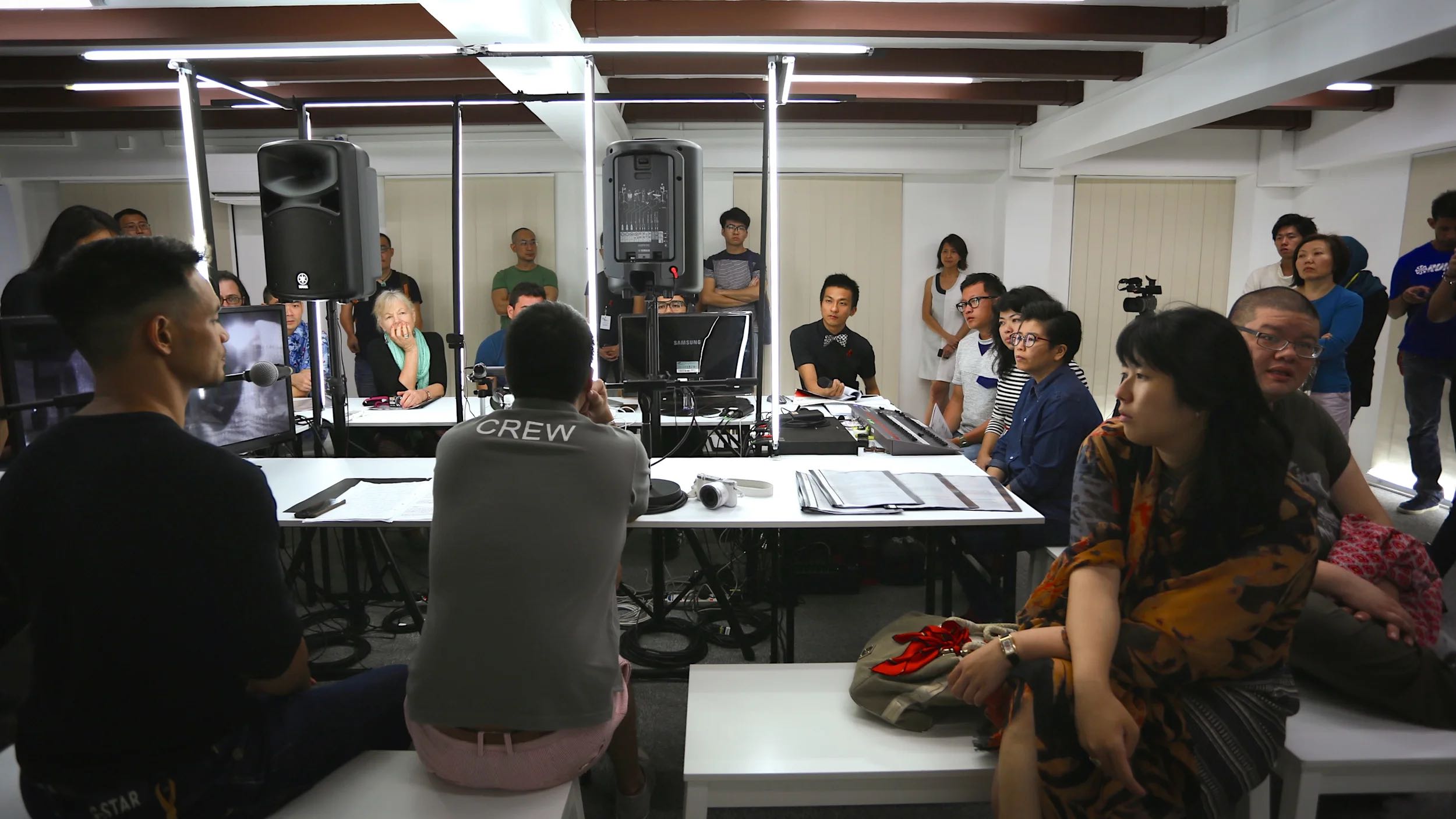
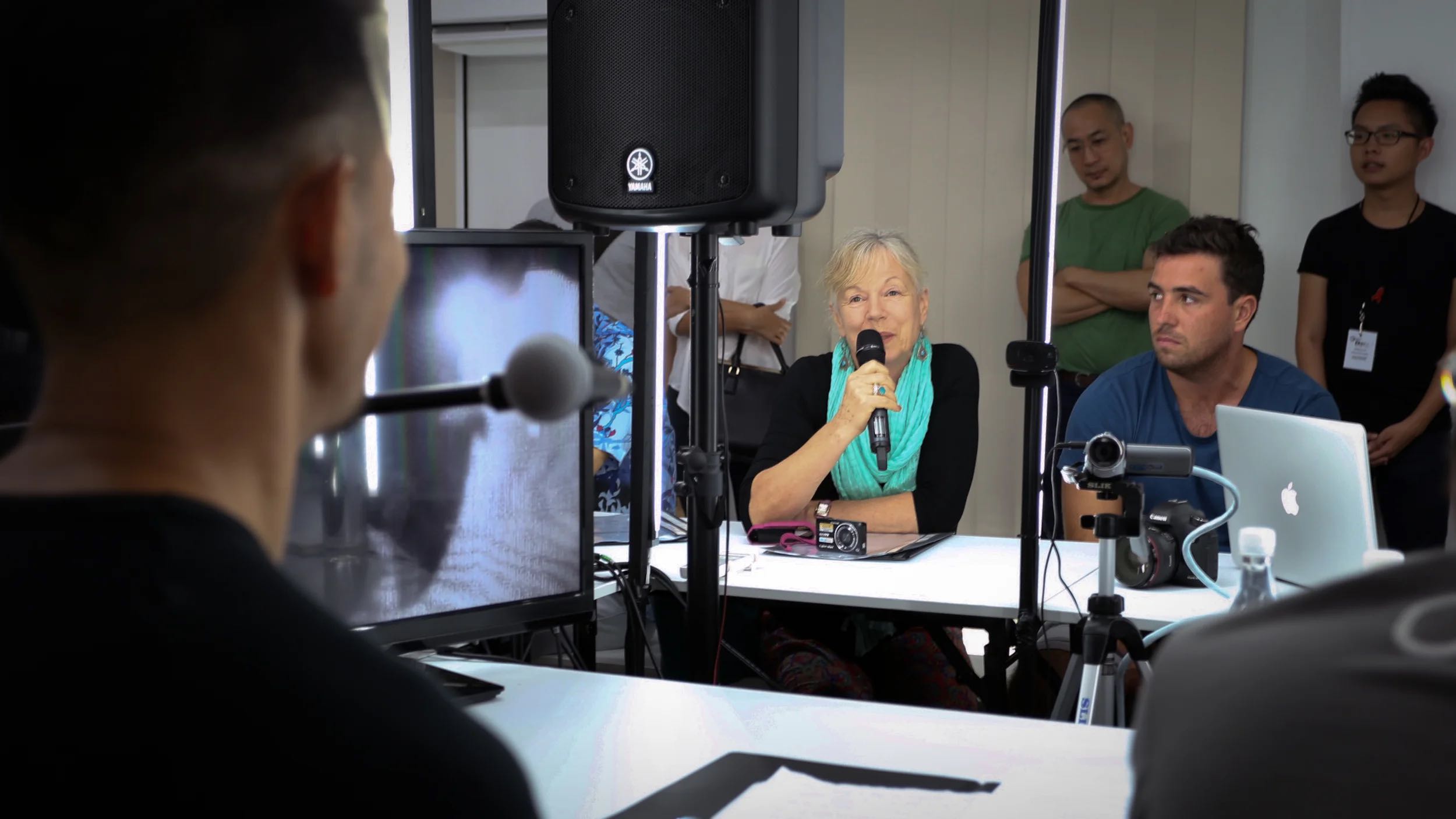
Documentation of the archival white cube space. With/Out (2015).
Of Public Interest (2015)
- Relational Installation
- Opened on 20 August 2015
- Exhibition from 21 August 2015 to 27 March 2016
- Singapore Art Museum at 8Q
- Part of President’s Young Talents 2015, Singapore Art Museum
- Assisted by Tysha Khan
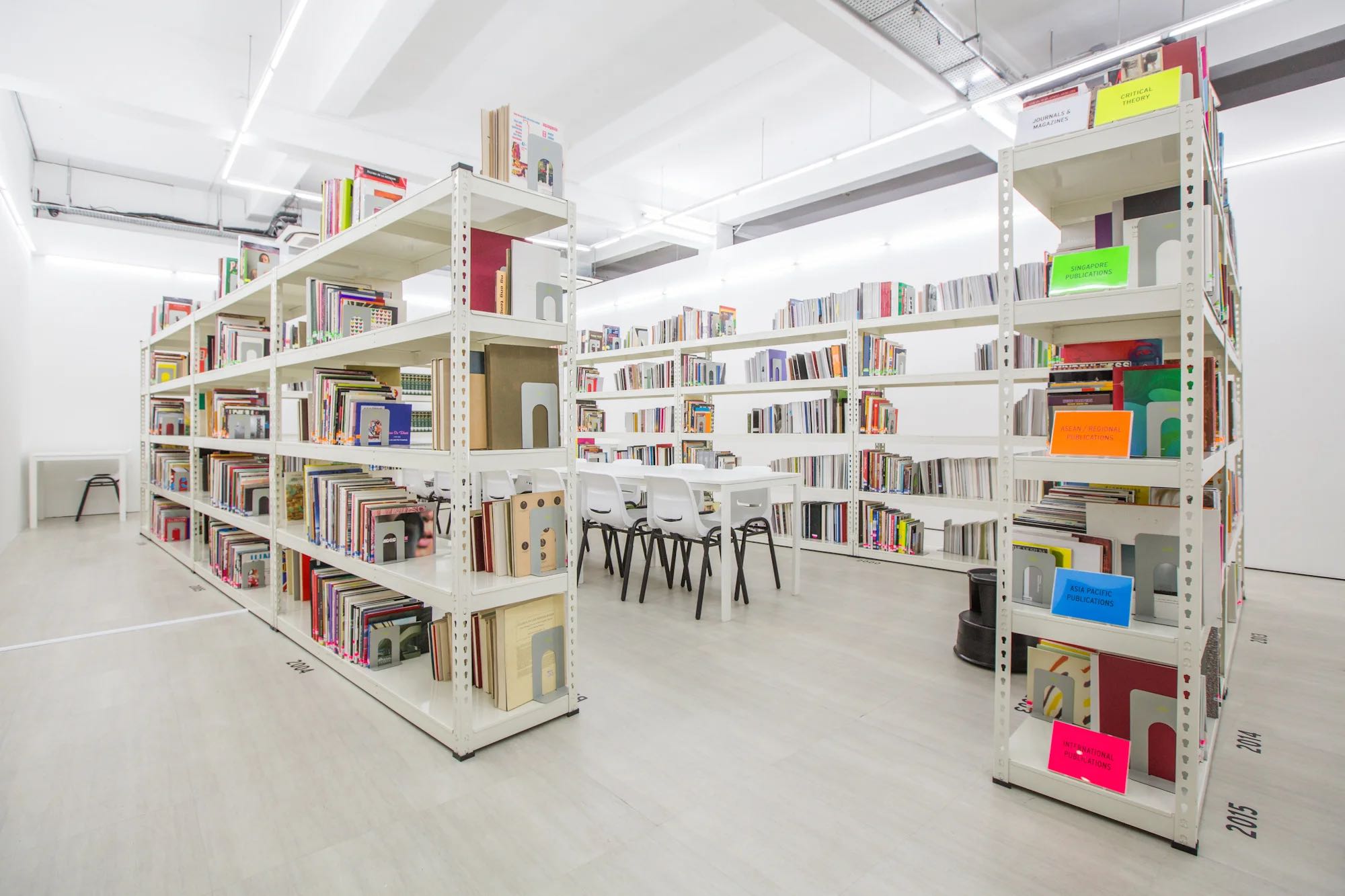
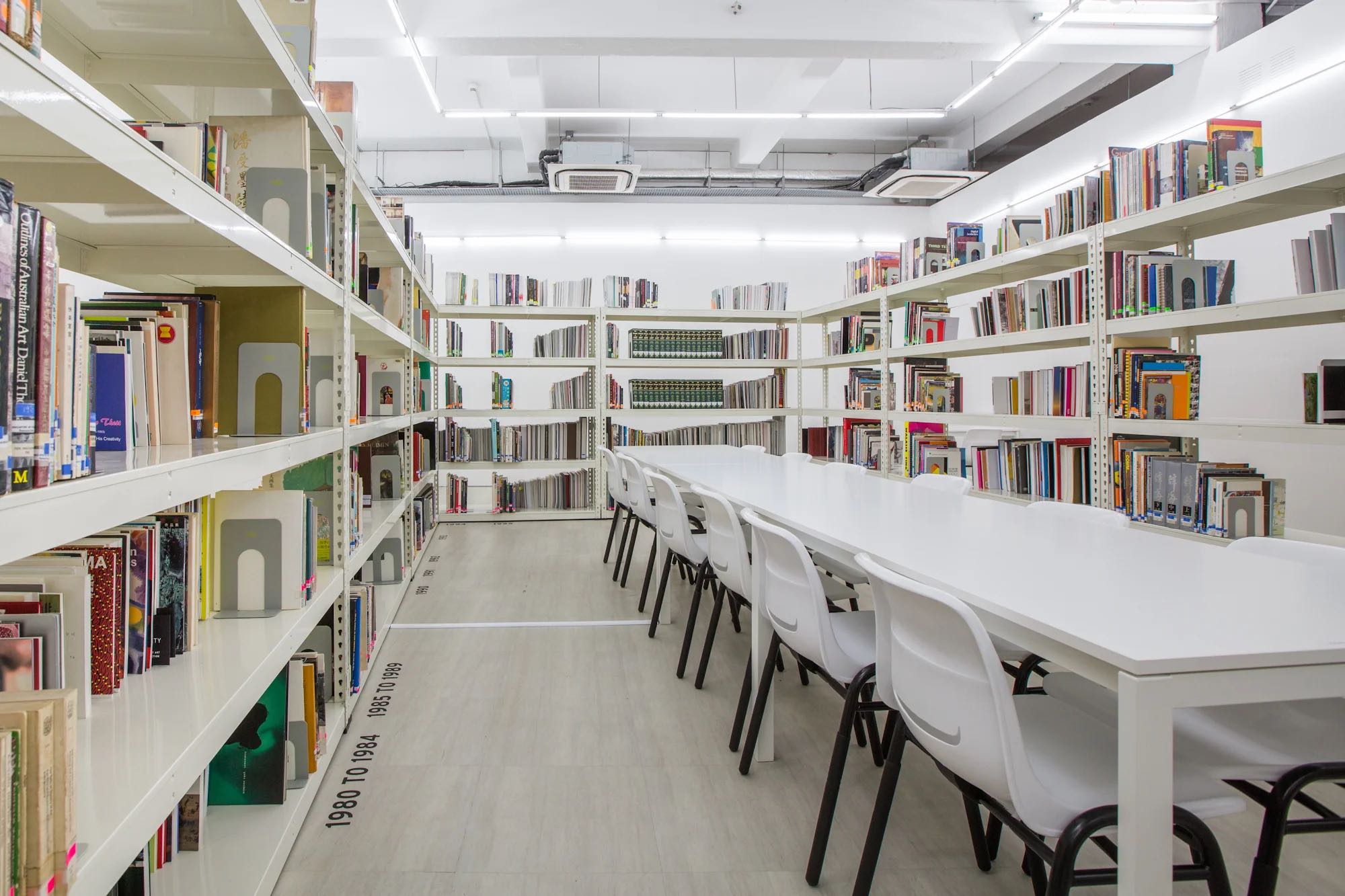
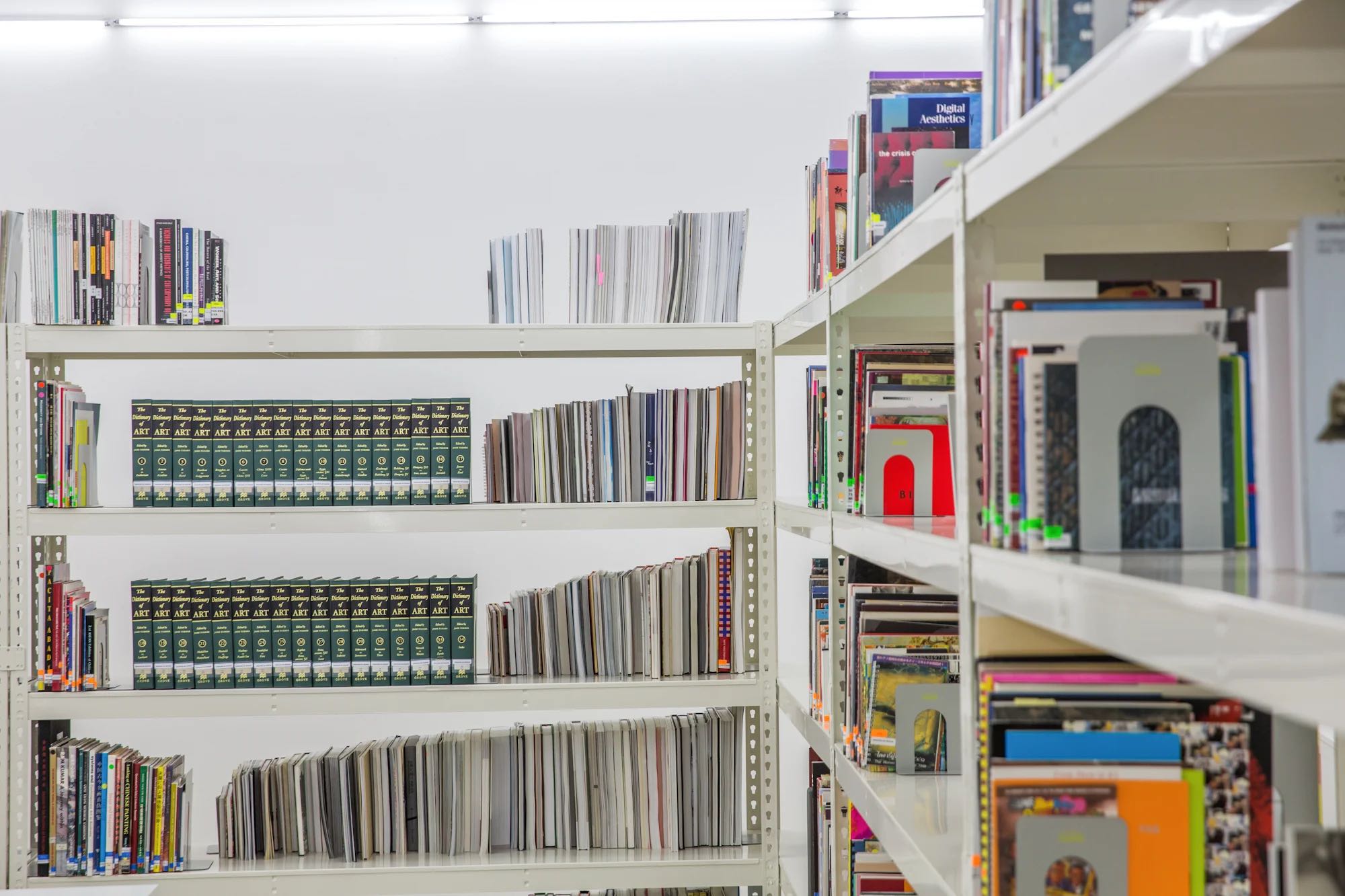
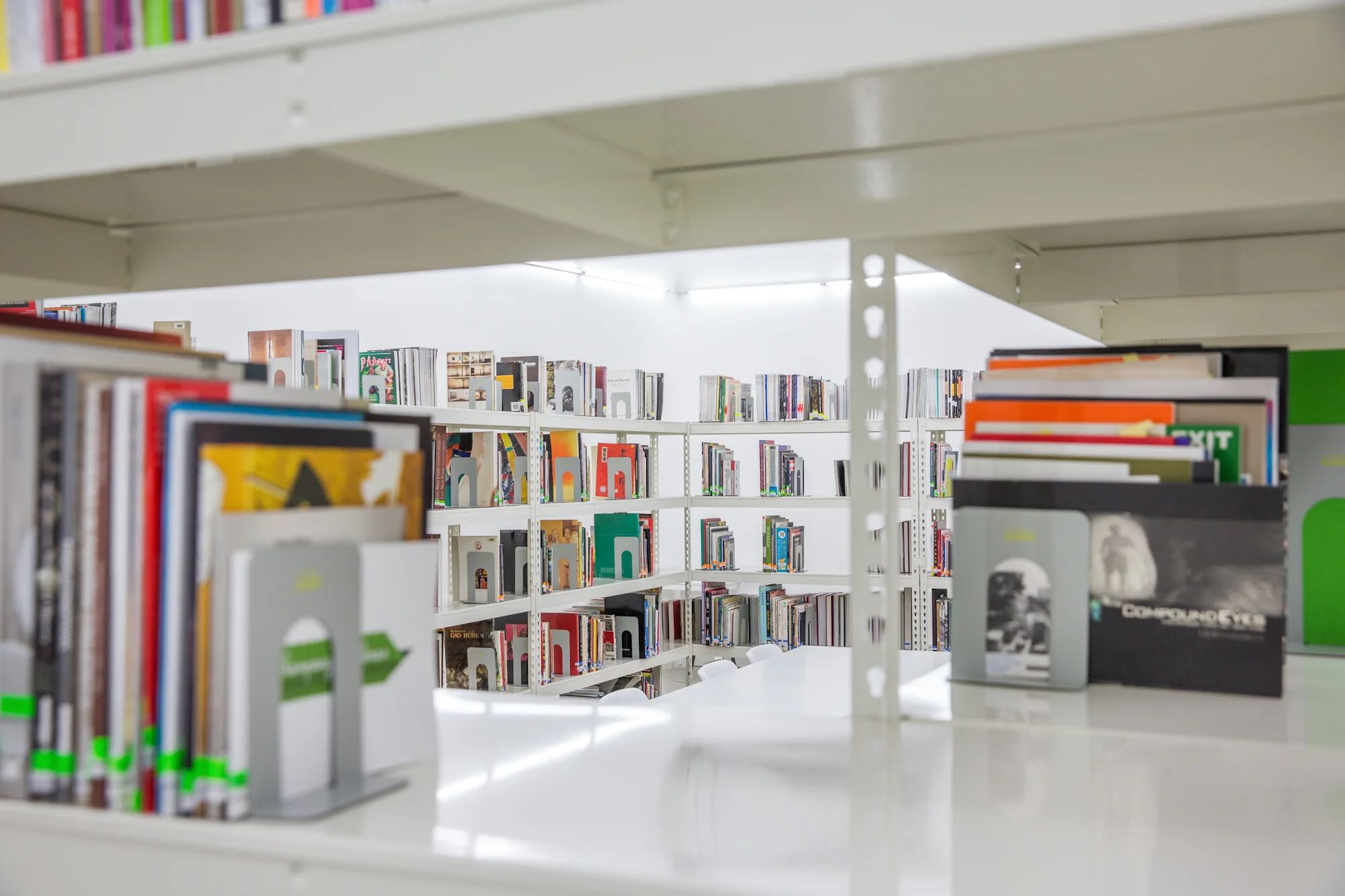
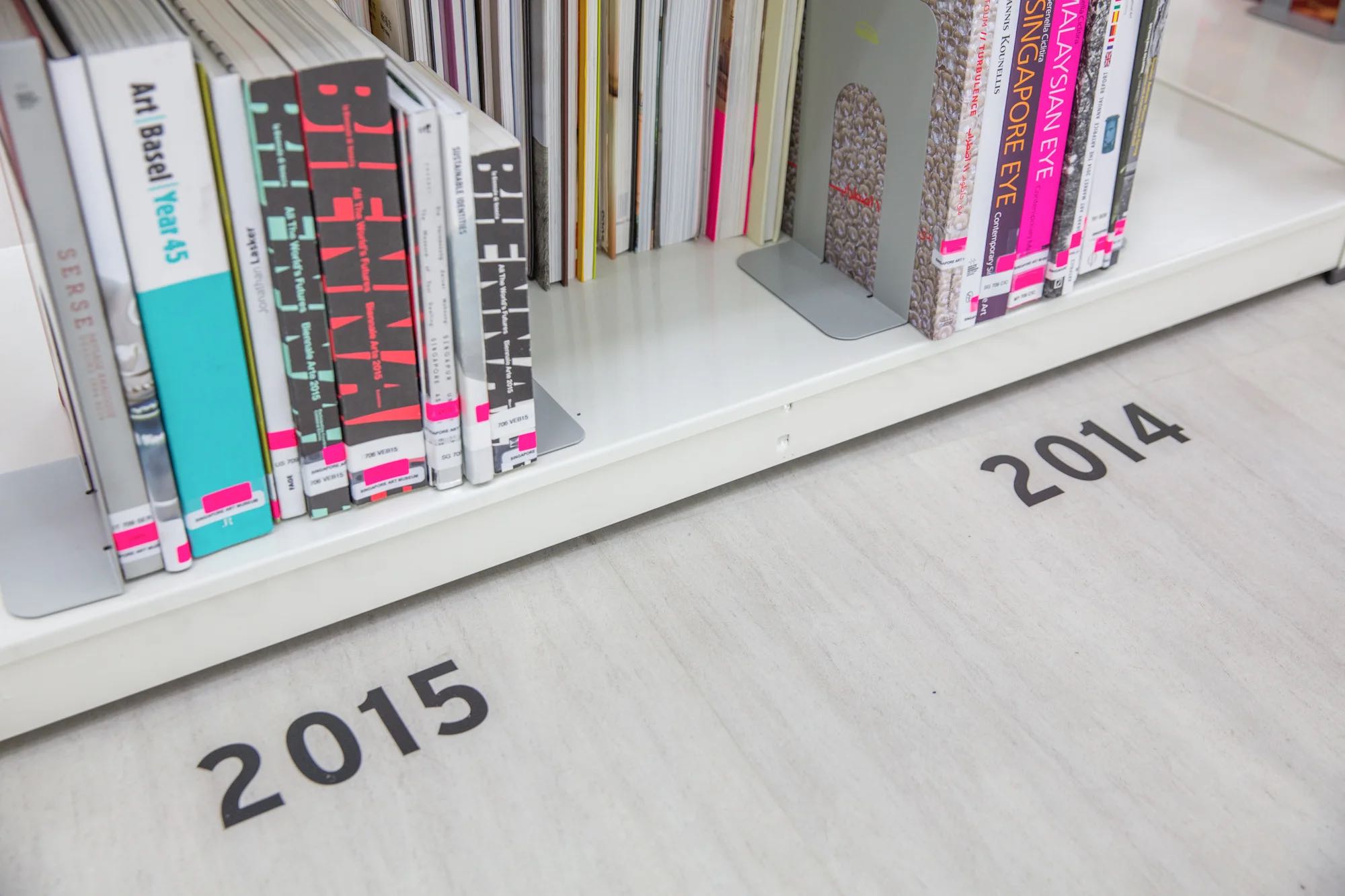
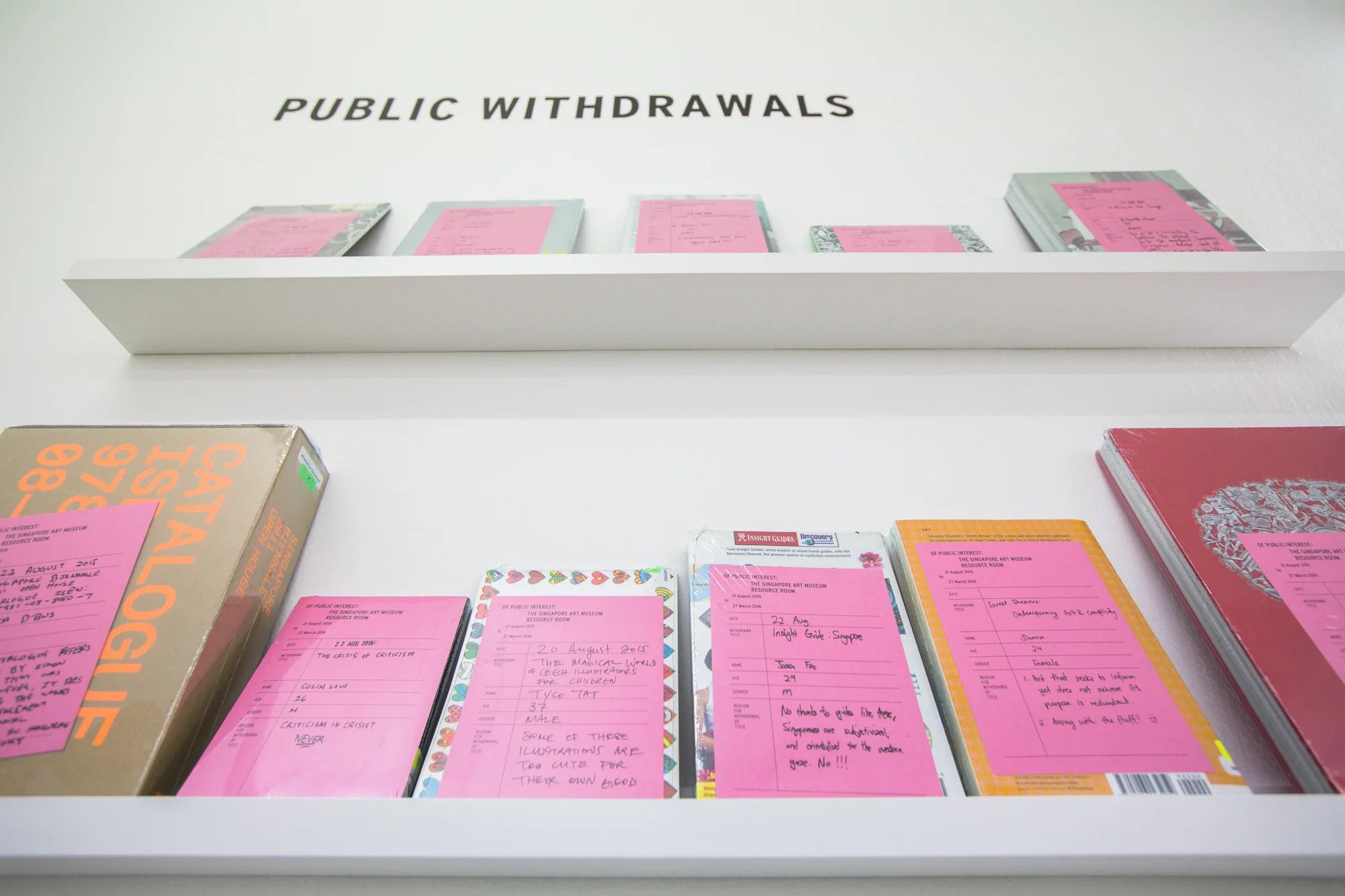
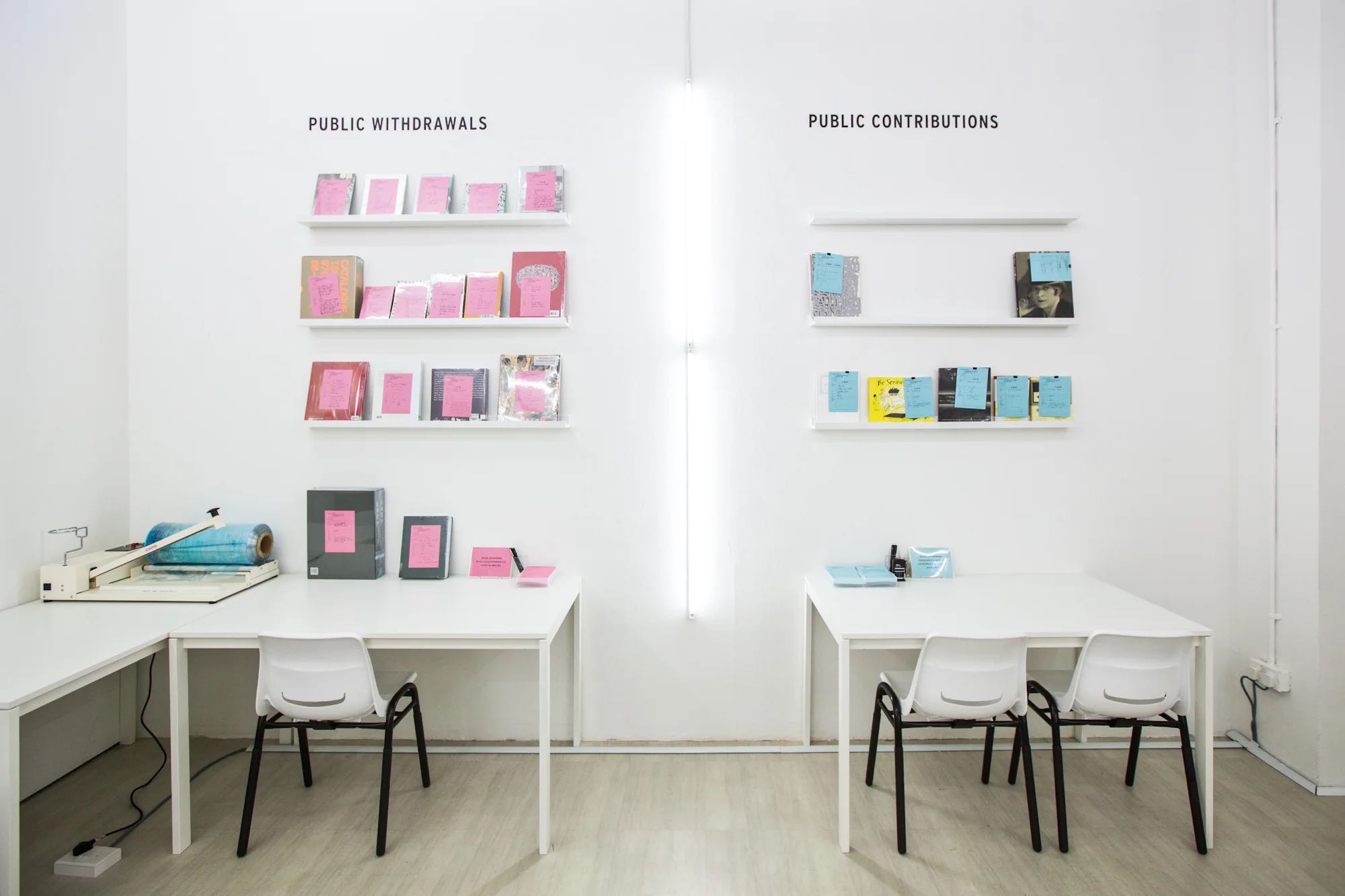
Documentation of Of Public Interest. Photos courtesy of the Singapore Art Museum.
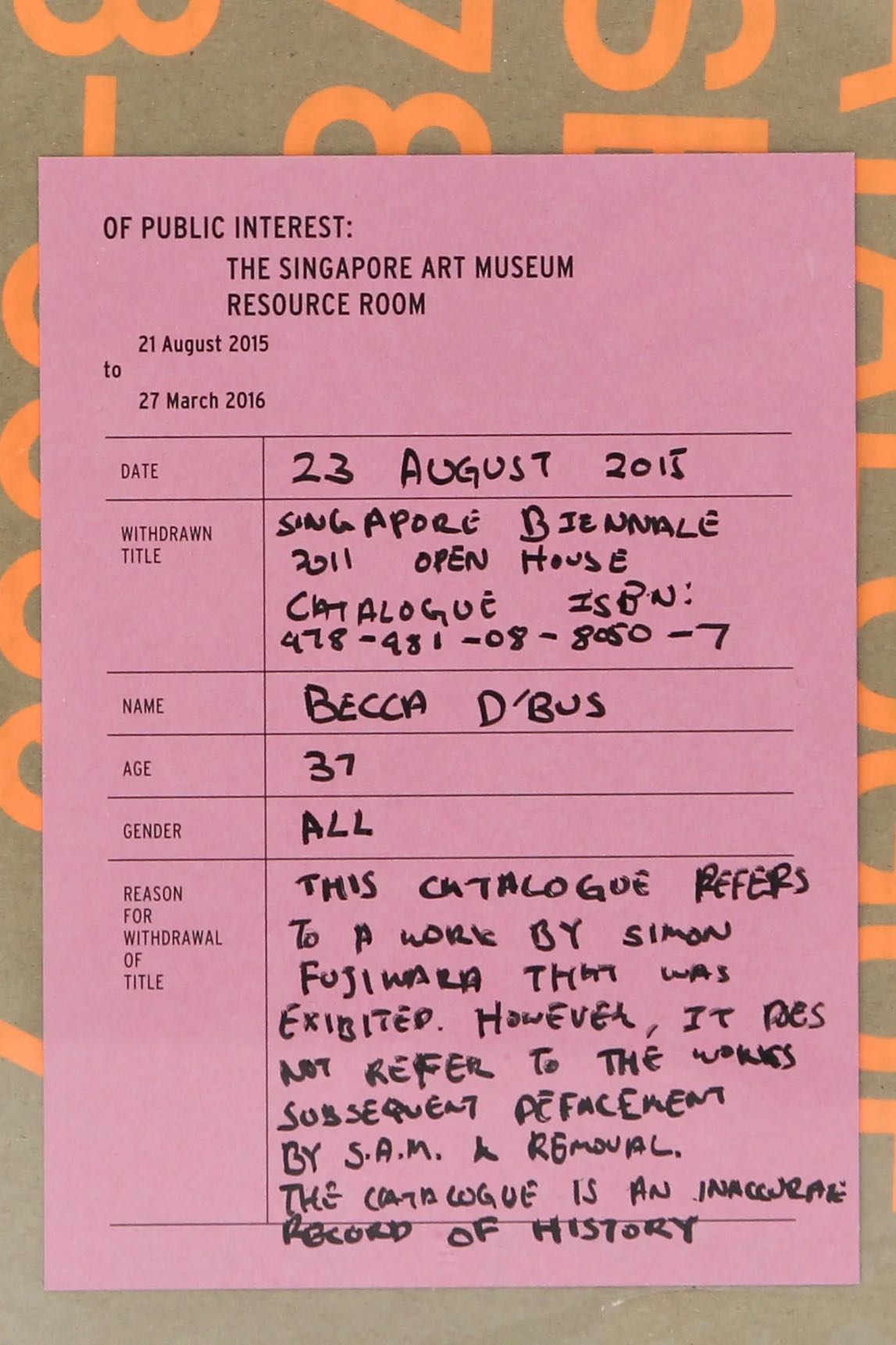
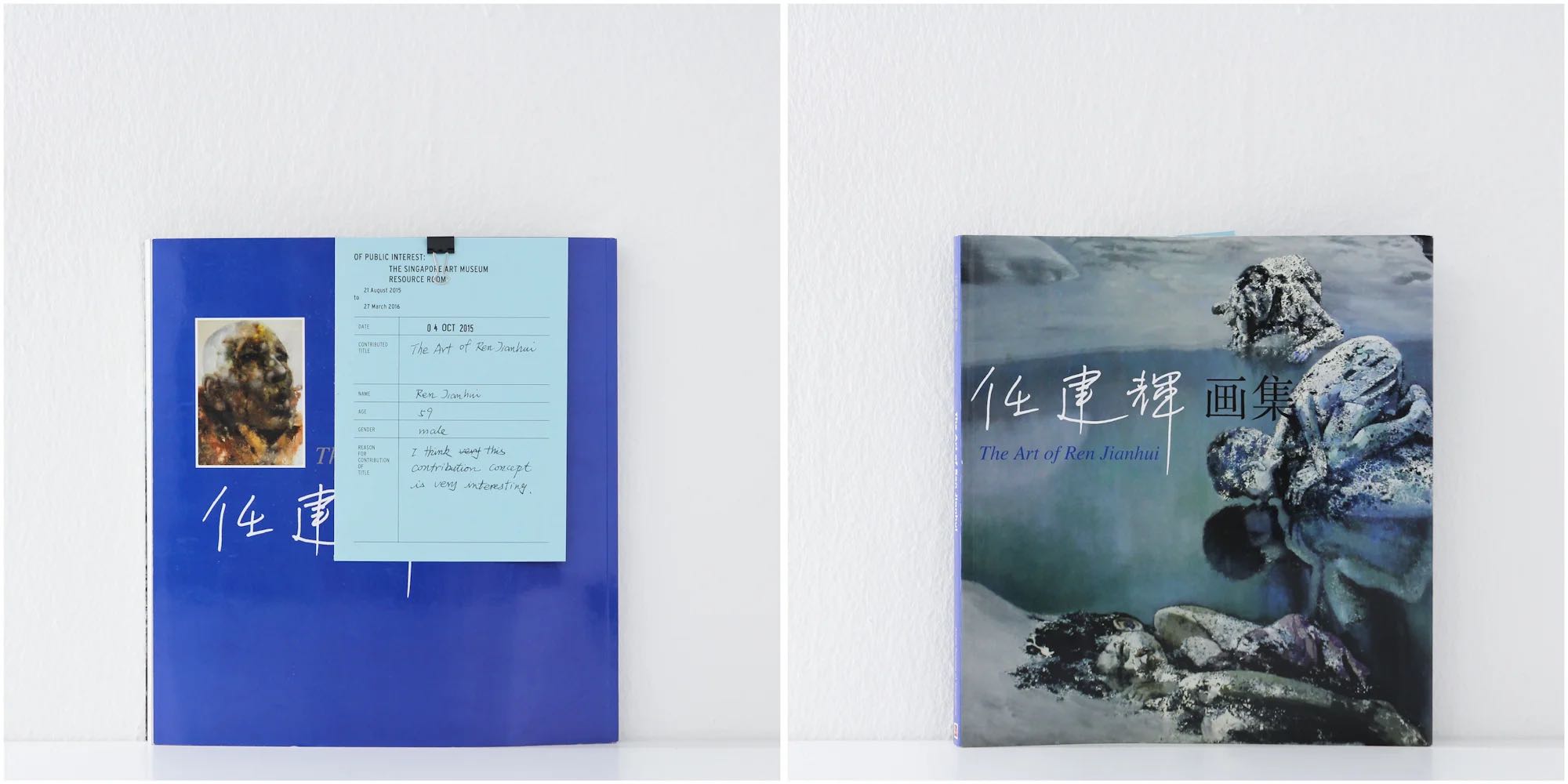
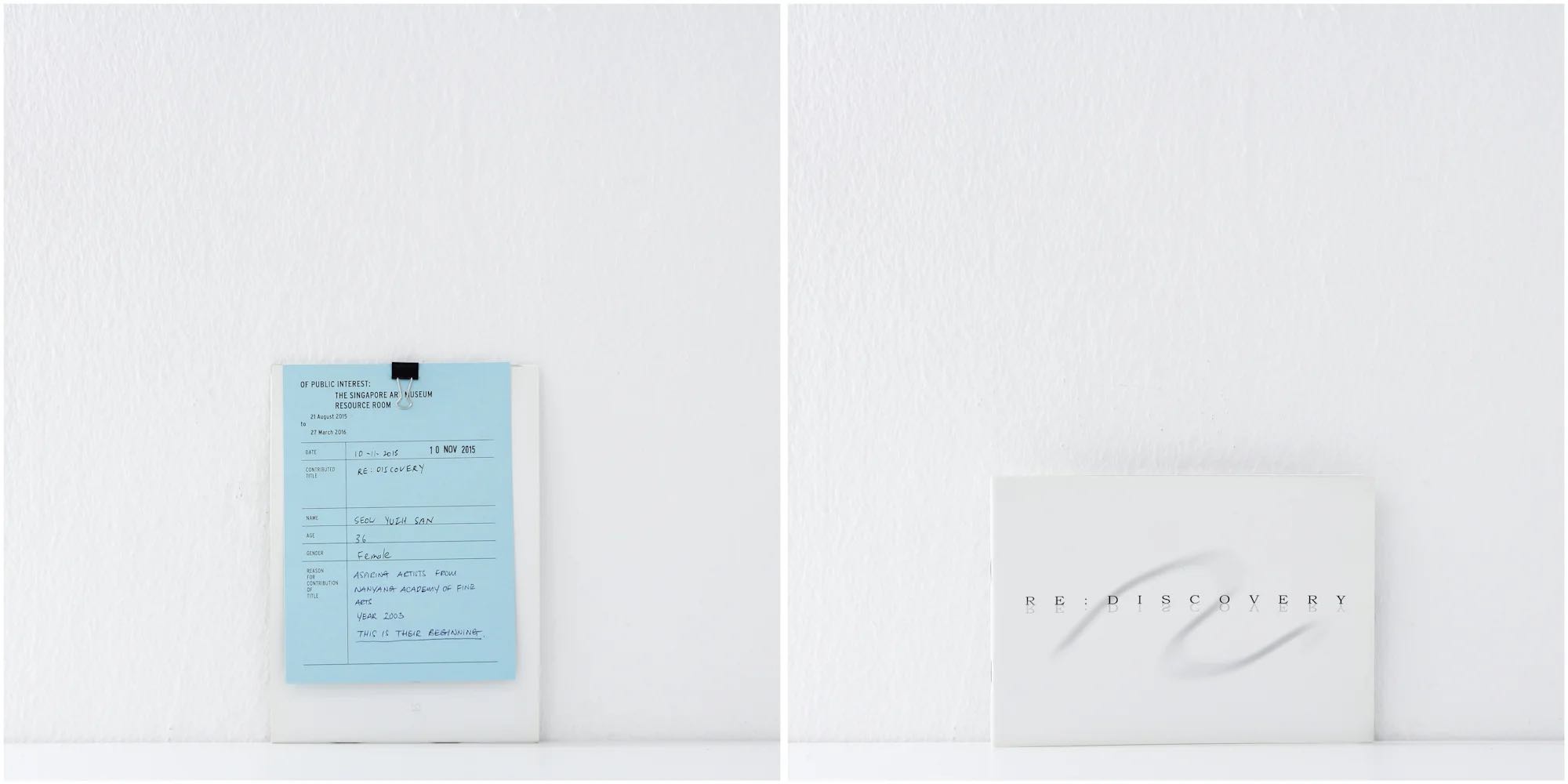
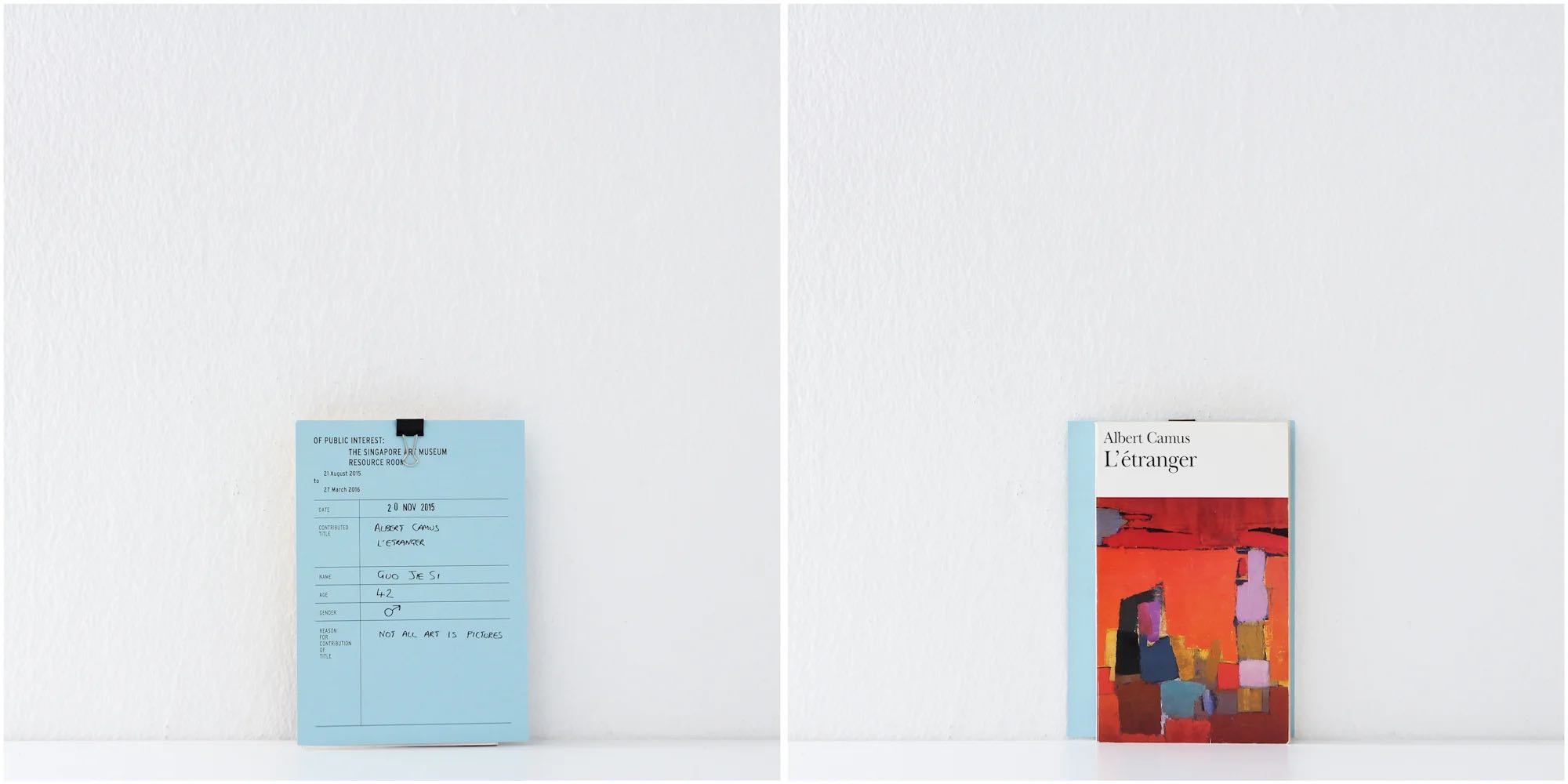
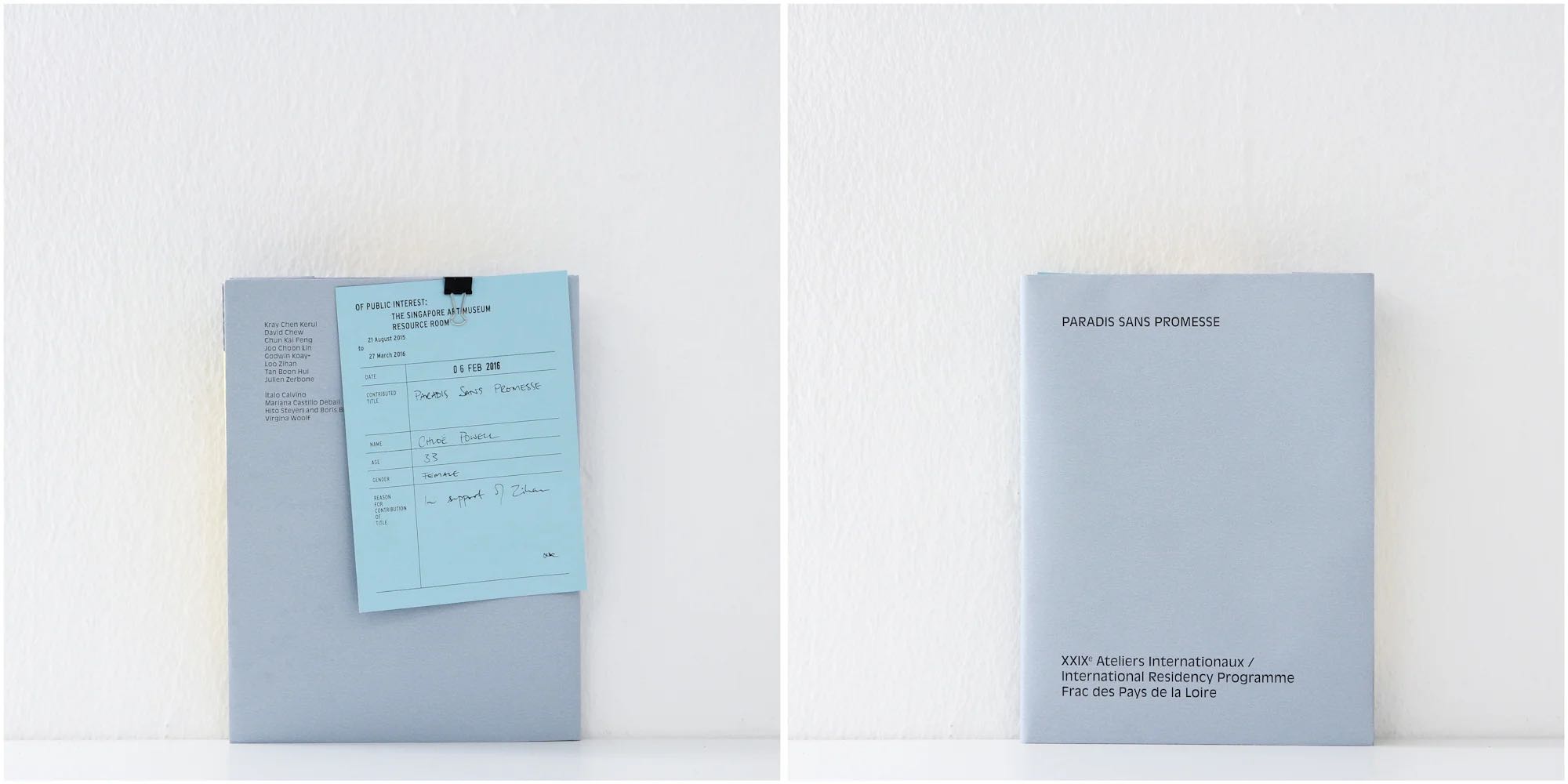
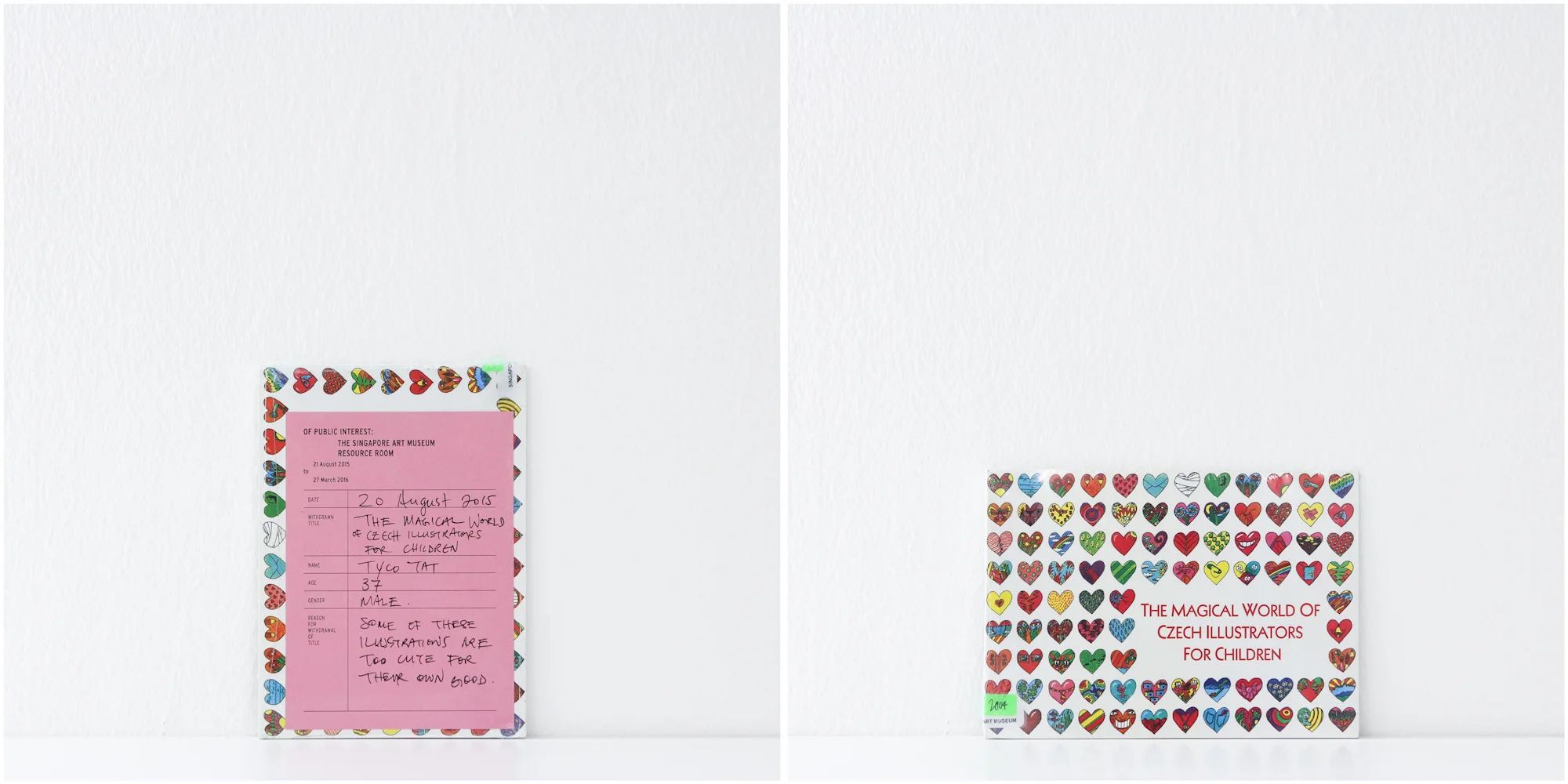
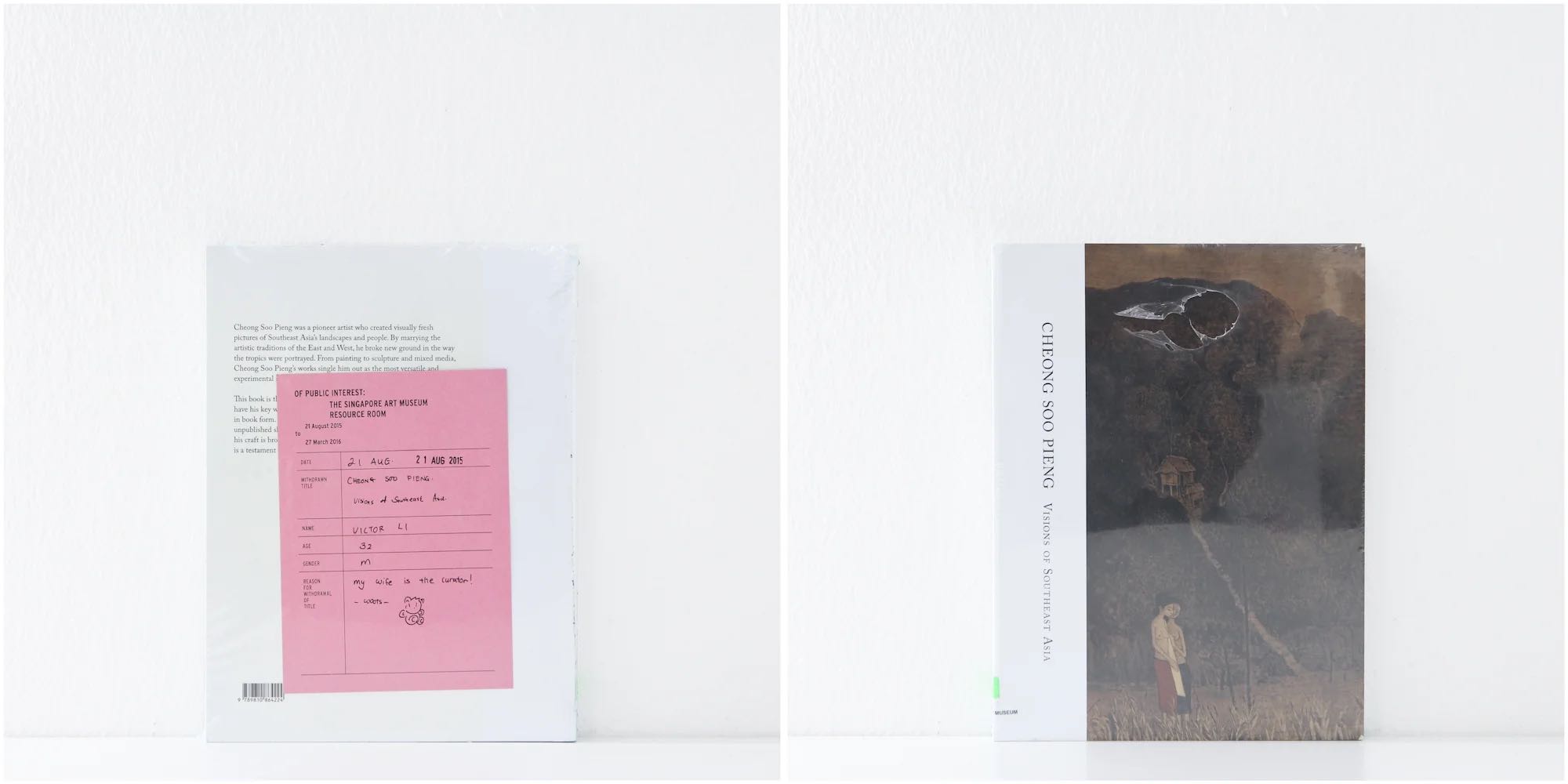
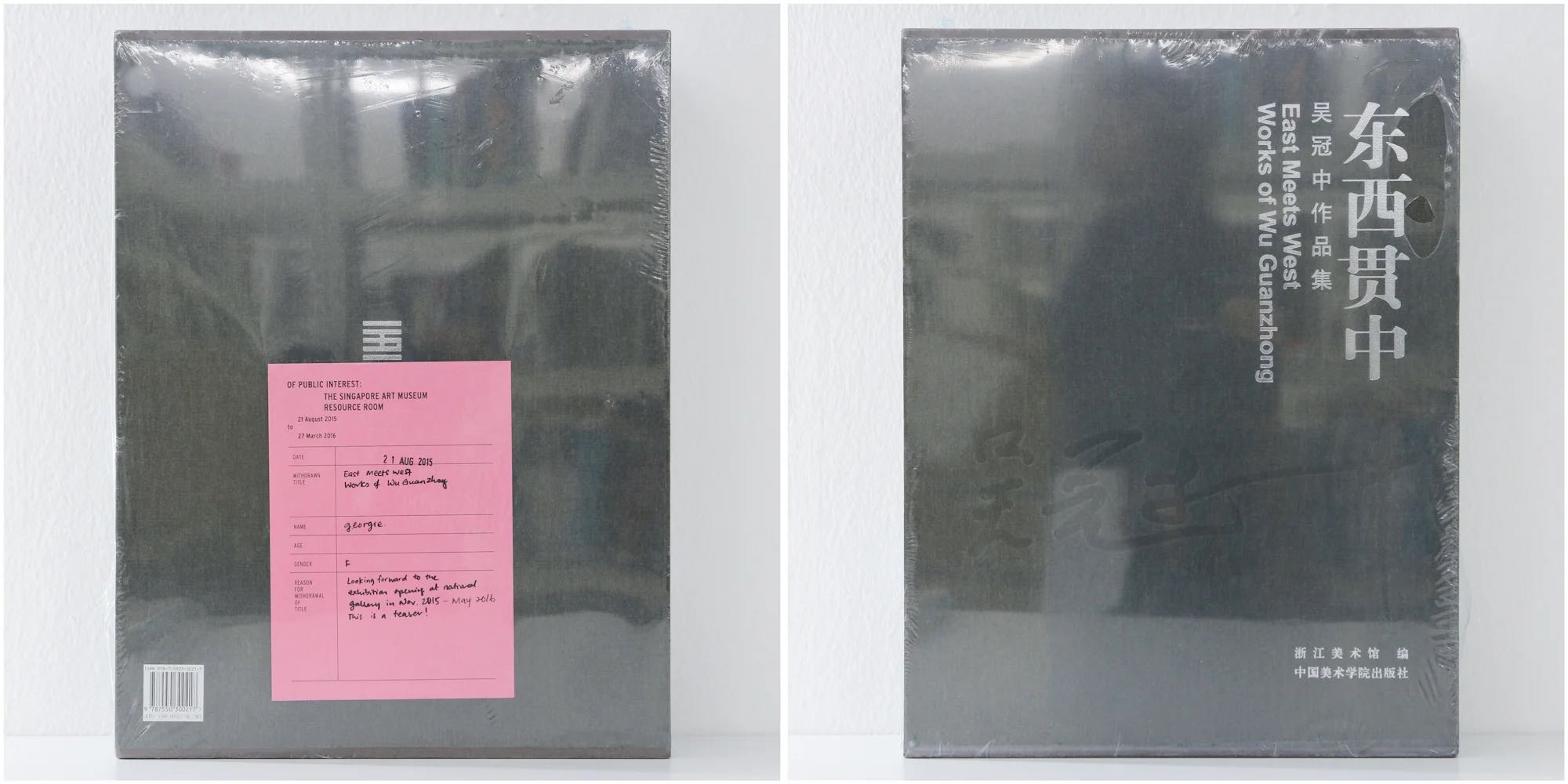
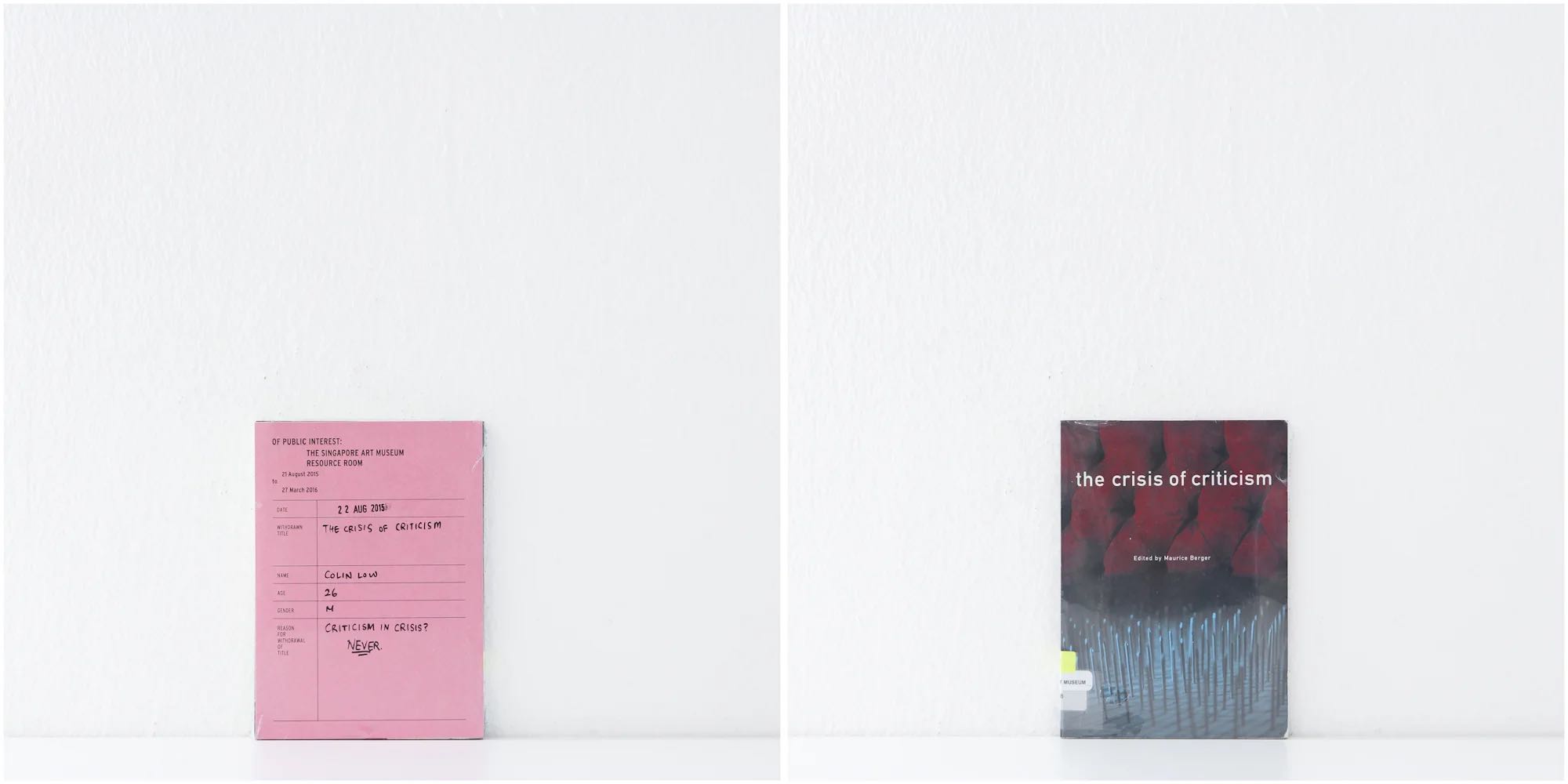
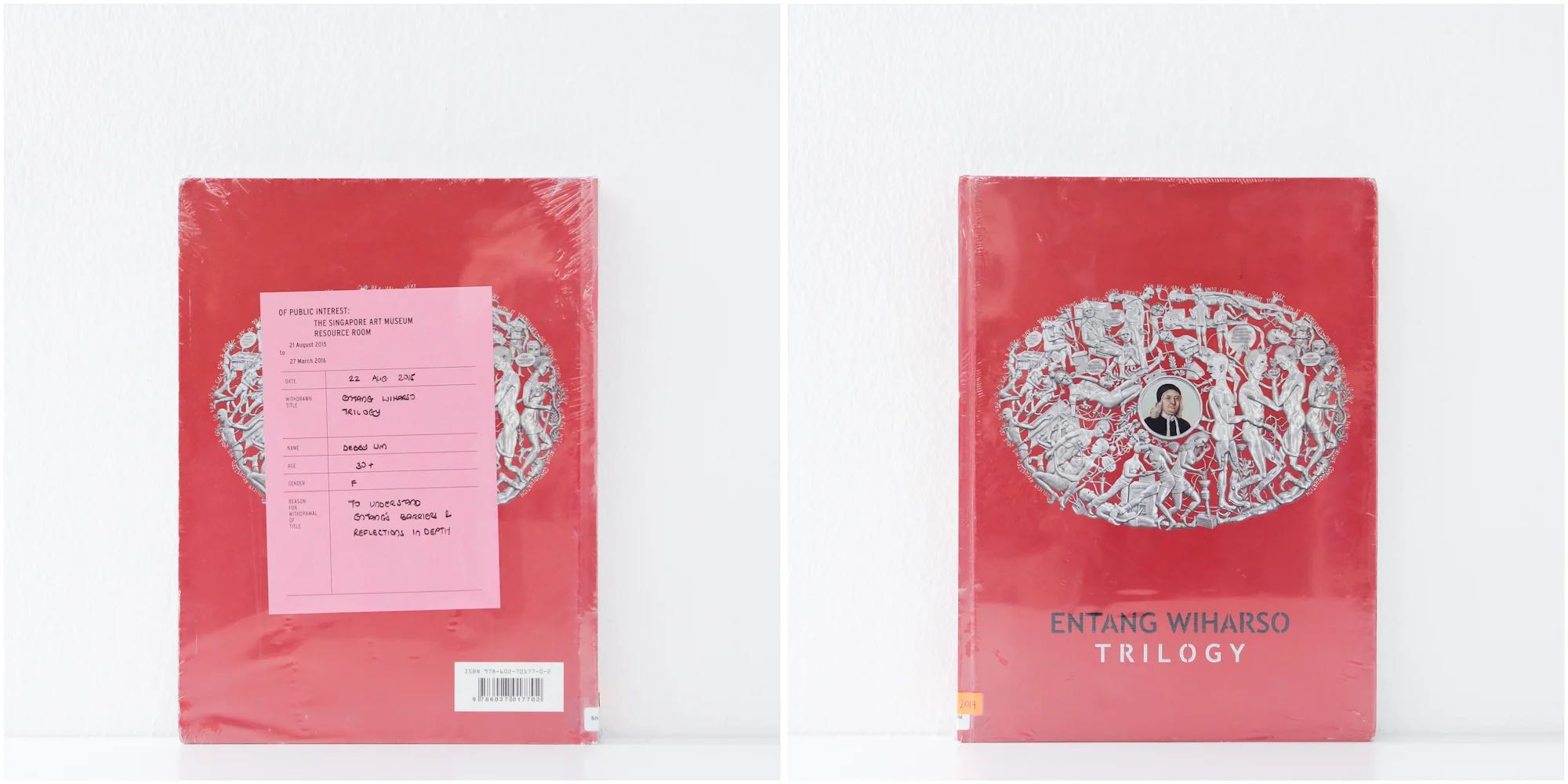
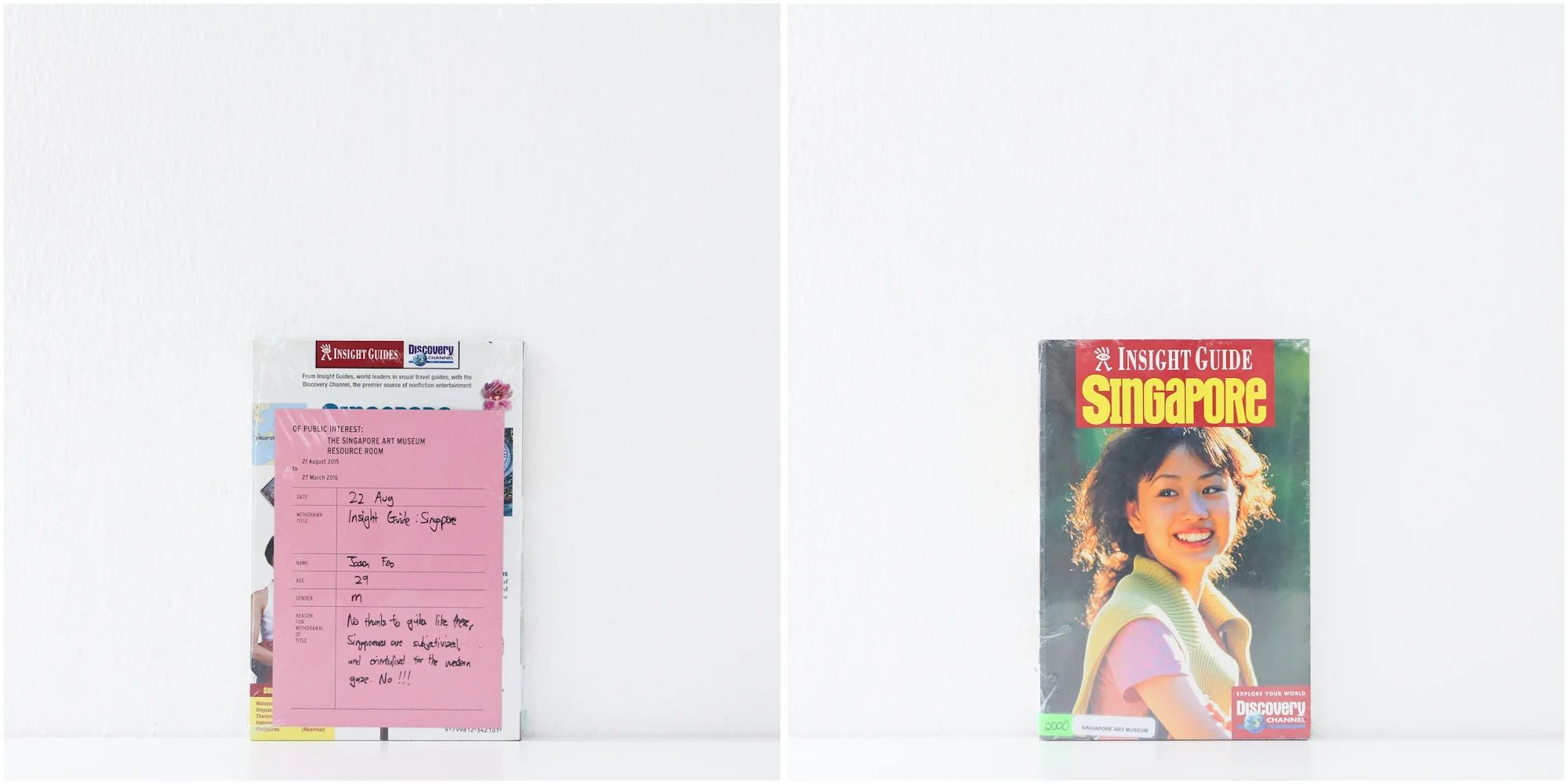
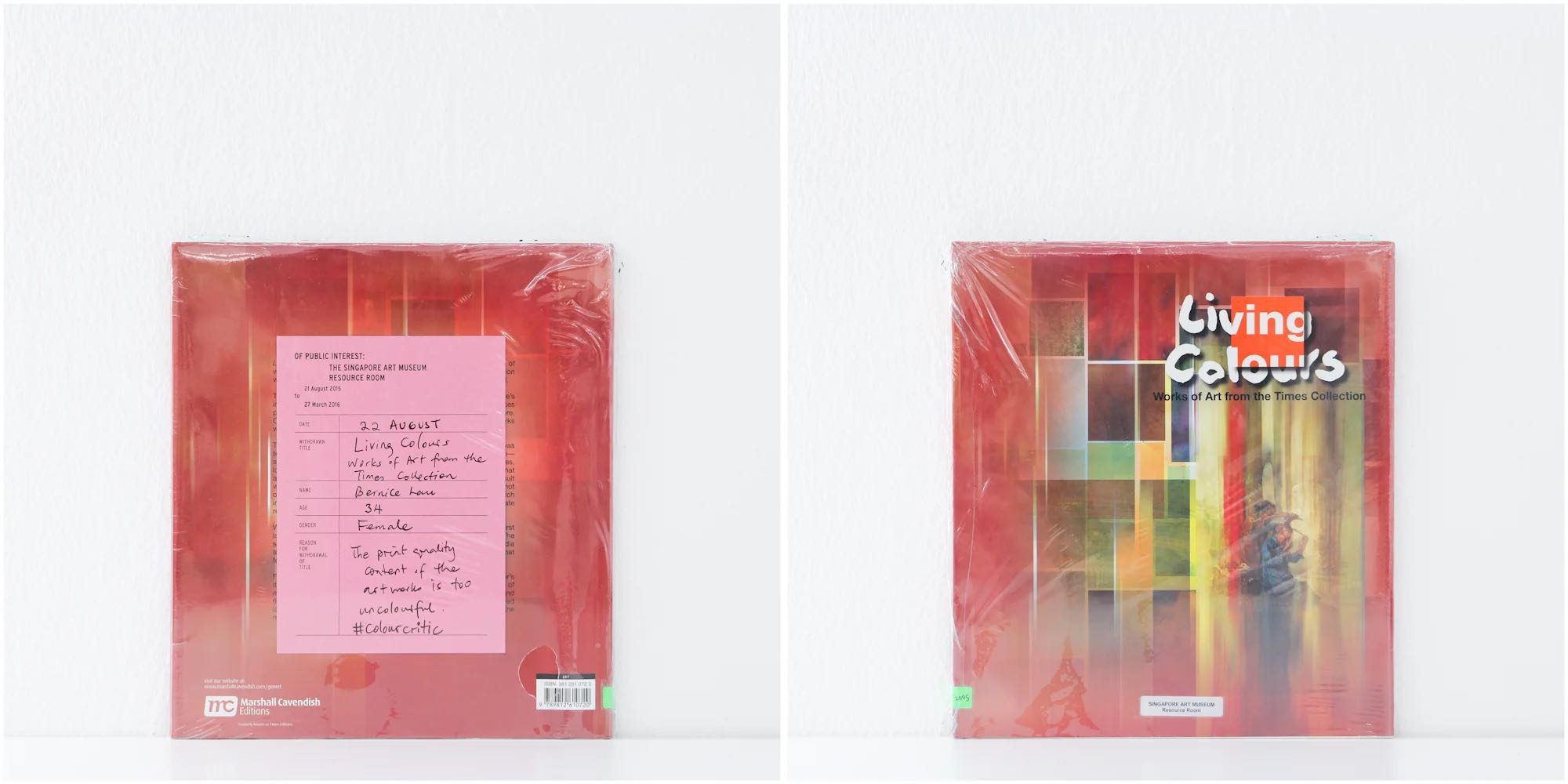
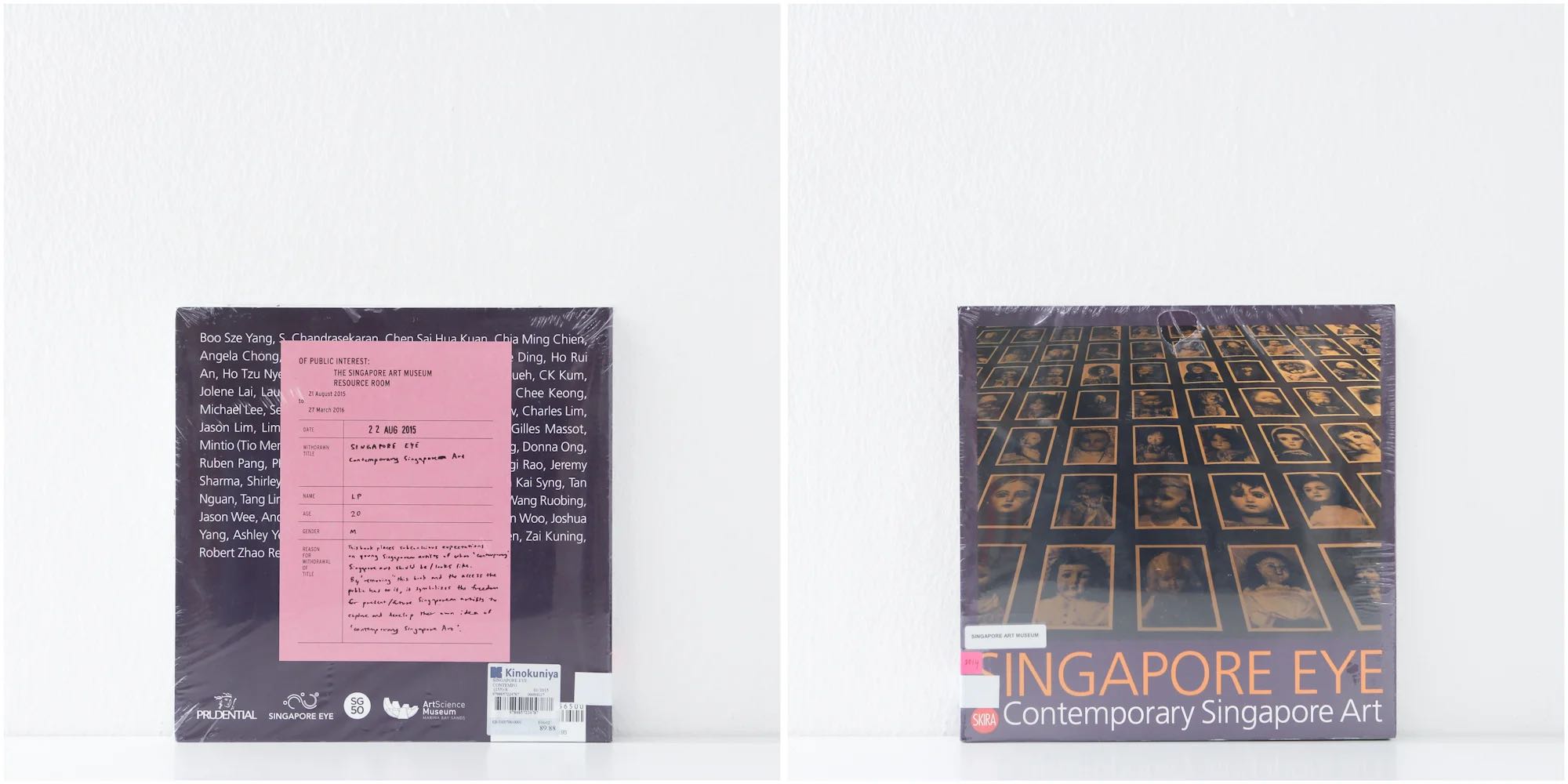
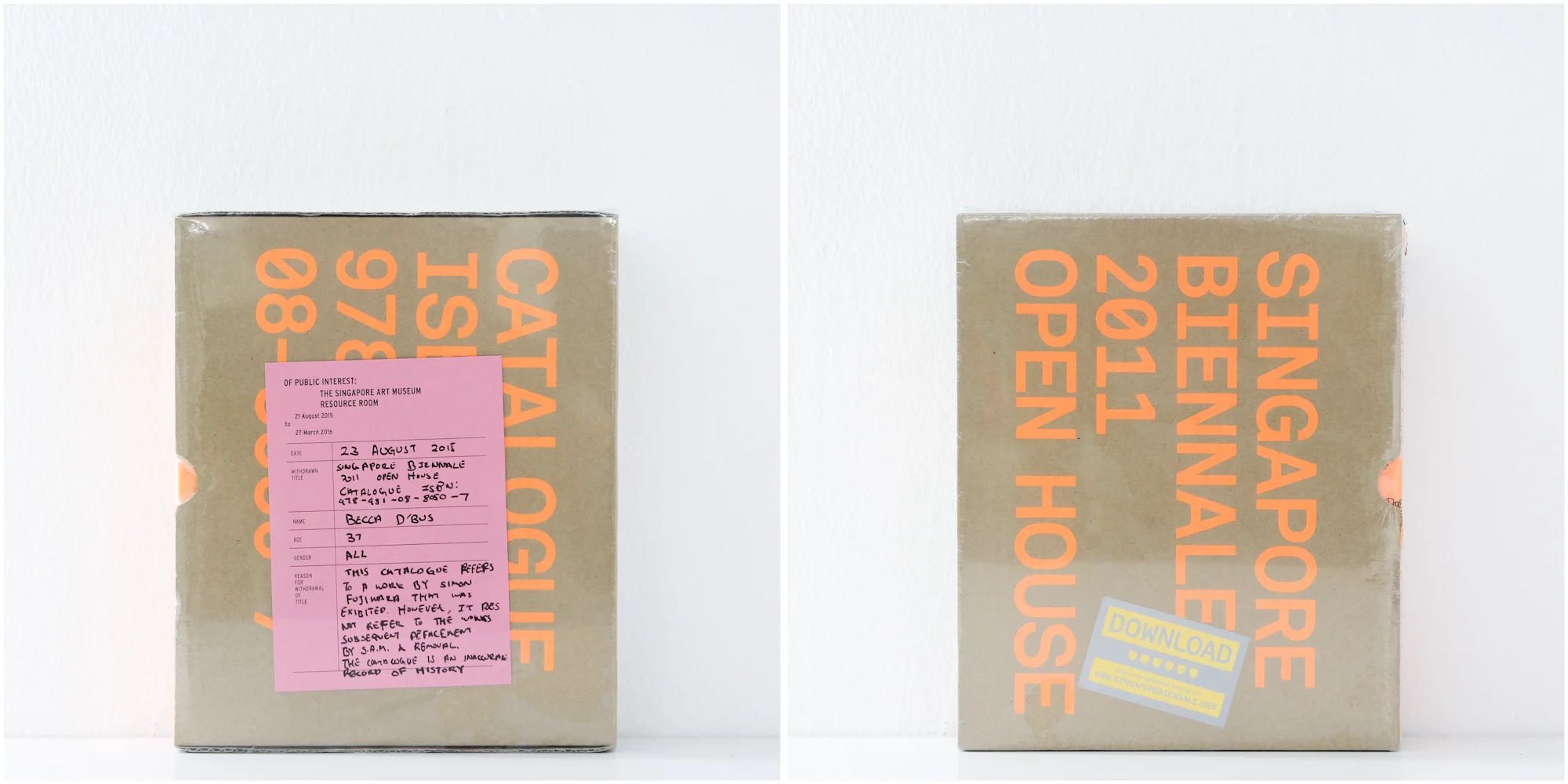
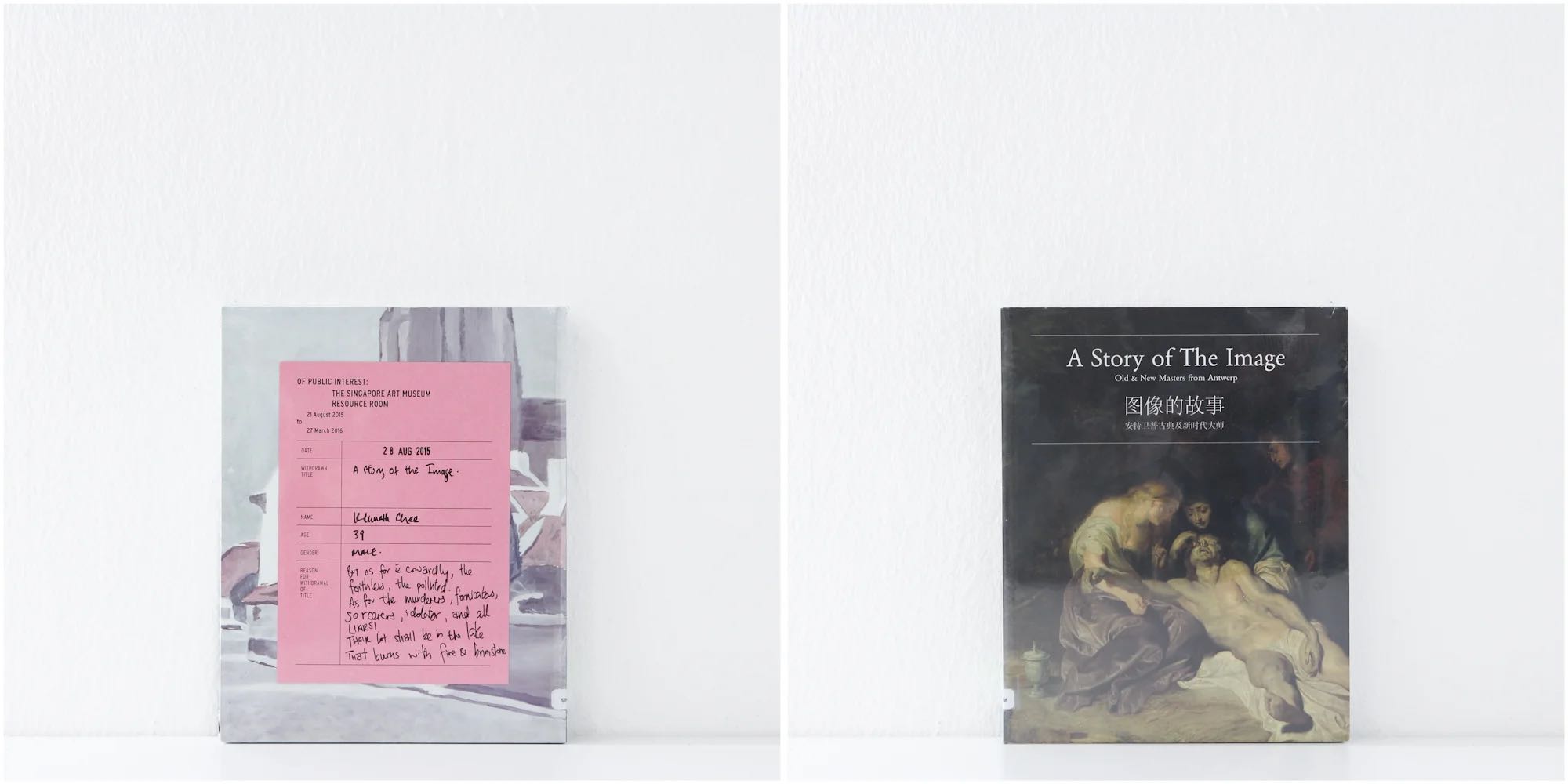
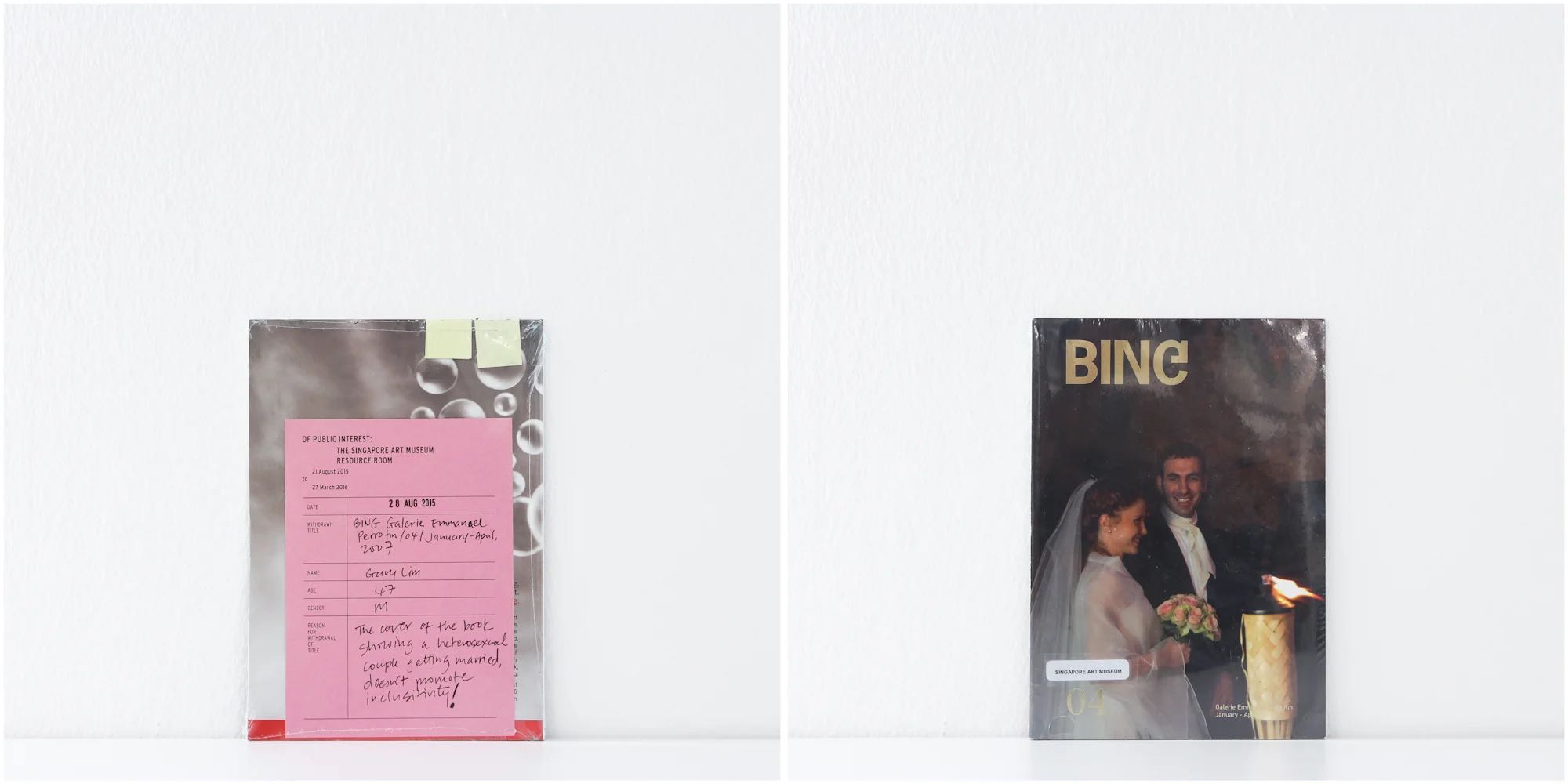
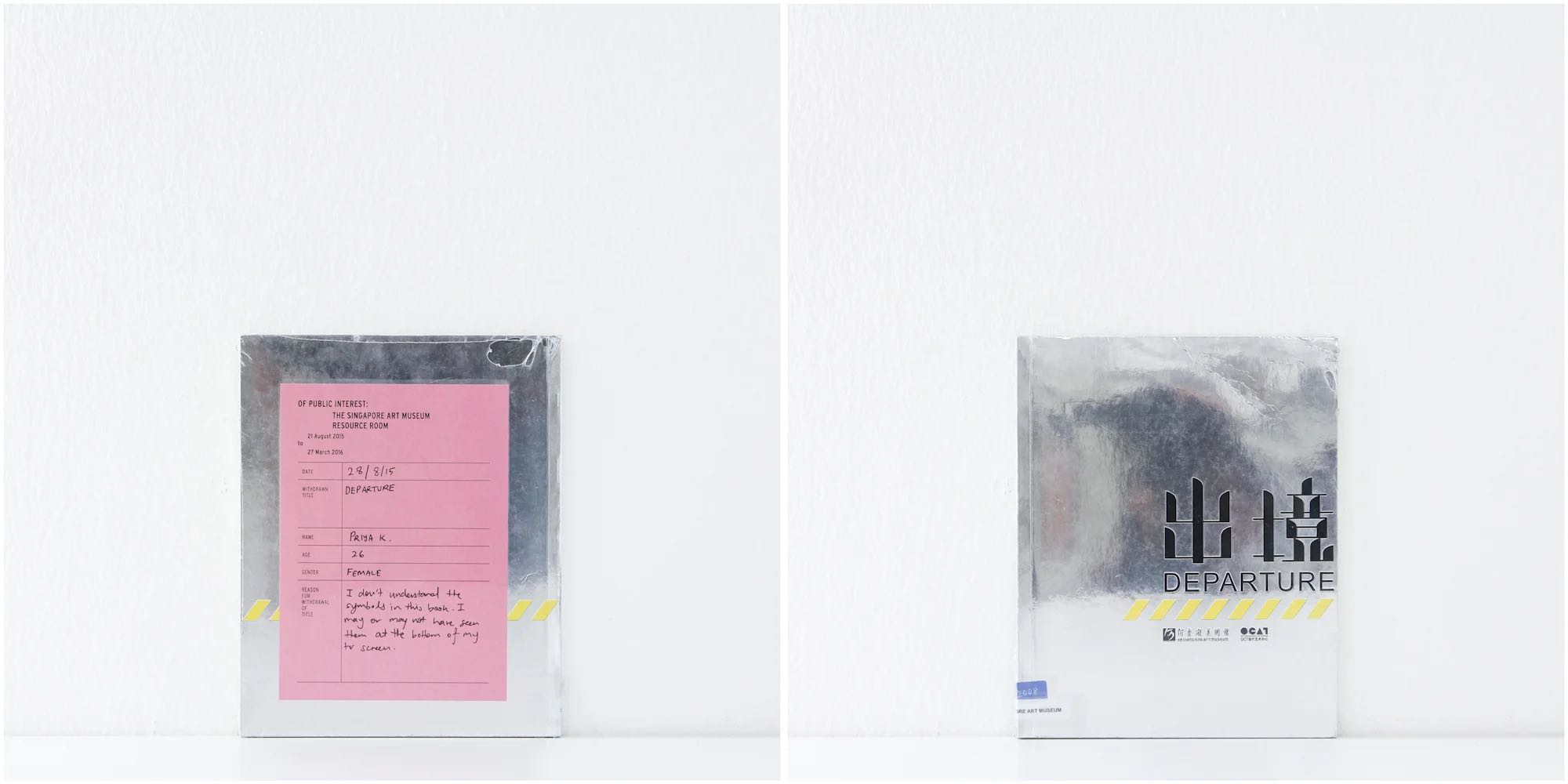
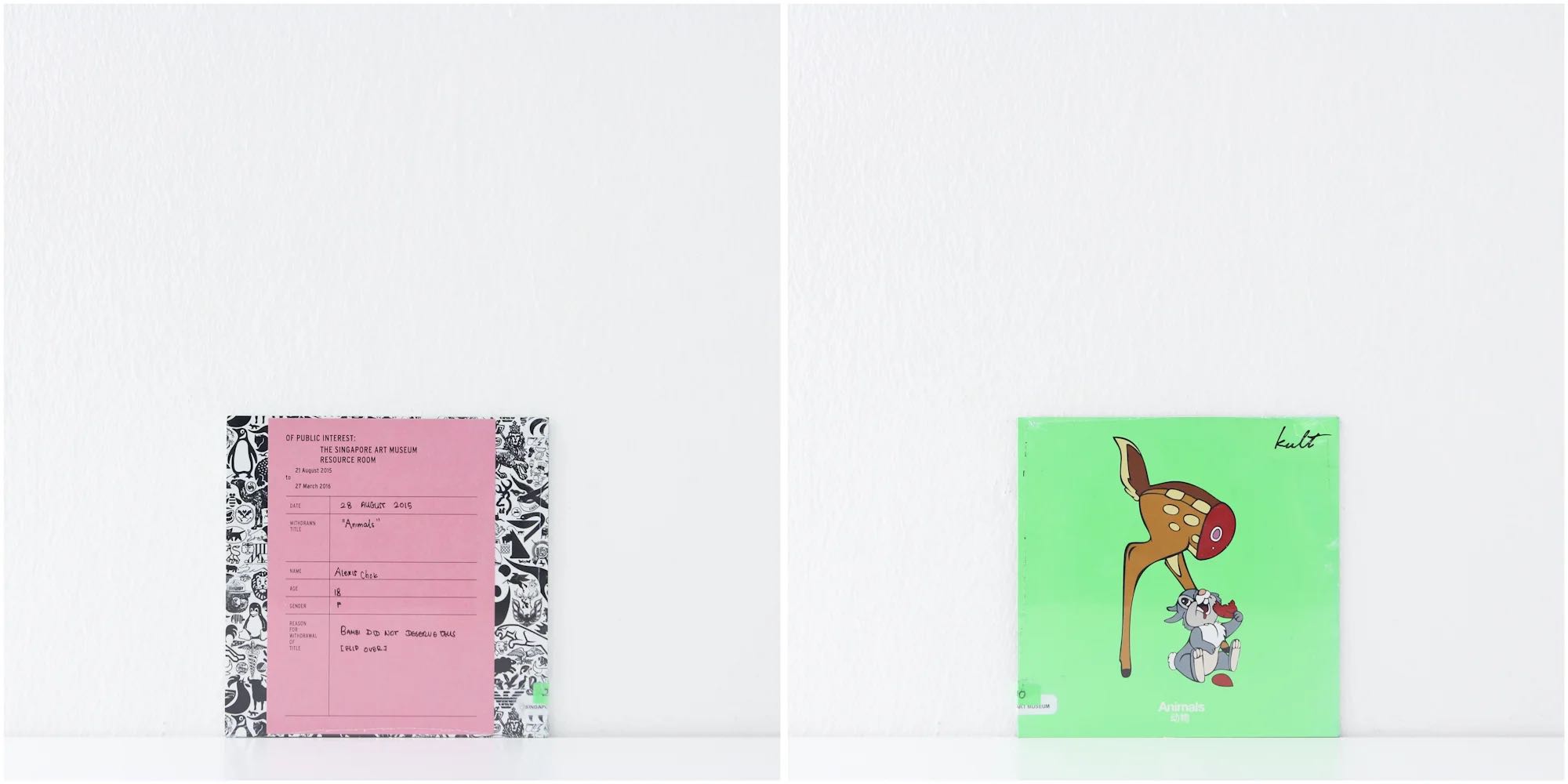
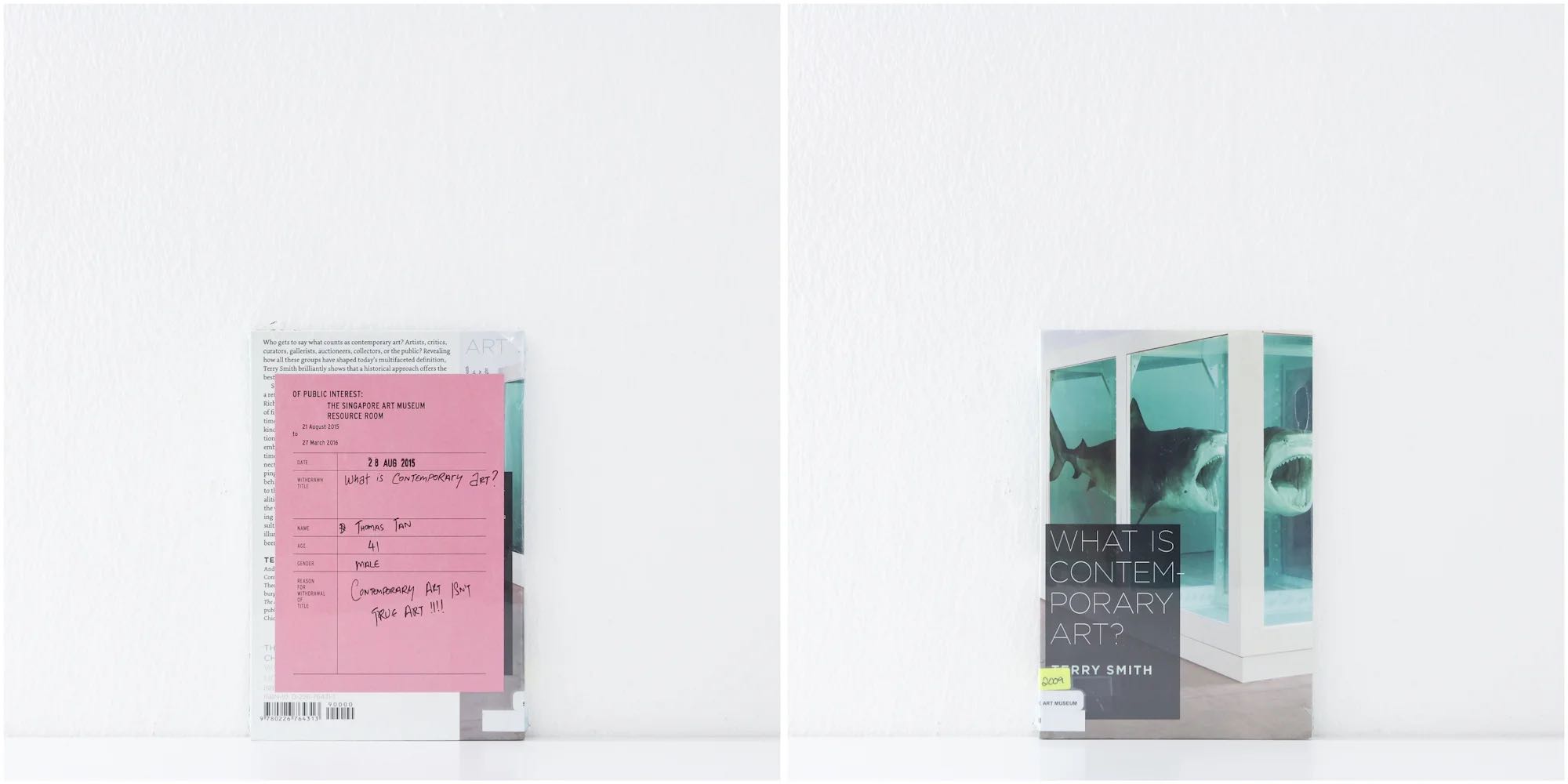
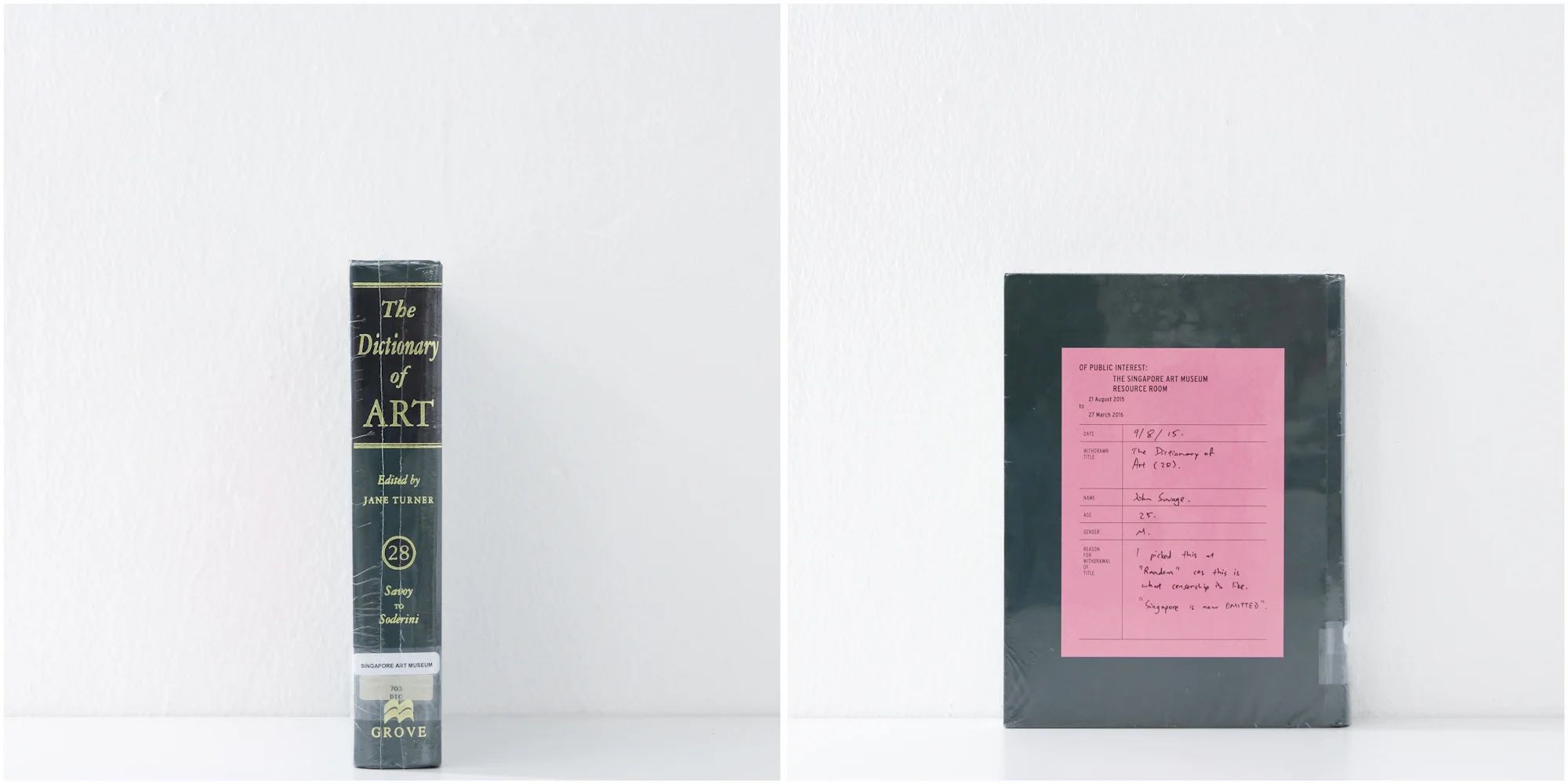
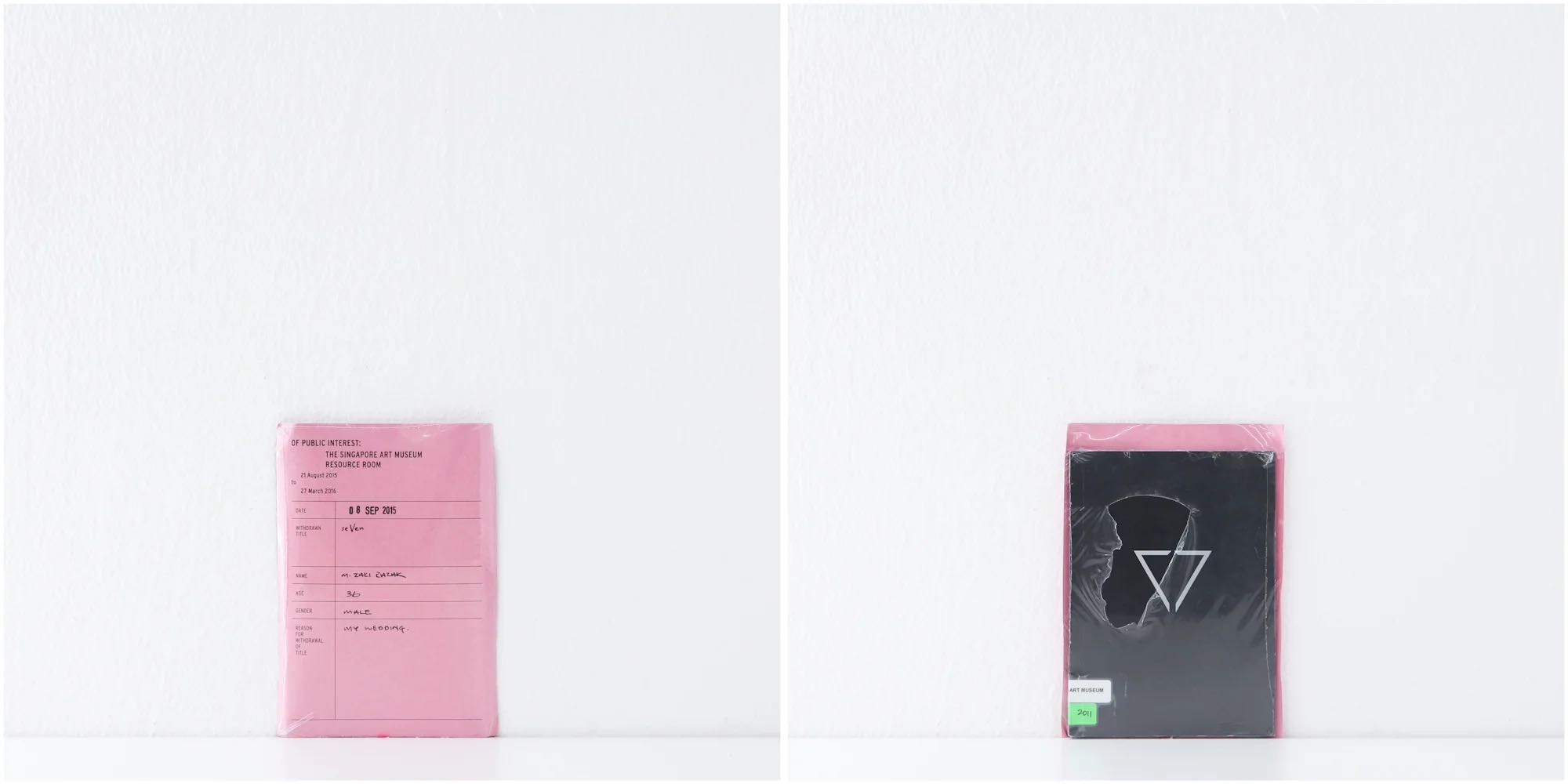
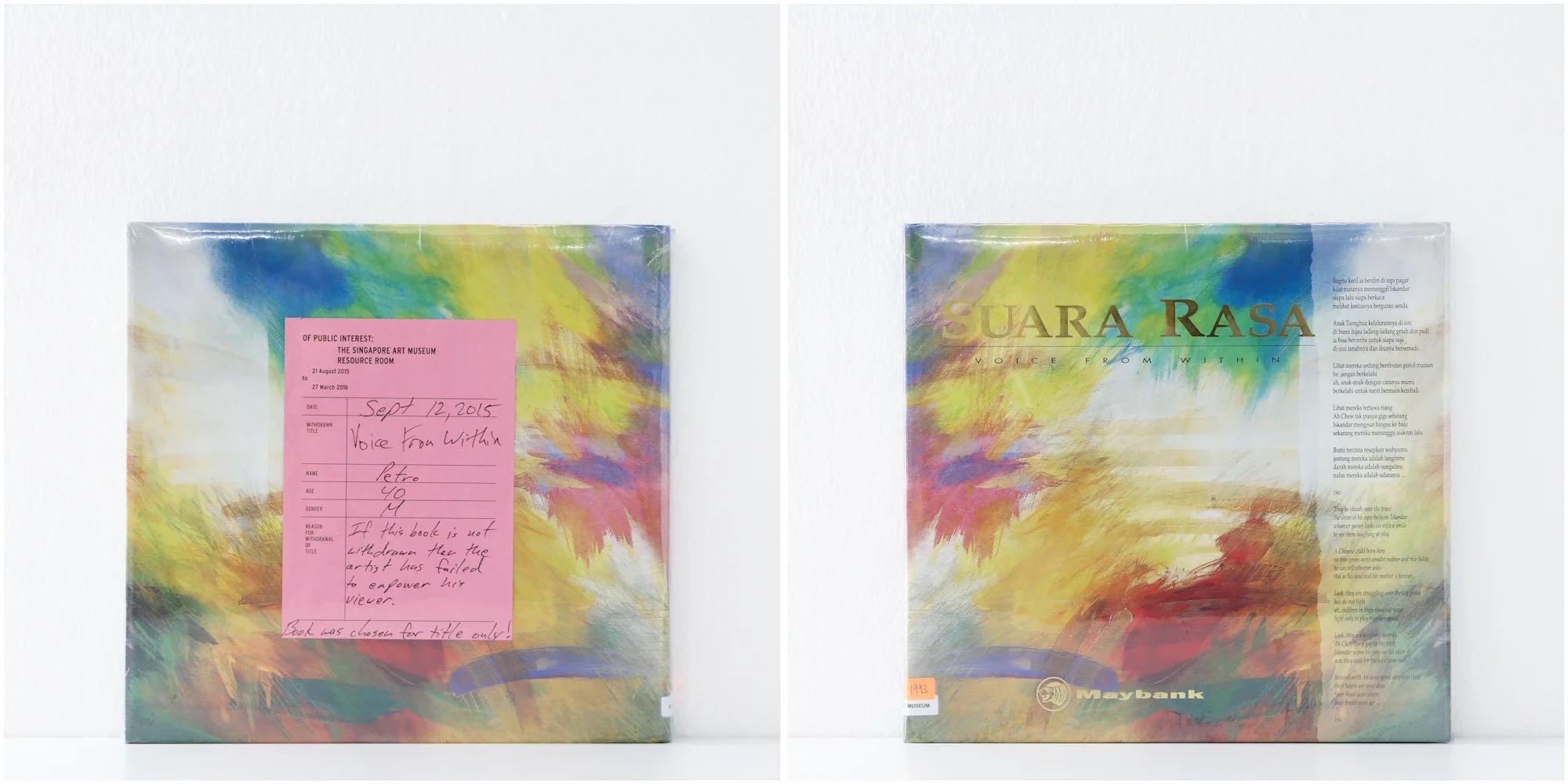
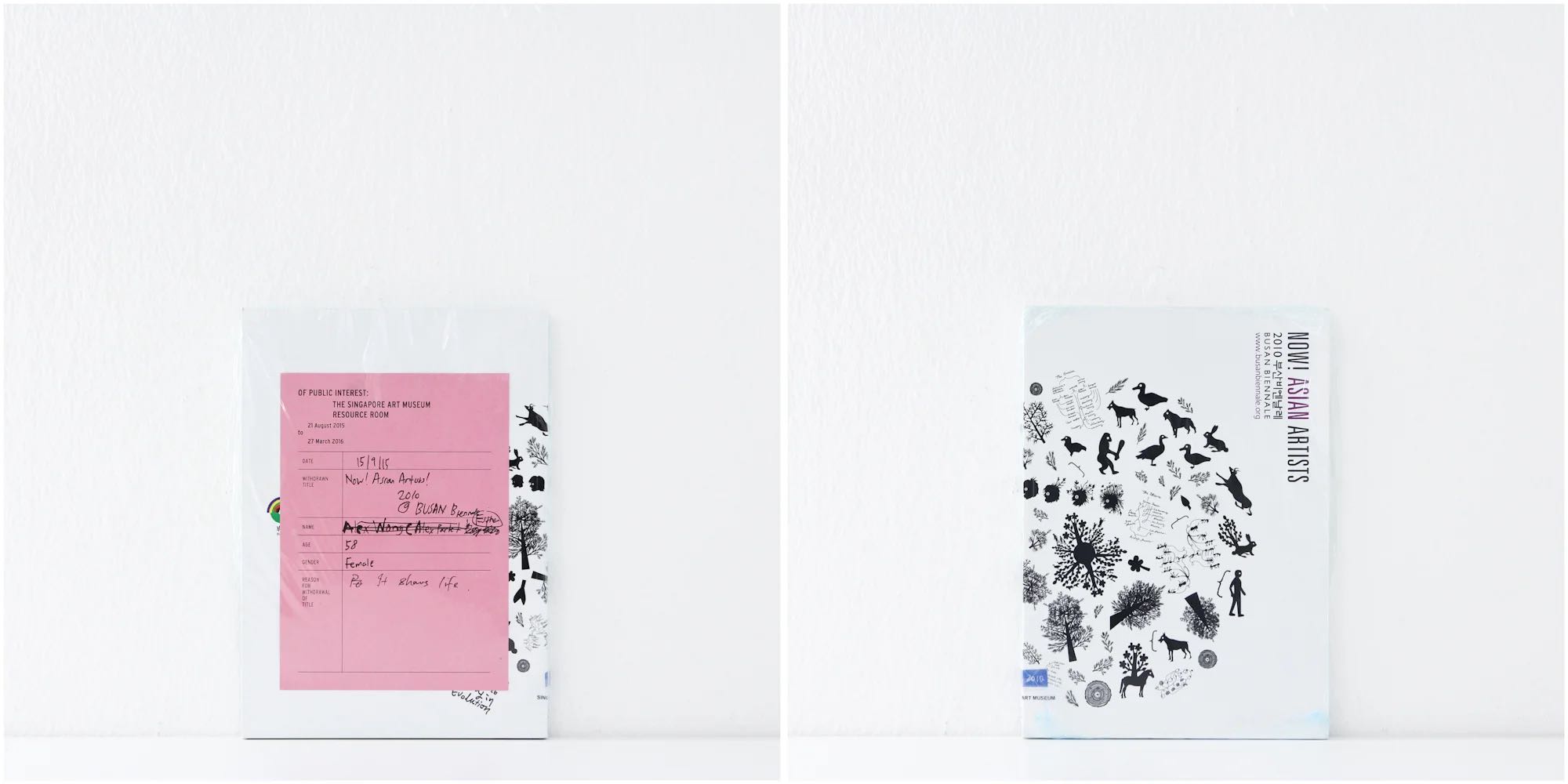
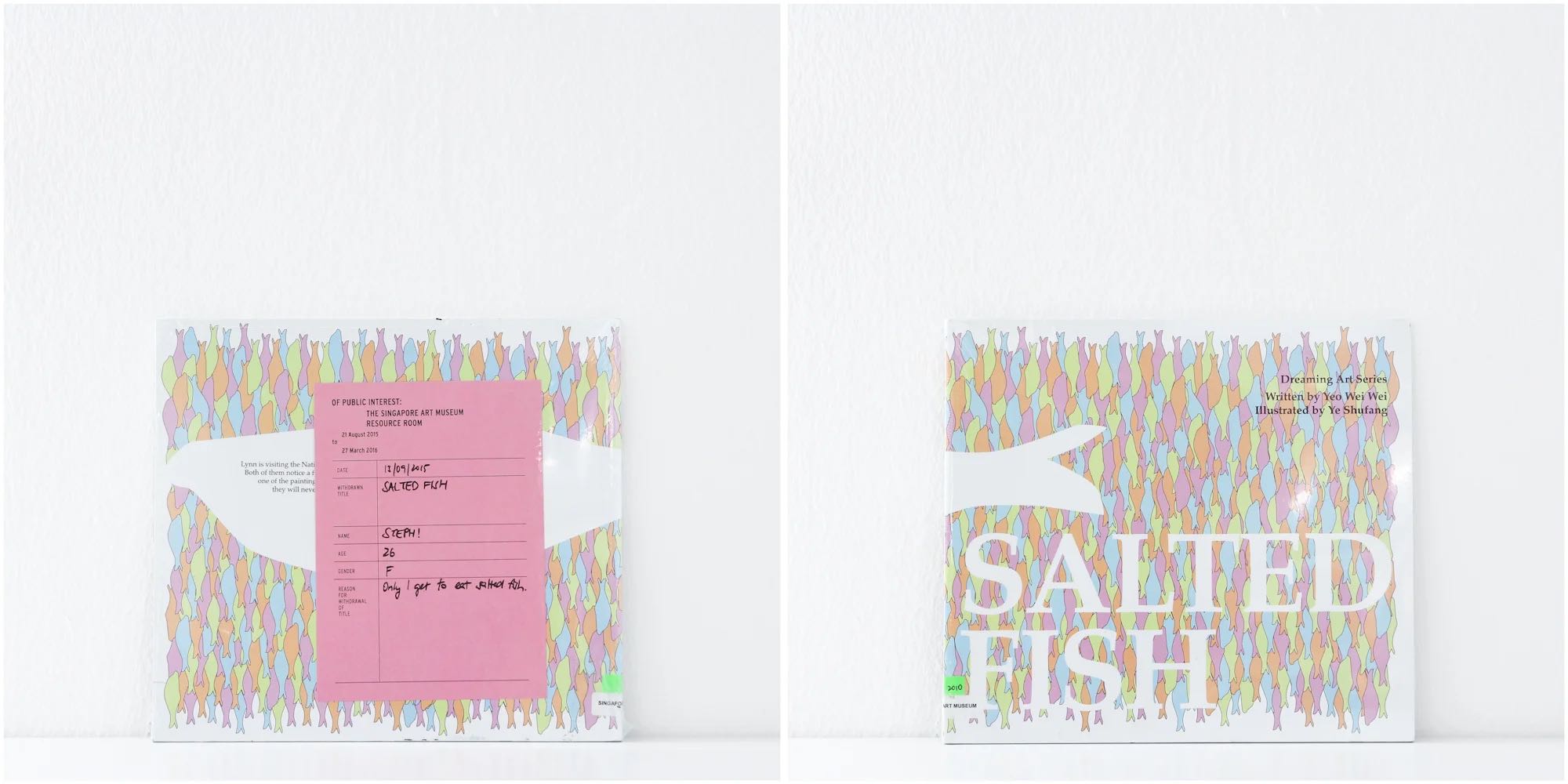
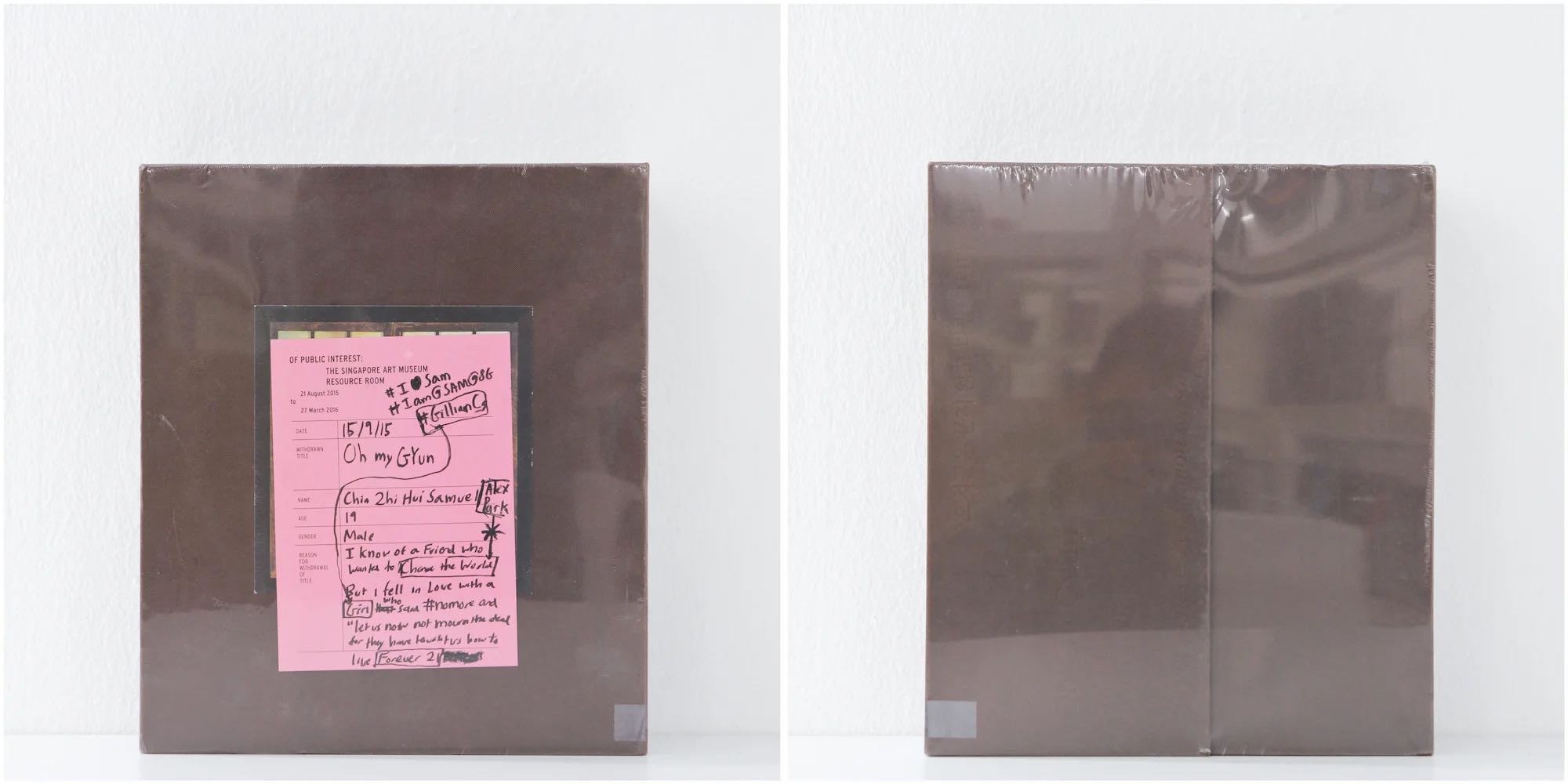
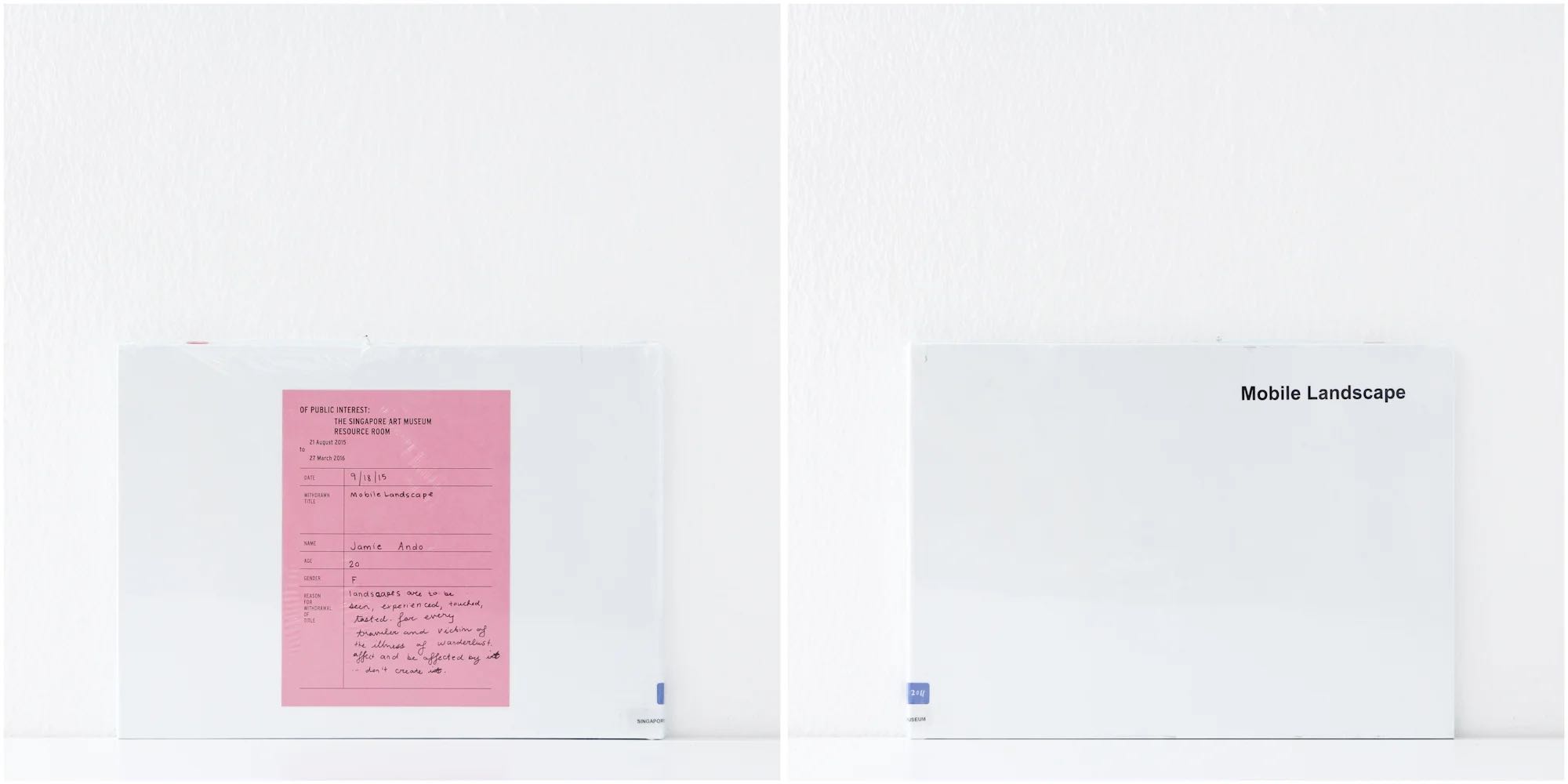
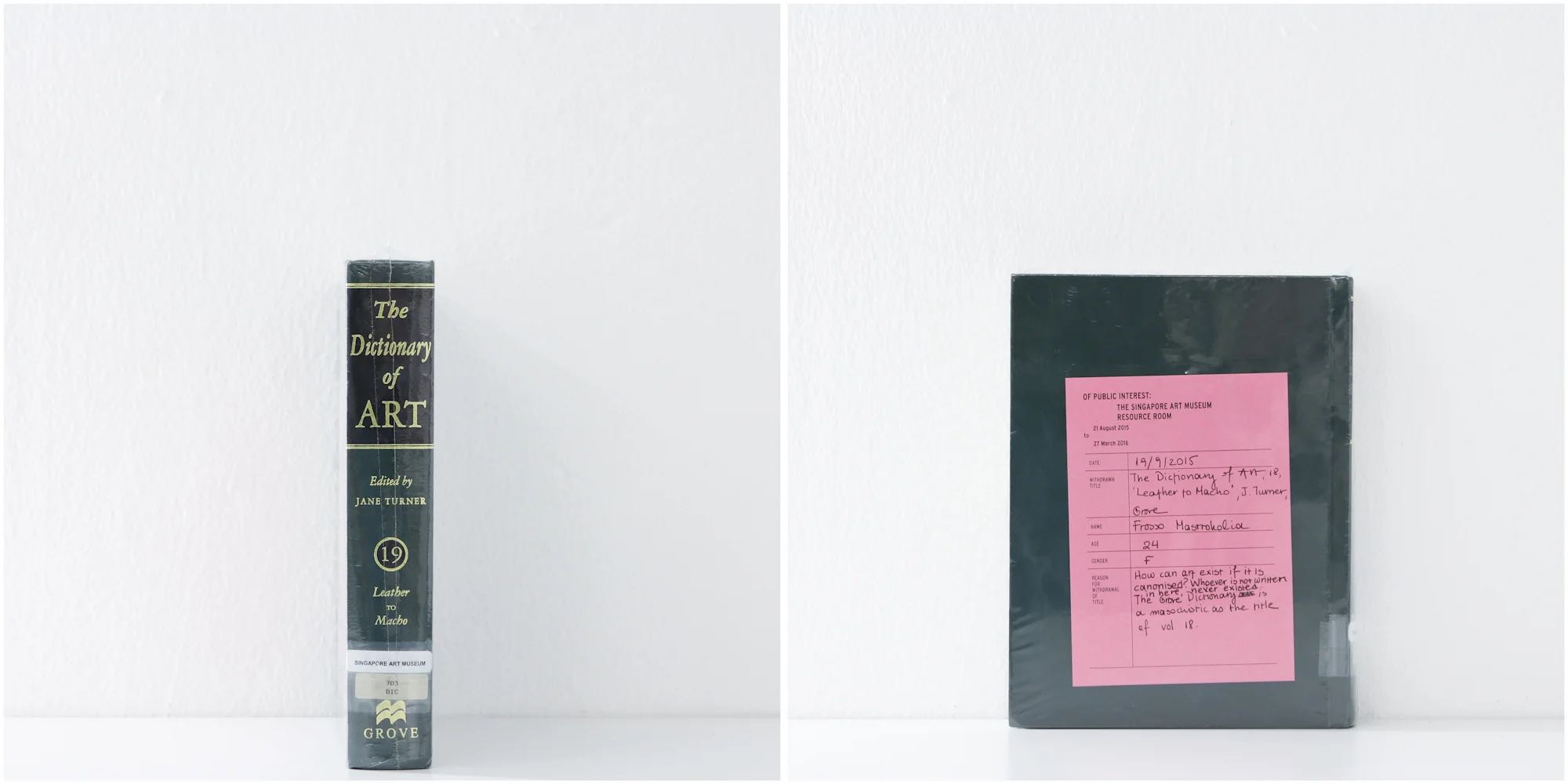
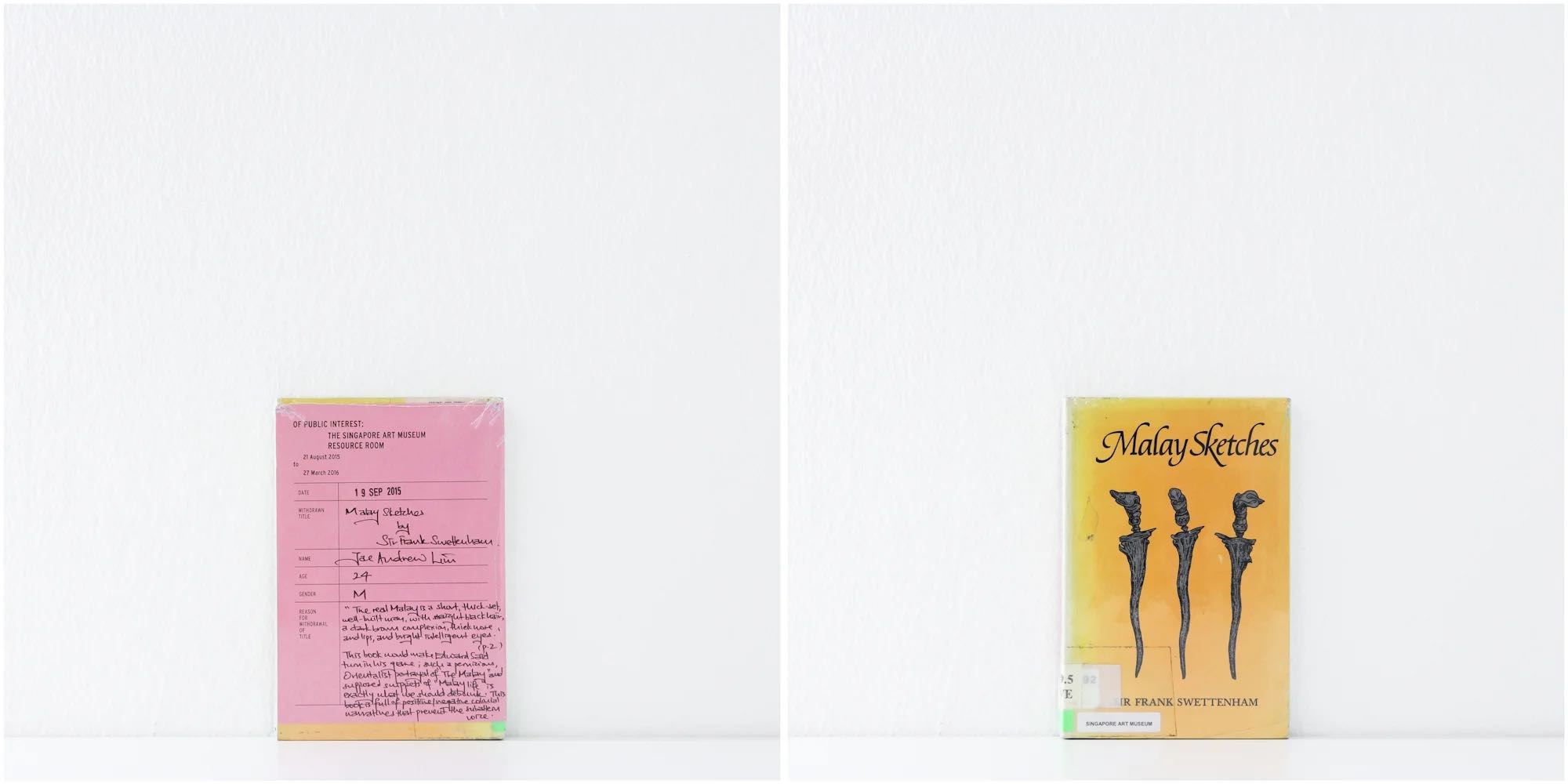
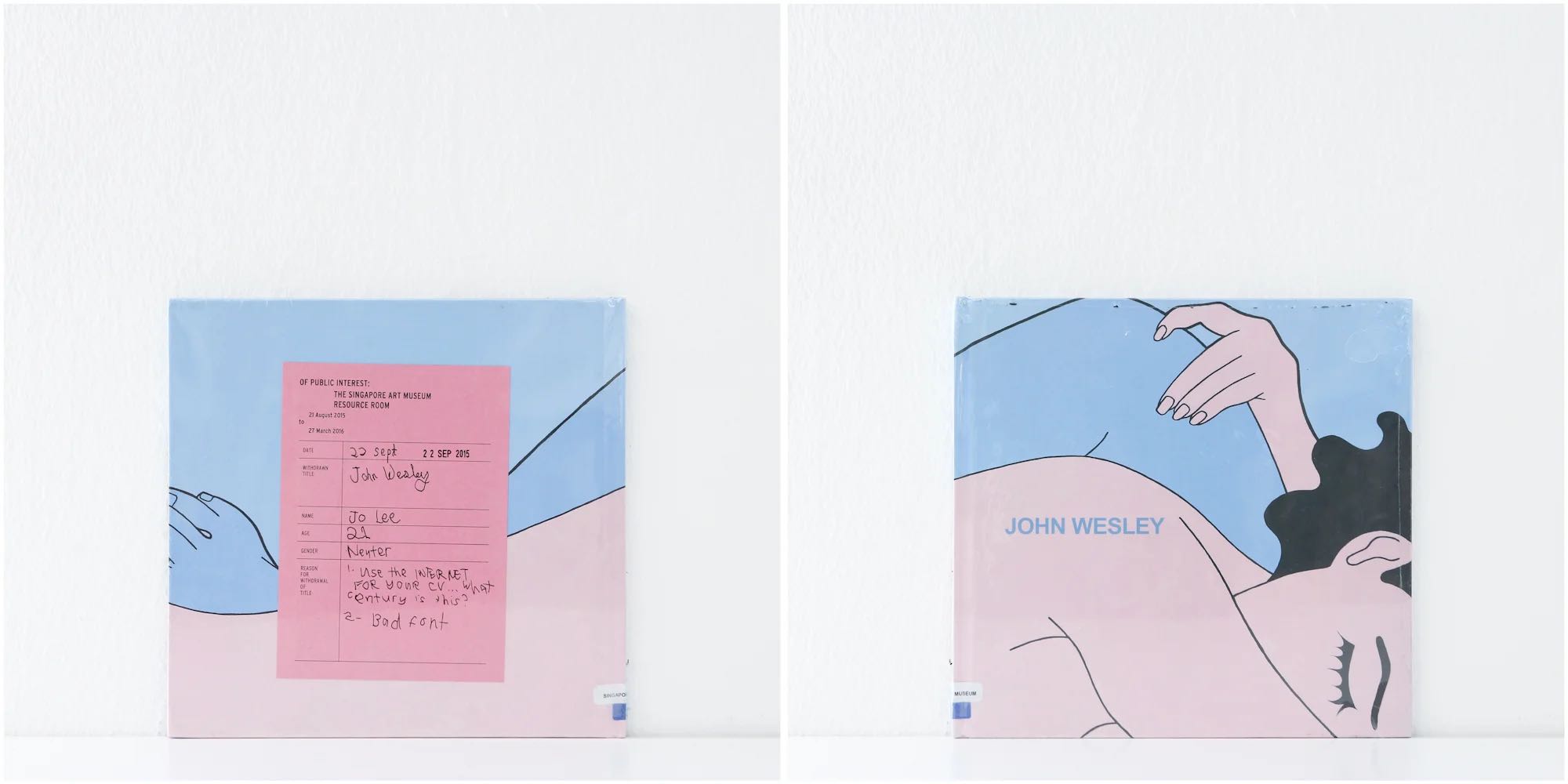
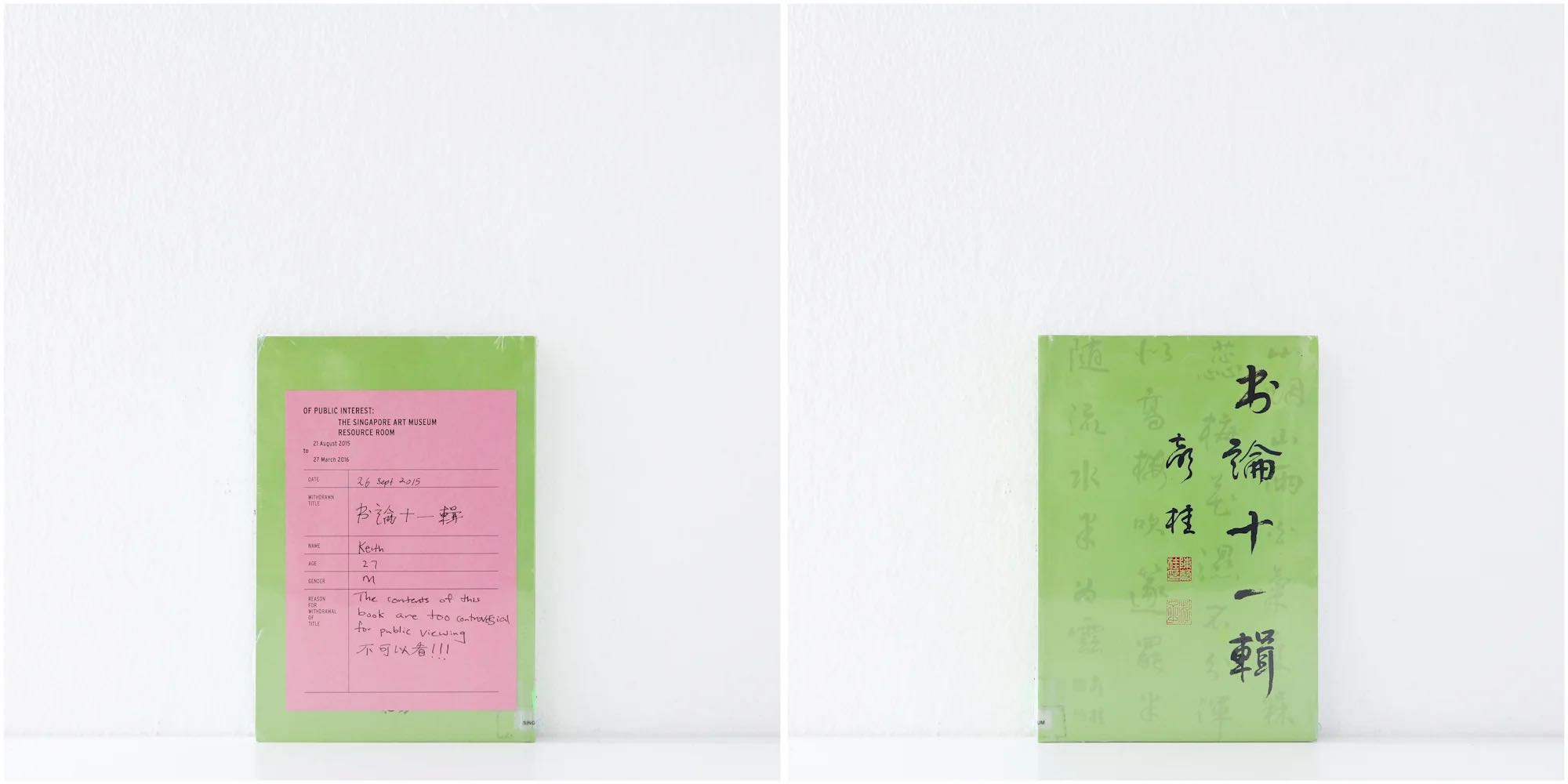
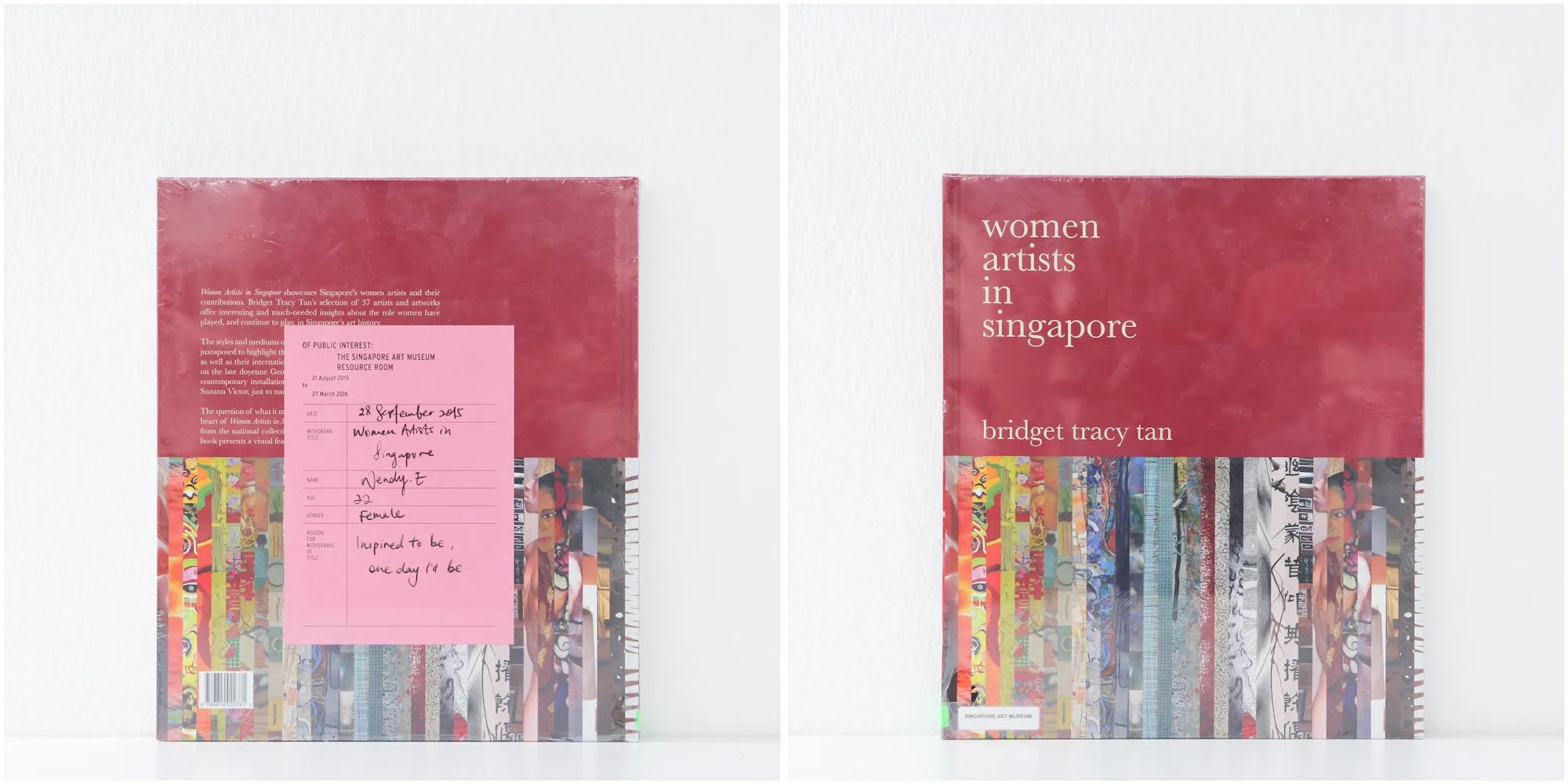
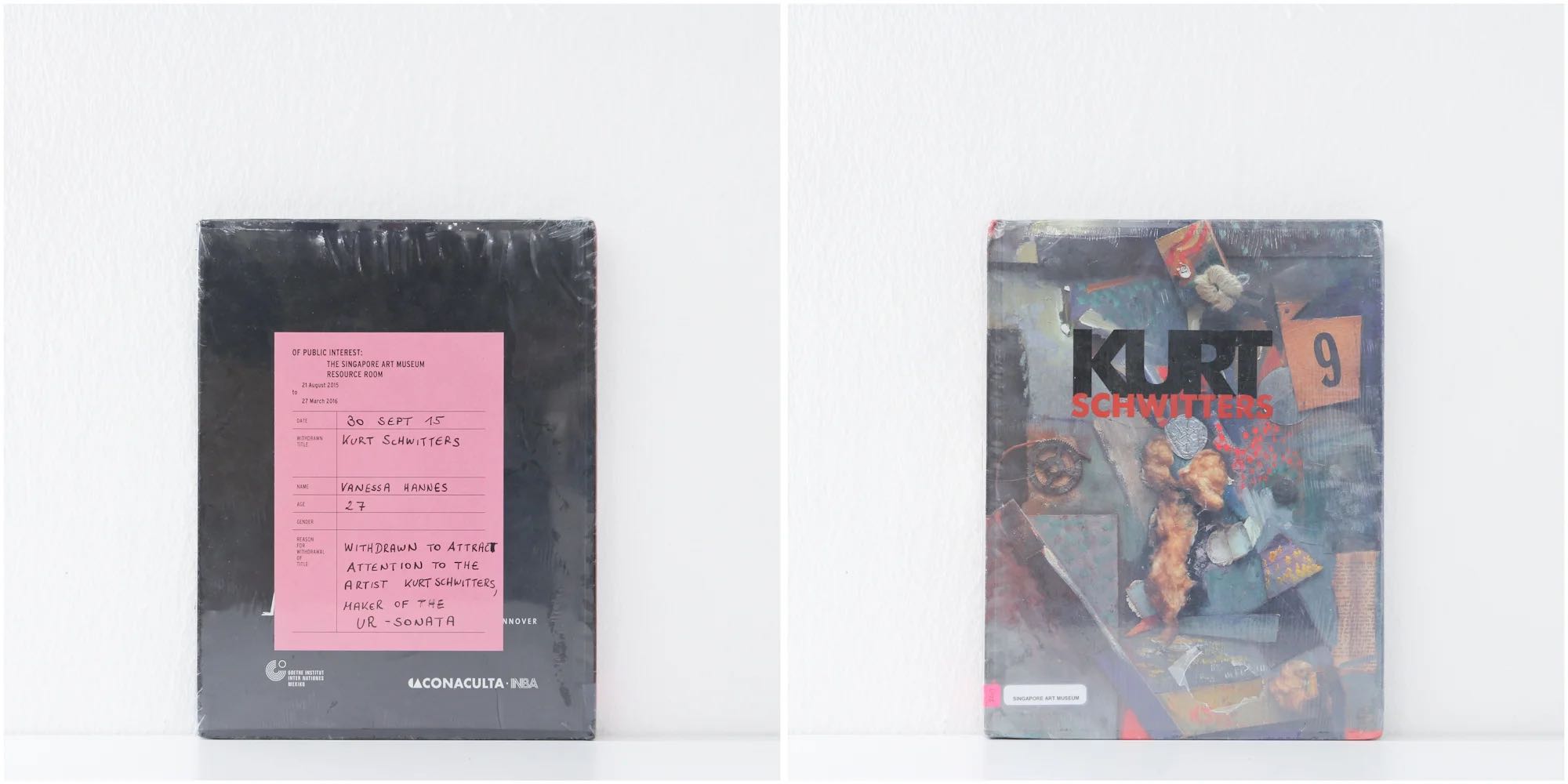
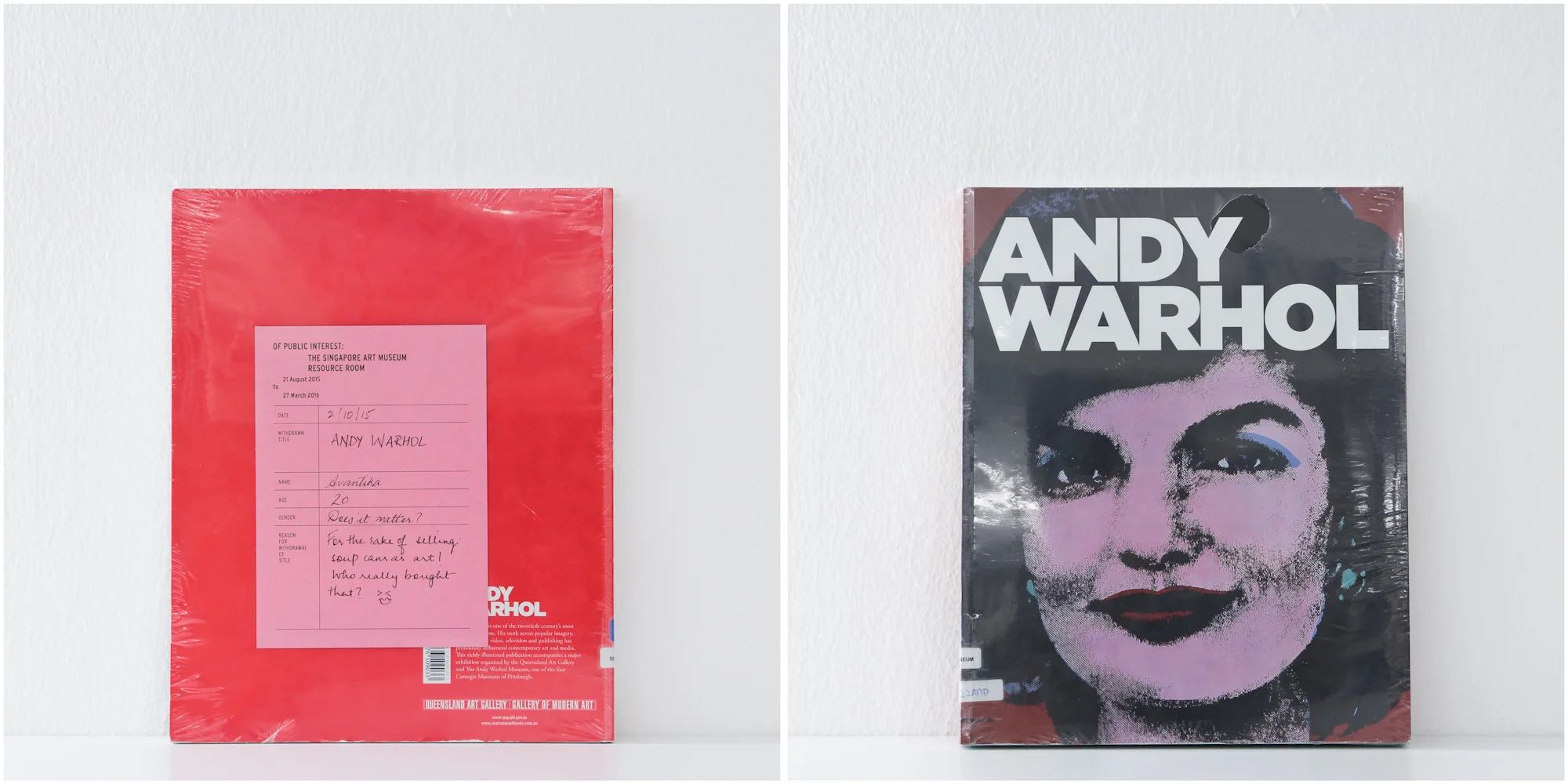
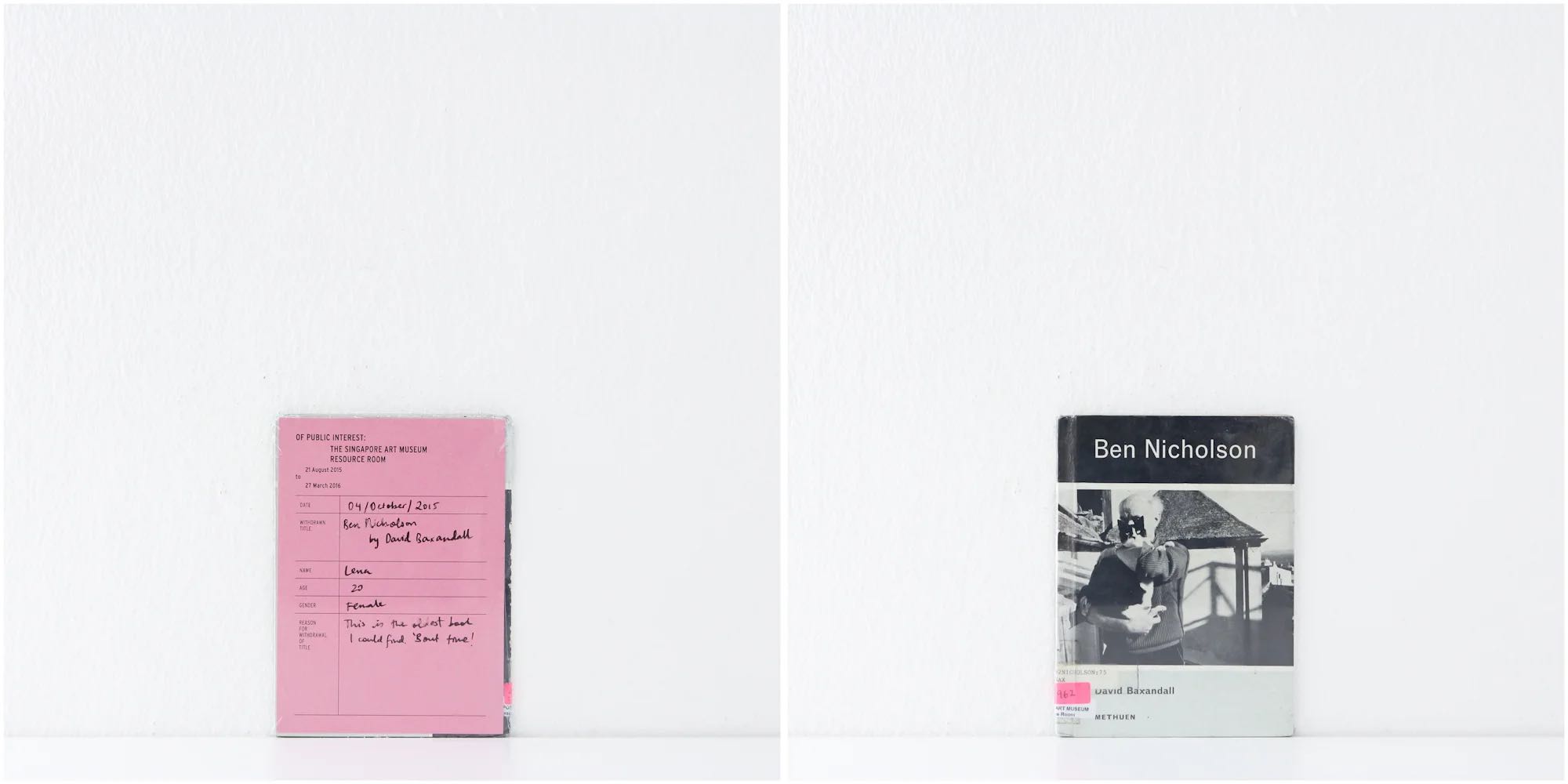
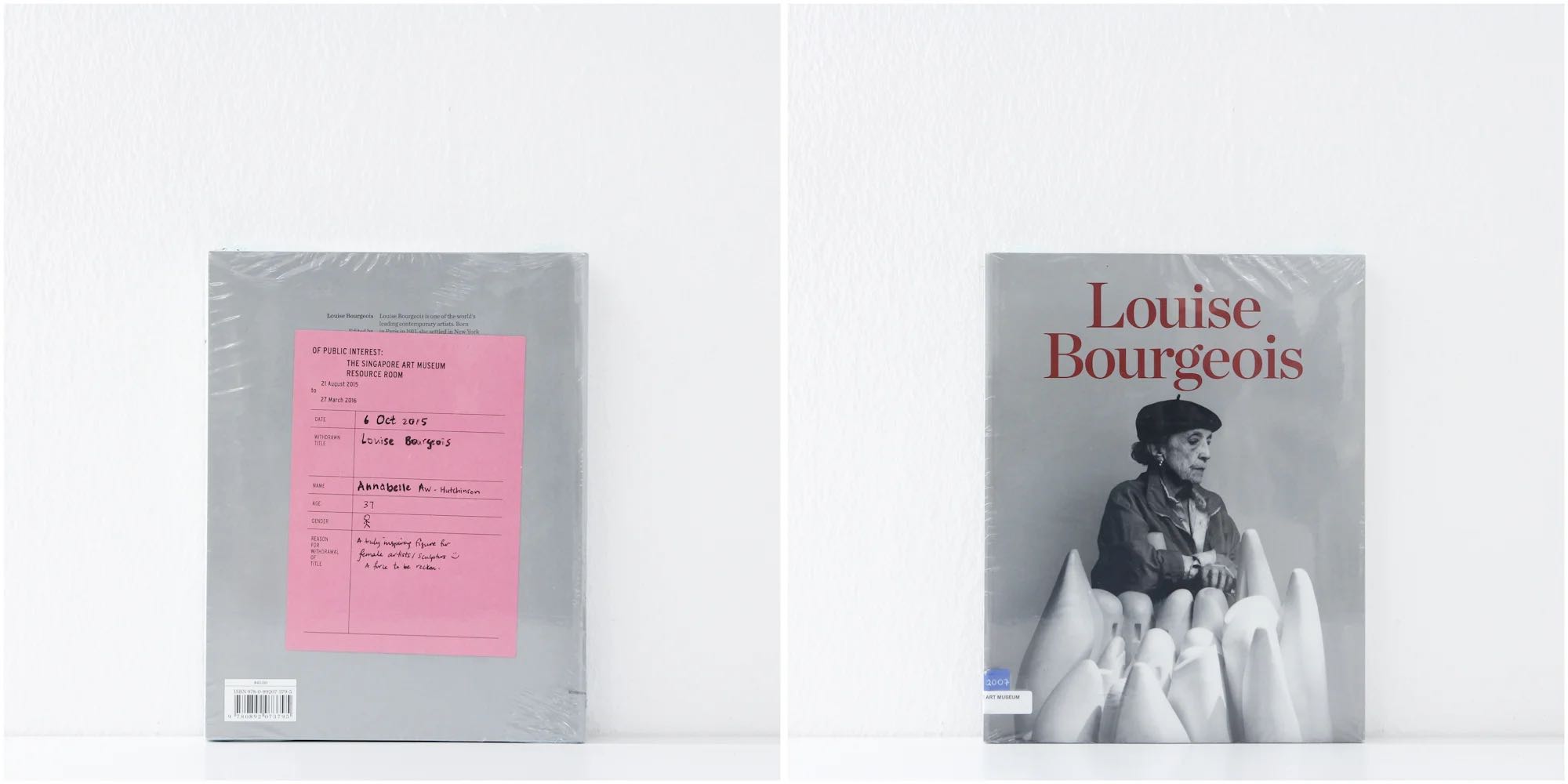
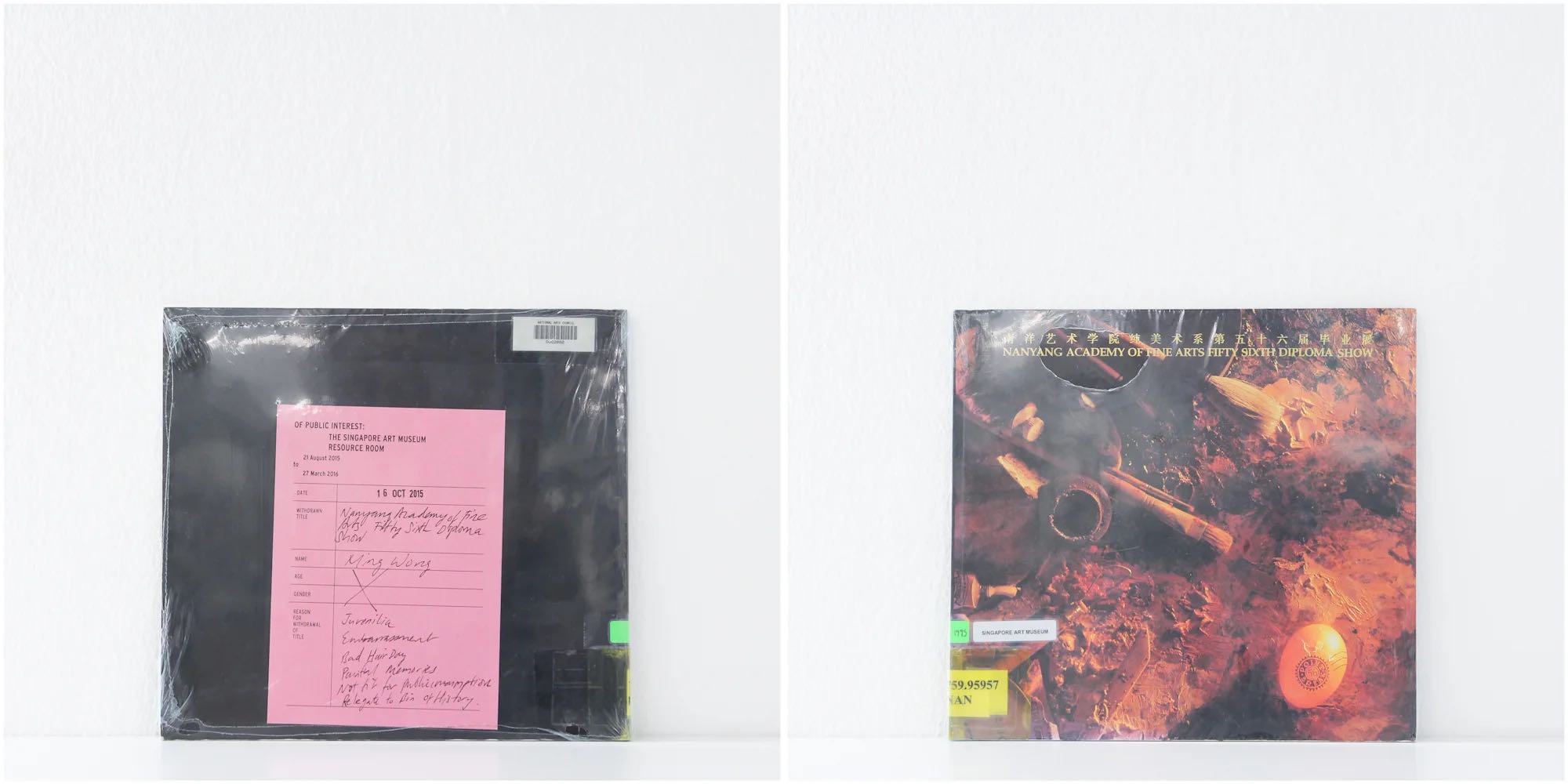
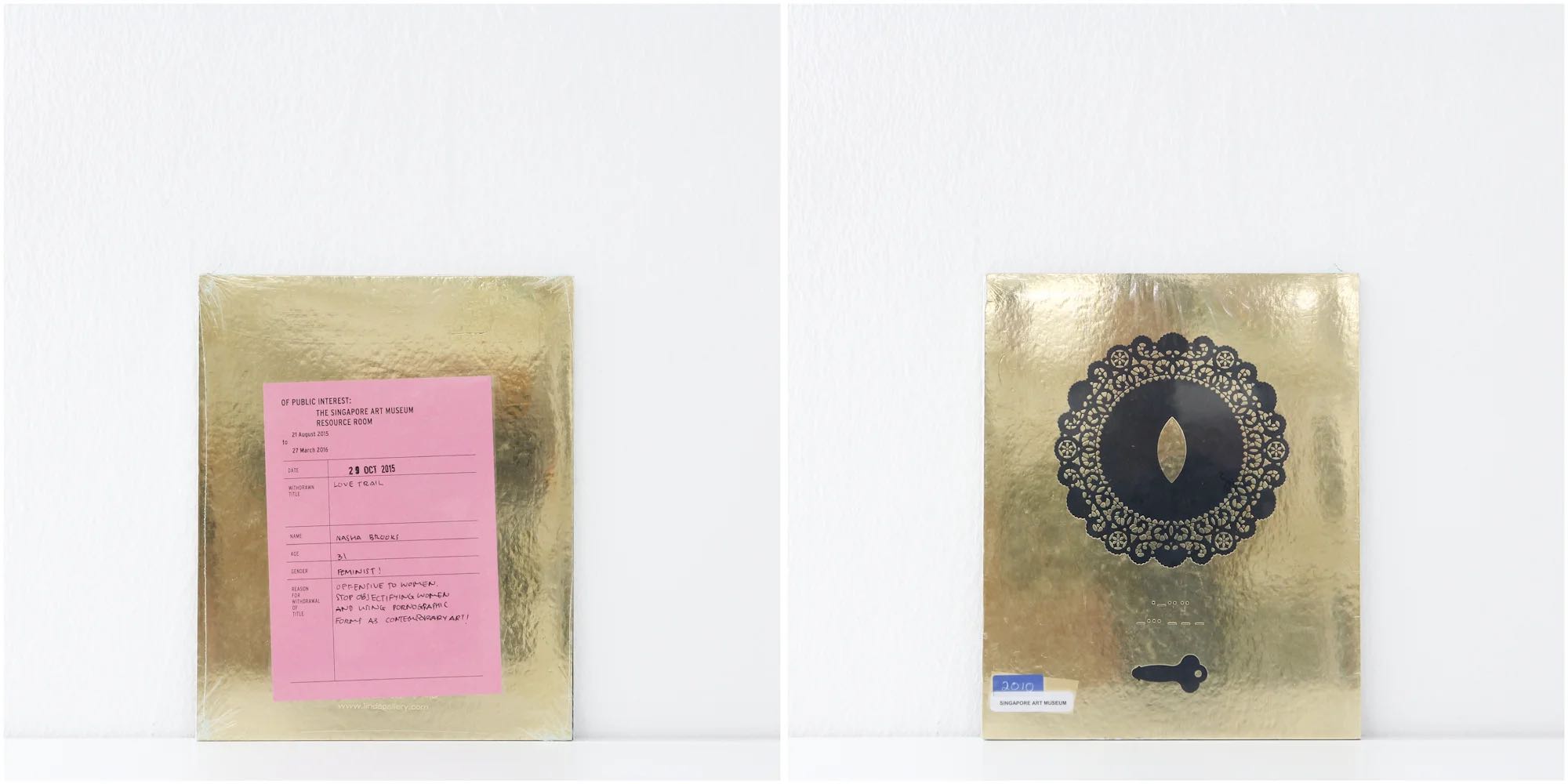
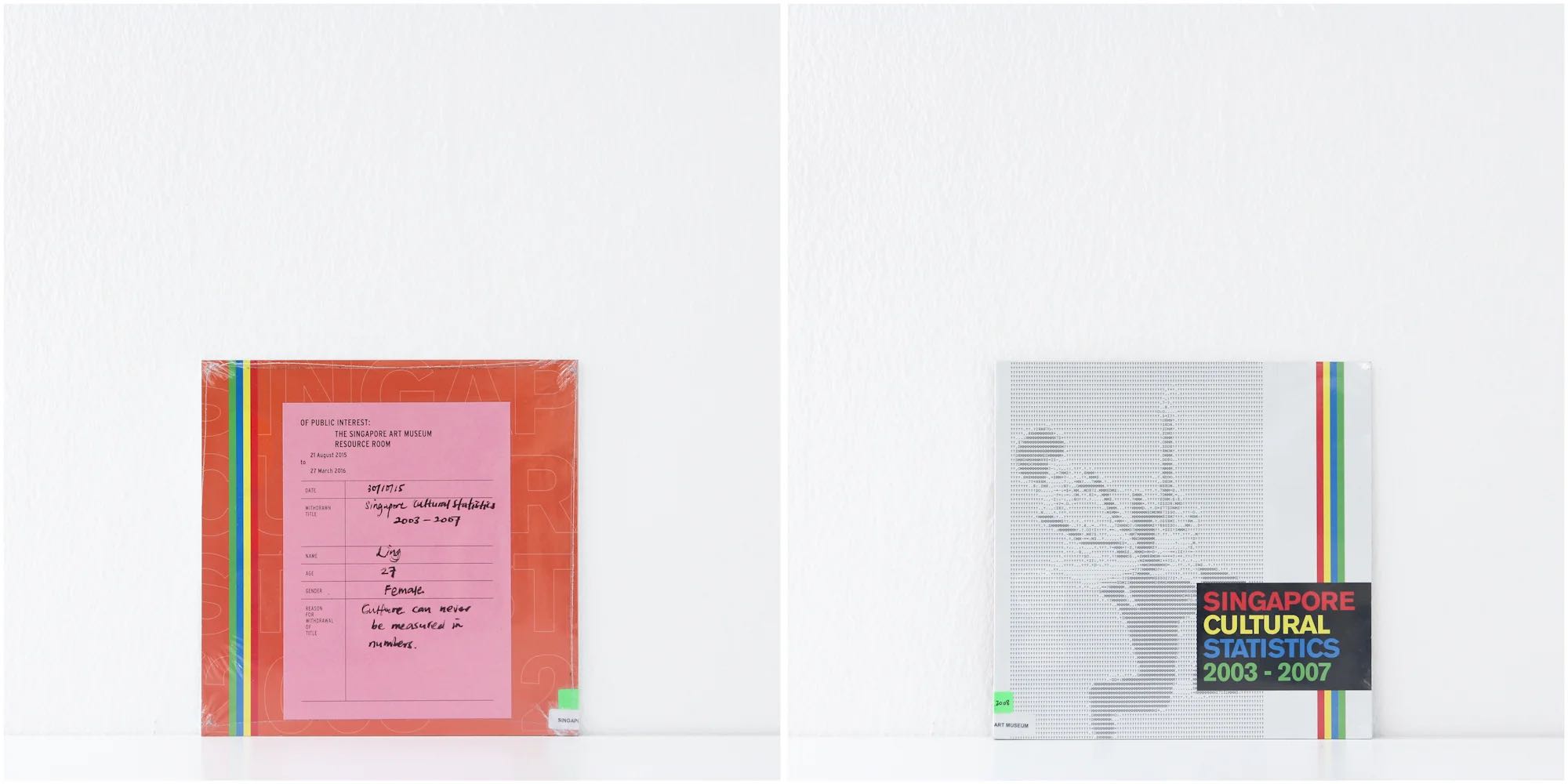
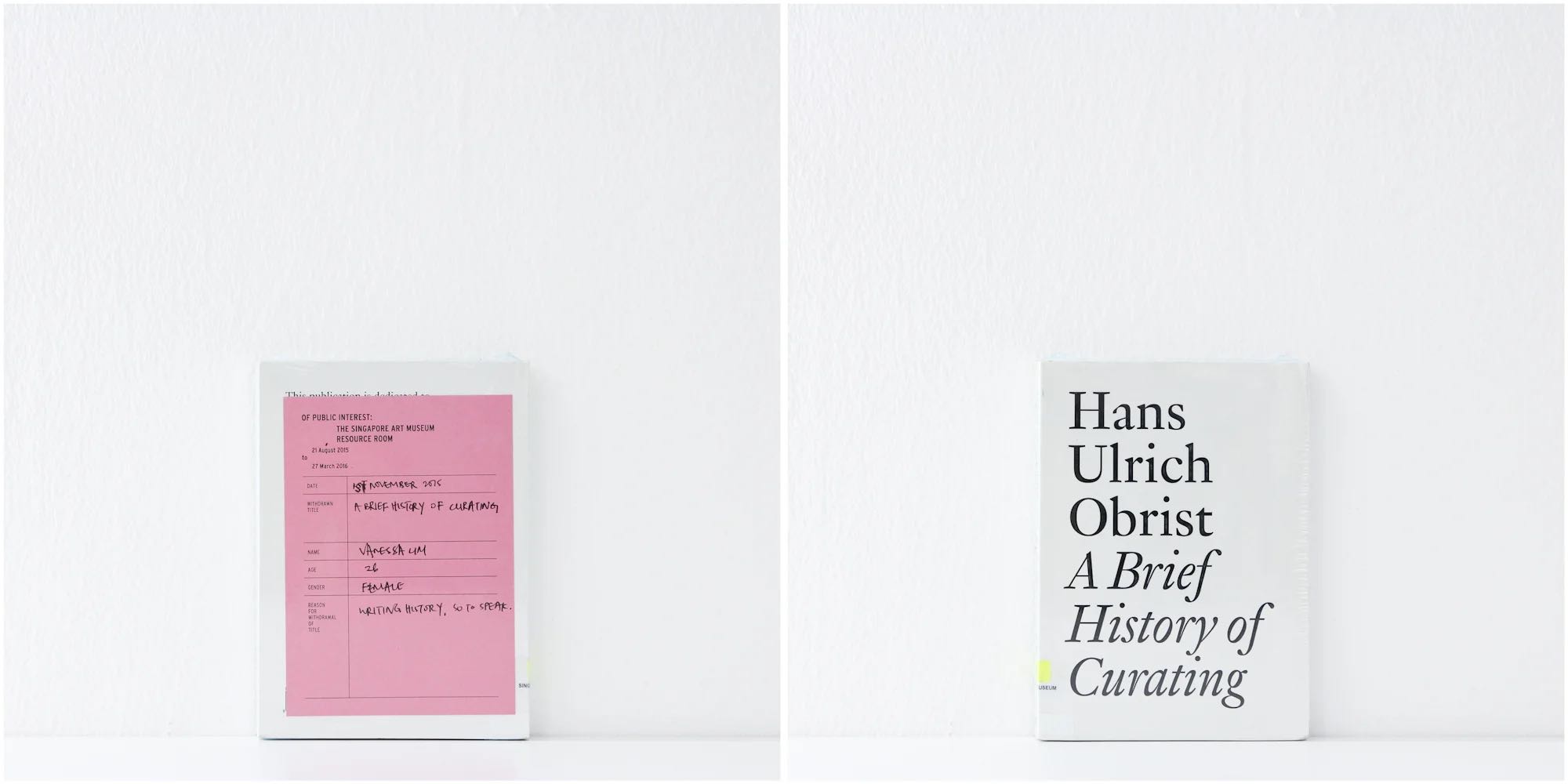
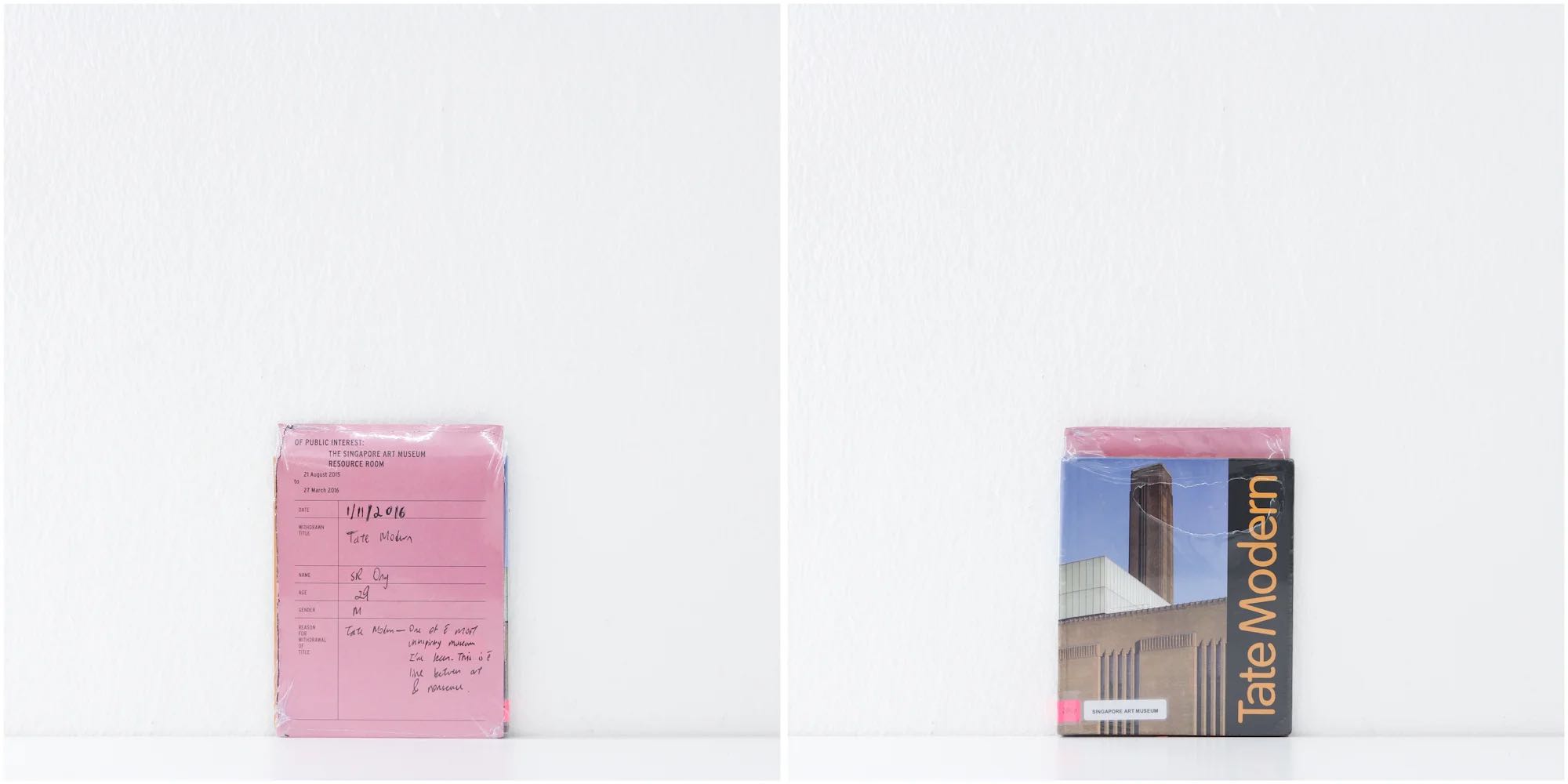
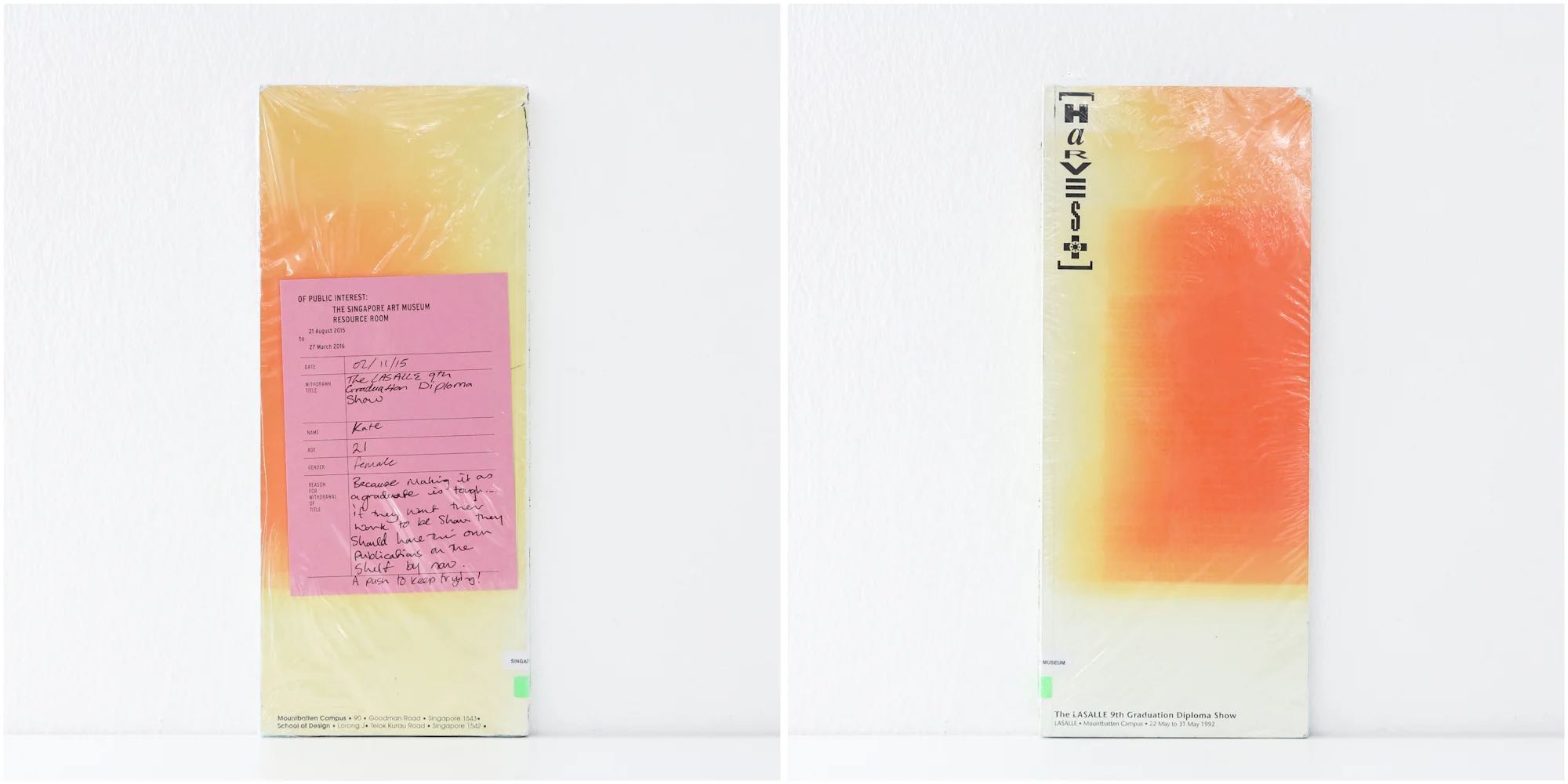
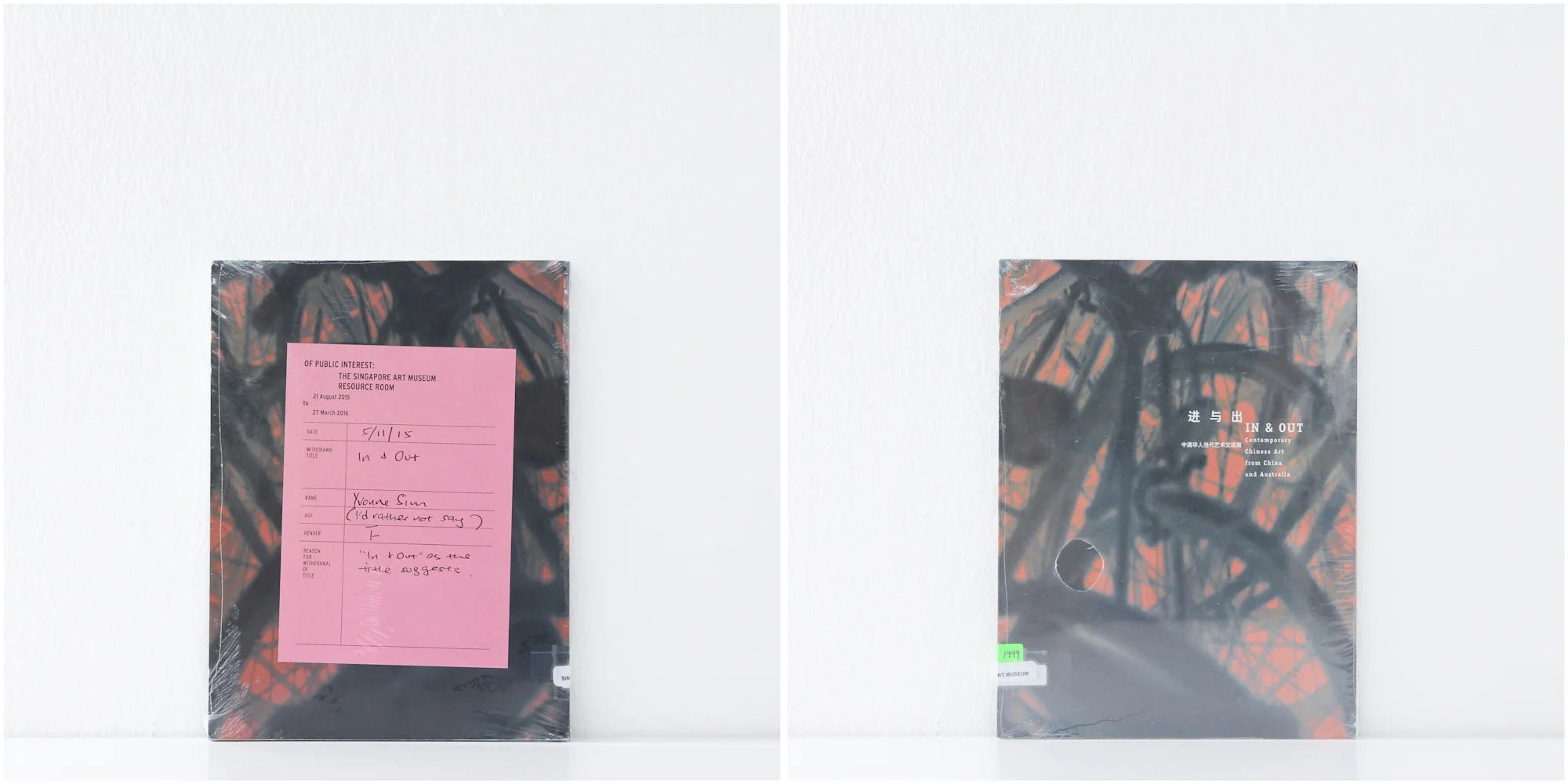
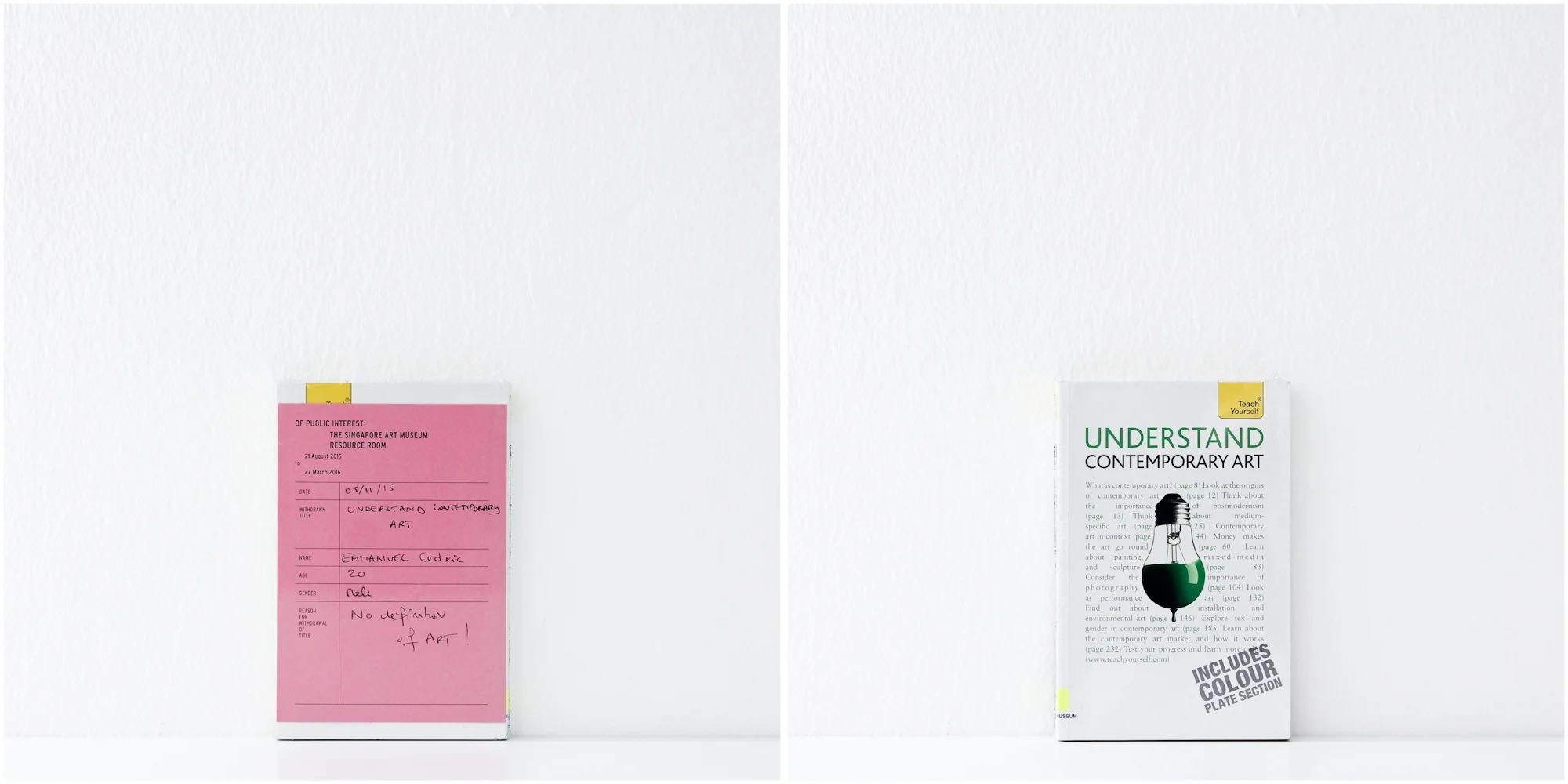
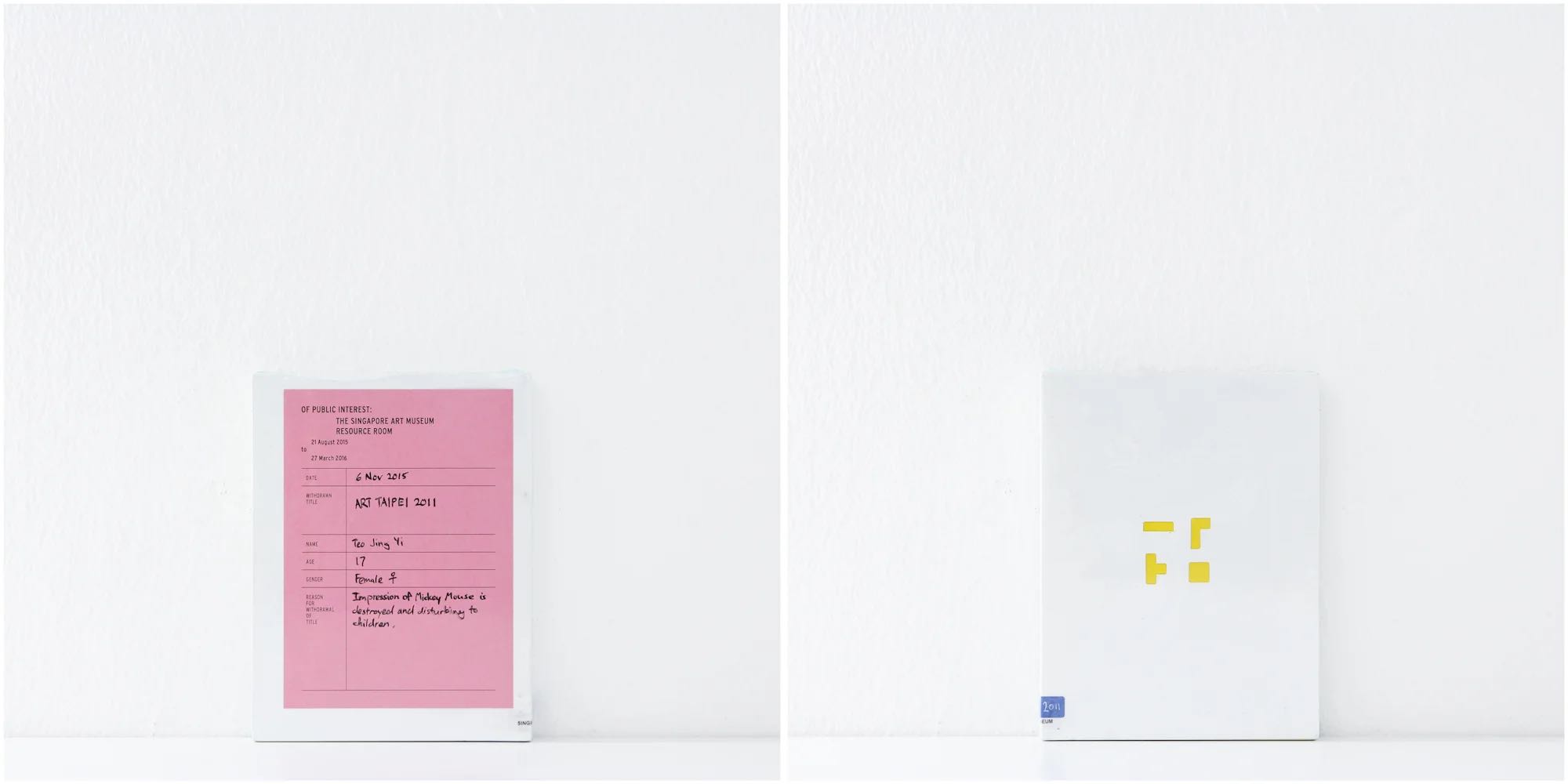
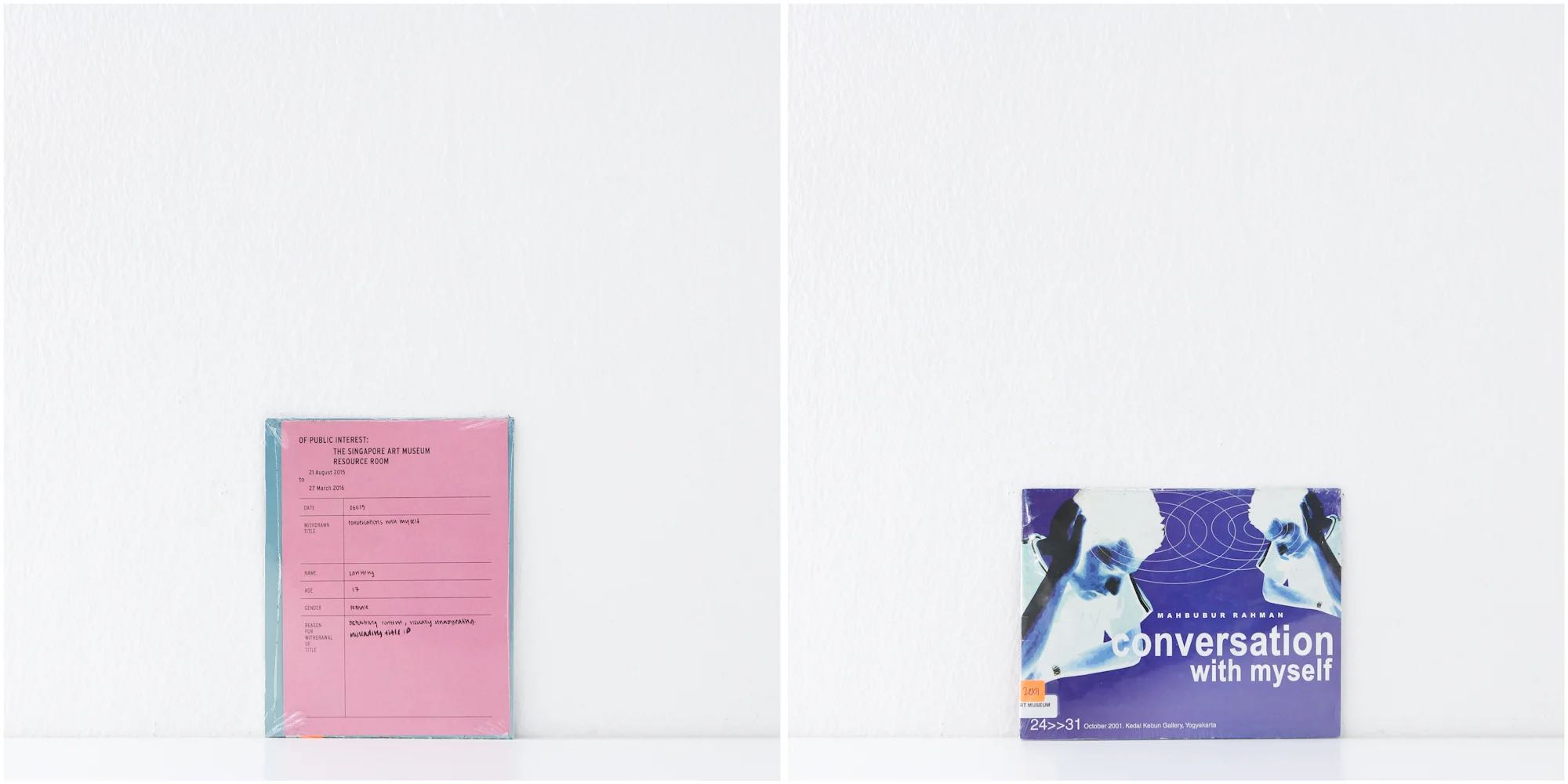
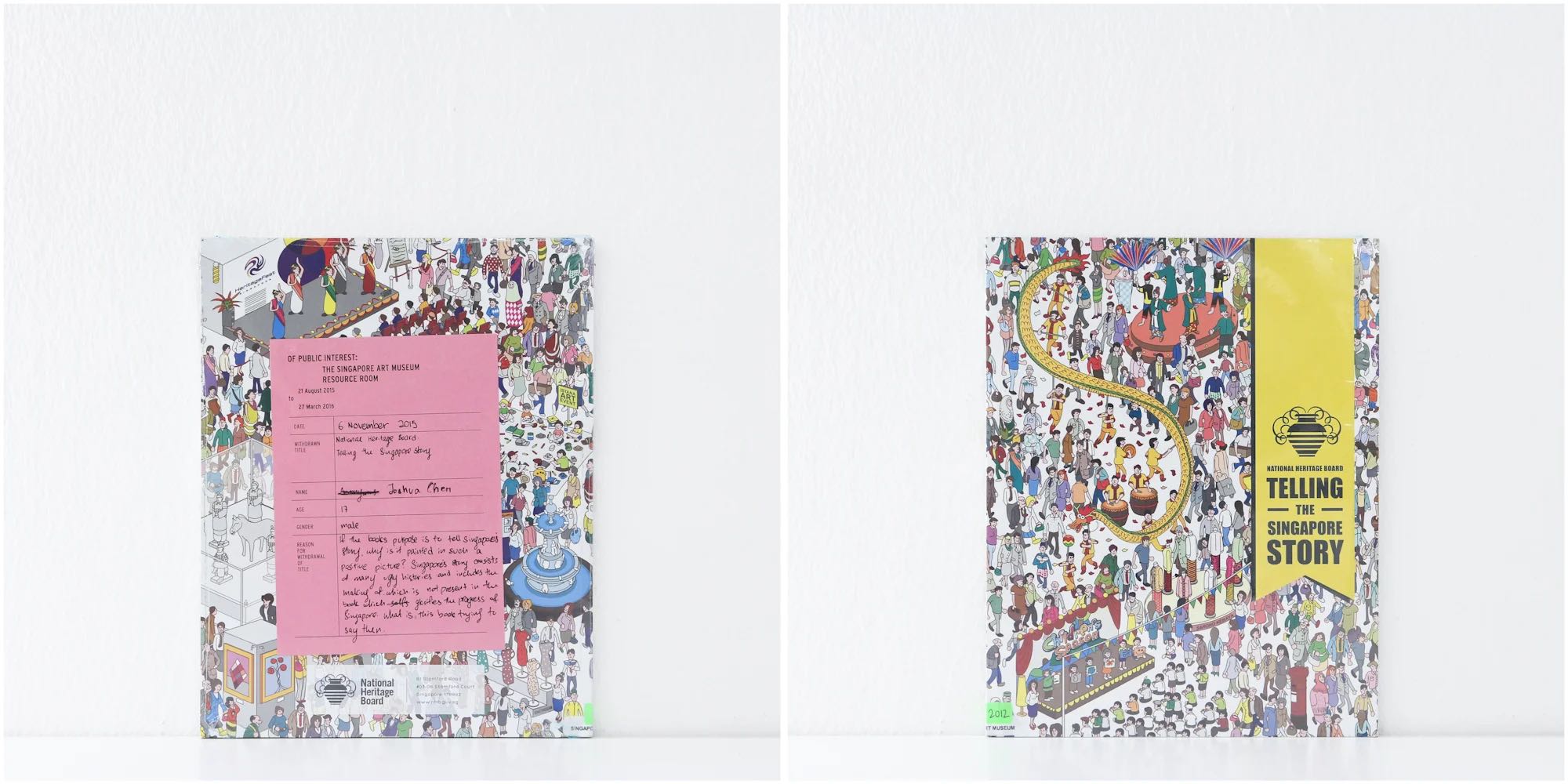
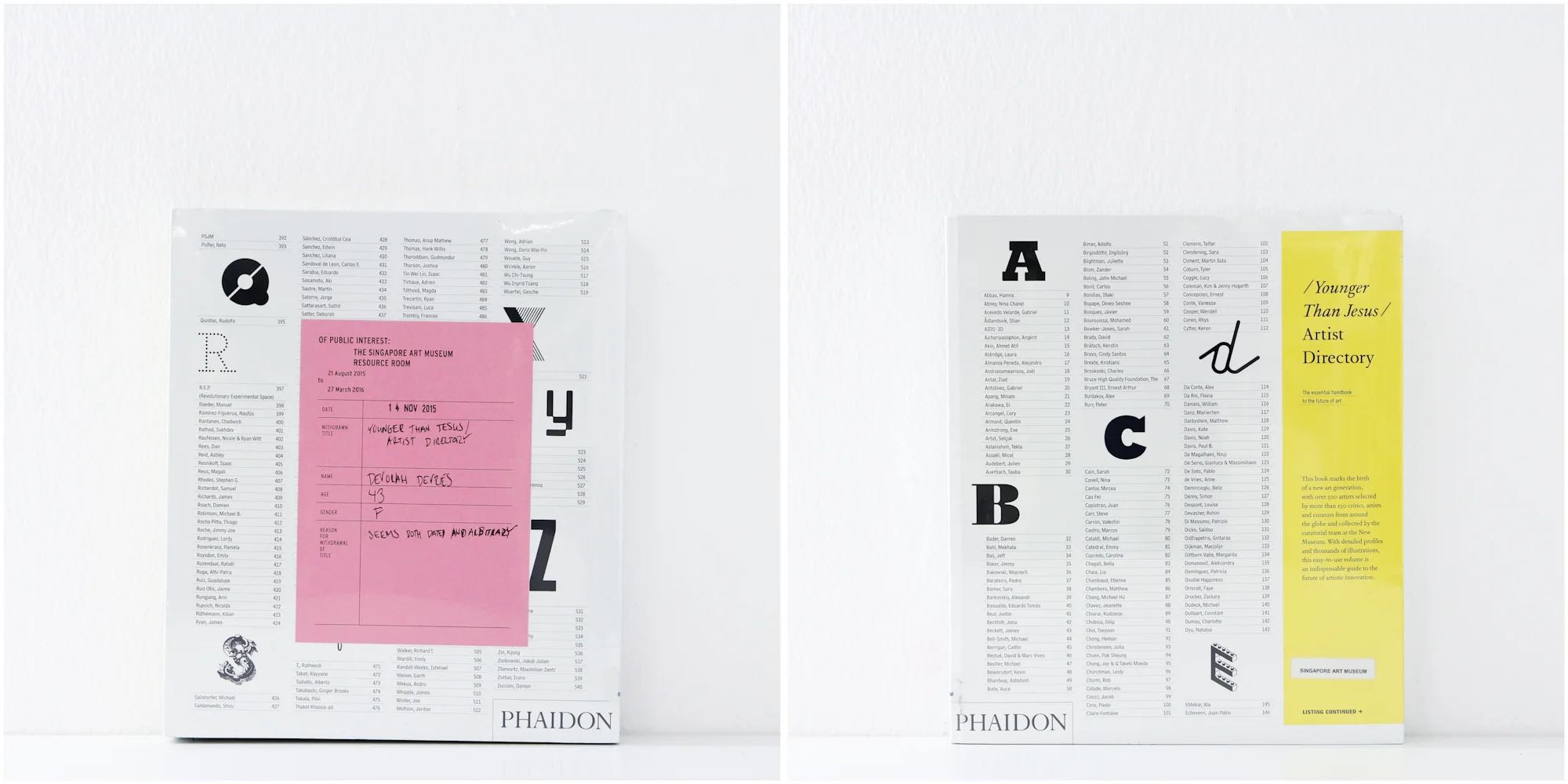
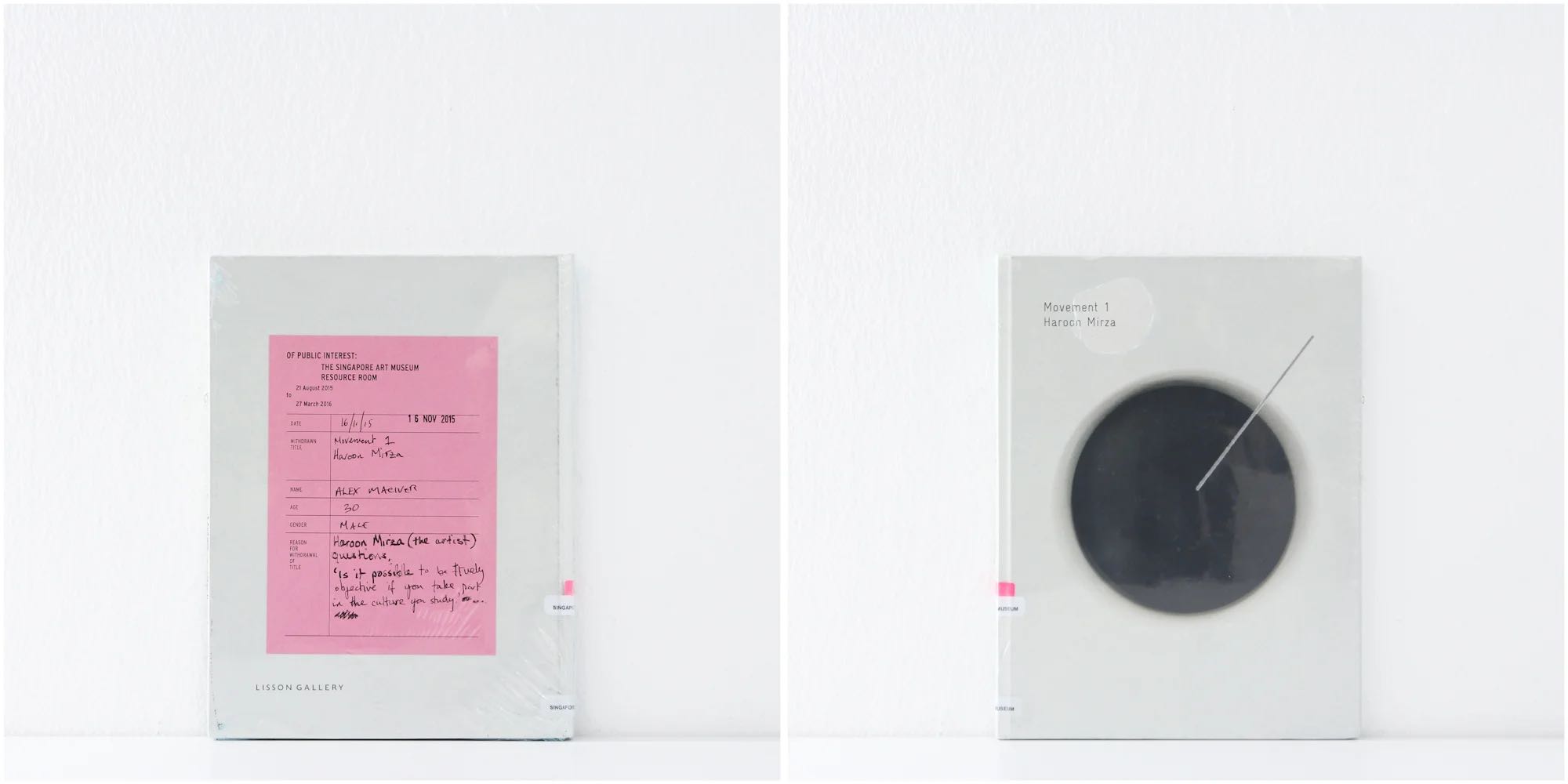
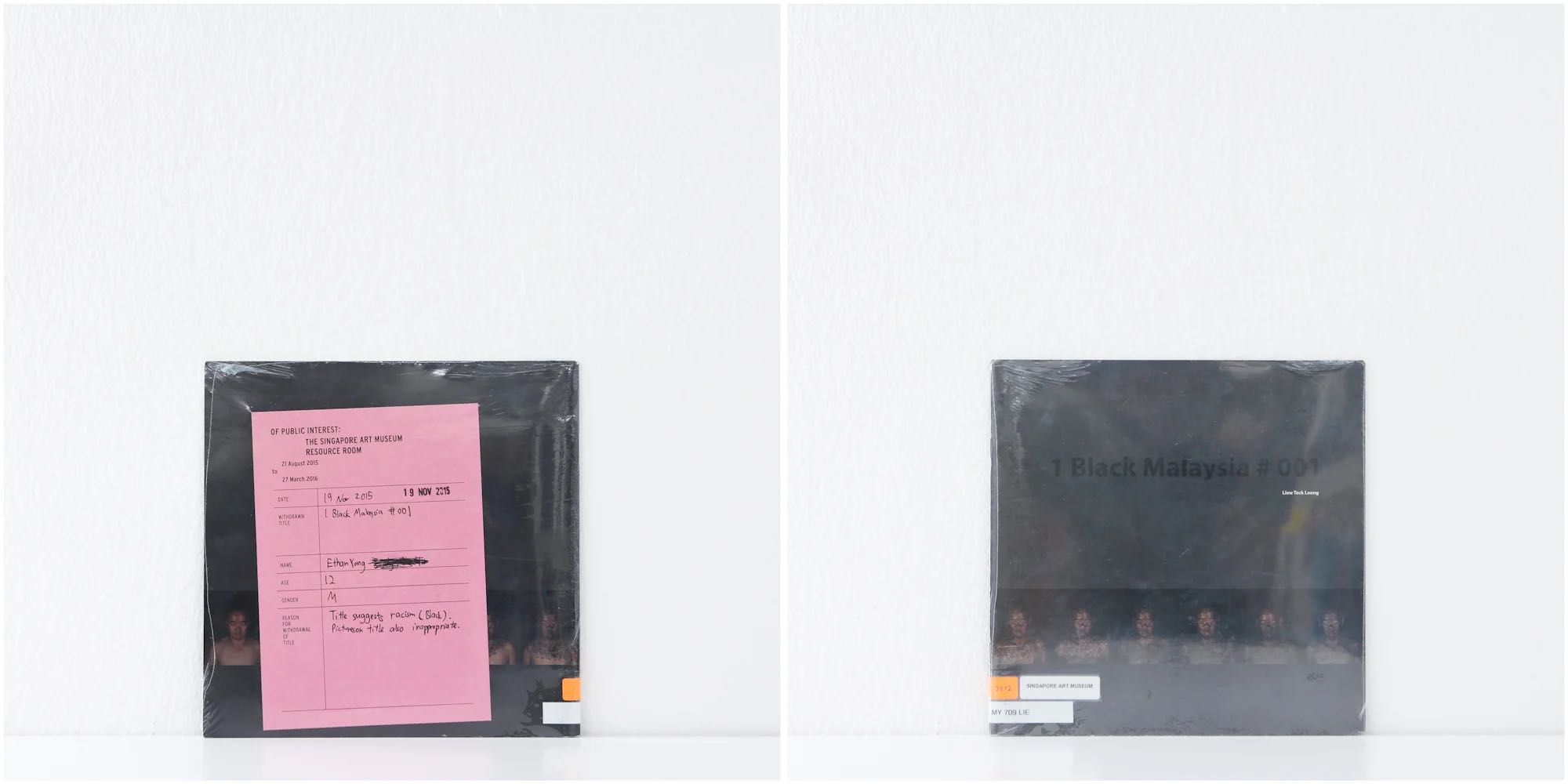
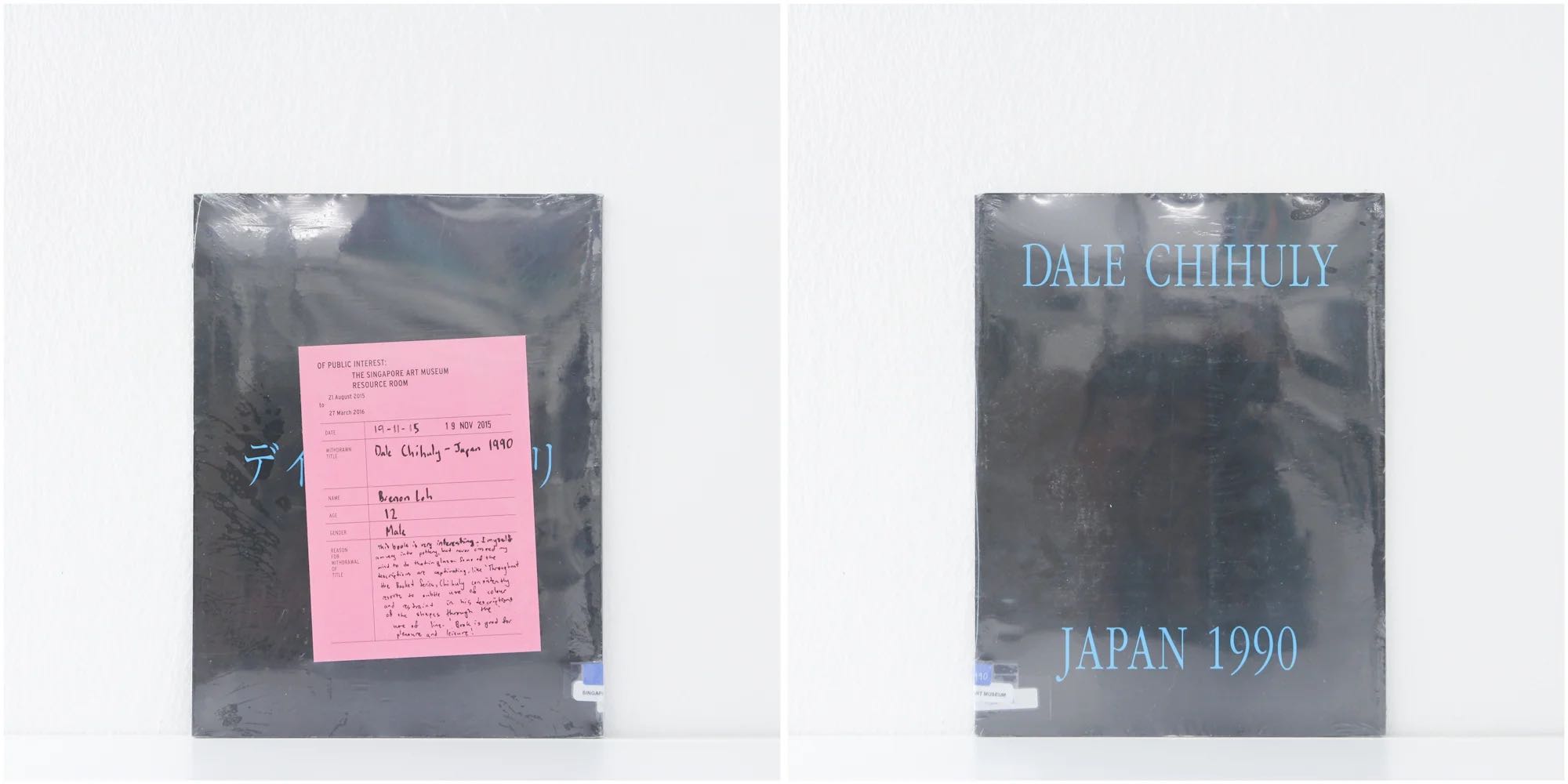
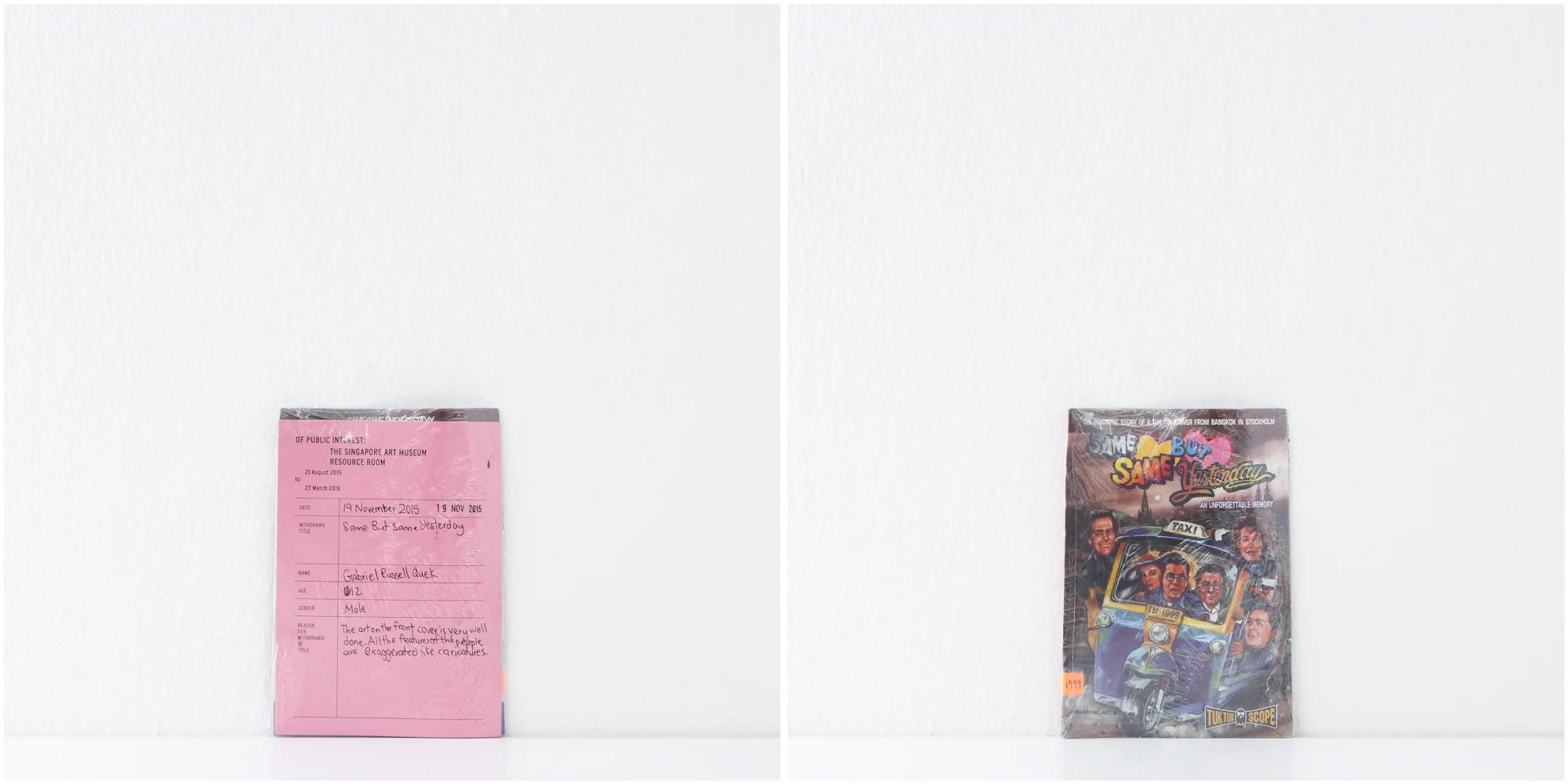
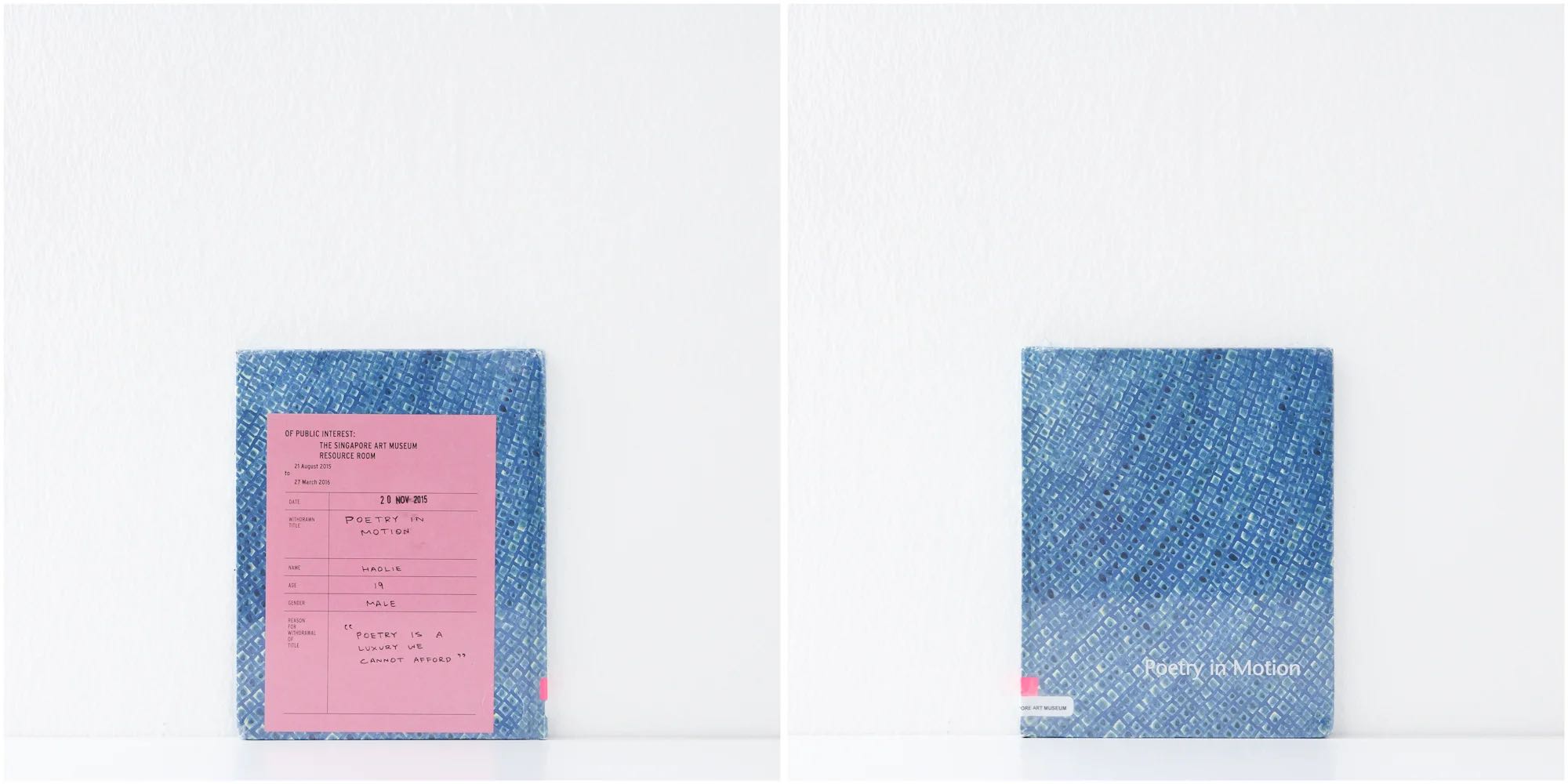
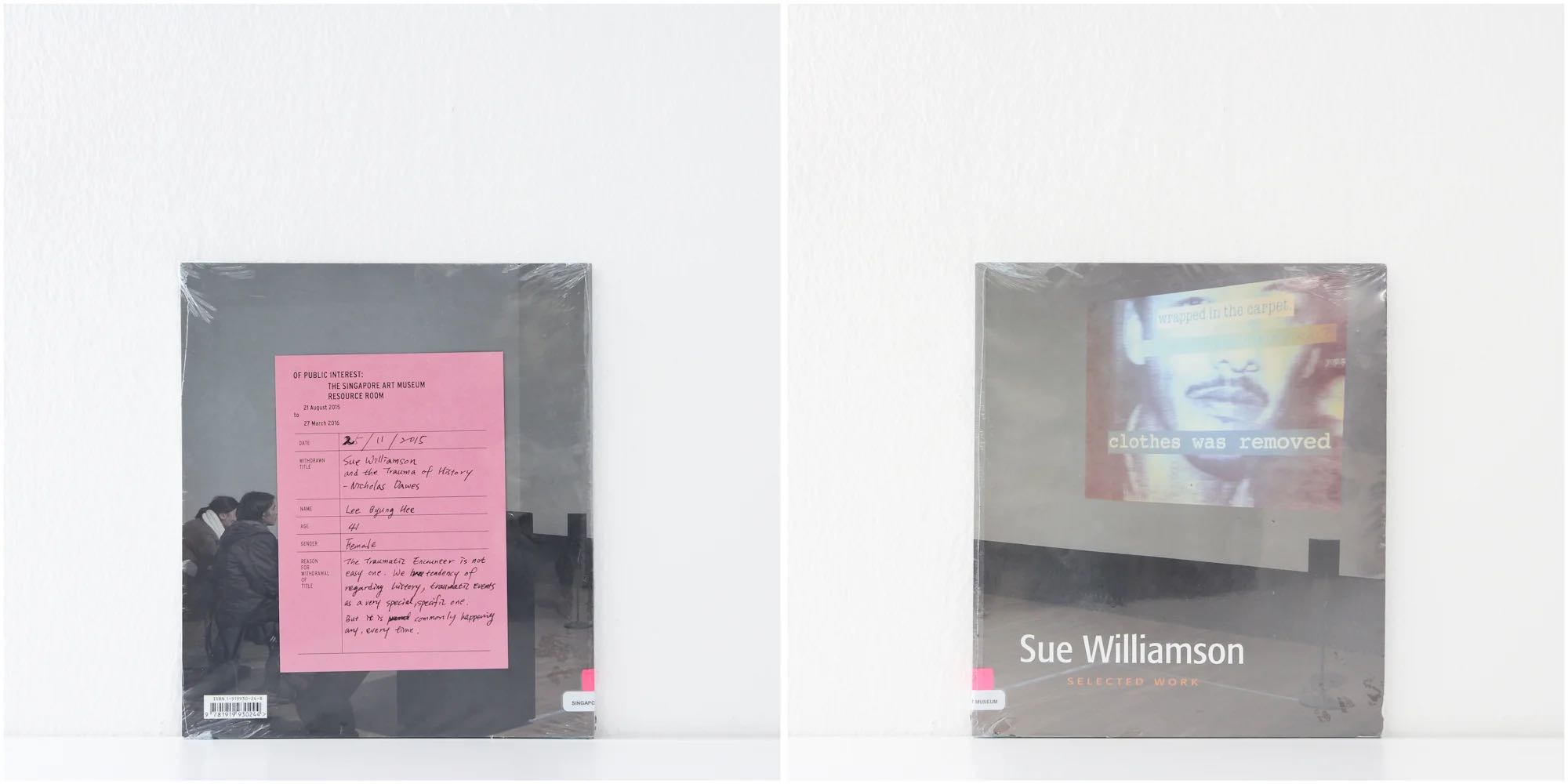
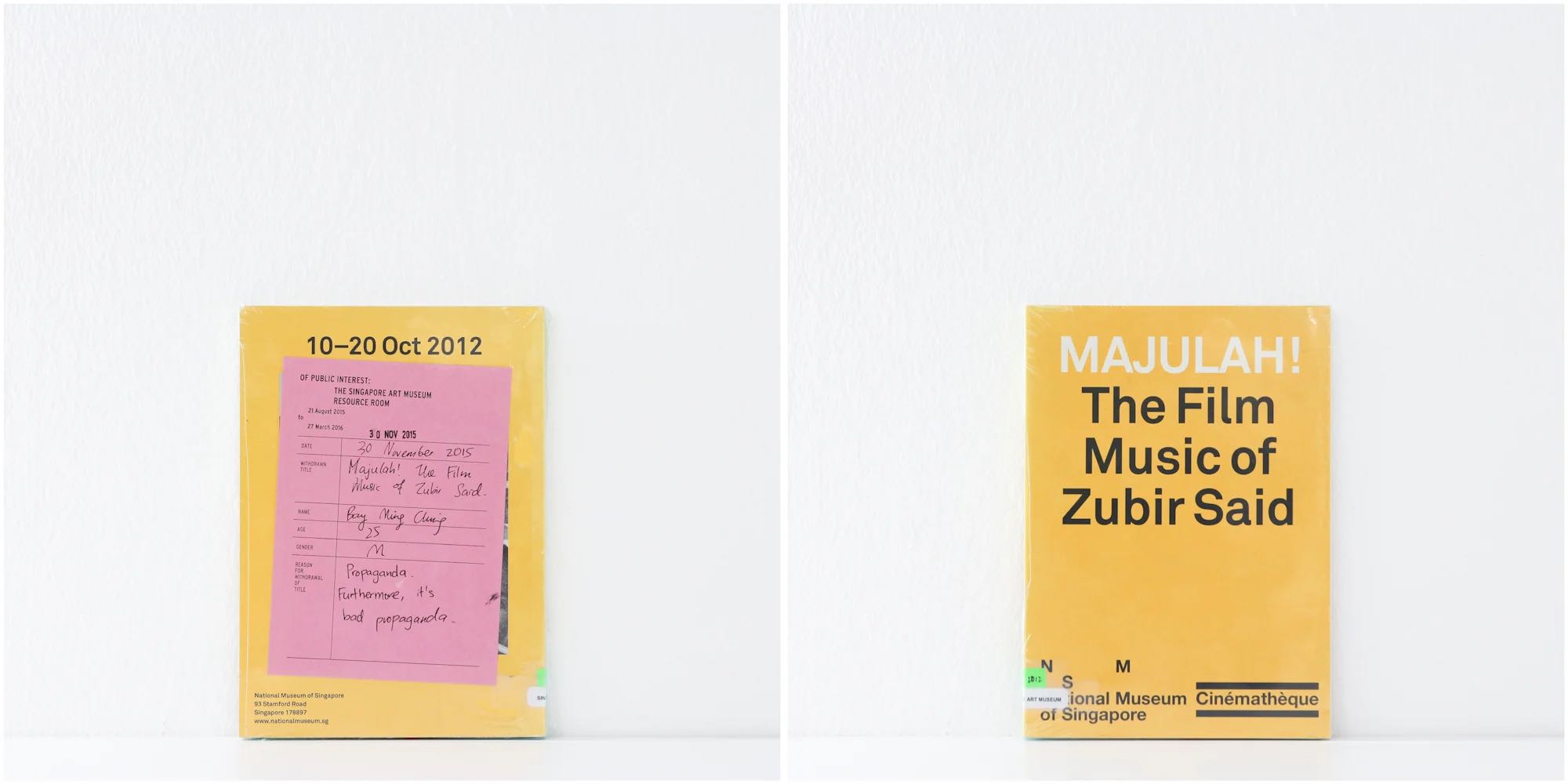
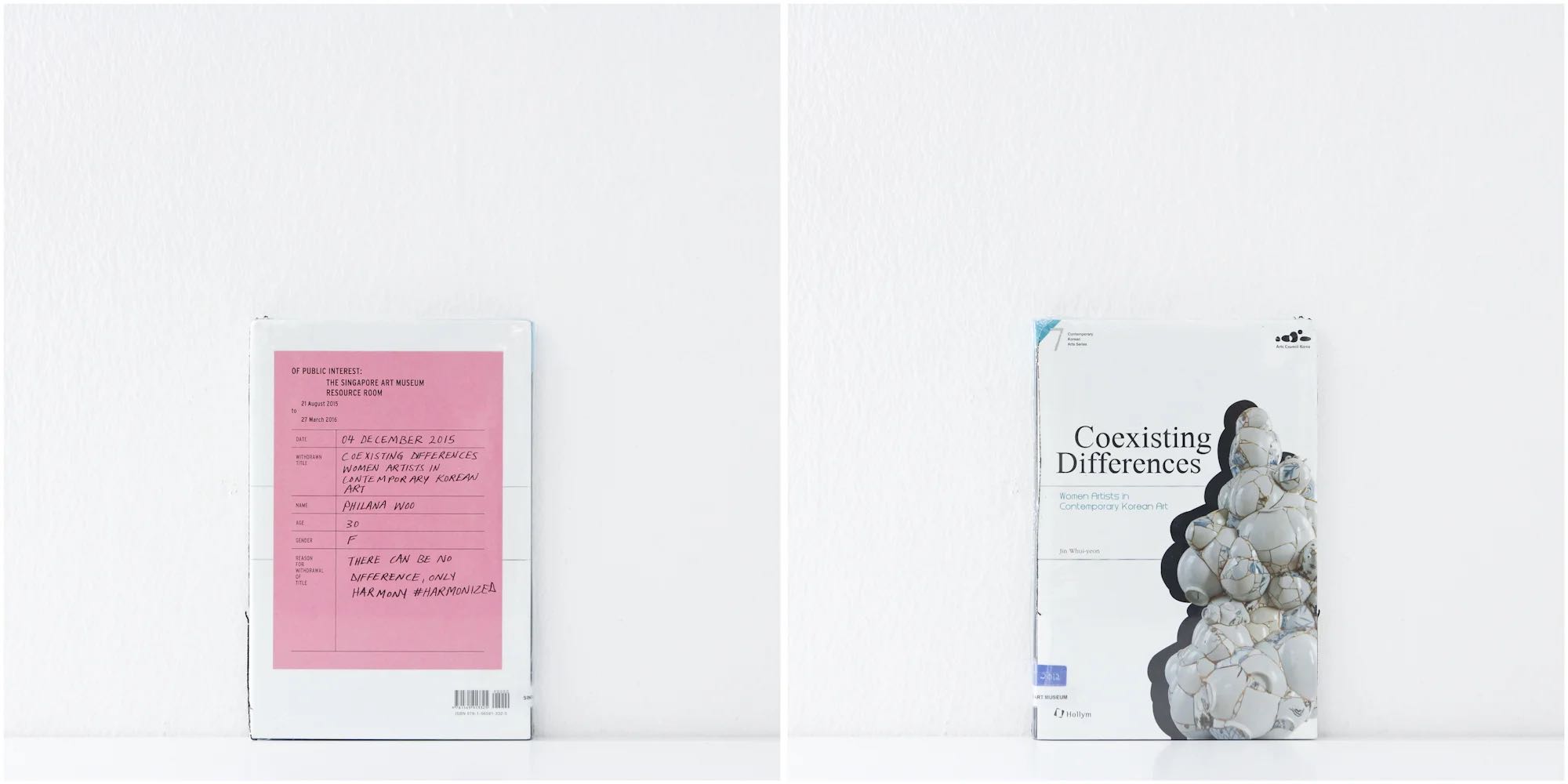
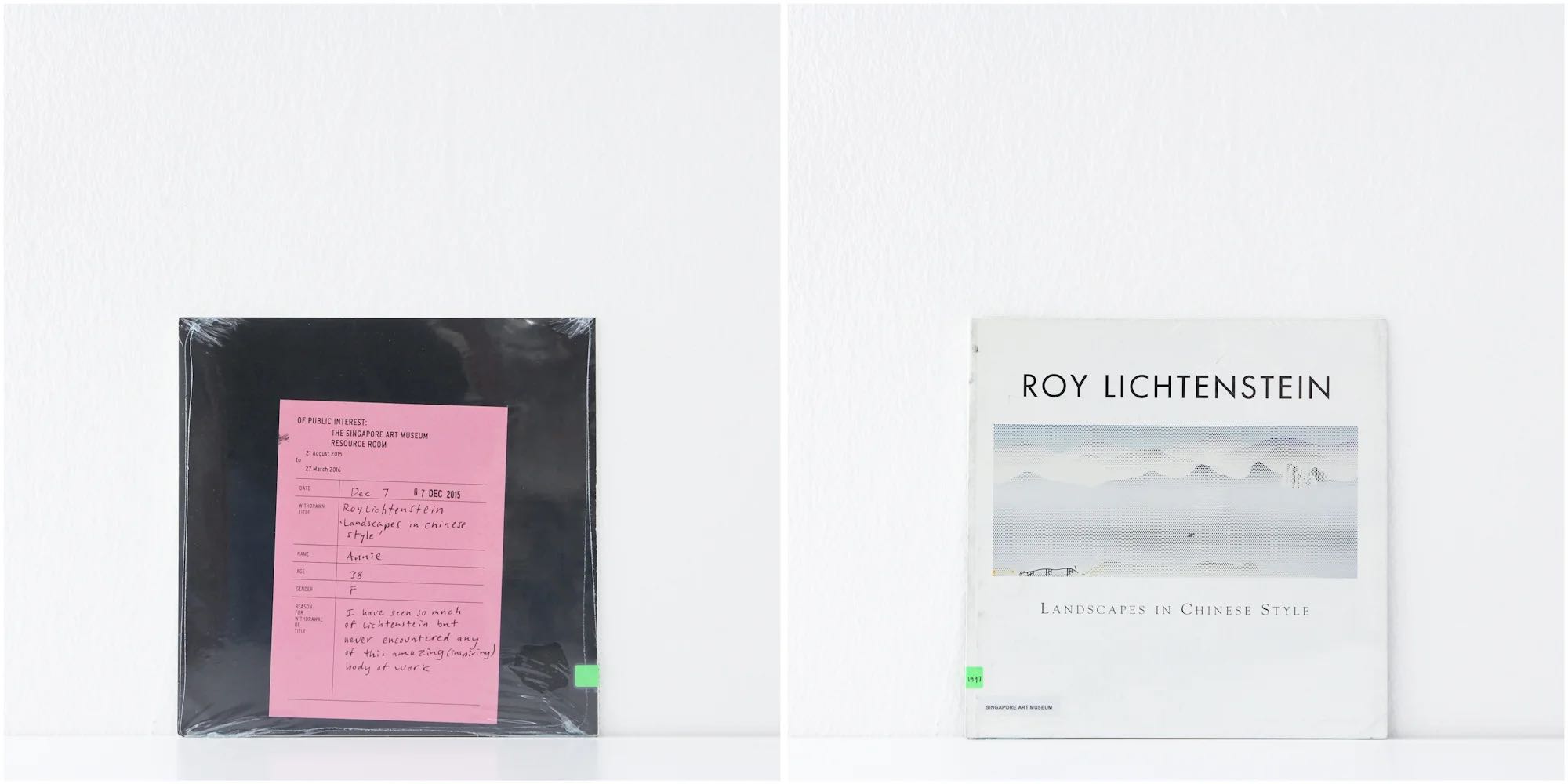
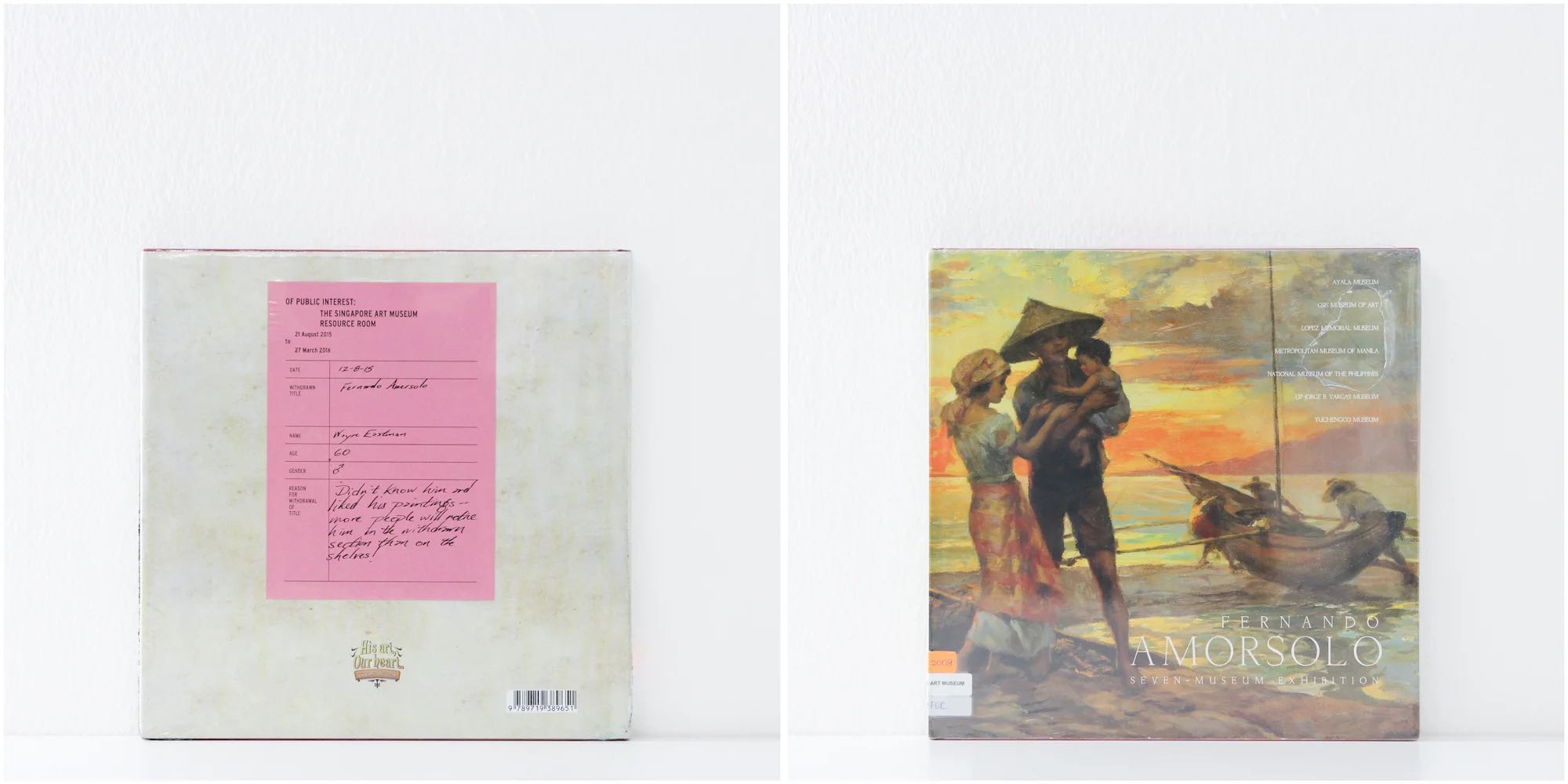
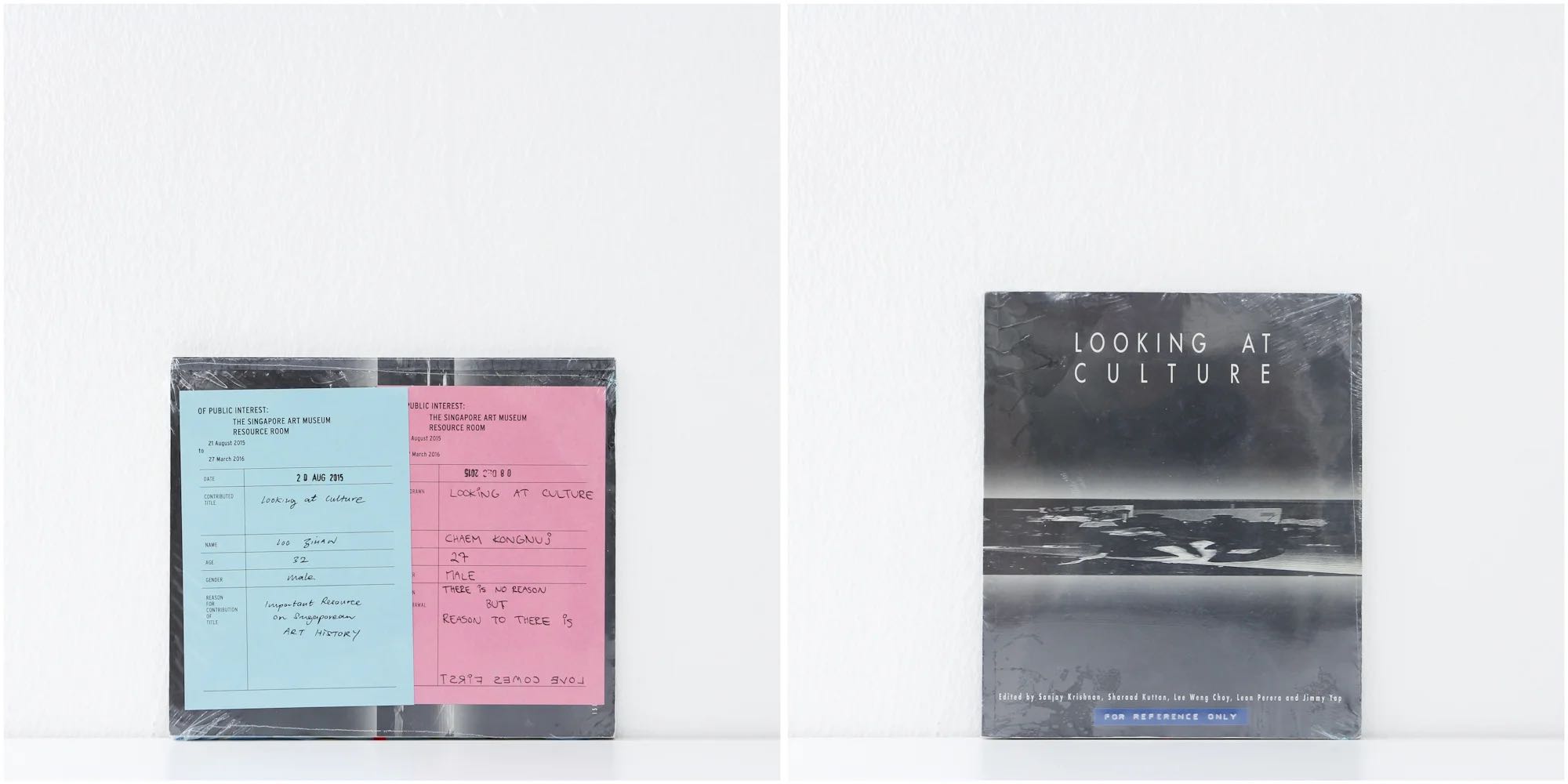
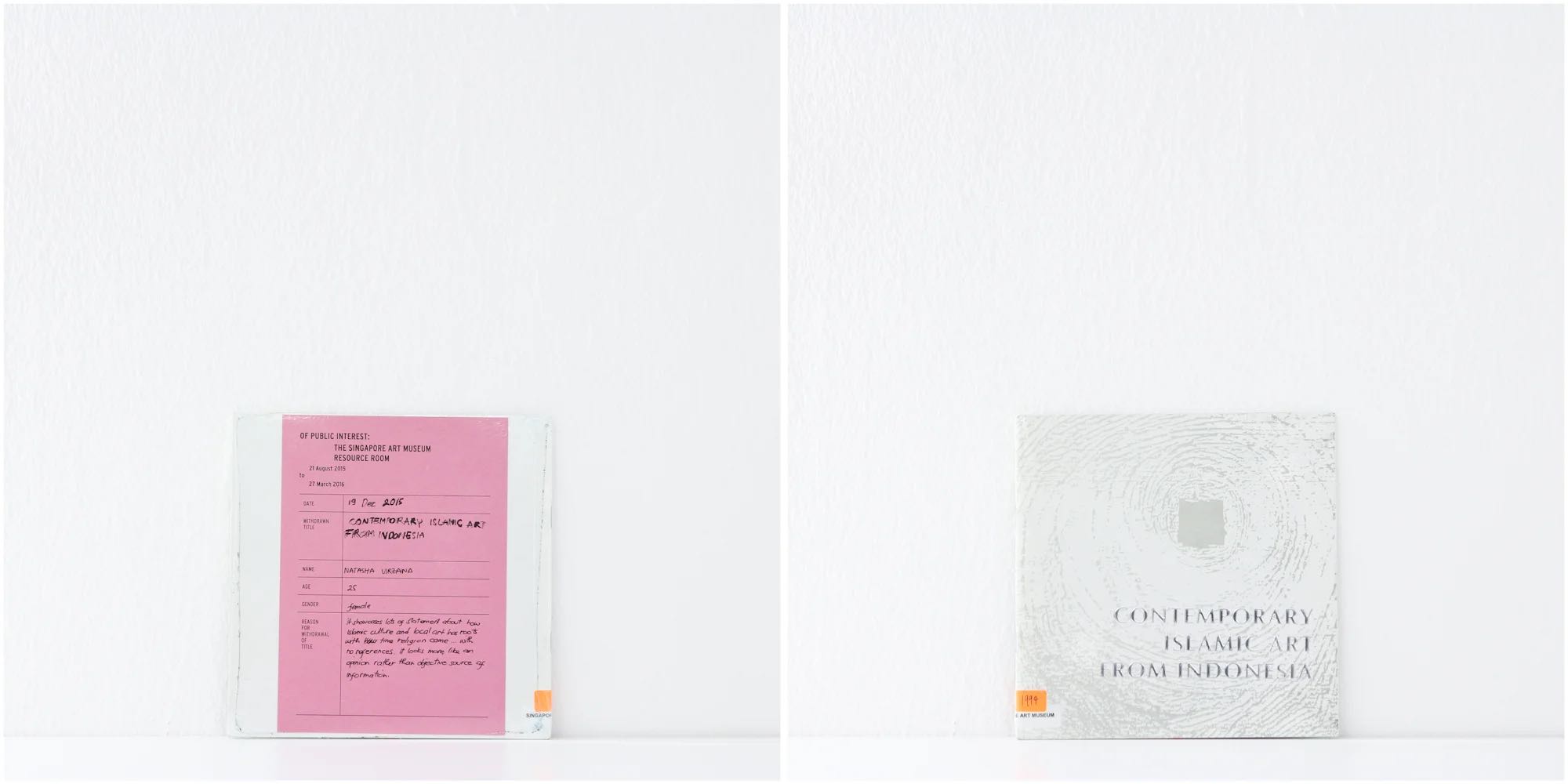
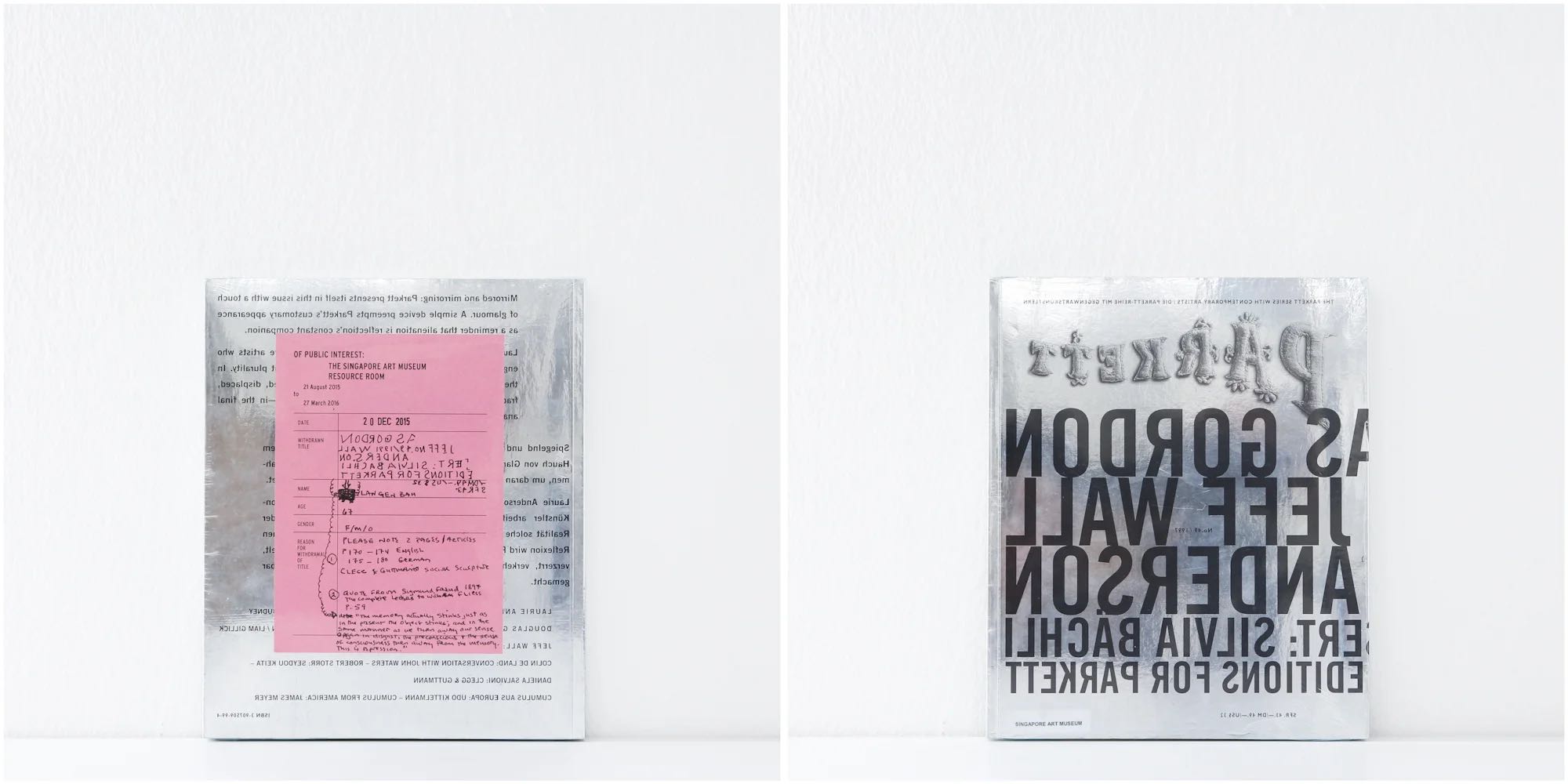
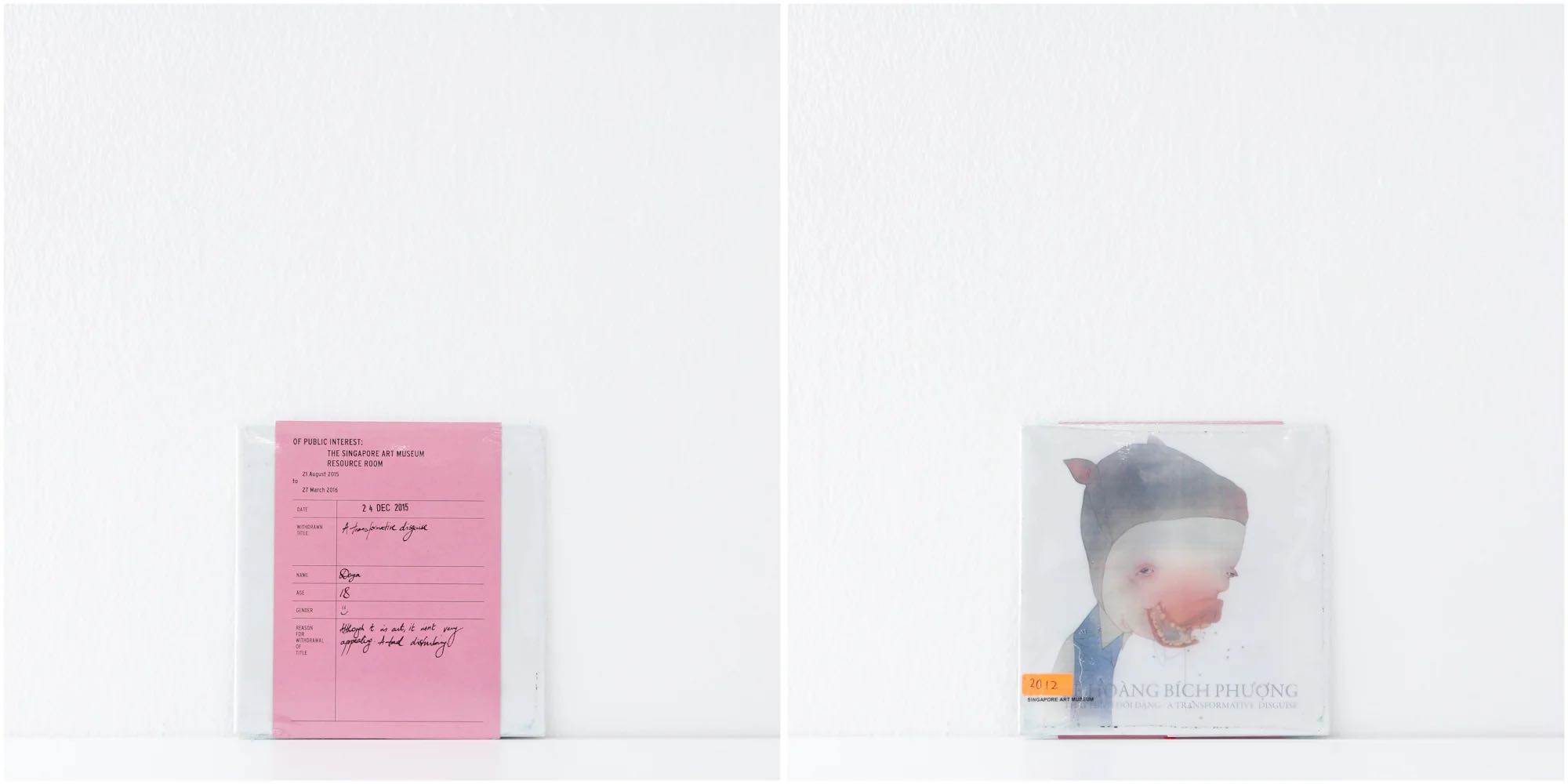
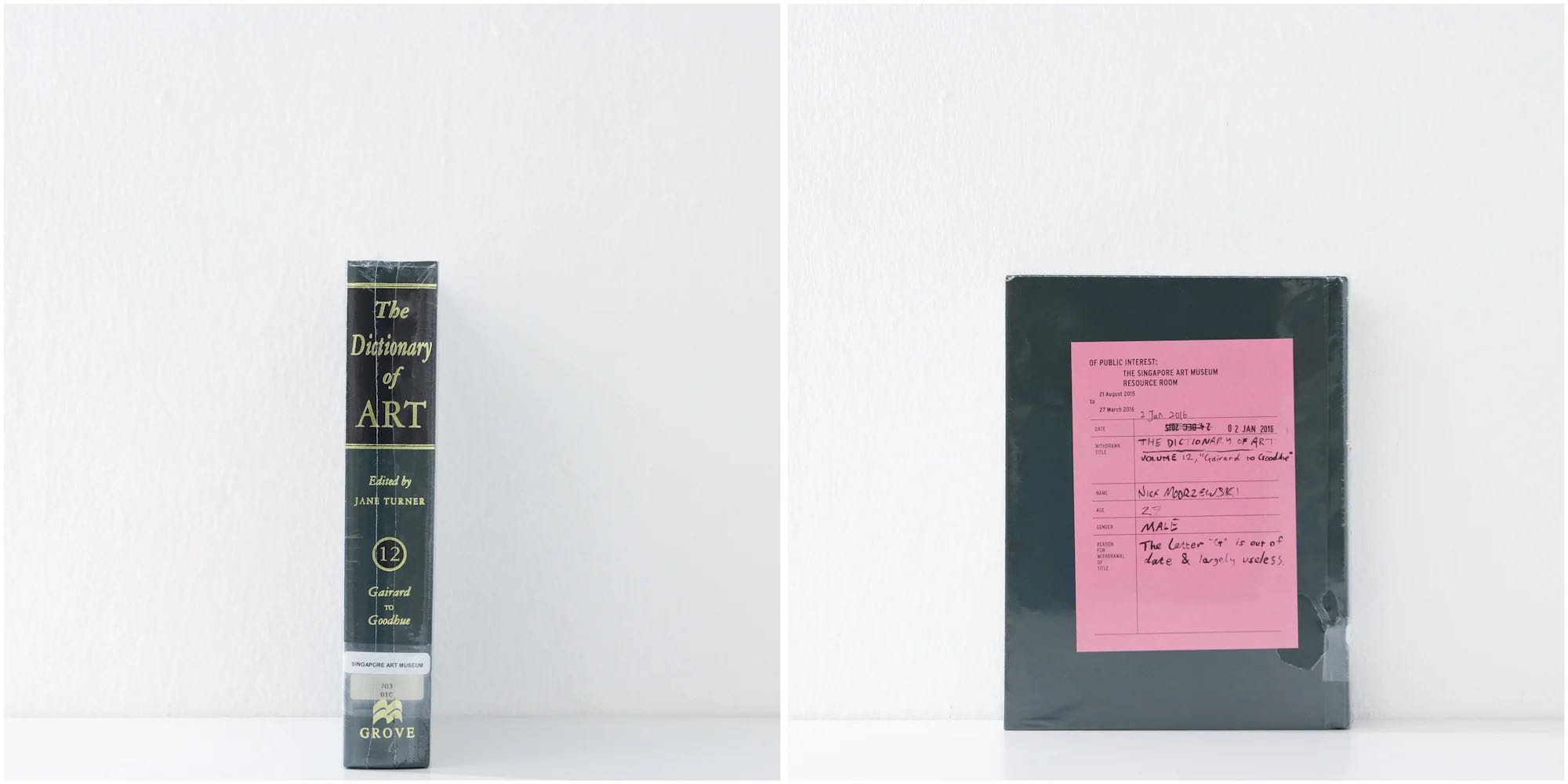
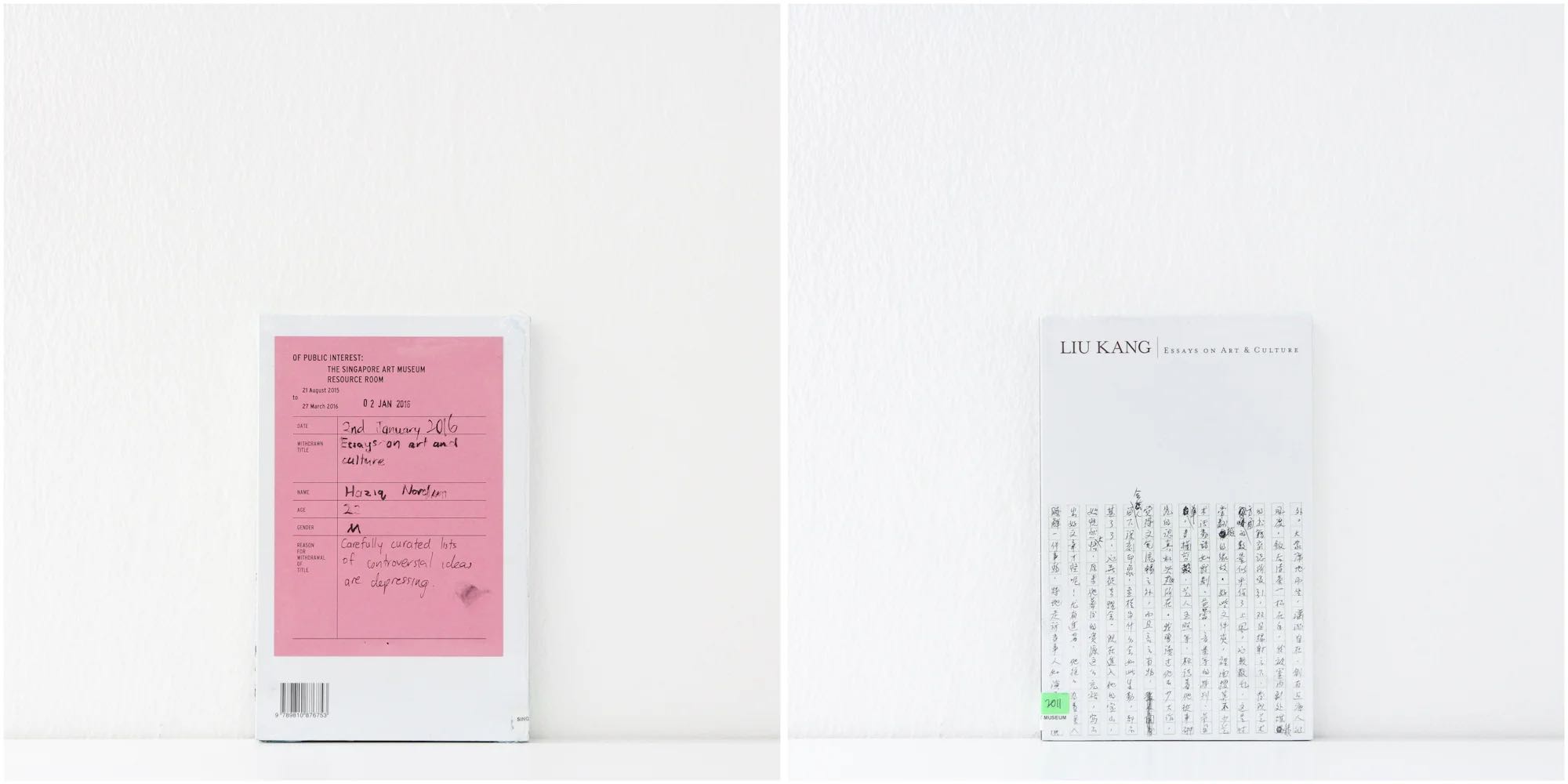
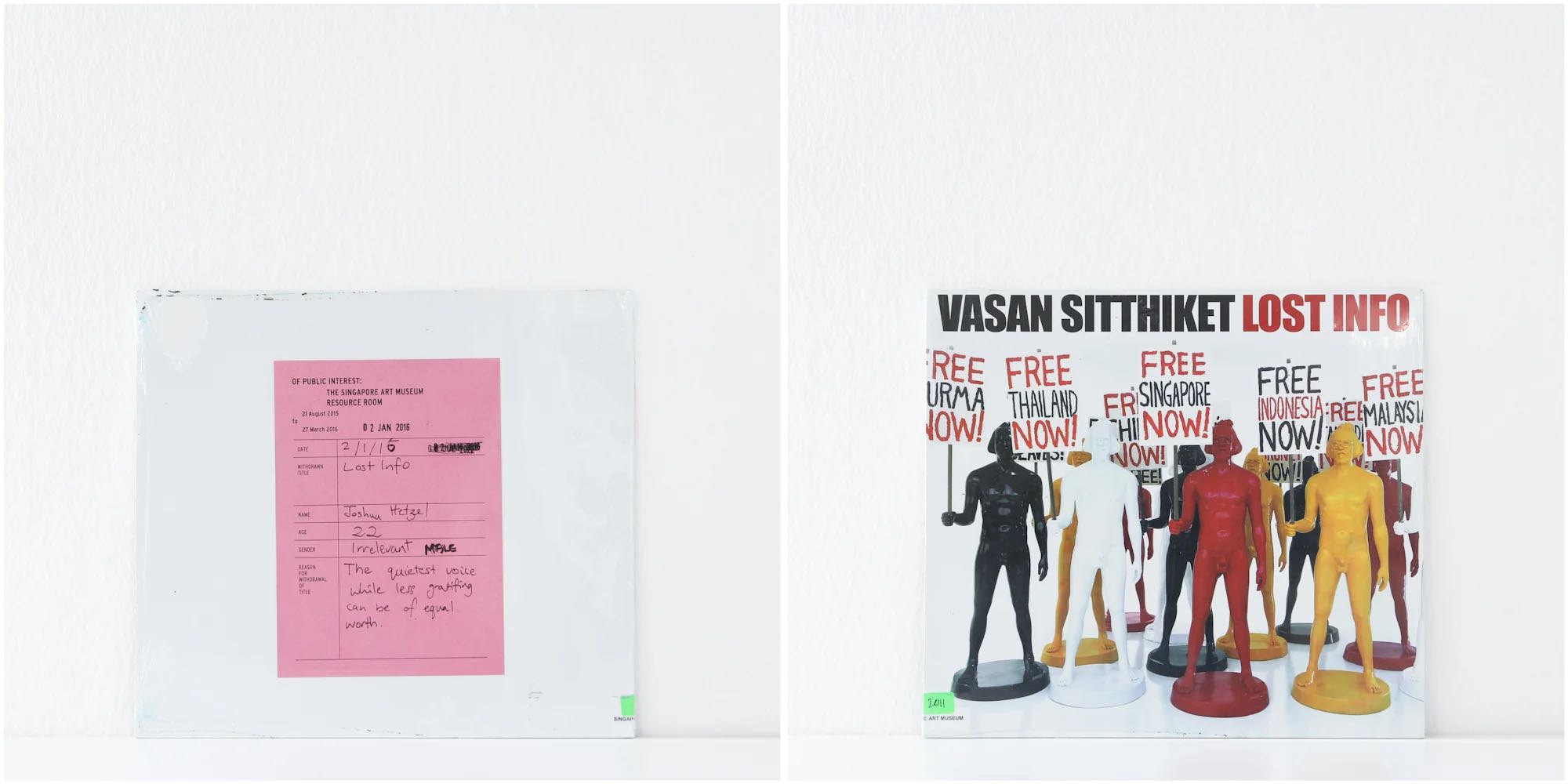
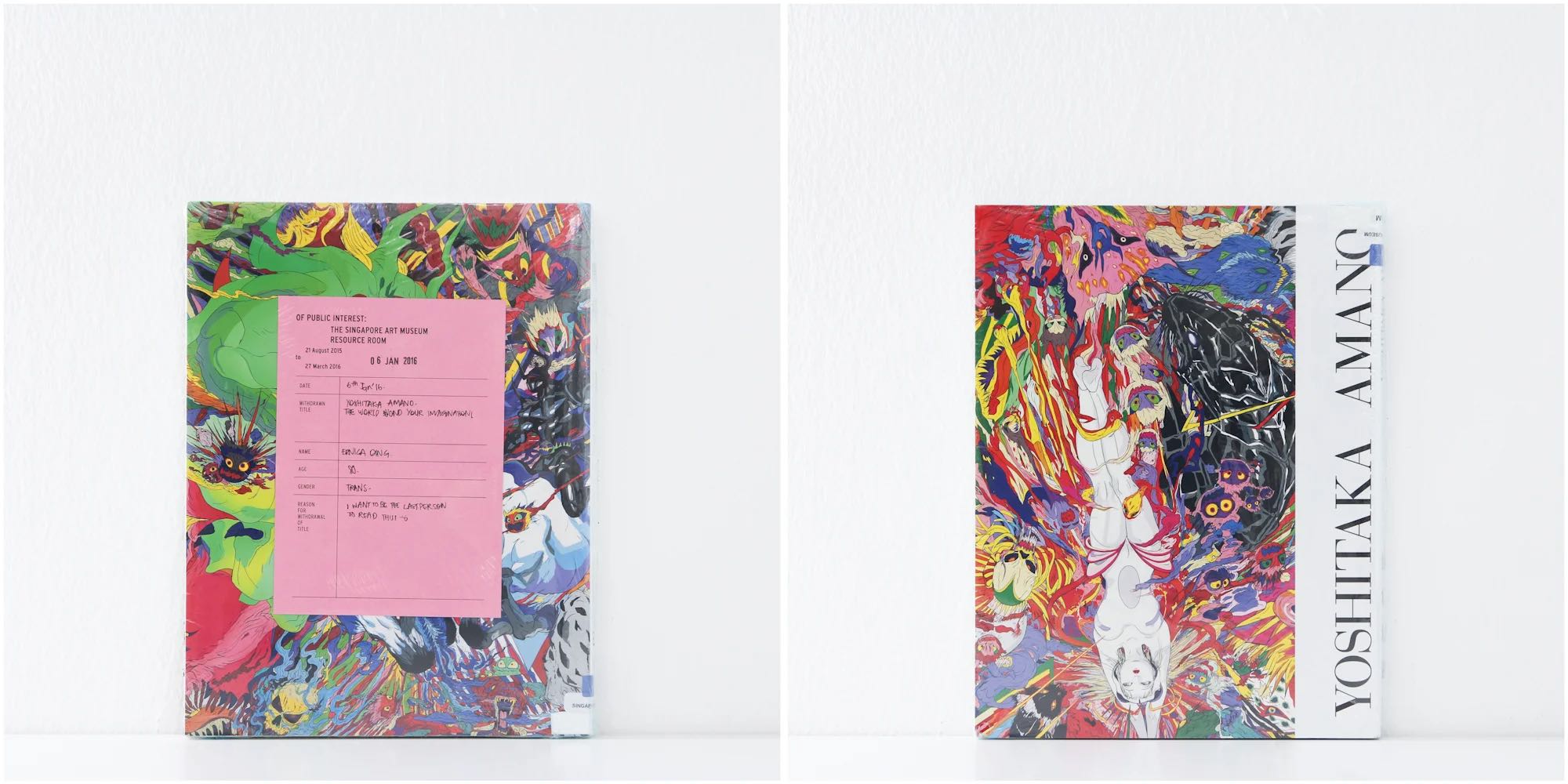
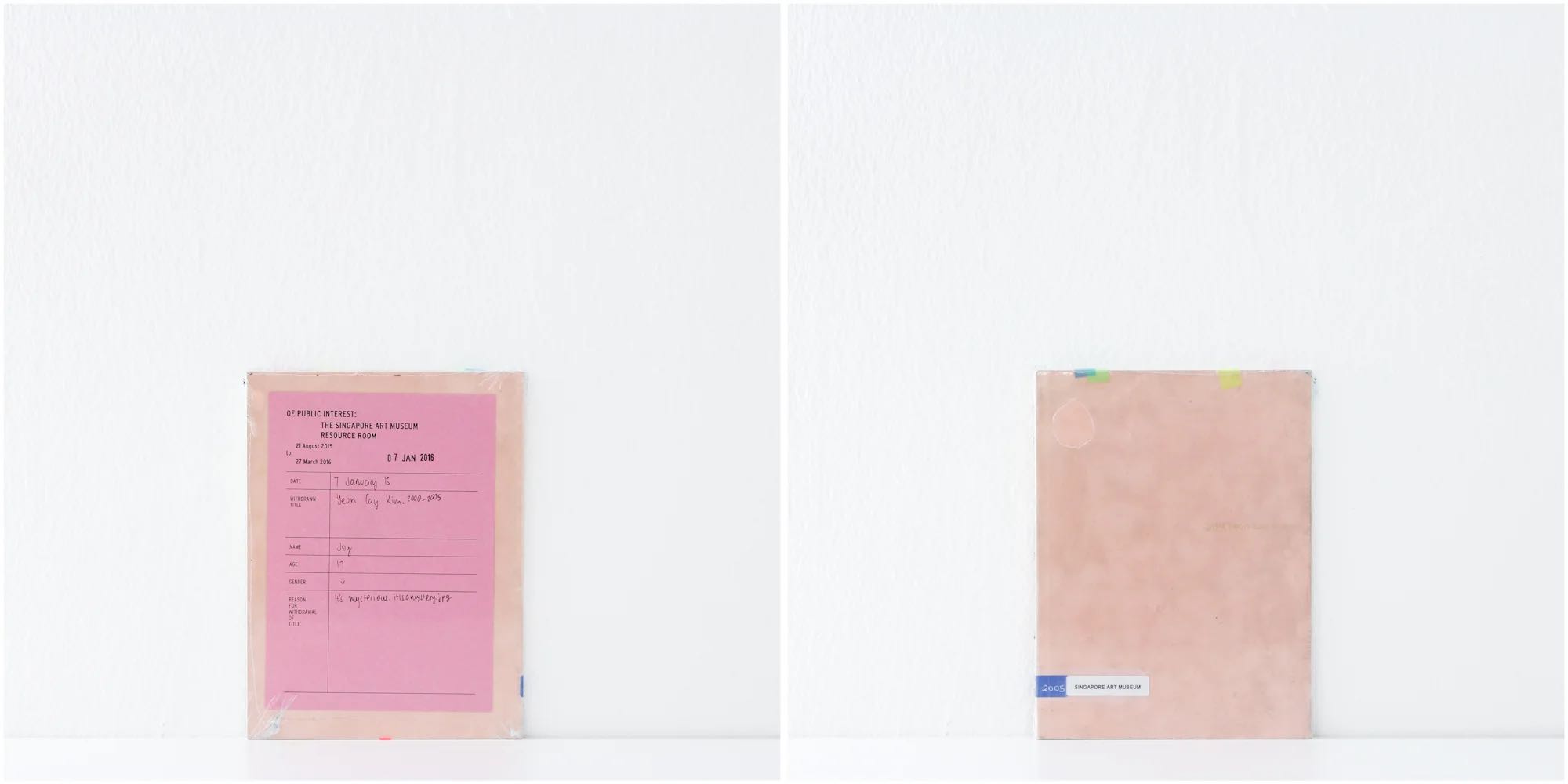
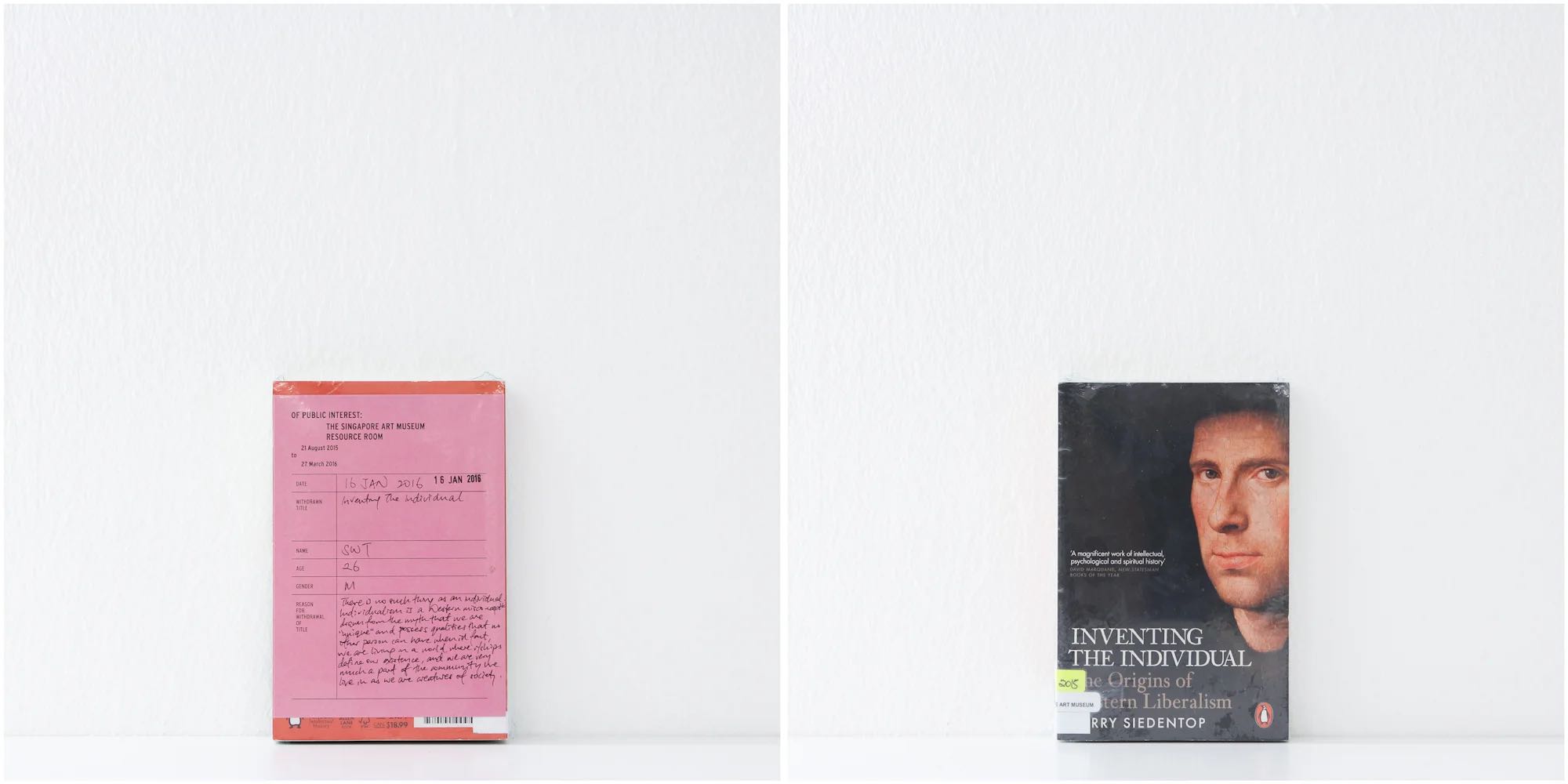
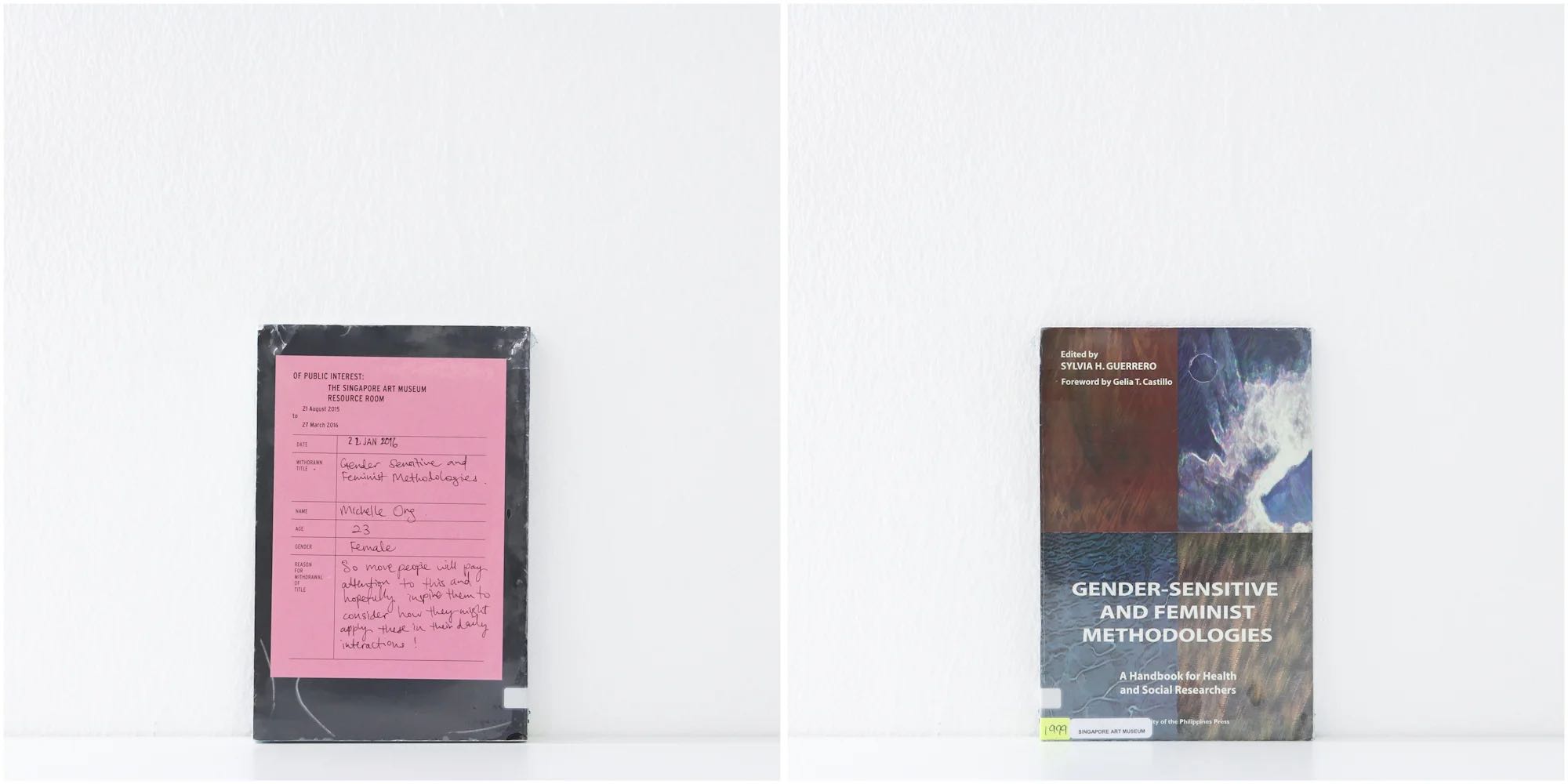
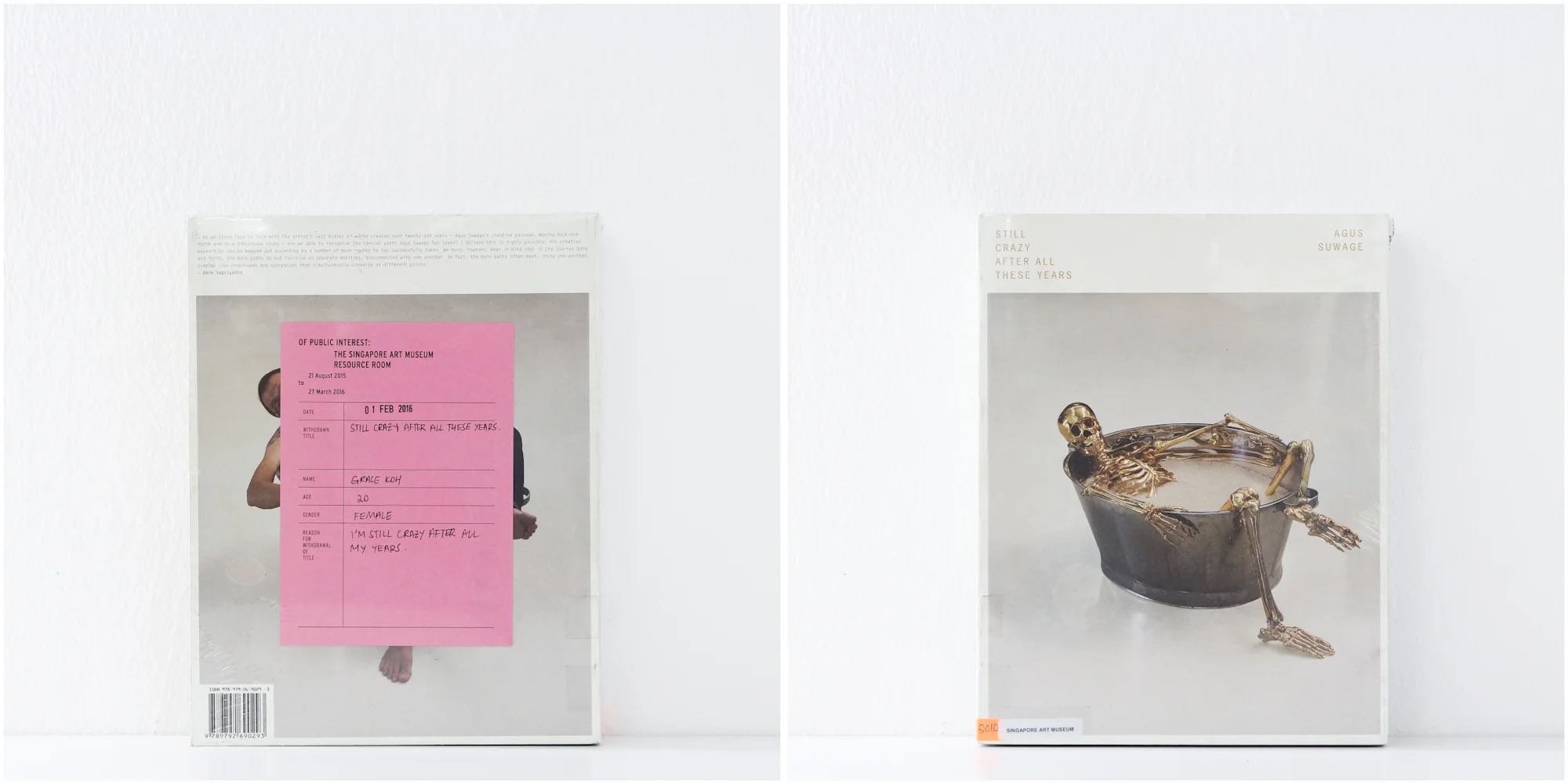
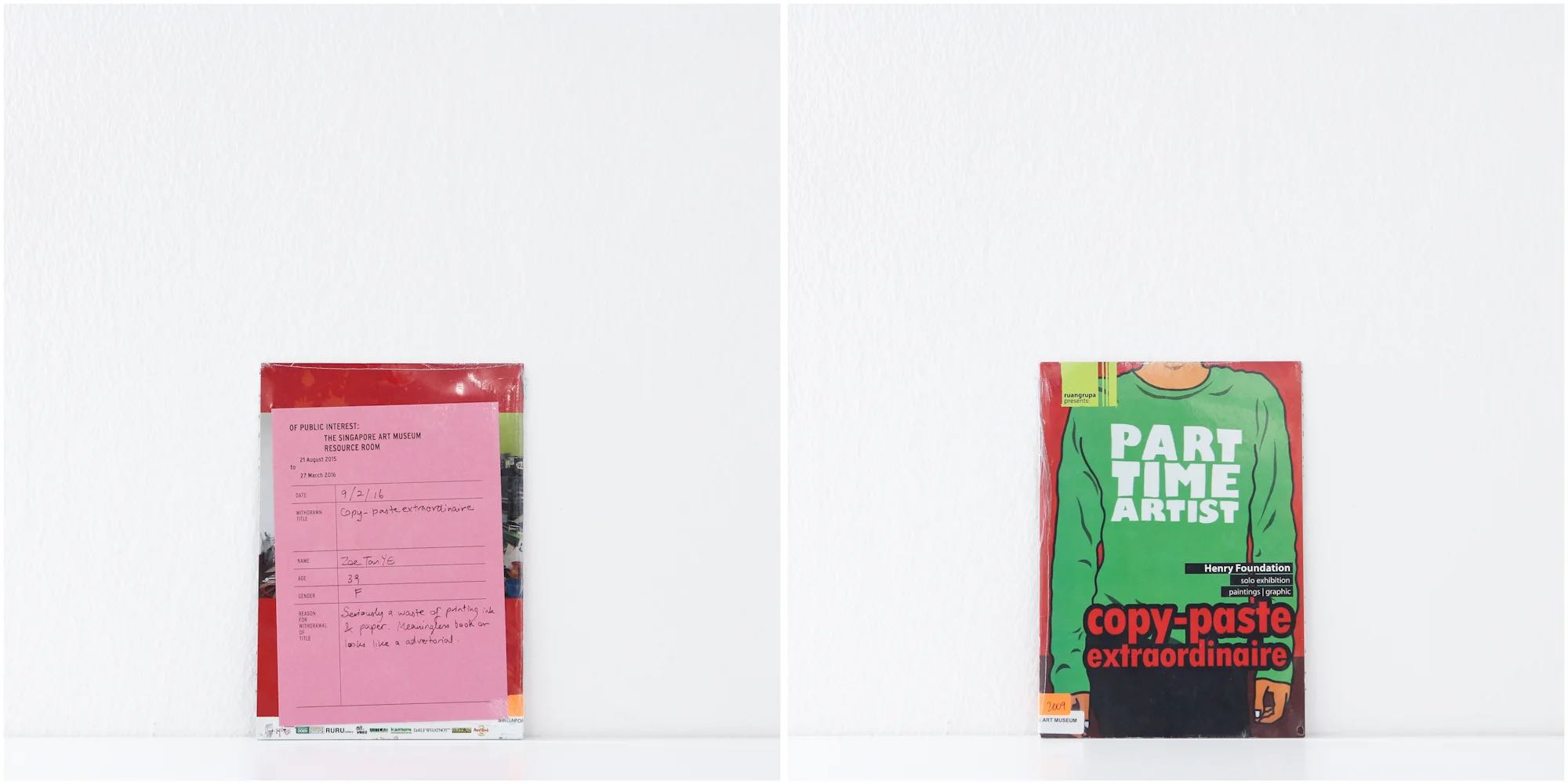
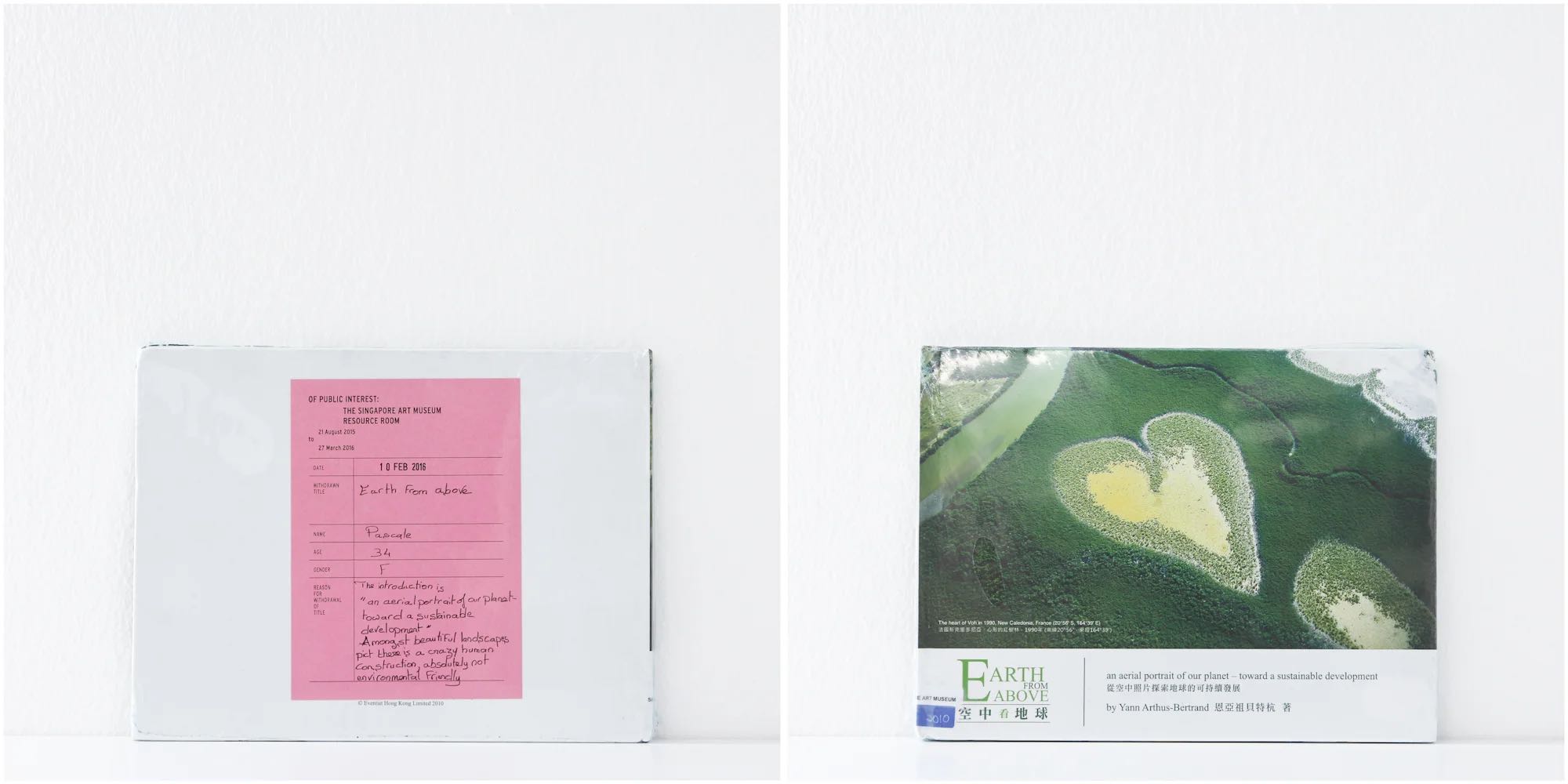
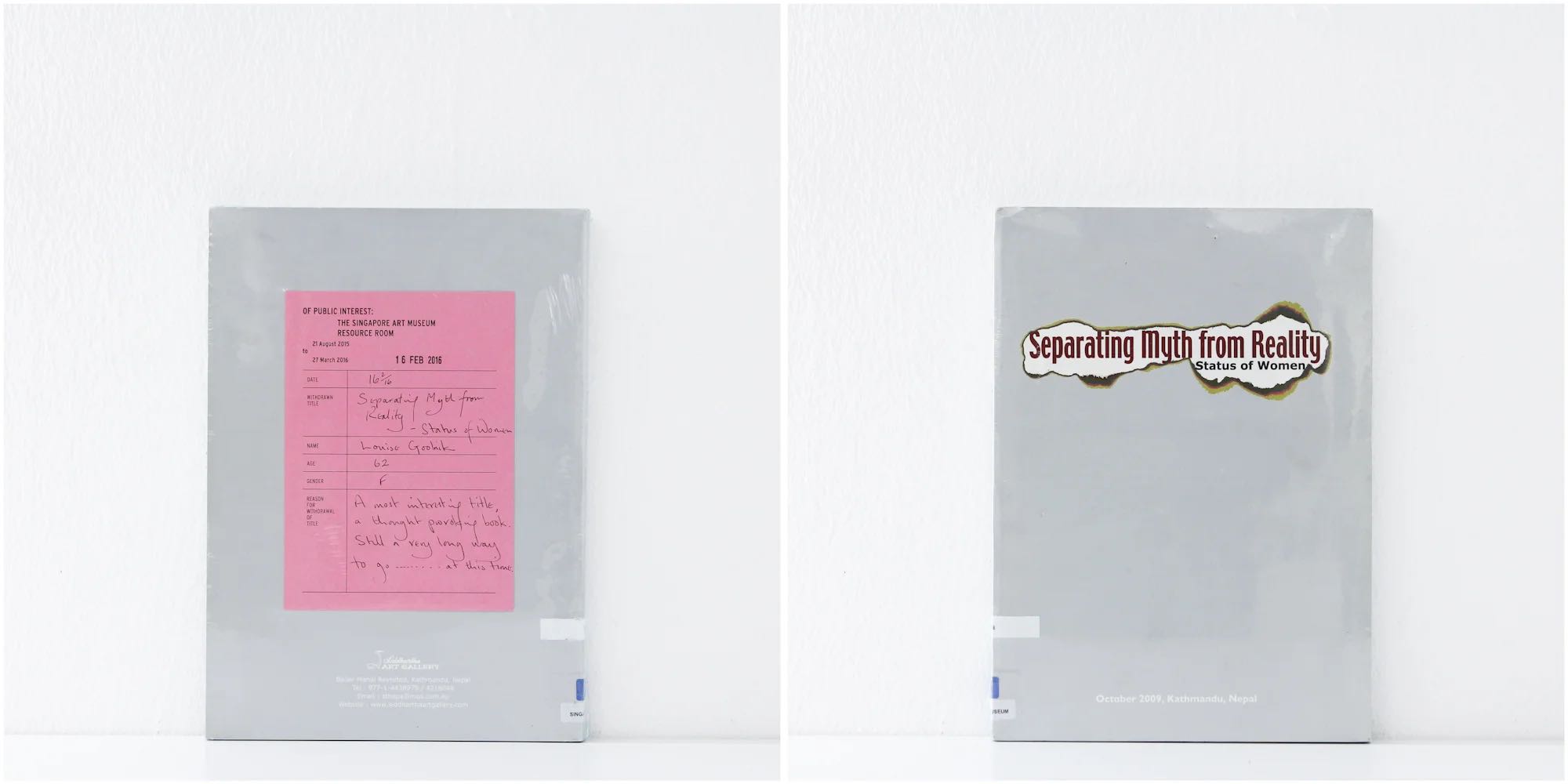
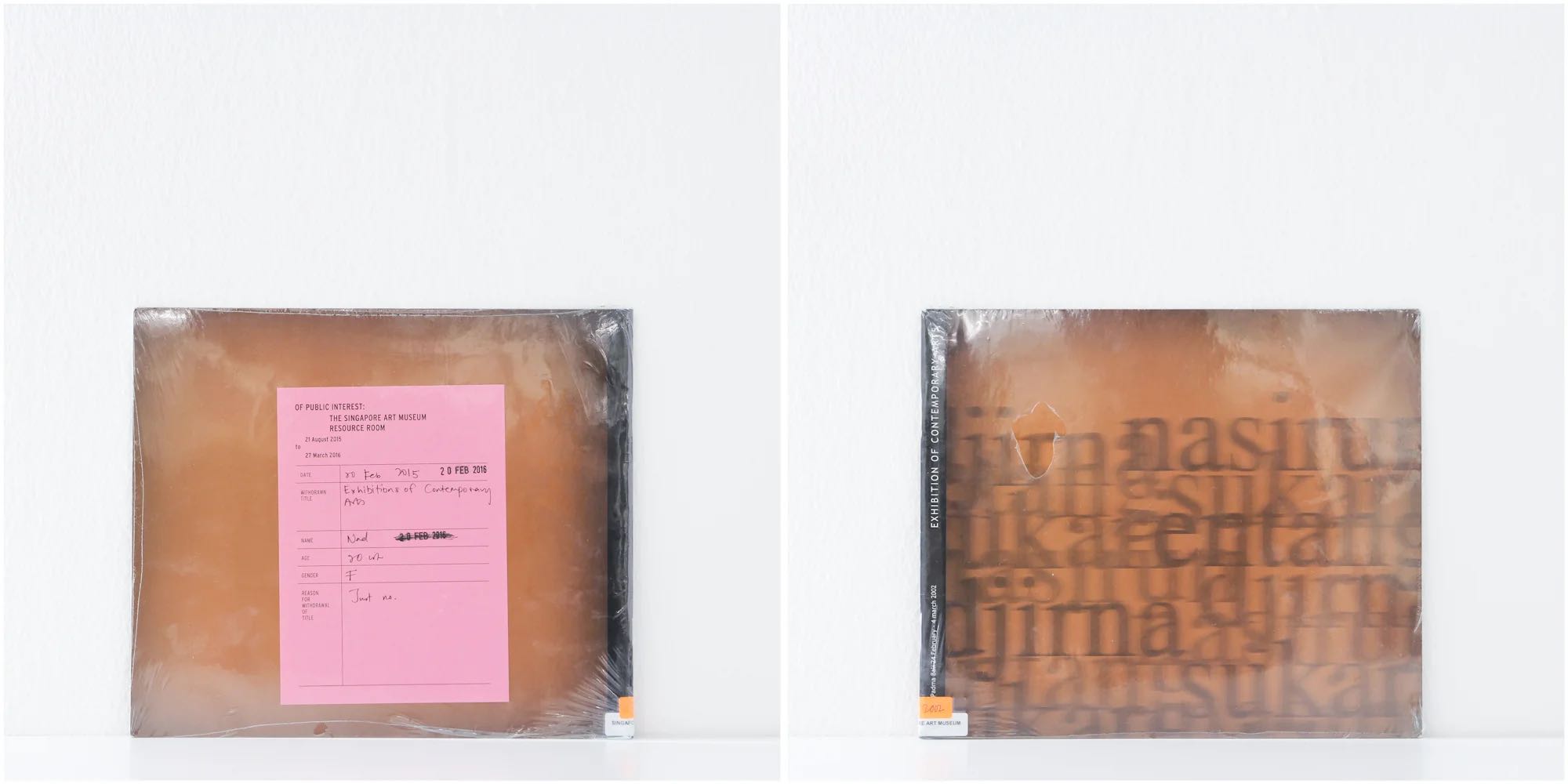
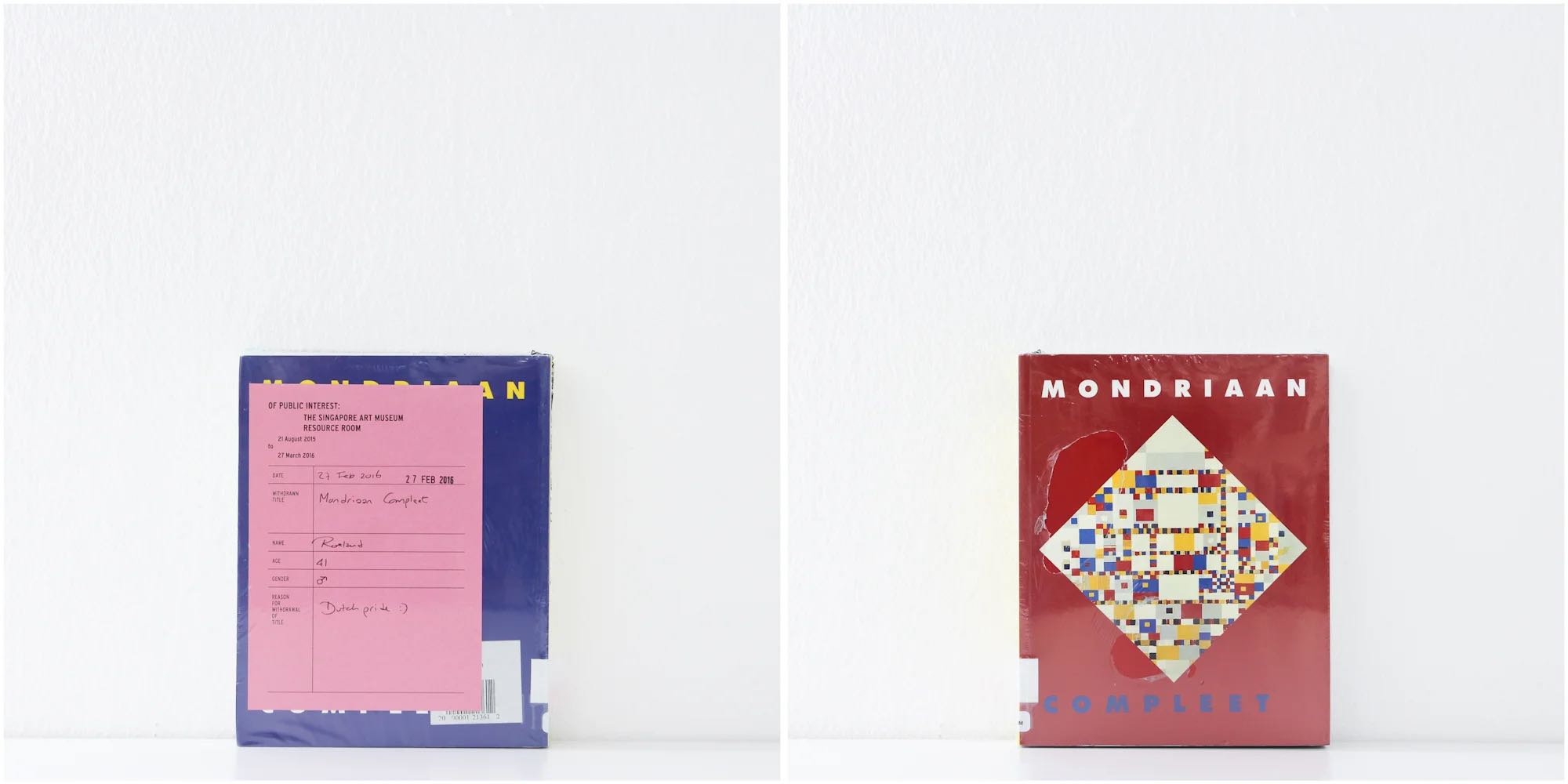
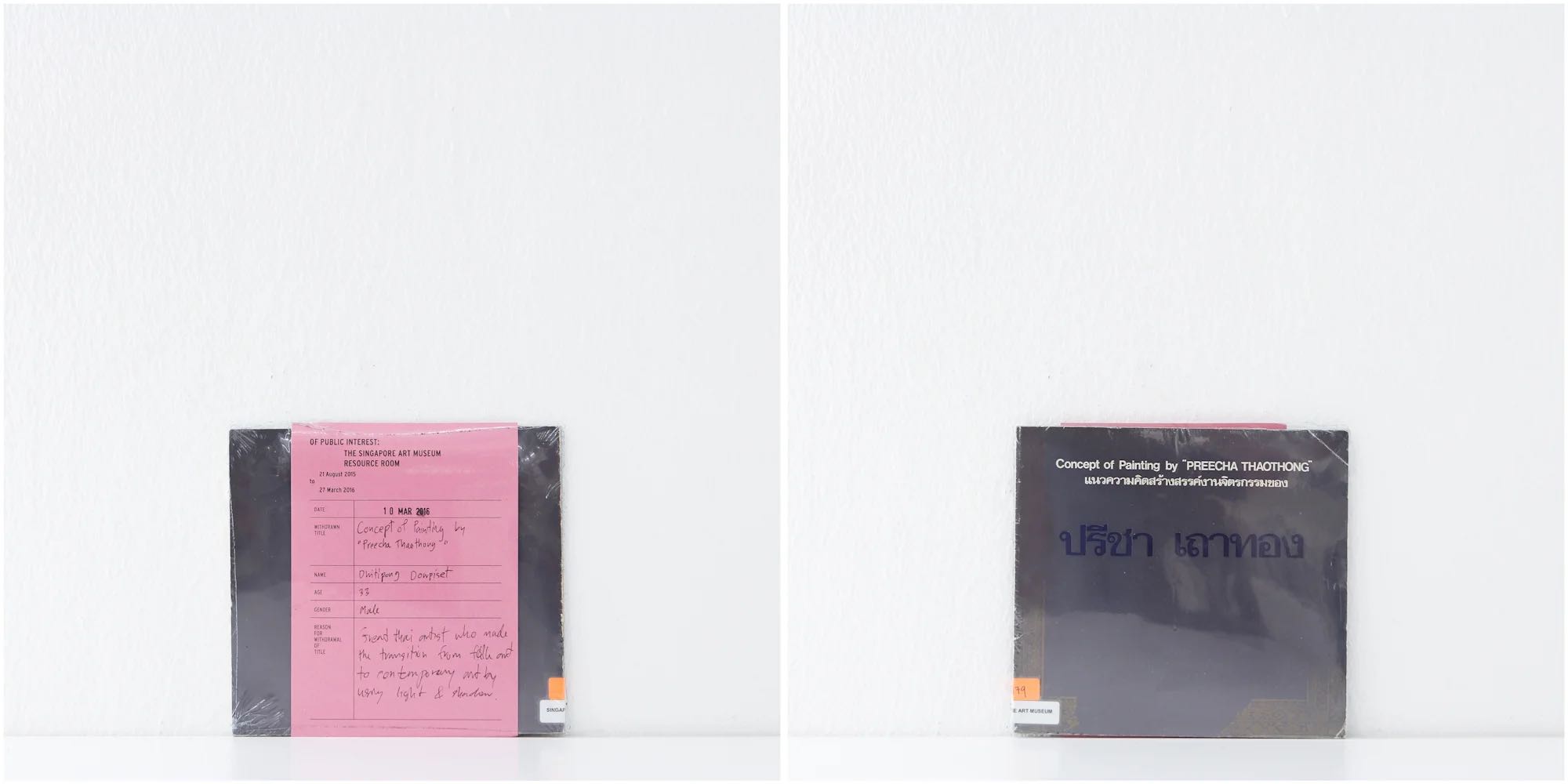
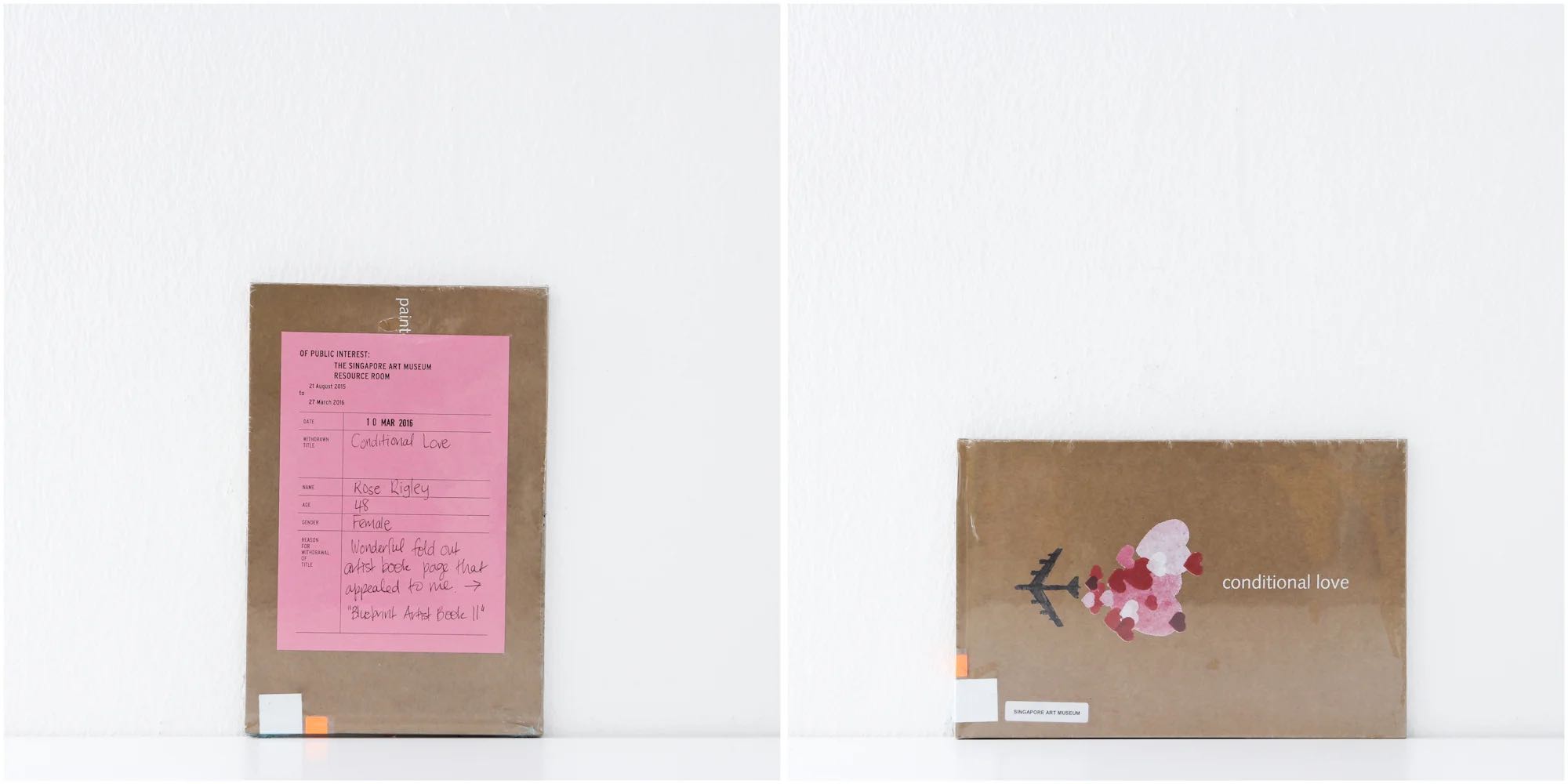
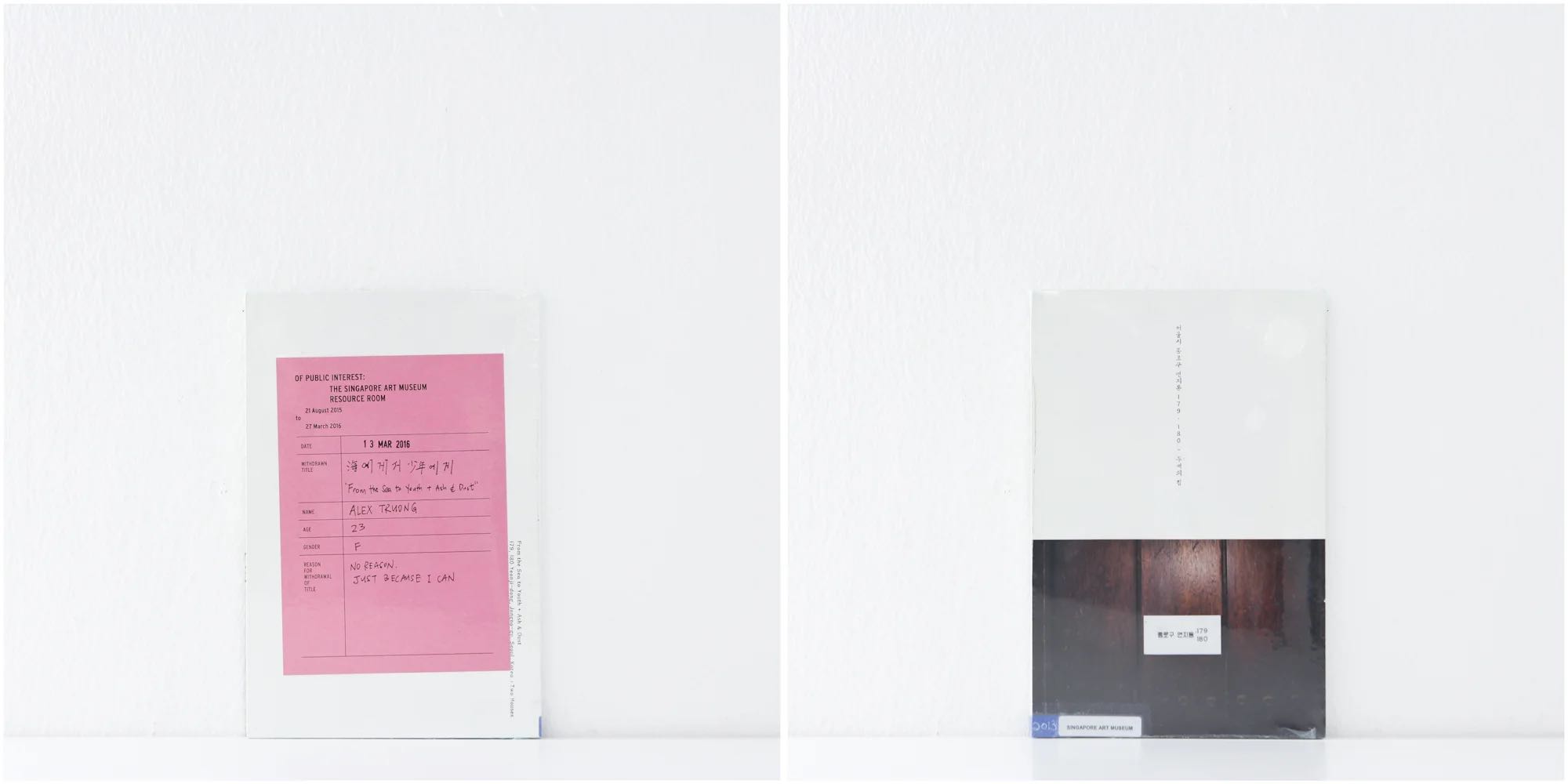
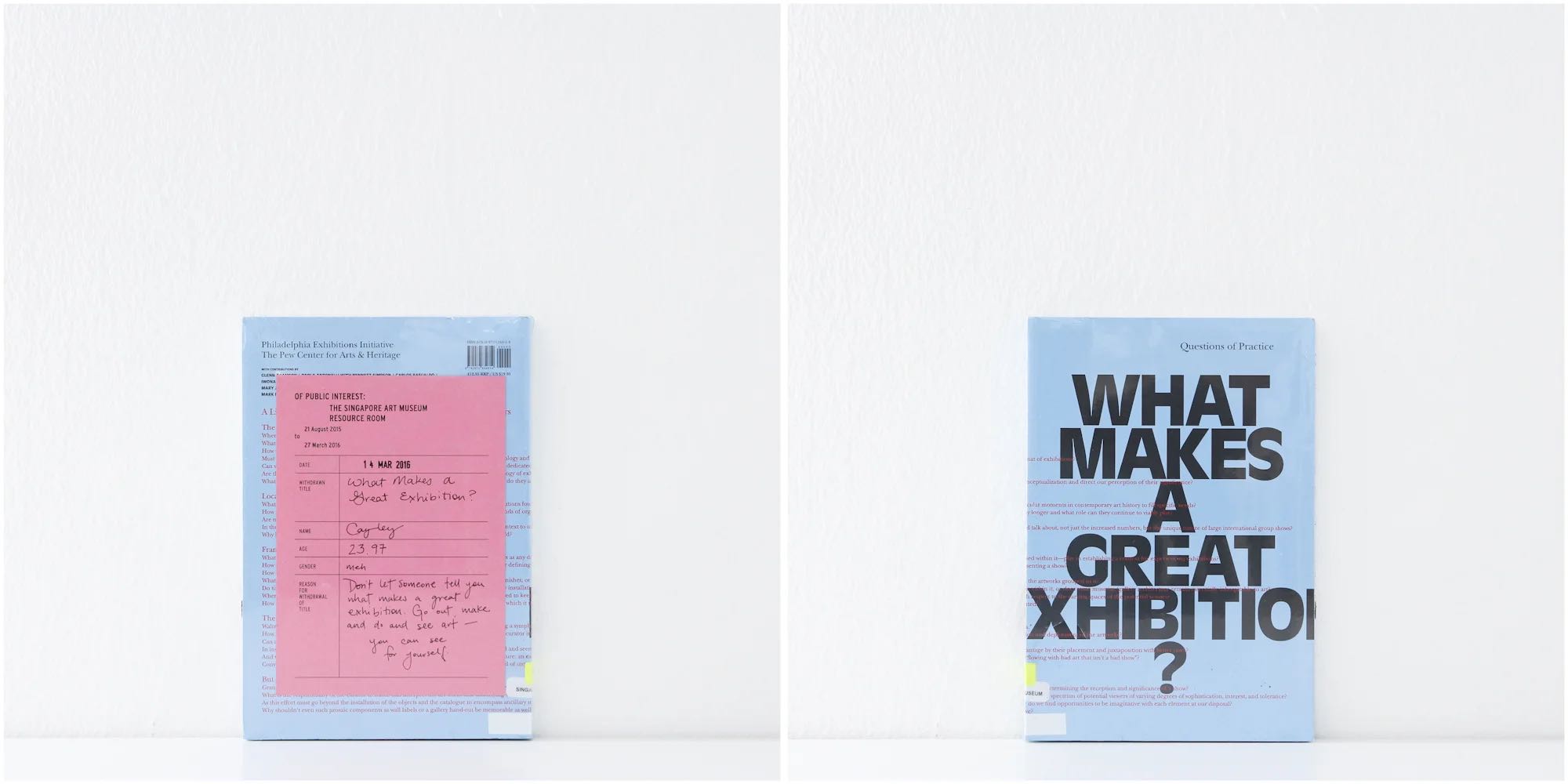
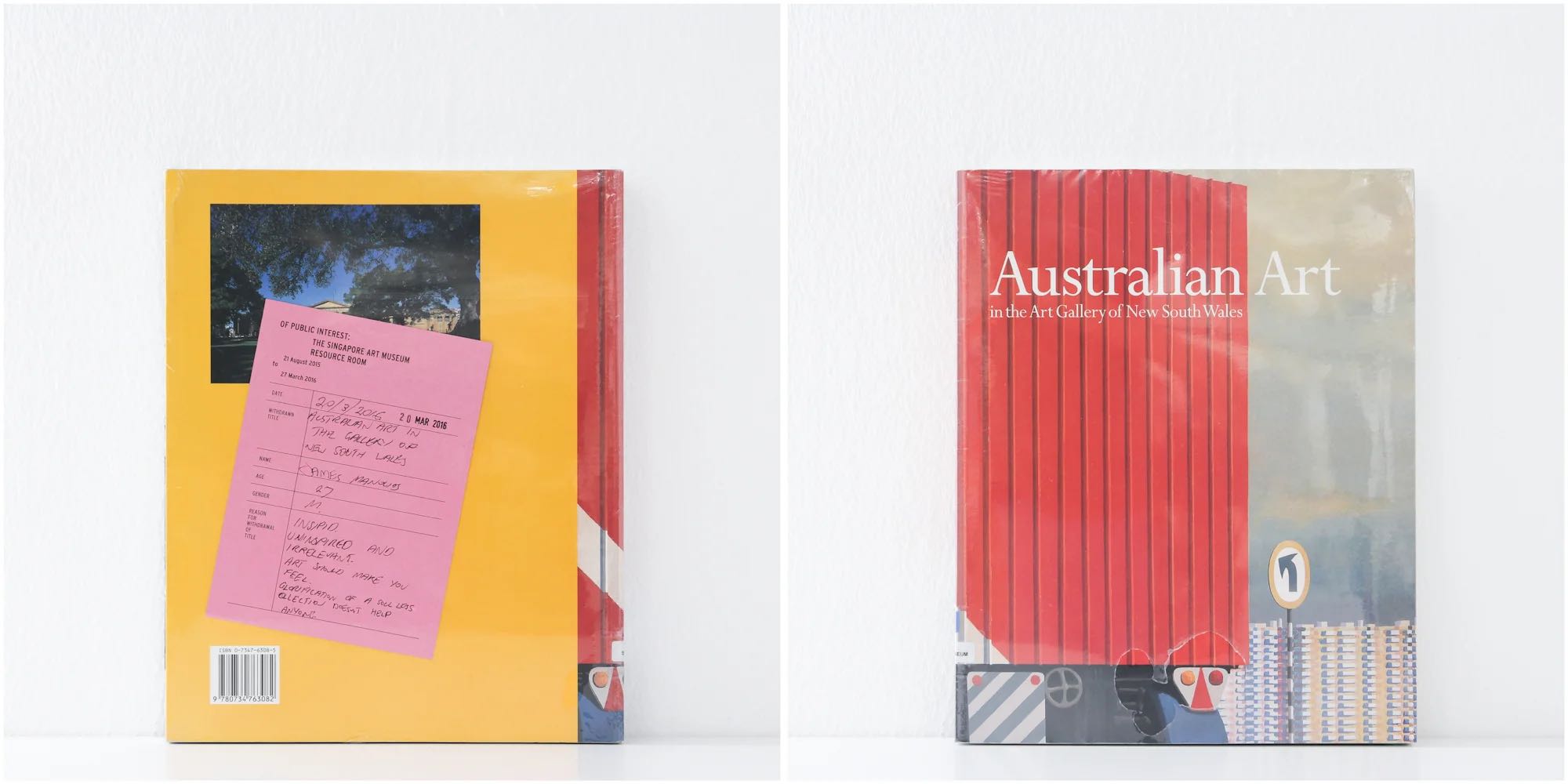
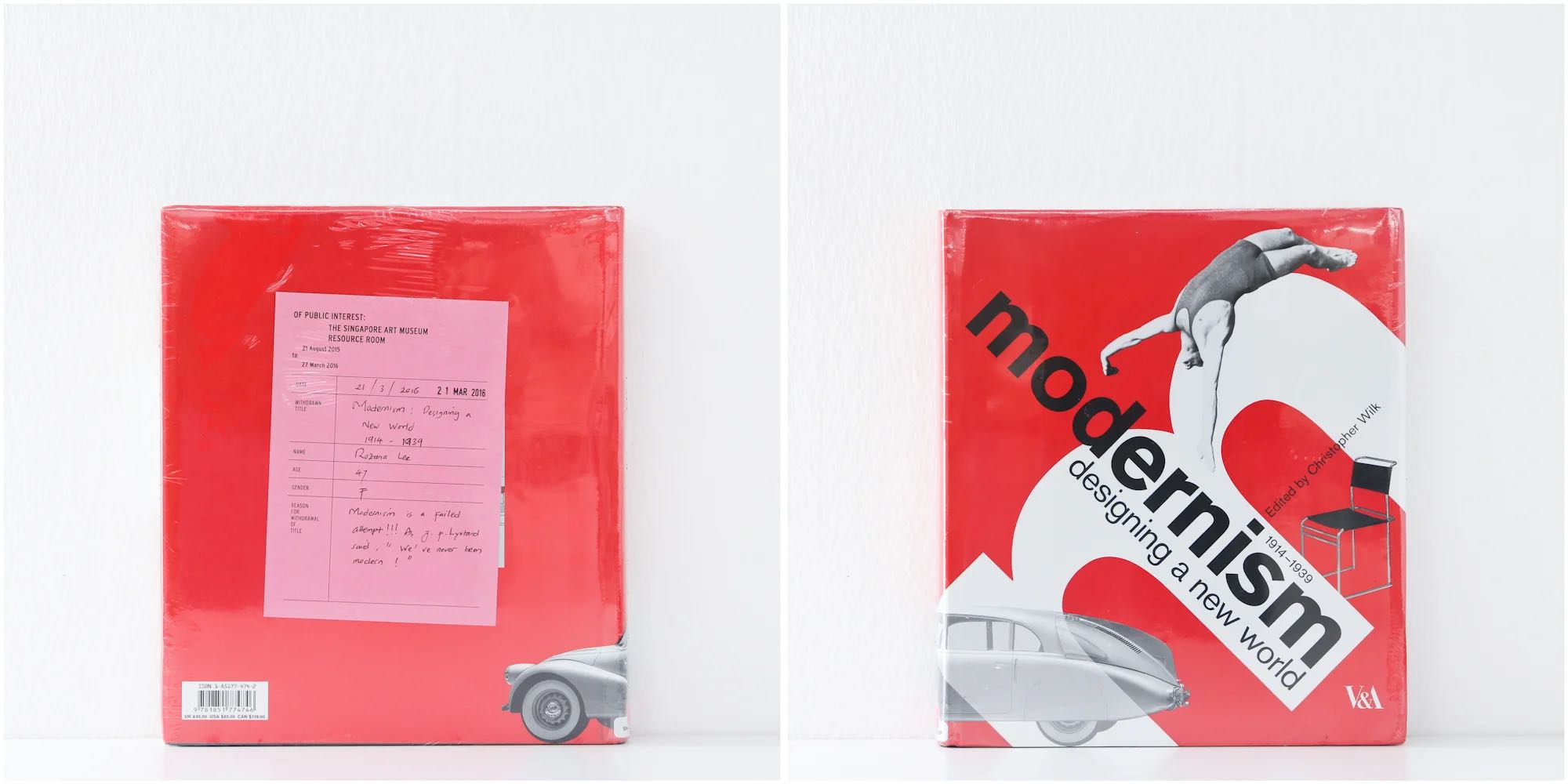
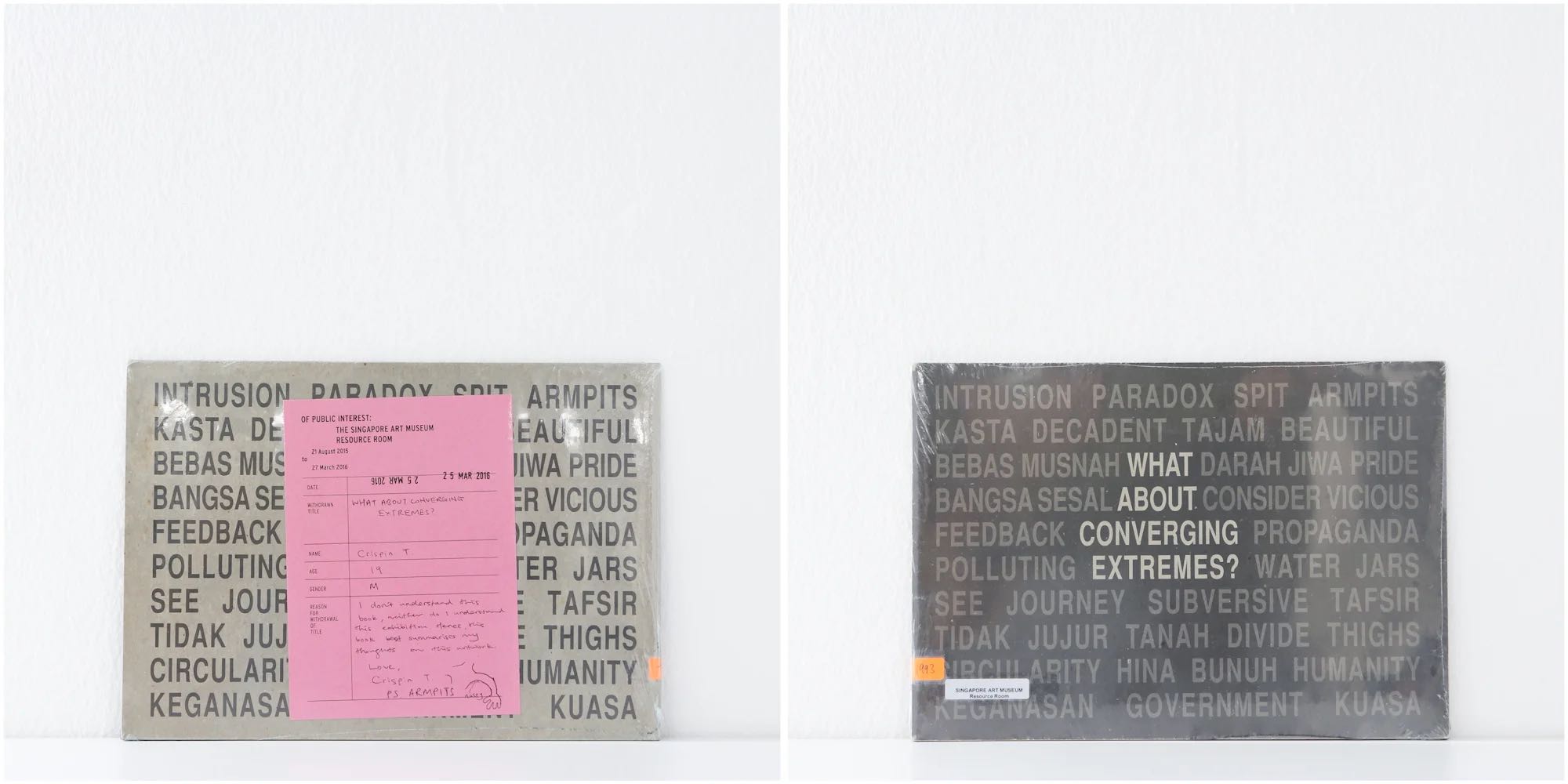
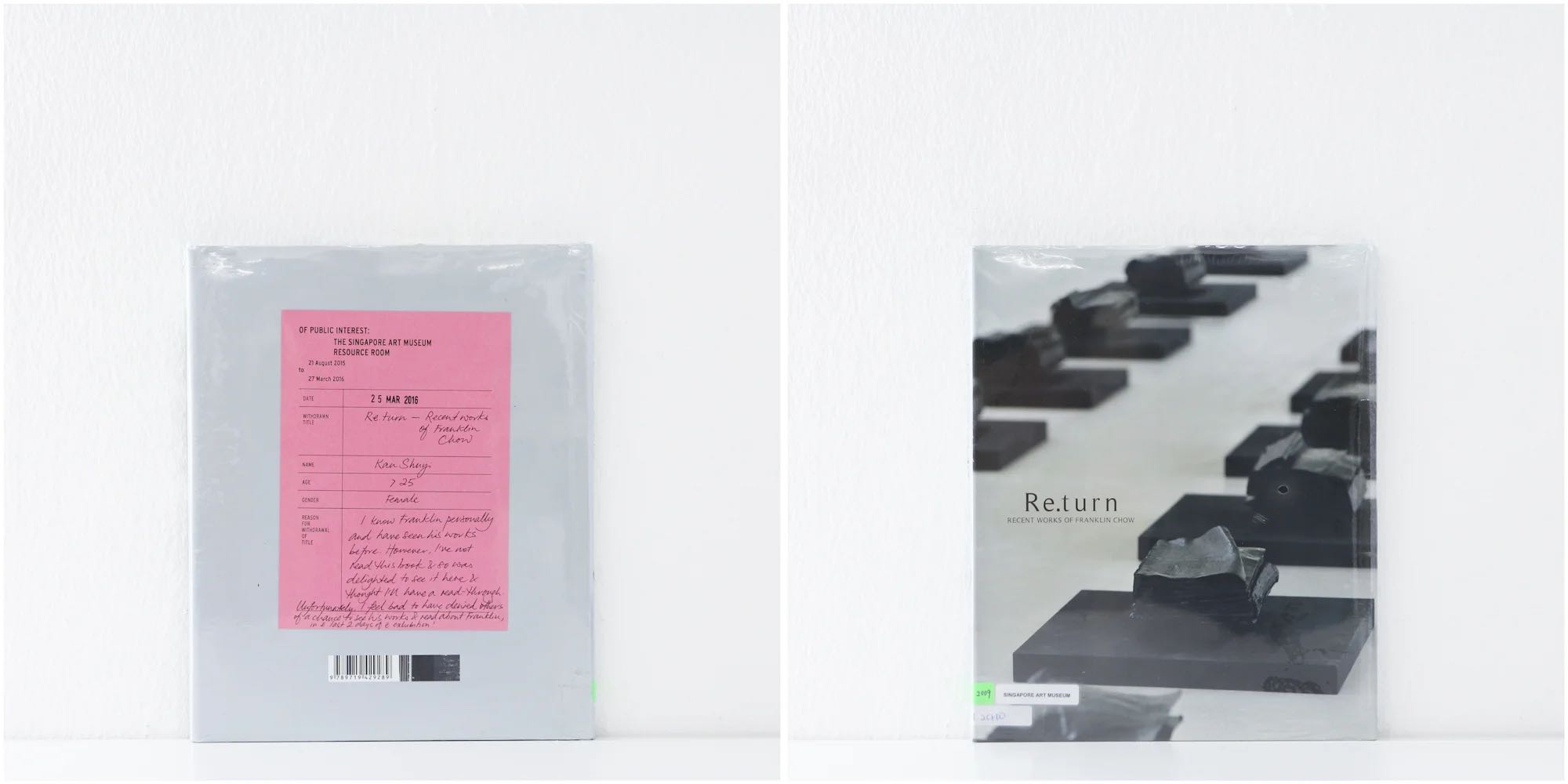
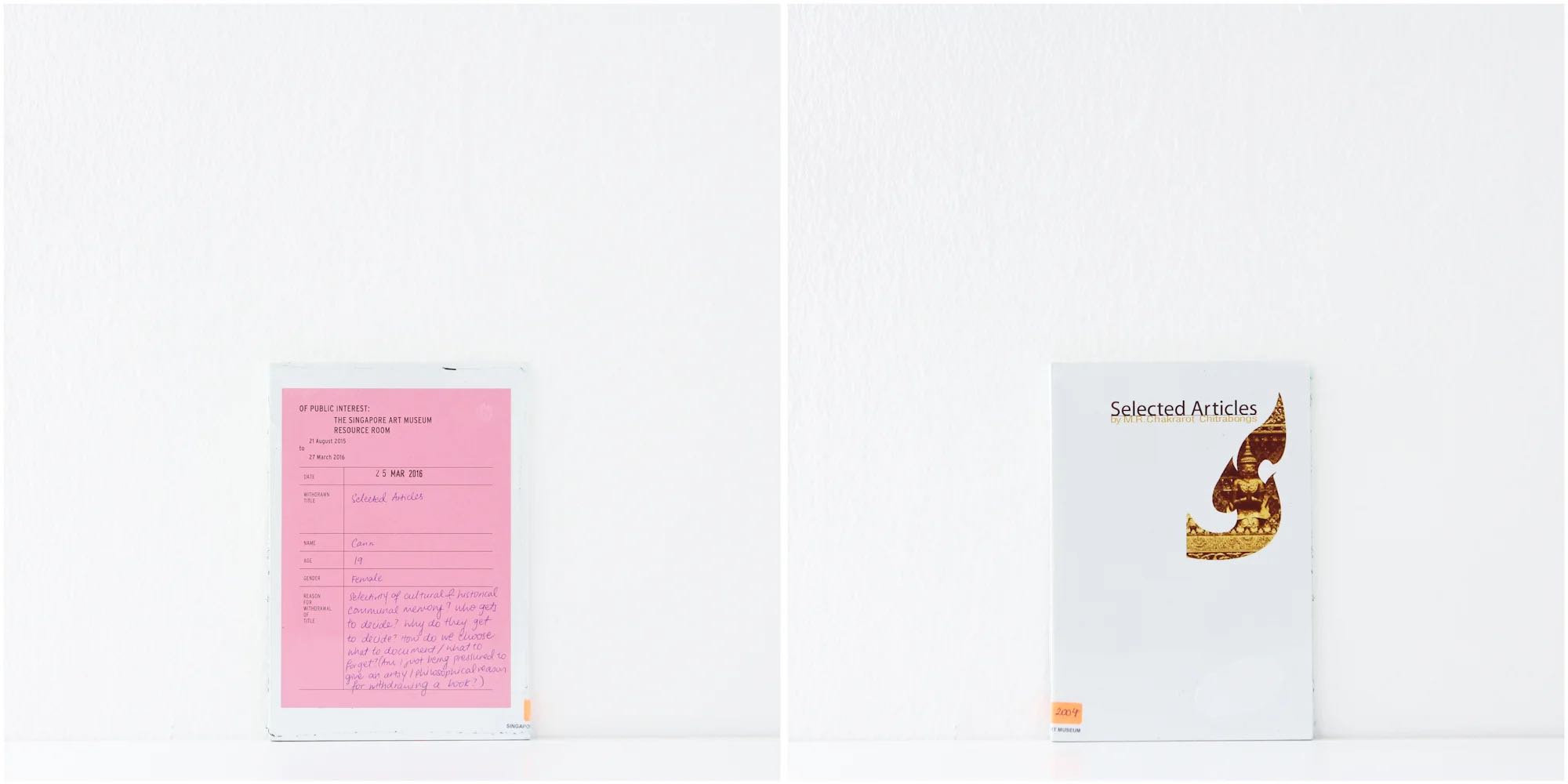
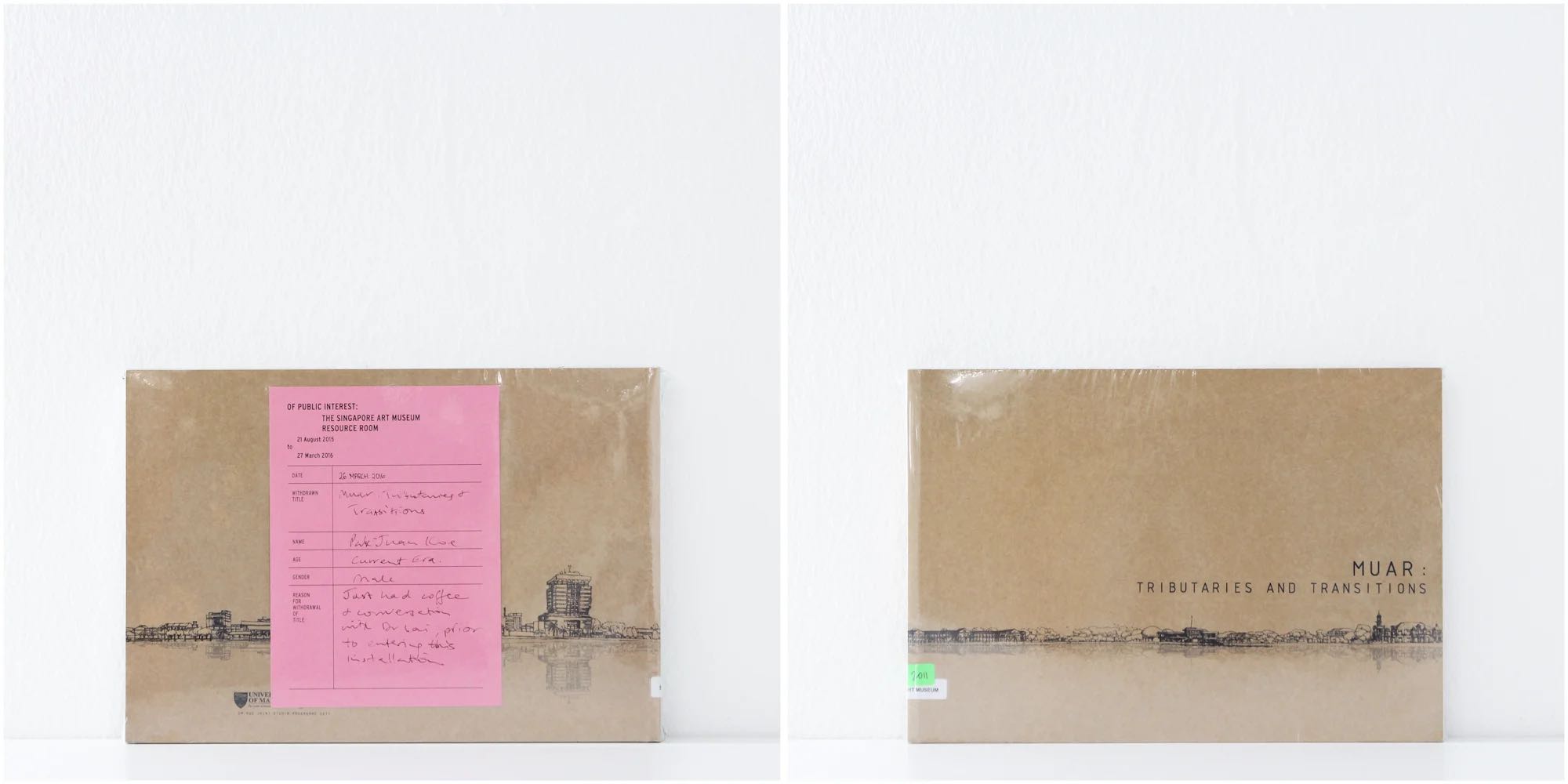
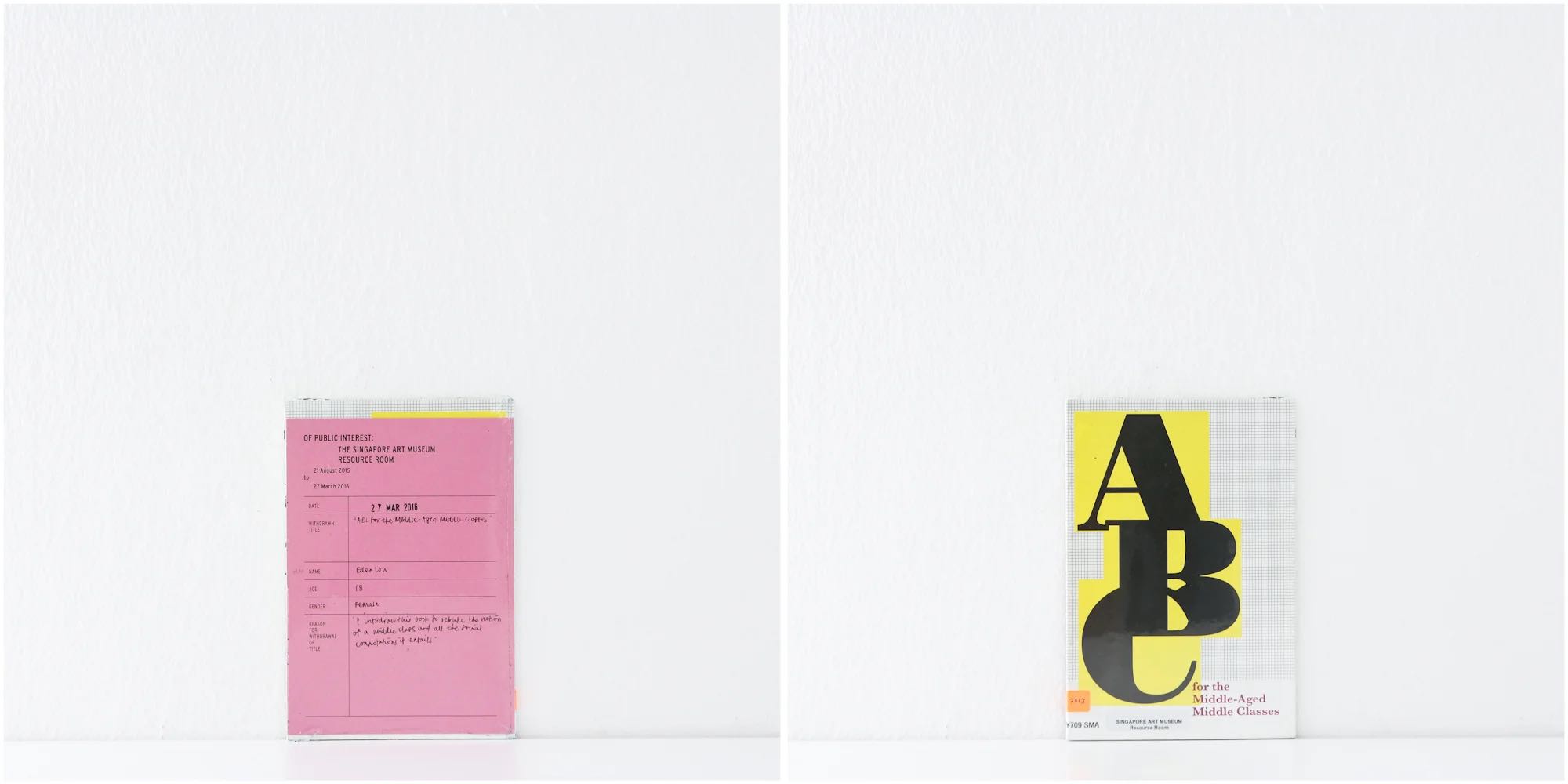
Of Public Interest was a project that moved 4,500 volumes from the Singapore Art Museum’s resource room into the space of a gallery.
The Singapore Art Museum Resource Room is a collection of catalogs, brochures and books that the institution has amassed since its inception in 1996. A number of these materials were acquired specifically for the resource room, but most of them were gifted to the institution by individuals and partner organizations. This resource room was open for access as a reference library until 2008, when the museum’s administrative offices moved out of the main building into a neighboring complex.
For my President’s Young Talents commission, I decided to reopen this body of information for public access over the duration of the exhibition. Together with a team of 25 volunteers, these books were catalogued and sequenced chronologically according to their date of publication. They have also been color-coded according to the location of the publisher and presenting institution.
Presented as a relational installation-in-flux, the work functioned as a reference library open to the public. The public was invited to shape the collection for the duration of the exhibition from August 2015 to March 2016, subject to the following conditions:
- Each visitor was allowed to withdraw one book from the collection.
Public access to this book was restricted for the duration of the exhibition.
These books were shrink-wrapped and placed in a separate area of the installation. - Each visitor was allowed to loan one book to the collection.
This contribution was in effect for the duration of the exhibition.
These books were accessible to other visitors and placed in a separate area of the installation.
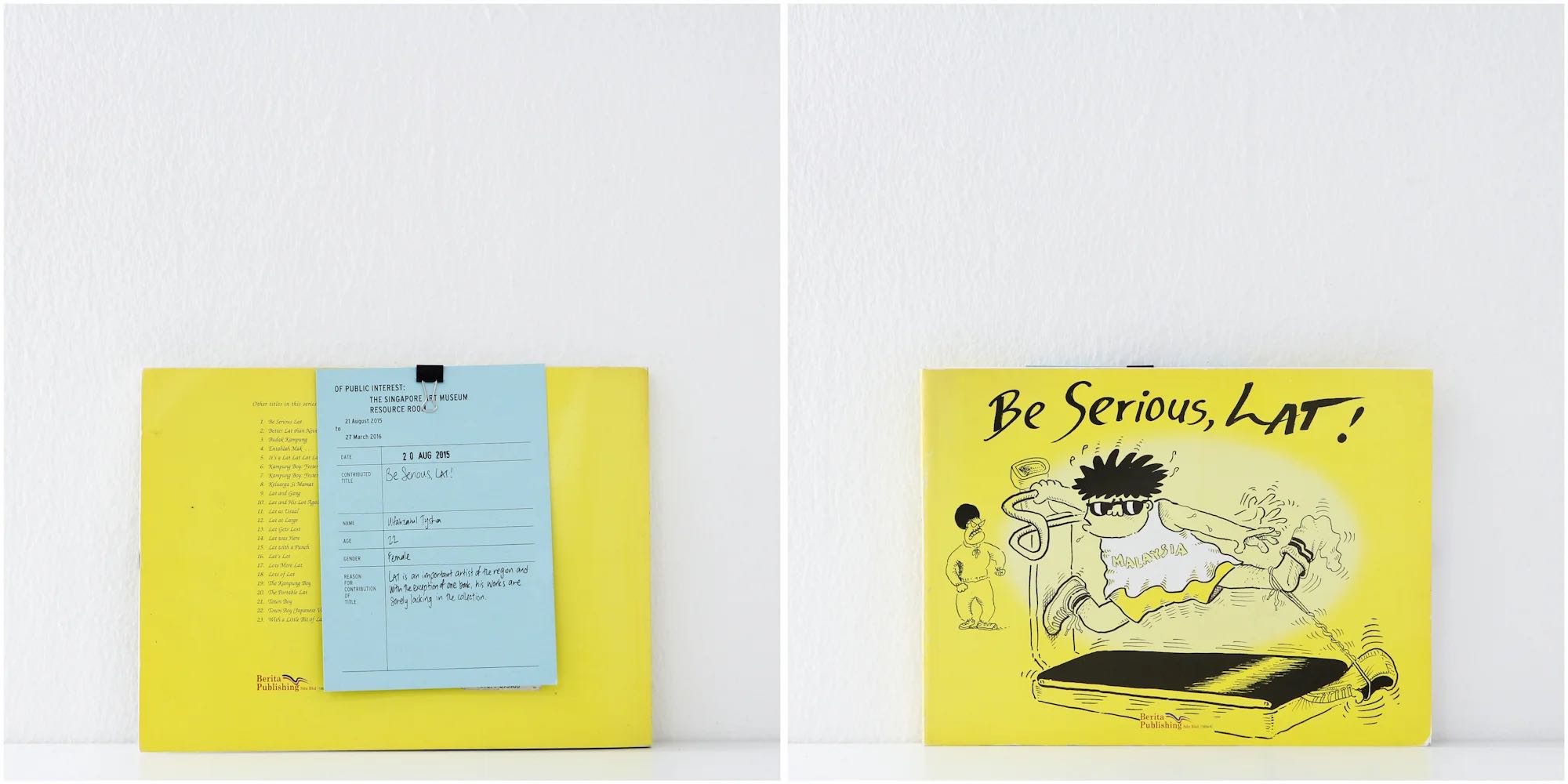
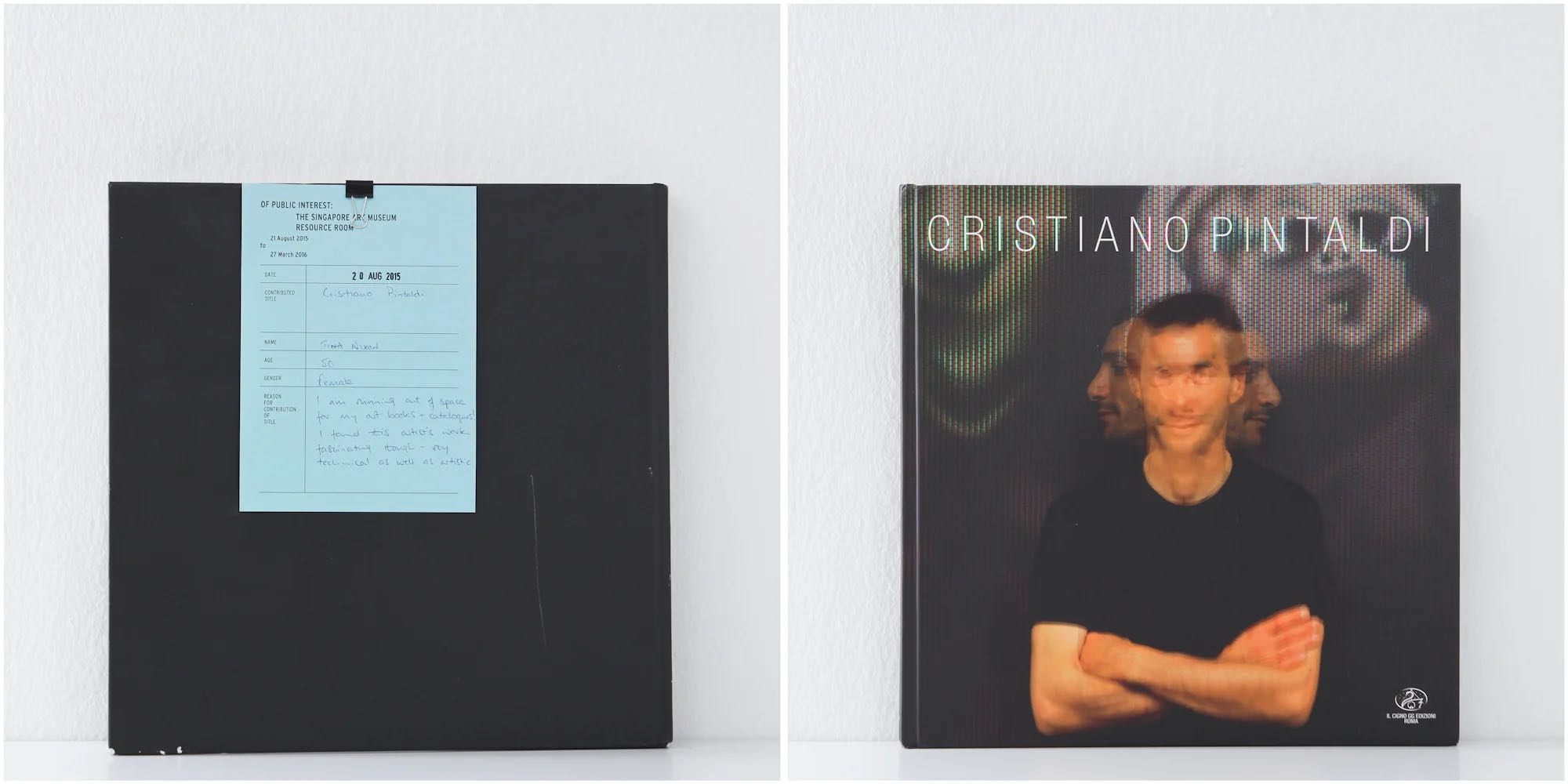
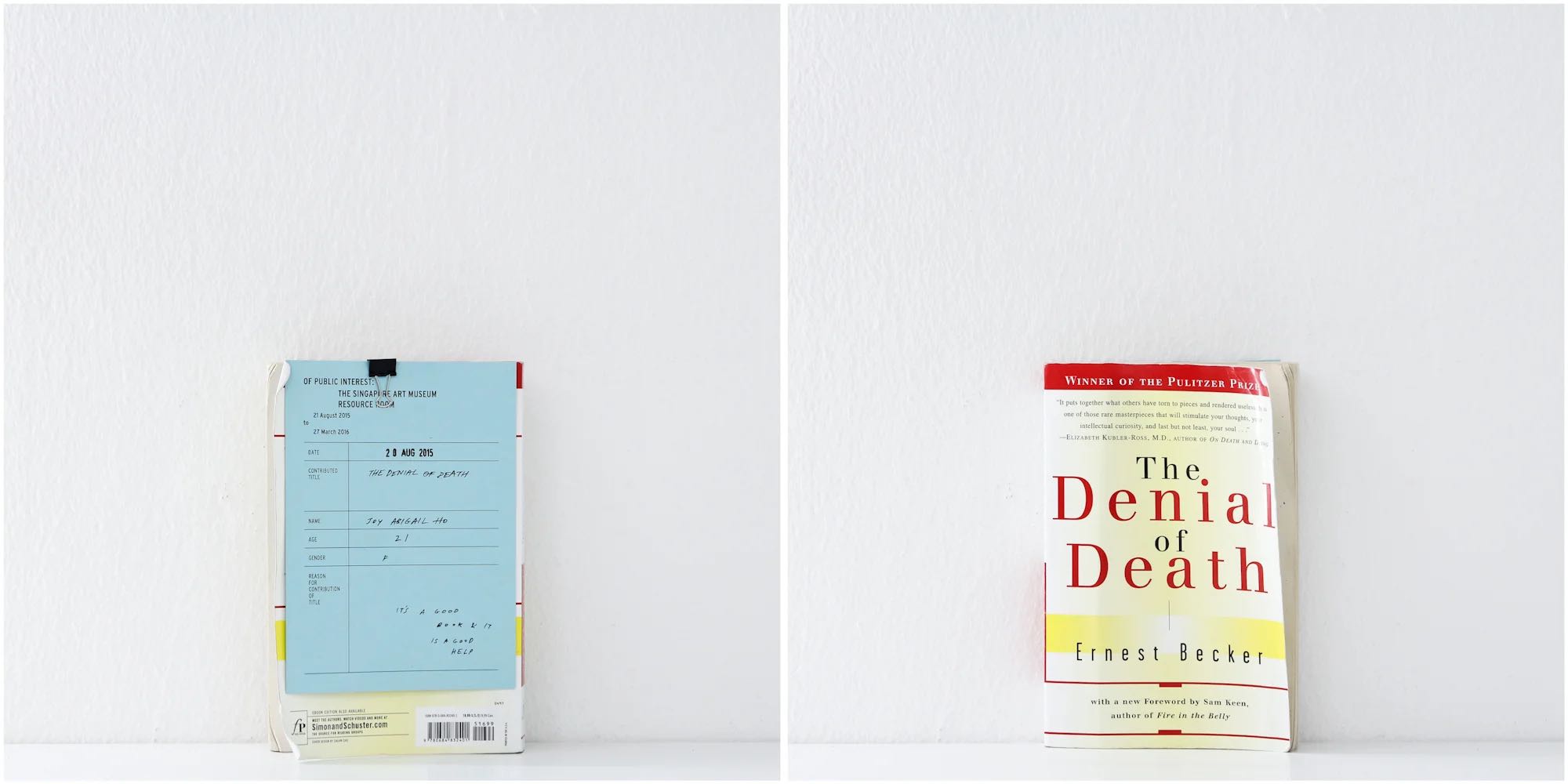
At the end of the exhibition, there were a total of 14 public contributions and 84 public withdrawals. These interventions, along with a form that lists their name, gender and the reason for their withdrawal / contribution of the title are archived below. The withdrawn books were reinstated to the Resource Room, and contributions were returned to their respective lenders.
I wanted to foreground the evolving priorities and concerns that were reflected in the institution’s collection of books and ephemera, and for the space to critically reflect on the role of the art museum as a center for the dissemination and transmission of knowledge.
Public contributions
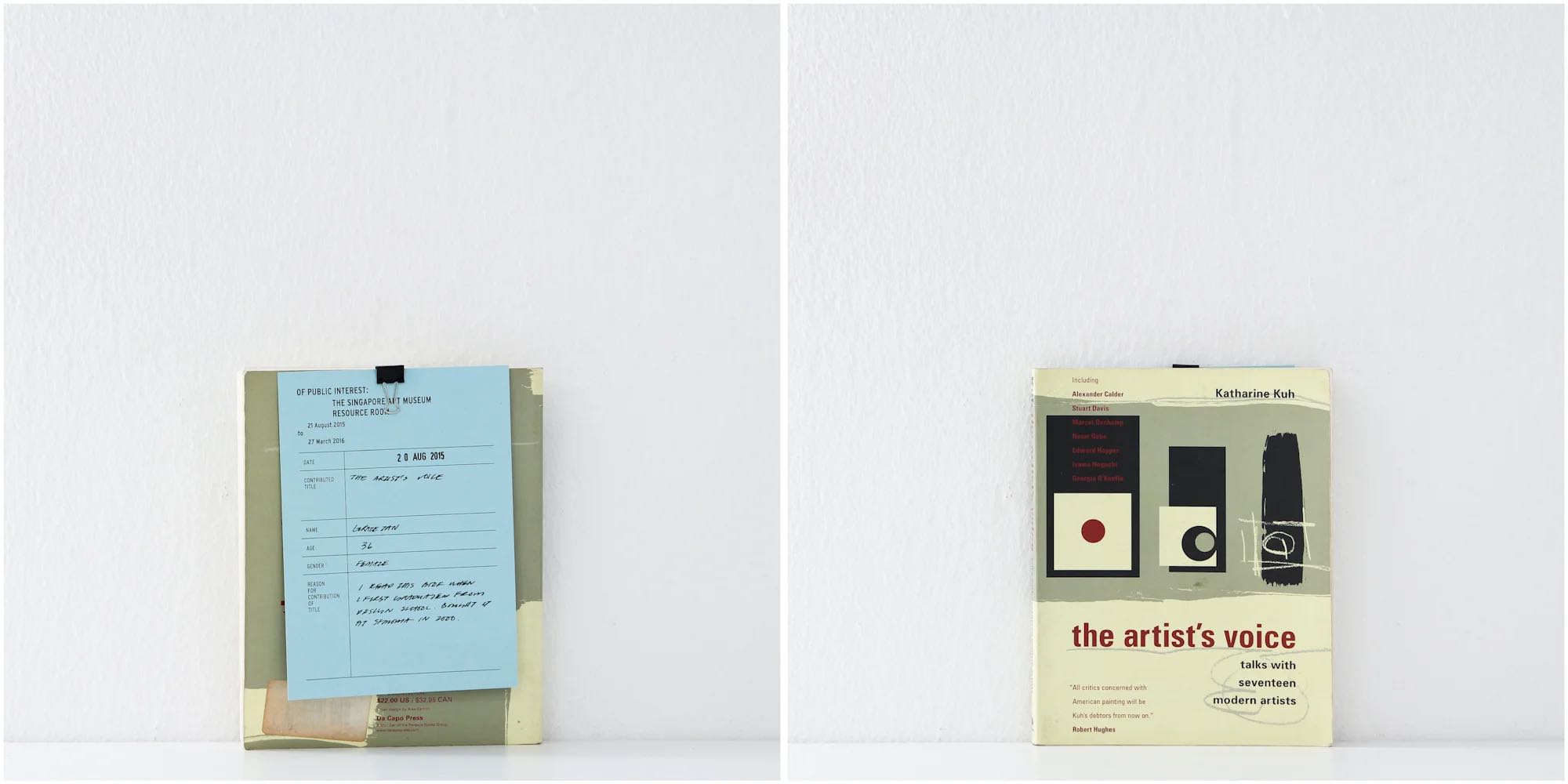
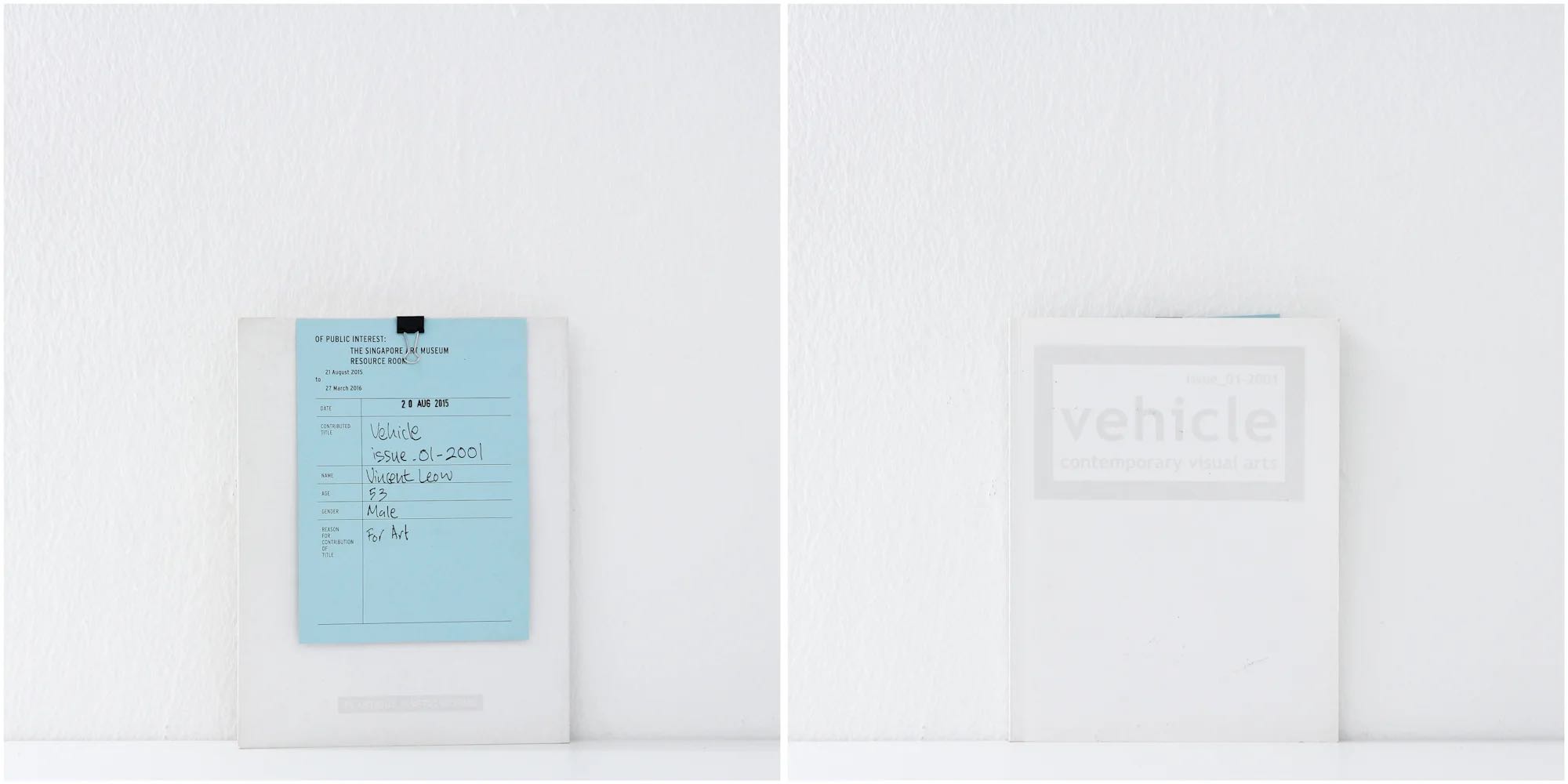
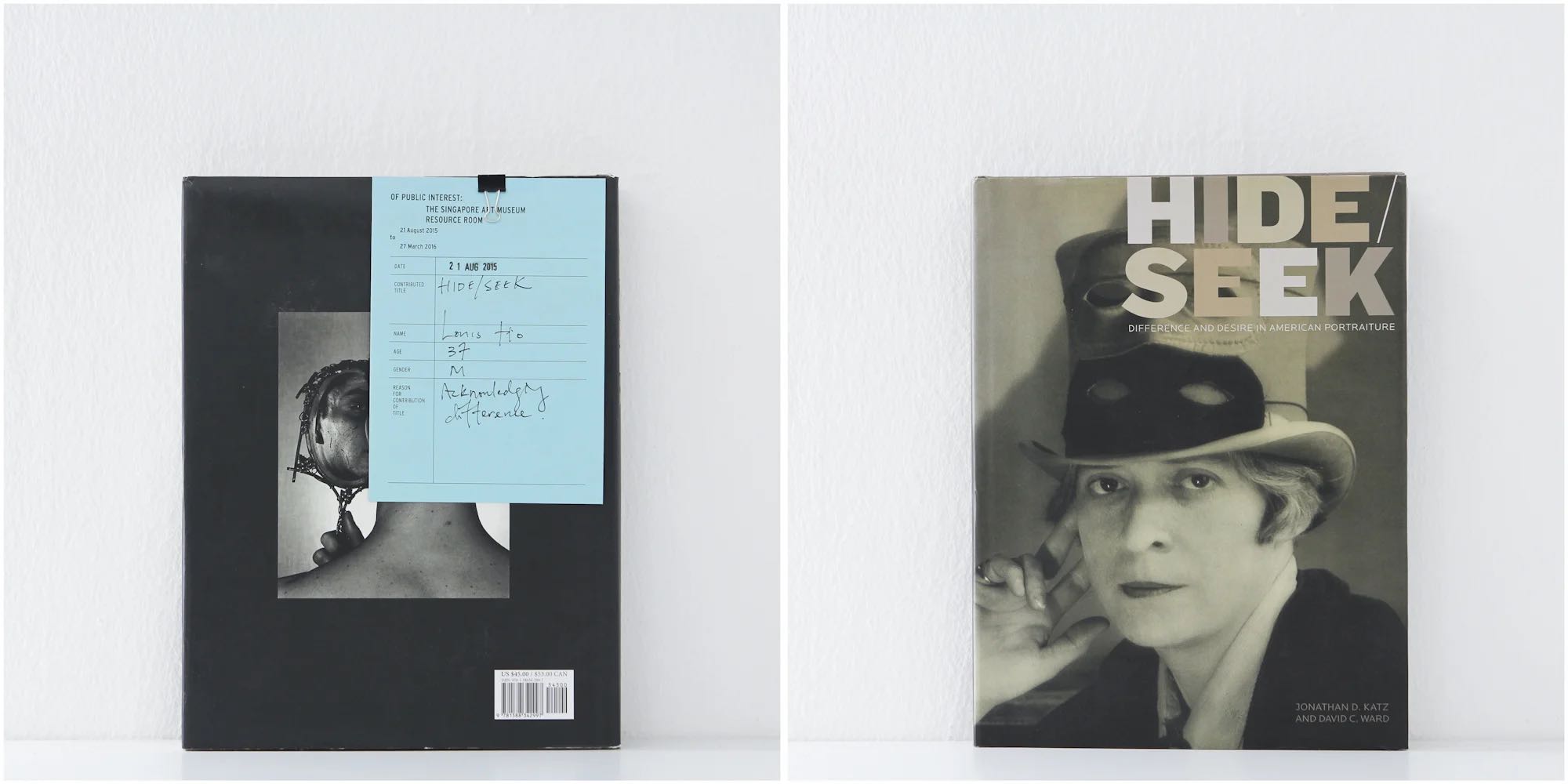
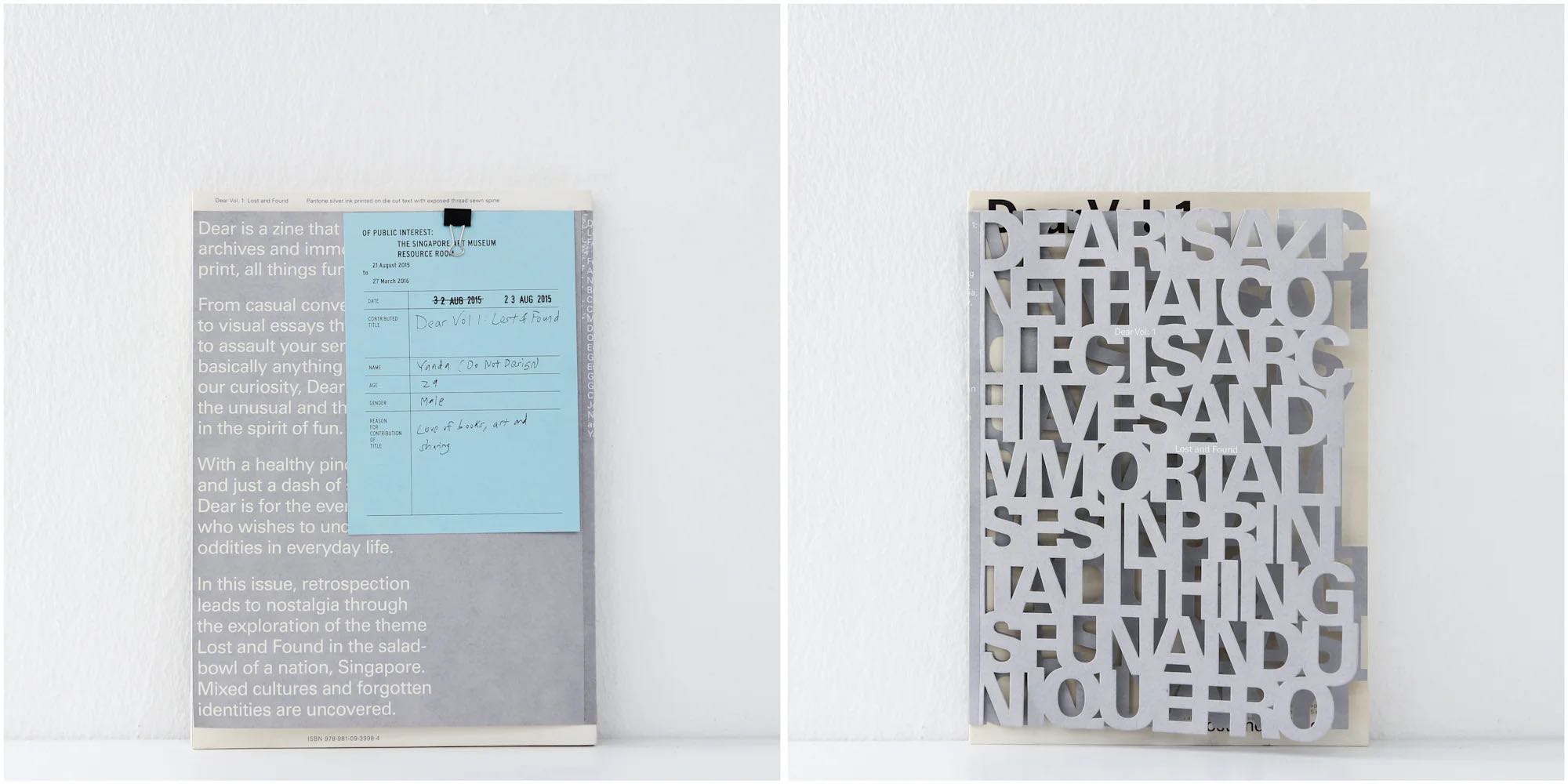
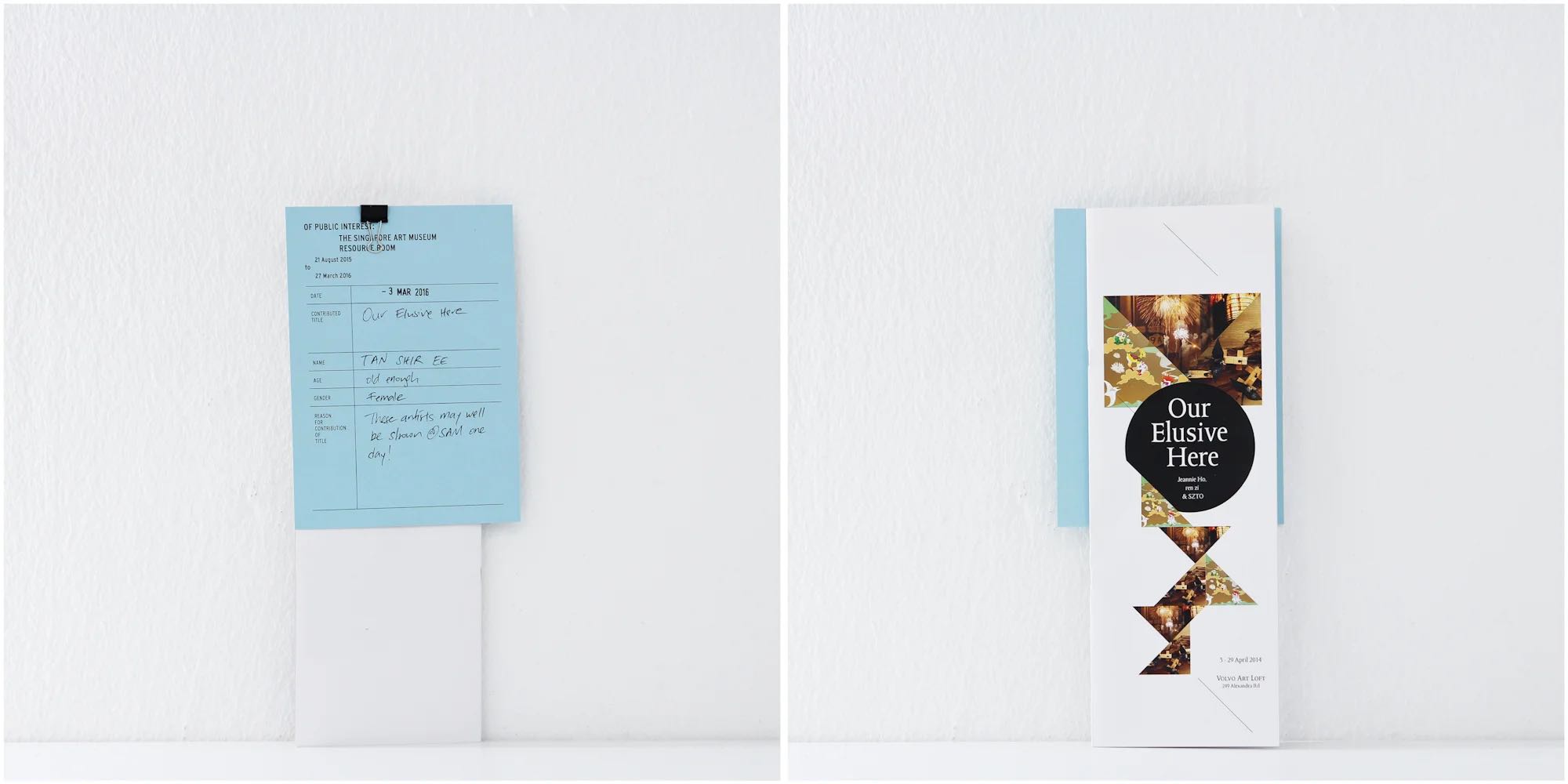
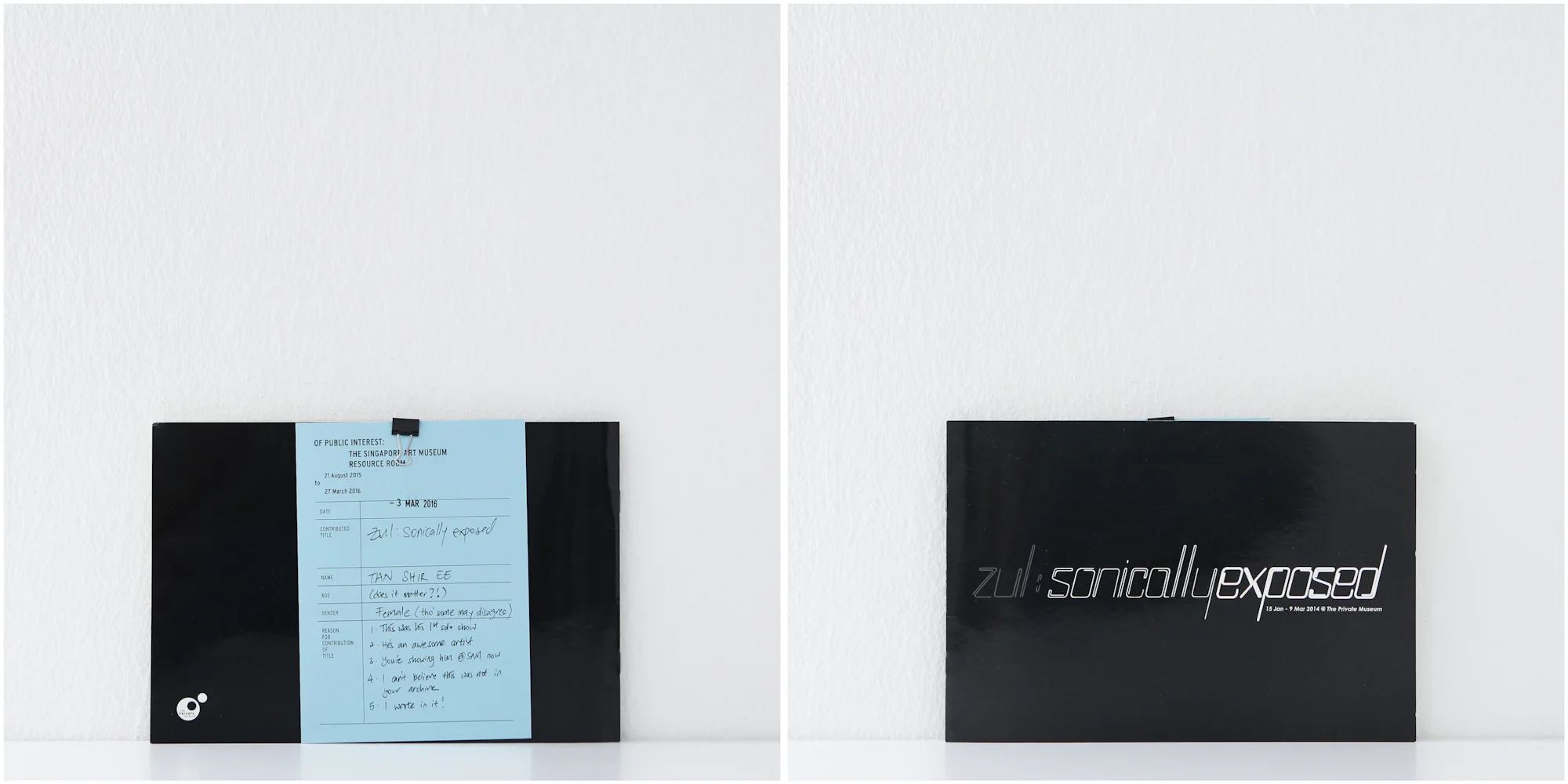
Public withdrawals
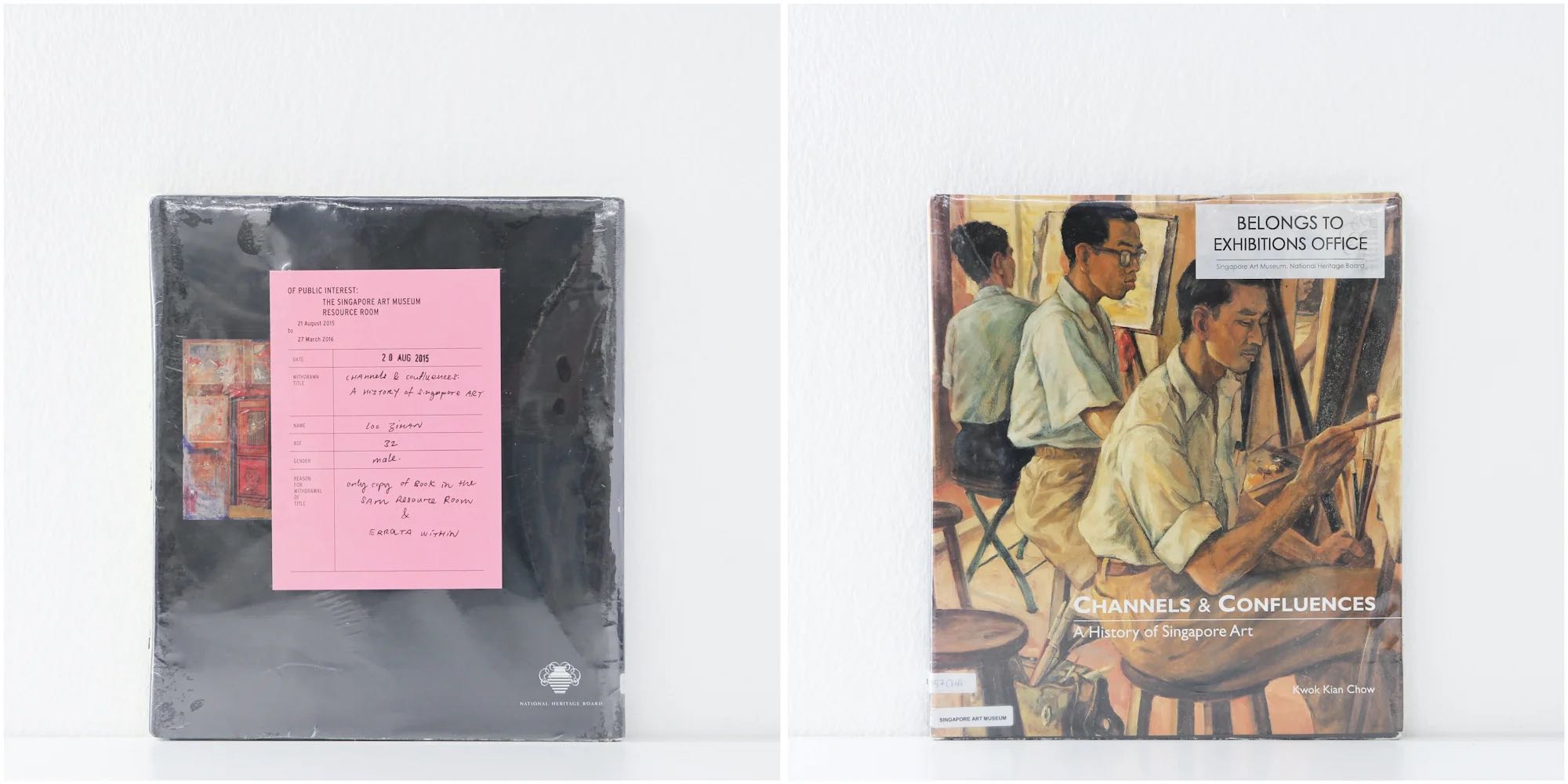
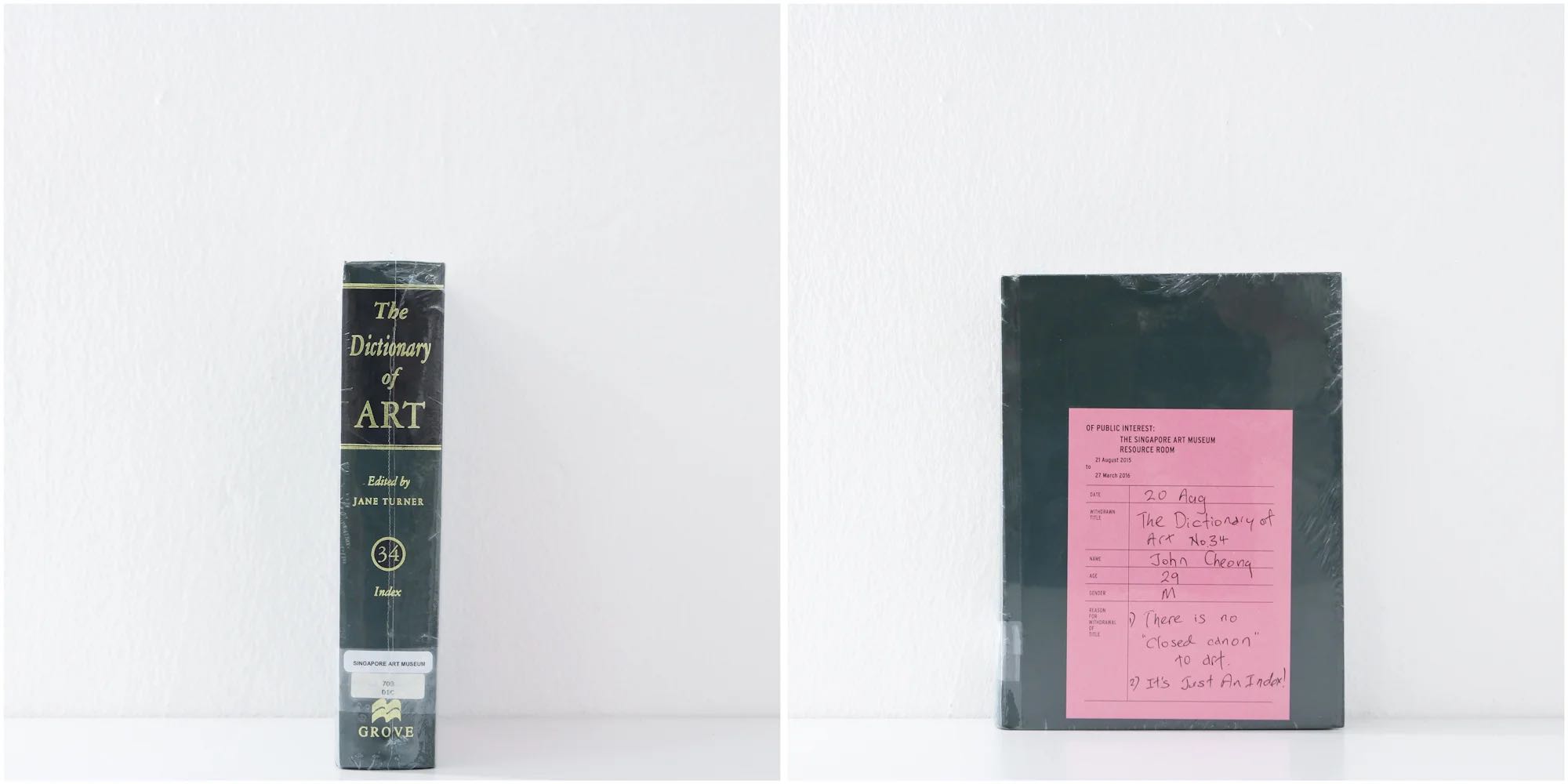
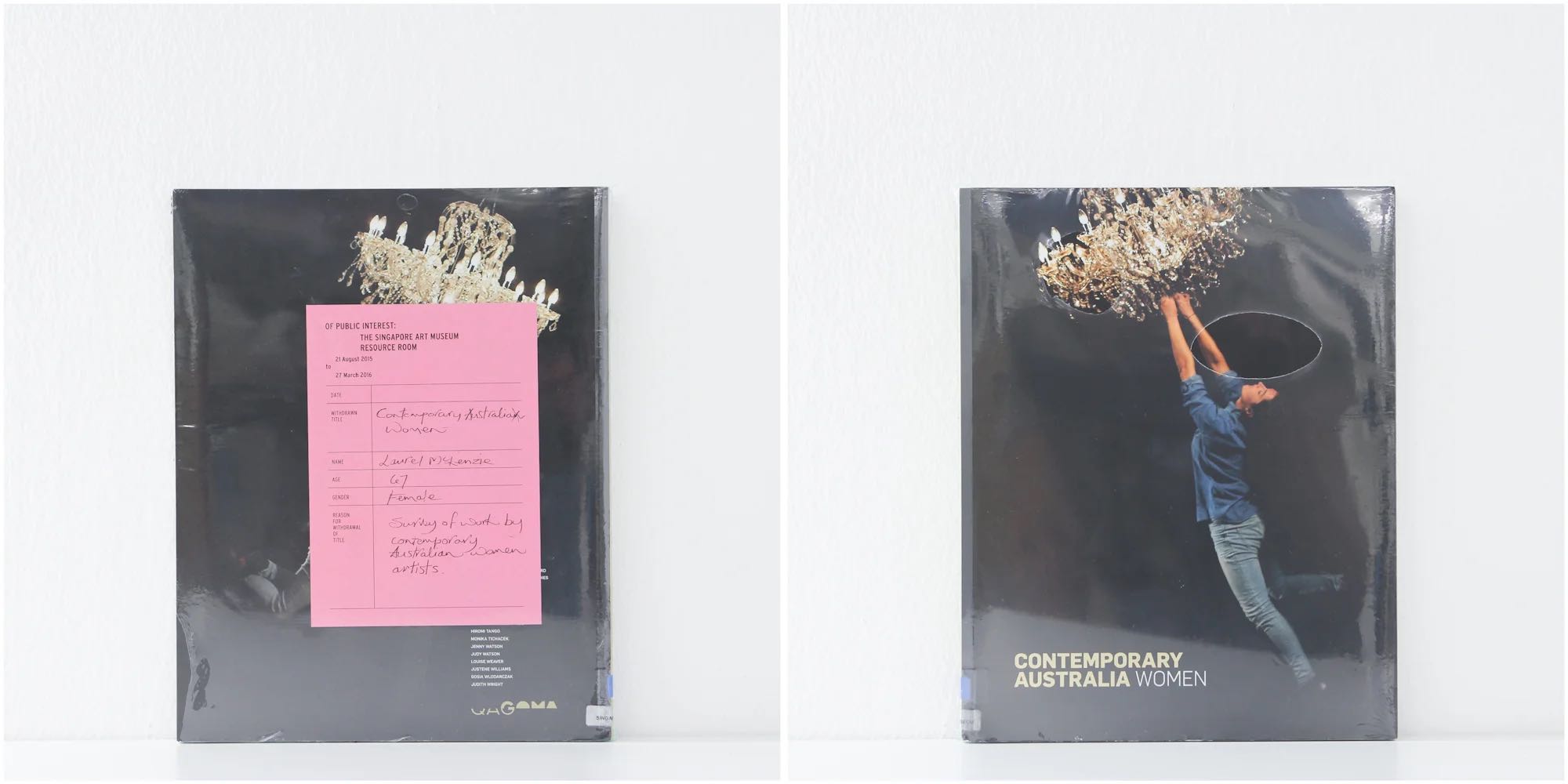
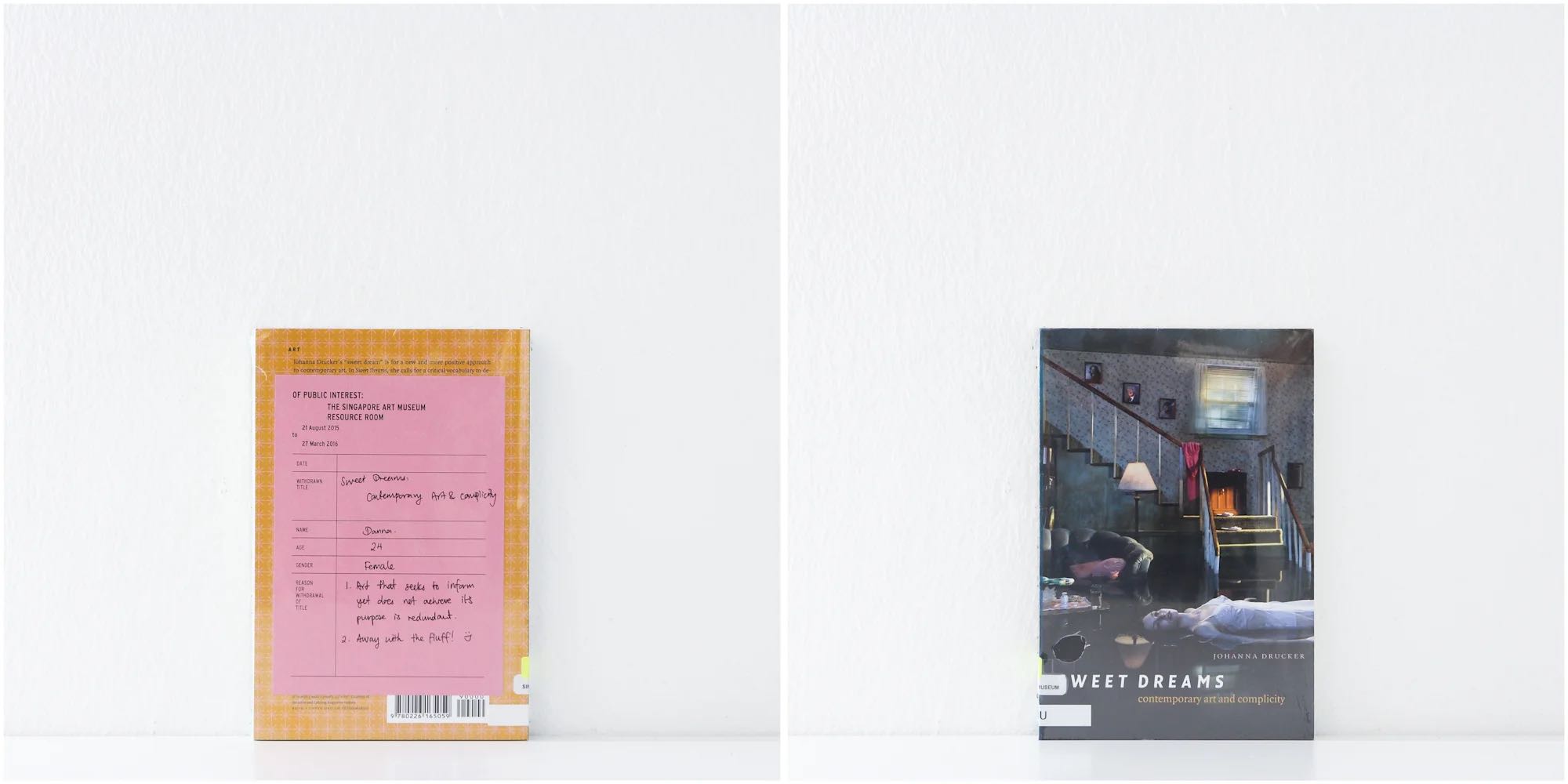
Tout ou Rien / All or Nothing (2015)
- Installation
- In residence from 5 January to 8 March 2015
- Exhibition from 7 March to 10 May 2015
- FRAC des Pays de la Loire, Carquefou, France
- Part of Paradis Sans Promesses, Ateliers Internationaux XXIXe
- Supported by the Singapore in France Festival 2015, National Heritage Board, Singapore
Interview response to Corrie Tan on the residency experience
Corrie: Could you tell me a bit about what you’ve created as part of the residency with FRAC? I understand you’ve been looking at the history of their International Workshops and the artists involved. What inspired this topic? How will this be presented, and what did you hope to achieve and interrogate with this work?
Zihan: This work, titled Tout ou Rien (All or nothing, or everything and nothing in French) at FRAC des Pays de la Loire was a reconstruction of their residency catalogs into an installation. I wanted to re-embody the information into a different mode of visual presentation, and through this process engage and familiarize myself with the source material on a tactile and intimate level. This research and presentation methodology was similar to the one I have used in a prior archive installation in Ghost: The Body at the Turn of the Century at Sculpture Square in October 2013, in a work titled Artists’ General Assembly: The Langenbach Archive.
This particular FRAC has a strong reputation for being one of the pioneering FRACs to start an artist residency. It started in 1984 and has kept it running almost consistently for the past 30 years. The Singaporean artists were the 29th edition of this residency, which has produced a total of 21 catalogs as records of the residency program and exhibition.
There were two main reasons why I took on this subject as the focus of my residency work. Firstly, I really wanted to resist the burden of representing Singapore. I thought that being a “nation” based residency, any work we might execute would be read within the framework of our “country of origin.” I wanted to challenge myself to see if I could potentially create a work that was rooted in their language and history, which will be meaningful to the institution, the people that manage it and the community that supports it.
Secondly, I am interested in asking what are the conditions of production that brought us together in this foreign space, and I started by questioning who has been here before us and what they have done. I have a soft spot for dense archives and bodies of information, and the catalogs were so rich with potential and knowledge that it seemed a natural extension of my research and curiosity to expand it into an installation.
The fundamental question I was investigating was whether, after all these years and all these 250 or so artists who have passed through the program, if we can track a certain collective consciousness or through line / pattern to the works produced as part of the residency. At the same time, the weight and burden of the history also begs the question of whether it was even possible to produce anything new in light of what has been done, hence the title Tout ou Rien.
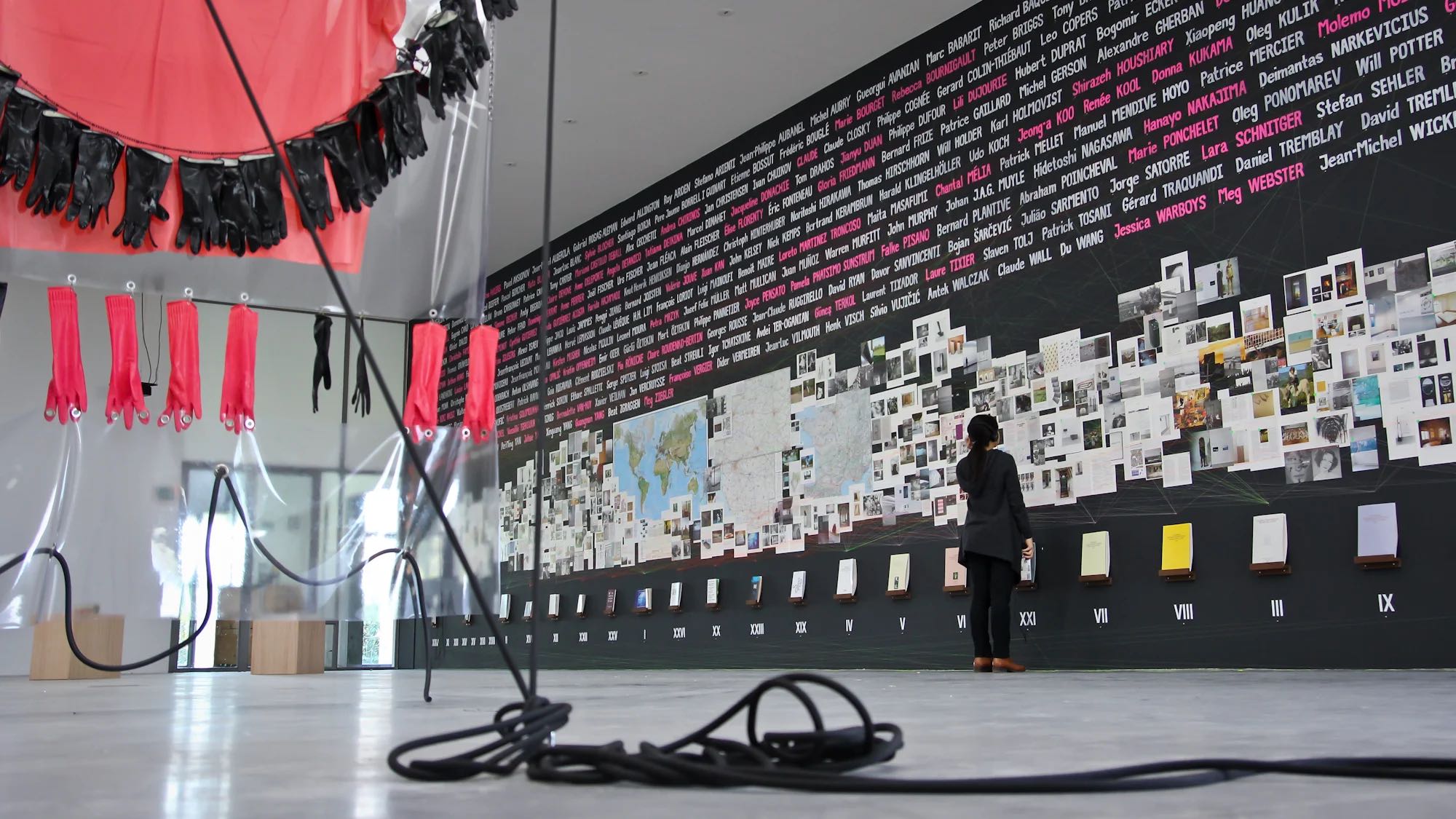
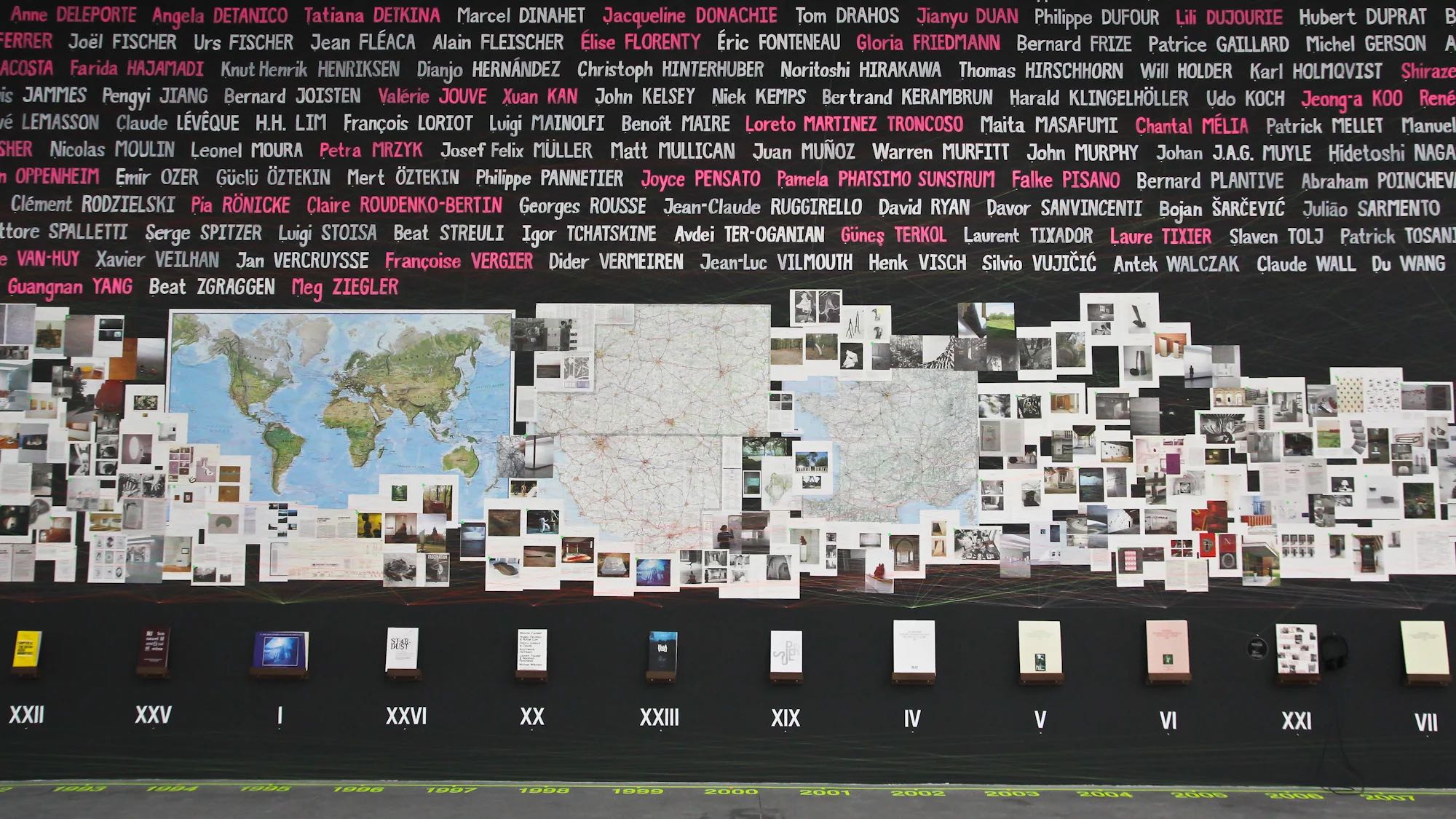
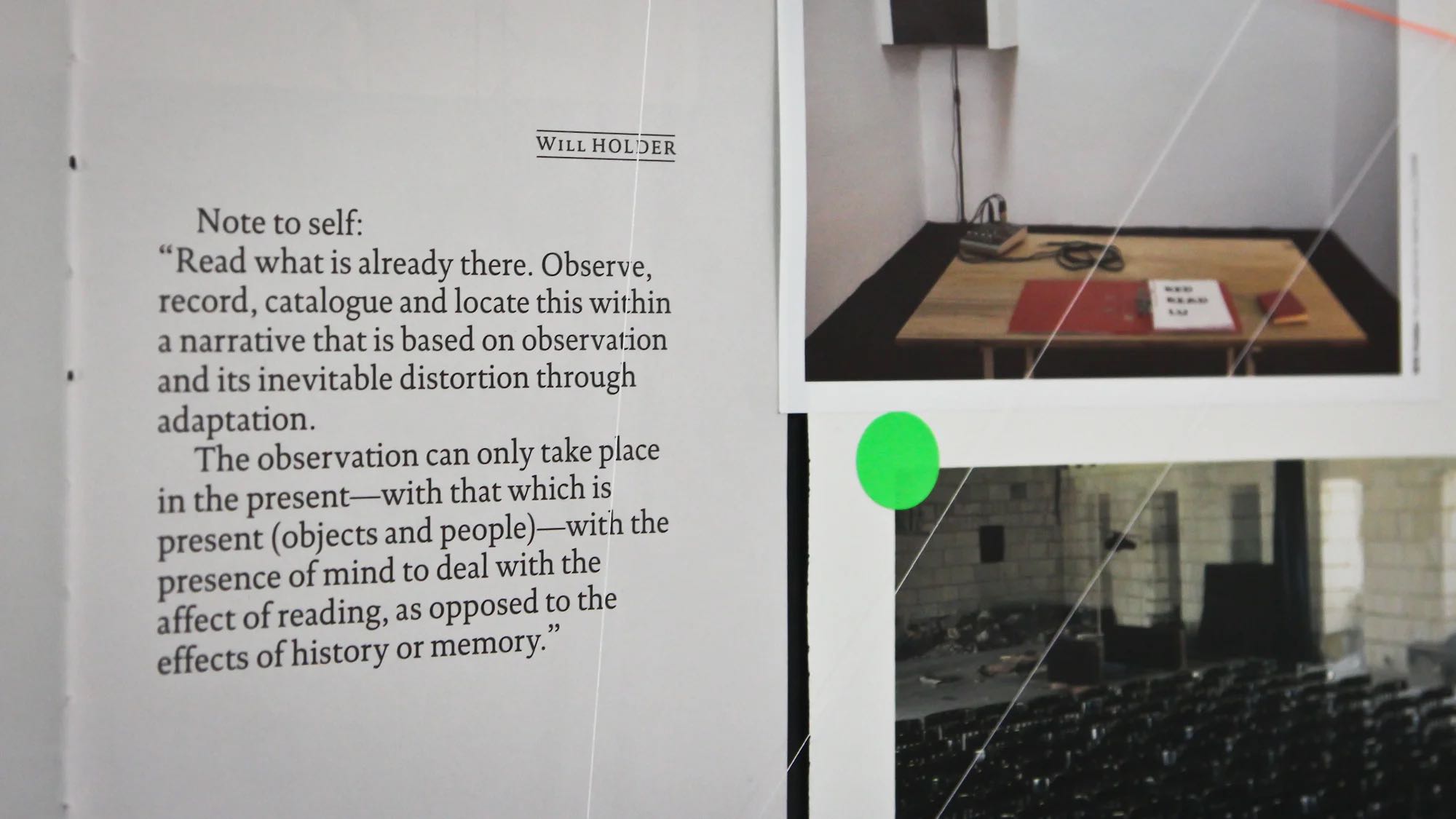
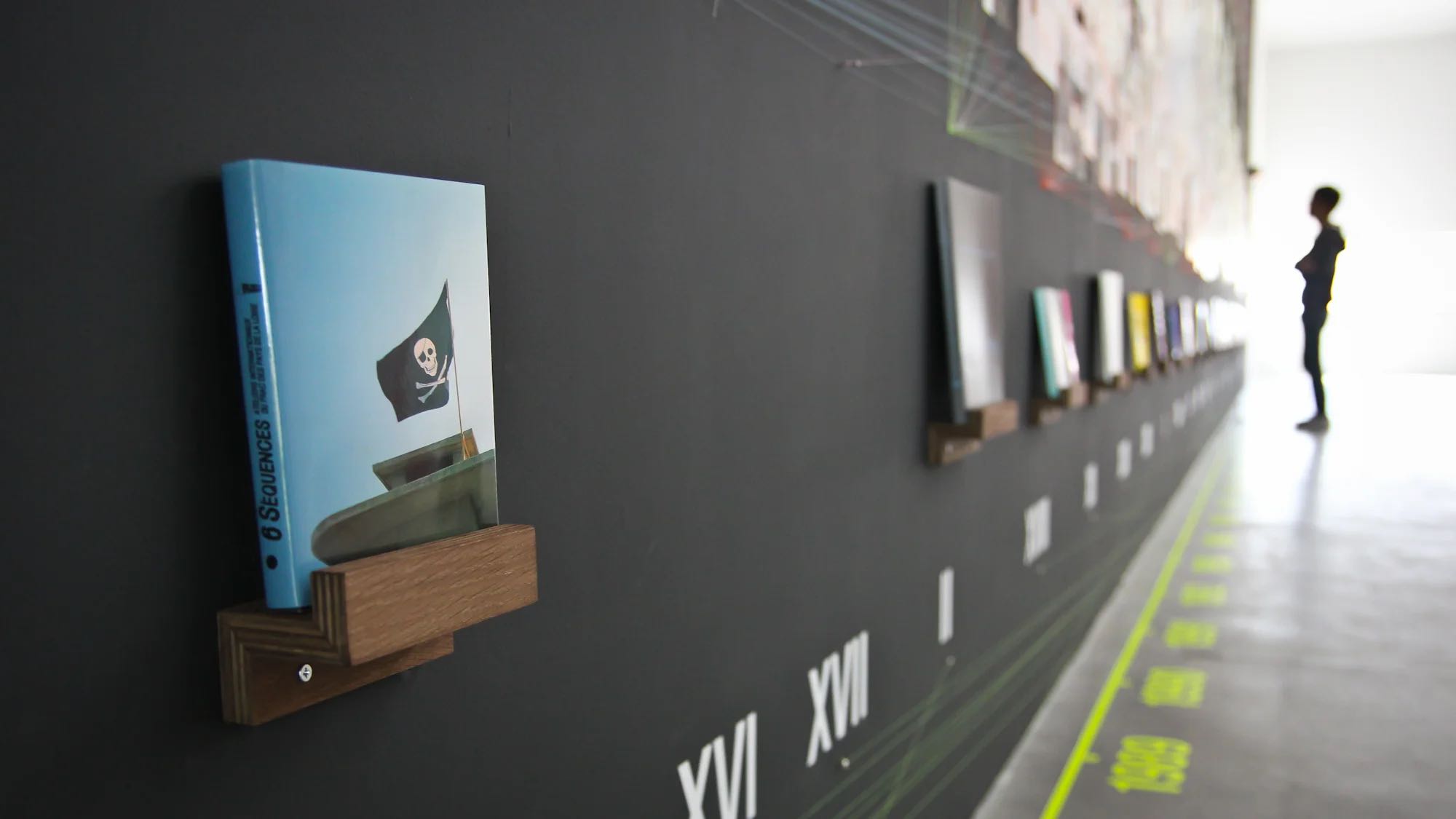

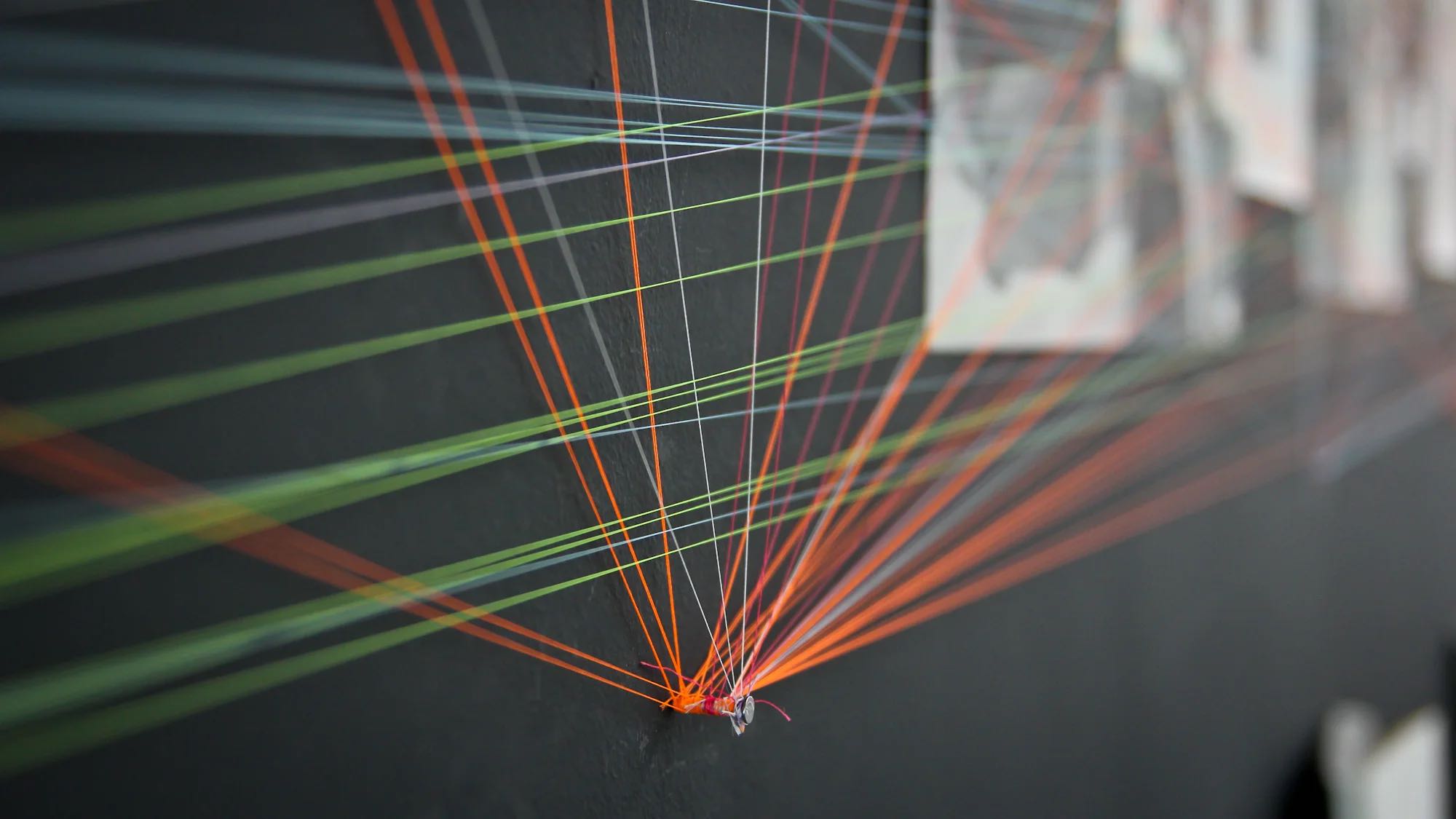
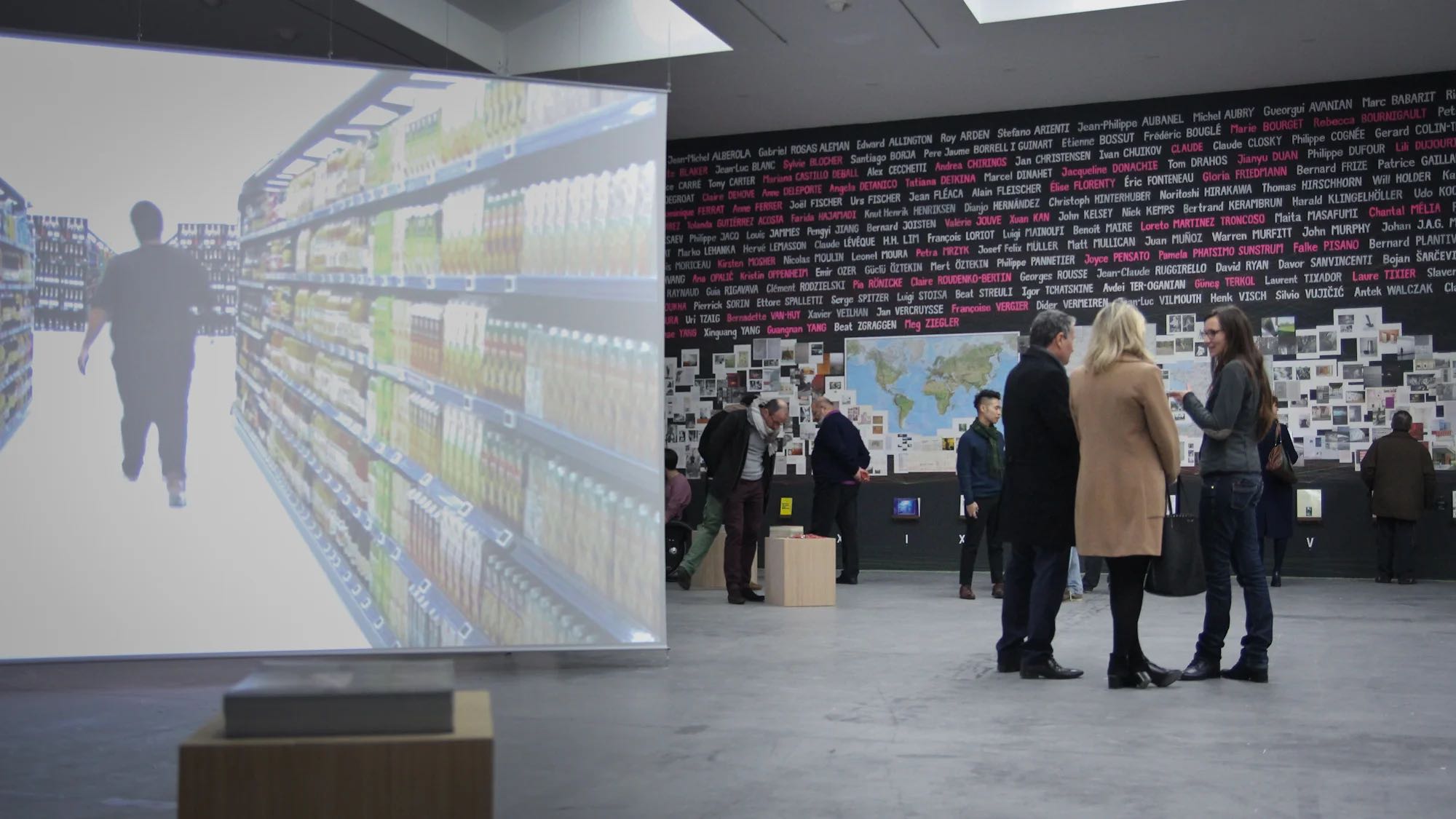
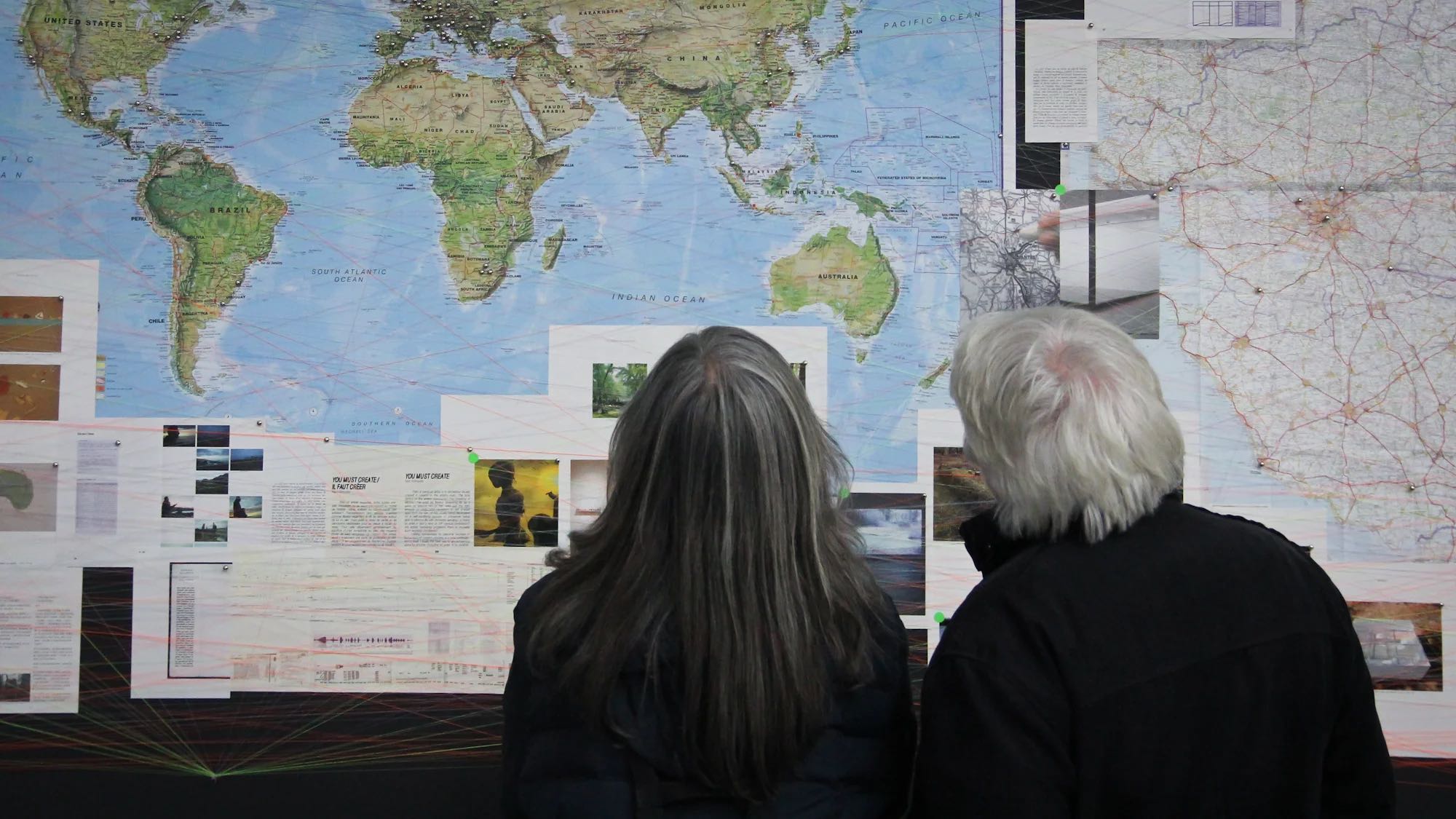
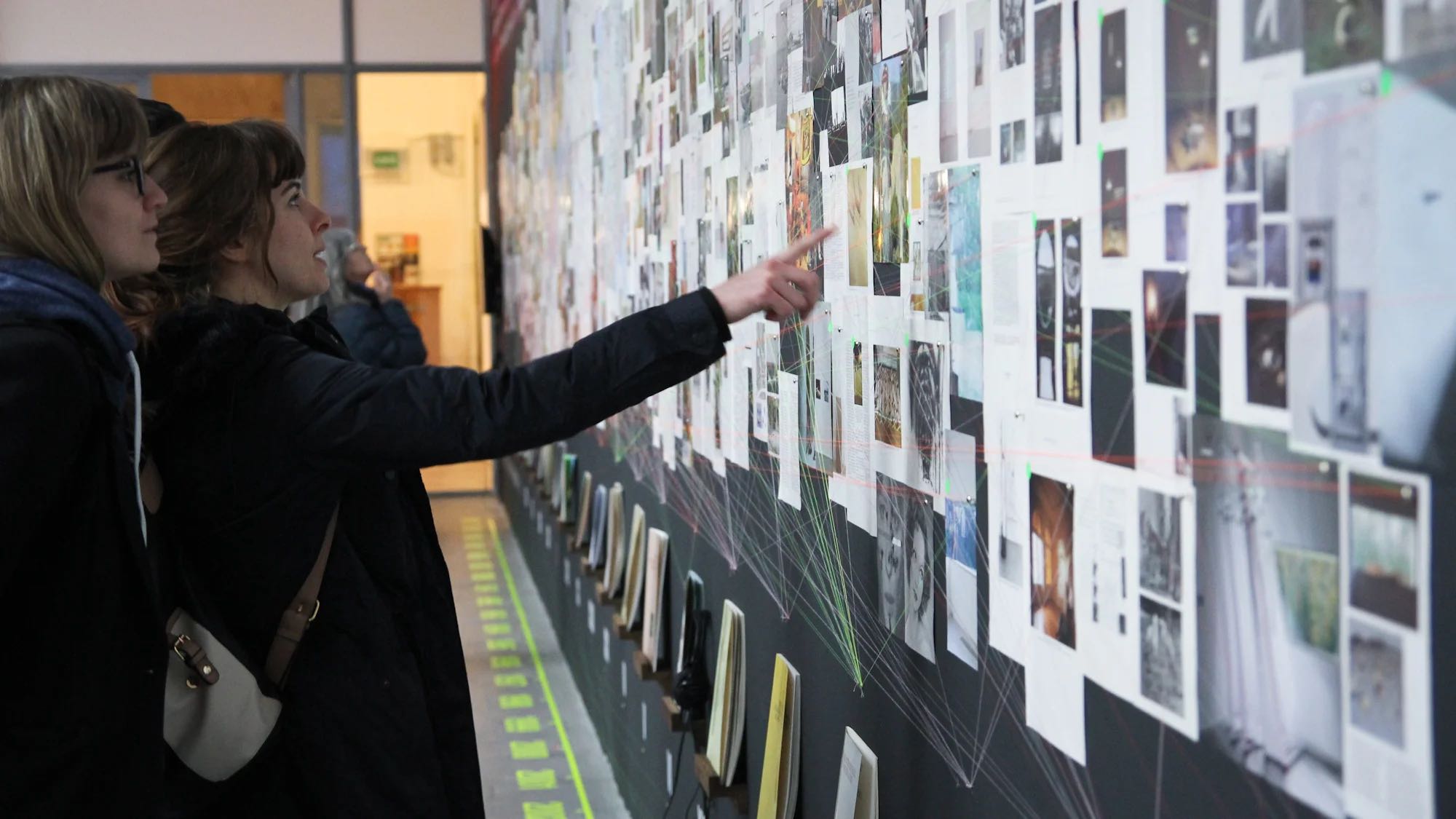
Documentation from Tout ou Rien.
Loo Zihan is venturing into institutional criticism, reflecting both on his status as a guest artist from Singapore in France as part of a transnational cultural event, conducting a project that he hopes will be as free as possible from any expectations aroused by his presence, and offering a work that will question the context of creation while at the same time deconstructing the relationship between the artist and this context.
Corrie: What do you think occurs when an artist, within the framework of “representing” his own country, goes to another to take part in a residency such as this? What kind of “cultural exchange” do you think can be gained, both by the country receiving him, and the artist himself? Or is that a more utilitarian framework used by the policymakers / the state involved in cultural diplomacy?
Zihan: When artists receive state funding, no matter how avant-garde or controversial the work, we are being co-opted into the system and this necessarily means the work we are producing aligns with the interest of the state and what they would like to represent. Some might call this propaganda, and if so, everyone who has received support from the state in one way or another would have to admit that their work is influenced (whether consciously or unconsciously) by the state and its agenda.
A residency such as this is a more explicit instance of this support system in place. It is a symbiotic relationship: artists need the opportunity to exhibit and show their work, and the state needs us artists to perform their cultural diplomacy.
As to the question of what the artists and both states glean, it really depends on how this supposed benefit is measured. In a personal capacity and specific to this residency, I can say that the residency has pushed my practice to a different level. I produced a work that I would never be able to produce in Singapore because of the conditions of production and limitations that were in place.
But artist residencies are inherently problematic as institutional structures. For example in this residency, we did not manage to link up with the community of local artists in Nantes, and did not really have an “exchange” of sorts, but two months is understandably a relatively short stint for deeper relationships to develop, there were also no false promises: we weren’t lured to take up this opportunity because we wanted to collaborate with artists from France.
I believe that for in-depth cultural exchanges and engagements to happen, it would require further commitment on the part of the artists, governments and institutions. This residency has opened doors but it is the responsibility of the artists and institutions to sustain this relationship beyond the conclusion of this residency. Perhaps the format of an artist-in-resident has to be reevaluated and augmented to align itself with our present time.
Corrie: On that note, a lot of big festivals such as the Singapore Festival in France come with a lot of packaging as one country’s “brand identity” is exported to another. How do you think an artist can work within this framework to transcend the more utilitarian notions of art-making?
Zihan: The conditions of production determine the work that is produced. There have been articles floating about that have criticized the artist-in-residence model of production and creation as “forced labor” as artists are cooped up for a period of time and working toward producing a work at the end of the residency.
But again, it is up to the individual artist to determine how one should challenge these restrictions within their limits. My refusal to represent my nation in the content of my work is one way, the creation and production of a work that cannot be commodified or acquired (something ephemeral and transient) is another way to resist commodification.
The premise of having a group of artists represent the nation is an impossible exercise that is designed to fail. If that is solely what the audience or receiving institution expects, then they will necessarily be disappointed.
The Singapore en France festival is an aggressive campaign to market the Singapore brand, but if it creates opportunities for dialogue and sustained conversations it should be welcomed with open arms. In the society of the spectacle we are negotiating with representations of representations, we have to keep in mind that it isn’t just the nation furthering its “brand identity,” but the contemporary, self-aware artist promoting his or her “brand” at the same time too.
Corrie: Personally, what was your experience living in a different environment and creating work in a different environment like for those two months? Did it prompt you to make new connections and influence your work differently? What new insights did you gain into France’s structure of arts incubation?
Zihan: I have to be cautious here, as much as we are guilty of accusing the nation and French institutions of having a reductive view of Singapore culture and the arts, we have to be aware that my experience at FRAC des Pays de la Loire is specific to that particular institution, and is not representative of France in its diverse and expansive whole.
Neither is this mode of “arts incubation” unique to France or the host institution; it is an international model which has had an illustrious and long history promoting the myth of the artist as a reclusive genius that has been propagated by the canon of Western Art History.
It might come across as diplomacy, which is the premise of this entire exercise, but it was wonderful to be treated with utmost professionalism. When we pitched our projects to the French host institution, they did not require us to substantiate our concept with lengthy conceptual explanations. They accepted (probably from decades of experience working with artists) that a certain part of art functions in the realm of the irrational and illogical. It was refreshing to be working with so little bureaucracy and without the need to seek constant validation from the commissioning institution. There was no need to apply for a license, we could work on changing the work right up to the moment when the exhibition opened without fear of repercussions or persecution.
To be concise, working in France and observing how my peers work has reminded me that art production does not need to be highly deliberated.
And this brings us to the connections that were unexpected, but did happen as a result of this residency. Godwin, Kray, Choon Lin and Kaifeng are artists I respect and have met briefly in Singapore, but only through staying with them over an extended period of time did we get to know each other and our practice better. The Singaporean arts community has a tendency to be quite individualistic and ironically it takes going away to a foreign land to band us together, over Kray’s attempts at Nasi Lemak, Sweet Potato soup etc.
Corrie: Very often, one country’s festival in another tends to be a short-lived, flash-in-the-pan event, with a burst of activities taking place and then simmering out. How do you think artists can have more sustained engagement and growth in the country the festival is taking place (in this case, France)? Would residencies be a possible solution to more long-term engagement and networking? I understand you’re taking part in several other residencies in Barcelona and Melbourne later this year as well?
Zihan: As briefly touched on in earlier responses, it is largely up to the volition of the artist to sustain conversations and engagement. For example, even though the residency has concluded, we are still in touch with FRAC des Pays de la Loire and working on the catalog for the residency, which will ultimately be the tangible “residue” that we will leave behind for another artist 30 years down the road to excavate.
Residencies as an institutionalized model have to be updated. I do not think artist residencies are sustainable as a model and many other arts institutions have turned to alternative modes of gathering and production that are more relevant.
For example, what does it even mean to be “present” in our time? The FRAC des Pays de la Loire residency was initially designed to be a getaway to isolate the artist from his familiar environment, but we were all present on Facebook and receiving updates on the Singaporean arts scene and events throughout the residency. Some of us were creating works remotely and others for future shows. Only Choon Lin used the generous studio spaces provided extensively; the rest of us worked with intangible or new media.
When there are so many demands on the presence of an artist, how he uses his time and body both virtually and physically becomes the ultimate commodity. Residencies have to align themselves to all modes of how artists “present” themselves to allow the resident to truly reside.
Endnote: I served as editor for the exhibition catalog, which gathered text from the residency alongside fragments and quotations from catalogs produced since the residency’s inception. During the residency, I visited and documented each of the prior FRAC des Pays de la Loire residency locations, including the Abbaye de Fontevraud, La Garenne Lemot in Clisson, and Le Grand Café in Saint-Nazaire.
Åbäke designed the catalog. Its dimensions and page count were derived from the average of the twenty-one existing catalogs from prior residencies, and the table of dimensions is reproduced inside. The names of all 263 participants over the 29 years of the residency program ran across the top of each page, extending the archival research performed in the space.
An archive of early performance work on the embodiment of desire and labor, made as an MFA student at the School of the Art Institute of Chicago, where I grappled with my own desirability and tested what performance could do without restriction or censorship.
This body of work is dedicated to my graduate advisors the late Barbara DeGenevieve and Shellie Fleming.
Annuit Cœptis (2010–11)
- A Performance Installation in Three Parts
In January 2010, I performed as a dancer from 16 to 23 January 2010 at a gay bar in New York City that featured Asian go-go performers (The Web). I collected 306 American one-dollar bills over those six days. These notes and my experience led to a yearlong project titled Annuit Coeptis: He who approves of our undertakings.
*Annuit Cœptis: annuo (nod, approve) and cœpta (beginnings, undertakings).
Part I
29 April 2010Sullivan Graduate Studios, School of the Art Institute of Chicago.
Made in response to a 2007 parliamentary speech against the repeal of anti-sodomy laws in Singapore, this presentation of Annuit Cœptis juxtaposed the speech with a go-go dancing performance and ritual acts that referenced Brother Cane, a performance piece by Singaporean artist Josef Ng. Text from the parliamentary speech was inscribed across 306 American Dollar bills in ultra-violet ink.
A 16mm projector projecting film loops measuring 169 cm in length projects extreme close-ups of an American dollar bill above a square podium. The 6 hour durational performance involves me transforming the installation space through my engagement with various materials, which includes a rope, boxing wraps, shaver, a ceramic jar etc.
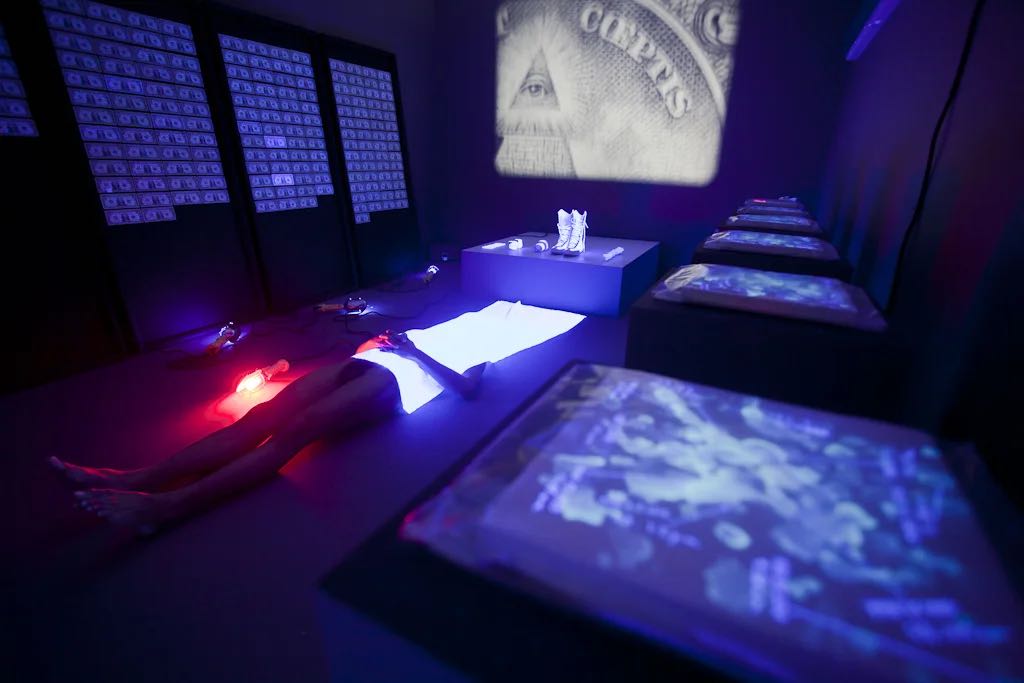
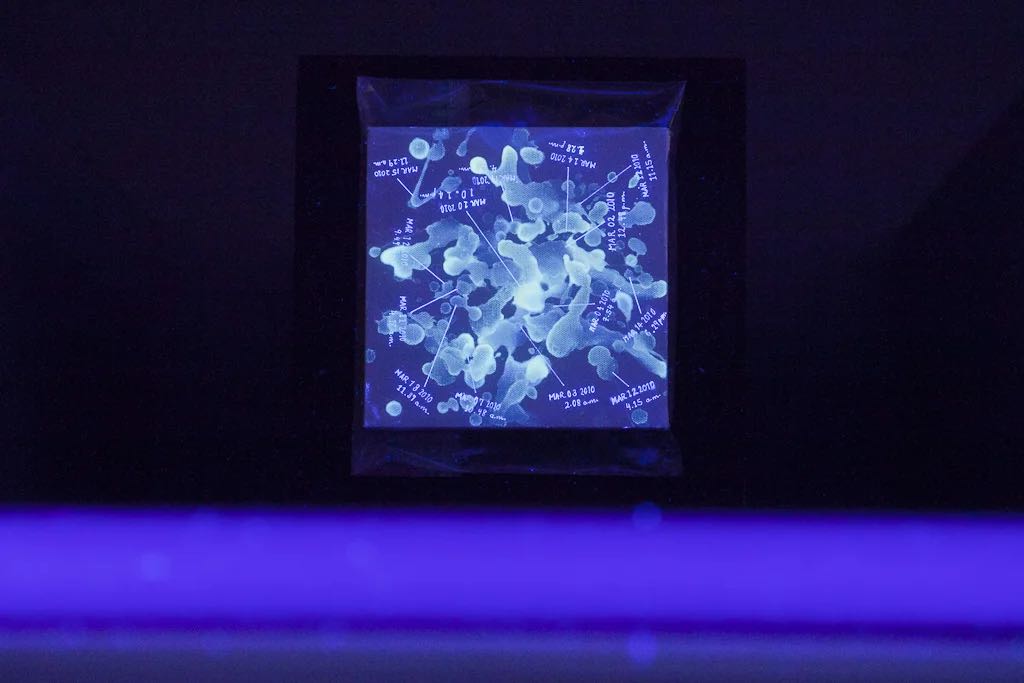
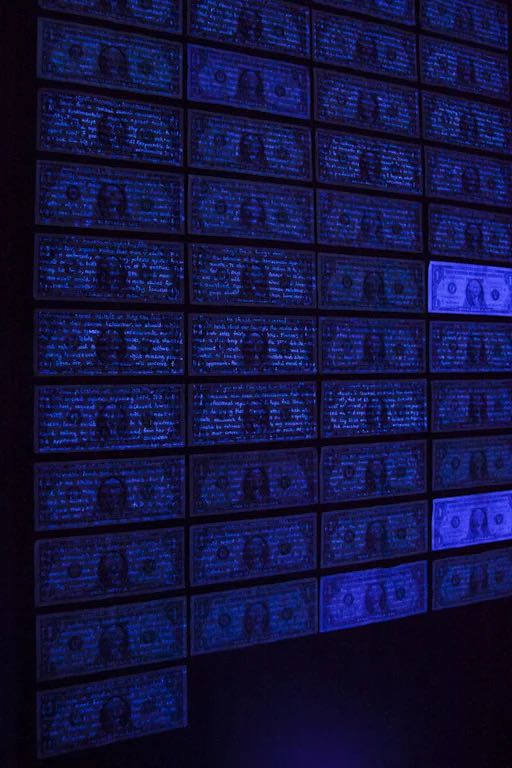
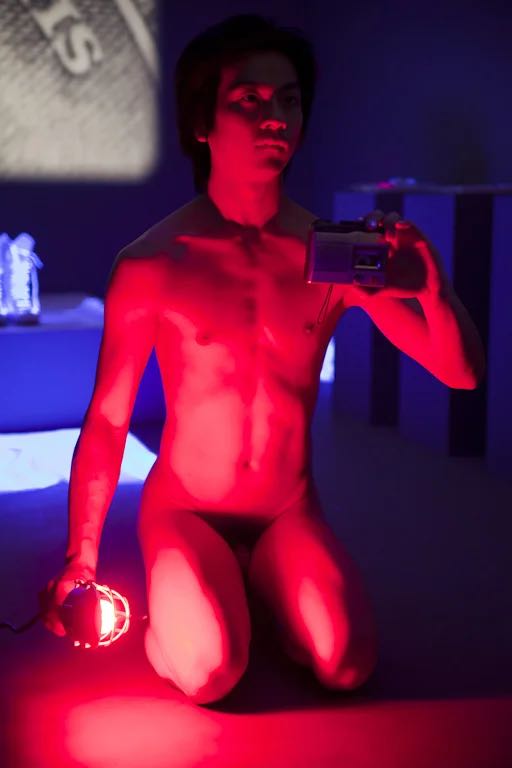
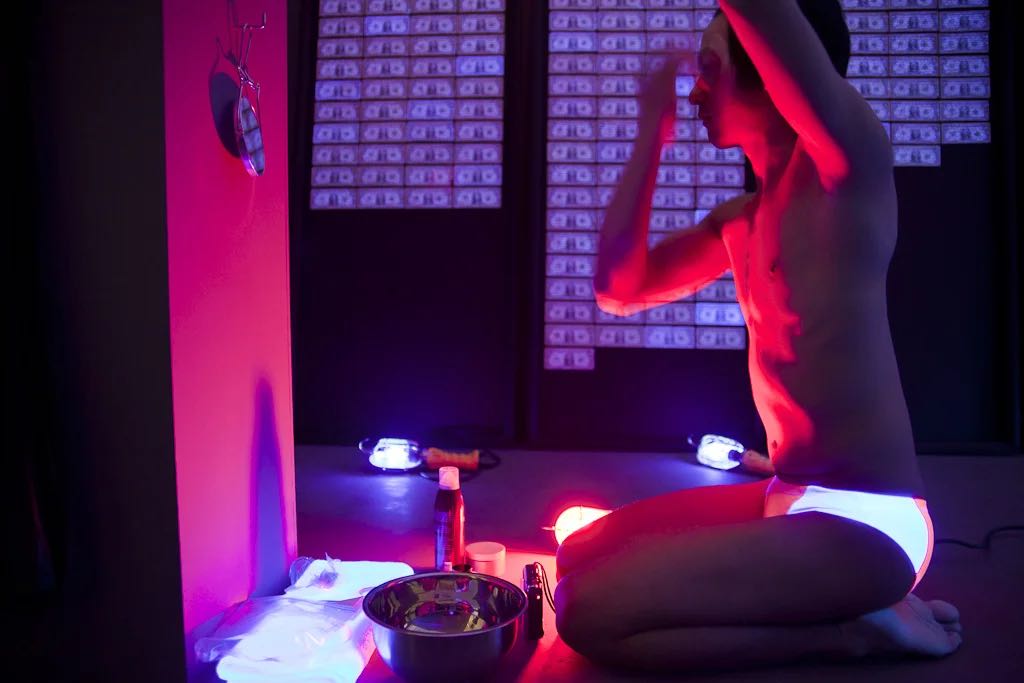
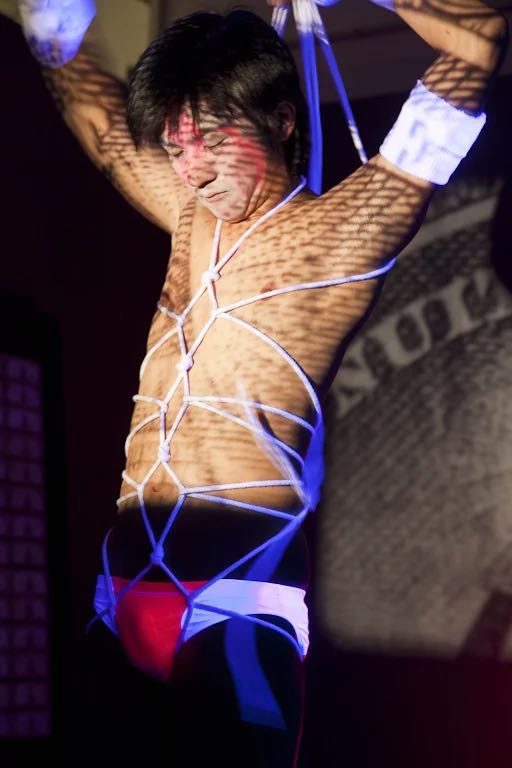
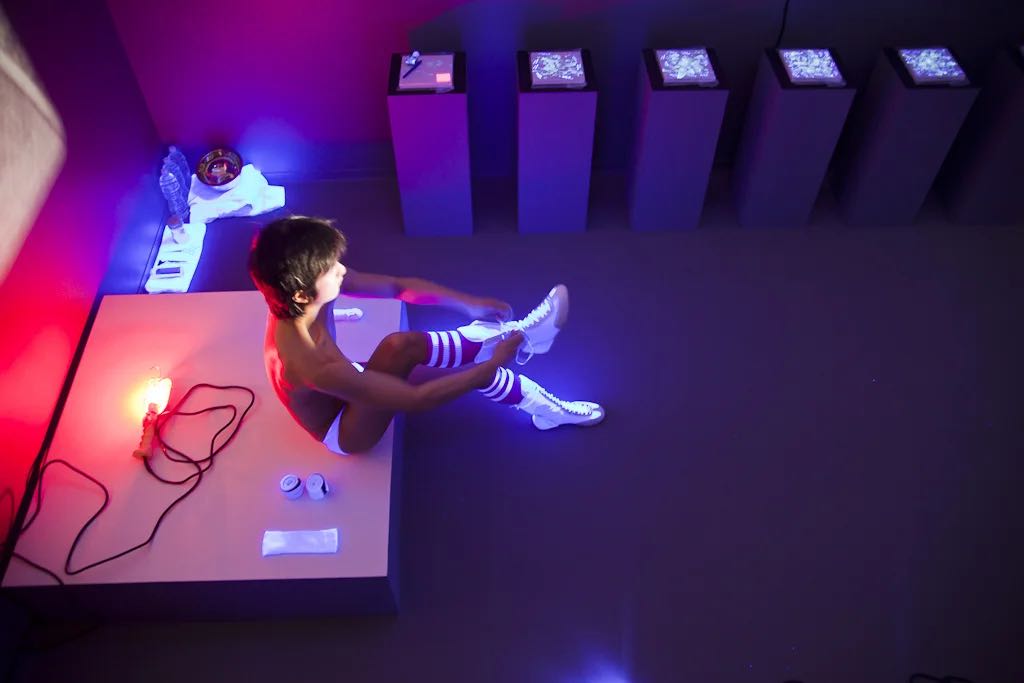
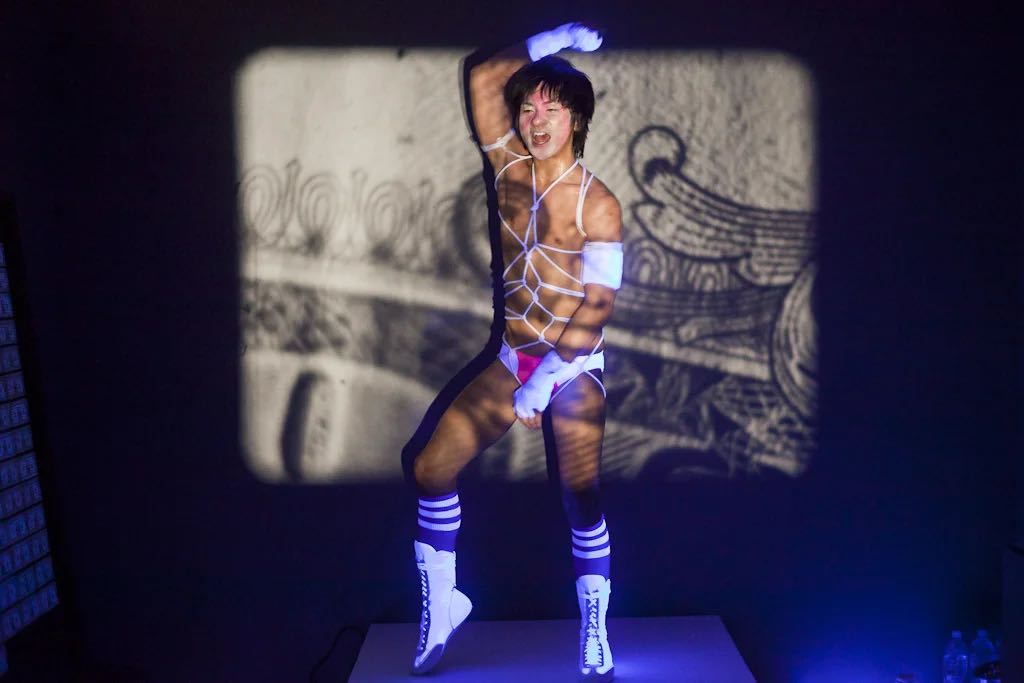
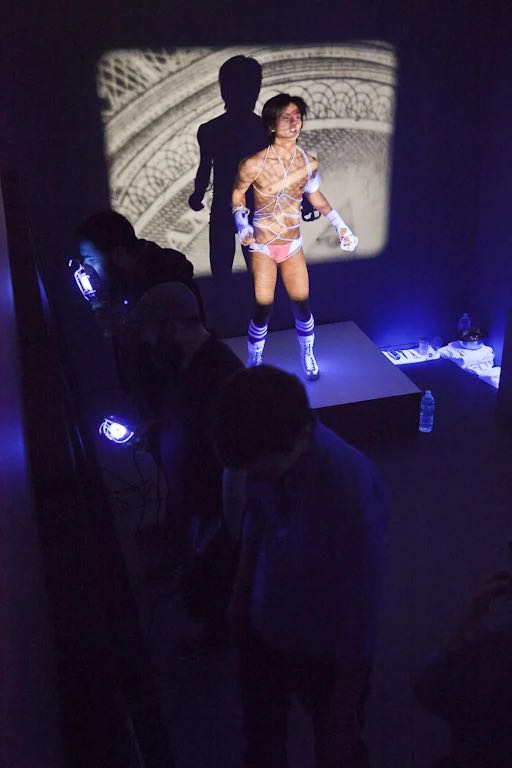
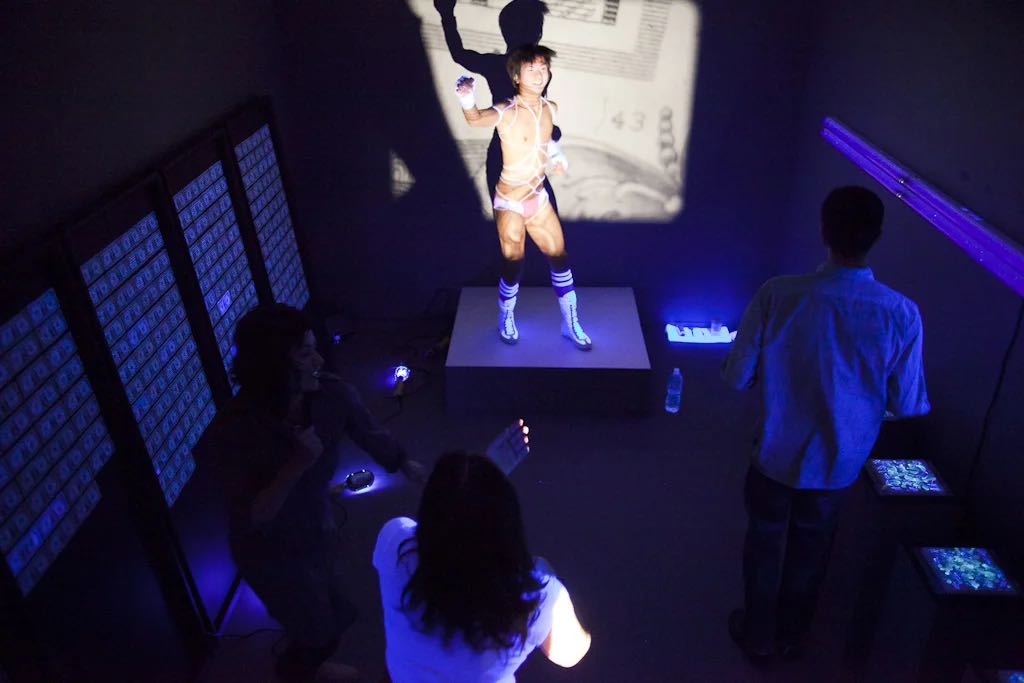
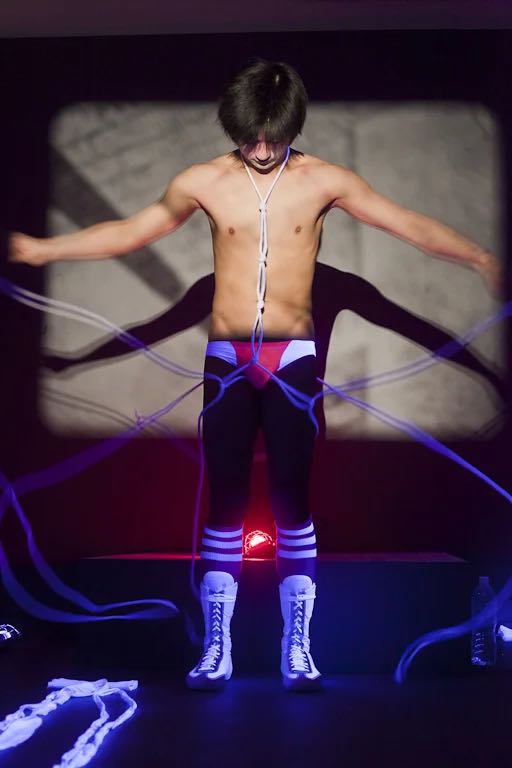
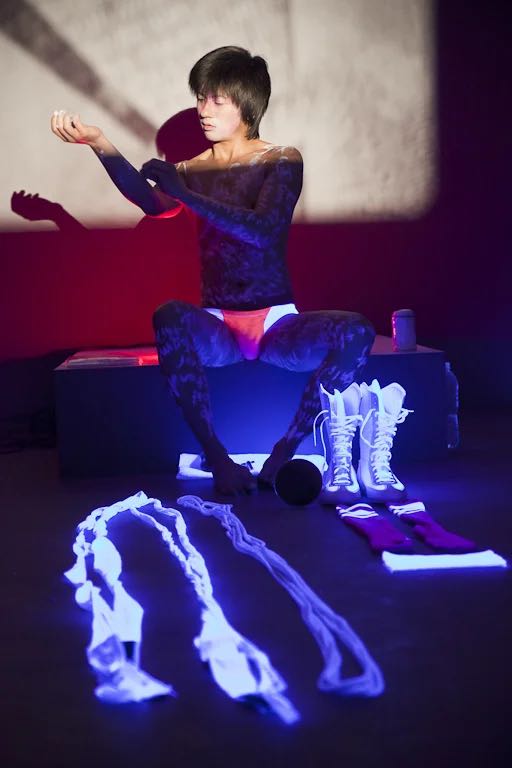
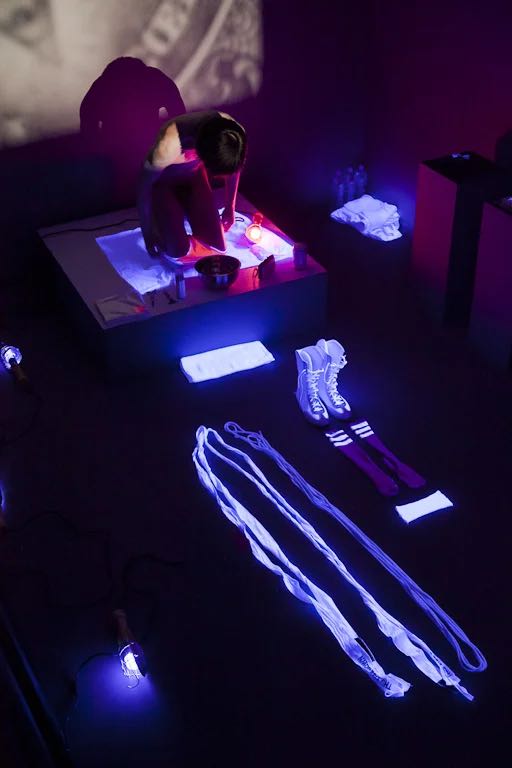
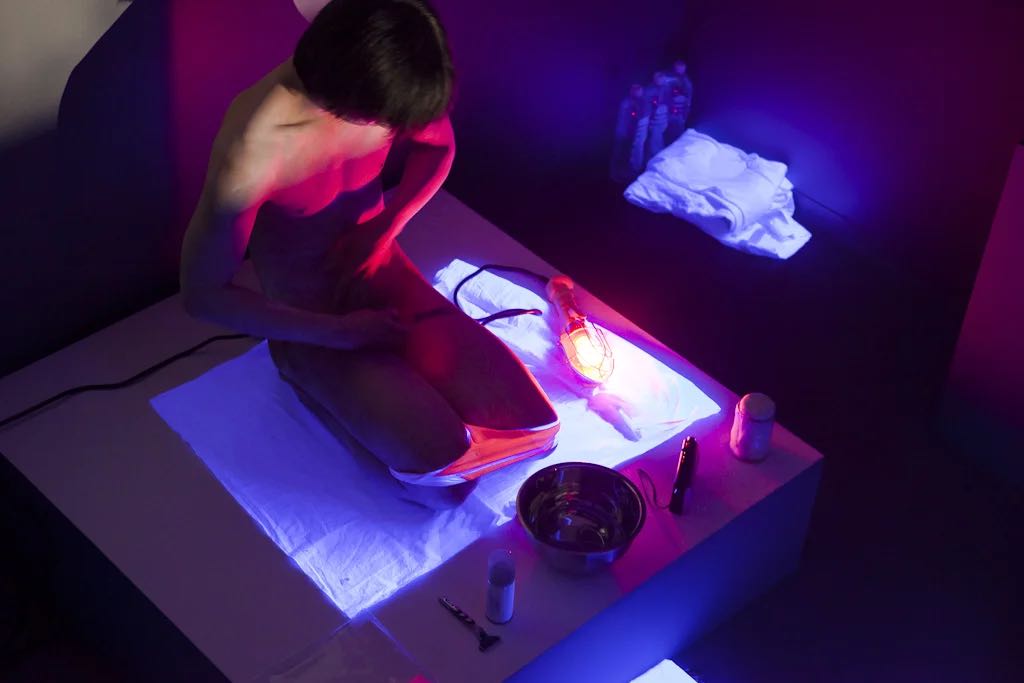
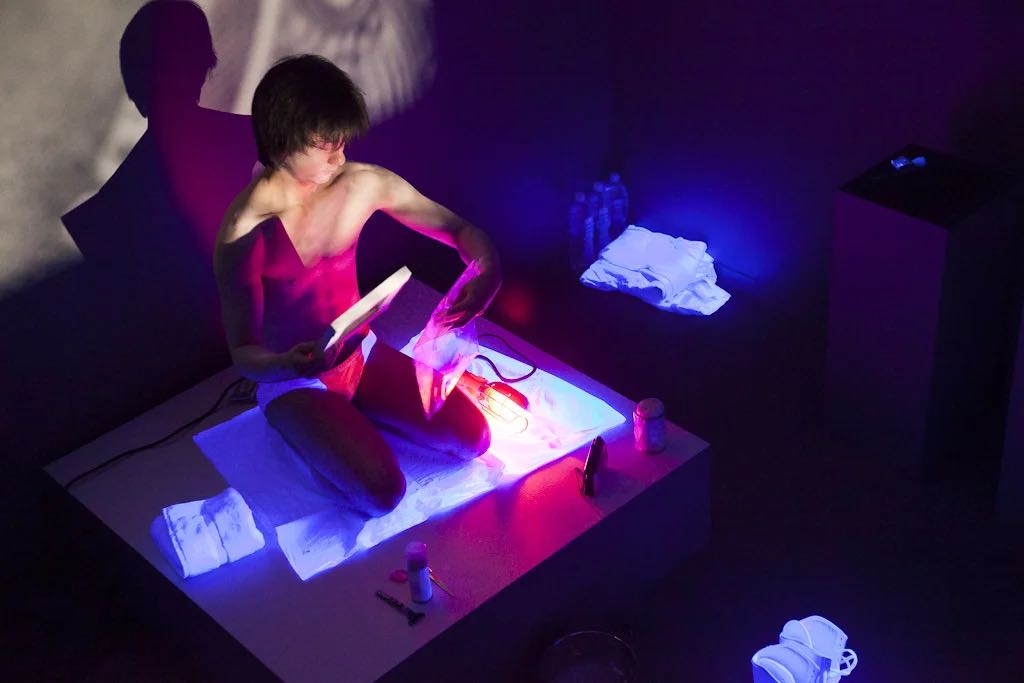
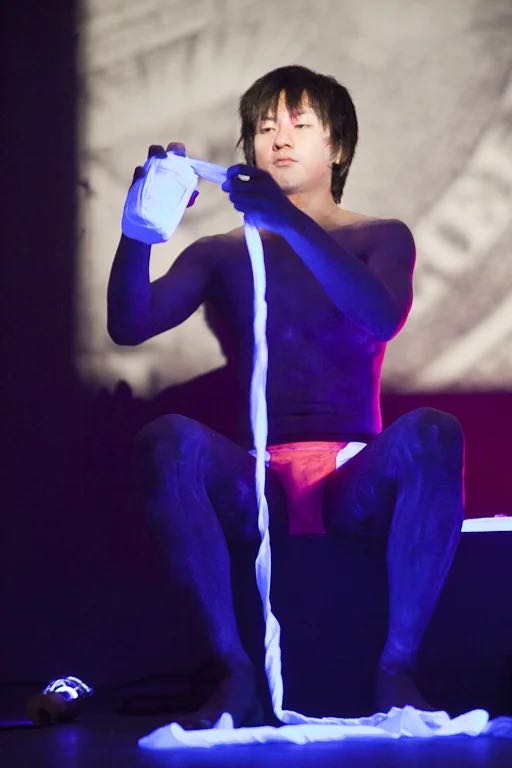
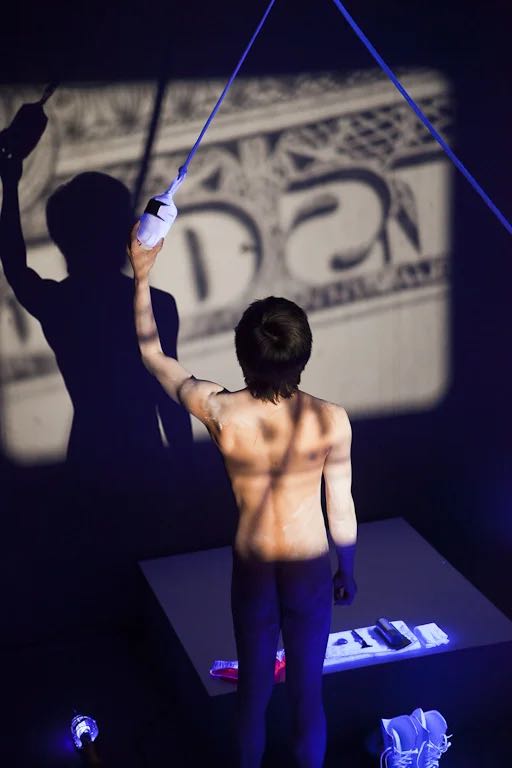
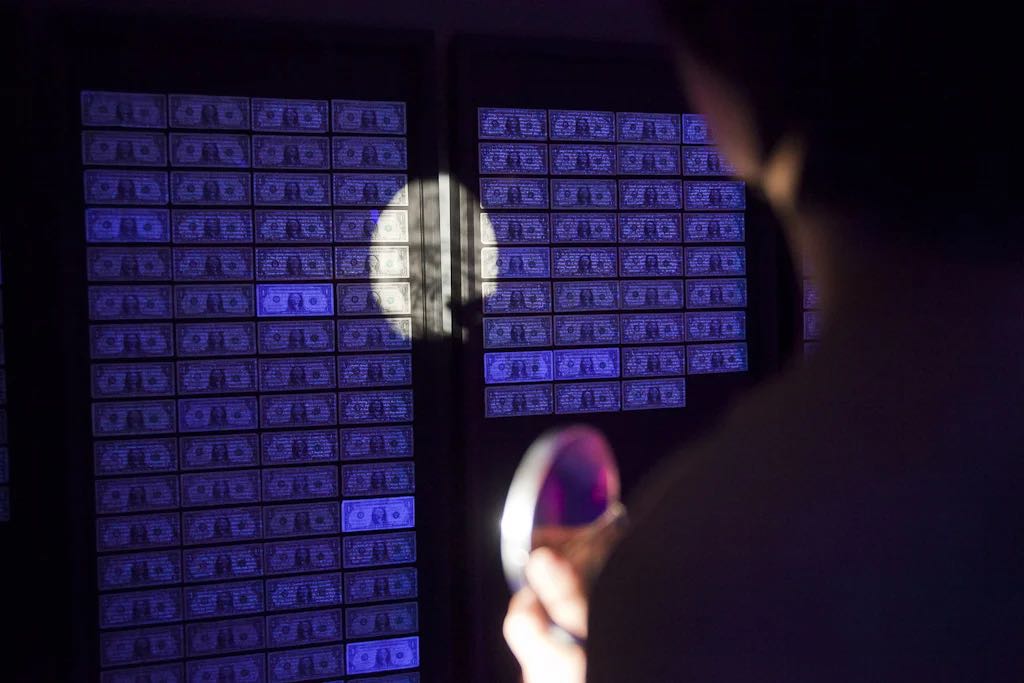
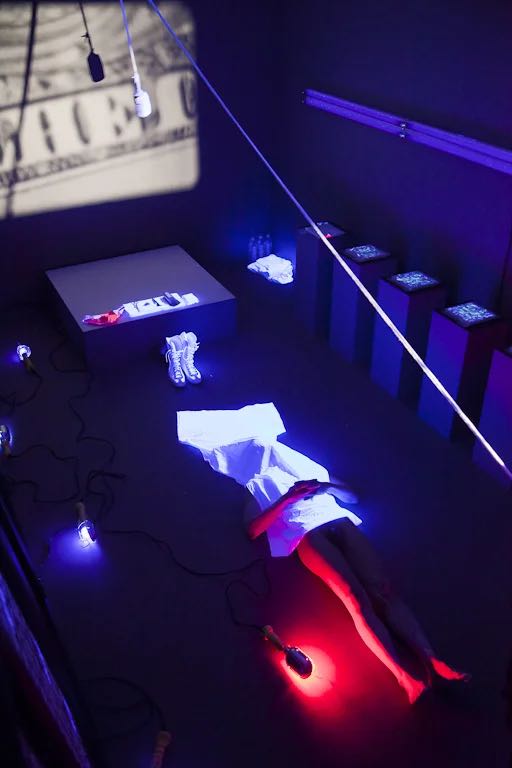
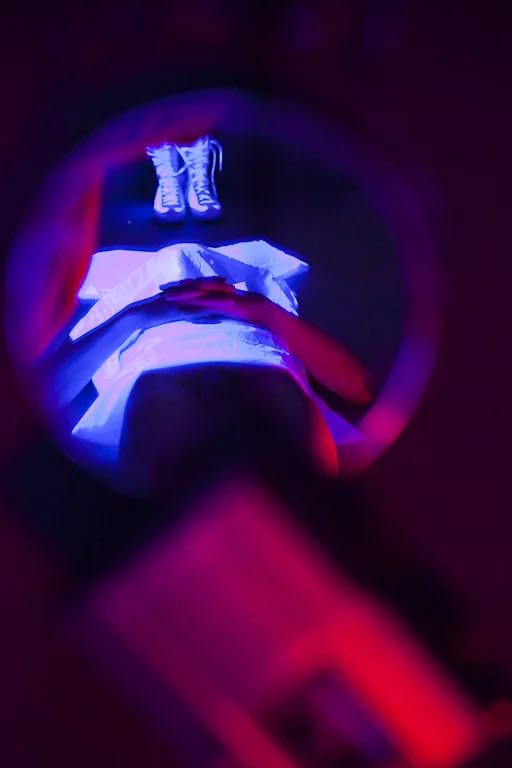
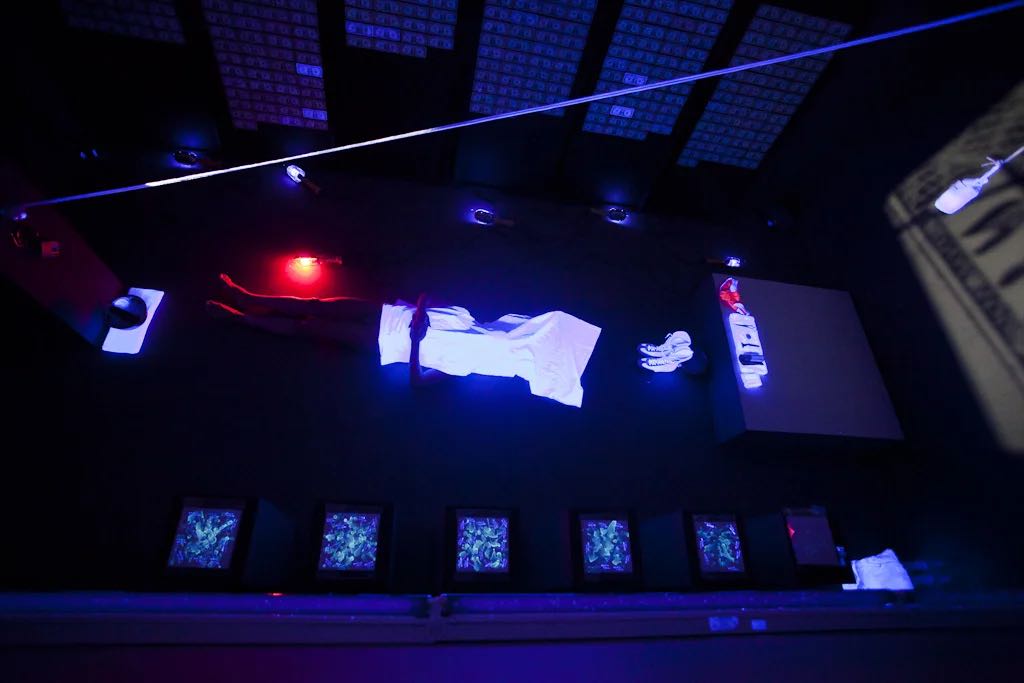
Part I. Performance documentation by Kuo Cheng-Yung.
Part II
5 November 2010Sharp Graduate Studios, School of the Art Institute of Chicago.
Six panels of dollar bills earned over six nights of working as a go-go dancer were exhibited in the studio space, accompanied by a performance I staged at the window.
A camera was placed across the road and directed toward the window of the studio space. The footage was projected “live” onto an empty wall in the studio, giving visitors two simultaneous views of the performance, from the interior and the exterior of the building.
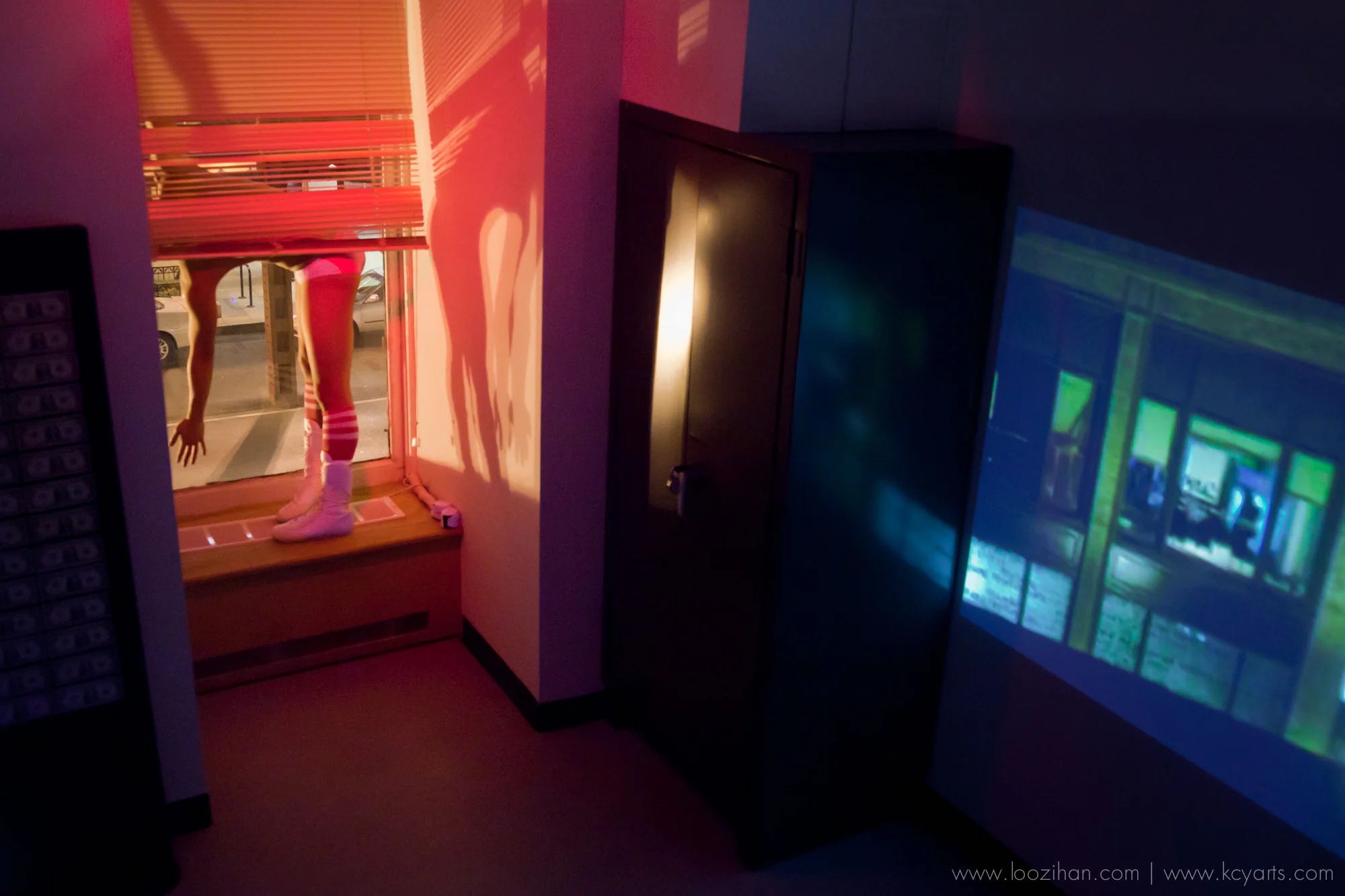
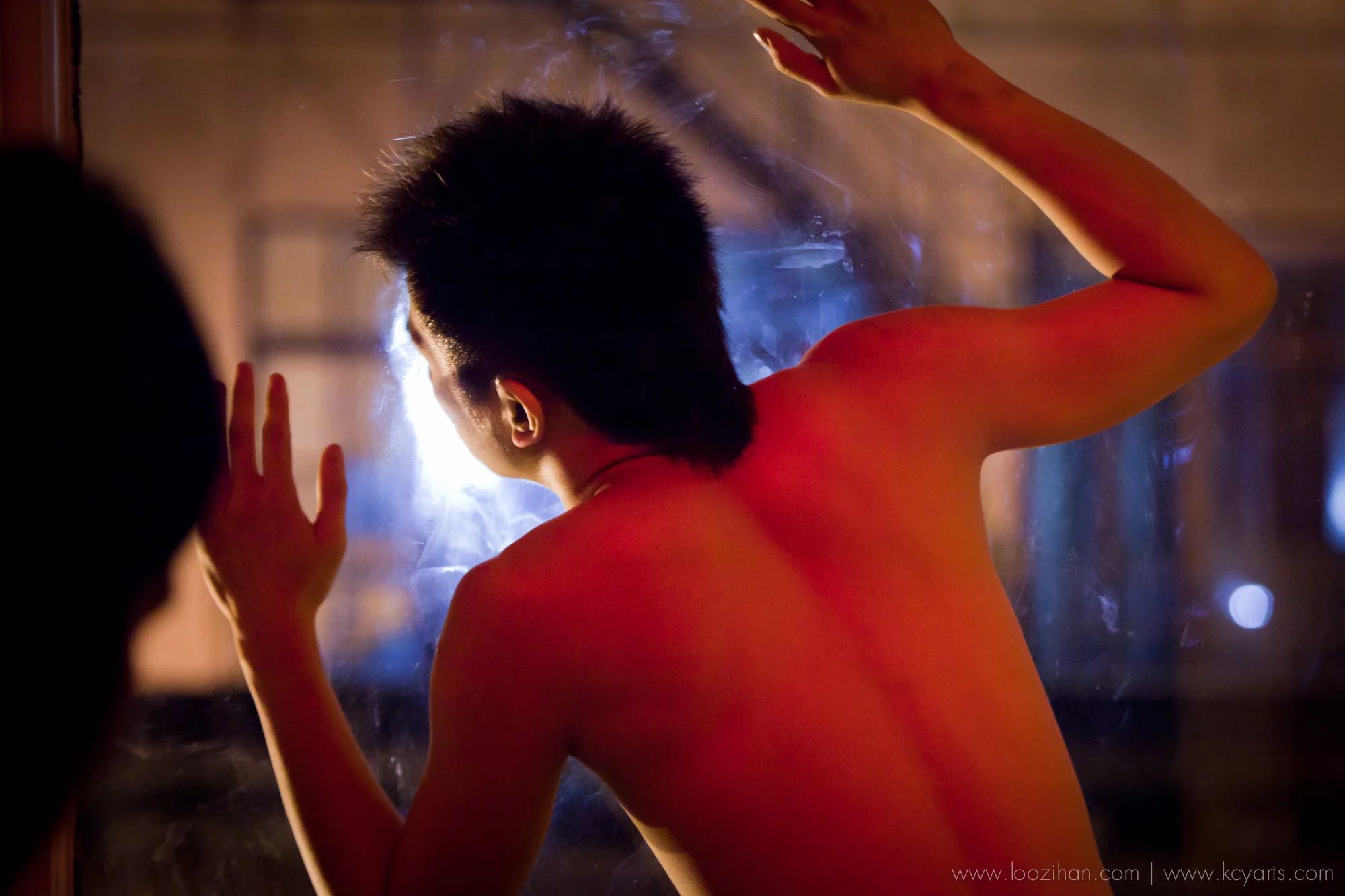
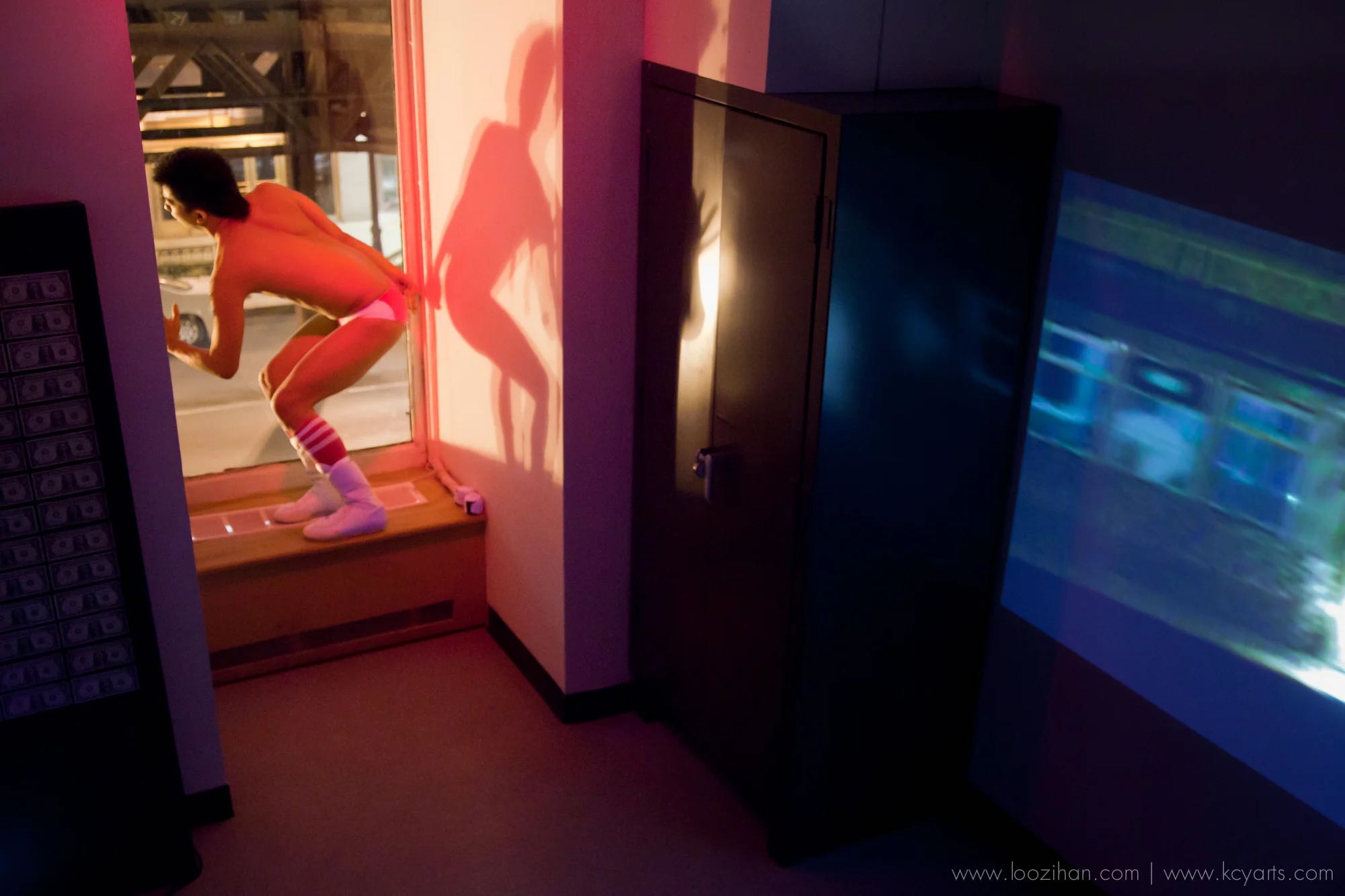
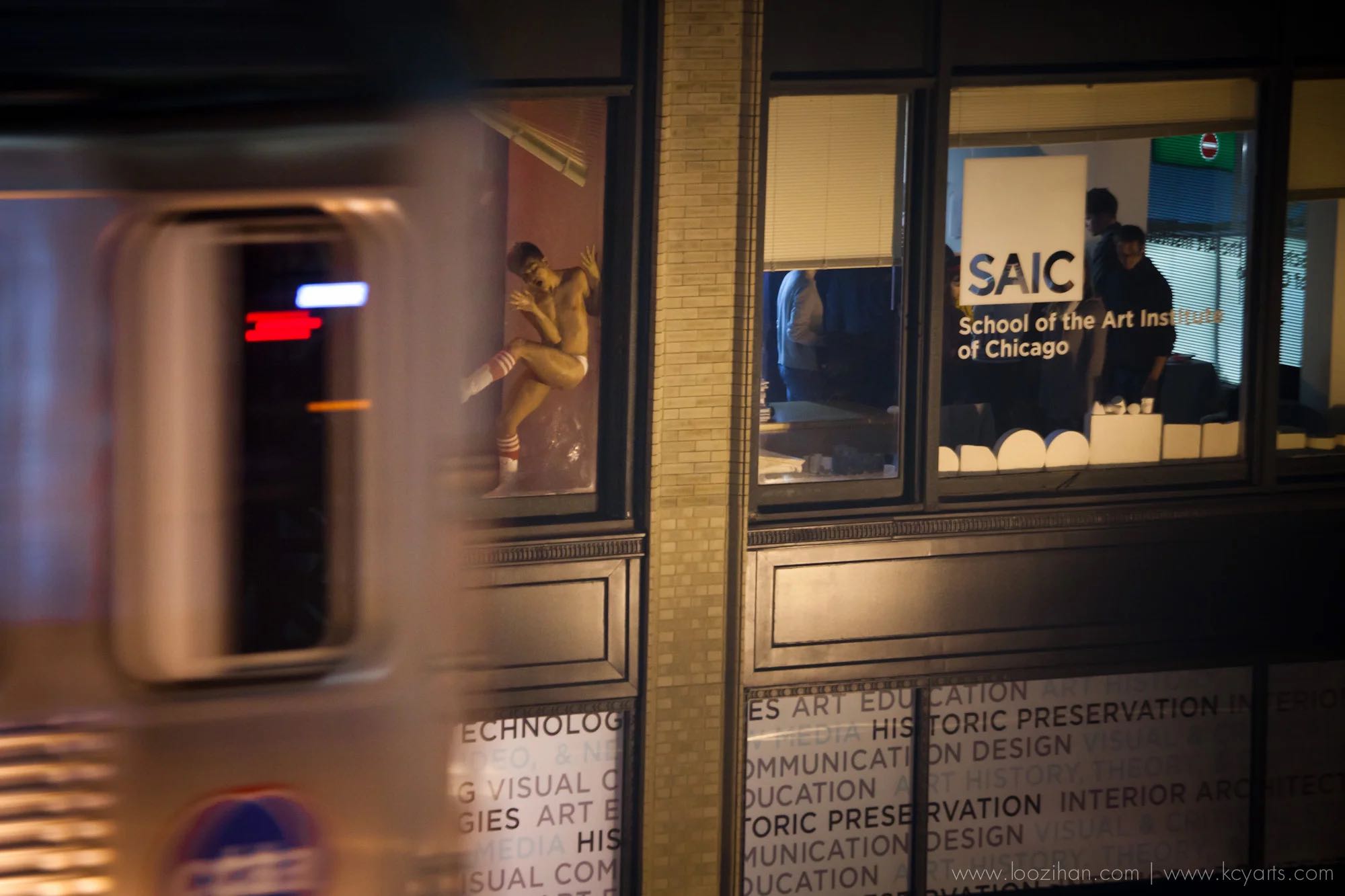
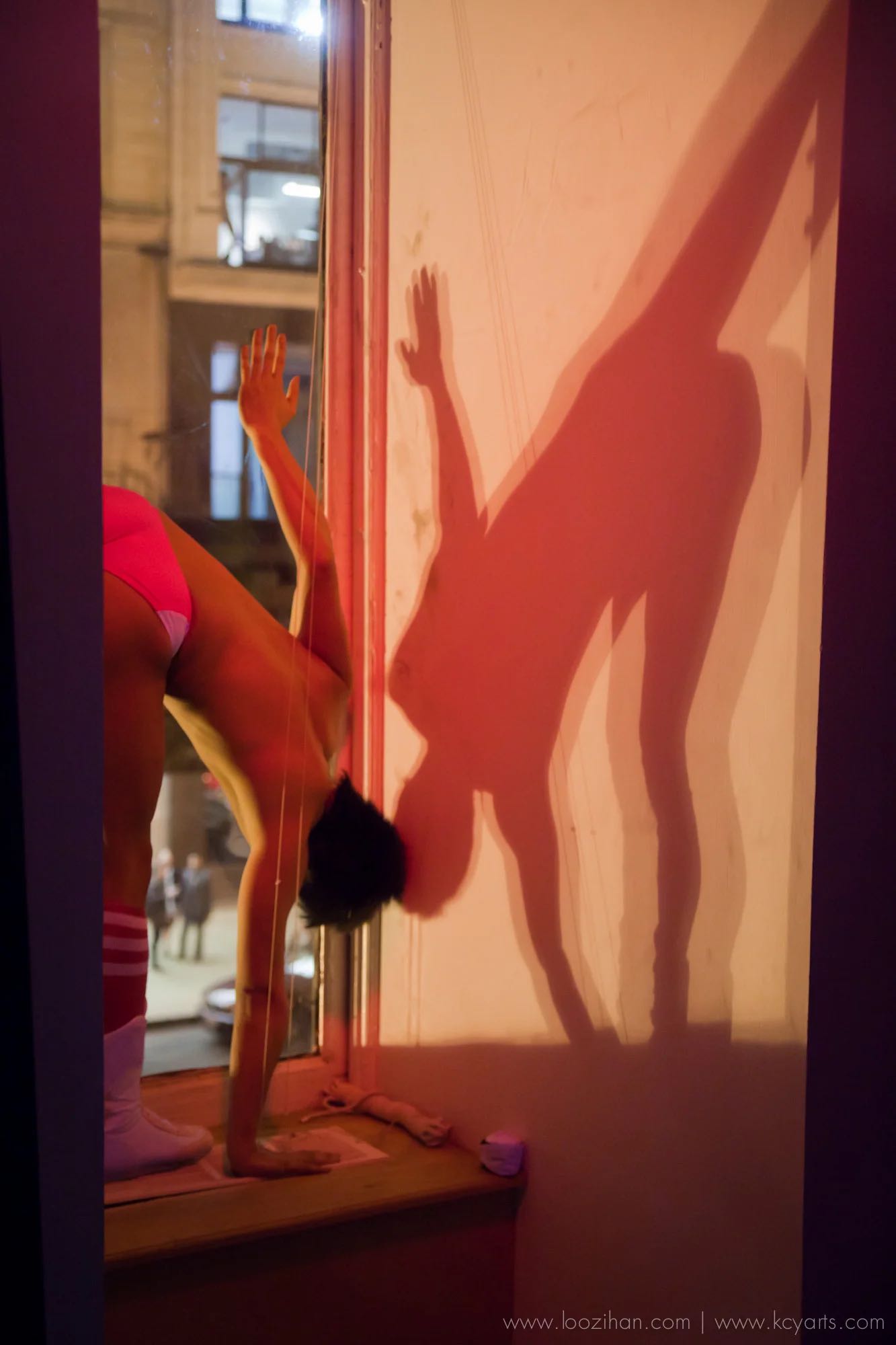
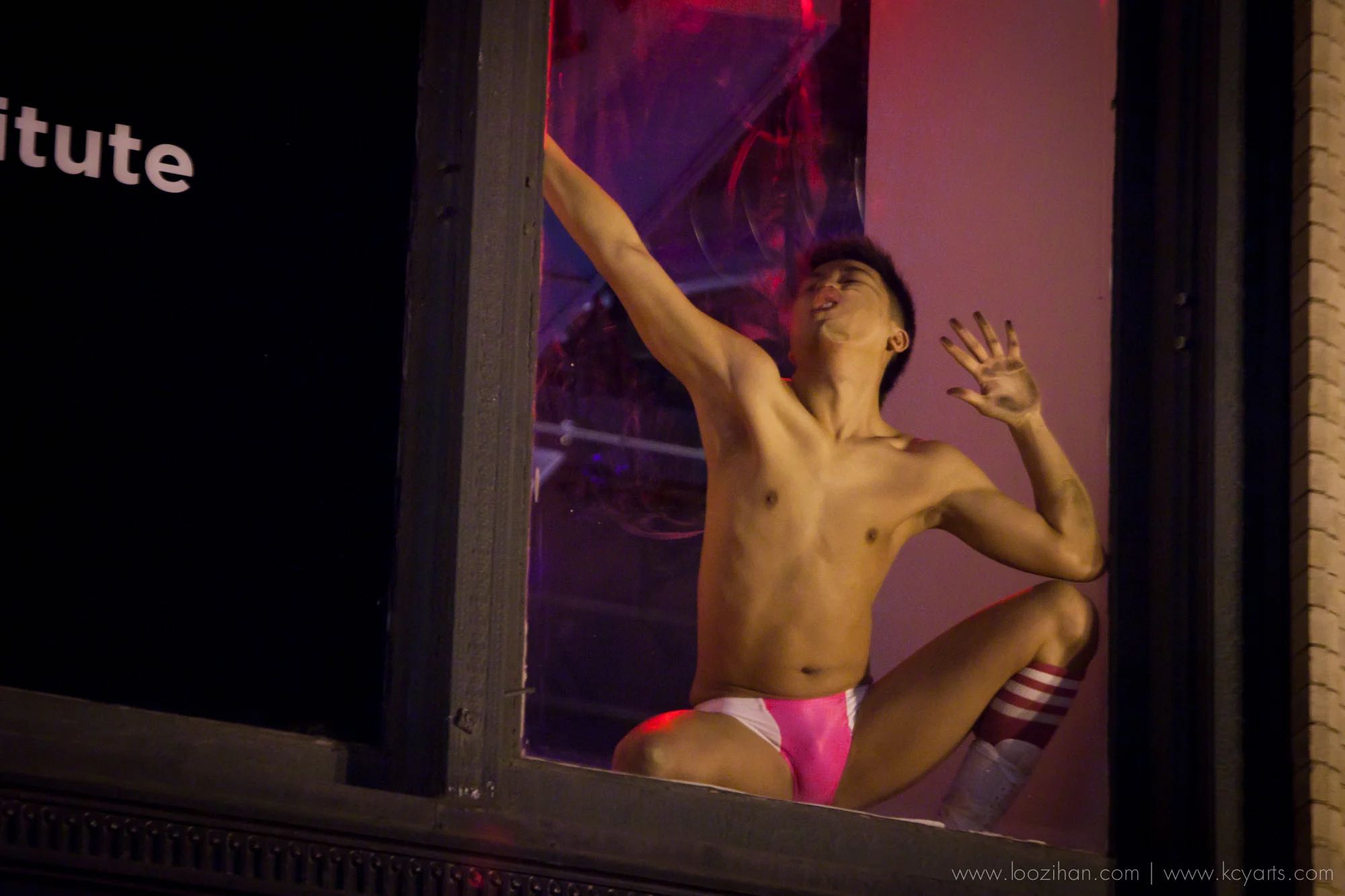
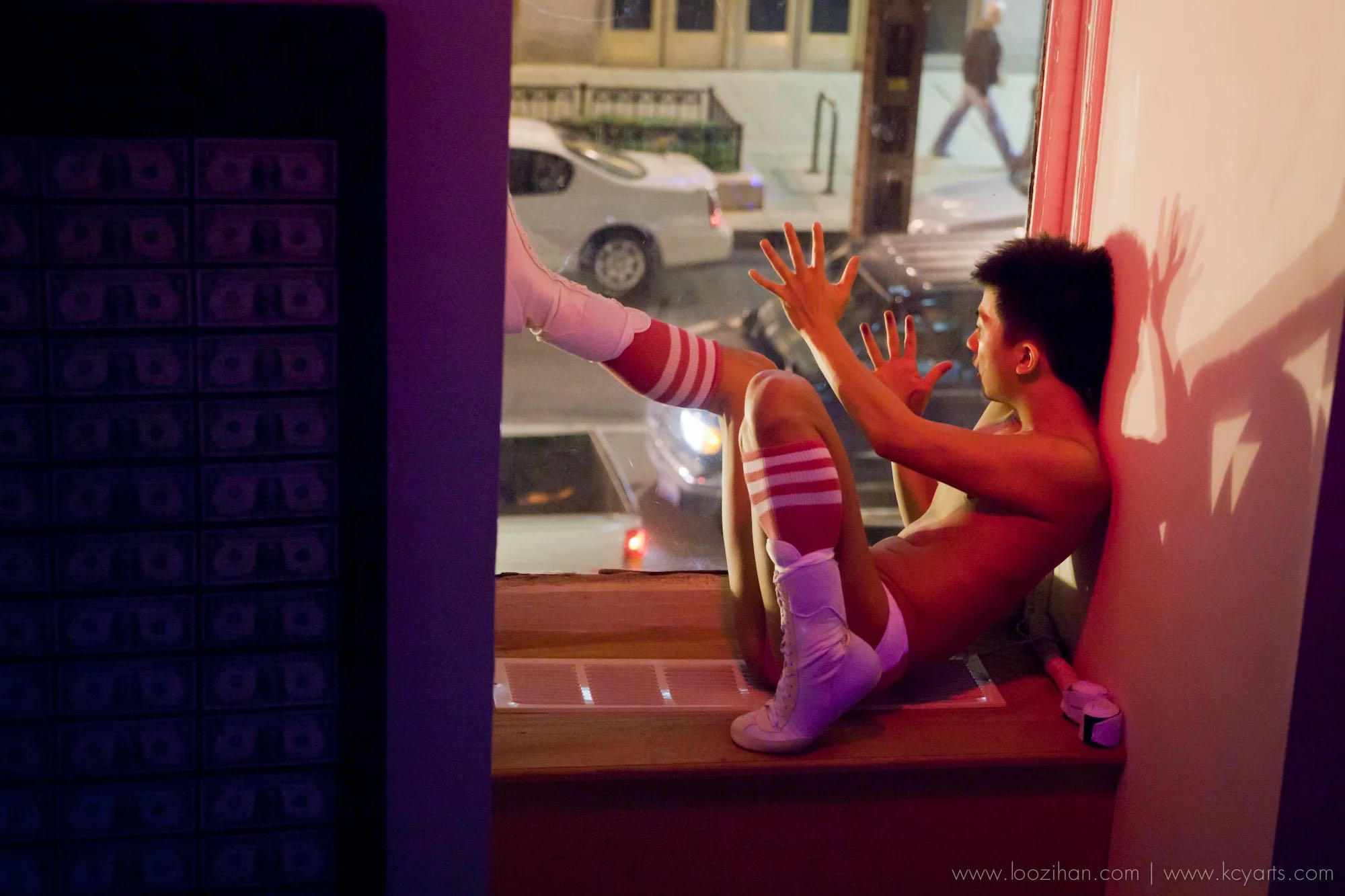
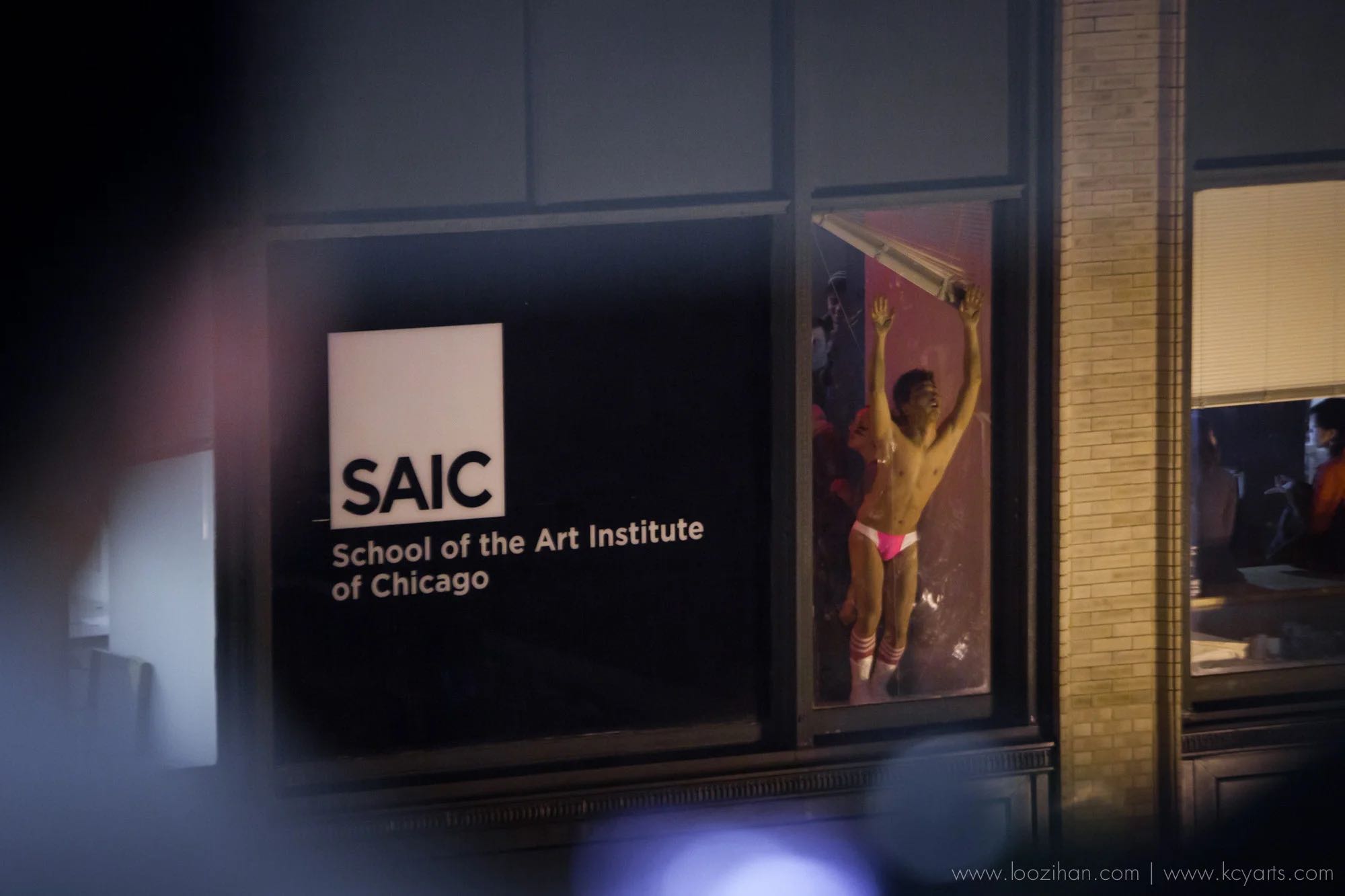
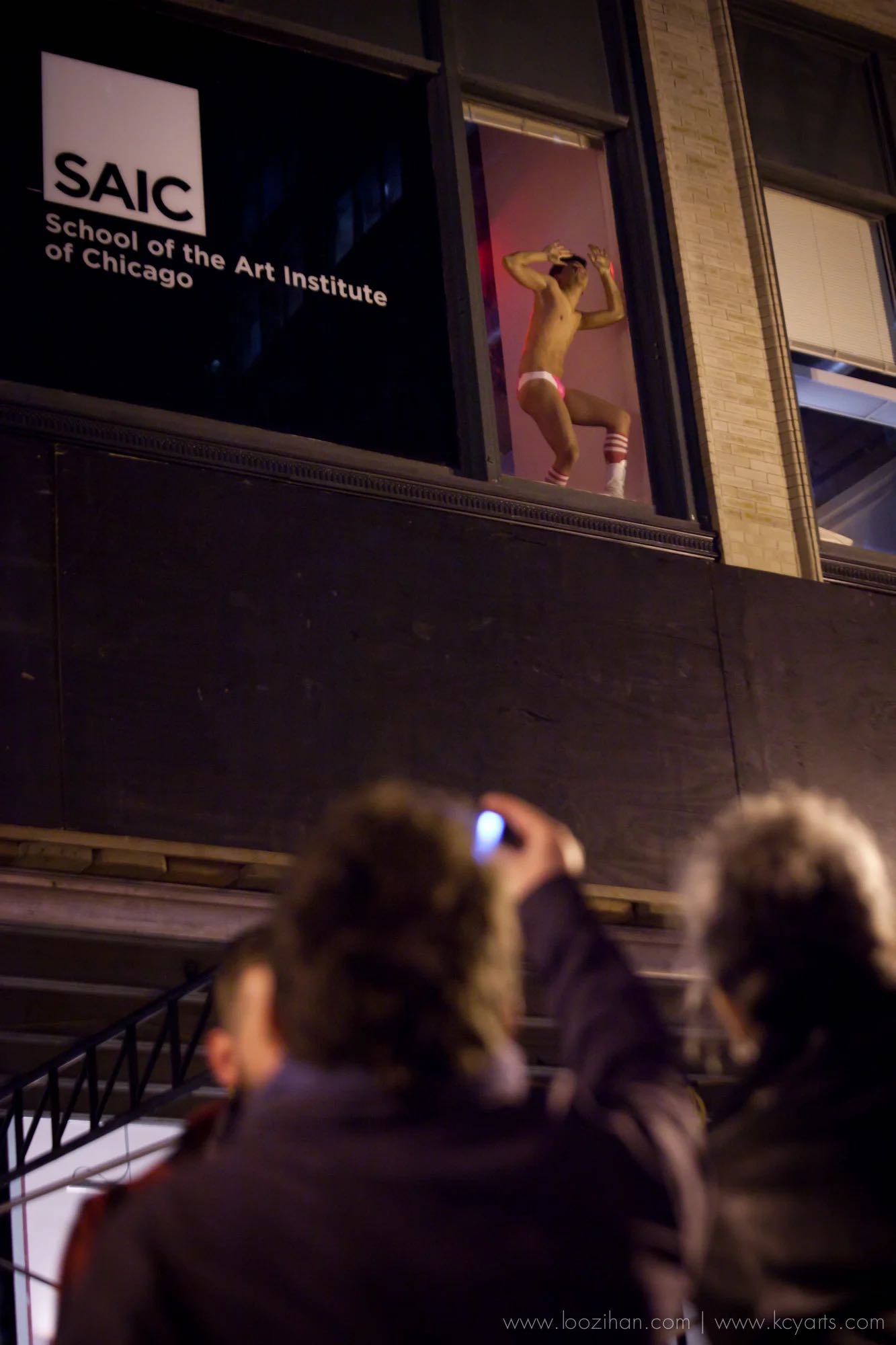
Part II. Performance documentation by Kuo Cheng-Yung.
Part III
10 December 2010 to 22 January 2011Sullivan Galleries, The School of the Art Institute of Chicago, part of Stories of Relativity group exhibition.
The project culminated into a final performance installation. As part of this presentation, I disseminated these bills to 306 friends, family and acquaintances across the globe. Six frames were displayed as part of the installation, alongside a single-channel video. Each individual frame contains bills earned on each corresponding day of my labor and performance in New York City.
Part III durational performance documentation.
Over the duration of the exhibition, I systematically removed the bills and extracted the “Eye of Providence” on the reverse side of the bill, preparing them to be mailed along with an accompanying letter on the one-year anniversary of their receipt from 16 to 23 January 2011.
At the conclusion of the exhibition, these letters were mailed out to their respective recipients.
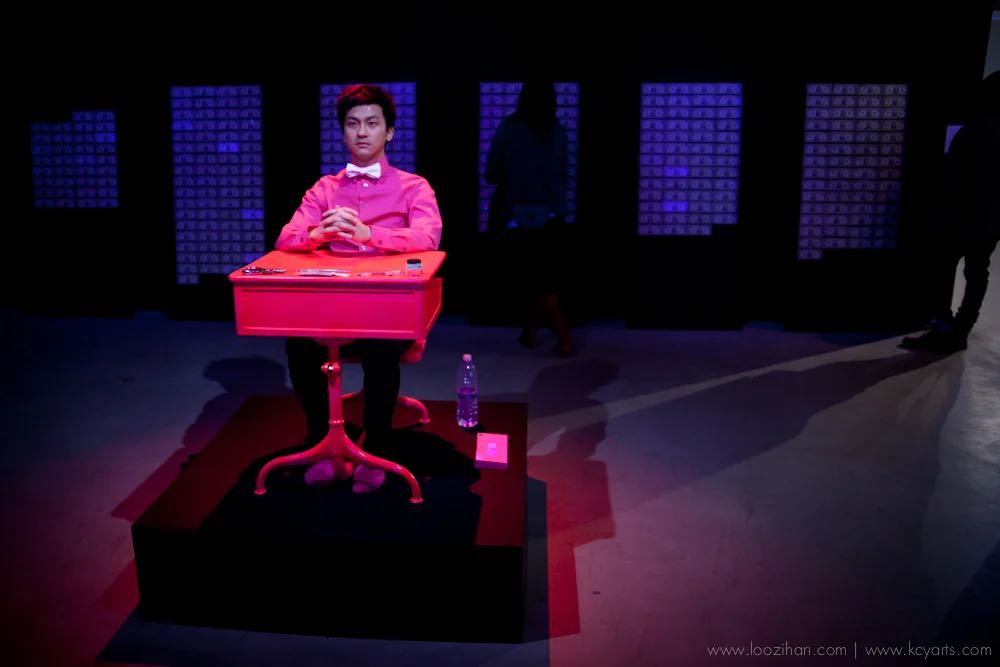
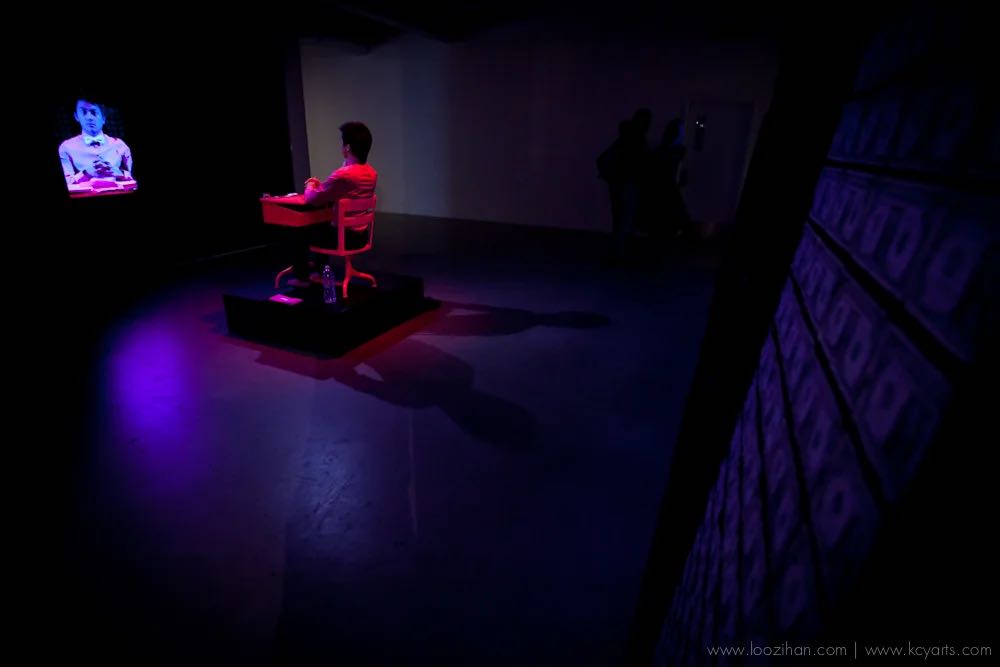
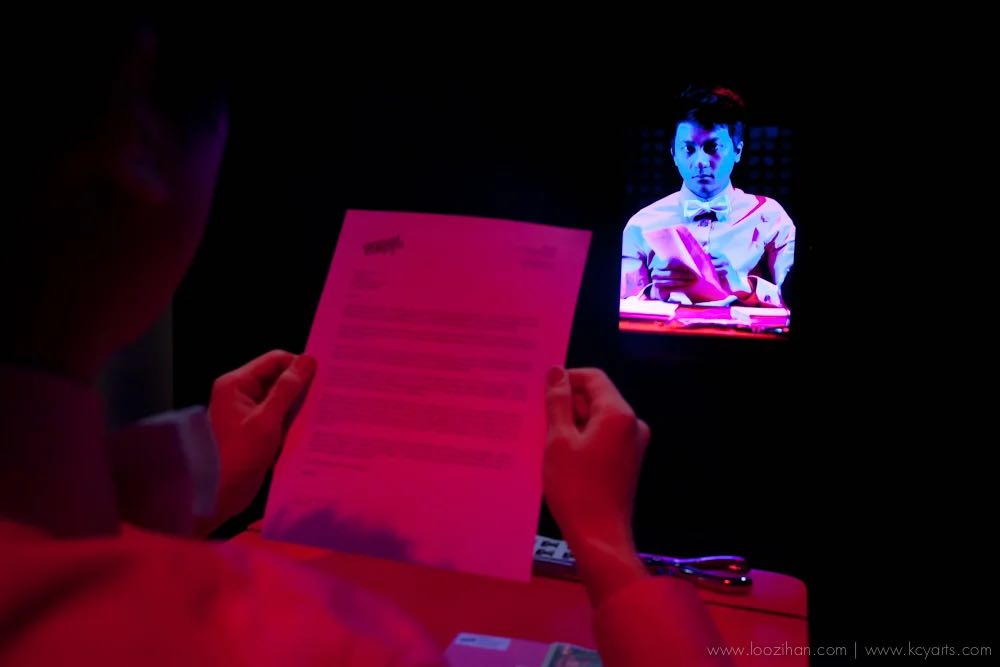
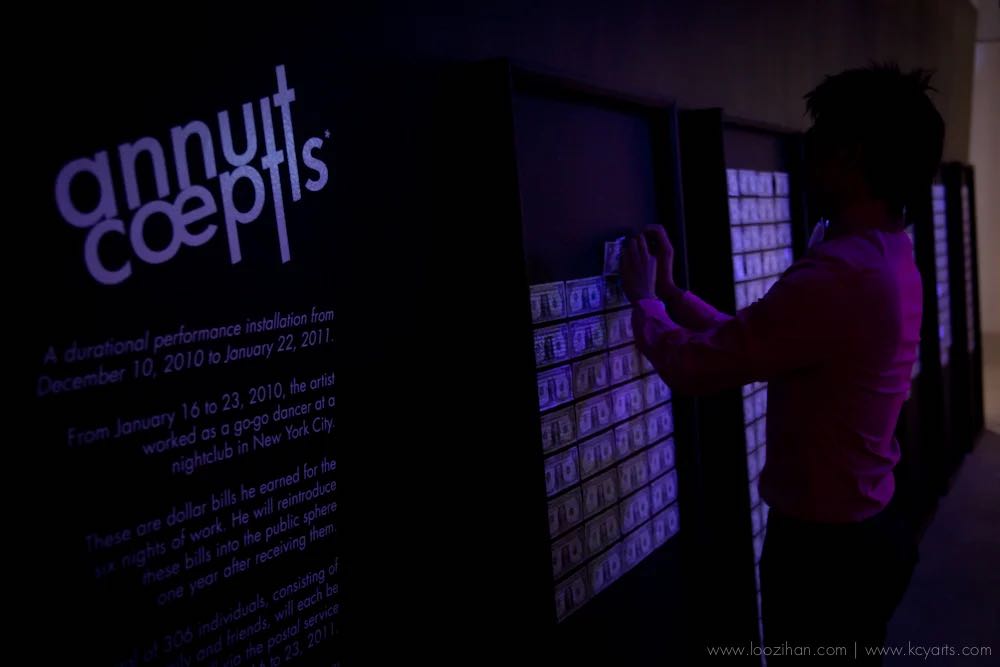
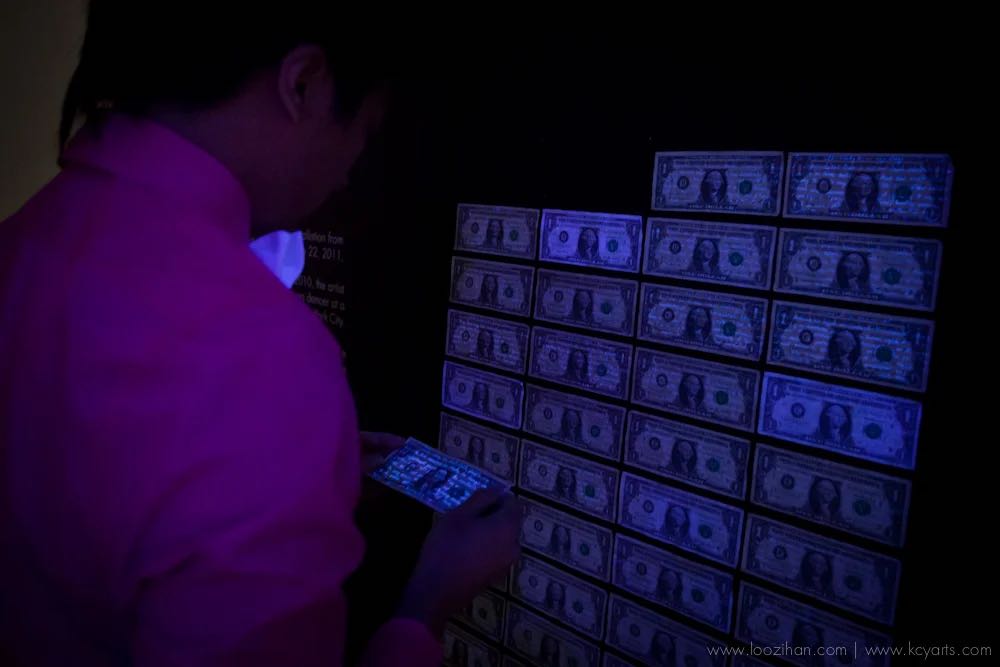
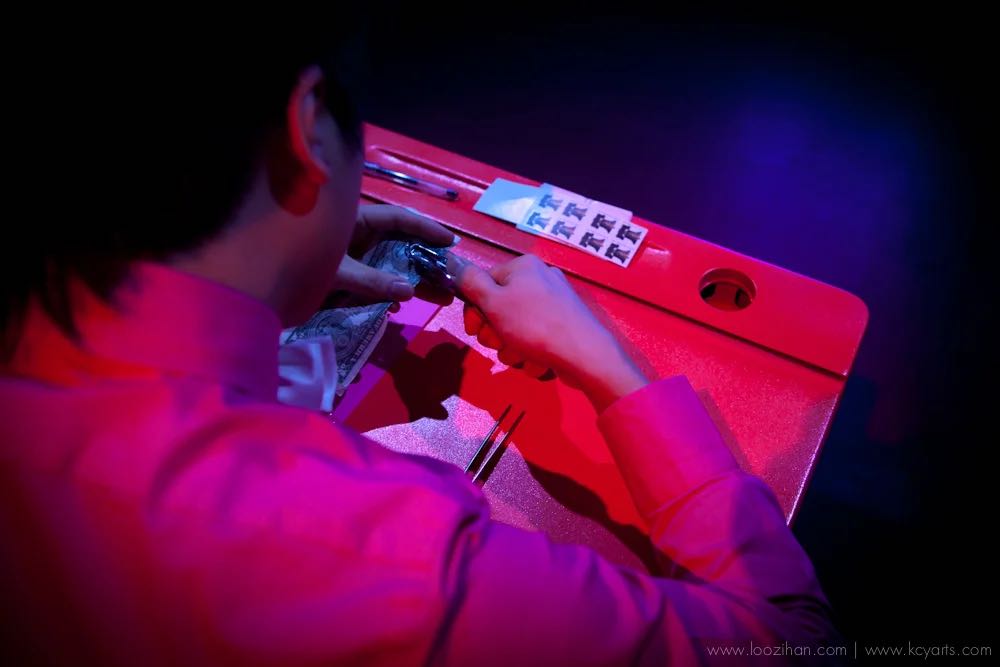
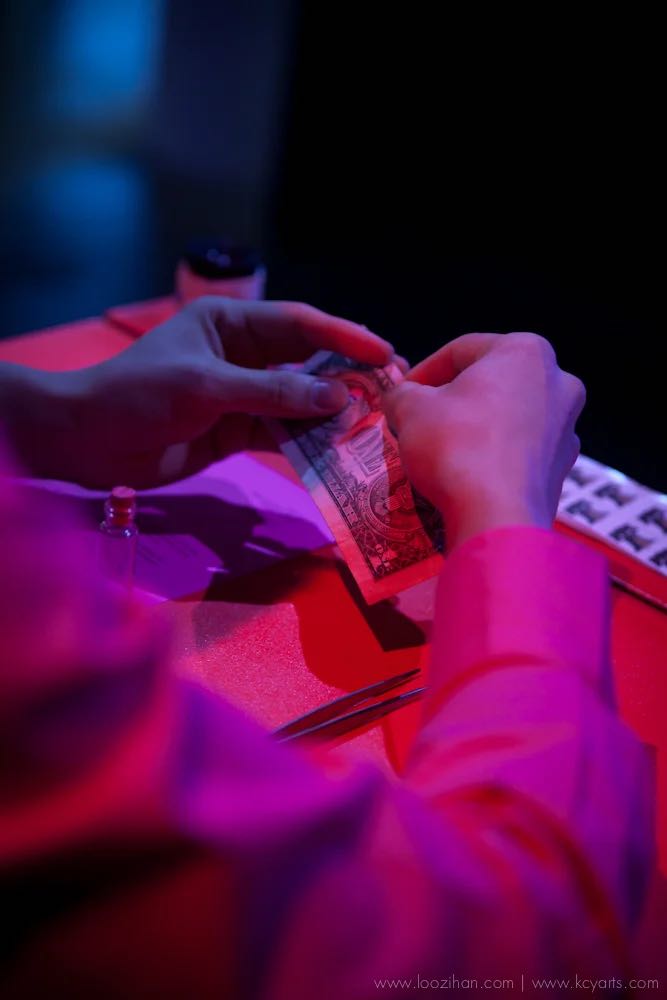
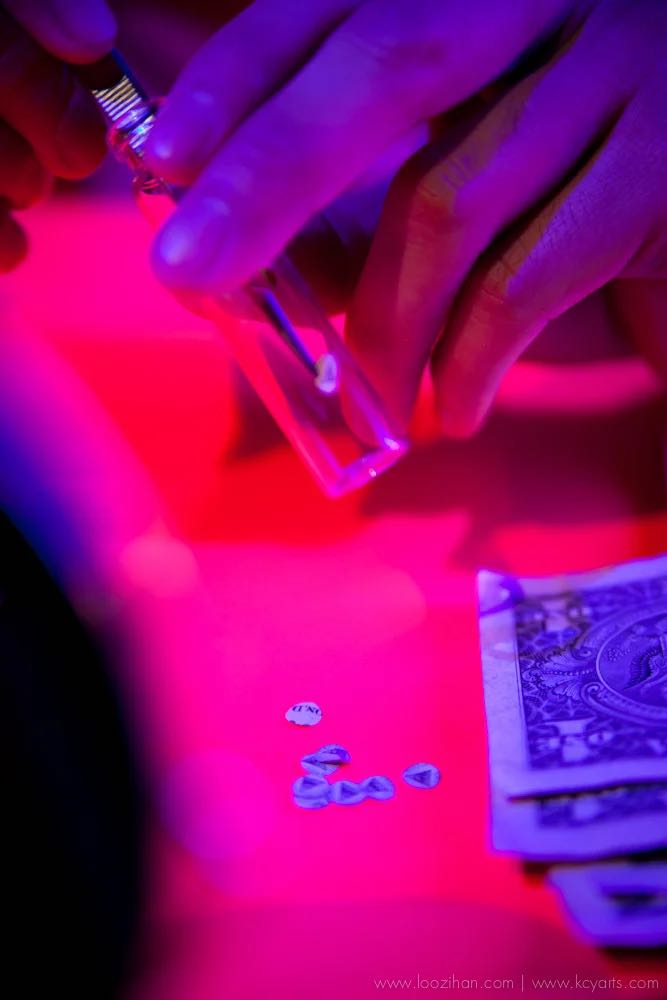
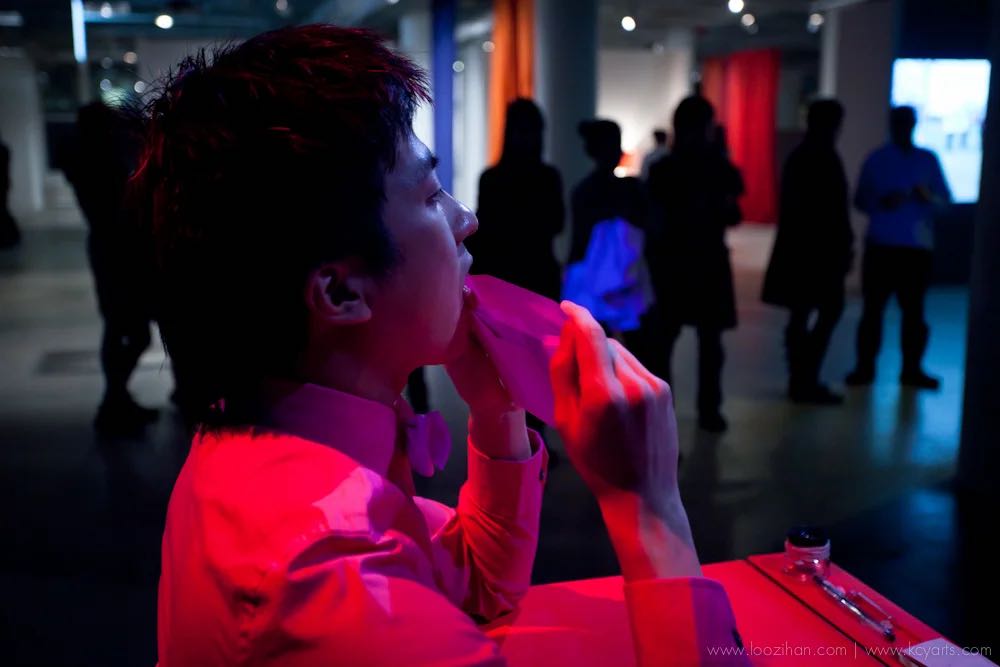
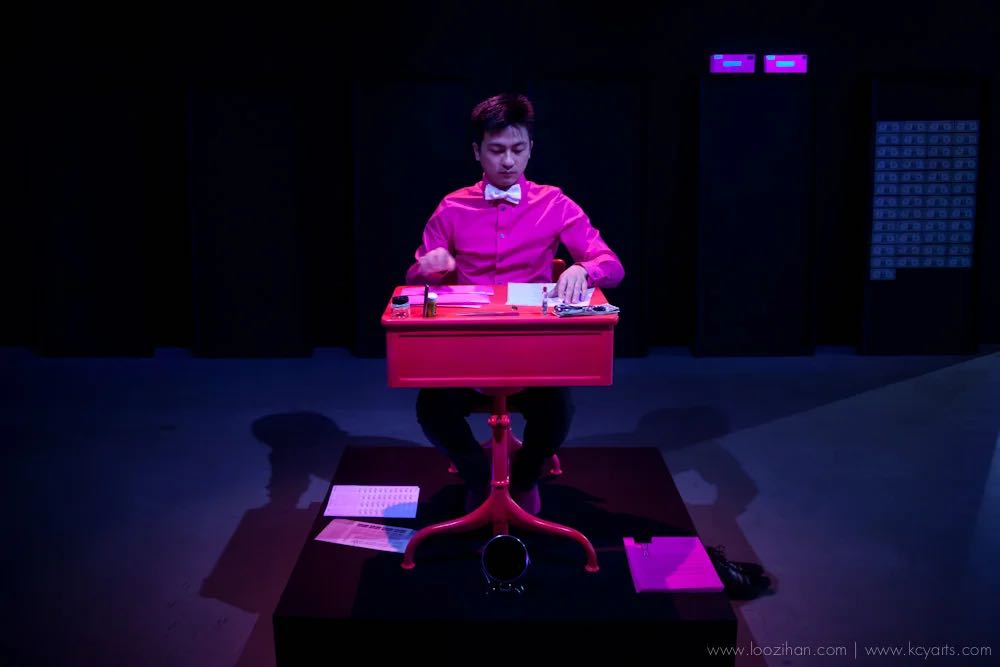
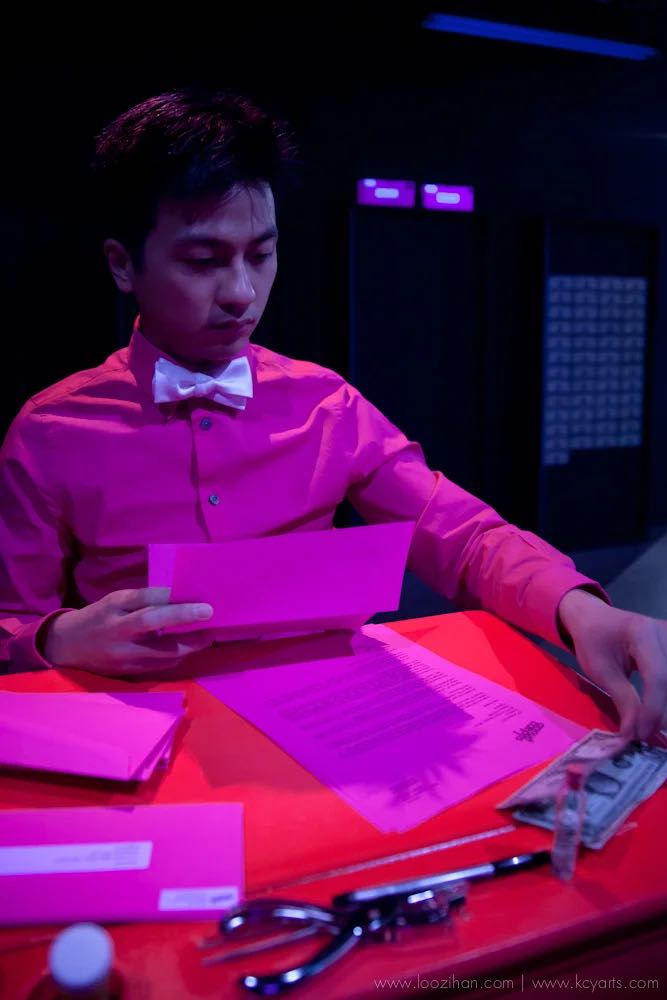
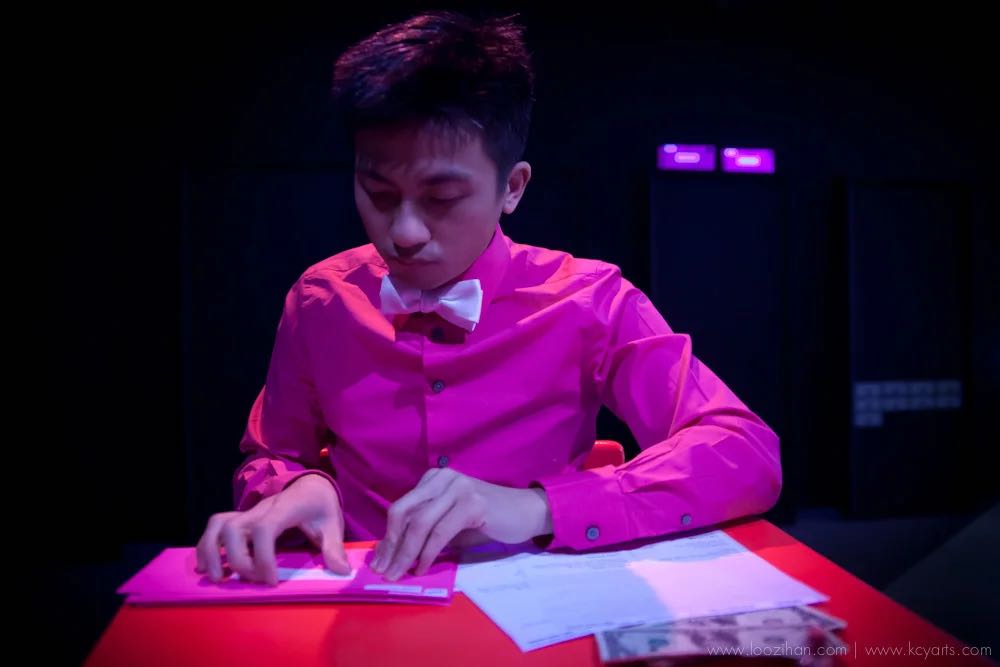
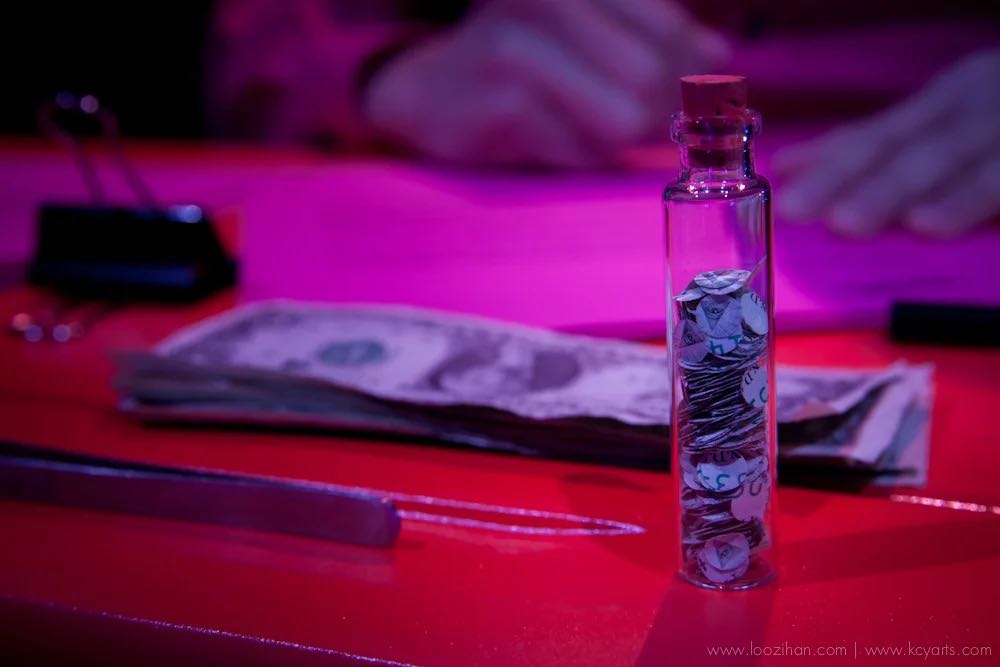
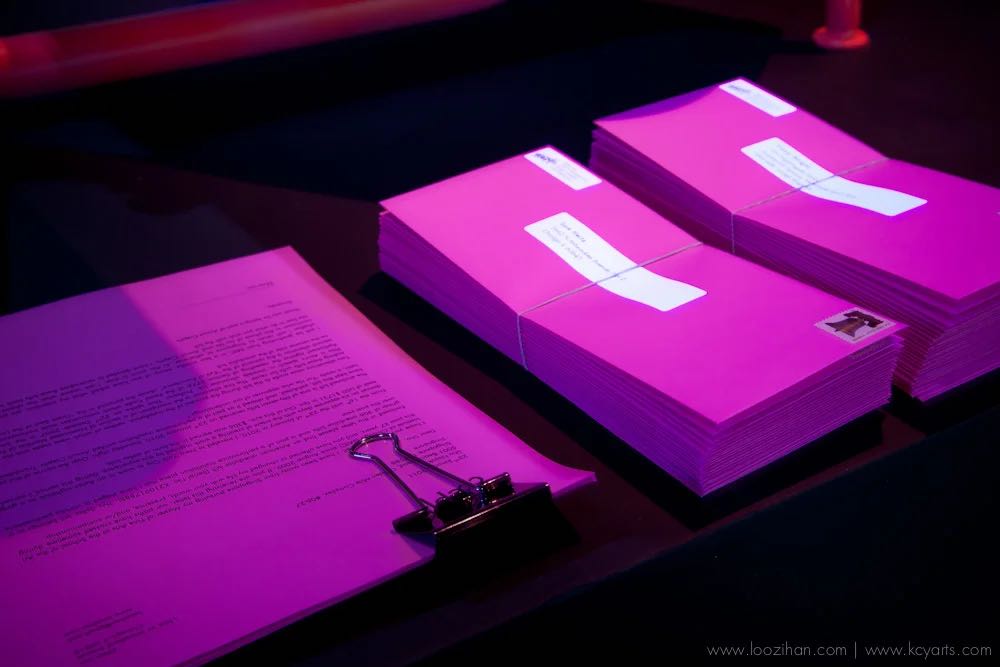
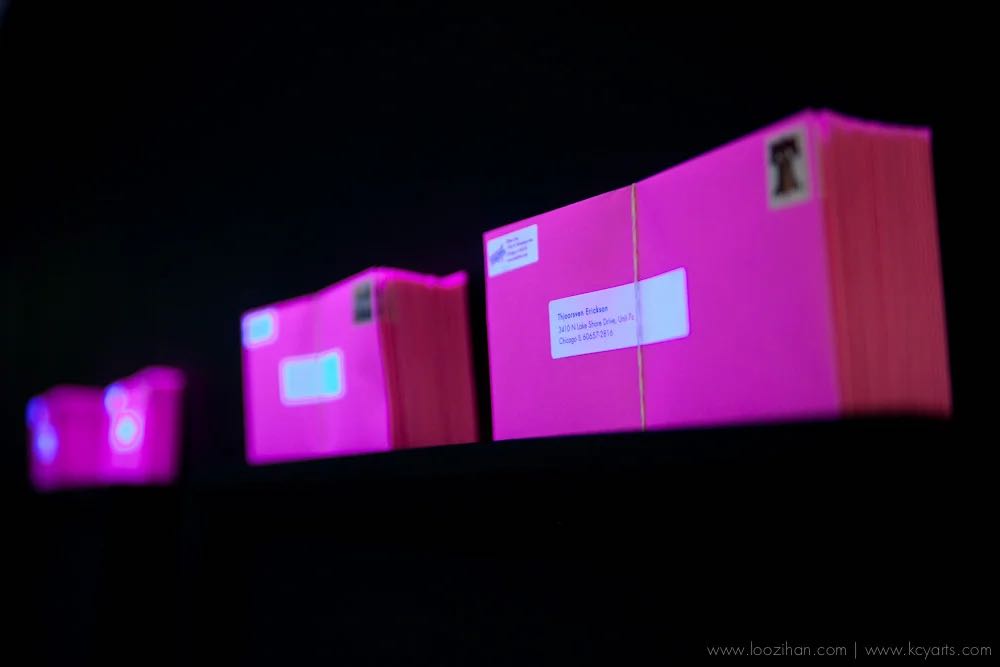
Part III. Performance documentation by Kuo Cheng-Yung.
Dispensary (2011)
- Relational Performance Installation
- 11 March to 10 April 2011
- Zhou B. Art Center, Chicago, IL
- Part of Sexier at Zhou B Art Center
- In partnership with Adam Van Eeckhout
Dispensary features six 8″ by 8″ canvases, each accumulating a bodily trace over a two-week period. The date and time of every deposit was recorded in ultraviolet ink, legible only under blacklight.
At the center of the installation was a blank 3’ by 3’ canvas. Before the opening I sent invitations to sixty male-identifying friends, asking them to contribute to this surface over the run of the exhibition. Thirteen consented to participation. Each made an appointment and completed a form documenting what they visualize for pleasure, their desires, along with their most recent sexual encounter. Drawing on those responses, I composed a private one-on-one performance for each participant, after which they were given private time and space to complete their contribution to the work.
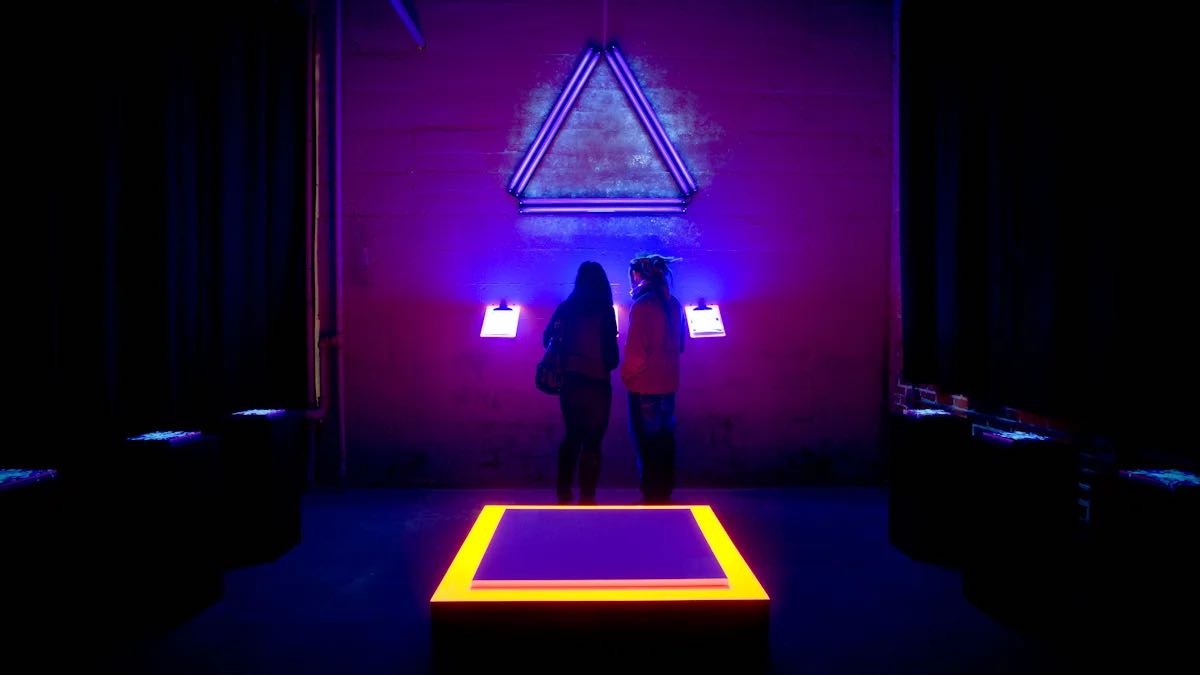
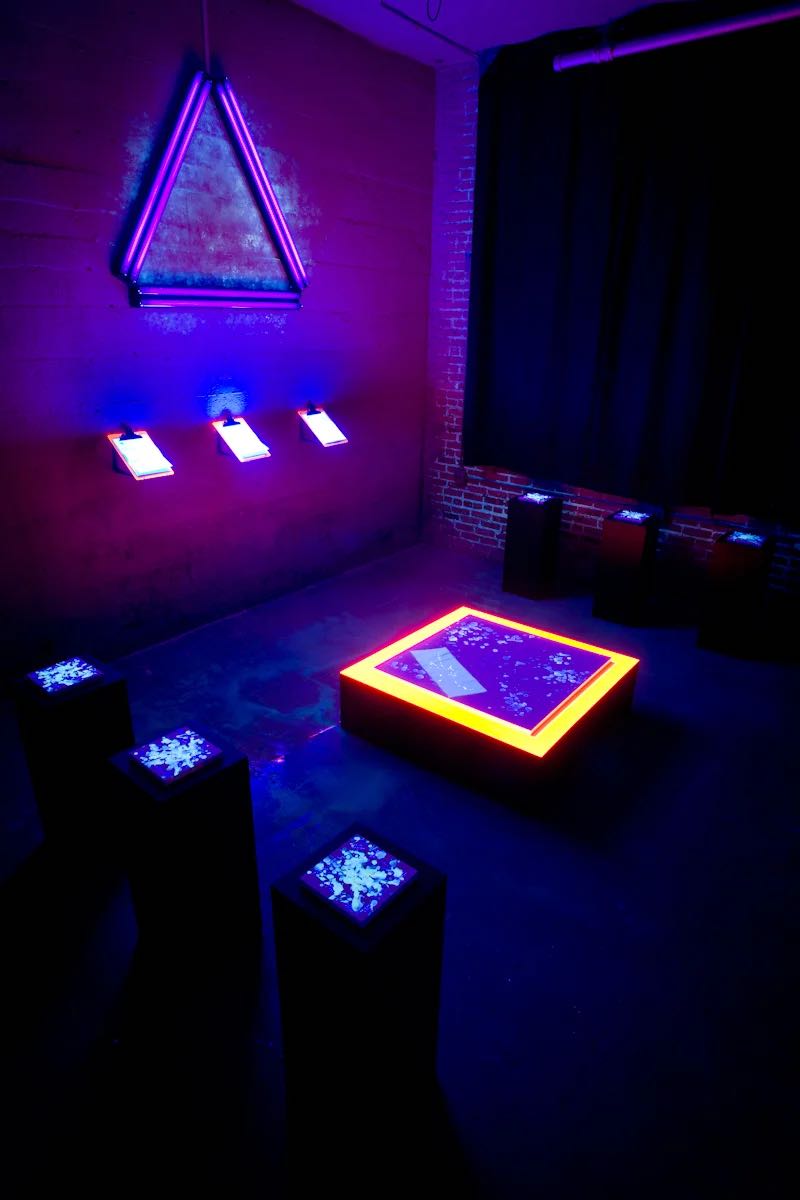
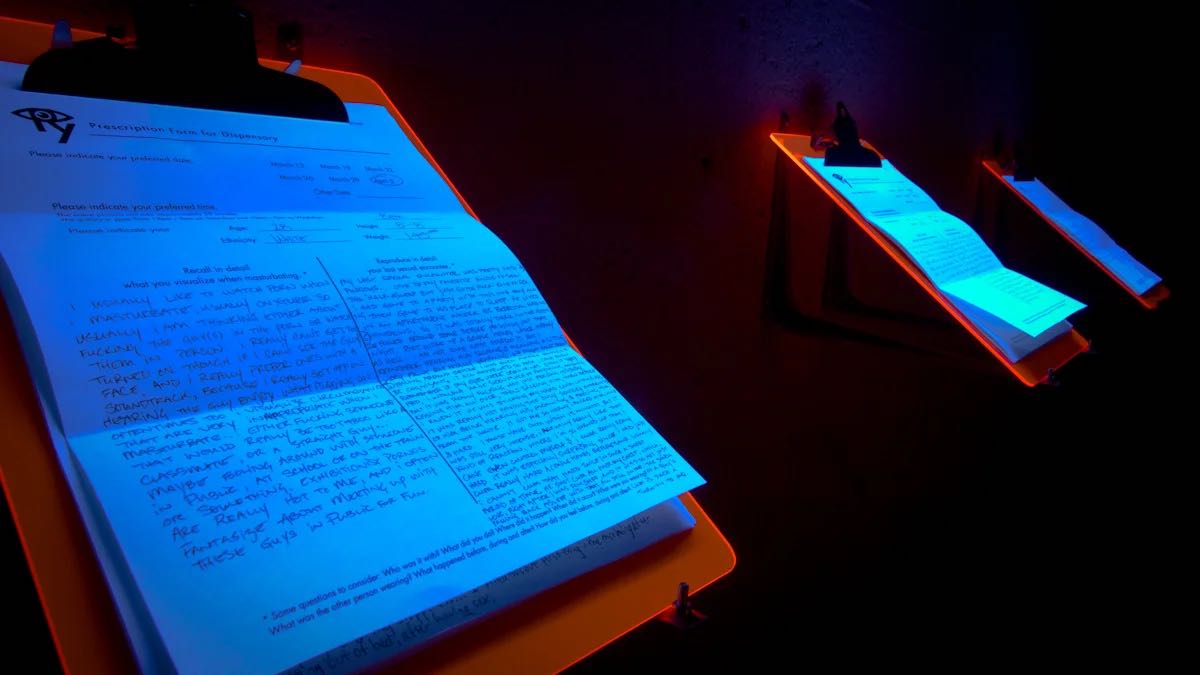
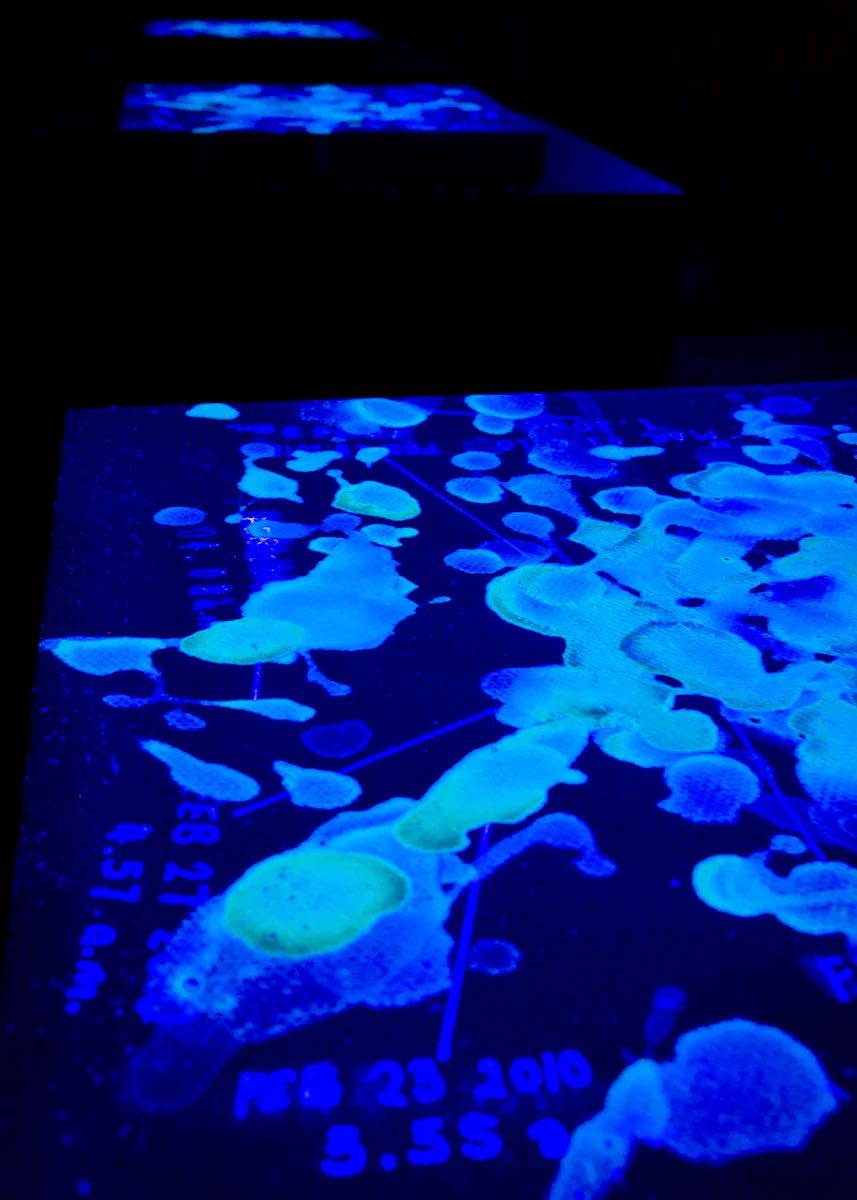
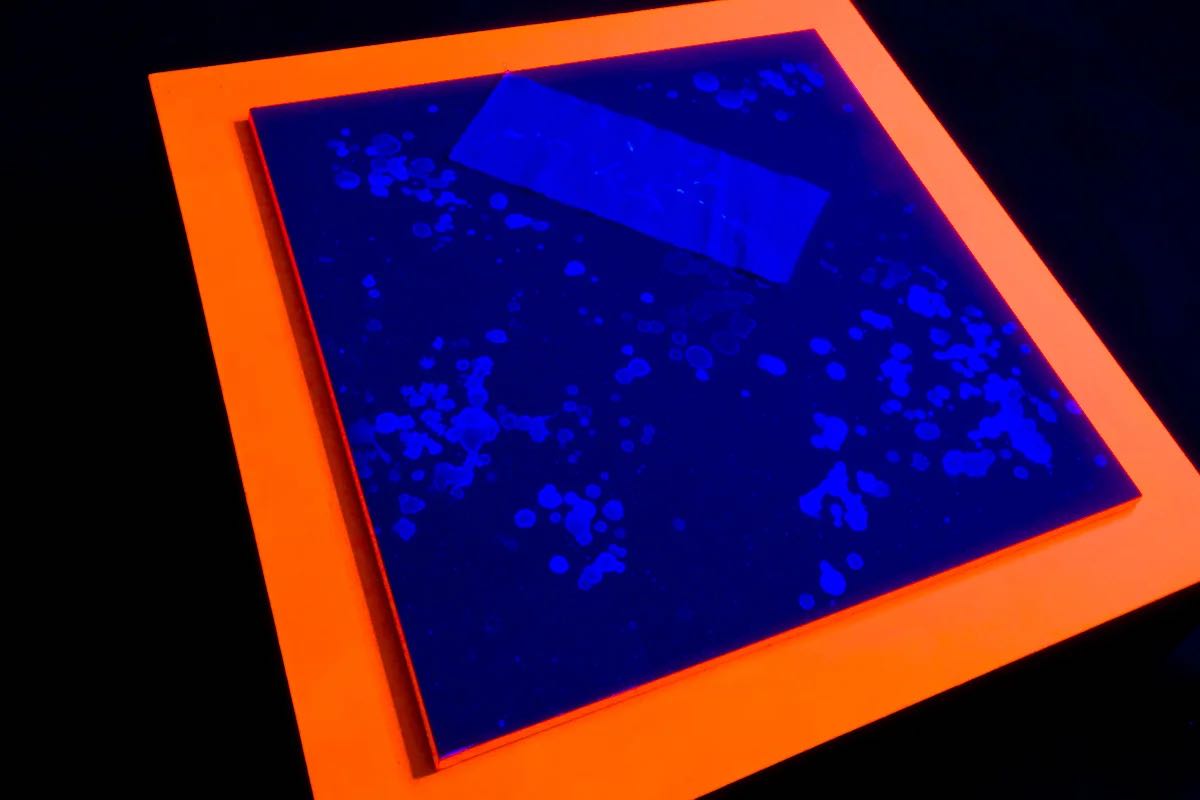
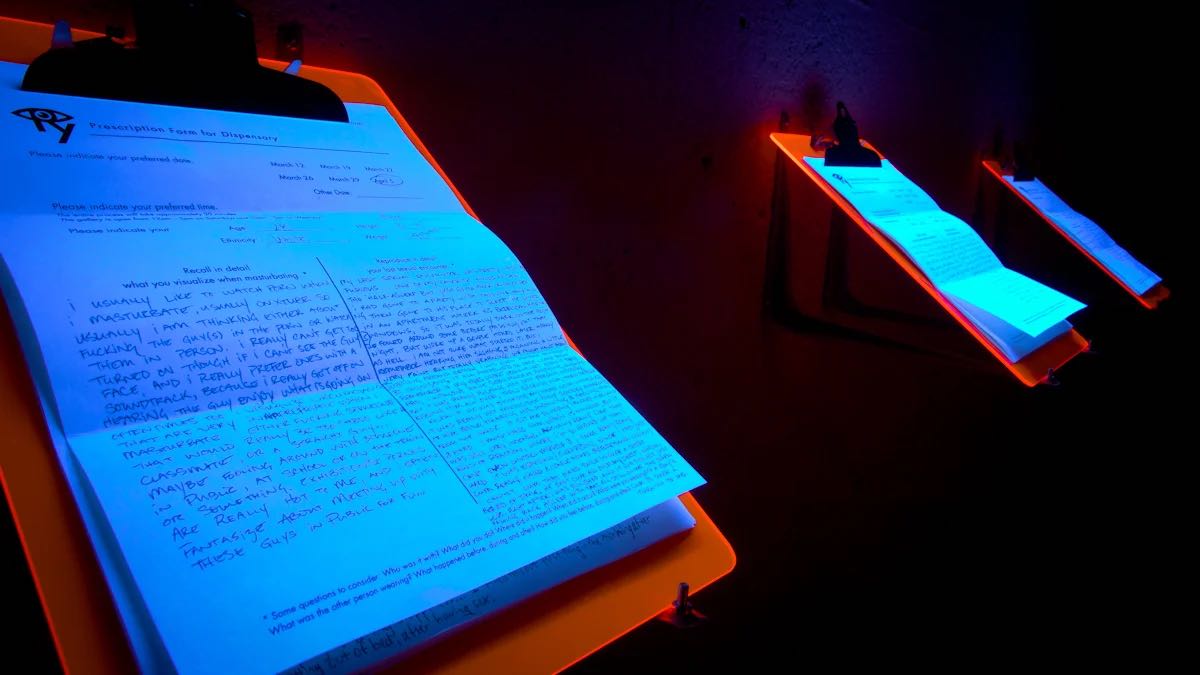
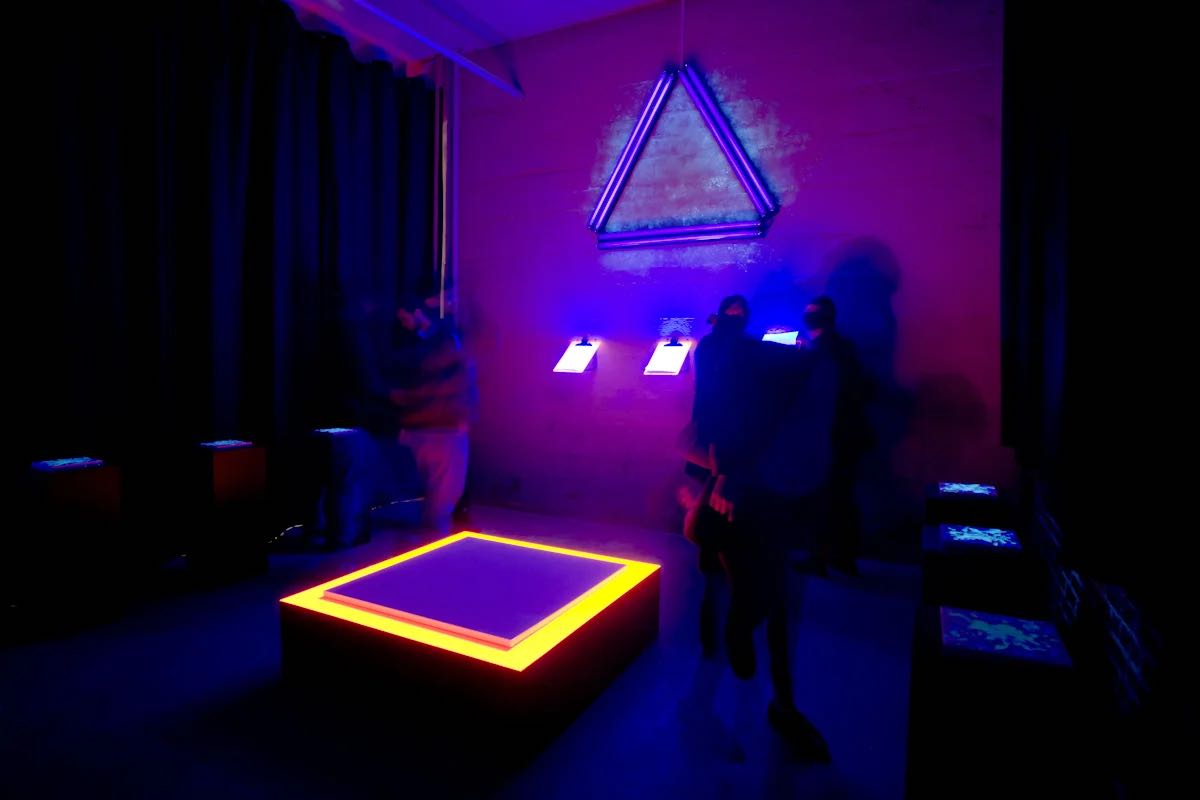
Dispensary. Photo documentation by Kuo Cheng-Yung.
Legal Tender (2011)
- Dial-A-Performance
- 30 April 2011, 11am to 6pm
- Next: The Invitational Exhibition of Emerging Art (Art Chicago), Merchandise Mart
- Part of Tender Exchange
- My work in conversation with Scott Carter, Molly Shea, Jennifer Mills and Sean Ward
Tender Exchange is a collaborative installation composed of work by five artists pursuing degrees at the School of the Art Institute of Chicago. From 28 April to 2 May 2011, each artist contributed their own work while also responding to, working around and collaborating with the other participating artists to produce a material and conceptual experience that extends beyond the independent practices of each participant.
Legal Tender is a performance on the third day of the installation. I distributed a series of limited edition artwork to members of the public over the duration of my performance. These multiples consist of bills and coins earned in part by artist Molly Shea, whose installation preceded Legal Tender.
Members of the public dial a designated number that connects them to me inside the exhibition booth, where I deliver a first-person account of labor in a nightlife economy and a shared moment of companionship and intimacy. Callers who remain on the line for the full duration are eligible to collect a multiple.
I managed to distribute 52 of 98 multiples over the duration of the performance, unclaimed multiples were handed over to artist Jennifer Mills, whose installation followed Legal Tender.
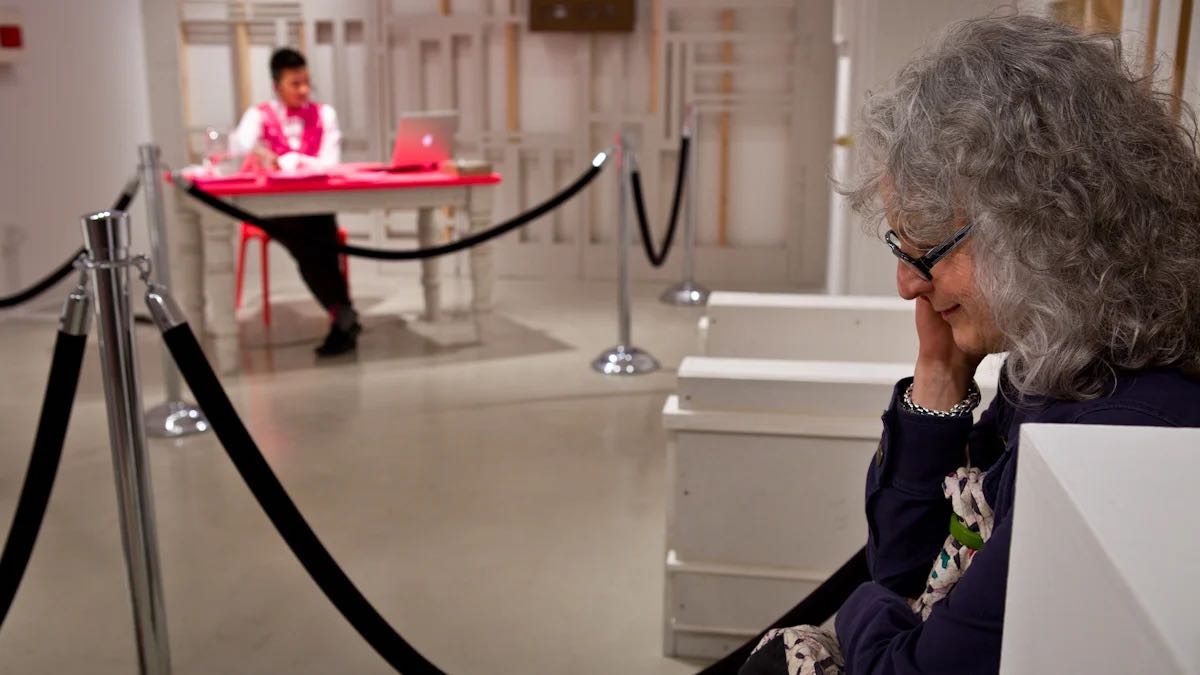
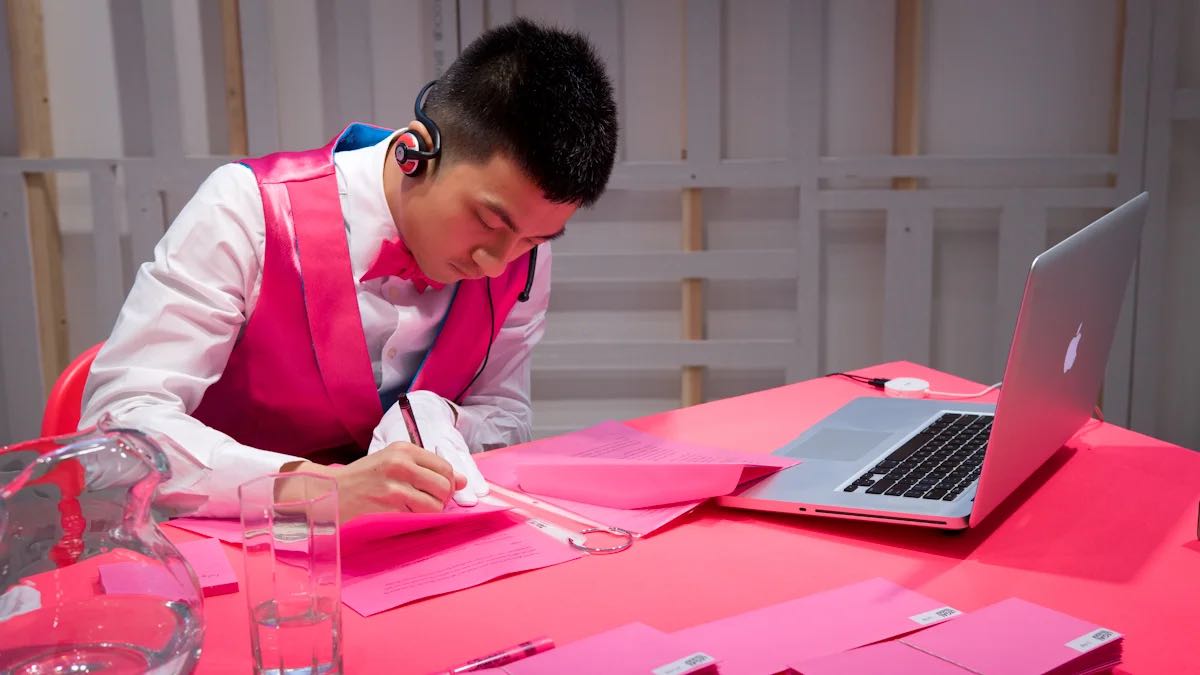
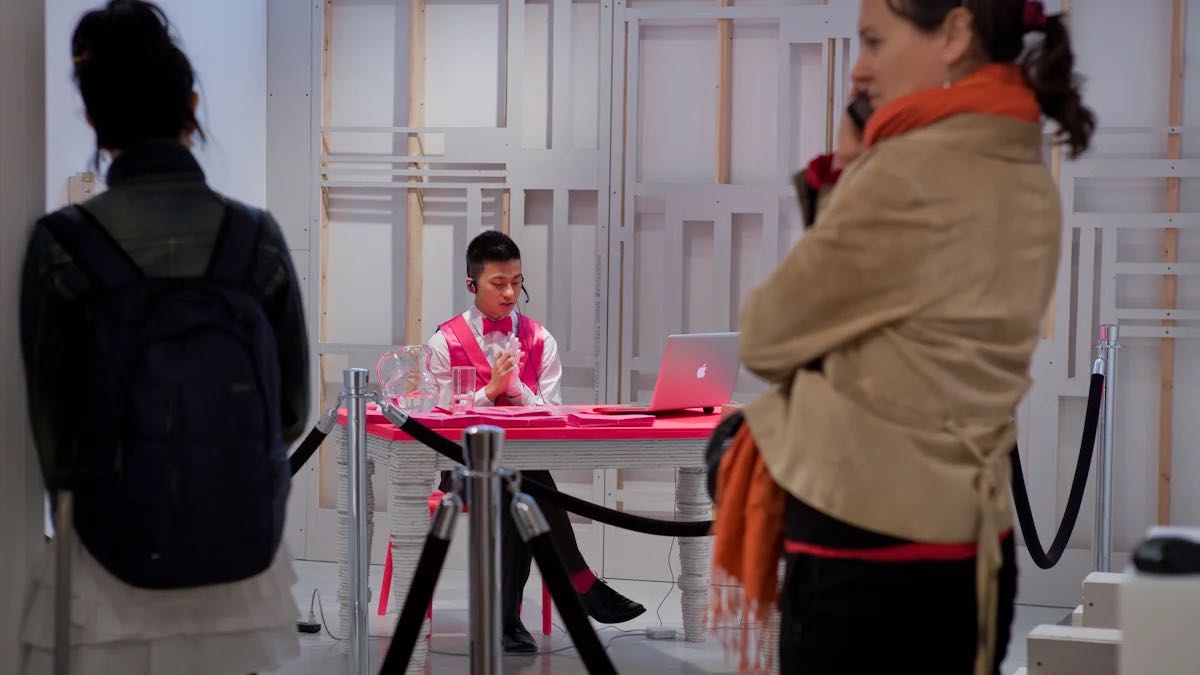
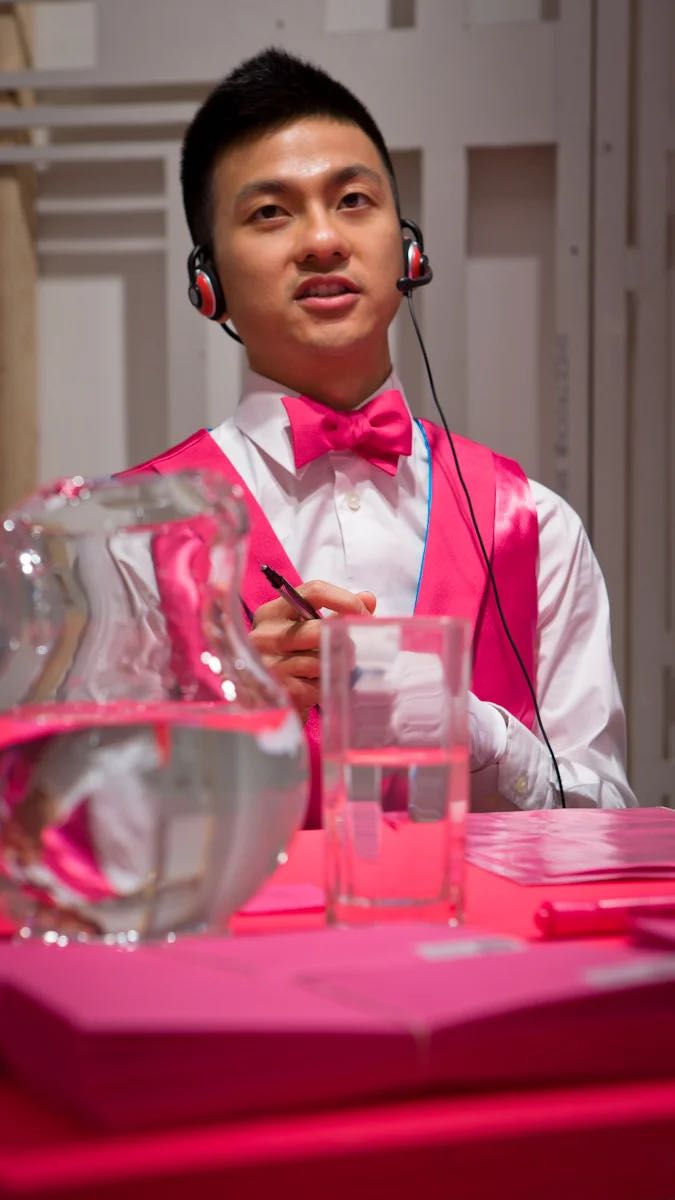
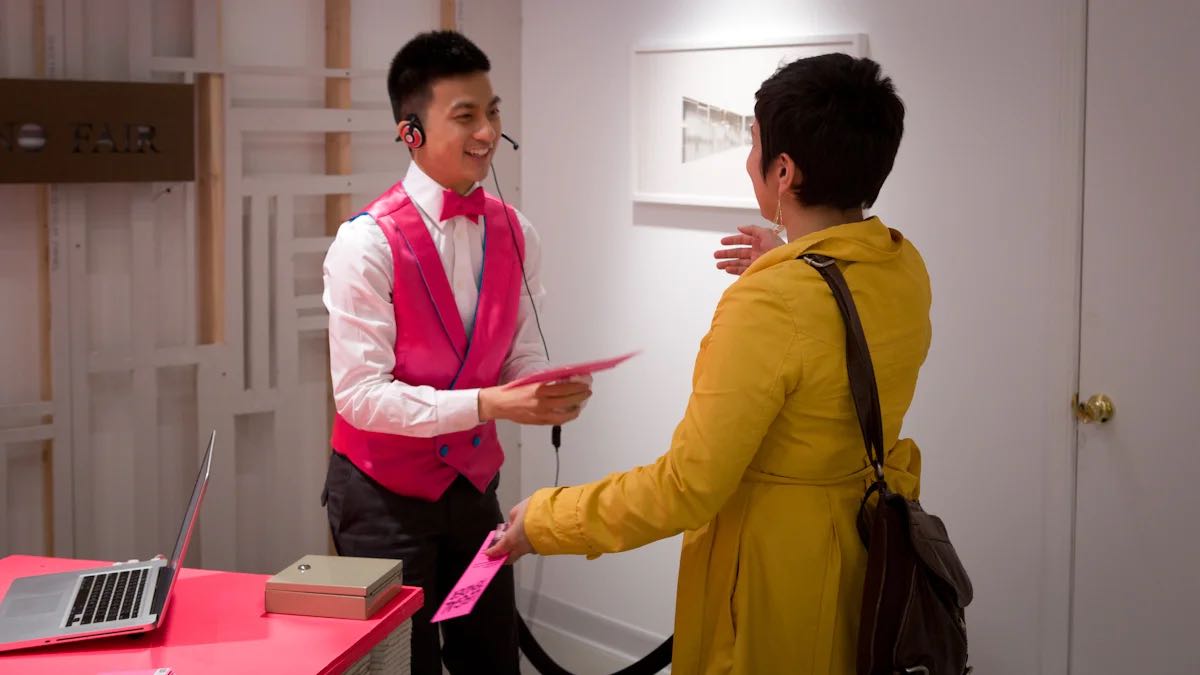
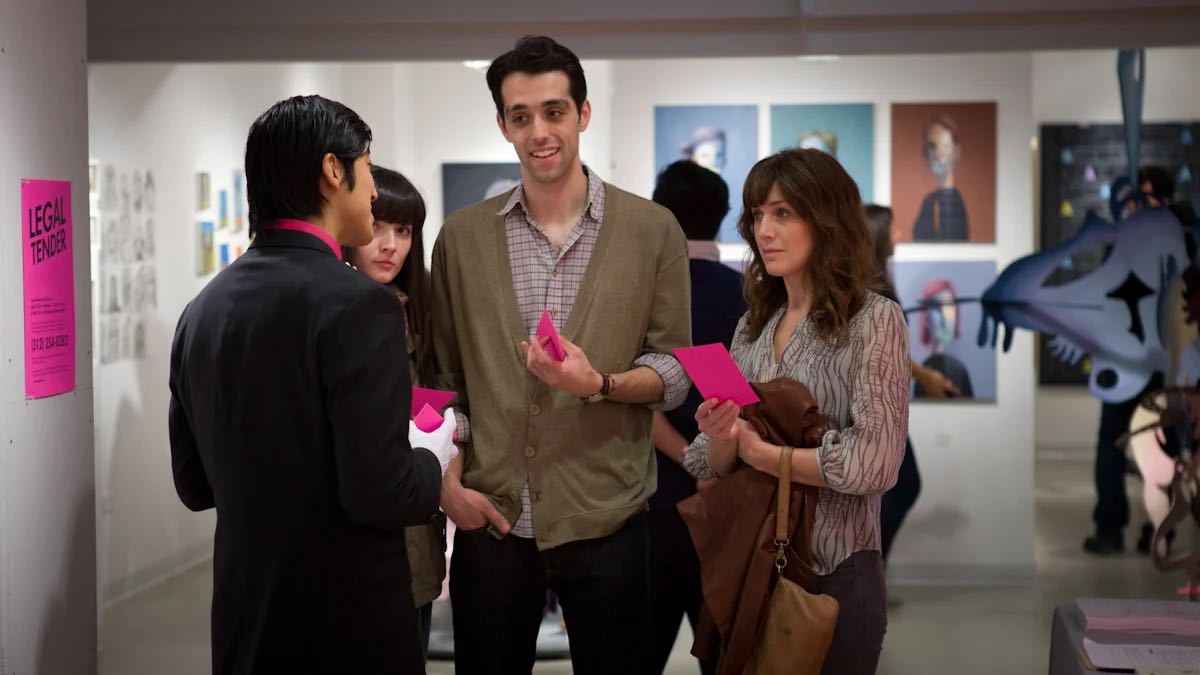
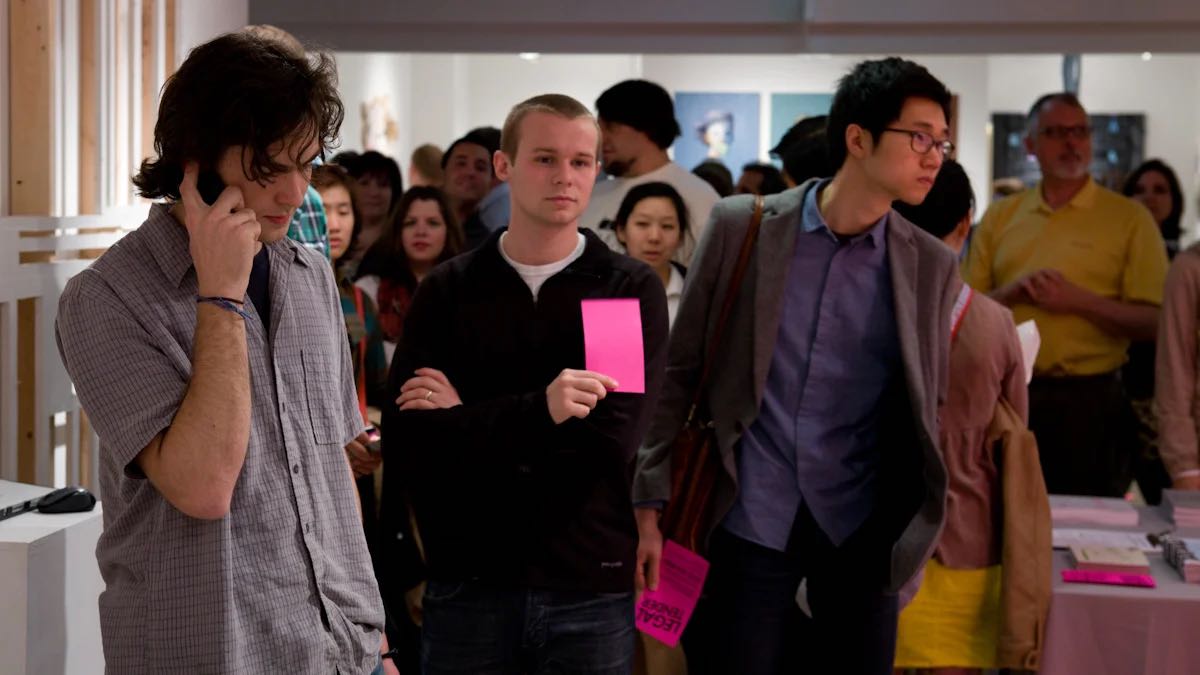
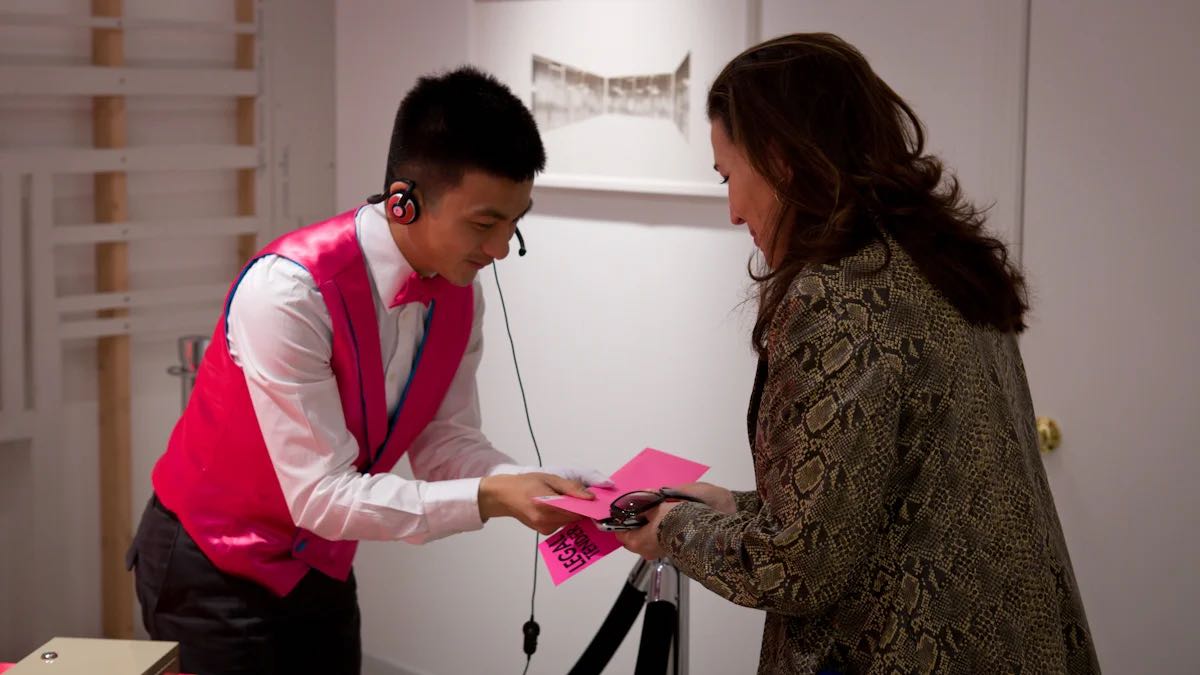
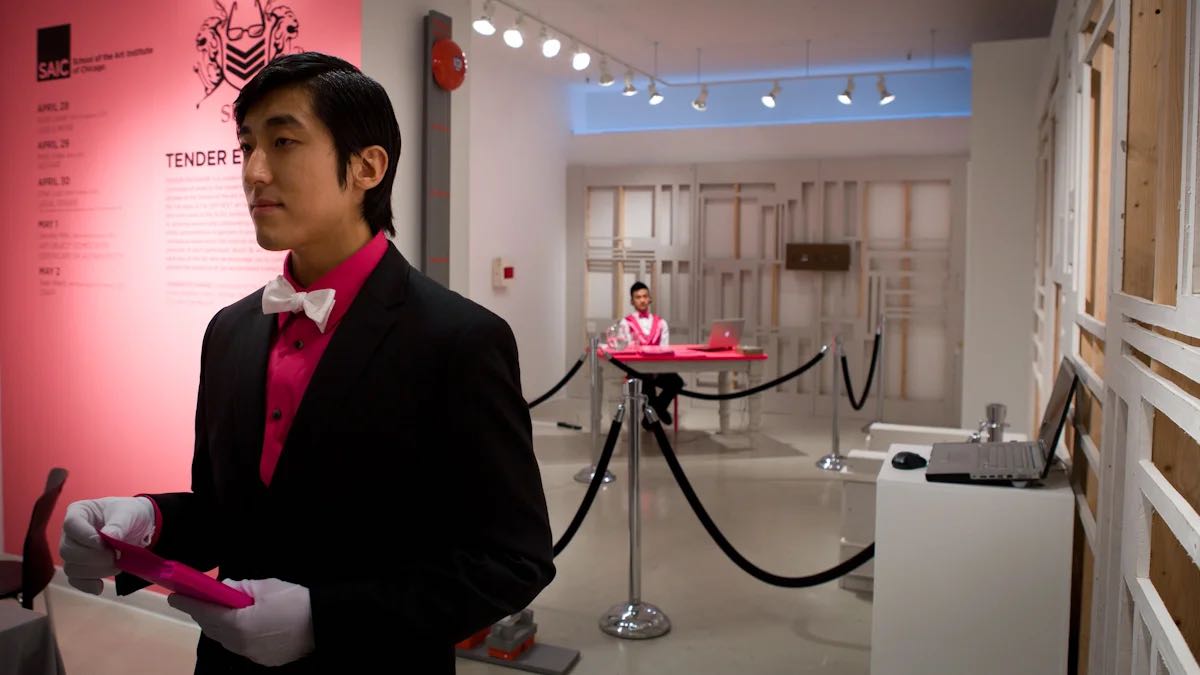
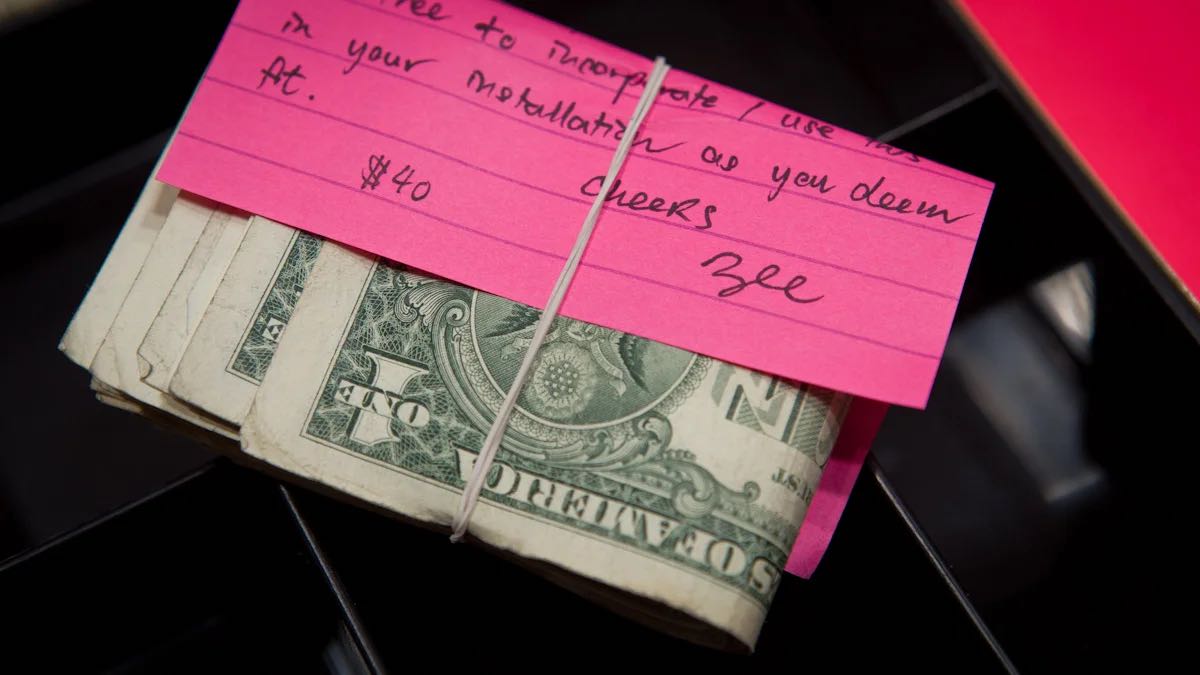
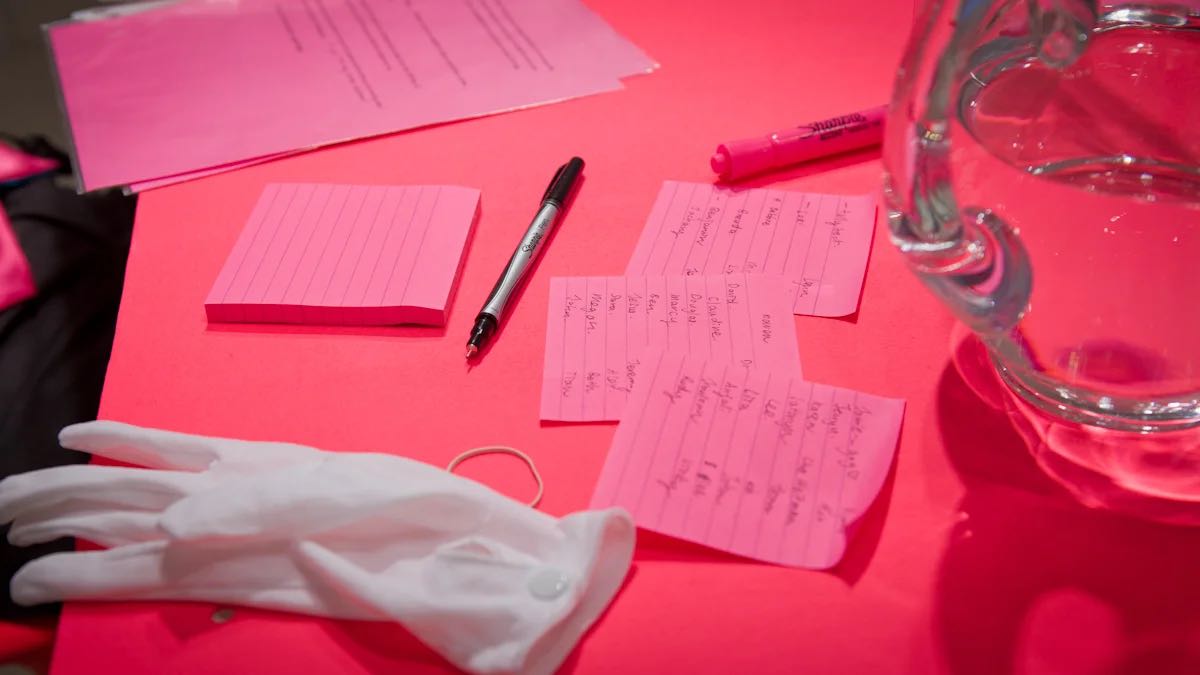
Legal Tender. Photo documentation by Kuo Cheng-Yung.
Blood Work: Asian American Congealment and Visceral Abstraction
- Performance as Panel / Panel in Performance
- 18 April 2026
- Queer-Class Relations Conference
- CUNY Graduate Center, Martin Segal Theater
- In collaboration with Lena Chen, Empress Wu, and Riven Ratanavanh
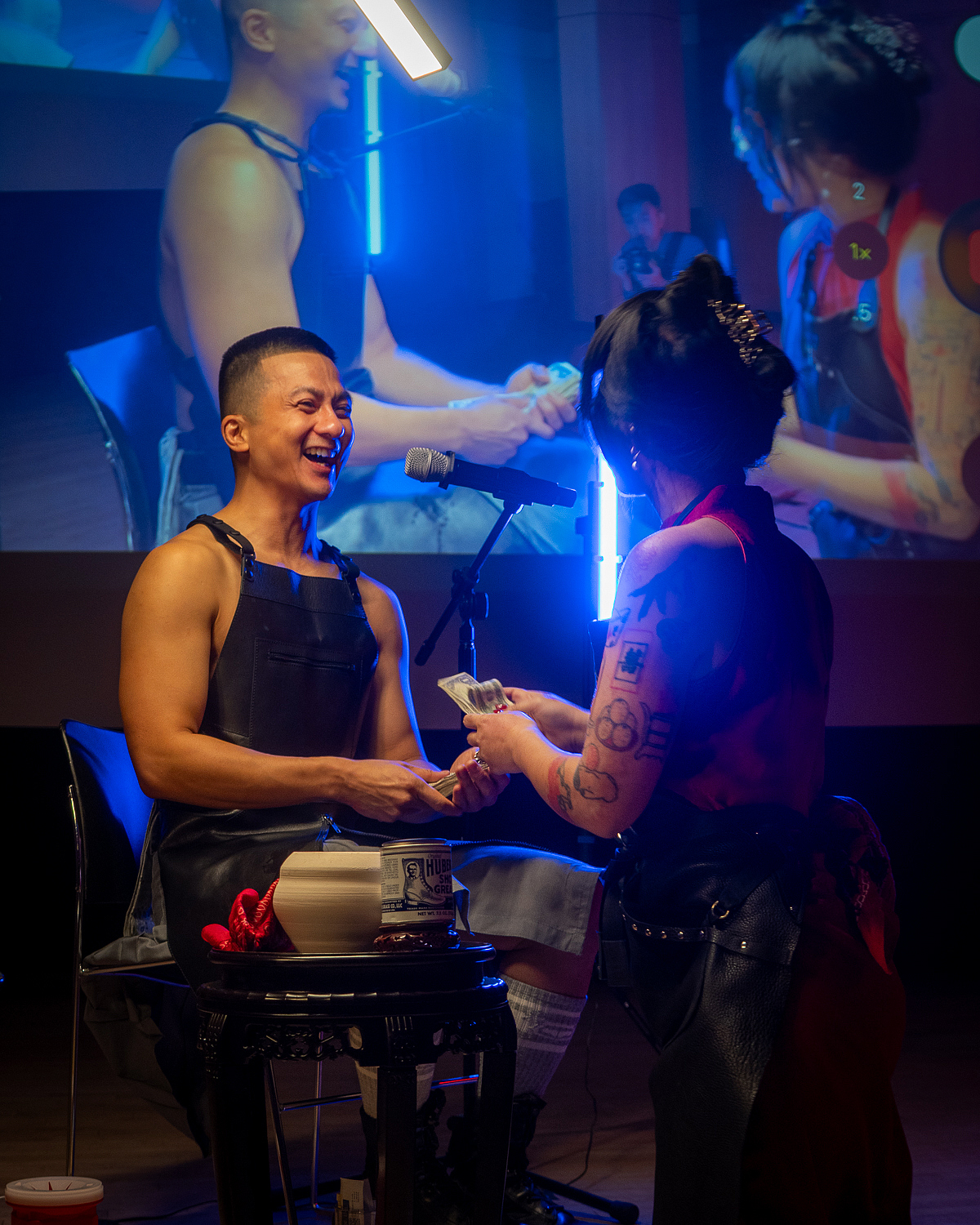
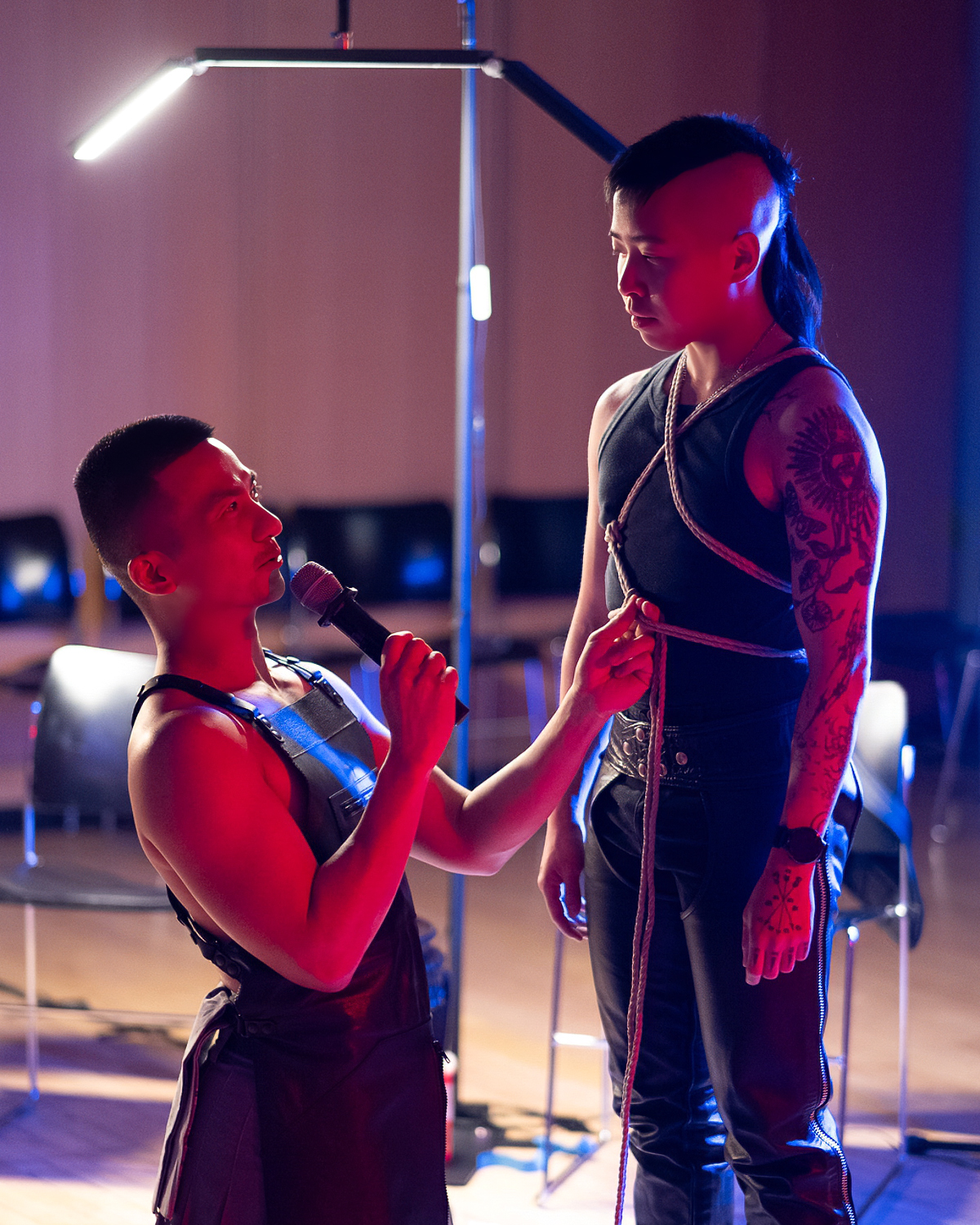
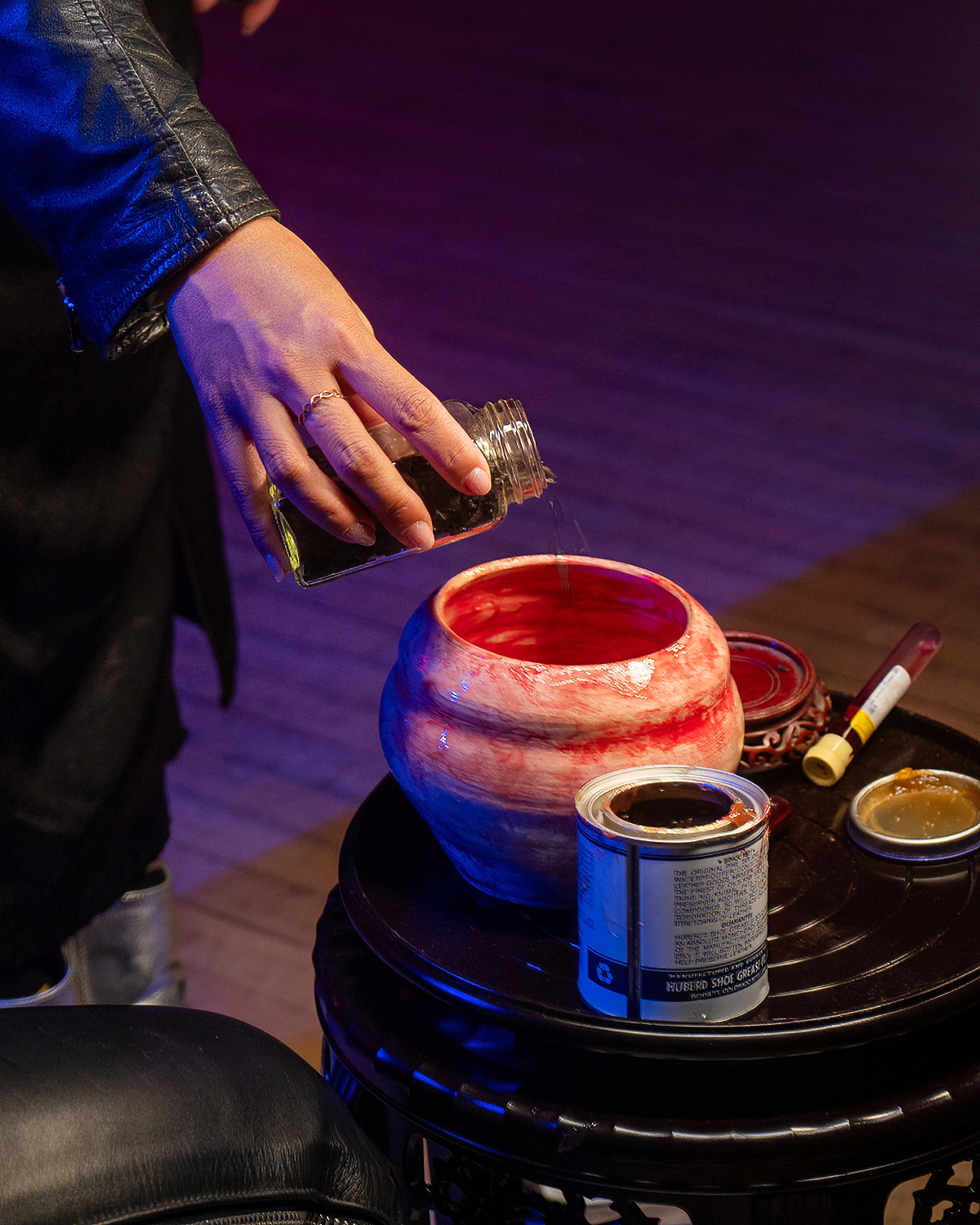
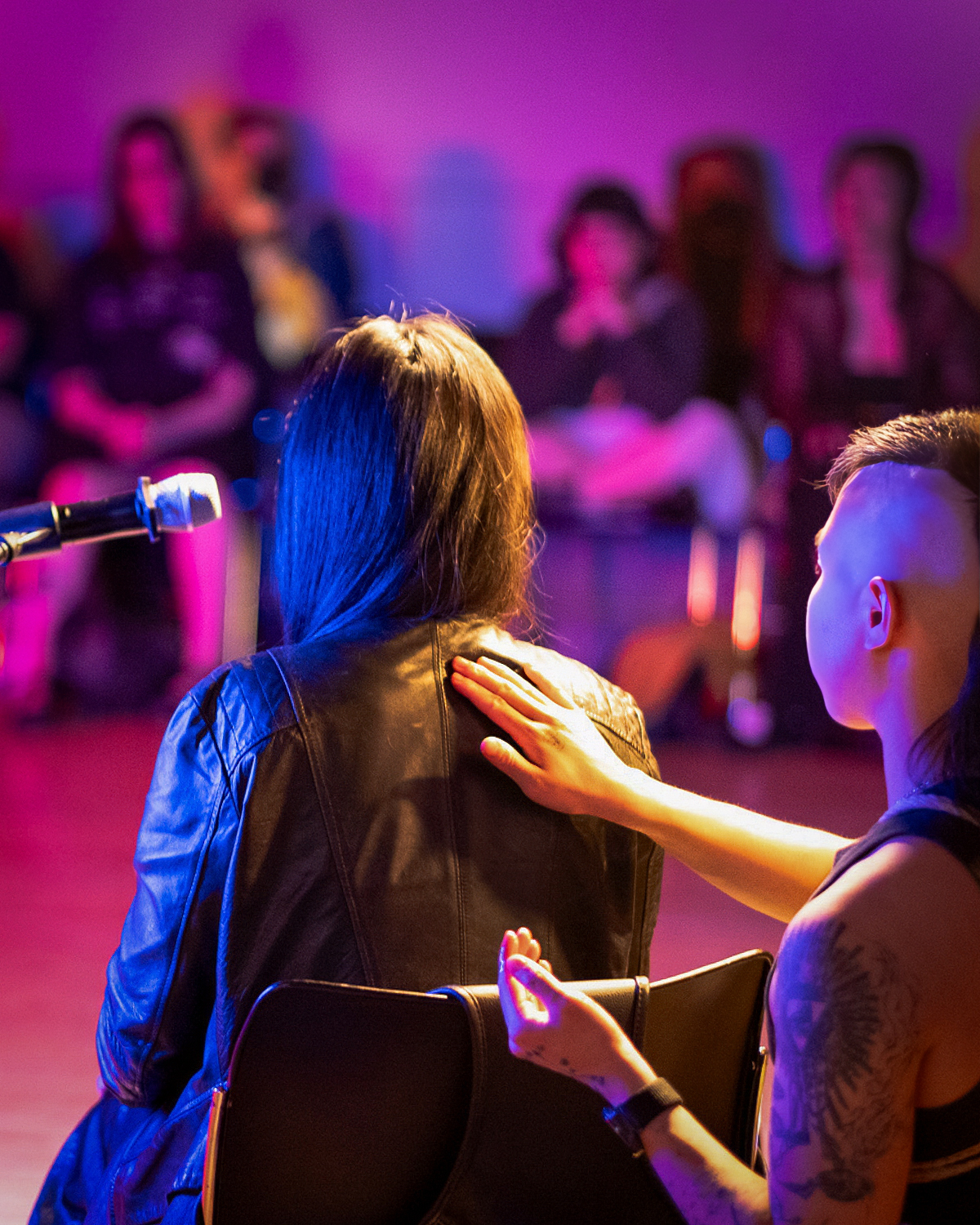
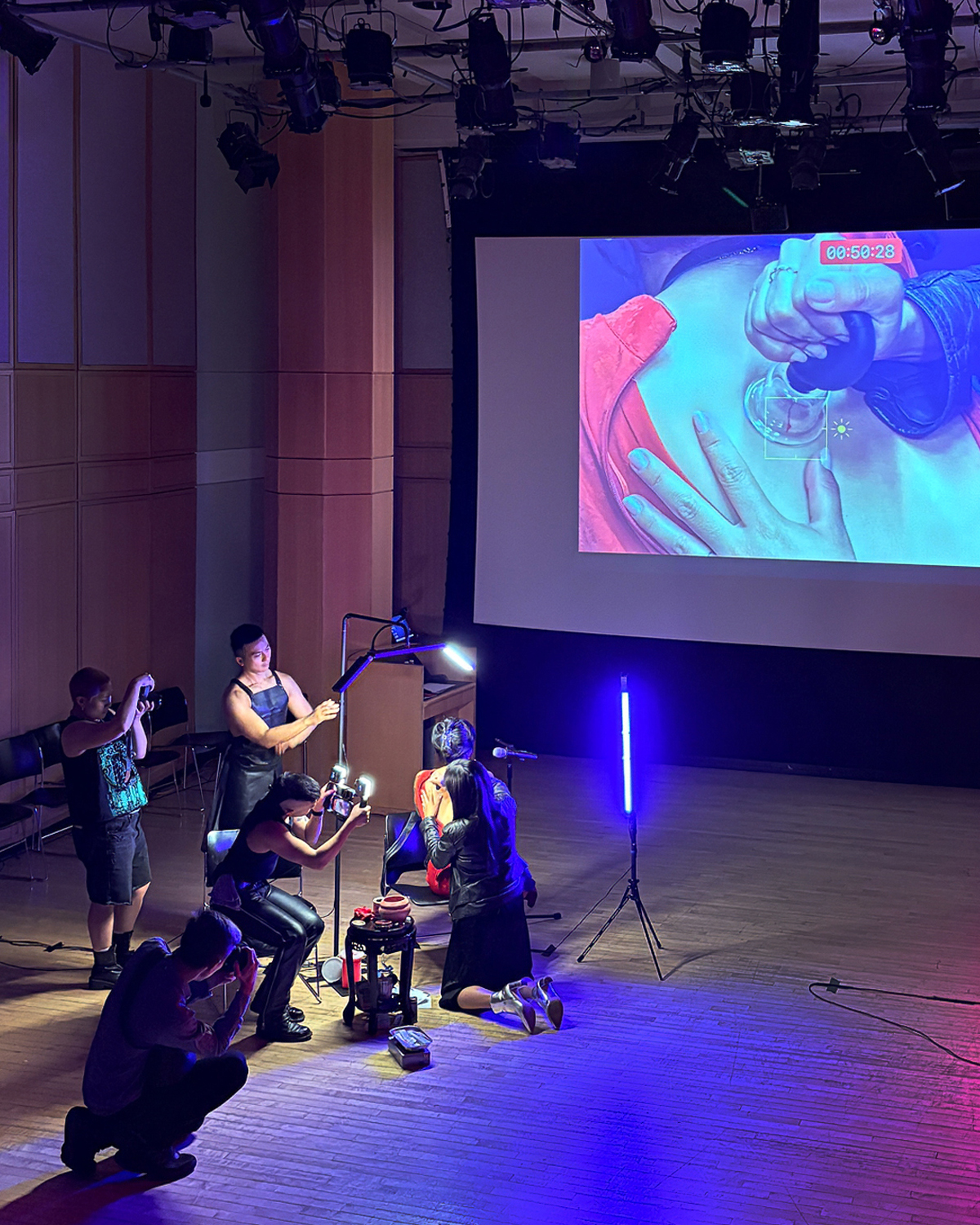
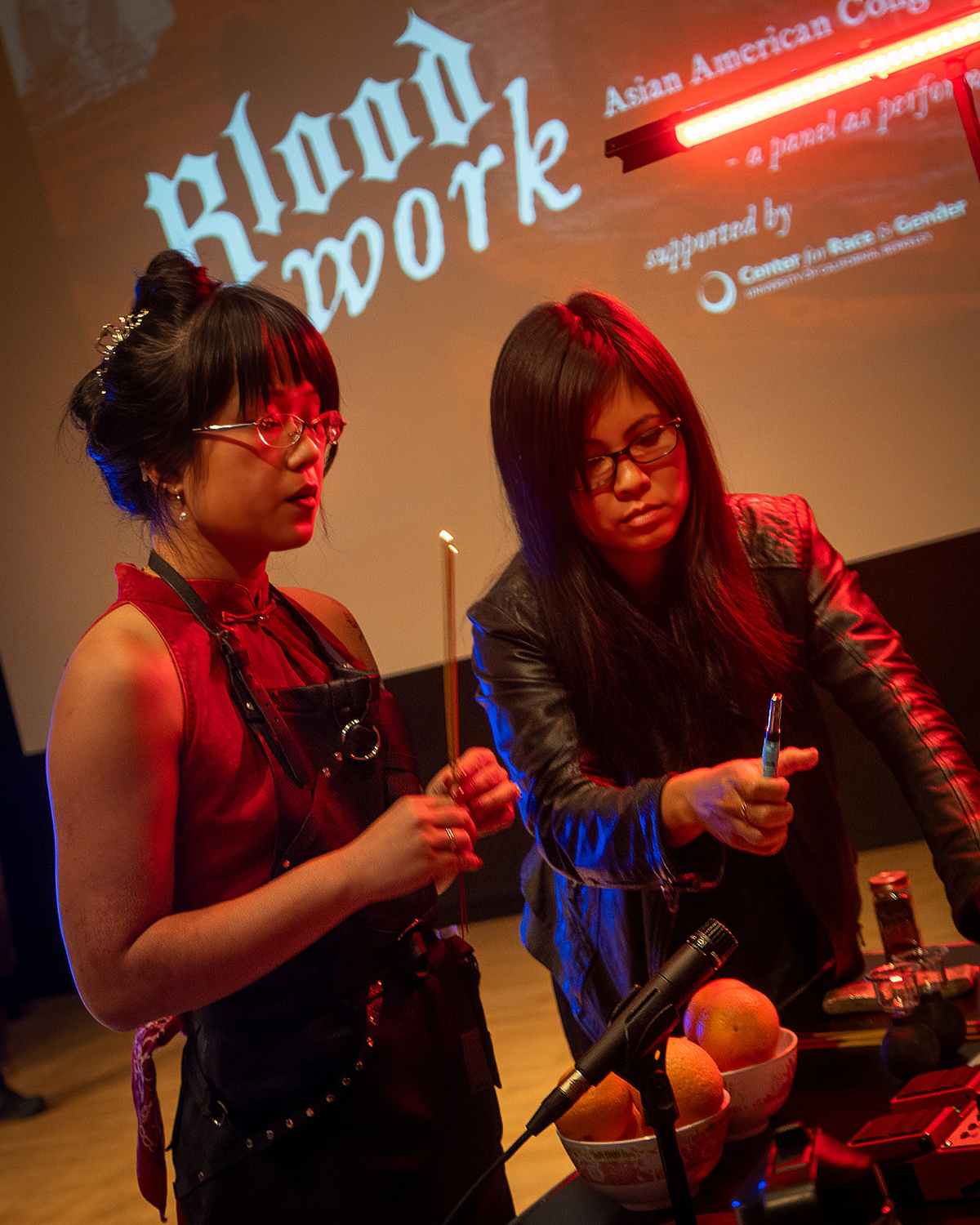
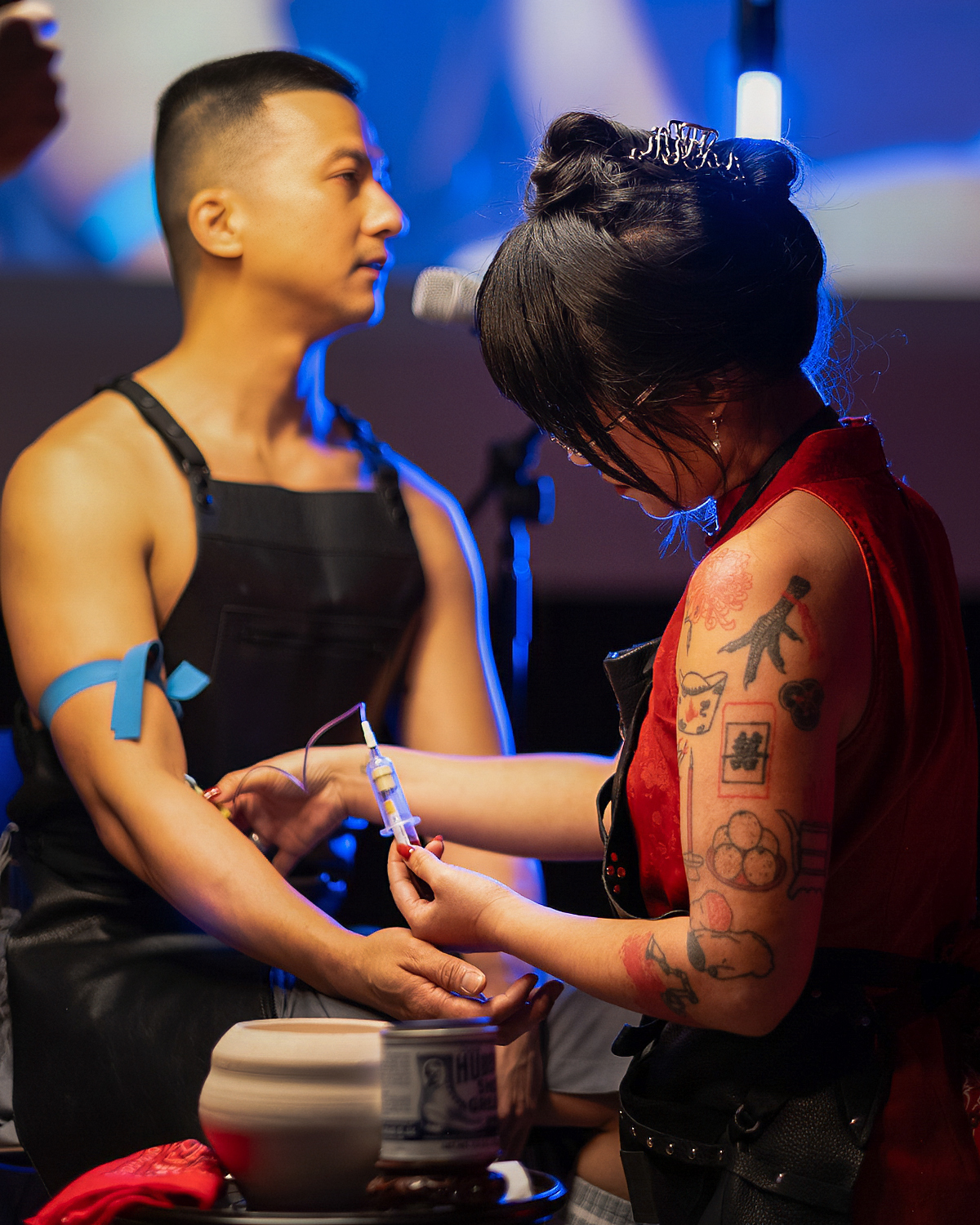
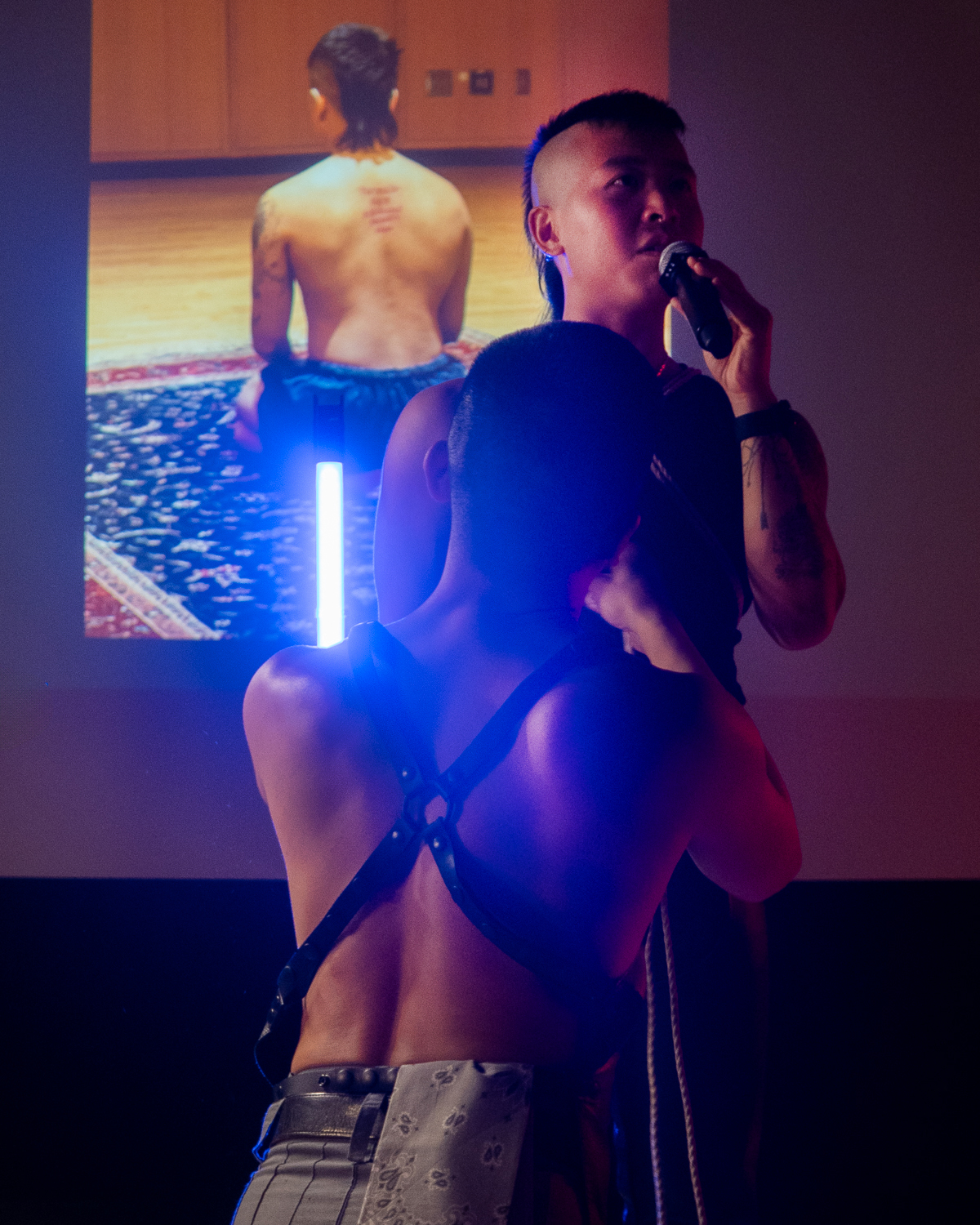
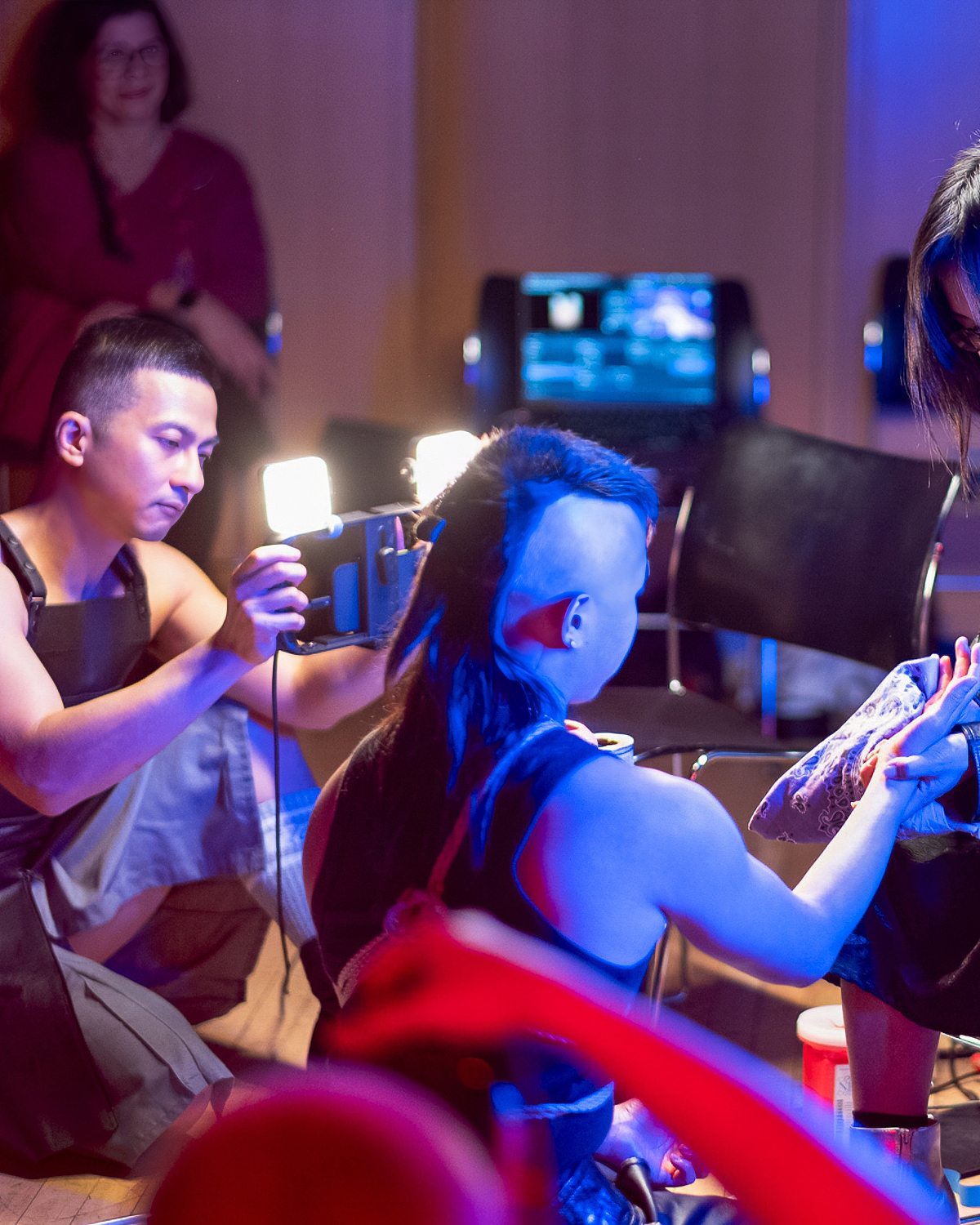
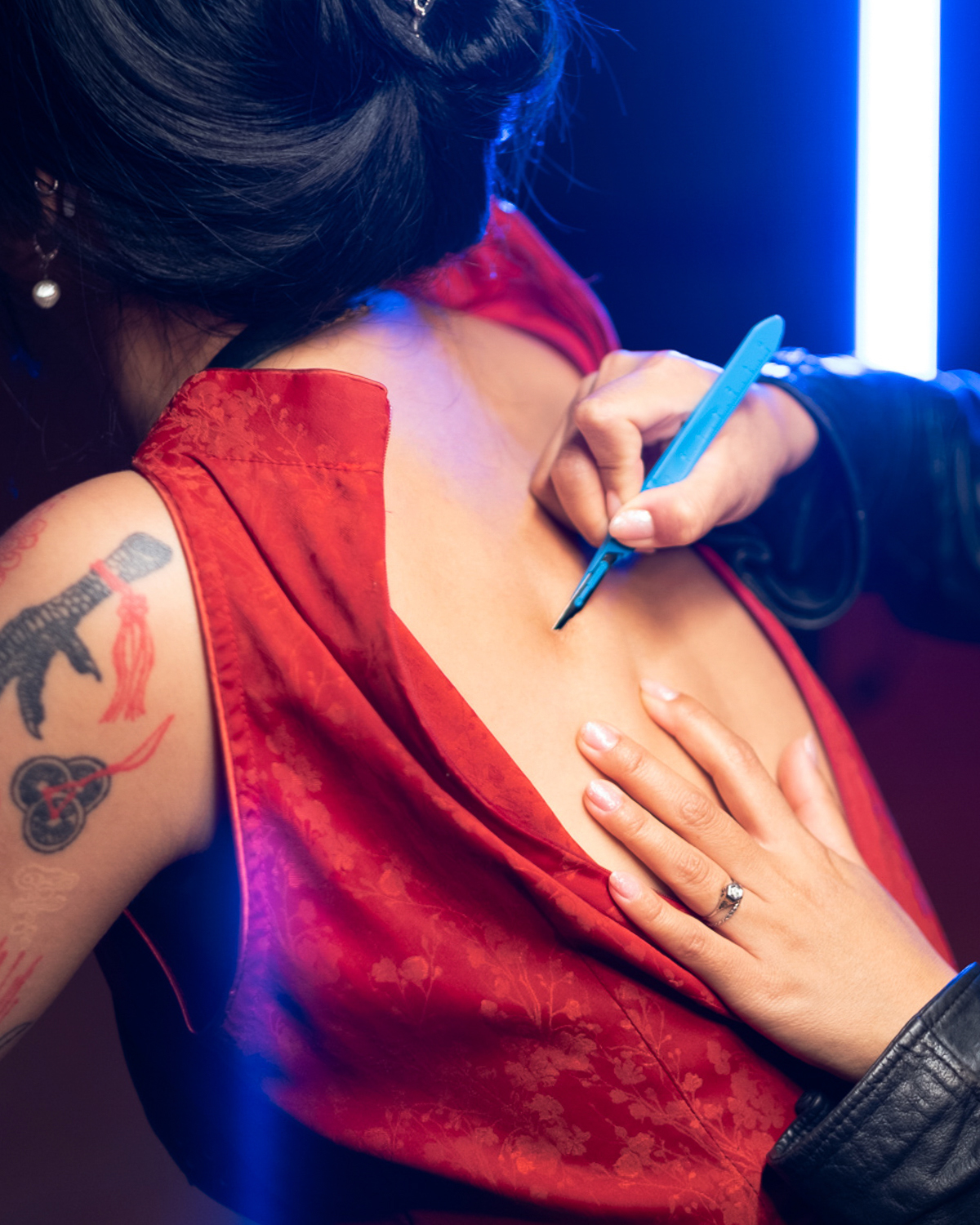
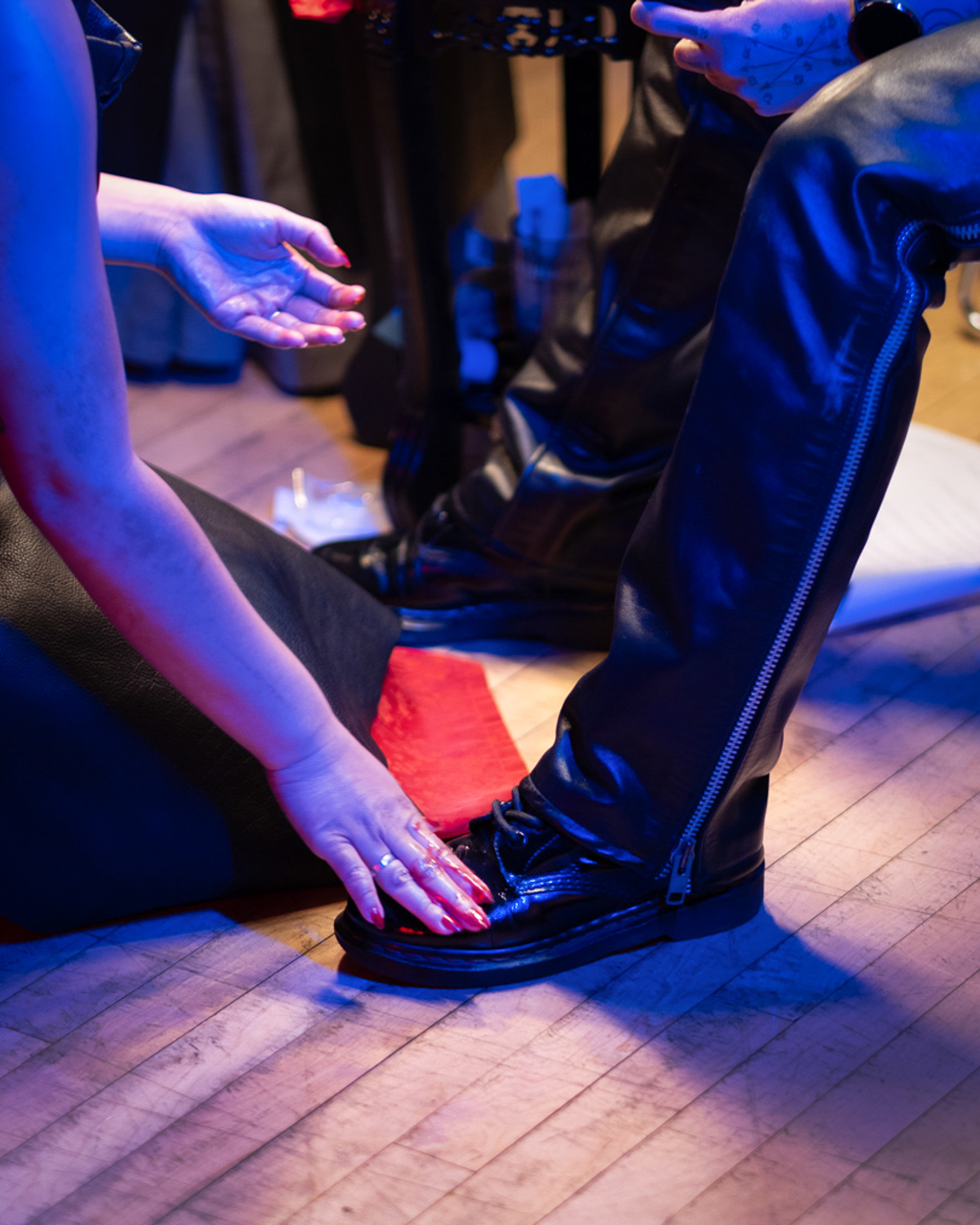
Photo documentation of Blood Work. Photo documentation by Rena and Solomon.
How do artists navigate the tricky entanglement of desire, intimate labor, and capital through embodied practice? What happens when our imaginations of Asian American relational practices expand beyond gestures of care, sustenance, and provision to include wounding, withholding, and overpowering? This performance intervenes in the form of a conference panel to unpack racialized queer and economic relations. Through agonism and antagonism, we explore visceral abstraction as practice, strategy, and method. We share our praxis through performance documentation, live demonstration, and ritual actions to unpack our relationship to orientalism, objectification, and queer-class solidarity.
Anne Cheng’s theory of the Yellow Woman reveals a “peri-humanity” where “personhood is animated through, rather than eviscerated by, aesthetic congealment.” As artists and practitioners of kink and fetish, we live within this animation, thinking through Sianne Ngai’s “visceral abstraction” alongside embodied labor. Ngai’s catachresis of “congealment” demonstrates the material, synthetic effects of social abstractions, letting us linger on the viscerality of the value-form, examining how bodies, desires, and intimate labor intersect beyond liberal frameworks of subjectivity.
Our conversation engages multiple perspectives: Lena’s work as artist, mother, academic, and former sex worker, Riven’s art as a trans-diasporic multi-disciplinary artist, my experience as an academic, performer, and bondage educator, and Empress Wu’s practice as pro-domme and performance artist.
We examine how bodyworkers capitalize on (and are capitalized by) ornamentalism, a body both adorned and undone by blood’s viscosity. We argue that this relational understanding of thingliness enables us to glimpse forms of queer-class intimacies. If capital enters the world, as Marx writes, “dripping from head to foot, from every pore, with blood and dirt,” then our visceral methodology engages this sanguine reality through blood’s contradictions: simultaneously internal and abject, intimate and violent. How has blood been made to work? How do we make blood work?
A selection of films I made between 2005 and 2012. They are best read in sequence: each film responds to the last, and the body of work maps my thinking over time.
Please note that the films contain mature content.
The films traveled to Pusan International Film Festival, where Solos screened in competition, and to the AFI Festival (Los Angeles), NewFest (New York), Frameline (San Francisco), the London Lesbian and Gay Film Festival, and the 23rd Turin GLBT Film Festival, where Solos received the Nuovo Sguardi Award.
I was twenty-four when I made Solos, conceived as an avant-garde and deliberately difficult film. Part of me wanted to test the boundary, my own, my fellow performers’, the State’s, and the audience’s. What I was less prepared for was how quickly the film became a vehicle for other people’s agendas, commercial and moral, and how, abroad, it was received through a frame that read Singapore as repressed and the work as a representation of gay life in an illiberal state. Being legible on those terms was the condition of representation.
That double bind between visibility and capture is where the seed of etiolated conduct was planted.
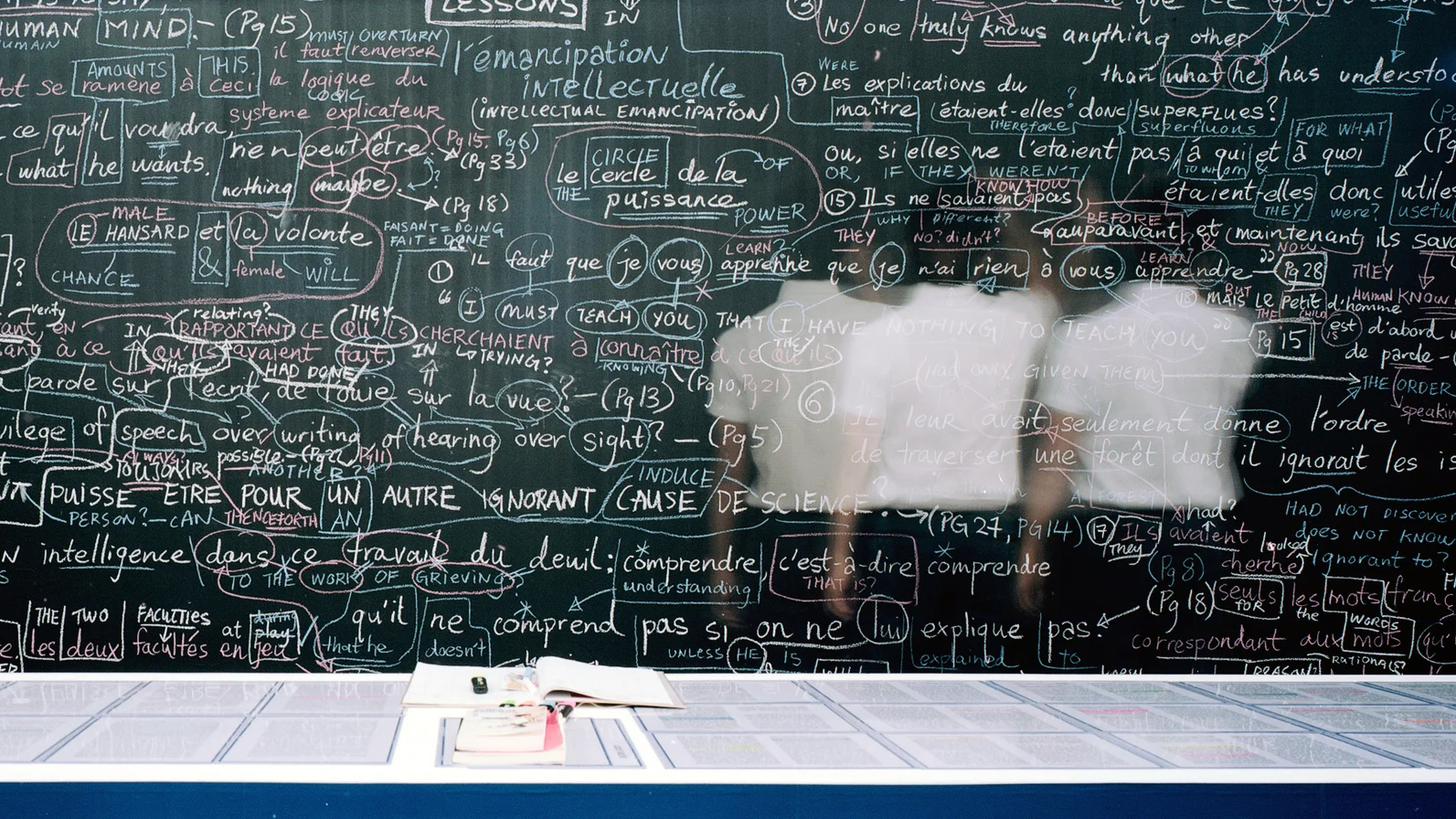
书籍是储藏智慧的不灭明灯**These vessels of knowledge are eternal beacons, keeping wisdom’s flame alight.
This quotation appears in my dissertation, in dedication to my parents. My father first encountered it in a message a friend left for him. It captures his hope for what education can do, and the potential of books as vessels of knowledge.
I come from a family of educators. Both of my parents, as well as several relatives, have been lifelong secondary school teachers. Their dedication to education made it possible for me to become the first person in my immediate family to pursue a PhD, and their approach to teaching continues to shape my own.
Teaching has also been integral to my performance practice, taking the form of lectures, pedagogical exercises, and experiments. Jacques Rancière’s The Ignorant Schoolmaster was an early reference and continues to inform my teaching philosophy. As an educator, my task is to equip students with the ability to discover what I do not know. This is especially important in a world that is increasingly shaped by generative AI. After Rancière’s Jacotot, the challenge as educators at this conjuncture is less about knowing the “right” answers than teaching our students to imagine the cost of asking the “wrong” questions, which is also to say, what prompts they give the machine. To return to performance theory, these prompts are hyper-felicitous performative utterances whose perlocutionary effects set off chains of causality we may never fully comprehend.
Teaching fields
- Performance praxis and theory
- Moving-image production and critique
- Film theory and art criticism
- Art history and theory with a focus on the contemporary
- Post-dramatic dramaturgies and multimedia design
- Time-based media aesthetics across disciplines
- Transnational queer theory
Teaching experience
I have taught since 2010, across fifteen years, two education systems, and every level from a specialist arts high school offering the International Baccalaureate to a 200-level graduate seminar.
My teaching began in Singapore. I conducted tutorials in film studies at Nanyang Technological University and in digital media and the moving image at the National Institute of Education, and taught foundation-year time-based media at NTU’s School of Art, Design and Media. At The School of the Arts I designed and taught the art theory syllabus and supervised graduating projects. At Nanyang Academy of Fine Arts I taught media arts and later returned as an external examiner for the Fine Art diploma program. At LASALLE College of the Arts I supervised BFA dissertations in the Theatre and Performance department.
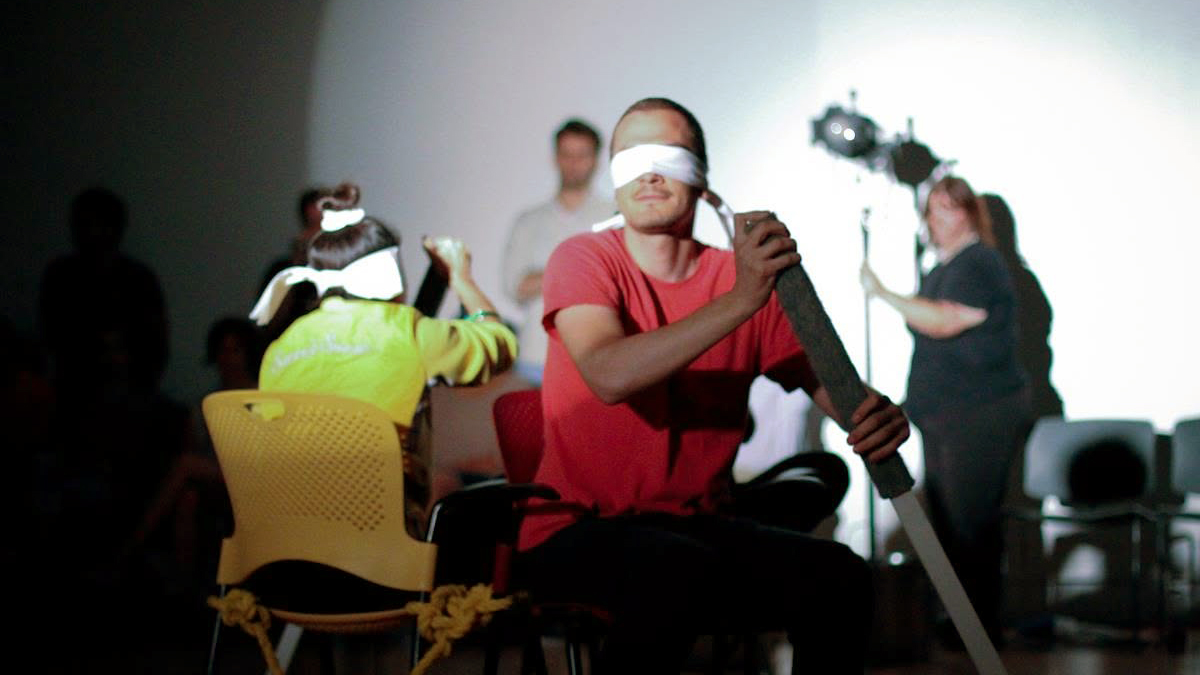
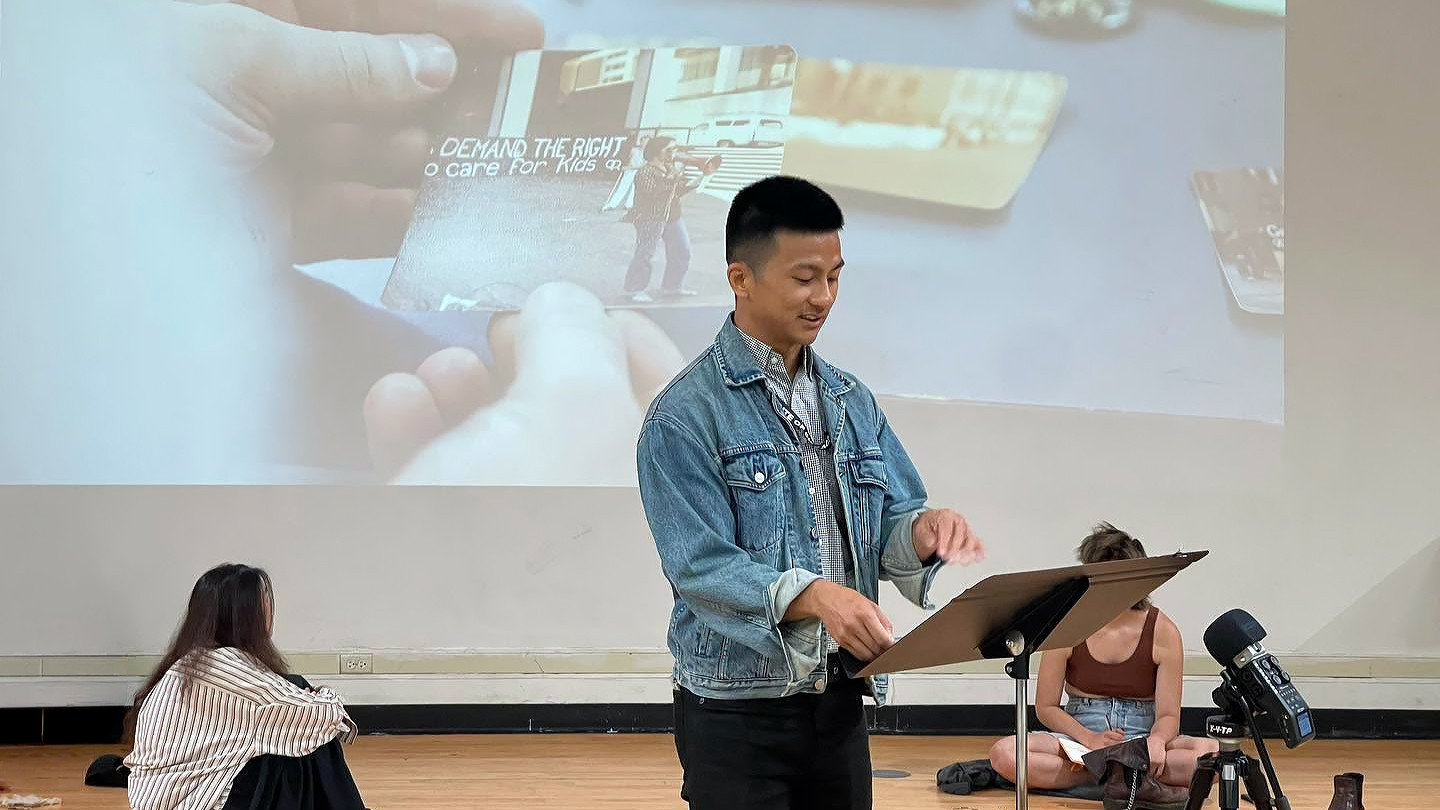
As a graduate student at the School of the Art Institute of Chicago in 2010–11, I coordinated visiting artists for Gregg Bordowitz’s Theory into Practice graduate seminar, hosting Glenn Ligon, Paul Chan, and Andrea Fraser, and assisted on production courses in moving image and directing for camera. I also assisted on the Abandoned Practices summer school run by Lin Hixson, Matthew Goulish, and Mark Jeffrey, formerly of the Goat Island collective. In 2023, I returned to its final edition as a visiting scholar, marking the cycle from student to teaching assistant to instructor.
At UC Berkeley from 2019 to 2026, I designed and taught three reading and composition courses, each built around a research question in performance and materiality. I served as graduate student instructor for Dance in American Cultures and Video Art, and co-drafted the syllabus for a graduate seminar in Ecological Aesthetics with Shannon Jackson and Juniper Harrower. In 2025 I received the Outstanding Graduate Student Instructor Award from UC Berkeley’s GSI Teaching and Resource Center.
Courses designed and taught at UC Berkeley
Spring and Fall 2025Come Again? Reenactments as Embodied Research
Reading and Composition Methods.
Come Again? Reenactments as Embodied Research
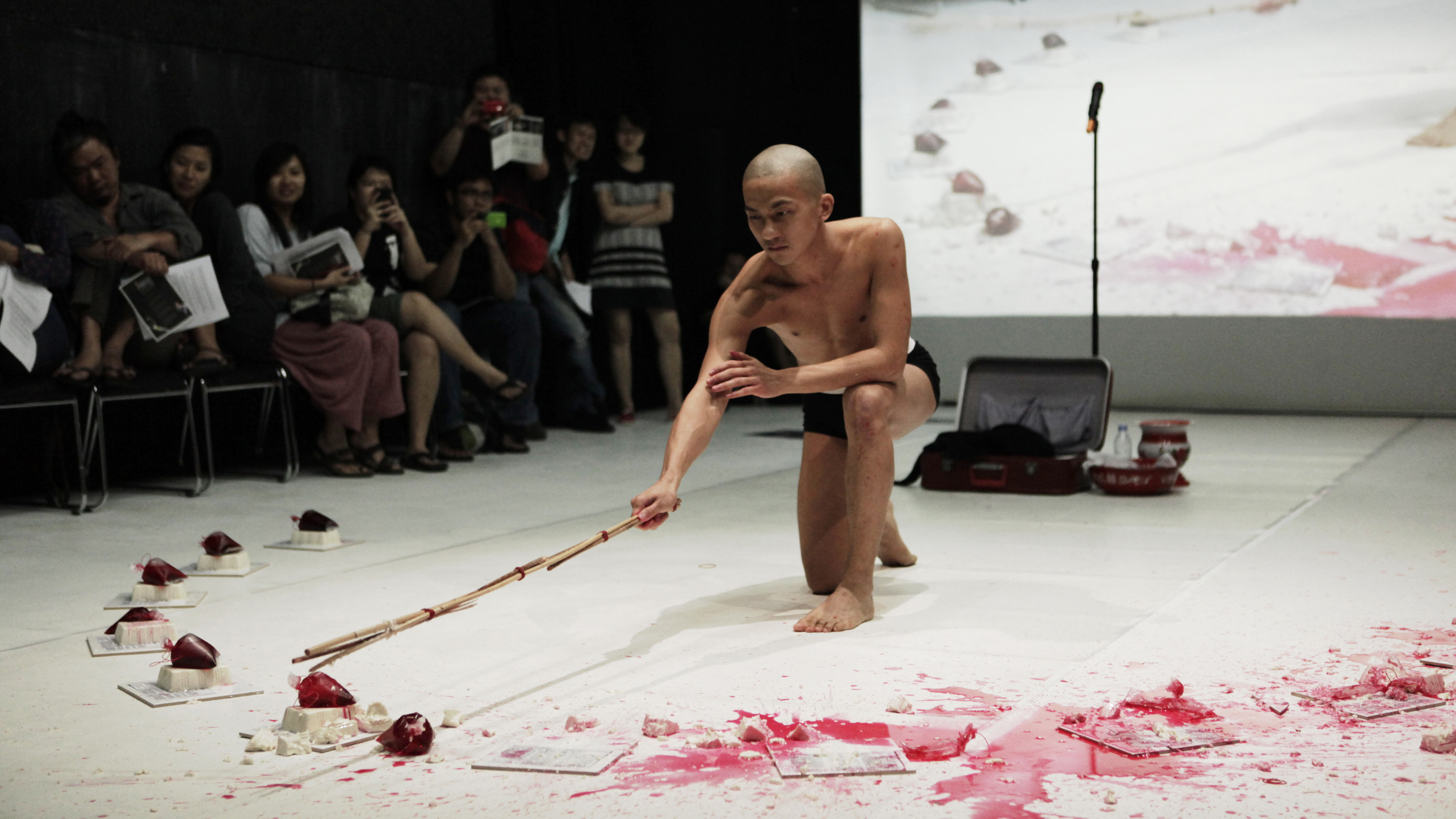
Embodied reenactments in contemporary visual and performing arts have been a strategy of approaching the past while rehearsing for a future. From Civil War reenactments, to Marina Abramović’s performance of Seven Easy Pieces (2005), to Joshua Oppenheimer’s documentary The Act of Killing (2012), these repetitions of gestures to reiterate and reshape testimonies are research methods that deserve our critical attention.
Come Again? Reenactments as Embodied Research will examine some of the media, artworks, and performance theory that engage with this topic. In the first part of the course, students will have the opportunity to manifest these strategies of embodied reenactments in an independent research project. We will practice these methods through the collection of oral history interviews and subsequent translation of these transcripts, as a method of revisioning and rewriting. In the second part of the course, we will develop these texts into a ten-page essay. This course aims to reflect on the efficacy, potential, and limits of such embodied research methodologies, while discussing how these methods are relevant to questions around the ethics of representation and legacies of power within the academic institution.
This Theater R1B course fulfills the second part of the reading and comprehension requirement and is designed to support students in developing college-level analysis and skills to approach the reading of critical theory. This course focuses on embodied forms of research methods. Students should expect to engage with a range of performance, photo and video documentation, and interview skills that will support their reading and composition techniques. We will apply material gathered from these varied embodied research methods toward a final essay through a scaffolded writing process, with consistent feedback from the instructor and fellow students.
Assigned readings
- Agnew, Vanessa, et al., editors. The Routledge Handbook of Reenactment Studies: Key Terms in the Field. Routledge, 2020.
- Bishop, Claire. “Delegated Performance: Outsourcing Authenticity.” Artificial Hells: Participatory Art and the Politics of Spectatorship, Verso, 2012, pp. 219–239.
- Bruzzi, Stella. “Documentary Re-Enactment: The ‘Model’ Approximation.” Approximation: Documentary, History and the Staging of Reality, Routledge, 2020.
- Jackson, Shannon. “Assemblies: Public Participation, Heteronomous Worlds.” Back Stages, Northwestern UP, 2022.
- Jones, Amelia. “The Artist is Present: Artistic Re-enactments and the Impossibility of Presence.” TDR, vol. 55, no. 1, Spring 2011.
- Lepecki, André. “The Body as Archive: Will to Re-enact and the Afterlives of Dances.” Dance Research Journal, vol. 42, no. 2, Winter 2010, pp. 28–48.
- Schneider, Rebecca. Performing Remains: Art and War in Times of Theatrical Reenactment. Routledge, 2011.
- Taylor, Diana. “Acts of Transfer.” The Archive and the Repertoire, Duke UP, 2003.
- The Act of Killing. Directed by Joshua Oppenheimer, 2013.
- Marina Abramović: The Artist Is Present. Directed by Jeff Dupre and Matthew Akers, 2012.
Spring 2022 and Fall 2024Queerealia: Archives and the Pleasures of Objecthood
Reading and Composition. Earlier version: Transnational Archives.
Queerealia: Archives and the Pleasures of Objecthood
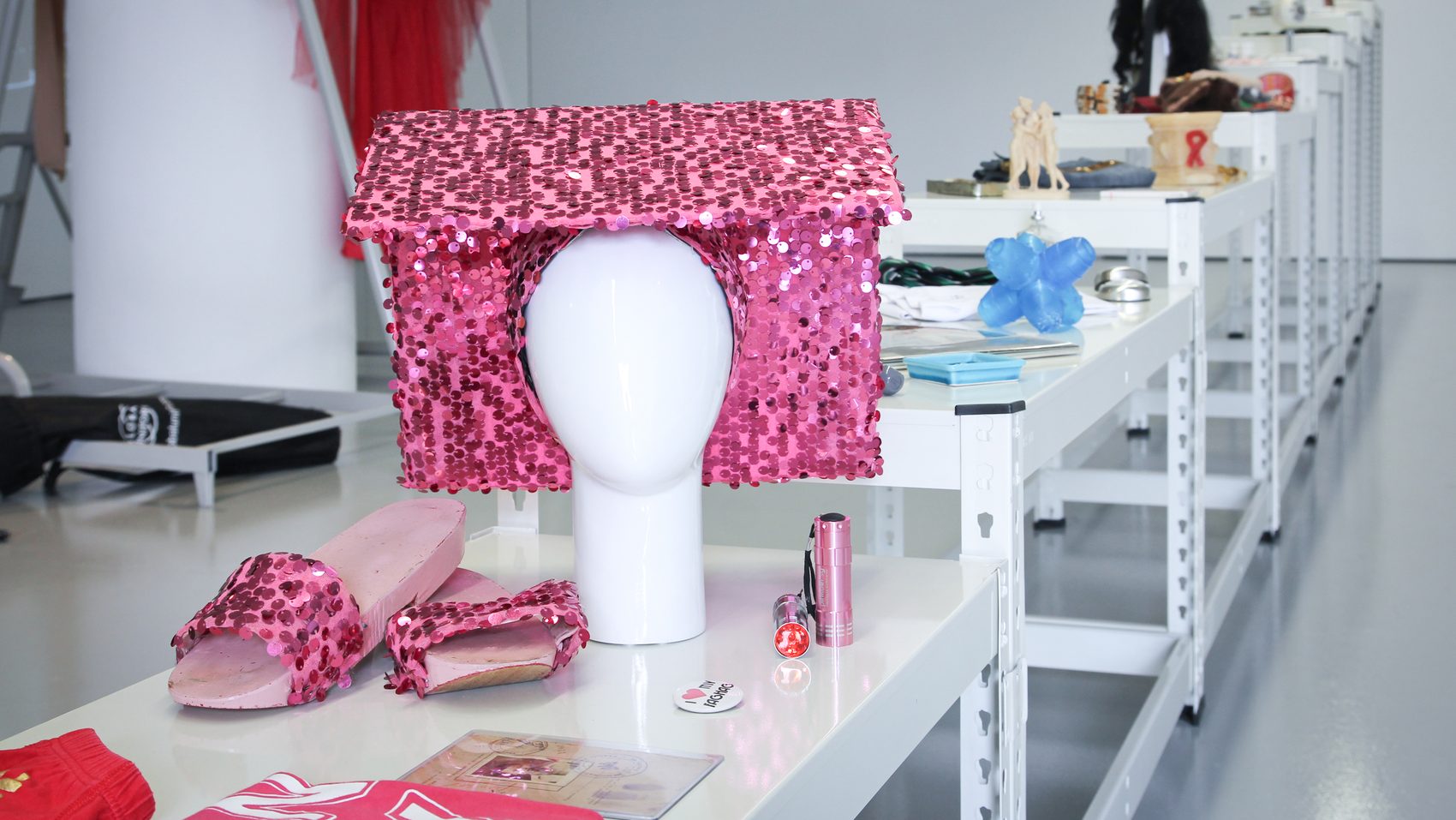
If you were to create a time capsule of objects that marks your existence, what would you include and why? How far can you break down each object in this time capsule before you reach an irreducible unit, and what are the legacies of the past that continue to haunt these constituent parts?
Queerealia: Archives and the Pleasures of Objecthood asks these questions in order to consider the intimacies of archives that bridge spatial, temporal, and conceptual gaps. Students will build a personal archive of objects through various writing exercises. These objects will then coalesce into a larger assemblage, creating a temporary material archive for the class that we will refer to throughout the semester.
Beyond the sensing of personal archives, this course examines contemporary performance and artistic practices that explore different strategies of interrogating materiality and memory. We will engage in recent critical conversations about the colonial archive, the queer archive, objecthood and subjectivity.
This Theater R1A course fulfills the first part of the reading and comprehension requirement and is designed to support students in developing college-level analysis and skills to approach the reading of critical theory and objects of study. We will develop your object descriptions into a final essay through a scaffolded writing process, with consistent feedback from the instructor and fellow students.
Assigned readings
- Arondekar, Anjali. “Introduction: Without a Trace.” For the Record: On Sexuality and the Colonial Archive in India. Duke UP, 2009.
- Bennett, Jane. “Preface” and “The Force of Things.” Vibrant Matter: A Political Ecology of Things. Duke UP, 2010.
- Chen, Mel Y. “Introduction: Animating Animacy.” Animacies: Biopolitics, Racial Mattering, and Queer Affect. Duke UP, 2012.
- Cheng, Anne Anlin. “Preface: A Feminist Theory of the Yellow Woman” and “Introduction.” Ornamentalism. Oxford UP, 2019.
- Freeman, Elizabeth. “Introduction: Queer and Not Now.” Time Binds: Queer Temporalities, Queer Histories. Duke UP, 2010.
- Huang, Vivian L. “Conclusion: Something is Missing.” Surface Relations: Queer Forms of Asian American Instructability. Duke UP, 2022.
- Loo, Zihan. “Queer Objects: An Archive for the Future.” Queer Asia: Decolonising and Reimagining Sexuality and Gender. Zed Books, 2019, pp. 147–163.
- Muñoz, José Esteban. “Ephemera as Evidence: Introductory Notes to Queer Acts.” Women & Performance: A Journal of Feminist Theory, vol. 8, no. 2, 1996, pp. 5–16.
- Schneider, Rebecca. “Slough Media.” Remain. U of Minnesota P and Meson Press, 2018, pp. 49–107.
- Schneider, Rebecca. “New Materialisms and Performance Studies.” TDR, vol. 59, no. 4, 2015, pp. 7–17.
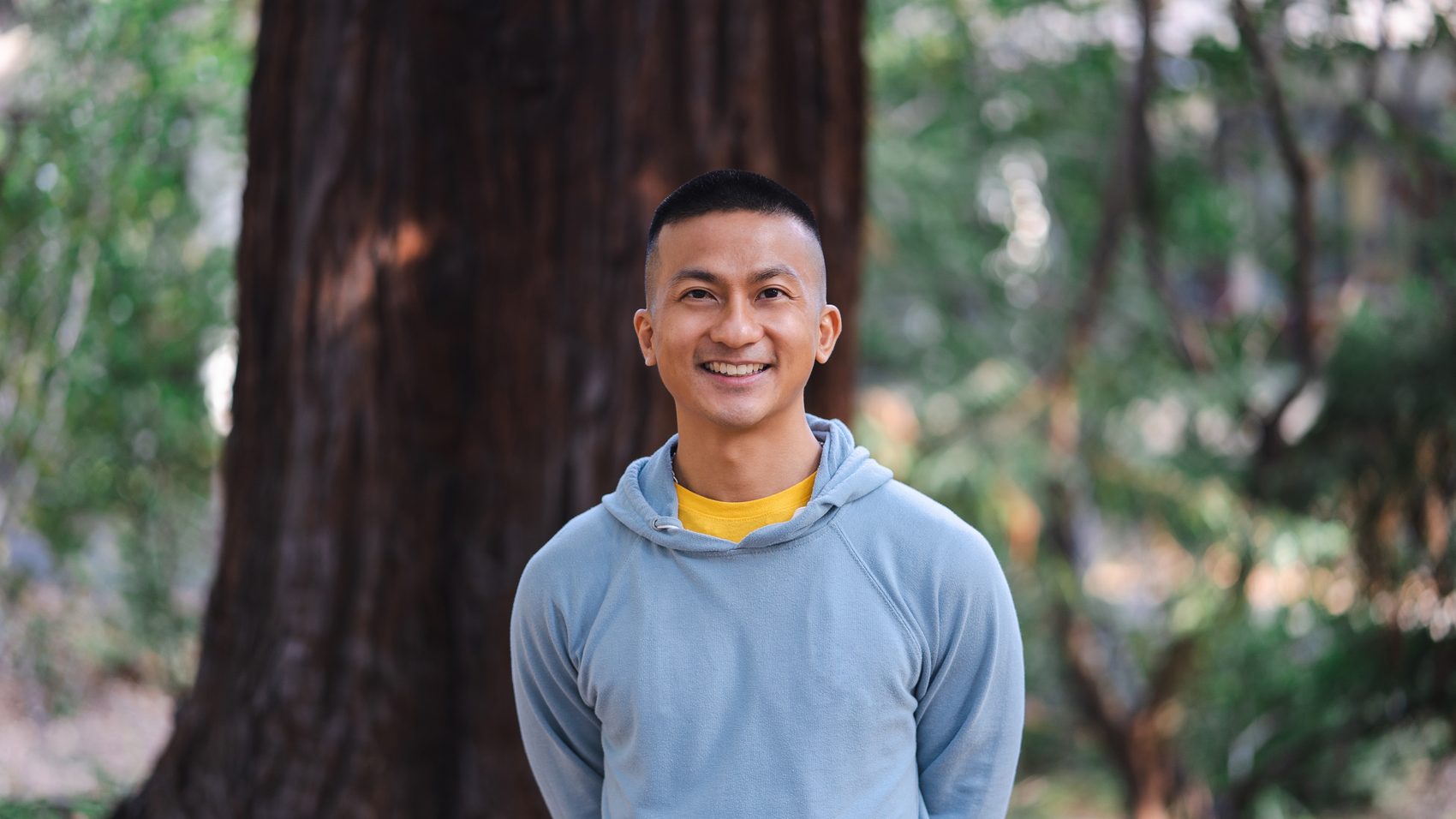
Loo Zihan is a Singaporean artist and performance studies scholar based in Brooklyn, New York. His research examines the etiolated conduct of unpragmatic resistance within restrictive conditions. These etiolated counter-conducts rely on transgenerational transference and more-than-human sensitivities to persist differently. His praxis emphasizes the malleability of memory and archives through performance reenactments, pedagogical workshops, and essay films. Zihan received the Young Artist Award from Singapore’s National Arts Council and holds a PhD in Performance Studies from the University of California, Berkeley.
Education
- 2019–26
PhD in Performance Studies
- 2017–18
MA in Performance Studies
- 2009–11
MFA in Studio Practice
- 2005–9
BFA in Digital Filmmaking
Academic awards
- 2025
Outstanding Graduate Student Instructor Award,
- 2024
Conference Travel Grant,
- 2021
Graduate Student Travel Grant,
- 2019
EWJ Gateway Fellowship,
- 2018
Performance Studies Emerging Scholar Award,
- 2017
Post-graduate Arts Scholarship,
- 2011
James Nelson Raymond Graduate Fellowship,
- 2010
Trustee Full-Tuition Merit Scholarship,
- 2009
Valedictorian,
Awards for praxis
- 2017
Best Multimedia Design,
- 2015
Young Artist Award,
- 2009
Best Script,
- 2008
Nuovo Sguardi Award,
Peer-reviewed article by me
- Under review
“Solitary-Solidarity: More-than-human Parrhesia and Transgenerational Conduct”
Book chapters by me
- 2019
- 2018
“I am Paying Attention”
- 2015
“Within Ourselves: Starting Over”
Reviews and interviews by me
- 2026
Review of Counter-Cartographies: Reading Singapore Otherwise by Joanne Leow
- 2026
Review of Straight Nation: Heteronormativity and Other Exigencies of Postcolonial Nationalism by Pavan Mano
- 2025
- 2021
- 2018
- 2018
Exhibition catalogs
- 2016Editor
- 2012Co-editor
Academic presentations
- 2027Presenter
“Containment and Contingency: Charles Lim’s All Lines Flow Out (2011) and Kingsley Ng’s After the Deluge (2018),”
- 2026Presenter
“Value made Visceral: On the back of backs, blood work, and Asian American congealment,”
- 2026Presenter
“Permit to Land: Queer Perambulations with/in Singapore,”
- 2026Presenter & panel convenor
- 2026Co-convenor & keynote
No Uniform: An Assembly for Queer Studies,
- 2025Presenter
“Camouflaged Choreographies: Cruising infrastructure in Singapore through Jason Wee’s practice,”
- 2025Participant
“Generational Solitary-Solidarity and Parrhesiatic Performativity in Seelan Palay’s 32 Years: An Interrogation of a Mirror,”
- 2025Presenter
“All Look At Me: Visceral Pleasures of Objecthood in Kink.com’s Club Dragon,”
- 2024Presenter
“‘All Look At Me’: Model Minority Masochism in Gay Fetish Pornography,”
- 2023Visiting scholar
Abandoned Practices Performance Summer School,
- 2023Presenter
“The Intimacies of Obscenity,”
- 2021Co-presenter
“I am the people: Performing solitary resistance as anti-authoritarian populism,”
- 2020Presenter
“Refusing Pragmatic Resistance: Queer Presence As ‘Counter-Conduct,’”
- 2019Presenter
“Queer Objects: An Archive for the Future,”
- 2018Presenter
“Skin/Leather/Hide: The Tactility of ‘Lecture, This Way,’”
- 2018Presenter
“Sensing ‘Brother Cane’: Counter-Conduct and the Exhaustion of Self,”
- 2013Presenter
“Remembering (Brother) Cane: A Performative Dialogue,”
- 2013Presenter
The University and the Arts Community,
Academic service
- 2026Co-convenor
Eroticizing Performance: Taking Stock of Desire working session,
- 2022–23Graduate Student Representative
Department of Theater, Dance and Performance Studies,
- 2021–22Graduate Student Delegate
The Graduate Assembly
- 2011Curator & organizer
Graduate Student Presentation of the Films of Apichatpong Weerasethakul,
- 2010Presenter
Toshio Matsumoto’s Funeral Parade of Roses
Professional practice and research
- 2026Participant
Inter-Asia Cultural Studies Summer School, Livable Futures: Asia as Worlding,
- 2022Presenter & facilitator
Seven Bodies and the Talking Sea,
- 2019Roundtable panel discussant
Human Futures and Histories,
ParticipantPro Helvetia Seminar for Emerging Artists,
- 2018Participant
Summer Institute in Performance Studies,
ParticipantDoctoral Theater Students’ Association Conference,
Panel respondentPerforming Citizenship in Singapore,
- 2017Participant
Landing 2.0,
PresenterMovement x Archive x Performance 3.0,
ParticipantSummer School #0.5,
- 2016Presenter
- 2014Presenter
Materiality, Performance, and the Spectator,
PresenterShifting Dialogues III Symposium,
- 2013Presenter
Shifting Dialogues II Symposium,
PanelistPerformance: To Be Reviewed,
Solo exhibitions and performances
- 2019
- 2017
- 2016
- 2015–16
- 2012
Cane performance and Archiving Cane exhibition
Group exhibitions
- 2026
Spectrosynthesis Seoul,
- 2022
Myth Makers: Spectrosynthesis III,
- 2017
The Making of an Institution,
The Case of the Osmanthus Flower Jelly,
- 2016
Untimely Encounter,
Fault-lines: Disparate and Desperate Intimacies,
- 2015
- 2014
Notes on Performance,
Names, Texts & Trouble,
- 2013
Ghost: The Body At The Turn Of The Century,
No Approval,
- 2012
Singapore Survey: New Strange Faces,
Still Building: Contemporary Art From Singapore,
- 2011
Currents: From Singapore, in Macau,
R.I.T.E.S (Rooted In The Ephemeral Speak) #6,
Manhood: Masculinity, Male Identity and Culture,
Abject Systems: Artists Who Love The Unlovable,
Singapore Survey: Imagine Malaysia,
Shiftchanges,
Magnetic Affinities & Altered Relations,
Tender Exchange,
Touch then push or pull and maybe nothing,
Sexier,
aWay,
- 2010
Artist residencies
- 2016
NTU Centre for Contemporary Art,
The Substation,
- 2015
- 2013
The Substation,
- 2012
The Unifiedfield,
Performance collaborations
- 2020Performer
Lost Cinema 20/20,
- 2018 & 2024Performer
Re-collection by Alexandra Pirici,
- 2014Performer
Retrospective by Xavier Le Roy,
- 2012Lead actor
A Language of Our Own (男男自语),
- 2011Performer
The Precession by Mark Jeffrey and Judd Morrissey,
- 2008Lead actor
Bondage (上身不由己) by Drama Box,
- 2007Lead actor
Pleasure Factory (快乐工厂),
Theatrical design
- 2020Multimedia Artist & Deviser
- 2016Multimedia Artist & Deviser
- 2012Multimedia Artist & Deviser
- 2008 & 2011Multimedia Design
- 2009Multimedia Artist & Deviser
- 2008 & 2009Multimedia Artist & Deviser
Video interviews on praxis
- International Performing Arts Meeting in Yokohama (TPAM), Asian Artist Interview
- “Zihan Loo Uses Alternative Modes To Approach Archives.”
Scholarship on praxis
- “I Am LGB: The LGB Society of Mind.”
- “Impossible Presence: Toward a Queer Singapore Cinema, 1990s–2000s.”
- “The Terms of Visibility: Between Queer and LGBT in Curating Art in ‘Asia.’”
- “Loo Zihan and the Body Confessional.”
- “Making Live Again.”
- “Queering My Remembrance: A Conversation with Loo Zihan 酷異我的悼念:一段關於羅子涵藝術實踐的對話.”
- “A Study of Loo Zihan’s Experimental Film Solos and Its Reconstruction of the Image of the Singaporean Mother and the Homosexual Identity 罗子涵的实验性电影〈单〉对新加坡母亲与同志身份的重构.”
- “Screening Resistance: Queering as a Tactic in Singapore Films 放映抵抗:新加坡影片中的酷儿化战术.”
- “Zihan Loo.”
- “Brick is Gay.”
- Slow Queering Communion: Interspecies Learning Practices with Moss Piglets
- “Exposing the State: Loo Zihan’s Queer Performance.”
- “Watching Solos in Singapore: Homosexuality, Surrealism and Queer Politics.”
- “A Queer Journey Home in Solos, Rethinking Kinship in Sinophone Singapore.”
- “Performing Singapore’s Queer Quandary: Walking the Tightrope between Sexual Illegality and Neoliberal-Enabled Subjectivity at Pink Dot and in Loo Zihan’s Cane.”
- Retrospective: A Historiographical Aesthetic in Contemporary Singapore and Malaysia
Critical reception and press coverage of praxis
2019
- “C(l)ocked: ‘Catamite’ by Loo Zihan.”
- “The Human Nature Embedded within Objects 物品蕴藏着的人性, on ‘Catamite.’”
- “The Singapore Series, Chapter 20.”
- “Catamite Is an Object Lesson in History.”
- “Loo Zihan Talks to Jo Tomalin about the Development of His Queer Objects Installation and His New Performance Lecture Catamite.”
2018
- “The Subversive Reenactor.”
2017
- “Multimedia Magic.”
- “Brother Cane Is Part of Me.”
- “Review of ‘With/Out’: AIDS, Archives, Activism.”
- “Completely With: Remembering Paddy Chew, Reflecting on Loo Zihan.”
- “Looking at Institutions Look at Themselves: NUS Museum & NTU CCA Singapore.”
2016
- “Sex Objects Removed From Art Show.”
- “I Am LGB Is Real Escape Game from Singapore.”
- “I Am LGB.”
- “I Am LGB.”
- “Provocative Shows at Singapore Arts Festival Stretch Boundaries of Censorship.”
- “Consider the Performer’s Wig.”
- “Radically Provocative Encounters.”
2015
- “Loo Zihan, A Les Bernardes.”
- “Late Vigil.”
- “Completely With/Out Character.”
- “Art Review: President’s Young Talents 2015.”
- “Singapore Art: Top Picks for 2015.”
- “Solo Flight at the M1 S’pore Fringe Fest 2015.”
- “S’pore Fringe Fest 2015: The Late Paddy Chew Comes to Life in With/Out.”
- “Dead Skin Collected for Art.”
- “Guardians of the Garden City.”
- “Theatre Review: With/Out Pays a Moving Tribute to the Late Paddy Chew.”
- “Barcelona, City of Tapas.”
- “Slowness, A Response to Loo Zihan’s With/Out.”
- “A Journey of Self-Discovery Through Lindy Hop.”
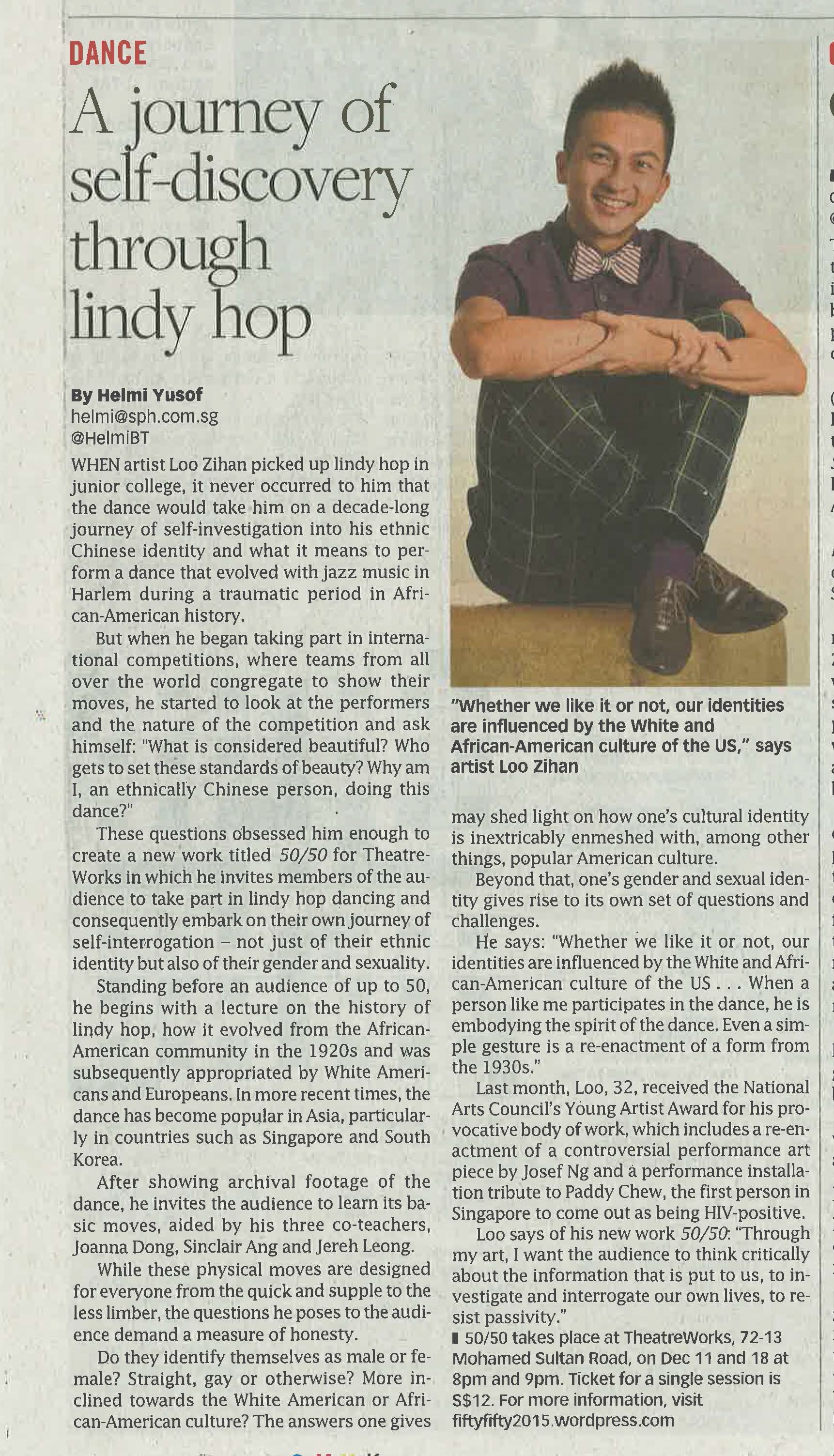
2014
- “Emancipatory Desires: What Do You Think of ‘If the World Changed’?”
- “Singapore Art: Top Picks for 2013.”
- “AIDS Play about Singapore’s First Openly HIV-Positive Person to Open M1 Festival.”
2013
- “Ghost: The Body at the Turn of the Century.”
- “R.I.T.E.S.! Loo Zihan Does a Josef Ng! And Then Some!”
- “S’pore Fringe Fest 2012! Cane! ’Nuff Said!”
- “Visit Han Sai Por’s Black Forest, Encounter Sculpture Square’s Ghost.”
- “Significant Other.”
- “The Best of 2013: Knock-out Contemporary Art Shows.”
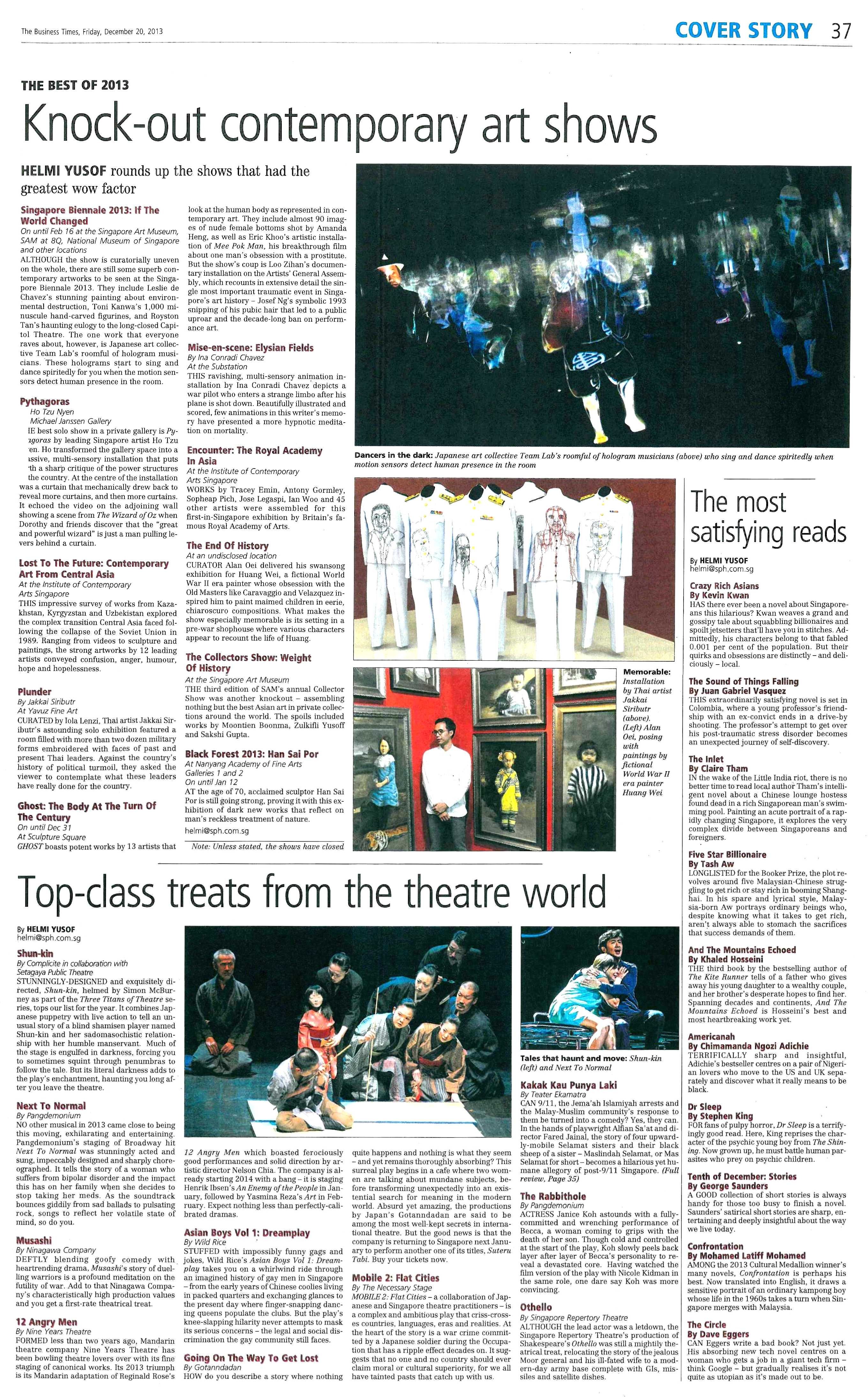
2012
- “Change Agent.”
- “The Artistic Challenger.”
- “Theatre Review: Cane Bound by Red Tape.”
- “Interview: Loo Zihan.”
- “Real Meat.”
- “Cane Re-enactment Draws Debate.”
- “Smoking Exemption in Theatres Under Fire.”
- “An Interview with Loo Zihan.”
- “The (Digital) Future of Imagination?”
- “罗子涵在许可范围内创作 (Loo Zihan: Creating Within Boundaries).”
2010
2009
- “两栖三栖多栖 他们是 2.0时代艺术家 (Hybrid Artists: Version 2.0).”
- “Silencing Singapore.”
- “Graduation Speech Became Protest.”
- “当新加坡的大学生开始抗议 (Commentary: A University Student Protests).”
2008
- “單刀直入 — 和羅子涵solo在都靈 (Interview with Loo Zihan in Turin).”
2007
- “Review: Solos.”
- “Film Review: Solos.”